
Soft Tissue Sarcoma Market Size and Share
Market Overview
| Study Period | 2020 - 2031 |
|---|---|
| Market Size (2026) | USD 4.38 Billion |
| Market Size (2031) | USD 6.67 Billion |
| Growth Rate (2026 - 2031) | 8.75 % |
| Fastest Growing Market | Asia-Pacific |
| Largest Market | North America |
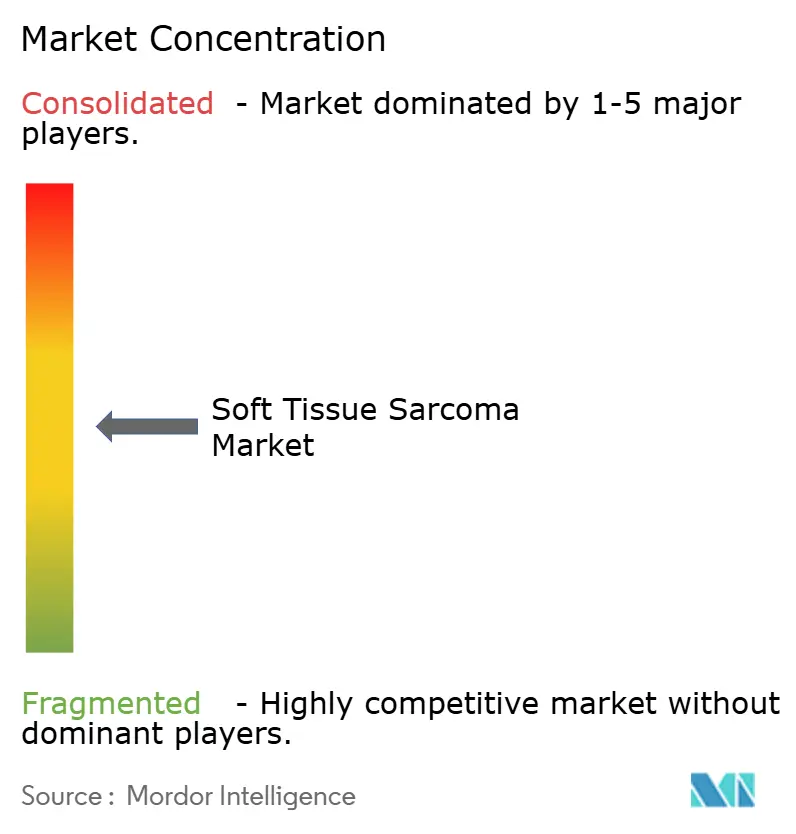
| Market Concentration | Medium |
Major Players *Disclaimer: Major Players sorted in no particular order Image © Mordor Intelligence. Reuse requires attribution under CC BY 4.0. | |
Soft Tissue Sarcoma Market Analysis by Mordor Intelligence
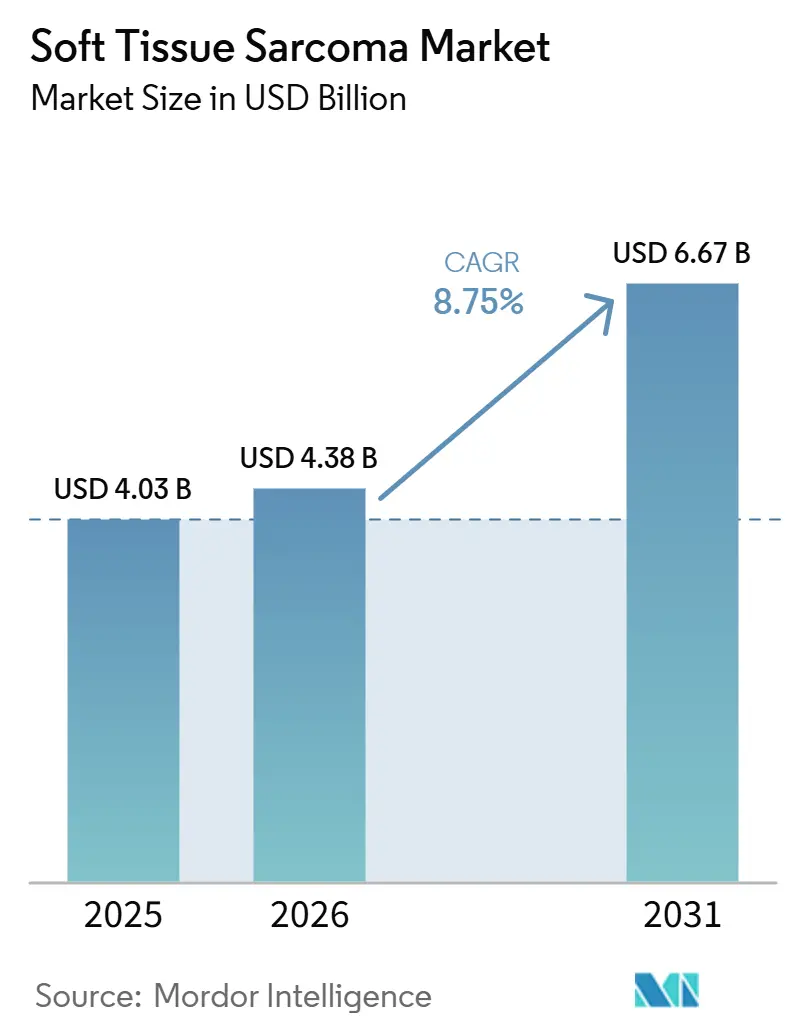
The Soft Tissue Sarcoma Market size is expected to increase from USD 4.03 billion in 2025 to USD 4.38 billion in 2026 and reach USD 6.67 billion by 2031, growing at a CAGR of 8.75% over 2026-2031.
The soft tissue sarcoma market is expanding because more patients are reaching specialist care earlier, diagnostic workups are becoming more detailed, and high-value precision therapies are moving into commercial use across selected subtypes. The soft tissue sarcoma market is also benefiting from stronger use of molecular profiling, which is shaping treatment choice and raising the role of referral centers, academic hospitals, and specialized laboratories in patient management. The soft tissue sarcoma market is becoming more premium at the upper end because cell therapies and immune-based approaches have introduced durable response profiles in narrow but high-value patient groups. Companies that can pair biomarker-led drugs with center-based treatment delivery, companion diagnostics, and specialist network access are in a better position to capture value in the soft tissue sarcoma market. The main brake on the soft tissue sarcoma market remains the combination of very small subtype-level patient pools, uneven specialist access outside major centers, and the high cost of multimodal treatment pathways.
Key Report Takeaways
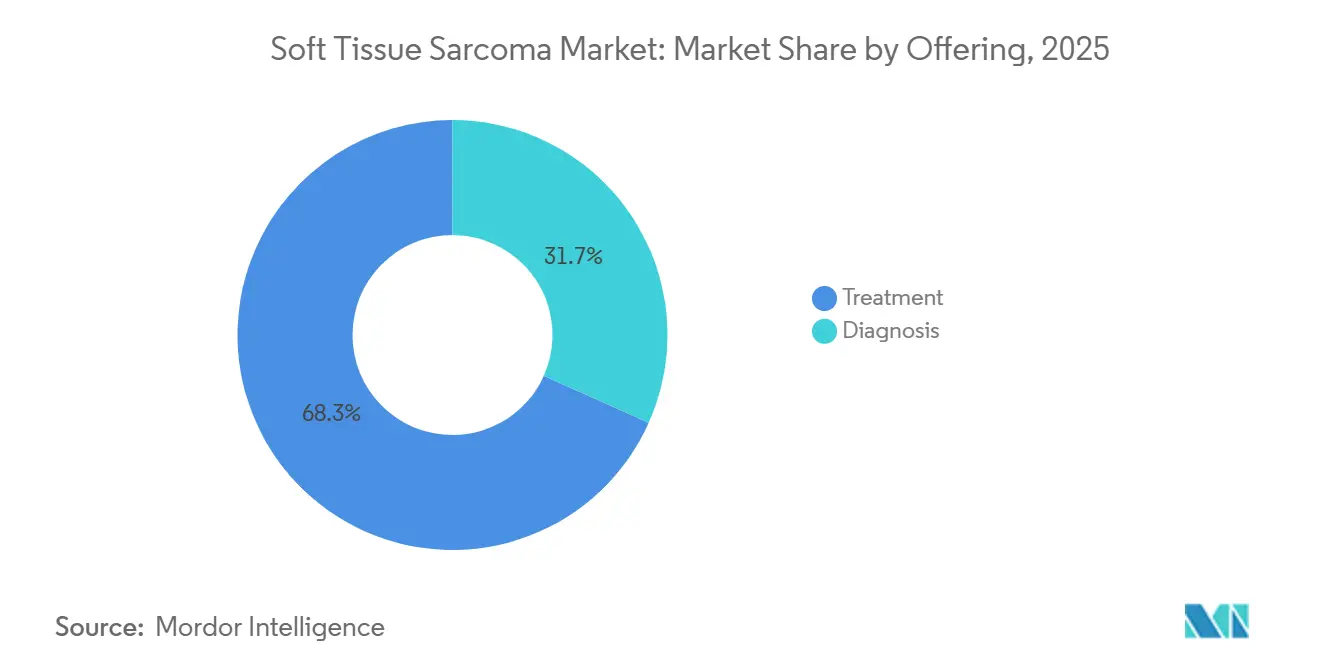
- By offering, treatment held 68.31% share in 2025, and treatment is also forecast to expand at a 9.38% CAGR through 2031.
- By type of sarcoma, liposarcoma held 27.24% share in 2025, while synovial sarcoma is projected to record the fastest CAGR of 9.52% through 2031.
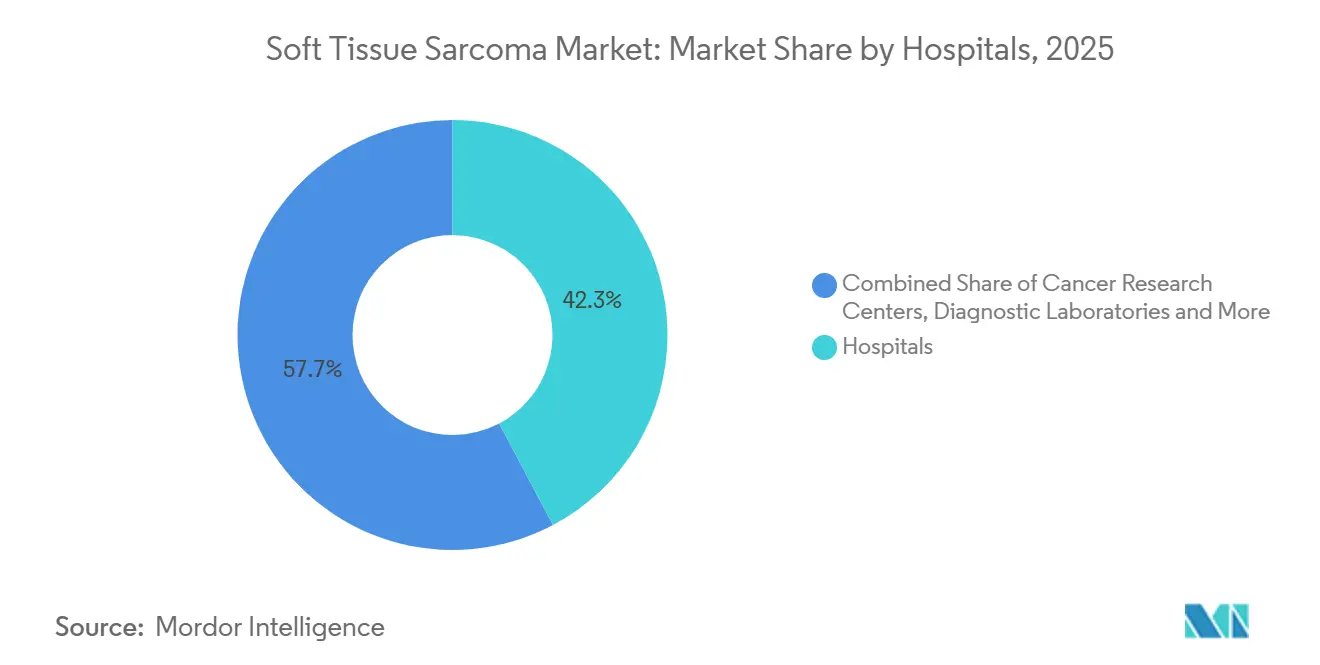
- By end user, hospitals held 42.26% share in 2025, while cancer research centers are expected to advance at the fastest CAGR of 9.95% through 2031.
- By geography, North America held 41.61% share in 2025, while Asia-Pacific is expected to record the fastest CAGR of 9.65% through 2031.
Note: Market size and forecast figures in this report are generated using Mordor Intelligence’s proprietary estimation framework, updated with the latest available data and insights as of January 2026.
Market Trends and Insights
Drivers Impact Analysis of Soft Tissue Sarcoma Market*
| Driver | (~) % Impact on CAGR Forecast | Geographic Relevance | Impact Timeline |
|---|---|---|---|
| Rising incidence and earlier referral to specialty sarcoma centers | +1.7% | Global, with pronounced effect in Europe and North America | Medium term (2-4 years) |
| Expansion of targeted therapy and immunotherapy pipelines across subtypes | +2.2% | Global, North America leads, Asia-Pacific is accelerating | Long term (≥ 4 years) |
| Greater use of MRI, core needle biopsy, and molecular profiling in diagnostic workups | +1.4% | North America, Europe, and upper-tier Asia-Pacific centers | Medium term (2-4 years) |
| Liquid biopsy and ctDNA adoption for response monitoring and minimal residual disease detection | +1.1% | North America and Europe, with early uptake in Japan and South Korea | Medium term (2-4 years) |
| Biomarker-linked treatment selection across rare sarcoma subtypes | +0.9% | North America, Germany, France, and Japan | Long term (≥ 4 years) |
| Source: Mordor Intelligence | |||
Rising Incidence of Soft Tissue Sarcoma and Earlier Referral to Specialty Centers
Cancer Research UK reported that soft tissue sarcoma incidence rates in England increased by 7% over the past decade, and the rise was tied to stronger surveillance and demographic aging rather than to a new exposure pattern. For the soft tissue sarcoma market, the more important effect is that earlier referral brings more patients into specialist pathways before care becomes delayed or fragmented. The 2025 GEIS guidelines set MRI as the first-line imaging modality and core needle biopsy with 3-4 cores at referral centers as the procedural standard, which formalizes the route into advanced diagnosis and treatment[1]A.J. Hayes et al., “Diagnosis and Therapy of Soft Tissue Sarcomas: Spanish Group for Research in Sarcomas (GEIS) Guidelines,” Cancers, doi.org. Multidisciplinary tumor boards at regional sarcoma centers in Germany, France, and the United Kingdom are also making referral thresholds more consistent and shortening the path from suspicion to specialist consultation. This means the soft tissue sarcoma market gains not only from case capture, but also from higher procedure intensity per patient across imaging, biopsy, pathology review, and molecular testing.
Expansion of Targeted Therapy and Immunotherapy Pipelines
The August 2024 FDA accelerated approval of afamitresgene autoleucel for unresectable or metastatic synovial sarcoma established the first engineered T-cell receptor therapy approved for any solid tumor and reported a 43.2% overall response rate in the SPEARHEAD-1 Cohort 1 trial of 44 patients. The June 2026 full approval expanded the label to patients 12 years of age and older and reported a confirmed overall response rate of 43.8% across 137 patients, with 31.9% of responders maintaining durable response at 24 months. In the soft tissue sarcoma market, that change matters because revenue growth is being driven by premium therapies in biomarker-selected patients rather than by a broad increase in diagnosis alone. The soft tissue sarcoma market is also seeing deeper investment across PD-1 and PD-L1 programs, CDK4-directed approaches, antibody-drug conjugates, and next-generation TCR platforms, which supports a wider precision treatment mix over time. As more subtype-specific programs mature, commercial leadership in the soft tissue sarcoma market is likely to depend less on broad oncology scale and more on biomarker access, referral depth, and execution at qualified treatment sites.
Greater Use of MRI, Core Needle Biopsy, and Molecular Profiling in Diagnostic Workups
Multiparametric MRI is now embedded as the first-line imaging modality in the GEIS 2025 guidelines, and that gives surgeons and radiation teams more precise spatial information before intervention. A 2025 study in Frontiers in Oncology introduced CT-MRI fusion image registration during core needle biopsy and showed strong concordance between imaging biomarkers and FNCLCC histologic grading, which can reduce the need for repeat biopsy confirmation. A 2024 SITC abstract covering 356 sarcoma patients found at least 1 NCCN or FDA-linked actionable biomarker in 7.0% of cases and gene rearrangements in 29.8%, which strengthens the case for broader comprehensive genomic profiling in the soft tissue sarcoma market. This raises the value of diagnostic laboratories that can support next-generation sequencing, companion assays, and repeat testing linked to treatment selection. It also supports the soft tissue sarcoma market by reducing unplanned excisions and by making specialist centers more efficient in deciding surgery, radiation, and systemic therapy order.
Liquid Biopsy and ctDNA Adoption for Response Monitoring and Minimal Residual Disease Detection
Circulating tumor DNA is moving closer to real clinical use in translocation-associated sarcomas, where tumor-specific fusions can be tracked in plasma with digital droplet. A 2025 systematic review confirmed high specificity for early recurrence detection in these sarcomas and showed that ctDNA can add clinically useful information beyond MRI surveillance alone. Another 2025 study introduced a ddPCR assay targeting universally methylated ctDNA regions, which broadens applicability beyond fusion-positive subtypes and addresses one of the main limits in complex-karyotype disease. For the soft tissue sarcoma market, this creates a clear opening for instrument suppliers and assay developers that can bundle sequencing platforms, reagents, and analytics into ongoing monitoring workflows. At the same time, a 2025 review noted that no ctDNA biomarker had yet been clinically validated for routine diagnostic use in soft tissue sarcoma, so near-term uptake in the soft tissue sarcoma market will remain concentrated in research centers and academic hospitals rather than in community practice[2]Current Oncology Reports, “Circulating Biomarkers in Sarcoma,” Current Oncology Reports, link.springer.com.
Restraints Impact Analysis of Soft Tissue Sarcoma Market*
| Restraint | (~) % Impact on CAGR Forecast | Geographic Relevance | Impact Timeline |
|---|---|---|---|
| Small patient pools and trial recruitment bottlenecks across histologic subtypes | -1.2% | Global, with the sharpest effect in low-volume subtypes such as MPNST, RMS, and ASPS | Short term (≤ 2 years) |
| High cost of multimodal treatment and advanced diagnostics | -0.9% | North America and Europe, with price compression effects in Asia-Pacific | Medium term (2-4 years) |
| Limited pathology and sarcoma-center access in emerging markets | -0.7% | Asia-Pacific excluding Japan, the Middle East and Africa, and South America | Long term (≥ 4 years) |
| Source: Mordor Intelligence | |||
Small Patient Pools and Trial Recruitment Bottlenecks Across Subtypes
Soft tissue sarcoma includes more than 70 histologic subtypes, and that fragmentation limits how much statistical power can be achieved in any single late-stage trial. In rare subtypes such as malignant peripheral nerve sheath tumor and alveolar soft part sarcoma, even modest studies can take years to enroll, which slows approval timing and keeps competitive entry narrow. For the soft tissue sarcoma market, that means the strongest commercial momentum still sits in subtypes large enough to support more conventional development paths, especially liposarcoma and leiomyosarcoma. Sponsors are trying to reduce this constraint by combining histologies in basket-style approaches and by seeking approval routes based on response endpoints rather than waiting for long survival readouts. Until subtype registries and biomarker-preselected cohorts become broader and more consistent, the soft tissue sarcoma market will continue to face slower launch cadence than larger oncology categories.
High Cost of Multimodal Treatment and Advanced Diagnostics
The soft tissue sarcoma market is structurally exposed to high per-patient costs because rare disease development expenses are spread across very small patient populations. That pressure extends beyond advanced cell therapy and includes MRI staging, molecular diagnostics, complex surgery, radiation, and systemic therapy delivered across multiple settings. In Europe, health technology assessment processes are applying stricter cost-effectiveness filters to rare cancer treatments, which can slow or narrow reimbursement even when clinical results are favorable. In the soft tissue sarcoma market, this tends to reduce adoption speed and can pull realized pricing below list expectations when access is negotiated through restricted pathways. The effect is likely to remain most visible in the medium term while payors and manufacturers work through evidence requirements, managed access models, and funding protocols for high-cost therapies.
*Our forecasts treat driver/restraint impacts as directional, not additive. The impact forecasts reflect baseline growth, mix effects, and variable interactions.
Soft Tissue Sarcoma Market Segment Analysis
By Offering:
Treatment Commands Value Share as Diagnostics Infrastructure ScalesTreatment held 68.31% of the soft tissue sarcoma market share in the by offering category in 2025, and it is also the fastest-growing sub-segment with a 9.38% CAGR through 2031. The treatment side of the soft tissue sarcoma market is carrying the largest revenue base because systemic therapy, surgery, and combination regimens still anchor most care pathways across common and advanced disease settings. New biomarker-selected therapies are raising the ceiling of this segment because durable responses in specific subtypes support premium pricing and specialist delivery models. Even with this shift, chemotherapy still retains broad use because it remains the backbone for leiomyosarcoma and several other higher-volume soft tissue sarcoma settings.
Diagnosis represents the balance of the by offering structure, and its role in the soft tissue sarcoma market is becoming more strategic as therapy access increasingly depends on biomarker confirmation. Comprehensive genomic profiling, fusion detection, and MAGE-A4-linked testing are raising the value of pathology and laboratory services because they sit earlier in the treatment authorization path. MRI also remains central because it is the guideline-based first-line modality and because specialist centers are building more structured imaging capacity around sarcoma referrals. Other diagnostic methods, including liquid biopsy-based monitoring, are still mostly concentrated in academic use, but they are laying the groundwork for a recurring testing stream inside the soft tissue sarcoma market as validation improves.


By Type of Sarcoma:
Liposarcoma Leads While Synovial Sarcoma Claims the Precision TierLiposarcoma held 27.24% share in 2025, which made it the leading subtype by revenue within the soft tissue sarcoma market. Its position reflects both its frequency in adults and the fact that dedifferentiated and myxoid or round cell variants continue to require repeated use of systemic therapy across several treatment lines. A 2025 review in Frontiers in Pharmacology noted that CDK4 and CDK6 inhibition in dedifferentiated liposarcoma is becoming a rational strategy because MDM2 and CDK4 co-amplification are nearly universal in that setting. Leiomyosarcoma also remains commercially important because a 2024 Phase III trial reported median overall survival of 33 months with trabectedin plus doxorubicin versus 24 months with doxorubicin alone, which supports continued use of more aggressive front-line systemic options.
Synovial sarcoma is projected to record the fastest CAGR at 9.52% through 2031, and this is one of the clearest examples of how the soft tissue sarcoma market is being shaped by therapy innovation rather than by subtype incidence growth. The approval path for afamitresgene autoleucel moved synovial sarcoma into a much more defined precision treatment tier, first with accelerated approval in 2024 and then with a broader full approval in 2026. MAGE-A4 expression is present in 70% of synovial sarcoma cases, and HLA-A*02 positivity covers 45-50% of Western populations with even higher rates in some Hispanic and Asian groups, which creates a clear biomarker screen for commercial eligibility. Rhabdomyosarcoma and malignant peripheral nerve sheath tumors remain harder spaces in the soft tissue sarcoma market because approved targeted options are still limited and clinical development depends heavily on trial access and molecular selection standards.
By End User:
Hospitals Anchor Procedure Volume as Research Centers Redefine ProtocolHospitals held 42.26% share in 2025, which kept them as the largest end-user segment in the soft tissue sarcoma market. Their lead reflects the fact that sarcoma surgery, inpatient chemotherapy, radiation coordination, and multidisciplinary planning are still concentrated in hospital-based settings. Tertiary referral hospitals with dedicated sarcoma teams generate high procedure value per patient because diagnosis, staging, surgery, pathology review, and follow-up care often need tight coordination. That role also gives hospitals a durable position in the soft tissue sarcoma market even as more advanced drug selection shifts upstream into genomic and biomarker workflows.
Cancer research centers are projected to grow at the fastest CAGR of 9.95% through 2031, which shows how much the soft tissue sarcoma market now depends on centers that can support protocol-driven precision care. These institutions host biomarker-stratified trials, centralized molecular profiling, and tumor boards that determine whether patients can access advanced therapies. Diagnostic laboratories are also gaining strategic weight because pre-treatment molecular characterization is becoming part of reimbursement and treatment-entry decisions in the soft tissue sarcoma market. Ambulatory surgical centers still support biopsy and outpatient work in selected localized cases, but the more complex resection and reconstruction workload remains centered in hospitals.

Geography Analysis
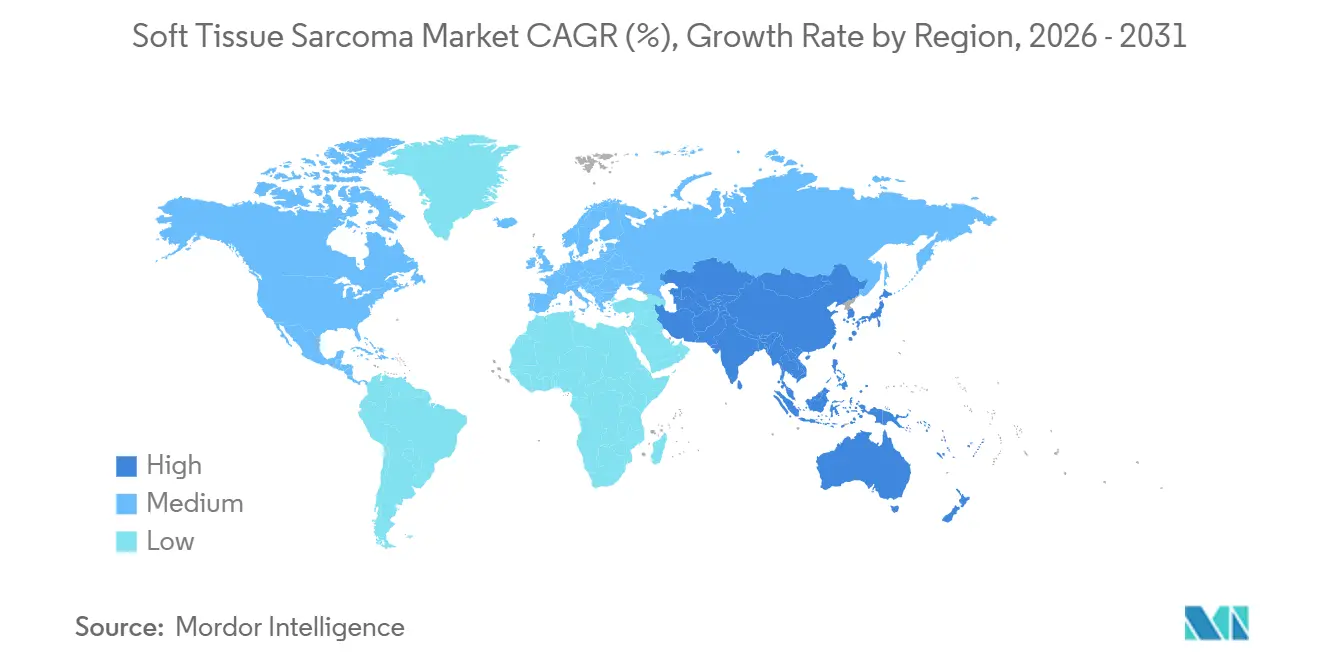
North America and Europe Soft Tissue Sarcoma Market
North America held 41.61% of the soft tissue sarcoma market share in 2025, which made it the largest regional contributor by revenue. The region benefits from dense specialist center coverage, orphan drug frameworks that support faster rare cancer approvals, and reimbursement structures that can absorb higher-cost therapies more readily than many other regions. The United States drives most of that value because it combines referral depth, commercial drug uptake, and qualified treatment site infrastructure in a way that few other countries can match. Canada adds demand, but its public funding structure can produce a different access timeline for premium therapies. Europe held the second-largest position in the soft tissue sarcoma market, supported by reference networks that concentrate expertise and trial activity across France, Germany, Italy, Spain, and the United Kingdom[3]Cancer Research UK, “Soft Tissue Sarcoma Statistics,” Cancer Research UK, cancerresearchuk.org.
APAC Soft Tissue Sarcoma Market
Asia-Pacific is the fastest-growing region and is projected to expand at a 9.65% CAGR through 2031 in the soft tissue sarcoma market. Growth is being supported by rising molecular diagnostics capacity, stronger oncology investment, and rare cancer regulatory actions that can accelerate access in selected countries. Japan stands out because the Ministry of Health, Labour and Welfare approved atezolizumab for unresectable alveolar soft part sarcoma in February 2025, making it the first approved immune checkpoint inhibitor for that ultra-rare indication. China remains a large long-term opportunity in the soft tissue sarcoma market, but standardized post-operative management and molecular profiling are still more uneven outside major urban centers.
South America, APAC and MEA Soft Tissue Sarcoma Market
South Korea and India are emerging as the next important growth engines in Asia-Pacific because each supports a different part of the expansion path for the soft tissue sarcoma market. South Korea contributes through a strong diagnostics environment, while India is building relevance through rising oncology research investment and broader trial participation. South America and the Middle East and Africa remain earlier-stage parts of the soft tissue sarcoma market because specialist centers, reimbursement depth, and molecular pathology access are still limited outside major cities. Brazil and Argentina have the largest patient pools in South America, while GCC countries are adding cancer center capacity that should gradually widen addressable demand over time.

Competitive Landscape
The soft tissue sarcoma market is moderately concentrated at the top, with a small group of large pharmaceutical companies holding much of the established systemic therapy base while newer precision opportunities are opening to specialist biotech players. Bayer, Eisai, Bristol Myers Squibb, and Merck & Co. remain important because they already have recognized oncology assets or programs that fit sarcoma treatment pathways. At the same time, the soft tissue sarcoma market is no longer defined only by broad oncology scale because subtype-specific approvals can give smaller companies durable positions when treatment is technically complex and biomarker access is tightly controlled. The 2026 full approval of TECELRA under US WorldMeds is a strong example, since a narrower commercial organization can still hold a high-value position when manufacturing, infusion readiness, and referral network depth matter as much as sales footprint. This is changing competition in the soft tissue sarcoma market from a broad-volume model to a specialist access model.
A second pattern is that large oncology companies are still trying to extend platform assets into sarcoma where biomarker logic or immune pathways support an entry point. Roche gained a differentiated regional example through the Japanese approval of Tecentriq in alveolar soft part sarcoma, which shows how country-specific regulatory wins can establish early leadership in ultra-rare indications. Sanofi also signaled strong interest in precision medicine platforms through its USD 9.5 billion acquisition of Blueprint Medicines in July 2025, which supports the broader commercial case for rare disease and biomarker-centered oncology positioning. In the soft tissue sarcoma market, that matters because future competition is likely to favor companies that can connect rare tumor biology with scalable platform economics.
The main white space in the soft tissue sarcoma market remains in complex-karyotype tumors that still lack approved precision options, in pediatric and adolescent or young adult settings, and in diagnostics that can guide treatment selection more accurately. Synovial sarcoma has moved ahead because it now has a clearer biomarker-driven path, but several other subtypes still depend on conventional therapy or early-stage research programs. ctDNA-guided monitoring is another area to watch because it could eventually connect diagnostic companies and therapy developers through companion-style workflows if validation becomes routine. Overall, the soft tissue sarcoma market is moving toward a structure where commercial advantage comes from subtype depth, biomarker control, and specialist network execution rather than from simple portfolio breadth.
Soft Tissue Sarcoma Industry Leaders
F. Hoffmann-La Roche Ltd.
Novartis AG
Bayer AG
Pfizer Inc.
Merck & Co., Inc.
- *Disclaimer: Major Players sorted in no particular order
Soft Tissue Sarcoma Market Companies Covered in this Report
- Adaptimmune Therapeutics plc
- AstraZeneca
- Bayer
- Bristol-Myers Squibb
- Daiichi Sankyo
- Eisai
- Eli Lilly and Company
- Roche
- GlaxoSmithKline
- Illumina
- Merck
- Nanobiotix S.A.
- Novartis
- Pfizer
- QIAGEN
- Sanofi
- Sun Pharmaceuticals Industries
- Teva Pharmaceutical Industries
- Thermo Fisher Scientific
- Viatris

Recent Industry Developments in Soft Tissue Sarcoma Market
- June 2026: USWM CT LLC (US WorldMeds) announced that the US Food and Drug Administration (FDA) granted full approval for TECELRA (afamitresgene autoleucel). The FDA also expanded the therapy’s indication to include pediatric patients aged 12 years and older with unresectable or metastatic synovial sarcoma.
- April 2026: Immutep Limited, a clinical-stage biotechnology company focused on cancer and autoimmune diseases, announced that the US Food and Drug Administration (FDA) granted Orphan Drug Designation (ODD) to eftilagimod alfa (“efti”) for the treatment of soft tissue sarcoma (STS).


Global Soft Tissue Sarcoma Market Report Scope
As per the scope of the report, soft tissue sarcoma is a type of malignant tumor that originates in the soft tissues of the body. These tissues include muscles, fat, blood vessels, nerves, tendons, and the lining of the joints. Soft tissue sarcomas can occur anywhere in the body but are most commonly found in the arms, legs, chest, or abdomen.
The soft tissue sarcoma market is segmented by offering into diagnosis and treatment. The diagnosis segment includes biopsy, imaging, molecular diagnostics, and other diagnostic methods. The treatment segment includes surgery, radiation therapy, chemotherapy, targeted therapy, immunotherapy, and other treatments. By type of sarcoma, the market is segmented into liposarcoma, leiomyosarcoma, synovial sarcoma, rhabdomyosarcoma, malignant peripheral nerve sheath tumor, and other types of sarcoma. By end user, the market is segmented into hospitals, cancer research centers, diagnostic laboratories, ambulatory surgical centers, and other end users. By geography, the market is segmented into North America, Europe, Asia-Pacific, Middle East and Africa, and South America. The market report also covers the estimated market sizes and trends for 17 countries across major regions globally. For each segment, the market size and forecast are provided in terms of value (USD).
| Diagnosis | Biopsy |
| Imaging | |
| Molecular Diagnostics | |
| Other Diagnostic Methods | |
| Treatment | Surgery |
| Radiation Therapy | |
| Chemotherapy | |
| Targeted Therapy | |
| Immunotherapy | |
| Other Treatments |
| Liposarcoma |
| Leiomyosarcoma |
| Synovial Sarcoma |
| Rhabdomyosarcoma |
| Malignant Peripheral Nerve Sheath Tumor (MPNST) |
| Other Types of Sarcoma |
| Hospitals |
| Cancer Research Centers |
| Diagnostic Laboratories |
| Ambulatory Surgical Centers |
| Other End Users |
| North America | United States |
| Canada | |
| Mexico | |
| Europe | Germany |
| United Kingdom | |
| France | |
| Italy | |
| Spain | |
| Rest of Europe | |
| Asia-Pacific | China |
| Japan | |
| India | |
| Australia | |
| South Korea | |
| Rest of Asia-Pacific | |
| Middle East and Africa | GCC |
| South Africa | |
| Rest of Middle East and Africa | |
| South America | Brazil |
| Argentina | |
| Rest of South America |
| By Offering | Diagnosis | Biopsy |
| Imaging | ||
| Molecular Diagnostics | ||
| Other Diagnostic Methods | ||
| Treatment | Surgery | |
| Radiation Therapy | ||
| Chemotherapy | ||
| Targeted Therapy | ||
| Immunotherapy | ||
| Other Treatments | ||
| By Type of Sarcoma | Liposarcoma | |
| Leiomyosarcoma | ||
| Synovial Sarcoma | ||
| Rhabdomyosarcoma | ||
| Malignant Peripheral Nerve Sheath Tumor (MPNST) | ||
| Other Types of Sarcoma | ||
| By End User | Hospitals | |
| Cancer Research Centers | ||
| Diagnostic Laboratories | ||
| Ambulatory Surgical Centers | ||
| Other End Users | ||
| By Geography | North America | United States |
| Canada | ||
| Mexico | ||
| Europe | Germany | |
| United Kingdom | ||
| France | ||
| Italy | ||
| Spain | ||
| Rest of Europe | ||
| Asia-Pacific | China | |
| Japan | ||
| India | ||
| Australia | ||
| South Korea | ||
| Rest of Asia-Pacific | ||
| Middle East and Africa | GCC | |
| South Africa | ||
| Rest of Middle East and Africa | ||
| South America | Brazil | |
| Argentina | ||
| Rest of South America | ||


Key Questions Answered in the Report
What is driving growth in soft tissue sarcoma through 2031?
Growth is being supported by earlier specialist referral, deeper molecular diagnostics, and the commercial rollout of premium precision therapies. The soft tissue sarcoma market is forecast to grow at an 8.75% CAGR and reach USD 6.67 billion by 2031.
Which treatment area is generating the most revenue?
Treatment is the largest offering segment, with a 68.31% share in 2025. Its lead comes from systemic therapy, surgery, and growing use of high-value precision medicines.
Which sarcoma subtype is growing the fastest?
Synovial sarcoma is projected to grow at a 9.52% CAGR through 2031. That pace is linked to biomarker-driven therapy access and the regulatory progress of afamitresgene autoleucel.
Why does North America lead global revenue?
North America held 41.61% share in 2025 because it combines specialist centers, orphan drug support, and reimbursement systems that can support advanced rare cancer therapies.
Why are cancer research centers becoming more important?
Cancer research centers are forecast to grow at a 9.95% CAGR through 2031 because they host molecular profiling, biomarker-based trials, and treatment protocols that shape access to advanced therapies.
What is the biggest challenge for wider adoption?
The main constraint is the combination of small subtype patient pools, uneven specialist access in many countries, and the high cost of multimodal care, which can slow reimbursement and uptake.
Page last updated on:





