
Selenium Sulfide Market Size and Share
Market Overview
| Study Period | 2021 - 2031 |
|---|---|
| Market Size (2026) | USD 39.20 Million |
| Market Size (2031) | USD 48.77 Million |
| Growth Rate (2026 - 2031) | 4.47 % |
| Fastest Growing Market | Asia-Pacific |
| Largest Market | North America |
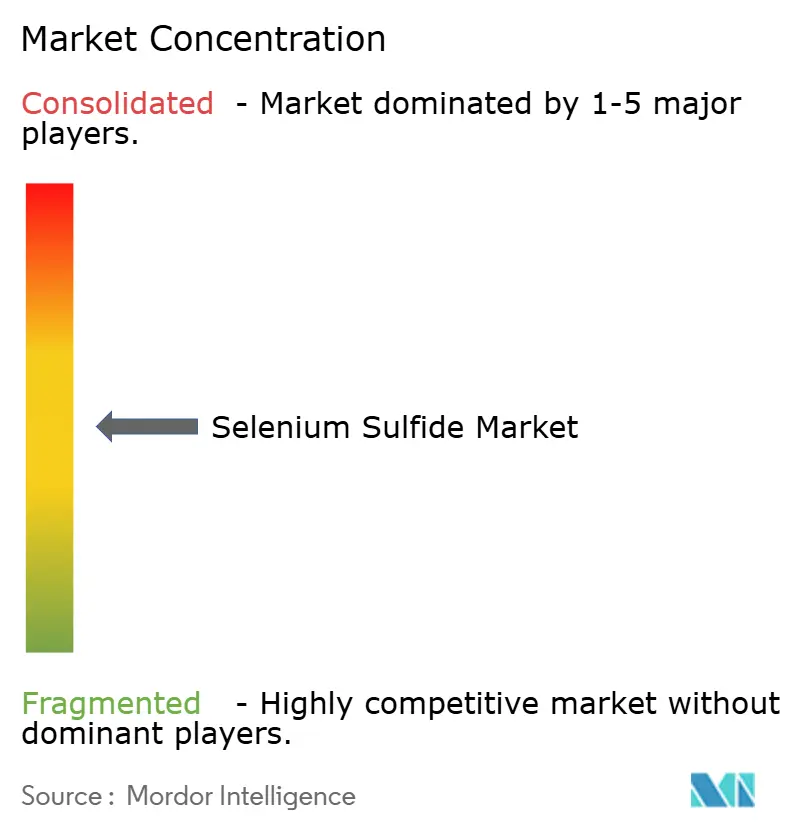
| Market Concentration | Medium |
Major Players *Disclaimer: Major Players sorted in no particular order Image © Mordor Intelligence. Reuse requires attribution under CC BY 4.0. | |
Selenium Sulfide Market Analysis by Mordor Intelligence
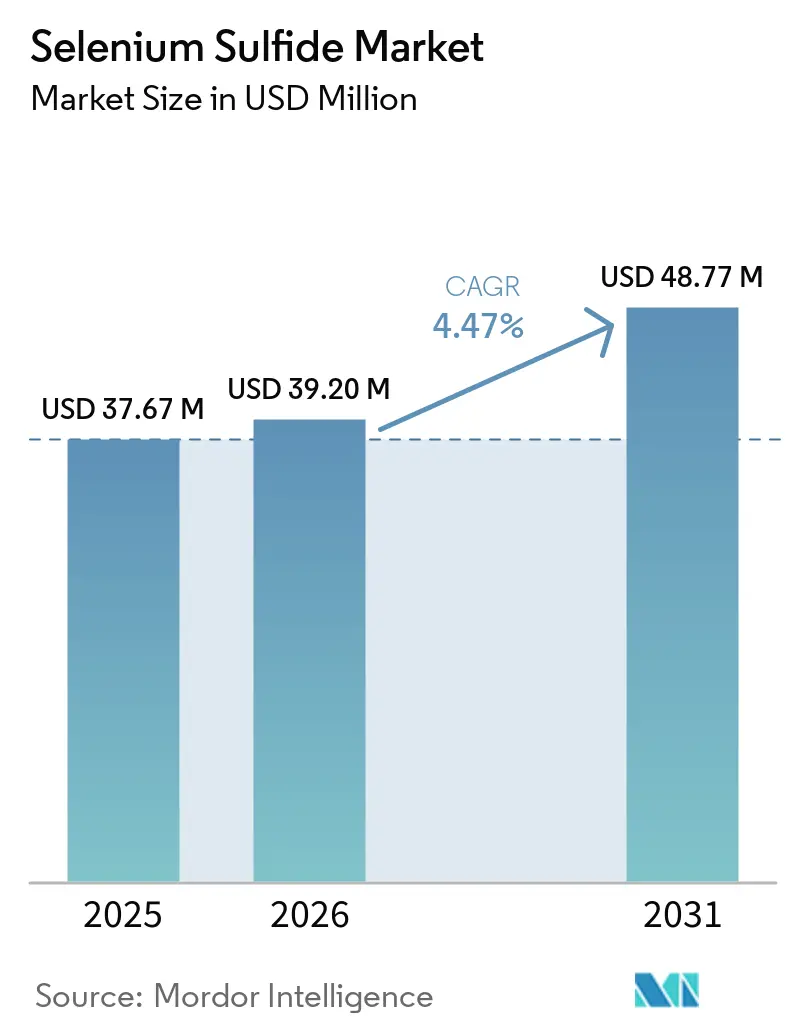
The selenium sulfide market size was valued at USD 37.67 million in 2025 and is estimated to grow from USD 39.20 million in 2026 to reach USD 48.77 million by 2031, at a CAGR of 4.47% during the forecast period (2026-2031). The selenium sulfide market is driven by recurring demand for therapeutic scalp care products, particularly among consumers managing dandruff and seborrheic dermatitis. The use of self-administered medicated products shifts treatment decisions toward pharmacies, online retailers, and other accessible distribution channels. Lower-concentration products can expand beyond clinical referrals when supported by evidence of safety and efficacy. Suppliers face pricing pressure in the shampoo segment as more products enter the over-the-counter (OTC) channel, while differentiated formulations and clinical support remain relevant. In Europe, the selenium sulfide market is influenced by reformulation activity following restrictions on zinc pyrithione in leave-on cosmetics.
Key Report Takeaways
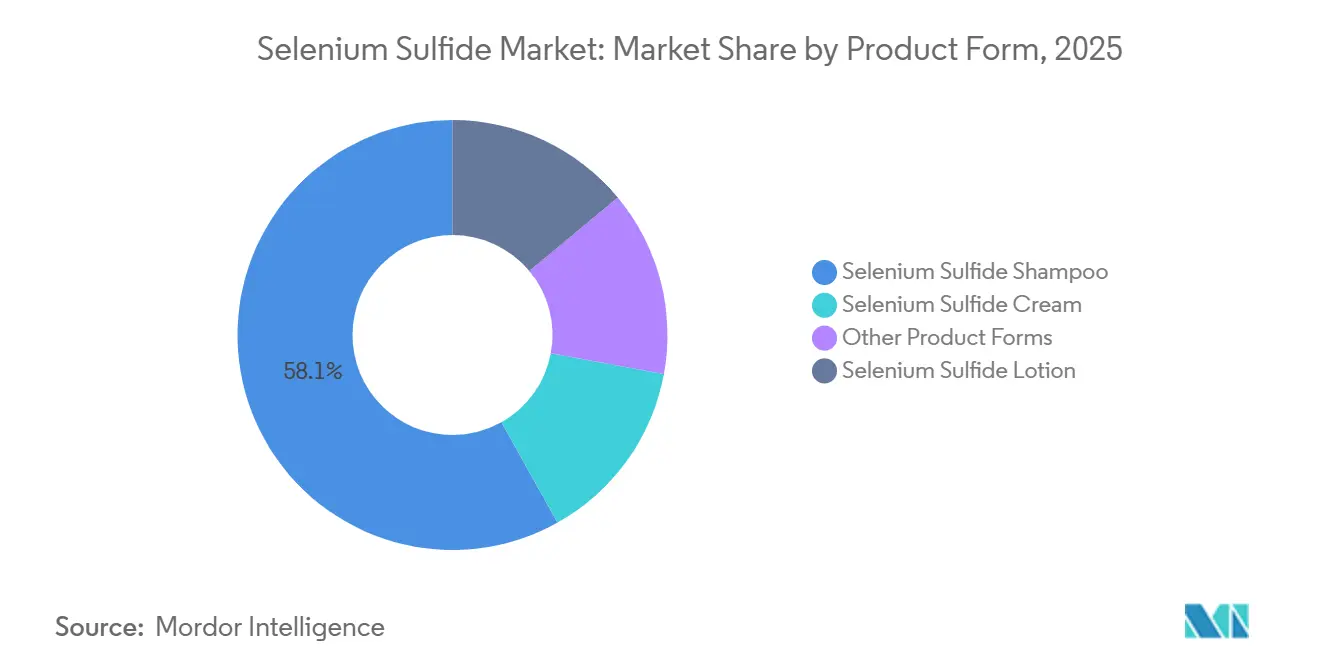
- By product form, selenium sulfide shampoo held 58.13% revenue share in 2025, while selenium sulfide lotion is forecast to grow at a CAGR of 4.78% through 2031.
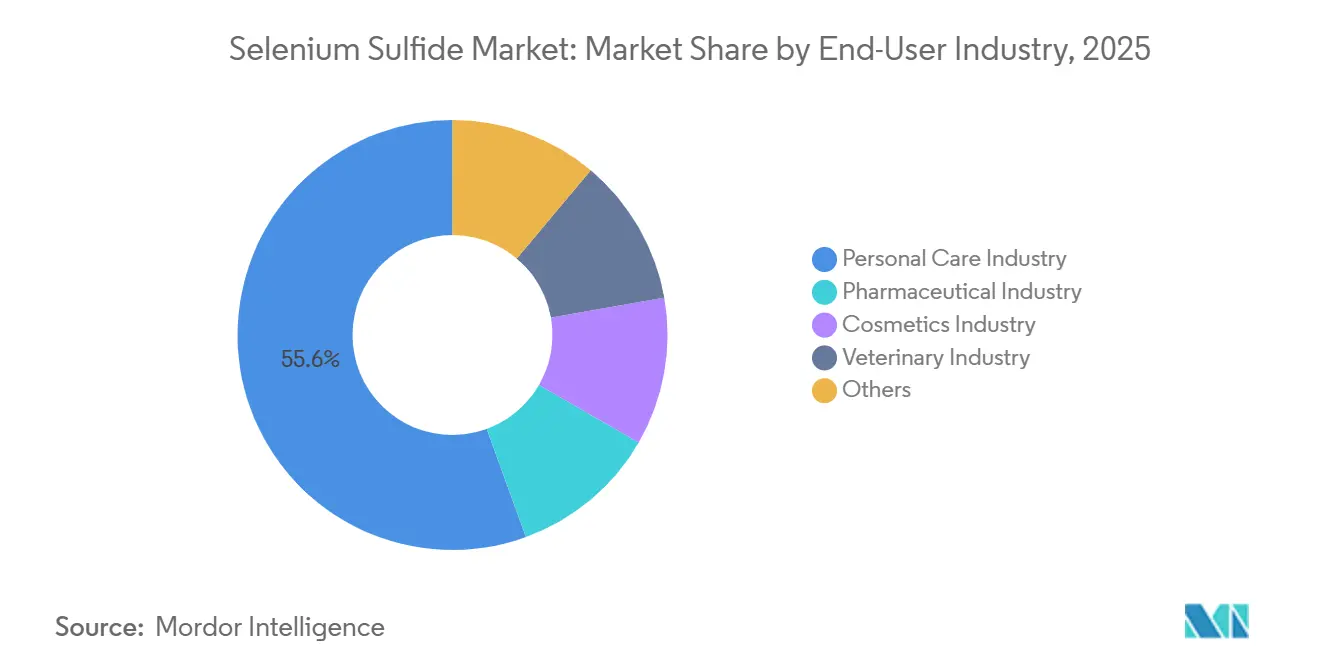
- By end-user industry, personal care accounted for 55.56% of revenue in 2025 and is forecast to record the highest CAGR of 5.33% through 2031.
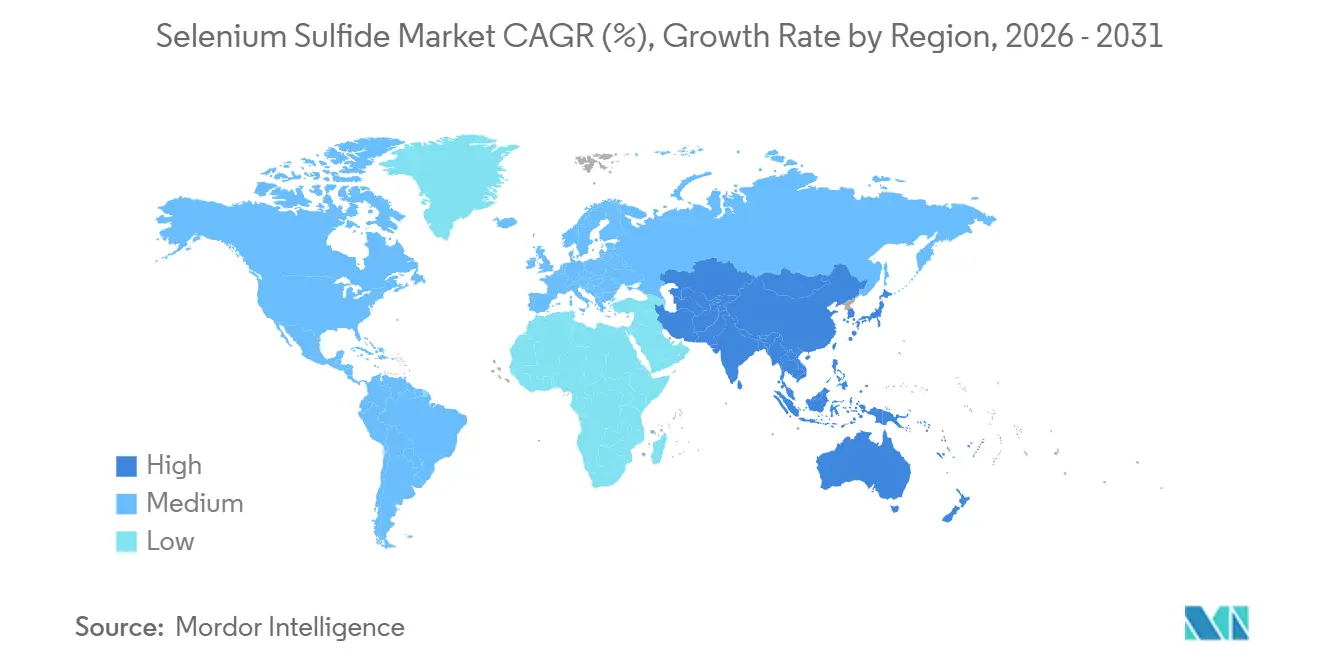
- By geography, North America held 34.79% revenue share in 2025, while Asia-Pacific is forecast to grow at the highest CAGR of 5.17% through 2031.
Note: Market size and forecast figures in this report are generated using Mordor Intelligence’s proprietary estimation framework, updated with the latest available data and insights as of January 2026.
Global Selenium Sulfide Market Trends and Insights
Drivers Impact Analysis*
| Drivers | (~) % Impact on CAGR Forecast | Geographic Relevance | Impact Timeline |
|---|---|---|---|
| Rising Prevalence of Dandruff and Seborrheic Dermatitis | +1.5% | Global, with higher relevance in North America, South Africa, and urban Asia-Pacific | Long term (≥ 4 years) |
| Expanding Dermatology and Antifungal Treatment Demand | +1.0% | North America, Europe, Australia, and urban Asia-Pacific | Medium term (2-4 years) |
| Growth of Medicated Personal Care Products | +0.8% | Global, with notable acceleration in China, India, and South Korea | Medium term (2-4 years) |
| Rising Pet Dermatology and Veterinary Care Spending | +0.4% | North America, Northern Europe, and Japan | Long term (≥ 4 years) |
| E-Commerce Expansion for OTC Dermatology Products | +0.6% | Global, with the strongest relevance in China, India, Southeast Asia, and the United States | Short term (≤ 2 years) |
| Source: Mordor Intelligence | |||
Rising Prevalence of Dandruff and Seborrheic Dermatitis
The selenium sulfide market is associated with the persistent burden of scalp conditions that often require repeated treatment. A 2025 review reported a global prevalence of seborrheic dermatitis of 4.38%, including an adult prevalence of 5.64%. The same review reported a prevalence of 8.82% in South Africa, the highest nationally recorded figure among the cited evidence. Dandruff, the mildest manifestation of the condition, affects an estimated 50% of the global adult population. The chronic and relapsing nature of these conditions contributes to repeat purchases of home-use products. The high reported prevalence of dandruff among adolescents also contributes to demand for lower-concentration, scalp barrier-focused formulations.
Expanding Dermatology and Antifungal Treatment Demand
The selenium sulfide market benefits from the integration of dermatology and medicated personal care. Dermatologists may recommend clinical-strength over-the-counter (OTC) products before escalating treatment to prescription options. The FDA labeling cited in the source material permits the use of 1% selenium sulfide in self-care products, while higher-strength product pathways address clinical demand[1]“Selenium Sulfide, Westminster Pharmaceuticals, LLC,” DailyMed, fda.report.. This distinction enables manufacturers to serve different patient needs through related product portfolios. Teledermatology can reduce barriers to specialist consultation in areas with fewer dermatologists. Digital consultations and pharmacy access can expand access to selenium sulfide formulations.
Growth of Medicated Personal Care Products
The selenium sulfide market is influenced by consumers seeking active treatment rather than cosmetic masking of dandruff. This shift contributes to demand for products with clinical evidence and clearly defined treatment claims. China is a relevant market for this trend, as efficacy-claim regulations require substantiation for anti-dandruff and oil-control claims. These requirements can favor active ingredients supported by relevant evidence. In India, selenium sulfide falls under the Central Drugs Standard Control Organization (CDSCO) framework across cosmetic and pharmaceutical product categories. Pharmacy chains and e-pharmacies provide retail access to the 1% concentration format.
Rising Pet Dermatology and Veterinary Care Spending
Veterinary care is a smaller, supplementary source of demand for the selenium sulfide market. Veterinary formulations serve a narrower customer base than consumer scalp-care products. Rising spending on pet health and dermatological care creates opportunities for manufacturers supplying veterinary-grade products. This opportunity is most relevant in North America, Northern Europe, and Japan. Its potential depends on product suitability, veterinary practice patterns, and local regulatory requirements.
Restraints Impact Analysis*
| Restraints | (~) % Impact on CAGR Forecast | Geographic Relevance | Impact Timeline |
|---|---|---|---|
| Regulatory Restrictions on Selenium Concentrations | -0.8% | EU, North America, and China | Short term (≤ 2 years) |
| Skin Irritation, Hair Discoloration, and Safety Concerns | -0.5% | Global, with greater relevance in Latin America and East Asia | Long term (≥ 4 years) |
| Competition From Ketoconazole, Zinc Pyrithione, and Botanical Alternatives | -0.6% | Global, with strong botanical demand in India, the Association of Southeast Asian Nations (ASEAN), and the EU markets | Medium term (2-4 years) |
| Source: Mordor Intelligence | |||
Regulatory Restrictions on Selenium Concentrations
The selenium sulfide market operates across jurisdictions with varying concentration limits and product classifications. The EU Cosmetics Regulation establishes conditions that manufacturers must assess before placing cosmetic products on the EU market[2]“Consolidated Text: Regulation (EC) No 1223/2009 on Cosmetic Products,” European Commission, eur-lex.europa.eu.. The source material identifies Omnibus Act VIII, effective since May 2026, as requiring additional formulation reviews for affected products. In the United States, FDA labeling and over-the-counter (OTC) requirements differentiate products by concentration and intended use. Companies marketing products across multiple regions may require separate stock-keeping units (SKUs), increasing compliance and inventory management requirements. Product labels also specify that selenium sulfide shampoos must maintain a pH below 6.5, which may limit the combination of active and conditioning ingredients.
Skin Irritation, Hair Discoloration, and Safety Concerns
Skin irritation, hair discoloration, and other safety concerns may limit repeat use of selenium sulfide products. These concerns are particularly relevant in regions where consumers frequently color their hair, including parts of Latin America and East Asia. Higher-concentration products require clear communication on proper use and tolerability. This factor supports demand for formulations with lower active concentrations. It also increases the importance of rinse-off formats, clear product instructions, and clinical evidence. These concerns may create opportunities for alternative scalp-care products.
*Our forecasts treat driver/restraint impacts as directional, not additive. The impact forecasts reflect baseline growth, mix effects, and variable interactions.
Segment Analysis
By Product Form: Shampoo Holds the Leading Position, While Lotion Serves Clinical Demand
Shampoo accounted for 58.13% of the selenium sulfide market share in 2025. Its position reflects OTC recognition, pricing, and dual cosmetic and therapeutic applications. The rinse-off format may reduce systemic selenium exposure, supporting its use in long-term scalp care routines. FDA labeling provides a defined pathway for OTC selenium sulfide products that meet applicable requirements. Pharmacy and online retail channels improve product accessibility. Shampoo remains the primary commercial format for selenium sulfide.
Lotion is forecast to grow at a CAGR of 4.78% through 2031, the highest rate among product forms. Its use is associated with tinea versicolor and other conditions requiring treatment over larger body surfaces. Dermatologists may prescribe higher-strength lotions when non-scalp skin requires extended antifungal contact time. This application creates a clinical-demand pathway distinct from that of shampoo. Creams address localized lesions but remain constrained by specialist prescription requirements in many markets. Foams and combination suspensions are smaller product formats; however, micronized particles are being evaluated to improve scalp distribution at lower active concentrations.



By End-User Industry: Personal Care Combines Leading Scale with the Fastest Growth
Personal care accounted for 55.56% of the selenium sulfide market share in 2025. The segment is supported by the mass-retail positioning of anti-dandruff shampoos and OTC access to medicated active ingredients. It is forecast to grow at a CAGR of 5.33% through 2031. This combination of market share and projected growth reflects demand for products that deliver efficacy while supporting scalp barrier function. Consumers are shifting from zinc pyrithione formulations toward selenium sulfide products with treatment-oriented claims. Consequently, the selenium sulfide market relies on accessible, clearly labeled personal care formats.
The pharmaceutical segment represents the second-largest end-user industry and focuses on prescription lotions and higher-concentration shampoos. Its customer base includes patients with clinically confirmed seborrheic dermatitis, tinea versicolor, and tinea capitis. The veterinary segment is smaller and addresses the needs of animal dermatology. Rising spending on pet dermatology may support incremental demand. Cosmetics include specialty salon and professional products containing cosmetic-grade selenium sulfide. Although this segment remains smaller than personal care, it can support formulation-led product development.
Geography Analysis
North America accounted for 34.79% of the selenium sulfide market share in 2025. Established OTC retail infrastructure and a defined Food and Drug Administration (FDA) framework support the region’s market position. Products are available through pharmacies, warehouse retailers, and online retail channels. The region’s next growth phase is expected to focus on higher-value products rather than broad-based unit sales expansion. Brands are emphasizing clinical-strength claims, microbiome-focused formulations, and treatment routines involving more than one product.
Asia-Pacific is projected to record the highest regional CAGR of 5.17% through 2031 in the selenium sulfide market. China, India, Japan, and South Korea are key countries in the regional outlook. China’s claim substantiation rules place greater emphasis on products supported by clinical evidence. India’s Central Drugs Standard Control Organization (CDSCO) framework classifies selenium sulfide as a cosmetic-pharmaceutical crossover ingredient. Japan and South Korea are smaller, high-value markets where premium scalp care is relevant. Thailand, Indonesia, and Vietnam offer additional potential for demand, as tropical conditions can contribute to Malassezia-related scalp disorders.
Europe is the second-largest region in the market analysis. Restrictions on zinc pyrithione in leave-on cosmetics have increased attention on selenium sulfide as a rinse-off antifungal alternative. Germany, France, the United Kingdom, and the Nordic countries are key markets in the region. South America, the Middle East, and Africa remain smaller markets, with limited adoption of prescription-grade formats. In the Middle East, Saudi Arabia and the UAE are supported by healthcare spending, the expansion of dermatology clinics, and interest in clinically validated scalp care.

Competitive Landscape
The selenium sulfide market is moderately fragmented across finished formulations and active ingredient supply. Procter & Gamble, L’Oréal, and Opella compete in branded over-the-counter (OTC) products through pharmacy distribution networks and established consumer brands. Specialty chemical producers supply the active ingredient to formulation companies. Indian manufacturers, including Omkar Specialty Chemicals and Macsen Laboratories, provide formulations for clients in line with applicable manufacturing frameworks. Chinese producers, including Hubei Xinjing New Material and Guangzhou Baosijie Biotechnology, are expanding their market presence. The DailyMed label for Silvagle Selenium Sulfide Anti-Dandruff Shampoo, dated June 2026, indicates ongoing product registration activity in the United States.
Clinical evidence, formulation innovation, and channel control increasingly shape competition. Vichy Dercos uses dermatologist recommendations and clinical positioning within its scalp-care portfolio. Perrigo operates as an OTC private-label supplier, enabling retailers to offer selenium sulfide products with comparable quality. Private-label products can increase price competition when active ingredient concentration is the primary comparison factor. Companies are also developing micronized suspensions and nanogel delivery systems to improve scalp distribution and address irritation or discoloration concerns. The selenium sulfide market, therefore, supports brands that establish clear positioning on efficacy and tolerability.
Microbiome evidence also supports product differentiation. A 2026 prospective study found that adolescents who used a 0.5% selenium sulfide shampoo three to four times weekly for four weeks saw a reduction in median dandruff scores from 16 to 6. The study also reported a decline in transepidermal water loss from 35.66 to 31.12 g/m²·h, along with changes in the scalp microbiome. Clinical evidence for lower-concentration products can help premium brands target adolescents and first-time users of medicated shampoos. Teledermatology can support brands by building physician relationships and leveraging established OTC product portfolios. These factors sustain competitive rivalry while limiting substitution by undifferentiated products.
Selenium Sulfide Industry Leaders
Procter & Gamble
Opella
L'Oréal S.A.
Perrigo Company plc
Glenmark Pharmaceuticals Ltd.
- *Disclaimer: Major Players sorted in no particular order

Recent Industry Developments
- June 2026: Guangzhou Baosijie Biotechnology Co. filed an FDA DailyMed label for Silvagle Selenium Sulfide Anti-Dandruff Shampoo (1%), supporting the availability of selenium sulfide personal care products from Chinese manufacturers in the US over-the-counter (OTC) dermatology segment.
- April 2025: Unilever launched Selenium Sulfide PRO technology under the Clear (Qingshuang) brand in China. The formulation combines pharmaceutical-grade selenium sulfide with a three-patent platform for scalp barrier repair and anti-dandruff benefits.


Global Selenium Sulfide Market Report Scope
Selenium sulfide is a medicated chemical compound used in topical formulations, including shampoos and lotions. It serves as an antifungal and anti-infective active ingredient for the management of conditions associated with fungal microorganisms on the skin and scalp.
The selenium sulfide market is segmented by product form, end-user industry, and geography. By product form, the market is segmented into selenium sulfide shampoo, selenium sulfide lotion, selenium sulfide cream, and other product forms. By end-user industry, the market is segmented into pharmaceutical industry, personal care industry, cosmetics industry, veterinary industry, and others. The report also covers market size and forecasts for selenium sulfide across 15 countries in major regions. The market sizes and forecasts are provided in terms of value (USD).
| Selenium Sulfide Shampoo |
| Selenium Sulfide Lotion |
| Selenium Sulfide Cream |
| Other Product Forms |
| Pharmaceutical Industry |
| Personal Care Industry |
| Cosmetics Industry |
| Veterinary Industry |
| Others |
| Asia-Pacific | China |
| India | |
| Japan | |
| South Korea | |
| ASEAN Countries | |
| Rest of Asia-Pacific | |
| North America | United States |
| Canada | |
| Mexico | |
| Europe | Germany |
| United Kingdom | |
| France | |
| Italy | |
| NORDIC Countries | |
| Rest of Europe | |
| South America | Brazil |
| Argentina | |
| Rest of South America | |
| Middle East and Africa | Saudi Arabia |
| South Africa | |
| Rest of Middle East and Africa |
| By Product Form | Selenium Sulfide Shampoo | |
| Selenium Sulfide Lotion | ||
| Selenium Sulfide Cream | ||
| Other Product Forms | ||
| By End-User Industry | Pharmaceutical Industry | |
| Personal Care Industry | ||
| Cosmetics Industry | ||
| Veterinary Industry | ||
| Others | ||
| By Geography | Asia-Pacific | China |
| India | ||
| Japan | ||
| South Korea | ||
| ASEAN Countries | ||
| Rest of Asia-Pacific | ||
| North America | United States | |
| Canada | ||
| Mexico | ||
| Europe | Germany | |
| United Kingdom | ||
| France | ||
| Italy | ||
| NORDIC Countries | ||
| Rest of Europe | ||
| South America | Brazil | |
| Argentina | ||
| Rest of South America | ||
| Middle East and Africa | Saudi Arabia | |
| South Africa | ||
| Rest of Middle East and Africa | ||


Key Questions Answered in the Report
What is current market size of Selenium Sulfide Market?
The selenium sulfide market size was valued at USD 37.67 million in 2025 and is estimated to grow from USD 39.20 million in 2026 to reach USD 48.77 million by 2031, at a CAGR of 4.47% during the forecast period (2026-2031).
Which product form leads to selenium sulfide sales?
Shampoo led with a 58.13% share in 2025 because it is widely available through OTC, pharmacy, and online retail channels.
Which end-user area is growing fastest?
Personal care is projected to grow at a CAGR of 5.33% through 2031 and held a 55.56% share in 2025.
Which region has the fastest projected growth?
Asia-Pacific is projected to record the highest regional CAGR of 5.17% through 2031.
Page last updated on:





