
Seizure Detection Devices Market Size and Share
Market Overview
| Study Period | 2021 - 2032 |
|---|---|
| Market Size (2027) | USD 92.93 Million |
| Market Size (2032) | USD 168.07 Million |
| Growth Rate (2027 - 2032) | 12.58 % |
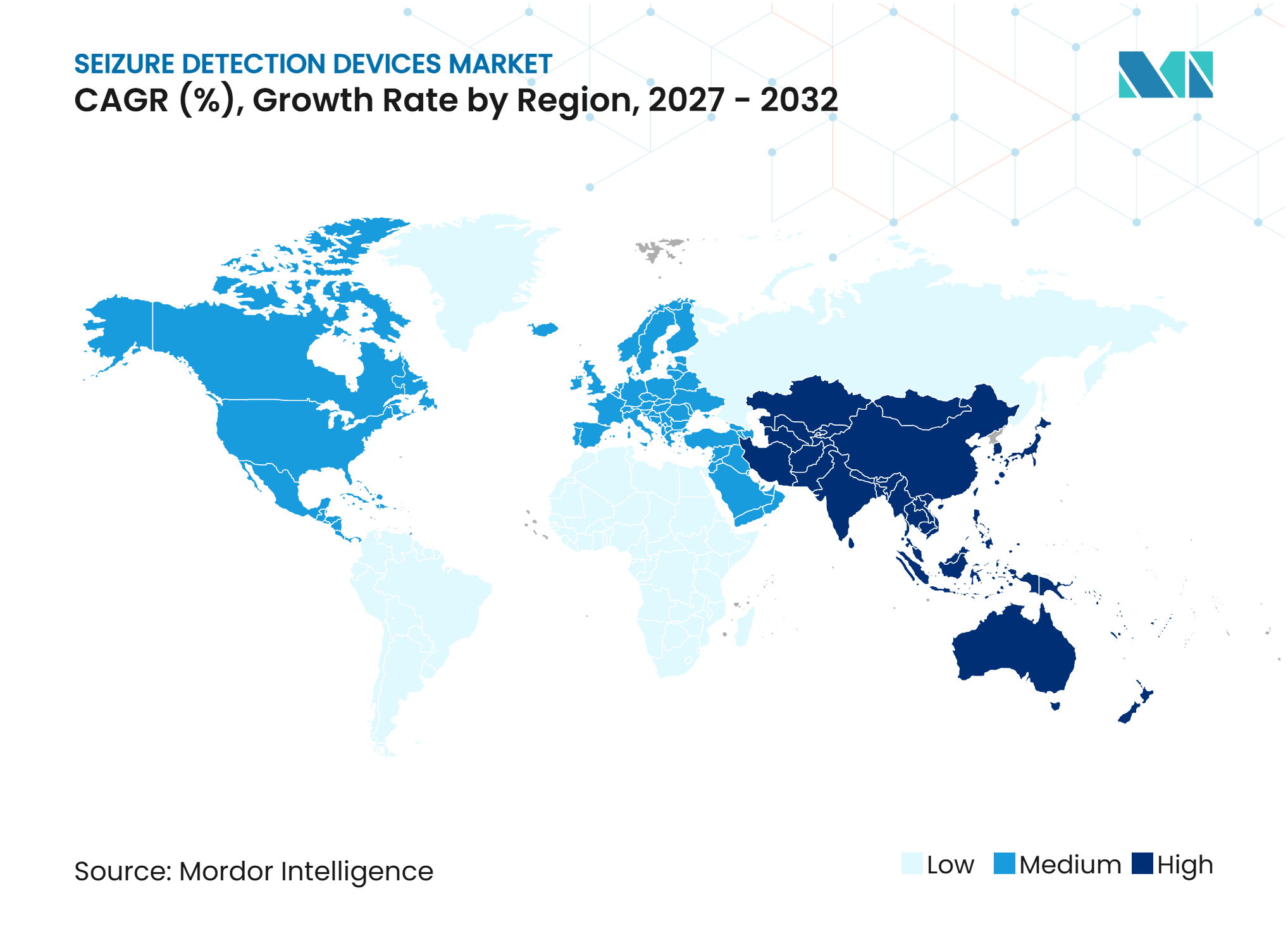
| Fastest Growing Market | Asia-Pacific |
| Largest Market | North America |
| Market Concentration | Medium |
Major Players *Disclaimer: Major Players sorted in no particular order Image © Mordor Intelligence. Reuse requires attribution under CC BY 4.0. | |
Seizure Detection Devices Market Analysis by Mordor Intelligence
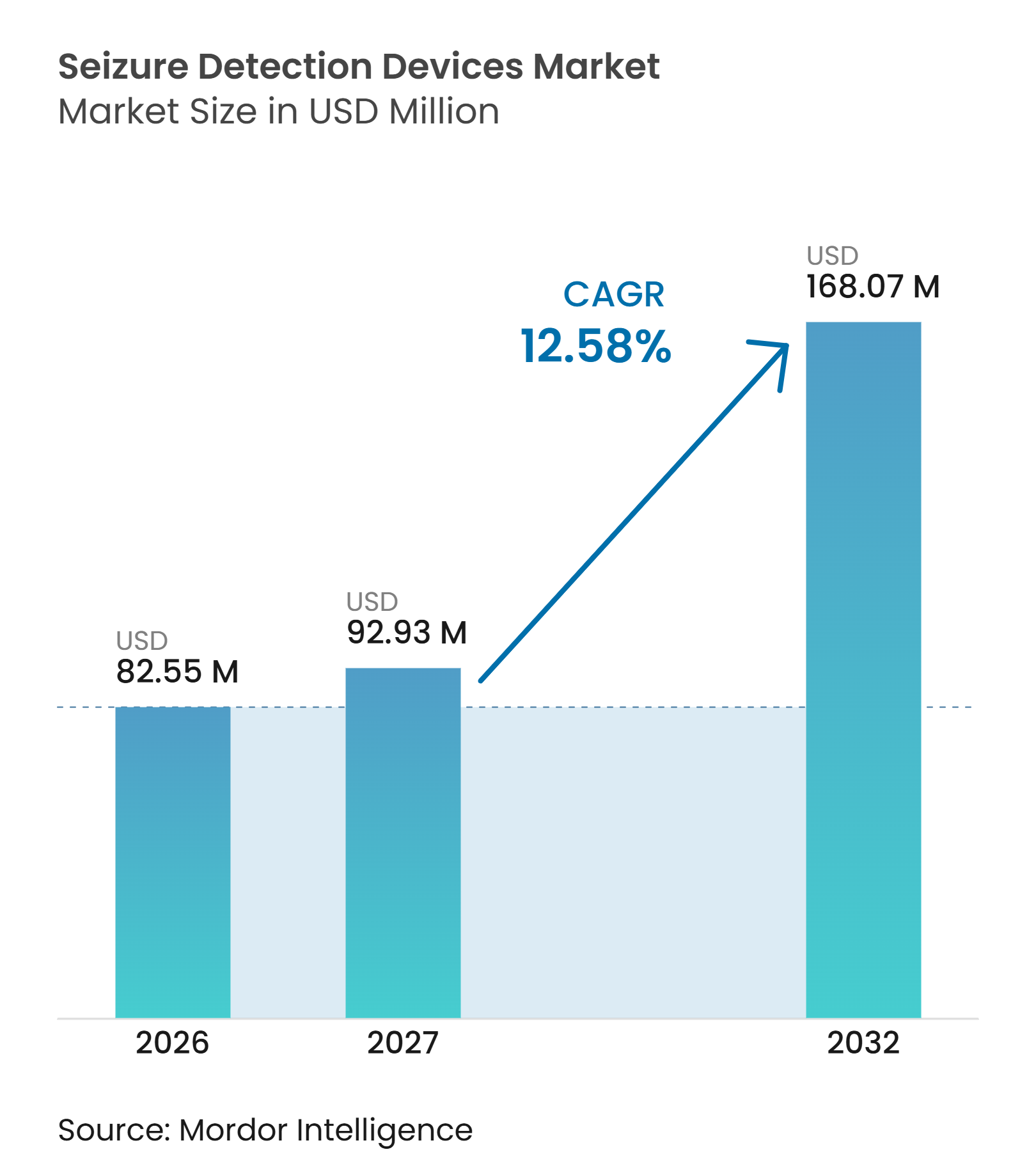
The seizure detection devices market is estimated to be valued at USD 82.55 million in 2026 and is projected to reach USD 168.07 million by 2032, registering a CAGR of 12.58% during the forecast period (2027-2032). The seizure detection devices market is expanding because many people with epilepsy still lack timely specialist assessment and electrophysiological testing, particularly in lower-resource settings. Wearable sensors, connected EEG systems, and automated alerts are moving monitoring from inpatient settings into homes and ambulatory care. This shift creates an opportunity for providers to extend observation periods without using more inpatient capacity. The seizure detection devices market also faces a clear performance requirement because systems must reduce missed events and false alerts before they can gain wider clinical acceptance. Competition is therefore centered on clinical validation, regulatory clearance, and practical integration into care pathways.
Key Report Takeaways
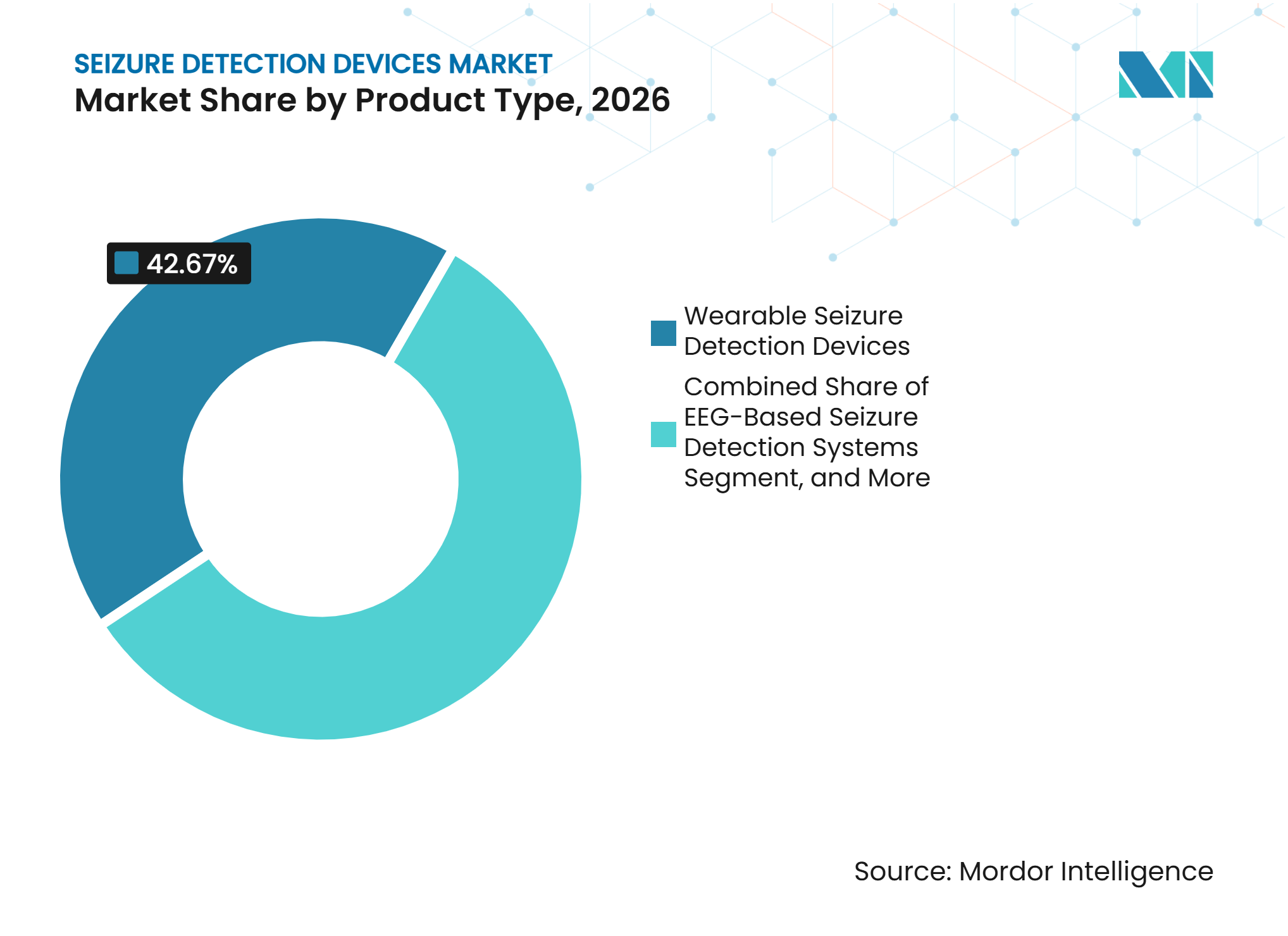
- By product type, wearable devices held 42.67% of the seizure detection devices market share in 2026, while EEG-based systems are projected to grow at a 12.88% CAGR through 2032.
- By detection technology, EEG accounted for 38.26% of the seizure detection devices market share in 2026, while multimodal monitoring is forecast to expand at a 13.24% CAGR through 2032.
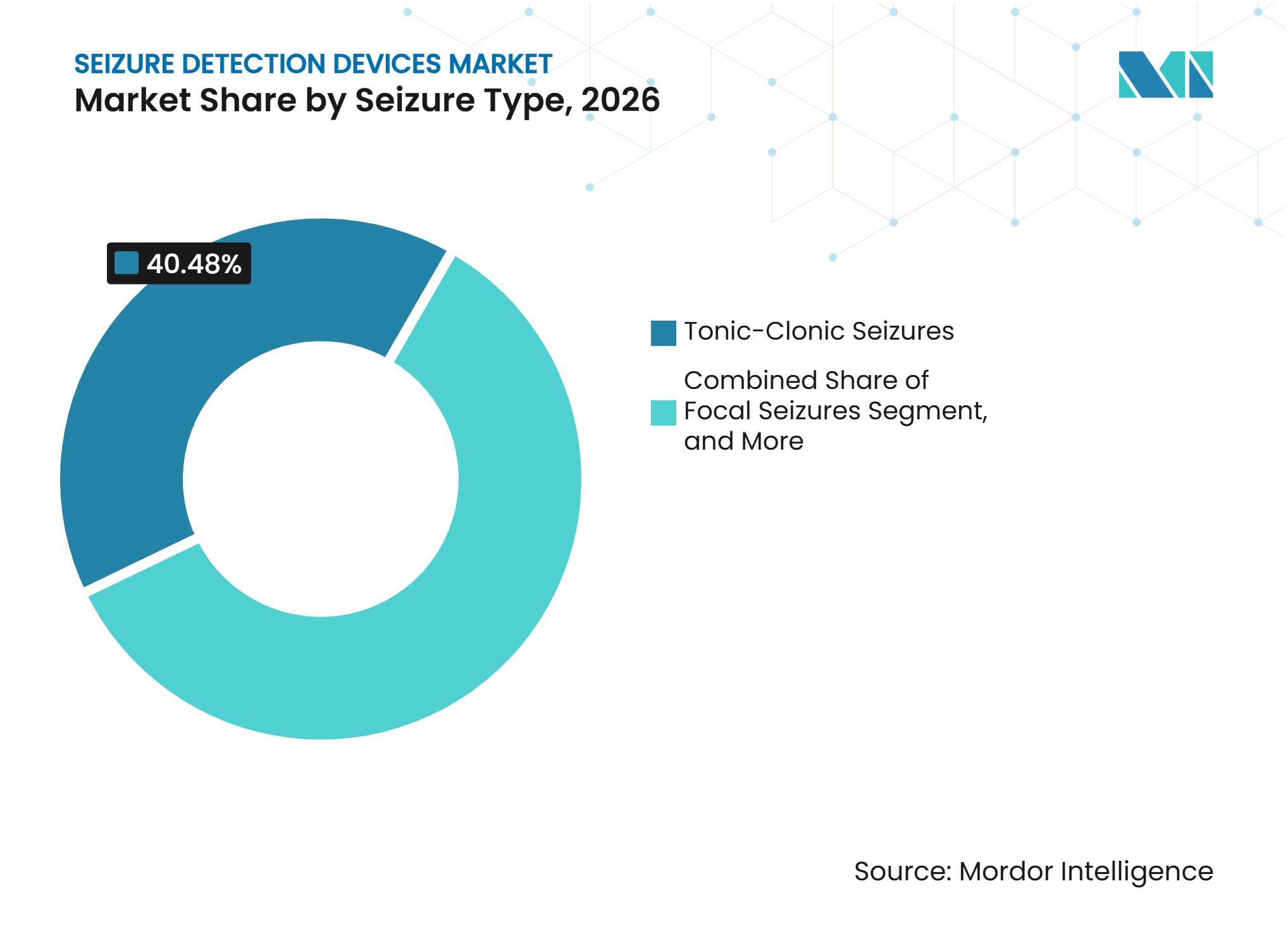
- By seizure type, generalized tonic-clonic seizures represented 40.48% of demand in 2026, while focal seizures are forecast to grow at a 13.65% CAGR through 2032.
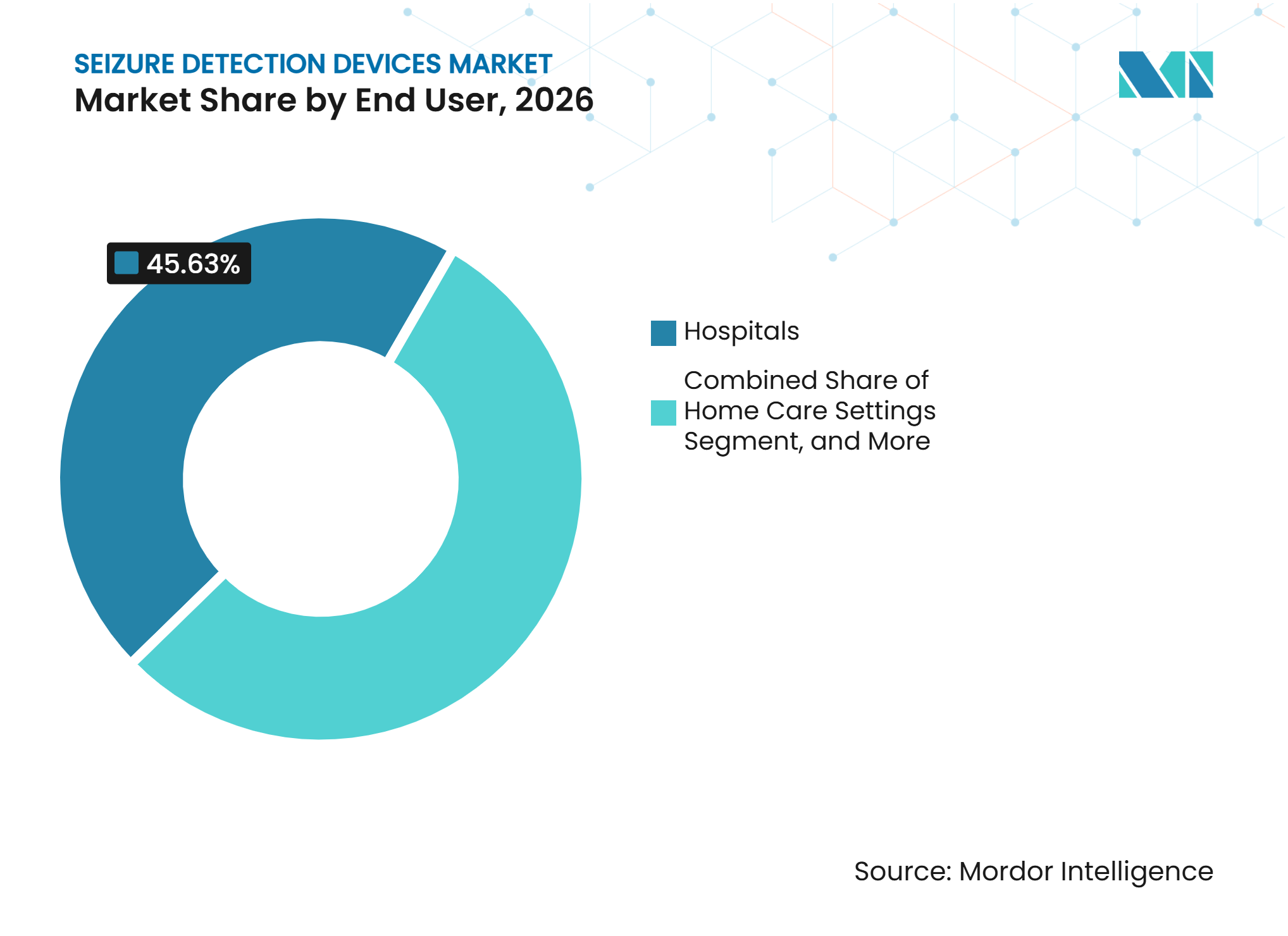
- By end user, hospitals accounted for 45.63% of demand in 2026, while home care settings and individual patients are projected to grow at a 14.49% CAGR through 2032 in the seizure detection devices market.
- By geography, North America held 38.25% of global demand in 2026, while Asia-Pacific is forecast to grow at a 15.39% CAGR through 2032 in the seizure detection devices market.
Note: Market numbers in this report are based on Mordor Intelligence's proprietary estimation framework, which combines nine months of actuals with Q4 projections for base year 2026.
Market Trends and Insights
Drivers Impact Analysis of Seizure Detection Devices Market of Seizure Detection Devices Market*
| Driver | (~) % Impact on CAGR Forecast | Geographic Relevance | Impact Timeline |
|---|---|---|---|
| Rising Epilepsy Prevalence and Diagnostic Undersupply | +2.5% | Global, highest unmet demand in APAC, MEA, South America | Long term (≥ 4 years) |
| Growing Adoption of Wearable and Remote Monitoring | +2.8% | North America and Europe leading, APAC accelerating | Short term (≤ 2 years) |
| Expansion of Home-Based and Ambulatory Epilepsy Care | +2.0% | North America, Europe, Australia | Medium term (2-4 years) |
| AI-Enabled Detection and Multimodal Biosensing | +2.3% | Global, early-mover concentration in North America, Europe, Japan | Medium term (2-4 years) |
| Wider Regulatory Clearances for Children and Nighttime Use | +1.5% | North America, Europe | Short term (≤ 2 years) |
| Caregiver Alert Economics for Unwitnessed Seizures | +1.2% | North America, Europe, Australia | Medium term (2-4 years) |
| Source: Mordor Intelligence | |||
Rising Epilepsy Prevalence and Diagnostic Undersupply
The seizure detection devices market draws demand from a large population that needs continuous monitoring outside specialist centers. The World Health Organization reports that 50 million people have epilepsy globally and that nearly 80% live in low- and middle-income countries.[1] A 2025 meta-analysis reported a pooled global epilepsy prevalence of 7.57 per 1,000 people and found an upward trend through 2025. The 2024 Global Burden of Disease analysis documented substantial geographic variation in epilepsy burden, reinforcing the need for care models that do not rely only on specialist facilities. The seizure detection devices market can address part of this gap by supporting longer observation in settings where access to EEG services is limited. Demand will remain linked to the capacity of health systems to identify patients and connect them with follow-up care.
Growing Adoption of Wearable and Remote Monitoring
Wearable and remote monitoring is making the seizure detection devices market more accessible to patients who need continuous observation outside the hospital. Empatica received FDA clearance for EpiMonitor in June 2025, expanding use of the EmbracePlus wristband for children aged 6 years and older. A 2025 review covering 67 studies found accelerometers were the most commonly used sensor type, appearing in 61.2% of studies.[2] These products can reduce stigma when monitoring is integrated into familiar consumer devices. They also make caregiver alerts possible in home and community settings, although the clinical value remains dependent on seizure type and alert accuracy.
AI-Enabled Detection and Multimodal Biosensing
AI-enabled analysis is broadening the clinical role of the seizure detection devices market beyond a basic warning signal. A 2026 review of 23 validation studies found 97% sensitivity for behind-the-ear EEG detection and 86.2% event-level sensitivity for reduced-channel wearable EEG.[3] The same review reported a false detection rate of 0.162 per hour for reduced-channel wearable EEG in 158 participants. Ceribell reported that its Clarity algorithm was evaluated in 359 adult patients across 3 academic medical centers, linking additional EEG-detected seizure activity with higher risk of severe disability or death. These findings support the use of automated review for seizure-burden measurement and clinical prioritization. Broader adoption will require datasets that represent varied patients and care settings.
Wider Regulatory Clearances for Children and Nighttime Use
Recent clearances are expanding the seizure detection devices market into pediatric and nighttime monitoring. Epitel received expanded FDA clearance in March 2025 for REMI Wireless EEG monitoring in patients as young as 1 year. The FDA cleared NightWatch+ for prescription nocturnal seizure monitoring in children aged 4 to 16 years. Ceribell received FDA clearance in November 2025 for its Clarity algorithm for electrographic seizure detection in preterm neonates. These approvals expand potential access for patient groups that had limited device options. They also make age-specific validation and compliance requirements more important for developers.
Restraints Impact Analysis of Seizure Detection Devices Market of Seizure Detection Devices Market*
| Restraint | (~) % Impact on CAGR Forecast | Geographic Relevance | Impact Timeline |
|---|---|---|---|
| False-Positive and False-Negative Detection Burden | -1.8% | Global, most acute in ambulatory and pediatric settings | Short term (≤ 2 years) |
| Reimbursement Gaps and High Total Cost of Ownership | -2.2% | Global, most restrictive in APAC, MEA, South America | Long term (≥ 4 years) |
| Limited Cross-Patient Generalization of AI Models | -1.3% | Global, delays regulatory clearance in Europe and APAC | Medium term (2-4 years) |
| Sensor Battery, Connectivity, and Charging Continuity Failures | -0.9% | Global, higher risk in low-connectivity rural settings | Medium term (2-4 years) |
| Source: Mordor Intelligence | |||
False-Positive and False-Negative Detection Burden
Device accuracy remains a restraint for the seizure detection devices market because missed seizures and unnecessary alerts can disrupt care. A 2026 prospective study found that a wrist-worn accelerometry device detected all 16 generalized convulsive seizures but detected none of the 510 focal seizures observed over 373 monitoring days. The study also recorded 29 false alarms, largely linked to everyday movement.[4] A 2025 validation study found that reduced-channel wearable EEG had more false detections in ambulatory use than in a monitored unit, with all ambulatory false positives occurring in pediatric participants. These results favor multimodal and EEG-centered systems where clinical use requires detection of a wider range of seizure types. They also require providers to establish response protocols that account for alert burden.
Reimbursement Gaps and High Total Cost of Ownership
Reimbursement and price barriers continue to limit access in the seizure detection devices market. A 2025 review found that validated devices were priced from USD 1,530 to USD 1,785, while more than half of prospective users indicated that they would spend less than USD 200. The review found full insurance reimbursement in only 4% of surveyed countries. Coverage pathways can make home monitoring more viable, but their availability remains uneven across countries and payers. Manufacturers need clinical and economic evidence that addresses both device cost and the cost of ongoing monitoring services.
*Our forecasts treat driver/restraint impacts as directional, not additive. The impact forecasts reflect baseline growth, mix effects, and variable interactions.
Seizure Detection Devices Market Segment Analysis
By Product Type:
Wearable Devices Lead While EEG-Based Systems Gain GroundWearable devices held 42.67% of product-type demand in 2026. Their use reflects demand for discreet, continuous monitoring and compatibility with familiar consumer hardware. The product category includes wrist-worn platforms that measure movement, skin conductance, or related physiological signals. EpiMonitor and NightWatch+ expanded the range of cleared wearable options during 2025. These systems are most aligned with visible motor events and nighttime caregiver alerts. Their limitation is that peripheral signals do not reliably identify focal-onset seizures.
EEG-based systems are projected to advance at a 12.88% CAGR through 2032, the fastest rate among product categories. This growth stems from the need to identify focal seizures that wristbands and bed sensors can miss. The seizure detection devices market size for EEG-based systems is supported by clinical demand for electrographic evidence rather than indirect signs. Bed and movement sensors remain relevant for pediatric and residential uses where wearable adherence may be difficult. Video and audio systems can improve inpatient documentation and support seizure characterization. Implantable and subcutaneous EEG options provide longer-term recording, but procedural demands and cost limit use to a narrower clinical population.



By Detection Technology:
EEG Provides the Reference Signal While Multimodal Systems AdvanceEEG represented 38.26% of detection-technology demand in 2026. It remains the reference method for detecting electrographic activity and for evaluating focal-onset events. American Clinical Neurophysiology Society guidance supports continuous EEG monitoring for high-risk neonatal and pediatric patients, which reinforces its role in institutional care. EEG can provide evidence that peripheral sensors cannot capture. This distinction is important where a treatment decision requires confirmation of seizure activity. Reduced-channel and wearable EEG designs are making the technology more suitable for extended use outside the hospital.
Multimodal monitoring is expected to grow at a 13.24% CAGR through 2032. It combines EEG with accelerometry, ECG, electrodermal activity, photoplethysmography, or related signals. The 2025 review found activity measures in 53.7% of studies, cardiovascular measures in 49.3%, brain activity in 35.8%, and skin conductance in 34.3%. This pattern shows why no single sensor can capture the full physiological range of seizures. Accelerometry remains widely deployed because it has low power requirements and fits consumer wearables. The seizure detection devices industry is therefore moving toward signal combinations that can balance detection performance with comfort and battery life.
By Seizure Type:
Generalized Tonic-Clonic Events Drive Current Demand While Focal Seizures Create NeedGeneralized tonic-clonic seizures accounted for 40.48% of demand in 2026. These events are visible and involve motor changes that current wrist-worn and bed-based systems can identify more readily. They are also associated with Sudden Unexpected Death in Epilepsy, which can motivate caregiver adoption. A 2026 study found a median alert latency of 25 seconds for an FDA-cleared wrist-worn device, and caregivers received 15 of 16 detected alerts. This supports the role of alerts in enabling timely caregiver response. The American Epilepsy Society, Epilepsy Foundation, and Danny Did Foundation state that evidence remains insufficient to show that noninvasive devices prevent Sudden Unexpected Death in Epilepsy.
Focal seizures are forecast to grow at a 13.65% CAGR through 2032. Their importance reflects cognitive and functional consequences as well as the difficulty of detection with peripheral biosignals. The seizure detection devices market size for focal seizure monitoring is closely tied to adoption of EEG and multimodal systems. Nighttime detection remains a practical use case for products that monitor heart rate and movement during sleep. Developers need validation across seizure presentations rather than performance evidence centered on convulsive events. Providers also need to explain clearly what each device can and cannot detect before recommending use.

By End User:
Hospitals Remain Central While Home Care ExpandsHospitals accounted for 45.63% of end-user demand in 2026. EEG units, emergency departments, and intensive care units use point-of-care EEG and automated analysis to support rapid clinical evaluation. Ceribell reported that patients with a peak seizure burden above 90% had a 3.4-fold higher likelihood of severe disability or death at discharge. This association supports continuous monitoring where patients have acute neurological risk. Hospitals also provide the staff, infrastructure, and governance needed to respond to alerts. These factors keep institutional settings important even as monitoring moves into the home.
Home care settings and individual patients are projected to grow at a 14.49% CAGR through 2032. Home video EEG can support seizure characterization without using inpatient beds. King's College London reported that home-based monitoring can reduce diagnostic costs by nearly 1/3 compared with inpatient alternatives. The seizure detection devices market is likely to require AI-supported review as recordings extend from days to weeks. Epitel positions REMI for multi-week home recording, beyond the 72-hour limit associated with conventional ambulatory EEG. Clinics and epilepsy centers can use these models to expand observation while reserving inpatient care for patients who need it most.
Geography Analysis
North America
North America held 38.25% of global demand in 2026. The seizure detection devices market benefits in the region from established epilepsy monitoring centers, a steady FDA clearance pipeline, and growing attention to payer coverage. The United States has a large population requiring epilepsy care, and some patients remain poorly controlled despite treatment. EpiMonitor received clearance that broadened the patient groups eligible for monitoring in 2025. FDA Class II requirements remain a central compliance factor for manufacturers that want access to the U.S. care system. The region also provides early adoption opportunities for systems that combine point-of-care EEG with software-based clinical review.
Asia-Pacific
Asia-Pacific is projected to grow at a 15.39% CAGR through 2032. The seizure detection devices market size in the region is supported by unmet epilepsy needs, healthcare infrastructure investment, and expanding digital care channels. The World Health Organization notes that the majority of people with epilepsy live in low- and middle-income countries, many of which are in this region. China has a large undiagnosed population and is increasing domestic medical device activity. India is expanding telemedicine capacity, which can help providers reach patients where specialist access is constrained. Japan and South Korea have supportive conditions for wearable EEG adoption because of established health coverage and high digital health use. Empatica expanded EpiMonitor access to Australia, New Zealand, and Canada, creating a distribution footprint that includes the Pacific region. Regulatory pathways and local reimbursement decisions will determine how quickly consumer-style monitoring converts into clinical use.
Europe, Middle East and Africa, and South America
Europe, the Middle East and Africa, and South America show different demand conditions within the seizure detection devices market. Europe has an established clinical base and growing interest in home video EEG as an alternative to inpatient admissions. Neuraxpharm and mjn-neuro announced plans for a 2026 European launch of EPISERAS, a CE MDR Class IIa-certified AI earpiece for people with drug-resistant epilepsy. CE MDR certification is a major compliance factor for developers seeking European access. Africa has a high epilepsy burden and faces cost, infrastructure, and specialist-care barriers. The World Health Organization's Intersectoral Global Action Plan on Epilepsy and Other Neurological Disorders is encouraging national attention to these gaps. In South America, Eurofarma and SK Biopharmaceuticals formed Mentis Care in October 2025 to develop AI-powered seizure prediction and monitoring platforms for Latin America and other markets. These regions will need business models that match local purchasing capacity and care infrastructure.
Competitive Landscape
Market Concentration
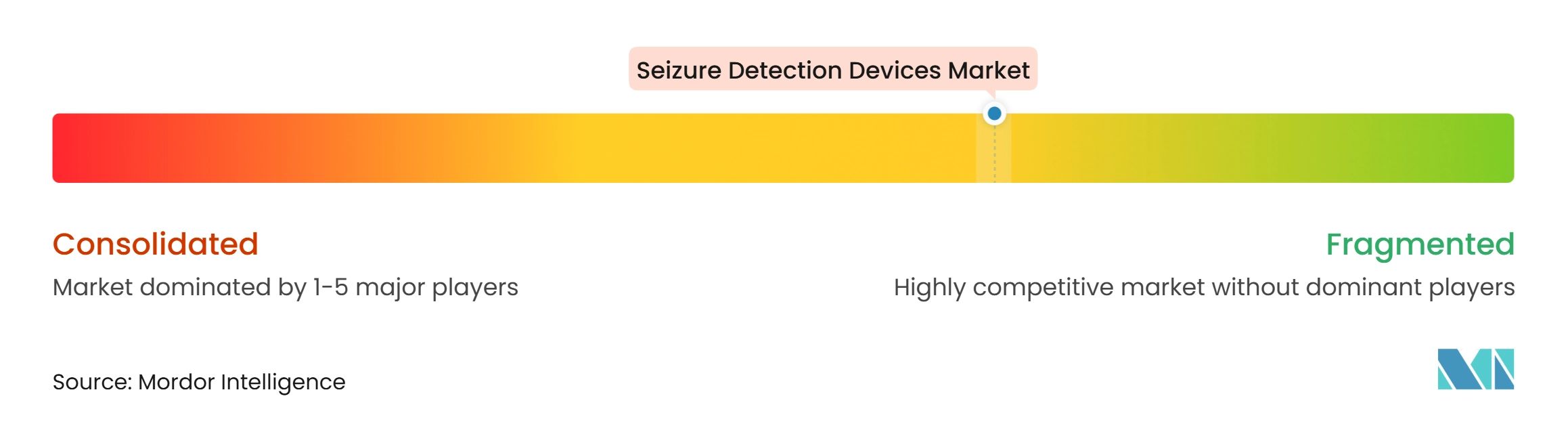
The seizure detection devices market is moderately fragmented. Established patient-monitoring companies have hospital relationships and installed neurodiagnostic systems, while newer companies focus on specialized EEG and software platforms. Large suppliers can use existing clinical infrastructure and recurring software services to support procurement discussions. Ceribell has differentiated its offering through rapid point-of-care EEG setup and cloud-connected analysis. FDA Class II compliance under 21 CFR 882.1580 remains an important threshold for access to the U.S. device market. Medtronic and GE HealthCare expanded their strategic alliance in March 2026 to include bedside monitoring, telemetry, ambulatory monitoring, and wireless wearable solutions. This combination of scale and regulatory familiarity remains valuable in hospital purchasing.
Focal seizure detection and pediatric home monitoring remain areas with limited coverage. Peripheral wrist-worn sensors do not reliably detect focal-onset events, which leaves room for EEG-based and multimodal platforms. Epitel expanded REMI clearance for patients as young as 1 year, positioning the platform for pediatric home monitoring. Neuraxpharm and mjn-neuro are preparing EPISERAS for European commercialization, adding an AI earpiece approach to the competitive set. These programs show that specialized clinical needs can be an entry route for smaller developers.
Data quality, intellectual property, and clinical validation shape competitive positioning in the seizure detection devices market. The 2025 review found that 65.7% of published AI seizure-detection studies used closed-source training data. Closed datasets can limit independent testing and make it harder to show performance across diverse patient groups. Companies with prospective studies and regulatory evidence may be better placed to establish clinician trust. Cadwell made a strategic investment in Seer Medical in April 2025, bringing Seer Home video EEG into Cadwell's ambulatory and clinical EEG portfolio. Competitive strategies therefore combine device design, validated algorithms, partnerships, and home-care service delivery.
Seizure Detection Devices Industry Leaders
-
BrainScope Company Inc.
-
GE HealthCare
-
Koninklijke Philips NV
-
Masimo Corporation
-
Medtronic plc
- *Disclaimer: Major Players sorted in no particular order
Seizure Detection Devices Market Companies Covered in this Report
- Brain Sentinel Inc.
- BrainScope Company Inc.
- Cadwell
- Ceribell Inc.
- CGTec Kommunikationssysteme GmbH
- Compumedics
- DannuWave Ltd.
- Empatica Srl
- Epitel Inc.
- EpiWatch Inc.
- GE Healthcare
- Koninklijke Philips
- LivaNova
- Masimo
- Medtronic
- Natus Medical
- Neuro Event Labs Oy
- Nihon Kohden
- Seer Medical Pty Ltd
- UNEEG medical A/S
Recent Industry Developments in Seizure Detection Devices Market
- November 2026: Ceribell expands its point-of-care brain monitoring platform with the commercial launch of a delirium monitoring solution, adding a second neurological use case to hospitals already deploying the platform for seizure monitoring.
- June 2026: Ceribell published a Critical Care Medicine study across 359 patients demonstrating that each additional hour of Clarity AI-detected seizure activity nearly doubles the risk of severe disability or death.
- March 2026: Medtronic plc and GE HealthCare expanded their multiyear global strategic alliance to include ambulatory monitoring and wireless wearable technologies, with a joint research and development roadmap for next-generation wearable solutions
Global Seizure Detection Devices Market Report Scope
As per the report scope, seizure detection devices are medical devices designed to identify, monitor, and record seizure activity in individuals with epilepsy and other seizure-related neurological conditions. These devices use technologies such as electroencephalography (EEG), wearable sensors, motion detection, and artificial intelligence-based algorithms to recognize abnormal electrical brain activity or seizure-associated physiological changes. They provide real-time or continuous monitoring and may generate alerts to patients, caregivers, or healthcare professionals. These devices support seizure management, patient safety, and clinical assessment.
The seizure detection devices market is segmented by product type, detection technology, seizure type, end user, and geography. By product type, the market is segmented into wearable seizure detection devices, bed and movement sensors, EEG-based seizure detection systems, video and audio seizure monitoring systems, implantable and subcutaneous EEG monitoring devices, and others. By detection technology, the market is segmented into accelerometry, electrodermal activity, heart rate and photoplethysmography, electroencephalography, electromyography, and others. By seizure type, the market is segmented into generalized tonic-clonic seizures, focal seizures, hyperkinetic seizures, nocturnal seizures, seizure clusters, and others. By end user, the market is segmented into hospitals, neurology clinics, home care settings, ambulatory & outpatient clinics, and others. By geography, the market is segmented into North America, Europe, Asia-Pacific, the Middle East and Africa, and South America. The market report also covers estimated market sizes and market trends for 17 countries across major regions worldwide. The report offers market value (in USD) for the above segments.
Segmentation Overview
| Wearable Seizure Detection Devices |
| Bed and Movement Sensors |
| EEG-Based Seizure Detection Systems |
| Video and Audio Seizure Monitoring Systems |
| Implantable and Subcutaneous EEG Monitoring Devices |
| Others |
| Accelerometry |
| Electrodermal Activity |
| Heart Rate and Photoplethysmography |
| Electroencephalography |
| Electromyography |
| Others |
| Generalized Tonic-Clonic Seizures |
| Focal Seizures |
| Hyperkinetic Seizures |
| Nocturnal Seizures |
| Seizure Clusters |
| Others |
| Hospitals |
| Neurology Clinics |
| Home Care Setting |
| Ambulatory and Outpatient Clinics |
| Others |
| North America | United States |
| Canada | |
| Mexico | |
| Europe | Germany |
| United Kingdom | |
| France | |
| Italy | |
| Spain | |
| Rest of Europe | |
| Asia-Pacific | China |
| India | |
| Japan | |
| Australia | |
| South Korea | |
| Rest of Asia-Pacific | |
| Middle East and Africa | GCC |
| South Africa | |
| Rest of Middle East and Africa | |
| South America | Brazil |
| Argentina | |
| Rest of South America |
| By Product Type | Wearable Seizure Detection Devices | |
| Bed and Movement Sensors | ||
| EEG-Based Seizure Detection Systems | ||
| Video and Audio Seizure Monitoring Systems | ||
| Implantable and Subcutaneous EEG Monitoring Devices | ||
| Others | ||
| By Detection Technology | Accelerometry | |
| Electrodermal Activity | ||
| Heart Rate and Photoplethysmography | ||
| Electroencephalography | ||
| Electromyography | ||
| Others | ||
| By Seizure Type | Generalized Tonic-Clonic Seizures | |
| Focal Seizures | ||
| Hyperkinetic Seizures | ||
| Nocturnal Seizures | ||
| Seizure Clusters | ||
| Others | ||
| By End User | Hospitals | |
| Neurology Clinics | ||
| Home Care Setting | ||
| Ambulatory and Outpatient Clinics | ||
| Others | ||
| By Geography | North America | United States |
| Canada | ||
| Mexico | ||
| Europe | Germany | |
| United Kingdom | ||
| France | ||
| Italy | ||
| Spain | ||
| Rest of Europe | ||
| Asia-Pacific | China | |
| India | ||
| Japan | ||
| Australia | ||
| South Korea | ||
| Rest of Asia-Pacific | ||
| Middle East and Africa | GCC | |
| South Africa | ||
| Rest of Middle East and Africa | ||
| South America | Brazil | |
| Argentina | ||
| Rest of South America | ||
Key Questions Answered in the Report
What is driving demand for seizure detection devices?
Demand is supported by unmet epilepsy monitoring needs, wider wearable access, home-care models, and automated EEG review. More patients can be observed outside specialist units when care pathways support follow-up.
Which seizure detection product category is the largest?
Wearable devices held 42.67% of demand in 2026. Their position reflects discreet continuous monitoring and compatibility with consumer devices, although focal-seizure detection remains limited.
Which technology is growing fastest for seizure monitoring?
Multimodal monitoring is forecast to grow at a 13.24% CAGR through 2032. It combines signals that can improve coverage across seizure types and guide review of ambiguous events.
Can wrist-worn seizure devices detect focal seizures?
Evidence in the supplied study showed that a wrist-worn accelerometry device missed all 510 focal seizures. EEG and multimodal systems are needed when focal events are a clinical concern.
Why is home-based seizure monitoring expanding?
Home monitoring can extend observation without using inpatient beds. Home video EEG has been associated with lower diagnostic costs than inpatient alternatives.
Which region has the strongest projected growth?
Asia-Pacific is forecast to grow at a 15.39% CAGR through 2032. Unmet care needs, healthcare investment, and wider digital care access are supporting regional adoption.