
Sedation In ICU Setting Market Size and Share
Market Overview
| Study Period | 2021 - 2032 |
|---|---|
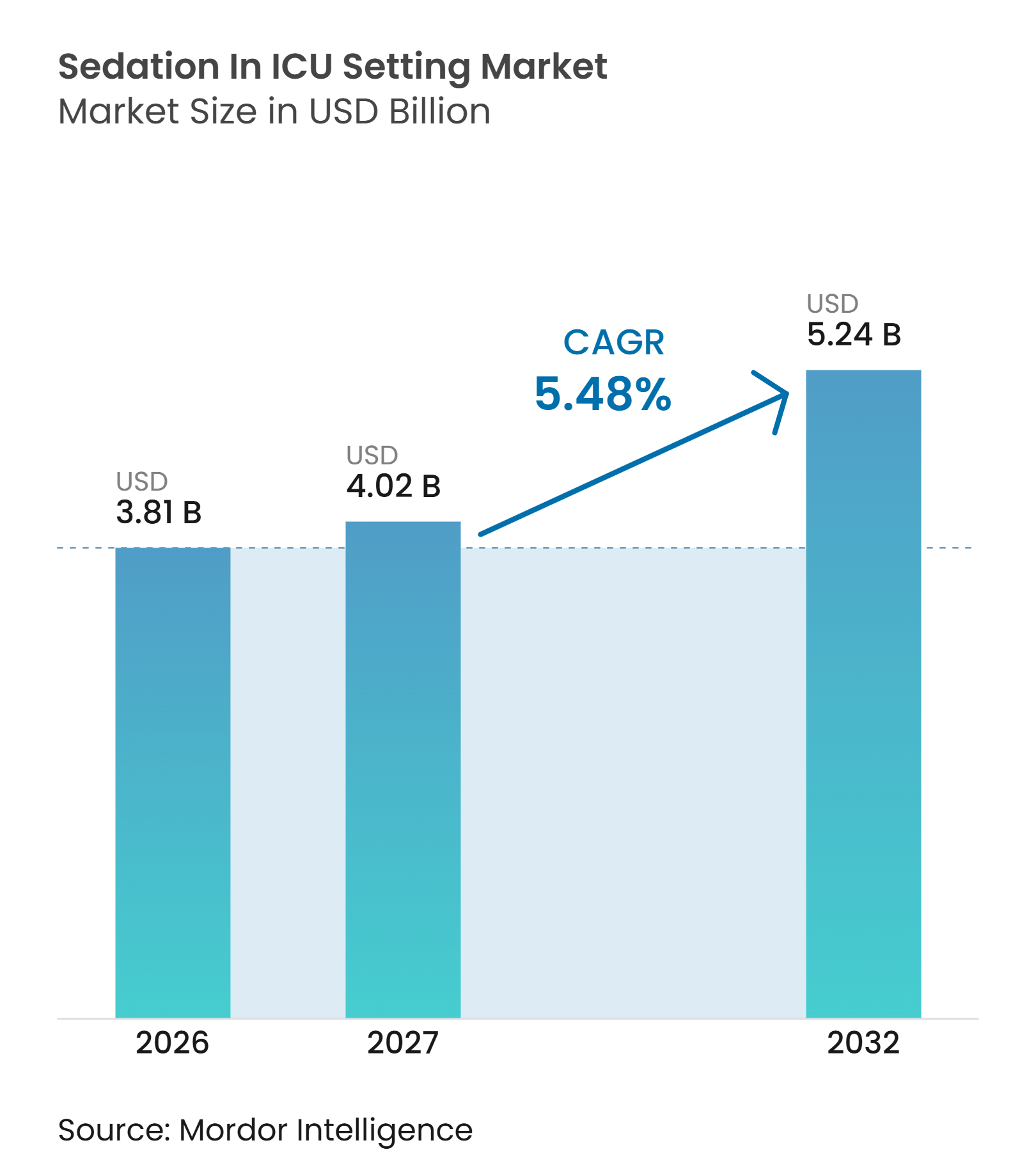
| Market Size (2027) | USD 4.02 Billion |
| Market Size (2032) | USD 5.24 Billion |
| Growth Rate (2027 - 2032) | 5.48 % |
| Fastest Growing Market | Asia-Pacific |
| Largest Market | North America |
| Market Concentration | Low |
Major Players *Disclaimer: Major Players sorted in no particular order Image © Mordor Intelligence. Reuse requires attribution under CC BY 4.0. | |
Sedation In ICU Setting Market Analysis by Mordor Intelligence
The sedation in the ICU setting market is expected to be valued at USD 3.81 billion in 2026. It is projected to reach USD 5.24 billion by 2032, growing at a CAGR of 5.48% during the 2027–2032 forecast period. Growth rests on a larger mechanically ventilated patient population and the wider use of lighter, protocol-based sedation. The 2025 focused update to the SCCM PADIS guidance conditionally favors dexmedetomidine over propofol when light sedation and delirium reduction are clinical priorities. This preference can influence hospital formulary decisions over several budget cycles. The sedation in ICU setting market also reflects a shift in spending toward premium agents, even where protocol-based care reduces sedative use per patient-day. Inhaled sedation and dexmedetomidine therefore present a different revenue opportunity from high-volume generic propofol.
Key Report Takeaways
- By drug class, propofol held 38.54% of the sedation in ICU setting market share in 2026, while dexmedetomidine is forecast to grow at a 5.92% CAGR through 2032.
- By route of administration, intravenous delivery held 76.37% revenue share in 2026, while inhalation is forecast to grow at a 6.22% CAGR through 2032.
- By application, mechanical ventilation sedation held 41.68% revenue share in 2026, while delirium and agitation management is forecast to grow at a 6.71% CAGR through 2032 in the sedation in ICU setting market.
- By end user, hospitals held 72.43% revenue share in 2026, while specialty clinics and diagnostic centers are forecast to grow at a 7.38% CAGR through 2032 in the sedation in ICU setting market.
- By geography, North America held a 39.02% revenue share in 2026, while Asia-Pacific is forecast to grow at a 7.93% CAGR through 2032.
Note: Market numbers in this report are based on Mordor Intelligence's proprietary estimation framework, which combines nine months of actuals with Q4 projections for base year 2026.
Market Trends and Insights
Drivers Impact Analysis of Sedation in ICU Setting Market of Sedation In ICU Setting Market*
| Driver | (~) % Impact on CAGR Forecast | Geographic Relevance | Impact Timeline |
|---|---|---|---|
| Rising ICU Admissions and Mechanical Ventilation Demand | +1.5% | Global, highest concentration in North America, Europe, and APAC | Short term (≤ 2 years) |
| Growing Preference for Light Sedation and Delirium Reduction | +1.2% | North America & Europe first; rapid spill-over to APAC and MEA | Medium term (2–4 years) |
| Dexmedetomidine Adoption Under Updated PADIS Guidance | +0.9% | North America & EU primary; early gains in Japan, Australia, South Korea | Medium term (2–4 years) |
| Expansion of ICU Capacity in Asia-Pacific and Emerging Markets | +1.1% | APAC core (China, India, ASEAN); spill-over to GCC, South Africa | Medium term (2–4 years) |
| Shift Toward Analgesia-First and Protocolized Sedation | +0.7% | North America, EU, Australia, Brazil — protocol-mature healthcare systems | Long term (≥ 4 years) |
| Adoption of Inhaled Sedation for Predictable Awakening | +0.3% | EU (Germany largest commercial market), US entry targeted 2027 | Long term (≥ 4 years) |
| Source: Mordor Intelligence | |||
Rising ICU Admissions and Mechanical Ventilation Demand
Mechanically ventilated patients remain the central source of demand for ICU sedation agents. A JAMA study covering 3.45 million U.S. ICU admissions found that 23.7% involved invasive mechanical ventilation.[1] Vasopressor co-use rose from 7.2% in 2014 to 21.6% in 2023, indicating a more clinically complex ICU population. A nationwide Chinese analysis reported an invasive mechanical ventilation incidence of 186.5 per 100,000 population across 2,837 hospitals.[2] Australia recorded 45,600 hospitalizations involving continuous ventilatory support in 2024-25, which consumed 4.7 million hours of care.[3] These patterns support steady demand in the sedation in ICU setting market because aging, sepsis, and critical care capacity expansion are not closely tied to short-term economic conditions.
Light Sedation, Delirium Reduction, and PADIS-Driven Dexmedetomidine Adoption
Light-sedation protocols are changing drug selection in protocol-mature ICUs. A 2026 meta-analysis of 26 randomized trials involving 4,993 patients found that dexmedetomidine reduced ventilation duration by 0.60 days and ICU stay by 0.94 days.[4] The analysis also reported a delirium odds ratio of 0.58, with a larger effect against midazolam than propofol. The 2025 SCCM update supports dexmedetomidine conditionally for mechanically ventilated patients when light sedation and delirium reduction are priorities. The A2B trial reported a median time to successful extubation of 136 hours with dexmedetomidine and 162 hours with propofol, but it did not meet its formal superiority threshold. These findings support formulary gains for dexmedetomidine, while the sedation in ICU setting market retains propofol and benzodiazepines in cost-sensitive settings.
ICU Capacity Expansion in Asia-Pacific and Emerging Markets
Government investment is moving latent critical care demand into active medicine consumption. China set an ICU capacity target of 15 beds per 100,000 people by the end of 2025 and 18 by 2027. The policy also specifies a nurse-to-bed ratio of 1:3, which requires broader staffing and consumable support. In India, AIIMS Bhubaneswar is commissioning 150 ICU beds, and Andhra Pradesh is developing critical care blocks across 24 government hospitals. The 2025 Asia Pacific Critical Care Societies Summit identified ICU capacity as the region’s leading near-term priority. Singapore and Australia have premium protocols comparable to North America, while Indonesia and Vietnam face lower bed density and slower adoption of higher-cost agents. The sedation in ICU setting market consequently grows faster in areas where new beds are paired with trained staff and structured sedation protocols.
Analgesia-First Protocols and Inhaled Sedation Adoption
Analgesia-first care and standardized awakening practices are changing the level and mix of drug use. A 2025 nursing review found that paired spontaneous awakening and breathing trial protocols reduced ventilation and sedation time by 50%. These protocols can lower total sedative use per patient-day while supporting demand for agents suited to controlled, lighter sedation. Sedana Medical’s inhaled isoflurane program offers a route option designed for predictable awakening and opioid reduction. The company reported that both U.S. pivotal trials met their noninferiority endpoints against propofol and showed statistically significant opioid reduction. Germany accounted for more than half of the company’s 2025 commercial revenue, illustrating the role of progressive European practice in early uptake. This drug-device model could give the sedation in ICU setting market a revenue stream that is less exposed to generic intravenous pricing.
Restraints Impact Analysis of Sedation in ICU Setting Market of Sedation In ICU Setting Market*
| Restraint | (~) % Impact on CAGR Forecast | Geographic Relevance | Impact Timeline |
|---|---|---|---|
| Hemodynamic Adverse Effects and Propofol Infusion Syndrome Risk | −0.5% | Global, most acute in institutions with limited cardiac monitoring capacity | Short term (≤ 2 years) |
| Shortages and Supply Interruptions for Critical Injectable Drugs | −0.4% | North America, Europe, ANZ — markets dependent on a narrow generic supplier base | Short term (≤ 2 years) |
| Training and Monitoring Requirements for Titrated Infusions | −0.3% | APAC and MEA lower-income settings; spill-over to rural North America and Eastern Europe | Medium term (2–4 years) |
| Uncertain Reimbursement for Drug-Device Inhaled Sedation | −0.2% | EU markets outside Germany; US (pre-FDA approval) | Long term (≥ 4 years) |
| Source: Mordor Intelligence | |||
Hemodynamic Adverse Effects and Propofol Infusion Syndrome Risk
Sedation agents have safety limits that can constrain dosing and protocol design. The FDA label for Diprivan advises against infusion rates above 4 mg/kg/hour in ICU patients because of propofol infusion syndrome risk. This syndrome includes metabolic acidosis, rhabdomyolysis, and cardiac failure. In the A2B trial, severe bradycardia occurred in 33% of dexmedetomidine-treated patients and 20% of propofol-treated patients. Cardiac monitoring is therefore important when hospitals use titrated infusions. Facilities with limited monitoring capacity can remain cautious about premium agents, which limits adoption in some lower-resource ICUs. Safety performance and delivery precision remain meaningful points of competition across the sedation in ICU setting market.
Injectable Drug Shortages, Training Needs, and Inhaled Sedation Reimbursement Uncertainty
Supply interruptions can force substitutions and make hospital procurement less predictable. ASHP reported propofol discontinuations by Dr. Reddy’s in 2026 and Teva in 2023, leaving Fresenius Kabi, Pfizer, Amneal, and Avenacy as active U.S. suppliers named in the draft. A 2025 American College of Physicians paper identified concentration, quality issues, and pricing structures as root causes of drug shortages. Skilled staff and continuous monitoring are also needed to titrate infusions, especially in lower-income parts of Asia-Pacific and the Middle East and Africa. Inhaled sedation carries separate training, equipment, and reimbursement requirements outside Germany and before U.S. authorization. These factors can delay adoption even when clinical evidence is favorable. They also make supply reliability and hospital implementation support important competitive capabilities.
*Our forecasts treat driver/restraint impacts as directional, not additive. The impact forecasts reflect baseline growth, mix effects, and variable interactions.
Sedation In ICU Setting Market Segment Analysis
By Drug Class:
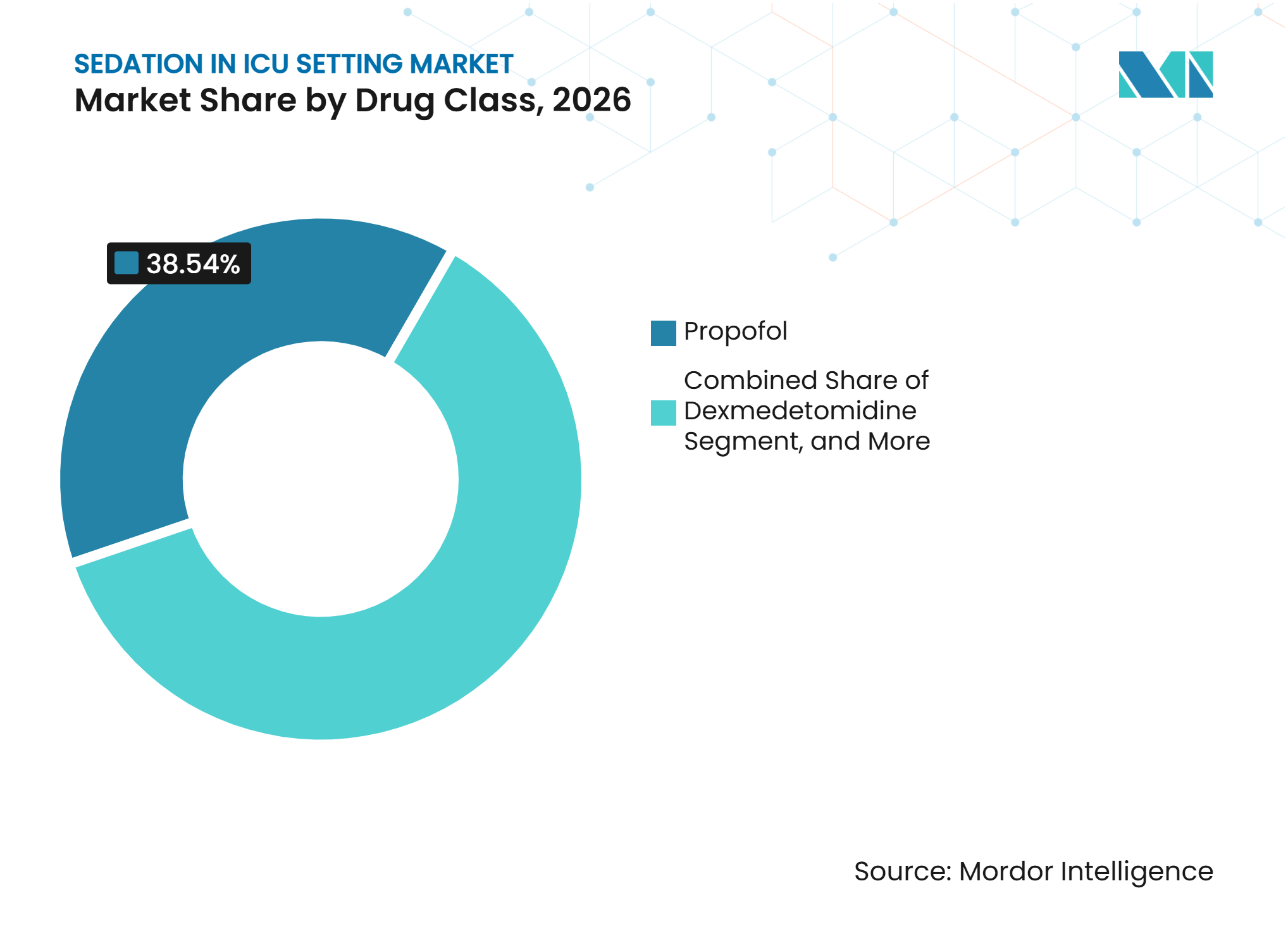
Propofol Leads While Dexmedetomidine Gains Clinical SupportPropofol held 38.54% of the sedation in ICU setting market share in 2026, supported by broad generic availability and its rapid recovery profile. It remains common in nurse-led awakening trials because continuous intravenous infusion can be adjusted at the bedside. Its leading position also reflects long-established use across ICUs. The 2025 PADIS update nevertheless conditionally favors dexmedetomidine for light-sedation situations that prioritize delirium reduction. That change is prompting formulary reviews in hospitals with mature protocols. Propofol volume can rise without equivalent revenue growth where generic competition persists.
Dexmedetomidine is projected to grow at a 5.92% CAGR through 2032. Its evidence base now includes 29 randomized trials considered in the focused PADIS update. Benzodiazepines continue to serve cost-sensitive settings and remain useful where monitoring resources are constrained. Ketamine is gaining use as an opioid-sparing adjunct in analgesia-first protocols. Remimazolam’s ICU indication was discontinued in Japan after reports of unexpected accumulation during prolonged infusion in critically ill patients. The sedation in ICU setting industry is therefore moving toward differentiated use rather than a uniform replacement of established drug classes.



By Route of Administration:
Intravenous Delivery Remains Standard While Inhalation ExpandsIntravenous delivery held a 76.37% revenue share in 2026, making it the established route for mechanically ventilated patients. Hospitals can manage continuous infusions with familiar bedside equipment and monitoring processes. Propofol and dexmedetomidine fit this care pathway because clinicians can make rapid dose adjustments. Oral and other routes remain limited in ICU sedation. The large installed base of infusion practice keeps intravenous delivery central to the sedation in ICU setting market. Hospital safety procedures also favor routes already covered by established clinical workflows.
Inhalation is forecast to expand at a 6.22% CAGR through 2032. Sedana Medical’s Sedaconda ACD system is the main stated source of this route’s growth in the draft. The company’s U.S. filing was accepted for review, with an FDA target action date of April 16, 2027. If approved, the therapy would create a device-bundled option for ICU sedation in the United States. Its economics differ from generic intravenous agents because both the delivery system and drug are involved. This would widen the route choices available in the sedation in ICU setting market.
By Application:
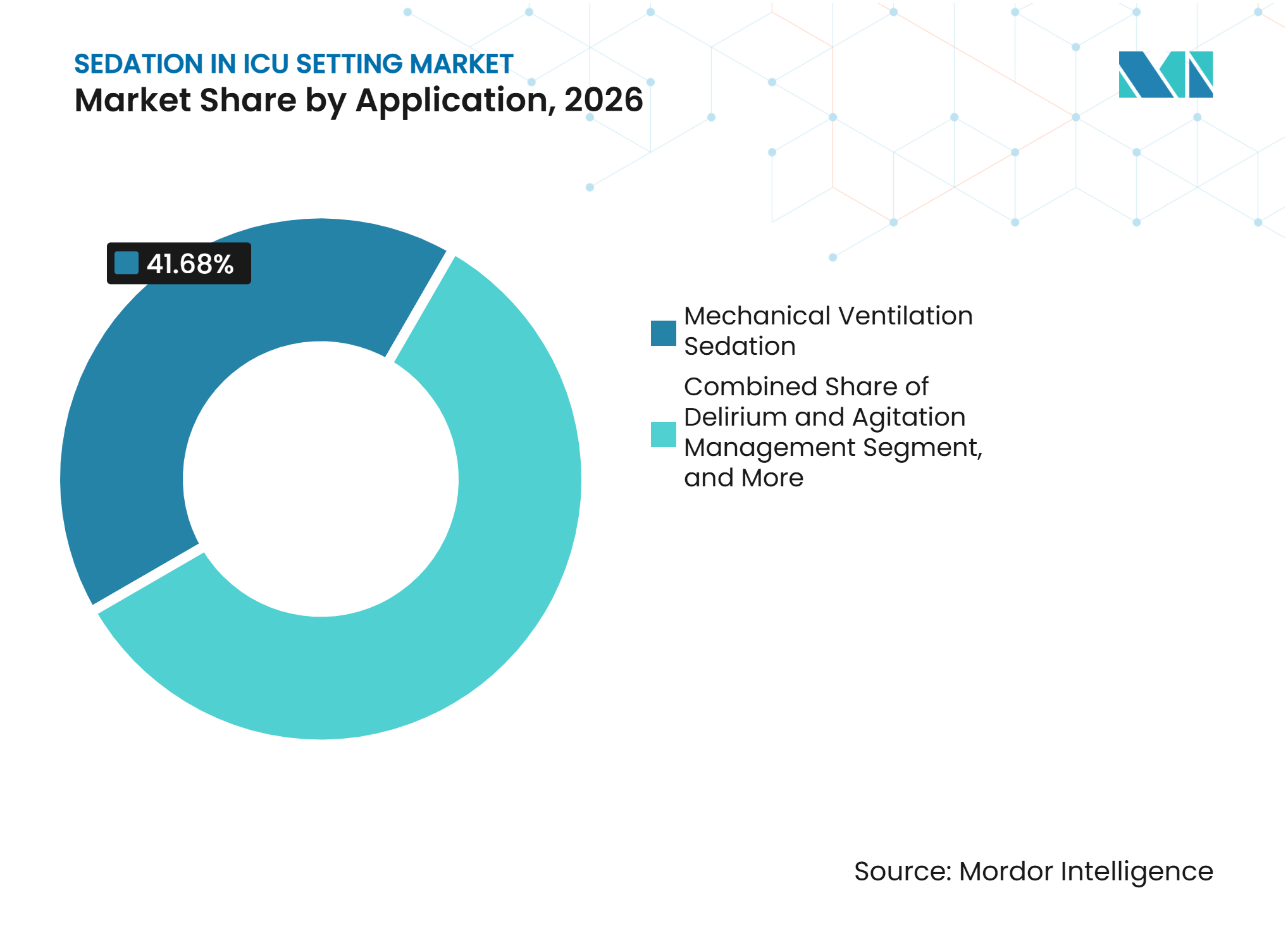
Mechanical Ventilation Sedation Drives Use While Delirium Management ExpandsMechanical ventilation sedation accounted for 41.68% of revenue in 2026. Intubation creates a direct need for pharmacological sedation and explains the application’s large share. Rising use of ventilation among clinically complex ICU patients supports this demand. The application is closely connected with infusion systems, trained nursing staff, and daily assessment protocols. Hospitals are seeking sufficient comfort and synchrony without unnecessarily deep sedation. This keeps mechanical ventilation sedation as a stable base for the sedation in ICU setting market.
Delirium and agitation management is forecast to grow at a 6.71% CAGR through 2032. The 2025 PADIS update treats delirium reduction as an important treatment objective in appropriate patients. The GEMINI study placed delirium prevalence at 14% across 457 ICUs. Weaning and extubation facilitation also expand as spontaneous awakening and breathing trials become more common. Post-surgical sedation remains relevant for cardiac and thoracic ICU care. These applications broaden the clinical use base of the sedation in ICU setting market.

By End User:
Hospitals Remain Central While Ambulatory Care Broadens DemandHospitals held 72.43% revenue share in 2026 because most mechanically ventilated patients are treated in inpatient critical care units. Medical, surgical, neurological, and cardiac ICUs have different patient needs and drug preferences. Cardiac settings can give greater attention to hemodynamic stability when selecting agents. Pharmacy and Therapeutics committees also shape formulary decisions in hospital systems. These structures make hospitals the core purchasing channel for the sedation in ICU setting market. They also favor suppliers that can maintain dependable injectable supply and education support.
Specialty clinics and diagnostic centers are forecast to grow at a 7.38% CAGR through 2032. Demand reflects the movement of selected endoscopy, bronchoscopy, and minimally invasive procedures toward ambulatory settings. Propofol remains common because of its rapid clearance in short-duration monitored care. Joint Commission and CMS monitoring standards shape sedation practices outside hospitals. These settings require a different mix from full ICU care because procedures are shorter and patients are usually not mechanically ventilated. The sedation in ICU setting industry still benefits when its established agents are used across these monitored care settings.
Geography Analysis
North America
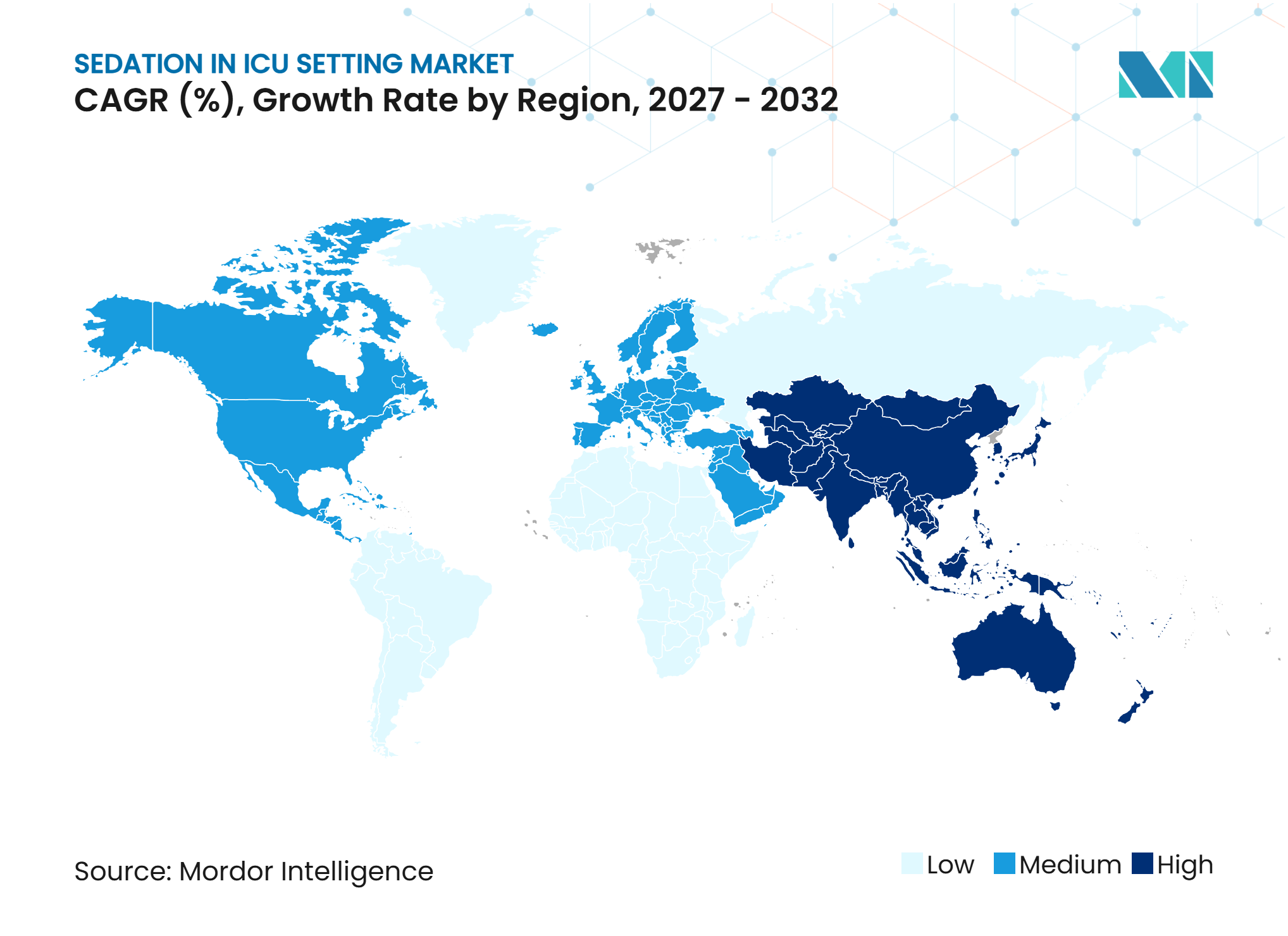
North America held a 39.02% revenue share in 2026. High ICU bed availability, structured formulary governance, and use of PADIS-based protocols support regional demand. Invasive mechanical ventilation was used in 23.7% of U.S. ICU admissions in the cited JAMA study. The rise in vasopressor co-use from 7.2% in 2014 to 21.6% in 2023 points to a more complex ICU cohort. Large systems are reassessing dexmedetomidine after the 2025 SCCM guidance, a process that can take 12-18 months but may remain durable after completion. Fresenius Kabi Canada removed a propofol allocation restriction in 2025, which indicates improving supply conditions. Canada closely follows U.S. protocol standards, while Mexico is expanding private metropolitan hospital infrastructure. North America remains a key value center within the sedation in ICU setting market.
Asia-Pacific
Asia-Pacific is forecast to grow at a 7.93% CAGR through 2032. China’s capacity policy targets 18 ICU beds per 100,000 people by 2027, following its 15-bed target for the end of 2025. This build-out requires more nursing staff, medicines, and monitoring capacity. India is adding critical care capacity through public hospital projects, including the 150-bed block at AIIMS Bhubaneswar. The Asia Pacific Critical Care Societies Summit described the infrastructure deficit as a leading near-term regional priority. China and India also support generic supply through manufacturers such as Gland Pharma, Sun Pharmaceutical, and Aurobindo Pharma. Singapore and Australia can support premium protocol adoption, while lower bed density in Indonesia and Vietnam can slow wider uptake of dexmedetomidine. This capacity build-out gives the sedation in ICU setting market its strongest regional growth path.
Europe, Middle East and Africa, and South America
Europe remains a mature part of the sedation in ICU setting market, and Germany generated most of Sedana Medical’s commercial revenue in 2025. Its ICU infrastructure and guideline-oriented practice support early use of inhaled sedation. The United Kingdom, France, and Italy rely on established generic procurement systems, while MHRA-related supply requirements illustrate dependence on diverse supply routes. In the Middle East and Africa, demand is concentrated in Saudi Arabia and the United Arab Emirates, where hospital privatization and accreditation are raising protocol standards. Supply access continues to limit adoption across much of Sub-Saharan Africa. Brazil and Argentina lead South American ICU development, and a Latin American study found that nurse-led analgesia-first care reduced ICU stay by 3.2 days and delirium incidence by 19.4%. Domestic generic production in Brazil provides some protection from shortages but can limit reimbursement for premium agents.
Competitive Landscape
Market Concentration
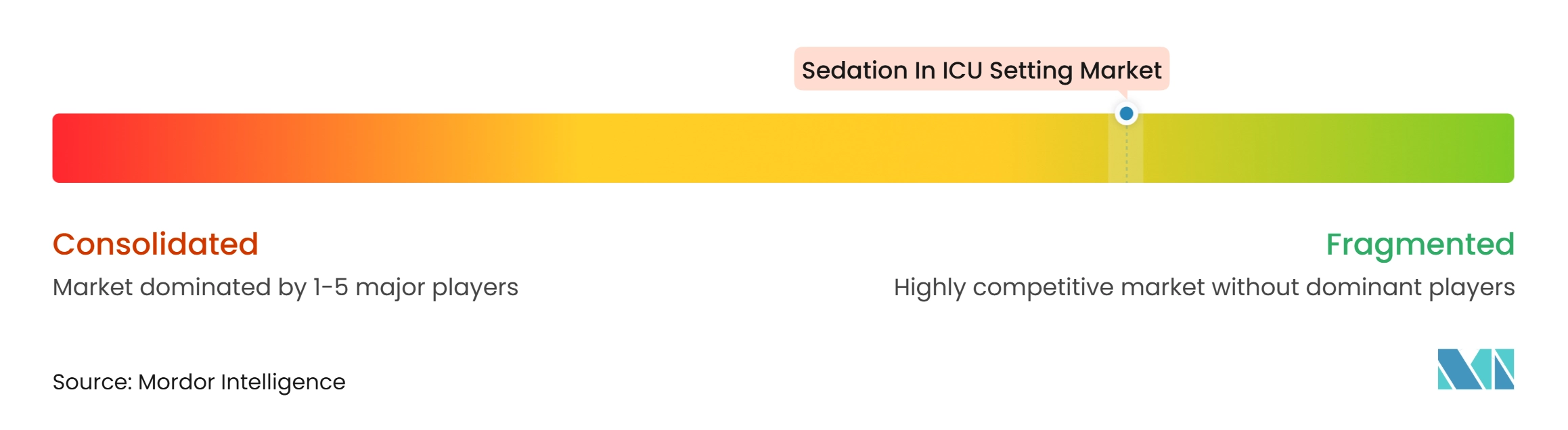
The sedation in the ICU setting market has a concentrated group of major suppliers and a fragmented generic tier. Fresenius Kabi, Pfizer, and Baxter International are established suppliers of core ICU sedation products. Generic companies, including Amneal, Hikma, Gland Pharma, and Sun Pharmaceutical Inc. compete on availability and cost. ASHP reported that Dr. Reddy’s discontinued propofol in 2026 after Teva’s 2023 exit. Fewer active suppliers can increase procurement risk when a manufacturing disruption occurs. Remaining producers can gain from more stable pricing, but they also face greater reliability expectations. Supply continuity is therefore central to competition in the sedation in ICU setting market.
Fresenius Kabi introduced RFID smart labels for Diprivan vials in January 2025. The company positioned the labels to improve traceability and use with hospital RFID kit and tray systems. This approach competes on supply-chain reliability rather than only on drug price. In December 2025, the company also added Simplist prefilled syringes for critical care and anesthesia uses. These moves reflect the value of ready-to-administer formats in high-acuity care. They also respond to hospital needs for traceability, workflow efficiency, and dependable supply.
Sedana Medical is pursuing a distinct drug-device strategy with inhaled isoflurane through the Sedaconda ACD system. Its NDA was accepted by the FDA, which set April 16, 2027, as the target action date. The company’s early access program treated its first U.S. patient at Vanderbilt University Medical Center in 2025. If authorized, its therapy could establish a new route segment that combines a patented device with a drug. The main open areas remain AI-assisted sedation titration and real-time EEG-guided depth monitoring. No established supplier has a clearly durable position in these areas of the sedation in ICU setting market.
Sedation In ICU Setting Industry Leaders
-
Baxter International Inc.
-
Dr. Reddy’s Laboratories Ltd
-
Pfizer Inc.
-
Sandoz AG
- *Disclaimer: Major Players sorted in no particular order
Sedation In ICU Setting Market Companies Covered in this Report
- Abbvie
- Amneal Pharmaceuticals
- Aspen Pharmacare
- Aurobindo Pharma
- Aurobindo Pharma
- Avenacy
- B. Braun
- Baxter
- Dr. Reddy’s Laboratories Ltd
- Eugia Pharma Specialities Limited
- Fresenius
- GLAND PHARMA
- Hikma Pharmaceuticals
- Neon Laboratories Limited
- Pfizer
- Sandoz Group
- Sedana Medical AB
- Sun Pharmaceuticals Industries
- Teva Pharmaceutical Industries
- Viatris
Recent Industry Developments in Sedation In ICU Setting Market
- October 2026: FDA Sets PDUFA Date of April 16, 2027 for Sedana Medical's Inhaled Isoflurane NDA. The US FDA assigned the target action date for its NDA review for isoflurane via the Sedaconda ACD system, the final regulatory milestone before a potential US market entry that would introduce the first inhaled ICU sedation therapy globally.
- August 2026: FDA Accepts Sedana Medical's NDA Filing. The FDA confirmed the NDA for the Sedaconda ACD system was sufficiently complete for substantive review, validating the clinical package from INSPiRE-ICU 1 and INSPiRE-ICU 2, both of which met their primary endpoints and demonstrated statistically significant opioid reduction versus IV propofol.
- December 2025: Fresenius Kabi Expands Critical Care Portfolio with Two New Simplist Prefilled Syringes. The company launched Simplist succinylcholine chloride injection and Simplist ephedrine sulfate injection for anesthesia and ICU intubation and hemodynamic management, extending its ready-to-administer Simplist platform into the operating room.
Global Sedation In ICU Setting Market Report Scope
As per the report scope, sedation in the ICU setting refers to the use of sedative medications and related therapies to manage pain, anxiety, agitation, and discomfort among critically ill patients admitted to intensive care units. It helps maintain patient comfort, facilitate mechanical ventilation, support medical procedures, and improve tolerance of intensive care treatments. Commonly used sedative agents include propofol, dexmedetomidine, benzodiazepines, and other sedative medications.
The sedation in the ICU setting market is segmented by drug class, route of administration, application, end user, and geography. By drug class, the market is segmented into propofol, dexmedetomidine, benzodiazepines, opioids and opioid-sparing adjuncts, ketamine, and others. By route of administration, the market is segmented into intravenous, oral, inhalation, and others. By application, the market is segmented into mechanical ventilation sedation, delirium and agitation management, weaning and extubation facilitation, procedural sedation in ICU, post-surgical sedation, and others. By end user, the market is segmented into hospitals, ambulatory surgical centers, specialty clinics and diagnostic centers, and others. By geography, the market is segmented into North America, Europe, Asia-Pacific, the Middle East and Africa, and South America. The market report also covers estimated market sizes and market trends for 17 countries across major regions worldwide. The report offers market value (in USD) for the above segments.
Segmentation Overview
| Propofol |
| Dexmedetomidine |
| Benzodiazepines |
| Opioids and Opioid-Sparing Adjuncts |
| Ketamine |
| Others |
| Intravenous |
| Oral |
| Inhalation |
| Others |
| Mechanical Ventilation Sedation |
| Delirium and Agitation Management |
| Weaning and Extubation Facilitation |
| Procedural Sedation in ICU |
| Post-Surgical Sedation |
| Others |
| Hospitals |
| Ambulatory Surgical Centers |
| Specialty Clinics and Diagnostic Centers |
| Others |
| North America | United States |
| Canada | |
| Mexico | |
| Europe | Germany |
| United Kingdom | |
| France | |
| Italy | |
| Spain | |
| Rest of Europe | |
| Asia-Pacific | China |
| India | |
| Japan | |
| Australia | |
| South Korea | |
| Rest of Asia-Pacific | |
| Middle East and Africa | GCC |
| South Africa | |
| Rest of Middle East and Africa | |
| South America | Brazil |
| Argentina | |
| Rest of South America |
| By Drug Class | Propofol | |
| Dexmedetomidine | ||
| Benzodiazepines | ||
| Opioids and Opioid-Sparing Adjuncts | ||
| Ketamine | ||
| Others | ||
| By Route of Administration | Intravenous | |
| Oral | ||
| Inhalation | ||
| Others | ||
| By Application | Mechanical Ventilation Sedation | |
| Delirium and Agitation Management | ||
| Weaning and Extubation Facilitation | ||
| Procedural Sedation in ICU | ||
| Post-Surgical Sedation | ||
| Others | ||
| By End User | Hospitals | |
| Ambulatory Surgical Centers | ||
| Specialty Clinics and Diagnostic Centers | ||
| Others | ||
| By Geography | North America | United States |
| Canada | ||
| Mexico | ||
| Europe | Germany | |
| United Kingdom | ||
| France | ||
| Italy | ||
| Spain | ||
| Rest of Europe | ||
| Asia-Pacific | China | |
| India | ||
| Japan | ||
| Australia | ||
| South Korea | ||
| Rest of Asia-Pacific | ||
| Middle East and Africa | GCC | |
| South Africa | ||
| Rest of Middle East and Africa | ||
| South America | Brazil | |
| Argentina | ||
| Rest of South America | ||
Key Questions Answered in the Report
What is the projected value of sedation in ICU care by 2032?
The Sedation in ICU Setting market is projected to reach USD 5.24 billion by 2032, growing at a 5.48% CAGR from 2027.
Which ICU sedative drug class is growing fastest?
Dexmedetomidine is the fastest-growing drug class, with a projected 5.92% CAGR through 2032.
Why is dexmedetomidine gaining use in intensive care?
The 2025 SCCM PADIS update conditionally favors dexmedetomidine when light sedation and delirium reduction are priorities.
Which administration route remains dominant in ICU sedation?
Intravenous delivery held 76.37% revenue share in 2026 because it fits established infusion and bedside monitoring workflows.
Which region is expanding fastest for ICU sedation products?
Asia-Pacific is projected to grow at a 7.93% CAGR through 2032, supported by critical care capacity investment.
What supply risk affects ICU sedation medicines?
Propofol supplier exits and injectable medicine shortages can disrupt procurement and raise the importance of supply reliability.