
Scleral Lens Market Size and Share
Market Overview
| Study Period | 2020 - 2031 |
|---|---|
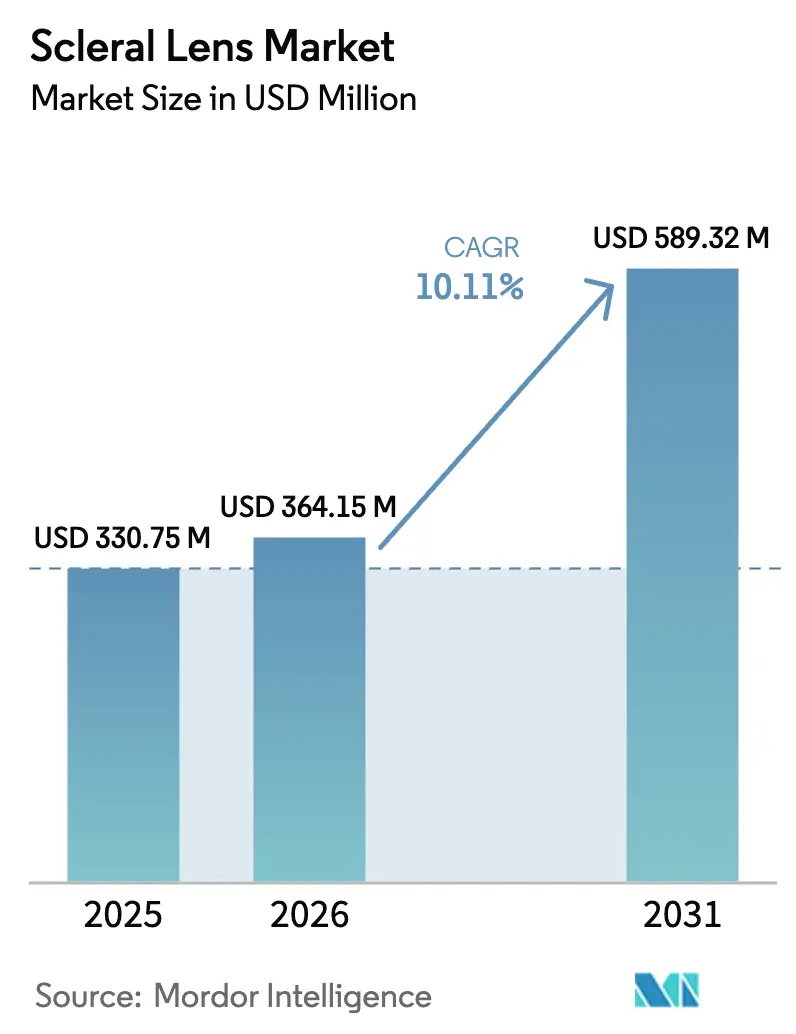
| Market Size (2026) | USD 364.15 Million |
| Market Size (2031) | USD 589.32 Million |
| Growth Rate (2026 - 2031) | 10.11 % |
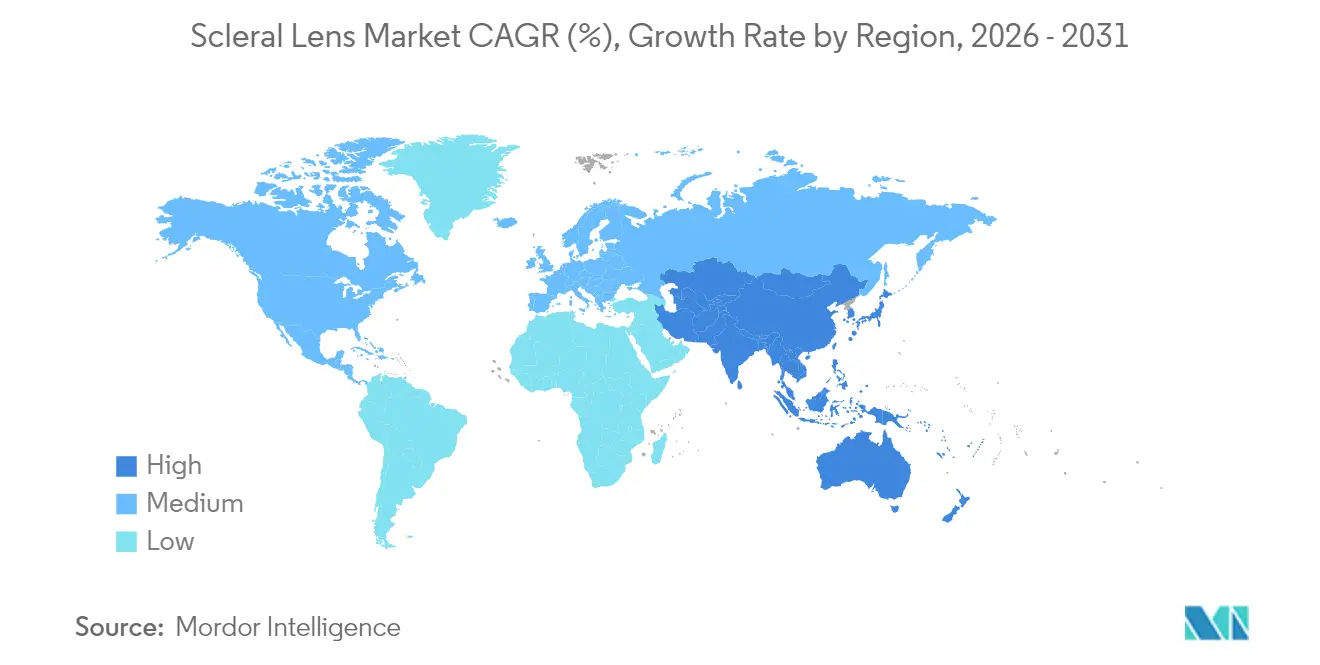
| Fastest Growing Market | Asia-Pacific |
| Largest Market | North America |
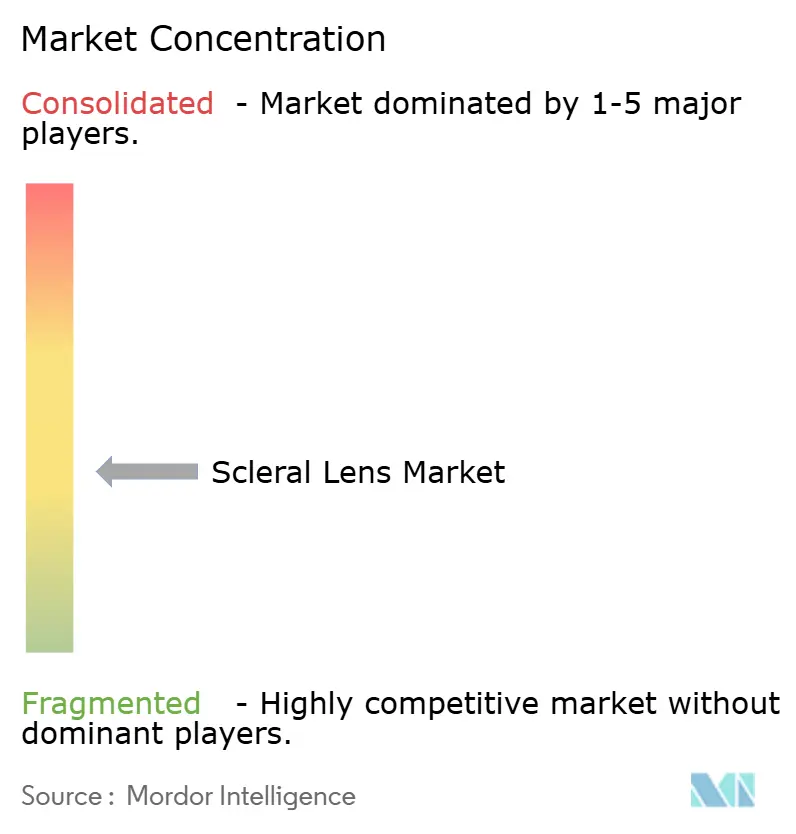
| Market Concentration | Medium |
Major Players *Disclaimer: Major Players sorted in no particular order Image © Mordor Intelligence. Reuse requires attribution under CC BY 4.0. | |
Scleral Lens Market Analysis by Mordor Intelligence
The Scleral Lens Market size was valued at USD 330.75 million in 2025 and estimated to grow from USD 364.15 million in 2026 to reach USD 589.32 million by 2031, at a CAGR of 10.11% during the forecast period (2026-2031). Increasing clinical acceptance of scleral lenses for complex corneal disorders, rapid material science innovation in high-oxygen-permeable polymers, and greater practitioner proficiency are fueling demand. Growing pediatric keratoconus detection, expanding drug-eluting lens pipelines, and the emergence of 3-D printing for bespoke devices further reinforce momentum. North American reimbursement policies and specialty fitters underpin current revenue leadership, while Asia-Pacific’s accelerating practitioner training drives the fastest uptake. Heightened investment in digital fitting platforms and supply-chain resilience for fluorosilicone acrylate compounds will likely influence competitive strategy across the scleral lens market.
Key Report Takeaways
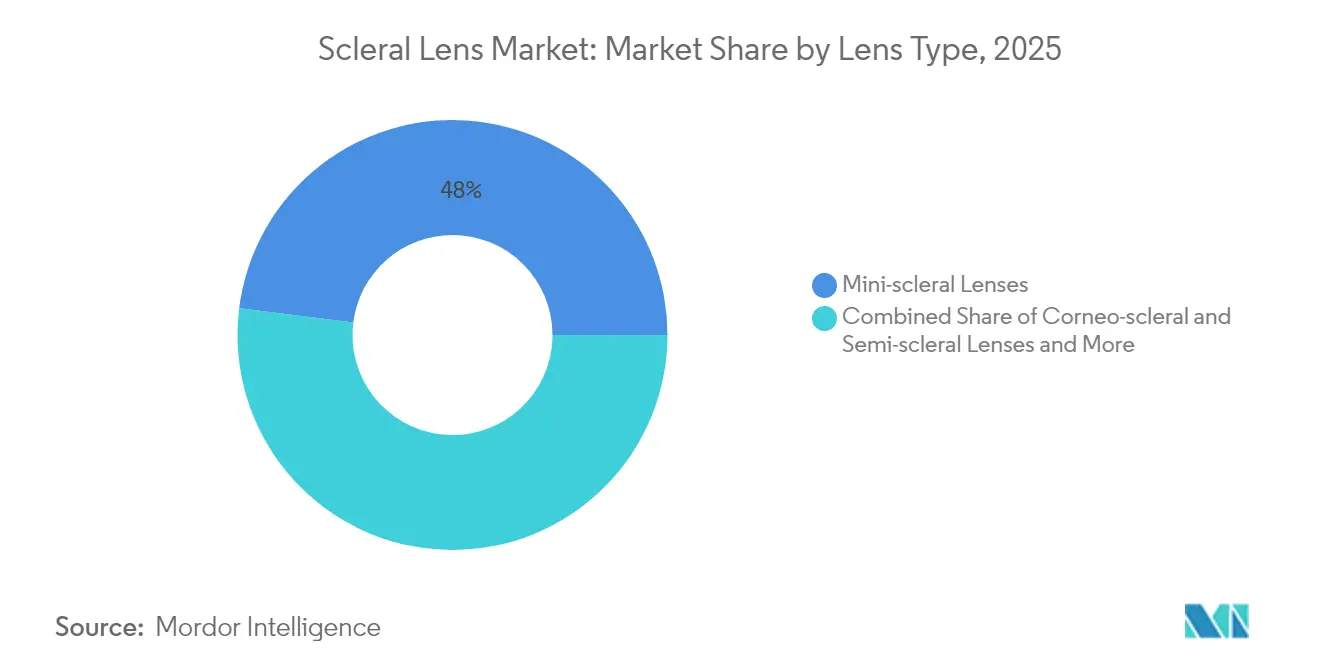
- By lens type, mini-scleral lenses held 48.02% of scleral lens market share in 2025, whereas full scleral lenses are forecast to grow at a 14.05% CAGR through 2031.
- By application, irregular cornea indications commanded 62.06% share of the scleral lens market size in 2025; ocular surface disease applications are advancing at a 16.39% CAGR to 2031.
- By end user, hospitals led with 37.68% revenue share in 2025, while eye clinics are poised for a 13.98% CAGR through 2031.
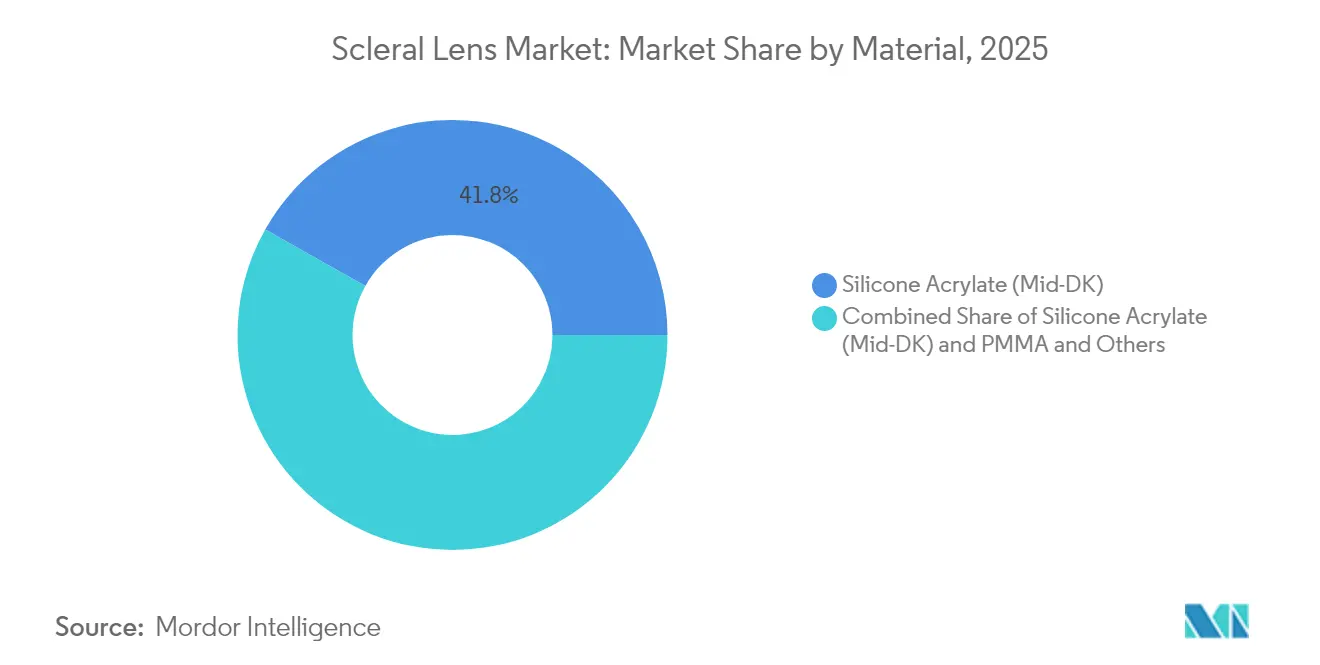
- By material, silicone acrylate captured 41.83% share of the scleral lens market in 2025; fluoro-silicone acrylate materials are projected to expand at 12.55% CAGR by 2031.
- By distribution channel, offline outlets accounted for 71.55% of the scleral lens market size in 2025; online channels exhibit a robust 15.92% CAGR forecast to 2031.
- By geography, North America secured 42.34% of global revenue in 2025, whereas Asia-Pacific is projected to post a 15.02% CAGR through 2031.
Note: Market size and forecast figures in this report are generated using Mordor Intelligence’s proprietary estimation framework, updated with the latest available data and insights as of 2026.
Market Trends and Insights
Drivers Impact Analysis of Scleral Lens Market*
| Driver | (~) % Impact on CAGR Forecast | Geographic Relevance | Impact Timeline |
|---|---|---|---|
| Rising Prevalence Of Keratoconus & Ectatic Disorders | +2.8% | Global, with highest impact in APAC and North America | Medium term (2-4 years) |
| Growing Number Of Post-Refractive-Surgery Complications | +1.9% | North America & EU, expanding to APAC | Short term (≤ 2 years) |
| Increasing Global Adoption By Specialty Eye-Care Chains | +1.6% | APAC core, spill-over to MEA | Medium term (2-4 years) |
| Advancements In High-DK GP Materials | +1.4% | Global | Long term (≥ 4 years) |
| Emergence Of 3-D Printed Customised Scleral Lenses | +1.2% | North America & EU, early adoption | Long term (≥ 4 years) |
| Drug-Eluting Scleral Lenses In Late-Stage Pipelines | +0.8% | Global, regulatory-dependent | Long term (≥ 4 years) |
| Source: Mordor Intelligence | |||
Rising Prevalence of Keratoconus & Ectatic Disorders
Large-scale pediatric screening now reports a 1:334 keratoconus incidence, a rate far higher than historical adult-only estimates. Earlier diagnosis means more patients require lifelong visual rehabilitation, and long-term studies show that scleral lenses reduce corneal transplant risk by 81% compared with no lens use. National health systems increasingly endorse early lens fitting to delay or avert surgery, reinforcing steady demand across the scleral lens market. Improved tomography tools make detection routine in primary eye care, expanding patient pools. Correspondingly, specialty practitioners are integrating first-line scleral lens protocols to manage progression and enhance quality of life.
Advancements in High-DK GP Materials
Next-generation gas-permeable materials surpassing 200 Dk have alleviated hypoxia concerns that once limited daily wear durations. Valley Contax’s Acuity 200 polymer combines ultrahigh oxygen transmission with surface wettability that diminishes deposit formation, extending comfortable wear time[1]Valley Contax, “Acuity 200 – Welcome to the World of GP Materials,” valleycontax.com. Such materials permit thicker vaults for severe ectasias without compromising corneal physiology, broadening treatable cases within the scleral lens market. Research into hydrogel composites achieving super-lubricity further lowers friction-induced dropout risk. Computational material design accelerates iteration, speeding commercialization and helping manufactures differentiate premium portfolios.
Emergence of 3-D Printed Customised Scleral Lenses
Additive manufacturing now fabricates clinical-grade lenses with micron-level precision, tailoring sagittal depths to individual ocular profiles. Peer-reviewed work on 3-D-printed drug-releasing contact lenses underscores the technology’s viability for ocular devices[2]Piyush Garg et al., “3D-Printed Contact Lenses to Release Polyvinyl Alcohol,” MDPI Journals, mdpi.com. Automated printers reduce manual polishing steps, potentially cutting practitioner chair time and trimming per-lens costs. Custom lattice structures enable variable thickness zones that optimize oxygen diffusion while preserving rigidity. While scaling output remains challenging, investment in industrial printers suggests broader availability within the forecast window, opening new growth pockets for the global scleral lens market.
Drug-Eluting Scleral Lenses in Late-Stage Pipelines
Combining vision correction with sustained therapeutic delivery tackles entrenched adherence problems of topical drops, where less than 5% of drug reaches target tissues. Early clinical programs using cyclosporine-impregnated scleral lenses have reported stable 24-hour release profiles and symptomatic relief for severe dry eye. Regulatory pathways for combination device-drug products demand extensive safety data, but positive pilot results strengthen investor confidence. Commercial roll-out is expected first in niche ocular surface diseases, then progressively in glaucoma and post-surgical inflammation, expanding addressable revenue streams across the scleral lens market.
Restraints Impact Analysis of Scleral Lens Market*
| Restraint | (~) % Impact on CAGR Forecast | Geographic Relevance | Impact Timeline |
|---|---|---|---|
| Availability Of Alternative Techniques | -1.8% | Global, with highest impact in developed markets | Medium term (2-4 years) |
| High Chair-Time & Learning Curve For Practitioners | -1.5% | Global, particularly in emerging markets | Short term (≤ 2 years) |
| Limited Oxygen Delivery In Very Long-Term Wear | -1.2% | Global | Long term (≥ 4 years) |
| Supply-Chain Fragility In Fluorosilicone Acrylate Polymers | -0.9% | Global, with highest impact in APAC | Medium term (2-4 years) |
| Source: Mordor Intelligence | |||
Availability of Alternative Techniques
Advances in corneal cross-linking, intrastromal ring segments, and small-incision lenticule extraction offer non-contact-lens solutions for irregular corneas. Patients seeking minimally invasive correction may opt for these procedures despite higher cost, limiting conversion to the scleral lens market. Public and private insurers in several developed nations now reimburse ring implant surgery, narrowing the economic gap with specialty lenses. Device makers respond by highlighting reversible, adjustable benefits of scleral modalities, yet competition from surgical technologies persists over the medium term.
High Chair-Time & Learning Curve for Practitioners
Initial scleral lens fitting often requires 2-4 hours versus under one hour for soft lenses, straining busy primary care schedules. Surveys indicate many optometrists need six months of dedicated training to consistently achieve optimal vaults. Limited access to tomography and profilometry in smaller clinics further elevates barriers, especially in developing economies where capital budgets are restricted. Manufacturers increasingly bundle virtual certification courses and predictive fitting software to shorten onboarding, but retention of new skills still hinges on sustained case volume. These workflow challenges continue to temper adoption across the scleral lens market, particularly outside major urban centers.
*Our forecasts treat driver/restraint impacts as directional, not additive. The impact forecasts reflect baseline growth, mix effects, and variable interactions.
Scleral Lens Market Segment Analysis
By Lens Type:
Mini-Scleral Dominance Drives MarketMini-scleral designs captured 48.02% of global revenue in 2025, making them the cornerstone of the scleral lens market. Their 15–18 mm diameter provides reliable corneal vaulting with easier handling than larger formats, supporting widespread clinical use. The segment benefits from incremental design refinements such as toric haptics that boost first-fit success rates. Full scleral lenses, though currently niche, are projected to grow at a 14.05% CAGR as severe ocular surface disease cases rise. Increased availability of high-DK materials encourages broader full-scleral adoption, especially for postoperative and graft patients requiring maximal protection. Corneo-scleral hybrids sustain a modest share, serving mild ectasia and post-LASIK irregularities where central clearance demands are lower. Continuous R&D in edge alignment algorithms and surface coatings sustains product differentiation.
The scleral lens market size contribution from mini-scleral products will remain dominant through 2031 as manufacturing efficiencies keep prices stable. Companies bundle trial sets with digital fitting tools, reducing chair time and underpinning practitioner loyalty. Patient word-of-mouth and social media testimonials further lift awareness, reinforcing structural growth. Adoption of full scleral formats in tertiary centers acts as a feeder pipeline, with some wearers transitioning to mini designs once corneal surfaces stabilize. On balance, lens type diversity enhances market resilience, limiting revenue concentration risk.



By Application:
Irregular Cornea Applications Lead MarketIrregular cornea indications accounted for 62.06% of the scleral lens market share in 2025. Keratoconus, pellucid marginal degeneration, and post-refractive ectasia dominate prescription volumes because alternative corrections offer limited visual quality for complex topographies. Longitudinal data confirm that early scleral lens use delays transplant surgery and supports stable visual acuity, encouraging payer acceptance. Ocular surface disease, while smaller today, is forecast to post a 16.39% CAGR as evidence grows for therapeutic hydration benefits in severe dry eye and graft-versus-host disease. This segment draws clinician attention in aging societies where autoimmune and iatrogenic dryness escalate.
The scleral lens market size linked to refractive error correction remains modest but strategically important. Ultra-precise wavefront-guided optics allow correction of high-order aberrations in post-LASIK or trauma cases unmet by spectacles. Emerging drug-eluting platforms could create new hybrid indications such as combined visual and anti-inflammatory therapy. Cross-functional clinical trials are expanding knowledge on cost-effectiveness, which may eventually bring broader insurer coverage and lift application diversity.
By End User:
Hospital Dominance Shifts Toward Specialized ClinicsHospitals represented 37.68% of 2025 revenue, reflecting the need for multidisciplinary teams to manage complex corneal pathology. Integrated surgical and fitting services cater to patients with grafts, advanced ectasia, or ocular surface compromise. However, independent eye clinics are registering a 13.98% CAGR, propelled by targeted training programs and investment in corneal tomography. These centers offer flexible scheduling and personalized follow-up, appealing to younger and working-age demographics. Tele-consultation links between community optometrists and tertiary specialists further democratize access, enlarging the scleral lens market.
Academic centers and research hospitals serve as innovation hubs, trialing adaptive optics and AI-driven fitting algorithms that eventually diffuse to private practice. Practitioner associations disseminate protocols, raising baseline competence across geographies. As clinics scale, manufacturers supply turnkey fitting suites, reinforcing symbiotic growth between device vendors and outpatient providers.
By Material:
Silicone Acrylate Leads Despite High-DK GrowthSilicone acrylate maintained 41.83% global revenue share in 2025, underscoring its balance of oxygen permeability, rigidity, and cost efficiency. The segment’s adoption benefits from decades of clinician familiarity and stable supply chains. High-DK fluoro-silicone acrylate materials, however, are expanding at 12.55% CAGR as they enable extended wear schedules and accommodate thicker vaults without compromising corneal physiology. Breakthrough super-hydrophilic coatings reduce fogging and protein build-up, improving long-term comfort. PMMA’s footprint continues to recede but holds value in specialty cases demanding extreme dimensional stability.
Investment in R&D centers on polymer blends surpassing 200 Dk while preserving mechanical strength. Success in this arena could trigger accelerated migration toward premium materials, reshaping the scleral lens market size distribution by 2031. Producers are forging strategic alliances with raw-material suppliers to secure fluorosilicone acrylate inventories, mitigating recent supply-chain shocks.
By Distribution Channel:
Offline Dominance Faces Digital DisruptionOffline channels in optometry and ophthalmology practices generated 71.55% of 2025 global sales, reflecting the highly customized nature of fittings. Nonetheless, online platforms are expected to climb at a 15.92% CAGR as tele-optometry gains regulatory acceptance. Digital refills, virtual check-ups, and subscription models enhance patient convenience, lifting compliance and retention rates in the scleral lens market. Hybrid delivery frameworks emerge, whereby initial fitting occurs in-clinic and subsequent lens reorders shift online. Several manufacturers now integrate QR-coded care guides and AI symptom trackers, driving seamless omni-channel experiences. While fully remote fittings remain limited by liability and data-accuracy constraints, incremental digitalization is likely to narrow the gap between clinical supervision and consumer expectations.
Geography Analysis
North America Scleral Lens Market
North America contributed 42.34% of global revenue in 2025 owing to mature specialty eye-care infrastructure, advanced insurance coverage, and continuous practitioner education. Canada’s single-payer model and Mexico’s private insurance expansion diversify regional growth drivers. Increased availability of high-DK materials supports longer wear schedules, broadening indication scope.
APAC Scleral Lens Market
Asia-Pacific is the fastest-growing territory with a projected 15.02% CAGR, propelled by widespread adoption in urban hospitals and proliferating specialty chains. China and India together account for the largest prospective patient pools as pediatric screening initiatives uncover understudied keratoconus prevalence. Government-supported capacity-building programs train new fitters, elevating baseline service availability across the scleral lens market. Local manufacturing facilities in Malaysia and Singapore shorten supply lead times and insulate against currency volatility.
Europe Scleral Lens Market
Europe maintains steady mid-single-digit expansion backed by established optometry programs and consistent CE-mark regulations. Germany and the United Kingdom dominate regional volumes through academic-industry collaborations that fast-track clinical innovation. Southern European markets witness rising demand as public health systems emphasize non-surgical management of ectasia. Post-Brexit regulatory realignments introduce mild friction in cross-border supply chains, yet manufacturers re-route inventory to maintain continuity. Overall, region-wide adherence to evidence-based reimbursement guidelines secures predictable adoption trajectories.

Competitive Landscape
The scleral lens market is moderately fragmented. Established multiproduct groups—Bausch + Lomb, CooperVision, and Alcon—leverage economies of scale and international distribution, while pure-play specialists such as BostonSight, Visionary Optics, and Art Optical build loyalty through bespoke design platforms. Competitive differentiation centers on proprietary fitting software, ultrahigh-DK material access, and embedded practitioner training ecosystems.
Investment in artificial-intelligence-guided sagittal depth prediction reduces refit rates and elevates first-lens success, sharpening competitive edges. Alcon’s USD 356 million acquisition of LENSAR underscores a strategy to integrate diagnostics and refractive technology into a unified portfolio[3]Alcon, “Alcon Agrees to Acquire LENSAR, Inc.,” alcon.com. EssilorLuxottica’s 2024-2025 med-tech acquisitions of Heidelberg Engineering and Espansione Group signal similar vertical integration to capture data analytics and therapeutic device synergies.
Supply security for fluorosilicone acrylates becomes a battleground advantage; manufacturers with dual-source procurement hedge against volatility and protect production timelines. Start-ups focusing on 3-D printed or drug-eluting formats draw venture capital, positioning themselves as take-over targets once proof-of-concept trials conclude. Overall, tactical collaboration between raw-material chemists, software developers, and clinical educators shapes future competitive contours across the scleral lens market.
Scleral Lens Industry Leaders
Visionary Optics
ABB Optical Group
EssilorLuxottica
Bausch + Lomb
Art Optical Contact Lens
- *Disclaimer: Major Players sorted in no particular order
Scleral Lens Market Companies Covered in this Report
- ABB Optical Group
- Bausch + Lomb
- Visionary Optics
- EssilorLuxottica
- Art Optical Contact Lens
- The Cooper Companies
- BostonSight
- AccuLens
- Tru-Form Optics
- SynergEyes
- Valley Contax
- Capricornia Contact Lens
- Menicon
- Alcon
- Johnson & Johnson
- Contamac
- Alden Optical
- Paragon Vision Sciences
- Lensabl
- SEED Co., Ltd.
- LG Optical

Market Opportunities and Future Outlook
The near-term opportunity set is widening around scaling access, improving fit efficiency, and expanding premium options for complex corneas. A 2025 practice survey reported 462,272 scleral lens fits, up 53% from 248,828 in 2020, and pointed to consolidation among high-volume fitters (500+ lenses). That shift creates room for manufacturers and distributors to help standardize training, trial-set logistics, and digital design workflows so lower-volume clinics can participate more consistently.
On the product side, differentiation continues to move beyond basic vaulting toward advanced design features and high oxygen transmission materials, which is particularly relevant for irregular cornea indications and ocular surface disease where comfort and fogging control influence adherence. Software-embedded customization and lab workflow integration also offer a practical path to reduce refits and chair time without changing the underlying manufacturing hardware. Advance Medical, for example, released Reverse Edge Vault as a software update to its FocalPoints design platform in May 2026, enabling localized edge modifications for tissue loss or depressions and supporting more complex therapeutic fits. Material innovation is another lever as hyper-Dk GP materials enter the market, such as Optimum Breathe at 250 Dk in Europe in 2026, which can support thicker vaults and longer daily wear in severe ectasia or compromised ocular surfaces. Drug-eluting or disease-treating scleral lenses remain a longer-cycle opportunity, but progress through more stringent regulatory pathways, including Class III PMA in the United States for drug delivery or specialized therapeutic coatings, which tends to favor companies with clinical and regulatory depth and encourages collaboration among lens designers, material suppliers, and specialty eye-care networks.
Recent Industry Developments in Scleral Lens Market
- April 2026: Menicon reported that its Time XL scleral lens manufactured by Menicon B.V. received medical device approval from China’s National Medical Products Administration (NMPA). The clearance supports Menicon’s commercialization pathway in a large irregular-cornea patient pool and raises competitive pressure on other specialty lens suppliers seeking China market access.
- May 2025: Bausch + Lomb launched Zenlens CHROMA HOA wavefront-guided scleral contact lenses in the United States. The introduction expands premium fitting options for higher-order aberration correction in complex corneal cases, while also sharpening differentiation in specialty practices.
- May 2024: Bausch + Lomb launched Zenlens ECHO custom scleral contact lens technology in the United States for corneal irregularities and post-operative conditions. This added another technology option within the Zenlens portfolio and supported broader coverage of challenging indications managed in specialty eye-care settings.


Scleral Lens Market Report Scope and Research Methodology
Market Definition and Coverage
This market covers revenues generated from scleral contact lenses that vault the cornea and rest on the sclera, as sold through clinical and commercial channels for vision correction and therapeutic ocular use, across key regions and end users.
Scope exclusions: We do not count unrelated contact lens categories, surgical procedures, or pharmaceuticals that may be used alongside fittings and follow-up care.
Segments Covered in This Report
- By Lens Type
- Corneo-scleral & Semi-scleral Lenses
- Mini-scleral Lenses
- Full Scleral Lenses
- By Application
- Irregular Cornea
- Ocular Surface Disease
- Refractive Error
- Other Applications
- By End User
- Hospitals
- Eye Clinics
- Other End Users
- By Material
- Fluoro-silicone Acrylate (High-DK)
- Silicone Acrylate (Mid-DK)
- PMMA & Others
- By Distribution Channel
- Offline (Optometry & Ophthalmology Clinics)
- Online (E-commerce, Tele-optometry)
- Geography
- North America
- United States
- Canada
- Mexico
- Europe
- Germany
- United Kingdom
- France
- Italy
- Spain
- Rest of Europe
- Asia-Pacific
- China
- Japan
- India
- South Korea
- Australia
- Rest of Asia-Pacific
- Middle East and Africa
- GCC
- South Africa
- Rest of Middle East and Africa
- South America
- Brazil
- Argentina
- Rest of South America
- North America
Data Sources, Market Sizing, and Validation
Desk Research
Desk research started with mapping the care pathway for scleral lenses, from diagnosis and trial fitting through dispensing and ongoing replacement, so that revenue is tied to a realistic demand pool. We leaned on public sources such as the US CDC vision and eye health information, National Institutes of Health resources, and peer reviewed ophthalmology and optometry journals that describe disease prevalence, treatment patterns, and clinical outcomes.
To keep inputs grounded, we also reviewed materials from professional bodies and standards groups (for example, optometry and contact lens associations), plus trade and regulatory communications that help validate how lenses are classified and how materials evolve. Company filings, annual reports, investor presentations, and reputable press were used to understand product mix and channel emphasis, and selected paid subscriptions were used only for company financial intelligence and patent lookups where disclosures were limited. The source examples listed here are illustrative and not exhaustive, and many other references were used during data collection, validation, and clarification.
Primary Interviews and Surveys
Primary work focused on interviews and short surveys with eye care professionals, lab and distribution participants, and product and commercial leaders who can speak to ordering patterns and replacement behavior in day to day practice. Since this is a global market, we ensured coverage across major regions, and the discussions were used to confirm fitting rates for key indications, typical replacement cycles, and realistic price corridors by channel before finalizing assumptions.
Distribution of primary research fieldwork respondents
| Company type | Respondent position | Region |
|---|---|---|
| Top tier: 37% | CXOs: 14% | APAC: 45% |
| Mid tier: 45% | Functional/Unit leaders: 39% | EMEA: 37% |
| Smaller Players: 18% | Managers: 47% | Americas: 18% |
Market-Sizing & Forecasting
The core sizing model is built using a top-down and bottom-up sequence, where prevalence and treated patient pools for conditions that commonly use scleral lenses are converted into an addressable wearer base by applying adoption and fit rates. Once the wearer base was established, annual lens demand was estimated using replacement frequency and typical annual usage, which are then converted into revenue using average selling prices (ASP) that reflect mix across lens types and channels.
To keep totals realistic, we corroborated the outcome with selective bottom-up checks, such as rolling up observable supplier revenue signals, sampling ASP by channel checks from clinics and labs, and running regional demand sense checks with practitioners. Key inputs that shaped the model included the mix of irregular cornea versus ocular surface disease cases, share of specialty fits done in eye clinics versus hospitals, replacement cadence for frequent versus infrequent wearers, material shifts toward higher oxygen permeability options, and the online versus offline share where applicable.
For forecasting, scenario analysis was used to reflect how training capacity, reimbursement comfort, and product availability can move adoption faster or slower across regions. Where bottom-up signals were incomplete, we filled gaps using conservative penetration ranges agreed in expert calls, and then adjusted them only when multiple independent indicators supported the change.
Data Validation & Update Cycle
We validate the model by cross checking outputs against independent signals, including known patient flow patterns, typical fitting volumes per practice type, and whether implied ASP and replacement rates align with what respondents see in the field. Any sharp variance by region, or sudden step changes in growth, are reviewed, and the assumptions are re-tested with follow-up questions until the drivers are clearly explained.
Before publication, the model goes through multi step analyst reviews so calculation logic, unit consistency, and currency handling are checked line by line. The report is refreshed annually, and interim updates are triggered when material events occur, such as notable pricing moves, reimbursement changes, or shifts in clinical practice. Right before delivery, an analyst does a fresh pass so clients receive the latest updated view.
Mordor Intelligence's Scleral Lens Market Size Compared Against Other Published Estimates
Published market values for scleral lenses can look far apart because authors do not always align on timing, pricing, and what parts of the care pathway are counted. Differences also show up when one estimate is updated more recently than another, since ASP expectations and channel mix can shift within a single year.
When exchange rates are timed consistently and ASP bands are re-validated with recent clinic and lab feedback before final sign-off, the 2025 value stays closer to realized pricing, which is the refresh discipline applied by Mordor Intelligence. Some external estimates also roll in adjacent specialty contact lenses or apply aggressive adoption ramps for ocular surface disease without matching those ramps to practitioner capacity and replacement behavior.
Benchmark comparison
| Source | Market Size | Gaps in Research Methodology |
|---|---|---|
| Mordor Intelligence | USD 330.75 M (2025) | |
| Industry Publisher A | USD 340.00 M (2024) | Uses an earlier base year and can miss near-term movement in ASP and channel mix, and the disclosed scope detail is lighter on how replacement cadence and fitting rates are validated across regions. |
| Market Monitor B | USD 421.00 M (2025) | Implied totals appear to assume higher realized pricing and faster uptake, with limited transparency on whether adjacent specialty lens revenues are included alongside scleral lenses. |
The spread is mostly explained by how quickly pricing and adoption assumptions are refreshed, plus whether the sizing stays strict to scleral lenses only or blends in nearby lens categories. By keeping the demand pool tied to treated cases and then stress testing ASP and replacement rates with field feedback, we keep the number traceable to clear steps that can be repeated.


Key Questions Answered in the Report
What is the current size of the scleral lens market?
The scleral lens market size was USD 364.15 million in 2026 and is forecast to reach USD 589.32 million by 2031.
Which region is growing fastest in the scleral lens market?
Asia-Pacific shows the highest growth with an expected 15.02% CAGR through 2031 due to rising keratoconus prevalence and rapid specialty-clinic expansion.
Why are mini-scleral lenses so popular?
Mini-scleral lenses balance handling ease and corneal vaulting effectiveness, capturing 48.02% of 2025 global revenue and suiting most irregular cornea cases.
What materials are driving future innovation?
High-DK fluoro-silicone acrylates exceeding 200 Dk and super-lubricious hydrogel coatings are advancing longer wear schedules while safeguarding corneal health.
How are digital tools changing scleral lens fittings?
AI-guided design software and tele-optometry platforms cut chair time, enhance first-fit accuracy, and pave the way for hybrid online-offline distribution models.
Page last updated on:





