
Saudi Arabia Self-Monitoring Blood Glucose Market Size and Share
Market Overview
| Study Period | 2020 - 2031 |
|---|---|
| Forecast Data Period | 2026 - 2031 |
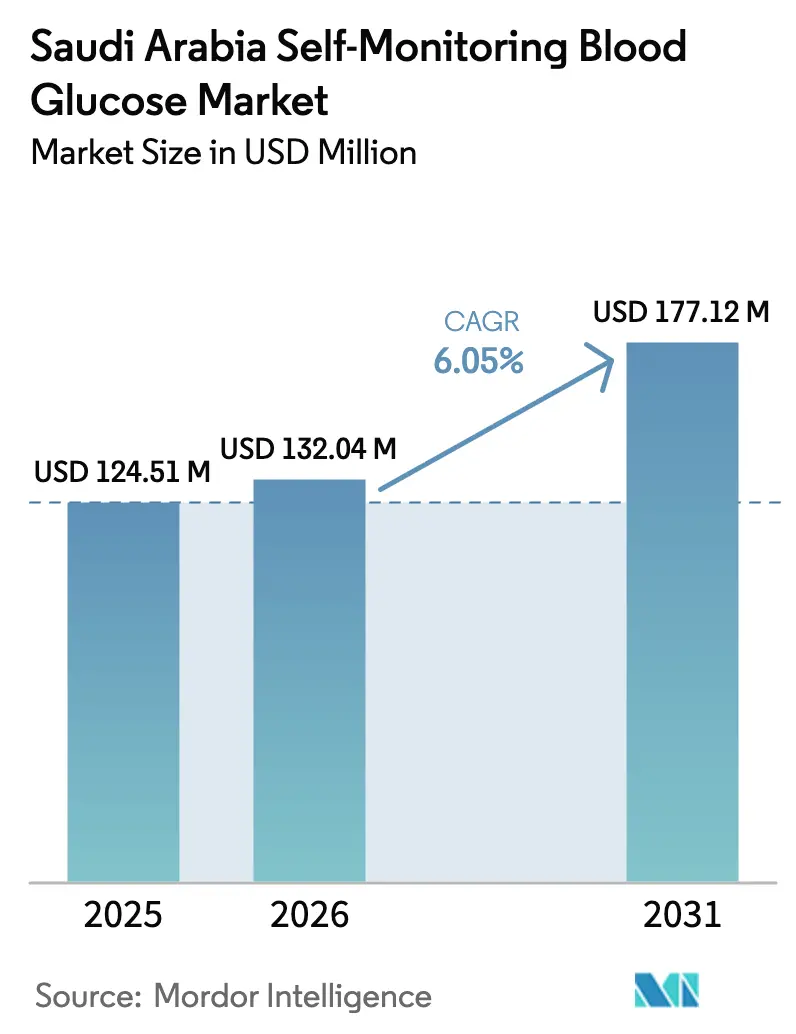
| Base Year Market Size (2025) | USD 124.51 Million |
| Market Size (2026) | USD 132.04 Million |
| Market Size (2031) | USD 177.12 Million |
| Growth Rate (2026 - 2031) | 6.05 % |
| Market Concentration | Medium |
Major Players *Disclaimer: Major Players sorted in no particular order Image © Mordor Intelligence. Reuse requires attribution under CC BY 4.0. | |
Saudi Arabia Self-Monitoring Blood Glucose Market Analysis by Mordor Intelligence
The Saudi Arabia Self-Monitoring Blood Glucose market size is expected to grow from USD 124.51 million in 2025 to USD 132.04 million in 2026 and is forecast to reach USD 177.12 million by 2031 at 6.05% CAGR over 2026-2031.
Blood glucose monitoring increases patients' awareness of glucose values, which supports healthy lifestyle choices. Blood glucose monitoring values provide feedback and guidance on how to make health behavior changes when needed.
Continued elevation in blood glucose levels in diabetes patients can contribute to progressive complications such as renal, nerve, and ocular damage. Appropriate and timely monitoring of blood glucose allows the successful management of out-of-range blood glucose levels, minimizing diabetic-related health complications.
Innovative technologies, such as digital health apps that display and summarize individual blood glucose measurements and additional relevant data such as insulin doses, meals, and physical activity, can further support self-management while decreasing disease burden and benefiting overall diabetes care. Integration of blood glucose monitoring with insulin calculators, automated insulin titration software, and remote coaching are further developments that provide patients with poorly controlled diabetes with the additional support needed to improve critical outcomes, thereby enhancing market prospects in the years to come.
The World Health Assembly Resolution 2022 recommended the integration of prevention and treatment of diabetes into primary health services, the development of pathways for a substantial increase in access to insulin, the promotion of convergence and harmonization of regulatory requirements for diabetes medicines and technologies, and improved diabetes monitoring and surveillance.
Furthermore, it involves the WHO advising the Member States to ensure the uninterrupted treatment of people living with diabetes in humanitarian emergencies. This important milestone provides a global mandate for diabetes efforts for the next decade. Such initiatives are expected to create awareness among the public regarding the monitoring and control of diabetes, thereby enhancing market prospects in the years to come.
Note: Market size and forecast figures in this report are generated using Mordor Intelligence’s proprietary estimation framework, updated with the latest available data and insights as of 2026.
Saudi Arabia Self-Monitoring Blood Glucose Market Trends and Insights
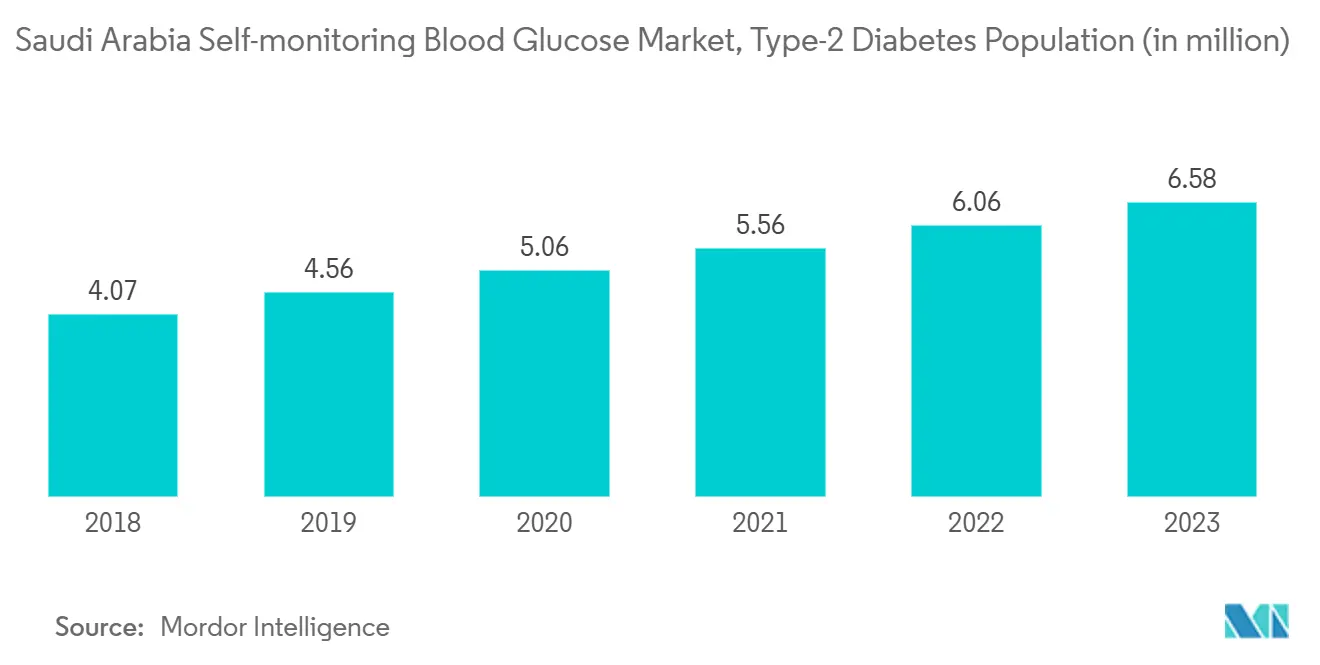
Rising Diabetes Prevalence in Saudi Arabia
In Saudi Arabia, the diabetes population is expected to increase at a rate of about 7.3% over the forecast period.
More than one in ten people in Saudi Arabia were living with diabetes, and the prevalence of the disease was expected to almost double by 2045, according to the IDF report. The report further mentioned that 4.27 million people in Saudi Arabia, which has a population of about 34.8 million, have diabetes, while a further 1.86 million have the disease but are yet to be diagnosed. This figure is expected to increase to 5.6 million by 2030 and further increase to 7.5 million by 2045.
Obesity, especially central obesity, increased visceral fat due to physical inactivity, and the consumption of high-calorie, high-fat, and high-sugar foods are the major contributing factors to diabetes. Several initiatives, including taxing sugary drinks, focusing on fitness programs, and focusing on preventative care, are being taken by the government to stem this epidemic. Saudi Arabia is aiming to reduce the prevalence of diabetes by 10% over the next decade.
Monitoring blood glucose levels is an optimal way to confirm and appropriately treat hypoglycemia. It can provide feedback on the results of healthy behavior interventions and antihyperglycemic pharmacological treatments. It can increase one's adherence to treatment. It can also provide information to both the person with diabetes and their diabetes healthcare team to facilitate longer-term treatment modifications and shorter-term treatment decisions, such as insulin dosing for people with type 1 or type 2 diabetes.


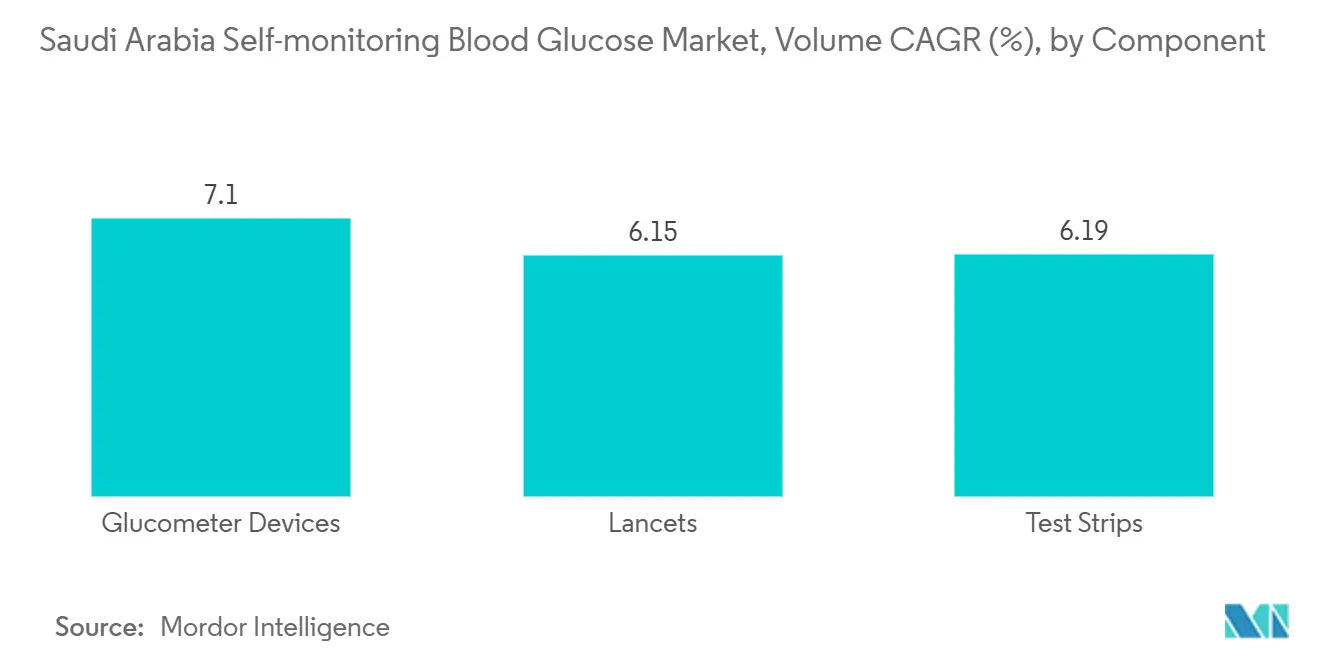
The Glucometer Devices Segment is expected to witness the highest CAGR over the forecast period
The glucometers segment is expected to register the highest CAGR of about 7.1% in the market over the forecast period owing to the increasing adoption of glucometers in home care settings, the growing preference for home-based self-monitoring, and recent product launches of advanced glucometers.
Glucose monitoring gives people living with diabetes a more complete picture of their blood sugar levels, which can influence short- and long-term treatment decisions and improve health outcomes. It allows them and their healthcare providers to assess their glycemic status and adverse effects and to determine the effectiveness of glucose-lowering therapies. Glucose monitoring has the potential to improve blood sugar management and quality of life for people living with diabetes, resulting in physical, social, emotional, and functional benefits.
Capillary blood glucose monitoring, or self-monitoring of blood glucose, is one way for people living with diabetes to measure and assess their glucose levels. It uses a drop of blood from a finger prick to get a blood glucose reading using a blood glucose meter or glucometer. Those with diabetes are advised to work with their care team to determine the frequency and pattern of testing.
In July 2022, the Saudi government announced that Saudi Arabia saw growing demand for quality healthcare services, spurred by changes including an increasing and aging population and a growing prevalence of diabetes. The government and private sector are both involved in working on healthcare entities, certifications, and regulations. The government is taking steps to have 100 percent of Saudi citizens covered by insurance and is working towards ensuring affordability, access, and quality digital healthcare and primary care with cost-effectiveness.
The aforementioned factors are likely to drive segment growth during the forecast period.
Competitive Landscape
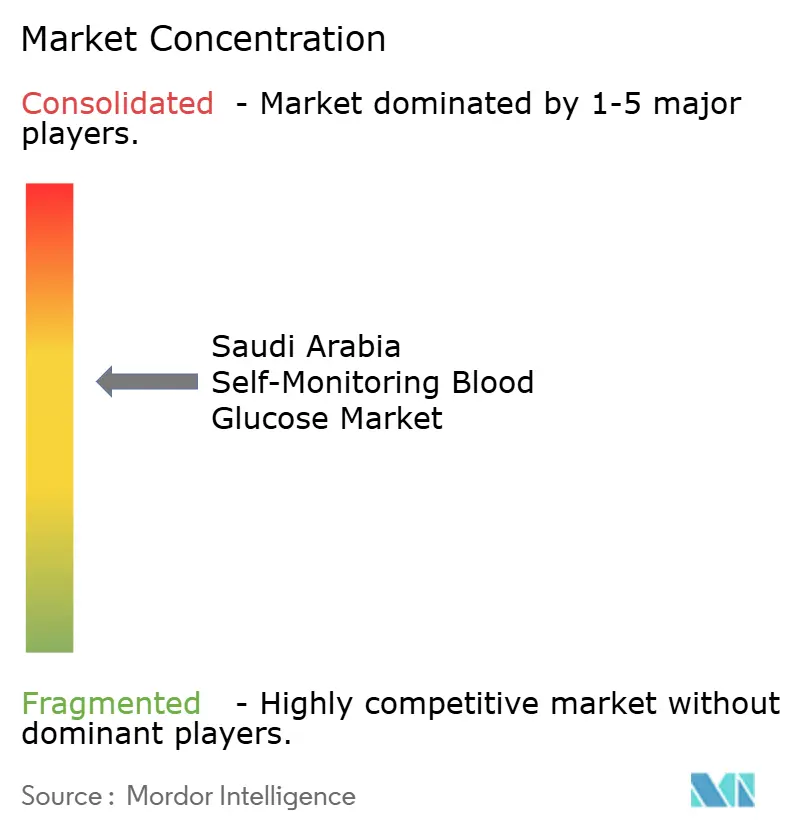
The Saudi Arabia self-monitoring blood glucose market is moderately fragmented, with few significant and other generic players. Manufacturers like Abbott, LifeScan, F. Hoffmann-La Roche AG, Ascensia, etc. occupy a major share.
Saudi Arabia Self-Monitoring Blood Glucose Industry Leaders
Roche Diabetes Care
Abbott Diabetes Care
Ascensia Diabetes Care
LifeScan
Arkray
- *Disclaimer: Major Players sorted in no particular order

Market Opportunities and Future Outlook
Saudi Arabia's diabetes burden (IDF estimates 4.27 million people living with diabetes and another 1.86 million undiagnosed) keeps demand centered on frequent, reliable self-testing in home-care settings. This, in turn, supports volume pull-through for glucometer devices and recurring consumables such as test strips and lancets.
Opportunities also sit in connected SMBG workflows where readings are captured, summarized, and shared for therapy decisions, aligning with the Ministry of Health's digital health direction and the Vision 2030 Health Sector Transformation Program focus on integrated, higher-value care delivery. A second area of opportunity is the convergence of self-monitoring with remote care pathways and digital services, including national virtual-care scale-up (for example, SEHA Virtual Hospital), which creates room for SMBG solutions that can feed patient-generated data into clinician review, coaching, or titration support. On the supply side, SFDA's continued publication of device-specific guidance (for example, MDS-G006 for blood glucose metering devices and 2025 updates such as MDS-REQ 9 v2 and digital health guidance MDS-G027) continues to make compliance and local-market readiness a differentiator, favoring manufacturers and local partners that can package meters, consumables, and software-enabled services under a clear authorization and establishment-licensing pathway.
Recent Industry Developments
- July 2026: Abbott announced the launch of the FreeStyle Libre 3 Plus continuous glucose monitoring system in Saudi Arabia. The expansion broadens Abbott's footprint in the Saudi CGM market and supports wider adoption of real time glucose monitoring. It enhances patient self management by delivering continuous data and alerts for proactive treatment adjustments.
- February 2026: Makkah Virtual Health Center Healthcare experts advised diabetes patients on the necessity of frequent blood glucose monitoring during Ramadan. The guidance informs patient monitoring practices during the holy period and supports awareness of at-home monitoring. This raises demand for home glucose monitoring and digital health guidance as a market differentiator.
- January 2026: Roche Diagnostics Middle East launched the Accu-Chek SmartGuide CGM system in Saudi Arabia. The market gains direct CGM technology presence and expands access to advanced glucose monitoring solutions. The deployment complements digital health integration and remote patient monitoring strategies in the region.


Research Methodology Framework and Report Scope
Market Definition and Coverage
This market covers self-monitoring blood glucose (SMBG) products used by patients and caregivers in Saudi Arabia to check capillary blood glucose at home or in care settings. It includes the testing device and the recurring consumables required to run a test.
Scope exclusions: continuous glucose monitoring systems, insulin delivery devices, and general diabetes treatment costs are excluded from this sizing.
Segmentation Overview
- Component
- Glucometer Devices
- Test Strips
- Lancets
Data Sources, Market Sizing, and Validation
Desk Research
Desk research was used to establish the demand pool and the operating context, before building the market math. We used public health statistics to understand diabetes prevalence, treated population, and care pathways in Saudi Arabia, then mapped this to SMBG testing behavior and access points.
Typical sources reviewed include Saudi Ministry of Health publications, the World Health Organization diabetes indicators, International Diabetes Federation fact sheets, peer reviewed clinical guidance on SMBG testing frequency, and import export trade statistics where relevant for medical devices and consumables. We also used company filings, distributor or retailer announcements, and a paid subscription focused on company financials and business intelligence to cross check reported revenues and product mix. This list is not exhaustive, and additional public and paid sources were used for data collection, validation, and clarification.
Primary Interviews and Surveys
Primary work focused on validating real pricing and utilization in Saudi Arabia, since strips and lancets depend heavily on prescription habits and reimbursement rules. We interviewed a mix of distributors, pharmacies, and hospital procurement staff, along with clinical stakeholders, so the model reflected channel margins, pack sizes, and differences in testing frequency by patient type.
Inputs from these conversations were also used to confirm what gets purchased outside hospitals, especially repeat strip purchases, and to sanity check year over year changes in tender activity and retail demand.
Distribution of primary research fieldwork respondents
| Company type | Respondent position |
|---|---|
| Top tier: 31% | CXOs: 12% |
| Mid tier: 52% | Functional/Unit leaders: 29% |
| Smaller Players: 17% | Managers: 59% |
Market-Sizing & Forecasting
Sizing starts from a demand pool built using diabetes prevalence and treated population in Saudi Arabia, then applying expected SMBG testing intensity to estimate annual strip consumption and attached lancet usage. To keep it practical, the top down build is anchored on a patient based demand reconstruction that connects testing frequency, pack sizes, and channel availability, and then the value is derived using typical retail and institutional price points.
The model is subsequently checked using selective bottom up approximations, such as roll ups of sampled channel sales, distributor throughput, and a price times volume sense check across device placements and recurring consumables. Inputs that matter most include average tests per patient per day, share of insulin treated patients, reimbursement coverage for strips, retail price dispersion between pharmacy and tender channels, and replacement cycles for meters. Where interview inputs differed by city or care setting, weighted averages were used, and gaps were handled by applying conservative ranges that were re tested with follow up calls.
For forecasting, we used scenario analysis supported by trend lines in diabetes burden, treatment adoption, and expected pricing moves for strips as purchasing shifts between tenders and retail. Growth rates were adjusted after validating assumptions with local stakeholders, so the forecast does not rely on a single variable.
Data Validation & Update Cycle
Totals are triangulated across at least three views: demand based strip consumption, price benchmarks by channel, and a supply side reasonableness check informed by distributor and procurement feedback. Outliers are flagged when implied tests per patient appear unrealistic or when value growth does not align with known reimbursement or tender changes, and those parts are recalculated.
Before sign off, the model goes through a multi step analyst review where assumptions, calculations, and unit economics are checked again for consistency. Reports are refreshed annually, and interim updates are triggered when material events occur, such as reimbursement shifts, major procurement changes, or sudden pricing moves. Right before delivery, a final pass is completed so the published outputs reflect the latest available information.
Mordor Intelligence's Saudi Arabia Self Monitoring Blood Glucose Market Estimate Compared With Other Published Estimates
It is common to see different market size values for SMBG in Saudi Arabia because each publisher draws the boundary in its own way, then applies different usage and pricing assumptions. The biggest differences usually come from whether recurring consumables are fully counted, how retail pricing is averaged with tenders, and how fast adoption shifts are assumed over the forecast.
By tracking channel level pricing and consumption signals, Mordor Intelligence keeps the model tied to SMBG strips, lancets, and meters only, which helps avoid inflating the total with adjacent glucose monitoring categories and overly aggressive testing frequency assumptions.
Benchmark comparison
| Source | Market Size | Gaps in Research Methodology |
|---|---|---|
| Mordor Intelligence | USD 124.51 M (2025) | |
| Industry Publisher A | USD 211.60 M (2024) | This estimate appears to use a broader product boundary and a higher growth path, and it may also apply stronger assumed uptake for newer monitoring options that are not strictly SMBG. |
| Regional Consultancy B | USD 77.84 M (2023) | This estimate seems closer to a devices led view, where meters are counted more clearly than recurring strips and lancets, and where channel mix and tender pricing effects may be simplified. |
Across the table, the spread is mainly explained by what is counted and how utilization is translated into strip volumes, before prices are applied. When scope is kept specific to SMBG and prices are weighted by real purchasing channels, the market total is easier to trace and rerun each year using the same steps and inputs.


Key Questions Answered in the Report
How big is the Saudi Arabia Self-Monitoring Blood Glucose Market?
The Saudi Arabia Self-Monitoring Blood Glucose Market size is expected to reach USD 132.04 million in 2026 and grow at a CAGR of 6.05% to reach USD 177.12 million by 2031.
What is the current Saudi Arabia Self-Monitoring Blood Glucose Market size?
In 2026, the Saudi Arabia Self-Monitoring Blood Glucose Market size is expected to reach USD 132.04 million.
Who are the key players in Saudi Arabia Self-Monitoring Blood Glucose Market?
Roche Diabetes Care, Abbott Diabetes Care, Ascensia Diabetes Care, LifeScan and Arkray are the major companies operating in the Saudi Arabia Self-Monitoring Blood Glucose Devices Market.
What years does this Saudi Arabia Self-Monitoring Blood Glucose Market cover, and what was the market size in 2025?
In 2025, the Saudi Arabia Self-Monitoring Blood Glucose Market size was estimated at USD 132.04 million. The report covers the Saudi Arabia Self-Monitoring Blood Glucose Market historical market size for years: 2019, 2020, 2021, 2022, 2023 and 2024. The report also forecasts the Saudi Arabia Self-Monitoring Blood Glucose Market size for years: 2026, 2027, 2028, 2029, 2030 and 2031.
Page last updated on:





