
Saudi Arabia Refrigerated Trucking Market Size and Share
Market Overview
| Study Period | 2021 - 2032 |
|---|---|
| Forecast Data Period | 2027 - 2032 |
| Base Year Market Size (2026) | USD 0.69 Billion |
| Market Size (2027) | USD 0.73 Billion |
| Market Size (2032) | USD 1.05 Billion |
| Growth Rate (2027 - 2032) | 7.30 % |
| Market Concentration | Medium |
Major Players *Disclaimer: Major Players sorted in no particular order Image © Mordor Intelligence. Reuse requires attribution under CC BY 4.0. | |
Saudi Arabia Refrigerated Trucking Market Analysis by Mordor Intelligence
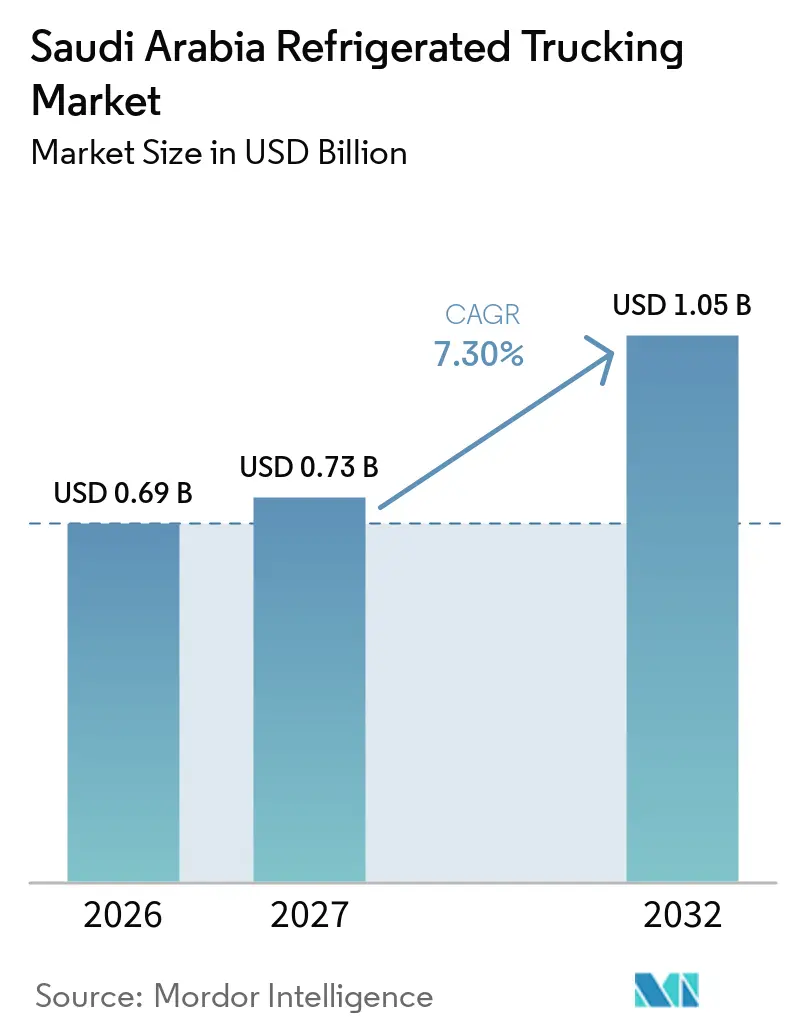
The Saudi Arabia refrigerated trucking market size is valued at USD 0.69 billion in 2026. It is estimated to grow from USD 0.73 billion in 2027 to reach USD 1.05 billion by 2032, at a CAGR of 7.30% during the forecast period (2027-2032).
Food imports, pharmaceutical distribution, retail replenishment, and continued investment in logistics infrastructure drive demand. Temperature-controlled transport is essential for preserving perishable goods across the Kingdom's extensive road network, linking ports, production centers, warehouses, and consumption markets. Food-loss reduction initiatives and stricter handling requirements further reinforce the need for reliable refrigeration equipment and continuous temperature monitoring. These factors strengthen the competitive position of operators that consistently protect product quality across intercity freight routes and urban distribution networks.
Key Report Takeaways
- By application, meats, poultry, fish, and seafood account for 28.35% of the Saudi Arabia refrigerated trucking market share in 2026, while healthcare and pharmaceuticals are projected to record the fastest growth at a CAGR of 8.47% through 2032.
- By truckload specification, full-truckload (FTL) accounts for 62.48% of the Saudi Arabia refrigerated trucking market size in 2026, while less-than-truckload (LTL) is projected to register at a CAGR of 9.76% through 2032.
- By containerization, containerized freight accounts for 68.33% of the Saudi Arabia refrigerated trucking market share in 2026 and is projected to register at a CAGR of 10.37% through 2032.
- By distance, long haul accounts for 57.98% of the Saudi Arabia refrigerated trucking market size in 2026, while short haul is projected to register at a CAGR of 9.98% through 2032.
- By destination, domestic freight accounts for 89.24% of the Saudi Arabia refrigerated trucking market share in 2026, while cross-border freight is projected to register at a CAGR of 8.59% through 2032.
- By temperature type, chilled freight accounts for 43.89% of the Saudi Arabia refrigerated trucking market size in 2026, while deep-frozen and ultra-low freight is projected to register at a CAGR of 8.34% through 2032.
- By geography, the Central Region accounts for 38.37% of the Saudi Arabia refrigerated trucking market share in 2026, while the Western Region is projected to register at a CAGR of 9.24% through 2032.
Note: Market numbers in this report are based on Mordor Intelligence's proprietary estimation framework, which combines nine months of actuals with Q4 projections for base year 2026.
Saudi Arabia Refrigerated Trucking Market Trends and Insights
Drivers Impact Analysis*
| Driver | (~) % Impact on CAGR Forecast | Geographic Relevance | Impact Timeline |
|---|---|---|---|
| Vision 2030 Corridors Expanding Refrigerated Freight Demand | +2.1% | National, concentrated in Riyadh, Jeddah, NEOM, and secondary logistics hubs | Long term (4 years or more) |
| Food Security Investment Strengthening Cold-Chain Transport Demand | +1.8% | National, with early gains in Central and Western regions | Long term (4 years or more) |
| Online Grocery Growth Increasing Refrigerated Delivery Volumes | +1.5% | Riyadh, Jeddah, Dammam, Makkah, and Medina | Medium term (2–4 years) |
| Pharmaceutical Distribution Expanding Temperature-Controlled Trucking Demand | +1.4% | National, focused on Riyadh, Jeddah, and Dammam corridors | Medium term (2–4 years) |
| Food-Loss Reduction Supporting Organized Cold-Chain Adoption | +0.8% | National wholesale and distribution networks | Medium term (2–4 years) |
| Digital Traceability Improving Multi-Temperature Fleet Utilization | +0.7% | National, especially pharmaceutical and port-adjacent corridors | Short term (2 years or less) |
| Source: Mordor Intelligence | |||
Vision 2030 Corridors Expanding Refrigerated Freight Demand
Saudi Arabia's logistics development agenda is strengthening the movement of temperature-sensitive goods between ports, distribution centers, and consumption markets. Riyadh, Jeddah, and Dammam remain key freight hubs, while new industrial, residential, and tourism developments are generating additional delivery requirements. In March 2026, the Transport General Authority announced measures allowing empty refrigerated trucks arriving from other Gulf Cooperation Council (GCC) states to enter the Kingdom and transport eligible goods to GCC markets through Saudi ports and airports[1]. This measure improves access to outbound refrigerated freight and enables more efficient vehicle utilization on regional routes. Cargo availability, route economics, and compliance with applicable operating requirements will determine the commercial impact.
Food Security Investment Strengthening Cold-Chain Transport Demand
Food security and food-loss reduction initiatives are driving demand for reliable handling and transportation of perishable products. In October 2025, the Food and Agriculture Organization of the United Nations reported that Saudi Arabia had reduced food loss and waste by 16% since 2019. This progress coincided with the September 2025 launch of the National Platform for Reducing Food Loss and Waste. Refrigerated trucking directly supports these objectives by maintaining appropriate temperatures between farms, ports, processing facilities, cold stores, retailers, and food-service operators. Carriers with suitable equipment, robust handling procedures, and comprehensive temperature records help shippers reduce spoilage risks across extended transport routes.
Online Grocery Growth Increasing Refrigerated Delivery Volumes
The expansion of online commerce and delivery services is driving demand for flexible distribution networks across Saudi Arabia. In February 2025, the Saudi Press Agency reported that the Kingdom's delivery sector processed 290 million orders, with Riyadh accounting for 45% of the total[2]. Grocery retailers, restaurants, and food distributors require refrigerated vehicles to transport products under controlled temperatures. Operators serving these customers must efficiently coordinate multiple delivery stops, maintain required temperature conditions, and meet delivery windows. These requirements create significant opportunities for LTL providers and fleets equipped for multi-temperature distribution.
Pharmaceutical Distribution Expanding Temperature-Controlled Trucking Demand
Pharmaceutical distribution demands precise temperature management, as exposure outside specified limits compromises product quality. GPS, RFID, temperature sensors, and cloud-based data management strengthen cold-chain visibility, enabling operators to track shipments and identify temperature deviations during transit. Refrigerated trucking providers serving pharmaceutical customers require appropriate equipment, documented temperature histories, trained personnel, and established procedures for managing excursions. These requirements favor operators with validated processes and dependable monitoring systems over providers that offer refrigeration capacity alone.
Restraints Impact Analysis*
| Restraint | (~) % Impact on CAGR Forecast | Geographic Relevance | Impact Timeline |
|---|---|---|---|
| Extreme Summer Heat Increasing Refrigeration System Stress | -0.6% | National, most acute in Central and Eastern regions | Long term (4 years or more) |
| High Equipment and Energy Costs Pressuring Margins | -0.5% | National, with a greater effect on mid-sized and independent operators | Medium term (2–4 years) |
| Certified Driver and Technician Shortages Limiting Capacity | -0.4% | National | Medium term (2–4 years) |
| Temperature Excursions Increasing Long-Route Compliance Risks | -0.5% | Jeddah–Riyadh, Riyadh–Dammam, and Central–Northern corridors | Short term (2 years or less) |
| Source: Mordor Intelligence | |||
Extreme Summer Heat Increasing Refrigeration System Stress
Saudi Arabia’s extreme summer heat increases the cooling load on refrigerated trucks, making it harder to maintain consistent cargo temperatures during long-haul journeys and multi-stop deliveries. Heat entering through trailer walls and open doors requires refrigeration units to work harder, increasing energy consumption and placing additional strain on equipment. For food and pharmaceutical shipments, these conditions heighten the risk of temperature deviations, particularly during loading and unloading. Effective insulation, appropriately sized refrigeration units, preventive maintenance, and continuous temperature monitoring therefore become essential to maintaining cargo integrity. These requirements increase the cost of providing reliable refrigerated trucking services and place greater financial pressure on smaller fleet operators.
High Equipment and Energy Costs Pressuring Margins
Refrigerated trucking requires investment in specialized vehicles, insulation, refrigeration units, monitoring equipment, and maintenance support. Operating costs include fuel, energy consumption, replacement parts, and specialized servicing. These expenses create significant cost pressures for smaller operators, which have fewer vehicles over which to distribute fixed costs. Fleet utilization, preventive maintenance, route planning, and return-load availability are therefore critical profitability drivers. Carriers that optimize vehicle utilization are well positioned to absorb cost fluctuations while maintaining service quality.
*Our forecasts treat driver/restraint impacts as directional, not additive. The impact forecasts reflect baseline growth, mix effects, and variable interactions.
Segment Analysis
By Application: Protein Leads Demand While Pharmaceuticals Add Complexity
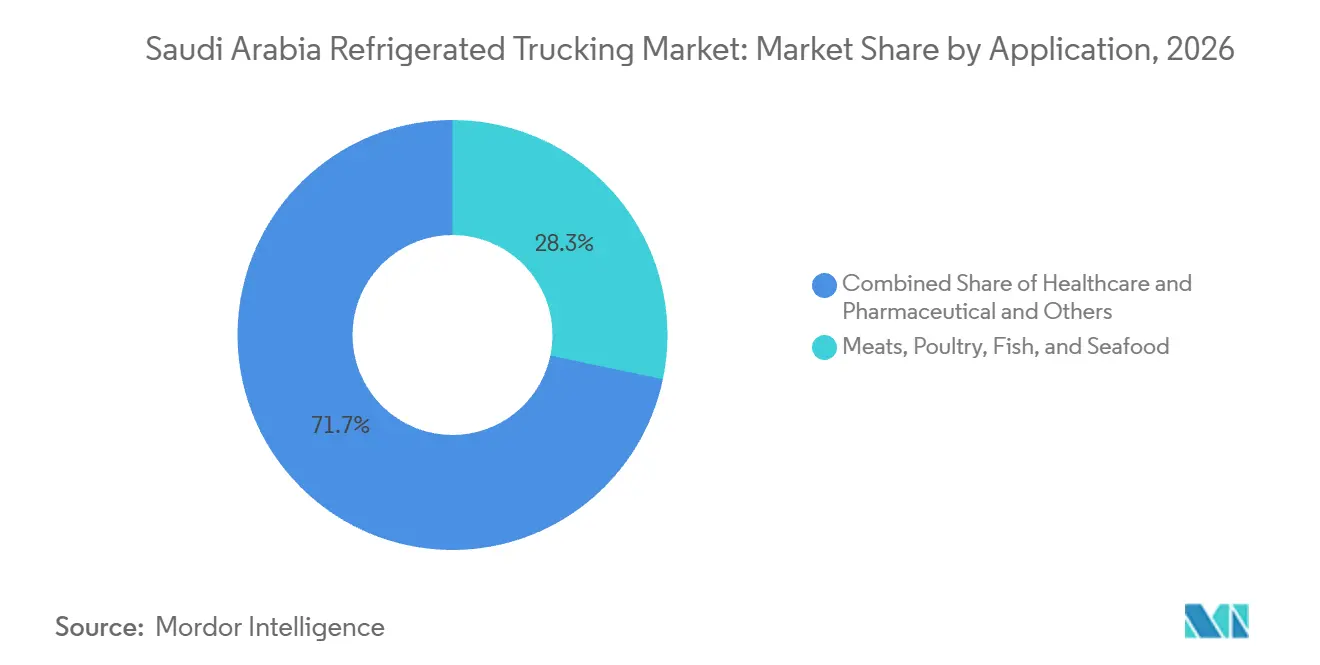
Meats, poultry, fish, and seafood account for 28.35% of the Saudi Arabia refrigerated trucking market share in 2026. These products require reliable temperature-controlled transportation from ports, processing facilities, cold stores, and distribution centers to retailers and food-service businesses. Their distribution generates recurring demand across national freight corridors and urban delivery networks. Dairy products, frozen foods, produce, and other perishables also drive refrigerated transport demand, with vehicle configurations tailored to product requirements and delivery schedules.
Healthcare and pharmaceuticals are projected to record a CAGR of 8.47% through 2032. Pharmaceutical shipments require defined temperature ranges, documented shipment conditions, traceability, and established deviation-handling procedures. These requirements drive demand for specialized equipment and rigorous operational controls. The February 2025 study of IoT-based medicine cold-chain monitoring in Saudi Arabia underscores the role of tracking technologies in managing temperature-sensitive shipments. Carriers that demonstrate reliable monitoring and handling capabilities are well positioned to serve pharmaceutical customers.

By Truckload Specification: FTL Leads While LTL Supports Smaller Deliveries
Full-truckload (FTL) accounts for 62.48% of the Saudi Arabia refrigerated trucking market size in 2026. Dedicated loads efficiently serve large consignments moving between ports, cold-storage facilities, distribution centers, and major consumption markets. FTL streamlines shipment planning and eliminates the need to consolidate products from multiple customers. It is well suited to bulk movements of frozen food, meat, seafood, and other temperature-sensitive goods. Long intercity distances further reinforce the use of dedicated vehicle capacity for predictable freight flows.
Less-than-truckload (LTL) is projected to register a CAGR of 9.76% through 2032. This model enables smaller shipments from multiple customers to share vehicle capacity, supporting retail replenishment, food-service distribution, and smaller healthcare deliveries. Successful LTL operations require compatible temperature requirements, disciplined loading, efficient delivery sequencing, and sufficient shipment volumes. Digital dispatch tools and route-planning systems enable operators to coordinate multiple consignments while maintaining the required conditions for each product.
By Containerization: Containerized Freight Supports Standardized Handling
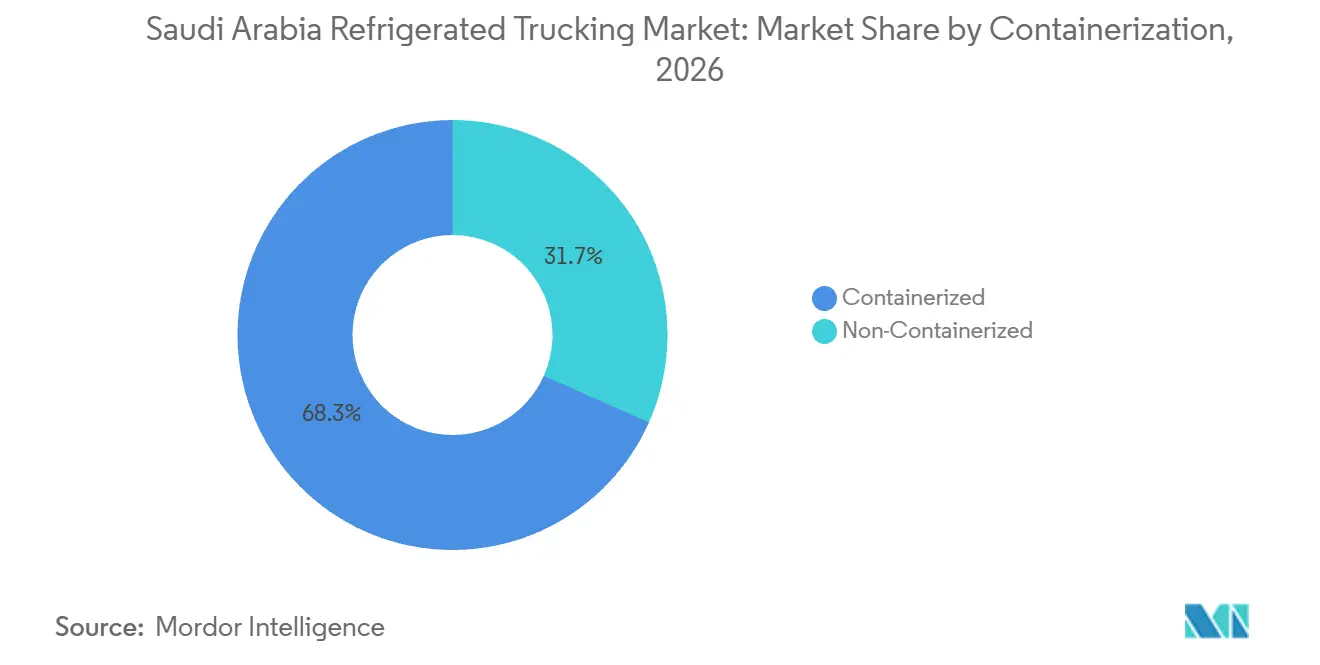
Containerized freight accounts for 68.33% of the Saudi Arabia refrigerated trucking market share in 2026 and is projected to register a CAGR of 10.37% through 2032. Refrigerated containers enable the efficient movement of temperature-sensitive cargo between maritime terminals, inland depots, and distribution facilities. Standardized handling and compatible equipment streamline the transfer of imported food and other perishable products across transport stages. This model requires robust container-handling infrastructure, reliable power connections where needed, and continuous monitoring during road transport.
Non-containerized refrigerated freight plays a critical role in local deliveries, smaller consignments, and distribution activities requiring flexible vehicle configurations. Fresh produce, dairy products, prepared foods, and other perishables often require frequent deliveries that do not align with container-based movements. Operators must match equipment with cargo characteristics, shipment volumes, delivery frequency, and temperature requirements. Together, both models support import distribution and domestic cold-chain supply networks.
By Distance: Long Haul Dominates While Short Haul Expands
Long-haul accounts for 57.98% of the Saudi Arabia refrigerated trucking market share in 2026. The segment supports freight movements between maritime gateways, inland distribution centers, processing facilities, and major cities. Longer journeys demand rigorous maintenance, driver scheduling, route planning, and continuous temperature management. These services are critical for distributing imported food and other products from coastal entry points to inland consumption markets. Reliable long-haul capacity also enables the efficient movement of goods between national distribution hubs and regional warehouses.
Short haul is projected to register at a CAGR of 9.98% through 2032. The segment benefits from increasing demand for store replenishment, restaurant supply, healthcare deliveries, and other distribution activities requiring frequent stops. Although shorter journeys cover less distance, repeated loading and unloading increase the risk of temperature fluctuations. Compact refrigerated vehicles, appropriate compartment configurations, and efficient dispatch systems enable operators to serve multiple customers while maintaining product integrity. Coordinating long-haul arrivals with local delivery schedules also reduces handling delays.
By Destination: Domestic Freight Leads While Cross-Border Routes Develop
Domestic freight accounts for 89.24% of the Saudi Arabia refrigerated trucking market in 2026. The segment is essential to food distribution, retail replenishment, healthcare supply, and deliveries between ports, warehouses, production facilities, and consumption centers. Saudi Arabia's geographic scale makes reliable road transport critical for connecting coastal entry points with inland markets. Domestic operators leverage established routes and regional depots to support large consignments and local distribution efficiently.
Cross-border freight is projected to register at a CAGR of 8.59% through 2032. Saudi Arabia's road connections with neighboring GCC markets position the country as a key hub for regional refrigerated transport. In March 2026, the Transport General Authority announced that eligible empty refrigerated trucks from GCC countries could enter Saudi Arabia to carry qualifying goods to GCC markets through the Kingdom's ports and airports. This measure strengthens regional capacity utilization and freight connectivity, subject to regulatory requirements. Cross-border operators must effectively manage customs documentation, temperature records, border procedures, and return journeys.
By Temperature Type: Chilled Freight Leads While Specialized Loads Grow
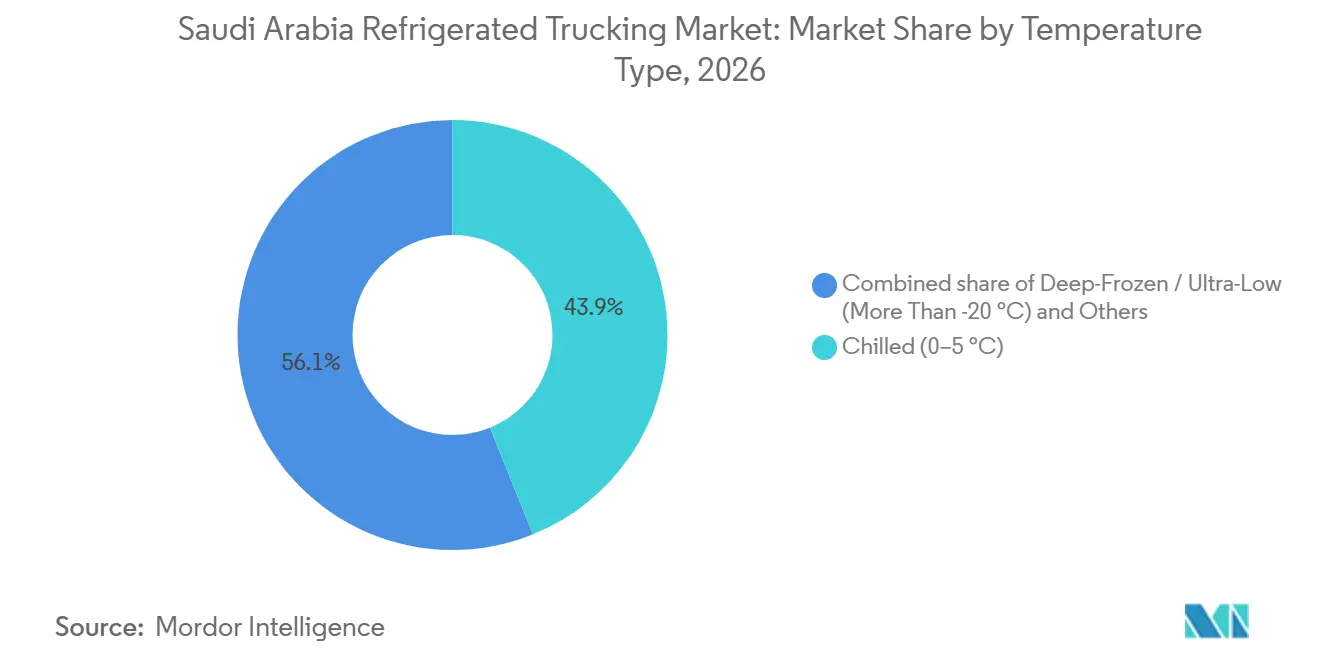
Chilled freight accounts for 43.89% of the Saudi Arabia refrigerated trucking market in 2026. It serves products such as fresh meat, dairy, seafood, and produce that require controlled temperatures above freezing. These shipments support routine replenishment for supermarkets, restaurants, food-service providers, and other commercial customers. Maintaining product quality depends on appropriate refrigeration, effective loading practices, and timely delivery. Operating conditions vary by commodity and customer specifications, making equipment selection and temperature management central to reliable service.
Deep-frozen and ultra-low freight is projected to register at a CAGR of 8.34% through 2032. Frozen food drives demand for lower-temperature transportation, while certain pharmaceutical products require specialized handling and tightly controlled conditions. Operating requirements differ significantly between conventional frozen cargo and products requiring ultra-low temperatures. Providers must match vehicle and refrigeration capabilities to each shipment's specified temperature range rather than treating these categories as interchangeable. Monitoring systems, validated procedures where required, and trained personnel enable operators to manage sensitive cargo effectively.
Geography Analysis
The Central Region accounts for 38.37% of the Saudi Arabia refrigerated trucking market in 2026. Riyadh serves as a key consumption center and distribution hub, connecting freight arriving from western and eastern ports with domestic destinations. The region's retail, food-service, institutional, and healthcare customers drive demand for both intercity transport and local distribution. Regional depots and strong connections to major road corridors enable carriers to consolidate loads and coordinate deliveries across surrounding markets.
The Western Region is projected to register a CAGR of 9.24% through 2032. Jeddah's role as a maritime gateway supports the movement of imported goods into the Kingdom. At the same time, demand around Makkah and Medina generates additional distribution requirements for food and other temperature-sensitive products. Seasonal religious travel increases the need for coordinated food supply and delivery services. In March 2026, Saudi Arabia launched a logistics corridors initiative to facilitate the movement of cargo redirected from eastern and GCC ports to Jeddah Islamic Port and other Red Sea ports.
The Eastern Region remains strategically important due to its port access, industrial activity, and road links to neighboring GCC markets. The region supports the movement of imported and domestically distributed goods, including temperature-sensitive products. Northern and Southern areas have distinct freight profiles shaped by population centers, agricultural activity, and the availability of distribution infrastructure. In August 2026, Bahri Logistics announced the opening of ship agency offices at Yanbu Commercial and Industrial Ports and Ras Tanura Industrial Port[3].
Competitive Landscape
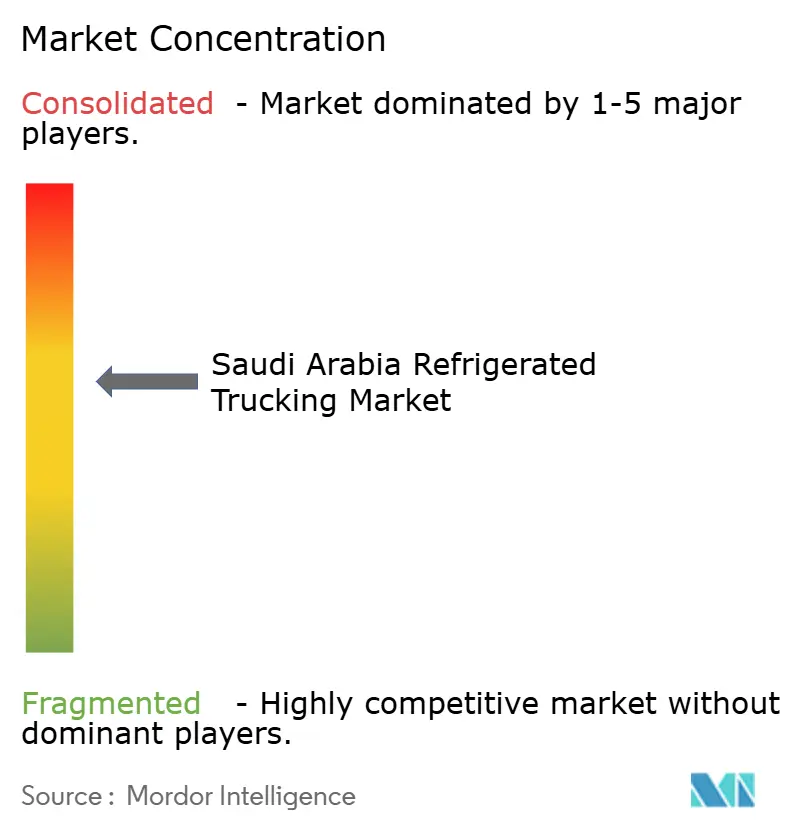
The Saudi Arabia refrigerated trucking market is consolidated and comprises international logistics providers and domestic transport and distribution companies. Key operators include DHL Supply Chain, A.P. Moller-Maersk, Kuehne+Nagel, DSV, Almajdouie Logistics, NAQEL Express, Tamer Logistics, and AJEX Logistics Services. Competitive positioning depends on geographic coverage, fleet availability, temperature-control capabilities, service reliability, and the ability to meet the handling requirements of different product categories. International logistics providers leverage integrated supply chain networks and global customer relationships, while domestic operators benefit from established regional distribution networks and familiarity with local operating requirements. Companies compete by improving fleet utilization, strengthening shipment visibility, optimizing delivery routes, and maintaining consistent service standards across long-haul and urban distribution operations. The ability to integrate refrigerated transportation with warehousing, distribution, and other logistics services also helps providers address customers' end-to-end cold-chain requirements.
Infrastructure investment and service integration are key competitive differentiators. In November 2025, DHL Supply Chain announced a EUR 130 million (USD 152.92 million) investment in a regional logistics and distribution hub at Saudi Arabia's Special Integrated Logistics Zone in Riyadh[4]. The planned facility covers a 78,000 m² site, including 53,000 m² of warehouse space. Construction was planned in the first quarter of 2026, with completion expected in the second quarter of 2027. The facility is a broader logistics development and is not dedicated refrigerated trucking infrastructure.
Technology adoption, regulatory compliance, and regional network access are important factors shaping competition in the Saudi Arabia refrigerated trucking market. In May 2025, Kuehne+Nagel announced that it had secured Saudi Arabia's first Authorized Economic Operator certification for customs brokerage, complementing its existing certification as a logistics operator. This development strengthens its customs brokerage credentials and supports the efficient movement of shipments through regulatory processes. In the same month, CJ Logistics announced a partnership with NAQEL Express to expand delivery services across the Middle East and support cross-border e-commerce logistics, enhancing regional distribution connectivity. These developments highlight the importance of customs expertise, network integration, and service coordination in managing complex supply chains. For refrigerated trucking providers, competitive differentiation also depends on access to suitable vehicles, reliable temperature-monitoring systems, preventive maintenance, trained personnel, and standardized cargo-handling procedures. Investments in these capabilities help operators maintain product integrity, minimize temperature excursions, and meet the handling requirements of food, pharmaceutical, and other temperature-sensitive shipments.
Saudi Arabia Refrigerated Trucking Industry Leaders
-
Mosanada Logistics Services
-
Tamer Logistics
-
Saudi Post | SPL, including NAQEL Express
-
DHL Supply Chain
-
A.P. Moller - Maersk
- *Disclaimer: Major Players sorted in no particular order
Recent Industry Developments
- October 2026: CEVA Almajdouie Logistics and Port of NEOM signed an MoU to develop a multimodal freight corridor linking Europe, Egypt, Saudi Arabia, the GCC, and Iraq, combining the port's Red Sea maritime access with CEVA Almajdouie's regional road network, cross-border trucking, warehousing, and customs brokerage capabilities
- September 2026: NAQEL Express integrated with Anchanto's omnichannel commerce and supply chain technology platform, enabling brands and logistics providers to automate fulfillment, delivery, tracking, and returns through NAQEL's cold-chain-capable national network.
- May 2026: ASMO (DHL Supply Chain–Saudi Aramco JV) and Arcapita Group Holdings broke ground on a 1.4 million m² logistics facility at King Salman Energy Park (SPARK), incorporating a 43,000 m² temperature-controlled Grade A warehouse with automated storage and retrieval systems targeting LEED Gold certification.
- April 2026: Maersk added 3 new maritime services to Jeddah Islamic Port and King Abdullah Port, connecting Saudi Arabia with Nhava Sheva and Mundra in India and Salalah in Oman, adding up to 14,400 TEUs of reefer-capable capacity and improving cold-chain logistics for temperature-sensitive food imports.
Saudi Arabia Refrigerated Trucking Market Report Scope
| Horticultural Products |
| Dairy and Frozen Dessert Products |
| Meats, Poultry, Fish, and Seafood |
| Processed Food Products |
| Healthcare and Pharmaceutical |
| Other Applications |
| Full-Truckload (FTL) |
| Less-than-Truckload (LTL) |
| Containerized |
| Non-Containerized |
| Long Haul |
| Short Haul |
| Domestic |
| Cross-border |
| Chilled (0–5 °C) |
| Frozen (-20–0 °C) |
| Ambient |
| Deep-Frozen / Ultra-Low (Less than -20 °C) |
| Central (Riyadh, Al-Qassim, and Hail) |
| Eastern (Ash-Sharqiyah) |
| Western (Al-Bahah, Makkah, Medina, and Tabuk) |
| Northern (Al-Jouf and Arar) |
| Southern (Asir, Jazan, and Najran) |
| By Application | Horticultural Products |
| Dairy and Frozen Dessert Products | |
| Meats, Poultry, Fish, and Seafood | |
| Processed Food Products | |
| Healthcare and Pharmaceutical | |
| Other Applications | |
| By Truckload Specification | Full-Truckload (FTL) |
| Less-than-Truckload (LTL) | |
| By Containerization | Containerized |
| Non-Containerized | |
| By Distance | Long Haul |
| Short Haul | |
| By Destination | Domestic |
| Cross-border | |
| By Temperature Type | Chilled (0–5 °C) |
| Frozen (-20–0 °C) | |
| Ambient | |
| Deep-Frozen / Ultra-Low (Less than -20 °C) | |
| By Region | Central (Riyadh, Al-Qassim, and Hail) |
| Eastern (Ash-Sharqiyah) | |
| Western (Al-Bahah, Makkah, Medina, and Tabuk) | |
| Northern (Al-Jouf and Arar) | |
| Southern (Asir, Jazan, and Najran) |
Key Questions Answered in the Report
What is the projected value of the Saudi Arabia refrigerated trucking market by 2032?
The market is projected to reach USD 1.05 billion by 2032, increasing from USD 0.73 billion in 2027 at a CAGR of 7.30% during 2027–2032.
Which application has the largest share of refrigerated trucking demand in Saudi Arabia?
Meats, poultry, fish, and seafood account for 28.35% of the market in 2026.
Which truckload specification is projected to grow fastest?
Less-than-truckload is projected to record a CAGR of 9.76% through 2032.
Why is pharmaceutical transport important for refrigerated trucking operators?
Healthcare and pharmaceuticals are projected to register a CAGR of 8.47% through 2032, supported by the need for suitable temperature control, monitoring, and documented handling procedures.
Which Saudi region is projected to grow fastest?
The Western Region is projected to register a CAGR of 9.24% through 2032.
What is supporting cross-border refrigerated trucking?
Regional road connectivity and measures facilitating eligible refrigerated truck movements between Saudi Arabia and GCC markets can support cross-border freight activity.