
Rett Syndrome Market Size and Share
Market Overview
| Study Period | 2020 - 2031 |
|---|---|
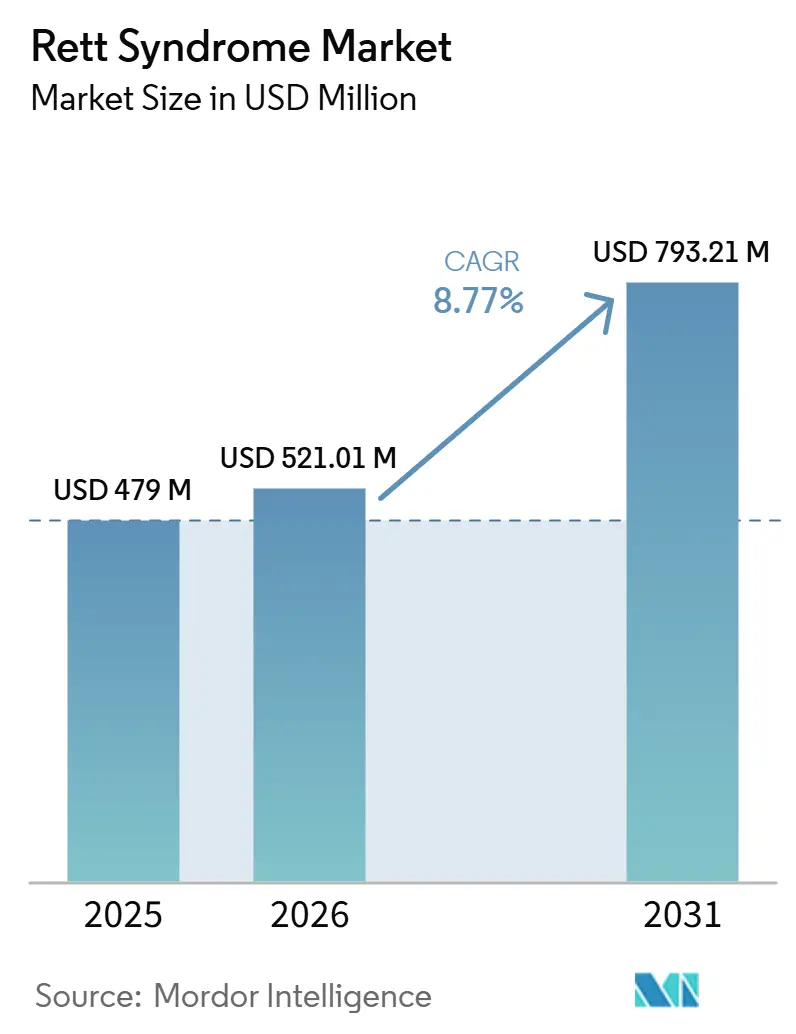
| Market Size (2026) | USD 521.01 Million |
| Market Size (2031) | USD 793.21 Million |
| Growth Rate (2026 - 2031) | 8.77 % |
| Fastest Growing Market | Asia-Pacific |
| Largest Market | North America |
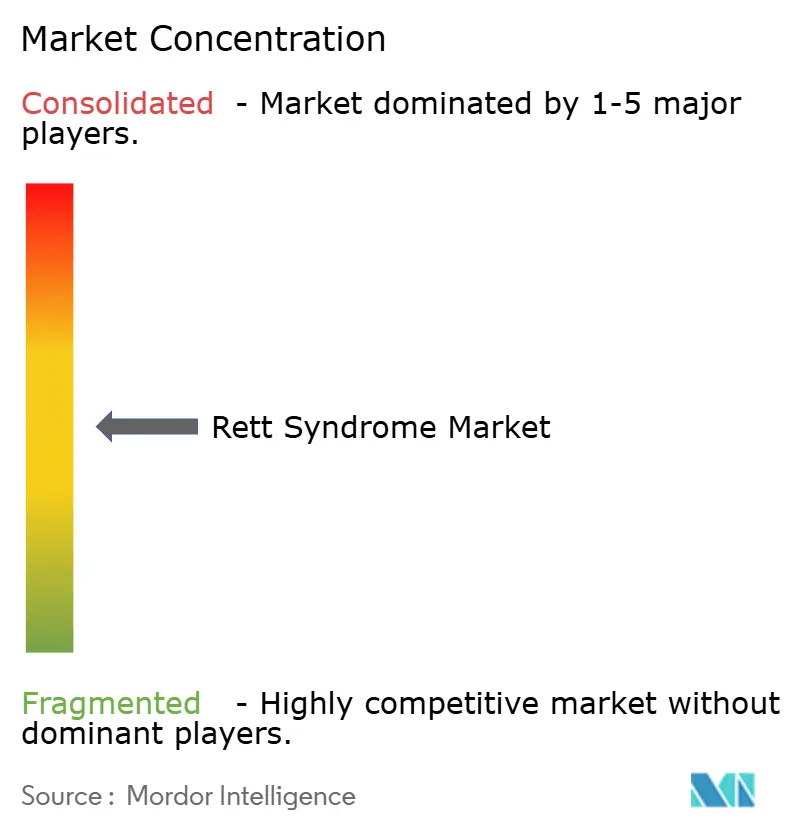
| Market Concentration | Medium |
Major Players *Disclaimer: Major Players sorted in no particular order Image © Mordor Intelligence. Reuse requires attribution under CC BY 4.0. | |
Rett Syndrome Market Analysis by Mordor Intelligence
The Rett Syndrome Market size is projected to expand from USD 479 million in 2025 and USD 521.01 million in 2026 to USD 793.21 million by 2031, registering a CAGR of 8.77% between 2026 to 2031.
The Rett syndrome market entered a different commercial phase after trofinetide became the first approved disease-targeted therapy in 2023, and Canada expanded that footprint with its October 2024 authorization of DAYBUE. That change gave the Rett syndrome market a defined pricing reference, stronger payer engagement, and a clearer revenue base beyond supportive care and diagnostic services alone. The Rett syndrome market is also gaining from faster use of molecular testing, as GeneDx reported 30.5% year over year growth in exome and genome test volumes in 2025 and extended its reach into adult neurology in 2026. Competition in the Rett syndrome market is set to intensify as Neurogene and Taysha move gene therapy programs through pivotal development, which shifts the outlook from one approved product to a broader treatment mix after 2027. The Rett syndrome market also benefits from wider specialty care networks and new regional access paths, with 21+ IRSF Centers of Excellence in the United States and an active Phase 3 trofinetide study in Japan supporting future diagnosis and treatment uptake.
Key Report Takeaways
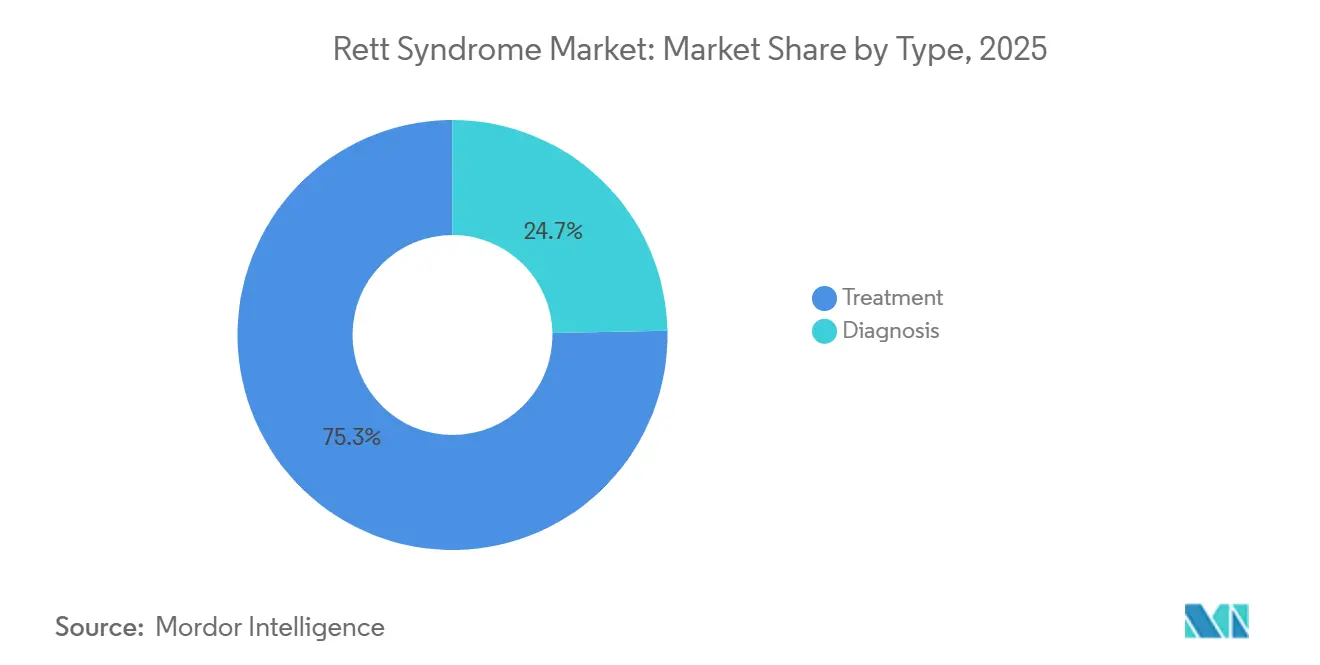
- By type, treatment held 75.31% revenue share in 2025, while diagnosis is forecast to expand at 11.38% CAGR through 2031.
- By disease type, classic Rett syndrome held 74.24% share in 2025, while atypical Rett syndrome is projected to grow at 10.52% CAGR through 2031.
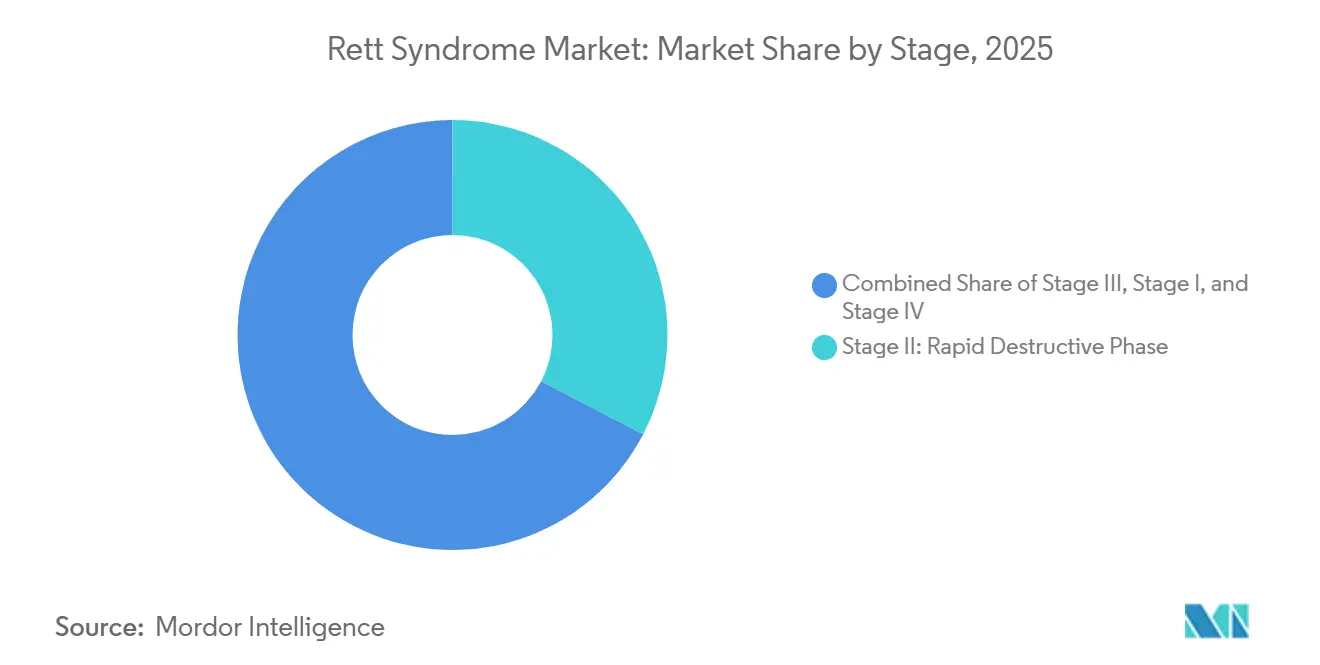
- By stage, Stage II accounted for 32.64% share in 2025, while Stage I is forecast to advance at 10.62% CAGR through 2031.
- By end user, hospitals held 48.26% share in 2025, while specialty clinics are projected to grow at 10.95% CAGR through 2031.
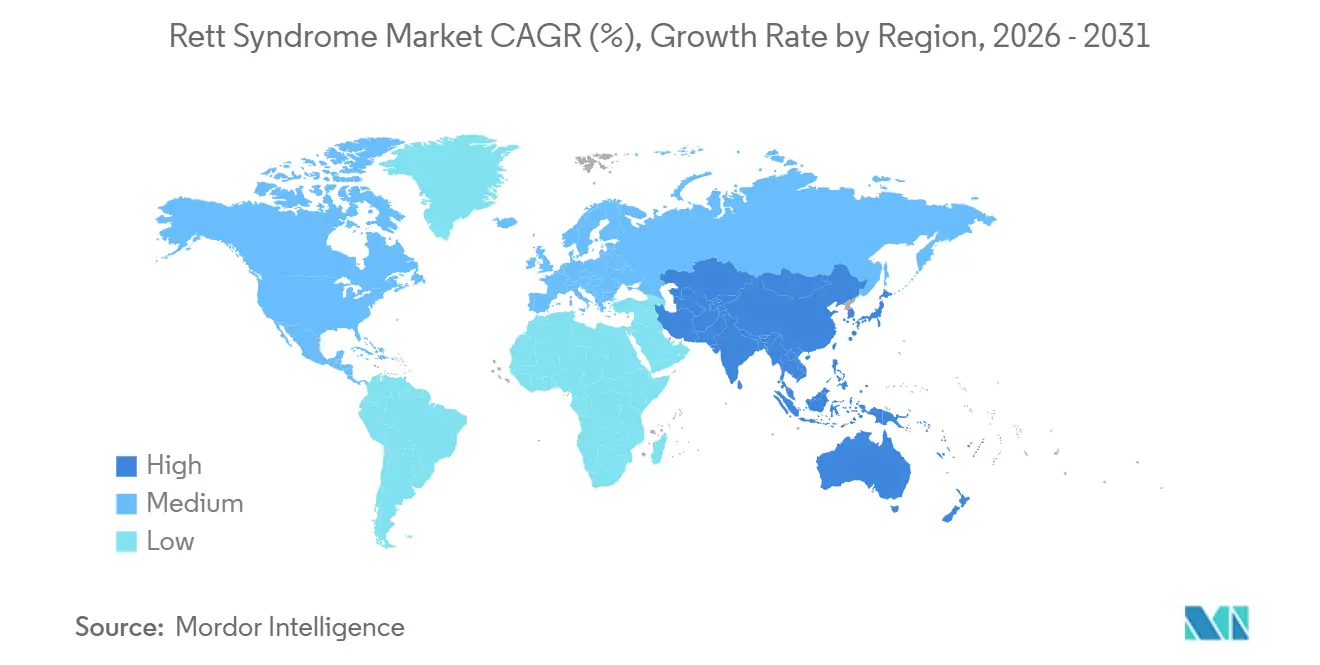
- By geography, North America held 44.61% share in 2025, while Asia-Pacific is projected to expand at 11.65% CAGR through 2031.
Note: Market size and forecast figures in this report are generated using Mordor Intelligence’s proprietary estimation framework, updated with the latest available data and insights as of January 2026.
Market Trends and Insights
Drivers Impact Analysis of Rett Syndrome Market*
| Driver | (~) % Impact on CAGR Forecast | Geographic Relevance | Impact Timeline |
|---|---|---|---|
| Increasing Adoption Of Trofinetide As The First Approved Disease-Targeted Therapy | +2.2% | North America as the primary market, with expansion into Canada and Europe | Short term (≤ 2 years) |
| Expanding MECP2 Genetic Testing And Earlier Molecular Confirmation | +1.5% | Global, led by North America and Europe | Medium term (2-4 years) |
| Rising Clinical Trial Activity In Gene And RNA-Based Therapies | +1.3% | North America, Europe, and Asia-Pacific core markets including Japan and Australia | Long term (≥ 4 years) |
| Multidisciplinary Care Adoption Across Neurology, Rehabilitation, Nutrition, And Communication Support | +0.7% | North America and Europe, with spillover into core Asia-Pacific markets | Medium term (2-4 years) |
| Expansion Of Rare Disease Centers Of Excellence And Referral Networks | +0.5% | North America as the primary market, with early gains in Germany, the United Kingdom, and Australia | Medium term (2-4 years) |
| Caregiver-Generated Real-World Evidence And Remote Monitoring For Rare Neurodevelopmental Disorders | +0.4% | North America and Europe, with spillover into Asia-Pacific | Long term (≥ 4 years) |
| Source: Mordor Intelligence | |||
Trofinetide Adoption Extending Its Commercial Runway Across Markets
DAYBUE net sales reached USD 391 million in 2025, up from USD 348 million in 2024, and Acadia guided to USD 460-490 million for 2026. That outlook points to continued volume expansion in the Rett syndrome market rather than price support alone. Real world persistence remained strong, with more than 87.5% of pediatric patients staying on treatment beyond 3 months and more than 65% remaining through the end of available follow up. Strong persistence matters because the Rett syndrome market still depends on one commercial product for most disease-targeted pharmacological revenue. Canada approved DAYBUE in October 2024, which gave the Rett syndrome market its second fully authorized national launch. That wider footprint extends the product runway and gives the Rett syndrome market a firmer base while gene therapies remain in development[1].
MECP2 Genetic Testing Expanding The Treatable Population
MECP2 testing is moving from a confirmatory step to an earlier diagnostic tool in the Rett syndrome market. GeneDx reported 30.5% year over year growth in exome and genome test volumes in 2025 and projected 33-35% volume growth for 2026 with revenue guidance of USD 540-555 million. The same company also highlighted healthcare cost savings of up to USD 80,000 per child after exome or genome testing in neurodevelopmental disorders, which supports payer acceptance of earlier testing. GeneDx expanded into adult neurology in 2026, which opens a new funnel for adults whose conditions were never formally confirmed as Rett syndrome. Early molecular confirmation matters because both marketed therapy use and pivotal gene therapy enrollment depend on documented mutation status. As testing becomes more routine, the Rett syndrome market can pull forward diagnosis and treatment into a period when intervention options are broader.
Gene And RNA-Based Therapy Pipeline Reaching Pivotal Data Inflection
The Rett syndrome market now has an unusually dense late stage pipeline for a rare neurodevelopmental condition. Neurogene reported 47 total developmental milestones gained across 10 Phase 1/2 participants for NGN-401, with no plateau observed through 30 months at the June 16, 2026 data cutoff. The FDA granted Breakthrough Therapy designation to NGN-401 in February 2026, which gave the program a stronger regulatory position as it moved deeper into registrational development. Taysha completed dosing in the REVEAL pivotal trial in June 2026 and expects 6-month interim pivotal data in 1H 2027. UCB also launched a Phase 3 randomized study of fenfluramine in June 2026 with an estimated 200 participants. This convergence will broaden choice and raise competitive pressure in the Rett syndrome market even before the first gene therapy reaches approval[2].
Multidisciplinary Care Networks Creating Durable Clinical Infrastructure
Multidisciplinary care is giving the Rett syndrome market a more stable service base beyond medicines alone. IRSF updated its Comprehensive Care Guidelines in 2024 and positioned augmentative and alternative communication therapy as standard care across disease stages. That step widens recurring demand for communication support, rehabilitation, nutrition management, and neurology follow up in the Rett syndrome market. The IRSF network expansion to 21+ U.S. Centers of Excellence in 2024 also strengthened referral pathways and concentrated expertise. These centers help align treatment access with clinical trial recruitment, which removes 2 common bottlenecks at the same time. As this model spreads, the Rett syndrome market gains infrastructure that can support both chronic care and future advanced therapies.
Restraints Impact Analysis of Rett Syndrome Market*
| Restraint | (~) % Impact on CAGR Forecast | Geographic Relevance | Impact Timeline |
|---|---|---|---|
| High Treatment And Genetic Testing Costs Relative To Covered Patient Populations | -1.4% | Global, most pronounced in North America and Europe | Short term (≤ 2 years) |
| Limited Curative Options Outside Symptom Management | -0.8% | Global | Medium term (2-4 years) |
| Narrow Diagnosable Population And Delayed Diagnosis In Lower-Awareness Markets | -0.6% | South America, Middle East and Africa, and the rest of Asia-Pacific | Long term (≥ 4 years) |
| Clinical Trial Recruitment Friction And Small, Heterogeneous Patient Cohorts | -0.4% | Global, most acute outside North America and Western Europe | Long term (≥ 4 years) |
| Source: Mordor Intelligence | |||
Cost Architecture Constraining Market Penetration Despite Clinical Demand
High therapy costs still limit penetration in the Rett syndrome market. A 50-state audit showed that DAYBUE faced restrictive prior authorization criteria across U.S. Medicaid programs in 2025. That matters because many pediatric patients depend on Medicaid, so administrative review becomes the practical gatekeeper to access. The problem will not end with current therapy, because gene therapy candidates are expected to carry much higher prices than chronic oral treatment. In countries without mature orphan drug reimbursement frameworks, that cost profile keeps part of the commercial opportunity out of reach even when clinical demand exists.
Delayed Diagnosis Limiting The Addressable Patient Population In Emerging Markets
Delayed diagnosis still narrows the addressable population in the Rett syndrome market, especially outside high awareness health systems. The 2026 JPCCR review noted that limited medical awareness, weak sequencing access, and low specialist availability in LMICs can delay confirmation by years. Many girls are first labeled under autism spectrum disorder or cerebral palsy before Rett syndrome is confirmed. That delay reduces the share of patients who can reach Stage I focused gene therapy trials with confirmed MECP2 status. Once patients move into later stages before molecular confirmation, the Rett syndrome market loses the group most aligned with disease modifying development programs[3].
*Our forecasts treat driver/restraint impacts as directional, not additive. The impact forecasts reflect baseline growth, mix effects, and variable interactions.
Rett Syndrome Market Segment Analysis
By Type:
Treatment Anchors Revenue While Diagnostics Set The Growth PaceTreatment accounted for 75.31% of the Rett syndrome market share in 2025, which kept revenue centered on therapy services and drug spending. DAYBUE net product sales of USD 391 million in 2025 remain the clearest proxy for the scale of the drug therapy sub segment. Supportive therapies, assistive devices, and surgical interventions added revenue across care pathways, but each remained smaller and more diffuse than drug therapy. The diagnosis segment is forecast to grow at 11.38% CAGR, which shows that the Rett syndrome market is shifting toward earlier molecular confirmation even while treatment stays the larger base.
GeneDx expanded the test supply side by lifting exome and genome volumes 30.5% in 2025 and extending its commercial push in 2026. Genetic testing is outpacing blood tests and other methods because it confirms mutation status, supports genotype review, and determines eligibility for gene therapy studies. Adult neurology outreach should also bring previously unconfirmed patients into the Rett syndrome market, especially among older cases that were coded under broader neurological labels. This leaves the Rett syndrome industry with a larger diagnostic funnel and a treatment base that can keep expanding once confirmation happens earlier.
By Disease Type:
Classic Rett Drives Current Revenue While Atypical Variants Gain GroundClassic Rett syndrome held 74.24% share in 2025, while atypical Rett syndrome is projected to grow at 10.52% CAGR through 2031. That split shows that current revenue still follows the phenotype used in the pivotal evidence base for approved therapy. At the same time, sponsors are widening clinical attention beyond the classic presentation, which supports future growth in the smaller atypical pool. The Children's Hospital of Philadelphia program assessed DAYBUE in 55 people with Rett syndrome and related MECP2 associated disorders over 12 months, including atypical and male presentations.
The LAVENDER study that supported FDA approval enrolled patients aged 5-20 years with documented classic RTT, which reinforced the commercial weight of the classic segment. Atypical cases have historically been harder to confirm because their molecular profiles and clinical presentation are less uniform. Broader next generation sequencing panels that capture CDKL5 and FOXG1 alongside MECP2 should improve detection of these cases over time. That diagnostic broadening can expand the atypical addressable pool and keep its growth rate above the wider Rett syndrome market through the forecast period.
By Stage:
Stage II Leads Current Spending While Stage I Gains The Fastest MomentumStage II held 32.64% of the 2025 market, while Stage I is forecast to grow at 10.62% CAGR through 2031. That pattern reflects how often confirmation still happens after neurological regression has started. Gene therapy sponsors are now targeting younger patients, which is shifting future growth toward earlier intervention in the Rett syndrome market. Neurogene's Embolden study enrolls patients aged 3 years and older, while Taysha's ASPIRE study targets females aged more than 2 years and less than 4 years.
The DAFFODIL and LOTUS data set showed that early use of trofinetide can be sustained, with more than 87.5% of children aged 2-4 staying on treatment beyond 3 months. Stage II still carries the largest revenue load because most clinically confirmed patients enter treatment after the rapid destructive phase begins. Stage III and Stage IV remain more dependent on supportive care, off label seizure control, and symptom management than on disease directed therapy. Earlier molecular confirmation therefore matters to the Rett syndrome market because the highest efficacy signals are being pursued in the youngest eligible patients.

By End User:
Hospitals Hold Scale While Specialty Clinics Shape Future DeliveryHospitals represented 48.26% share of the Rett syndrome market size in 2025, while specialty clinics are projected to grow at 10.95% CAGR through 2031. Specialty clinics are expanding because the IRSF kept widening its Centers of Excellence network and added 3 new centers in July 2024. These sites combine neurology, rehabilitation, nutrition, gastroenterology, and communication support in one visit flow, which raises revenue intensity per patient encounter. Hospitals still lead because they handle first diagnosis, complex inpatient episodes, and the monitoring infrastructure likely needed for future gene therapy use.
Homecare is gaining importance as families use remote monitoring and supportive therapy outside specialist sites. The VIBRANT study began in April 2024 to validate wearable biosensors for breathing, sleep, heart rate, and movement tracking in Rett syndrome. If those endpoints are validated, stable patients could complete part of follow up at home without weakening the data used for care decisions or trial monitoring. That possibility gives the Rett syndrome industry a more flexible delivery model while keeping specialty clinics central for high complexity cases.
Geography Analysis
North America Rett Syndrome Market
North America held 44.61% of the Rett syndrome market share in 2025, which kept the region clearly ahead of all others. The United States drove that lead because it had the first commercial launch of trofinetide and the highest concentration of IRSF Centers of Excellence. Canada became the second fully authorized trofinetide market in October 2024, which widened the regional base beyond the United States. Even so, Medicaid prior authorization still limits how fully demand converts into treated volume in parts of the region. GeneDx added a larger neurology focused commercial team in 2026, and that should improve confirmed diagnosis flow in U.S. care settings with broader prescriber reach.
Europe Rett Syndrome Market
Europe is moving through an access building phase in the Rett syndrome market, with Germany already providing an early specialist supervised route through compassionate use. The BfArM decision in September 2025 allowed trofinetide access before any broader regional commercialization path was completed. Neurogene also secured EMA PRIME and ATMP designations for NGN-401, which keeps Europe relevant in the next wave of advanced therapy development. That combination of early access and advanced therapy preparation gives Europe a stronger role in both near term treatment use and future launch sequencing. The region still depends on how national reimbursement systems handle orphan therapy costs once wider approvals reach the market.
APAC, MEA and South America Rett Syndrome Market
Asia-Pacific is forecast to advance at 11.65% CAGR within the Rett syndrome market size through 2031, which makes it the fastest growing regional segment. Japan is the main near term catalyst because Acadia started a randomized Phase 3 trofinetide study there in June 2025, with top line results expected between Q4 2026 and Q1 2027. China is expanding its rare disease registry and genomic testing base, which should enlarge the confirmed patient pool over time, while South Korea and Australia remain medium term growth supports. South America and the Middle East and Africa stay smaller and more policy dependent, although GCC investment and Brazil's rare disease program offer the clearest access paths in those regions.
Competitive Landscape
The Rett syndrome market operates on current commercial sales and late stage pipeline execution. Acadia remains the commercial anchor because DAYBUE generated USD 391 million in 2025 net sales and the company guided to USD 460-490 million for 2026. That position makes Acadia the only company with a marketed disease-targeted therapy in the Rett syndrome market today. Neurogene, Taysha, and UCB form the main late stage challengers as NGN-401, TSHA-102, and fenfluramine move through pivotal development. These programs do not compete on the same value model because gene therapy seeks one time disease modification, while DAYBUE remains a chronic treatment option.
Anavex adds another mechanism through blarcamesine in Phase 2/3, which broadens the field beyond peptide and gene therapy strategies. The diagnostic layer of the Rett syndrome market is shaped by GeneDx, Illumina, Thermo Fisher Scientific, Quest Diagnostics, and Labcorp, with competition centered on assay breadth, turnaround time, and workflow integration. GeneDx stands out because it combines high test volume growth with the largest rare disease exome database used in the segment. Neuren also keeps strategic relevance because it originated trofinetide and benefits from royalty exposure tied to DAYBUE performance. Neurogene's EXACT technology is designed to control MECP2 expression and reduce the overexpression risk that disrupted earlier gene therapy work.
Both Neurogene and Taysha have also tied their plans to the Rare Pediatric Disease Priority Review Voucher, whose tradable value can materially change submission economics. Another competitive front is emerging in digital endpoints, where the VIBRANT study is testing wearable measures for breathing, sleep, heart rate, and movement. That leaves open white space in RNA based therapies and in standardized remote outcome measures for the Rett syndrome market. As the Rett syndrome market moves closer to post 2027 launches, companies with stronger diagnostic links, reimbursement planning, and execution discipline should be better placed than firms relying on a single clinical readout.
Rett Syndrome Industry Leaders
-
Acadia Pharmaceuticals Inc.
-
Neuren Pharmaceuticals Limited
-
Neurogene Inc.
-
Taysha Gene Therapies, Inc.
-
Anavex Life Sciences Corp.
- *Disclaimer: Major Players sorted in no particular order
Rett Syndrome Market Companies Covered in this Report
- Acadia Pharmaceuticals Inc.
- AMO Pharma Limited
- Anavex Life Sciences Corp.
- Axonis Therapeutics, Inc.
- Biohaven Ltd.
- Edison Pharmaceuticals, Inc.
- GeneDx Holdings Corp.
- Illumina
- Jazz Pharmaceuticals plc
- LabCorp
- Neuren Pharmaceuticals Limited
- Neurogene Inc.
- Novartis
- Prilenia Therapeutics B.V.
- Quest Diagnostics
- Roche
- StrideBio, Inc.
- Taysha Gene Therapies, Inc.
- Thermo Fisher Scientific
- Unravel Biosciences, Inc.
- Wave Life Sciences Ltd.
Recent Industry Developments in Rett Syndrome Market
- June 2026: Taysha Gene Therapies completed dosing in the REVEAL pivotal trial of TSHA-102 for Rett syndrome and reported positive longer-term Phase 1/2 Part A data demonstrating broad, multi-domain functional improvements deepening through at least 12 months post-dose.
- February 2026: The FDA granted Breakthrough Therapy Designation to NGN-401 for Rett syndrome based on Phase 1/2 interim data through an October 2025 cutoff, recognizing clinically meaningful and durable functional improvements across multiple Rett syndrome domains.
Global Rett Syndrome Market Report Scope
As per the scope of the report, Rett Syndrome is a rare genetic neurological disorder that primarily affects girls. It is characterized by normal early development followed by a loss of purposeful hand movements, speech, and the development of repetitive behaviors such as hand-wringing. Individuals with Rett Syndrome often experience problems with motor skills, communication, and cognitive functions, and may also have seizures, breathing irregularities, and growth issues. It is caused by mutations in the MECP2 gene on the X chromosome.
The Rett Syndrome Market is segmented by type into treatment and diagnosis. The treatment segment includes drug therapy, supportive therapy, surgical interventions, and assistive devices, while the diagnosis segment includes genetic testing, blood tests, and other diagnosis methods. By disease type, the market is segmented into classic Rett syndrome and atypical Rett syndrome. By stage, the market is segmented into Stage I: Early Onset Phase, Stage II: Rapid Destructive Phase, Stage III: Plateau Phase, and Stage IV: Late Motor Deterioration Phase. By end user, the market is segmented into hospitals, specialty clinics, homecare settings, and other end users. By geography, the market is segmented into North America, Europe, Asia-Pacific, Middle East and Africa, and South America. The market report also covers the estimated market sizes and trends for 17 countries across major regions globally. For each segment, the market size and forecast are provided in terms of value (USD).
Segmentation Overview
| Treatment | Drug Therapy |
| Supportive Therapy | |
| Surgical Interventions | |
| Assistive Devices | |
| Diagnosis | Genetic Testing |
| Blood Test | |
| Other Diagnosis Methods |
| Classic Rett Syndrome |
| Atypical Rett Syndrome |
| Stage I: Early Onset Phase |
| Stage II: Rapid Destructive Phase |
| Stage III: Plateau Phase |
| Stage IV: Late Motor Deterioration Phase |
| Hospitals |
| Specialty Clinics |
| Homecare Settings |
| Other End Users |
| North America | United States |
| Canada | |
| Mexico | |
| Europe | Germany |
| United Kingdom | |
| France | |
| Italy | |
| Spain | |
| Rest of Europe | |
| Asia-Pacific | China |
| Japan | |
| India | |
| Australia | |
| South Korea | |
| Rest of Asia-Pacific | |
| Middle East and Africa | GCC |
| South Africa | |
| Rest of Middle East and Africa | |
| South America | Brazil |
| Argentina | |
| Rest of South America |
| By Type | Treatment | Drug Therapy |
| Supportive Therapy | ||
| Surgical Interventions | ||
| Assistive Devices | ||
| Diagnosis | Genetic Testing | |
| Blood Test | ||
| Other Diagnosis Methods | ||
| By Disease Type | Classic Rett Syndrome | |
| Atypical Rett Syndrome | ||
| By Stage | Stage I: Early Onset Phase | |
| Stage II: Rapid Destructive Phase | ||
| Stage III: Plateau Phase | ||
| Stage IV: Late Motor Deterioration Phase | ||
| By End User | Hospitals | |
| Specialty Clinics | ||
| Homecare Settings | ||
| Other End Users | ||
| By Geography | North America | United States |
| Canada | ||
| Mexico | ||
| Europe | Germany | |
| United Kingdom | ||
| France | ||
| Italy | ||
| Spain | ||
| Rest of Europe | ||
| Asia-Pacific | China | |
| Japan | ||
| India | ||
| Australia | ||
| South Korea | ||
| Rest of Asia-Pacific | ||
| Middle East and Africa | GCC | |
| South Africa | ||
| Rest of Middle East and Africa | ||
| South America | Brazil | |
| Argentina | ||
| Rest of South America | ||
Key Questions Answered in the Report
How large is Rett syndrome expected to become by 2031?
The Rett syndrome market is projected to reach USD 793.21 million by 2031 from USD 521.01 million in 2026, with an 8.77% CAGR over the forecast period.
Which treatment area is growing fastest in this space?
Diagnosis is the fastest growing type segment with an 11.38% CAGR through 2031, reflecting stronger use of genetic confirmation and broader testing access.
Which disease subtype currently drives most revenue?
Classic Rett syndrome held 74.24% of 2025 revenue, mainly because the approved therapy evidence base was built around classic RTT.
Why are specialty clinics gaining ground so quickly?
Specialty clinics are forecast to grow at 10.95% CAGR through 2031 because Centers of Excellence combine neurology, rehabilitation, nutrition, and communication support in one care pathway.
Which region is expanding the fastest through 2031?
Asia-Pacific is projected to grow at 11.65% CAGR through 2031, helped by Japan's ongoing Phase 3 trofinetide program and wider rare disease infrastructure buildout.
What company leads the currently approved therapy landscape?
Acadia leads the approved therapy layer because DAYBUE generated USD 391 million in 2025 net sales and remains the only marketed disease-targeted therapy in the Rett syndrome market.