
Pulmonary Edema Market Size and Share
Market Overview
| Study Period | 2020 - 2031 |
|---|---|
| Market Size (2026) | USD 7.91 Billion |
| Market Size (2031) | USD 11.32 Billion |
| Growth Rate (2026 - 2031) | 7.43 % |
| Fastest Growing Market | Asia-Pacific |
| Largest Market | North America |
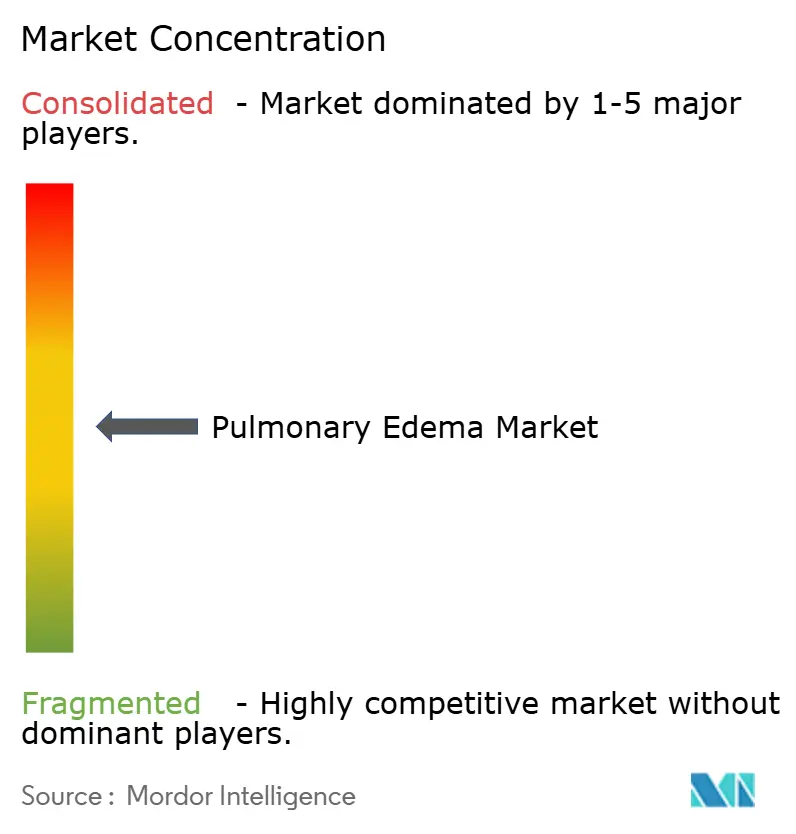
| Market Concentration | Medium |
Major Players *Disclaimer: Major Players sorted in no particular order Image © Mordor Intelligence. Reuse requires attribution under CC BY 4.0. | |
Pulmonary Edema Market Analysis by Mordor Intelligence
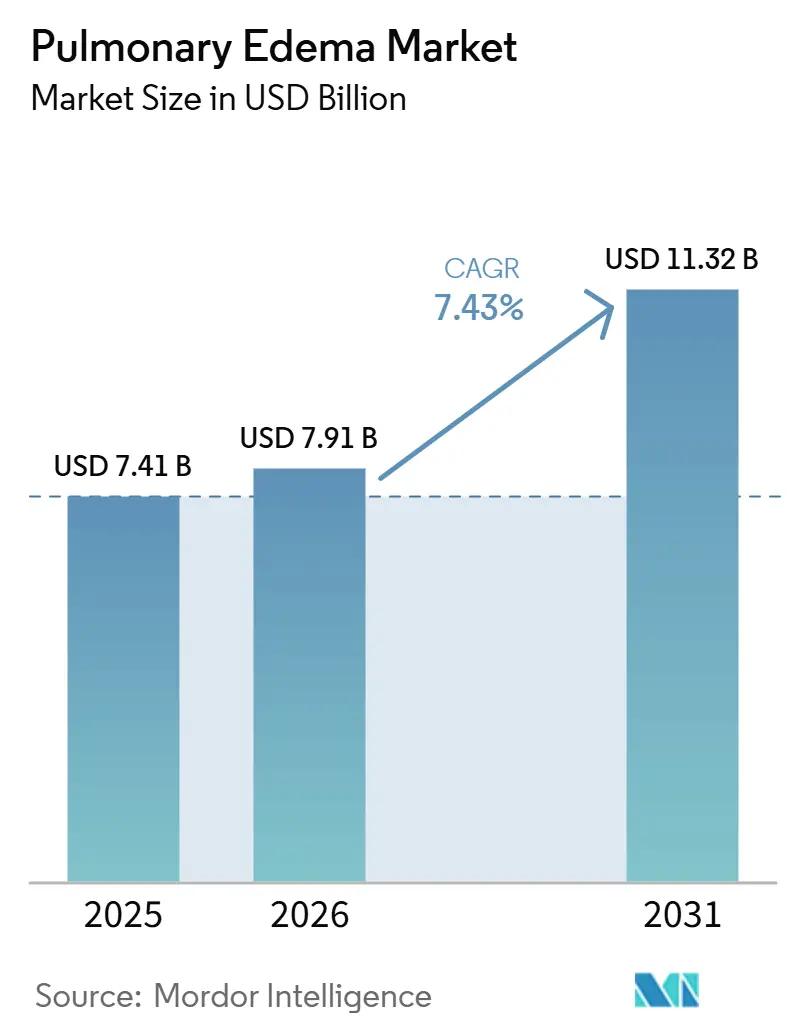
The Pulmonary Edema Market size is projected to expand from USD 7.41 billion in 2025 and USD 7.91 billion in 2026 to USD 11.32 billion by 2031, registering a CAGR of 7.43% between 2026 to 2031.
The pulmonary edema market is advancing because the patient base is widening across both cardiogenic and non-cardiogenic presentations, which keeps treatment and diagnostic demand active across acute and chronic care settings. Rising cardiac comorbidities in older populations continue to support recurrent hospital demand, while broader clinical recognition of sepsis-related permeability edema, infection-linked cases, and high-altitude presentations is widening the addressable pool for the pulmonary edema market. The pulmonary edema market also benefits from a care delivery split in which hospitals remain central for acute stabilization, while newer home-based treatment formats are starting to shift selected therapy use outside inpatient settings. Competitive activity in the pulmonary edema market spans branded cardiovascular drug makers, generic loop diuretic suppliers, and device and software companies that are trying to improve triage, monitoring, and treatment delivery. This combination of recurring acute events, expanding diagnostic pathways, and delivery innovation is keeping the pulmonary edema market on a steady growth path.
Key Report Takeaways
- By type, cardiogenic pulmonary edema led with 41.67% revenue share in 2025, while non-cardiogenic pulmonary edema will expand at a CAGR of 9.15% through 2031.
- By treatment and diagnosis method, treatment held 58.34% of revenue in 2025, while the diagnosis method will record the highest CAGR, at 8.65%, through 2031.
- By end use, hospitals captured 43.26% of revenue in 2025, while home healthcare will grow at a CAGR of 8.89% through 2031.
- By geography, North America held 38.03% of global revenue in 2025, while Asia-Pacific will record the fastest regional CAGR, at 9.01%, through 2031.
Note: Market size and forecast figures in this report are generated using Mordor Intelligence’s proprietary estimation framework, updated with the latest available data and insights as of January 2026.
Market Trends and Insights
Drivers Impact Analysis of Pulmonary Edema Market*
| Driver | (~) % Impact on CAGR Forecast | Geographic Relevance | Impact Timeline |
|---|---|---|---|
| Aging Heart Failure and Valvular Disease Burden | +1.9% | Global, concentrated in North America, Germany, France, Japan, and South Korea | Long term (≥ 4 years) |
| Wider Use of Point-of-Care Lung Ultrasound and BNP Triage | +1.1% | North America and Europe, with rapid uptake in urban Asia-Pacific emergency networks | Medium term (2-4 years) |
| Growth in Non-Invasive Ventilation Across Emergency and Critical Care Pathways | +1.2% | Global, strongest in Germany, France, and North American ICU networks | Medium term (2-4 years) |
| Heart Failure Guideline Spillover Into Pulmonary Edema Treatment Protocols | +0.6% | Global, primarily in countries where AHA, ACC, and ESC guidance is formally used | Long term (≥ 4 years) |
| AI-Enabled Radiology Triage and ED Workflow Integration | +0.8% | North America, Europe, Japan, South Korea, and Singapore | Short term (≤ 2 years) |
| Rising ICU Burden From Sepsis-Triggered Permeability Edema | +0.7% | Global, with stronger relevance in Asia-Pacific and Middle East & Africa | Medium term (2-4 years) |
| Source: Mordor Intelligence | |||
Aging Heart Failure and Valvular Disease Burden
The pulmonary edema market continues to draw core demand from the expanding heart failure population, especially among older adults who are more exposed to congestion-related hospital episodes. Data from the PORTHOS study showed heart failure prevalence at 16.5% among adults aged 50 and above in Portugal, and 30.7% among those aged 70 and above, which points to the scale of age-linked risk that supports this market over time.[1]C. Fonseca et al., “Worsening Heart Failure, Progress, Pitfalls, and Perspectives,” Heart Failure Reviews, link.springer.com The pulmonary edema market is also supported by the large number of patients living with structurally weakened left ventricles and recurrent fluid overload risk after surviving serious cardiac events. In July 2025, Bayer received FDA approval for finerenone in patients with heart failure and left ventricular ejection fraction of 40% or more, opening treatment access for a large population that had previously faced limited guideline-directed options. That approval strengthens the therapeutic base of the pulmonary edema market because pulmonary congestion management is closely tied to the broader expansion of treated heart failure care.
Wider Use of Point-of-Care Lung Ultrasound and BNP Triage
The pulmonary edema market is seeing faster diagnostic movement as point-of-care lung ultrasound becomes more established in emergency assessment of acute dyspnea. A 2025 prospective study found that lung ultrasound delivered results in a median of 10.0 minutes compared with 62.5 minutes for chest X-ray, which supports quicker clinical decisions when pulmonary congestion is suspected.[2]J.P. Gøtze et al., “Lung Ultrasound Offers Fast and Reliable Exclusion of Heart Failure in the Emergency Department, A Prospective Diagnostic Study,” Diagnostics, doi.org A multicenter French study also showed that combined lung and focused cardiac ultrasound performed better than NT-proBNP alone for diagnosing acute left heart failure in patients aged 75 and above. This is important for the pulmonary edema market because a more reliable first-line triage pathway can raise confidence in early intervention while also sending unclear cases toward higher-value confirmatory imaging. AI-assisted B-line quantification is adding another layer to the pulmonary edema market by helping ultrasound platforms move beyond basic imaging into software-supported decision-making.
Growth in Non-Invasive Ventilation Across Emergency and Critical Care Pathways
The pulmonary edema market is benefiting from the stronger use of non-invasive ventilation in acute cardiogenic presentations. Clinical guidance has reinforced both bilevel non-invasive ventilation and CPAP as first-line respiratory support, because positive-pressure therapy can reduce preload and afterload rapidly during pulmonary congestion.[3]M. Zimnoch et al., “Non-Invasive Ventilation, When, Where, How to Start,” PMC, ncbi.nlm.nih.gov The pulmonary edema market gains from this because oxygen therapy and related equipment demand now sit closer to standard protocol rather than optional escalation. Reported failure rates remain low in optimized care settings, but the consequences of failure are severe, which keeps hospitals focused on early monitoring and correct patient selection. That risk profile supports continued spending in the pulmonary edema market on respiratory support systems, bedside monitoring, and workflow tools that help clinicians intervene before intubation becomes necessary.
AI-Enabled Radiology Triage and ED Workflow Integration
The pulmonary edema market is also being shaped by radiology workflow changes that place AI closer to frontline emergency care. A 2025 study in the Journal of the American College of Radiology found that AI triage reduced report turnaround time for critical findings by 22.2 minutes during work hours, which is clinically meaningful in fluid overload management, where earlier treatment can change the care path. A 2026 prospective validation study further showed that AI-based detection of acute heart failure on chest CT can produce clinically actionable outputs within the emergency department triage window. This supports the pulmonary edema market because imaging is no longer only a diagnostic step; it is becoming part of operational triage and treatment prioritization. As more hospitals link AI-enabled chest imaging to emergency care decisions, the pulmonary edema market is likely to see stronger software-linked revenue growth, besides imaging volume growth.
Restraints Impact Analysis of Pulmonary Edema Market*
| Restraint | (~) % Impact on CAGR Forecast | Geographic Relevance | Impact Timeline |
|---|---|---|---|
| Diagnostic Overlap With COPD, Pneumonia, and Mixed Etiologies | -1.0% | Global, strongest in resource-limited settings without advanced imaging or multi-biomarker testing | Medium term (2-4 years) |
| Safety Limits of Aggressive Diuresis and Vasodilator Use | -0.7% | Global, especially among elderly patients in North America and Europe with fragile renal and hemodynamic status | Long term (≥ 4 years) |
| Limited Disease-Specific Therapy Options for Non-Cardiogenic Edema | -0.8% | Global, with stronger effect in Asia-Pacific and Middle East & Africa where ARDS and sepsis mortality remain elevated | Long term (≥ 4 years) |
| Reimbursement and Evidence Gaps for Advanced Monitoring and Novel Biologics | -0.6% | North America, Europe, and selected emerging markets building health technology assessment pathways | Medium term (2-4 years) |
| Source: Mordor Intelligence | |||
Diagnostic Overlap With COPD, Pneumonia, and Mixed Etiologies
The pulmonary edema market still faces a major clinical barrier because overlap with COPD, pneumonia, and mixed respiratory presentations can delay the right treatment decision. A 2025 study reported that 38% of patients with confirmed COPD on optimal GOLD-guided therapy were later found to have undiagnosed heart failure, which shows how often fluid overload can stay hidden inside established respiratory case pools. Biomarkers and imaging do not always solve this problem quickly, because NT-proBNP may rise outside true congestion states, and chest imaging can show overlapping signs across pulmonary infection and edema. The pulmonary edema market, therefore, loses some momentum when clinicians cannot confidently separate cardiac and pulmonary causes during the first evaluation window. A 2025 study in iScience showed that an AI-assisted XGBoost model sharply improved the separation of acute COPD exacerbation from acute heart failure, which suggests that better software tools could ease this restraint over time.
Safety Limits of Aggressive Diuresis and Vasodilator Use
The pulmonary edema market is also limited by the clinical risks that come with aggressive intravenous diuresis and vasodilator use in fragile patients. Practice guidance for acute heart failure calls for careful urine output tracking and sodium excretion monitoring after loop diuretic administration, which means treatment intensity often depends on sustained nursing oversight and close reassessment. Nitroglycerin and similar vasodilators can improve congestion quickly, but blood pressure instability makes them harder to use outside closely supervised settings. This keeps part of the pulmonary edema market tied to inpatient care models even as home-based treatment options are growing. The same issue slows uptake of more aggressive therapy approaches in older patients with renal vulnerability, which leaves the pulmonary edema market dependent on cautious titration rather than broad protocol expansion.
*Our forecasts treat driver/restraint impacts as directional, not additive. The impact forecasts reflect baseline growth, mix effects, and variable interactions.
Pulmonary Edema Market Segment Analysis
By Type:
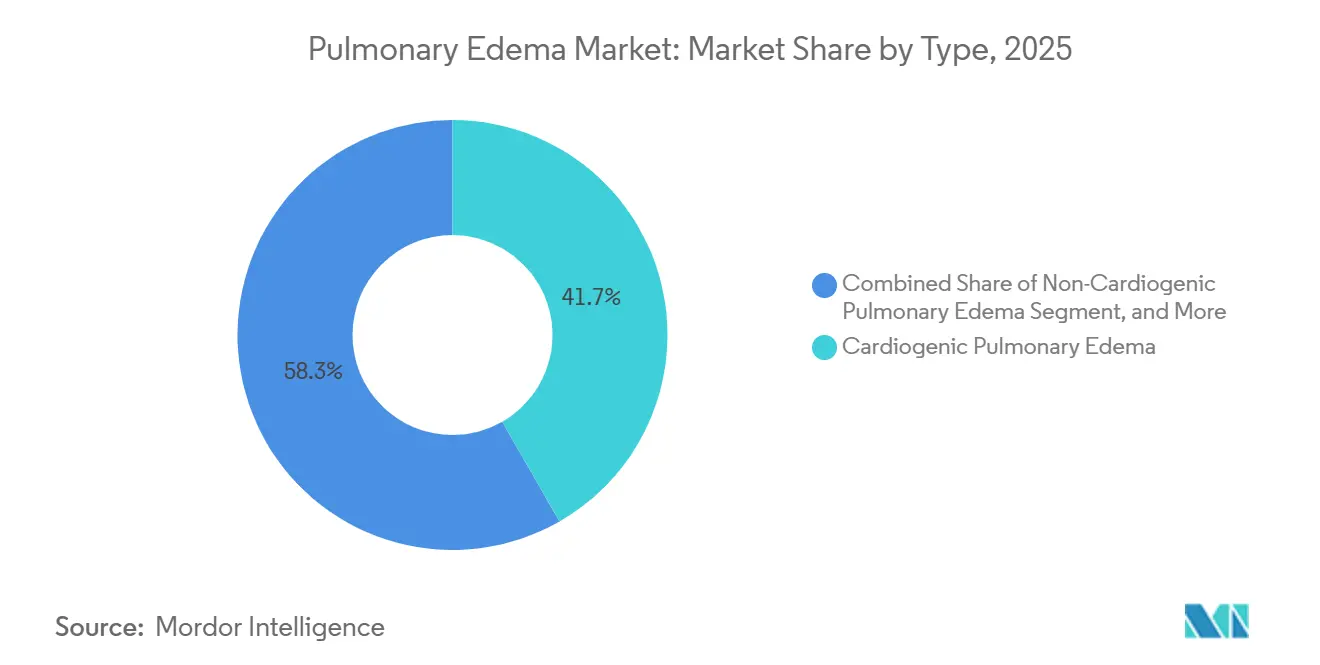
Cardiogenic Leadership Conceals Non-Cardiogenic MomentumCardiogenic pulmonary edema held 41.67% of revenue in 2025, giving it the largest position within the pulmonary edema market by type. This leadership reflects the persistent burden of left ventricular dysfunction, valvular disease, and hypertensive crisis in hospitalized populations. The pulmonary edema market remains anchored to these conditions because acute decompensation episodes continue to require rapid treatment and monitoring in structured care settings. Finerenone added a new element to this segment when Bayer secured FDA approval in July 2025 for heart failure patients with a left ventricular ejection fraction of 40% or more. That move widens the treatment framework around congestion management and supports the cardiogenic side of the pulmonary edema market with a clearer pharmaceutical pathway.
The same segment also shows why leadership does not fully define future growth in the pulmonary edema market. Non-cardiogenic pulmonary edema is forecast to grow at a 9.15% CAGR through 2031, making it the fastest-growing type segment. That pace reflects rising clinical focus on sepsis-associated lung injury and other permeability-driven cases that do not respond to care models built only around fluid removal. A 2025 review in Frontiers in Medicine reported ICU mortality of 35% to 46% among ARDS patients, where sepsis is the leading cause, which keeps clinical urgency high around this subtype. As a result, the pulmonary edema industry is moving toward a wider treatment lens in which non-cardiogenic disease forms matter more for pipeline positioning, ICU protocols, and future investment decisions.



By Treatment and Diagnosis Method:
Delivery Innovation Challenges Diuretic IncumbentTreatment accounted for 58.34% of revenue in 2025, which kept them at the center of the pulmonary edema market by treatment. Their lead rests on low cost, familiar use, and deep integration into acute heart failure treatment protocols across major care systems. Intravenous furosemide remains the starting therapy in many acute congestion settings, which gives the diuretic segment structural stability even as newer formats enter the field. In this segment, the pulmonary edema market share still favors established loop diuretics because clinicians know how to dose them quickly in unstable patients. That foundation continues to make diuretics the most commercially entrenched treatment line in the pulmonary edema market.
The more important shift is happening in delivery format, which is beginning to change how the pulmonary edema market develops outside hospitals. In October 2025, SQ Innovation received FDA approval for Lasix ONYU, the first drug-device combination for subcutaneous furosemide infusion at home in adult patients with chronic heart failure. This is one of the clearest areas where the pulmonary edema market size is linked to practice change, because treatment value is shifting from drug selection alone to the setting and method of delivery. The pulmonary edema industry is therefore moving toward a model where respiratory support and home-capable diuretic delivery expand faster than traditional inpatient-only use.
Diagnosis method is forecast to grow at a 8.65% CAGR through 2031, making it the fastest-growing diagnostic category in the pulmonary edema market. This reflects the rising use of CT in complex or equivocal cases where higher specificity matters more than initial screening volume. A 2025 prospective study comparing modalities in acute dyspnea found that low-dose CT delivered the strongest overall diagnostic accuracy for pulmonary congestion, while chest X-ray and lung ultrasound remained important but less definitive in some overlapping presentations. Another 2025 study showed that combined CT findings and NT-proBNP above 2,677 pg/mL improved differentiation of heart failure from pneumonia in radiographically overlapping cases. These results strengthen the pulmonary edema market by expanding the role of multimodal imaging in time-sensitive emergency decisions.
By End Use:
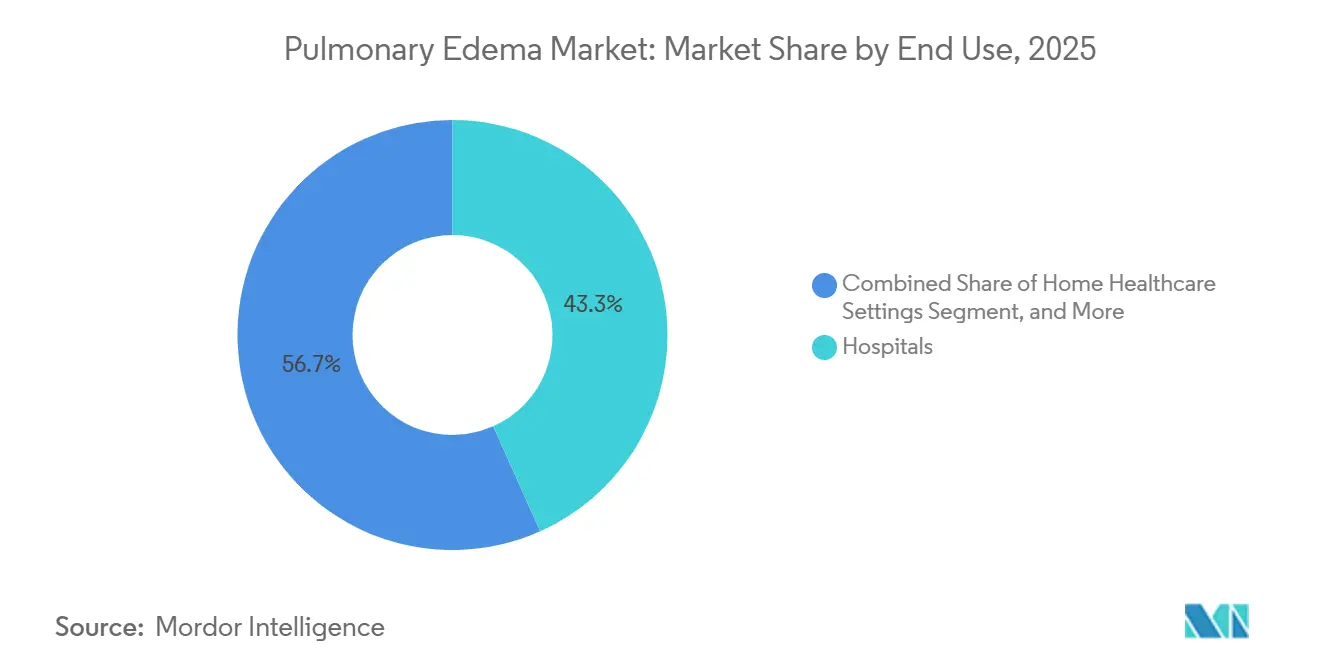
Home Healthcare Rewrites Acute Management NormsHospitals captured 43.26% of revenue in 2025, making them the largest end-use setting in the pulmonary edema market. Their lead reflects the acute nature of many presentations, which still require rapid titration, hemodynamic monitoring, oxygen support, and escalation capacity that outpatient settings cannot consistently match. The pulmonary edema market, therefore, continues to rely on inpatient systems for the most serious congestion episodes and for patients with unstable cardiac status. Hospital leadership also reflects the practical reality that mixed etiologies and uncertain diagnoses often require imaging, biomarkers, respiratory support, and medication adjustment in a single care environment. This keeps hospitals at the core of the pulmonary edema market even as care models begin to diversify.
Home healthcare is forecast to grow at an 8.89% CAGR through 2031, making it the fastest-growing end-use segment in the pulmonary edema market. A 2026 study in Frontiers in Cardiovascular Medicine found that self-care monitoring and self-care maintenance were the weakest areas in home-based chronic heart failure management, which supports demand for connected monitoring and home-administered therapy tools. The October 2025 FDA approval of SQ Innovation’s home furosemide infusion platform also gave the pulmonary edema market a practical route for moving selected treatment away from inpatient settings. This is another segment where pulmonary edema market share is likely to shift gradually rather than suddenly, because hospitals will remain essential while home-based treatment becomes more useful for carefully selected patients. The change matters because it can redirect a portion of future growth in the pulmonary edema market from bed-based care toward device-linked outpatient management.
Geography Analysis
North America and Europe Pulmonary Edema Market
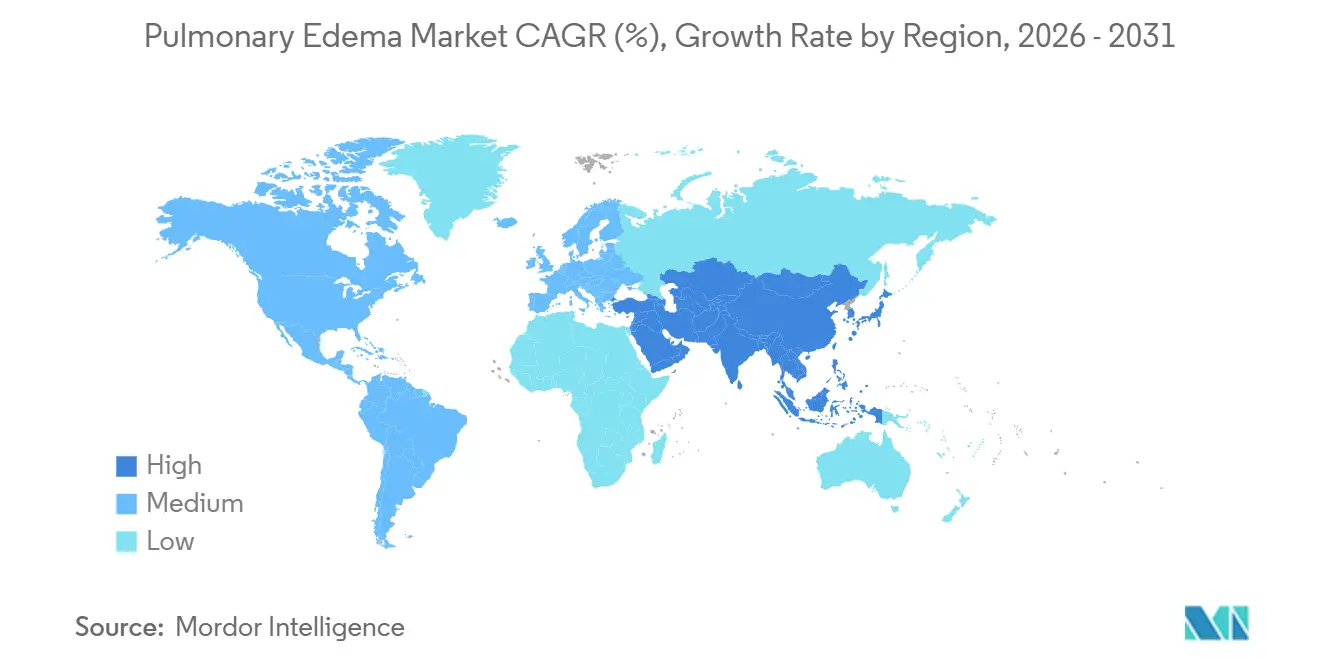
North America accounted for 38.03% of revenue in 2025, which made it the largest regional component of the pulmonary edema market. The region benefits from a large treated heart failure population and a care system that supports both branded therapy adoption and advanced diagnostics. A 2025 review noted that 6.7 million Americans aged 20 and above were living with heart failure, and that total is projected to rise to 8.5 million by 2030, which gives the pulmonary edema market a broad and recurring patient base. The United States also has financing structures that place pressure on costly admissions while rewarding better chronic management, which supports interest in home monitoring and outpatient congestion control. Europe remains another major pillar of the pulmonary edema market because Germany, France, the United Kingdom, and Italy maintain strong guideline-driven care pathways for acute heart failure, respiratory support, and biomarker-led triage. In March 2026, Bayer received European Commission approval and UK authorization for finerenone in adults with heart failure and left ventricular ejection fraction of 40% or more, which expanded a meaningful treatment opportunity across regional care systems.
APAC Pulmonary Edema Market
Asia-Pacific is forecast to grow at a 9.01% CAGR through 2031, giving it the fastest regional expansion in the pulmonary edema market. Growth in the region is supported by hospital capacity expansion, wider awareness of acute decompensated heart failure, and the rising use of imaging-led diagnosis in major urban centers. The pulmonary edema market is also gaining support from broader digital adoption, including AI-based chest imaging validation work conducted across Indian clinical sites. A 2026 study in the International Journal of Research in Medical Sciences reported strong validation performance for the Lenek intelligent radiology assistant in screening and triage of pulmonary and cardiac conditions across India. That kind of deployment matters for the pulmonary edema market because it can improve triage in health systems that face high patient volumes and uneven specialist access. The region’s scale and infrastructure growth keep Asia-Pacific central to the next phase of expansion.
MEA and South America Pulmonary Edema Market
Middle East & Africa and South America remain smaller contributors to the pulmonary edema market, but both regions are building relevance through critical care and diagnostic capacity improvements. GCC countries are investing in hospital modernization, ventilator procurement, and echocardiography access, which supports gradual uptake of higher-acuity pulmonary care pathways. In South America, Brazil and Argentina continue to anchor demand where metropolitan hospitals are better positioned to adopt structured edema diagnosis and treatment protocols. These regions still face uneven access and slower rollout outside leading urban systems, but the pulmonary edema market is gaining a more stable base as post-crisis ICU investment strengthens referral and treatment capabilities.

Competitive Landscape
The pulmonary edema market is moderately fragmented, and competition spans branded pharmaceutical companies, generic manufacturers, and device and digital health developers. Large multinational drug makers such as Pfizer, Novartis, AstraZeneca, and Boehringer Ingelheim remain relevant because their cardiovascular and respiratory portfolios overlap with the broader care pathways that shape pulmonary congestion treatment demand. Generic suppliers such as Hikma, Lupin, and Viatris keep strong volume positions in loop diuretics, where price, formulation availability, and supply reliability still matter heavily. This mix prevents the pulmonary edema market from consolidating around a narrow group of suppliers. It also means differentiation in the pulmonary edema market increasingly comes from delivery systems, monitoring tools, and workflow integration rather than from legacy drug classes alone.
One of the clearest strategic shifts in the pulmonary edema market is Bayer’s expansion of finerenone into heart failure patients with left ventricular ejection fraction of 40% or more, first in the United States in July 2025 and then in Europe and the United Kingdom in March 2026. Another major move came from SQ Innovation, which secured FDA approval in October 2025 for Lasix ONYU, a home-capable subcutaneous furosemide delivery platform that carves out a premium category inside a long-generic treatment area. Merck also advanced its competitive position through positive Phase 2 CADENCE data for sotatercept in combined post- and pre-capillary pulmonary hypertension associated with heart failure with preserved ejection fraction, showing how adjacent cardiovascular conditions can feed future opportunity in the pulmonary edema market. These moves show that the pulmonary edema market is being reshaped by indication expansion, delivery innovation, and condition-adjacent pipeline strategy. They also show that commercial advantage in the pulmonary edema market is no longer limited to standard acute diuretic use.
A second competitive fault line in the pulmonary edema market sits inside diagnostics and monitoring. AI-assisted radiology tools, software-linked ultrasound platforms, and congestion monitoring technologies are turning care coordination into a commercial layer beside drugs and devices. This matters because the pulmonary edema market increasingly rewards companies that can improve triage speed, identify treatment failure earlier, or extend care outside the hospital. At the same time, the pulmonary edema market still has open space in disease-specific therapy for non-cardiogenic edema, where broad regulatory approval remains limited and unmet need is still high. That balance between mature generic volume and newer premium categories keeps the market competitive, active, and only moderately concentrated.
Pulmonary Edema Industry Leaders
Eli Lilly and Company
Pfizer Inc.
Sanofi
Merck & Co., Inc.
Johnson and Johnson
- *Disclaimer: Major Players sorted in no particular order
Pulmonary Edema Market Companies Covered in this Report
- Abbvie
- Argon Medical Devices
- AstraZeneca
- Baxter
- Boehringer Ingelheim
- Bristol-Myers Squibb
- Edward Lifesciences
- Eli Lilly and Company
- Fresenius
- GlaxoSmithKline
- Hikma Pharmaceuticals
- Johnson & Johnson
- Lupin
- Merck
- Novartis
- Pfizer
- Roche
- Sanofi
- Viatris

Recent Industry Developments in Pulmonary Edema Market
- March 2026: Merck & Co., Inc. presented positive Phase 2 CADENCE trial results for WINREVAIR (sotatercept) in adults with combined post- and pre-capillary pulmonary hypertension associated with heart failure with preserved ejection fraction, published in Circulation. The data demonstrated definitive proof-of-concept for activin signaling inhibition in a condition closely linked to pulmonary fluid overload and congestion, opening a potential new indication for sotatercept beyond its FDA-approved PAH label.
- March 2026: Bayer received approval from the UK Medicines and Healthcare products Regulatory Agency (MHRA) for Kerendia (finerenone) in adult patients with heart failure with LVEF ≥40%, following the European Commission's March 26, 2026 approval of the same indication. These authorizations complete a three-jurisdiction approval cycle within 12 months of the July 2025 FDA Priority Review decision, establishing finerenone as the first non-steroidal MR antagonist approved in Europe and the UK for this HF population.
- October 2025: SQ Innovation received FDA approval for Lasix ONYU (furosemide injection 30 mg/mL), the first drug-device combination for subcutaneous furosemide infusion at home in adult patients with chronic heart failure. Clinical data demonstrated bioavailability of 112% relative to IV bolus with a tempered 5-hour release profile, enabling home administration without healthcare professional presence.


Global Pulmonary Edema Market Report Scope
The pulmonary edema market refers to the global healthcare and pharmaceutical sector dedicated to the diagnosis, monitoring, and therapeutic treatment of excessive fluid accumulation in the lungs. It encompasses drugs (e.g., diuretics, vasodilators), diagnostic imaging, and respiratory support equipment used to manage either cardiogenic or non-cardiogenic pulmonary edema.
The pulmonary edema market is comprehensively segmented based on type, treatment and diagnosis method, end use, and geography. By type, the market is categorized into cardiogenic pulmonary edema, non-cardiogenic pulmonary edema, high-altitude pulmonary edema, and pulmonary edema due to infection. Based on treatment and diagnosis methods, the market is divided into treatments, which include diuretics, oxygen therapy, mechanical ventilation, and pulmonary vasodilators, alongside diagnosis methods, such as chest X-ray, computed tomography, lung ultrasound, echocardiography, and blood biomarkers. In terms of end use, the market encompasses hospitals, home healthcare settings, ambulatory surgical centers, and specialty clinics. Geographically, the market is analyzed across North America (the United States, Canada, and Mexico), Europe (Germany, the United Kingdom, France, Italy, Spain, and the rest of Europe), Asia-Pacific (China, Japan, India, Australia, South Korea, and the rest of Asia-Pacific), the Middle East & Africa (the GCC, South Africa, and the rest of the Middle East & Africa), and South America (Brazil, Argentina, and the rest of South America).
| Cardiogenic Pulmonary Edema |
| Non-Cardiogenic Pulmonary Edema |
| High-Altitude Pulmonary Edema |
| Pulmonary Edema Due to Infection |
| Treatment | Diuretics |
| Oxygen Therapy | |
| Mechanical Ventilation | |
| Pulmonary Vasodilators | |
| Diagnosis Method | Chest X-Ray |
| Computed Tomography | |
| Lung Ultrasound | |
| Echocardiography | |
| Blood Biomarkers |
| Hospitals |
| Home Healthcare Settings |
| Ambulatory Surgical Centers |
| Specialty Clinics |
| North America | United States |
| Canada | |
| Mexico | |
| Europe | Germany |
| United Kingdom | |
| France | |
| Italy | |
| Spain | |
| Rest of Europe | |
| Asia-Pacific | China |
| Japan | |
| India | |
| Australia | |
| South Korea | |
| Rest of Asia-Pacific | |
| Middle East & Africa | GCC |
| South Africa | |
| Rest of Middle East & Africa | |
| South America | Brazil |
| Argentina | |
| Rest of South America |
| By Type | Cardiogenic Pulmonary Edema | |
| Non-Cardiogenic Pulmonary Edema | ||
| High-Altitude Pulmonary Edema | ||
| Pulmonary Edema Due to Infection | ||
| By Treatment & Diagnosis Method | Treatment | Diuretics |
| Oxygen Therapy | ||
| Mechanical Ventilation | ||
| Pulmonary Vasodilators | ||
| Diagnosis Method | Chest X-Ray | |
| Computed Tomography | ||
| Lung Ultrasound | ||
| Echocardiography | ||
| Blood Biomarkers | ||
| By End Use | Hospitals | |
| Home Healthcare Settings | ||
| Ambulatory Surgical Centers | ||
| Specialty Clinics | ||
| By Geography | North America | United States |
| Canada | ||
| Mexico | ||
| Europe | Germany | |
| United Kingdom | ||
| France | ||
| Italy | ||
| Spain | ||
| Rest of Europe | ||
| Asia-Pacific | China | |
| Japan | ||
| India | ||
| Australia | ||
| South Korea | ||
| Rest of Asia-Pacific | ||
| Middle East & Africa | GCC | |
| South Africa | ||
| Rest of Middle East & Africa | ||
| South America | Brazil | |
| Argentina | ||
| Rest of South America | ||


Key Questions Answered in the Report
What is the projected value of the pulmonary edema market by 2031?
The pulmonary edema market is forecast to reach USD 11.32 billion by 2031, rising from USD 7.91 billion in 2026 at a 7.43% CAGR.
Which type of segment leads pulmonary edema revenue today?
Cardiogenic pulmonary edema led by type with 41.67% share in 2025, supported by the high burden of left ventricular dysfunction and valvular disease.
Why are home-based options becoming more important for pulmonary edema management?
Home healthcare is forecast to grow at an 8.89% CAGR through 2031 as connected monitoring and home-capable diuretic delivery platforms reduce dependence on inpatient-only care.
Which region offers the strongest growth opportunity through 2031?
Asia-Pacific is expected to post the fastest regional growth at a 9.01% CAGR, supported by hospital expansion, rising disease awareness, and wider use of digital imaging tools.
Page last updated on:





