
Pseudotumor Cerebri Market Size and Share
Market Overview
| Study Period | 2020 - 2031 |
|---|---|
| Market Size (2026) | USD 4.87 Billion |
| Market Size (2031) | USD 7.07 Billion |
| Growth Rate (2026 - 2031) | 7.73 % |
| Fastest Growing Market | Asia-Pacific |
| Largest Market | North America |
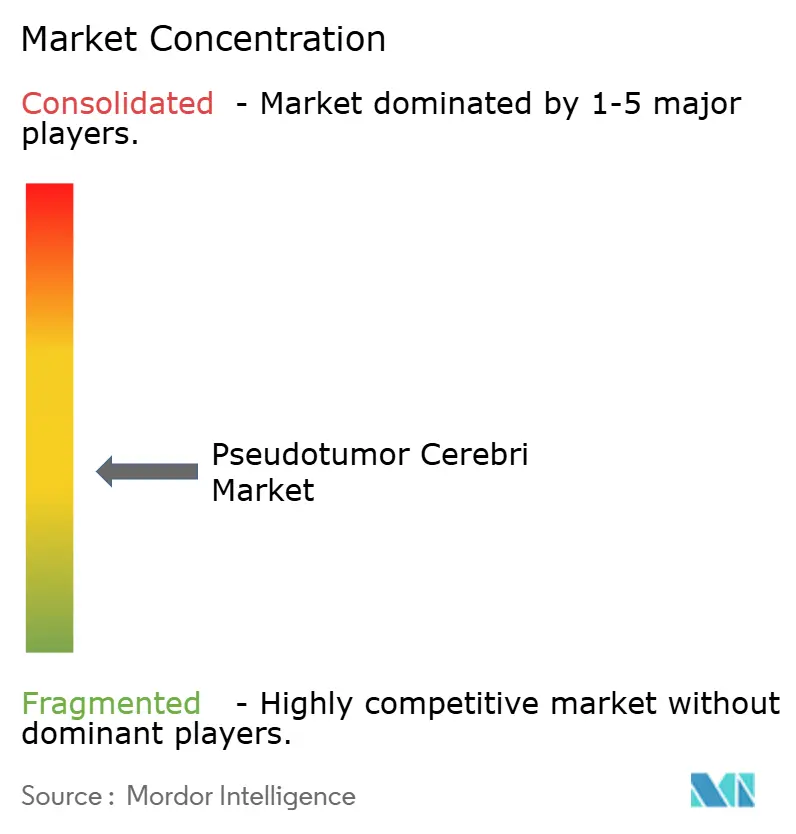
| Market Concentration | Medium |
Major Players *Disclaimer: Major Players sorted in no particular order Image © Mordor Intelligence. Reuse requires attribution under CC BY 4.0. | |
Pseudotumor Cerebri Market Analysis by Mordor Intelligence
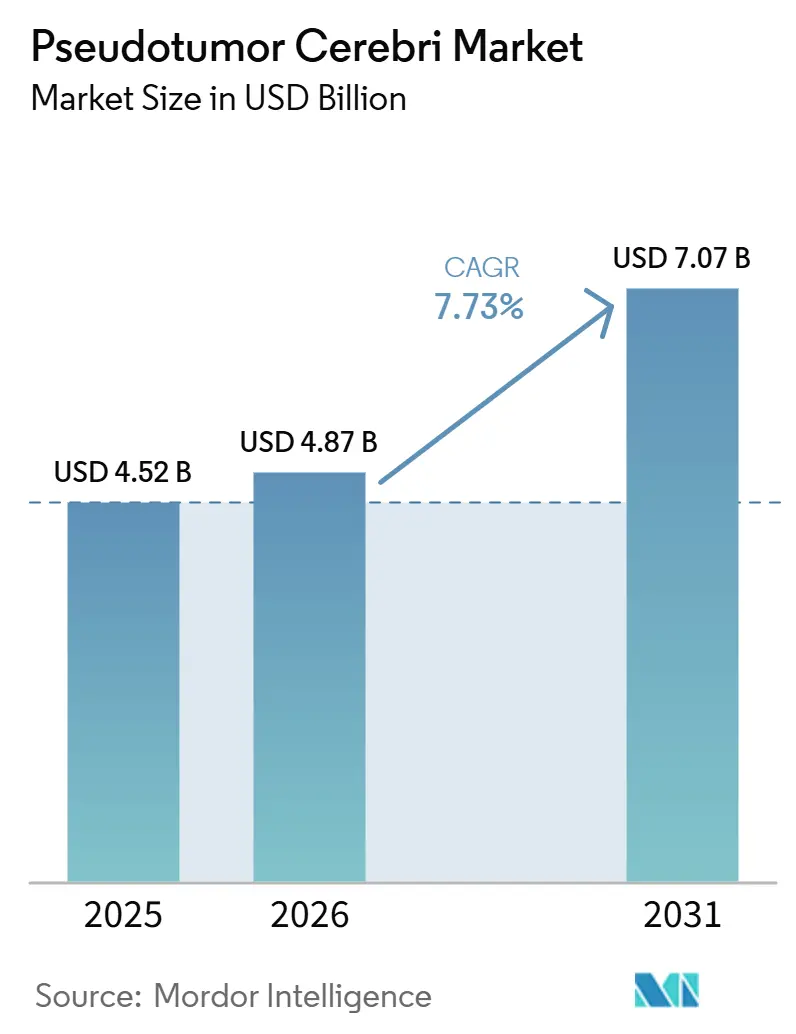
The Pseudotumor Cerebri Market size is expected to grow from USD 4.52 billion in 2025 to USD 4.87 billion in 2026 and is forecast to reach USD 7.07 billion by 2031 at 7.73% CAGR over 2026-2031.
Demand is linked to obesity and to wider recognition that idiopathic intracranial hypertension, or IIH, can threaten vision and needs coordinated care. The Pseudotumor Cerebri Market is also being shaped by earlier diagnosis, as optical coherence tomography, or OCT, and MRI venography support routine assessment and monitoring. Treatment pathways are changing as clinicians combine weight management, drug therapy, monitoring, and selective surgical intervention. The March 2026 Humanitarian Device Exemption for the River Stent gives a defined regulatory route for severe refractory cases in the United States. GLP-1 receptor agonists may move care toward earlier disease control, although they do not remove the need for imaging, specialist assessment, or procedures for patients with advanced disease.
Key Report Takeaways
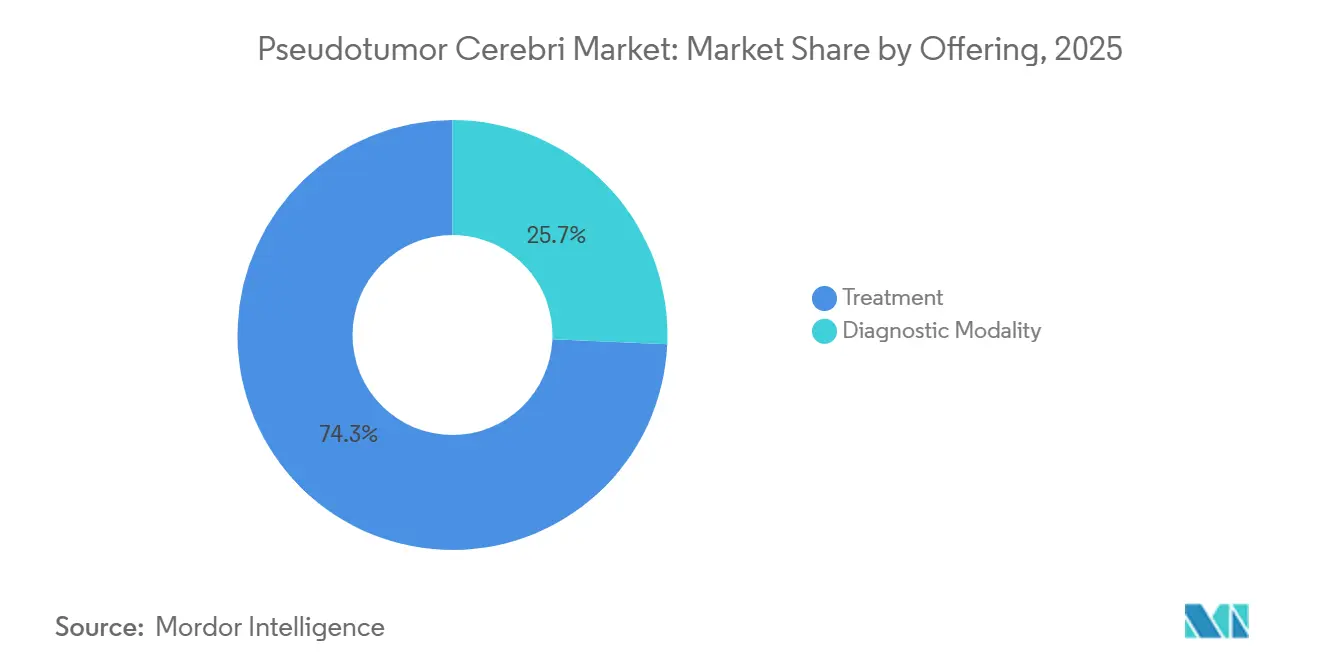
- By offering, Treatment held 74.31% of the Pseudotumor Cerebri Market share in 2025, while Diagnostic Modality is forecast to grow at an 8.58% CAGR through 2031.
- By disease severity, Mild or Stable Disease held 43.44% of the Pseudotumor Cerebri Market share in 2025, while Severe or Vision-Threatening Disease is projected to grow at an 8.52% CAGR through 2031.
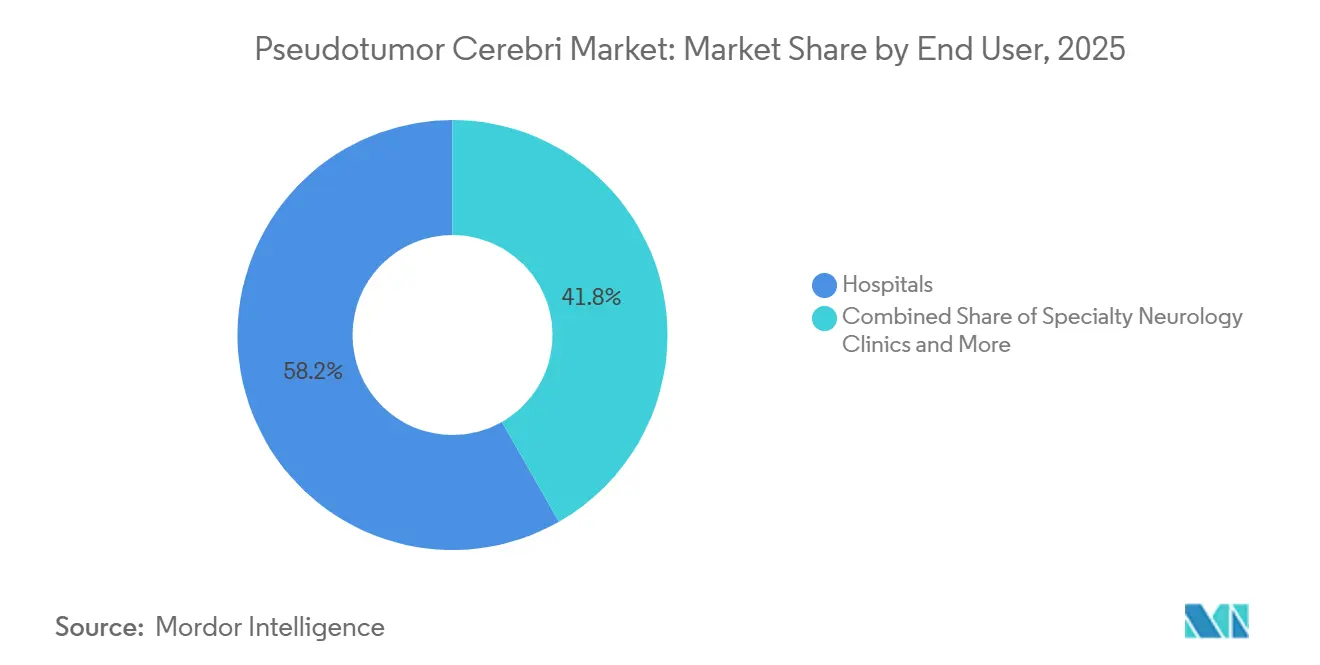
- By end user, Hospitals held 58.24% of the Pseudotumor Cerebri Market share in 2025, while Specialty Neurology Clinics are projected to grow at an 8.22% CAGR through 2031.
- By geography, North America held 42.61% of revenue in 2025, while Asia-Pacific is forecast to expand at an 8.85% CAGR through 2031.
Note: Market size and forecast figures in this report are generated using Mordor Intelligence’s proprietary estimation framework, updated with the latest available data and insights as of January 2026.
Market Trends and Insights
Drivers Impact Analysis of Pseudotumor Cerebri Market*
| Driver | (~) % Impact on CAGR Forecast | Geographic Relevance | Impact Timeline |
|---|---|---|---|
| Rising Obesity-Associated IIH Incidence | +2.1% | Global, most acute in North America, Europe, and emerging-obesity APAC | Long term (≥ 4 years) |
| Increasing Recognition of Vision-Threatening Disease | +1.3% | North America and Europe, accelerating in APAC after the 2025 China consensus | Medium term (2-4 years) |
| Expansion of Neuro-Ophthalmology Diagnostic Capacity | +0.9% | North America and Europe, with early gains in GCC and Australia | Medium term (2-4 years) |
| Increasing Use of Venous Sinus Stenting for Refractory Disease | +1.2% | North America, Europe, GCC, and Australia | Medium term (2-4 years) |
| Emerging GLP-1 and Metabolic Therapies for Disease Modification | +1.5% | Global, concentrated in GLP-1 RA reimbursed markets | Long term (≥ 4 years) |
| Increasing Adoption of Non-Invasive Intracranial Pressure Monitoring | +0.5% | North America and Europe, with early academic use in APAC | Medium term (2-4 years) |
| Source: Mordor Intelligence | |||
Rising Obesity-Associated IIH Incidence: The Core Demand Engine
IIH follows the obesity burden across many populations. A Victoria, Australia, population study reported that age-standardized IIH incidence increased from 0.86 per 100,000 person-years in 2010-2014 to 6.53 per 100,000 in 2020-2023. Females aged 18-39 experienced a 62-fold increase over the study period. In the United States, prevalence was 3.44 per 10,000 women aged 18-55, with higher prevalence in areas that also have high obesity levels. The Pseudotumor Cerebri Market therefore has a larger diagnosed patient base where obesity remains unmanaged. Weight reduction of 5-10% can normalize intracranial pressure and can lead to remission for some patients. South and Southeast Asian populations may face a shorter period between rising obesity and clinical recognition as their obesity patterns move closer to those seen in Western countries.
Expansion of Neuro-Ophthalmology Diagnostic Capacity: OCT as the Market-Structuring Tool
OCT is becoming central to IIH monitoring because it supports repeated, noninvasive assessment of retinal nerve fiber layer thickness. A 2025 study found that OCT retinal nerve fiber layer measurement performed better than fundus imaging and intracranial pressure measurement when monitoring the course of IIH[1]Huang-Link Y., “Optical Coherence Tomography Surpasses Fundus Imaging and Intracranial Pressure Measurement in Monitoring Idiopathic Intracranial Hypertension,” Scientific Reports, doi.org. This shift supports earlier detection of papilledema changes and gives clinicians more information before considering invasive testing. A 2026 study found that an OCT-based telemedicine model could effectively manage IIH patients and produced outcomes comparable with in-person specialist care. The Pseudotumor Cerebri Market benefits when monitoring reaches patients outside major urban specialist centers. Revised diagnostic criteria are also encouraging wider use of MRI venography beyond tertiary hospitals.
Emerging GLP-1 and Metabolic Therapies: A Category in Formation
GLP-1 receptor agonists are moving from limited clinical use toward formal study in IIH. A 2025 systematic review of 9 studies associated GLP-1 receptor agonist use with lower headache burden and intracranial pressure, papilledema resolution, and less need for surgery. The IIH-Advance Phase III trial is enrolling UK National Health Service patients to assess whether tirzepatide-related weight loss produces papilledema resolution after 6 months. Duke University and Eli Lilly began the TIIHT Phase IV trial of tirzepatide in February 2026, with primary results expected in February 2027. A 2026 study reported that cerebral venous blood flow regulates brain fluid clearance through dural lymphatics. This mechanism supports consideration of metabolic treatment and venous sinus intervention as treatments that may alter disease processes rather than only relieve symptoms. The Pseudotumor Cerebri Market may shift spending from early surgical escalation toward pharmaceutical-led control, while total care needs remain substantial.
Increasing Use of Venous Sinus Stenting: From Last Resort to Preferred Surgery
Venous sinus stenting is becoming a more established option for refractory IIH. A 2026 nationwide U.S. study of 7,795 patients found a 41% lower treatment-failure risk with venous sinus stenting than with cerebrospinal fluid shunting, with a hazard ratio of 0.59. The same study reported perioperative morbidity of 2.2% for stenting and 5.5% for shunting[2]“Endovascular Venous Sinus Stenting Versus Cerebrospinal Fluid Shunting for Idiopathic Intracranial Hypertension,” American Journal of Neuroradiology, ajnr.org. A 2024 meta-analysis of 36 studies and 1,066 patients reported 89% papilledema improvement, 79% headache relief, and an 8.35% treatment failure rate after venous sinus stenting. The River Stent received a U.S. Food and Drug Administration Humanitarian Device Exemption in March 2026 for adults with severe, refractory IIH after medical therapy failure. This approval provides a basis for insurer coverage policies for patients with confirmed pressure gradients. A more reliable surgical option can make earlier medical management more practical because physicians have a defined escalation path when it is needed.
Restraints Impact Analysis of Pseudotumor Cerebri Market*
| Restraint | (~) % Impact on CAGR Forecast | Geographic Relevance | Impact Timeline |
|---|---|---|---|
| Absence of a Broadly Approved Disease-Specific Pharmacotherapy | -1.2% | Global, most acute in markets with restrictive off-label reimbursement in APAC and MEA | Long term (≥ 4 years) |
| Diagnostic Delay and Specialist Shortages | -0.8% | Global, most acute in APAC, MEA, and South America | Medium term (2-4 years) |
| Variable Surgical Evidence and Reintervention Risk | -0.5% | North America and Europe, where surgical volumes are highest | Medium term (2-4 years) |
| Reimbursement Fragmentation for Off-Label and Multidisciplinary Care | -0.7% | Global, particularly segmented payer systems in the United States and Europe | Medium term (2-4 years) |
| Source: Mordor Intelligence | |||
Absence of a Broadly Approved Disease-Specific Pharmacotherapy
No pharmacotherapy has a broad regulatory approval specifically for IIH. Acetazolamide remains a common first-line treatment, but it is used off label and can be difficult for patients to tolerate. A 2025 review reported that the IIHTT had a 10% discontinuation rate, while another randomized trial recorded discontinuation rates as high as 48% because of paresthesia, metabolic acidosis, and kidney stone complications. Inconsistent coverage can lead some payers to treat treatment options as experimental or restrict formulary access. Invex Therapeutics ended the IIH EVOLVE Phase III trial in fiscal year 2024 after only 13 of 240 planned patients had enrolled. This shows how difficult registration-directed trials remain when the regulatory pathway is unclear. The Pseudotumor Cerebri Market will continue to rely heavily on lower-margin generic medicines until a disease-specific approval is available.
Diagnostic Delay and Specialist Shortages
IIH can be mistaken for migraine or tension-type headache, and delays can extend from months to years. Neuro-ophthalmologists are scarce, even though they are well placed to identify papilledema and confirm IIH. A 2026 Austrian insurance study identified only 114 confirmed IIH patients among 5,969 flagged hospitalizations. The finding points to underdiagnosis even in a well-resourced healthcare system. OCT-based telemedicine offers a scalable response, but its wider use depends on reimbursement for telehealth neurology consultations. Differences in surgical evidence, reintervention concerns, and fragmented payment for off-label medicines, imaging, and multidisciplinary care can also delay appropriate treatment. Advocacy organizations are using evidence on vision loss after delays to press health authorities and payers to formalize referral pathways.
*Our forecasts treat driver/restraint impacts as directional, not additive. The impact forecasts reflect baseline growth, mix effects, and variable interactions.
Pseudotumor Cerebri Market Segment Analysis
By Offering:
Treatment Anchors Revenue as Diagnostics AccelerateTreatment accounted for 74.31% of the Pseudotumor Cerebri Market size in 2025, reflecting the continuing role of medicines, surgery, and supportive care across the full treatment pathway. Acetazolamide remains the main pharmacological option and is commonly prescribed from 500 mg twice daily to 4 grams per day. Topiramate is used as a second-line option because it can lower intracranial pressure and support weight management. Corticosteroids remain a short-term bridging option before definitive surgery in acute cases. Shunting and optic nerve sheath fenestration remain necessary for patients whose disease does not respond to medical care. Venous sinus stenting is taking a larger role in the surgical pathway as evidence and reimbursement develop.
Diagnostic Modality is forecast to grow at an 8.58% CAGR through 2031 in the Pseudotumor Cerebri Market. The segment is shifting from lumbar puncture toward noninvasive OCT, MRI, magnetic resonance venography, and OCT angiography. MRI venography is becoming standard in initial assessment, while OCT supports longitudinal monitoring. The 2025 OCT study supports this movement because it found better tracking performance than fundus imaging and intracranial pressure measurement. Supportive and disease-modifying care includes weight-management programs, bariatric surgery referral, and GLP-1 receptor agonists. Tirzepatide has potential relevance because its dual GIP and GLP-1 action aligns sustained weight loss with lower intracranial pressure. These care options expand the range of services used by monitored patients.


By Disease Severity:
Acuity Spectrum Drives Distinct Care EconomicsMild or Stable Disease represented 43.44% of the Pseudotumor Cerebri Market share in 2025. This group reflects the larger outpatient population treated with acetazolamide, lifestyle counseling, and repeat monitoring. GLP-1 receptor agonists for weight management can add pharmaceutical spending without requiring a separate specialist-initiated treatment route. Moderate Disease and Medically Refractory Disease require more intensive management. Patients may need combination pharmacotherapy, serial lumbar punctures, or escalation to venous sinus stenting. A 2025 Korean multicenter study found that 72.7% of patients met the Asia-Pacific obesity threshold of body mass index at least 25 kg/m².
Severe or Vision-Threatening Disease is forecast to grow at an 8.52% CAGR through 2031 in the Pseudotumor Cerebri Market. More active use of OCT can identify worsening papilledema earlier and can prompt a surgical referral before continued drug treatment fails. This changes how some patients are classified and brings high-acuity care forward. Fulminant Disease remains uncommon but requires urgent lumbar drainage or optic nerve sheath fenestration during the same admission. Its low case volume is balanced by high treatment cost. OCT telemedicine can shorten the time between mild disease surveillance and identification of severe progression. The result is earlier procedural demand within the forecast period.
By End User:
Hospitals Lead While Neurology Clinics Reshape Care ModelsHospitals held 58.24% of the Pseudotumor Cerebri Market share in 2025. They bring together neurosurgery, neuro-ophthalmology, neurointerventional care, imaging, and acute services needed for complex IIH management. Academic medical centers run many of the multidisciplinary programs designed for this condition. A German study of an IIH outpatient clinic reported that structured coordination among neurology, neuroradiology, neurosurgery, and endocrinology reduced sick leave and emergency healthcare use. Hospitals will remain essential for venous sinus stenting, shunting, and other complex procedures. Their role also reflects device regulation and site-of-service standards.
Specialty Neurology Clinics are forecast to grow at an 8.22% CAGR through 2031. These clinics can manage newly diagnosed and stable patients through neurology, neuro-ophthalmology, and metabolic medicine in one care pathway. This model reduces hospital dependence for mild and moderate disease. Ambulatory Surgical Centers are gaining use for outpatient lumbar punctures and lower-complexity cerebrospinal fluid procedures. Payer preference for lower-cost sites supports this change. Venous sinus stenting and complex shunting remain hospital-based procedures. U.S. Food and Drug Administration quality requirements, U.S. Centers for Medicare and Medicaid Services site-of-service policies, and European Medical Device Regulation rules affect which procedures can move to lower-acuity settings.

Geography Analysis
North America and Europe Pseudotumor Cerebri Market
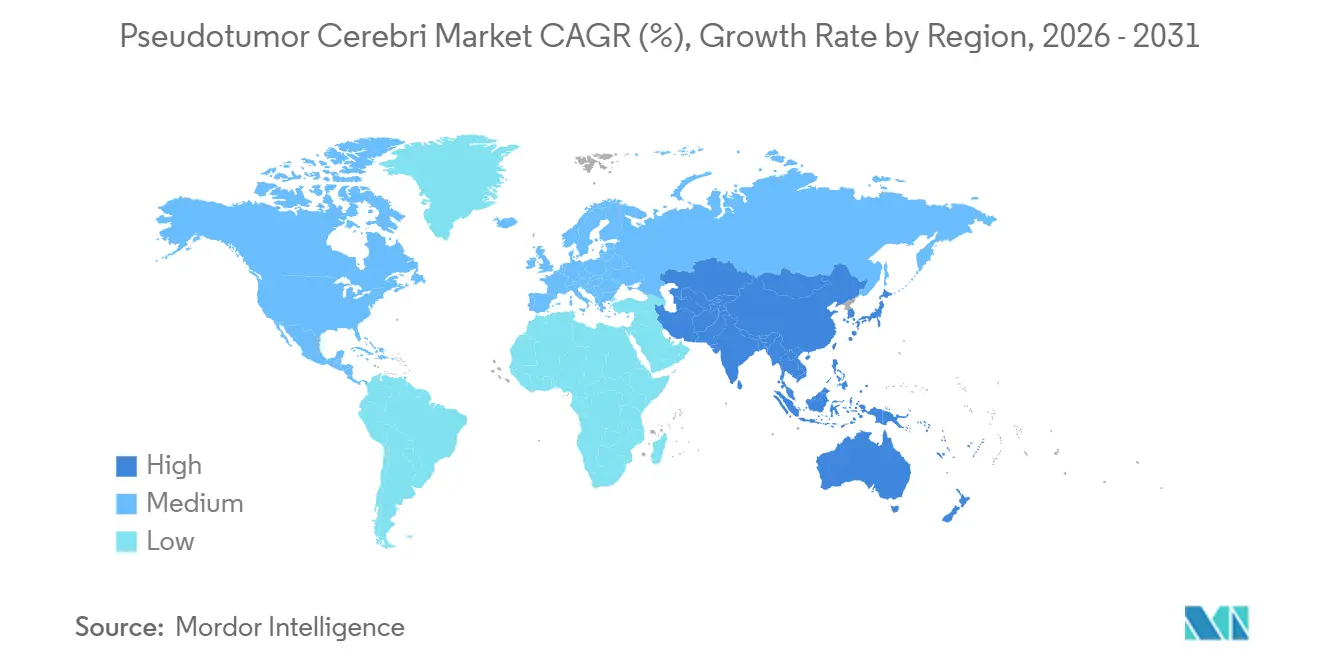
North America accounted for 42.61% of global revenue in 2025 and remains the main clinical and regulatory center for the Pseudotumor Cerebri Market. The March 2026 River Stent Humanitarian Device Exemption established a U.S. regulatory route for severe refractory IIH. IIH prevalence in U.S. women aged 18-55 was 3.44 per 10,000 and was higher in states with greater obesity levels. Canada and Mexico remain secondary contributors as referral systems develop. Europe is the second-largest regional area. The United Kingdom and Germany lead in clinical protocol development and trial activity, while the UK hosts both the IIH-Advance tirzepatide study and the OCT telemedicine validation work.
APAC Pseudotumor Cerebri Market
Asia-Pacific is projected to grow at an 8.85% CAGR through 2031, making it the fastest-growing regional part of the Pseudotumor Cerebri Market. Growth reflects stronger infrastructure and clinical awareness as well as increased incidence. Japan’s estimated annual incidence was 0.03 per 100,000, compared with 0.5-7.8 per 100,000 in Western populations. This difference may reflect phenotype differences and diagnostic gaps created by criteria developed around Western populations. China issued its first national IIH diagnostic and treatment consensus in May 2025 and identified high misdiagnosis among ophthalmologists[3]“Expert Consensus on the Diagnosis and Treatment of Idiopathic Intracranial Hypertension in China,” Chinese Journal of Experimental Ophthalmology, cjeo-journal.org. Indian patients often present with vitamin D deficiency and anemia alongside IIH, which may require region-specific diagnostic thresholds. Victoria data show that the burden in some Asia-Pacific settings may already be close to Western levels but undercounted.
MEA and South America Pseudotumor Cerebri Market
The Middle East and Africa and South America remain early-stage areas for the Pseudotumor Cerebri Market. Saudi Arabia, the United Arab Emirates, and Kuwait are expanding specialist neurology and ophthalmology services, while obesity-related IIH is receiving greater attention at tertiary referral hospitals. South African academic hospitals manage complex cases, but health-system fragmentation limits the treated population. Brazil supports regional activity through academic neurological centers connected to the public SUS system. Access to MRI venography and OCT differs between public and private settings. Buenos Aires is emerging as a secondary diagnostic center within Argentina’s private sector. Formal IIH diagnostic guidelines are the key requirement for measurable expansion across both regions.

Competitive Landscape
The Pseudotumor Cerebri Market has two distinct competitive groups. The pharmaceutical group is fragmented and built around generic acetazolamide, corticosteroids, and diuretics. Teva Pharmaceutical, Viatris, Sandoz, Alembic, Strides Pharma Science, and Zydus Lifesciences participate in this part of the Pseudotumor Cerebri Market, where drug differentiation is limited. No branded medicine has an IIH-specific approval. Eli Lilly and Novo Nordisk are relevant through GLP-1 receptor agonist portfolios, although those therapies do not yet have IIH-specific approvals. Eli Lilly is co-sponsoring the TIIHT Phase IV trial, which could provide evidence for a future label extension.
The device and imaging group is more concentrated around differentiated systems. Serenity Medical holds a first-mover position with the River Stent Humanitarian Device Exemption for severe refractory IIH. Medtronic competes in cerebrospinal fluid shunting with the adjustable Strata NSC LP valve. Integra LifeSciences maintains a presence in intracranial pressure monitoring through the CereLink system, which was relaunched in the United States in the first quarter of 2024 with MR-conditional capability. GE HealthCare presented 4D Flow MRI data in IIH patients at ISMRM 2026, which supports the use of IIH as a neuroscience imaging application. Carl Zeiss Meditec received U.S. Food and Drug Administration clearance in 2024 for the CIRRUS 6000 with an enhanced reference database.
The mid-acuity patient group remains open to competition. These patients have not responded adequately to acetazolamide but do not yet meet thresholds for venous sinus stenting or shunting. GLP-1 receptor agonists, noninvasive intracranial pressure monitoring, and weight-management services are converging in this care gap. No company currently owns this treatment space. GE HealthCare, Siemens Healthineers, Koninklijke Philips, and Canon Medical compete in imaging through platform breadth and workflow integration. Carl Zeiss Meditec and Topcon Corporation are key OCT suppliers for diagnosis and monitoring. ISO 13485 and U.S. Food and Drug Administration 510(k) clearance remain baseline entry requirements for therapeutic and imaging devices. The Pseudotumor Cerebri Market remains competitive through platform capability and clinical evidence rather than through a dominant approved medicine. The Pseudotumor Cerebri Market continues to depend on clinical evidence, monitoring capability, and access to specialized care.
Pseudotumor Cerebri Industry Leaders
Teva Pharmaceutical Industries Ltd.
Sandoz Group AG
Sun Pharmaceutical Industries Ltd.
Viatris Inc.
Medtronic plc
- *Disclaimer: Major Players sorted in no particular order
Pseudotumor Cerebri Market Companies Covered in this Report
- Alembic Pharmaceuticals
- B. Braun
- Canon
- Carl Zeiss
- Eli Lilly and Company
- GE HealthCare Technologies Inc.
- Integra LifeSciences
- Koninklijke Philips
- Lannett
- Medtronic
- Novo Nordisk
- Sandoz Group AG
- Serenity Medical, Inc.
- Siemens Healthineers
- Sophysa
- Spiegelberg
- Strides Pharma Science
- Sun Pharmaceuticals Industries
- Taro Pharmaceutical Industries Ltd.
- Teva Pharmaceutical Industries
- Topcon
- Viatris
- Zydus Lifesciences Limited

Recent Industry Developments in Pseudotumor Cerebri Market
- July 2026: Serenity Medical presented 4–5 year River Stent RIVER study data at the SNIS 23rd Annual Meeting, reporting 100% papilledema resolution by years four and five, 90% sustained headache improvement, and zero in-stent thrombosis, durability evidence that substantially strengthens the commercial case for broader insurer coverage beyond the existing HDE indication.
- March 2026: The FDA granted Humanitarian Device Exemption approval to Serenity Medical's River Stent, the first FDA approval of a cerebral venous sinus stent, for adults with severe, refractory IIH who have failed medical therapy, restructuring the surgical decision pathway for this cohort.


Global Pseudotumor Cerebri Market Report Scope
As per the scope of the report, pseudotumor cerebri, also known as idiopathic intracranial hypertension, is a condition characterized by increased intracranial pressure without an evident cause such as a tumor or other mass lesion. It presents with symptoms similar to those of a brain tumor, including headache, visual disturbances, and papilledema, but no detectable intracranial abnormality is found on imaging studies.
The pseudotumor cerebri market is segmented by offering, disease severity, end user, and geography. By offering, the market is segmented into treatment and diagnostic modality. The treatment segment includes medication, surgical procedures, and supportive and disease-modifying care. The medication segment includes diuretics, anticonvulsants, corticosteroids, and other medications. The diagnostic modality segment includes magnetic resonance imaging and magnetic resonance venography, computed tomography and computed tomography venography, lumbar puncture and opening-pressure measurement, fundoscopy and papilledema assessment, optical coherence tomography, and other diagnostic modalities. By disease severity, the market is segmented into mild or stable disease, moderate disease, severe or vision-threatening disease, fulminant disease, and medically refractory disease. By end user, the market is segmented into hospitals, specialty neurology clinics, ambulatory surgical centers, and other end users. By geography, the market is segmented into North America, Europe, Asia-Pacific, the Middle East and Africa, and South America. The market report also covers the estimated market sizes and trends for 17 countries across major regions globally. For each segment, the market size and forecast are provided in terms of value (USD).
| Treatment | Medication | Diuretics |
| Anticonvulsants | ||
| Corticosteroids | ||
| Other Medications | ||
| Surgical Procedures | ||
| Supportive and Disease-Modifying Care | ||
| Diagnostic Modality | Magnetic Resonance Imaging and Magnetic Resonance Venography | |
| Computed Tomography and Computed Tomography Venography | ||
| Lumbar Puncture and Opening-Pressure Measurement | ||
| Fundoscopy and Papilledema Assessment | ||
| Optical Coherence Tomography | ||
| Other Diagnostic Modalities |
| Mild or Stable Disease |
| Moderate Disease |
| Severe or Vision-Threatening Disease |
| Fulminant Disease |
| Medically Refractory Disease |
| Hospitals |
| Specialty Neurology Clinics |
| Ambulatory Surgical Centers |
| Other End Users |
| North America | United States |
| Canada | |
| Mexico | |
| Europe | Germany |
| United Kingdom | |
| France | |
| Italy | |
| Spain | |
| Rest of Europe | |
| Asia-Pacific | China |
| Japan | |
| India | |
| Australia | |
| South Korea | |
| Rest of Asia-Pacific | |
| Middle East and Africa | GCC |
| South Africa | |
| Rest of Middle East and Africa | |
| South America | Brazil |
| Argentina | |
| Rest of South America |
| By Offering | Treatment | Medication | Diuretics |
| Anticonvulsants | |||
| Corticosteroids | |||
| Other Medications | |||
| Surgical Procedures | |||
| Supportive and Disease-Modifying Care | |||
| Diagnostic Modality | Magnetic Resonance Imaging and Magnetic Resonance Venography | ||
| Computed Tomography and Computed Tomography Venography | |||
| Lumbar Puncture and Opening-Pressure Measurement | |||
| Fundoscopy and Papilledema Assessment | |||
| Optical Coherence Tomography | |||
| Other Diagnostic Modalities | |||
| By Disease Severity | Mild or Stable Disease | ||
| Moderate Disease | |||
| Severe or Vision-Threatening Disease | |||
| Fulminant Disease | |||
| Medically Refractory Disease | |||
| By End User | Hospitals | ||
| Specialty Neurology Clinics | |||
| Ambulatory Surgical Centers | |||
| Other End Users | |||
| By Geography | North America | United States | |
| Canada | |||
| Mexico | |||
| Europe | Germany | ||
| United Kingdom | |||
| France | |||
| Italy | |||
| Spain | |||
| Rest of Europe | |||
| Asia-Pacific | China | ||
| Japan | |||
| India | |||
| Australia | |||
| South Korea | |||
| Rest of Asia-Pacific | |||
| Middle East and Africa | GCC | ||
| South Africa | |||
| Rest of Middle East and Africa | |||
| South America | Brazil | ||
| Argentina | |||
| Rest of South America | |||


Key Questions Answered in the Report
What is driving growth in pseudotumor cerebri care?
Obesity-associated IIH, earlier recognition of vision risk, and wider use of OCT and MRI venography are expanding diagnosis and treatment needs.
What is the 2026 value of the Pseudotumor Cerebri Market?
The Pseudotumor Cerebri Market was valued at USD 4.87 billion in 2026 and is projected to reach USD 7.07 billion by 2031.
Which treatment settings generate the most IIH revenue?
Hospitals held 58.24% of revenue in 2025 because they provide specialist imaging, surgery, and acute care for complex cases.
Why are GLP-1 receptor agonists relevant to IIH?
They are being studied for weight loss, intracranial pressure reduction, headache control, and papilledema resolution in affected patients.
Which region is expanding fastest for IIH services?
Asia-Pacific is forecast to grow at an 8.85% CAGR through 2031 as awareness, clinical standards, and specialist capacity improve.
How does venous sinus stenting affect IIH treatment?
A 2026 U.S. study reported lower treatment-failure risk and lower perioperative morbidity for venous sinus stenting than for cerebrospinal fluid shunting.
Page last updated on:





