
Propylene Tetramer Market Size and Share
Market Overview
| Study Period | 2022 - 2032 |
|---|---|
| Market Size (2027) | USD 499.24 Million |
| Market Size (2032) | USD 647.56 Million |
| Growth Rate (2027 - 2032) | 5.34 % |
| Fastest Growing Market | Asia-Pacific |
| Largest Market | Asia-Pacific |
| Market Concentration | Medium |
Major Players *Disclaimer: Major Players sorted in no particular order Image © Mordor Intelligence. Reuse requires attribution under CC BY 4.0. | |
Propylene Tetramer Market Analysis by Mordor Intelligence
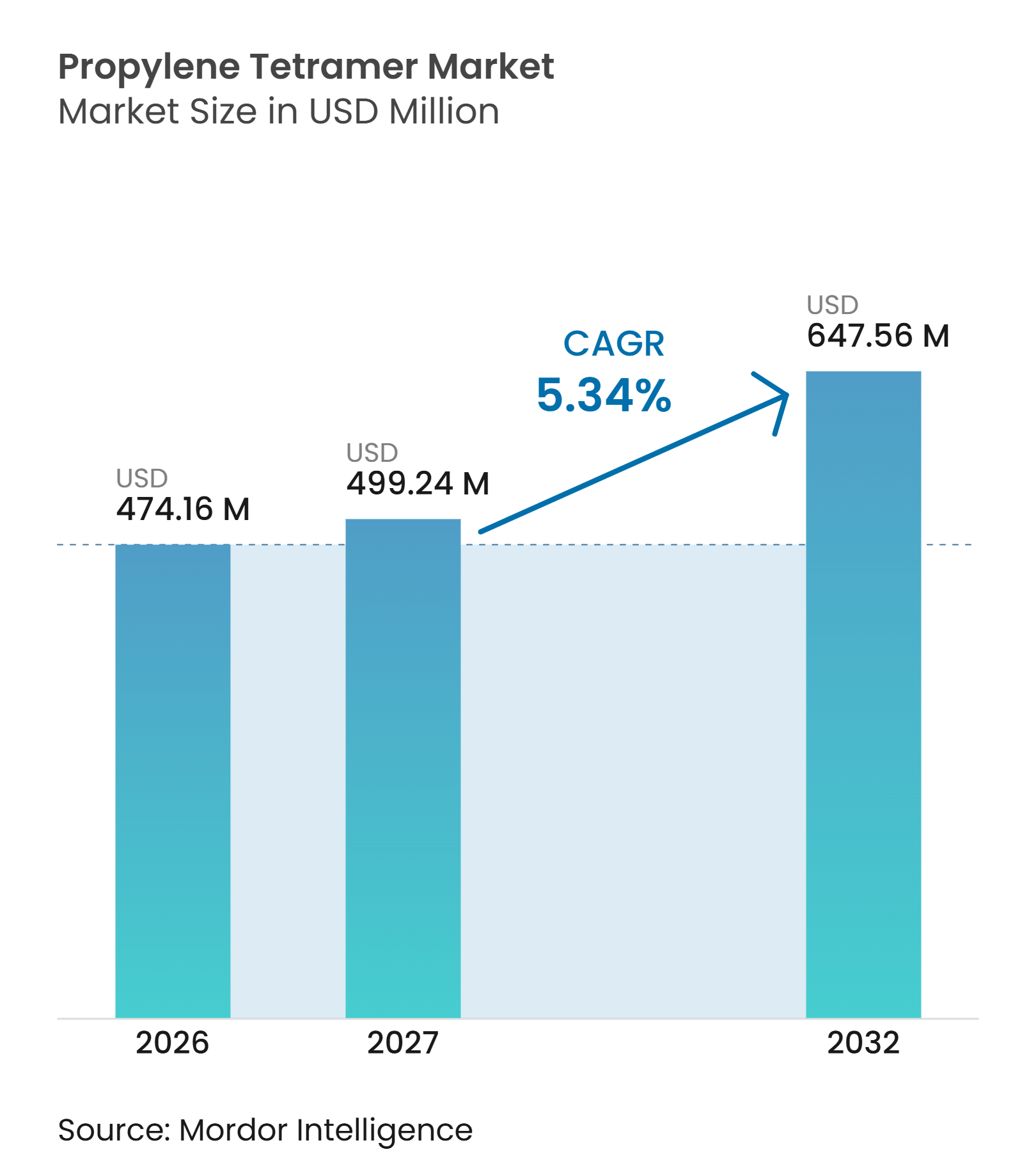
The Propylene Tetramer Market size was valued at USD 474.16 million in 2026 and is estimated to grow from USD 499.24 million in 2027 to reach USD 647.56 million by 2032, at a CAGR of 5.34% during the forecast period (2027-2032). The propylene tetramer market serves lubricant additives, surfactant formulations, and agricultural chemical intermediates, which give demand a broad base across several chemical value chains. Growth depends on reliable propylene availability, while new capacity in Asia and North America supports downstream production. Higher performance requirements for engine oils and detergent ingredients favor grades with controlled purity and a consistent C12 branching profile. Producers with integrated feedstock, selective catalyst systems, and application knowledge are better placed to protect margins as customers place greater weight on quality and regulatory documentation. Environmental requirements also create a clear divide between conventional grades and products supported by biodegradability or sustainability credentials.
Key Report Takeaways
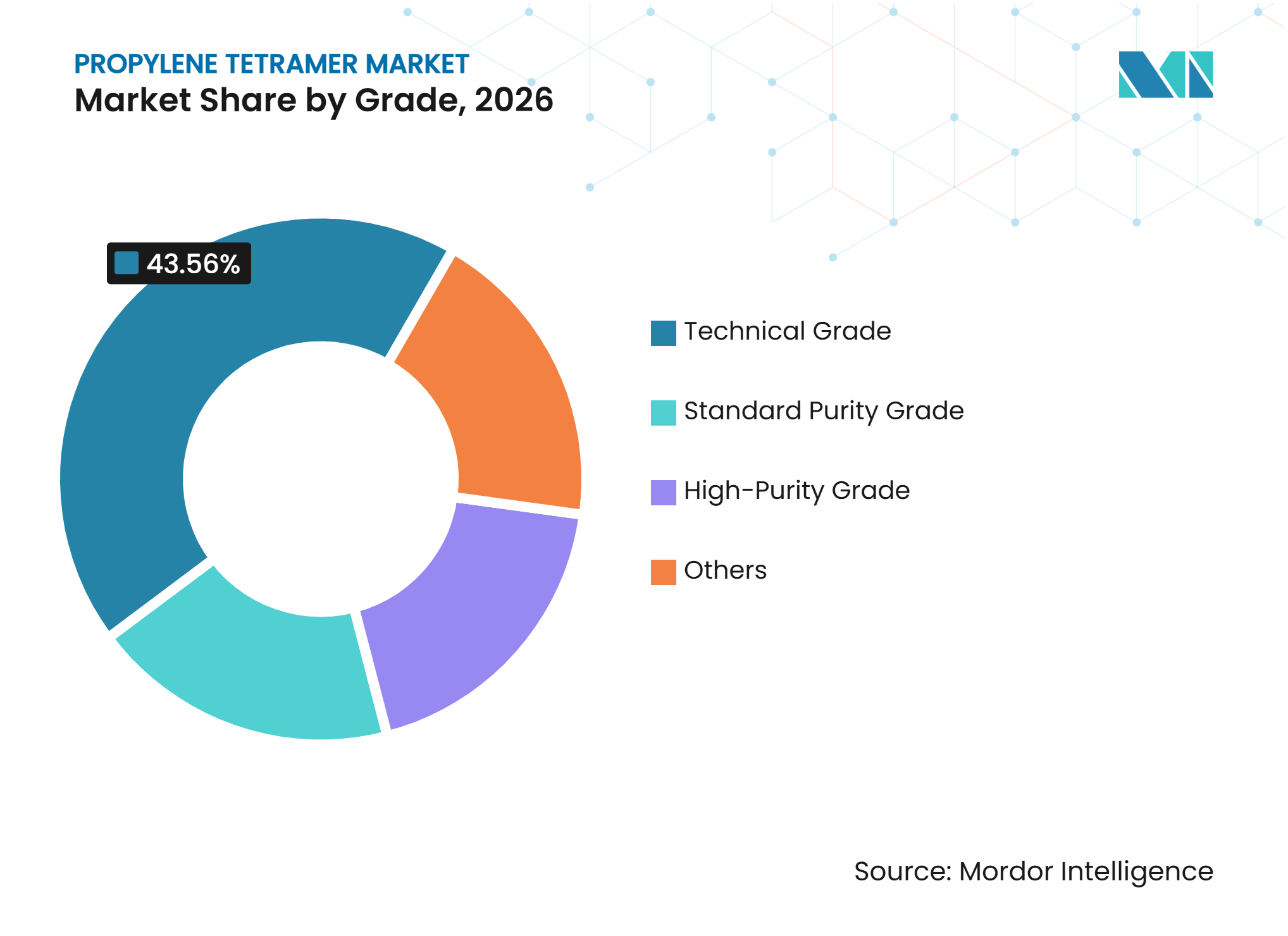
- By grade, technical grade held 43.56% of the propylene tetramer market share in 2026, while high-purity grade is projected to advance at a 6.23% CAGR through 2032.
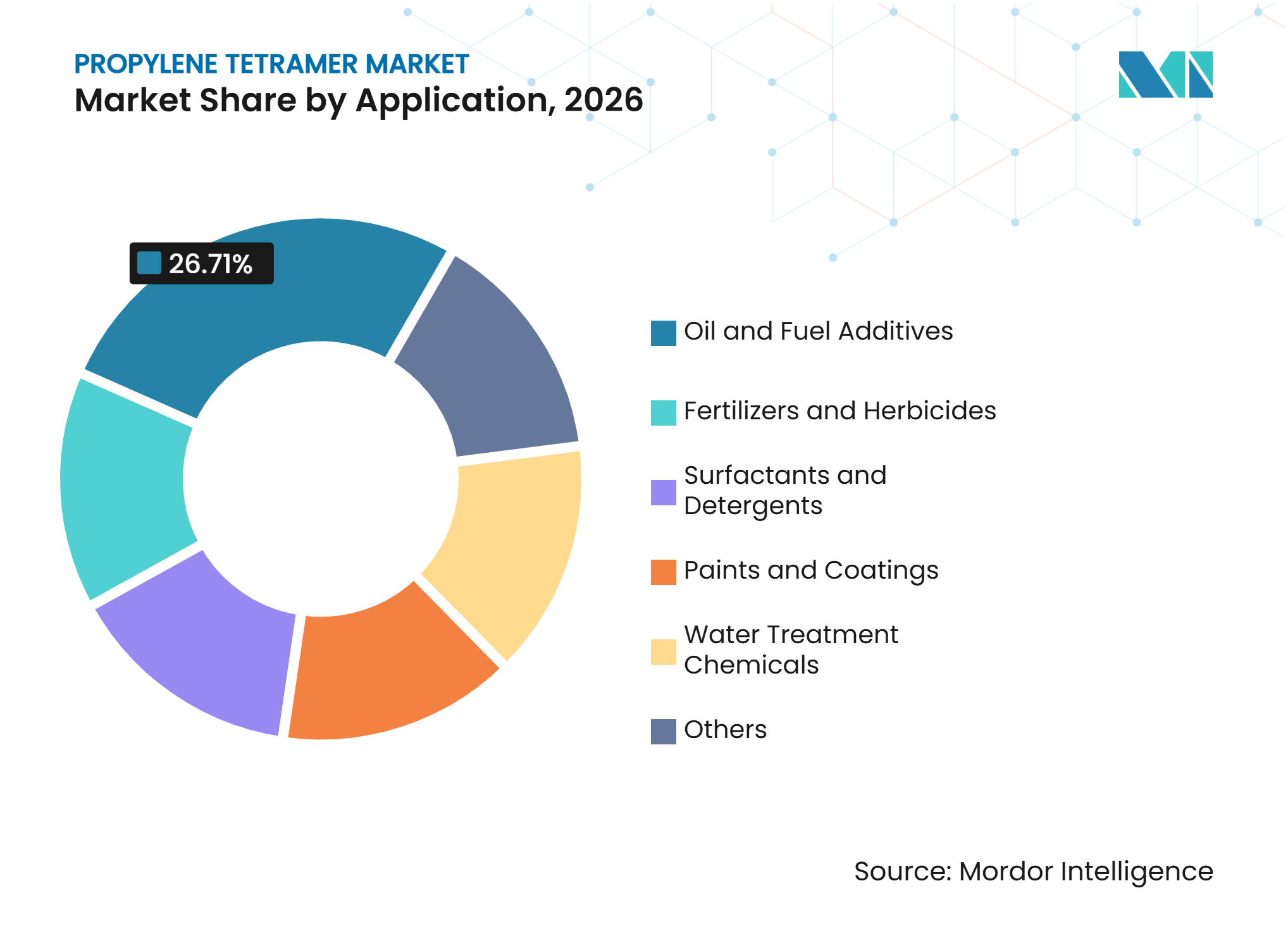
- By application, oil and fuel additives held 26.71% of the propylene tetramer market share in 2026, while surfactants and detergents are projected to advance at a 6.78% CAGR through 2032.
- By geography, Asia-Pacific held 40.13% of the propylene tetramer market share in 2026 and is projected to advance at a 6.61% CAGR through 2032.
Note: Market numbers in this report are based on Mordor Intelligence's proprietary estimation framework, which combines nine months of actuals with Q4 projections for base year 2026.
Market Trends and Insights
Drivers Impact Analysis of Propylene Tetramer Market*
| Driver | (~) % Impact on CAGR Forecast | Geographic Relevance | Impact Timeline |
|---|---|---|---|
| Growth in Lubricant and Fuel Additive Demand | +1.8% | Global, with intensity in North America, Europe, and APAC | Short term (≤ 2 years) |
| Expansion of Surfactant and Detergent Formulations | +1.6% | APAC core, spillover to MEA and South America | Medium term (2-4 years) |
| Industrialization and Vehicle Fleet Expansion in Asia-Pacific | +1.2% | APAC core (China, India, ASEAN) | Medium term (2-4 years) |
| Rising Demand for High-Performance Agricultural Chemicals | +1.0% | Global, with early gains in India, Southeast Asia, and Brazil | Medium term (2-4 years) |
| Higher Selectivity in Oligomerization Catalyst Systems | +0.6% | Global, with R&D concentration in North America and Europe | Long term (≥ 4 years) |
| Source: Mordor Intelligence | |||
Growth in Lubricant and Fuel Additive Demand
The American Petroleum Institute introduced International Lubricants Standardization and Approval Committee (ILSAC) GF-7A and GF-7B specifications on March 31, 2025, along with API SQ for gasoline engines[1]. These specifications require stronger performance in dispersancy, timing-chain wear protection, fuel economy, and emissions compatibility. Propylene tetramer is used to make dodecylphenol-based dispersants and viscosity modifiers that support these formulations. This creates demand for grades with tighter compositional control because premium engine oils have less tolerance for variable feedstock quality. Chevron Oronite Company LLC promoted its additive portfolio at the Specialty and Custom Chemicals Show in February 2025, indicating continued supplier focus on advanced lubricant chemistry.
Expansion of Surfactant and Detergent Formulations
Propylene tetramer is an intermediate for dodecylbenzene sulfonated surfactants and alkylphenol-based products used in detergent formulations. Demand is supported by consumer goods production in Asia-Pacific and the Middle East, where manufacturers are expanding higher-active detergent formats. Reformulation requirements favor suppliers that can provide a reliable C12 branching profile and supporting product documentation. International chemical rules have increased attention on biodegradability and the suitability of branched alkylate derivatives. INEOS reported solid and consistent demand across its Oligomers portfolio during each of the first 3 quarters of 2025. This demand pattern supports the role of consistent propylene tetramer grades in detergent and specialty surfactant supply chains.
Industrialization and Vehicle Fleet Expansion in Asia-Pacific
Industrial growth in China, India, and the Association of Southeast Asian Nations (ASEAN) supports demand for lubricant, detergent, coating, and water-treatment inputs. The propylene tetramer market benefits when manufacturing expands because these end uses require additives and formulation intermediates. Reliance Industries Limited reported strong activity in its petrochemicals operations, including 100% capacity utilization in fiscal year 2025 and record crude processing of 72.2 million metric tons. PetroChina Company Limited approved a new northeast China refinery and petrochemical complex in July 2025, adding integrated downstream capacity to a large industrial region. These investments increase the availability of chemical inputs and strengthen the local customer base for propylene derivatives. ASEAN countries remain important because industrial output and consumer goods production are rising before local specialty-olefin capacity reaches similar scale.
Rising Demand for High-Performance Agricultural Chemicals
Propylene tetramer supports agricultural chemical formulations through alkylated phenol adjuvants and related intermediate pathways. Demand for these materials is tied to crop-protection production, inventory cycles, and requirements for more effective formulations. The U.S. Environmental Protection Agency finalized its Insecticide Strategy in April 2025, setting mitigation expectations to protect endangered species and their habitats[2]. Such requirements can increase interest in adjuvant systems that help applicators meet product-use conditions. India is also strengthening specialty-chemical manufacturing, which supports local demand for intermediates used in agricultural chemical production. Higher-performance formulations favor predictable quality and documented product performance over standard commodity supply. This makes agricultural chemicals a relevant outlet for high-purity grades in the propylene tetramer market.
Restraints Impact Analysis of Propylene Tetramer Market*
| Restraint | (~) % Impact on CAGR Forecast | Geographic Relevance | Impact Timeline |
|---|---|---|---|
| Propylene Feedstock Price Volatility | -1.0% | Global, most acute in APAC and Europe | Short term (≤ 2 years) |
| Environmental Restrictions on Branched Alkylates and Non-Biodegradable Derivatives | -0.8% | North America and EU, spillover to APAC | Medium term (2-4 years) |
| Narrow Supplier Base for Consistent C12 Branching Profiles | -0.6% | Global, with bottleneck in specialty tetramer supply | Long term (≥ 4 years) |
| Source: Mordor Intelligence | |||
Propylene Feedstock Price Volatility
Propylene prices directly influence the cost base of tetramer production because propylene is the core feedstock. The Gulf Petrochemicals and Chemicals Association reported that global propylene capacity exceeded demand by 20.3 million metric tons in 2025. Surplus supply may lower input prices, but it also places pressure on derivative pricing and can narrow conversion margins. Producers using propane dehydrogenation are particularly exposed to changes in propane-propylene spreads and operating rates. European producers can face additional pressure because their feedstock position is often linked to naphtha cracking economics. The propylene tetramer market remains exposed to these shifts even when demand from downstream applications stays stable.
Environmental Restrictions on Branched Alkylates and Non-Biodegradable Derivatives
Restrictions on nonylphenol ethoxylates and other branched alkylate derivatives can limit demand for conventional propylene tetramer routes. The European Chemicals Agency maintains restrictions on nonylphenol and nonylphenol ethoxylates under Annex XVII of the Registration, Evaluation, Authorisation and Restriction of Chemicals (REACH) Regulation. These rules require downstream users to assess alternative raw materials and more biodegradable formulations. Commodity material without verified performance or environmental data can face a narrower customer base. Suppliers that provide high-purity grades with test data and consistent quality can retain access to more regulated applications. Compliance costs therefore create pressure for some products while supporting premium positions for qualified grades.
*Our forecasts treat driver/restraint impacts as directional, not additive. The impact forecasts reflect baseline growth, mix effects, and variable interactions.
Propylene Tetramer Market Segment Analysis
By Grade:
Technical Grade Anchors Revenue, While High-Purity Grade Gains GroundTechnical grade held 43.56% of the propylene tetramer market share in 2026. It is widely used in mainstream lubricant additives and fuel detergent blends where tolerances allow moderate variation in branching. Its position reflects the needs of high-throughput blenders that prioritize dependable supply and practical cost control. Standard purity grade serves applications such as paints, coatings, and water-treatment chemicals that need consistent performance without the higher cost of premium-grade inputs. High-purity grade is projected to grow at a 6.23% CAGR through 2032. The propylene tetramer market size for this grade is supported by stricter formulation requirements in specialty surfactants and agricultural chemicals.
High-purity material is gaining importance as customers seek reliable C12 distribution, lower variability, and stronger product documentation. The transition reflects compliance needs and performance requirements rather than a simple preference for higher purity. ILSAC GF-7 requirements have increased attention on dispersant intermediate quality in high-performance lubricants. Custom isomer blends and bio-attributed routes remain smaller categories, but they give producers a path toward differentiated supply. Certification systems such as International Sustainability and Carbon Certification PLUS (ISCC PLUS) can help suppliers demonstrate recycled or bio-circular feedstock claims. Producers that improve catalyst precision can address a wider range of specialty customers while protecting margins.



By Application:
Oil and Fuel Additives Lead, While Surfactants and Detergents Grow FasterOil and fuel additives held 26.71% of the propylene tetramer market share in 2026. This application uses tetramer-derived intermediates in engine oils, gear fluids, and fuel stabilizer formulations. The segment benefits from the need for dispersants and related chemicals that support cleanliness, wear control, and fuel economy. The March 2025 introduction of ILSAC GF-7 increased the relevance of consistent additive chemistry for gasoline engine oil formulators. Surfactants and detergents are projected to advance at a 6.78% CAGR through 2032. Growth is supported by detergent production and changing product formats in Asia-Pacific and the Middle East.
Fertilizers and herbicides are meaningful application because tetramer-derived materials can support adjuvants and intermediate pathways. Demand in this area can vary with agrochemical inventory conditions and crop-protection production cycles. Paints and coatings use related chemistry in alkyd resin modification and other formulation functions. Water-treatment chemicals represent another stable outlet, where the material can be used in supporting chemical systems. The application mix reduces reliance on a single end market, although lubricant and detergent uses remain central to consumption. Suppliers that can tailor quality for these applications are more likely to secure repeat orders from formulation customers.

Geography Analysis
Asia-Pacific
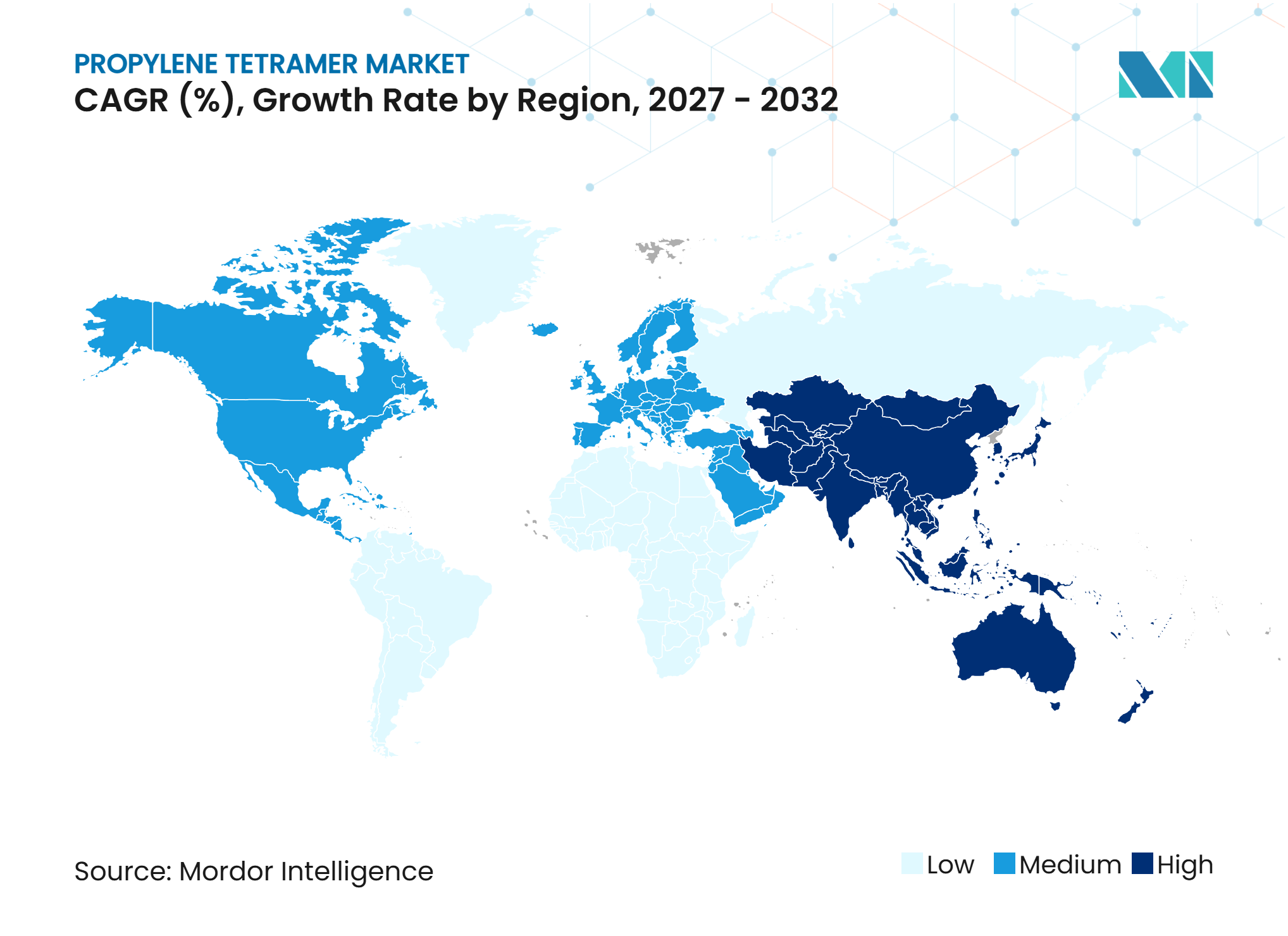
Asia-Pacific held 40.13% of the propylene tetramer market share in 2026 and is projected to advance at a 6.61% CAGR through 2032. China supports regional demand through its large petrochemical base, growing detergent production, and lubricant consumption. Exxon Mobil Corporation started operations at its Huizhou petrochemical complex in July 2025, including a flexible-feedstock steam cracker that supports an integrated downstream value chain. India adds regional demand through packaging, consumer goods, automotive production, and a large domestic refining and chemicals base. Reliance Industries Limited maintained full petrochemicals capacity utilization in fiscal year 2025, which shows the importance of integrated domestic supply. ASEAN markets such as Indonesia, Vietnam, and Thailand are also expanding their industrial and consumer goods production. These markets create demand for imported specialty chemical inputs while local propylene derivative capacity develops. ISCC PLUS certification and similar mass-balance systems are becoming more relevant as regional customers seek documented circular or bio-attributed inputs.
North America
North America relies on a strong petrochemical base and an established market for high-performance lubricant additives. The region benefits from propylene availability linked to refinery, cracking, and propane dehydrogenation operations along the U.S. Gulf Coast. LyondellBasell Industries Holdings B.V. approved a 400,000-metric-ton-per-year Flex-2 metathesis unit at its Channelview complex in March 2025. The project is expected to add propylene output when it starts in late 2028. ILSAC GF-7 gives lubricant formulators a reason to seek tightly controlled dispersant intermediates in the current upgrade cycle. Chevron Oronite Company LLC expanded distribution of OLOA lubricant additives, OGA gasoline additives, and PARATONE viscosity modifiers in Brazil through an April 2025 agreement with ICONIC Base Oil Solutions. This move shows how North American formulation technology can serve customers across the Americas. Regulatory influence from the U.S. Environmental Protection Agency also affects the performance and environmental documentation required for downstream chemical products.
Europe, South America, and Middle East and Africa
Europe places strong emphasis on higher-specification surfactants and compliance with REACH requirements. The European Chemicals Agency restrictions on nonylphenol ethoxylates influence raw-material selection and favor suppliers that can document suitable alternatives. South America is led by Brazil, where Braskem signed 3 propylene supply contracts with Petrobras refineries in December 2025. The agreements cover up to 340,000 metric tons per year and run from May 2026 through April 2031. This provides feedstock visibility for downstream chemical production and supports local demand from agricultural and surfactant applications. In the Middle East and Africa, refinery-integrated projects are broadening the region’s chemicals base beyond bulk polymers. The regional opportunity depends on producers converting available olefins into higher-value derivatives with dependable quality and logistics. Certification and environmental compliance are increasingly relevant for exporters serving European and multinational customers.
Competitive Landscape
Market Concentration
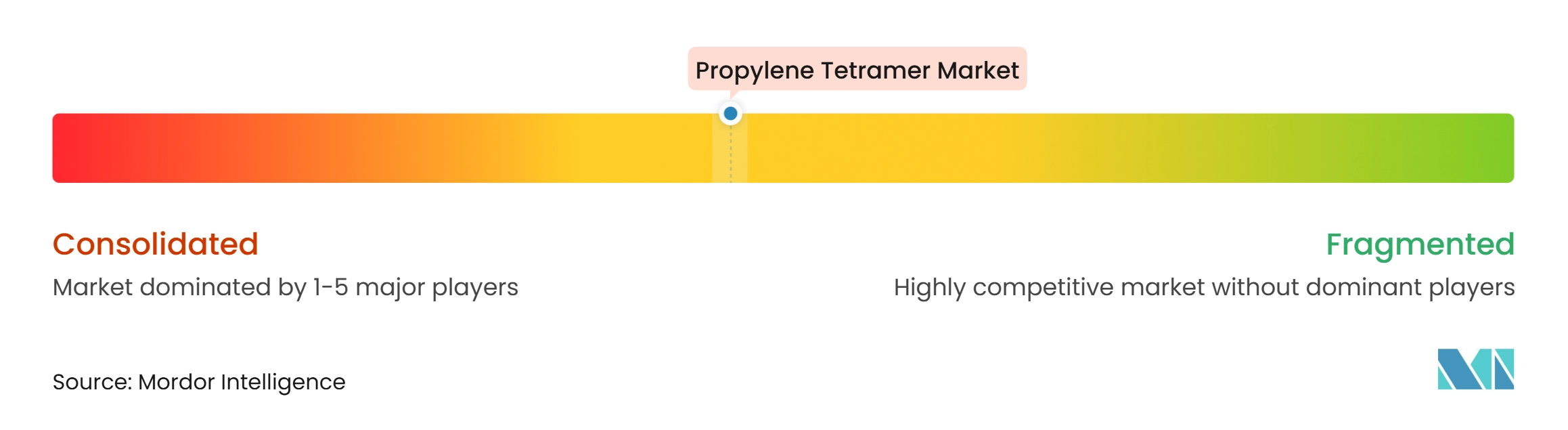
The propylene tetramer market is moderately concentrated, with top players including Chevron Oronite Company LLC, Braskem, SI Group, Inc., TPC Group, and Exxon Mobil Corporation. Integrated operations can improve feedstock access and help producers manage supply disruptions. INEOS reported solid and consistent demand across its Oligomers portfolio in the first 3 quarters of 2025. Chevron Oronite Company LLC, TPC Group, and SI Group, Inc. compete through application knowledge and specialty product capabilities. Competition is shaped by the ability to deliver consistent grades, technical support, and dependable logistics.
Chevron Phillips Chemical Company LLC has invested in process differentiation through its patented oligomerization technology. U.S. Patent 12435014 describes catalyst systems that can produce less-isomerized propylene oligomers, creating a route to more tightly specified products. Chevron Oronite Company LLC expanded its Brazil distribution network in April 2025, strengthening access to one of South America’s largest lubricant markets. Shell plc and Braskem began supplying certified bio-attributed and bio-circular propylene for polypropylene production in the United States in June 2025. The agreement shows how mass-balance certification can enter the propylene value chain. TPC Group also completed its first ISCC PLUS-certified 1,3-butadiene transaction in December 2025, adding to the company’s sustainability credentials.
Supplier advantage will increasingly depend on quality assurance, catalyst capability, and credible sustainability documentation. High-purity grades can offer stronger pricing where customers must meet detergent, lubricant, or environmental specifications. Commodity grades remain important because they serve broad-volume applications with established formulations. Producers with captive propylene can be more resilient when feedstock markets are volatile. Specialty suppliers can remain competitive by responding quickly to customer formulation needs and supplying grades with proven consistency. ISO 14001 environmental management systems and ISCC PLUS certification can support customer qualification when suppliers make environmental or circularity claims. Customers also assess batch consistency, technical service, product documentation, delivery reliability, and the supplier’s ability to demonstrate performance across multiple locations and applications. These requirements can lengthen qualification cycles, which favors businesses with established relationships in lubricant additives, surfactants, and agricultural chemicals.
Propylene Tetramer Industry Leaders
-
Chevron Oronite Company LLC
-
Braskem
-
SI Group, Inc.
-
TPC Group
-
Exxon Mobil Corporation
- *Disclaimer: Major Players sorted in no particular order
Propylene Tetramer Market Companies Covered in this Report
- Braskem
- Chevron Oronite Company LLC
- Chevron Phillips Chemical Company LLC
- China Petrochemical Corporation
- Dow
- ENEOS Materials Corporation
- Exxon Mobil Corporation
- INEOS
- LyondellBasell Industries Holdings B.V.
- Parchem Fine and Specialty Chemicals
- PetroChina Company Limited
- Reliance Industries Limited
- Shell plc
- SI Group, Inc.
- TPC Group
Recent Industry Developments in Propylene Tetramer Market
- September 2026: Zhejiang Petroleum & Chemical (ZPC) selected Lummus Technology to license its CATOFIN propane dehydrogenation technology for a new 1.2-million-tonne-per-year propylene production unit at its Zhoushan complex in China. The proposed capacity addition could strengthen regional propylene feedstock availability for downstream petrochemical derivatives, including products manufactured through propylene oligomerization.
- March 2025: LyondellBasell Industries Holdings B.V. approved an investment in a new metathesis unit at its Channelview complex in Texas, United States, designed to convert ethylene into approximately 400,000 tonnes of propylene annually. Construction was scheduled to begin in the third quarter of 2025, with startup targeted for late 2028, potentially supporting downstream propylene-based chemical production through increased feedstock availability.
Global Propylene Tetramer Market Report Scope
Propylene tetramer is a higher oligomer of propylene produced through the oligomerization of propylene molecules. It is a branched-chain hydrocarbon mixture used as a chemical intermediate and feedstock in the production of specialty chemicals and additives.
The Propylene Tetramer Market is segmented by grade, application, and geography. By grade, the market is segmented into technical grade, standard purity grade, high-purity grade, and others. By application, the market is segmented into oil and fuel additives, fertilizers and herbicides, surfactants and detergents, paints and coatings, water treatment chemicals, and others. The report also covers the market size and forecasts for propylene tetramer in 15 countries across major regions. For each segment, the market sizing and forecasts have been done on the basis of value (USD).
Segmentation Overview
| Technical Grade |
| Standard Purity Grade |
| High-Purity Grade |
| Others |
| Oil and Fuel Additives |
| Fertilizers and Herbicides |
| Surfactants and Detergents |
| Paints and Coatings |
| Water Treatment Chemicals |
| Others |
| Asia-Pacific | China |
| India | |
| Japan | |
| South Korea | |
| ASEAN Countries | |
| Rest of Asia-Pacific | |
| North America | United States |
| Canada | |
| Mexico | |
| Europe | Germany |
| United Kingdom | |
| France | |
| Italy | |
| NORDIC Countries | |
| Rest of Europe | |
| South America | Brazil |
| Argentina | |
| Rest of South America | |
| Middle East and Africa | Saudi Arabia |
| South Africa | |
| Rest of Middle East and Africa |
| By Grade | Technical Grade | |
| Standard Purity Grade | ||
| High-Purity Grade | ||
| Others | ||
| By Application | Oil and Fuel Additives | |
| Fertilizers and Herbicides | ||
| Surfactants and Detergents | ||
| Paints and Coatings | ||
| Water Treatment Chemicals | ||
| Others | ||
| By Geography | Asia-Pacific | China |
| India | ||
| Japan | ||
| South Korea | ||
| ASEAN Countries | ||
| Rest of Asia-Pacific | ||
| North America | United States | |
| Canada | ||
| Mexico | ||
| Europe | Germany | |
| United Kingdom | ||
| France | ||
| Italy | ||
| NORDIC Countries | ||
| Rest of Europe | ||
| South America | Brazil | |
| Argentina | ||
| Rest of South America | ||
| Middle East and Africa | Saudi Arabia | |
| South Africa | ||
| Rest of Middle East and Africa | ||
Key Questions Answered in the Report
What is the size of the propylene tetramer market?
The propylene tetramer market size was valued at USD 474.16 million in 2026 and is estimated to grow from USD 499.24 million in 2027 to reach USD 647.56 million by 2032, at a CAGR of 5.34% during the forecast period (2027-2032).
What is driving demand for propylene tetramer?
Demand is supported by lubricant additives, detergent formulations, agricultural chemicals, and a growing need for grades with controlled purity.
Which grade held the largest share in 2026?
Technical grade held 43.56% of the propylene tetramer market share in 2026 because it is widely used in mainstream lubricant and fuel additive blending.
Which application is projected to advance fastest through 2032?
Surfactants and detergents are projected to advance at a 6.78% CAGR through 2032, supported by detergent production and reformulation needs.