
Processed Poultry Meat Market Size and Share
Market Overview
| Study Period | 2022 - 2032 |
|---|---|
| Market Size (2027) | USD 22.30 Billion |
| Market Size (2032) | USD 27.87 Billion |
| Growth Rate (2027 - 2032) | 4.56 % |
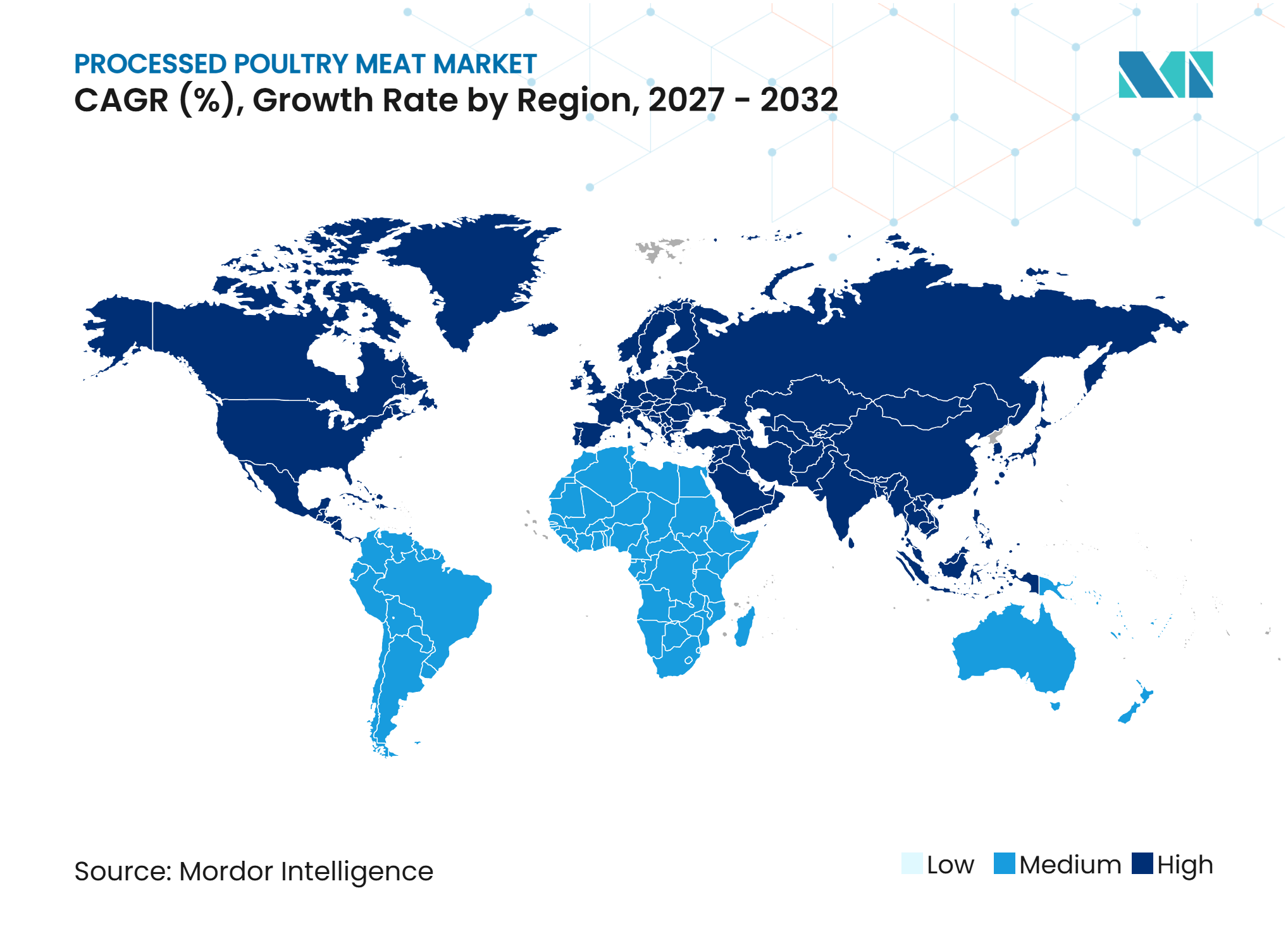
| Fastest Growing Market | Middle East and Africa |
| Largest Market | Asia-Pacific |
| Market Concentration | Low |
Major Players *Disclaimer: Major Players sorted in no particular order Image © Mordor Intelligence. Reuse requires attribution under CC BY 4.0. | |
Processed Poultry Meat Market Analysis by Mordor Intelligence
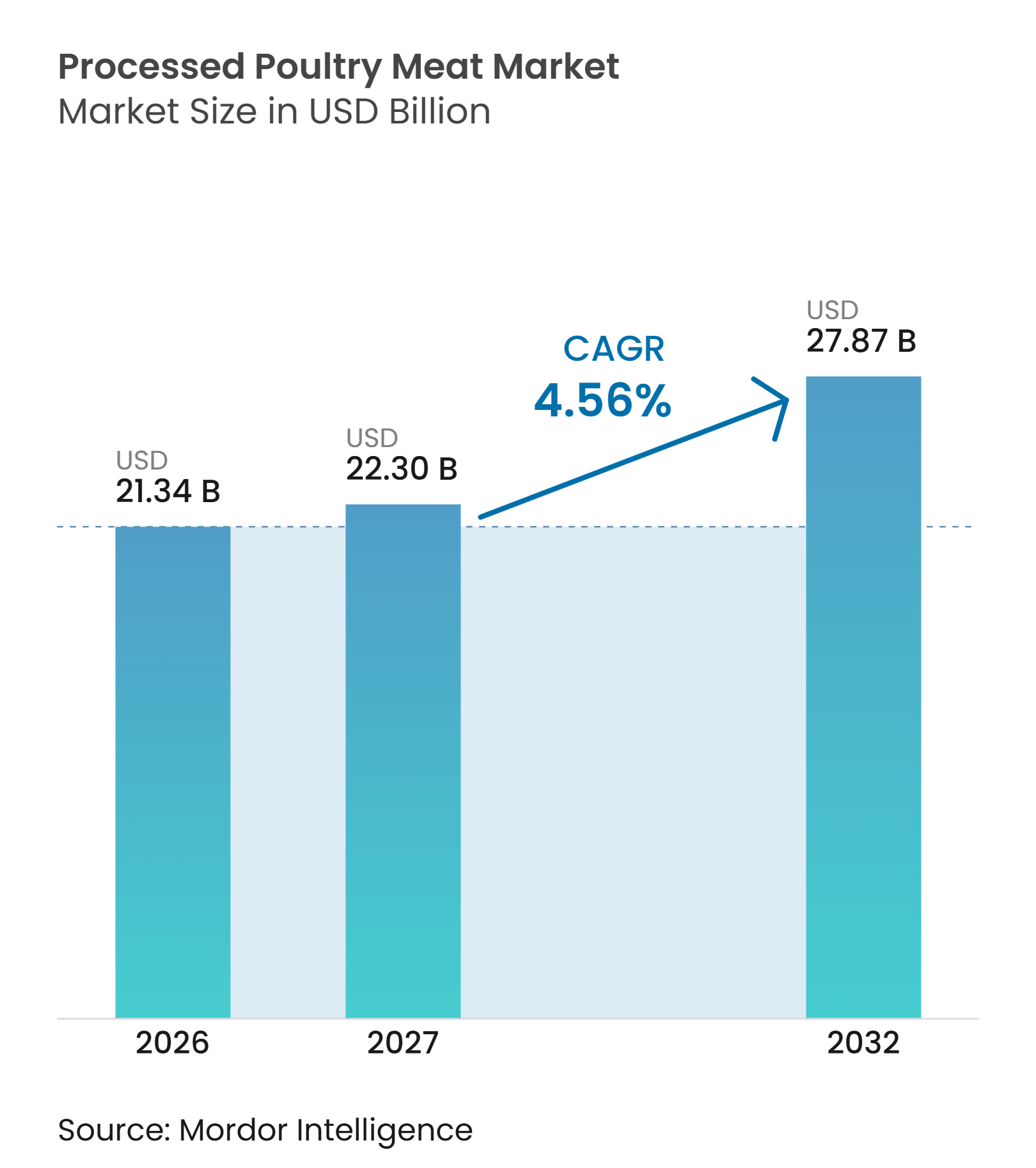
The processed poultry meat market size is projected to expand from USD 21.34 billion in 2026 and USD 22.30 billion in 2027 to USD 27.87 billion by 2032, registering a CAGR of 4.56% between 2027 to 2032. The processed poultry meat market benefits from chicken’s broad availability, lower protein cost than several competing meats, and suitability for frozen, cooked, and ready-to-cook products. Retailers and processors can use this position to offer products at several price points without leaving the accessible protein category. Product development is moving toward familiar formats with clearer protein and ingredient information, while quick-service restaurant demand supports standardized portion sizes and reliable supply. The processed poultry meat market also faces a material supply risk from highly pathogenic avian influenza, which can interrupt trade routes and alter procurement patterns within days. Food-safety enforcement and certification requirements favor processors that can maintain traceability, pathogen controls, and export compliance across their operations, according to the United States Department of Agriculture[1].
Key Report Takeaways
-
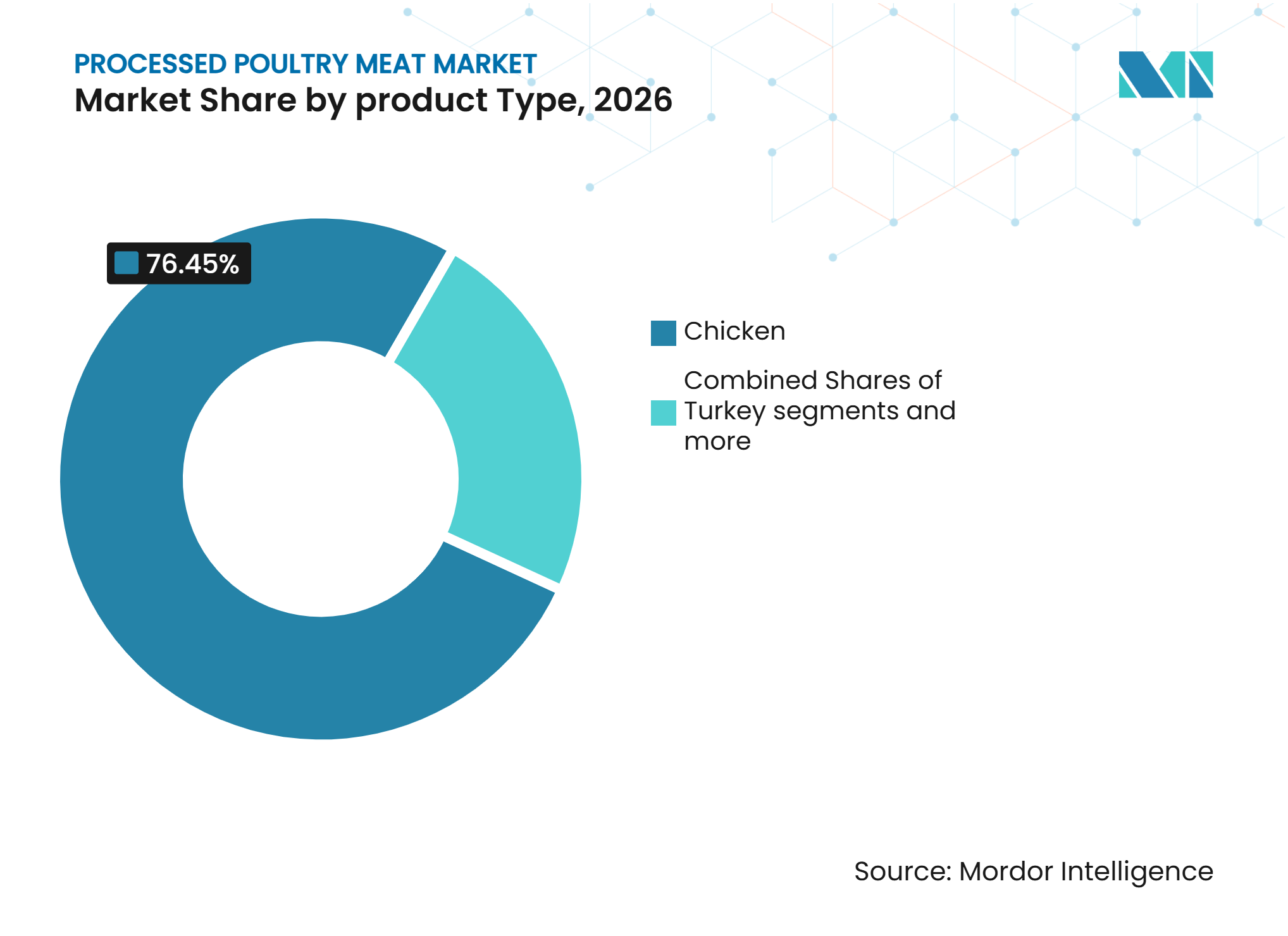
By product type, chicken held 76.45% of the processed poultry meat market share in 2026, while turkey is forecast to grow at a 5.67% CAGR through 2032.
-
By form, nuggets accounted for 45.02% of the processed poultry meat market size in 2026, while sausages are forecast to grow at a 5.84% CAGR through 2032.
-
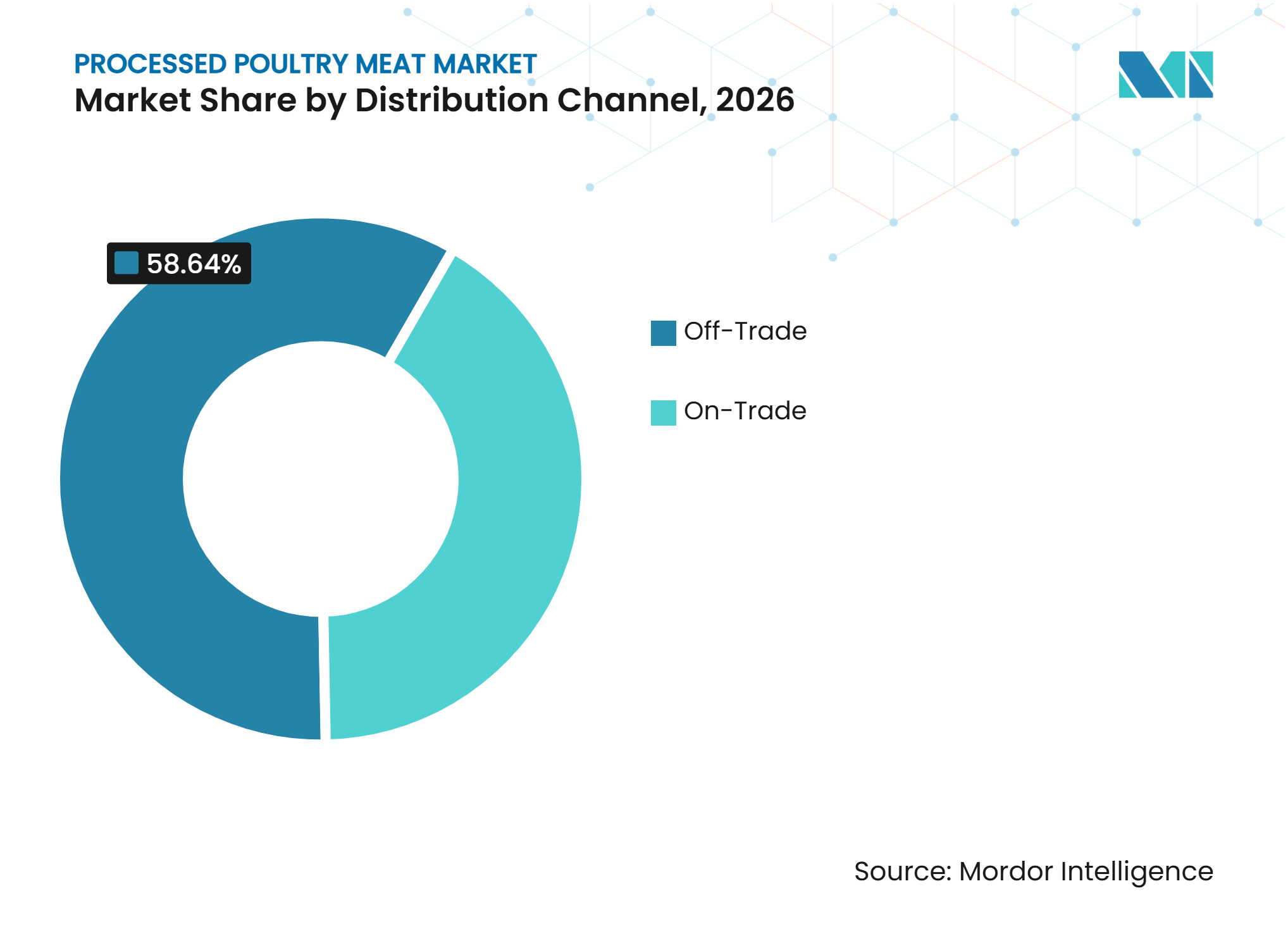
By distribution channel, off-trade held 58.64% of the processed poultry meat market share in 2026, while on-trade is forecast to grow at a 5.38% CAGR through 2032.
-
By geography, Asia-Pacific held 48.69% of the processed poultry meat market size in 2026, while the Middle East and Africa is forecast to grow at a 5.79% CAGR through 2032.
Note: Market numbers in this report are based on Mordor Intelligence's proprietary estimation framework, which combines nine months of actuals with Q4 projections for base year 2026.
Market Trends and Insights
Drivers Impact Analysis of Processed Poultry Meat Market*
| Driver | (~) % Impact on CAGR Forecasts | Geographic Relevance | Impact Timeline |
|---|---|---|---|
| Increasing demand for convenient and ready-to-cook food products | +1.2% | Global, with highest intensity in Asia-Pacific and Middle East and Africa urban centers | Medium term (2–4 years) |
| Growing preference for affordable animal protein | +1.0% | Global; strongest in price-sensitive markets across South Asia, South East Asia, and Sub-Saharan Africa | Long term (≥ 4 years) |
| Expansion of quick-service restaurants and foodservice chains | +0.8% | Asia-Pacific and Middle East and Africa, and North America; spill-over to Europe and South America | Medium term (2–4 years) |
| Growing consumer awareness of poultry's nutritional benefits | +0.4% | North America, Europe, Australia; early-stage gains in Asia-Pacific upper-middle income tiers | Long term (≥ 4 years) |
| Expansion of cold chain and frozen food distribution infrastructures | +0.6% | India, Southeast Asia, Sub-Saharan Africa, South America | Long term (≥ 4 years) |
| Product innovation and diversification of poultry-based offerings | +0.5% | North America, Europe, urban Asia-Pacific | Short term (≤ 2 years) |
| Source: Mordor Intelligence | |||
Increasing Demand for Convenient and Ready-to-Cook Food Products
Convenience is a major reason urban households select processed poultry products. These purchases are often linked to regular meal routines rather than occasional dietary changes. In 2025, global poultry growth reached 2.80%, compared with 2.60% in 2024, and pre-prepared products for home and foodservice use were identified as a principal contributor. Vacuum-sealed and freezer-ready packs support larger shopping baskets because they allow households to store products for longer periods. They can also reduce food waste by making product use more manageable across several meals. The processed poultry meat market therefore gives processors room to offer snack, single-serve, and family formats without changing their core protein input.
Growing Preference for Affordable Animal Protein
Poultry offers a practical alternative when households seek lower-cost animal protein. Its price position can encourage consumers to switch from beef or pork while retaining prepared and convenient meal choices. This creates a favorable setting for cooked, ready-to-eat, and ready-to-cook poultry products, because convenience remains important even when budgets tighten. In South and Southeast Asia, low consumption per person and a growing middle class support both higher poultry demand and wider use of value-added formats. The processed poultry meat market can address this demand with products that balance accessible pricing, familiar flavor, and reliable preparation time. Cold-chain investment remains important because affordable processed products require consistent storage and distribution before they can reach a wider customer base.
Expansion of Quick-Service Restaurants and Foodservice Chains
Quick-service restaurants provide processors with recurring demand for portion-controlled poultry products. Major restaurant chains continued to expand chicken menu ranges in 2025, and chicken-focused brands added sites as poultry remained central to new menu activity. This demand requires processors to meet consistent size, safety, and delivery specifications. Restaurant groups in China, India, and Vietnam are expanding their networks, which increases demand for integrated processors with dedicated further-processing capacity. Centralized distribution hubs in Southeast Asia also support longer-term procurement relationships between foodservice operators and export-certified suppliers. The processed poultry meat market benefits when franchise agreements and standardized menus make purchasing less dependent on short-term consumer decisions.
Growing Consumer Awareness of Poultry’s Nutritional Benefits
Clear protein information can broaden the appeal of processed poultry among health-aware shoppers. Products that emphasize ingredient transparency and a recognizable protein source can respond to concerns often associated with processed foods. Clean-label chicken sausage products have promoted 17 g to 18 g of protein per 2-link serving, illustrating how nutrition claims are being used in product positioning. This approach allows processed poultry to serve customers looking for both convenience and a clear nutritional proposition. Product innovation also includes new flavors, shapes, and formats that refresh established categories without requiring consumers to change eating habits. The processed poultry meat market can use these changes to support branded offerings where trust in ingredients and consistent quality matter.
Restraints Impact Analysis of Processed Poultry Meat Market*
| Restraint | (~) % Impact on CAGR Forecasts | Geographic Relevance | |
|---|---|---|---|
| Risk of avian influenza and other poultry diseases | -1.3% | Global; acute in Brazil, United States, Europe, Southeast Asia; spill-over to all import-dependent markets | Short term (≤ 2 years) |
| Stringent food safety and regulatory requirements | -0.6% | North America, Europe, and high-compliance export markets globally | Medium term (2–4 years) |
| Competition from fresh and unprocessed poultry meat | -0.4% | Asia-Pacific traditional wet markets; Sub-Saharan Africa; rural markets globally | Long term (≥ 4 years) |
| Growing competition from alternative protein products | -0.4% | North America, Europe, urban India, United Kingdom | Short term (≤ 2 years) |
| Source: Mordor Intelligence | |||
Risk of Avian Influenza and Other Poultry Diseases
Highly pathogenic avian influenza can quickly become a trade and supply-chain issue for the processed poultry meat market. A 2025 peer-reviewed study from Applied Economic Perspectives and Policy found that state-level trade restrictions during the 2022 to 2023 United States outbreak were associated with a 60% decline in real export value, while county-level restrictions were associated with a 16% decline[2]. The differing results show why the geographic scope of a restriction matters for exporters. Brazil’s May 2025 commercial-farm outbreak resulted in a countrywide import ban by China and restrictions affecting European Union trade. Procurement teams therefore need diversified sourcing and verified biosecurity controls. Large retail and restaurant buyers may place greater value on suppliers that can sustain deliveries during localized disease events.
Stringent Food Safety and Regulatory Requirements
Food-safety requirements increase operating complexity for poultry processors. The United States Department of Agriculture Food Safety and Inspection Service completed 440 Food Safety Assessments at ready-to-eat meat and poultry establishments in 2025, 52% more than in the comparable 2024 period. Processors must manage pathogen controls, traceability records, product labeling, and inspection readiness. The United States Product of USA standard, enforced for poultry from January 2026, requires the full production chain to be located in the United States. Exporters also face requirements under the European Union’s food law framework and halal standards such as GSO 993:2015 in Gulf Cooperation Council markets. These compliance factors may give larger integrated companies an advantage because they can spread certification and monitoring costs across larger production volumes.
*Our forecasts treat driver/restraint impacts as directional, not additive. The impact forecasts reflect baseline growth, mix effects, and variable interactions.
Processed Poultry Meat Market Segment Analysis
By Product Type:
Chicken Supports Broad Demand While Turkey Expands in Specialized ProductsChicken held 76.45% of the processed poultry meat market share in 2026, supported by its use across retail, restaurant, and home meal formats. Its position reflects widespread acceptance across diets and its fit with nuggets, sausages, deli products, tenders, and marinated items. Tyson Foods introduced its updated Mega Dino Nuggets line to mass retail in 2025. The company’s nugget products represented 21% of Tyson sales volume, while frozen chicken nugget sales rose nearly 18% in the preceding year to USD 1.10 billion in category value. Demand for leg meat is also supporting more marinated and prepared applications. This supports investment in processing systems that can efficiently prepare cuts used in meal kits and quick-service restaurant menus.
Turkey is forecast to grow at a 5.67% CAGR between 2027 and 2032, the highest rate within the processed poultry meat industry by product type. It is positioned as a leaner choice for sausages, deli products, and meatballs. The case for turkey relies on its ability to provide variety without moving customers away from poultry-based proteins. In Europe, sustainable food labeling requirements and retailer procurement targets can strengthen the appeal of products with a lower emissions profile than beef. Producers can use turkey to expand product ranges where shoppers are looking for familiar proteins with a different nutritional profile. The segment remains smaller than chicken, but its product role can support premium and differentiated poultry lines.


By Form:
Nuggets Retain Scale While Sausages Gain Household RelevanceNuggets commanded 45.02% of processed poultry meat market share by form in 2026, making them the largest processed format. Their scale is supported by broad household familiarity and strong use in restaurant menus. Novel shapes, larger portions, and restaurant-inspired flavors are bringing new and returning buyers to the format. These products are also being used beyond children’s meals, including adult snacks and quick meal occasions. Deli meats continue to serve retail and foodservice customers in North America and Europe. Their growth is more limited where shoppers focus on sodium, preservatives, and ingredient labels.
Sausages are forecast to grow at a 5.84% CAGR from 2027 to 2032, the fastest rate among form segments. The processed poultry meat market size for sausages is supported by flavor development, protein claims, and clean-label reformulation. Chicken and turkey sausages can fit breakfast, grilling, snacks, and meal preparation, which supports repeat purchasing across seasons. In the United Kingdom, chicken sausage sales grew 30.00% year over year, while overall fresh sausage value sales increased 1.60% and purchase frequency increased 3.40%. Tenders and marinates remain useful to foodservice operators that need standard portions. Meatballs have growing relevance in APAC and MEA markets where the format can be adapted to local meal preferences.
By Distribution Channel:
Off-Trade Provides Scale While On-Trade Builds Contracted DemandOff-trade channels accounted for 58.64% of processed poultry meat market share in 2026. Supermarkets and hypermarkets remain central because they offer freezers, wide product choice, and regular household restocking. As freezer ownership rises in urban Asia-Pacific and African households, purchases can shift from daily wet-market visits toward weekly or biweekly retail trips. That shift favors packaged products and can increase the amount bought during each visit. Online sales provide another route to secondary cities where conventional cold-chain coverage is still developing. Convenience stores also support smaller pack sizes for younger, single-person, and on-the-go consumption occasions.
On-trade channels are projected to grow at a 5.38% CAGR from 2027 to 2032, the highest rate among distribution channels. Restaurants, hotels, institutional caterers, and foodservice operators require consistent products that meet repeat specifications. Quick-service restaurant expansion in Asia-Pacific and the Middle East and Africa creates a recurring demand base for processors with reliable further-processing lines. Franchise agreements and standardized menus can support multi-year purchasing relationships. Thailand’s processed chicken shipments to Japan show the value of this channel, as 44.50% of Thai processed chicken exports are directed to Japan and are mainly linked to foodservice demand.

Geography Analysis
Asia-Pacific
Asia-Pacific held 48.69% of the processed poultry meat market size in 2026. The region’s demand base combines large populations, faster urban living, and a gradual shift toward formal retail and foodservice supply systems. China remains important by value, although its 2025 poultry conditions were affected by domestic oversupply, lower live bird prices, and slower consumer spending. India and Vietnam have more room to expand processed formats as cold-chain investment and online access improve in secondary cities. Vietnam’s April 2026 market-access arrangement with South Korea gives certified processors a practical route into a higher-value export channel and increases attention on sanitary documentation[3].
Middle East and Africa
Middle East and Africa is projected to grow at a 5.79% CAGR from 2027 to 2032, supported by halal product demand and wider quick-service restaurant networks. GSO 993:2015 certification is a significant compliance factor in the Gulf Cooperation Council because it affects which suppliers can serve halal-sensitive customers. Saudi Arabia is developing food-processing capacity through localization programs and investment in the Jeddah Food Cluster. The investment can reduce reliance on imported finished products while retaining demand for imported raw materials and specialized inputs. Processors with established certification and local partnerships can be better placed to supply branded, value-added products as urban populations widen the customer base for frozen, cooked, and ready-to-cook formats.
North America, Europe, and South America
North America is centered on value-added prepared foods, and Tyson Foods reported USD 54.44 billion in fiscal 2025 sales while expecting chicken adjusted operating income of USD 1.25 billion to USD 1.50 billion in fiscal 2026. Europe continues to favor chicken as an accessible protein, while labeling and food-safety requirements influence product development. South America remains an export supply base, but disease events can disrupt market access and redirect trade volumes, as Brazil’s 2025 avian influenza event showed. Thailand’s processed chicken exports grew 3.10% by volume during January through August 2025, showing how alternative suppliers can respond when Brazil faces constraints
Competitive Landscape
Market Concentration
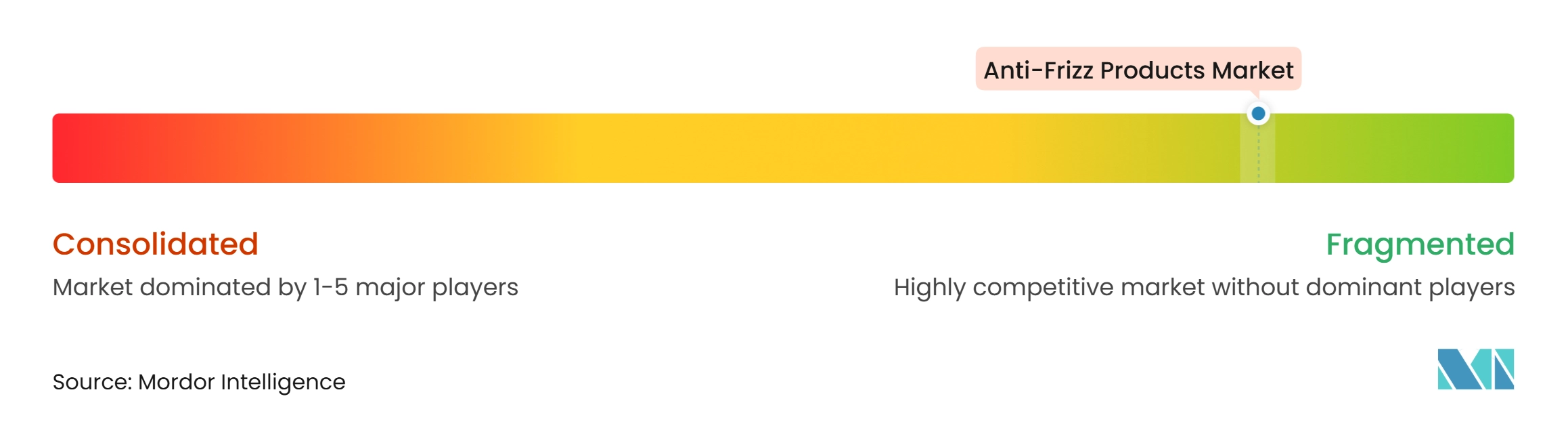
The processed poultry meat market has a fragmented structure, with a low concentration score. Competition in the processed poultry meat market includes global meat companies, regional poultry integrators, and local processors that serve specific countries or customer groups. Tyson Foods, JBS through Pilgrim’s Pride and Seara, BRF, and Charoen Pokphand Foods are increasing their focus on branded, cooked, and further-processed products. The processed poultry meat market is responding to a shift that reflects the value of products that are less exposed to commodity price movements than raw poultry cuts. Scale remains important because large processors can fund food-safety systems, cold-chain operations, and export documentation. However, regional companies can remain competitive where they have local distribution, trusted halal credentials, or close relationships with restaurant chains.
Pilgrim’s Pride is investing USD 400 million in a prepared-foods facility in Walker County, Georgia, with the project intended to double its United States cooked-chicken capacity. BRF approved a USD 160 million investment for a processed poultry and beef facility in Jeddah through a joint venture with Halal Products Development Company. Charoen Pokphand Foods and NH Foods began production at their Chachoengsao facility in May 2026 under the CP Nippon brand. These moves show how capacity investment, local partnerships, and processing knowledge can be combined to serve higher-value demand. Companies also use automation, grading, deboning, and shelf-life technologies to improve consistency. The commercial advantage comes from pairing those capabilities with dependable supply and customer-specific product specifications.
Smaller processors in Vietnam, Ukraine, and Sub-Saharan Africa can gain access as they secure export approvals and develop compliant operations. Their opportunity is strongest in markets where large suppliers do not have reliable distribution coverage. Secondary cities in India, Southeast Asia, and Sub-Saharan Africa remain difficult to serve when cold-chain infrastructure is limited. Processors that invest first in logistics may establish a practical advantage in these areas. At the same time, disease outbreaks can favor suppliers with multiple approved production origins. Large buyers are likely to assess sourcing resilience alongside price and product quality. This leaves the competitive environment open to both multinational companies and capable regional suppliers.
Processed Poultry Meat Industry Leaders
-
Tyson Foods
-
JBS S.A.
-
BRF S.A
-
Pilgrim’s Pride Corporation
-
Hormel Foods Corporation
- *Disclaimer: Major Players sorted in no particular order
Processed Poultry Meat Market Companies Covered in this Report
- Tyson Foods
- JBS S.A.
- BRF S.A.
- Cargill, Incorporated
- Pilgrim’s Pride Corporation
- Perdue Farms, Inc.
- Wayne-Sanderson Farms, Inc.
- Koch Foods, Inc.
- Foster Farms
- Hormel Foods Corporation
- Marfrig Global Foods S.A.
- Maple Leaf Foods Inc.
- Charoen Pokphand Foods Public Company Limited
- NH Foods Ltd.
- Suguna Foods Private Limited
- Industrias Bachoco, S.A.B. de C.V.
- OSI Group, LLC
- Continental Grain Company
- New Hope Liuhe Co., Ltd.
- Al-Watania Poultry
Recent Industry Developments in Processed Poultry Meat Market
- July 2026: erdue Foods launched POWERED, a high-protein chicken range featuring lightly breaded chicken bites, strips, and nuggets. The products offered 50% more protein than the company's traditional fully breaded chicken products. The launch also formed part of a broader portfolio expansion that included organic nuggets, garlic Parmesan wings, and animal-shaped nuggets.
- January 2026: Tanmiah introduced a new frozen breaded chicken range made entirely from 100% fresh Saudi chicken. The portfolio included chicken nuggets, strips, fillets, and burgers in multiple flavours, including Korean-inspired variants and vegetable-infused coatings. The launch targeted both retail and foodservice channels and supported the company's expansion into value-added poultry products.
- September 2025: Tyson Foods introduced Tyson Chicken Cups, a range of individually packaged, frozen chicken products designed for convenient, on-the-go consumption. The portfolio included grilled boneless chicken bites, lightly breaded chicken bites, breaded popcorn chicken bites, and mini dinosaur-shaped nuggets. Each 5.3-ounce cup provided at least 30 grams of protein and could be prepared in a microwave within two minutes.
- April 2025: Applegate Farms expanded its frozen chicken portfolio with the introduction of Applegate Naturals Lightly Breaded Chicken Tenders and Lightly Breaded Popcorn Chicken. The products were made from whole cuts of white-meat chicken raised without antibiotics and featured gluten-free rice flour coatings.
Global Processed Poultry Meat Market Report Scope
The processed poultry meat market refers to the production, processing, packaging, and distribution of poultry meat products that have undergone preservation or value-added processing to improve their shelf life, convenience, flavour, and usability.
The processed poultry meat market is segmented by product type, form, distribution channel, and geography. By product type, the market is segmented into chicken, turkey, and other poultry meat. By form, the market is categorized into nuggets, deli meats, sausages, tenders/marinates, meatballs, and other forms, including patties, fillets, and burgers. By distribution channel, the market is divided into on-trade and off-trade channels. Geographically, the market is segmented into North America, Europe, Asia-Pacific, South America, and the Middle East and Africa, with further analysis covering key countries within each region. The market sizing has been done in value terms in USD for all the abovementioned segments.
Segmentation Overview
| Chicken |
| Turkey |
| Others |
| Nuggets |
| Deli Meats |
| Sausages |
| Tenders/Marinates |
| Meatballs |
| Others (Patties, Fillets, Burgers) |
| On-Trade | |
| Off-Trade | Supermarkets/Hypermarkets |
| Convenience Stores | |
| Online Retail Channels | |
| Other Distribution Channels |
| North America | United States |
| Canada | |
| Mexico | |
| Rest of North America | |
| Europe | Germany |
| United Kingdom | |
| France | |
| Italy | |
| Spain | |
| Netherlands | |
| Sweden | |
| Poland | |
| Belgium | |
| Rest of Europe | |
| Asia-Pacific | China |
| India | |
| Japan | |
| Australia | |
| South Korea | |
| Vietnam | |
| Indonesia | |
| Rest of Asia-Pacific | |
| South America | Brazil |
| Argentina | |
| Chile | |
| Peru | |
| Colombia | |
| Rest of South America | |
| Middle East and Africa | United Arab Emirates |
| Saudi Arabia | |
| South Africa | |
| Nigeria | |
| Rest of Middle East and Africa |
| Product Type | Chicken | |
| Turkey | ||
| Others | ||
| Form | Nuggets | |
| Deli Meats | ||
| Sausages | ||
| Tenders/Marinates | ||
| Meatballs | ||
| Others (Patties, Fillets, Burgers) | ||
| Distribution Channels | On-Trade | |
| Off-Trade | Supermarkets/Hypermarkets | |
| Convenience Stores | ||
| Online Retail Channels | ||
| Other Distribution Channels | ||
| Geography | North America | United States |
| Canada | ||
| Mexico | ||
| Rest of North America | ||
| Europe | Germany | |
| United Kingdom | ||
| France | ||
| Italy | ||
| Spain | ||
| Netherlands | ||
| Sweden | ||
| Poland | ||
| Belgium | ||
| Rest of Europe | ||
| Asia-Pacific | China | |
| India | ||
| Japan | ||
| Australia | ||
| South Korea | ||
| Vietnam | ||
| Indonesia | ||
| Rest of Asia-Pacific | ||
| South America | Brazil | |
| Argentina | ||
| Chile | ||
| Peru | ||
| Colombia | ||
| Rest of South America | ||
| Middle East and Africa | United Arab Emirates | |
| Saudi Arabia | ||
| South Africa | ||
| Nigeria | ||
| Rest of Middle East and Africa | ||
Key Questions Answered in the Report
What is the forecast growth rate for processed poultry meat through 2032?
The market is forecast to grow at a 4.56% CAGR from 2027 to 2032, reaching USD 27.87 billion by 2032.
Which processed poultry product type has the largest share?
Chicken leads product types with 76.45% share in 2026 because it is used widely across retail, foodservice, and prepared formats.
Which processed poultry format is growing fastest?
Sausages are forecast to expand at a 5.84% CAGR through 2032, supported by flavor innovation, protein claims, and clean-label reformulation.
Why are quick-service restaurants important for poultry processors?
Restaurant chains require consistent, portion-controlled, food-safety-compliant products, creating recurring demand for integrated processors.