
Prescription Delivery Services Market Size and Share
Market Overview
| Study Period | 2021 - 2032 |
|---|---|
| Market Size (2027) | USD 14.48 Billion |
| Market Size (2032) | USD 24.27 Billion |
| Growth Rate (2027 - 2032) | 10.88 % |
| Fastest Growing Market | Asia-Pacific |
| Largest Market | North America |
| Market Concentration | Medium |
Major Players *Disclaimer: Major Players sorted in no particular order Image © Mordor Intelligence. Reuse requires attribution under CC BY 4.0. | |
Prescription Delivery Services Market Analysis by Mordor Intelligence
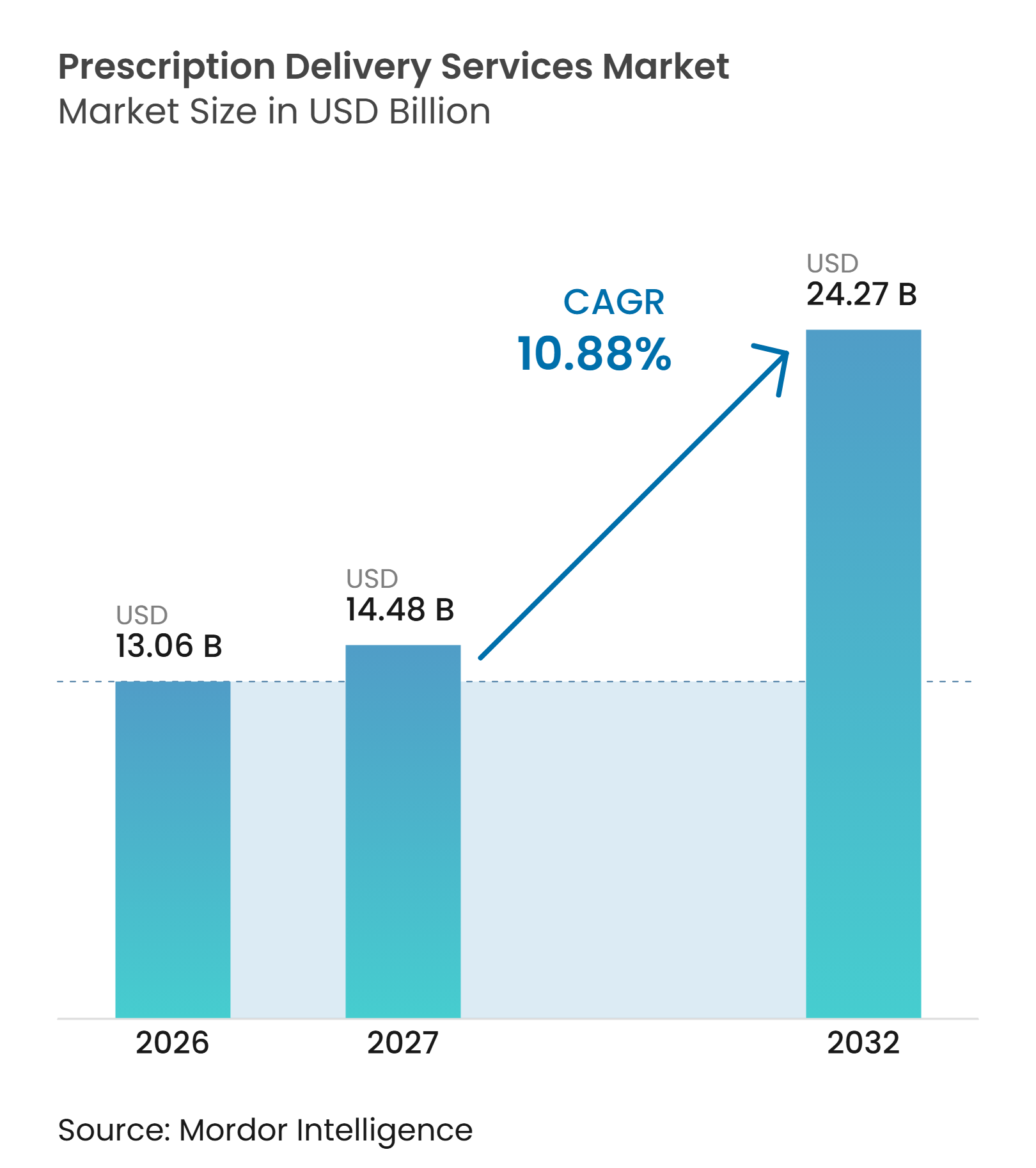
The Prescription Delivery Services Market size is expected to grow from USD 13.06 billion in 2026 to USD 14.48 billion in 2027 and is forecast to reach USD 24.27 billion by 2032 at 10.88% CAGR over 2027-2032.
The prescription delivery services market is evolving as retail pharmacies rationalize store networks and patients increasingly adopt mail-order, digital, and direct-to-patient channels. Pharmacy benefit managers are directing 90-day maintenance prescriptions through mail-order networks, supporting demand beyond changing consumer preferences. GLP-1 medications and other specialty therapies are reshaping fulfillment requirements due to their need for temperature-controlled handling and enhanced clinical support. The market is therefore shifting toward integrated service models that combine prescription creation, dispensing, patient support, and delivery. Operators that pair delivery capabilities with pharmacist-led support are better positioned to serve payers and pharmaceutical manufacturers.
Key Report Takeaways
- By service model, mail-order pharmacy services held 45.45% of the prescription delivery services market in 2026, while digital pharmacy fulfillment is projected to grow at an 11.55% CAGR through 2032.
- By delivery mode, standard postal delivery held 51.45% of the prescription delivery services market in 2026, while next-day delivery is projected to grow at a 13.46% CAGR through 2032.
- By medication type, chronic disease medication held 68.67% of the prescription delivery services market in 2026, while specialty medication and biologics is projected to grow at a 14.78% CAGR through 2032.
- By prescription type, refill prescriptions held 72.33% of the prescription delivery services market in 2026, while new prescriptions is projected to grow at a 15.44% CAGR through 2032.
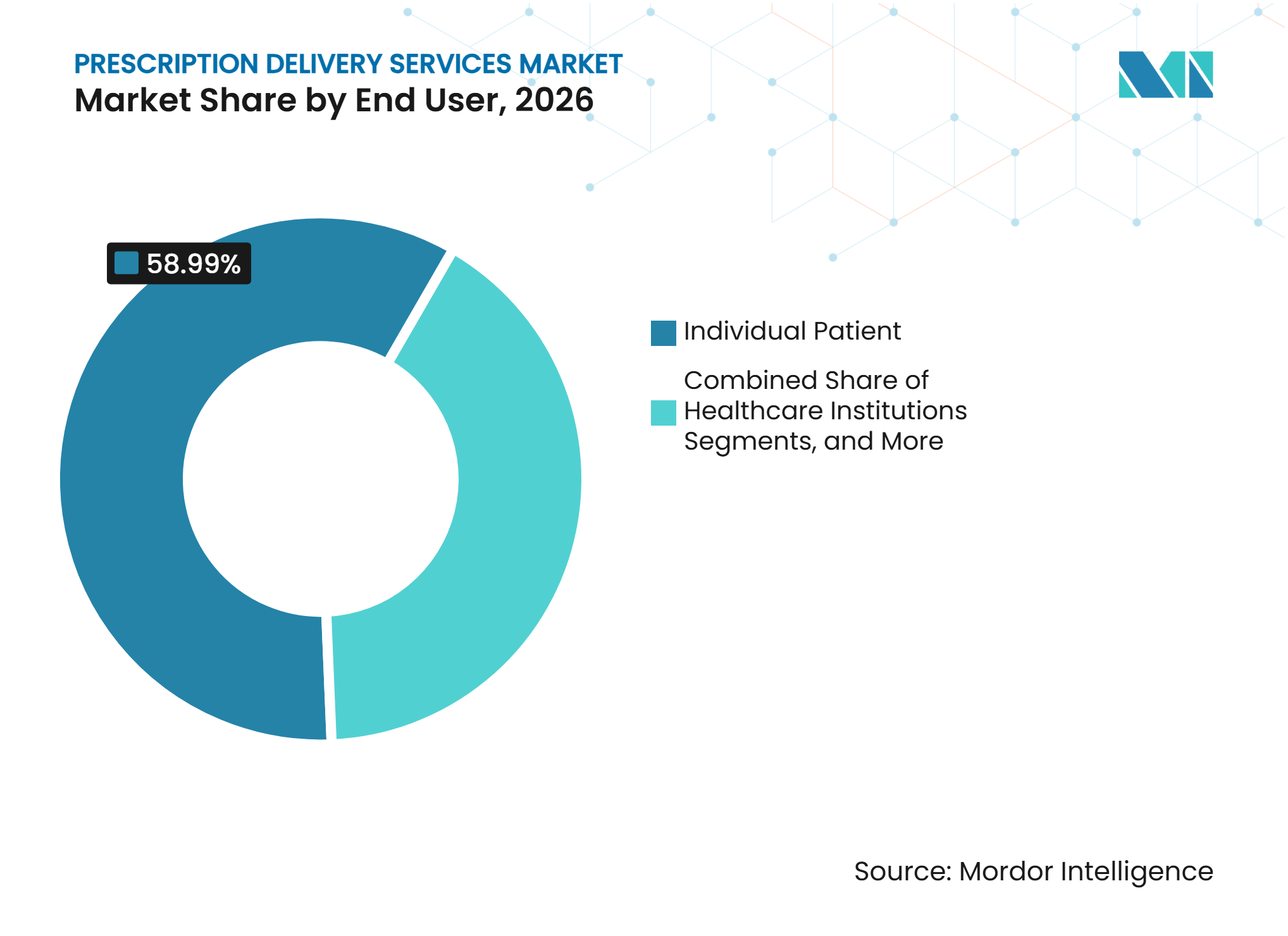
- By end user, individual patients held 58.99% of the prescription delivery services market in 2026, while the home healthcare setting is projected to grow at a 12.32% CAGR through 2032.
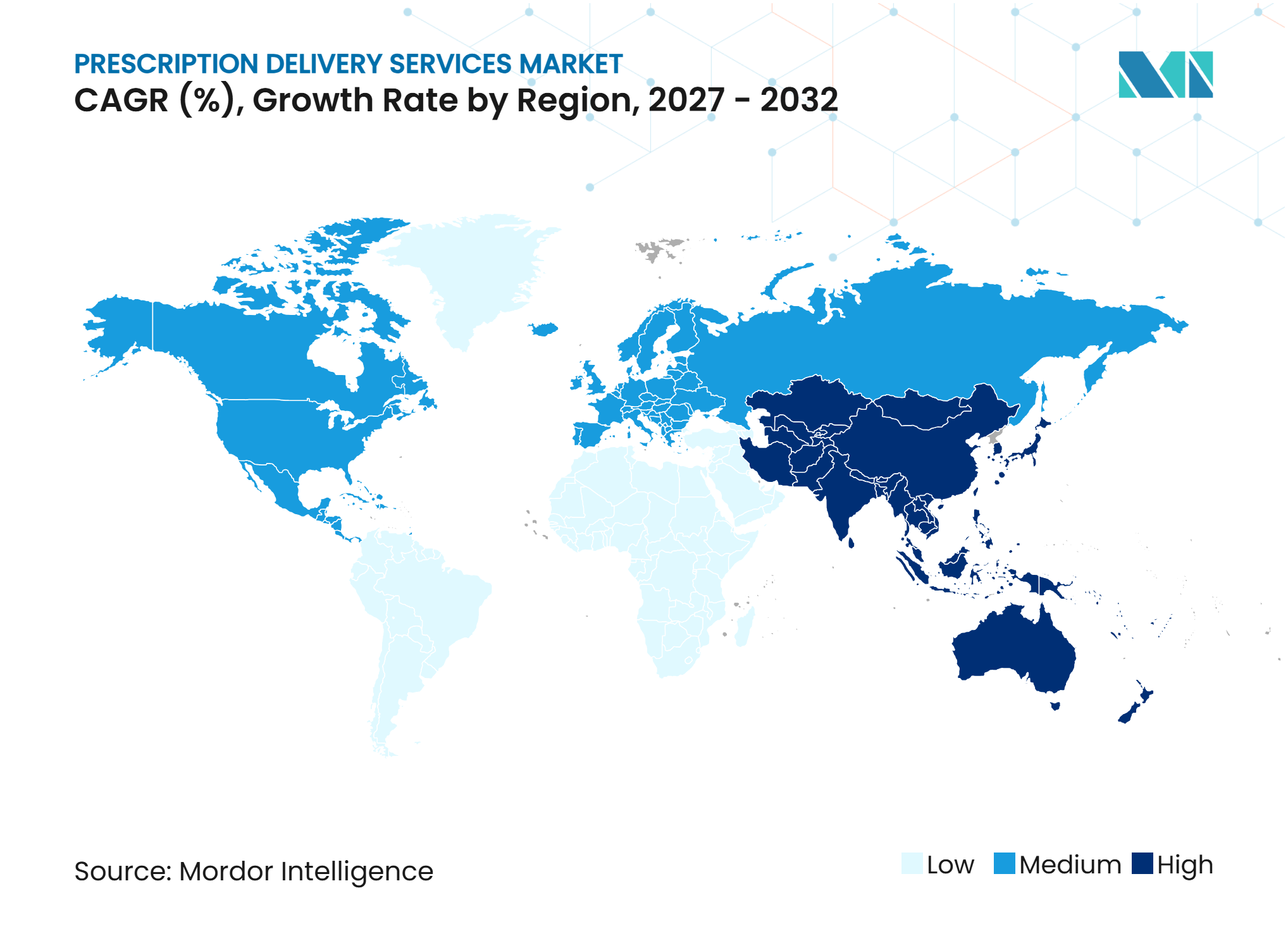
- By geography, North America held 41.03% of the prescription delivery services market in 2026, while Asia-Pacific is projected to grow at a 14.56% CAGR through 2032.
Note: Market numbers in this report are based on Mordor Intelligence's proprietary estimation framework, which combines nine months of actuals with Q4 projections for base year 2026.
Market Trends and Insights
Drivers Impact Analysis of Prescription Delivery Services Market of Prescription Delivery Services Market*
| Driver | (~) % Impact on CAGR Forecast | Geographic Relevance | Impact Timeline |
|---|---|---|---|
| Chronic-disease refill density and longer-day-supply prescriptions | +2.5% | Global, highest intensity in North America and Western Europe | Long term (≥ 4 years) |
| Telemedicine-to-pharmacy prescription conversion | +2.1% | North America, Asia-Pacific, emerging in MEA | Medium term (2-4 years) |
| Pharmacy-desert access and rural travel avoidance | +1.6% | North America, South Asia, rural APAC | Long term (≥ 4 years) |
| Specialty and high-value medication home fulfillment | +1.9% | North America, Western Europe, Japan | Medium term (2-4 years) |
| Mainstreaming of automated refill and adherence programs | +1.4% | North America, Western Europe | Medium term (2-4 years) |
| Same-day delivery infrastructure reaching underserved communities | +1.3% | North America, India, Southeast Asia | Short term (≤ 2 years) |
| Source: Mordor Intelligence | |||
Chronic-Disease Refill Density and Longer-Day-Supply Prescriptions
Patients managing hypertension, diabetes, and cardiovascular disease generate recurring prescription demand that supports home delivery operations. Home delivery services improved medication adherence among patients with diabetes, hypertension, and high cholesterol by 17.2%, 18.6%, and 16.1%, respectively. Patients receiving 90-day prescriptions through home delivery experienced up to 38% fewer instances of nonadherence than retail pharmacy users.[1] Higher adoption of home delivery for maintenance medications could generate substantial savings for U.S. consumers and employers. Extended-day supplies also reduce fulfillment costs by lowering shipment frequency per patient.
Telemedicine-to-Pharmacy Prescription Conversion
Telehealth is emerging as a direct channel for prescription generation and fulfillment in the prescription delivery services market. Virtual care providers can connect patients with delivery-focused pharmacies without requiring a separate retail pharmacy visit. Integrated platforms provide prescribers with inventory and pricing information during virtual consultations, reducing the risk of unfilled prescriptions following digital appointments. This model is particularly relevant for weight-management care, where immediate medication decisions and delivery options can support treatment initiation. It also encourages digital health platforms to develop closer pharmacy partnerships.
Specialty and High-Value Medication Home Fulfillment
Home fulfillment of specialty medications is increasingly linked to clinical safety, patient access, and treatment persistence. The prescription delivery services market must support refrigerated products, patient onboarding, and follow-up services when handling complex therapies. Toho Holdings launched L1MON in May 2025 to deliver refrigerated specialty medications through a cold-chain distribution network. Mailed home self-injection of bortezomib has demonstrated feasibility and safety for patients with multiple myeloma. These models require pharmacist, nurse, or prescriber support, while hub-service arrangements can improve treatment initiation and reduce abandonment.
Access, Automated Refills, and Same-Day Infrastructure
Home delivery can improve medication access for patients who live far from pharmacies or face mobility constraints. Automated refill programs can reduce missed doses by simplifying the renewal and delivery of recurring prescriptions. Amazon Pharmacy plans to expand same-day delivery to nearly 4,500 U.S. cities and towns in 2026, including nearly 2,000 additional communities. Walmart began nationwide same-day delivery of refrigerated and reconstituted prescriptions in September 2025 and completed more than 4 million pharmacy delivery orders within one year of its nationwide launch. Established retail and grocery delivery networks can distribute last-mile costs across multiple order types, creating pressure on delivery-only operators.
Restraints Impact Analysis of Prescription Delivery Services Market of Prescription Delivery Services Market*
| Restraint | (~) % Impact on CAGR Forecast | Geographic Relevance | Impact Timeline |
|---|---|---|---|
| Cold-chain and temperature-excursion liability | -1.3% | Global, most acute in South Asia, Southeast Asia, and LATAM | Long term (≥ 4 years) |
| Pharmacist counseling and medication-error risk outside the pharmacy | -0.9% | Global, elevated in markets without telepharmacy regulation | Medium term (2-4 years) |
| Last-mile economics for low-density and failed-delivery addresses | -1.1% | Rural North America, Sub-Saharan Africa, rural APAC | Long term (≥ 4 years) |
| Controlled-substance, identity, and signature-verification constraints | -0.8% | North America, Europe | Medium term (2-4 years) |
| Source: Mordor Intelligence | |||
Cold-Chain and Temperature-Excursion Liability
GLP-1 therapies, biologics, and specialty injectables require stringent temperature control throughout delivery. Many cold-chain medicines must remain between 2°C and 8°C during shipment and handoff. Temperature excursions can render medicines unusable, requiring replacement and creating financial and clinical risks for pharmacies and logistics providers. Loading delays, route changes, and failed handoffs present the highest risks. In South Asia and Southeast Asia, high temperatures and inconsistent logistics infrastructure further complicate last-mile temperature control, requiring validated packaging, clear handoff procedures, and real-time tracking.
Last-Mile Economics for Low-Density and Failed-Delivery Addresses
Low population density and failed delivery attempts can make prescription delivery economically unviable without payer or public program support. Missed handoffs for temperature-sensitive medicines may require urgent retrieval, reprocessing, and redelivery, increasing operating costs. Delivery platforms can reduce out-of-pocket medication costs by 30% by removing access barriers; however, rural areas require reimbursement models that link last-mile spending to avoided medical costs. Low route density can cause per-prescription delivery costs to exceed dispensing margins, while counseling, identity verification, signature, and controlled-substance requirements add operational complexity.
*Our forecasts treat driver/restraint impacts as directional, not additive. The impact forecasts reflect baseline growth, mix effects, and variable interactions.
Prescription Delivery Services Market Segment Analysis
By Service Model:
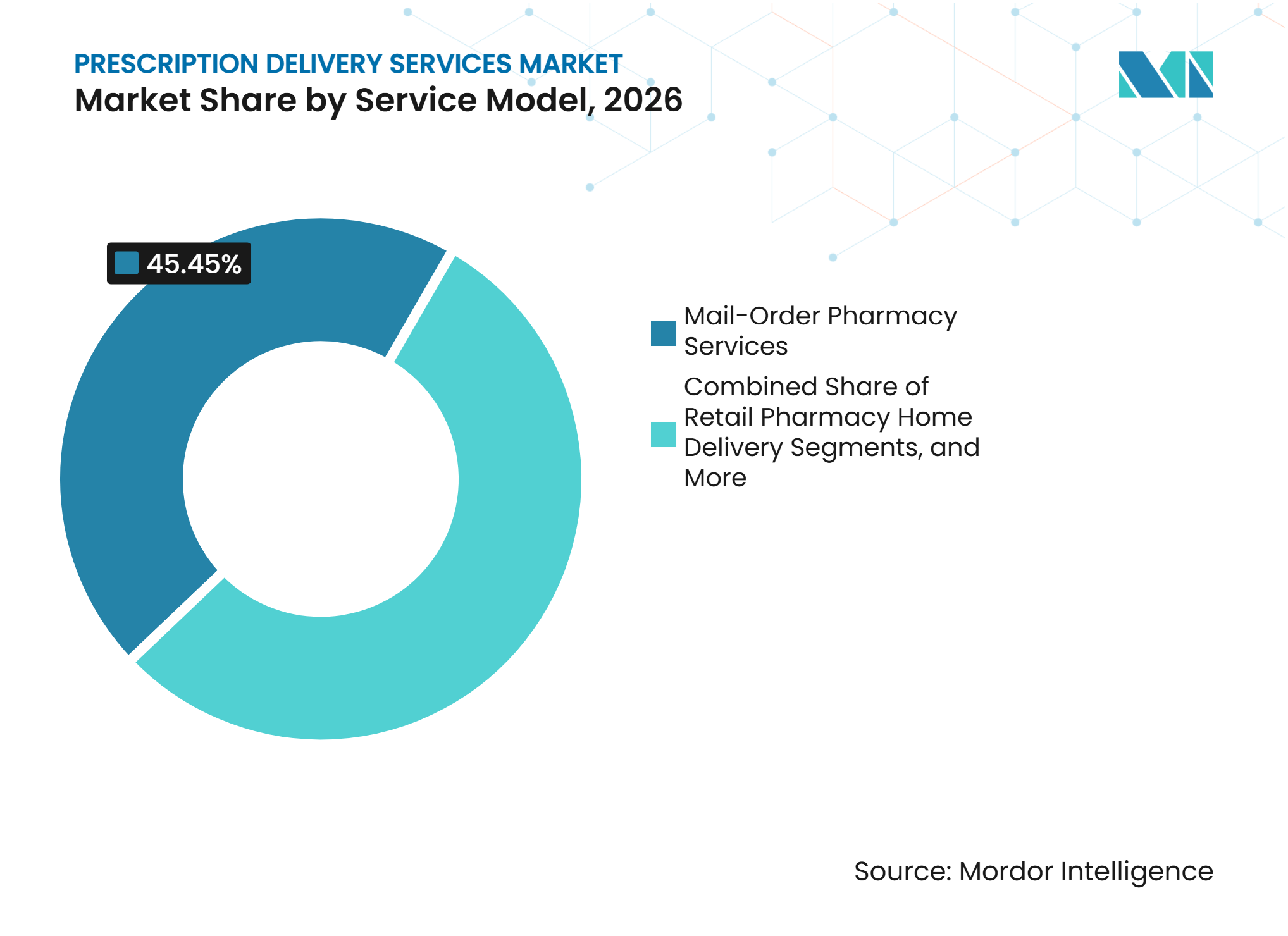
Mail-Order Leads While Automated Fulfillment Broadens AccessMail-order pharmacy services held 45.45% of the prescription delivery services market share in 2026, supported by established PBM programs that route 90-day maintenance prescriptions to centralized pharmacies. This model provides predictable demand and operational efficiencies. Retail pharmacy home delivery is also expanding as store-based chains add local courier services, although profitability remains challenging in low-density areas.
Digital pharmacy fulfillment is forecast to grow at an 11.55% CAGR through 2032, integrating prescribing, payment, dispensing, and delivery. Shared automated fulfillment can reduce capital requirements for retailers, grocery chains, and health systems. Hospital and specialty pharmacy delivery remains essential for restricted-distribution therapies, while telepharmacy-enabled dispensing is expanding in Asia-Pacific. Thailand’s Food and Drug Administration certified LINE MAN as a telepharmacy platform in June 2026.



By Delivery Mode:
Postal Volume Remains Important as Next-Day Demand RisesStandard postal delivery held 51.45% of the prescription delivery services market share in 2026. It remains cost-effective for stable 90-day maintenance prescriptions that do not require immediate delivery. The model supports high shipment volumes, planned routes, and lower distribution costs. Pickup-enabled hybrid services also provide patients with greater flexibility over collection times.
Next-day delivery is projected to grow at a 13.46% CAGR through 2032, driven by temperature-sensitive biologics, GLP-1 medicines, and acute prescriptions. Amazon Pharmacy stated that it was making three-hour prescription delivery available in more than 350 U.S. cities in 2026. Same-day delivery supports urgent prescriptions, while traceability requirements under the Drug Supply Chain Security Act increase the need for integrated dispensing and delivery records.
By Medication Type:
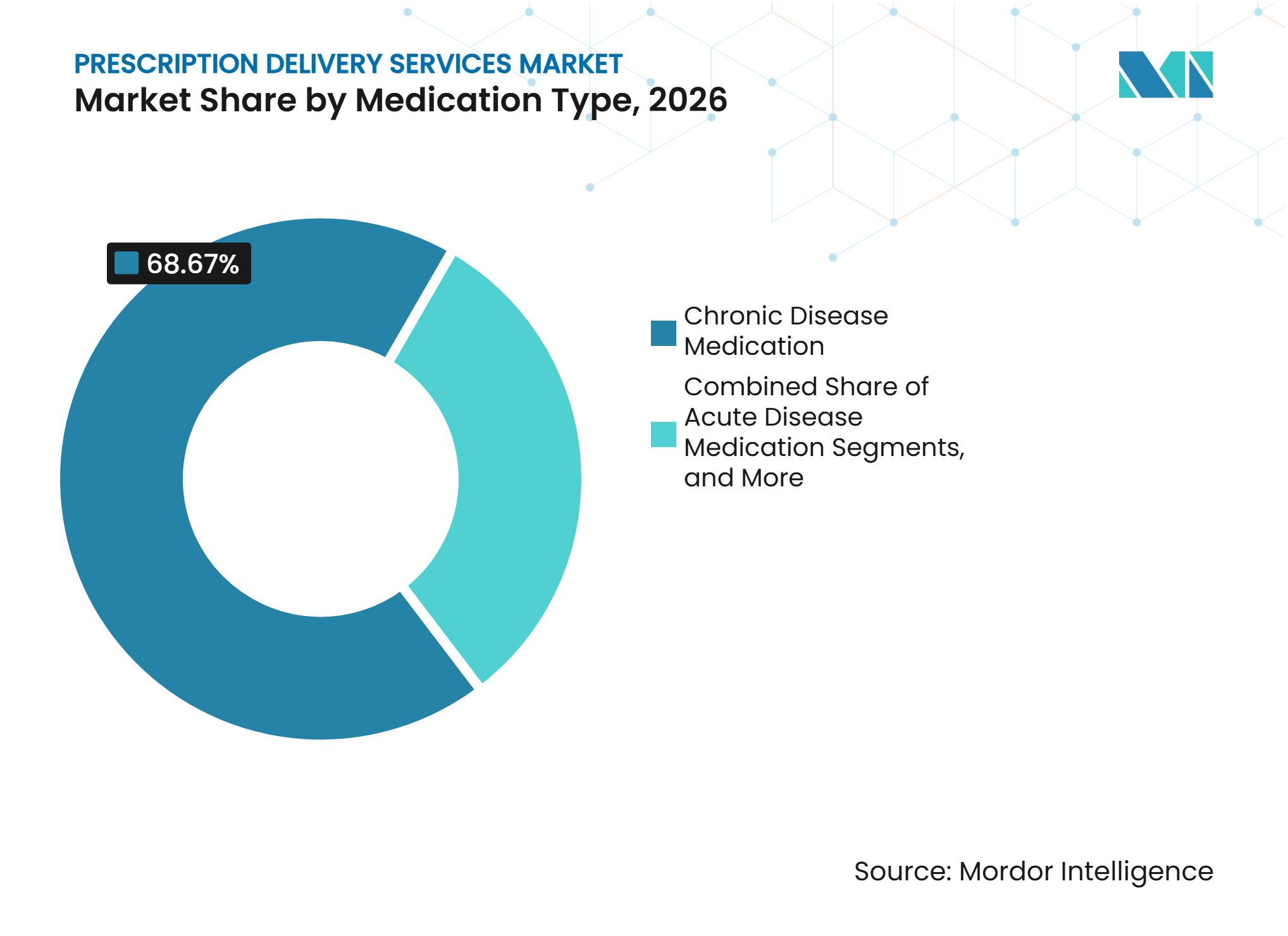
Chronic Care Sustains Volume While Biologics Raise Service RequirementsChronic disease medication accounted for 68.67% of the prescription delivery services market share in 2026. Diabetes, hypertension, cardiovascular disease, and thyroid conditions generate consistent refill demand. This predictability enables pharmacies to optimize inventory, automate replenishment, and improve delivery routing. Home delivery of 90-day supplies can also support adherence to long-term therapies.
Specialty medication and biologics are projected to grow at a 14.78% CAGR through 2032. The segment requires cold-chain handling, patient education, and clinical coordination beyond conventional delivery capabilities. Amazon Pharmacy began same-day delivery of Eli Lilly’s oral GLP-1 medicine, Foundayo, in nearly 3,000 U.S. cities in April 2026. Walmart stated that refrigerated medicines accounted for more than 30% of its pharmacy prescription sales in 2025.

By Prescription Type:
Refills Provide Stability While New Prescriptions Reflect Digital ConversionRefill prescriptions held 72.33% of the prescription delivery services market share in 2026, reflecting ongoing treatment for chronic conditions. Pharmacies can use recurring orders to pre-stage inventory and automate renewal reminders. PBM platforms and digital pharmacy applications simplify refill management and may reduce service switching. Mail-order providers remain well positioned to manage this recurring volume.
New prescriptions are forecast to grow at a 15.44% CAGR through 2032. Telehealth creates a direct pathway from clinician consultation to pharmacy fulfillment and delivery, reducing the time to first dispense. LifeMD announced in November 2026 that its affiliated licensed mail-order pharmacy would dispense and ship Lilly’s self-pay Zepbound and Foundayo to eligible U.S. patients following an independent clinician evaluation. FDA and DEA requirements will influence adoption for controlled and non-controlled medicines.
By End User:
Individual Patients Lead While Home Healthcare Gains MomentumIndividual patients accounted for 58.99% of the prescription delivery services market share in 2026. This group includes people managing chronic conditions and patients receiving GLP-1 or specialty medicines through digital care platforms. Convenience, reduced travel, and refill continuity are key demand factors. Healthcare institutions require more structured delivery models for hospital pharmacy, infusion, and long-term care medication management.
The home healthcare setting is projected to grow at a 12.32% CAGR through 2032. Payers and health systems are shifting selected infusions, injectable biologics, and specialty oral medicines from outpatient settings to patients’ homes. CarepathRx formed an exclusive partnership with SDS Rx in June 2025 to expand delivery solutions for home infusion and specialty pharmacy. This model requires clinical oversight and coordination with nursing services.
By Channel:
PBM Networks Retain Scale While Digital Channels Change Patient AccessThe payer and PBM home-delivery channel has the highest volume because PBMs direct maintenance prescriptions through controlled mail-order networks. OptumRx, Express Scripts, and CVS Caremark use formulary and cost-sharing arrangements that influence dispensing locations. The pharmacy-owned channel remains a key competitive area for CVS, Walgreens, and Walmart as patients shift toward digital ordering and faster delivery.
The digital health and e-pharmacy channel integrates virtual consultations, prescription creation, fulfillment, and delivery through one interface. CVS Health filled 1,378 million prescription equivalents in the first three quarters of 2026, while prescriptions filled increased 1.9% year over year in the third quarter. Employer and government program channels can expand as plan sponsors seek improved adherence and lower total healthcare costs. Providers with PBM access and direct digital capabilities can reach a broader patient base.
Geography Analysis
North America
North America held a 41.03% share of the prescription delivery services market in 2026, supported by established pharmacy benefit manager networks, large mail-order operations, and investments in same-day delivery capacity. Amazon Pharmacy plans to provide same-day prescription delivery across nearly 4,500 U.S. cities and towns in 2026, while Walmart expanded nationwide same-day delivery to refrigerated and reconstituted prescriptions in September 2025. The increased use of refrigerated GLP-1 therapies is driving demand for faster, temperature-controlled delivery. DEA requirements, state pharmacy board regulations, and pharmacy accreditation standards continue to shape the operating environment.
Asia-Pacific
Asia-Pacific is forecast to grow at a 14.56% CAGR through 2032, driven by quick-commerce platforms and expanding pharmacy networks. In India, Apollo 24/7 delivered 48% of its Delhi-NCR orders within 19 minutes through more than 6,500 Apollo Pharmacy stores, covering over 19,000 pin codes. The region also depends on evolving e-prescription regulations and telepharmacy standards to support home delivery services. As providers expand beyond major urban areas, compliance requirements are becoming increasingly important in differentiating licensed platforms from informal online medicine sellers.
Europe, Middle East, Africa, and South America
Germany’s mandatory electronic prescription system supports online prescription conversion, while the Gematik CardLink mechanism remains part of the prescription redemption infrastructure. In the United Kingdom, distance-selling pharmacy models continue to serve patients selecting home delivery through National Health Service prescription nominations. In Brazil, Memed reported a 70% share of digital medical prescriptions, highlighting the potential for digital prescriptions to support delivery-linked fulfillment. Middle East and Africa markets remain in the early development stage, with cold-chain limitations, uneven regulations, and limited broadband access constraining broader adoption.
Competitive Landscape
Market Concentration
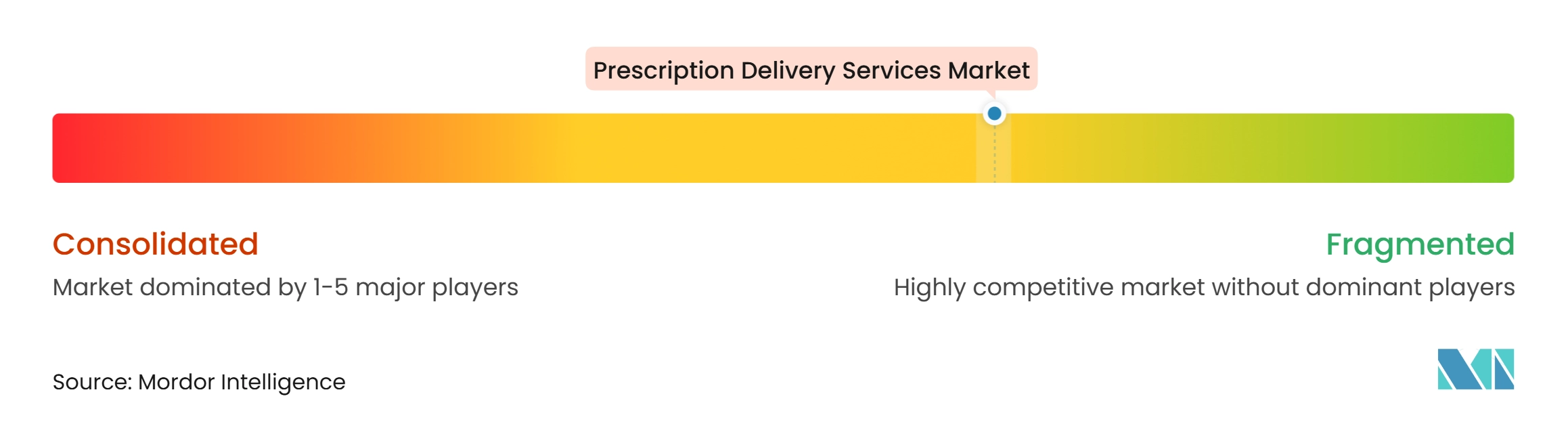
The prescription delivery services market is moderately fragmented, with competition increasingly concentrated in digital, specialty, and rapid-delivery services. Amazon Pharmacy, CVS Caremark, and OptumRx integrate digital prescription access, centralized fulfillment, and delivery capabilities, making it difficult for delivery-only providers to compete on cost and patient convenience. Amazon Pharmacy reported year-over-year customer growth of more than 60% and repeat customer growth of more than 50% in 2026. Walgreens is also expanding its specialty pharmacy capabilities, supported by clinical coordination and complex medication handling.
Leading companies are integrating care access with dispensing and delivery operations. Amazon Pharmacy’s collaboration with Wheel connects virtual care workflows with medication inventory, pricing, and fulfillment options. Walmart’s refrigerated same-day delivery service demonstrates how large retailers can leverage existing delivery networks for pharmacy orders. CarepathRx’s partnership with SDS Rx highlights the increasing integration of specialty pharmacy delivery and home infusion support. These strategies rely on clinical support, automation, and network reach rather than delivery speed alone.
Opportunities remain in rural delivery, specialty home infusion, and institutional delivery for home healthcare programs. The DEA’s 2026 rule clarified the conditions under which pharmacies may deliver Schedule III–V controlled substances to administering practitioners, supporting certain practitioner-administered therapy models. National Association of Boards of Pharmacy accreditation, DEA registration, and state pharmacy licenses remain important for regulated pharmacy delivery. Shared fulfillment providers and telehealth-pharmacy platforms are also emerging competitors, offering integrated end-to-end patient services.
Prescription Delivery Services Industry Leaders
-
Amazon.com Inc.
-
CVS Health Corporation
-
Walgreens Boots Alliance Inc.
-
Walmart Inc.
-
Apollo Hospitals Enterprise Limited
- *Disclaimer: Major Players sorted in no particular order
Prescription Delivery Services Market Companies Covered in this Report
- Albertsons Companies Inc.
- Alto Pharmacy Inc.
- Amazon.com
- API Holdings Private Limited
- Apollo Hospitals Enterprise Limited
- Capsule Corporation
- Chemist Warehouse Group Limited
- CVS Health
- DocMorris N.V.
- GoodRx Holdings Inc.
- NowRx Inc.
- Pharmacy2U Ltd
- Redcare Pharmacy N.V.
- Tata Digital Private Limited
- The Cigna Group
- The Kroger
- United Health Group
- Walgreens Boots Alliance Inc.
- Walmart Inc.
Recent Industry Developments in Prescription Delivery Services Market
- November 2026: LifeMD entered into an arrangement with Eli Lilly that enabled its affiliated licensed mail-order pharmacy to dispense and ship Zepbound (tirzepatide) and Foundayo (orforglipron) to eligible patients across the United States following independent clinician evaluations.
- June 2026: LINE MAN received certification from Thailand’s Food and Drug Administration as one of the first seven platforms approved under the Telepharmacy Application Certification framework, effective June 22, 2026. The certification enabled pharmacist-verified prescription dispensing and home delivery through the LINE MAN MART platform.
- April 2026: Amazon Pharmacy launched same-day delivery of Eli Lilly’s FDA-approved oral GLP-1 medicine, Foundayo, in nearly 3,000 U.S. cities. The company integrated manufacturer coupon automation and real-time inventory visibility into its digital dispensing workflow.
- March 2026: NextPlat’s PharmcoRx healthcare division collaborated with NABP-accredited HealthWarehouse.com to provide nationwide prescription fulfillment and OTC product delivery across all 50 U.S. states. The collaboration expanded NextPlat’s healthcare footprint beyond Florida and enabled multistate fulfillment for virtual healthcare partners.
Global Prescription Delivery Services Market Report Scope
As per the scope of the report, prescription delivery services are pharmacy programs or third-party platforms that ship or courier prescription medications directly to a patient's home, workplace, or preferred location. These services aim to make healthcare more convenient and accessible, eliminating the need to physically visit a brick-and-mortar pharmacy.
The prescription delivery services market is segmented by service model, delivery mode, medication type, prescription type, end user, channel, and geography. By service model, the market includes mail-order pharmacy services, retail pharmacy home delivery, digital pharmacy fulfillment, hospital and specialty pharmacy delivery, and telepharmacy-enabled home dispensing. By delivery mode, the market is segmented into standard postal delivery, next-day delivery, same-day delivery, scheduled route delivery, and pickup-enabled hybrid delivery. By medication type, the market is categorized into chronic disease medications, acute disease medications, specialty medications and biologics, and others. By prescription type, the market is segmented into new prescriptions and refill prescriptions. By end user, the market includes individual patients, healthcare institutions, home healthcare settings, and corporate and institutional clients. By channel, the market is segmented into pharmacy-owned channels, payer and PBM home-delivery channels, digital health and e-pharmacy channels, hospital and health system channels, and employer and government program channels. By geography, the market is analyzed across North America, Europe, Asia-Pacific, the Middle East and Africa, and South America. The report also covers the estimated market sizes and trends for 17 countries across major regions globally. The report offers market sizes and forecasts in terms of value (USD) for the above segments.
Segmentation Overview
| Mail-Order Pharmacy Services |
| Retail Pharmacy Home Delivery |
| Digital Pharmacy Fulfillment |
| Hospital and Specialty Pharmacy Delivery |
| Telepharmacy-Enabled Home Dispensing |
| Standard Postal Delivery |
| Next-Day Delivery |
| Same-Day Delivery |
| Scheduled Route Delivery |
| Pickup-Enabled Hybrid Delivery |
| Chronic Disease Medication |
| Acute Disease Medication |
| Specialty Medication and Biologics |
| Others |
| New Prescriptions |
| Refill Prescriptions |
| Individual Patient |
| Healthcare Institutions |
| Home Healthcare Setting |
| Corporate and Institutional Clients |
| Pharmacy-Owned Channel |
| Payer and PBM Home-Delivery Channel |
| Digital Health and E-Pharmacy Channel |
| Hospital and Health-System Channel |
| Employer and Government Program Channel |
| North America | United States |
| Canada | |
| Mexico | |
| Europe | Germany |
| United Kingdom | |
| France | |
| Italy | |
| Spain | |
| Rest of Europe | |
| Asia-Pacific | China |
| India | |
| Japan | |
| Australia | |
| South Korea | |
| Rest of Asia-Pacific | |
| Middle East and Africa | GCC |
| South Africa | |
| Rest of Middle East and Africa | |
| South America | Brazil |
| Argentina | |
| Rest of South America |
| By Service Model | Mail-Order Pharmacy Services | |
| Retail Pharmacy Home Delivery | ||
| Digital Pharmacy Fulfillment | ||
| Hospital and Specialty Pharmacy Delivery | ||
| Telepharmacy-Enabled Home Dispensing | ||
| By Delivery Mode | Standard Postal Delivery | |
| Next-Day Delivery | ||
| Same-Day Delivery | ||
| Scheduled Route Delivery | ||
| Pickup-Enabled Hybrid Delivery | ||
| By Medication Type | Chronic Disease Medication | |
| Acute Disease Medication | ||
| Specialty Medication and Biologics | ||
| Others | ||
| By Prescription Type | New Prescriptions | |
| Refill Prescriptions | ||
| By End User | Individual Patient | |
| Healthcare Institutions | ||
| Home Healthcare Setting | ||
| Corporate and Institutional Clients | ||
| By Channel | Pharmacy-Owned Channel | |
| Payer and PBM Home-Delivery Channel | ||
| Digital Health and E-Pharmacy Channel | ||
| Hospital and Health-System Channel | ||
| Employer and Government Program Channel | ||
| By Geography | North America | United States |
| Canada | ||
| Mexico | ||
| Europe | Germany | |
| United Kingdom | ||
| France | ||
| Italy | ||
| Spain | ||
| Rest of Europe | ||
| Asia-Pacific | China | |
| India | ||
| Japan | ||
| Australia | ||
| South Korea | ||
| Rest of Asia-Pacific | ||
| Middle East and Africa | GCC | |
| South Africa | ||
| Rest of Middle East and Africa | ||
| South America | Brazil | |
| Argentina | ||
| Rest of South America | ||
Key Questions Answered in the Report
What is the projected value of prescription delivery services by 2032?
The Prescription Delivery Services Market is projected to reach USD 24.27 billion by 2032, from USD 14.48 billion in 2027, at a 10.88% CAGR.
Which service model has the largest share in prescription delivery services?
Mail-Order Pharmacy Services held the largest share at 45.45% in 2026, supported by PBM-directed 90-day prescription programs.
Which medication category is growing fastest in prescription delivery services?
Specialty Medication and Biologics is forecast to expand at a 14.78% CAGR through 2032 as demand for temperature-controlled therapies and clinical support rises.
Why are telehealth platforms important for prescription delivery?
They can connect a virtual consultation directly to pharmacy fulfillment and delivery, reducing the gap between prescription creation and the first dispense.
Which region is growing fastest for prescription delivery services?
Asia-Pacific is forecast to grow at a 14.56% CAGR through 2032, supported by quick-commerce services, digital health infrastructure, and developing telepharmacy rules.
What are the major challenges for prescription home delivery?
Key challenges include cold-chain control, missed deliveries, rural delivery costs, pharmacist counseling needs, and controlled-substance compliance.