
Pottery Ceramic Market Size and Share
Market Overview
| Study Period | 2021 - 2031 |
|---|---|
| Market Size (2026) | USD 12.55 Billion |
| Market Size (2031) | USD 15.66 Billion |
| Growth Rate (2026 - 2031) | 4.53 % |
| Fastest Growing Market | Asia-Pacific |
| Largest Market | Asia-Pacific |
| Market Concentration | Medium |
Major Players *Disclaimer: Major Players sorted in no particular order Image © Mordor Intelligence. Reuse requires attribution under CC BY 4.0. | |
Pottery Ceramic Market Analysis by Mordor Intelligence
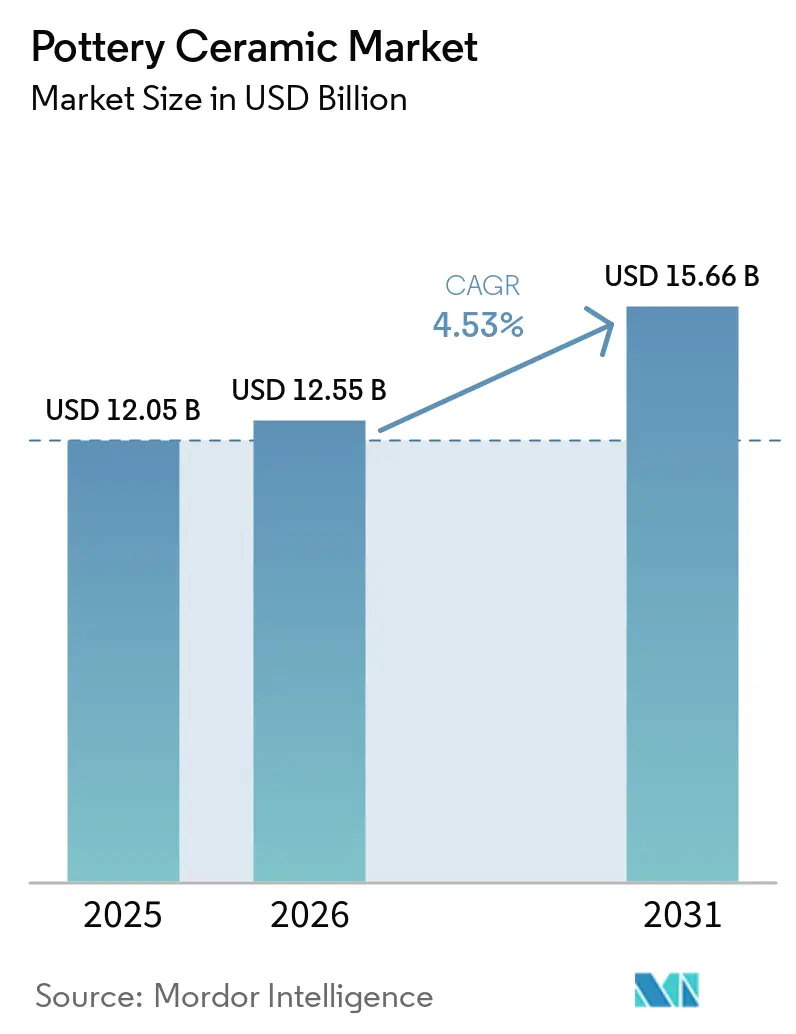
The pottery ceramic market size was valued at USD 12.05 billion in 2025 and is estimated to grow from USD 12.55 billion in 2026 to reach USD 15.66 billion by 2031, at a CAGR of 4.53% during the forecast period (2026-2031). The pottery ceramic market is driven by demand for functional, decorative, and architectural applications across residential, hospitality, commercial, and institutional segments. Expansion in the hospitality sector supports recurring purchases of commercial tableware, while hotels and restaurants increasingly require custom specifications. Digital sales channels have widened access for smaller studios, enabling them to reach consumers and business buyers without relying entirely on conventional retail. Sustainability requirements are influencing procurement decisions, particularly where buyers specify lead-free glazes, recycled materials, and transparent production information. The market also faces rising compliance, energy, and raw material costs, which favor suppliers that can maintain consistent quality and reliability of delivery.
Key Report Takeaways
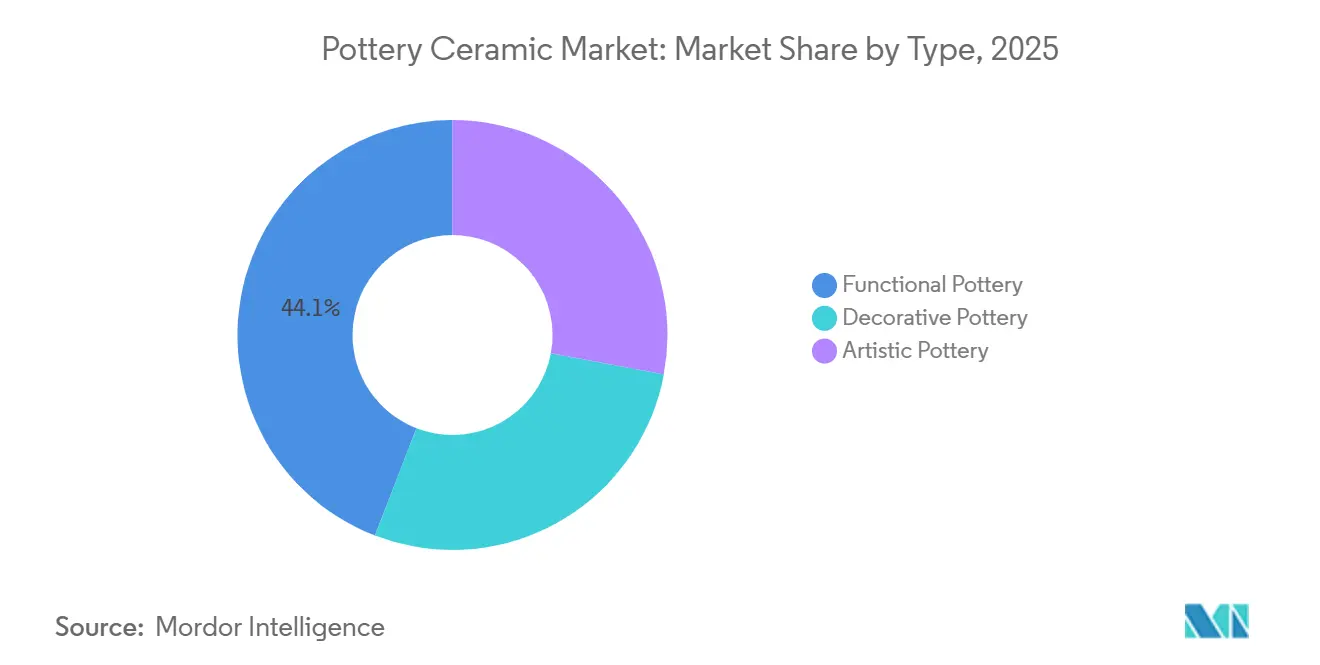
- By type, functional pottery accounted for 44.13% of the pottery market share in 2025, while decorative pottery is forecast to grow at a 5.21% CAGR through 2031.
- By manufacturing technique, wheel-throwing held 48.34% of the pottery ceramic market share in 2025, while slip-casting is forecast to grow at a 4.95% CAGR through 2031.
- By material, stoneware held 39.06% of the pottery ceramic market share in 2025, while porcelain is forecast to grow at a 5.07% CAGR through 2031.
- By glaze type, clear glaze held 37.50% of the pottery ceramic market share in 2025, while glossy glaze is forecast to grow at a 5.13% CAGR through 2031.
- By firing temperature, mid-range pottery held 46.94% of the pottery ceramic market share in 2025, while high-fire pottery is forecast to grow at a 5.61% CAGR through 2031.
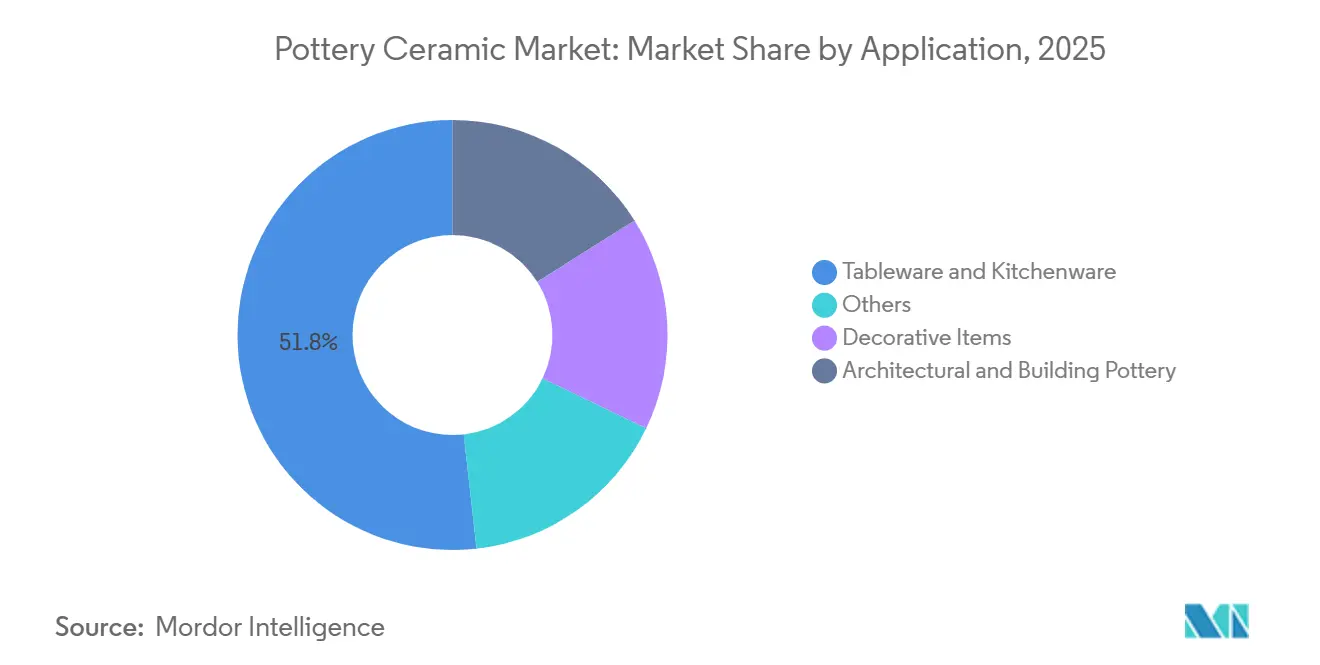
- By application, tableware and kitchenware held 51.78% of the pottery ceramic market share in 2025, while architectural and building pottery is forecast to grow at a 5.88% CAGR through 2031.
- By geography, Asia-Pacific held 42.17% of the pottery ceramic market share in 2025 and is forecast to grow at a 5.38% CAGR through 2031.
Note: Market size and forecast figures in this report are generated using Mordor Intelligence’s proprietary estimation framework, updated with the latest available data and insights as of January 2026.
Global Pottery Ceramic Market Trends and Insights
Drivers Impact Analysis*
| Drivers | (~) % Impact on CAGR Forecast | Geographic Relevance | Impact Timeline |
|---|---|---|---|
| Hospitality-Led Demand for Premium and Custom Pottery | +1.20% | Global, concentrated in APAC, the Middle East, and Europe | Short term (≤ 2 years) |
| E-Commerce Access for Artisanal Producers | +0.90% | Global, with early gains in North America, Europe, and South Asia | Medium term (2-4 years) |
| Mainstream Shift Toward Sustainable and Reusable Ceramics | +0.70% | North America and the EU, with spillover to APAC | Medium term (2-4 years) |
| Digital Design and Precision Firing Adoption | +0.50% | APAC, with spillover to Europe and the Middle East | Long term (≥ 4 years) |
| Therapeutic, Educational, and Cultural Participation in Pottery | +0.30% | Global, with early gains in North America, the UK, and Australia | Medium term (2-4 years) |
| Source: Mordor Intelligence | |||
Hospitality-Led Demand for Premium and Custom Pottery
Premium hospitality increasingly treats tableware as part of the guest experience, shifting demand toward custom shapes, finishes, and dependable replacement supply. Hilton added nearly 800 hotels and more than 100,000 rooms during 2025 and maintained a pipeline of more than 520,000 rooms in January 2026. This expansion provides the pottery ceramic market with a visible forward base for commercial tableware purchasing. Hotels require products that can withstand high service frequency, repeated washing, and routine handling without compromising presentation. Food-contact requirements also support demand for certified lead-free formulations in commercial procurement. The pottery ceramic market benefits when suppliers can meet custom needs while maintaining consistent specifications across subsequent orders.
E-Commerce Access for Artisanal Producers
Digital platforms have changed how artisanal producers enter the pottery ceramic market and how customers discover small-batch products. Claymistry reported more than 10,000 orders to over 8,000 households between November 2023 and April 2026, with more than 265 SKUs and over 30 B2B clients. This channel reduces dependence on proximity to major manufacturing hubs and traditional retail networks. It also allows studios to test designs, manage limited runs, and serve customers across multiple locations. A peer-reviewed study found that packaging level was the main determinant of porcelain transport losses in e-commerce supply chains. Digital access improves market reach, but logistics execution remains essential to the pottery ceramic market.
Mainstream Shift Toward Sustainable and Reusable Ceramics
Sustainability is becoming part of ceramic procurement requirements in North America and Europe. Villeroy & Boch received validation for its 2050 net-zero target in 2025 and reported a 27.20% reduction in its total carbon footprint between 2021 and 2025. The company also reported lower Scope 1 and 2 emissions and lower electricity-related emissions during that period. It plans to invest more than EUR 140 million (USD 152.6 million) by 2045, including more than EUR 25 million (USD 27.3 million) by 2030 for kiln optimization and heat recovery. A life-cycle assessment found that heat pumps for low-temperature drying could reduce the global warming potential of ceramic brick production by up to 24.00%. These investments indicate that environmental performance can influence supplier eligibility in the pottery ceramic market.
Digital Design and Precision Firing Adoption
Digital kiln controls and sensor systems are reducing variation in ceramic production. China Telecom, Jingdezhen Ceramic University, and Tianyi IoT Technology launched a 5G and Artificial Intelligence of Things (AIoT) kiln management system at Hongye Ceramics in 2025[1]China Telecom, “5G+AIoT Kiln Intelligent Management System Launch, Jingdezhen,” China Telecom, chinatelecom.com.cn.. The system reported production error rates below 0.10% through real-time collection of temperature, energy, and flame-image data. ISA began commercial orders for its WD300 system in April 2025, supporting carbon monoxide (CO) monitoring and dual-thermocouple temperature measurement up to 1,768°C. A 2025 journal study reported 80.00% firing efficiency for a smart electric kiln control unit and fewer defects than conventional systems. These systems can help the pottery ceramic market improve batch consistency across both craft-linked and high-output production formats.
Restraints Impact Analysis*
| Restraints | (~) % Impact on CAGR Forecast | Geographic Relevance | Impact Timeline |
|---|---|---|---|
| Kiln Energy Exposure and Carbon-Compliance Costs | -1.20% | EU, UK, and North America | Short term (≤ 2 years) |
| Breakage, Returns, and Freight Losses in Omnichannel Distribution | -0.90% | Global, amplified in cross-border e-commerce | Medium term (2-4 years) |
| Geographic Concentration of Clay and Mineral Inputs | -0.70% | Europe, with spillover to North America and APAC | Medium term (2-4 years) |
| Source: Mordor Intelligence | |||
Kiln Energy Exposure and Carbon-Compliance Costs
Energy remains a major variable cost in fired ceramic production. According to the British Ceramic Confederation, the UK ceramic sector derived 85.00% of its energy consumption from gas[2]British Ceramic Confederation, “Hydrogen-Powered Kilns, Decarbonising Ceramics,” Hydrogen Era, hydrogenera.eu.. This reliance limits producers' ability to respond quickly to changes in fuel and carbon costs. A 2025 life-cycle study found that switching to hydrogen fuel could reduce global warming potential by 85.00% under net-zero pathways, although the economic case depends on future carbon prices. High-temperature firing is difficult to decarbonize because it relies on intense, reliable heat. These pressures affect the pottery ceramic market most sharply, where smaller producers have limited capacity for capital investment and verification systems.
Breakage, Returns, and Freight Losses in Omnichannel Distribution
Ceramics face persistent distribution costs because they are fragile and require careful packing. A 2025 peer-reviewed study confirmed that packaging level is the primary factor affecting porcelain loss rates in online supply chains. The need for better packaging increases material use, labor requirements, and shipping complexity for both direct-to-consumer and cross-border orders. Small studios face a greater burden as they often lack established third-party logistics relationships and have limited capacity to absorb claims. This reduces the commercial advantage that online selling can otherwise provide. The pottery ceramic market, therefore, requires stronger packaging design and fulfillment discipline as online sales expand.
*Our forecasts treat driver/restraint impacts as directional, not additive. The impact forecasts reflect baseline growth, mix effects, and variable interactions.
Segment Analysis
By Type: Functional Pottery Leads by Share, Decorative Pottery Records Fastest Growth
Functional pottery accounted for 44.13% of the ceramic pottery market share in 2025. It benefits from repeat purchases by hotels, restaurants, and households that replace items used in daily service. Buyers in these channels value durability, stackability, chip resistance, and stable glazing quality. Functional formats also align with recurring procurement cycles in hospitality, where standardization supports both staff and purchasing teams. Artistic pottery serves premium collectors and gifting demand in North America and Europe. Its expansion is constrained by limited production scalability and the labor involved in handmade work.
Decorative pottery is projected to grow at a 5.21% CAGR from 2026 to 2031. It benefits from home décor spending and digital product discovery, especially when an object can serve both as a display and for everyday use. The decorative pottery and ceramic market size is supported by the growing overlap between functional objects and lifestyle purchases. Pottery-making is also associated with well-being and sensory engagement, which strengthens interest in handmade goods. Digital therapeutic and heritage experiences further enhance the visibility of craft-based products. Producers that retain a distinct handmade identity while managing reliable fulfillment can address both decorative and functional demand.



By Manufacturing Technique: Slip-Casting Scales Fastest in a Wheel-Thrown World
Wheel-throwing held 48.34% of the manufacturing-technique share in 2025. It remains central to artisan studios and premium collections, where the handmade appearance supports product differentiation. The process is closely associated with provenance, limited batches, and the visible qualities sought by collectors. Hand-building remains relevant for ceramics education, art therapy, and bespoke sculptural work. These uses support commercial activity through studio enrollment and institutional buying. Wheel-throwing continues to hold a strong position where customers value the maker's involvement in the finished product.
Slip-casting is projected to grow at a 4.95% CAGR from 2026 to 2031. It consistently reproduces complex forms at scale without relying on wheel skills for each piece. This makes it suitable for hospitality, original equipment manufacturing orders, and architectural components that require repeatable specifications. Digital firing controls support this process by reducing temperature variation and the risk of defects. ISA's WD300 system provides real-time process monitoring for reduction-fired ceramics. The pottery and ceramic market continues to rely on wheel-thrown production for premium niches, while slip-casting serves larger commercial contracts.
By Material: Stoneware Leads, Porcelain Accelerates
Stoneware held 39.06% of the material-segment share in 2025. Its dense, vitrified body and natural surface character suit hospitality interiors with organic design themes. Firing temperatures commonly range from 1,200°C to 1,300°C, placing stoneware within a practical range for many commercial ceramicists. Earthenware remains accessible for educational, decorative, and low-temperature uses. However, it faces challenges where institutional buyers require higher durability. Bone china remains important in fine dining and luxury hotels because its translucency and weight support a premium table setting.
Porcelain is forecast to grow at a 5.07% CAGR from 2026 to 2031. It serves industrial kitchens with vitrified formats and collectors, gifting, and fine dining with translucent formats. The ceramic pottery market size for porcelain depends on stable mineral inputs, as visual quality is essential in white bodies. European producers adapting to alternative kaolin sources may face transitional quality variation. The material's broad use across value tiers gives producers several routes to serve commercial and premium customers. Reliable body formulation and firing control remain important for maintaining its position in quality.
By Glaze Type: Glossy Glaze Outpaces a Stabilizing Market
Clear glaze held 37.50% of the glaze-type share in 2025. Its position reflects wide use in institutional tableware, where consistent finish and food-contact suitability are important. Clear glaze also allows the color and form of the ceramic body to remain visible. Matte and craquelure glazes serve more design-led uses in artisan and boutique channels. These finishes appeal to customers who seek texture and variation rather than strict surface uniformity. Producers must balance visual intent with the requirements for cleaning, durability, and repeatability.
Glossy glaze is forecast to grow at a 5.13% CAGR from 2026 to 2031. Its reflective appearance supports product presentation in fine dining and image-based digital selling. The pottery ceramic market benefits when glaze systems provide a uniform finish across large batches. Smart kiln systems monitor temperature and energy data during firing, helping operators consistently manage glaze maturation. This capability matters for glossy finishes because visible surface variation can affect product acceptance. A producer with disciplined firing control can serve both clear-glazed institutional demand and glossy premium demand from a single operating base.
By Firing Temperature: Mid-Range Dominates, High-Fire Premiumizes
Mid-range pottery held 46.94% of the firing-temperature share in 2025. This group includes stoneware and some porcelain bodies fired from 1,050°C to 1,250°C. It covers a broad commercial range, including hotel dinnerware and artisan studio products. Producers value the balance between energy use, product performance, and production flexibility. Low-fire pottery remains relevant in school programs, art education, and earthenware traditions. Its lower durability limits its use in demanding institutional foodservice settings.
High-fire pottery is forecast to grow at a 5.61% CAGR from 2026 to 2031. It is associated with premium porcelain and reduction-glazed stoneware, including products that command export premiums in APAC hospitality and collector channels. The ceramic pottery market share of high-fire products can expand as customers place greater value on premium finishes and performance. These processes are also directly exposed to energy costs because they require temperatures above 1,250°C. A scientific assessment identified high-temperature ceramic firing as difficult to decarbonize due to its fossil-fuel dependence at extreme temperatures. Automated firing schedules can help reduce avoidable energy use and operator error in precision work.
By Application: Tableware Commands Half the Market, Architectural Grows Fastest
Tableware and kitchenware held 51.78% of the application-segment share in 2025. The category is supported by replacement cycles in Hotel/Restaurant/Café (HoReCa) settings, household upgrades, and foodservice expansion. Hospitality operators require products that balance aesthetics with durability for daily use. Decorative items also benefit from gifting and home décor purchases, especially when buyers value craftsmanship. Ceremonial, religious, and specialized items sustain demand across cultural markets in APAC, the Middle East, and South America. These niches are smaller but maintain a clear role in the broader pottery ceramic market.
Architectural and building pottery is forecast to grow at a 5.88% CAGR from 2026 to 2031. It is driven by luxury hotels, heritage restoration, urban regeneration, ceramic cladding, decorative tiles, and fired façade elements. These applications require suppliers that can meet custom specifications and manage consistent color and form across installations. The ceramic pottery market size for architectural work is driven more by the premium end of commercial and cultural construction than by general building activity. Demand also reflects the adoption of architectural material textures in professional tableware design. This connection gives producers opportunities to adapt surface and form concepts across different uses.
Geography Analysis
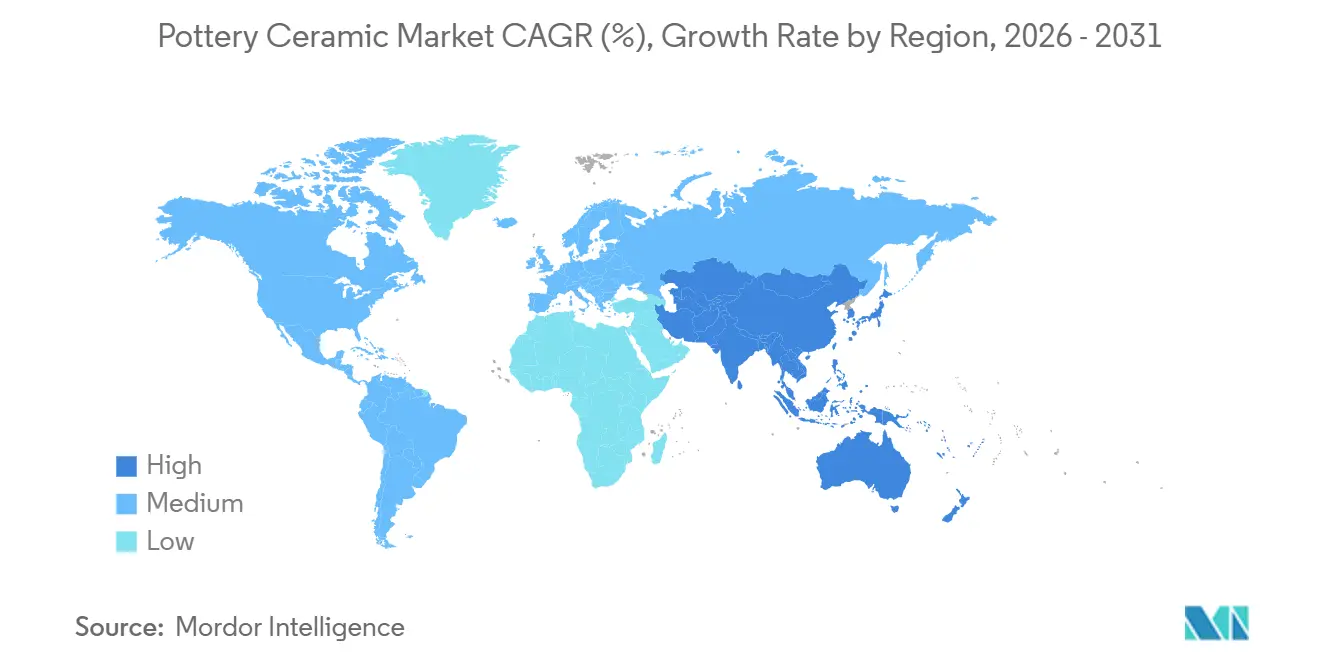
Asia-Pacific accounted for 42.17% of the pottery and ceramic market share in 2025 and is forecast to grow at a 5.38% CAGR from 2026 to 2031. China remains a major production center due to its manufacturing scale and established ceramic clusters. Jingdezhen operates a 5G-enabled smart kiln production cluster that supports monitoring of energy, emissions, and firing conditions. India is seeing design-led demand grow alongside its large household base. Claymistry reported growth in repeat purchases and average order values across Indian metropolitan areas, with Jaipur and Kochi identified as additional locations for handcrafted ceramics. Japan and South Korea support premium craft output through established ceramic traditions. Aichi Prefecture hosted the 65th Father of Seto Pottery Festival in April 2026.
North America and Europe are established yet structurally distinct segments of the pottery and ceramic market. North American demand reflects HoReCa activity, an active studio culture, and consumer interest in premium kitchen and home goods. Canada has developed direct-to-consumer demand for handcrafted pottery through craft markets and e-commerce. European buyers place strong value on design, provenance, and product quality, particularly in Germany, France, Italy, and the UK. The 46th European Ceramic Market in Höhr-Grenzhausen brought together 134 juried ceramicists from 8 countries in June 2026, reflecting the continuing role of European craft standards in the global pottery ceramic market. Premium suppliers in the region continue to face cautious discretionary spending conditions.
South America, the Middle East, and Africa hold smaller positions in the pottery ceramic market but have distinct sources of demand. Brazil's hospitality expansion is supporting purchases of commercial tableware for tourism-related facilities. Argentina's artisan ceramics culture supports export activity to North American boutique buyers. Saudi Arabia's hospitality investment is driving demand for premium tableware and custom architectural ceramics. South Africa contributes to consumer demand through its urban middle class and design-craft ceramics activity. Local sourcing capacity is limited in several of these markets, creating an opening for international suppliers with dependable delivery. These regions will benefit when tourism projects move from planning to procurement for functional and architectural products.

Competitive Landscape
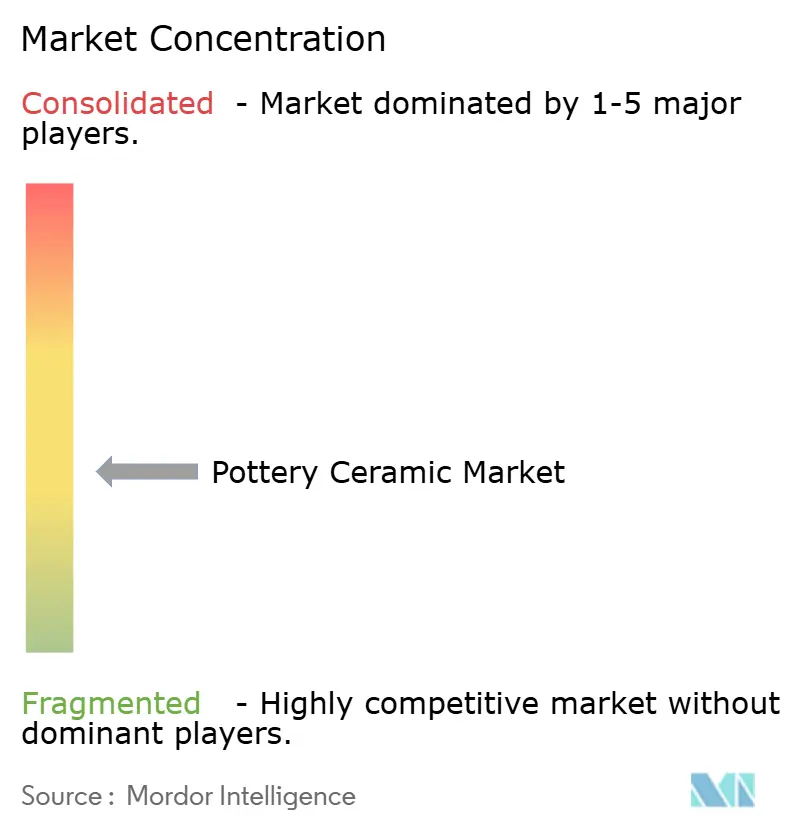
The pottery ceramic market is moderately fragmented. Villeroy & Boch, Bernardaud, Rosenthal, and other European heritage brands compete on design, craftsmanship, and traceability. Asian manufacturers compete through scale, price, process automation, and reliable specifications. Competition in commercial tableware depends heavily on product engineering, delivery performance, and availability of replacements. Artisan and fine-dining customers place greater weight on brand identity and provenance. Manufacturers in Turkey and Asia have narrowed the quality gap in vitrified porcelain, keeping competitive pressure high across both premium and quantity-oriented categories.
Sustainability certification is becoming more relevant to institutional procurement in the pottery and ceramic market. Villeroy & Boch received an EcoVadis Platinum Medal in 2025 with a score of 94.00 out of 100, placing it in the top 1.00% of assessed businesses globally. This supports its position in procurement processes that evaluate environmental and sourcing practices. Churchill China introduced its Spring 2026 collection with Emerge Vitrified Stoneware, combining speckled glazes and exposed biscuit bases for professional hospitality use, applying a studio-pottery appearance to products built for commercial service. China Telecom's kiln system also demonstrates how digital operating control can serve as a competitive capability for large producers.
Opportunity areas include sustainability-certified artisan products for institutional buyers, small-batch customization for the hospitality sector, and heritage-oriented architectural ceramics. Large-quantity suppliers or small studios do not fully serve these needs. Producers that offer configurable shapes, glazes, and logos can address hospitality buyers who require distinct tableware without large minimum orders. Digital systems can make this service more practical by improving repeatability and reducing defects. Small non-EU suppliers may find market access more difficult where buyers require stronger traceability and carbon documentation. The competitive environment favors firms that combine design capability, credible compliance practices, and dependable operations. The pottery ceramic market does not show a single supplier or a small group with a sufficiently disclosed combined share to indicate high concentration.
Pottery Ceramic Industry Leaders
Villeroy & Boch Group
Fiskars Group
RAK CERAMICS
Lenox Corporation
NORITAKE CO., LIMITED
- *Disclaimer: Major Players sorted in no particular order

Recent Industry Developments
- January 2026: Hilton Hotels & Resorts reported adding nearly 800 hotels and over 100,000 rooms globally in 2025, maintaining a development pipeline of over 520,000 rooms. This scale of hospitality expansion establishes a multi-year forward procurement base for pottery ceramic tableware across all price tiers.
- May 2025: Greenwich House Pottery launched Healing Through Clay, an 8-week group therapy program combining hands-on pottery and ceramic making with structured mental health intervention for anxiety and depression.


Global Pottery Ceramic Market Report Scope
Pottery and ceramics refer to objects made from inorganic materials such as clay that are permanently hardened through high-temperature firing. Pottery is a specific, traditional subset of the broader ceramics category.
The pottery ceramic market is segmented by type, manufacturing technique, material, glaze type, firing temperature, application, and geography. By type, the market is segmented into artistic pottery, functional pottery, and decorative pottery. By manufacturing technique, the market is segmented into wheel-throwing, hand-building, and slip-casting. By material, the market is segmented into earthenware, stoneware, porcelain, and bone china. By glaze type, the market is segmented into clear glaze, matte glaze, glossy glaze, and craquelure glaze. By firing temperature, the market is segmented into low-fire pottery, mid-range pottery, and high-fire pottery. By application, the market is segmented into tableware and kitchenware, decorative items, architectural and building pottery, and others. The report also covers market size and forecasts for pottery ceramic across 15 countries in major regions. The market sizes and forecasts are provided in terms of value (USD).
| Artistic Pottery |
| Functional Pottery |
| Decorative Pottery |
| Wheel-Throwing |
| Hand-Building |
| Slip-Casting |
| Earthenware |
| Stoneware |
| Porcelain |
| Bone China |
| Clear Glaze |
| Matte Glaze |
| Glossy Glaze |
| Craquelure Glaze |
| Low-Fire Pottery |
| Mid-Range Pottery |
| High-Fire Pottery |
| Tableware and Kitchenware |
| Decorative Items |
| Architectural and Building Pottery |
| Others |
| Asia-Pacific | China |
| India | |
| Japan | |
| South Korea | |
| ASEAN Countries | |
| Rest of Asia-Pacific | |
| North America | United States |
| Canada | |
| Mexico | |
| Europe | Germany |
| United Kingdom | |
| France | |
| Italy | |
| NORDIC Countries | |
| Rest of Europe | |
| South America | Brazil |
| Argentina | |
| Rest of South America | |
| Middle East and Africa | Saudi Arabia |
| South Africa | |
| Rest of Middle East and Africa |
| By Type | Artistic Pottery | |
| Functional Pottery | ||
| Decorative Pottery | ||
| By Manufacturing Technique | Wheel-Throwing | |
| Hand-Building | ||
| Slip-Casting | ||
| By Material | Earthenware | |
| Stoneware | ||
| Porcelain | ||
| Bone China | ||
| By Glaze Type | Clear Glaze | |
| Matte Glaze | ||
| Glossy Glaze | ||
| Craquelure Glaze | ||
| By Firing Temperature | Low-Fire Pottery | |
| Mid-Range Pottery | ||
| High-Fire Pottery | ||
| By Application | Tableware and Kitchenware | |
| Decorative Items | ||
| Architectural and Building Pottery | ||
| Others | ||
| By Geography | Asia-Pacific | China |
| India | ||
| Japan | ||
| South Korea | ||
| ASEAN Countries | ||
| Rest of Asia-Pacific | ||
| North America | United States | |
| Canada | ||
| Mexico | ||
| Europe | Germany | |
| United Kingdom | ||
| France | ||
| Italy | ||
| NORDIC Countries | ||
| Rest of Europe | ||
| South America | Brazil | |
| Argentina | ||
| Rest of South America | ||
| Middle East and Africa | Saudi Arabia | |
| South Africa | ||
| Rest of Middle East and Africa | ||


Key Questions Answered in the Report
What is current market size of Pottery Ceramic Market?
The pottery ceramic market size was valued at USD 12.05 billion in 2025 and is estimated to grow from USD 12.55 billion in 2026 to reach USD 15.66 billion by 2031, at a CAGR of 4.53% during the forecast period (2026-2031).
Which pottery ceramic product type held the largest share?
Functional pottery held a 44.13% share in 2025, supported by recurring hospitality and household demand.
Which material is expected to grow fastest?
Porcelain is forecast to expand at a 5.07% CAGR through 2031, supported by commercial kitchens, fine dining, gifting, and collectors.
Why is Asia-Pacific important for pottery ceramics?
Asia-Pacific held a 42.17% share in 2025 and is forecast to grow at a 5.38% CAGR through 2031.
Page last updated on:





