
Postbiotic Pet Food Market Size and Share
Market Overview
| Study Period | 2021 - 2031 |
|---|---|
| Market Size (2026) | USD 13.60 Billion |
| Market Size (2031) | USD 16.90 Billion |
| Growth Rate (2026 - 2031) | 4.75 % |
| Fastest Growing Market | Asia-Pacific |
| Largest Market | North America |
| Market Concentration | Medium |
Major Players *Disclaimer: Major Players sorted in no particular order Image © Mordor Intelligence. Reuse requires attribution under CC BY 4.0. | |
Postbiotic Pet Food Market Analysis by Mordor Intelligence
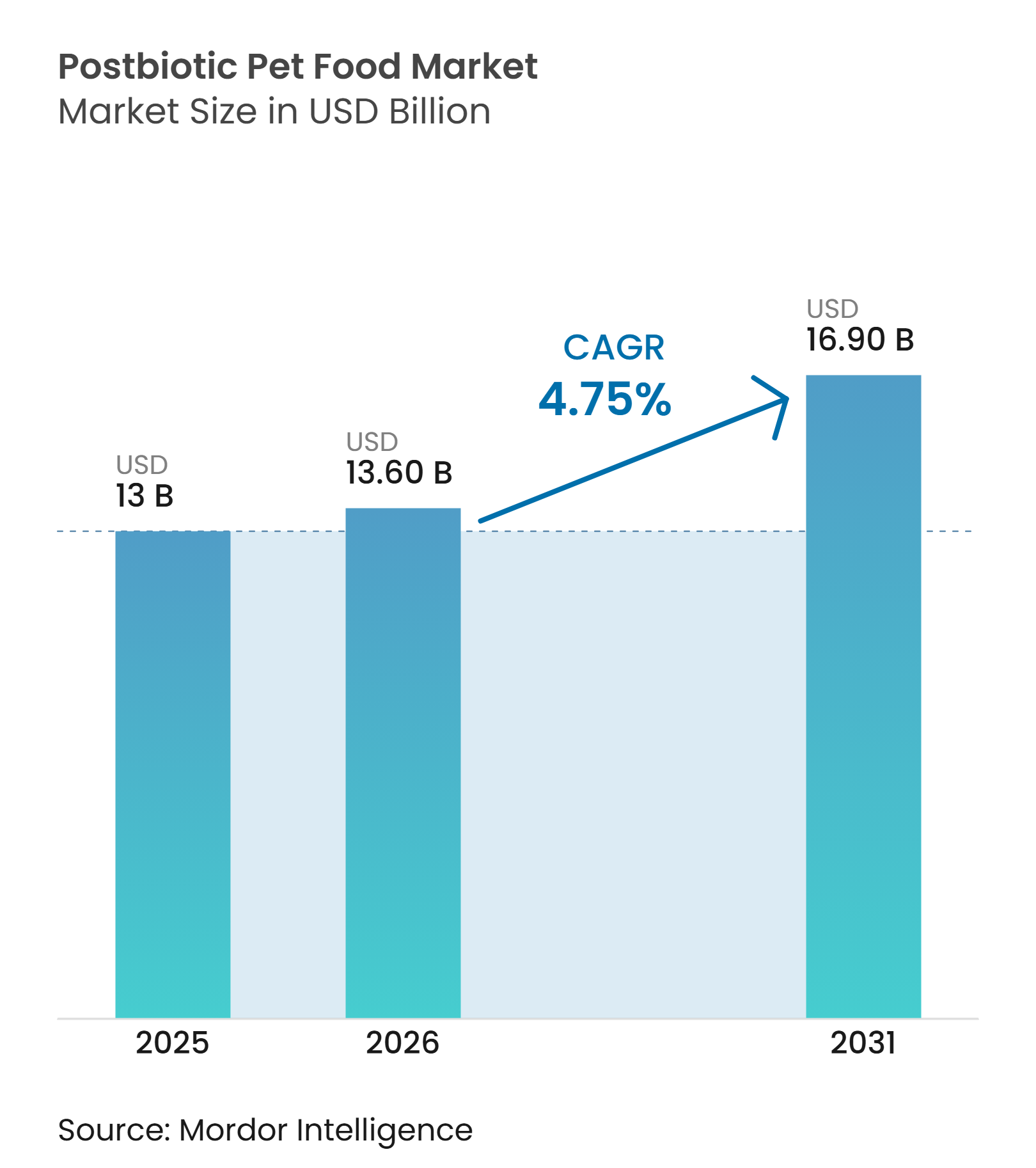
The postbiotic pet food market size is anticipated to be USD 13.0 billion in 2025, USD 13.6 billion in 2026, and reach USD 16.9 billion by 2031, growing at a CAGR of 4.75% during 2026-2031. Surging premiumization in canine and feline nutrition, expanding e-commerce adoption, and the regulatory shift toward non-viable microbes position the category for durable mid-single-digit growth. Ingredient suppliers are emphasizing heat-stable microbial metabolites that survive extrusion temperatures of 90-200 °C, eliminating the cold-chain constraints that limited earlier probiotic claims. North America drives near-term revenue through veterinary prescription diets and subscription services, while Asia-Pacific propels volume with rapid pet ownership gains in China, Japan, and India. Competitive intensity is rising as precision-fermentation startups court regional brand owners seeking differentiation without excessive capital expenditure. Legislative clarity from the United States Food and Drug Administration and the European Union is accelerating launch cycles, shortening ingredient approvals by up to one year and spurring multinational brands to refresh portfolios with postbiotic SKUs.
Key Report Takeaways
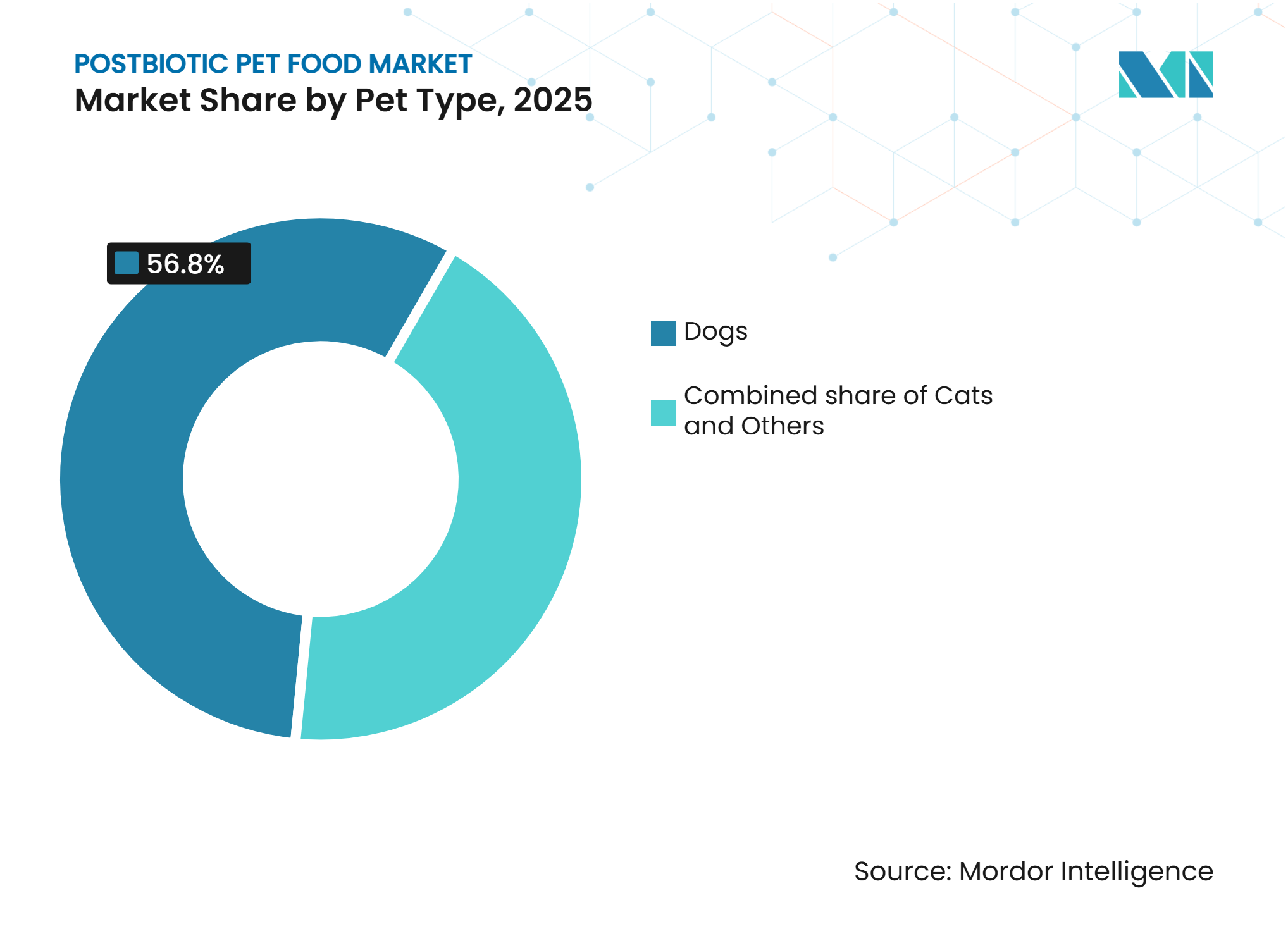
- By pet type, dogs accounted for the largest share, accounting for 56.8% of the postbiotic pet food market share in 2025, whereas cats are projected to be the fastest, registering a 9.4% CAGR during 2026-2031.
- By form, dry kibble remained the largest format at 45% of the postbiotic pet food market size in 2025, while liquid and powdered supplements are forecast to be the fastest, expanding at a 12.4% CAGR during 2026-2031.
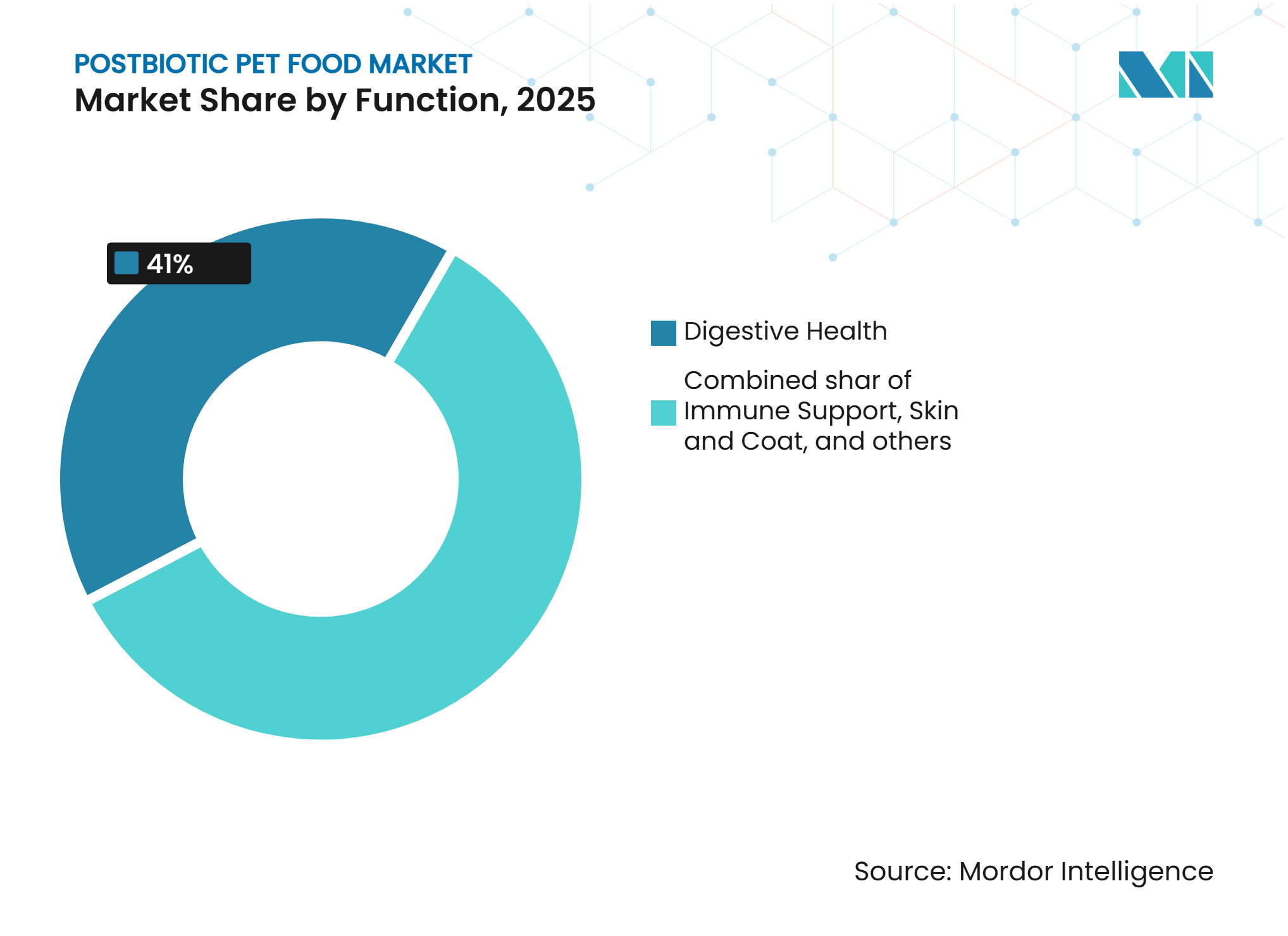
- By function, digestive-health products accounted for the largest 41% share of the postbiotic pet food market in 2025, while immune-support is the fastest-growing, with an 11.8% CAGR over 2026-2031.
- By distribution channel, pet specialty stores remained the largest segment, accounting for 35% share of the postbiotic pet food market in 2025, whereas online channels are projected to be the fastest-growing segment at 12.4% CAGR through 2026-2031.
- By geography, North America accounted for a commanding 34% share in 2025, whereas Asia-Pacific is accelerating at an 7.8% CAGR through 2026-2031.
Note: Market size and forecast figures in this report are generated using Mordor Intelligence’s proprietary estimation framework, updated with the latest available data and insights as of January 2026.
Market Trends and Insights
Drivers Impact Analysis of Postbiotic Pet Food Market*
| Driver | (~) % Impact on CAGR Forecast | Geographic Relevance | Impact Timeline |
|---|---|---|---|
| Premiumization of pet diets and demand for digestive-health functionality | +1.2% | Global, strongest in North America and Western Europe | Medium term (2-4 years) |
| Heat-stable advantage of postbiotics in high-temperature kibble extrusion | +0.9% | North America and Asia-Pacific | Short term (≤ 2 years) |
| Rising veterinary endorsements and clinical trial evidence | +0.8% | North America and Europe | Medium term (2-4 years) |
| Expansion of e-commerce and subscription models for functional pet foods | +0.7% | Global, most pronounced in North America and the Asia-Pacific | Short term (≤ 2 years) |
| AI-enabled personalized microbiome nutrition services for pets | +0.4% | North America, Western Europe, and urban Asia-Pacific | Long term (≥ 4 years) |
| Regulatory shifts favoring non-viable microbes over antibiotic growth promoters | +0.6% | Europe and North America | Medium term (2-4 years) |
| Source: Mordor Intelligence | |||
Premiumization of Pet Diets and Demand for Digestive-Health Functionality
Owners continue to upgrade daily feeding routines, allocating higher budgets to functional nutrition with clinically validated outcomes. Digestive-health SKUs of functional revenue in 2025, yet brands are redirecting research toward immune and metabolic benefits as probiotic claims approach saturation. Postbiotics deliver consistent bioactivity throughout shelf life because heat inactivation stabilizes short-chain fatty acids and cell wall polysaccharides. A 2025 peer-reviewed canine study confirmed that heat-treated Bifidobacterium animalis BB-12 boosted beneficial gut flora without refrigeration. Premium dry kibbles containing yeast fermentates command price premiums, allowing manufacturers to absorb fermentation costs while meeting consumer demand for science-backed ingredients. The dynamic is strongest in the United States, where prescription gastrointestinal diets now specify postbiotic metabolites on pack.
Heat-Stable Advantage of Postbiotics in High-Temperature Kibble Extrusion
Extrusion subjects pet food to cumulative heat loads that destroy many live probiotics. Postbiotic metabolites remain structurally intact at 90-200 °C, enabling in-process fortification. Cargill’s TruPet ingredient, honored at the 2024 Fi Europe Innovation Awards, showcases this resilience and eliminates the need for costly post-coating lines. Manufacturers deploying heat-stable biomass can cut capital expenditure compared with installing liquid inclusion systems. The operational edge resonates in Asia-Pacific, where dry kibble contributes to pet food sales and cost efficiency is critical for local brands.
Rising Veterinary Endorsements and Clinical Trial Evidence
Veterinarians remain important influencers in the adoption of functional pet nutrition because they are trusted advisors for evidence-based dietary interventions. A recent Animals clinical trial found that supplementation with heat-treated Bifidobacterium animalis subsp. Lactis CECT 8145 improved several metabolic health markers in dogs, including postprandial glucose regulation and fat digestibility, supporting the growing evidence base for postbiotics. As clinical evidence expands, veterinary recommendations are expected to play an important role in increasing awareness and adoption of postbiotic ingredients in companion animal nutrition.
Regulatory Shifts Favoring Non-Viable Microbes Over Antibiotic Growth Promoters
Legislative clarity is lowering market-entry barriers. The United States Food and Drug Administration issued Guidance for Industry in 2024, permitting Association of American Feed Control Officials-defined fermentation products to enter pet food without lengthy food-additive petitions[1]. Parallel bills introduced in 2025, the PURR Act and Innovative FEED Act, would formalize a pre-market consultation route that explicitly covers postbiotics. In Europe, Regulation 2019/6 has curbed preventive antibiotic use in livestock since 2022, channeling attention to postbiotic gut modulators[2]. These frameworks trim approval timelines by up to 12 months and favor companies with seasoned regulatory affairs teams.
Restraints Impact Analysis of Postbiotic Pet Food Market*
| Restraint | (~) % Impact on CAGR Forecast | Geographic Relevance | Impact Timeline |
|---|---|---|---|
| Limited consumer awareness of probiotics and prebiotics | –0.6% | Global, most acute in emerging markets | Short term (≤ 2 years) |
| High fermentation and downstream-processing costs for purified metabolites | –0.5% | Global constrains smaller suppliers | Medium term (2-4 years) |
| Absence of harmonized global labeling standards for postbiotics | –0.3% | Global | Medium term (2-4 years) |
| Supply-chain dependence on specialty yeast and bacterial substrates | –0.4% | Global, concentrated in Europe and North America | Long term (≥ 4 years) |
| Source: Mordor Intelligence | |||
Limited Consumer Awareness of Probiotics and Prebiotics
The 2024 Nutritional Outlook survey revealed that only one in three United States pet owners recognizes the term "postbiotic," despite a broad openness to science-based ingredients. Lower awareness slows retail rotation and forces brands to divert budgets into education campaigns that dilute near-term profitability. Emerging markets face an even steeper curve because veterinary access is limited and digital literacy around pet nutrition remains nascent. As clinical data accumulates and labels modernize, the suppressing effect is anticipated to fade, but it will trim the postbiotic pet food market in the short term.
High Fermentation and Downstream-Processing Costs for Purified Metabolites
The median postbiotic production cost is USD 4.3 per kg, driven mostly by glucose and nitrogen feedstocks, which account for more than half of the total outlay[3]. Fluctuations in raw material prices and the capital investment required for commercial-scale fermentation facilities can challenge smaller manufacturers and drive up ingredient prices. Continued improvements in strain productivity, fermentation efficiency, and process optimization are expected to lower production costs over time, supporting broader adoption beyond premium and super-premium pet food formulations.
*Our forecasts treat driver/restraint impacts as directional, not additive. The impact forecasts reflect baseline growth, mix effects, and variable interactions.
Postbiotic Pet Food Market Segment Analysis
By Pet Type:
Dogs Remain the Largest Revenue Anchor, Cats Deliver the Fastest GrowthDogs accounted for 56.8% of the postbiotic pet food market share in 2025, reflecting higher daily feed volumes and broad veterinary validation. Cats are the fastest-growing segment, projected to advance at a 9.4% CAGR during 2026-2031, as rising feline ownership in Asia-Pacific and premium small-mammal diets drive incremental demand. Product developers continue to prioritize canine formulas because extrusion-compatible postbiotic ingredients align with popular dry kibble formats, yet brands are increasingly tailoring palatability and nutrient density for smaller species. As a result, portfolio balance is shifting toward multi-species lines that capture both the stability of the largest segment and the momentum of the fastest cohort.
Ongoing clinical trials targeting feline metabolic health are anticipated to narrow the evidence gap that historically favored dogs, thereby supporting wider pharmacy and veterinary-clinic uptake for cats and niche companions. Ingredient suppliers are already testing encapsulation and flavor-masking technologies to manage cats’ obligate-carnivore taste sensitivities and to ensure uniform metabolite delivery at low inclusion rates. Retailers respond by merchandising postbiotic treats and chews, positioning them for mixed-pet households, further blurring single-species boundaries. Collectively, these innovations aim to sustain leadership in the dog segment while accelerating penetration across other pet types, reshaping overall pet type market dynamics through 2026-2031.



By Form:
Dry Kibble Dominates Revenue, Liquids and Powdered Supplements Become the Fastest Expanding FormatsDry kibble held the largest 45% share of the postbiotic pet food market size in 2025, anchored by cost-efficient extrusion and long shelf life that allow heat-stable metabolites to be incorporated during standard processing. In sharp contrast, liquid and powdered supplements are the fastest cohort, forecast to grow at a 12.4% CAGR during 2026-2031 as owners seek flexible dosing and reward-driven formats. Manufacturers continue to favor kibble because established production lines minimize capital expense, yet they are rapidly scaling small-batch facilities for liquids and soft chews to capture incremental revenue. This dual-track strategy lets brands defend leadership in the largest format while capitalizing on the fastest emerging opportunities.
Wet pet foods, accounting for roughly one-fifth of 2025 revenue, occupy a middle ground; their higher palatability supports premium pricing, but retort temperatures limit distinctive postbiotic differentiation compared with kibble. Chews and meal mixers are gaining traction among raw-feeding enthusiasts, though current volumes remain modest compared with the primary formats. Suppliers are experimenting with microencapsulation to extend metabolite stability in moisture-rich environments, which could elevate the competitiveness of wet foods over the next five years. Collectively, these innovations are reshaping form factor dynamics and diversifying the overall postbiotic pet food market size beyond its historical kibble core.
By Function:
Digestive Health Retains the Largest Share, Immune Support Emerges as the Fastest Growth EngineDigestive-health formulations commanded the largest 41% share of the postbiotic pet food market in 2025, supported by extensive clinical validation and strong consumer familiarity with gut-focused claims. Immune-support products are the fastest-growing segment, projected to rise at a 11.8% CAGR during 2026-2031, as research links heat-inactivated microbial metabolites to cytokine modulation and overall wellness. Brands continue to prioritize digestive SKUs for their proven retail velocity, yet are aggressively expanding their portfolios to capture the fastest-growing momentum in immunity through multi-benefit blends that pair postbiotics with antioxidants and trace minerals. This dual emphasis allows manufacturers to defend leadership in the largest category while unlocking upside in the fastest growth engine.
Weight and metabolic formulas, which accounted for roughly 10% of 2025 revenue, are leveraging evidence from canine body-conditioning trials to gain veterinary endorsement and incremental shelf space. Skin and coat products, claiming close to 15% share, target the gut-skin axis with yeast-derived beta-glucans and are beginning to intersect with allergy-management diets. Cognitive and senior-support offerings remain niche today, but aging pet demographics in North America and Western Europe position them for steady acceleration beyond 2028. Collectively, these secondary niches diversify the functional landscape and mitigate dependency on any single benefit, reshaping overall market size resilience through 2031.

By Distribution Channel:
Pet Specialty Stores Lead Revenue, Online Channels Deliver the Fastest EscalationPet specialty stores captured the largest 35% share of the postbiotic pet food market in 2025, leveraging trained staff and curated assortments to reassure shoppers about functional-ingredient claims. Online Channels, driven mainly by subscription services, is the fastest channel and is projected to expand at a 12.4% CAGR during 2026-2031 as automated reordering and data-driven personalization boost repeat purchases. Brands maintain deep relationships with brick-and-mortar chains to secure end-cap visibility, yet they are ramping up direct-to-consumer logistics hubs to capitalize on the fastest digital momentum. This dual-channel focus enables manufacturers to balance volume stability from the largest network with upside from the fastest growth avenue.
Supermarkets and hypermarkets accounted for a moderate share in 2025, benefiting from high foot traffic but facing margin pressure that limits shelf space for premium postbiotic SKUs. Veterinary clinics’ professional credibility supports higher price points, though their limited geographic reach constrains absolute volumes. Emerging omnichannel models, such as click-and-collect partnerships between veterinary offices and online retailers, are beginning to blur channel boundaries and could redistribute market size shares after 2028. Convenience outlets and pet service locations remain niche today, yet rising urban pet ownership may gradually lift their relevance in the overall distribution mix.
Geography Analysis
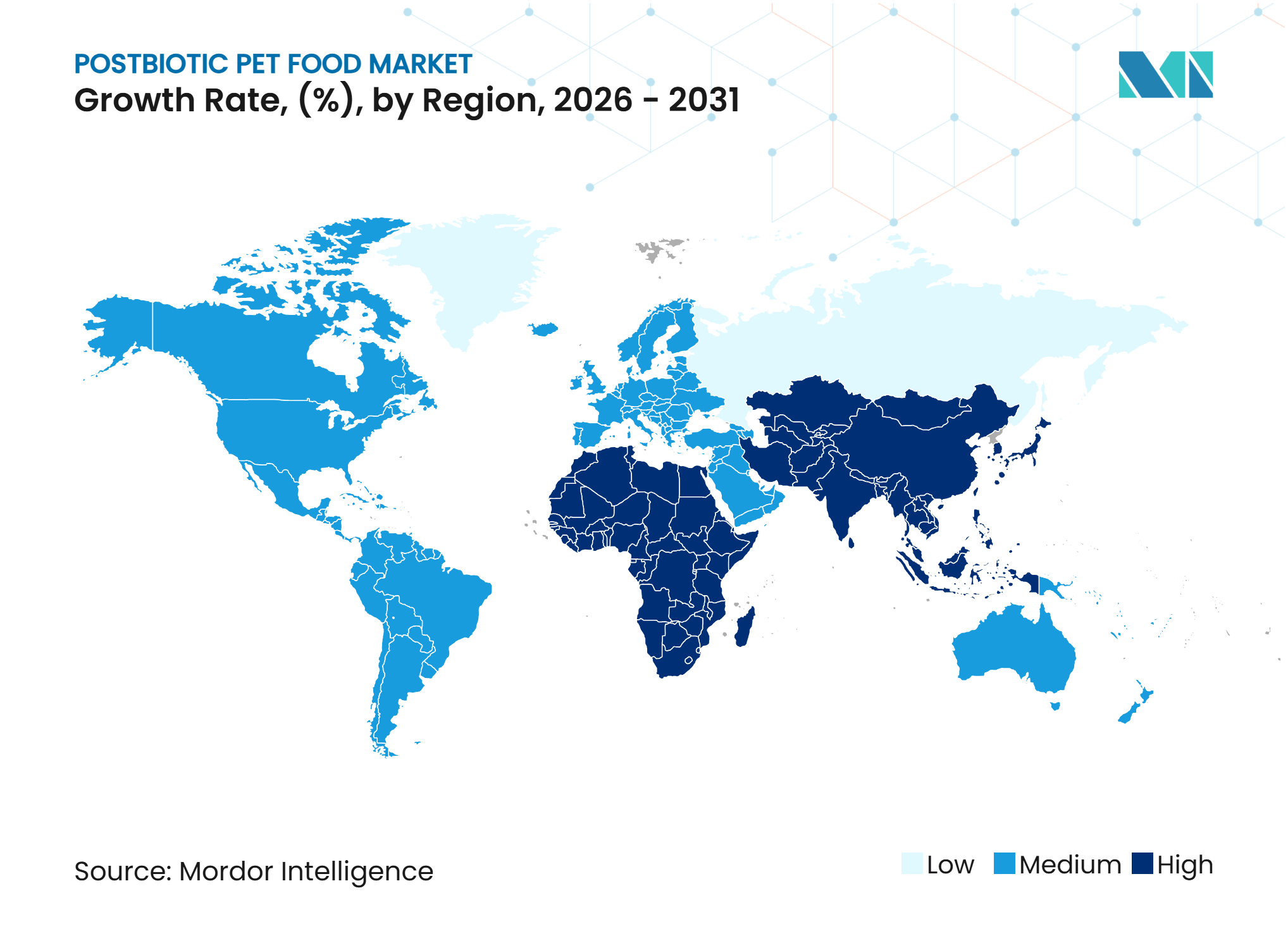
North America retained the largest 34% share of the postbiotic pet food market in 2025, buoyed by premium veterinary diets, high subscription penetration, and clear United States Food and Drug Administration guidance that streamlines ingredient approvals. Ingredient majors continue to launch extrusion-compatible formulations that align with the region’s dominant dry-kibble preferences, reinforcing volume leadership. Asia-Pacific is the fastest-growing geography, projected to grow at a 7.8% CAGR during 2026-2031, as surging pet ownership in China and India, combined with rapid e-commerce adoption, amplifies demand. Local manufacturers are accelerating contract-fermentation capacity to reduce import dependence and capture the fastest regional momentum.
Europe is a mature but opportunity-rich market, where the antibiotic-reduction mandate under Regulation 2019/6 and recent mergers among ingredient suppliers are driving steady postbiotic uptake. South America shows incremental gains as urbanization and rising disposable incomes in Brazil and Argentina lift premium nutrition spending, although veterinary access gaps temper absolute volumes. The Middle East and Africa remain smaller today, yet pet humanization in the Gulf states and South Africa is fostering early adoption of functional treats and supplements. Australia and New Zealand contribute stable demand with regulatory frameworks closely mirroring Association of American Feed Control Officials standards, simplifying cross-border launches for multinational brands.
Across regions, regulatory alignment around non-viable microbes, expanding clinical evidence, and the growth of direct-to-consumer logistics are widening access to postbiotic nutrition. Manufacturers leverage data analytics from online channels to localize flavor profiles and dosage forms, accelerating penetration beyond early adopter segments. As Asia-Pacific scales fermentation infrastructure and North America deepens subscription engagement, the global supply chain is projected to optimize costs and broaden ingredient sourcing. These dynamics position the market for sustained expansion through 2031, with each region contributing complementary strengths that reinforce overall growth.
Competitive Landscape
Market Concentration
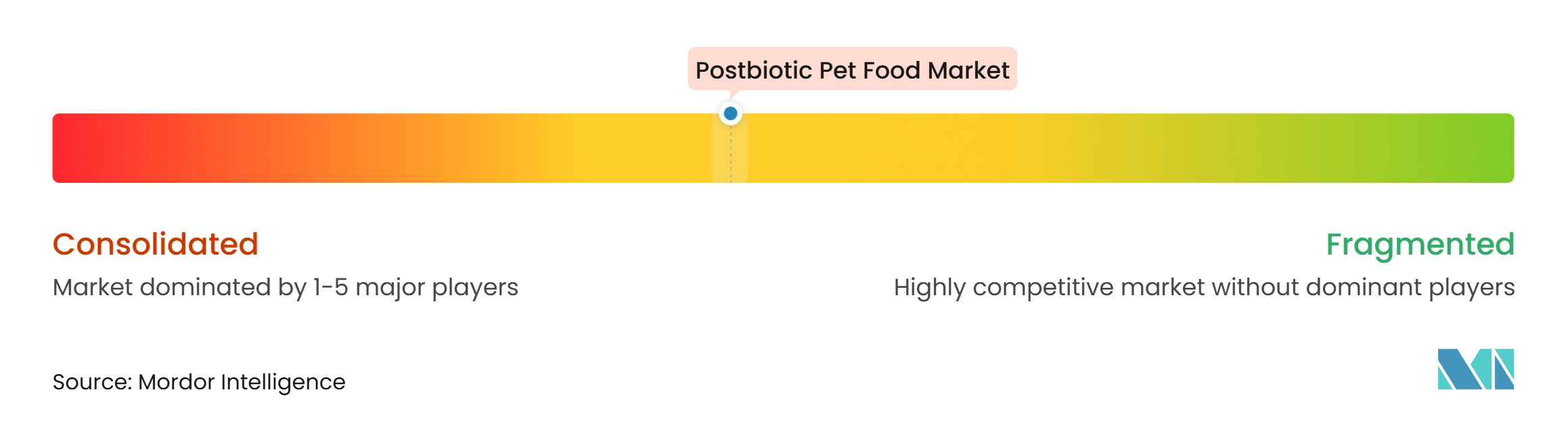
The five leading companies jointly controlled the 2025 global revenue, underscoring a moderately concentrated landscape. Nestlé Purina PetCare (Nestlé S.A.) blends in-house fermentation, extrusion, and veterinary distribution to refresh functional SKUs within yearly cycles. Mars Petcare (Mars, Incorporated) couples global clinic data with advanced analytics, enabling rapid rollouts of postbiotic formulations and targeted marketing. Together, these two giants set ingredient specifications and negotiate long-term supply contracts that influence pricing across the value chain.
Cargill, Incorporated scales its TruMune platform across human and animal divisions, boosting fermentation utilization and broadening channel reach. DSM-Firmenich AG strengthened intellectual property in 2023 by acquiring Adare Biome for EURO 275 million (USD 300 million), gaining patented inactivation methods that deter imitators. Kerry Group plc focuses on flavor masking and microencapsulation, partnering with regional brands to tailor postbiotics for feline palatability. Mid-tier specialists such as Lallemand Inc. and Phileo by Lesaffre (Lesaffre et Compagnie) offer yeast-based metabolites that enable emerging labels to differentiate without incurring heavy capital expense.
Strategic funding is expanding the ingredient pool, highlighted by Proteine Resources raising EURO 9.5 million (USD 10.3 million) in 2025 to commercialize insect substrates that lower input costs. Automation in spray drying and continuous bioreactors is trimming operating expenses by up to 15% and freeing cash for clinical validation. Companies with seasoned regulatory teams expect to launch novel metabolites 6 to 12 months faster once the PURR Act and the Innovative FEED Act advance, securing first-mover shelf space. These combined efforts will expand product availability, lower costs, and accelerate market growth through 2031.
Postbiotic Pet Food Industry Leaders
-
Nestlé Purina PetCare (Nestlé S.A.)
-
Mars Petcare (Mars, Inc.)
-
Cargill, Inc.
-
dsm-firmenich AG
-
Kerry Group plc
- *Disclaimer: Major Players sorted in no particular order
Postbiotic Pet Food Market Companies Covered in this Report
- Nestlé Purina PetCare (Nestlé S.A.)
- Mars Petcare (Mars, Incorporated)
- Cargill, Incorporated
- dsm-firmenich AG
- Kerry Group plc
- Lallemand Inc.
- Phileo by Lesaffre (Lesaffre et Compagnie)
- Protexin Limited (Archer-Daniels-Midland Company)
- Novonesis A/S (Novo Holdings A/S)
- Biorigin (Zilor Energia e Alimentos S/A)
- Evonik Industries AG
- BlueStar Adisseo Company (ChemChina)
- Kemin Industries, Inc.
- Land O’Lakes, Inc.
- Hill’s Pet Nutrition, Inc. (Colgate-Palmolive Company)
Recent Industry Developments in Postbiotic Pet Food Market
- March 2026: ADM expanded its PRIOME® postbiotics portfolio by launching PRIOME® Joint Health, a heat-treated Lacticaseibacillus rhamnosus NCIMB 30446 ingredient for companion animals. Because the postbiotic does not rely on live microbial viability, ADM states that its functionality is maintained throughout manufacturing and stability testing, enabling incorporation into powders, soft chews, baked treats, extruded products, liquids, dry kibble, and wet food without affecting product palatability.
- July 2025: Proteine Resources secured EUR 9.5 million (USD 10.3 million) from the European Innovation Council to commercialize insect-based fermentation substrates that can serve as growth media for microbial ingredients used in pet food (including some postbiotic platforms).
- January 2025: U.S. legislators tabled the PURR Act and Innovative FEED Act to streamline approvals of novel pet food and animal feed ingredients, including fermented and microbiome targeting products akin to postbiotics.
Global Postbiotic Pet Food Market Report Scope
Postbiotic pet food comprises inanimate microorganisms, fermented metabolites, and functional compounds such as short-chain fatty acids. These components enhance gut health, boost immunity, and reduce inflammation without the need for live bacteria.
The Postbiotic Pet Food Market Report is segmented by pet type including dogs, cats, and other pets; by form including dry kibble, wet pet food, treats and chews, and liquid and powdered supplements; by function including digestive health, immune support, skin and coat health, and weight and metabolic health; by distribution channel including online retail, pet specialty stores, veterinary clinics, and supermarkets and hypermarkets; and by geography including North America, South America, Europe, Asia-Pacific, the Middle East, and Africa. The market forecasts are provided in terms of value in USD.
Segmentation Overview
| Dogs |
| Cats |
| Other Pets |
| Dry Kibble |
| Wet pet food |
| Treats and Chews |
| Liquid and Powdered Supplements |
| Digestive Health |
| Immune Support |
| Skin and Coat |
| Weight and Metabolic |
| Online Channels |
| Pet Specialty Stores |
| Veterinary Clinics |
| Supermarkets and Hypermarkets |
| North America | United States |
| Canada | |
| Rest of North America | |
| South America | Brazil |
| Argentina | |
| Rest of South America | |
| Europe | Germany |
| United Kingdom | |
| France | |
| Italy | |
| Spain | |
| Russia | |
| Rest of Europe | |
| Asia-Pacific | China |
| Japan | |
| India | |
| South Korea | |
| Australia and New Zealand | |
| Rest of Asia-Pacific | |
| Middle East | Saudi Arabia |
| United Arab Emirates | |
| Turkey | |
| Rest of Middle East | |
| Africa | South Africa |
| Nigeria | |
| Rest of Africa |
| By Pet Type | Dogs | |
| Cats | ||
| Other Pets | ||
| By Form | Dry Kibble | |
| Wet pet food | ||
| Treats and Chews | ||
| Liquid and Powdered Supplements | ||
| By Function | Digestive Health | |
| Immune Support | ||
| Skin and Coat | ||
| Weight and Metabolic | ||
| By Distribution Channel | Online Channels | |
| Pet Specialty Stores | ||
| Veterinary Clinics | ||
| Supermarkets and Hypermarkets | ||
| By Region | North America | United States |
| Canada | ||
| Rest of North America | ||
| South America | Brazil | |
| Argentina | ||
| Rest of South America | ||
| Europe | Germany | |
| United Kingdom | ||
| France | ||
| Italy | ||
| Spain | ||
| Russia | ||
| Rest of Europe | ||
| Asia-Pacific | China | |
| Japan | ||
| India | ||
| South Korea | ||
| Australia and New Zealand | ||
| Rest of Asia-Pacific | ||
| Middle East | Saudi Arabia | |
| United Arab Emirates | ||
| Turkey | ||
| Rest of Middle East | ||
| Africa | South Africa | |
| Nigeria | ||
| Rest of Africa | ||
Key Questions Answered in the Report
How large will the postbiotic pet food market be by 2031?
Mordor Intelligence projects the postbiotic pet food market size to reach USD 16.9 billion by 2031, expanding at a 4.75% CAGR during 2026-2031.
Which pet type leads to spending on postbiotic nutrition?
Dogs accounted for the largest 56.8% share of the postbiotic pet food market size in 2025, driven by higher daily feed volumes and greater clinical validation.
What is the fastest-expanding functional claim in postbiotic products?
Immune-support formulations are forecast to advance at the fastest 11.8% CAGR from 2026-2031 as brands diversify beyond digestive health.
Which sales channel is growing the quickest for postbiotic pet food?
Online channels, particularly subscription models, is rising at a 12.4% CAGR through 2026-2031, driven by convenience and personalized recommendations.
How does heat stability benefit postbiotic ingredients?
Postbiotic metabolites remain active after 90-200 °C extrusion, enabling in-process kibble fortification and lowering manufacturing costs highlighted by Cargills TruPet award.
What legislation is set to streamline postbiotic approvals in the United States?
The proposed PURR Act and Innovative FEED Act, introduced in 2025, would establish a pre-market consultation pathway and reduce approval timelines for novel postbiotic ingredients.