
Portable Anesthesia Systems Market Size and Share
Market Overview
| Study Period | 2021 - 2032 |
|---|---|
| Market Size (2027) | USD 3.13 Billion |
| Market Size (2032) | USD 4.69 Billion |
| Growth Rate (2027 - 2032) | 8.43 % |
| Fastest Growing Market | Asia-Pacific |
| Largest Market | North America |
| Market Concentration | Medium |
Major Players *Disclaimer: Major Players sorted in no particular order Image © Mordor Intelligence. Reuse requires attribution under CC BY 4.0. | |
Portable Anesthesia Systems Market Analysis by Mordor Intelligence
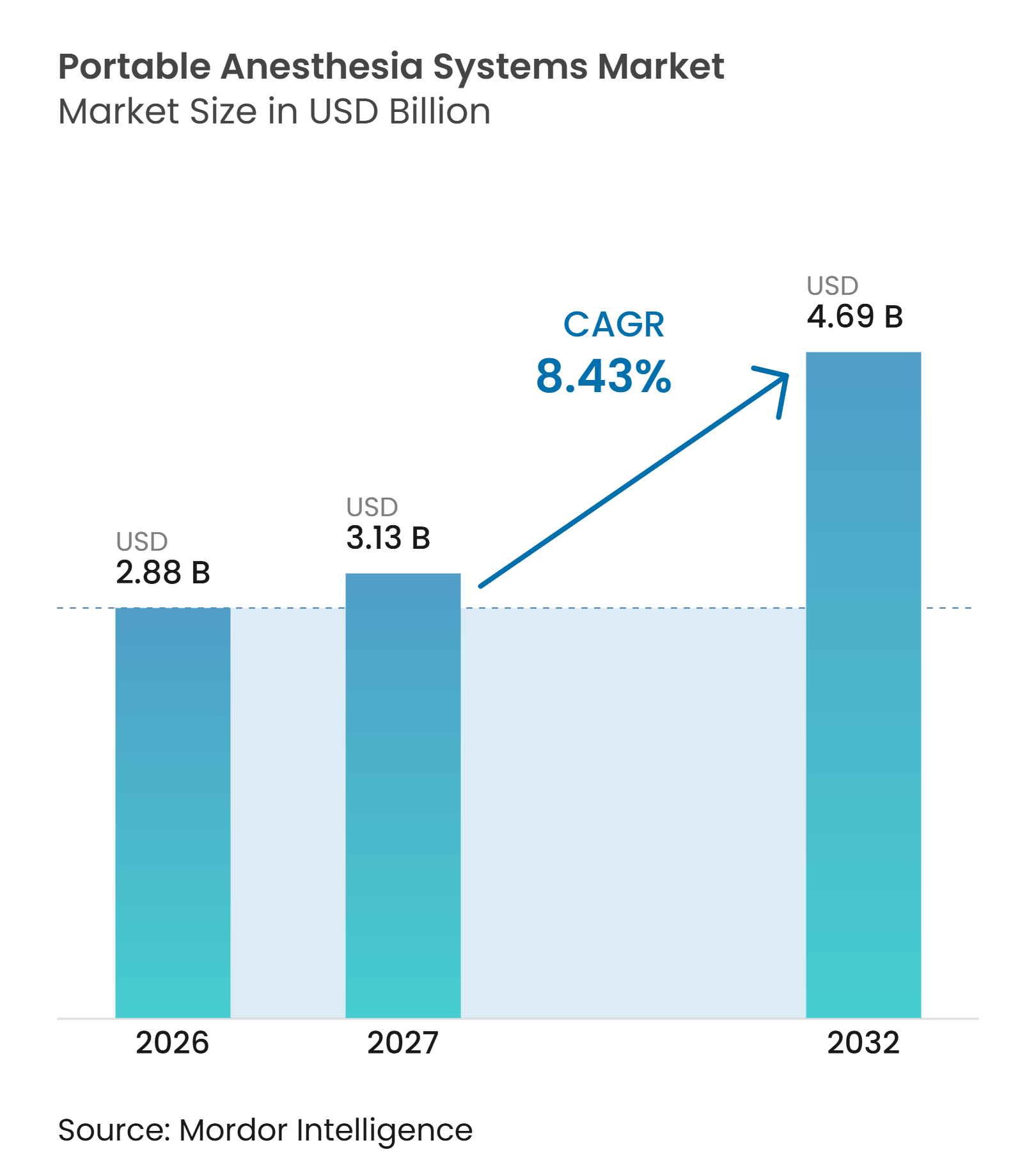
The portable anesthesia systems market size is valued at USD 2.88 billion in 2026 and is forecast to reach USD 4.69 billion by 2032, growing at a CAGR of 8.43% from 2027 to 2032. Demand is moving toward surgical settings that need equipment to be repositioned between rooms, including ambulatory centers, field facilities, and decentralized care locations. Replacement demand also supports the portable anesthesia systems market because units installed during 2015 through 2018 are reaching the end of their typical service lives. Buyers increasingly assess battery backup, digital connectivity, low-flow capability, and service coverage together rather than treating them as optional features. Large manufacturers are responding by combining anesthesia hardware with workflow software and remote connectivity, while regional suppliers are pursuing local production and public procurement access. Workforce shortages and the cost of validation, training, and service remain material constraints on adoption.
Key Report Takeaways
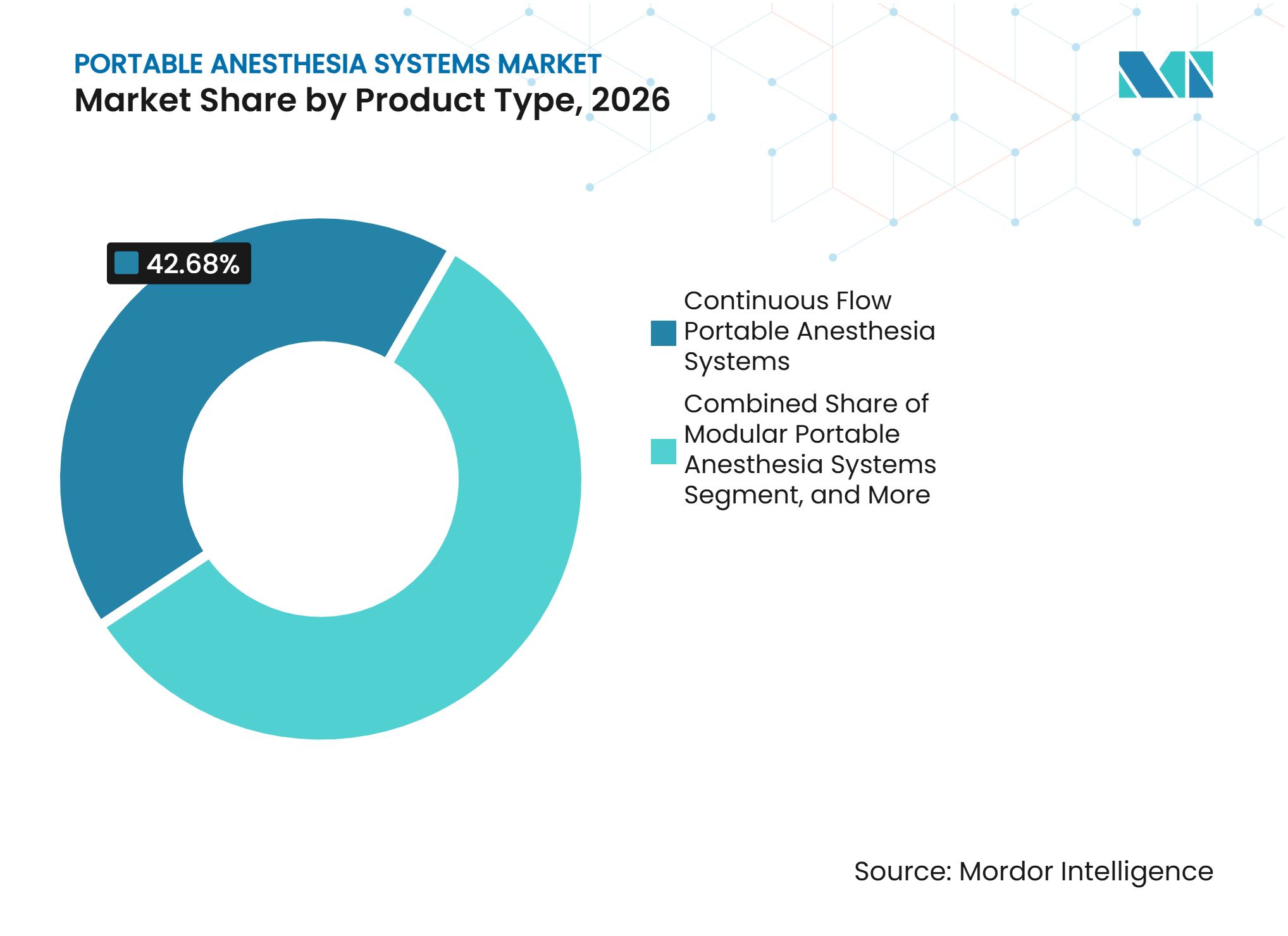
- By product type, Continuous Flow Portable Anesthesia Systems held 42.68% of the portable anesthesia systems market share in 2026, while Battery-Powered Portable Anesthesia Systems are projected to grow at an 8.91% CAGR through 2032.
- By application, General Surgery accounted for 37.59% of the portable anesthesia systems market size in 2026, while Emergency and Trauma Care is projected to grow at a 9.23% CAGR through 2032.
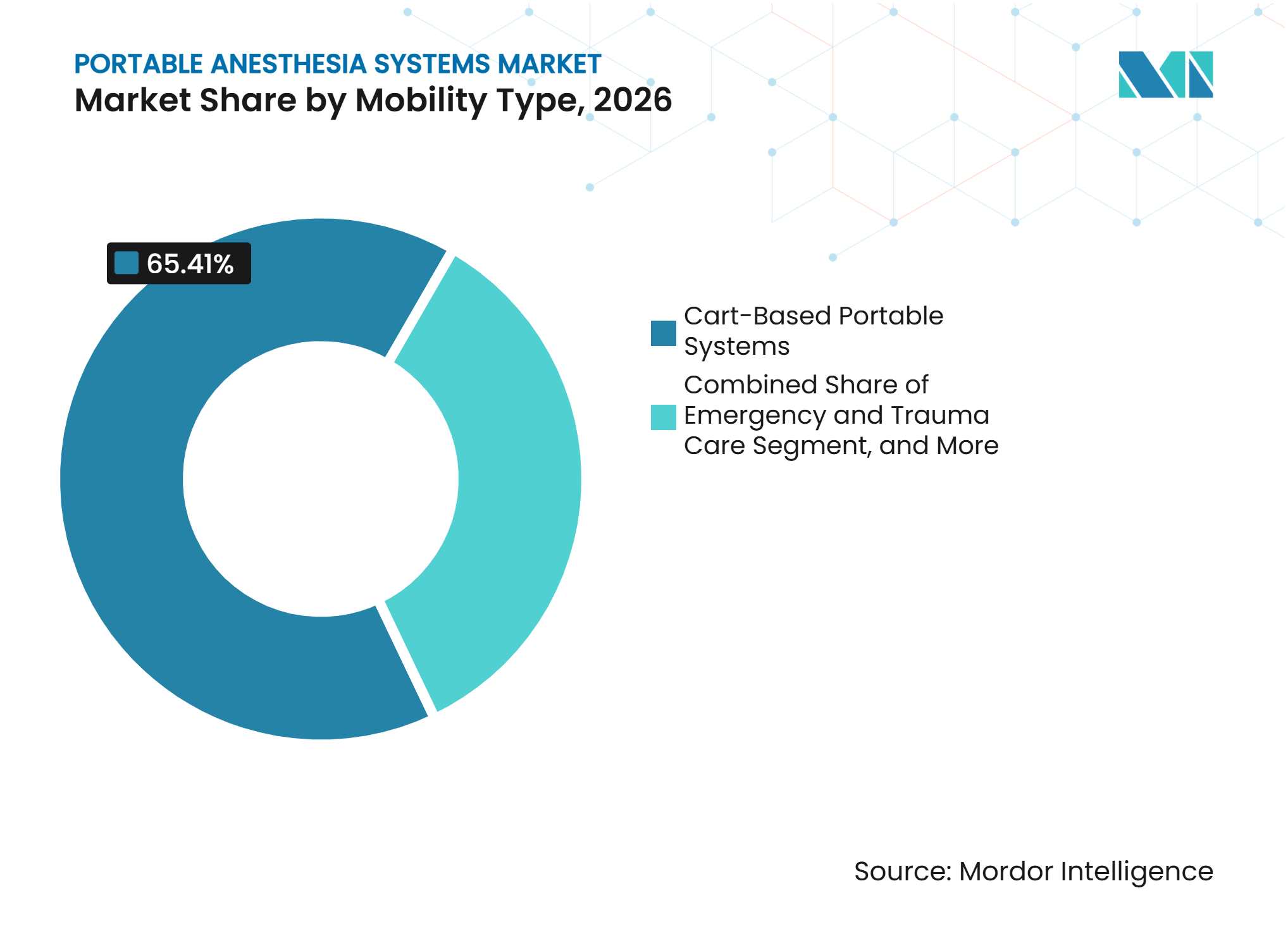
- By mobility type, Cart-Based Portable Systems held 65.41% of the category in 2026, while Hand-Carried Systems are projected to grow at a 9.58% CAGR through 2032.
- By end user, Hospitals accounted for 56.24% of the portable anesthesia systems market size in 2026, while Ambulatory Surgical Centers are projected to grow at a 10.33% CAGR through 2032.
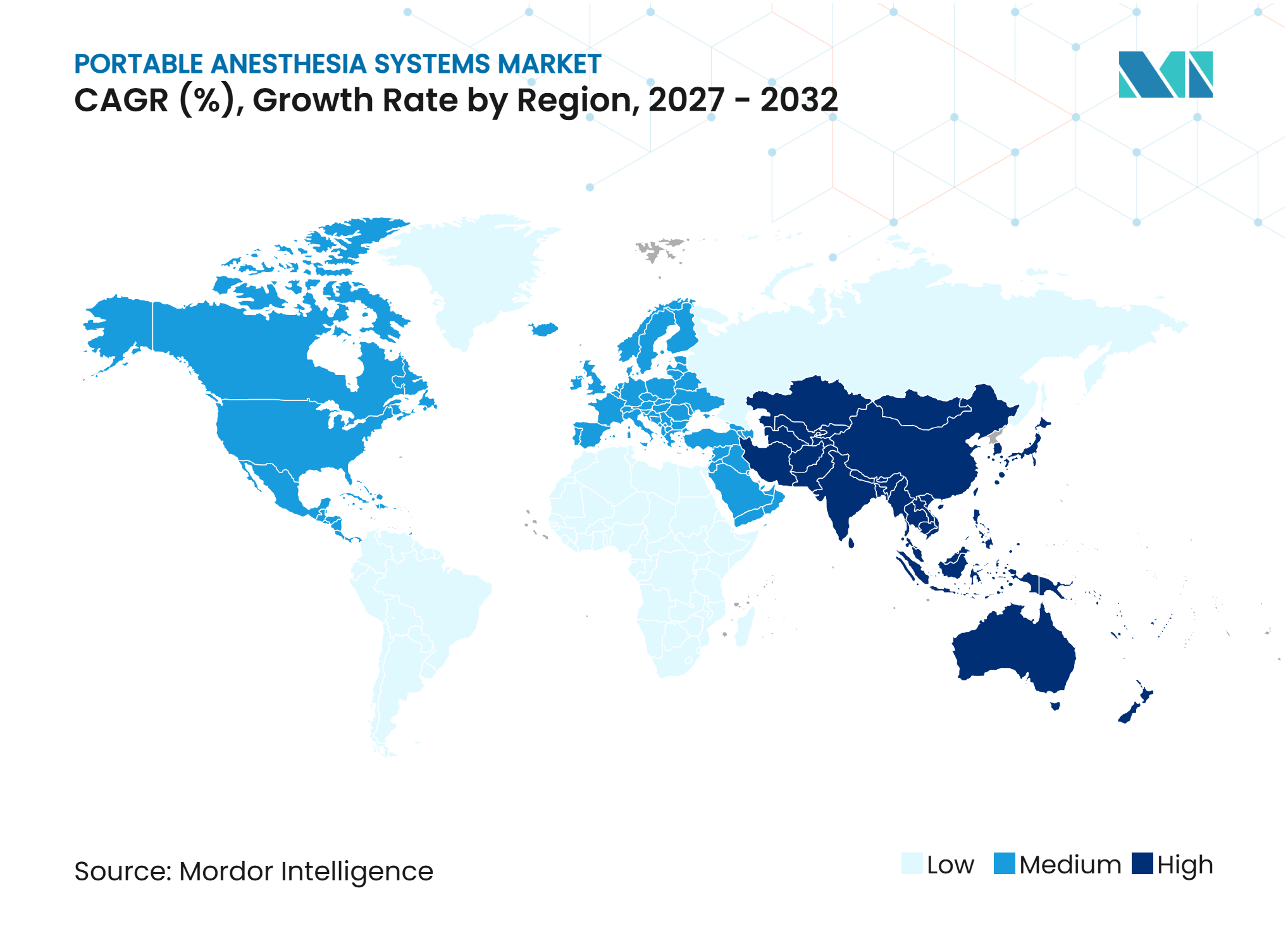
- By geography, North America held 37.94% of the category in 2026, while Asia-Pacific is projected to grow at a 10.85% CAGR through 2032.
Note: Market numbers in this report are based on Mordor Intelligence's proprietary estimation framework, which combines nine months of actuals with Q4 projections for base year 2026.
Market Trends and Insights
Drivers Impact Analysis of Portable Anesthesia Systems Market*
| Driver | (~) % Impact on CAGR Forecast | Geographic Relevance | Impact Timeline |
|---|---|---|---|
| Expansion of Ambulatory and Day-Care Surgery | +2.1% | North America and Europe core, Asia-Pacific growing | Short term (≤ 2 years) |
| Demand for Compact Equipment in Decentralized Care | +1.5% | Global, most acute in Sub-Saharan Africa, South Asia, and Southeast Asia | Medium term (2-4 years) |
| Digital Connectivity and Low-Flow Automation | +1.2% | Global, led by North America and Western Europe | Medium term (2-4 years) |
| Healthcare Capacity Expansion in Emerging Markets | +1.8% | Asia-Pacific, Middle East and Africa, and South America | Long term (≥ 4 years) |
| Replacement of First-Generation Portable Units | +0.9% | North America, Europe, and mature Asia-Pacific | Medium term (2-4 years) |
| Growth of Minimally Invasive, Emergency, and Field-Based Procedures | +0.8% | Global, military-active regions and rural emergency networks | Medium term (2-4 years) |
| Source: Mordor Intelligence | |||
Expansion of Ambulatory and Day-Care Surgery
The migration of procedures to ambulatory settings supports the portable anesthesia systems market because providers need systems that can move between procedure rooms without disrupting care. The Ambulatory Surgery Center Association recorded 6,566 Medicare-certified ambulatory surgical centers in the United States during Q4 2025, representing a 20% increase from 2011.[1] The same association reported 18,781 operating rooms across that network, which gives centers an incentive to use equipment flexibly across rooms. Portable systems can support room rotation while retaining the monitoring and ventilation functions expected in outpatient surgery. Medicare policy for 2025 broadened the covered procedure list for ambulatory surgical centers, increasing the range of procedures that can require dependable anesthesia delivery.[2] The portable anesthesia systems market therefore benefits as outpatient facilities add more complex orthopedic, spine, and cardiovascular cases.
Demand for Compact Equipment in Decentralized Care
Decentralized care extends demand beyond ambulatory centers and gives the portable anesthesia systems market a broader set of clinical settings. In lower-resource sites, systems that can function with oxygen concentrators, limited power, or no compressed oxygen supply have a practical role in maintaining surgical access. Draw-over configurations are suited to this need because they do not depend on electricity or compressed-cylinder oxygen. The U.S. Joint Trauma System includes vaporizer and ventilation guidance for austere care, underscoring the need for anesthesia capability outside fixed hospital infrastructure. Battery-integrated units serve a related requirement where grid power is unreliable but clinical teams still need controlled ventilation and monitoring. These operating conditions make durability, simple setup, and service availability central to procurement decisions in South Asia, Southeast Asia, and Sub-Saharan Africa.
Digital Connectivity and Low-Flow Automation
Digital functions are becoming standard purchasing criteria in the portable anesthesia systems market, particularly for large hospitals and health systems. GE HealthCare introduced the Carestation 850 in October 2025 with customizable applications, a widescreen display, and refill-while-in-use vaporization capability.[3] The company stated that the system had received CE mark approval and clearance from Australia’s Therapeutic Goods Administration before its launch. Low-flow automation also responds to clinical sustainability targets because it can help teams manage fresh-gas flow and anesthetic agent use. A 2025 systematic review found that departmental green anesthesia interventions focused on low fresh-gas-flow protocols and agent selection reduced carbon dioxide equivalent emissions by 68.2%. Compatibility with anesthesia information management systems is consequently becoming a baseline condition in many larger hospital tenders rather than a premium add-on.
Healthcare Capacity Expansion and Replacement Demand
Public investment and replacement needs create distinct procurement opportunities for the portable anesthesia systems market. Indonesia’s Ministry of Industry reported in September 2025 that local production by Mindray Medical International and PT Graha Teknomedika covered 3 anesthesia machine models with domestic component content above 40%. This content level gave the products priority in the government e-Catalogue and illustrates how local manufacturing can shape public purchasing decisions. India’s Employees’ State Insurance Corporation issued revised nationwide specifications for anesthesia workstations in 2025, providing a recurring procurement signal for its hospitals ESIC.GOV.IN. In mature systems, installations from 2015 through 2018 are moving into their 8- to 10-year service horizon, which supports equipment replacement. Emergency networks, minimally invasive procedures, and military medical programs also increase the need for mobile systems that can be deployed beyond conventional operating rooms.
Restraints Impact Analysis of Portable Anesthesia Systems Market*
| Restraint | (~) % Impact on CAGR Forecast | Geographic Relevance | Impact Timeline |
|---|---|---|---|
| High Acquisition, Validation, and Service Costs | -1.8% | Global, most acute in lower- and middle-income countries and price-sensitive public procurement | Long term (≥ 4 years) |
| Stringent Safety and Market-Access Requirements | -1.0% | North America and Europe | Medium term (2-4 years) |
| Limited Medical-Gas, Power, and Scavenging Infrastructure | -0.8% | Sub-Saharan Africa, South Asia, and remote Asia-Pacific | Long term (≥ 4 years) |
| Shortage of Trained Anesthesia Personnel and Technical-Service Capacity | -0.6% | Global, with pronounced effects in the United States and the United Kingdom | Medium term (2-4 years) |
| Source: Mordor Intelligence | |||
High Acquisition Costs and Compliance Requirements
High acquisition, validation, and service costs limit adoption in the portable anesthesia systems market, particularly where public budgets are constrained. Standard portable configurations can cost USD 18,000, while integrated systems with connectivity and electronic gas-mix control can exceed USD 60,000. Commissioning, staff training, and anesthesia information management system integration can raise the cost of a multi-site deployment beyond the hardware purchase. IEC 60601-1 compliance is required for medical electrical equipment and adds testing and validation work for suppliers. The U.S. Food and Drug Administration posted a Class I recall for certain GE HealthCare Carestation anesthesia systems in December 2025, demonstrating the importance of device safety controls and post-market oversight.[4] These requirements favor suppliers that can sustain service networks, regulatory support, and technical training across multiple countries.
Infrastructure and Workforce Constraints
Limited medical-gas infrastructure, inconsistent power supply, and shortages of trained personnel restrain the portable anesthesia systems market even where clinical demand is rising. The United States Health Resources and Services Administration projects a shortfall of 8,450 anesthesiologists by 2037, as reported in a 2025 workforce update. The American Association of Nurse Anesthesiology reported that 12% of Certified Registered Nurse Anesthetists planned to retire by 2027. The Royal College of Anesthetists reported a shortage of 2,256 consultant anesthetists in the United Kingdom in 2025, and 88% of clinical leaders said surgeries had been postponed because of staffing shortages. Providers may delay complex equipment purchases when they cannot staff additional surgical capacity. At the same time, this constraint favors guided checks, automation, and simpler interfaces that can reduce operating burden for trained teams.
*Our forecasts treat driver/restraint impacts as directional, not additive. The impact forecasts reflect baseline growth, mix effects, and variable interactions.
Portable Anesthesia Systems Market Segment Analysis
By Product Type:
Continuous Flow Leads, Battery Power Defines the Next CycleContinuous Flow Portable Anesthesia Systems held 42.68% of the product category in 2026, supported by their clinical versatility and established precision-vaporizer supply chains. The category can support routine adult procedures as well as neonatal care, which makes it suitable for hospitals and ambulatory settings. Existing service contracts and anesthesia information management system integrations also encourage hospitals to retain a familiar architecture during replacement cycles. The portable anesthesia systems market size for Battery-Powered Portable Anesthesia Systems is forecast to grow at an 8.91% CAGR through 2032. BPL Medical Technologies states that its E-Flo 6C has lithium-battery backup of up to 360 minutes, addressing environments where mains power cannot be relied on.
Draw-Over Portable Anesthesia Systems meet different needs because they can operate without electricity or compressed-cylinder oxygen. This design is relevant for humanitarian care and forward-deployed military teams operating in austere environments. The U.S. Joint Trauma System guidance on UPAC vaporizers and mechanical ventilation supports the importance of workable anesthesia pathways in these settings. Modular systems combine oxygen generation, ventilation, and monitoring in a compact configuration for trauma and intensive-care transport. Product suppliers must account for ISO 80601-2-13 requirements for anesthesia workstations and the EU Medical Device Regulation when developing or selling equipment. These compliance demands raise entry barriers but also make validated functionality important in procurement decisions.



By Application:
General Surgery Anchors Volume, Emergency Care Commands GrowthGeneral Surgery accounted for 37.59% of the application category in 2026 because it spans a broad range of procedures across outpatient centers and secondary hospitals. Its procedure mix includes laparoscopic cholecystectomies in ambulatory sites and complex abdominal cases in hospital settings. The installed base is strongly linked to cart-based, continuous-flow configurations, which match the requirements of established surgical departments. Emergency and Trauma Care is projected to grow at a 9.23% CAGR through 2032, making it the fastest-growing application. A 2025 review of combat trauma anesthesia described the requirement for portable field anesthesia that can function without power or compressed oxygen during large-scale combat operations. Civilian trauma-network expansion in Asia-Pacific and demand for field-capable systems support the same direction.
Orthopedic surgery is growing as joint procedures move into ambulatory settings, where compact and repositionable equipment supports room turnover. ENT and dental procedures maintain demand for smaller table-top units that can fit narrower clinical workflows. Veterinary surgery is another application area receiving product attention as companion-animal surgical standards rise. Penlon launched a veterinary product range in July 2025 that included the ultra-portable Prima 440 and 445 anesthesia machines. The portable anesthesia systems market therefore includes specialist use cases alongside high-volume general surgery and trauma care. These varied applications reward suppliers that can adapt system size, power configuration, and monitoring capability to the care setting.
By Mobility Type:
Cart-Based Workstations Dominate, Hand-Carried Systems Drive Future GrowthCart-Based Portable Systems held 65.41% of the mobility category in 2026, reflecting their central role in hospital operating rooms and high-volume ambulatory centers. They combine gas mixing, vaporizers, an integrated ventilator, and multi-parameter monitoring on a mobile chassis. This configuration lets facilities move a capable workstation between rooms instead of installing fixed systems at every location. Hand-Carried Systems are projected to increase at a 9.58% CAGR through 2032. The U.S. Air Force Research Laboratory described its Tactical Anesthesia Workstation in March 2025 as a portable and modular concept for forward combat casualty care. Field hospitals, outreach missions, and low-infrastructure clinics support civilian use of this format.
Cart-based systems are evolving from mechanical workstations into connected platforms with low-flow automation. Dräger reported that its Atlan A350 and A350XL received a Vizient Innovative Technology Designation in January 2025, with Dräger Connect and the Low Flow Wizard positioned as connected workflow functions. The leading position of cart-based units reflects the value of full functionality in established operating rooms. Rail-mounted, pendant-integrated, and vehicle-mounted equipment serves more specialized needs in ambulances, imaging suites, and mobile surgical units. These configurations address limited space or transport requirements that a standard cart cannot always meet. Mobility choices are therefore determined by the care pathway, not only by the need to move equipment.

By End User:
Hospitals Lead Volume, ASCs Propel Fastest ExpansionHospitals accounted for 56.24% of the end-user category in 2026, supported by high-acuity case volumes and multi-room surgical configurations. Shared portable workstations can be useful where scheduling requires equipment to rotate among operating rooms. Hospital buyers also have the budgets and integration requirements that support connectivity-enabled platforms. Systems installed from 2015 through 2018 are entering a replacement period, which adds to hospital demand. Ambulatory Surgical Centers are forecast to grow at a 10.33% CAGR through 2032. The Ambulatory Surgery Center Association reported 6,566 Medicare-certified centers in Q4 2025, reinforcing the size of the outpatient care network.
Ambulatory centers need compact systems that can support orthopedic, spine, and cardiovascular procedures in a lower-footprint setting. Battery capability and fast repositioning can be useful when rooms are operated intensively throughout the day. Specialty clinics generally favor table-top or rail-mounted units for ophthalmology, dermatology, and pain-management procedures. Veterinary hospitals and clinics form a smaller growth area as surgical standards for companion animals develop. Military, field, and humanitarian users prioritize draw-over and battery-powered systems because operational continuity is more important than full conventional workstation features. The portable anesthesia systems industry serves each of these end users through different combinations of portability, simplicity, integration, and service support.
Geography Analysis
North America
North America held 37.94% of the portable anesthesia systems market share in 2026, supported by a dense ambulatory surgical network and a large installed base approaching replacement. The region recorded 6,566 Medicare-certified ambulatory surgical centers and 18,781 operating rooms in Q4 2025. This scale creates demand for systems that can operate across several procedure rooms while retaining full workstation capability. GE HealthCare introduced the Carestation 850 in October 2025 with a compact footprint, customizable applications, and refill-while-in-use vaporization. The product shows how workflow integration and low-flow functions are shaping competition in the region. Provider shortages also encourage interest in guided pre-use checks and simpler gas-delivery interfaces. The Canadian Commercial Corporation announced a U.S. Department of Defense contract of up to USD 356 million for Thornhill Medical anesthesia and life-support equipment in 2025, showing how defense procurement can strengthen demand for power-independent portable capability.
Asia-Pacific
Asia-Pacific is forecast to grow at a 10.85% CAGR through 2032, making it the fastest-growing geography in the portable anesthesia systems market. Government investment in surgical infrastructure is expanding procurement opportunities in China, India, Indonesia, and other regional markets. India’s Employees’ State Insurance Corporation published revised anesthesia workstation specifications in 2025 for hospitals across its network. Indonesia has taken a separate path through local manufacturing and domestic-content policy. The Ministry of Industry reported that Mindray and PT Graha Teknomedika began local production of 3 anesthesia machine models with domestic component content above 40% in September 2025. Dräger launched the Atlan A100 in India in April 2025 with adaptive piston control, low-flow optimization, and Dräger Connect integration. Japan, South Korea, and Australia remain more mature markets where connectivity-compliant replacement cycles are a major demand factor.
Europe, Middle East and Africa, and South America
Germany supports European demand through an older population and policies favoring outpatient and decentralized surgical care, while EU Medical Device Regulation compliance affects product design and procurement. In the United Kingdom, the Royal College of Anesthetists reported a shortage of 2,256 consultant anesthetists in 2025, which increases the appeal of automation-assisted and operator-friendly equipment. Gulf Cooperation Council healthcare construction programs create procurement opportunities for advanced systems in the Middle East. Sub-Saharan African providers have a greater need for draw-over and battery-powered units that can work within limited gas, power, and scavenging infrastructure. Brazil issued a public procurement tender for 300 portable mobile anesthesia units in May 2025, which demonstrates structured government demand in South America. Argentina and Colombia face less predictable procurement cycles because fiscal conditions influence tender timing. Mexico benefits from proximity to the U.S. supply chain and a growing private-hospital network, which supports its position as a faster-growing country in the region.
Competitive Landscape
Market Concentration
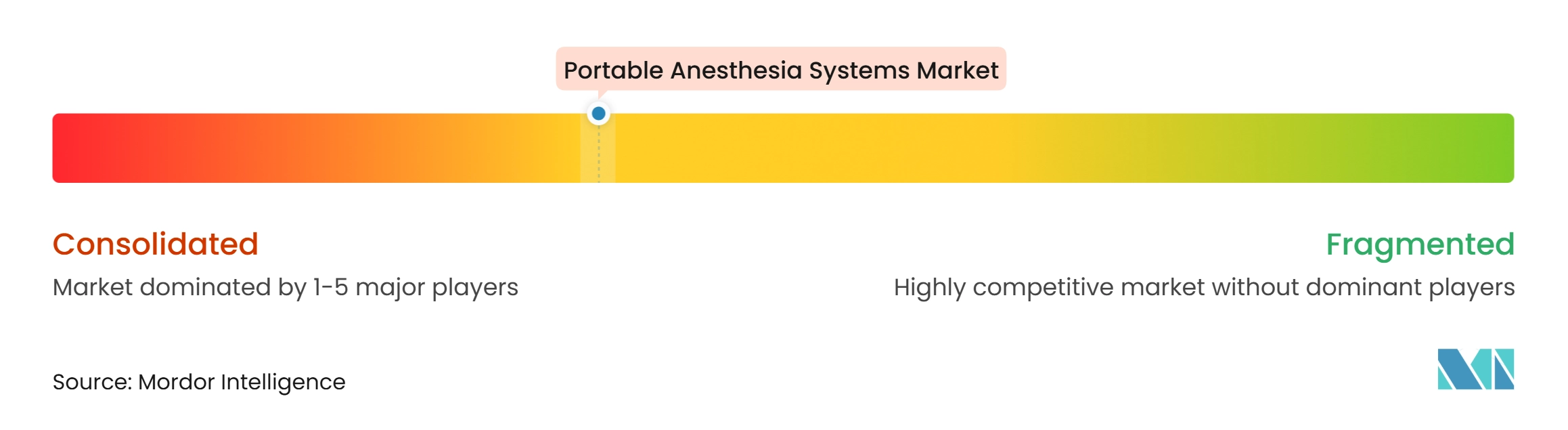
The portable anesthesia systems market is moderately consolidated among major global suppliers but remains fragmented across the mid-tier and specialist categories. Drägerwerk AG, GE HealthCare Technologies, and Mindray Medical International compete through connected platforms, low-flow automation, and service infrastructure. Dräger’s Atlan A350 and A350XL received a Vizient Innovative Technology Designation in January 2025, supporting its positioning around the Low Flow Wizard and Dräger Connect functions. GE HealthCare presented a University of Michigan study in 2025 that found End-tidal Control was active during 82.1% of anesthesia duration in real-world use on the Aisys CS². These companies use hardware, software, and digital services together to retain customers across equipment life cycles.
Mindray’s local production partnership with PT Graha Teknomedika illustrates a different competitive approach. The Indonesian facility attained ISO 13485 certification and domestic content above 40%, which gives its machines priority in government e-Catalogue procurement. This strategy can improve access to price-sensitive public tenders where direct imports face a disadvantage. GE HealthCare’s Carestation 850 launch provides another example of platform development focused on display design, customizable applications, and vaporization workflow. Dräger’s April 2025 Atlan A100 launch in India shows how established suppliers are adapting connected systems for high-growth hospital markets. The portable anesthesia systems industry therefore competes through local access, workflow integration, and evidence of service capability as well as equipment performance.
Specialized suppliers retain opportunities in hand-carried and draw-over systems designed for field and low-resource environments. Thornhill Medical has a meaningful defense position through the 2025 U.S. Department of Defense contract announced by the Canadian Commercial Corporation. Penlon has expanded toward veterinary use with its 2025 product launch, showing that niche care settings can support focused product lines. IEC 60601-1 and ISO 80601-2-13 compliance remain important barriers to entry because manufacturers must show safety and anesthesia-workstation performance before broad market access. Suppliers without regulatory resources, clinical training capacity, and geographically distributed service support face a weaker position in major tenders.
Portable Anesthesia Systems Industry Leaders
-
BPL Medical Technologies
-
Drägerwerk AG & Co. KGaA
-
GE HealthCare Technologies Inc.
-
Koninklijke Philips NV
-
Midmark Corporation
- *Disclaimer: Major Players sorted in no particular order
Portable Anesthesia Systems Market Companies Covered in this Report
- Airon
- Beijing Aeonmed Co., Ltd.
- BPL
- Dispomed
- Dragerwerk
- DRE Medical
- Fritz Stephan
- GE HealthCare Technologies Inc.
- Heinen + Löwenstein GmbH and Co. KG
- Heyer Medical
- Infinium Medical
- Koninklijke Philips
- Midmark
- Milestone Scientific Inc.
- Mindray
- OES Medical Ltd.
- Penlon Limited
- Shenzhen Comen Medical Instruments Co. Ltd.
- Siare Engineering International Group Srl
- Spacelabs Healthcare
Recent Industry Developments in Portable Anesthesia Systems Market
- October 2025: GE HealthCare unveiled the Carestation 850 at ANESTHESIOLOGY 2025 in San Antonio, Texas, featuring a customizable application platform, widescreen display, and refill-while-in-use vaporization. CE mark and Australian Therapeutic Goods Administration approval had been obtained before unveiling. FDA 510(k) submission was pending at the announcement.
- September 2025: Mindray Medical International Limited and PT Graha Teknomedika launched local production of the WATO EX-35, EX-65 PRO, and A8 anesthesia machines in Depok, West Java, Indonesia. The ISO 13485-certified facility achieved domestic component content above 40%, qualifying units for government e-Catalogue procurement priority
- August 2025: Dräger’s Atlan anesthesia workstations obtained Authority to Operate under the U.S. Risk Management Framework, enabling deployment across U.S. military and federal healthcare networks.
Global Portable Anesthesia Systems Market Report Scope
As per the scope of the report, portable anesthesia systems are compact, mobile anesthesia delivery devices designed to administer anesthetic gases and monitor patients during surgical and emergency procedures outside traditional operating rooms. These systems are commonly used in ambulatory surgical centers, field hospitals, military medical units, veterinary clinics, and remote healthcare settings where mobility and space efficiency are essential. Portable anesthesia systems help ensure safe and effective anesthesia administration while supporting flexible and point-of-care surgical services.
The portable anesthesia systems market is segmented by product type, application, mobility type, end user, and geography. By product type, the market is segmented into continuous flow portable anesthesia systems, draw-over portable anesthesia systems, battery-powered portable anesthesia systems, modular portable anesthesia systems, and others. By application, the market is segmented into general surgery, orthopedic surgery, ENT surgery, dental surgery, veterinary surgery, emergency & trauma care, and others. By mobility type, the market is segmented into hand-carried systems, cart-based portable systems, and others. By end user, the market is segmented into hospitals, ambulatory surgical centers (ASCs), specialty clinics, veterinary hospitals & clinics, and others. The geography segment is further divided into North America, Europe, Asia-Pacific, the Middle East and Africa, and South America. The report also covers the estimated market sizes and trends for 17 countries across major regions globally. The report offers the market size and forecasts in value (USD) for the above segments.
Segmentation Overview
| Continuous Flow Portable Anesthesia Systems |
| Draw-Over Portable Anesthesia Systems |
| Battery-Powered Portable Anesthesia Systems |
| Modular Portable Anesthesia Systems |
| Others |
| General Surgery |
| Orthopedic Surgery |
| ENT Surgery |
| Dental Surgery |
| Veterinary Surgery |
| Emergency & Trauma Care |
| Others |
| Hand-Carried Systems |
| Cart-Based Portable Systems |
| Others |
| Hospitals |
| Ambulatory Surgical Centers (ASCs) |
| Specialty Clinics |
| Veterinary Hospitals & Clinics |
| Others |
| North America | United States |
| Canada | |
| Mexico | |
| Europe | Germany |
| United Kingdom | |
| France | |
| Italy | |
| Spain | |
| Rest of Europe | |
| Asia-Pacific | China |
| India | |
| Japan | |
| Australia | |
| South Korea | |
| Rest of Asia-Pacific | |
| Middle East and Africa | GCC |
| South Africa | |
| Rest of Middle East and Africa | |
| South America | Brazil |
| Argentina | |
| Rest of South America |
| By Product Type | Continuous Flow Portable Anesthesia Systems | |
| Draw-Over Portable Anesthesia Systems | ||
| Battery-Powered Portable Anesthesia Systems | ||
| Modular Portable Anesthesia Systems | ||
| Others | ||
| By Application | General Surgery | |
| Orthopedic Surgery | ||
| ENT Surgery | ||
| Dental Surgery | ||
| Veterinary Surgery | ||
| Emergency & Trauma Care | ||
| Others | ||
| By Mobility Type | Hand-Carried Systems | |
| Cart-Based Portable Systems | ||
| Others | ||
| By End User | Hospitals | |
| Ambulatory Surgical Centers (ASCs) | ||
| Specialty Clinics | ||
| Veterinary Hospitals & Clinics | ||
| Others | ||
| By Geography | North America | United States |
| Canada | ||
| Mexico | ||
| Europe | Germany | |
| United Kingdom | ||
| France | ||
| Italy | ||
| Spain | ||
| Rest of Europe | ||
| Asia-Pacific | China | |
| India | ||
| Japan | ||
| Australia | ||
| South Korea | ||
| Rest of Asia-Pacific | ||
| Middle East and Africa | GCC | |
| South Africa | ||
| Rest of Middle East and Africa | ||
| South America | Brazil | |
| Argentina | ||
| Rest of South America | ||
Key Questions Answered in the Report
What is the forecast growth rate for portable anesthesia systems?
The portable anesthesia systems market is forecast to grow at an 8.43% CAGR from 2027 to 2032, reaching USD 4.69 billion by 2032.
Which product type is growing fastest in portable anesthesia systems?
Battery-Powered Portable Anesthesia Systems are projected to grow at an 8.91% CAGR through 2032 because power independence is valuable in ambulatory and decentralized care settings.
Why are ambulatory surgical centers important for anesthesia equipment demand?
Ambulatory Surgical Centers are forecast to grow at a 10.33% CAGR through 2032 and need compact equipment that can be repositioned across active procedure rooms.
Which application has the highest forecast growth?
Emergency and Trauma Care is projected to expand at a 9.23% CAGR through 2032, supported by military, field-care, and civilian trauma-network demand.
Which region is growing fastest for portable anesthesia systems?
Asia-Pacific is projected to grow at a 10.85% CAGR through 2032, supported by hospital investment, public procurement, and local manufacturing initiatives.
What limits wider use of portable anesthesia systems?
Acquisition, validation, and service costs, limited infrastructure, and shortages of anesthesia personnel can delay purchases and deployment.