
Polyglycerol Sebacate (PGS) Market Size and Share
Market Overview
| Study Period | 2022 - 2032 |
|---|---|
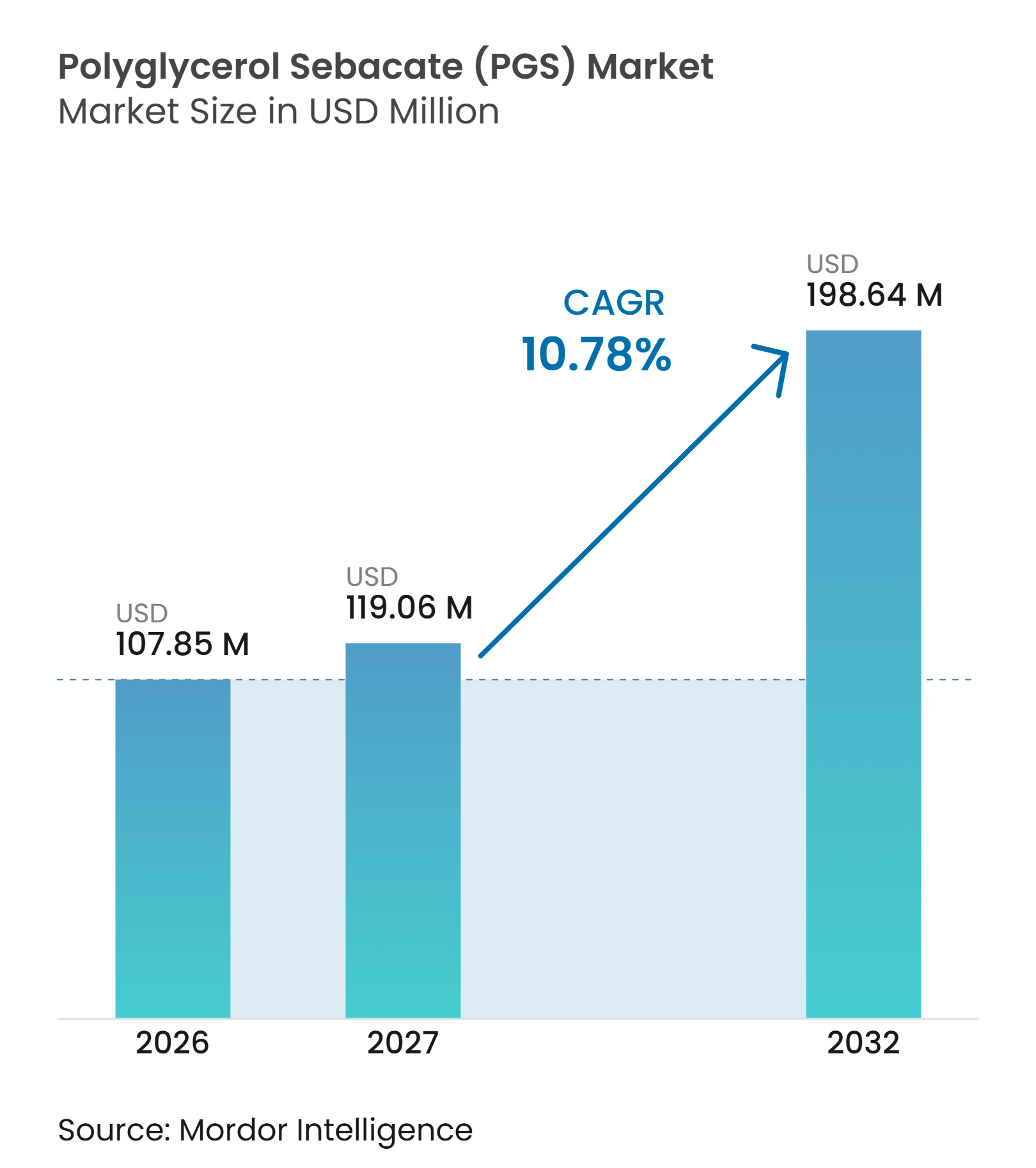
| Market Size (2027) | USD 119.06 Million |
| Market Size (2032) | USD 198.64 Million |
| Growth Rate (2027 - 2032) | 10.78 % |
| Fastest Growing Market | Asia-Pacific |
| Largest Market | North America |
| Market Concentration | Low |
Major Players *Disclaimer: Major Players sorted in no particular order Image © Mordor Intelligence. Reuse requires attribution under CC BY 4.0. | |
Polyglycerol Sebacate (PGS) Market Analysis by Mordor Intelligence
The Polyglycerol Sebacate (PGS) market size was valued at USD 107.85 billion in 2026 and is estimated to grow from USD 119.48 billion in 2027 to USD 198.64 billion by 2032, at a CAGR of 10.78% during the forecast period (2027-2032). The Polyglycerol Sebacate (PGS) market is characterized by a performance profile that differs from bulk-degrading polymers used in soft-tissue applications. PGS undergoes surface erosion, which can reduce exposure to the localized acidic environment associated with polymer degradation in sensitive applications. Glycerol and sebacic acid are widely used in medical and food applications, supporting material qualification for PGS developers. The market is also driven by demand for materials that can match the mechanical properties of soft tissues while enabling cell infiltration. Commercial activity extends beyond the direct substitution of poly(lactic-co-glycolic acid) (PLGA) to applications requiring controlled erosion and metabolically benign degradation products.
Key Report Takeaways
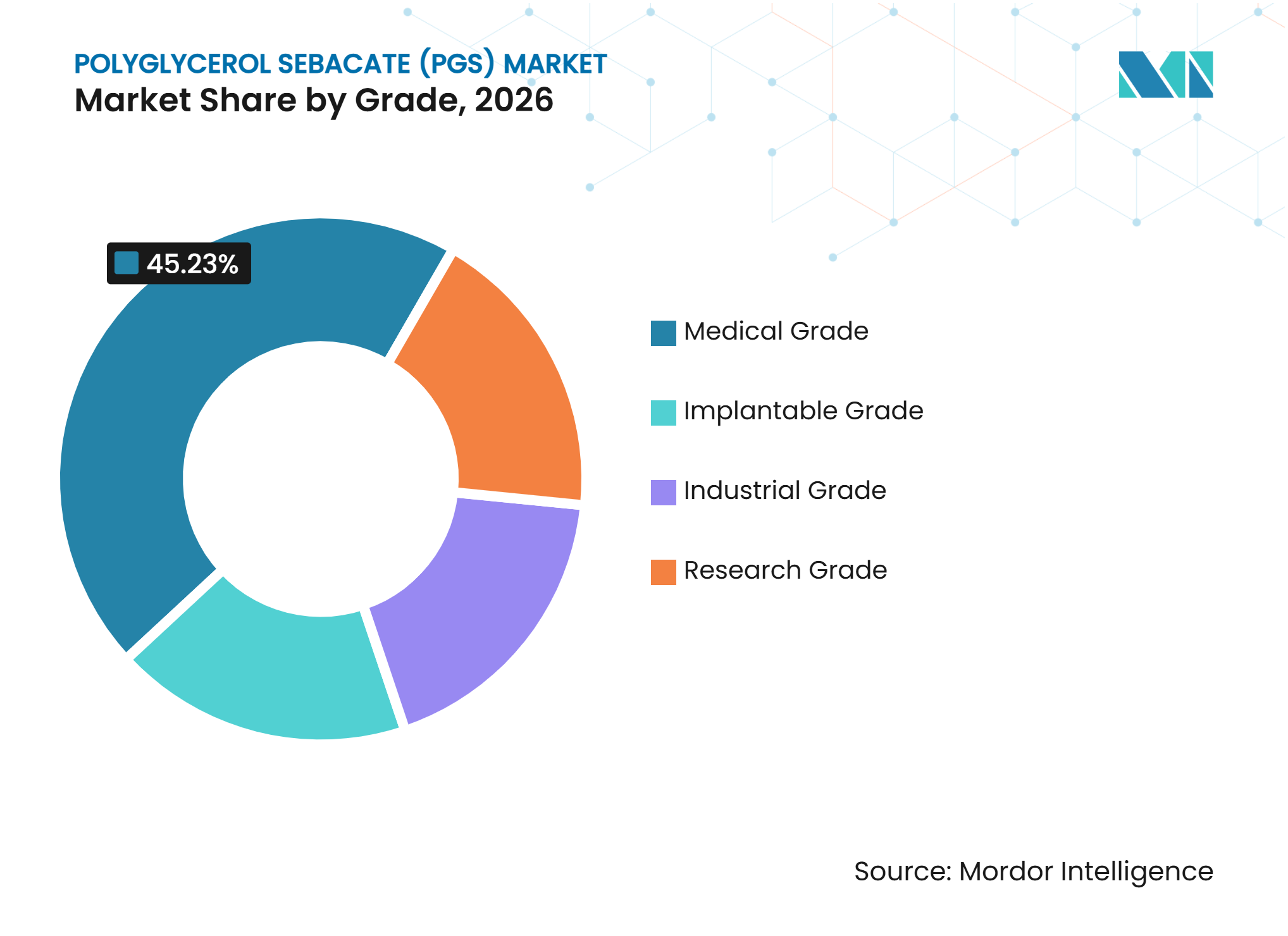
- By grade, Medical Grade held 45.23% of revenue in 2026, while Implantable Grade is projected to grow at an 11.67% CAGR through 2032.
- By product form, Soft Gel held 38.12% of revenue in 2026, while Extruded Products are projected to grow at an 11.79% CAGR through 2032.
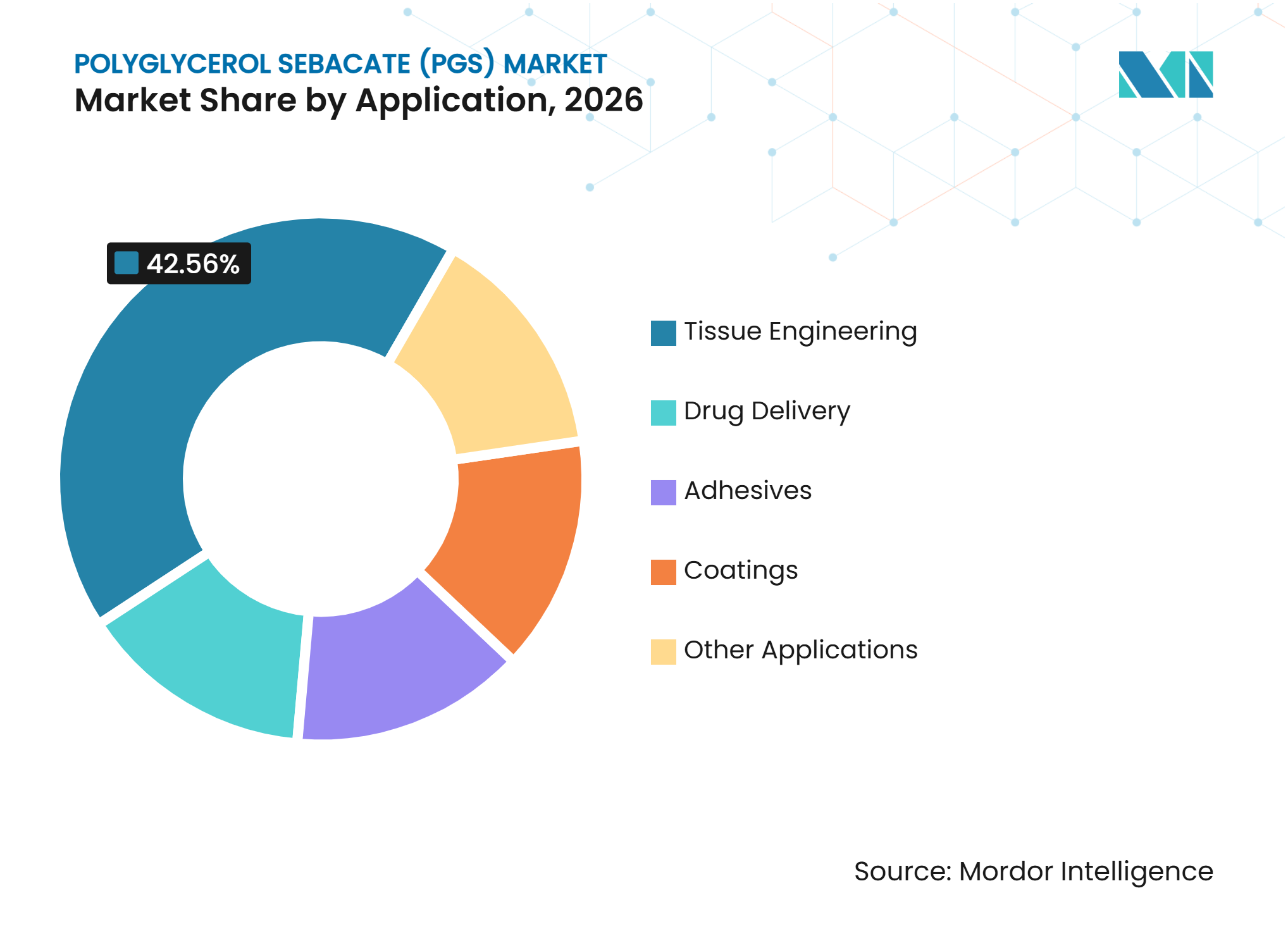
- By application, Tissue Engineering held 42.56% of revenue in 2026, while Drug Delivery is projected to grow at a 12.81% CAGR through 2032.
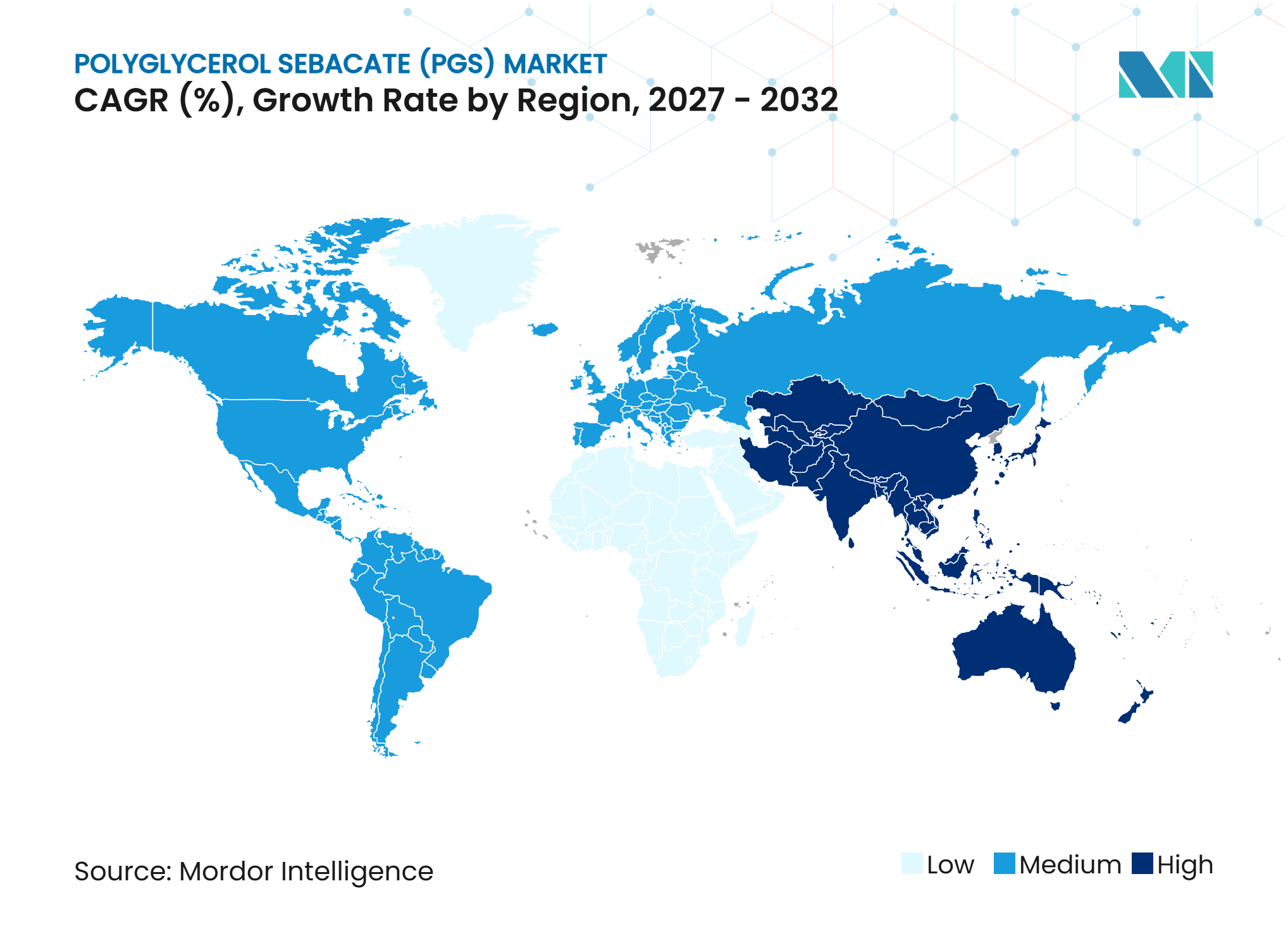
- By geography, North America held 43.78% of revenue in 2026, while Asia-Pacific is projected to grow at a 12.34% CAGR through 2032.
Note: Market numbers in this report are based on Mordor Intelligence's proprietary estimation framework, which combines nine months of actuals with Q4 projections for base year 2026.
Market Trends and Insights
Drivers Impact Analysis of Polyglycerol Sebacate (PGS) Market*
| Drivers | (~) % Impact on CAGR Forecast | Geographic Relevance | Impact Timeline |
|---|---|---|---|
| Rising Adoption in Tissue Engineering and Regenerative Medicine | +3.5% | Global, led by North America and Western Europe | Medium term (2-4 years) |
| Growing Demand for Biomedical Textiles and Bioresorbable Implants | +2.0% | North America and Europe | Medium term (2-4 years) |
| Expanding Long-Acting Drug Delivery Applications | +2.4% | Global, with high adoption in North America and Asia-Pacific | Medium term (2-4 years) |
| Increasing Use of Photocurable and 3D-Printable PGS Derivatives | +1.8% | North America, Europe, Japan, and South Korea | Long term (≥ 4 years) |
| Commercialization of PGS-Based Cardiovascular and Neural Scaffolds | +1.6% | North America and Europe | Long term (≥ 4 years) |
| Source: Mordor Intelligence | |||
Rising Adoption in Tissue Engineering and Regenerative Medicine
Polyglycerol sebacate (PGS) is used in regenerative medicine because its mechanical behavior can be tailored to soft-tissue requirements. Cardiac muscle has a modulus range of 0.05-1.5 MPa, providing a reference for designing compliant PGS scaffold systems. A 2025 study described PGS-gelatin composites containing hydroxyapatite at a 1:3:6 weight ratio that replicated aspects of cancellous bone matrix architecture. This finding expanded the material's relevance beyond soft-tissue constructs to osteogenic applications without requiring a separate raw-material platform. A separate 2025 study reported that electrospun PGS-polyvinyl alcohol (PVA) membranes achieved water permeability of 9.8 × 10⁻⁷ cm²/s and human corneal cell viability of 88%-96%, supporting their use in corneal tissue engineering. These developments support demand across cardiac, neural, dermal, ocular, and bone-related research programs in the Polyglycerol Sebacate (PGS) market.
Growing Demand for Biomedical Textiles and Bioresorbable Implants
Biomedical textile applications require materials that minimize mechanical mismatch between implants and surrounding tissue. PGS provides an elastomeric base for structures that require compliance throughout the healing process. The FDA granted De Novo authorization in June 2025 for TISSIUM's COAPTIUM Connect, a poly(glycerol sebacate acrylate) nerve repair sleeve manufactured through vat photopolymerization. TISSIUM commercially launched the product on July 23, 2025. This clearance demonstrated that a photocurable PGS derivative met the biocompatibility and residual-monomer requirements for a Class II implantable device. The Polyglycerol Sebacate (PGS) market may benefit as developers apply evidence from this material family to other device concepts.
Expanding Long-Acting Drug Delivery Applications
The Polyglycerol Sebacate (PGS) market is supported by the material's ability to incorporate both hydrophilic and hydrophobic active ingredients within a single polymer matrix. A 2025 molecular-scale study identified energetically favorable drug absorption across molecules with varying polarity, as PGS combines hydrophobic sebacic acid chains with hydroxyl-rich glycerol units. This profile can reduce the need for co-formulation additives used with matrices that lack amphiphilic behavior. Research published in 2025 reported sustained sunitinib release from PGS-based nanoparticles for 228 hours in retinal drug delivery. Another 2025 study found that PGS-co-itaconate films produced zero-order-like release of hydrophobic drugs for 20 days, with release rates adjusted through crosslink density. These properties support the use of PGS in applications where acid-generating degradation or burst release can limit the suitability of poly(lactic-co-glycolic acid) (PLGA).
Increasing Use of Photocurable and 3D-Printable PGS Derivatives
Photocurable PGS derivatives expand the manufacturing options available to device developers. Developers can use PGSA and poly(glycerol sebacate-co-itaconate) materials in digital light processing and stereolithography workflows. A 2025 study reported that PGS-PCL block copolyesters were printed with pore sizes controlled to 90 micrometers while retaining adjustable degradation and mechanical properties[1]. Another 2025 study demonstrated melt-based embedded printing of conformal, electroconductive, and elastomeric PGS patches for myocardial infarction repair. These approaches enable designs that are difficult to produce using rigid implant materials. The Polyglycerol Sebacate (PGS) market has applications in patient-specific cardiovascular and vascular constructs, where both geometry and tissue compliance are important.
Restraints Impact Analysis of Polyglycerol Sebacate (PGS) Market*
| Restraints | (~) % Impact on CAGR Forecast | Geographic Relevance | Impact Timeline |
|---|---|---|---|
| Limited Industrial-Scale and Medical-Grade Production Capacity | -2.1% | Global, most acute outside Asia | Medium term (2-4 years) |
| High Clinical, Biocompatibility, and Sterilization Validation Costs | -1.8% | Global, with a disproportionate burden in emerging markets | Long term (≥ 4 years) |
| Batch Variability from Molecular-Weight and Crosslink-Density Control | -1.5% | Global, across synthesis-stage operations | Medium term (2-4 years) |
| Source: Mordor Intelligence | |||
Limited Industrial-Scale and Medical-Grade Production Capacity
PGS manufacturing requires controlled thermal conditions between 120°C and 150°C to prevent premature crosslinking. Maintaining these conditions becomes more challenging when manufacturers scale production from laboratory quantities to multi-ton current good manufacturing practice (cGMP) batches. This constraint affects the availability of homogeneous material for device developers that require consistent inputs for clinical manufacturing. Consequently, the Polyglycerol Sebacate (PGS) market has limited dedicated implantable-grade production capacity. Supply chain exposure also remains relevant, as sebacic acid relies on castor oil-based feedstocks. Manufacturers require reliable feedstock management, controlled atmospheric conditions, and validated production systems to support clinical-scale demand.
High Clinical, Biocompatibility, and Sterilization Validation Costs
Biocompatibility testing represents a barrier to entry for developers of PGS-based devices. ISO 10993 encompasses assessments of cytotoxicity, sensitization, irritation, systemic toxicity, genotoxicity, and implantation for medical devices. The framework requires developers to generate evidence aligned with the material, intended use, and patient-contact profile. Sterilization validation adds complexity, as gamma irradiation and ethylene oxide can affect PGS degradation behavior differently depending on crosslink density. These costs favor organizations that operate ISO 13485 quality systems and possess experience with bioresorbable materials. As a result, the Polyglycerol Sebacate (PGS) market has a longer pathway from formulation development to the commercial supply of devices.
*Our forecasts treat driver/restraint impacts as directional, not additive. The impact forecasts reflect baseline growth, mix effects, and variable interactions.
Polyglycerol Sebacate (PGS) Market Segment Analysis
By Grade:
Medical Specifications Dominate the Purity LadderMedical Grade accounts for 45.23% of the Polyglycerol Sebacate (PGS) market in 2026. Demand from cardiac patches, nerve conduits, wound-healing dressings, and soft-tissue scaffolds supports this share, as these applications require documented material performance and biocompatibility. Medical Grade supports device development programs while dedicated Implantable Grade capacity remains limited. Universities, research hospitals, and early-stage development teams primarily use Research Grade. Industrial Grade has a narrower role in coatings, adhesives, and textile applications that do not require full ISO 10993 documentation.
Implantable Grade is projected to grow at a CAGR of 11.67% from 2027 to 2032. Growth is driven by cardiovascular graft, neural conduit, and corneal scaffold programs advancing from preclinical research toward human studies. Developers also operate under the revised ISO 10993-1 framework for biocompatibility risk management. The 2025 authorization of a poly(glycerol sebacate acrylate) (PGSA) nerve repair device provides a reference point for photocurable PGS-family materials. Larger manufacturers with Good Manufacturing Practice (GMP)-ready systems are positioned to meet demand for validated implantable materials. This trend shifts competitive emphasis toward quality infrastructure rather than research-scale supply alone.



By Product Form:
Extrusion Advances Challenge Soft Gel LeadershipSoft Gel accounts for 38.12% of revenue in 2026. The format remains suitable for end users who need to adjust crosslink density after receiving the material. It also supports extrusion-based bioprinting, as users can load the material into printhead cartridges without the solvent-extraction steps required for cured thermosets. Paste forms serve targeted adhesive and hemostatic applications in surgical settings. Other formats include electrospun membranes and solution-cast films, which are used in corneal scaffolds for their transparency and adjustable porosity.
Extruded Products are projected to grow at a CAGR of 11.79% from 2027 to 2032. Demand for filaments, tubes, and fibers used in stent covers, vascular grafts, and nerve guidance conduits supports the market size for this product form. Extrusion-grade formulations require consistent melt behavior and protection against premature crosslinking. A 2025 embedded-printing study demonstrated the fabrication of PGS structures into conformal cardiac patches through in situ thermal curing. Extruded forms can also incorporate conductive graphene or ceramic phases for specialized device architectures. This manufacturing direction increases the importance of molecular-weight control and reproducible processing.
By Application:
Scaffolding Demand Shapes Polymer Architecture ChoicesTissue Engineering accounts for 42.56% of the Polyglycerol Sebacate (PGS) market in 2026. The segment uses PGS because its mechanical properties can align with those of soft tissues, while its surface erosion can limit pH disruption during degradation. Demand spans cardiac, neural, dermal, ocular, and osteogenic scaffold applications. A 2025 PGS-gelatin-hydroxyapatite study reported a nanostructured composite that replicated aspects of the cancellous bone matrix and demonstrated non-cytotoxic effects in the specified cell models. Coatings and adhesives support additional applications in which PGS provides elastomeric compliance to textile structures. Other applications include wound healing, dental scaffolds, and biosensor substrates.
Drug Delivery is projected to expand at a CAGR of 12.81% from 2027 to 2032. Applications include sustained-release ophthalmic, cardiovascular, and oncology delivery systems. PGS is relevant in applications where surface erosion supports a more predictable release profile than bulk-degrading poly(lactic-co-glycolic acid) (PLGA). A 2025 retinal delivery study showed that PGS-sunitinib nanoparticles achieved sustained release for 228 hours. PGS-co-itaconate films also demonstrated adjustable, zero-order-like release behavior for hydrophobic drugs. The segment’s projected growth reflects interest in materials that can be modified through crosslink density rather than changes in polymer composition.

Geography Analysis
North America
North America held 43.78% of the global Polyglycerol Sebacate (PGS) market share in 2026. The region combines academic medical centers, device startups, and FDA infrastructure that support the commercialization of PGS-based products. The FDA’s June 2025 De Novo authorization of TISSIUM’s COAPTIUM Connect marked a regional development for photocurable PGS materials[2]. The device demonstrated that the PGS-acrylate material could meet applicable implantable device requirements. North American research groups continue to improve PGS synthesis routes. A 2025 comparative study found that Candida antarctica Lipase B (CALB)-catalyzed synthesis provided molecular-weight control and narrow dispersity. ISO 10993 testing and FDA review requirements remain key compliance factors. Canada and Mexico contribute through research and contract manufacturing, while the United States remains the primary center for clinical and device development.
Asia-Pacific
Asia-Pacific is projected to grow at a 12.34% CAGR from 2027 to 2032. China’s bioresorbable polymer manufacturing base, Japan’s ophthalmic and neural regenerative medicine programs, and South Korea’s pharmaceutical polymer demand support the regional outlook. Evonik opened its Medical Device Center in Shanghai in July 2025. The ISO Class 7 cleanroom facility processes bioresorbable semi-finished components for Asian medical-device customers. This infrastructure reduces development delays associated with imported processing services. Japanese research on electrospun PGS membranes indicates demand for transparent, flexible corneal scaffold materials. Regional manufacturing investment supports the Polyglycerol Sebacate (PGS) market as device developers move beyond laboratory production.
Rising Demand Across Remaining Regions
Europe has established biomaterials networks in Germany, the United Kingdom, France, and the Nordic countries. EU Medical Device Regulation 2017/745 provides a harmonized compliance pathway for bioresorbable implants. The regulation requires clinical evidence and post-market surveillance, which can extend adoption timelines while supporting product oversight. Evonik appointed IMCD as a distributor for RESOMER medical-device polymers across the European Economic Area in July 2025. This distribution network supports access to bioresorbable polymers. South America has emerging demand through Brazil’s medical-device sector and academic polymer research. The Middle East and Africa represent long-term growth opportunities as healthcare investment in Saudi Arabia and South Africa expands clinical capacity in tissue engineering and wound care. Alignment with FDA or EU Medical Device Regulation (MDR) requirements remains important before broader commercial adoption.
Competitive Landscape
Market Concentration
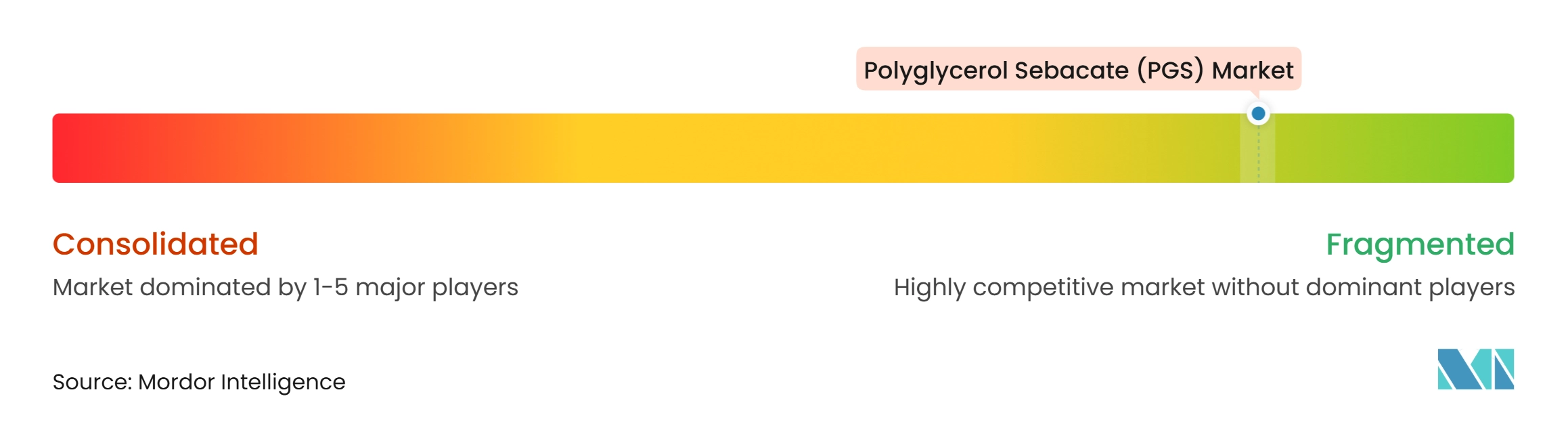
The Polyglycerol Sebacate (PGS) market is fragmented, with no producer holding an established position as a supplier in the adjacent PLGA and PLA categories. Market participants include research-grade PGS suppliers, biomedical textile and drug-delivery platform developers, precursor producers, and polymer development organizations. Several large bioresorbable polymer companies have adjacent capabilities but do not currently manufacture PGS. Competition centers on formulation expertise, process development, and application partnerships rather than direct price competition. This market structure creates opportunities for suppliers to scale from research quantities to controlled, medical-grade production.
The market gap is the dedicated production of implantable-grade PGS under Good Manufacturing Practice (GMP) conditions. Suppliers that can validate filaments and powders for digital light processing and stereolithography can address demand for photocurable devices. TISSIUM’s 2025 clearance for a vat-photopolymerized poly(glycerol sebacate acrylate) (PGSA) nerve repair implant provided a product benchmark for the broader field. In July 2025, Evonik’s Shanghai Medical Device Center added regional processing infrastructure for bioresorbable components. Evonik also expanded its European distribution infrastructure for the RESOMER portfolio through IMCD. These developments do not establish a PGS supply base but expand supporting capabilities for bioresorbable medical-device programs.
Quality management is a threshold for commercial participation. ISO 13485-compliant quality management systems, documented evidence of biocompatibility, and sterilization validation are requirements for suppliers serving medical-device developers. The Polyglycerol Sebacate (PGS) industry may favor organizations that combine polymer chemistry expertise with regulated manufacturing capabilities. Companies focused on research-grade materials may continue to serve academic demand but may face limitations in clinical supply. Suppliers that control molecular weight, crosslink density, and extrusion conditions can differentiate materials for device-specific applications.
Polyglycerol Sebacate (PGS) Industry Leaders
-
Secant Group, LLC
-
Merck KGaA
-
Akina, Inc.
-
Cambridge Polymer Group, Inc.
-
Evonik Industries AG
- *Disclaimer: Major Players sorted in no particular order
Polyglycerol Sebacate (PGS) Market Companies Covered in this Report
- ABITEC
- Akina, Inc.
- Cambridge Polymer Group, Inc.
- DuPont
- Evonik Industries AG
- Merck KGaA
- Oleon NV
- Orthofix International N.V.
- Polymers LLC
- Polyzen, LLC
- Resinex
- Sakamoto Yakuhin Kogyo Co., Ltd.
- Secant Group, LLC
- Solesis
- Synthecon, Inc.
Recent Industry Developments in Polyglycerol Sebacate (PGS) Market
- October 2025: Secant Group, LLC received US Patent 12,440,446 for a poly(glycerol sebacate) (PGS)-based polymeric delivery system for biologics using nanoparticle polyplexes. The patent covers PGS copolymers modified with charged moieties for nucleic acid delivery and aims to reduce PEGylated lipid requirements in gene delivery vehicles.
- September 2025: Evonik and Ethris GmbH entered into a strategic partnership to develop and market a lipid nanoparticle (LNP) platform based on Ethris’s SNaP LNP technology for RNA therapeutics. The partnership expanded Evonik’s drug-delivery formulation services to include nucleic acid delivery, a potential application area for PGS-based materials as alternatives to PEGylation.
Global Polyglycerol Sebacate (PGS) Market Report Scope
Poly(glycerol sebacate) (PGS) is a biodegradable and biocompatible thermoset elastomer produced from glycerol and sebacic acid, which are naturally occurring mammalian metabolites. Its material properties support applications that require an elastomeric, degradable polymer.
The polyglycerol sebacate (PGS) market is segmented by grade, product form, application, and geography. By grade, the market is segmented into research grade, medical grade, implantable grade, and industrial grade. By product form, the market is segmented into soft gel, paste, extruded products, and others. By application, the market is segmented into tissue engineering, drug delivery, adhesives, coatings, and other applications. The report also covers market sizes and forecasts for polyglycerol sebacate (PGS) across 15 countries in major regions. The market sizes and forecasts are provided in terms of value (USD).
Segmentation Overview
| Research Grade |
| Medical Grade |
| Implantable Grade |
| Industrial Grade |
| Soft Gel |
| Paste |
| Extruded Products |
| Others |
| Tissue Engineering |
| Drug Delivery |
| Adhesives |
| Coatings |
| Other Applications |
| Asia-Pacific | China |
| India | |
| Japan | |
| South Korea | |
| ASEAN Countries | |
| Rest of Asia-Pacific | |
| North America | United States |
| Canada | |
| Mexico | |
| Europe | Germany |
| United Kingdom | |
| France | |
| Italy | |
| NORDIC Countries | |
| Rest of Europe | |
| South America | Brazil |
| Argentina | |
| Rest of South America | |
| Middle East and Africa | Saudi Arabia |
| South Africa | |
| Rest of Middle East and Africa |
| By Grade | Research Grade | |
| Medical Grade | ||
| Implantable Grade | ||
| Industrial Grade | ||
| By Product Form | Soft Gel | |
| Paste | ||
| Extruded Products | ||
| Others | ||
| By Application | Tissue Engineering | |
| Drug Delivery | ||
| Adhesives | ||
| Coatings | ||
| Other Applications | ||
| By Geography | Asia-Pacific | China |
| India | ||
| Japan | ||
| South Korea | ||
| ASEAN Countries | ||
| Rest of Asia-Pacific | ||
| North America | United States | |
| Canada | ||
| Mexico | ||
| Europe | Germany | |
| United Kingdom | ||
| France | ||
| Italy | ||
| NORDIC Countries | ||
| Rest of Europe | ||
| South America | Brazil | |
| Argentina | ||
| Rest of South America | ||
| Middle East and Africa | Saudi Arabia | |
| South Africa | ||
| Rest of Middle East and Africa | ||
Key Questions Answered in the Report
What is current market size of Polyglycerol Sebacate (PGS) Market?
The Polyglycerol Sebacate (PGS) market size was valued at USD 107.85 billion in 2026 and is estimated to grow from USD 119.48 billion in 2027 to USD 198.64 billion by 2032, at a CAGR of 10.78% during the forecast period (2027-2032).
Which PGS grade leads current demand?
Medical Grade leads the grade segment with a 45.23% share in 2026, supported by cardiac, neural, wound-healing, and soft-tissue uses.
Which PGS application is growing fastest?
Drug Delivery is forecast to grow at a 12.81% CAGR through 2032, supported by sustained-release applications in ophthalmic, cardiovascular, and oncological fields.
Why is PGS used in tissue engineering?
PGS is designed to align with soft-tissue mechanics and uses a surface-eroding degradation profile that can limit pH disruption.