
Polyethylene Glycol (PEG) Market Size and Share
Market Overview
| Study Period | 2022 - 2032 |
|---|---|
| Market Size (2027) | USD 6.01 Billion |
| Market Size (2032) | USD 6.38 Billion |
| Growth Rate (2027 - 2032) | 6.24 % |
| Fastest Growing Market | Asia-Pacific |
| Largest Market | Asia-Pacific |
| Market Concentration | Low |
Major Players
*Disclaimer: Major Players sorted in no particular order Image © Mordor Intelligence. Reuse requires attribution under CC BY 4.0. |
|
Polyethylene Glycol (PEG) Market Analysis by Mordor Intelligence
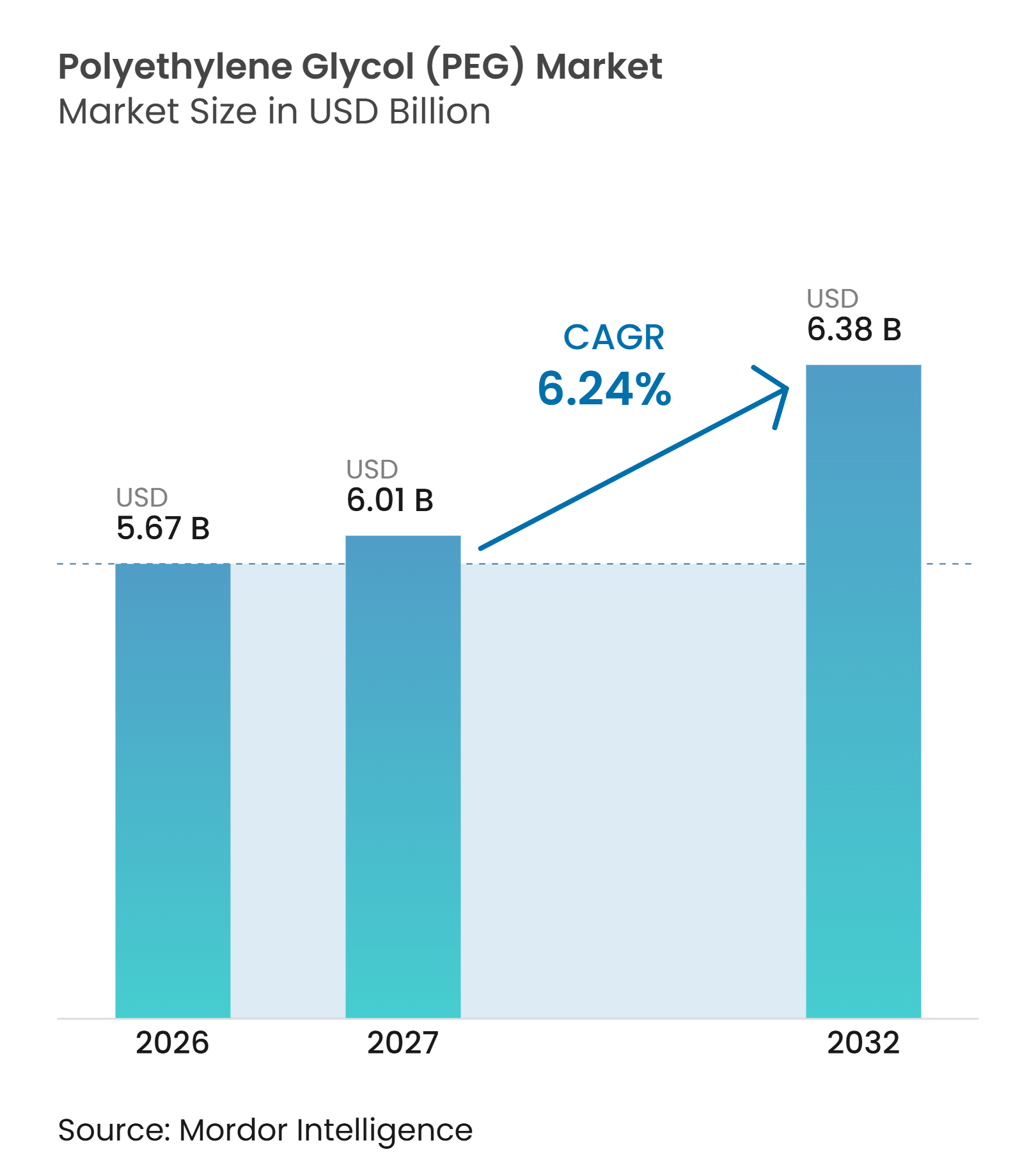
The Polyethylene Glycol (PEG) Market size stands at USD 6.01 billion in 2026 and is projected to reach USD 8.63 billion by 2032, advancing at a CAGR of 6.24% through 2027-2032. The polyethylene glycol (PEG) market is supported by pharmaceutical demand because PEG supports formulation, drug delivery, and activated-PEG applications for biologics. PEGylation is used to improve the solubility and circulation profile of selected therapeutic products, while work on site-specific conjugation is expanding development activity for more consistent drug products. Lipid nanoparticle development also supports demand for high-purity methoxy-PEG inputs used in PEG-lipid production. The construction industry gives the polyethylene glycol (PEG) market another source of demand through reactive macromonomers used in polycarboxylate ether superplasticizers. Competition centers on secure ethylene oxide access, high-purity grades, quality documentation, and local supply capabilities.
Key Report Takeaways
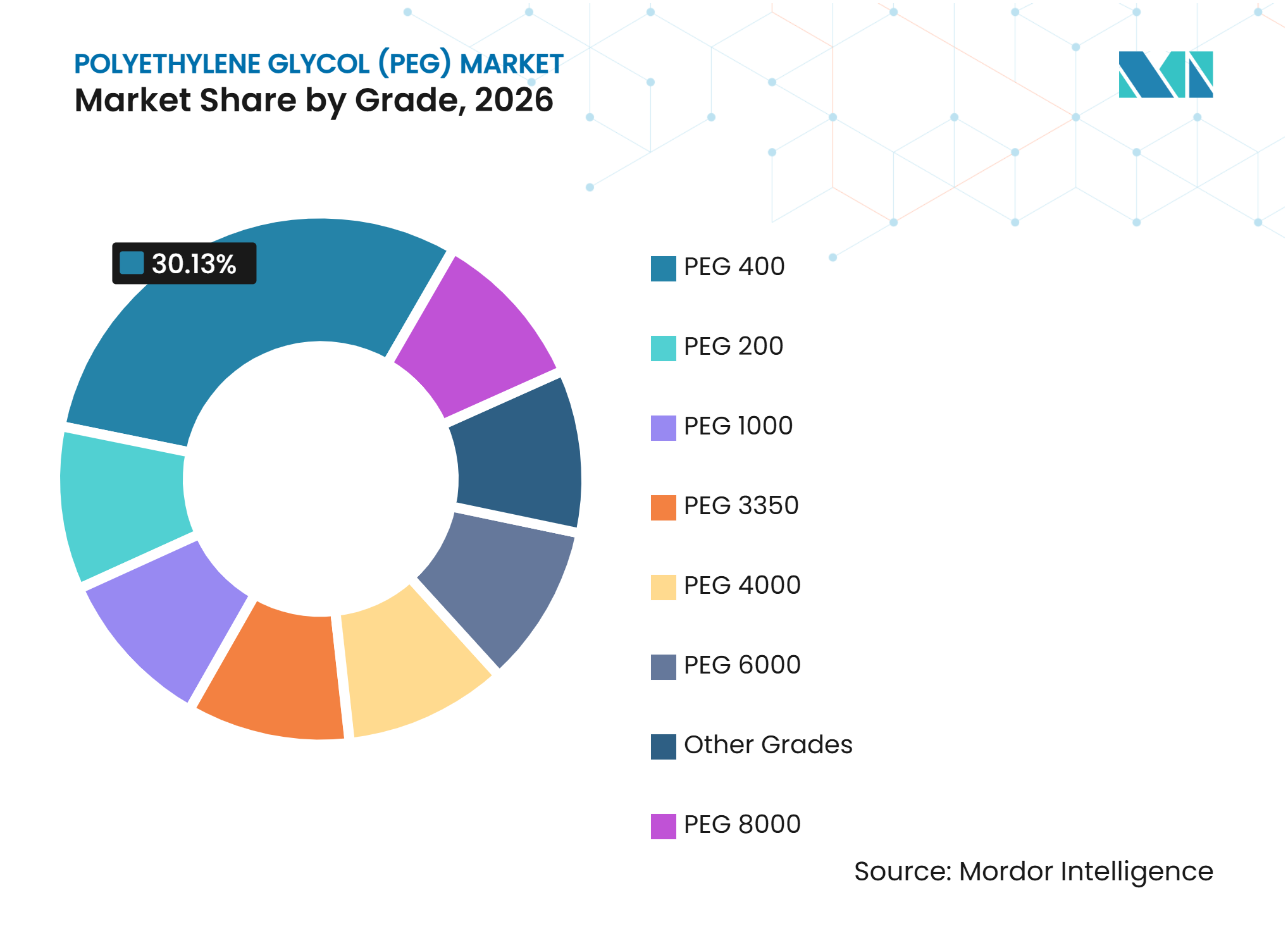
- By grade, PEG 400 held 30.13% of the polyethylene glycol (PEG) market share in 2026, while PEG 3350 is projected to advance at a 6.89% CAGR through 2032.
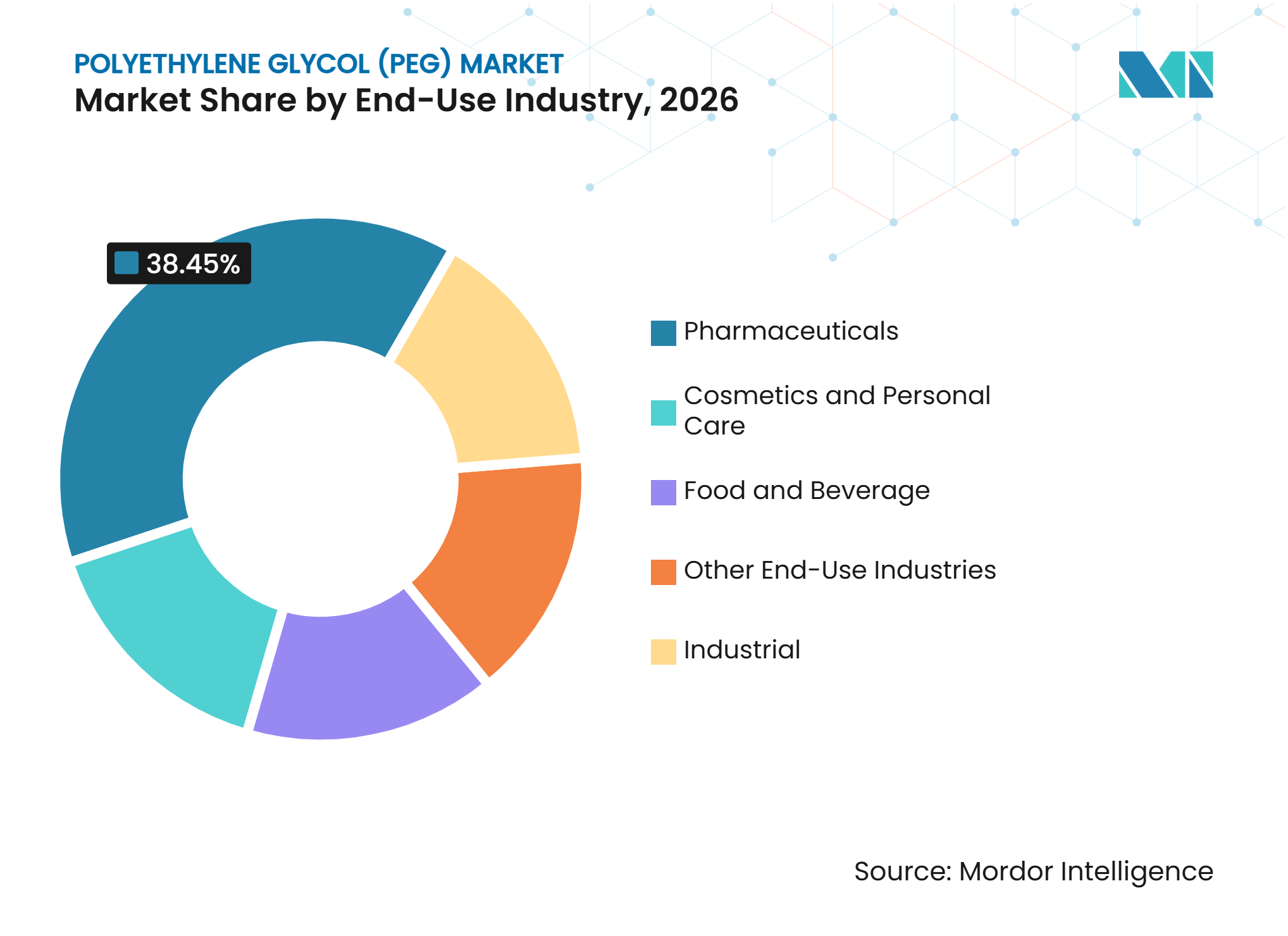
- By end-use industry, pharmaceuticals held 38.45% of the polyethylene glycol (PEG) market share in 2026 and are projected to advance at a 7.34% CAGR through 2032.
- By geography, Asia-Pacific held 48.06% of the polyethylene glycol (PEG) market share in 2026 and is projected to advance at a 7.22% CAGR through 2032.
Note: Market numbers in this report are based on Mordor Intelligence's proprietary estimation framework, which combines nine months of actuals with Q4 projections for base year 2026.
Market Trends and Insights
Drivers Impact Analysis of Polyethylene Glycol (PEG) Market*
| Driver | (~) % Impact on CAGR Forecast | Geographic Relevance | Impact Timeline |
|---|---|---|---|
| Pharmaceutical Formulation and Biologics Expansion | +2.0% | Global, with concentration in North America, Europe, and APAC | Long term (>= 4 years) |
| Growth of PEG 3350-Based Constipation and Bowel-Preparation Products | +1.5% | Global; strongest in North America, Europe, and East Asia | Medium term (2-4 years) |
| Expansion of High-Purity and Low-Impurity Excipients | +1.2% | Global; regulatory influence most acute in North America and EU | Medium term (2-4 years) |
| Emerging Demand for Reactive PEG in Specialty Construction Chemicals | +0.9% | APAC core, spillover to MEA and South America | Medium term (2-4 years) |
| Bio-Based PEG Development and Sustainable Feedstock Substitution | +0.7% | Europe and North America, early-stage APAC | Long term (>= 4 years) |
| Source: Mordor Intelligence | |||
Pharmaceutical Formulation and Biologics Expansion
PEG serves pharmaceutical formulation work beyond traditional excipient roles. PEGylation can extend the plasma half-life of proteins and peptides, reduce immunogenicity, and improve solubility in selected therapies. Site-specific PEGylation is receiving attention because it can preserve bioactivity by controlling the conjugation position. PEG 400 continued to appear in FDA-reviewed injectable and topical products in 2025. The development of lipid nanoparticle-based nucleic acid therapies supports demand for pharmaceutical-grade methoxy-PEG derivatives used in PEG-lipid synthesis. As pharmaceutical development shifts toward Asia-Pacific contract development and manufacturing organizations, the polyethylene glycol (PEG) market benefits from broader regional demand for compendial material.
Growth of PEG 3350-Based Constipation and Bowel-Preparation Products
PEG 3350 functions as an osmotic laxative because it retains water in the intestinal lumen without systemic absorption. This profile supports its use in long-term constipation management, pediatric care, and bowel-preparation products. CLARIANT offers Polyglykol 3350 for prescription and over-the-counter constipation and bowel-preparation applications, with compliance with European Pharmacopeia, United States Pharmacopeia–National Formulary, and Japanese Pharmacopeia requirements. PEG 3350 used as an active pharmaceutical ingredient requires dedicated Good Manufacturing Practice (GMP) production and supporting documentation. These requirements create a different competitive setting from standard excipient supply. They also favor suppliers that can consistently meet pharmacopeial and quality-system expectations.
Expansion of High-Purity and Low-Impurity Excipients
Demand for pharmaceutical PEG is divided between standard grades and high-purity grades with low aldehyde, endotoxin, and dioxane content. Croda International Plc supplies Super Refined PEG 400 for sensitive pharmaceutical applications, including injectable and oral formulations. Croda International Plc reported that its fourth quarter was the strongest pharmaceutical quarter of 2025, supported by higher excipient sales for small-molecule and biologic applications. Indorama Ventures Public Company Limited expanded European distribution for its EXCiPACT-certified OXIPURITY pharmaceutical PEG line through Brenntag in 2025. United States Pharmacopeia–National Formulary and European Pharmacopoeia quality expectations support demand for validated grades. These requirements make quality documentation an important competitive factor in the polyethylene glycol (PEG) market.
Emerging Demand for Reactive PEG in Specialty Construction Chemicals
Reactive PEG grades include isoprenol-PEG, vinyl-PEG, allyloxy-PEG, and methoxy-PEG. These polymerizable macromonomers are used to produce polycarboxylate ether superplasticizers for high-performance concrete. BASF launched Pluriol A 2400 I for the European construction chemicals sector in May 2025. BASF stated that it was the only European supplier with backward-integrated production for this reactive isoprenol-PEG grade. LOTTE Chemical Corporation supplies vinyl-PEG grades for polycarboxylate ether producers. Construction demand diversifies the polyethylene glycol (PEG) market beyond pharmaceutical uses and provides a separate channel for process-focused producers.
Restraints Impact Analysis of Polyethylene Glycol (PEG) Market*
| Restraint | (~) % Impact on CAGR Forecast | Geographic Relevance | Impact Timeline |
|---|---|---|---|
| Ethylene Oxide and Feedstock Price Volatility | -0.9% | Global; most acute in Europe and APAC | Short term (<= 2 years) |
| Substitution by Alternative Solvents, Excipients, and Polymers | -0.6% | North America and Europe; emerging APAC | Medium term (2-4 years) |
| EG/DEG Contamination Control Requirements | -0.4% | Global; regulatory influence strongest in North America, EU, Japan, India | Medium to Long term (2+ years) |
| Source: Mordor Intelligence | |||
Ethylene Oxide and Feedstock Price Volatility
Ethylene oxide is the primary raw material for PEG synthesis. Its cost is linked to upstream ethylene and naphtha, which can affect PEG contract pricing after a time lag. This exposure affects the polyethylene glycol (PEG) market because feedstock shifts can alter regional sourcing decisions. Buyers may respond with longer supply agreements and dual supplier qualification. Integrated producers can offer greater supply assurance when feedstock conditions are unsettled. Their ethylene oxide position can therefore support commercial relationships with pharmaceutical and industrial buyers.
EG/DEG Contamination Control Requirements
Ethylene glycol and diethylene glycol contamination control increases testing and documentation requirements for pharmaceutical PEG. United States Pharmacopeia–National Formulary announced updated testing expectations for PEG in 2024, with an official date of May 1, 2025[1]. The applicable methods differentiate by molecular weight and include gas chromatography or gel-permeation chromatography as appropriate. The European Directorate for the Quality of Medicines and HealthCare also reported a new method for suspected ethylene glycol and diethylene glycol adulteration in 2025. These controls raise the quality threshold for pharmaceutical suppliers. They can also increase the value of established analytical capabilities and validated compliance records.
*Our forecasts treat driver/restraint impacts as directional, not additive. The impact forecasts reflect baseline growth, mix effects, and variable interactions.
Polyethylene Glycol (PEG) Market Segment Analysis
By Grade:
PEG 400 Supports Broad Formulation Use While PEG 3350 AdvancesPEG 400 held 30.13% of the polyethylene glycol (PEG) market share in 2026. Its position reflects use across injectable, oral, nasal, ophthalmic, auricular, rectal, and topical dosage forms. The FDA Inactive Ingredient Database recognizes PEG 400 in a wide range of drug products, and a 2025 FDA review listed it in an injectable product. Its low molecular weight and hydrophilic character support the solubilization of poorly water-soluble active pharmaceutical ingredients. This combination supports continued use in both conventional and specialized formulation work.
PEG 3350 is projected to advance at a 6.89% CAGR through 2032. It is used both as an osmotic laxative active pharmaceutical ingredient and as an excipient for tablet coatings and plasma protein fractionation. CLARIANT manufactures PEG 3350 as a laxative active pharmaceutical ingredient under International Council for Harmonisation Q7 Good Manufacturing Practice conditions. PEG 200, PEG 1000, PEG 4000, PEG 6000, PEG 8000, and other grades serve pharmaceutical, industrial, lubricant, detergent, and construction applications. LOTTE Chemical Corporation supplies several PEG grades through its integrated ethylene oxide and glycol chain.



By End-Use Industry:
Pharmaceuticals Combine Scale with Faster GrowthPharmaceuticals held 38.45% of the polyethylene glycol (PEG) market share in 2026. The segment is projected to advance at a 7.34% CAGR through 2032. PEG supports drug delivery, PEGylation, bowel preparation, solid and liquid dosage forms, and starting materials for PEG-lipids. NOF Corporation began operating its LS Aichi Plant in October 2025 to produce Good Manufacturing Practice-compliant activated PEGs for protein and peptide modification. The facility supports pharmaceutical and biotechnology customers working with activated PEG materials.
The pharmaceutical use case places a premium on batch consistency, analytical controls, and pharmacopeial documentation. The 2025 United States Pharmacopeia–National Formulary testing requirements created a clearer quality baseline for PEG used in regulated applications. Cosmetics and personal care applications use PEG as a humectant, emulsifier, and consistency agent. Food and beverage uses include approved applications covered by European Union food-additive rules. Industrial demand includes construction chemicals, lubricants, textile processing, and coatings. Agricultural adjuvants, animal-feed additives, and specialty coatings provide additional end-use outlets.

Geography Analysis
Asia-Pacific
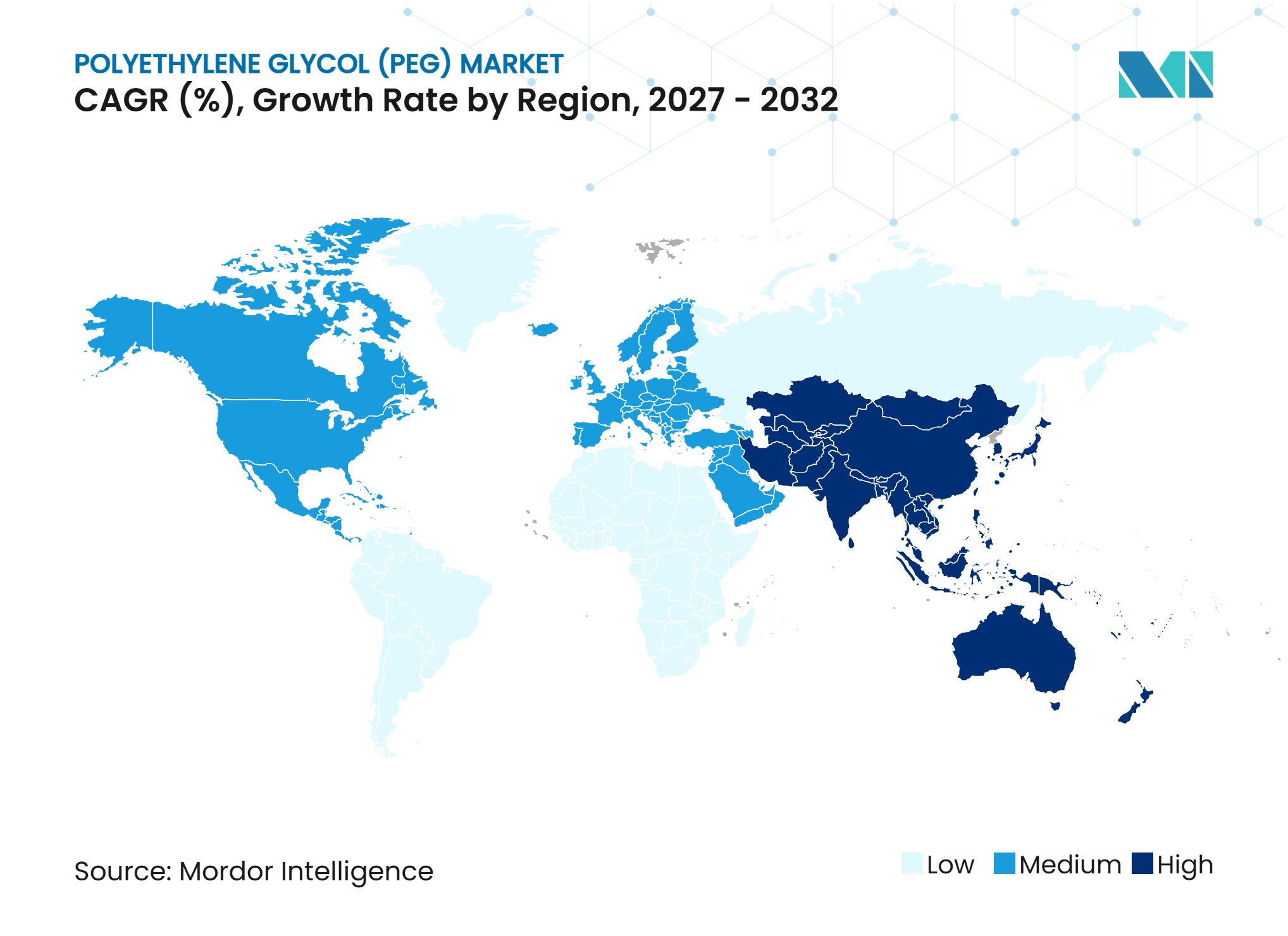
Asia-Pacific held 48.06% of the polyethylene glycol (PEG) market share in 2026 and is projected to advance at a 7.22% CAGR through 2032. China and India support this position through chemical manufacturing capacity and pharmaceutical production. South Korea adds integrated supply through LOTTE Chemical Corporation, which offers standard PEG and reactive PEG grades. Japan supports high-value applications through NOF Corporation, Sanyo Chemical Industries, Ltd., and Kao Corporation. NOF Corporation’s LS Aichi Plant added Good Manufacturing Practice-compliant activated PEG capacity in 2025.
North America
Dow stated that its global alkoxylation capacity increased 70% from its 2020 baseline. North American pharmaceutical customers place weight on batch consistency, current Good Manufacturing Practice controls, and complete pharmacopeial documentation. The FDA-linked quality framework raises the importance of ethylene glycol and diethylene glycol testing for high-risk excipients. INEOS acquired LyondellBasell’s ethylene oxide and derivatives business in Bayport, Texas, in May 2024, expanding its regional integrated supply position. Supply security and specification control remain defining regional factors.
Europe, South America, Middle East and Africa
Europe is characterized by rigorous compliance requirements and high-value pharmaceutical demand. The European Directorate for the Quality of Medicines and HealthCare published a 2025 update on test methods for suspected ethylene glycol and diethylene glycol adulteration. CLARIANT completed its CHF 80 million (approximately USD 97.81 million) Daya Bay Care Chemicals expansion in China in November 2025, showing the importance of regional manufacturing alongside European capabilities. South America, the Middle East, and Africa provide pharmaceutical, industrial, homecare, and distribution opportunities for suppliers with compliance capability.
Competitive Landscape
Market Concentration
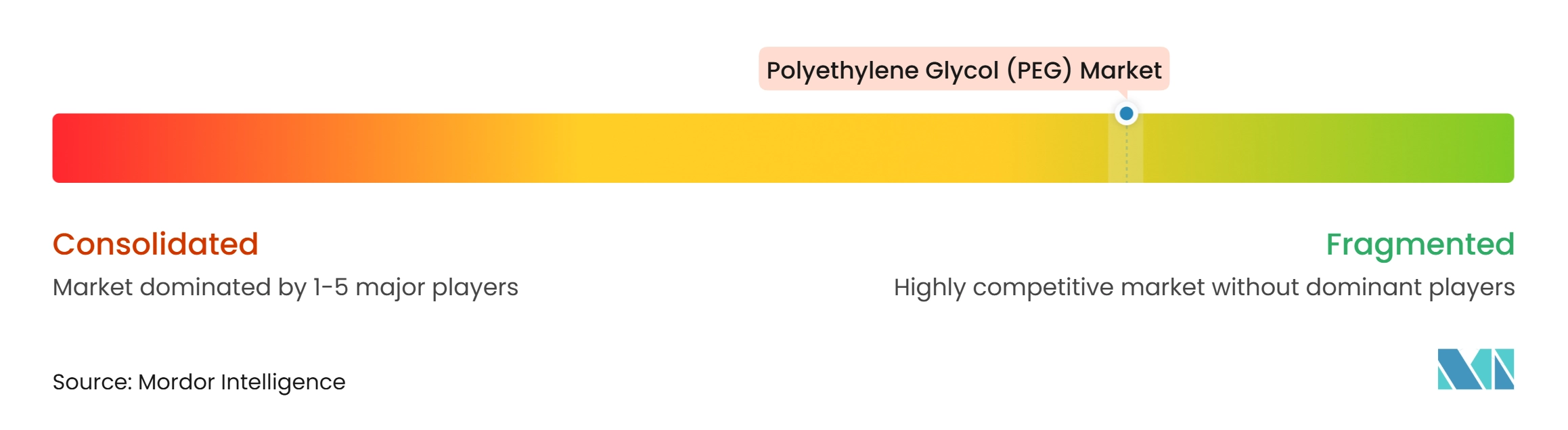
The polyethylene glycol (PEG) market is highly fragmented, with top players including BASF, Dow, CLARIANT, LOTTE Chemical Corporation, and Croda International Plc. Backward integration can improve feedstock access and supply reliability. Dow stated that its 2025 capacity projects were supported by supply agreements with major consumer-brand customers. Product differentiation centers on high-purity, low-endotoxin, low-aldehyde, and Good Manufacturing Practice grades. Reactive PEG for construction chemicals is also a distinct area of competition.
BASF launched Pluriol A 2400 I in May 2025 for concrete superplasticizer production in Europe. CLARIANT completed its Daya Bay expansion in November 2025, strengthening its Care Chemicals production base in China[2]. NOF Corporation opened the LS Aichi Plant in October 2025 for activated PEGs used in pharmaceutical and biotechnology applications. Indorama Ventures Public Company Limited extended its pharmaceutical distribution through partnerships with Quadra Chemicals in North America and Brenntag in Europe. These moves show a focus on capacity, regional availability, and access to regulated customers.
Sanyo Chemical Industries, Ltd. reported a recovery in polyethylene glycol sales in its 2025 integrated report. India Glycols Limited supplies bio-based glycol chemistry that can support ethylene oxide-based value chains. Competitive positions depend on feedstock integration, grade quality, regulatory documentation, and local customer support.
Polyethylene Glycol (PEG) Industry Leaders
-
BASF
-
Dow
-
CLARIANT
-
LOTTE Chemical Corporation
-
Croda International Plc
- *Disclaimer: Major Players sorted in no particular order
Polyethylene Glycol (PEG) Market Companies Covered in this Report
- BASF
- CLARIANT
- Croda International Plc
- Dow
- India Glycols Limited
- Indorama Ventures Public Company Limited
- INEOS
- Kao Corporation
- Liaoning Oxiranchem Inc.
- LOTTE Chemical Corporation
- Merck KGaA
- NOF Corporation
- SABIC
- Sanyo Chemical Industries, Ltd.
- Spectrum Chemical Manufacturing Corp.
Recent Industry Developments in Polyethylene Glycol (PEG) Market
- March 2026: CLARIANT announced a multi-phase expansion of its Clear Lake facility in Texas to manufacture pharmaceutical-grade polyethylene glycol (PEG) excipients under excipient Good Manufacturing Practice (GMP)-compliant conditions. The facility will be CLARIANT's first US manufacturing site for pharmaceutical-grade PEG, strengthening regional supply for oral and topical pharmaceutical applications.
- October 2025: NOF Corporation commissioned its LS Aichi Plant, a new Good Manufacturing Practice-compliant facility for SUNBRIGHT activated PEGs at Aichi Works, Japan. The plant has twice the manufacturing capacity of NOF Corporation’s predecessor facility and is designed for pharmaceutical and biotechnology uses.
Global Polyethylene Glycol (PEG) Market Report Scope
Polyethylene glycol (PEG) is a water-soluble polymer produced through the polymerization of ethylene oxide and is available in different molecular weights and physical forms. It offers properties such as solubility, lubrication, moisture retention, and chemical stability, making it suitable for a wide range of formulations and industrial processes. PEG is widely used as an excipient in pharmaceutical products, an ingredient in personal care formulations, and a functional material in food processing and industrial applications.
The Polyethylene Glycol (PEG) Market is segmented by grade, end-use industry, and geography. By grade, the market is segmented into PEG 200, PEG 400, PEG 1000, PEG 3350, PEG 4000, PEG 6000, PEG 8000, and other grades. By end-use industry, the market is segmented into pharmaceuticals, cosmetics and personal care, food and beverage, industrial, and other end-use industries. The report also covers the market size and forecasts for polyethylene glycol (PEG) in 15 countries across major regions. For each segment, the market sizing and forecasts have been done on the basis of value (USD).
Segmentation Overview
| PEG 200 |
| PEG 400 |
| PEG 1000 |
| PEG 3350 |
| PEG 4000 |
| PEG 6000 |
| PEG 8000 |
| Other Grades |
| Pharmaceuticals |
| Cosmetics and Personal Care |
| Food and Beverage |
| Industrial |
| Other End-Use Industries |
| Asia-Pacific | China |
| India | |
| Japan | |
| South Korea | |
| ASEAN Countries | |
| Rest of Asia-Pacific | |
| North America | United States |
| Canada | |
| Mexico | |
| Europe | Germany |
| United Kingdom | |
| France | |
| Italy | |
| NORDIC Countries | |
| Rest of Europe | |
| South America | Brazil |
| Argentina | |
| Rest of South America | |
| Middle East and Africa | Saudi Arabia |
| South Africa | |
| Rest of Middle East and Africa |
| By Grade | PEG 200 | |
| PEG 400 | ||
| PEG 1000 | ||
| PEG 3350 | ||
| PEG 4000 | ||
| PEG 6000 | ||
| PEG 8000 | ||
| Other Grades | ||
| By End-Use Industry | Pharmaceuticals | |
| Cosmetics and Personal Care | ||
| Food and Beverage | ||
| Industrial | ||
| Other End-Use Industries | ||
| By Geography | Asia-Pacific | China |
| India | ||
| Japan | ||
| South Korea | ||
| ASEAN Countries | ||
| Rest of Asia-Pacific | ||
| North America | United States | |
| Canada | ||
| Mexico | ||
| Europe | Germany | |
| United Kingdom | ||
| France | ||
| Italy | ||
| NORDIC Countries | ||
| Rest of Europe | ||
| South America | Brazil | |
| Argentina | ||
| Rest of South America | ||
| Middle East and Africa | Saudi Arabia | |
| South Africa | ||
| Rest of Middle East and Africa | ||
Key Questions Answered in the Report
What is the size of the polyethylene glycol (PEG) market?
The polyethylene glycol (PEG) market size was valued at USD 6.01 billion in 2026 and is estimated to grow from USD 6.38 billion in 2027 to reach USD 8.63 billion by 2032, at a CAGR of 6.24% during the forecast period (2027-2032).
What is driving demand for polyethylene glycol (PEG)?
Pharmaceutical formulation, biologics, PEG 3350 bowel-preparation products, high-purity excipients, and reactive PEG for construction chemicals support demand.
Which grade held the largest share in 2026?
PEG 400 held a 30.13% share in 2026 because it is widely used in pharmaceutical formulations and other applications.
Which end-use industry is projected to advance fastest through 2032?
Pharmaceuticals are projected to advance at a 7.34% CAGR through 2032.