
Pneumology Digital Stethoscope Market Size and Share
Market Overview
| Study Period | 2021 - 2032 |
|---|---|
| Market Size (2027) | USD 436.88 Million |
| Market Size (2032) | USD 658.43 Million |
| Growth Rate (2027 - 2032) | 8.55 % |
| Fastest Growing Market | Asia-Pacific |
| Largest Market | North America |
| Market Concentration | Medium |
Major Players *Disclaimer: Major Players sorted in no particular order Image © Mordor Intelligence. Reuse requires attribution under CC BY 4.0. | |
Pneumology Digital Stethoscope Market Analysis by Mordor Intelligence
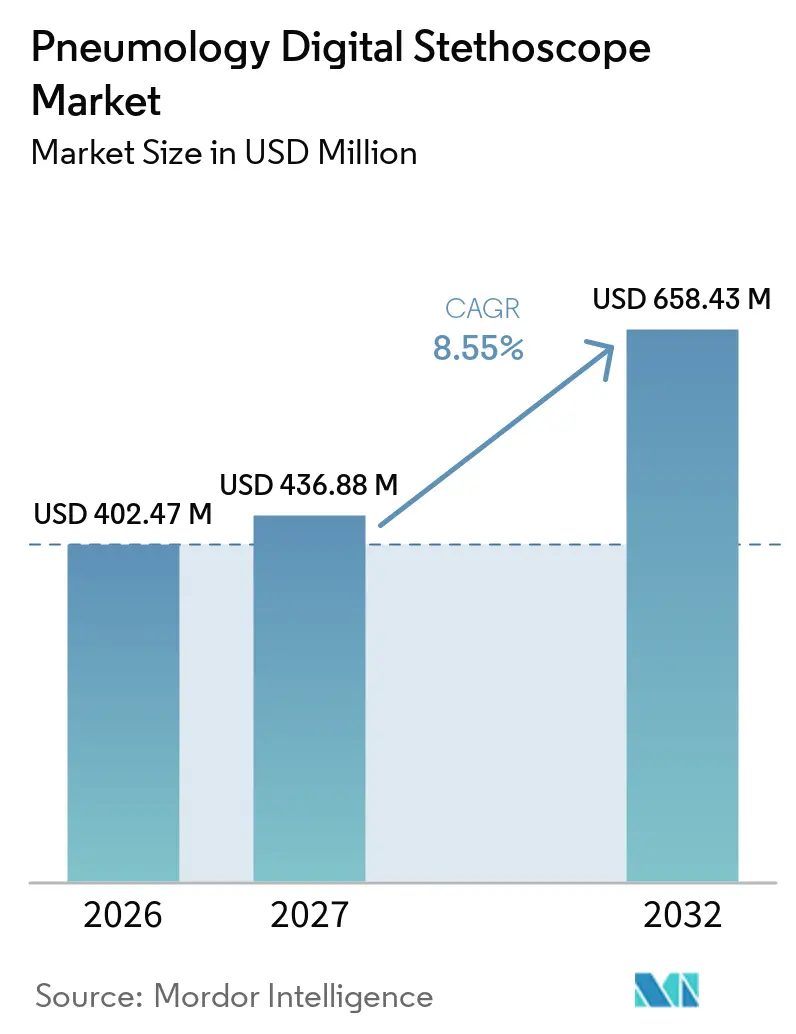
The Pneumology Digital Stethoscope Market size was valued at USD 402.47 million in 2026 and is estimated to grow from USD 436.88 million in 2027 to reach USD 658.43 million by 2032, at a CAGR of 8.55% during the forecast period (2027-2032).
Rising respiratory disease prevalence, remote care adoption, and artificial intelligence (AI)-supported auscultation are expanding the role of digital auscultation in routine care. Chronic respiratory diseases affect 81.7 million people in the World Health Organization (WHO) European Region, while chronic obstructive pulmonary disease (COPD) accounts for 80% of related deaths, reinforcing the need for earlier and more consistent assessments. Devices that record and analyze lung sounds support primary care teams in clinical decision-making when pulmonology expertise is not immediately available. Telehealth providers are becoming key distribution partners, as connected devices extend the quality of respiratory examinations beyond clinical settings. Competition increasingly centers on validated algorithms, secure data transmission, and software integration rather than acoustic hardware alone.
Key Report Takeaways
- By product architecture, handheld/tubeless smart pods held 56.12% revenue share in 2026, while integrated tube-based digital stethoscopes are projected to expand at a 9.22% CAGR through 2032.
- By technology and intelligence tier, basic amplification & filtering held 52.93% revenue share in 2026, while on-device edge AI analytics is projected to expand at a 12.67% CAGR through 2032.
- By clinical indication, general pulmonary auscultation & triage held 59.67% revenue share in 2026, while acute respiratory infection screening is projected to expand at a 9.78% CAGR through 2032.
- By data transmission pipeline, tethered/wired systems held 62.12% revenue share in 2026, while local wireless area networks, including Bluetooth / Wi-Fi, are projected to expand at a 10.45% CAGR through 2032.
- By end user, Hospitals and Clinics held 45.66% revenue share in 2026, while Decentralized Home Healthcare & Telehealth is projected to expand at an 11.23% CAGR through 2032.
- By geography, North America held 40.55% revenue share in 2026, while Asia-Pacific is projected to expand at a 12.95% CAGR through 2032.
Note: Market numbers in this report are based on Mordor Intelligence's proprietary estimation framework, which combines nine months of actuals with Q4 projections for base year 2026.
Market Trends and Insights
Drivers Impact Analysis of Pneumology Digital Stethoscope Market*
| DRIVER | (~) % IMPACT ON CAGR FORECAST | GEOGRAPHIC RELEVANCE | IMPACT TIMELINE |
|---|---|---|---|
| Growing demand for remote respiratory assessment | +1.7% | Global, with core adoption in North America and Europe and rapid expansion in Asia-Pacific | Medium term (2-4 years) |
| Ai-assisted detection of wheezes, crackles and rhonchi | +2.0% | Global, with early regulatory gains in North America followed by Europe and Asia-Pacific | Short term (≤ 2 years) |
| Expansion of telemedicine and virtual respiratory care | +1.4% | Global, with North America and Asia-Pacific leading and spillover to the Middle East, Africa, and South America | Medium term (2-4 years) |
| Rising burden of asthma, copd and pneumonia | +0.9% | Global, with the highest burden growth in Asia-Pacific, the Middle East, Africa, and South America | Long term (≥ 4 years) |
| Digital auscultation as a structured longitudinal respiratory record | +0.5% | North America and Europe, with early adoption in Asia-Pacific tertiary centers | Long term (≥ 4 years) |
| Demand for low-infrastructure pulmonary screening in rural and community settings | +0.5% | Rural Asia-Pacific, the Middle East, Africa, and South America | Long term (≥ 4 years) |
| Source: Mordor Intelligence | |||
Growing Demand for Remote Respiratory Assessment
The Pneumology digital stethoscope market benefits from the shift in respiratory care from isolated clinic visits to distributed monitoring. The National Institutes of Health-funded BLAAAST randomized controlled trial is evaluating artificial intelligence (AI)-enabled digital stethoscopes in 2,500 pediatric pneumonia cases in rural Bangladesh. The study examines whether AI-guided triage can reduce unnecessary antibiotic use in low-resource settings.[1] The LaLeLa Lung Study is also assessing AI-stethoscope performance in South African primary care among children aged 2 to 59 months with cough or breathing difficulties. These studies can provide hospitals, payers, and public health agencies with evidence to support device procurement.[2] The market also benefits from the growing clinical evidence base for remote respiratory assessment.
AI-Assisted Detection of Wheezes, Crackles and Rhonchi
AI-assisted detection is improving the clinical utility of digital lung sound recordings. TytoCare completed its AI Lung Sounds Suite when the Food and Drug Administration (FDA) cleared its rhonchi detection function in April 2025. The company stated that this clearance made it the first company to receive FDA clearance for AI-based detection of wheezes, crackles, and rhonchi. Its validation reported an area under the receiver operating characteristic curve of 95.85%, compared with 83.03% for pulmonologists and 79.45% for general practitioners. Eko Health received FDA clearance for its EFAST algorithm on the SENSORA platform in September 2025, using a foundation model trained on more than 4 million de-identified heart sound and electrocardiogram recordings. FDA 510(k) clearance and CE marking under Regulation (EU) 2017/745 are becoming important requirements as health systems require evidence to support routine clinical use.
Expansion of Telemedicine and Virtual Respiratory Care
The Pneumology digital stethoscope market is becoming increasingly integrated with virtual care platforms. TytoCare announced an integration with Teladoc Health in November 2025, bringing its FDA-cleared AI Lung Sounds Suite to Teladoc Primary360 and 24/7 Care programs beginning in 2026. Respiratory conditions account for more than 40% of diagnoses on TytoCare’s platform. Eko Health reported in July 2025 that its telehealth platform supported health systems operating more than 800 U.S. hospitals. These deployments include hospital-at-home services, virtual nursing, school health, and correctional care. Device suppliers require strong interoperability and application programming interfaces, as telehealth platforms increasingly determine how clinicians access digital auscultation tools.
Rising Burden of Asthma, COPD and Pneumonia
The Pneumology digital stethoscope market responds to a substantial respiratory disease burden and persistent diagnostic gaps. The Global Initiative for Chronic Obstructive Lung Disease (GOLD) and the Global Initiative for Asthma (GINA) stated that chronic obstructive pulmonary disease (COPD) and asthma prevalence could more than double by 2050, with greater increases among women and populations in low- and middle-income countries.[3] The World Health Organization (WHO) and the European Respiratory Society reported in June 2025 that chronic respiratory diseases are widely underdiagnosed and poorly managed across the WHO European Region.[4] A 2025 study reported Kappa consistency scores of 0.972 to 0.992 between digital stethoscope and AI analysis and physician stethoscope judgment in patients with COPD. Improved detection can facilitate earlier care, making digital auscultation relevant to chronic disease management and acute triage.
Restraints Impact Analysis of Pneumology Digital Stethoscope Market*
| RESTRAINT | (~) % IMPACT ON CAGR FORECAST | GEOGRAPHIC RELEVANCE | IMPACT TIMELINE |
|---|---|---|---|
| High device, subscription and integration costs | -1.3% | Global, most acute in emerging asia-pacific markets, the middle east, africa, and south america | Short term (≤ 2 years) |
| Variability in clinical interpretation and limited standardization of lung-sound datasets | -1.0% | Global | Short term (≤ 2 years) |
| Battery dependence, connectivity gaps and data loss in low-resource clinics | -0.7% | Rural asia-pacific, the middle east, africa, and south america, with spillover to under-resourced parts of europe | Medium term (2-4 years) |
| Challenges in early diagnosis of malignant pleural diseases | -0.5% | Global, especially in systems reliant on auscultation for pleural triage | Long term (≥ 4 years) |
| Source: Mordor Intelligence | |||
High Device, Subscription and Integration Costs
High device, subscription, and integration costs continue to limit adoption in the pneumology digital stethoscope market, particularly across community healthcare settings and emerging economies. A 2026 study in npj Digital Medicine found that 88.6% of surveyed digital health device manufacturers face a significant or severe financial burden from complying with the European Union Medical Device Regulation. The study also reported that six companies canceled planned launches, while another six exited the European Union market. In India, device prices ranging from USD 80 to USD 84 can exceed the monthly clinical income of primary care practitioners in some rural districts. Subscription fees further restrict access to artificial intelligence-enabled functions, while electronic health record integration adds costs for community health centers and subdistrict hospitals with limited information technology infrastructure.
Variability in Clinical Interpretation and Limited Standardization of Lung-Sound Datasets
Inconsistent clinical interpretation and limited standardization of reference datasets also constrain the pneumology digital stethoscope market. A 2025 systematic review of 81 studies found high sensitivity and specificity for asthma diagnosis in 80% of the studies but identified substantial methodological variation and limited evidence of generalizability across diverse populations. A prospective pediatric study reported a Fleiss' kappa value of 0.36 between one bedside listener and two blinded expert listeners for breath sound classification. Manufacturers often maintain proprietary datasets rather than contributing to shared reference libraries, limiting cross-device comparisons and complicating regulatory validation. Shared datasets with standardized labels can support algorithm development and strengthen confidence among healthcare systems.
*Our forecasts treat driver/restraint impacts as directional, not additive. The impact forecasts reflect baseline growth, mix effects, and variable interactions.
Pneumology Digital Stethoscope Market Segment Analysis
By Product Architecture:
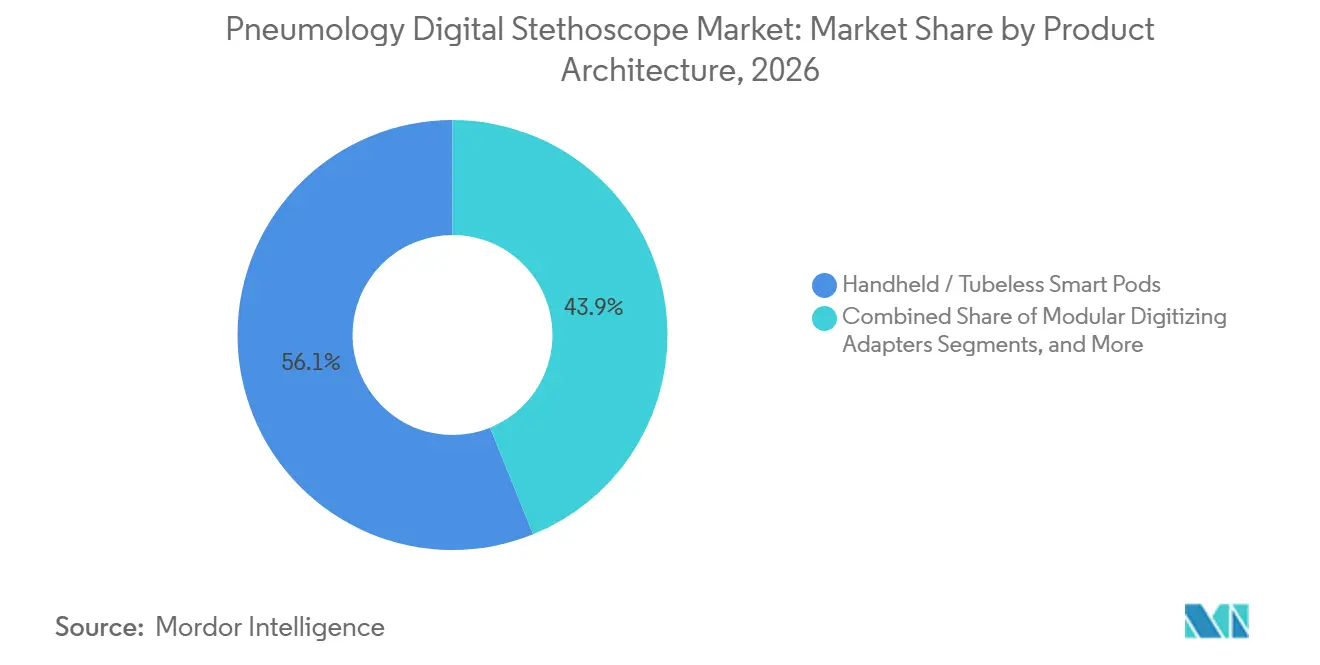
Form Factor Supports Institutional and Decentralized DemandHandheld/tubeless smart pods are projected to hold a 56.12% share of the pneumology digital stethoscope market in 2026. Their tubeless design supports high-throughput clinical settings and wireless data streaming. These devices also suit outpatient workflows that require clinicians to move frequently between examination rooms. Modular digitizing adapters serve cost-sensitive users seeking to retain acoustic stethoscopes while adding recording and connectivity capabilities.
This format remains relevant in South and Southeast Asian healthcare systems, where budgets may not support full device replacement. Ayu Devices has deployed its AyuSynk platform across more than 6,000 clinics and hospitals in India, including JJ Hospital in Mumbai and KGMU Lucknow. Integrated tube-based digital stethoscopes are projected to grow at a CAGR of 9.22% from 2027 to 2032, driven by demand for familiar devices with deeper software integration. Eko Health is expected to launch the CORE 300 in October 2026 with analog and digital listening, FDA-cleared artificial intelligence (AI), 35× amplification, and active noise cancellation.

By Technology and Intelligence Tier:
Edge AI Gains Clinical RelevanceBasic amplification and filtering are projected to account for 52.93% of demand in 2026. This installed base indicates that many clinicians continue to use digital hardware without embedded algorithmic analysis. Institutional users often face lengthy procurement cycles and internal controls that delay the adoption of cloud-connected tools. The installed base also provides suppliers with an upgrade opportunity as hospitals seek more consistent respiratory documentation.
On-device edge AI analytics are projected to grow at a CAGR of 12.67% from 2027 to 2032. This growth reflects smaller inference-capable chipsets and increasing interest in local data processing, which can reduce patient data transfer concerns and shorten result times. Cloud-based clinical decision support platforms continue to offer advanced computing capabilities and multi-site model updates. Strados Labs' RESP Biosensor captures lung sounds locally and transmits encrypted data to a cloud platform for clinician and machine-learning analysis.
By Clinical Indication:
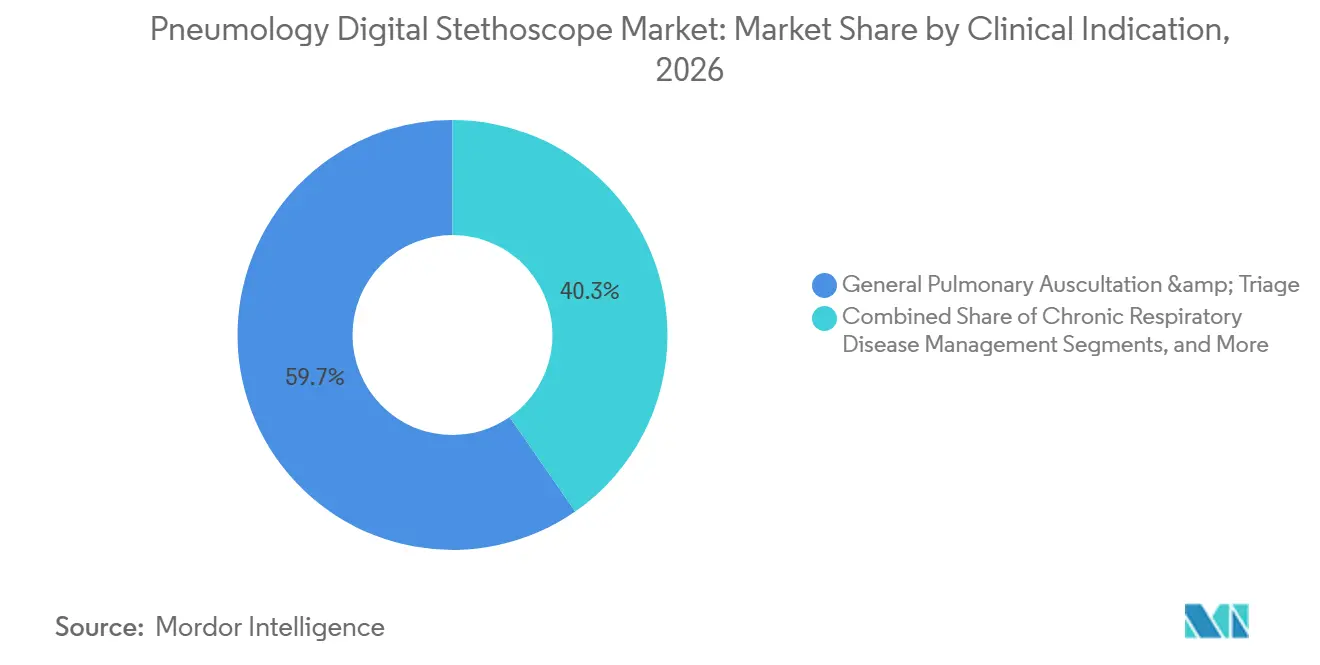
Infection Screening Expands Alongside Routine TriageGeneral pulmonary auscultation and triage are projected to account for 59.67% of demand in 2026. This segment covers primary care and emergency encounters in which respiratory assessment begins the diagnostic process. It benefits from strong clinician familiarity and algorithms trained on multiple lung-sound patterns. Chronic respiratory disease management supports patients requiring repeated assessments rather than a single triage event.
This use case includes patients with chronic obstructive pulmonary disease (COPD), asthma, and interstitial lung disease, although patient adherence and caregiver training may slow adoption. Acute respiratory infection screening is projected to grow at a CAGR of 9.78% from 2027 to 2032. The BLAAAST trial is evaluating whether AI-guided assessment can reduce unnecessary antibiotic prescribing for pediatric pneumonia. AI-powered digital stethoscopes could also support tuberculosis screening if clinical validation continues.
By Data Transmission Pipeline:
Reliability Sustains Wired Use as Wireless Adoption BuildsTethered/wired systems are projected to account for 62.12% of demand in 2026. Their leading position reflects hospital requirements for reliability, as wireless interference, power-management constraints, and security controls can limit Bluetooth adoption. Wired transmission enables uninterrupted audio streaming during telehealth consultations. It remains particularly relevant in intensive care and emergency medicine, where data loss can have serious clinical consequences.
Wide-area cellular networks support rural community programs by providing cloud connectivity without local Wi-Fi infrastructure. However, cellular systems face cost and power-management barriers in price-sensitive locations. Local wireless area networks, including Bluetooth and Wi-Fi, are projected to grow at a CAGR of 10.45% from 2027 to 2032. Eko Health's Bluetooth-enabled CORE 300 is expected to connect with the Eko App and clinical AI workflows.
By End User:
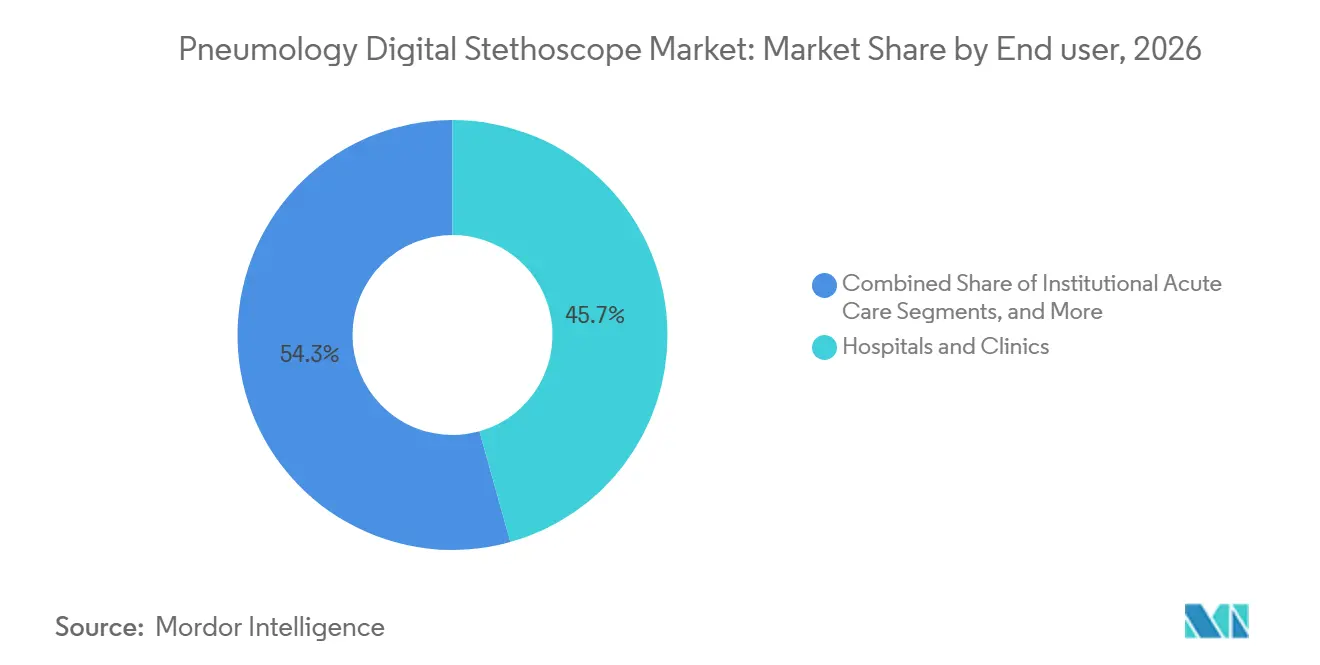
Home Care Adds a New Path Beyond HospitalsHospitals and clinics are projected to account for 45.66% of end-user demand in 2026. Institutional purchasing power and dense clinical workflows have historically concentrated advanced diagnostic equipment in these settings. Acute care users typically favor wired systems and cloud-based support platforms that integrate with electronic health records. In some countries, ambulatory clinics and specialist centers are emerging as early adoption points.
Decentralized home healthcare and telehealth are projected to grow at a CAGR of 11.23% from 2027 to 2032. Withings is expected to receive FDA clearance for BeamO in November 2025. The device combines a digital stethoscope, single-lead electrocardiogram (ECG), and thermometer in an over-the-counter device priced at USD 249.95. In September 2026, Withings is expected to announce StethO Sense, which integrates StethoMe respiratory AI into BeamO through its Withings+ membership.
Geography Analysis
North America: Institutional Depth and Platform Integration Define Market Leadership
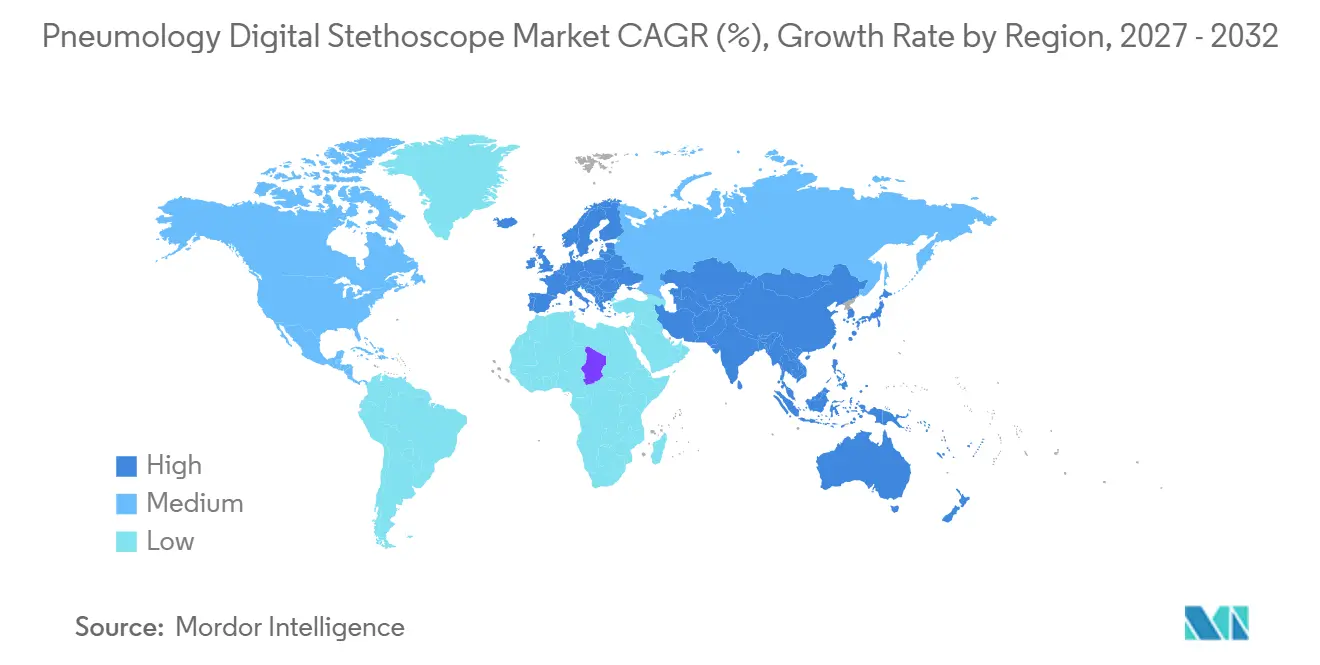
North America held 40.55% of the pneumology digital stethoscope market size in 2026. Institutional purchasing, established telehealth reimbursement, and a robust Food and Drug Administration (FDA) approval environment support the faster deployment of artificial intelligence (AI)-enabled devices. The TRICORDER study covered 205 National Health Service (NHS) general practices and 1.5 million registered patients. It found that Eko's AI-enabled stethoscope increased heart failure detection by 2.3 times and atrial fibrillation detection by 3.5 times during routine examinations. Although conducted in the United Kingdom, this clinical evidence remains relevant to United States procurement processes that require real-world validation.
Asia-Pacific: Rural Care Needs Support the Fastest Growth
Asia-Pacific is forecast to grow at a compound annual growth rate (CAGR) of 12.95% from 2027 to 2032. The region combines a large undiagnosed respiratory disease burden with expanding hospital capacity and public investment in digital connectivity. The National Institution for Transforming India (NITI Aayog) documented the use of Bluetooth-enabled stethoscope technology to connect remote doctors with more than 67,000 rural patients in India. The Indian digital stethoscope segment at a 16% CAGR, with a price point of INR 18,000, equivalent to USD 216, for devices used across more than 6,000 clinics. Japan, South Korea, and Australia provide reimbursement frameworks and clinical research capacity that support region-specific algorithm validation.
Europe, the Middle East, Africa, and South America: Compliance and Affordability Shape Uneven Adoption
Europe is the second-largest geographic block in the pneumology digital stethoscope market. Germany, the United Kingdom, and France have established respiratory medicine systems and active clinical research networks. The European Commission requires the use of the European Database on Medical Devices (EUDAMED) from May 28, 2026, covering actor registration, unique device identification, notified body certificates, and market surveillance modules. This compliance requirement can increase costs for smaller manufacturers while improving traceability for buyers. Spain and Italy are developing community respiratory screening programs, while the United Kingdom continues to host AI auscultation research. Gulf Cooperation Council (GCC) health systems are investing in digital health infrastructure within large hospital networks.
Competitive Landscape
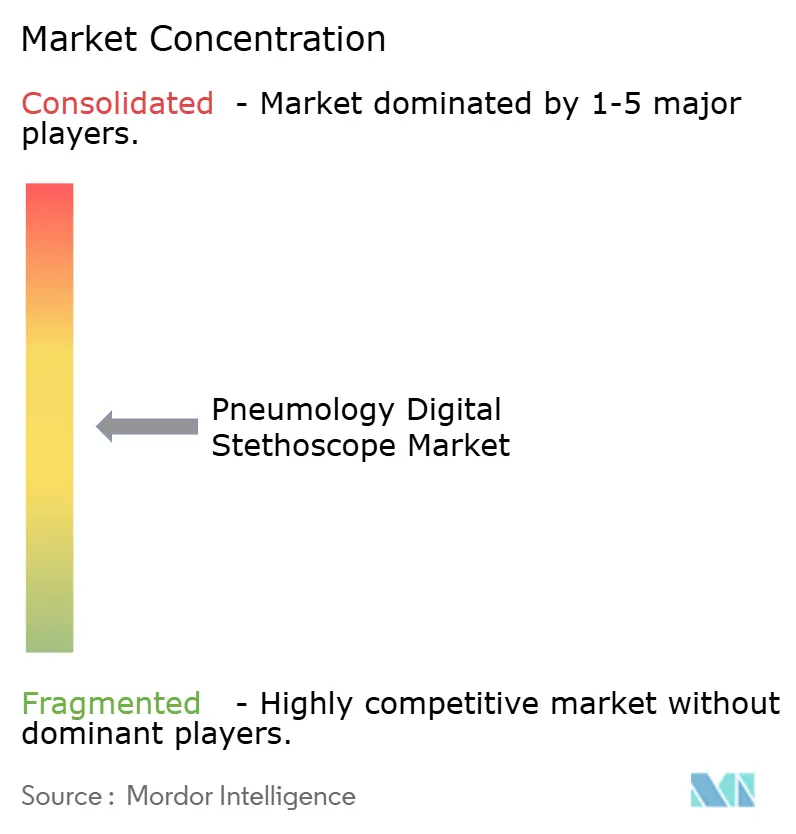
The pneumology digital stethoscope market is moderately concentrated, with artificial intelligence (AI)-native platform providers gaining a competitive advantage through regulatory clearances and proprietary datasets. Eko Health, TytoCare, and StethoMe have differentiated their offerings through AI-enabled clinical workflows. Eko Health reported global sales of 750,000 devices and telehealth deployments across health systems operating more than 800 hospitals in the United States. Solventum’s Littmann CORE Digital Stethoscope retains a strong position through clinician familiarity and institutional sales coverage. Platform-based competitors are challenging hardware-only offerings by integrating devices, algorithms, and data services. This model provides a unified workflow for sound capture, AI-assisted review, and follow-up care while supporting recurring service relationships.
Regulatory evidence is becoming a key competitive differentiator. The TRICORDER study reported detection increases of 2.3 times for heart failure, 3.5 times for atrial fibrillation, and 1.9 times for valvular heart disease during routine care. Eko Health expanded its product portfolio in October 2026 with the CORE 300, which combines conventional and digital auscultation with Food and Drug Administration (FDA)-cleared AI. TytoCare expanded its virtual-care distribution through its Teladoc Health integration in November 2025. Withings added StethoMe respiratory AI to its consumer-focused BeamO platform in September 2026. These initiatives indicate a strategic shift toward recurring data services and remote-care ecosystems.
Price competition remains significant in cost-sensitive countries. Chinese suppliers, including Guangdong Hanhong Medical Technology, Linktop Technology, and Qingdao Meditech, are positioned in the sub-United States dollar (USD) 200 Bluetooth device segment. Pediatric pulmonary assessment remains an opportunity, as validation evidence is still limited. Wearable continuous lung-sound monitoring for chronic obstructive pulmonary disease (COPD) and cystic fibrosis presents another opportunity, where Strados Labs has an early presence. Community health worker programs in Sub-Saharan Africa and South and Southeast Asia could also support deployment if costs and connectivity requirements decline. The pneumology digital stethoscope market is likely to favor companies that combine validated software, reliable hardware, and local clinical support.
Pneumology Digital Stethoscope Industry Leaders
-
Thinklabs Medical LLC
-
StethoMe sp
-
Sonavi Labs Inc.
-
HD Medical Inc.
-
Eko Health Inc.
- *Disclaimer: Major Players sorted in no particular order
Pneumology Digital Stethoscope Market Companies Covered in this Report
- AMD Global Telemedicine
- Ayu Devices Pvt. Ltd
- Cardionics
- Eko Health Inc.
- GS Technology Co. Ltd
- Guangdong Hanhong Medical Technology Co. Ltd
- HD Medical Inc.
- Lapsi Health BV
- Linktop Technology Co. Ltd
- M3DICINE Pty Ltd
- Qingdao Meditech Equipment Co. Ltd
- Solventum Corporation
- Sonavi Labs Inc.
- Steth IO Inc.
- StethoMe sp
- Strados Labs Inc.
- TaiDoc Technology
- Thinklabs Medical LLC
- Tuoxiao Medical Technology Co. Ltd
- TytoCare Ltd.
- Visionflex Pty Limited
Recent Industry Developments in Pneumology Digital Stethoscope Market
- October 2026: Eko Health launched CORE 300 with FDA clearance for pediatric and adult use. The device combined traditional and digital listening modes, 35× amplification, active noise cancellation, and AI-based detection of structural murmurs and pulmonary sounds.
- September 2026: Withings announced StethO Sense, integrating StethoMe respiratory AI into the BeamO consumer health device. The Withings+ service provided at-home AI analysis of heart and lung recordings, including a 0–100 Breathing Index validated over eight years with Poznan University of Medical Sciences.
- September 2025: Eko Health received FDA clearance for the EFAST algorithm on its SENSORA platform. The cardiac foundation model, trained on more than 4 million de-identified recordings, enabled five-second auscultation per site to support structural murmur and atrial fibrillation detection.
Global Pneumology Digital Stethoscope Market Report Scope
As per the scope of the report, a pneumology digital stethoscope is an advanced electronic medical device specifically optimized for respiratory auscultation, converting the sound waves of a patient’s breathing into digital signals for enhanced analysis. Unlike traditional acoustic stethoscopes that rely purely on physical sound tubes, these devices integrate acoustic transducers and digital signal microprocessors to capture, filter, and amplify breath sounds up to 40 to 100 times.
The pneumology digital stethoscope market is segmented by product architecture, technology and intelligence tier, clinical indication, data transmission pipeline, end user, and geography. By product architecture, the market includes integrated tube-based digital stethoscopes, handheld/tubeless smart pods, and modular digitizing adapters. By technology and intelligence tier, the market is segmented into basic amplification and filtering, on-device edge AI analytics, and cloud-based clinical decision support (SaaS). By clinical indication, the market is categorized into general pulmonary auscultation and triage, chronic respiratory disease management (CRDM), acute respiratory infection screening, and others. By data transmission pipeline, the market is segmented into tethered/wired systems, local wireless area networks (Bluetooth/Wi-Fi), and wide-area cellular networks (direct-to-cloud/IoT). By end user, the market is segmented into hospitals and clinics, institutional acute care, institutional ambulatory care, decentralized home healthcare and telehealth, and others. By geography, the market is analyzed across North America, Europe, Asia-Pacific, the Middle East and Africa, and South America. The report also covers the estimated market sizes and trends for 17 countries across major regions globally. The report offers market sizes and forecasts in terms of value (USD) for the above segments.
Segmentation Overview
| Integrated Tube-Based Digital Stethoscopes |
| Handheld / Tubeless Smart Pods |
| Modular Digitizing Adapters |
| Basic Amplification & Filtering |
| On-Device Edge AI Analytics |
| Cloud-Based Clinical Decision Support (SaaS) |
| General Pulmonary Auscultation & Triage |
| Chronic Respiratory Disease Management (CRDM) |
| Acute Respiratory Infection Screening |
| Others |
| Tethered / Wired Systems |
| Local Wireless Area Networks (Bluetooth / Wi-Fi) |
| Wide-Area Cellular Networks (Direct Cloud / IoT) |
| Hospitals and Clinics |
| Institutional Acute Care |
| Institutional Ambulatory Care |
| Decentralized Home Healthcare & Telehealth |
| Others |
| North America | United States |
| Canada | |
| Mexico | |
| Europe | Germany |
| United Kingdom | |
| France | |
| Italy | |
| Spain | |
| Rest of Europe | |
| Asia-Pacific | China |
| India | |
| Japan | |
| Australia | |
| South Korea | |
| Rest of Asia-Pacific | |
| Middle East and Africa | GCC |
| South Africa | |
| Rest of Middle East and Africa | |
| South America | Brazil |
| Argentina | |
| Rest of South America |
| By Product Architecture | Integrated Tube-Based Digital Stethoscopes | |
| Handheld / Tubeless Smart Pods | ||
| Modular Digitizing Adapters | ||
| By Technology and Intelligence Tier | Basic Amplification & Filtering | |
| On-Device Edge AI Analytics | ||
| Cloud-Based Clinical Decision Support (SaaS) | ||
| By Clinical Indication | General Pulmonary Auscultation & Triage | |
| Chronic Respiratory Disease Management (CRDM) | ||
| Acute Respiratory Infection Screening | ||
| Others | ||
| By Data Transmission Pipeline | Tethered / Wired Systems | |
| Local Wireless Area Networks (Bluetooth / Wi-Fi) | ||
| Wide-Area Cellular Networks (Direct Cloud / IoT) | ||
| By End User | Hospitals and Clinics | |
| Institutional Acute Care | ||
| Institutional Ambulatory Care | ||
| Decentralized Home Healthcare & Telehealth | ||
| Others | ||
| By Geography | North America | United States |
| Canada | ||
| Mexico | ||
| Europe | Germany | |
| United Kingdom | ||
| France | ||
| Italy | ||
| Spain | ||
| Rest of Europe | ||
| Asia-Pacific | China | |
| India | ||
| Japan | ||
| Australia | ||
| South Korea | ||
| Rest of Asia-Pacific | ||
| Middle East and Africa | GCC | |
| South Africa | ||
| Rest of Middle East and Africa | ||
| South America | Brazil | |
| Argentina | ||
| Rest of South America | ||
Key Questions Answered in the Report
What is the projected value of the pneumology digital stethoscope sector by 2032?
Projected to reach USD 658.43 million by 2032 (from USD 436.88 million in 2027) at an 8.55% CAGR, driven by expansion across primary, hospital, and connected home care.
Which product architecture leads demand for digital respiratory stethoscopes?
Handheld / Tubeless Smart Pods lead with a 56.12% share (2026). Integrated Tube-Based Stethoscopes see the highest growth (9.22% CAGR) as clinics seek digital upgrades that mimic traditional form factors.
Why are AI-enabled stethoscopes becoming more important in respiratory care?
They provide automated wheeze, crackle, and rhonchi detection, offer standardized clinical documentation, and allow high-fidelity lung sound capture for remote care triage.
Which region is expected to grow fastest for pneumology digital stethoscopes?
Asia-Pacific, expanding at a 12.95% CAGR through 2032 due to rural healthcare access initiatives, local device manufacturing, and digital health investments.
What limits wider adoption of digital stethoscopes in lower-resource settings?
High upfront hardware costs, recurring software subscriptions, EHR integration friction, battery reliance, and sparse clinical datasets optimized for diverse populations.
How is home healthcare affecting demand for digital lung assessment?
It is driving the Home Healthcare & Telehealth segment to an 11.23% CAGR, powered by accessible multi-use consumer devices designed for remote, non-clinical users.