
Plant Genotyping Equipment Market Size and Share
Market Overview
| Study Period | 2022 - 2032 |
|---|---|
| Market Size (2027) | USD 1.02 Billion |
| Market Size (2032) | USD 1.46 Billion |
| Growth Rate (2027 - 2032) | 7.48 % |
| Fastest Growing Market | Asia-Pacific |
| Largest Market | Europe |
| Market Concentration | Medium |
Major Players *Disclaimer: Major Players sorted in no particular order Image © Mordor Intelligence. Reuse requires attribution under CC BY 4.0. | |
Plant Genotyping Equipment Market Analysis by Mordor Intelligence
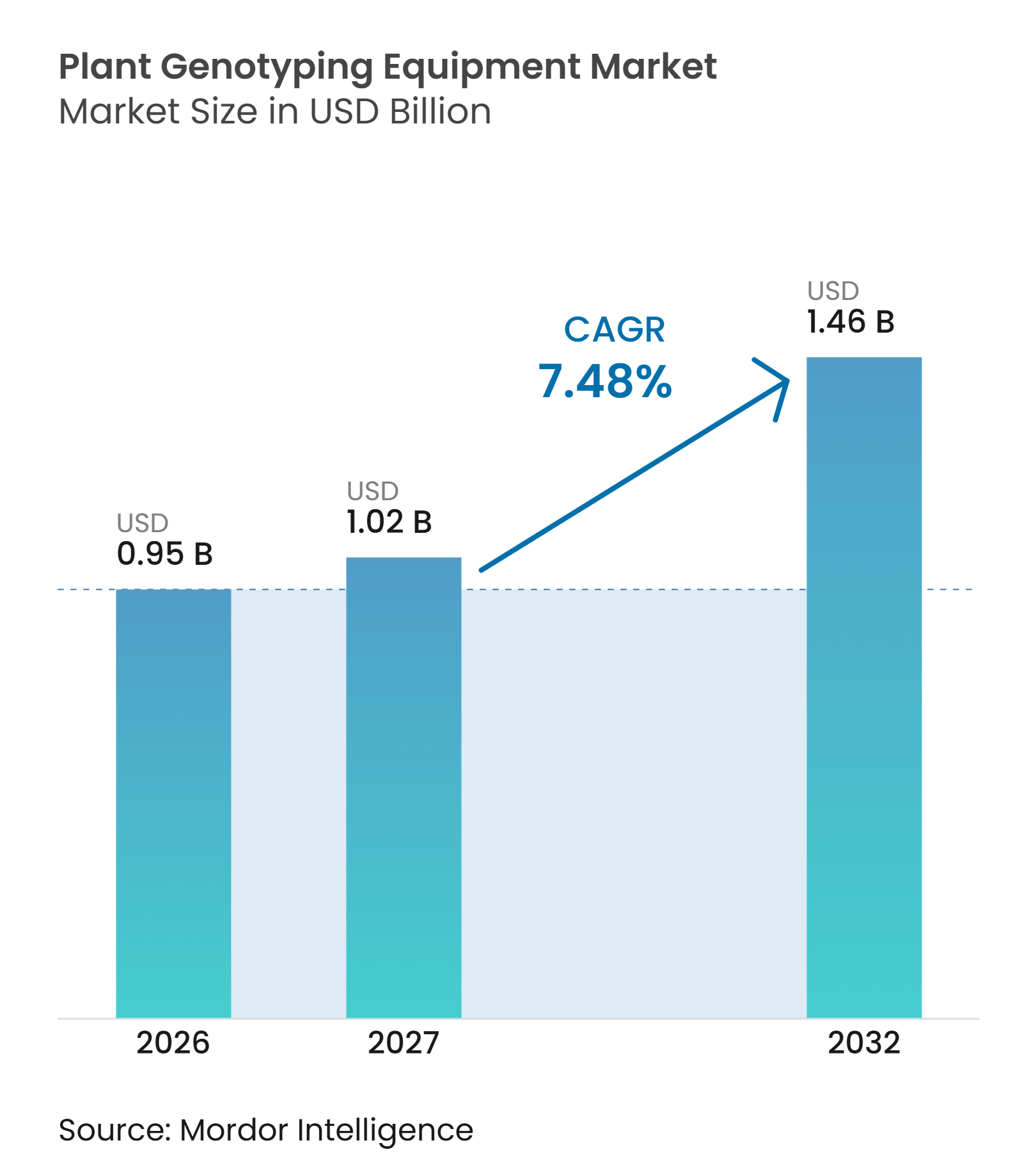
The plant genotyping equipment market size was valued at USD 945.70 million in 2026 and is forecast to grow from USD 1,016.44 million in 2027 to USD 1,457.87 million by 2032, at a CAGR of 7.48% during the forecast period. Commercial breeding programs are shifting from field-led selection to genomic selection, supporting market growth. Declining sequencing costs are enabling more breeders to test larger germplasm collections and use denser marker panels. Public investment in food security and agricultural biotechnology is strengthening laboratory procurement and driving recurring demand for consumables. The need for faster selection for yield, stress tolerance, and disease resistance is further supporting the market. Providers are responding with automated sample preparation, integrated workflows, and crop-specific assay content to reduce manual handling and improve laboratory capacity.
Key Report Takeaways
- By product, PCR (polymerase chain reaction) systems held 37.0% of the plant genotyping market share in 2026, while DNA sequencing systems are forecast to grow at a CAGR of 10.5% from 2027 to 2032.
- By genotyping method, PCR-based genotyping held 38.0% of the plant genotyping market size in 2026, while sequencing-based genotyping is forecast to grow at a CAGR of 11.4% from 2027 to 2032.
- By application, crop breeding and variety development held a 41.7% share in 2026, while crop health and resistance screening is forecast to grow at a CAGR of 9.1% from 2027 to 2032.
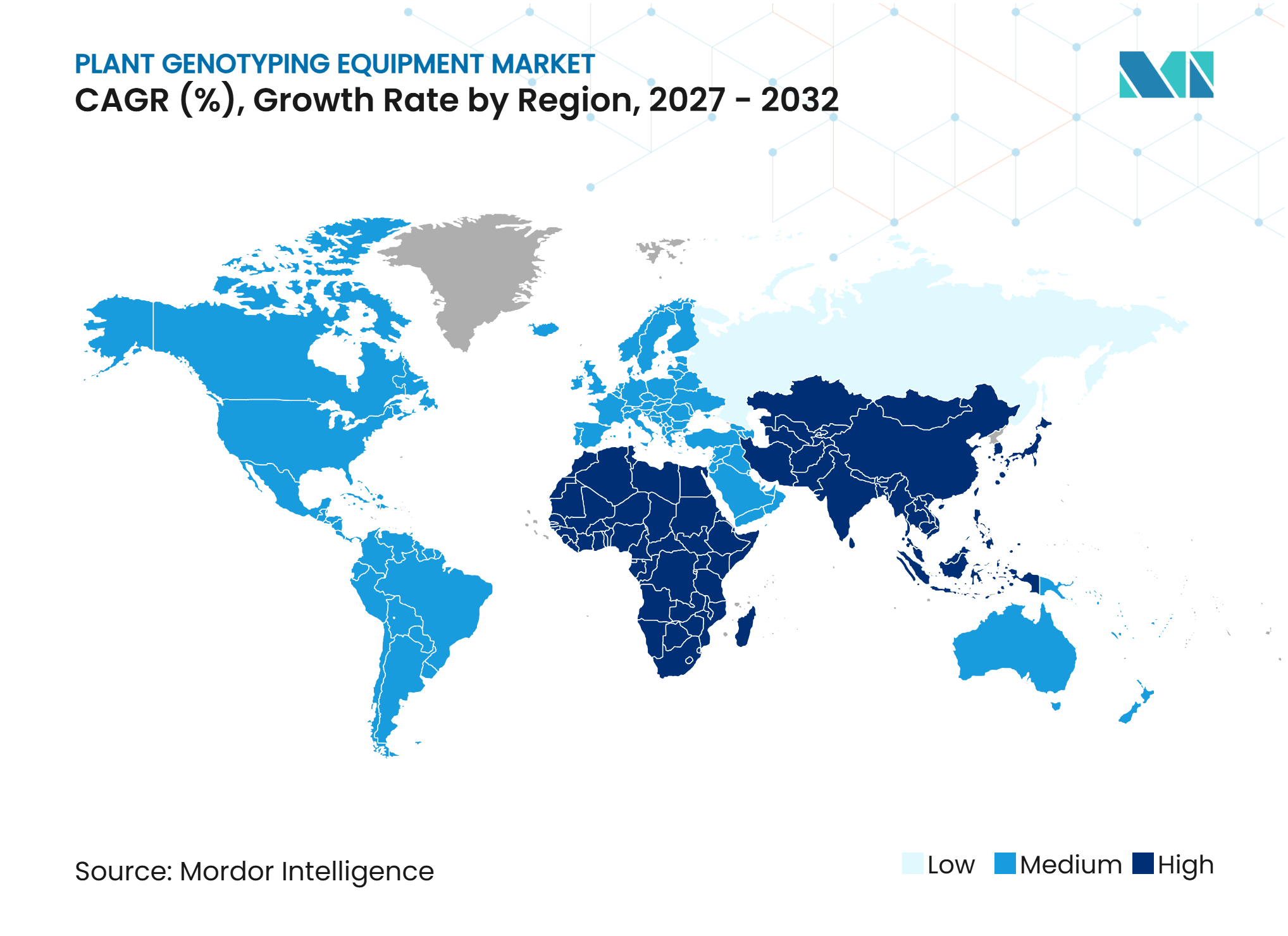
- By geography, Europe held a 34.2% share in 2026, while Asia-Pacific is forecast to grow at a CAGR of 9.2% from 2027 to 2032.
Note: Market numbers in this report are based on Mordor Intelligence's proprietary estimation framework, which combines nine months of actuals with Q4 projections for base year 2026.
Market Trends and Insights
Drivers Impact Analysis of Plant Genotyping Equipment Market*
| Driver | (~) % Impact on CAGR Forecast | Geographic Relevance | Impact Timeline |
|---|---|---|---|
| Accelerating Genomic Selection in Commercial Breeding | +1.9% | Global, with intensity in North America, Europe, and East Asia | Long term (4 years or more) |
| Rising Demand for Climate-Resilient Crop Traits | +1.6% | Global, strongest in Asia-Pacific and the Middle East and Africa | Medium term (2-4 years) |
| Declining Sequencing and Genotyping Cost per Sample | +1.4% | Global, with faster uptake in South America and Africa | Medium term (2-4 years) |
| Public Funding for Agricultural Biotechnology and Food Security | +1.1% | North America, Europe, and Asia-Pacific | Short term (2 years or less) |
| Low-Pass Whole-Genome Sequencing Improving Cost-Throughput Economics | +0.8% | Global, with leading adoption in North America and Europe | Medium term (2-4 years) |
| Automation and Assay Miniaturization Expanding Genotyping Capacity | +0.7% | North America and Europe, with adoption extending to Asia-Pacific | Short term (2 years or less) |
| Source: Mordor Intelligence | |||
Accelerating Genomic Selection in Commercial Breeding
The growing adoption of molecular marker-assisted breeding is supporting demand for plant genotyping equipment as commercial breeding programs increasingly rely on DNA-based screening to identify desirable traits and accelerate crop improvement. Genotyping platforms enable breeders to identify favorable alleles, assess genetic backgrounds, and select promising breeding lines before conducting extensive field evaluations. A 2025 maize study published in the International Journal of Advanced Biochemistry Research used 97 KASP markers during the BC1F1 generation and 3,305 DArT-Tag single nucleotide polymorphism (SNP) markers during the BC2F1 generation to support marker-assisted backcross breeding for provitamin A enrichment. The study reported recurrent-parent genome recovery ranging from 60.11% to 75.71% in the first generation and 84.56% to 89.63% in the subsequent generation[1]. These results demonstrate how high-throughput marker screening can improve the efficiency of trait introgression and recovery of desirable genetic backgrounds. As commercial breeding organizations expand programs targeting nutritional quality, drought tolerance, disease resistance, and yield improvement, demand for genotyping instruments, molecular assays, reagents, and associated data-processing capabilities is anticipated to increase.
Rising Demand for Climate-Resilient Crop Traits
Increasing climate variability and the growing incidence of heat, drought, and other environmental stresses are driving demand for plant genotyping equipment used to identify and select climate-resilient crop traits. These characteristics are often controlled by multiple genes with small individual effects, requiring genome-wide marker analysis and broader genetic profiling to identify useful breeding material. A 2025 genome-wide association study published in npj Science of Plants evaluated 450 soybean accessions under optimal and heat-stress conditions and identified 37 significant marker-trait associations. Only one association was consistent across both temperature conditions, highlighting the differences in genetic responses under normal and heat-stress environments. The findings reinforce the importance of comprehensive genotyping and genomic prediction in identifying heat-tolerant genetic material. As breeding organizations increasingly develop crop varieties with improved tolerance to heat, drought, and salinity, demand for high-density genotyping platforms, crop-specific marker panels, molecular assays, and associated data-analysis capabilities is anticipated to increase.
Declining Sequencing and Genotyping Cost per Sample
Declining sequencing costs are making high-throughput genotyping more accessible to commercial breeding organizations, research institutions, and agricultural biotechnology companies. Low-coverage whole-genome sequencing offers a cost-effective alternative to conventional high-coverage sequencing by generating useful genome-wide marker information at reduced sequencing depths. A 2025 study published in BMC Plant Biology reported estimated sequencing costs of approximately USD 7 per sample at 1X coverage for eggplant, based on its 1.21-gigabase genome, compared with approximately USD 18 for a 3-gigabase crop genome at the same coverage[2]. The study also demonstrated that low-coverage sequencing could generate substantial numbers of reliable genetic markers when supported by appropriate filtering and bioinformatics workflows. These developments are improving the economic feasibility of large-scale genetic screening and genomic research. As breeding programs process larger plant populations and expand molecular selection activities, demand for genotyping instruments, sequencing platforms, reagents, library-preparation systems, and bioinformatics solutions is anticipated to increase.
Public Funding for Agricultural Biotechnology and Food Security
Public funding for agricultural biotechnology and genomic research is supporting demand for plant genotyping equipment by expanding research capacity at universities and public agricultural institutions. Government-funded programs enable research organizations to strengthen molecular biology facilities, undertake crop improvement projects, and develop genomic resources for improved agricultural productivity and food security. In November 2025, the United States Department of Agriculture's National Institute of Food and Agriculture (USDA NIFA) announced an investment of USD 1.8 million through its Agricultural Genome to Phenome Initiative, with Michigan State University and Texas A&M AgriLife Research identified as the 2025 awardees[3]. The initiative supports collaborative research integrating genomics, phenomics, engineering, and data science to improve crop and livestock production. Such investments can expand institutional requirements for genotyping platforms, molecular assays, laboratory consumables, and genomic data-processing capabilities. As public research programs continue to support crop genetics and agricultural biotechnology, funding-backed laboratory expansion is anticipated to create additional demand opportunities for plant genotyping equipment suppliers.
Restraints Impact Analysis of Plant Genotyping Equipment Market*
| Restraint | (~) % Impact on CAGR Forecast | Geographic Relevance | Impact Timeline |
|---|---|---|---|
| High Capital and Operating Costs for Advanced Platforms | -1.8% | Global, with the greatest effect in the Middle East and Africa and South America | Long term (4 years or more) |
| Bioinformatics Skills Gaps and Data-Interpretation Complexity | -1.2% | Global, with the greatest effect in Africa, South Asia, and Southeast Asia | Medium term (2-4 years) |
| Tariff Exposure and Cross-Border Supply-Chain Dependence | -0.9% | Asia-Pacific, the Middle East and Africa, and South America | Short term (2 years or less) |
| Sample-Quality Variability Across Crops and Germplasm Collections | -0.6% | Global, with elevated effect in Africa and South Asia | Medium term (2-4 years) |
| Source: Mordor Intelligence | |||
High Capital and Operating Costs for Advanced Platforms
Advanced plant genotyping platforms, including high-density single nucleotide polymorphism (SNP) arrays and next-generation sequencing (NGS) systems, require substantial upfront investment in instrumentation, automation, and supporting laboratory infrastructure. High-throughput platforms also require sufficient sample volumes to achieve economies of scale and reduce per-sample processing costs. Recurring expenditure on reagents, consumables, equipment maintenance, calibration, and technical personnel further increases the financial burden, potentially restricting adoption among smaller seed companies and public breeding institutions. Although genotyping-as-a-service models provide an alternative to purchasing in-house equipment, they introduce dependence on external providers, sample transportation, scheduling, and turnaround-time constraints. Consequently, high acquisition and operating costs, combined with the need for adequate laboratory utilization, create uneven adoption of advanced plant genotyping equipment across organizations and geographies.
Bioinformatics Skills Gaps and Data-Interpretation Complexity
High-throughput plant genotyping generates large genomic datasets that require specialized bioinformatics, statistical, and computational expertise for effective interpretation and application in breeding programs. Genomic selection involves complex analytical processes, including genomic relationship matrix construction, prediction of genomic estimated breeding values (GEBVs), and integration of genotypic and phenotypic data. In December 2025, the International Crops Research Institute for the Semi-Arid Tropics (ICRISAT), in collaboration with AfricaRice and the Alliance of Bioversity International and CIAT, conducted a five-day Digital Sequence Information training program in Hyderabad to strengthen genomic data management and application capabilities among scientists from Asia and Africa. The program highlighted the need to strengthen practical expertise in using genomic information for crop improvement, particularly across developing-country research systems. Such skill requirements can limit the effective utilization of acquired genotyping equipment, increase dependence on external analytical services, and slow the integration of genomic data into breeding decisions. Consequently, shortages of trained bioinformatics professionals and inadequate data-analysis infrastructure can constrain the adoption and utilization of advanced plant genotyping equipment, particularly among resource-constrained public breeding institutions.
*Our forecasts treat driver/restraint impacts as directional, not additive. The impact forecasts reflect baseline growth, mix effects, and variable interactions.
Plant Genotyping Equipment Market Segment Analysis
By Product Type:
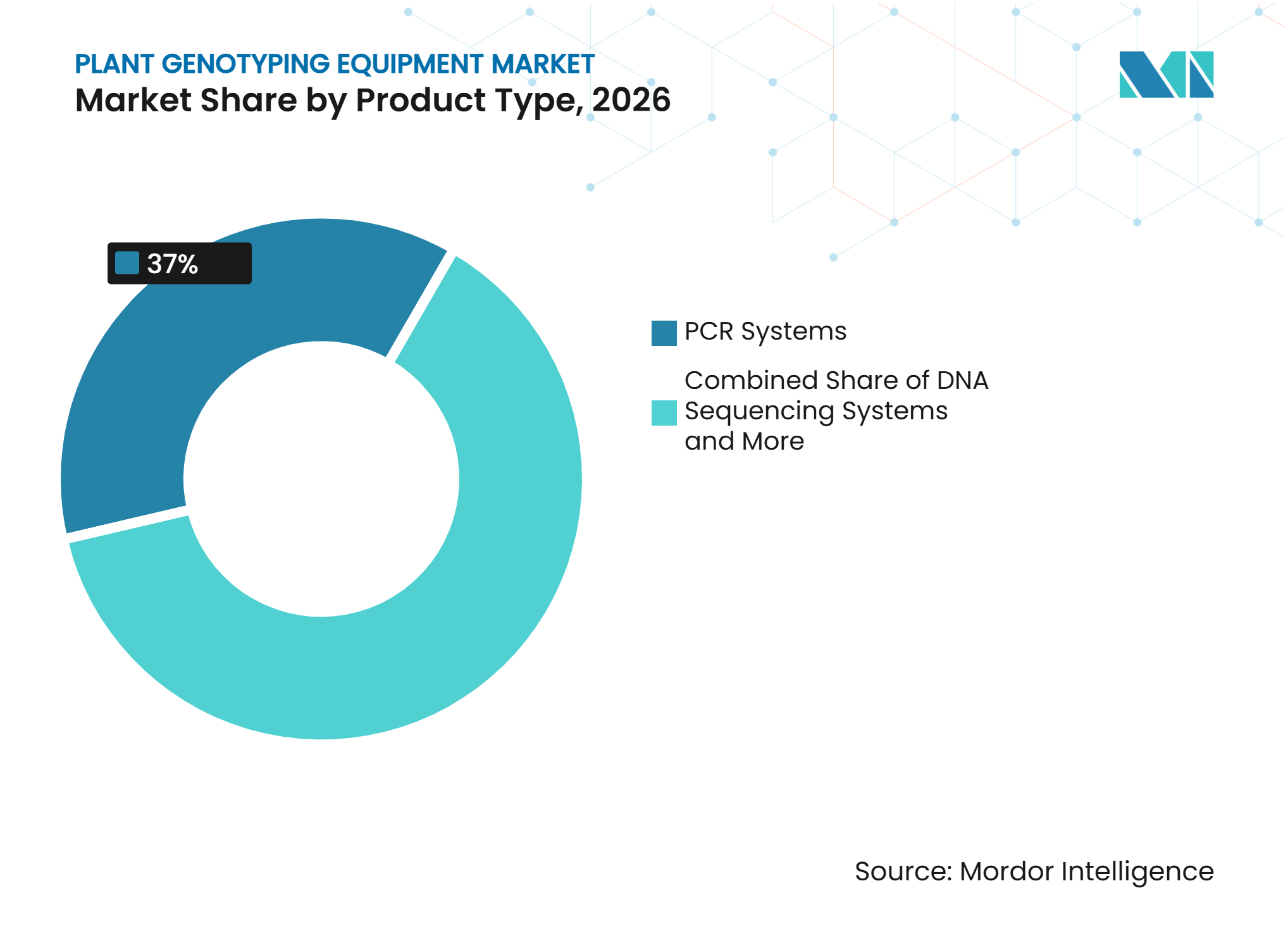
PCR Systems Lead, While DNA Sequencing Systems AdvancePCR systems held 37.0% of the plant genotyping equipment market share in 2026. PCR (polymerase chain reaction) systems are widely used for marker-assisted selection and parentage verification due to their rapid results, low per-reaction consumable costs, and adaptable assay design. Their role is most prominent when breeders screen known markers at scale. Microarray systems offer higher marker density than PCR workflows and require less infrastructure than full NGS (next-generation sequencing) systems. They remain useful for genomic selection in major row crops with established reference panels.
DNA sequencing systems are forecast to grow at a CAGR of 10.5% from 2027 to 2032. Growth in this segment is driven by low-pass workflows that allow multiple trait assessments in a single run. In October 2025, Thermo Fisher Scientific launched the Applied Biosystems SwiftArrayStudio Microarray Analyzer. The platform integrates four genotyping processes, produces results in as little as 30 hours, and can reduce hands-on time by up to 40%. The plant genotyping equipment market also relies on extraction platforms, liquid handlers, electrophoresis systems, and consumable platforms to sustain laboratory throughput.



By Genotyping Method:
PCR-Based Workflows Retain Scale, While Sequencing Gains ScopePCR-based genotyping held a 38.0% plant genotyping equipment market size in 2026, supported by its established use in commercial breeding programs for marker-assisted selection and parentage verification. Breeders use validated assays when known call-rate performance and short turnaround times are more important than broad genomic coverage. Microarray-based genotyping remains useful in wheat, maize, and soybean programs that have mature reference panels. CE (capillary electrophoresis)-based genotyping is declining as a primary method, although it retains a role in seed purity and variety identity testing. Its existing data formats and accreditation history support its continued use in some regulatory testing settings.
Sequencing-based genotyping is forecast to grow at a CAGR of 11.4% from 2027 to 2032, driven by plant genotyping programs moving from low-density marker panels toward genome-wide profiling. In October 2025, Illumina released its 5-base solution to detect genomic variants and DNA methylation in the same sequencing run. The two kits are compatible with NovaSeq and NextSeq 2000 systems, supporting broader genomic analysis in plant breeding programs.
By Application:
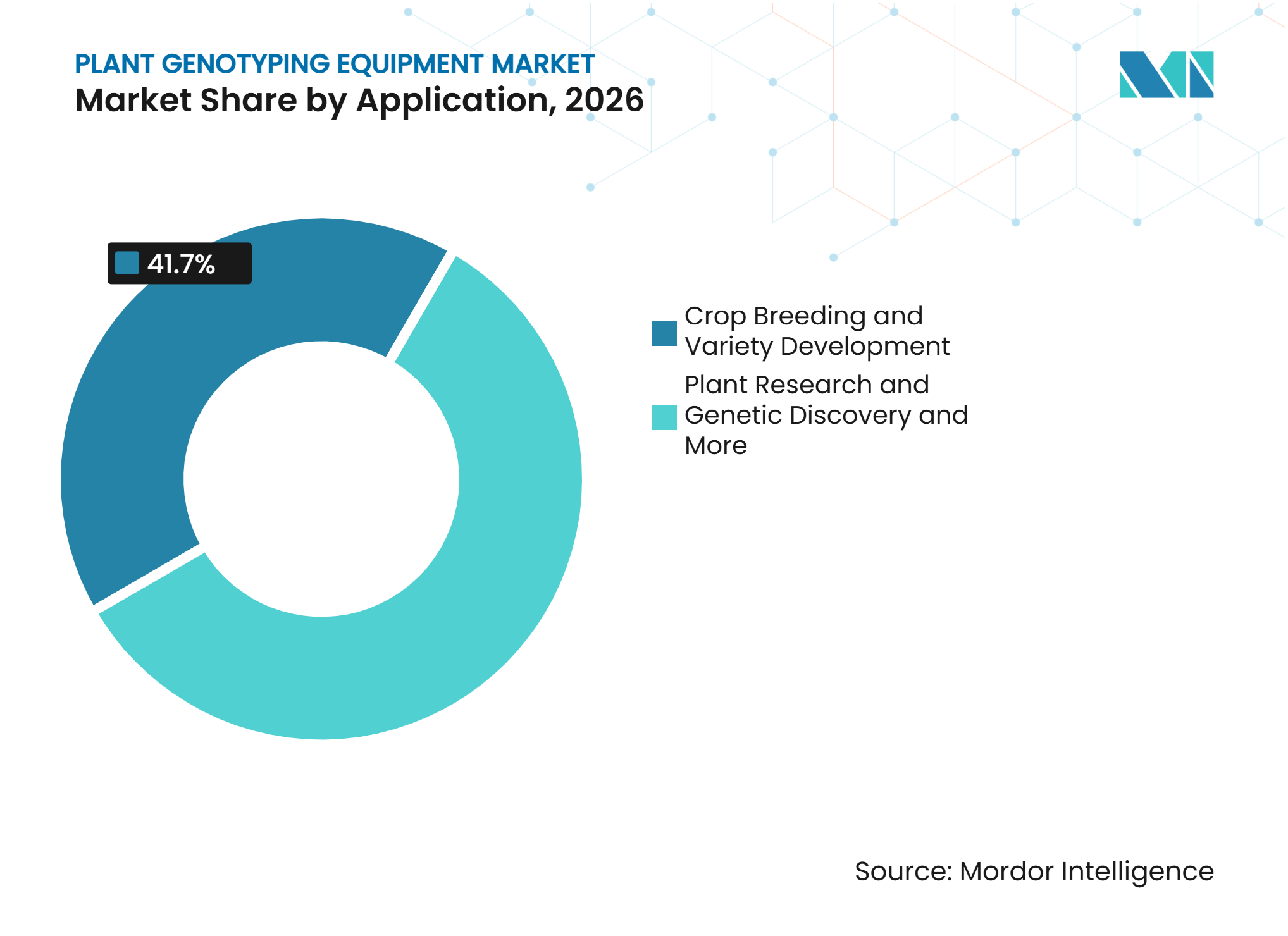
Crop Breeding Remains Central, While Resistance Screening Grows FasterCrop breeding and variety development held a 41.7% share in 2026. This application is central because genomic selection supports faster variety development and more informed breeding decisions. Breeders use genome-wide marker data to complement field trials in selection workflows. Plant research and genetic discovery generate markers that can later be applied in breeding and crop-health workflows. GMO (genetically modified organism) detection and regulatory testing also drive demand for validated PCR assays and event-specific detection tools.
Crop health and resistance screening is forecast to grow at a CAGR of 9.1% from 2027 to 2032. The plant genotyping equipment market is gaining relevance as programs screen large panels for complex disease and abiotic-stress resistance traits. In April 2025, the International Union for the Protection of New Varieties of Plants (UPOV) reported that GBS (genotyping-by-sequencing) with 20 to 40 single nucleotide polymorphism (SNP) markers could reduce DUS (distinctness, uniformity, and stability) trial sizes by up to 33% in hydrangea. A 2025 chickpea meta-analysis identified 54 meta-QTL (quantitative trait loci) for drought, heat, and salinity tolerance, with an average confidence interval of 1.01 cM (centimorgan).

Geography Analysis
Europe
Europe accounted for 34.2% of the plant genotyping equipment market share in 2026. Germany, the Netherlands, France, the United Kingdom, and the Nordic countries have established commercial breeding ecosystems and marker programs. The European Union Community Plant Variety Rights framework supports plant variety protection and drives demand for DUS verification and seed purity testing. In April 2025, the International Union for the Protection of New Varieties of Plants (UPOV) presented work on genotyping by sequencing (GBS) for ornamental DUS testing, reflecting the growing regulatory use of molecular markers. In 2025, QIAGEN identified the Max Planck Institute for Plant Breeding Research in Cologne as an early-access collaborator for QIAsprint Connect.
Asia-Pacific
Asia-Pacific is forecast to grow at a CAGR of 9.2% from 2027 to 2032. China's agricultural self-reliance programs, India's genomics infrastructure, and Australia's commercial breeding sector are contributing to regional demand. Public investment in germplasm improvement is expanding laboratory capacity and supporting the plant genotyping equipment market. The region is developing sequencing infrastructure for agricultural research and commercial breeding. Regional laboratories are using reference genomes and low-pass sequencing to build scalable marker workflows.
North America, South America, Middle East and Africa, and Other Markets
North America benefits from public genomics funding and established selection programs in soybean, maize, and specialty crops. The United States Department of Agriculture National Institute of Food and Agriculture's (USDA NIFA) November 2025 Agricultural Genome to Phenome Initiative award is one example of public-sector support for genome-phenome research. South American demand is tied to export-oriented soybean and sugarcane programs that require disease-resistance and stress-tolerance markers. Africa and the Middle East represent additional opportunities for the plant genotyping equipment market, where orphan-crop reference panels and varieties suited to salinity and extreme heat conditions can support future laboratory demand.
Competitive Landscape
Market Concentration
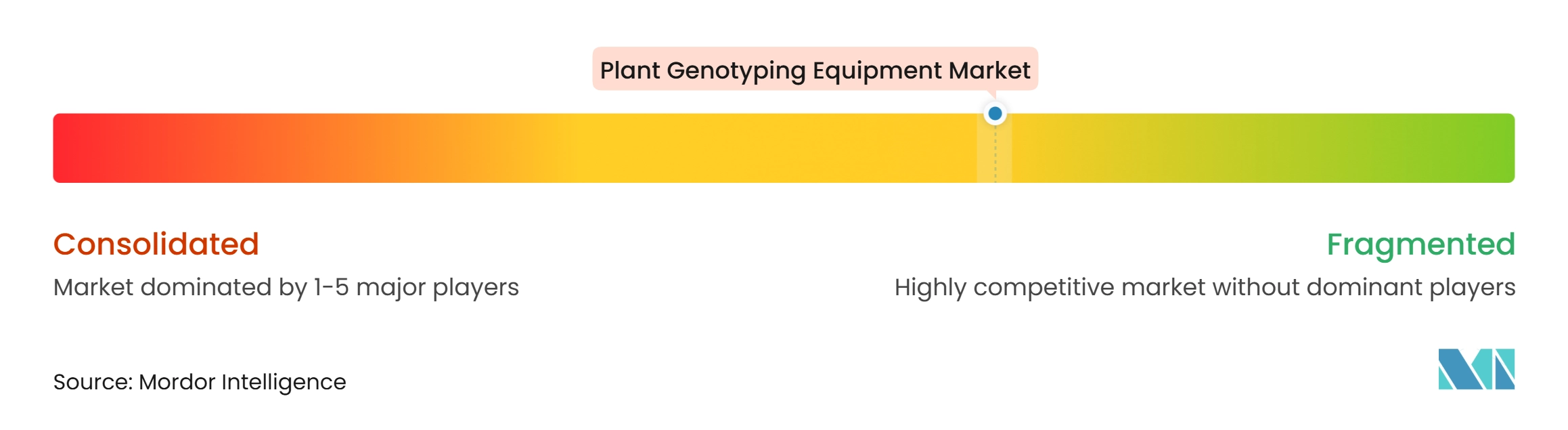
The plant genotyping equipment market was moderately fragmented in 2026, with Thermo Fisher Scientific Inc., Illumina, Inc., LGC Limited, Eurofins Scientific SE, and Agilent Technologies, Inc. identified as the leading players. Their competitive positions are supported by broad life science technology portfolios, proprietary assay and reagent ecosystems, laboratory automation capabilities, and established customer relationships across agricultural research and commercial breeding programs. Companies compete through sample throughput, genotyping accuracy, workflow integration, assay breadth, data-analysis capabilities, cost per sample, and technical support. Specialized agrigenomics providers also compete by offering crop-specific assays, high-throughput testing services, and integrated workflows tailored to plant breeding applications.
Product development, technological integration, and strategic partnerships are shaping competitive differentiation. In October 2025, Thermo Fisher Scientific expanded its microarray portfolio with the SwiftArrayStudio Microarray Analyzer, designed for applications including agrigenomics. In September 2025, LGC Biosearch Technologies entered into an agreement with Genolution to combine its sbeadex Lightning chemistry with Genolution's Nextractor NX-Duo platform for high-throughput nucleic acid purification in agrigenomics workflows. These developments reflect increasing competition around analytical capabilities, laboratory automation, and the integration of technologies across plant genotyping workflows.
Long-term competitive positioning depends on reducing the cost and turnaround time of genotyping while expanding automation, data-analysis capabilities, and compatibility with high-throughput breeding programs. Opportunities remain in field-deployable sequencing, decentralized testing workflows, and technologies that support molecular-marker applications for crop breeding and variety identification. The growing use of validated molecular methods in variety-protection and seed-testing applications may also increase demand for reliable and standardized genotyping platforms. Companies that combine scalable equipment, crop-specific application expertise, efficient workflow integration, and strong technical support are likely to strengthen their positions as agricultural breeding programs increasingly adopt genome-wide and high-throughput genotyping approaches.
Plant Genotyping Equipment Industry Leaders
-
Thermo Fisher Scientific Inc.
-
Illumina, Inc.
-
LGC Limited
-
Eurofins Scientific SE
-
Agilent Technologies, Inc.
- *Disclaimer: Major Players sorted in no particular order
Plant Genotyping Equipment Market Companies Covered in this Report
- Thermo Fisher Scientific Inc.
- Illumina, Inc.
- LGC Limited
- Eurofins Scientific SE
- Agilent Technologies, Inc.
- QIAGEN N.V.
- Danaher Corporation
- Roche Diagnostics Corporation
- Bio-Rad Laboratories, Inc.
- BGI Genomics Co., Ltd.
- Oxford Nanopore Technologies plc
- Pacific Biosciences of California, Inc.
- PerkinElmer, Inc.
- Merck KGaA
- Promega Corporation
- MGI Tech Co., Ltd.
- Hamilton Company
Recent Industry Developments in Plant Genotyping Equipment Market
- February 2026: QIAGEN showcased QIAsprint Connect at SLAS 2026, marking its entry into high-throughput benchtop automation for research laboratories. The system supports processing of up to 192 samples per run and is relevant to plant genotyping workflows requiring large-scale nucleic acid extraction. QIAGEN also listed the system as a research-use platform, making it more relevant to agricultural genomics than its clinical-focused automation products.
- October 2025: Illumina released its 5-base solution, enabling simultaneous analysis of genomic variants and DNA methylation from a single sample. The development expands multiomic capabilities relevant to plant research, including studies of genetic variation and epigenetic responses.
- August 2025: Boyce Thompson Institute, Meiogenix, and FFAR launched a USD 2 million tomato genetics collaboration focused on drought and disease resistance. The project combines high-throughput screening of hundreds of wild tomato species with genomics and pangenome development, representing a direct agricultural research application that can support demand for plant genotyping and sequencing technologies.
Global Plant Genotyping Equipment Market Report Scope
Plant genotyping is the process of analyzing the genetic makeup of plants to identify variations in their DNA, such as single nucleotide polymorphisms (SNPs) and other genetic markers. It is used in plant breeding, crop improvement, genetic diversity analysis, variety identification, and trait selection to support the development of improved crop varieties with desired characteristics, such as higher yields, disease resistance, and tolerance to environmental stresses. The Plant Genotyping Equipment Market is Segmented by Product Type (PCR Systems, DNA Sequencing Systems, Microarray Systems, and Other Genotyping Equipment), by Genotyping Method (PCR-Based Genotyping, Sequencing-Based Genotyping, Microarray-Based Genotyping, and Capillary Electrophoresis-Based Genotyping), by Application (Plant Research and Genetic Discovery, Crop Breeding and Variety Development, Seed Quality and Genetic Identity Testing, Crop Health and Resistance Screening, GMO Detection and Regulatory Testing), and by Geography (North America, South America, Europe, Asia-Pacific, Africa, and the Middle East). The Market Forecasts are Provided in Terms of Value (USD).
Segmentation Overview
| PCR Systems |
| DNA Sequencing Systems |
| Microarray Systems |
| Other Genotyping Equipment |
| PCR-Based Genotyping |
| Sequencing-Based Genotyping |
| Microarray-Based Genotyping |
| Capillary Electrophoresis-Based Genotyping |
| Plant Research and Genetic Discovery |
| Crop Breeding and Variety Development |
| Seed Quality and Genetic Identity Testing |
| Crop Health and Resistance Screening |
| GMO Detection and Regulatory Testing |
| North America | United States |
| Canada | |
| Mexico | |
| Rest of North America | |
| South America | Brazil |
| Argentina | |
| Rest of South America | |
| Europe | Germany |
| France | |
| United Kingdom | |
| Italy | |
| Spain | |
| Russia | |
| Rest of Europe | |
| Asia-Pacific | China |
| India | |
| Japan | |
| South Korea | |
| Australia | |
| Vietnam | |
| Rest of Asia-Pacific | |
| Middle East | Turkey |
| Saudi Arabia | |
| United Arab Emirates | |
| Rest of Middle East | |
| Africa | South Africa |
| Egypt | |
| Rest of Africa |
| By Product Type | PCR Systems | |
| DNA Sequencing Systems | ||
| Microarray Systems | ||
| Other Genotyping Equipment | ||
| By Genotyping Method | PCR-Based Genotyping | |
| Sequencing-Based Genotyping | ||
| Microarray-Based Genotyping | ||
| Capillary Electrophoresis-Based Genotyping | ||
| By Application | Plant Research and Genetic Discovery | |
| Crop Breeding and Variety Development | ||
| Seed Quality and Genetic Identity Testing | ||
| Crop Health and Resistance Screening | ||
| GMO Detection and Regulatory Testing | ||
| By Geography | North America | United States |
| Canada | ||
| Mexico | ||
| Rest of North America | ||
| South America | Brazil | |
| Argentina | ||
| Rest of South America | ||
| Europe | Germany | |
| France | ||
| United Kingdom | ||
| Italy | ||
| Spain | ||
| Russia | ||
| Rest of Europe | ||
| Asia-Pacific | China | |
| India | ||
| Japan | ||
| South Korea | ||
| Australia | ||
| Vietnam | ||
| Rest of Asia-Pacific | ||
| Middle East | Turkey | |
| Saudi Arabia | ||
| United Arab Emirates | ||
| Rest of Middle East | ||
| Africa | South Africa | |
| Egypt | ||
| Rest of Africa | ||
Key Questions Answered in the Report
What is the size of the plant genotyping equipment market?
The plant genotyping equipment market was valued at USD 945.70 million in 2026 and is forecast to grow from USD 1,016.44 million in 2027 to USD 1,457.87 million by 2032, at a CAGR of 7.48% during the forecast period.
What is the fastest-growing technology in plant genotyping equipment?
Sequencing-based genotyping is forecast to grow at a CAGR of 11.4% from 2027 to 2032, the highest rate among the stated genotyping methods.
Which product category holds the largest share in 2026?
PCR systems held 37.0% in 2026, supported by routine marker-assisted selection and parentage-verification workflows.
Which region leads plant genotyping equipment demand?
Europe held 34.2% in 2026, supported by established breeding ecosystems and plant-variety protection requirements.
What limits adoption of advanced genotyping platforms?
Key constraints include high capital and operating costs, bioinformatics skills gaps, tariff exposure, supply dependence, and variable sample quality.