
Philippines Agrochemicals Market Size and Share
Market Overview
| Study Period | 2021 - 2031 |
|---|---|
| Forecast Data Period | 2026 - 2031 |
| Base Year Market Size (2025) | USD 1.9 Billion |
| Market Size (2026) | USD 2 Billion |
| Market Size (2031) | USD 2.60 Billion |
| Growth Rate (2026 - 2031) | 5.39 % |
| Market Concentration | Medium |
Major Players *Disclaimer: Major Players sorted in no particular order Image © Mordor Intelligence. Reuse requires attribution under CC BY 4.0. | |
Philippines Agrochemicals Market Analysis by Mordor Intelligence
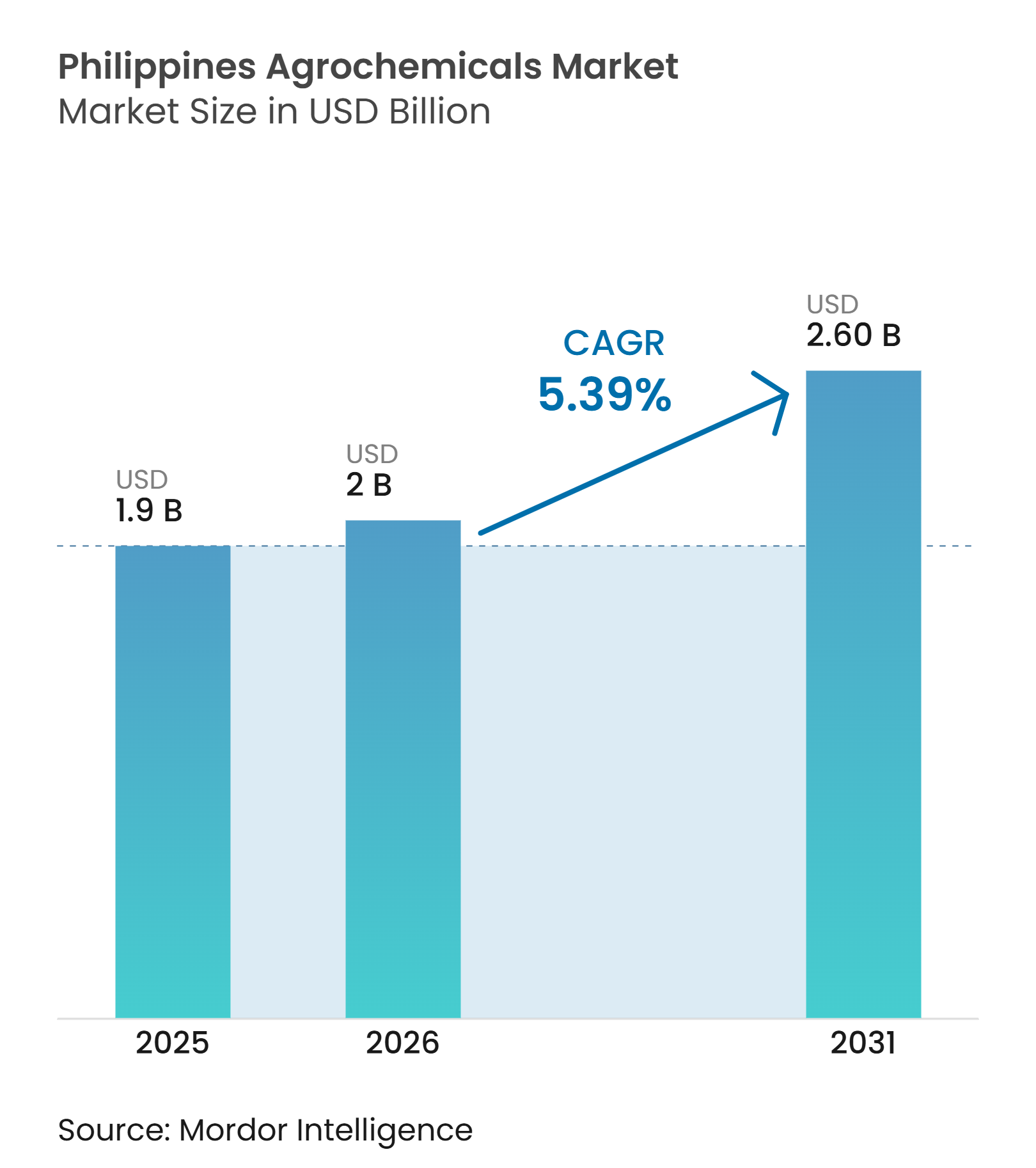
The Philippines agrochemicals market size was valued at USD 1.90 billion in 2025 and is estimated to grow from USD 2.00 billion in 2026 to reach USD 2.60 billion by 2031, at a CAGR of 5.39% during the forecast period 2026 and 2031. The market is supported by food security programs, rice and corn production, and demand for crop protection during difficult growing conditions. The Rice Competitiveness Enhancement Fund 2.0 (RCEF 2.0) runs through 2031, linking rice productivity programs with pest management and soil health measures. Continued expansion of rice cultivation is supporting a broad demand base for fertilizers and crop protection products. Export programs for bananas, pineapples, mangoes, and vegetables have also increased the importance of registered and residue-compliant inputs. Import reliance and limited smallholder financing continue to constrain purchases of higher-priced products, increasing the importance of cost-effective crop protection solutions and public support programs.
Key Report Takeaways
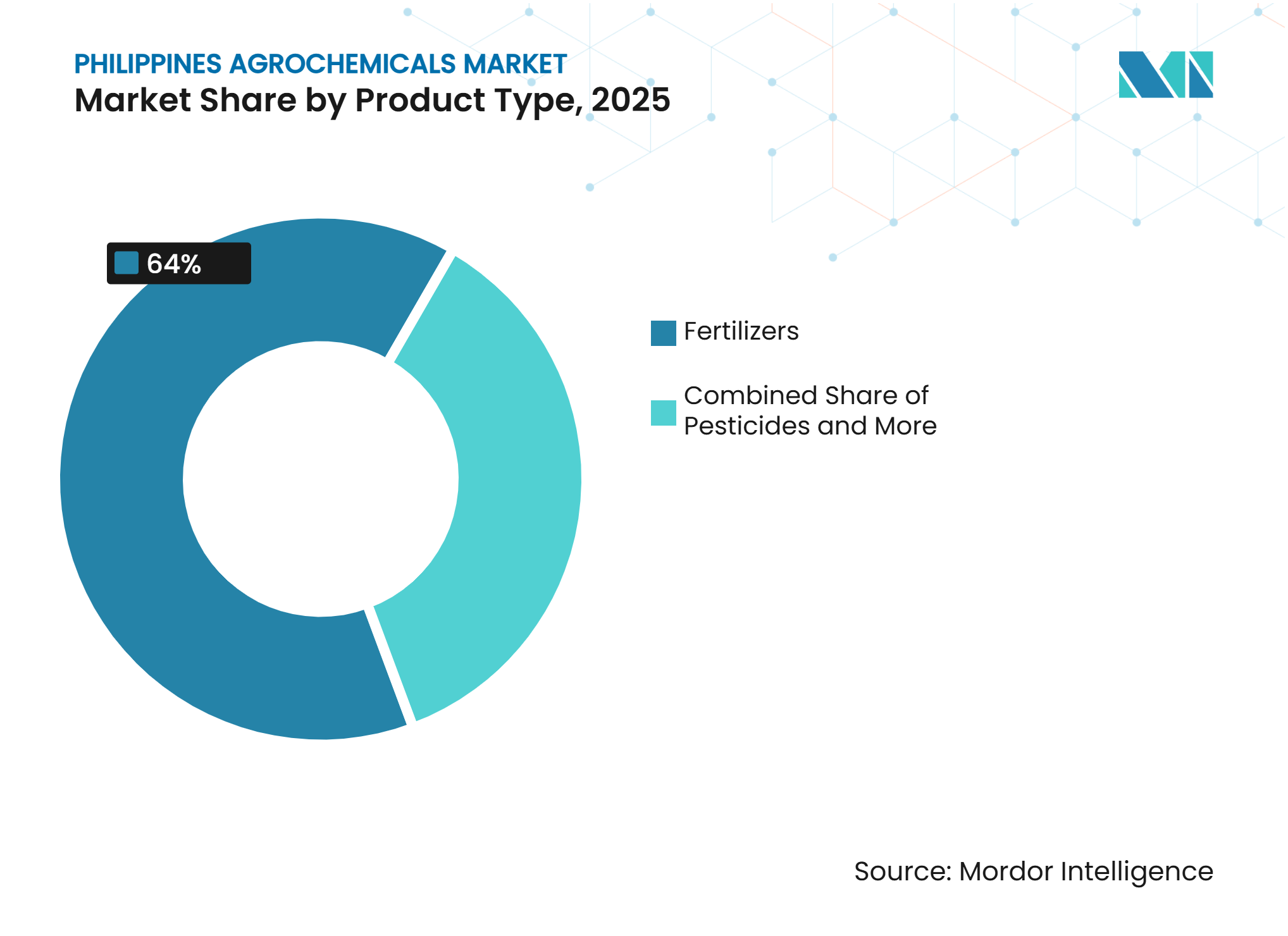
- By product type, fertilizers were the largest segment and held 64.0% of the Philippines agrochemicals market share in 2025, while plant growth regulators are the fastest-growing segment and are forecast to expand at a 9.8% CAGR between 2026 and 2031.
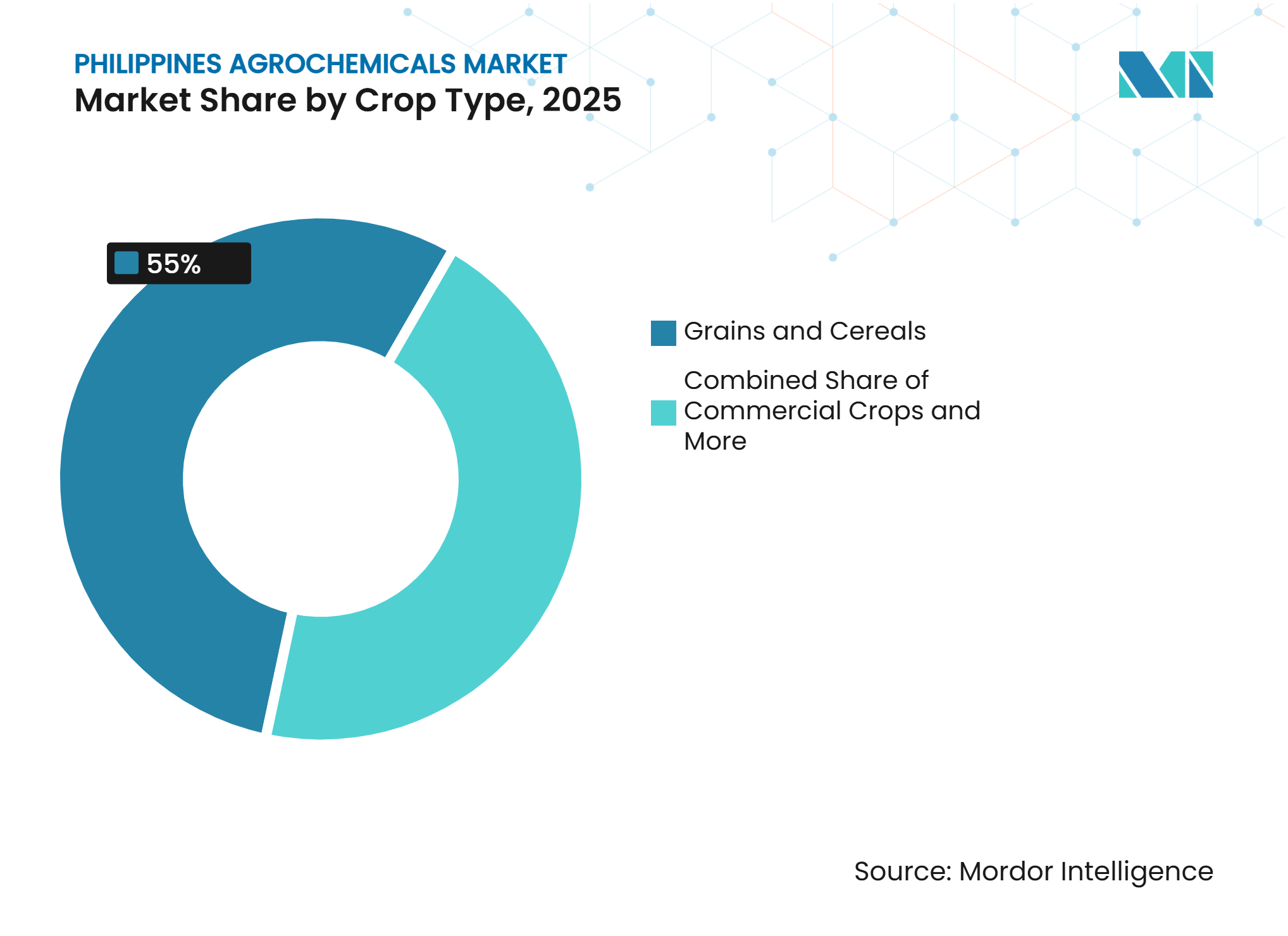
- By crop type, grains and cereals are the largest segment and held 55.0% of the Philippines agrochemicals market size in 2025, while fruits and vegetables are the fastest-growing segment and are forecast to expand at an 8.6% CAGR between 2026 and 2031.
Note: Market size and forecast figures in this report are generated using Mordor Intelligence’s proprietary estimation framework, updated with the latest available data and insights as of January 2026.
Market Trends and Insights
Drivers Impact Analysis of Philippines Agrochemicals Market*
| Driver | (~) % Impact on CAGR Forecast | Geographic Relevance | Impact Timeline |
|---|---|---|---|
| Staple-Crop Intensification and Food-Security Requirements | +2.0% | National, with gains in Central Luzon, Cagayan Valley, and Bangsamoro Autonomous Region in Muslim Mindanao (BARMM) | Medium term (2-4 years) |
| Expansion of Precision Agriculture and Variable-Rate Application | +0.6% | Cagayan Valley, Central Luzon, CALABARZON, and Bicol Region — irrigated lowlands | Long term (≥ 4 years) |
| Rising Pest and Pathogen Pressure in Rice, Corn, Banana and Horticultural Crops | +1.5% | National, with higher relevance in Cagayan Valley, Western Visayas, and Davao Region | Short term (≤ 2 years) |
| Adoption of Controlled-Release and Balanced Fertilization Products | +0.5% | National, ABFS rollout across Ilocos Region, Cagayan Valley, Central Luzon, Central Visayas, Zamboanga Peninsula, and BARMM | Medium term (2-4 years) |
| Growing Demand for Export-Compliant Fruits and Vegetables | +0.4% | Davao Region, Ilocos Region, and high-value vegetable corridors | Medium term (2-4 years) |
| Commercialization of Drone-Based Pesticide Application | +0.6% | Cagayan Valley, Central Luzon, CALABARZON, and Bicol Region — irrigated lowlands | Long term (≥ 4 years) |
| Source: Mordor Intelligence | |||
Staple-Crop Intensification and Food-Security Requirements
Rice and corn production remain the principal volume base for the Philippines agrochemicals market, with government efforts focused on increasing productivity and strengthening food security. According to the Philippines Department of Agriculture (DA), first-half 2025 palay production reached 9.08 million metric tons, up 6.4% from the same period in 2024, while the area planted to palay increased 2.7% to 2.12 million hectares[1]. The expansion of rice cultivation and higher production targets support recurring demand for fertilizers, herbicides, fungicides, and insecticides as growers seek to protect yields across multiple cropping cycles. Government initiatives, including double-dry-cropping programs and the extension of the Rice Competitiveness Enhancement Fund (RCEF) through 2031, further integrate seeds, soil health, mechanization, and pest management into rice productivity programs. This creates an important demand channel for agrochemical suppliers, particularly those able to align products with local crop requirements, farmer-support programs, and procurement mechanisms, supporting continued growth in the Philippines agrochemicals market.
Expansion of Precision Agriculture and Variable-Rate Application
Drone-based pesticide application is gaining traction in the Philippines agrochemicals market as regulators and agricultural institutions establish frameworks for precision application. In October 2024, the Fertilizer and Pesticide Authority (FPA) issued Memorandum Circular No. 2024-25, establishing enhanced rules for agricultural pesticide application using Remotely Piloted Aircraft Systems (RPAS). The regulatory framework provides growers and service providers with clearer requirements for aerial pesticide application and supports the transition from pilot projects toward more structured commercial use. The Drones4Rice Project, launched by the International Rice Research Institute (IRRI) and the Philippine Rice Research Institute (DA-PhilRice) in April 2024, is developing standardized protocols for drone-based application of seeds, fertilizers, and pesticides in rice production. Drone application can improve the precision of input placement, reduce labor requirements, and support more efficient use of crop protection products, particularly in irrigated rice production. As trained operators, regulatory protocols, and service providers become more available, drone-based application is anticipated to create an additional channel for differentiated formulations, adjuvants, and crop protection products in the Philippines agrochemicals market.
Rising Pest and Pathogen Pressure in Rice, Corn, Banana and Horticultural Crops
Pest and disease outbreaks sustain demand for crop-protection products across crop seasons in the Philippines agrochemicals market. According to the Department of Agriculture (DA), fall armyworm affected 3,338.38 hectares of corn across 37 municipalities and 182 barangays in Cagayan Valley during the 2025 wet season, following infestation of 2,515.16 hectares during the 2024–2025 dry season[2]. The recurring incidence of fall armyworm reinforces demand for insecticides, biological control agents, and integrated pest management programs in corn production. Rice production also faces continued pest and disease pressure, with the DA conducting regional monitoring and farmer training for rice leaffolder, rice bug, armyworm, and rice blast during 2025. Weather-related crop losses further increase the need for preventive crop protection, with the DA reporting PHP 1.12 billion (USD 19.47 million) in agricultural damage from tropical storms and monsoon rains in July 2025, affecting 43,741 hectares of farmland, primarily rice fields. These recurring biological and weather-related risks encourage growers to maintain preventive and responsive crop-protection programs, supporting sustained demand across the Philippines agrochemicals market.
Growing Demand for Export-Compliant Fruits and Vegetables
Export-oriented fruit and vegetable supply chains require growers to use registered crop-protection products and comply with destination-market residue standards. Japan continued to monitor fipronil residues in fresh banana imports from the Philippines in January 2025, increasing the importance of controlled pesticide application and traceability among banana exporters. The Bureau of Plant Industry (BPI) issued 82,855 export certificates in 2024 for agricultural products including bananas and pineapples, while also supporting the opening of new markets for Hass avocados in Japan, fresh durian in Malaysia, and mangoes in Lebanon. Similar requirements apply to mangoes, pineapples, and high-value vegetables, where compliance with international food-safety standards is essential for maintaining market access. The BPI oversees plant quarantine and export procedures for Philippine agricultural products, requiring exporters to align production and handling practices with destination-country requirements. These conditions support demand for registered fungicides and insecticides that meet residue requirements while protecting crop yield and quality. The expansion of Philippine fruit exports into new markets is therefore increasing the importance of compliant crop-protection practices and traceable input use among export-oriented growers.
Restraints Impact Analysis of Philippines Agrochemicals Market*
| Restraint | (~) % Impact on CAGR Forecast | Geographic Relevance | Impact Timeline |
|---|---|---|---|
| Heavy Dependence on Imported Fertilizer and Active Ingredients | -0.8% | National, with greater pressure in Mindanao and Eastern Visayas | Short term (≤ 2 years) |
| Tightening Product Registration, Labeling and Residue-Compliance Requirements | -0.4% | National, with higher pressure in Davao Region, Ilocos Region, and Cordillera Administrative Region (CAR) | Medium term (2-4 years) |
| Smallholder Credit Constraints and Input-Affordability Pressure | -0.6% | National, especially rainfed and upland farming areas | Medium term (2-4 years) |
| Fragmented Distribution and Limited Technical Advisory Coverage | -0.3% | Remote islands, upland Mindanao, and areas beyond National Irrigation Administration (NIA) reach | Long term (≥ 4 years) |
| Source: Mordor Intelligence | |||
Tightening Product Registration, Labeling and Residue-Compliance Requirements
Increasing regulatory requirements for pesticide registration, product labeling, and residue compliance are raising the cost and complexity of market entry in the Philippines agrochemicals market. The Fertilizer and Pesticide Authority (FPA) requires suppliers to submit efficacy and residue data to support product registration, while updated evaluation procedures increase the importance of complete technical dossiers and scientifically supported claims. In May 2025, the FPA launched Work Manuals on Bioefficacy and Residue Data Evaluation with support from the United States Department of Agriculture (USDA) and CropLife Asia, providing more structured procedures for evaluating product efficacy and residue data. The updated framework can lengthen preparation and review requirements for new products while increasing compliance costs for smaller suppliers. Product labels must also provide appropriate use instructions and comply with FPA requirements, particularly for products used on export-oriented crops where destination markets impose additional residue limits. Consequently, suppliers with established regulatory capabilities, comprehensive technical documentation, and compliant labeling are better positioned to maintain market access in the Philippines agrochemicals market.
Smallholder Credit Constraints and Input-Affordability Pressure
Smallholder financing constraints continue to limit the adoption of higher-value agricultural inputs in the Philippines agrochemicals market. According to the Global Innovation Lab for Climate Finance's 2025 analysis, more than 98% of Philippine farms are smaller than 7 hectares, while fewer than 30% of smallholders have access to formal credit, contributing to an estimated agricultural financing gap of USD 7 billion. Limited access to financing restricts growers' ability to purchase specialty fertilizers, biostimulants, and plant growth regulators, particularly when input prices increase or subsidy releases are delayed. The Agricultural Credit Policy Council (ACPC) reported in 2024 that fertilizer and pesticide purchases were the leading end use of agricultural loans, highlighting the direct relationship between credit availability and demand for farm inputs. Farmers in rainfed and upland areas remain particularly sensitive to upfront input costs and may reduce or delay applications when affordability becomes a constraint. Consequently, suppliers of premium agrochemical products need to demonstrate clear yield or productivity benefits and provide affordable financing or distribution options to improve adoption among smallholders.
*Our forecasts treat driver/restraint impacts as directional, not additive. The impact forecasts reflect baseline growth, mix effects, and variable interactions.
Philippines Agrochemicals Market Segment Analysis
By Product Type:
Fertilizers Lead Demand, Specialty Inputs AccelerateFertilizers accounted for 64.0% of the Philippines agrochemicals market share in 2025, making them the largest product segment. Demand is supported by rice fertilizer subsidies and field programs, particularly across major rice-producing areas. Nitrogenous fertilizers, primarily urea and ammonium sulfate, remain the dominant fertilizer products used in the country, while phosphatic and potassic fertilizers are gaining relevance as soil mapping and nutrient assessments identify crop-specific deficiencies. The market is gradually shifting from volume-driven fertilizer use toward more balanced and soil-specific application, increasing the importance of suppliers that can combine reliable product availability with technical recommendations for efficient nutrient management.
Plant growth regulators are the fastest-growing product segment, forecast to expand at a 9.8% CAGR between 2026 and 2031. Demand is supported by their use in high-value crops such as mangoes, bananas, and pineapples, where crop-specific growth and fruit-development management can improve commercial returns. Paclobutrazol is used in mango production, while ethephon supports pineapple ripening programs. A 2025 Philippine Journal of Science study evaluated nanoformulated plant growth regulators for the production and propagation of high-value crops and ornamentals, indicating ongoing research into improved application technologies. The segment remains dependent on crop-specific application expertise and demonstrated economic benefits, creating opportunities for suppliers that can provide targeted recommendations and evidence of performance.



By Crop Type:
Grains Lead Demand, Export Horticulture Accelerates ValueGrains and cereals accounted for 55.0% of the Philippines agrochemicals market size in 2025, making them the largest crop-type segment. Rice and corn represent a substantial share of cultivated area and benefit from strong government support, including the Rice Competitiveness Enhancement Fund (RCEF) 2.0, which supports rice productivity initiatives through 2031. United States Department of Agriculture Foreign Agricultural Service (USDA FAS) projected milled rice production at 12.25 million metric tons and corn production at 8.2–8.3 million metric tons for 2025–2026[3]. These crops require recurring applications of fertilizers, herbicides, insecticides, and fungicides across planting seasons. Rice programs emphasize nutrient management, weed control, and disease prevention, while corn production requires targeted insect management where fall armyworm occurs. The segment's scale, government-supported input programs, and established distribution network keep conventional fertilizers and crop-protection products central to the Philippines agrochemicals market.
Fruits and vegetables is the fastest-growing crop-type segment, forecast to expand at an 8.6% CAGR between 2026 and 2031. Demand is supported by export-oriented supply chains serving Japan, South Korea, China, and the United States, particularly for bananas, pineapples, and other high-value crops. Export producers use biostimulants and specialty fungicides to support yield consistency and post-harvest quality, while product selection is increasingly influenced by buyer specifications, residue requirements, and traceability standards. Commercial crops such as sugarcane, coconut, and tobacco provide additional demand for specialty herbicides and ripening products, while pulses, oilseeds, turf, and ornamental crops represent smaller applications. The diversity of crop requirements creates opportunities for suppliers to develop crop-specific input programs rather than relying on broad product portfolios, supporting higher-value opportunities within the Philippines agrochemicals market.

Geography Analysis
Luzon held the largest share of the Philippines agrochemicals market, supported by extensive rice production in Nueva Ecija, Pampanga, Bulacan, and Tarlac. These provinces generate sustained demand for nitrogenous fertilizers, herbicides, insecticides, and fungicides across multiple cropping cycles. Cagayan Valley has also emerged as an important area for precision application, with Drones4Rice demonstrations supporting drone-compatible input application practices. The Cordillera Administrative Region contributes additional demand through its export-oriented vegetable production, where residue-compliant fungicide and insecticide programs are important. The concentration of commercial farms, input dealers, and agricultural support programs gives suppliers broad access to the country's largest agricultural demand base.
Mindanao is the fastest-growing geographic market, supported by expanding commercial agriculture, export-oriented banana production, and increasing institutional investment in soil and crop management. The Davao banana sector supplies more than 1 million metric tons annually to Japan and requires fungicides, nematicides, and residue-compliant insecticides. In February 2025, the Ministry of Agriculture, Fisheries and Agrarian Reform BARMM (MAFAR-BARMM) partnered with the Department of Agriculture Bureau of Soils and Water Management (DA-BSWM) to extend the National Soil Health Program in Maguindanao del Sur and Maguindanao del Norte. BASF also conducted a product orientation for 150 farmers in Agusan del Sur in July 2025, indicating growing commercial engagement across Caraga and BARMM. These developments are expanding access to structured fertilization, crop-protection technologies, and technical support in previously underserved agricultural areas.
Visayas has a more segmented demand base, with Western Visayas anchored by sugarcane production in Negros Occidental and Central Visayas supported by corn and diversified farming. Sugarcane cultivation generates demand for plant growth regulators and herbicides, while DA Agricultural Balanced Fertilization Strategy (ABFS) activities have expanded nutrient-management guidance in Cebu. Eastern Visayas faces greater distribution challenges because of recurring typhoons and inter-island logistics, which can create temporary input-access gaps for smallholder growers. The regional diversity of crops and infrastructure conditions creates opportunities for suppliers that can tailor distribution, product recommendations, and technical support to local production systems.
Competitive Landscape
Market Concentration
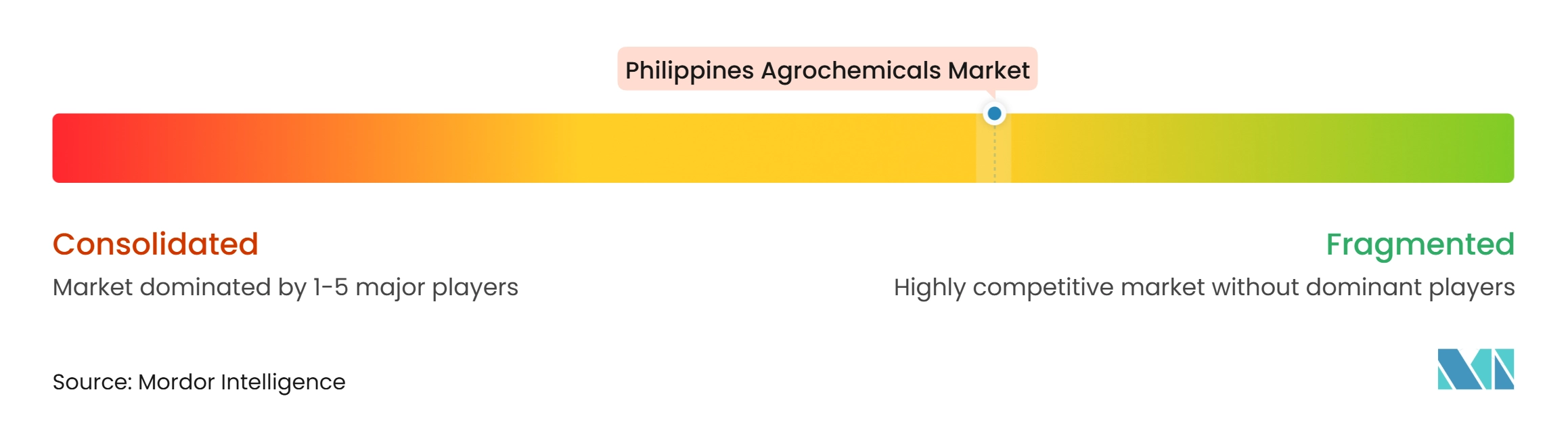
The Philippines agrochemicals market is moderately fragmented, with leading companies including Syngenta Group Co., Ltd., Bayer AG, BASF SE, Corteva, Inc., and FMC Corporation. These companies compete across fertilizers, conventional crop-protection products, biologicals, and specialty formulations, with competitive positioning shaped by registered product portfolio breadth, active ingredient capabilities, formulation technologies, regulatory expertise, and crop-specific technical support. Leading participants continue to strengthen their positions through new product registrations, portfolio expansion, crop-specific solutions, and collaborations with government and research institutions. Regional and local suppliers also compete through differentiated specialty formulations, and targeted solutions for specific pest, disease, and nutrient-management requirements.
Product innovation and portfolio expansion remain key competitive strategies. FMC Corporation received conditional approvals for Dodhylex herbicide and Tremisia fungicide in 2025 and expanded its Philippines portfolio in 2026 with Keenali, Benevia Evo, and Tuventa, strengthening its presence across multiple crop-protection categories. Bayer AG signed a Memorandum of Understanding with the Department of Agriculture–Bureau of Agricultural Research (DA-BAR) in August 2024 covering crop-science research, capacity building, sustainability initiatives, and Direct Seeded Rice (DSR) scale-up. BASF SE launched Triplex 360 SC in April 2025 and introduced Convey Complete 310 SC in Bukidnon in October 2025, demonstrating continued development of crop-specific solutions for Philippine production systems.
The competitive landscape is also evolving through biological crop protection, biostimulants, precision-application technologies, and residue-compliant solutions. Digital regulatory initiatives by the Fertilizer and Pesticide Authority (FPA) can support the registration and commercialization of new products, increasing the importance of regulatory capabilities for suppliers introducing novel active ingredients and formulations. Companies that combine differentiated product technologies with efficacy data, regulatory expertise, agronomic research, and crop-specific technical support are better positioned to strengthen their market positions. Competitive advantage therefore increasingly depends on innovation, registration capabilities, product efficacy, and solutions tailored to evolving crop-protection requirements rather than solely on scale or distribution reach.
Philippines Agrochemicals Industry Leaders
-
Bayer CropScience, Inc. (Bayer AG)
-
BASF Philippines, Inc. (BASF SE)
-
Corteva Asia Pacific Inc. (Corteva, Inc.)
-
FMC Agro Philippines, Inc. (FMC Corporation)
-
Syngenta Philippines, Inc. (Syngenta Group Co., Ltd.)
- *Disclaimer: Major Players sorted in no particular order
Philippines Agrochemicals Market Companies Covered in this Report
- Syngenta Philippines, Inc. (Syngenta Group Co., Ltd.)
- Bayer CropScience, Inc. (Bayer AG)
- BASF Philippines, Inc. (BASF SE)
- Corteva Asia Pacific Inc. (Corteva, Inc.)
- FMC Agro Philippines, Inc. (FMC Corporation)
- UPL Philippines, Inc. (UPL Limited)
- Sumitomo Chemical Philippines, Inc. (Sumitomo Chemical Co., Ltd.)
- Nufarm Philippines, Inc. (Nufarm Limited)
- Jardine Distribution, Inc. (Jardine Engineering Corporation)
- C.B. Andrew Asia, Inc.
- LEADS Agricultural Products Corporation
- International Veterinary & Agrochemical (IVA), Inc.
- Philippine Phosphate Fertilizer Corporation
Recent Industry Developments in Philippines Agrochemicals Market
- June 2026: FMC Agro Philippines, Inc. confirmed the commercial availability of Keenali herbicide, Tremisia fungicide, Benevia Evo insecticide, and Tuventa insecticide, expanding its multi-category crop-protection portfolio in the Philippines following conditional approvals from the Fertilizer and Pesticide Authority (FPA) in 2025.
- October 2025: BASF Philippines, Inc. launched Convey Complete 310 SC corn herbicide in Bukidnon, targeting Eleusine indica with fast burndown and residual activity, marking BASF's formal entry into the upland-corn herbicide segment in Northern Mindanao, Philippines.
- April 2025: BASF Philippines, Inc. launched Triplex 75 EC, a systemic rice herbicide containing 75 g/L profoxydim, providing effective control of Leptochloa, Echinochloa, and Ischaemum species and supporting weed management in rice production.
Philippines Agrochemicals Market Report Scope
Agrochemicals are chemical substances used in agriculture to protect crops, improve crop growth, regulate plant development, and manage pests, diseases, and weeds. They include products such as insecticides, herbicides, fungicides, nematicides, plant growth regulators (PGRs), and other crop-protection chemicals. For the purpose of this study, biologicals, biopesticides, and organic products are excluded from the agrochemicals scope.
The Philippines Agrochemicals Market Report is Segmented by Product Type (Fertilizers, Pesticides, and More), and by Crop Type (Grains and Cereals, Pulses and Oilseeds, Fruits and Vegetables, Commercial Crops, and More). The Market Forecasts are Provided in Terms of Value (USD) and Volume (Metric Tons).
Segmentation Overview
| Fertilizers | Nitrogenous |
| Phosphatic | |
| Potassic | |
| Other Fertilizers | |
| Pesticides | Herbicides |
| Insecticides | |
| Fungicides | |
| Other Pesticides | |
| Adjuvants | |
| Plant Growth Regulators |
| Grains and Cereals |
| Pulses and Oilseeds |
| Fruits and Vegetables |
| Commercial Crops |
| Turf and Ornamental |
| By Product Type | Fertilizers | Nitrogenous |
| Phosphatic | ||
| Potassic | ||
| Other Fertilizers | ||
| Pesticides | Herbicides | |
| Insecticides | ||
| Fungicides | ||
| Other Pesticides | ||
| Adjuvants | ||
| Plant Growth Regulators | ||
| By Crop Type | Grains and Cereals | |
| Pulses and Oilseeds | ||
| Fruits and Vegetables | ||
| Commercial Crops | ||
| Turf and Ornamental | ||
Key Questions Answered in the Report
What is the Philippines agrochemicals market size?
The Philippines agrochemicals market was valued at USD 1.90 billion in 2025, is USD 2.00 billion in 2026, and is forecasted to reach USD 2.6 billion by 2031 at a 5.39% CAGR between 2026 and 2031.
Which product type has the largest share in Philippines agrochemicals?
Fertilizers held the largest share at 64.0% in 2025, supported by rice-sector subsidy programs and balanced fertilization initiatives.
Which crop type is expanding most rapidly?
Fruits and vegetables are forecasted to expand at an 8.6% CAGR between 2026 and 2031 as export supply chains require compliant crop-protection programs.
What are the main constraints for agrochemical suppliers in the Philippines?
Key constraints are input import dependence, product-registration requirements, limited smallholder credit, and fragmented distribution across islands.