
Pheochromocytoma Market Size and Share
Market Overview
| Study Period | 2020 - 2031 |
|---|---|
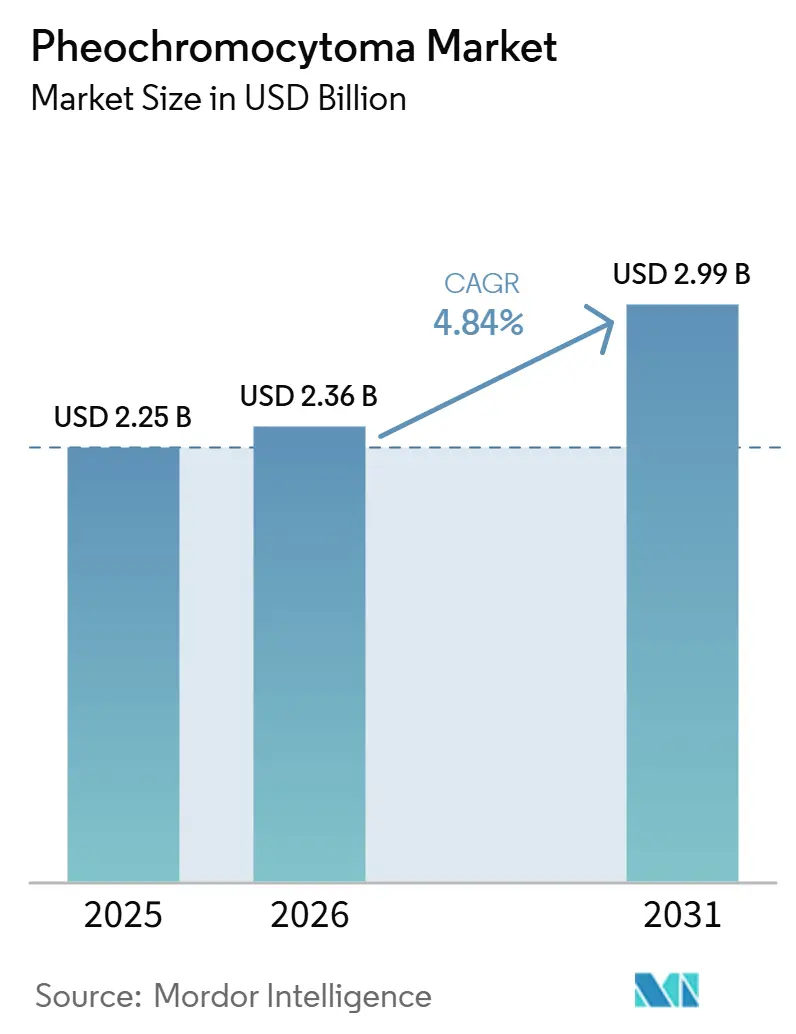
| Market Size (2026) | USD 2.36 Billion |
| Market Size (2031) | USD 2.99 Billion |
| Growth Rate (2026 - 2031) | 4.84 % |
| Fastest Growing Market | Asia-Pacific |
| Largest Market | North America |
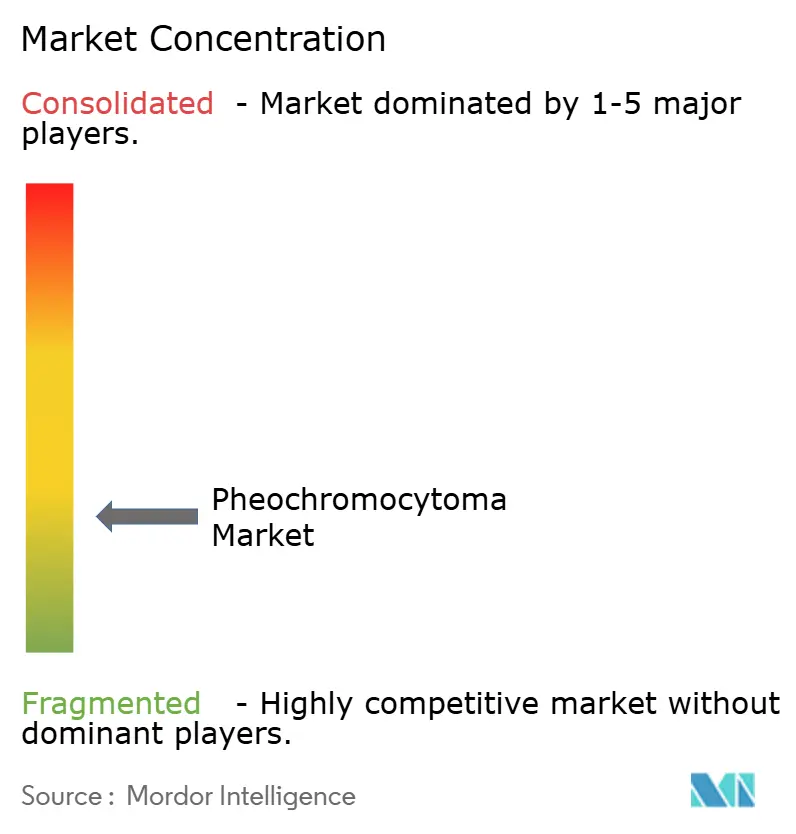
| Market Concentration | Low |
Major Players *Disclaimer: Major Players sorted in no particular order Image © Mordor Intelligence. Reuse requires attribution under CC BY 4.0. | |
Pheochromocytoma Market Analysis by Mordor Intelligence
The Pheochromocytoma Market size was valued at USD 2.25 billion in 2025 and is estimated to grow from USD 2.36 billion in 2026 to reach USD 2.99 billion by 2031, at a CAGR of 4.84% during the forecast period (2026-2031).
The pheochromocytoma market is growing as more tumors are identified through imaging performed for other clinical reasons, rather than through disease-specific screening alone. The commercial focus is moving toward genetic testing, functional imaging, and molecularly guided therapies, while surgery remains central for localized disease. Belzutifan’s FDA approval in May 2025 gave patients with advanced, unresectable, or metastatic disease access to the first approved oral systemic therapy for this indication. Growth remains constrained by a very small patient population, uneven availability of nuclear medicine services, variable treatment response across molecular subtypes, and reimbursement barriers for orphan therapies.
Key Report Takeaways
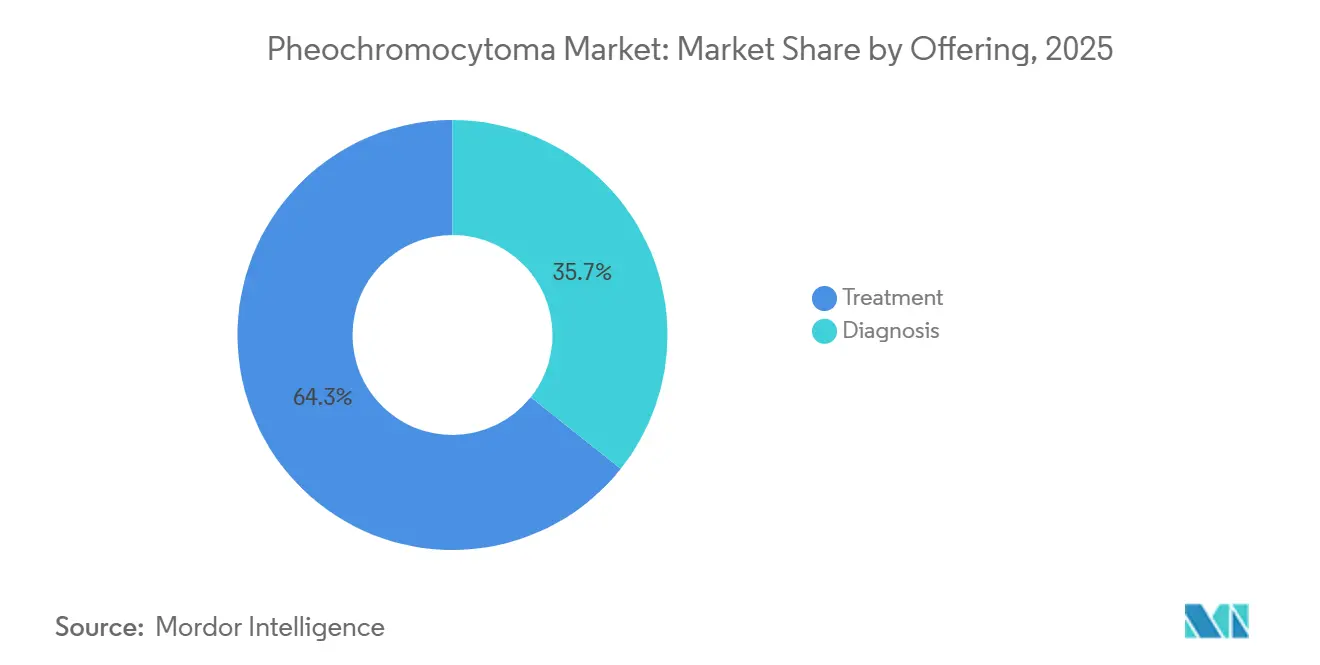
- By offering, treatment held 64.31% of revenue in 2025, while diagnosis is forecast to grow at a 5.58% CAGR through 2031.
- By disease type, adrenal pheochromocytoma accounted for 83.44% of revenue in 2025, while extra-adrenal pheochromocytoma and paraganglioma is projected to grow at a 7.52% CAGR through 2031.
- By etiology, sporadic disease held 68.24% share in 2025, while hereditary disease is forecast to expand at a 7.22% CAGR through 2031.
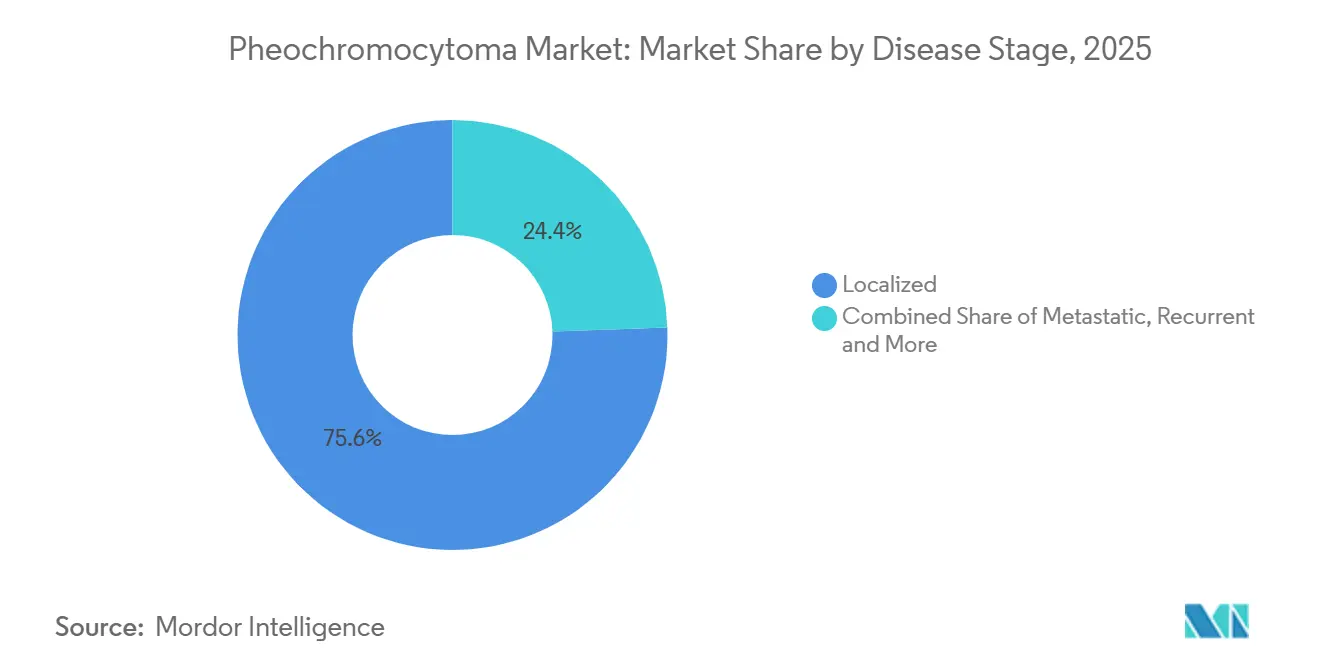
- By disease stage, localized disease represented 75.56% share in 2025, while metastatic disease is forecast to grow at a 6.95% CAGR through 2031.
- By end user, hospitals held 55.56% of revenue in 2025, while specialty endocrinology centers are forecast to advance at a 6.65% CAGR through 2031.
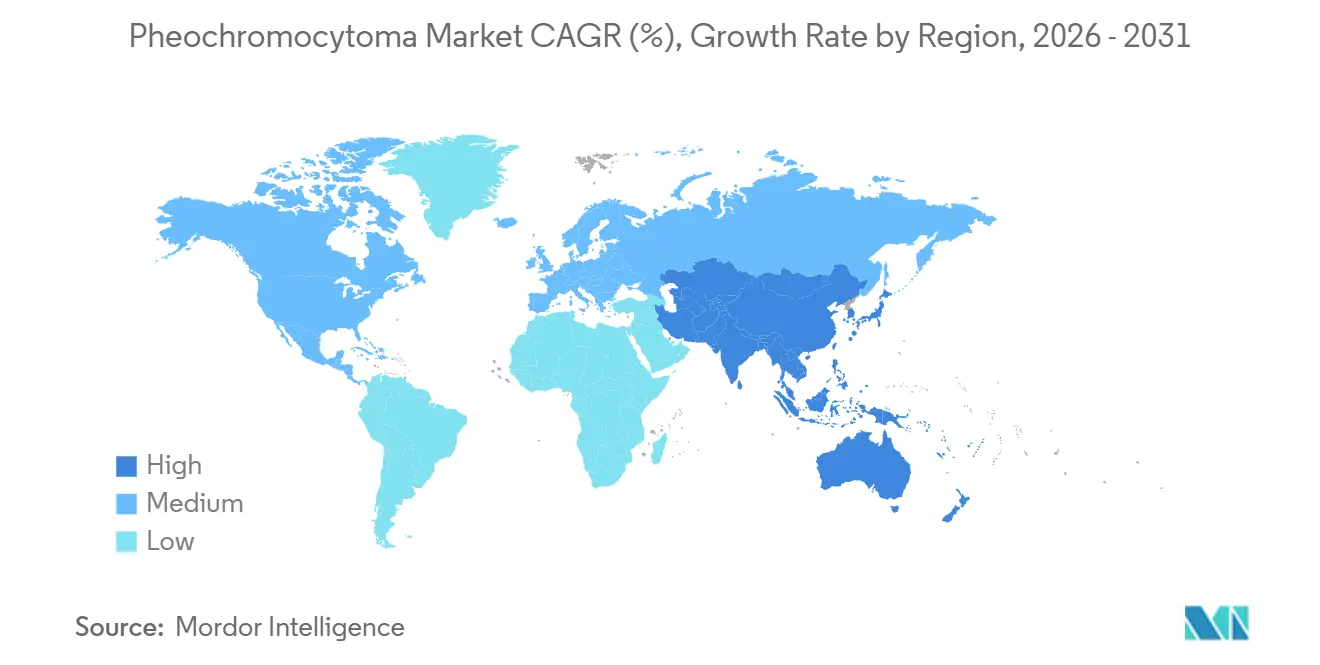
- By geography, North America held 42.61% of revenue in 2025, while Asia-Pacific is forecast to expand at a 6.85% CAGR through 2031.
Note: Market size and forecast figures in this report are generated using Mordor Intelligence’s proprietary estimation framework, updated with the latest available data and insights as of January 2026.
Market Trends and Insights
Drivers Impact Analysis of Pheochromocytoma Market*
| Driver | (~) % Impact on CAGR Forecast | Geographic Relevance | Impact Timeline |
|---|---|---|---|
| Rising Detection of Previously Unrecognized Tumors | +0.9% | Global; highest in North America & EU | Short term (≤ 2 years) |
| Expansion of Germline Genetic Testing and Cascade Screening | +0.7% | North America & EU; early gains in Japan, South Korea | Medium term (2–4 years) |
| Adoption of Advanced Functional Imaging | +0.6% | Global; expanding rapidly in APAC core, spill-over to MEA | Short term (≤ 2 years) |
| Growth in Precision Therapies for Molecularly Defined Disease | +0.9% | North America & EU, driven by regulatory approval sequencing | Medium term (2–4 years) |
| Referral to High-Volume Multidisciplinary Centers | +0.4% | North America, Western Europe | Medium term (2–4 years) |
| Radioligand Manufacturing and Theranostic Platform Investment | +0.8% | North America & EU; nascent expansion in Japan | Long term (≥ 4 years) |
| Source: Mordor Intelligence | |||
Rising Detection of Previously Unrecognized Tumors
Incidental identification is changing the pheochromocytoma market because many tumors are now found during imaging ordered for other conditions. The 2026 SEER analysis recorded a 5.8% annual increase in United States case counts from 1975 through 2022. A 2025 review argued that the often-cited incidence estimate of 1.9 cases per million person-years understates the number of cases identified as imaging access expands. A 2025 European congress report also found that annual PPGL incidence at 2 hospitals increased from 1.92 to 5.25 cases after 2020, and 51.9% of cases were identified incidentally. Imaging for other clinical indications, adrenal incidentaloma procedures, and post-COVID surveillance can therefore add patients without a dedicated PPGL screening campaign. This pattern supports demand for biochemical testing, functional imaging, surgical evaluation, and follow-up care across the pheochromocytoma market.
Expansion of Germline Genetic Testing and Cascade Screening
PPGL has a hereditary component in 30% to 40% of patients, which makes genetic evaluation more important than for many other solid tumors. The 2024 international consensus statement recommends germline testing for all pediatric PPGL patients and for first-degree relatives of confirmed mutation carriers[1]H. P. H. Neumann et al., “International Consensus Statement on the Diagnosis and Management of Pheochromocytoma and Paraganglioma in Children and Adolescents,” Nature Reviews Endocrinology, nature.com.. This shifts practice away from limited, gene-by-gene testing toward broader evaluation when clinically appropriate. Each confirmed hereditary case can lead to testing of 2 to 5 relatives, followed by multigene sequencing and continued biochemical or imaging surveillance. A September 2025 study demonstrated the feasibility and clinical utility of germline multigene panel testing in Japanese PPGL patients. The hereditary segment’s 7.22% CAGR reflects guideline-driven testing and surveillance activity within the pheochromocytoma market, rather than an increase in mutation prevalence.
Growth in Precision Therapies for Molecularly Defined Disease
The FDA approved Merck’s belzutifan on May 14, 2025, for adult and pediatric patients aged 12 years and older with locally advanced, unresectable, or metastatic PPGL. In the LITESPARK-015 study, belzutifan achieved a 26% objective response rate and a median duration of response of 20.4 months. Belzutifan targets HIF-2α, which is relevant in VHL-driven disease and in a subset of sporadic Cluster 1 tumors. Evidence for other targeted therapies has also developed, with sunitinib reporting 12-month progression-free survival of 36% against 19% for placebo in FIRSTMAPPP. Cabozantinib reported a 25% objective response rate, median progression-free survival of 16.6 months, and median overall survival of 24.9 months in the NATALIE trial. These choices are increasing molecular profiling and specialist assessment across the pheochromocytoma market.
Radioligand Manufacturing and Theranostic Platform Investment
Radioligand therapy is becoming more relevant as imaging and treatment are linked through somatostatin receptor assessment. A 2026 study of 15 patients with metastatic PPGL who received 177Lu-DOTATATE reported a 27% objective response rate, a 73% disease control rate, median progression-free survival of 26.9 months, and median overall survival of 54.8 months. ITM’s COMPETE trial in advanced gastroenteropancreatic neuroendocrine tumors reported median progression-free survival of 23.9 months with 177Lu-edotreotide, compared with 14.1 months for everolimus. This result provides a clinical and manufacturing reference point for PPGL radiopharmaceutical programs. Capacity remains limited because beta-emitting radioligands are provided by a small group of specialized centers, while alpha-emitter supply remains at an earlier stage. Perspective Therapeutics commissioned a second cGMP facility in Somerset, New Jersey, during the fourth quarter of 2024 to expand 212Pb supply for its development programs. Investment in isotope supply and specialized facilities can determine whether clinical evidence converts into wider access in the pheochromocytoma market.
Restraints Impact Analysis of Pheochromocytoma Market*
| Restraint | (~) % Impact on CAGR Forecast | Geographic Relevance | Impact Timeline |
|---|---|---|---|
| Ultra-Rare Population Limits Commercial Trial Scale | −0.7% | Global | Long term (≥ 4 years) |
| Specialist and Nuclear-Medicine Capacity Gaps | −0.5% | APAC core, MEA, South America; spill-over to smaller EU markets | Medium term (2–4 years) |
| Genotype-Dependent Treatment Response Variability | −0.4% | Global | Long term (≥ 4 years) |
| Reimbursement Friction for Off-Label and Orphan Therapies | −0.6% | EU, Asia-Pacific; concentrated in Germany, France, Japan, South Korea | Medium term (2–4 years) |
| Source: Mordor Intelligence | |||
Ultra-Rare Population Limits Commercial Trial Scale
The small patient population limits trial enrollment, commercial scale, and the speed of evidence generation. The United States records nearly 2,000 new PPGL diagnoses each year, while a 2025 systematic review reported pooled global incidence of 1.9 cases per million person-years. FIRSTMAPPP was the first randomized controlled PPGL trial and required multinational enrollment over multiple years to evaluate its primary endpoint. Eligibility rules based on SDHB status, VHL pathway activity, or SSTR2 expression divide an already small population into smaller groups. This makes single-arm studies and surrogate endpoints more common in advanced disease development. The resulting evidence base can delay payer acceptance and keeps the pheochromocytoma market dependent on specialist centers that can participate in international trials.
Reimbursement Friction for Off-Label and Orphan Therapies
Orphan therapy pricing places manufacturers’ need to recover research costs against payer thresholds designed for more common diseases. A 2025 study of PPGL prescribing found that clinician knowledge of orphan-drug price increases affected the choice of therapy. Use of 177Lu-DOTATATE in PPGL may rely on compassionate access when its approved billing indication does not include PPGL, which can limit treatment to academic centers. Europe’s joint health technology assessment framework can add difficulty when an orphan therapy has supporting evidence from a single-arm study. Managed entry agreements are increasingly used to address evidence and reimbursement uncertainty for orphan medicines[2]E. Van Balen et al., “Drivers of Managed Entry Agreements for Orphan Medicinal Products,” Orphanet Journal of Rare Diseases, springer.com.. These conditions can slow access within the pheochromocytoma market even where relevant imaging, medical expertise, and therapeutic capacity are available.
*Our forecasts treat driver/restraint impacts as directional, not additive. The impact forecasts reflect baseline growth, mix effects, and variable interactions.
Pheochromocytoma Market Segment Analysis
By Offering:
Treatment Remains the Largest Revenue Source While Diagnosis Expands FasterTreatment held 64.31% of the pheochromocytoma market share in 2025, supported by adrenalectomy and perioperative pharmacological stabilization for patients with localized disease. Laparoscopic or robotic adrenalectomy remains a core approach, with preoperative alpha-adrenergic blockade supporting hemodynamic control. Radiopharmaceutical treatment is gaining importance as 177Lu-DOTATATE evidence develops for advanced PPGL. Belzutifan also opened a new systemic treatment option after its 2025 approval for unresectable and metastatic disease. Cyclophosphamide, vincristine, and dacarbazine chemotherapy retains a narrower role in inoperable hereditary disease, particularly in SDHB-mutated metastatic cases. Calcium channel blockers and beta-blockers remain useful adjuncts to alpha-blockade, but generic competition limits their revenue contribution.
Diagnosis is the fastest-growing offering, with the pheochromocytoma market size for diagnosis forecast to rise at a 5.58% CAGR from 2026 to 2031. Functional imaging with 68Ga-DOTATATE PET/CT and multigene sequencing panels are central to this expansion in the pheochromocytoma market. A 2024 scoping review reported that 68Ga-DOTA-SST PET/CT can identify more than 90% of lesions in patients without known germline variants. Panels covering SDHA, SDHB, SDHC, SDHD, VHL, RET, NF1, and TMEM127 are replacing sequential single-gene testing as testing costs decline. Testing of relatives after a hereditary diagnosis creates repeat laboratory and surveillance activity that does not depend on new disease incidence. Genetic counseling, consent, and disclosure requirements also create recurring contact with specialist programs.


By Disease Type:
Improved Imaging Supports Faster Extra-Adrenal DetectionAdrenal pheochromocytoma held 83.44% of revenue in 2025 because adrenal tumors occur more often and follow a more established surgical pathway. Its biochemical workup commonly uses plasma fractionated metanephrines, which supports reproducible testing at tertiary centers. A Portuguese referral-center study published in 2024 recorded an incidence trend of 5.3 cases per million from 2012 through 2024. The study found metastatic disease only among hereditary cases, reinforcing the value of genetic assessment at diagnosis. Adrenal disease is expected to remain the majority disease type through 2031. Its share may narrow gradually as imaging identifies more lesions outside the adrenal gland.
Extra-adrenal pheochromocytoma and paraganglioma is forecast to grow at a 7.52% CAGR from 2026 to 2031 within the pheochromocytoma market. The 2024 scoping review reported 91% to 93% detection rates for 68Ga-DOTA-SST PET/CT in extra-adrenal and paraganglioma lesions without known germline variants. Limited 68Ga availability in Latin America shifts care toward 18F-FDOPA, which the same review associated with 74% detection efficiency. This difference shows how imaging capacity can influence local access to diagnosis. Head and neck paragangliomas are often non-secreting and may be identified later than other PPGL forms. Wider access to functional imaging is therefore important for the disease type’s faster growth.
By Etiology:
Broader Testing Changes the Sporadic and Hereditary MixSporadic etiology held 68.24% of revenue in 2025. This majority reflects the number of patients who had not been classified through a known inherited syndrome at the time of diagnosis. The segment’s share is expected to decline modestly as broader genetic evaluation reclassifies some cases. The 2024 international consensus statement supports germline testing for pediatric patients and first-degree relatives of known mutation carriers. Such guidance supports a more consistent testing approach across specialist care pathways. It also places clinical value on family history, genetic counseling, and lifelong surveillance.
Hereditary disease is the fastest-growing etiology segment, with a 7.22% CAGR from 2026 to 2031. Its growth is tied to increased panel testing and follow-up of first-degree relatives, rather than a change in mutation prevalence. A Japanese study published in September 2025 provided local evidence for the technical feasibility and clinical utility of germline panel testing. SDHB mutation carriers have a 30% to 40% lifetime risk of metastatic disease, which can increase their use of diagnostic and treatment services. European specialist networks concentrate hereditary care and support long-term biochemical and imaging schedules in the pheochromocytoma market. These repeated monitoring needs extend service use well beyond the initial diagnosis.
By Disease Stage:
Advanced Disease Creates a Higher-Intensity Care PathwayLocalized disease accounted for 75.56% of the pheochromocytoma market size in 2025. This reflects the predominantly non-metastatic presentation of PPGL and the curative role of surgery for many patients. Laparoscopic adrenalectomy is a key treatment option for appropriate localized tumors, including tumors smaller than 6 cm under the Japanese guideline[3]Japan Endocrine Society, “Japan Endocrine Society Clinical Practice Guideline for the Diagnosis and Management of Pheochromocytoma and Paraganglioma 2025,” Endocrinology Journal, endocrj.org.. Regional or locally advanced disease may require open surgery, debulking, and more intensive perioperative stabilization. Metyrosine can be considered for larger or invasive tumors that require additional catecholamine control. This care pattern remains central to the pheochromocytoma market.
Metastatic PPGL is forecast to expand at a 6.95% CAGR from 2026 to 2031 within the pheochromocytoma market. Before 2025, advanced care relied largely on off-label regimens and 131I-MIBG, with no approved systemic therapy for PPGL. Belzutifan and the 2025 Phase II study of 177Lu-DOTATATE have created more treatment options for progressive metastatic disease. This has increased the need to determine the sequence of targeted therapy, radionuclide treatment, and other systemic approaches. It also raises use of molecular profiling and functional imaging to assess SSTR2 expression. Advanced cases require specialized nuclear medicine, oncology, and endocrine support that is not available at every care site.

By End User:
Specialty Centers Gain From Complex and Hereditary CareHospitals held 55.56% of end-user revenue in 2025 because they provide adrenal surgery, intensive perioperative care, and management of catecholamine-related complications. They remain essential for routine localized disease and acute presentation. Their position is supported by surgical teams, inpatient monitoring, imaging, and pharmacy services in one setting. Hospital revenue share may narrow as more complex hereditary and advanced cases move toward dedicated specialty programs. A 2025 study associated high-resource rare cancer centers with specialized genomic review and virtual multidisciplinary tumor boards with improved survival outcomes. Digital referral and tele-oncology tools may help patients reach these services when distance or insurance status limits access.
Specialty endocrinology centers are forecast to grow at a 6.65% CAGR from 2026 to 2031. These centers manage genetic counseling, cascade testing, biochemical surveillance, and coordination of referrals for peptide receptor radionuclide therapy. Cleveland Clinic reported that its PPGL Center of Excellence performs nearly 120 adrenal surgeries each year, compared with a national average of 1 surgery per general surgeon annually. This difference supports referral concentration for cases that need coordinated surgical and genetic expertise. Oncology centers also become more relevant as metastatic protocols use radiopharmaceutical and systemic therapy resources in the pheochromocytoma market. Nuclear medicine physics, radiation safety, and oncology pharmacy capabilities are particularly important for advanced care.
Geography Analysis
North America Pheochromocytoma Market
North America held 42.61% of the pheochromocytoma market share in 2025. The region benefits from high-volume academic referral centers, established reimbursement for 68Ga-DOTATATE PET/CT, and early commercial use of belzutifan after FDA approval in May 2025. United States care is increasingly concentrated in institutions that can provide functional imaging, SSTR2 assessment, radionuclide therapy, and radiation safety support. This can improve coordination for complex patients, but it can also concentrate capacity in a limited number of centers. Canada has a different access pattern because provincial formulary negotiations can trail United States approvals by 12 to 24 months. Perspective Therapeutics’ Somerset facility illustrates the concentration of alpha-particle radioligand supply infrastructure in the northeastern United States.
Europe Pheochromocytoma Market
Europe represents a substantial part of the global pheochromocytoma market through national reference networks in Germany, France, and the United Kingdom. France’s COMETE network and other referral systems centralize multidisciplinary care and support longitudinal patient records. The EU joint clinical assessment framework can complicate access for therapies supported by single-arm orphan studies before national price negotiations take place. This process can add 12 to 18 months to effective access in the EU5. Spain, Italy, and Central and Eastern European countries may rely on compassionate access or named-patient programs for PPGL use of PRRT beyond the approved gastroenteropancreatic neuroendocrine tumor indication. These differences maintain an access gap among European health systems.
APAC, MEA and South America Pheochromocytoma Market
Asia-Pacific is the fastest-growing geography, with the pheochromocytoma market size projected to grow at a 6.85% CAGR from 2026 to 2031. Japan’s 2025 revised clinical guideline incorporated updated tumor classification, pediatric genetic testing recommendations, radionuclide therapy descriptions, and head and neck paraganglioma management. China’s oncology infrastructure and rising hereditary tumor awareness in India also support regional expansion in the pheochromocytoma market. Japan’s 131I-MIBG insurance coverage has provided a reimbursement precedent for later radionuclide therapy adoption. The Middle East, Africa, and South America remain limited by gaps in specialist and nuclear medicine capacity. Brazil has potential for further growth because of targeted oncology investment programs and greater genomic medicine funding.

Competitive Landscape
The pheochromocytoma market is fragmented across large pharmaceutical companies, radiopharmaceutical specialists, imaging equipment providers, and specialty generic suppliers. No company controls the full path from diagnosis through treatment. Merck, Novartis, and Exelixis compete at separate treatment points through belzutifan, 177Lu-DOTATATE, and cabozantinib-based approaches. Their strategy generally extends existing oncology programs into PPGL rather than building PPGL-only research programs. This reflects the limited revenue potential of an ultra-rare disease on its own. Opportunities remain in studies for SDHx-mutated tumors, alpha-particle radioligands, and long-term digital surveillance for hereditary carriers.
Radiopharmaceutical specialists are active in the competition for treatment adoption. ITM reported that its COMPETE trial produced median progression-free survival of 23.9 months with 177Lu-edotreotide versus 14.1 months with everolimus, with objective response rates of 22% and 4%, respectively. The result establishes a benchmark that informs competing neuroendocrine theranostic programs. Perspective Therapeutics announced in July 2026 that interim data for [212Pb]VMT-α-NET, including PPGL-eligible patients, had been accepted for oral presentation at ESMO Congress 2026. Lantheus has supported Perspective Therapeutics through strategic agreements related to its radiopharmaceutical pipeline. These actions show how alpha-particle programs and supply partnerships are becoming more visible in the competitive landscape.
GE HealthCare and Siemens Healthineers remain important because PET/CT equipment is required to establish imaging eligibility for many theranostic pathways. Their role is structural because pharmaceutical companies need to work with existing imaging infrastructure rather than replace it. Radiopharmaceutical manufacturing also has high entry barriers because facilities must meet FDA cGMP requirements and follow USP 825 standards for preparation. These requirements favor companies with established manufacturing, distribution, and radiation-safety capabilities. Specialist capacity gaps remain relevant in Asia-Pacific, the Middle East and Africa, South America, and smaller European markets. Genotype-dependent response variability across SDHB, VHL, and RET molecular subtypes further limits a single standardized treatment approach. The competitive picture therefore remains distributed rather than dominated by a small group of integrated providers.
Pheochromocytoma Industry Leaders
Merck & Co., Inc.
Novartis AG
Bausch Health Companies Inc.
Lantheus Holdings, Inc.
Pfizer Inc.
- *Disclaimer: Major Players sorted in no particular order
Pheochromocytoma Market Companies Covered in this Report
- AstraZeneca
- Bausch Health
- Bayer
- Curium Pharma
- Exelixis, Inc.
- GE HealthCare Technologies Inc.
- Hikma Pharmaceuticals
- ITM Isotope Technologies Munich SE
- Jazz Pharmaceuticals plc
- Lantheus Holdings, Inc.
- Merck
- Novartis
- Nxera Pharma Co., Ltd.
- Ono Pharmaceutical
- Perspective Therapeutics, Inc.
- Pfizer
- Siemens Healthineers
- Teva Pharmaceutical Industries

Recent Industry Developments in Pheochromocytoma Market
- July 2026: Perspective Therapeutics announced acceptance of [212Pb]VMT-α-NET interim efficacy data, Cohorts 1–2, with a data cut-off of April 17, 2026, including PPGL-allowance patients, for oral presentation at ESMO Congress 2026. This marked the transition of alpha-particle theranostics into peer-scrutinized clinical evidence.
- May 2025: The FDA approved belzutifan, Welireg, from Merck & Co. for adult and pediatric patients aged 12 years and older with locally advanced, unresectable, or metastatic PPGL. LITESPARK-015 Phase II data showed a 26% objective response rate and a median duration of response of 20.4 months. This was the first oral therapy approved for a PPGL indication and received priority review and orphan designation.


Global Pheochromocytoma Market Report Scope
As per the scope of the report, pheochromocytoma is a rare tumor that originates from the adrenal glands' chromaffin cells, which produce adrenaline and other catecholamines. These tumors can cause an excess release of catecholamines, leading to symptoms such as hypertension, rapid heartbeat, sweating, and headaches.
The pheochromocytoma market is segmented by offering into diagnosis and treatment. The diagnosis segment includes laboratory tests, imaging tests, and genetic testing, while the treatment segment includes preoperative medical stabilization, surgery, radiopharmaceutical therapy, systemic targeted therapy, chemotherapy, and local and supportive therapy. By disease type, the market is segmented into adrenal pheochromocytoma and extra-adrenal pheochromocytoma and paraganglioma. By etiology, the market is segmented into sporadic and hereditary. By disease stage, the market is segmented into localized, regional or locally advanced, metastatic, and recurrent. By end user, the market is segmented into hospitals, specialty endocrinology centers, oncology centers, diagnostic laboratories, and other end users. By geography, the market is segmented into North America, Europe, Asia-Pacific, the Middle East and Africa, and South America. The market report also covers the estimated market sizes and trends for 17 countries across major regions globally. For each segment, the market size and forecast are provided in terms of value (USD).
| Diagnosis | Laboratory Tests |
| Imaging Tests | |
| Genetic Testing | |
| Treatment | Preoperative Medical Stabilization |
| Surgery | |
| Radiopharmaceutical Therapy | |
| Systemic Targeted Therapy | |
| Chemotherapy | |
| Local and Supportive Therapy |
| Adrenal Pheochromocytoma |
| Extra-Adrenal Pheochromocytoma and Paraganglioma |
| Sporadic |
| Hereditary |
| Localized |
| Regional or Locally Advanced |
| Metastatic |
| Recurrent |
| Hospitals |
| Specialty Endocrinology Centers |
| Oncology Centers |
| Diagnostic Laboratories |
| Other End Users |
| North America | United States |
| Canada | |
| Mexico | |
| Europe | Germany |
| United Kingdom | |
| France | |
| Italy | |
| Spain | |
| Rest of Europe | |
| Asia-Pacific | China |
| Japan | |
| India | |
| Australia | |
| South Korea | |
| Rest of Asia-Pacific | |
| Middle East and Africa | GCC |
| South Africa | |
| Rest of Middle East and Africa | |
| South America | Brazil |
| Argentina | |
| Rest of South America |
| By Offering | Diagnosis | Laboratory Tests |
| Imaging Tests | ||
| Genetic Testing | ||
| Treatment | Preoperative Medical Stabilization | |
| Surgery | ||
| Radiopharmaceutical Therapy | ||
| Systemic Targeted Therapy | ||
| Chemotherapy | ||
| Local and Supportive Therapy | ||
| By Disease Type | Adrenal Pheochromocytoma | |
| Extra-Adrenal Pheochromocytoma and Paraganglioma | ||
| By Etiology | Sporadic | |
| Hereditary | ||
| By Disease Stage | Localized | |
| Regional or Locally Advanced | ||
| Metastatic | ||
| Recurrent | ||
| By End User | Hospitals | |
| Specialty Endocrinology Centers | ||
| Oncology Centers | ||
| Diagnostic Laboratories | ||
| Other End Users | ||
| By Geography | North America | United States |
| Canada | ||
| Mexico | ||
| Europe | Germany | |
| United Kingdom | ||
| France | ||
| Italy | ||
| Spain | ||
| Rest of Europe | ||
| Asia-Pacific | China | |
| Japan | ||
| India | ||
| Australia | ||
| South Korea | ||
| Rest of Asia-Pacific | ||
| Middle East and Africa | GCC | |
| South Africa | ||
| Rest of Middle East and Africa | ||
| South America | Brazil | |
| Argentina | ||
| Rest of South America | ||


Key Questions Answered in the Report
What is the projected value of the pheochromocytoma market by 2031?
The market is projected to reach USD 2.99 billion by 2031, rising from USD 2.36 billion in 2026 at a 4.84% CAGR.
Which offering is growing fastest in pheochromocytoma care?
Diagnosis is the fastest-growing offering, with a forecast CAGR of 5.58% through 2031, supported by genetic testing and functional imaging.
Why is genetic testing important for pheochromocytoma and paraganglioma?
PPGL has a hereditary component in 30% to 40% of patients, and guidelines support testing for pediatric patients and relatives of known mutation carriers.
What treatment changed care for advanced PPGL in 2025?
The FDA approved belzutifan in May 2025 for locally advanced, unresectable, or metastatic PPGL, based on a 26% objective response rate.
Which region is forecast to grow fastest through 2031?
Asia-Pacific is projected to grow at a 6.85% CAGR through 2031, supported by Japan's updated clinical guidance and expanding regional oncology capacity.
Why are specialty endocrinology centers gaining importance?
Specialty centers are forecast to grow at a 6.65% CAGR through 2031 because they coordinate genetic counseling, cascade testing, surveillance, and radionuclide therapy referrals.
Page last updated on:





