
Pediatric Electrolyte Solution Market Size and Share
Market Overview
| Study Period | 2021 - 2032 |
|---|---|
| Market Size (2027) | USD 1.54 Billion |
| Market Size (2032) | USD 2.16 Billion |
| Growth Rate (2027 - 2032) | 6.95 % |
| Fastest Growing Market | Asia-Pacific |
| Largest Market | North America |
| Market Concentration | Medium |
Major Players *Disclaimer: Major Players sorted in no particular order Image © Mordor Intelligence. Reuse requires attribution under CC BY 4.0. | |
Pediatric Electrolyte Solution Market Analysis by Mordor Intelligence
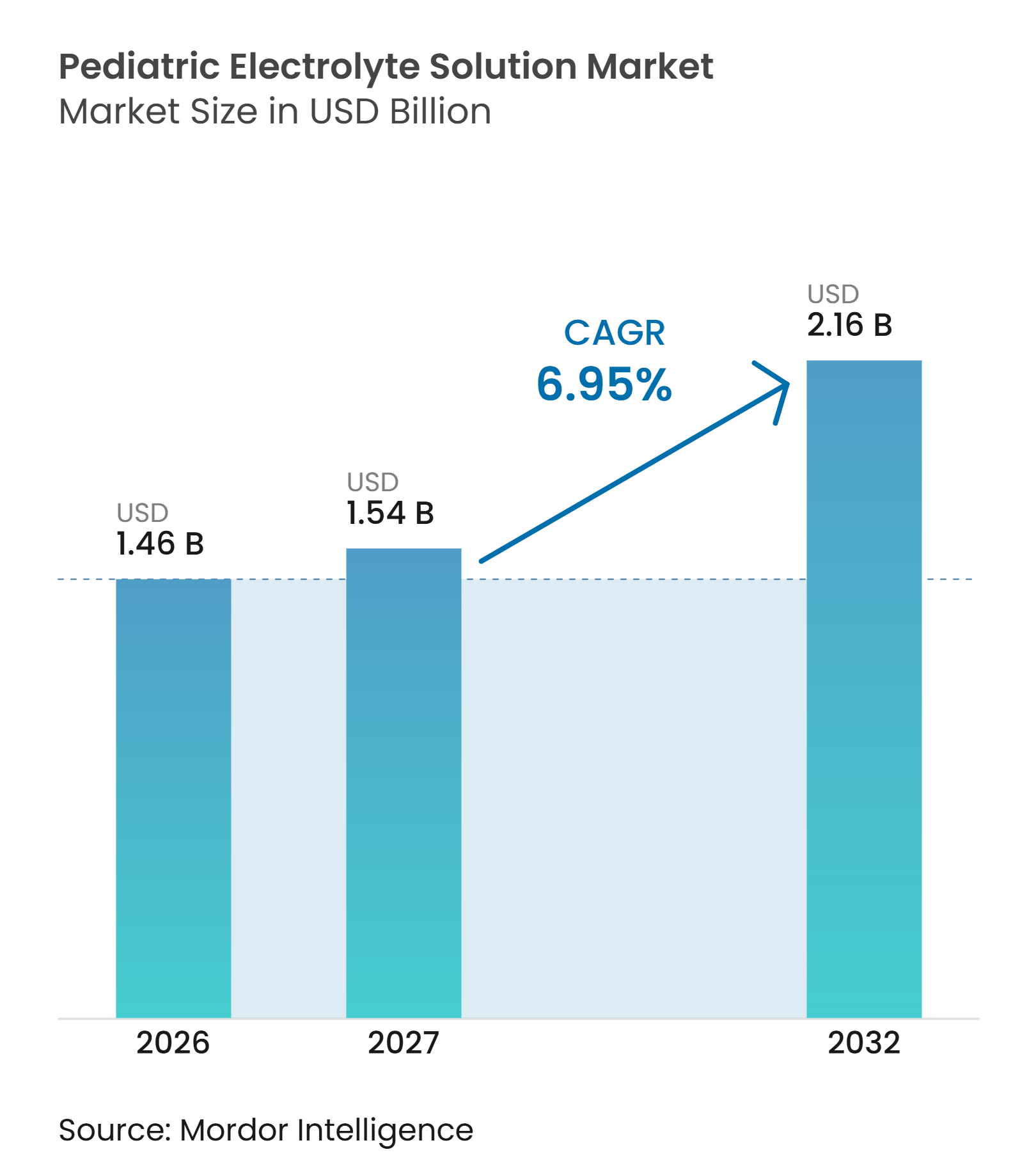
The Pediatric Electrolyte Solution Market size is projected to expand from USD 1.46 billion in 2026 and USD 1.54 billion in 2027 to USD 2.16 billion by 2032, registering a CAGR of 6.95% between 2027 and 2032.
Oral rehydration therapy remains central to demand because the World Health Organization identifies it as the primary treatment for dehydration caused by diarrhea, a condition that continues to affect children worldwide. The Pediatric electrolyte solution market is supported by public procurement of low-osmolarity oral rehydration salts and by retail demand for convenient products. Ready-to-drink products, lower-sugar options, and child-friendly flavors are widening the choice available to caregivers. Growth is strongest where diarrhea prevention and treatment programs are expanding alongside pharmacy and digital retail access. Competition is moving toward products that separate therapeutic use from everyday hydration, while suppliers also need reliable quality systems to serve institutional buyers.
Key Report Takeaways
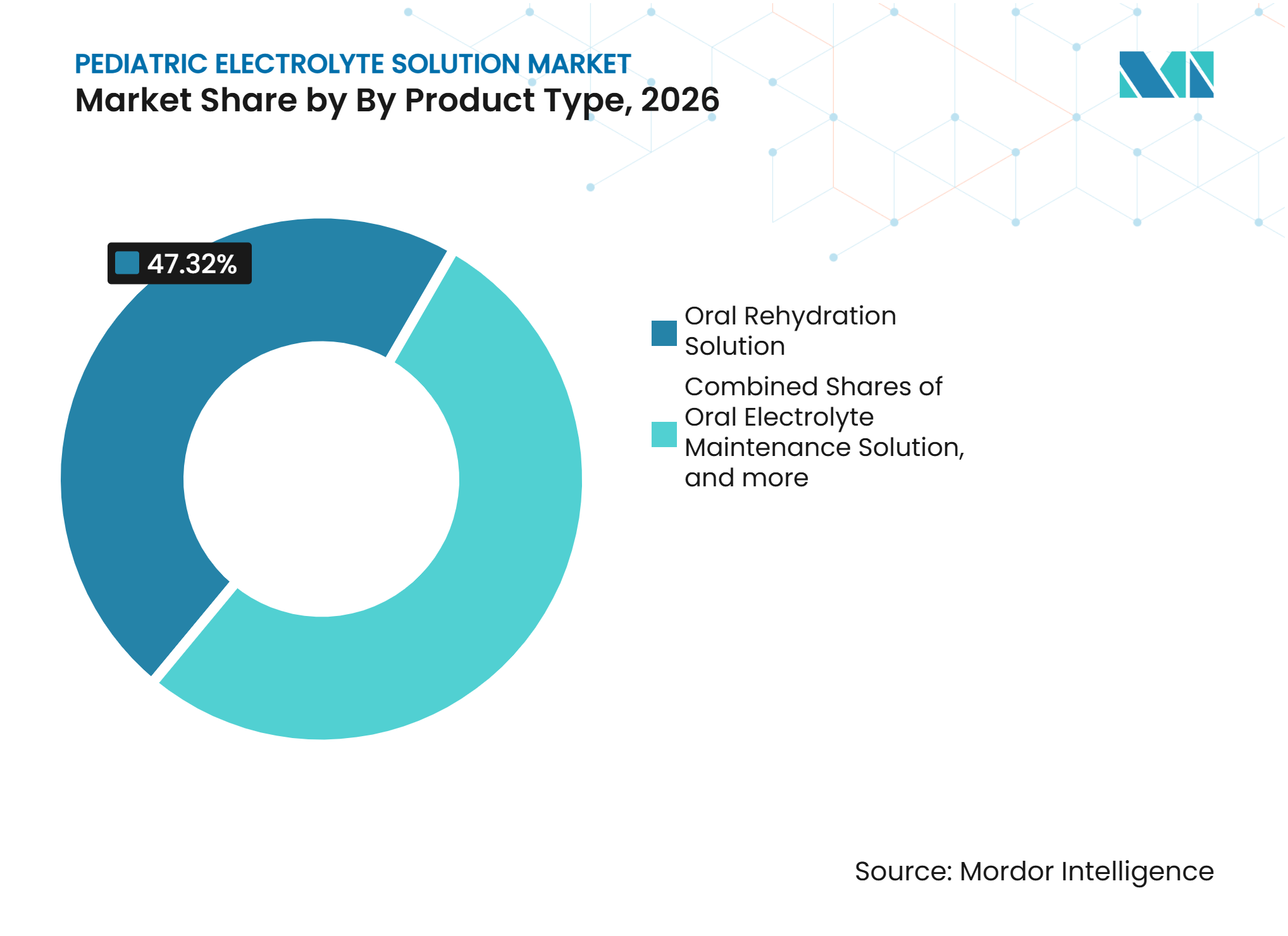
- By product type, Oral Rehydration Solution held 47.32% revenue share in 2026, while Electrolyte Replacement Solution for Specific Pediatric Conditions is forecast to expand at a 7.62% CAGR through 2032.
- By form, Ready-to-Drink Liquid held 51.65% revenue share in 2026, while Effervescent Tablet is forecast to expand at a 7.92% CAGR through 2032.
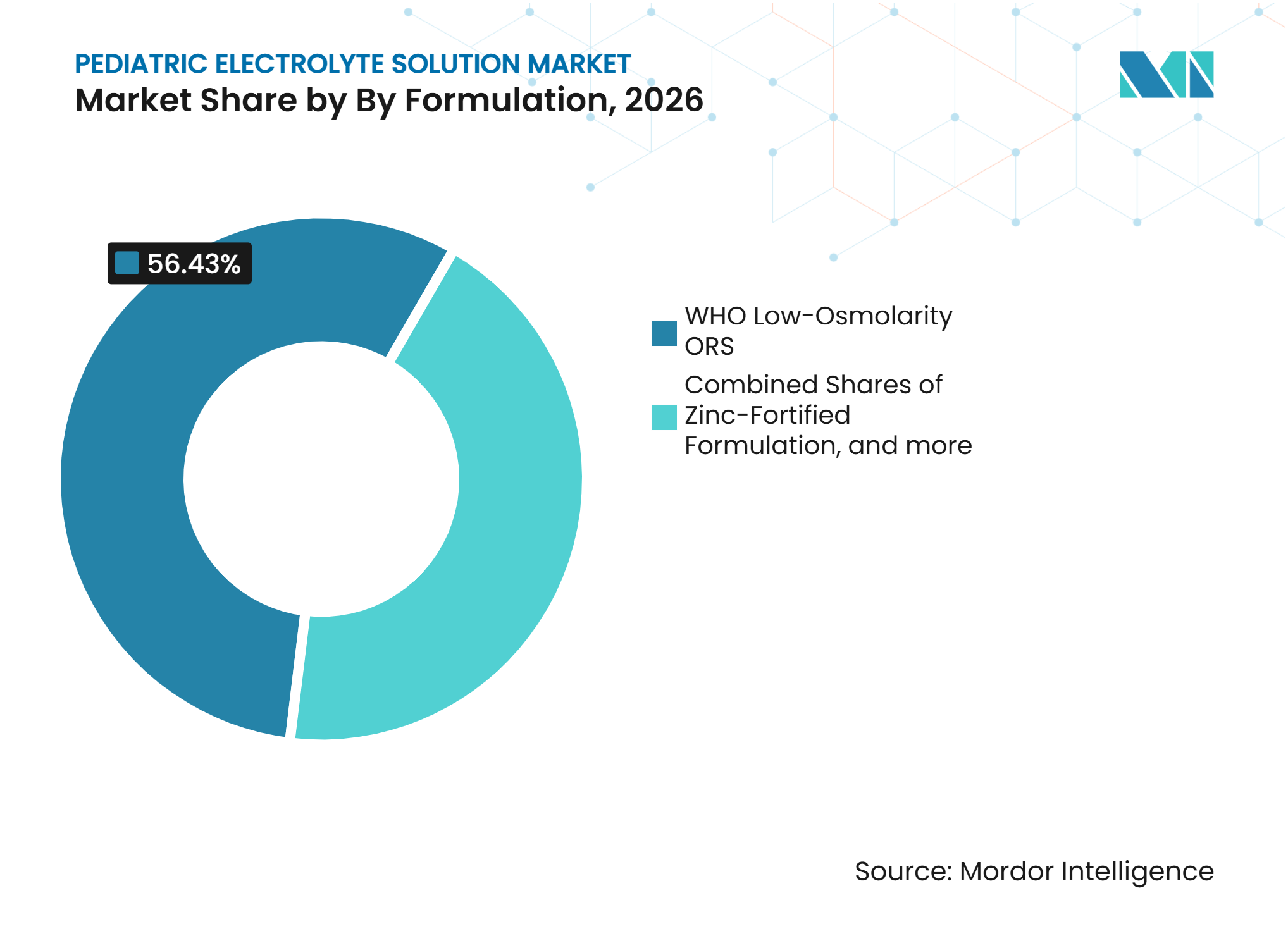
- By formulation, WHO Low-Osmolarity ORS held 56.43% revenue share in 2026, while Sugar-Reduced/Sugar-Free Formulation is forecast to expand at a 7.45% CAGR through 2032.
- By age group, Infants up to 12 months held 38.72% revenue share in 2026, while Toddlers aged 1-3 Years are forecast to expand at a 7.39% CAGR through 2032.
- By application, Diarrhoeal Dehydration held 44.93% revenue share in 2026, while Heat-Related Dehydration is forecast to expand at an 8.52% CAGR through 2032.
- By packaging, Single-Serving Bottles held 42.82% revenue share in 2026, while Sachets and Stick Packs are forecast to expand at an 8.23% CAGR through 2032.
- By distribution channel, Retail Pharmacies and Drugstores held 36.45% revenue share in 2026, while Online Retail is forecast to expand at an 8.41% CAGR through 2032.
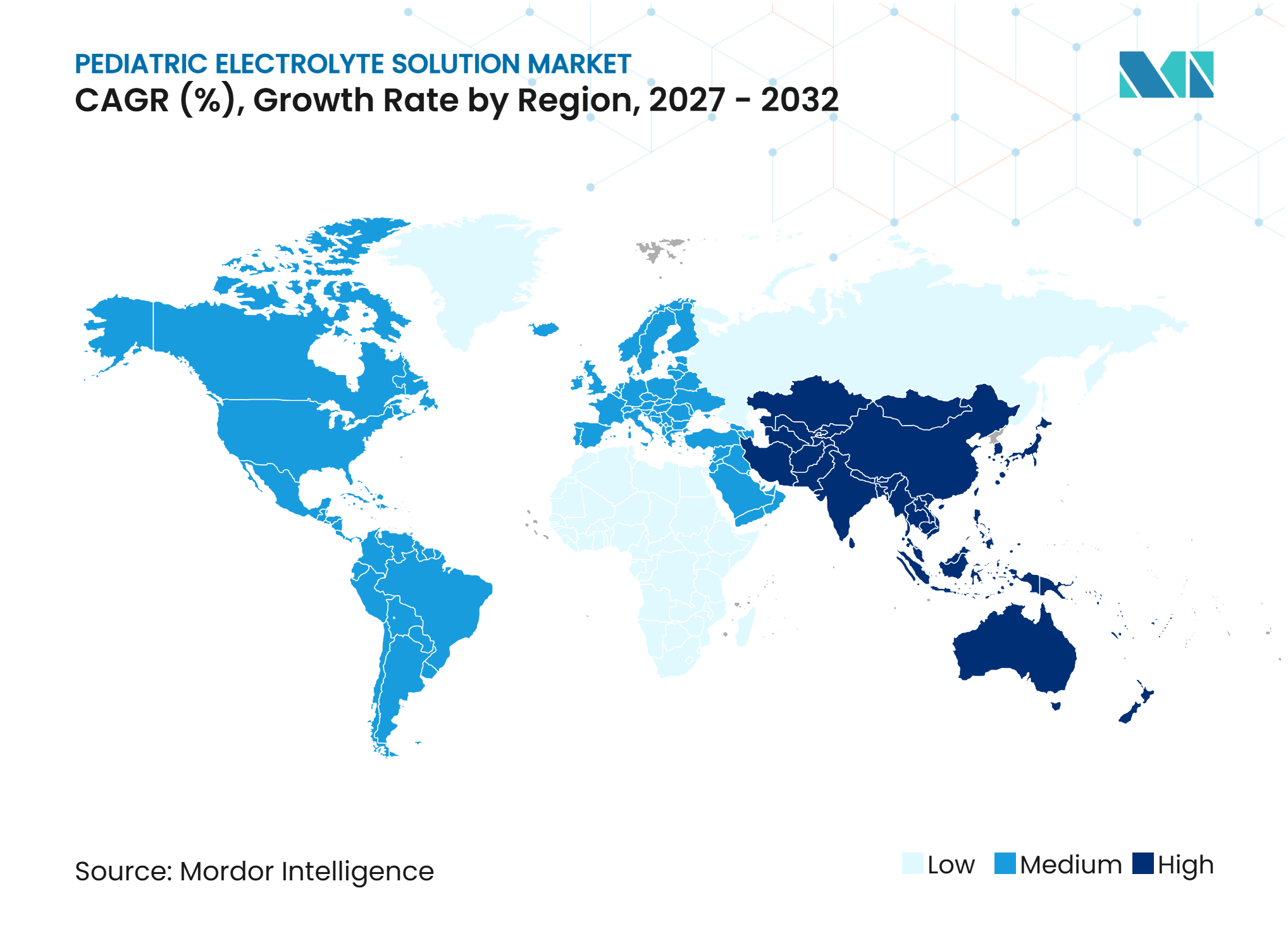
- By geography, North America held 40.21% revenue share in 2026, while Asia-Pacific is forecast to expand at an 8.96% CAGR through 2032.
Note: Market numbers in this report are based on Mordor Intelligence's proprietary estimation framework, which combines nine months of actuals with Q4 projections for base year 2026.
Market Trends and Insights
Drivers Impact Analysis of Pediatric Electrolyte Solution Market*
| Driver | (~) % Impact on CAGR Forecast | Geographic Relevance | Impact Timeline |
|---|---|---|---|
| Rising Pediatric Diarrhoeal Disease and Dehydration Burden | +2.00% | Global, most acute in sub-Saharan Africa and South Asia | Long term (≥ 4 years) |
| Expansion of WHO-Aligned Oral Rehydration Therapy | +1.50% | Global, with policy emphasis in APAC, MEA, and South America | Medium term (2-4 years) |
| Growth in Caregiver Awareness and Home-Based Pediatric Care | +1.00% | North America, Europe, and APAC urban centers | Medium term (2-4 years) |
| Expansion of Ready-to-Drink and Child-Friendly Formats | +0.80% | North America, Europe, and premium APAC markets | Short term (≤ 2 years) |
| Local Manufacturing and Institutional Procurement in High-Burden Countries | +0.80% | MEA, South Asia, and sub-Saharan Africa | Long term (≥ 4 years) |
| Demand for Lower-Sugar, Clean-Label and Better-Tasting Formulations | +0.70% | North America, Europe, and high-income APAC | Short term (≤ 2 years) |
| Source: Mordor Intelligence | |||
Rising Pediatric Diarrhoeal Disease and Dehydration Burden
Diarrheal disease remains an important pediatric health concern despite progress in water, sanitation, and hygiene. Under-5 diarrheal mortality remains much higher in sub-Saharan Africa than in high-income regions.[1] The pediatric electrolyte solution market therefore has a durable need base in countries facing unsafe water access, household crowding, and child malnutrition. This pattern favors products that can be distributed through public programs as well as ordinary retail channels.
Expansion of WHO-Aligned Oral Rehydration Therapy
WHO-aligned low-osmolarity ORS gives public buyers and clinicians a common treatment standard. UNICEF supplied 29.2 million ORS sachets to 56 countries in 2024, enough to treat 14.6 million childhood diarrhea episodes.[2] UNICEF also procured USD 5.677 billion of supplies for children across 164 countries in 2025, placing ORS within a wider essential-supplies system.[3]Co-packaging ORS and zinc can improve dispensing behavior in rural health facilities, which supports wider adoption of integrated diarrhea treatment.[4] The pediatric electrolyte solution market benefits when national formularies and tenders use these treatment standards. Such procurement can also support local manufacturing capacity and reduce dependence on imported products over time.
Growth in Caregiver Awareness and Home-Based Pediatric Care
Caregivers increasingly begin rehydration at home rather than waiting for a clinical consultation. In February 2025, Kenvue and Population Services International India launched a program intended to reach 5 million children under 5 across 10 districts in Uttar Pradesh and Bihar. The program combines product availability with education on the use of ORS. This approach can improve familiarity with oral rehydration in communities where treatment is often delayed. A 2025 clinical review noted that ORS uptake remains low in both higher-income and lower-income settings despite established evidence. The Pediatric electrolyte solution market has room to grow when caregivers can distinguish therapeutic products from ordinary beverages and find suitable products through pharmacies or online retail.
Expansion of Ready-to-Drink and Child-Friendly Formats
Ready-to-drink liquid products reduce the risk of mixing errors associated with powders. Kenvue launched WHO ORS in a ready-to-drink format under its ORSL brand in India in January 2025, with the company stating that the product was designed to meet WHO osmolarity requirements. Child-friendly formats can also make oral rehydration easier to accept during illness. Otsuka Pharmaceutical Factory introduced OS-1 Jelly Apple Flavor for children in Japan, adding a jelly option to its oral rehydration range. The Pediatric electrolyte solution market is also seeing interest in portable tablets, powders, and sachets for travel, school settings, and areas without cold-chain access. Lower-sugar and clean-label positioning adds another choice for caregivers who seek products for routine hydration needs.
Restraints Impact Analysis of Pediatric Electrolyte Solution Market*
| Restraint | (~) % Impact on CAGR Forecast | Geographic Relevance | Impact Timeline |
|---|---|---|---|
| Low Combined ORS and Zinc Treatment Coverage | -1.80% | Sub-Saharan Africa, South Asia, low-SDI countries globally | Long term (≥ 4 years) |
| Competition from Intravenous Fluids and Non-Physiological Beverages | -1.50% | Global, severe in South Asia and high-income markets | Medium term (2-4 years) |
| Formulation Quality Variability and Counterfeit Products | -0.70% | South Asia, MEA, sub-Saharan Africa | Medium term (2-4 years) |
| Low Supplier Margins and Volatile Institutional Procurement | -0.60% | MEA, South Asia, sub-Saharan Africa | Long term (≥ 4 years) |
| Source: Mordor Intelligence | |||
Low Combined ORS and Zinc Treatment Coverage
The gap between treatment guidance and actual use limits demand in high-burden countries. A Child Health Task Force review of 55 countries found that only 7 had ORS-zinc co-packs on national essential medicines lists. Low co-treatment coverage restricts the public procurement structures that could support routine product availability. Health facilities may also continue to use antibiotics or intravenous fluids where oral therapy is more appropriate for mild-to-moderate dehydration. Substandard or falsified pediatric medicines can further weaken caregiver trust in products that reach the market. The Pediatric electrolyte solution market depends on better clinician education, reliable supply, and trusted quality controls to convert clinical need into consistent use.
Competition from Intravenous Fluids and Non-Physiological Beverages
Intravenous therapy can displace ORS in clinical settings even when oral rehydration is appropriate. The WHO states that ORS is a key treatment for diarrhea-related dehydration, while intravenous fluid is reserved for serious cases. Retail confusion presents a separate problem when products marketed as electrolyte drinks are mistaken for therapeutic ORS. Mislabeling can make it harder for caregivers to identify products with the right electrolyte and sugar composition. Institutional buyers also face low margins and funding uncertainty, which can disrupt supplier planning in low-income settings. The Pediatric electrolyte solution market will require consistent labeling, quality assurance, and procurement visibility to address these constraints.
*Our forecasts treat driver/restraint impacts as directional, not additive. The impact forecasts reflect baseline growth, mix effects, and variable interactions.
Pediatric Electrolyte Solution Market Segment Analysis
By Product Type:
Oral Rehydration Solutions Hold the Broadest Use BaseOral Rehydration Solution accounted for 47.32% of the Pediatric electrolyte solution market share in 2026. Its position reflects its use in treating mild-to-moderate dehydration and its alignment with WHO guidance. UNICEF procurement also supports the segment through volume purchases for high-burden countries. Oral electrolyte maintenance solutions serve caregivers managing fluid recovery after illness, especially in established retail settings. ORS and zinc co-packaged solutions have a specific institutional role where diarrhea treatment protocols include zinc.
Electrolyte Replacement Solution for Specific Pediatric Conditions is forecast to grow at a 7.62% CAGR through 2032. This segment addresses children receiving nephrology, oncology, or postsurgical care where electrolyte needs may differ from routine diarrhea management. Its smaller volume base is offset by its greater concentration in hospital settings and higher-value clinical applications.



By Form:
Ready-to-Drink Liquid Leads Through Ease of UseReady-to-Drink Liquid represented 51.65% of revenue in 2026. The format provides a prepared solution and reduces the chance that a caregiver will use the wrong water quantity. This benefit matters for infants and for households with limited access to safe water. Ready-to-drink products also fit retail pharmacy shelves and convenience-oriented purchasing.
Effervescent Tablet is projected to advance at a 7.92% CAGR through 2032. Tablets offer a compact option for families traveling with children and for school or emergency supply kits. Their light weight also supports logistics where refrigerated liquids are impractical. Other formats, such as gels and concentrates, retain narrower roles shaped by clinical use and individual preference.
By Formulation:
Low-Osmolarity ORS Remains the Clinical StandardWHO Low-Osmolarity ORS held 56.43% of revenue in 2026. The formulation is linked to longstanding public-health guidance and procurement practice. WHO and UNICEF have supported reduced-osmolarity formulas in public-sector purchasing because they are designed for pediatric diarrhea treatment.
Sugar-Reduced/Sugar-Free Formulation is forecast to grow at a 7.45% CAGR through 2032. This growth reflects demand from caregivers who read ingredient labels closely and seek products with fewer added sugars. DripDrop introduced Zero Sugar Plus in January 2026, with 15 vitamins and nutrients and no artificial sweeteners. Kenvue also separated its therapeutic ORSL line from its lower-sugar eRZL everyday hydration brand in India in 2026.

By Age Group:
Infants Account for the Largest Demand BaseInfants up to 12 months accounted for 38.72% of revenue in 2026. Younger children have limited fluid reserves and can become dehydrated quickly during diarrhea, vomiting, or fever. Caregivers and clinicians therefore often prioritize timely oral rehydration for this group. Products intended for infants need clear dosage directions and reliable composition. Infant-focused demand supports both pharmacy products and hospital supplies.
Toddlers aged 1-3 Years are forecast to expand at a 7.39% CAGR through 2032. Growth reflects greater caregiver attention to hydration during infection recovery, heat exposure, and active play. Older children also contribute demand through school, travel, and sports-related use. Flavors and portable packaging can be important for these age groups because acceptance affects actual use.
By Application:
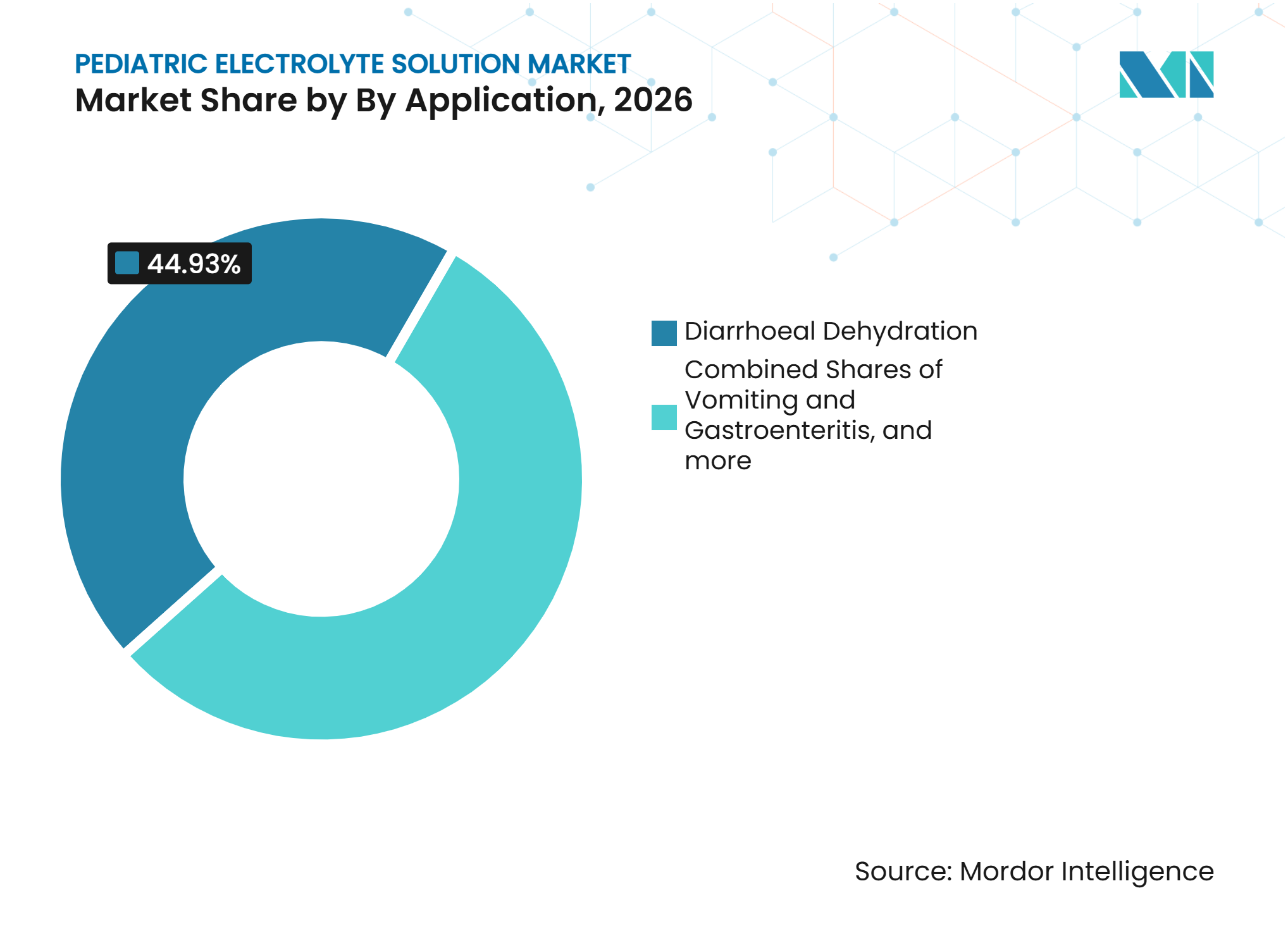
Diarrhoeal Dehydration Continues to Anchor UseDiarrheal dehydration accounted for 44.93% of revenue in 2026. This application has the clearest relationship with oral rehydration guidance and public procurement. The WHO identifies diarrhea as a major cause of dehydration and supports ORS as a core treatment. Vomiting, gastroenteritis, fever, and infection-related fluid loss broaden the use of electrolyte solutions. These applications support demand through retail, hospitals, and community health programs.
Heat-Related Dehydration is expected to grow at an 8.52% CAGR through 2032. A 2025 Ontario study found that extreme heat was associated with a 35% increase in pediatric emergency department visits for dehydration and a 211% increase in heat-related illness visits
By Packaging:
Single-Serving Bottles Lead Retail DemandSingle-Serving Bottles accounted for 42.82% of revenue in 2026. The package suits ready-to-drink liquids and offers a convenient, measured format for caregivers. It is particularly common in pharmacy-led retail markets where individual bottles can be purchased for immediate use.
Sachets and Stick Packs are forecast to advance at an 8.23% CAGR through 2032. Their small size and low transport weight make them suitable for public programs, humanitarian stockpiles, and last-mile distribution. FDC Limited stated in its 2024-25 annual report that it introduced flavored ORS powders to extend the Electral hydration range
By Distribution Channel:
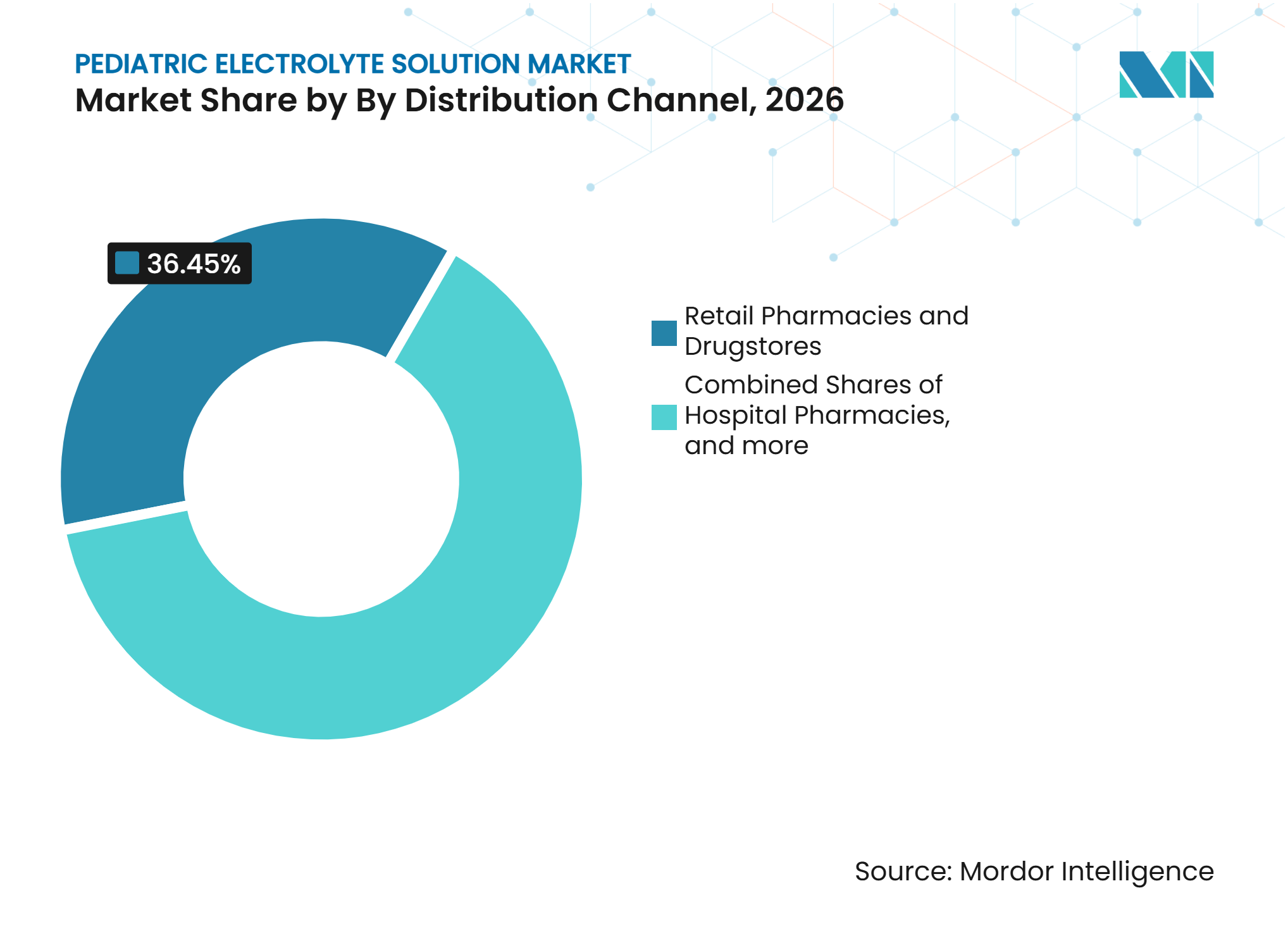
Pharmacies Remain the Main Access PointRetail Pharmacies and Drugstores accounted for 36.45% of revenue in 2026. Pharmacies give caregivers access to pediatric products and, in many countries, provide advice at the point of purchase. Hospital pharmacies support standardized clinical use and institutional supply procedures.
Online Retail is forecast to grow at an 8.41% CAGR through 2032. Digital purchasing can improve access for families that are far from a physical pharmacy. It also gives brands a direct channel for multipacks, subscriptions, and education about product use. The channel requires careful product presentation so that therapeutic ORS is not confused with general-purpose electrolyte beverages.
Geography Analysis
North America
North America held 40.21% of the Pediatric electrolyte solution market share in 2026. The region benefits from mature retail pharmacy networks, caregiver familiarity with branded products, and demand for ready-to-drink formats. The United States remains central to regional demand because pediatric hydration products have broad pharmacy distribution and strong clinician recognition. Dr. Brown’s launched a clean-label ready-to-drink electrolyte solution at Walmart and Walmart.com in May 2026, adding a new specialist pediatric brand to retail shelves.
Asia-Pacific
Asia-Pacific is forecast to grow at an 8.96% CAGR through 2032. India and China contribute significant potential demand because of their population scale, diarrhea burden, and expanding care access. In January 2025, Kenvue introduced ORSL ready-to-drink WHO ORS in India. Southeast Asian countries add demand through urbanization, healthcare development, and continuing pediatric diarrhea needs. The need for low-cost sachets alongside premium ready-to-drink products also shapes the Pediatric electrolyte solution market size in Asia-Pacific.
Europe, Middle East and Africa, and South America
Europe has a mature pharmacy and hospital channel structure, where caregivers often seek child-friendly flavors and products with limited artificial additives. The Middle East and Africa combine premium demand in Gulf Cooperation Council markets with public sachet procurement in sub-Saharan Africa. UNICEF supply programs are especially important in the latter setting because they support access where retail purchasing power is limited. South America has institutional and retail demand, with community health channels able to support household treatment knowledge. Quality and labeling requirements remain important across these markets because pediatric products require caregiver confidence.
Competitive Landscape
Market Concentration
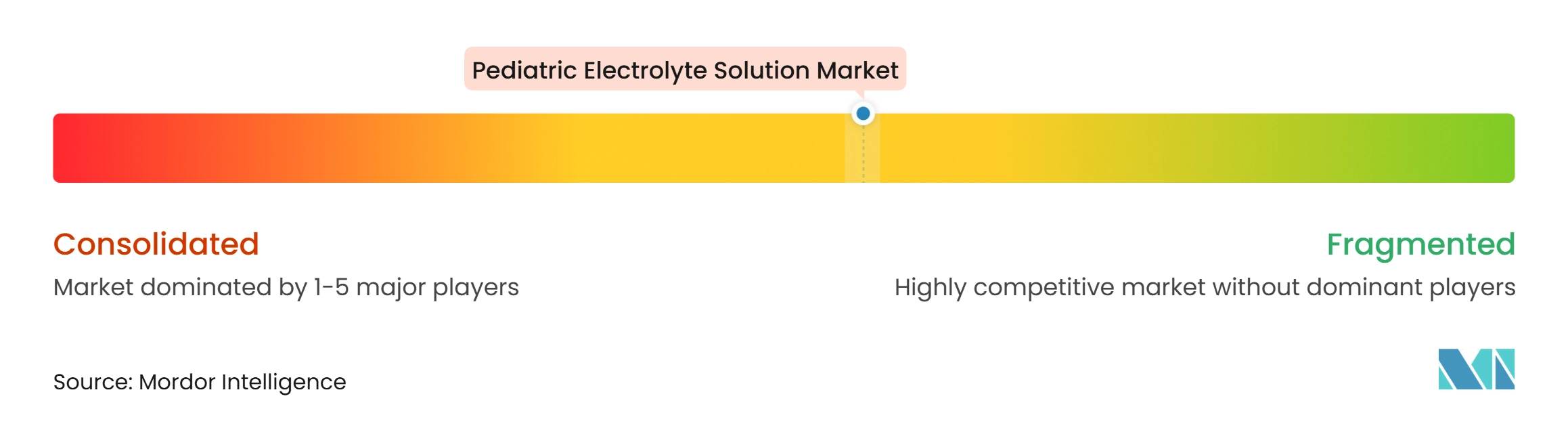
The pediatric electrolyte solution market has moderate concentration across its largest branded retail regions. Abbott Laboratories, Kenvue, and FDC Limited have recognizable positions through established pediatric or oral rehydration brands. Abbott’s Pedialyte is a major presence in North American pediatric hydration, while FDC’s Electral has a longstanding role in India. Many local suppliers participate in institutional procurement across Africa and Southeast Asia. Otsuka Pharmaceutical Factory has a distinct role in Japan through its OS-1 range and approved medical-condition food products.
Institutional competition is different from retail competition. Public buyers place weight on quality systems, tender performance, supply reliability, and compliance with recognized formulations. UNICEF’s ORS procurement work illustrates the importance of consistent supply capacity for serving high-burden countries. Smaller brands can compete through narrow product positions, such as clean-label products or specialty formats, but they may have less reach in high-volume tenders. The Pediatric electrolyte solution industry is therefore split between broad-volume public supply and differentiated consumer retail products.
Pediatric Electrolyte Solution Industry Leaders
-
Abbott Laboratories
-
FDC Limited
-
Otsuka Pharmaceutical Factory, Inc.
-
Reckitt Benckiser Group plc
-
Kenvue Inc.
- *Disclaimer: Major Players sorted in no particular order
Pediatric Electrolyte Solution Market Companies Covered in this Report
- Abbott Laboratories
- AdvaCare
- Bayer
- Cera Products, Inc.
- DripDrop Hydration Inc.
- FDC Limited
- Halewood Laboratories Pvt. Ltd.
- Hydration Pharmaceuticals Trust
- Kenvue Inc.
- KinderFarms, LLC
- Monico S.p.A.
- Nutriset SAS
- Otsuka Pharmaceutical Factory, Inc.
- Pfizer
- Pharmascience
- PiSA Pharmaceutical, S.A. de C.V.
- Prestige Consumer Healthcare
- Reckitt Benckiser Group
- Sanofi
- Shanghai Trifecta Pharma Co., Ltd.
- SOS Hydration
- Suero Oral Inc.
- The Hain Celestial Group, Inc.
Recent Industry Developments in Pediatric Electrolyte Solution Market
- May 2026: Dr. Brown's, maker of the pediatrician-recommended baby bottle in the United States, launched its Electrolyte Solution, a clean-label RTD formula with coconut water, sea salt, added zinc, and four key electrolytes in watermelon and orange flavors, exclusively at Walmart and Walmart.com.
- January 2026: Kenvue launched a dual-brand hydration strategy in India, splitting its portfolio between ORSL, WHO-formula ORS for diarrheal dehydration available in RTD and powder formats, and eRZL, a reformulated everyday electrolyte drink with 8x less sugar and added Vitamin C.
Global Pediatric Electrolyte Solution Market Report Scope
The pediatric electrolyte solution market report segments the market by product type, including oral rehydration solutions (ORS), oral electrolyte maintenance solutions, electrolyte replacement solutions for specific pediatric conditions, ORS and zinc co-packaged solutions, and other product types. It also categorizes the market by form, covering ready-to-drink liquids, powders for reconstitution, effervescent tablets, and other forms. Furthermore, the market is segmented by formulation, comprising WHO low-osmolarity ORS, zinc-fortified formulations, rice-based formulations, sugar-reduced/sugar-free formulations, and other formulations. By age group, the market is classified into infants (up to 12 months), toddlers (1-3 years), children (4-12 years), and others.
The report further segments the market by application, including diarrhoeal dehydration, vomiting and gastroenteritis, fever and infection-related fluid loss, heat-related dehydration, and other applications. Based on packaging, the market is categorized into single-serving bottles, multi-serving bottles, sachets and stick packs, and others. Additionally, the market is segmented by distribution channel, including hospital pharmacies, retail pharmacies and drugstores, supermarkets and hypermarkets, online retail, government and institutional procurement, and others. Geographically, the market is segmented into North America, Europe, Asia-Pacific, Middle East & Africa, and South America. The market report also covers the estimated market size and trends across key countries within these regions. For each segment, market size and forecasts are provided in terms of value (USD).
Segmentation Overview
| Oral Rehydration Solution |
| Oral Electrolyte Maintenance Solution |
| Electrolyte Replacement Solution for Specific Pediatric Conditions |
| ORS and Zinc Co-Packaged Solution |
| Other Product Types |
| Ready-to-Drink Liquid |
| Powder for Reconstitution |
| Effervescent Tablet |
| Other Forms |
| WHO Low-Osmolarity ORS |
| Zinc-Fortified Formulation |
| Rice-Based Formulation |
| Sugar-Reduced/Sugar-Free Formulation |
| Others |
| Infants (Up to 12 Months) |
| Toddlers (1-3 Years) |
| Children (4-12 Years) |
| Others |
| Diarrheal Dehydration |
| Vomiting and Gastroenteritis |
| Fever and Infection-Related Fluid Loss |
| Heat-Related Dehydration |
| Others |
| Single-Serving Bottles |
| Multi-Serving Bottles |
| Sachets and Stick Packs |
| Others |
| Hospital Pharmacies |
| Retail Pharmacies and Drugstores |
| Supermarkets and Hypermarkets |
| Online Retail |
| Government & Institutional Procurement |
| Others |
| North America | United States |
| Canada | |
| Mexico | |
| Europe | Germany |
| United Kingdom | |
| France | |
| Italy | |
| Spain | |
| Rest of Europe | |
| Asia-Pacific | China |
| India | |
| Japan | |
| Australia | |
| South Korea | |
| Rest of Asia-Pacific | |
| Middle East and Africa | GCC |
| South Africa | |
| Rest of Middle East and Africa | |
| South America | Brazil |
| Argentina | |
| Rest of South America |
| By Product Type | Oral Rehydration Solution | |
| Oral Electrolyte Maintenance Solution | ||
| Electrolyte Replacement Solution for Specific Pediatric Conditions | ||
| ORS and Zinc Co-Packaged Solution | ||
| Other Product Types | ||
| By Form | Ready-to-Drink Liquid | |
| Powder for Reconstitution | ||
| Effervescent Tablet | ||
| Other Forms | ||
| By Formulation | WHO Low-Osmolarity ORS | |
| Zinc-Fortified Formulation | ||
| Rice-Based Formulation | ||
| Sugar-Reduced/Sugar-Free Formulation | ||
| Others | ||
| By Age Group | Infants (Up to 12 Months) | |
| Toddlers (1-3 Years) | ||
| Children (4-12 Years) | ||
| Others | ||
| By Application | Diarrheal Dehydration | |
| Vomiting and Gastroenteritis | ||
| Fever and Infection-Related Fluid Loss | ||
| Heat-Related Dehydration | ||
| Others | ||
| By Packaging | Single-Serving Bottles | |
| Multi-Serving Bottles | ||
| Sachets and Stick Packs | ||
| Others | ||
| By Distribution Channel | Hospital Pharmacies | |
| Retail Pharmacies and Drugstores | ||
| Supermarkets and Hypermarkets | ||
| Online Retail | ||
| Government & Institutional Procurement | ||
| Others | ||
| By Geography | North America | United States |
| Canada | ||
| Mexico | ||
| Europe | Germany | |
| United Kingdom | ||
| France | ||
| Italy | ||
| Spain | ||
| Rest of Europe | ||
| Asia-Pacific | China | |
| India | ||
| Japan | ||
| Australia | ||
| South Korea | ||
| Rest of Asia-Pacific | ||
| Middle East and Africa | GCC | |
| South Africa | ||
| Rest of Middle East and Africa | ||
| South America | Brazil | |
| Argentina | ||
| Rest of South America | ||
Key Questions Answered in the Report
What is the projected value of the pediatric electrolyte solution sector by 2032?
It is projected to reach USD 2.16 billion by 2032, expanding at a 6.95% CAGR from 2027 to 2032. The Pediatric electrolyte solution market continues to be supported by treatment need, public procurement, and retail demand for practical pediatric hydration formats.
Which pediatric electrolyte product type has the largest share?
Oral Rehydration Solution is the leading product type, with 47.32% revenue share in 2026. Its established position reflects its role in managing dehydration and its use within public-health treatment programs.
Why are ready-to-drink pediatric hydration products popular?
Ready-to-drink liquids led forms with 51.65% revenue share in 2026 because they are convenient and avoid powder mixing errors. They are particularly useful where a caregiver needs a prepared product and where accurate reconstitution could be difficult.
Which use case is growing fastest for pediatric electrolyte products?
Heat-Related Dehydration is the fastest-growing application, with an 8.52% CAGR through 2032. Extreme heat has been associated with more pediatric dehydration and heat-related emergency department visits, which broadens the setting for pediatric hydration products.
Which region is growing fastest for pediatric electrolyte solutions?
Asia-Pacific is forecast to grow at an 8.96% CAGR through 2032, supported by high treatment need and expanding access channels.
Where do caregivers most often buy pediatric electrolyte solutions?
Retail Pharmacies and Drugstores led distribution with 36.45% revenue share in 2026, while online retail is growing the fastest. Pharmacies remain important because they combine product access with practical guidance, while online retailers can improve availability for families far from physical stores.