
Noonan Syndrome Market Size and Share
Market Overview
| Study Period | 2020 - 2031 |
|---|---|
| Market Size (2026) | USD 1.21 Billion |
| Market Size (2031) | USD 1.84 Billion |
| Growth Rate (2026 - 2031) | 8.81 % |
| Fastest Growing Market | Asia-Pacific |
| Largest Market | North America |
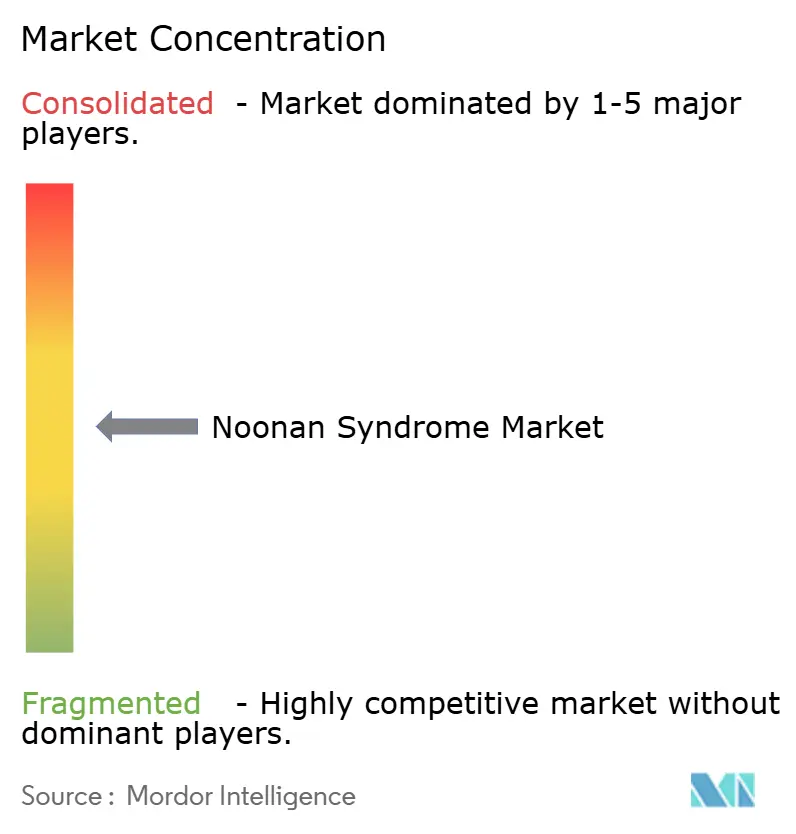
| Market Concentration | Medium |
Major Players
*Disclaimer: Major Players sorted in no particular order Image © Mordor Intelligence. Reuse requires attribution under CC BY 4.0. |
|
Noonan Syndrome Market Analysis by Mordor Intelligence
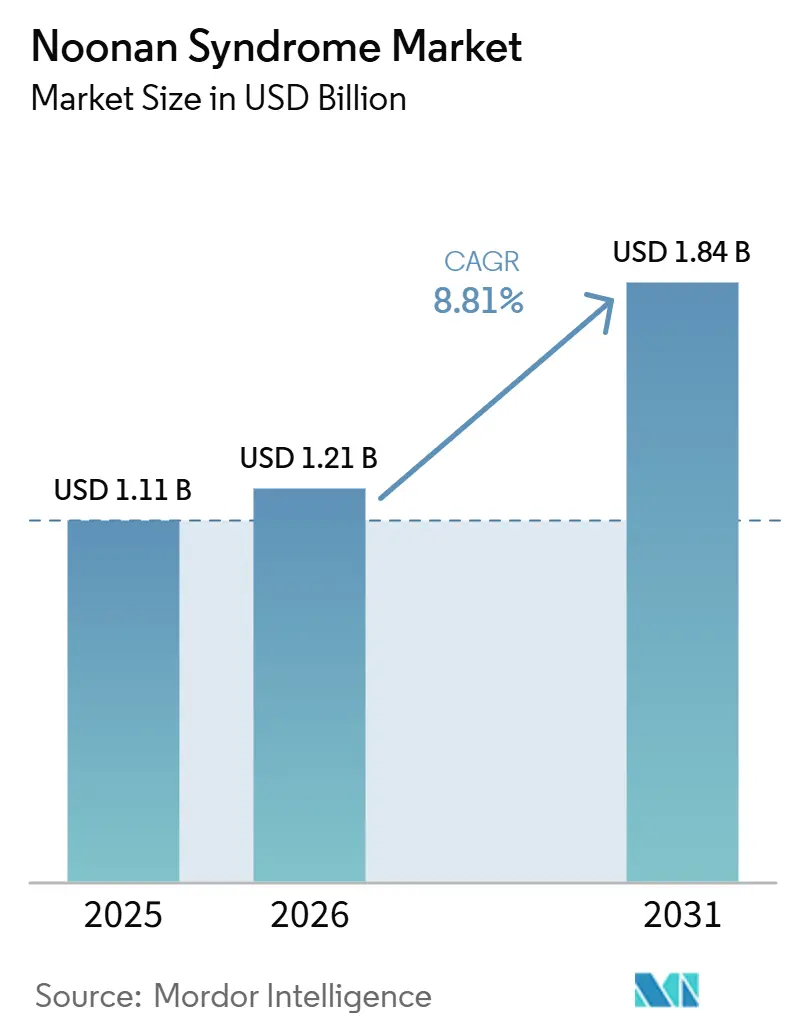
The Noonan Syndrome Market size was valued at USD 1.11 billion in 2025 and is estimated to grow from USD 1.21 billion in 2026 to reach USD 1.84 billion by 2031, at a CAGR of 8.81% during the forecast period (2026-2031).
Better characterization of pathogenic variants across more than 12 RAS/MAPK pathway genes is bringing previously missed or misdiagnosed patients into documented care pathways. Noonan syndrome affects an estimated 1 in 1,000 to 2,500 live births, while mild presentations remain undercounted and can enlarge the pool requiring long-term care. Growth hormone availability in additional countries, wider molecular testing, and interest in genotype-informed therapies are supporting the Noonan syndrome market. The absence of disease-specific approvals beyond growth hormone creates access uncertainty, although orphan-drug exclusivity, fee waivers, and tax incentives continue to support development activity.
Key Report Takeaways
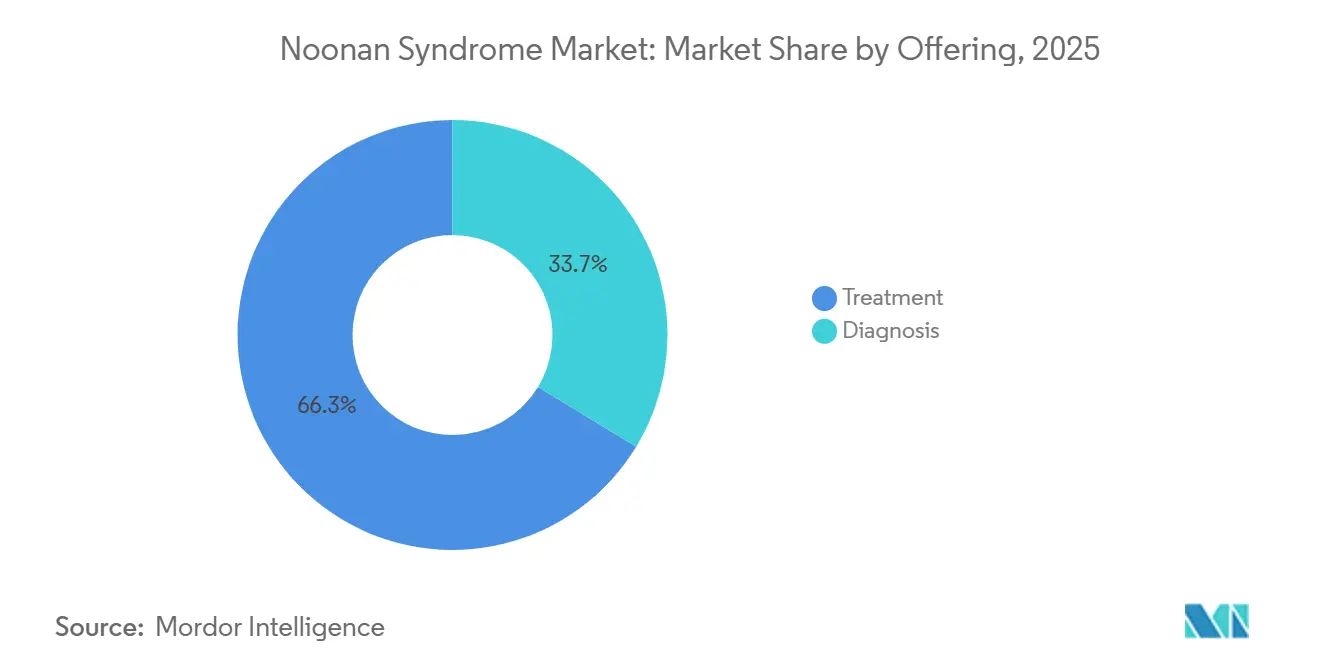
- By offering, treatment held 66.31% of the Noonan syndrome market share in 2025, while diagnosis is forecast to grow at a 10.38% CAGR through 2031.
- By end user, hospitals and clinics accounted for 49.44% of the Noonan syndrome market share in 2025, while home healthcare is projected to advance at an 11.52% CAGR through 2031.
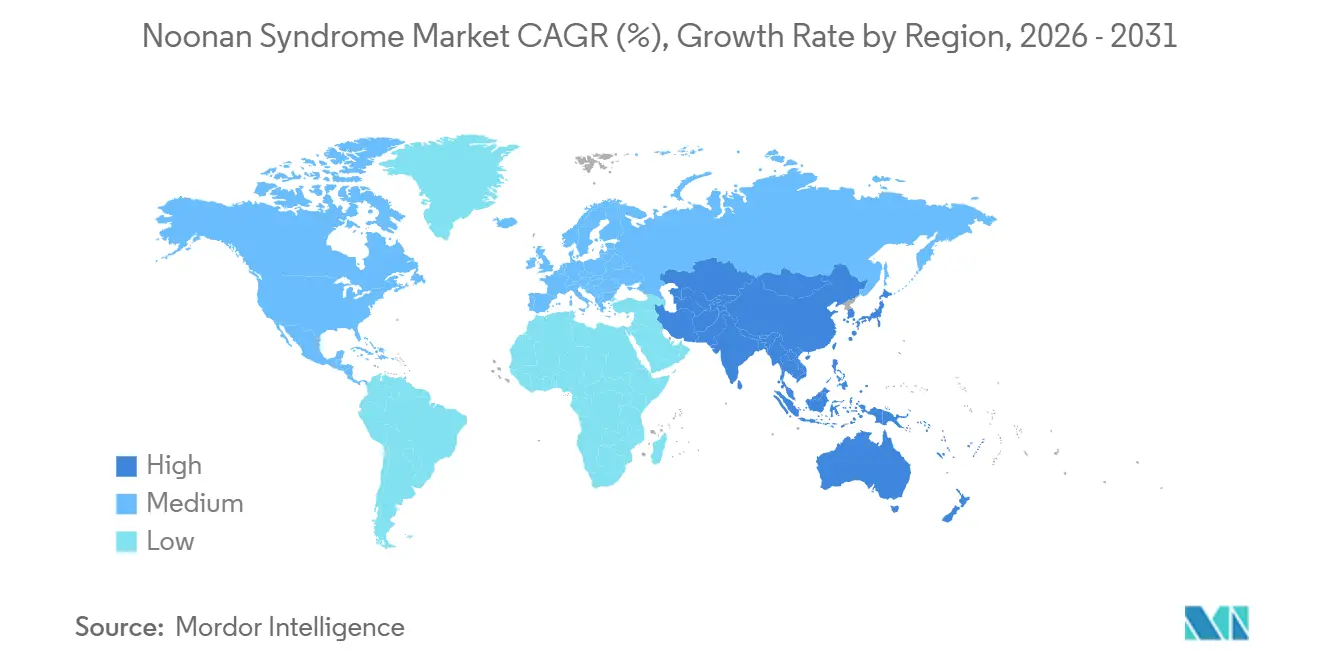
- By geography, North America held 38.61% of revenue in 2025, while Asia-Pacific is forecast to expand at a 10.65% CAGR through 2031.
Note: Market size and forecast figures in this report are generated using Mordor Intelligence’s proprietary estimation framework, updated with the latest available data and insights as of January 2026.
Market Trends and Insights
Drivers Impact Analysis of Noonan Syndrome Market*
| Driver | (~) % Impact on CAGR Forecast | Geographic Relevance | Impact Timeline |
|---|---|---|---|
| Rising Genetic Diagnosis and Case Ascertainment | +1.9% | Global, with concentrated gains in North America, EU, and East Asia | Medium term (2-4 years) |
| Expansion of Personalized and Genotype-Informed Care | +1.5% | North America and EU, with early-adoption spillover to APAC core | Long term (≥ 4 years) |
| Growth-Hormone and Growth-Disorder Treatment Demand | +1.8% | Global, particularly Japan, South Korea, and APAC countries where Norditropin is reimbursed | Short term (≤ 2 years) |
| Rare-Disease Funding and Orphan-Drug Incentives | +1.2% | North America and EU, emerging in APAC through national rare disease policies | Medium term (2-4 years) |
| Genotype-Linked MEK Inhibitor Repurposing | +0.7% | North America and EU, with trial centers in the Netherlands, Germany, and the US | Long term (≥ 4 years) |
| International RASopathy Registries and Natural-History Data | +0.6% | Global, with anchor registries in Europe and North America | Long term (≥ 4 years) |
| Source: Mordor Intelligence | |||
Rising Genetic Diagnosis and Case Ascertainment
Deep-sequencing multigene panels are narrowing the diagnostic gap for Noonan syndrome by identifying pathogenic variants that can be missed when clinical features are mild, incomplete, or shared with other conditions. A 2025 study validated an electronic-health-record detection model with 99.82% specificity and estimated a hospital-cohort prevalence of 1 case per 1,193 individuals[1]Zhen Yang, “Sequencing Validates Deep Learning Models for EHR-Based Detection of Noonan Syndrome in Pediatric Patients,” npj Genomic Medicine, nature.com.. That estimate was higher than the commonly cited 1 in 2,500 figure and indicates that clinical records can reveal patients outside traditional referral patterns. A larger diagnosed population can expand demand for laboratory testing, specialist referrals, longitudinal monitoring, and treatment. The Noonan syndrome market benefits when multigene testing replaces sequential single-gene testing, since a single diagnostic process can connect patients with multiple services after confirmation. Current testing guidance supports panels covering genes including PTPN11, BRAF, RAF1, SOS1, and RIT1, and this approach can increase the use of specialized RASopathy testing, prenatal evaluation, and variant interpretation.
Growth-Hormone and Growth-Disorder Treatment Demand
Growth hormone remains the only treatment with approval specifically for Noonan syndrome-related short stature, making it central to patient management when impaired growth is clinically significant. In 2026, Phase 3 REAL8 results showed once-weekly somapacitan achieved height velocity of 10.4 cm/year, compared with 9.2 cm/year for daily Norditropin in treatment-naive children[2]Anna Jorge, “Once-Weekly Somapacitan in Children With Noonan Syndrome,” European Journal of Endocrinology, academic.oup.com.. The once-weekly regimen can reduce the daily administration burden for caregivers while maintaining a structured treatment course that still requires clinical supervision. A 2025 consensus statement advised individualized growth hormone use, cardiac assessment before therapy, and ongoing monitoring of IGF-1 levels. These care requirements can increase specialist referrals and follow-up activity, rather than limiting the role of endocrinology and cardiac teams after treatment initiation. Japanese surveillance across 70 patients at 22 sites found improved height standard deviation scores without new safety signals, supporting prescriber confidence and treatment demand in Asian care settings.
Genotype-Linked MEK Inhibitor Repurposing
MEK inhibitor repurposing addresses severe cardiac complications associated with RASopathies, especially where standard growth-focused treatment does not address the underlying morbidity. A 2025 study of 61 children reported that trametinib improved cardiac status and reduced the composite risk of death, heart transplantation, or major cardiac surgery. The findings support interest in therapies that target complications beyond short stature and create a differentiated area of opportunity in the Noonan syndrome market. The MEKinRAS Phase 2 trial began in August 2024 and is scheduled for completion in December 2026. A positive result would still leave uncertainty over an approval route, reimbursement, and the commercial incentives needed for a company-led label expansion. Noonan syndrome-specific composition-of-matter filings for trametinib are absent, leaving room for a developer that pursues regulatory designation for a defined regimen.
Rare-Disease Funding and Orphan-Drug Incentives
Orphan-drug incentives continue to shape development decisions in the Noonan syndrome market, because development programs must address a small and clinically diverse patient population. The US framework provides 7 years of market exclusivity, user-fee waivers, and tax credits for qualified clinical testing. The FDA Orphan Products Grants Program maintains funding opportunities through at least October 2027, including support relevant to natural-history studies that can inform future submissions. BioMarin began recruiting for the CANOPY NS Phase 2 vosoritide study in November 2024, directing development toward children whose growth remained inadequate during or after growth hormone therapy. University of Pennsylvania RASopathy grants for the 2025-2026 cycle add support for research that can generate natural-history evidence and strengthen the academic-commercial feedback loop. Registry development, grants, and formal incentives can reduce uncertainty around trial design and future regulatory submissions.
Restraints Impact Analysis of Noonan Syndrome Market*
| Restraint | (~) % Impact on CAGR Forecast | Geographic Relevance | Impact Timeline |
|---|---|---|---|
| Limited Disease-Specific Regulatory Approvals | -0.9% | Global, with a stronger effect in Europe and APAC where growth hormone approval is more restrictive | Long term (≥ 4 years) |
| High Cost of Genetic Testing and Multidisciplinary Care | -0.8% | Emerging markets, rural North America, and lower-income EU member states | Medium term (2-4 years) |
| Phenotypic Heterogeneity Weakening Trial Recruitment | -0.5% | Global, particularly multi-site Phase 2 and Phase 3 trial design | Long term (≥ 4 years) |
| Genotype-Specific Treatment-Response Uncertainty | -0.4% | Global, with a concentrated effect in academic centers managing RAF1 and RIT1 cases | Long term (≥ 4 years) |
| Source: Mordor Intelligence | |||
Limited Disease-Specific Regulatory Approvals
The regulatory gap extends beyond the approved use of somatropin for short stature and remains a limiting factor for care focused on serious non-growth complications. No medicine has a formal Noonan syndrome indication for hypertrophic cardiomyopathy, lymphatic abnormalities, coagulopathy, or neurocognitive delay. Current MEK inhibitor use for cardiac and lymphatic complications remains off-label. Clinical case series can support scientific interest but do not constitute the controlled regulatory evidence needed for a formal label. The European approval position for somatropin is more recent and more restricted than the FDA decision of 2007, which can lead to tighter prescribing conditions. These conditions can create reimbursement limits for high-cost biologics, constrain uptake across health systems, and leave cardiovascular disease as the largest unmet need in the Noonan syndrome market.
High Cost of Genetic Testing and Multidisciplinary Care
The cost of testing and coordinated care can delay diagnosis and treatment, particularly where patients do not have comprehensive insurance or access to a specialized rare disease center. A 2025 European cohort found that 87.9% of children with Noonan syndrome were hospitalized in the first year of life. The same study found that 65.2% had at least 1 surgical procedure in the first 5 years and the median number of interventions was 2[3]“Health Outcomes and Drug Utilisation in Children With Noonan Syndrome,” Orphanet Journal of Rare Diseases, link.springer.com.. NGS-based RASopathy panels covering 12 or more genes can remain inaccessible for uninsured or underinsured patients, especially when payer coverage is limited. Care also requires pediatric cardiologists, endocrinologists, neurologists, and rehabilitation specialists, which makes coordinated care more demanding than a single-provider model. Health systems with limited reimbursement capacity may record lower diagnosis rates, delayed follow-up, and reduced therapeutic uptake in the Noonan syndrome market.
*Our forecasts treat driver/restraint impacts as directional, not additive. The impact forecasts reflect baseline growth, mix effects, and variable interactions.
Noonan Syndrome Market Segment Analysis
By Offering:
Diagnostic Volumes Accelerating as Treatment Protocols MatureTreatment held 66.31% of the Noonan syndrome market size in 2025. Growth hormone prescriptions, cardiac interventions, and supportive therapies together account for most treatment spending because patient needs extend across growth, cardiac, lymphatic, developmental, and rehabilitation care. Growth hormone therapy remains the main revenue base within this segment, supported by its established role in managing short stature. Treatment also includes care for lymphatic problems, physical therapy, speech therapy, and cardiac conditions, which address distinct morbidity clusters rather than a single uniform clinical pathway. These services address different clinical needs across the patient population and often require continuing coordination among several specialists. A 2025 consensus statement set out 47 management recommendations covering diagnosis, transition of care, lifelong follow-up, and growth hormone protocols. The recommendations support care across multiple body systems rather than a single presentation and show why treatment activity continues after an initial diagnosis. This broad service requirement helps sustain treatment demand in the Noonan syndrome industry and makes the treatment portion of the Noonan syndrome market dependent on multidisciplinary delivery.
Diagnosis is forecast to grow at a 10.38% CAGR from 2026 to 2031. NGS panel testing is increasingly used as a first-line diagnostic approach because it can evaluate the range of genes associated with the syndrome in a single pathway. Genetic testing from laboratories including GeneDx and Invitae informs decisions on growth hormone eligibility and potential MEK inhibitor use, connecting test results to later clinical management. Diagnostic activity is therefore closely connected to downstream treatment use, specialist referral, and continuing monitoring after molecular confirmation. Ultrasound remains relevant for cardiac screening, while blood testing remains necessary for coagulation monitoring and other routine clinical decisions. Prenatal panels are gaining relevance when fetal nuchal translucency findings occur alongside normal karyotypes. Such findings have been linked to Noonan spectrum disorders in 3% to 15% of cases. The widening use of molecular confirmation supports diagnostic volumes in the Noonan syndrome market and allows testing services to remain relevant throughout care planning.


By End User:
Hospital Infrastructure Dominant, Home Setting Gaining Structural GroundHospitals and clinics accounted for 49.44% of the Noonan syndrome market size in 2025. Their position reflects the high level of acute and specialist care required during early childhood, when cardiac evaluation, growth assessment, and other interventions may occur together. Multidisciplinary teams are concentrated in hospital systems, which gives hospitals a continuing role in coordinating care across specialties. European cohort evidence showed that children with Noonan syndrome had around 3 times the hospitalization rate of the reference pediatric population. This need is especially pronounced during the first 5 years of life, when hospital-based diagnostic work and surgical care can be more frequent. Pediatric endocrinology units, rare disease centers, and cardiac centers extend care after the first diagnostic episode. These settings manage growth hormone treatment, cardiac monitoring, care transitions, and follow-up that may continue over many years. Their continued role supports the hospital and clinic share of the Noonan syndrome market despite the growth of home-based options.
Home healthcare is projected to grow at an 11.52% CAGR from 2026 to 2031. Once-weekly growth hormone formulations are making home administration more practical for caregivers by reducing the repeated burden of daily injections. REAL8 results showed 10.4 cm/year height velocity with once-weekly somapacitan, compared with 9.2 cm/year with daily Norditropin. Fewer injections can reduce dependence on frequent care-site visits while preserving clinical oversight, especially when treatment monitoring and specialist input remain in place. A 2025 study identified care coordination and access to support as major concerns for Noonan syndrome families. Home-based models can address those concerns when specialist guidance remains available and when caregivers have clear routes to clinical support. Academic research centers and public health laboratories form the remaining end-user group, while their registry programs can generate diagnostic volumes linked to natural-history data collection. The shift toward home administration adds a complementary care pathway within the Noonan syndrome market rather than replacing the role of hospital-based teams.
Geography Analysis
North America Noonan Syndrome Market
North America held 38.61% of the Noonan syndrome market share in 2025. The region benefits from established insurance pathways for medically necessary NGS panels and growth hormone protocols, as well as a concentration of rare disease diagnostics laboratories that can support testing and specialist referrals. FDA approval of somatropin for Noonan syndrome-related short stature has been in place since 2007, which supports established specialist treatment protocols and a more familiar reimbursement environment for the approved use. The United States has the largest cluster of clinical trial activity, including Phase 2 sites for vosoritide and MEK inhibitor protocols. Canada and Mexico add regional volume, although access to comprehensive genetic panels and growth hormone therapy remains more variable across provincial and national payer arrangements than in the United States. These combined diagnostic, treatment, and research capabilities support the established role of North America in the Noonan syndrome market.
Europe Noonan Syndrome Market
Europe is supported by rare disease centers in Germany, the United Kingdom, and France, while Radboud University Medical Center in the Netherlands contributes evidence for emerging treatments. The EUROCAT network includes 11 registries in 7 countries and supports population-based epidemiological work that increasingly informs diagnostic coverage decisions. The European Medicines Agency orphan framework and the Clinical Trials Information System provide a coordinated setting for multi-country Phase 2 and Phase 3 research, which can reduce barriers to site initiation across individual countries. France integrated the RASopathies sub-registry into the EU-funded ILIAD rare disease registry hosted by ERN ITHACA. This linkage can improve natural-history data quality, enable better data interoperability, and strengthen the evidence used in future regulatory submissions. These regional systems help sustain Europe’s participation in the Noonan syndrome market even where treatment reimbursement remains more restricted.
APAC, South America and MEA Noonan Syndrome Market
Asia-Pacific is projected to grow at a 10.65% CAGR from 2026 to 2031. In 2026, Japan published clinical consensus guidelines that expand the recommended diagnostic gene panel and address MEK inhibitor candidacy for refractory hypertrophic cardiomyopathy. The guidance can formalize specialist practice, improve patient identification, increase referral activity, and help clinicians connect molecular findings with more consistent management pathways. A 2024 Chinese analysis of 46 patients found that RAF1 and RIT1 variants were disproportionately associated with hypertrophic cardiomyopathy. This supports diagnostic interpretation adapted to local patient populations, while South Korea’s somatropin licensing adds to the regional commercial base. Brazil, the Middle East, and Africa remain earlier-stage areas where diagnostic capacity and national rare disease programs will determine near-term progress, including the pace at which patients reach testing and specialist care. This mix of policy, clinical guidance, and infrastructure supports Asia-Pacific’s growth in the Noonan syndrome market.

Competitive Landscape
The Noonan syndrome market has different competitive structures in diagnostics and treatment. The diagnostic field is fragmented, with more than 20 commercial laboratories offering RASopathy or Noonan-focused multigene panels. Competition centers on panel breadth, variant interpretation, turnaround time, and accreditation, because laboratories must support decisions across a condition with varied genetic causes and clinical presentations. A laboratory’s value therefore depends not only on sequencing capacity, but also on the ability to interpret rare variants and present results that support clinical decision-making. GeneDx differentiates through a large proprietary variant database and AI-assisted interpretation workflows. The growing accumulation of rare disease genomic data can strengthen that position over time, since historical variant evidence can improve the interpretation of later cases. Illumina NovaSeq X and NextSeq 2000 platforms support workflows at many commercial laboratories. This gives Illumina a concentrated role in the diagnostic supply chain, even though laboratories remain fragmented at the testing-service level. CENTOGENE’s European biobanking infrastructure and MedGenome’s pan-Asian reach illustrate regional positions that global laboratories cannot readily replicate without dedicated laboratory networks.
The treatment field is more concentrated than diagnostics. Novo Nordisk holds the principal commercial position through Norditropin’s multi-country approval for Noonan syndrome-related short stature. In 2026, REAL8 data supported potential use of a once-weekly somapacitan formulation for Noonan syndrome. A once-weekly approach can improve adherence by reducing injection frequency while retaining the clinical focus on height outcomes and ongoing follow-up. BioMarin is the primary challenger through the CANOPY NS Phase 2 program of vosoritide. The study focuses on children with inadequate growth during or after growth hormone therapy. This program addresses a treatment-refractory group for which standard growth hormone treatment does not provide an adequate option. These programs show how companies are focusing on administration burden and unmet growth needs within the Noonan syndrome market.
The MEK inhibitor field remains open because trametinib use in Noonan syndrome is off-label. The investigator-led MEKinRAS Phase 2 trial does not provide an industry-sponsored route to a label expansion. This creates a potential opening for a company willing to pursue regulatory designation for a defined disease use and dosing strategy. The absence of Noonan syndrome-specific composition-of-matter protection also complicates the commercial rationale for label expansion. In 2026, researchers reported molecular glues that restore the 14-3-3/CRAF regulatory interaction in Noonan syndrome. The finding provides a mechanistically distinct way to modulate the RAS-MAPK pathway. It could support future investigational new drug activity in the Noonan syndrome market.
Noonan Syndrome Industry Leaders
-
Laboratory Corporation of America Holdings
-
Quest Diagnostics Incorporated
-
BioMarin Pharmaceutical Inc.
-
GeneDx, LLC
-
Invitae Corporation
- *Disclaimer: Major Players sorted in no particular order
Noonan Syndrome Market Companies Covered in this Report
- Ambry Genetics
- Baylor Genetics
- Biomarin Pharmaceutical
- Blueprint Genetics
- CENTOGENE N.V.
- Eurofins
- Roche
- Fulgent Genetics, Inc.
- GeneDx, LLC
- Illumina
- Invitae
- LabCorp
- Mayo Clinic Laboratories
- MedGenome Labs Ltd.
- Myriad Genetics
- Natera, Inc.
- Novartis
- Novo Nordisk
- PerkinElmer
- Pfizer
- PreventionGenetics, LLC
- QIAGEN
- Quest Diagnostics
- Sema4 Holdings Corp.
- Thermo Fisher Scientific

Recent Industry Developments in Noonan Syndrome Market
- February 2026: Novo Nordisk announced that the US Food and Drug Administration (FDA) approved three new indications for its once-weekly Sogroya (somapacitan-beco) injection 5 mg, 10 mg, or 15 mg, a long-acting growth hormone. The treatment is now indicated for children aged 2.5 years and older with Idiopathic Short Stature (ISS), short stature after being born Small for Gestational Age (SGA) with no catch-up growth by 2 years of age, or growth failure associated with Noonan Syndrome (NS).
- May 2025: Novo Nordisk presented results from the Phase 3 REAL8 basket study at the Joint ESPE-ESE Congress in Copenhagen. The findings showed that once-weekly Sogroya (somapacitan) helped treatment-naïve children with Noonan syndrome achieve greater height velocity improvement than daily Norditropin (estimated treatment difference: +1.2 cm/year; p < 0.01).


Global Noonan Syndrome Market Report Scope
As per the scope of the report, Noonan Syndrome is a genetic disorder characterized by distinctive facial features, short stature, heart defects, and other physical and developmental issues. It is caused by mutations in genes involved in the RAS/MAPK signaling pathway, which affects cell growth and development. The condition can vary widely in severity and symptoms among individuals.
The Noonan syndrome market is segmented by offering into diagnosis and treatment. The diagnosis segment includes ultrasound test, genetic test, blood test, and others. The treatment segment includes growth hormone therapy, cardiac treatment, lymphatic problem treatment, bleeding and bruising treatment, learning disabilities treatment, vision and hearing treatment, genital problem treatment, physical and speech therapy, and others. By end user, the market is segmented into hospitals and clinics, specialty care centers, home healthcare, and other end users. By geography, the market is segmented into North America, Europe, Asia-Pacific, Middle East and Africa, and South America. The market report also covers the estimated market sizes and trends for 17 countries across major regions globally. For each segment, the market size and forecast are provided in terms of value (USD).
| Diagnosis | Ultrasound Test |
| Genetic Test | |
| Blood Test | |
| Others | |
| Treatment | Growth Hormone Therapy |
| Cardiac Treatment | |
| Lymphatic Problem Treatment | |
| Bleeding and Bruising Treatment | |
| Learning Disabilities Treatment | |
| Vision and Hearing Treatment | |
| Genital Problem Treatment | |
| Physical and Speech Therapy | |
| Others |
| Hospitals and Clinics |
| Specialty Care Centers |
| Home Healthcare |
| Other End Users |
| North America | United States |
| Canada | |
| Mexico | |
| Europe | Germany |
| United Kingdom | |
| France | |
| Italy | |
| Spain | |
| Rest of Europe | |
| Asia-Pacific | China |
| Japan | |
| India | |
| Australia | |
| South Korea | |
| Rest of Asia-Pacific | |
| Middle East and Africa | GCC |
| South Africa | |
| Rest of Middle East and Africa | |
| South America | Brazil |
| Argentina | |
| Rest of South America |
| By Offering | Diagnosis | Ultrasound Test |
| Genetic Test | ||
| Blood Test | ||
| Others | ||
| Treatment | Growth Hormone Therapy | |
| Cardiac Treatment | ||
| Lymphatic Problem Treatment | ||
| Bleeding and Bruising Treatment | ||
| Learning Disabilities Treatment | ||
| Vision and Hearing Treatment | ||
| Genital Problem Treatment | ||
| Physical and Speech Therapy | ||
| Others | ||
| By End User | Hospitals and Clinics | |
| Specialty Care Centers | ||
| Home Healthcare | ||
| Other End Users | ||
| By Geography | North America | United States |
| Canada | ||
| Mexico | ||
| Europe | Germany | |
| United Kingdom | ||
| France | ||
| Italy | ||
| Spain | ||
| Rest of Europe | ||
| Asia-Pacific | China | |
| Japan | ||
| India | ||
| Australia | ||
| South Korea | ||
| Rest of Asia-Pacific | ||
| Middle East and Africa | GCC | |
| South Africa | ||
| Rest of Middle East and Africa | ||
| South America | Brazil | |
| Argentina | ||
| Rest of South America | ||


Key Questions Answered in the Report
What is the projected value of the Noonan syndrome market by 2031?
The Noonan syndrome market is projected to reach USD 1.84 billion by 2031, rising at an 8.81% CAGR from 2026 to 2031.
Which offering accounts for the largest share of Noonan syndrome spending?
Treatment held 66.31% of revenue in 2025, led by growth hormone use, cardiac interventions, and supportive care.
Why is diagnosis growing faster than treatment offerings?
Diagnosis is projected to grow at a 10.38% CAGR as multigene NGS panels become a first-line route to molecular confirmation. Testing can also direct referrals, growth hormone eligibility decisions, and longer-term monitoring.
Which end-user setting is expanding most quickly?
Home healthcare is forecast to grow at an 11.52% CAGR through 2031, supported by once-weekly growth hormone administration. This model can reduce injection burden while retaining specialist oversight and clinical follow-up.
Which region is expected to grow fastest through 2031?
Asia-Pacific is forecast to grow at a 10.65% CAGR through 2031, supported by diagnostic guidance, rare disease programs, and specialist capacity. Japan, China, and South Korea are key settings for this regional development.
Page last updated on:





