
Netherton Syndrome Market Size and Share
Market Overview
| Study Period | 2020 - 2031 |
|---|---|
| Market Size (2026) | USD 29.77 Million |
| Market Size (2031) | USD 53.98 Million |
| Growth Rate (2026 - 2031) | 12.64 % |
| Fastest Growing Market | Asia-Pacific |
| Largest Market | North America |
| Market Concentration | Medium |
Major Players *Disclaimer: Major Players sorted in no particular order Image © Mordor Intelligence. Reuse requires attribution under CC BY 4.0. | |
Netherton Syndrome Market Analysis by Mordor Intelligence
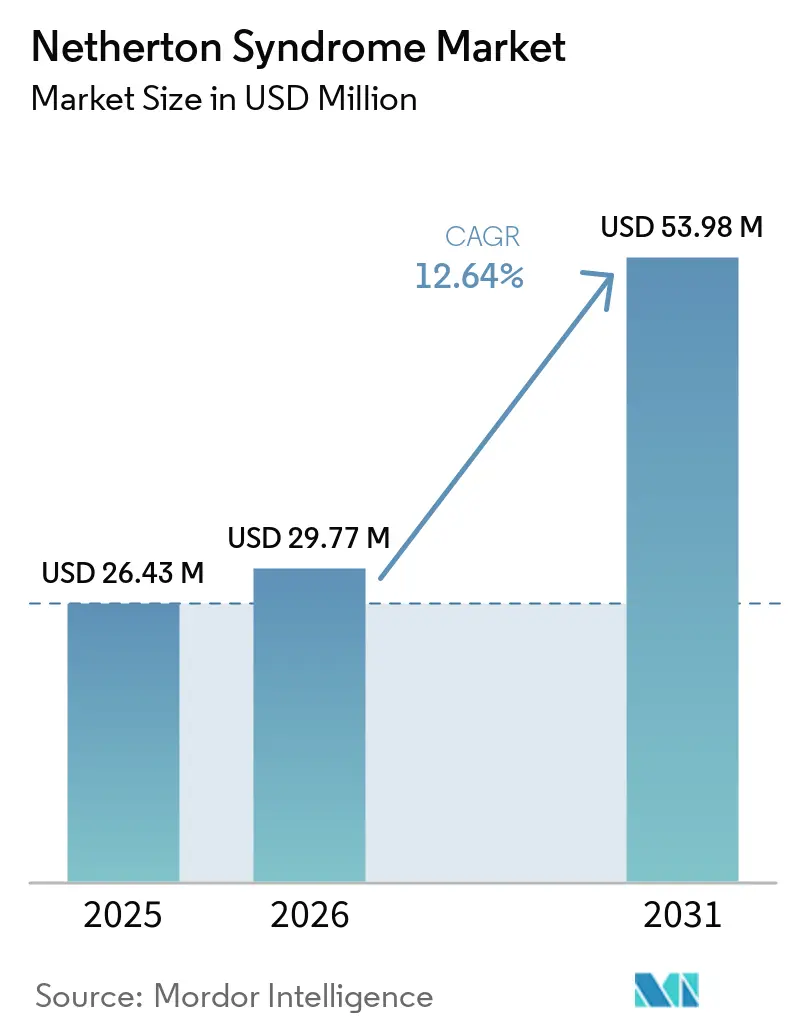
The Netherton Syndrome Market size was valued at USD 26.43 million in 2025 and is estimated to grow from USD 29.77 million in 2026 to reach USD 53.98 million by 2031, at a CAGR of 12.64% during the forecast period (2026-2031).
The netherton syndrome market is shaped by the lack of an approved disease-specific treatment and by the high care needs of affected children. Loss-of-function changes in SPINK5 reduce LEKTI activity and leave kallikrein proteases less controlled, which contributes to congenital ichthyosis, hair-shaft changes, and serious atopic symptoms. The Netherton Syndrome market, therefore, depends on better diagnosis, specialist referral, and therapies that address protease activity rather than only visible symptoms. Programs based on topical protease inhibition, protein replacement, and microbiome approaches are moving through clinical development, which gives sponsors several routes to differentiation. Regulatory designations in the United States, Europe, and Japan can support development and early commercial planning for qualifying products.
Key Report Takeaways
- By therapy type, keratolytic agents held 35.48% revenue share in 2025, while biological therapies are forecast to grow at a 13.14% CAGR through 2031 in the Netherton Syndrome market.
- By route of administration, oral formulations accounted for 49.21% of the Netherton Syndrome market size in 2025, while topical delivery is forecast to expand at a 13.57% CAGR through 2031.
- By patient age group, adults held 73.69% revenue share in 2025, while neonates and infants are forecast to grow at a 14.32% CAGR through 2031.
- By distribution channel, hospital pharmacies held 51.43% revenue share in 2025, while online pharmacies are forecast to grow at a 14.81% CAGR through 2031.
- By geography, North America held 43.18% revenue share in 2025, while Asia-Pacific is forecast to grow at a 15.43% CAGR through 2031 in the Netherton Syndrome market.
Note: Market size and forecast figures in this report are generated using Mordor Intelligence’s proprietary estimation framework, updated with the latest available data and insights as of January 2026.
Market Trends and Insights
Drivers Impact Analysis of Netherton Syndrome Market*
| Driver | (~) % Impact on CAGR Forecast | Geographic Relevance | Impact Timeline |
|---|---|---|---|
| Disease Awareness and Diagnostic Pathways | +1.5% | Global, with concentrated gains in North America, Germany, France, and the Netherlands | Short term (≤ 2 years) |
| Disease-Modifying Pipeline Maturation | +3.2% | Global, with Phase 2/3 trials concentrated in North America, Europe, and Japan | Medium term (2-4 years) |
| Orphan Drug and Rare Pediatric Designations | +2.1% | North America and the EU, extending to Japan and Saudi Arabia | Short term (≤ 2 years) |
| Reimbursement for High-Burden Pediatric Care | +1.4% | North America and the EU | Medium term (2-4 years) |
| Precision Diagnosis Through SPINK5 Testing | +1.8% | Global, with early adoption in North America, Germany, France, and the United Kingdom | Short term (≤ 2 years) |
| Skin Microbiome and LEKTI Replacement Platforms | +2.0% | North America, with early expansion into core Asia-Pacific countries | Long term (≥ 4 years) |
| Source: Mordor Intelligence | |||
Disease Awareness, Diagnostic Pathways, and SPINK5 Testing
The Netherton Syndrome market benefits when registries and natural history programs shorten the time between early symptoms and genetic confirmation. Netherton syndrome has often been mistaken for atopic dermatitis or other congenital ichthyoses, which can delay referral to an experienced center. Orphanet links 32 active registries for the condition, giving researchers longitudinal information on clinical presentation and supporting clearer disease definitions for regulatory submissions. SPINK5 testing is particularly important because it can distinguish the disorder from conditions with similar skin findings and can support earlier care planning. German centers have participated in studies of spesolimab and SXR1096, while German Research Foundation support has backed work with partners in France, Canada, Poland, and Switzerland.[1] A 2025 review also described the growing evidence base for biologics and identified CRISPR/Cas9 as a longer-term research direction.[2]
Disease-Modifying Pipeline and Skin Microbiome Platforms
The Netherton syndrome market is moving from broad symptom control toward products designed to address the underlying protease imbalance. Quoin Pharmaceuticals started a Phase 2/3 multicenter study of QRX003, also known as QYLEKI, in March 2026, and the company has targeted the end of 2026 for Phase 3 recruitment completion. The company stated that its March 2026 Type C meeting with the FDA indicated that a single Phase 3 study could support a future U.S. marketing application. Sixera Pharma completed its Phase I/II SXR1096 study in August 2025, adding controlled clinical data for the topical inhibition of KLK5, KLK7, and KLK14. Topical microbiome and protein replacement approaches add another path because they could provide ongoing activity at the skin surface. Azitra completed its Phase 1b study of ATR12-351 in July 2026, providing early human data for a topically applied engineered Staphylococcus epidermidis strain that expresses recombinant human LEKTI-D6.
Orphan Drug Incentives and Pediatric Care Reimbursement
The netherton syndrome market has support from incentives that can reduce development friction for ultra-rare indications. QRX003 received orphan designation from the EMA in May 2025, which may provide 10 years of market exclusivity after European approval. Quoin also reported FDA orphan designation in October 2025 and Japanese orphan designation in June 2026, creating a designation portfolio across its major target territories. The FDA's rare pediatric disease designation can also create eligibility for a priority review voucher upon approval. Payers must weigh drug costs against the intensive nursing, infection management, nutritional support, and specialist skin care required by severely affected infants. In June 2026, Quoin reported that 4 of 6 children in its compassionate use program were rated Improved or Significantly Improved, with no treatment-related adverse events reported. Such results may be relevant to future assessments by NICE, HAS, and IQWiG when evidence packages become available.
Orphan-Drug Incentives and Rare-Pediatric Designations
Orphan drug legislation across the United States, the EU, and Japan is materially reducing capital requirements for NS development by providing fee waivers, extended exclusivity, and priority review mechanisms. QRX003 received FDA Orphan Drug Designation in October 2025, EMA Orphan Drug Designation in May 2025, and Japan MHLW Orphan Drug Designation in June 2026, creating a coordinated exclusivity shield across all three of the sponsor's core commercial territories. The FDA's additional Rare Pediatric Disease Designation granted in June 2025 creates eligibility for a Priority Review Voucher upon NDA approval, a transferable asset that has traded at USD 100–130 million in recent transactions, effectively cross-subsidizing NS development costs. ResVita Bio's RVB-003, an engineered bacterium delivering continuous protease inhibition to the skin surface, similarly received FDA Orphan Drug Designation in March 2025, confirming that the incentive framework is already benefiting second-generation entrants.
Restraints Impact Analysis of Netherton Syndrome Market*
| Restraint | (~) % Impact on CAGR Forecast | Geographic Relevance | Impact Timeline |
|---|---|---|---|
| Small, Dispersed Patient Pool | -1.8% | Global, with the greatest constraints in South America, the Middle East and Africa, and the rest of Asia-Pacific | Long term (≥ 4 years) |
| Pediatric Safety and Long-Term Evidence Gaps | -1.5% | Global, with added pressure in the EU where pediatric investigation plans apply | Medium term (2-4 years) |
| Diagnostic Delay and Phenotypic Heterogeneity | -1.2% | Global, particularly in low- and middle-income countries | Short term (≤ 2 years) |
| High Manufacturing and Distribution Costs | -1.6% | Global | Medium term (2-4 years) |
| Source: Mordor Intelligence | |||
Small Patient Pool, Diagnostic Delay, and Distribution Costs
The netherton syndrome market faces a limited pool of diagnosed patients, and those patients are spread across many countries. Orphanet estimates an incidence of 1 in 200,000 people, which limits volume even where orphan drug pricing is possible. Specialist centers are concentrated in locations such as Paris, Rotterdam, and selected U.S. institutions, while many patients remain outside research networks. The QRX003 pivotal study enrolls 16 participants, showing the practical limits on recruiting an ultra-rare population. Competing studies can draw on the same small group of eligible participants and may extend development timelines. Delayed diagnosis is more pronounced in lower-resource settings, where access to genetic testing and rare-disease referral can be limited. Manufacturing and distributing live biotherapeutics or gene-based products at very low commercial volume can also challenge cost control and access planning.
Pediatric Safety and Long-Term Evidence Gaps
The netherton syndrome market remains constrained by the need for safety evidence in infants and young children. The condition often begins at birth or in early infancy, so the patients with the highest burden may have the least available long-term data for novel therapies. A disrupted skin barrier can increase transepidermal drug penetration, making it difficult to apply adult pharmacokinetic assumptions directly to neonatal dosing. This issue applies to topical small molecules, biologics, and live biotherapeutics. Boehringer Ingelheim ended its spesolimab Evasayil study in December 2025, illustrating the uncertainty that can arise when a downstream immunomodulator is tested in a condition driven by upstream kallikrein dysregulation. Broader physician use and payer coverage are likely to depend on a pivotal program that provides durable pediatric safety data.
*Our forecasts treat driver/restraint impacts as directional, not additive. The impact forecasts reflect baseline growth, mix effects, and variable interactions.
Netherton Syndrome Market Segment Analysis
By Therapy Type:
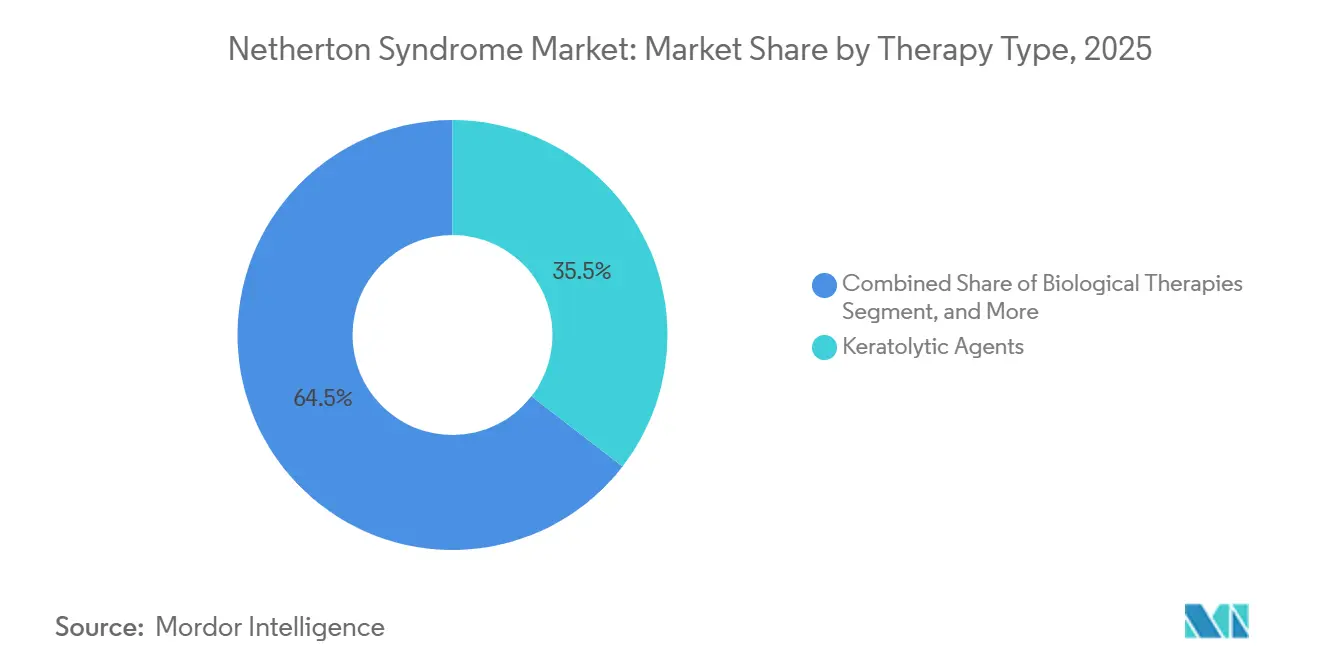
Biologics Are Expanding Beyond Symptomatic CareKeratolytic agents held 35.48% of the Netherton Syndrome market share in 2025, reflecting their established use for managing skin scale, where no approved disease-specific therapy was available. These products address the effects of excessive KLK5 activity rather than the cause of the condition. Their continued use shows the importance of symptom management for patients who do not have access to a trial or specialist treatment program. Oral and topical steroids and retinoids form the second major treatment group in current practice. Oral retinoids, including acitretin and isotretinoin, have mainly been used in moderate-to-severe adult disease. Topical calcineurin inhibitors, such as tacrolimus and pimecrolimus, are used selectively because absorption can be greater through damaged skin. Radiation therapies remain marginal because the disease burden is concentrated in pediatric patients. The Netherton Syndrome industry continues to rely on these established options while more targeted products are developed.
Biological therapies are the fastest-growing therapy subsegment and are forecast to grow at a 13.14% CAGR from 2026 to 2031. Growth reflects the expanding off-label experience with dupilumab and secukinumab, as well as the prospective arrival of QRX003 as a disease-modifying product. The 2025 review from Okayama University reported meaningful pruritus relief with dupilumab and potential benefit for scaling with secukinumab in patients with particular SPINK5 variants. The review also noted the possibility of rebound skin lesions when therapy stops. Baricitinib and abrocitinib are also emerging in off-label case series, which broadens the set of approaches beyond IL-4, IL-13, and IL-17 pathways. Different treatment effects across patient subgroups make genotype and clinical presentation relevant to future treatment selection. The netherton syndrome market may become more differentiated as evidence on those subgroups grows. The Netherton Syndrome industry has not yet established a formal approved standard across these biologic options.

By Route of Administration:
Topical Platforms Align With Local Disease BiologyOral formulations accounted for 49.21% of the Netherton Syndrome market size in 2025, led by oral retinoids and systemic corticosteroids used in moderate-to-severe disease. These treatments remain common despite the absence of formal approval for Netherton syndrome. They offer an established prescription pathway for adults with persistent symptoms. Topical delivery is the fastest-growing route and is projected to expand at a 13.57% CAGR through 2031. QRX003, SXR1096, and ATR12-351 are topical programs intended to deliver kallikrein inhibition or LEKTI function at the site of disease. This design seeks to address local protease activity rather than rely on systemic exposure. Intravenous delivery had a measurable historical role through spesolimab, which used an intravenous loading dose followed by subcutaneous maintenance.
Boehringer Ingelheim's December 2025 termination of the spesolimab study reduced the active intravenous pipeline to a marginal position. The Netherton Syndrome market now has a clearer concentration of development activity in topical platforms. Damaged skin can increase unintended systemic absorption of topical products, yet the same local route may allow delivery of therapeutic proteins or live biotherapeutics that would not be practical through systemic administration. ATR12-351 was designed as an engineered Staphylococcus epidermidis strain that expresses recombinant human LEKTI-D6 after topical application. Preclinical ex vivo data reported nanomolar IC50 activity for KLK5 inhibition. A live biotherapeutic could provide continuing activity against LEKTI deficiency, unlike a conventional treatment that requires repeated application. The clinical value of that approach will depend on safety, adherence, and sustained response in future studies.
By Patient Age Group:
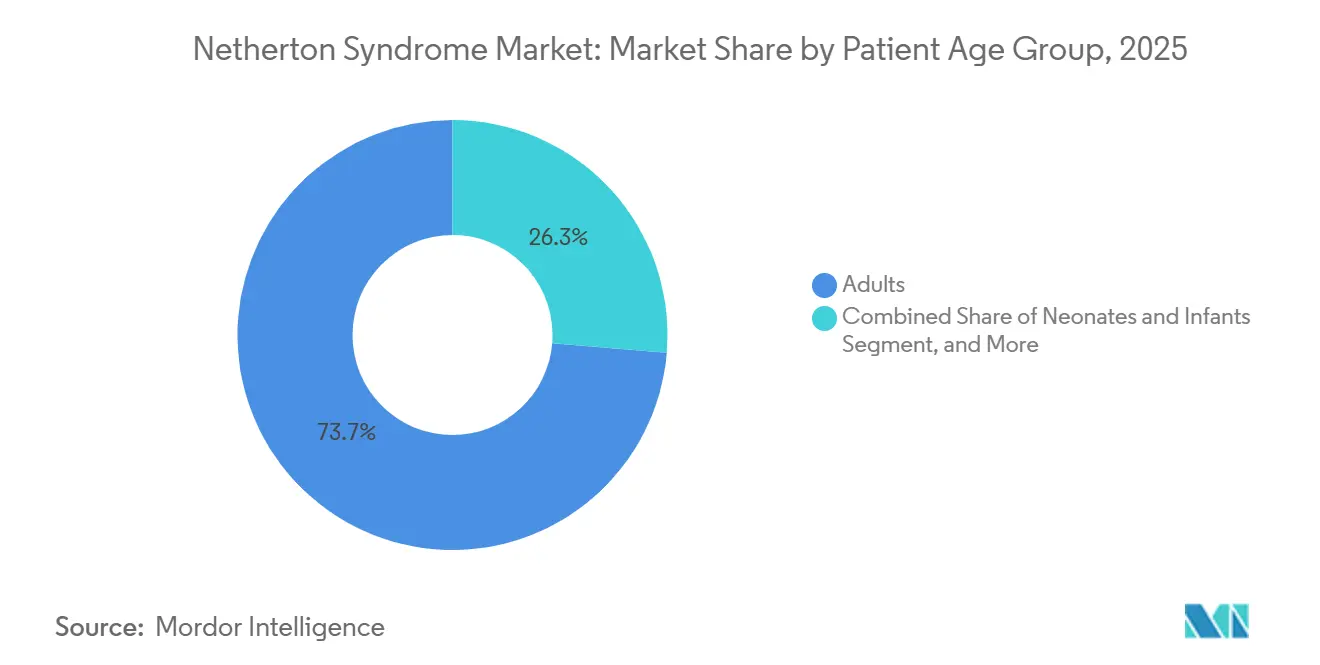
Adult Revenue Is Established While Early Diagnosis ExpandsAdults held 73.69% of the patient-age segment in 2025 because reference centers have accumulated diagnoses over many years and continued to follow patients into adulthood. Adults, therefore, account for much of the current spending on keratolytics, retinoids, and off-label biologics. They are also likely to be the first commercial population for a newly approved therapy. This reflects a more mature evidence base in adults and the common regulatory practice of building initial applications around adult data. Adolescents form a transition group that is being reached more often through expanded compassionate use programs. Their treatment needs can differ from adults as disease severity and care arrangements change. The Netherton Syndrome market must still account for long-term use across the full patient lifespan. Pediatric evidence remains central because symptoms often begin much earlier than adult diagnosis and treatment records suggest.
Neonates and infants are the fastest-growing cohort and are forecast to expand at a 14.32% CAGR from 2026 to 2031. Earlier confirmation through SPINK5 testing is helping clinicians distinguish neonatal erythroderma from empiric atopic dermatitis treatment. Early care matters because affected neonates can experience hypernatremia, hypothermia, and secondary infection. Appropriate barrier support can reduce some of these risks. Quoin reported that a 6-month-old participant in its compassionate use program had skin improvement and normalized neutrophil levels within 3 weeks of QRX003 application. This observation has increased interest in neonatal dosing protocols. Children and adolescents remain underserved because formal age-specific studies are still early. Sponsors may create a further opportunity when trial eligibility expands to younger ages. The pace of adoption will remain tied to long-term pediatric safety evidence.
By Distribution Channel:
Hospital Pharmacies Remain the Main Access PointHospital pharmacies held 51.43% of the distribution channel segment in 2025, supported by the concentration of diagnosis and treatment in tertiary academic dermatology centers. Specialty pharmacies are often located near the physicians and multidisciplinary teams that manage these patients. Treatment initiation can require specialist assessment, genetic confirmation, and coordinated clinical support. These steps are less likely to occur in a standard retail pharmacy setting. Hospital dispensing is also linked to clinical trial activity and formulary processes. The netherton syndrome market is therefore likely to keep a strong hospital channel presence after the first specific treatment approval. This pattern matches the need for training and monitoring in a complex pediatric condition. It also supports close coordination between the prescriber, pharmacy, and caregiver.
Online pharmacies are the fastest-growing distribution channel, with a forecast CAGR of 14.81% through 2031. Their growth reflects the potential for specialty telepharmacy to reach patients who live far from rare-disease centers. Retail pharmacies serve a smaller group of adults with stable prescriptions for retinoids or topical steroids from community dermatologists. The other channel includes hospital formulary dispensing and clinical trial sites that operate as practical distribution nodes. QRX003 is expected to require whole-body application twice a day if it reaches commercial use. That regimen supports a hub-and-spoke specialty pharmacy model that can provide caregiver instruction and monitor adherence. The netherton syndrome market could use this model to extend care beyond major academic centers. Distribution planning will need to protect product quality while avoiding unnecessary burdens for families. Each channel will remain linked to specialist oversight because the condition requires ongoing clinical management.
Geography Analysis
North America Netherton Syndrome Market
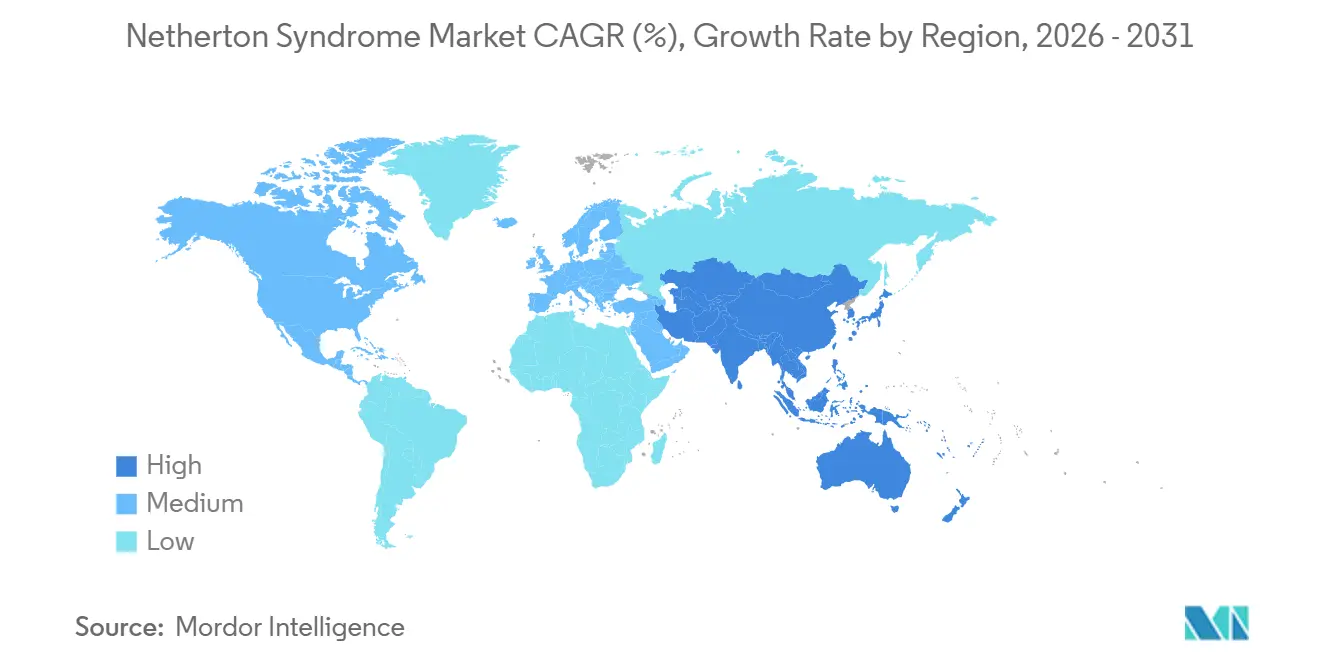
North America held 43.18% of regional revenue in 2025, with the United States accounting for most of the Netherton Syndrome market in the region. FDA orphan drug processes, reference dermatology centers, and specialty pharmacy networks support an established rare-disease setting. Quoin began its QRX003 Phase 2/3 study in March 2026, while BioCryst's BCX17725 Phase 1/1b study has U.S. recruitment activity with primary completion expected in October 2026. QRX003 holds Fast Track, Rare Pediatric Disease, and Orphan Drug Designations in the United States.[3] Canada and Mexico contribute a smaller share of the Netherton Syndrome market because their disease-specific infrastructure is less developed.
Europe Netherton Syndrome Market
Europe is the second-largest regional setting in the Netherton Syndrome market, with Germany, France, and the United Kingdom at the center of clinical research activity. France hosted the DS-2325a Phase 1b/2 trial, which ended in January 2025. Germany, France, Italy, and Spain participated in the spesolimab study across 11 European countries. The EMA designation for QRX003 could provide 10 years of exclusivity after a future EU approval. Italy and Spain may follow Germany and France in uptake because their sites have taken part in sponsored studies.
APAC, MEA and South America Netherton Syndrome Market
Asia-Pacific is forecast to be the fastest-growing region at a 15.43% CAGR from 2026 to 2031. Japan is taking a more active role after the Ministry of Health, Labour and Welfare granted QRX003 orphan designation in June 2026. China and South Korea are at an earlier stage of diagnosis, although genetic panel use in Chinese tertiary hospitals is increasing case detection. The Middle East and Africa have a nearer-term opportunity in Gulf Cooperation Council countries, while South America remains limited by the availability of reference centers.
Competitive Landscape
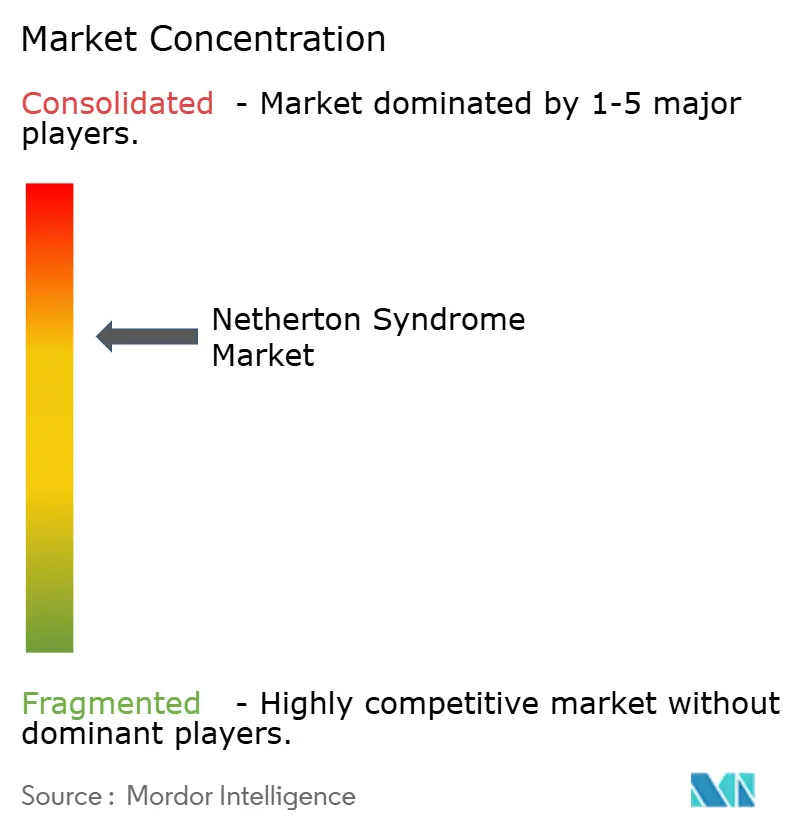
The netherton syndrome market is concentrated among a small number of rare-disease biotechnology companies with programs directed at the SPINK5, LEKTI, and KLK5 pathway. These programs sit alongside off-label use of biologics that were originally approved for atopic dermatitis or pustular psoriasis. Quoin leads the current pipeline with QRX003, or QYLEKI, the only candidate in Phase 2/3 development with a stated 2027 new drug application timeline. BioCryst is developing BCX17725, a protein therapeutic KLK5 inhibitor designed for intravenous or subcutaneous use. Azitra completed a Phase 1b study of its microbiome-based LEKTI replacement product, ATR12-351, in July 2026.
The 2025 exits of Boehringer Ingelheim and Daiichi Sankyo reduced the number of active large pharmaceutical company programs. QRX003 uses a lotion-based protease inhibition approach, BCX17725 uses a KLK5 protein therapeutic approach, and ATR12-351 uses an engineered skin bacterium to provide LEKTI-D6 locally. ResVita Bio's RVB-003 received FDA orphan drug designation in March 2025, showing that the incentive system is also supporting later entrants. Quoin's March 2026 Fast Track designation and June 2026 conditional approval of the QYLEKI brand name are strategic moves that support its regulatory preparation. BioCryst's active Phase 1 recruitment is another example of a differentiated program advancing in the same treatment space.
Netherton Syndrome Industry Leaders
-
AbbVie Inc.
-
Amgen Inc.
-
Boehringer Ingelheim International GmbH
-
Eli Lilly and Company
-
Novartis AG
- *Disclaimer: Major Players sorted in no particular order
Netherton Syndrome Market Companies Covered in this Report
- Abbvie
- Amgen
- Azitra, Inc.
- BioCryst Pharmaceuticals, Inc.
- Boehringer Ingelheim
- Daiichi Sankyo
- Eli Lilly and Company
- Johnson & Johnson
- Krystal Biotech, Inc.
- LifeMax Laboratories, Inc.
- Novartis
- Pfizer
- Quoin Pharmaceuticals, Ltd.
- Regeneron Pharmaceuticals
- ResVita Bio
- Roche
- Sanofi
- Sixera Pharma AB
- Takeda Pharmaceuticals
- UCB, Inc.
Recent Industry Developments in Netherton Syndrome Market
- July 2026: Azitra's Phase 1b study of ATR12-351 (NCT06137157) reached completion with a final protocol update on July 27, 2026, generating the first human safety and proof-of-concept data for a live biotherapeutic LEKTI-replacement approach in NS.
- June 2026: Quoin announced positive data from its pediatric NS compassionate use program: 4 of 6 enrolled children (all under age 10, youngest aged 6 months) were classified as "Improved" or "Significantly Improved" on IGA endpoints, including one patient achieving a 5-grade IGA improvement (severe to clear) sustained at 15 months, with no treatment-related adverse events.
- June 2026: Quoin received FDA conditional approval of the brand name QYLEKI for QRX003, formally assigning commercial identity to the lead NS asset ahead of NDA filing; QYLEKI holds Orphan Drug Designation in the US, EU, and Japan.
Global Netherton Syndrome Market Report Scope
As per the scope of the report, Netherton syndrome is a rare, inherited genetic skin disorder caused by mutations in the SPINK5 gene, leading to severe skin barrier defects, fragile bamboo hair, and immune dysregulation. It typically presents at birth with red, scaly skin (erythroderma), sparse, fragile hair, and a high tendency toward allergies, asthma, and eczema.
The Netherton syndrome market is segmented by therapy type, route of administration, patient age group, distribution channel, and geography. By therapy type, the market is segmented into keratolytic agents, oral and topical steroids and retinoids, topical calcineurin inhibitors, radiation therapies, biological therapies, and others. By route of administration, the market is segmented into topical, oral, intravenous, and others. By patient age group, the market is segmented into neonates and infants, children, adolescents, and adults. By distribution channel, the market is segmented into hospital pharmacies, online pharmacies, retail pharmacies, and others. The geography segment is further divided into North America, Europe, Asia-Pacific, the Middle East and Africa, and South America. The report also covers the estimated market sizes and trends for 17 countries across major regions globally. The report offers the market size and forecasts in value (USD) for the above segments.
Segmentation Overview
| Keratolytic Agents |
| Oral and Topical Steroids and Retinoids |
| Topical Calcineurin Inhibitors |
| Radiation Therapies |
| Biological Therapies |
| Others |
| Topical |
| Oral |
| Intravenous |
| Others |
| Neonates and Infants |
| Children |
| Adolescents |
| Adults |
| Hospital Pharmacies |
| Online Pharmacies |
| Retail Pharmacies |
| Others |
| North America | United States |
| Canada | |
| Mexico | |
| Europe | Germany |
| United Kingdom | |
| France | |
| Italy | |
| Spain | |
| Rest of Europe | |
| Asia-Pacific | China |
| India | |
| Japan | |
| Australia | |
| South Korea | |
| Rest of Asia-Pacific | |
| Middle East and Africa | GCC |
| South Africa | |
| Rest of Middle East and Africa | |
| South America | Brazil |
| Argentina | |
| Rest of South America |
| By Therapy Type | Keratolytic Agents | |
| Oral and Topical Steroids and Retinoids | ||
| Topical Calcineurin Inhibitors | ||
| Radiation Therapies | ||
| Biological Therapies | ||
| Others | ||
| By Route of Administration | Topical | |
| Oral | ||
| Intravenous | ||
| Others | ||
| By Patient Age Group | Neonates and Infants | |
| Children | ||
| Adolescents | ||
| Adults | ||
| By Distribution Channel | Hospital Pharmacies | |
| Online Pharmacies | ||
| Retail Pharmacies | ||
| Others | ||
| By Geography | North America | United States |
| Canada | ||
| Mexico | ||
| Europe | Germany | |
| United Kingdom | ||
| France | ||
| Italy | ||
| Spain | ||
| Rest of Europe | ||
| Asia-Pacific | China | |
| India | ||
| Japan | ||
| Australia | ||
| South Korea | ||
| Rest of Asia-Pacific | ||
| Middle East and Africa | GCC | |
| South Africa | ||
| Rest of Middle East and Africa | ||
| South America | Brazil | |
| Argentina | ||
| Rest of South America | ||
Key Questions Answered in the Report
What is driving growth in the Netherton Syndrome market?
Growth is supported by earlier SPINK5 testing, rare-disease incentives, and clinical development of topical protease inhibitors and LEKTI replacement approaches.
What is the Netherton Syndrome market forecast through 2031?
The Netherton Syndrome market is projected to reach USD 53.98 million by 2031, expanding at a 12.64% CAGR from 2026.
Which therapy type has the largest current revenue position?
Keratolytic agents held 35.48% of therapy-type revenue in 2025 because they remain established options for managing skin scale.
Which route of administration is growing fastest?
Topical delivery is forecast to grow at a 13.57% CAGR through 2031, supported by QRX003, SXR1096, and ATR12-351 development programs.
Why are hospital pharmacies important for Netherton syndrome care?
Hospital pharmacies held 51.43% of channel revenue in 2025 because specialist assessment, genetic confirmation, and coordinated care are often needed before treatment begins.
Which region is expected to grow fastest through 2031?
Asia-Pacific is forecast to grow at a 15.43% CAGR through 2031, supported by Japan's expanding regulatory engagement and growing regional diagnostic activity.