
Myocardial Infarction Therapeutics Market Size and Share
Market Overview
| Study Period | 2020 - 2031 |
|---|---|
| Market Size (2026) | USD 1.98 Billion |
| Market Size (2031) | USD 2.46 Billion |
| Growth Rate (2026 - 2031) | 4.52 % |
| Fastest Growing Market | Asia-Pacific |
| Largest Market | North America |
| Market Concentration | Medium |
Major Players *Disclaimer: Major Players sorted in no particular order Image © Mordor Intelligence. Reuse requires attribution under CC BY 4.0. | |
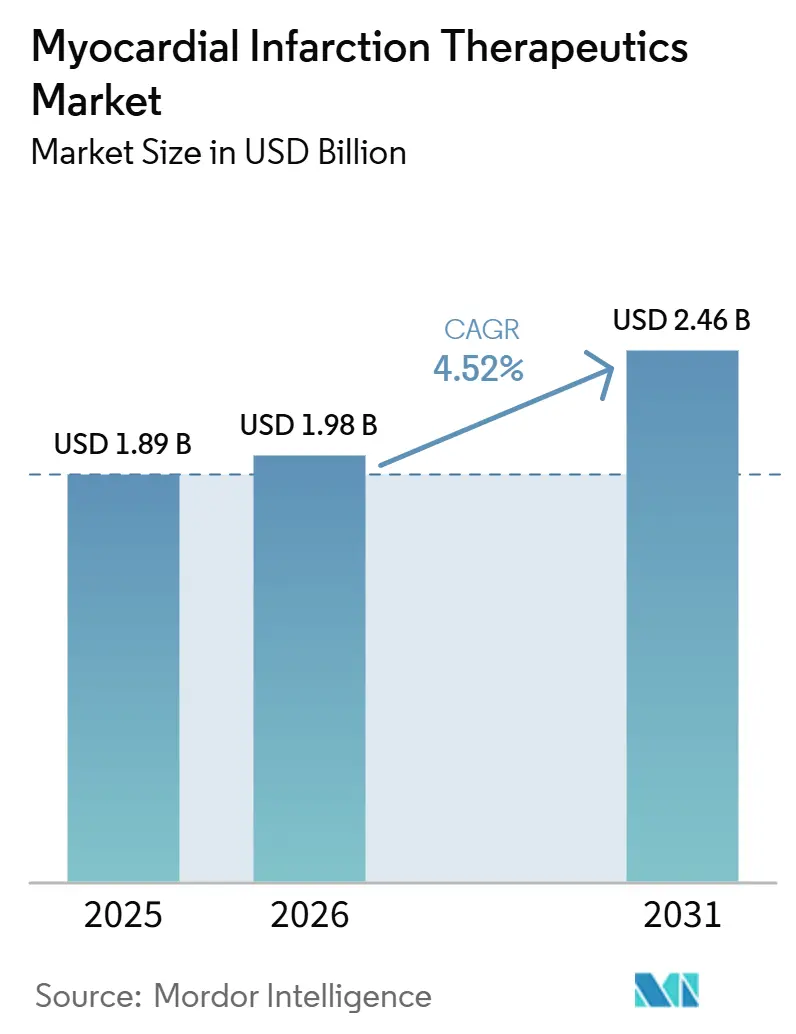
Myocardial Infarction Therapeutics Market Analysis by Mordor Intelligence
The Myocardial Infarction Therapeutics Market size was valued at USD 1.89 billion in 2025 and is estimated to grow from USD 1.98 billion in 2026 to reach USD 2.46 billion by 2031, at a CAGR of 4.52% during the forecast period (2026-2031).
The myocardial infarction therapeutics market is supported by aging populations and a higher burden of diabetes, obesity, hypertension, and coronary artery disease. Treatment extends beyond the acute event because patients often remain on antiplatelet, lipid-lowering, beta-blocker, and RAAS therapies after discharge. Updated acute coronary syndrome guidance also supports broader use of nonstatin lipid-lowering treatments for eligible patients. Competition is strongest in established drug classes, where generic availability supports access but limits pricing. Branded cardiometabolic medicines, digital dispensing, and therapies intended to prevent heart failure create opportunities in the myocardial infarction therapeutics market.
Key Report Takeaways
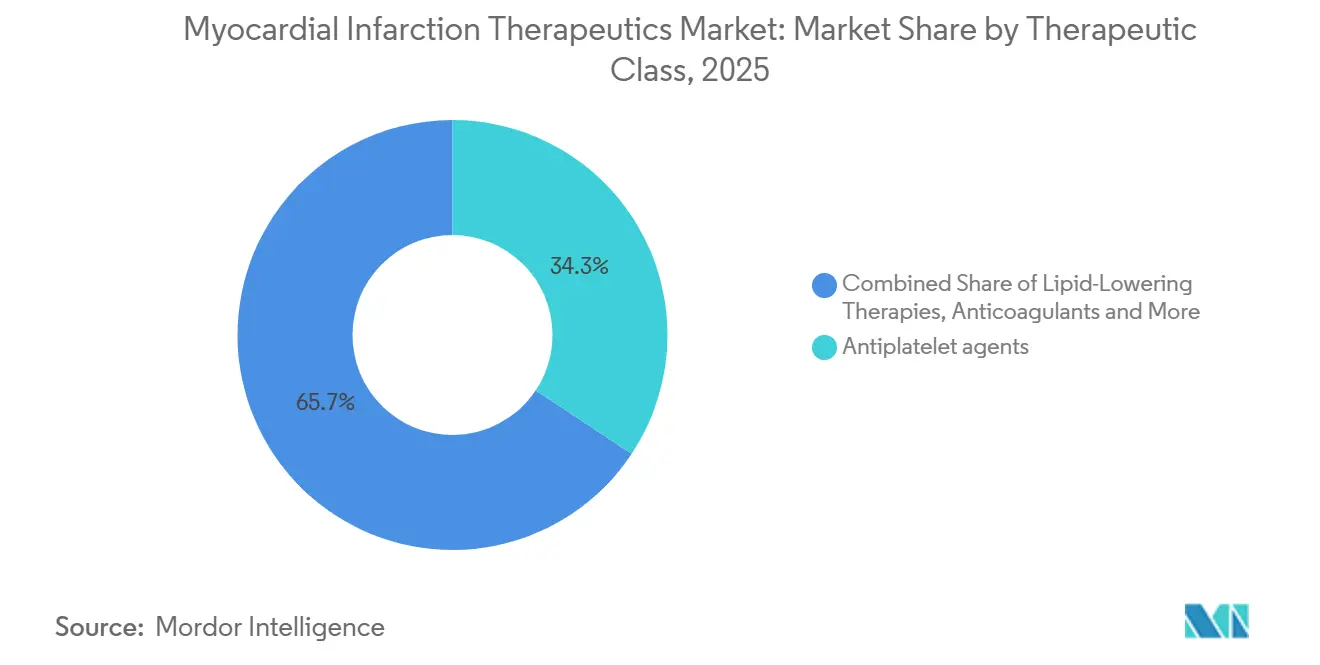
- By therapeutic class, antiplatelet agents held 34.31% of myocardial infarction therapeutics market share in 2025, while lipid-lowering therapies are forecast to grow at a 5.38% CAGR through 2031.
- By therapy setting, post-discharge secondary prevention therapy accounted for 38.44% of the myocardial infarction therapeutics market size in 2025, while long-term management therapy is expected to advance at a 6.52% CAGR through 2031.
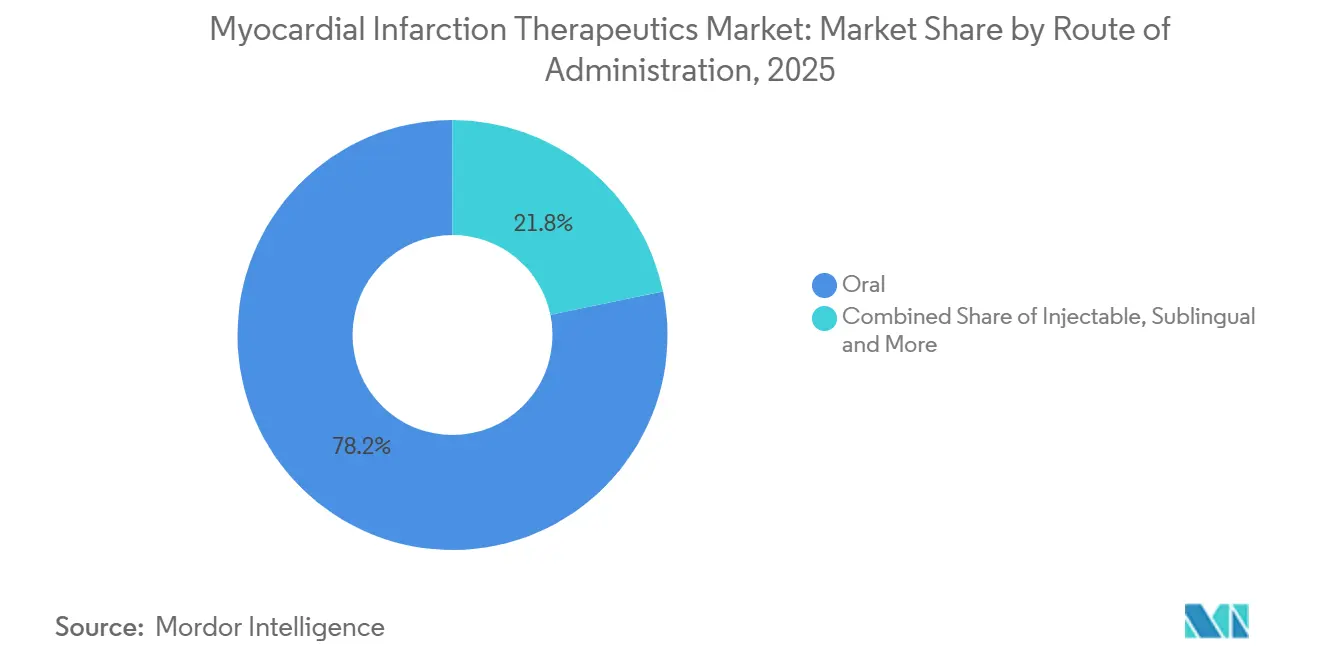
- By route of administration, oral administration held 78.24% of myocardial infarction therapeutics market share in 2025, while injectable administration is projected to expand at a 6.22% CAGR through 2031.
- By distribution channel, hospital pharmacies held 45.56% of revenue in 2025, while online pharmacies are forecast to grow at a 7.95% CAGR through 2031.
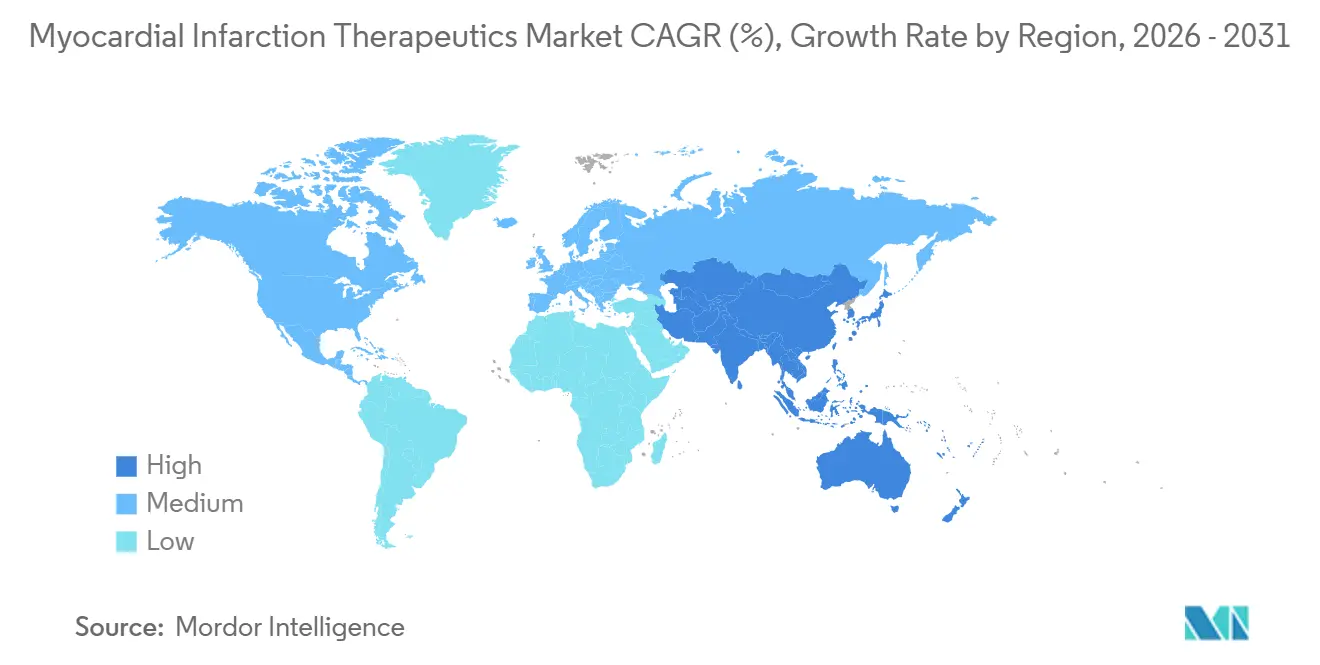
- By geography, North America held 40.61% revenue share in 2025, while Asia-Pacific is forecast to grow at a 6.65% CAGR through 2031.
Note: Market size and forecast figures in this report are generated using Mordor Intelligence’s proprietary estimation framework, updated with the latest available data and insights as of January 2026.
Market Trends and Insights
Drivers Impact Analysis of Myocardial Infarction Therapeutics Market*
| Driver | (~) % Impact on CAGR Forecast | Geographic Relevance | Impact Timeline |
|---|---|---|---|
| Acute Coronary Syndrome and Secondary Prevention Demand | +1.3% | Global, concentrated in North America and Europe | Short term (≤ 2 years) |
| Antithrombotic and Lipid-Lowering Guideline Intensification | +0.8% | North America and EU, spill-over to APAC | Medium term (2-4 years) |
| Aging and Cardiometabolic Conditions | +1.2% | Global, pronounced in APAC and MEA | Long term (≥ 4 years) |
| Faster Diagnosis and Regional STEMI Systems | +0.5% | North America, Germany, Japan | Medium term (2-4 years) |
| Post-MI Heart Failure Prevention and Cardiometabolic Therapy | +0.7% | North America, EU, APAC core | Long term (≥ 4 years) |
| Cell and Tissue Targeted Reperfusion Therapy | +0.3% | North America, EU, early gains in Japan | Long term (≥ 4 years) |
| Source: Mordor Intelligence | |||
Rising Acute Coronary Syndrome and Secondary-Prevention Treatment Demand
More than 800,000 people in the United States experience a heart attack each year, which sustains demand for acute treatment and continuing care. The American Heart Association reported 19.41 million cardiovascular deaths worldwide in 2021, while metabolic risk factors continue to spread in low- and middle-income countries. An acute myocardial infarction commonly leads to a multi-drug regimen that can continue for 12 months or longer. These regimens often include antiplatelets, statins, beta-blockers, and RAAS inhibitors. The 2025 ischemic heart disease burden study reported 254.3 million prevalent cases and 8.99 million deaths in 2021, even as age-standardized mortality rates declined. This gap between a growing case burden and improving survival supports recurring treatment demand in the myocardial infarction therapeutics market.
Guideline Intensification of Antithrombotic and Lipid-Lowering Therapy
The unified ACC, AHA, ACEP, NAEMSP, and SCAI guideline released in February 2025 updated the management of acute coronary syndromes for the first time in more than a decade. The guidance gave Class I, Level A support for adding nonstatin lipid-lowering drugs for eligible acute coronary syndrome patients whose LDL-C remains at or above 70 mg/dL despite maximally tolerated statin therapy. Ezetimibe, evolocumab, alirocumab, inclisiran, and bempedoic acid are included in that approach. The guidance also favors complete revascularization in multivessel disease rather than treatment of only the culprit lesion. It requires a fasting lipid panel 4-8 weeks after treatment begins. These steps can support earlier use of lipid-lowering medicines in hospital formularies across North America and Europe.
Aging, Diabetes, Obesity and Hypertension Expanding the Treatable Population
Diabetes, hypertension, obesity, and coronary artery disease often occur together, increasing the number of patients who may use several therapeutic classes at the same time. The global projections published in 2024 identified high blood pressure, dietary risks, and elevated cholesterol as leading contributors to cardiovascular disease burden through 2050. The same projections showed that high body mass index will add to the burden, particularly in South and Southeast Asia. Japan illustrates the effect of population aging on treatment needs among high-risk post-MI patients. Older patients with diabetes may have evidence-supported reasons to receive additional cardioprotective treatment. This makes polypharmacy a demand factor for the myocardial infarction therapeutics market rather than only a clinical management challenge.
Post-MI Heart-Failure Prevention Broadening Cardiometabolic Therapy Use
The separation between myocardial infarction treatment and heart failure prevention is becoming less distinct. A real-world study published in January 2026 found that 73.7% of hospitalized acute MI patients met criteria for an SGLT2 inhibitor because of heart failure, type 2 diabetes, or chronic kidney disease. The study found that 65% of eligible patients started dapagliflozin or empagliflozin during or after discharge. A 2025 secondary analysis of EMPACT-MI found that early empagliflozin use reduced heart failure adverse events by 37% and produced kidney benefits across renal-function groups[1]Michael Böhm and John P. Ferreira et al., “Secondary Analysis of the EMPACT-MI Trial: Cardiovascular-Kidney Efficacy and Safety of Empagliflozin After Acute Myocardial Infarction,” Nature Cardiovascular Research, 2025, nature.com. Hospital pharmacy committees can therefore include SGLT2 inhibitors in post-MI discharge pathways. This shift favors companies with established SGLT2 inhibitor portfolios, including Boehringer Ingelheim and AstraZeneca.
Restraints Impact Analysis of Myocardial Infarction Therapeutics Market*
| Restraint | (~) % Impact on CAGR Forecast | Geographic Relevance | Impact Timeline |
|---|---|---|---|
| Bleeding and Adherence Trade-Offs | -1.0% | Global, most acute in elderly and multi-comorbid populations | Short term (≤ 2 years) |
| Affordability and Reimbursement Gaps | -0.9% | APAC, MEA, South America, partial impact in Southern Europe | Long term (≥ 4 years) |
| Diagnostic and Reperfusion Inequity | -0.6% | MEA, South Asia, rural APAC | Long term (≥ 4 years) |
| Uneven Post-MI Evidence for Cardiometabolic Drugs | -0.3% | Global | Medium term (2-4 years) |
| Source: Mordor Intelligence | |||
Bleeding and Adherence Trade-Offs Limit Full Guideline Uptake
The 2025 acute coronary syndrome guideline addresses bleeding risk when selecting antithrombotic treatment. It limits routine glycoprotein IIb/IIIa inhibitor use to bailout situations and favors radial over femoral access for PCI. These recommendations reflect the bleeding burden associated with dual antiplatelet regimens. The issue is more difficult for patients who have both high ischemic risk and an indication for anticoagulation. Clinicians often de-escalate P2Y12 inhibitor treatment in such cases, which can reduce use of branded agents. Adherence to multi-drug regimens can also fall during the first 6-12 months after discharge, making pharmacist-led support and patient engagement tools important to treatment continuity.
Affordability and Reimbursement Gaps Restrict Newer Agents
PCSK9 inhibitors and SGLT2 inhibitors can extend treatment value after myocardial infarction, but reimbursement barriers limit their use in price-sensitive settings. Health technology assessment bodies in South Korea and Taiwan use strict cost-effectiveness thresholds that can delay formulary access for branded PCSK9 inhibitors. France's Haute Autorité de Santé reassessed clopidogrel in December 2025, showing continued review of the value of antiplatelet treatments as lower-cost alternatives become widely available[2]Haute Autorité de Santé, “PLAVIX Avis CT20840,” Haute Autorité de Santé, December 17, 2025, has-sante.fr. This environment places pressure on established drug revenue and tests willingness to fund premium medicines. In India and Brazil, out-of-pocket spending remains important to whether patients continue post-MI therapy. Public procurement does not consistently cover branded lipid-lowering or antithrombotic agents beyond statins and generic antiplatelets.
*Our forecasts treat driver/restraint impacts as directional, not additive. The impact forecasts reflect baseline growth, mix effects, and variable interactions.
Myocardial Infarction Therapeutics Market Segment Analysis
By Therapeutic Class:
Antiplatelets Define Revenue, PCSK9 Agents Lead GrowthAntiplatelet agents held 34.31% of the myocardial infarction therapeutics market share in 2025. Their position reflects dual antiplatelet therapy requirements that often last 12 months or longer after acute coronary syndrome. The 2025 guideline recommends ticagrelor or prasugrel over clopidogrel for patients managed with PCI. This recommendation supports demand for branded P2Y12 inhibitors despite generic clopidogrel availability. Anticoagulants continue to provide meaningful revenue during acute treatment. Glycoprotein IIb/IIIa inhibitors have a narrower role because current guidance limits them mainly to bailout use.
Lipid-lowering therapies are projected to record a 5.38% CAGR through 2031, making them the fastest-growing therapeutic class in the myocardial infarction therapeutics market. Guideline support for PCSK9 inhibitors in high-risk patients is a key factor behind this outlook. Thrombolytics remain relevant where primary PCI is unavailable, including parts of South America, rural South Asia, and Africa. Beta-blockers and RAAS therapies remain high-volume segments with stable generic prescribing. Their broad use supports consistent demand across geographic markets. The commercial balance is shifting toward treatments that add cardiovascular and kidney protection after the acute event.



By Therapy Setting:
Post-Discharge Protocols Generate the Largest Treatment VolumePost-discharge secondary prevention therapy captured 38.44% of therapy-setting revenue in 2025. The segment benefits from prescriptions that continue after the patient leaves the hospital. It also benefits from co-prescribing of several medicines and regular refills. Most recurrent MI events occur within 12 months of the index event, supporting the clinical need to maintain treatment. Emergency and acute care therapy has high value per encounter but does not create the same recurring prescription pattern. Inpatient treatment also depends heavily on hospital formulary decisions.
Long-term management therapy is forecast to expand at a 6.52% CAGR through 2031. The growth reflects continued use of PCSK9 inhibitors, SGLT2 inhibitors, and extended antiplatelet therapy. The 2026 real-world study found that 40.6% of eligible acute MI patients began an SGLT2 inhibitor in hospital at discharge. This finding indicates that cardiometabolic management is becoming part of longer-term post-MI care. Reperfusion therapy remains important in the acute setting where door-to-balloon times cannot meet guideline thresholds. Inpatient hospital-based therapy remains centered on antithrombotic and anti-ischemic medicines, where standardized formularies restrict pricing flexibility.
By Route of Administration:
Oral Formulations Lead, Subcutaneous Formats Narrow the GapOral administration accounted for 78.24% of myocardial infarction therapeutics market share in 2025. Daily oral statins, P2Y12 inhibitors, beta-blockers, and RAAS therapies form the base of secondary prevention. This route fits the outpatient and long-duration nature of care after myocardial infarction. Oral medicines are generally easier to use for patients receiving multi-year treatment. Generic competition has reduced prices for many oral drugs. As a result, the 78.24% share does not translate proportionally into revenue because injectable products can carry higher selling prices.
Injectable administration is forecast to grow at a 6.22% CAGR through 2031. Subcutaneous PCSK9 inhibitors are a primary source of this growth. CeleCor Therapeutics reported that zalunfiban reduced the relative risk of STEMI complications by 21% in the Phase 3 CeleBrate trial, which involved 2,467 patients and was published in November 2025[3]CeleCor Therapeutics, “Rapid Zalunfiban Treatment at 1st Point of Medical Contact Lowered Risk of More Severe Heart Damage in Combination With Other Serious Heart Attack Complications,” CeleCor Therapeutics, November 2025, celecor.com. The company planned to submit a new drug application to the FDA in early 2026. Zalunfiban is designed for administration at first medical contact, reaches maximum effect within 15 minutes, and clears within 2 hours. Sublingual and transdermal products retain narrow roles in vasodilator and selected anti-ischemic uses.
By Distribution Channel:
Hospital Networks Dominate, Digital Channels Register Highest GrowthHospital pharmacies held 45.56% of distribution-channel revenue in 2025. The acute and inpatient nature of myocardial infarction care places initial dispensing and early post-discharge treatment within institutional pharmacy systems. Hospital pharmacies influence brand selection through volume-based contracts for antiplatelet and anticoagulant drugs. These contracts can favor generic products or a single preferred brand. Retail pharmacies serve the continuing refill needs of secondary prevention patients. They have an important role in community-based pharmacy networks across North America and Europe.
Online pharmacies are projected to grow at a 7.95% CAGR through 2031, the highest rate among distribution channels. Long-term users of statins, P2Y12 inhibitors, and beta-blockers may prefer home delivery for refills. Automated reminders and cost savings can support this preference. The myocardial infarction therapeutics market may benefit as telepharmacy and chronic-disease platforms expand access to maintenance medicines. Regulatory requirements for e-pharmacies differ across the Americas, Europe, and Asia-Pacific. Counterfeit-drug risks in markets with weaker oversight can limit adoption.
Geography Analysis
North America Myocardial Infarction Therapeutics Market
North America accounted for 40.61% of the myocardial infarction therapeutics market size in 2025. The region benefits from established STEMI networks, high uptake of branded medicines, and frequent guideline-led changes to prescribing. The February 2025 acute coronary syndrome guidance expanded the role of nonstatin lipid-lowering agents and addressed complete revascularization. These changes can increase medication use during and after an acute event. The United States generates most regional revenue because value-based cardiac care programs support adherence to multi-drug secondary prevention.
North America and Europe Myocardial Infarction Therapeutics Market
Canada contributes through higher adoption of lipid-lowering biologics, while Mexico faces reimbursement conditions that favor generics. A 2025 study found substantial variation in PCI use for STEMI across U.S. hospitals. These care differences support continued quality measurement and more standardized antithrombotic treatment. Europe remains the second-largest region because of public health systems, cardiovascular disease awareness, and clinical research activity. Germany, the United Kingdom, and France are important evidence and treatment markets. France's 2025 clopidogrel reassessment indicates continued pricing scrutiny in Southern Europe.
APAC, MEA and South America Myocardial Infarction Therapeutics Market
Asia-Pacific is forecast to grow at a 6.65% CAGR through 2031, the fastest regional rate in the myocardial infarction therapeutics market. China’s Healthy China 2030 strategy, India’s national program for cancer, diabetes, cardiovascular diseases, and stroke, and Japan’s aging population support demand. Japan's 2026 expert consensus on primary PCI for acute coronary syndromes supports broader pharmacological management in hospital settings. China’s regulatory approach creates a localization requirement for imported products while encouraging local drug development. Middle East and Africa and South America remain smaller contributors, but expanding infrastructure supports demand for thrombolytics and generic antiplatelet medicines.

Competitive Landscape
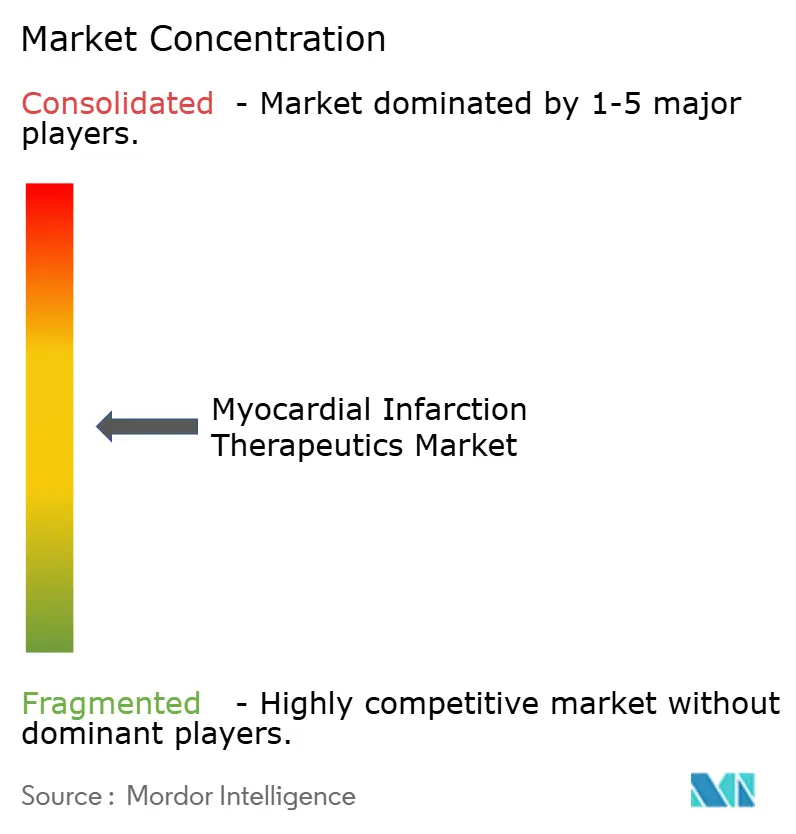
The myocardial infarction therapeutics market is moderately fragmented. AstraZeneca, Bristol-Myers Squibb, Sanofi, and others hold important positions in established drug classes through global distribution, guideline familiarity, and early product entry. Their core products include branded P2Y12 inhibitors, PCSK9 inhibitors, and RAAS therapies. These companies use label expansions and co-formulations to protect revenue as generic competition increases. The myocardial infarction therapeutics industry also includes smaller companies developing cell-based treatment for myocardial repair. BioCardia and CellProthera are among the specialist developers pursuing clinical programs in this area.
BioCardia presented Phase 3 CardiAMP HF trial results at the ACC 2025 Scientific Sessions. The company reported a 20.9% relative risk reduction in heart death equivalents and a 44.6% relative risk reduction in nonfatal major adverse cardiac and cerebrovascular events. It began the 250-patient CardiAMP HF II study in May 2025. Alembic Pharmaceuticals received FDA final approval for generic ticagrelor 60 mg in October 2025. This move adds price competition to long-term secondary prevention. Companies also continue to develop PCSK9 inhibitors, anti-inflammatory medicines, and post-MI SGLT2 inhibitor uses.
CeleCor expected to file for approval of zalunfiban in early 2026, which could add a pre-hospital antiplatelet option to the myocardial infarction therapeutics market. Faraday Pharmaceuticals expected topline results from the Phase 3 Iocyte AMI-3 trial for FDY-5301, a potential injectable therapy for reperfusion injury. FDA benefit-risk review for antithrombotics and European cardiovascular safety requirements influence the timing of new product entry. Pre-hospital delivery systems and adherence monitoring can help companies differentiate in a treatment area with substantial generic use.
Myocardial Infarction Therapeutics Industry Leaders
AstraZeneca plc
Pfizer Inc.
Bayer AG
Bristol Myers Squibb Company
Sanofi
- *Disclaimer: Major Players sorted in no particular order
Myocardial Infarction Therapeutics Market Companies Covered in this Report
- Amgen
- AstraZeneca
- Bayer
- BioCardia, Inc.
- Boehringer Ingelheim
- Bristol-Myers Squibb
- CeleCor Therapeutics
- CellProthera
- CHIESI Farmaceutici S.p.A.
- Daiichi Sankyo
- Eli Lilly and Company
- Faraday Pharmaceuticals
- Idorsia Pharmaceuticals Ltd.
- Johnson & Johnson Innovative Medicine
- Merck
- Mesoblast Limited
- Novartis
- Pfizer
- Recardio
- Regeneron Pharmaceuticals
- Sanofi
- Viatris

Recent Industry Developments in Myocardial Infarction Therapeutics Market
- June 2026: A study led by the Institut de Recerca Sant Pau (IR Sant Pau) and published in the European Heart Journal found that giving atorvastatin intravenously during an ischemic event may offer better cardiac protection than administering a pre-infarction oral loading dose.
- October 2025: Alembic Pharmaceuticals received final approval from the FDA for Ticagrelor Tablets (60 mg), a generic version of AstraZeneca's Brilinta. This approval helped expand access to P2Y12 inhibitor therapy and brought greater price competition to the long-term secondary prevention segment of the antiplatelet market.


Global Myocardial Infarction Therapeutics Market Report Scope
As per the scope of the report, myocardial infarction therapeutics refers to the medical treatments and interventions aimed at managing and preventing damage caused by a myocardial infarction (heart attack).
The myocardial infarction therapeutics market is segmented by therapeutic class into antiplatelet agents, anticoagulants, glycoprotein IIb/IIIa inhibitors, beta-blockers, lipid-lowering therapies, RAAS and neurohormonal therapies, vasodilators and anti-ischemic agents, thrombolytics, and other therapeutic classes; by therapy setting into emergency and acute care therapy, reperfusion therapy, inpatient hospital-based therapy, post-discharge secondary prevention therapy, and long-term management therapy; by route of administration into oral, injectable, sublingual, and transdermal; by distribution channel into hospital pharmacies, retail pharmacies, online pharmacies, and other distribution channels; and by geography into North America, Europe, Asia-Pacific, Middle East and Africa, and South America. The market report also covers the estimated market sizes and trends for 17 countries across major regions globally. For each segment, the market size and forecast are provided in terms of value (USD).
| Antiplatelet Agents |
| Anticoagulants |
| Glycoprotein IIb/IIIa Inhibitors |
| Beta-Blockers |
| Lipid-Lowering Therapies |
| RAAS and Neurohormonal Therapies |
| Vasodilators and Anti-Ischemic Agents |
| Thrombolytics |
| Other Therapeutic Classes |
| Emergency and Acute Care Therapy |
| Reperfusion Therapy |
| Inpatient Hospital-Based Therapy |
| Post-Discharge Secondary Prevention Therapy |
| Long-Term Management Therapy |
| Oral |
| Injectable |
| Sublingual |
| Transdermal |
| Hospital Pharmacies |
| Retail Pharmacies |
| Online Pharmacies |
| Other Distribution Channels |
| North America | United States |
| Canada | |
| Mexico | |
| Europe | Germany |
| United Kingdom | |
| France | |
| Italy | |
| Spain | |
| Rest of Europe | |
| Asia-Pacific | China |
| Japan | |
| India | |
| Australia | |
| South Korea | |
| Rest of Asia-Pacific | |
| Middle East and Africa | GCC |
| South Africa | |
| Rest of Middle East and Africa | |
| South America | Brazil |
| Argentina | |
| Rest of South America |
| By Therapeutic Class | Antiplatelet Agents | |
| Anticoagulants | ||
| Glycoprotein IIb/IIIa Inhibitors | ||
| Beta-Blockers | ||
| Lipid-Lowering Therapies | ||
| RAAS and Neurohormonal Therapies | ||
| Vasodilators and Anti-Ischemic Agents | ||
| Thrombolytics | ||
| Other Therapeutic Classes | ||
| By Therapy Setting | Emergency and Acute Care Therapy | |
| Reperfusion Therapy | ||
| Inpatient Hospital-Based Therapy | ||
| Post-Discharge Secondary Prevention Therapy | ||
| Long-Term Management Therapy | ||
| By Route of Administration | Oral | |
| Injectable | ||
| Sublingual | ||
| Transdermal | ||
| By Distribution Channel | Hospital Pharmacies | |
| Retail Pharmacies | ||
| Online Pharmacies | ||
| Other Distribution Channels | ||
| By Geography | North America | United States |
| Canada | ||
| Mexico | ||
| Europe | Germany | |
| United Kingdom | ||
| France | ||
| Italy | ||
| Spain | ||
| Rest of Europe | ||
| Asia-Pacific | China | |
| Japan | ||
| India | ||
| Australia | ||
| South Korea | ||
| Rest of Asia-Pacific | ||
| Middle East and Africa | GCC | |
| South Africa | ||
| Rest of Middle East and Africa | ||
| South America | Brazil | |
| Argentina | ||
| Rest of South America | ||


Key Questions Answered in the Report
What is the 2026 value of myocardial infarction therapeutics?
The value is USD 1.98 billion in 2026 and is projected to reach USD 2.46 billion by 2031 at a 4.52% CAGR.
Which therapeutic class has the largest revenue share?
Antiplatelet agents led therapeutic-class revenue with a 34.31% share in 2025.
Which therapy setting is growing fastest after a myocardial infarction?
Long-term management therapy is expected to grow at a 6.52% CAGR through 2031.
Why are SGLT2 inhibitors relevant after myocardial infarction?
Eligible patients may receive them for coexisting heart failure, type 2 diabetes, or chronic kidney disease, and EMPACT-MI reported fewer heart failure adverse events.
Which distribution channel is expected to grow fastest?
Online pharmacies are projected to expand at a 7.95% CAGR through 2031 as refill delivery and telepharmacy use grow.
Which region will record the fastest growth?
Asia-Pacific is forecast to grow at a 6.65% CAGR through 2031, supported by cardiovascular health programs and expanding treatment capacity.
Page last updated on:





