
MRSA Testing Market Size and Share
Market Overview
| Study Period | 2020 - 2031 |
|---|---|
| Market Size (2026) | USD 3.99 Billion |
| Market Size (2031) | USD 5.39 Billion |
| Growth Rate (2026 - 2031) | 6.20 % |
| Fastest Growing Market | Asia-Pacific |
| Largest Market | North America |
| Market Concentration | Medium |
Major Players *Disclaimer: Major Players sorted in no particular order Image © Mordor Intelligence. Reuse requires attribution under CC BY 4.0. | |
MRSA Testing Market Analysis by Mordor Intelligence
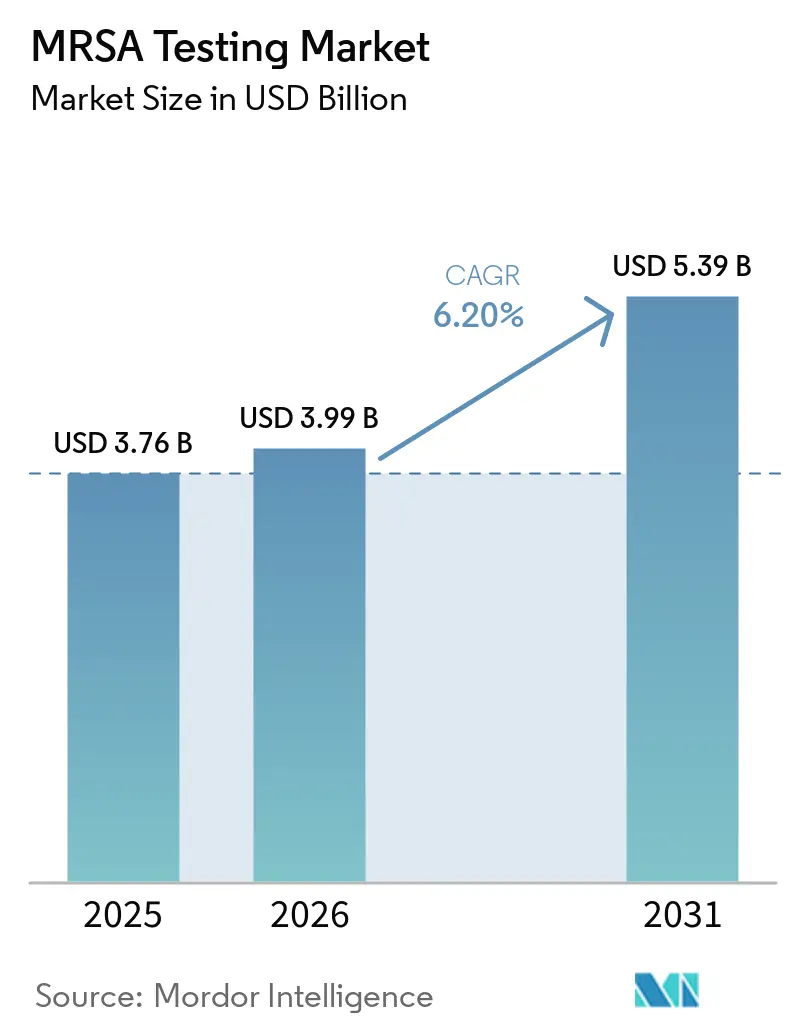
The MRSA Testing Market size was valued at USD 3.76 billion in 2025 and is estimated to grow from USD 3.99 billion in 2026 to reach USD 5.39 billion by 2031, at a CAGR of 6.20% during the forecast period (2026-2031).
Demand is being shaped by the ongoing burden of methicillin-resistant Staphylococcus aureus (MRSA) infections and the expanded use of diagnostics in antibiotic stewardship programs. WHO data indicate methicillin resistance in 27.1% of bloodstream S. aureus infections, while the Eastern Mediterranean Region records the highest regional level at 50.3%. MRSA nasal PCR screening supports faster empirical vancomycin decisions and strengthens testing demand across medication management, isolation, treatment, and surveillance workflows. The MRSA testing market benefits from recurring clinical testing requirements, even as reported hospital infection rates are falling.
Key Report Takeaways
- By test type, molecular diagnostic tests held 48.96% revenue share in 2025, while immunodiagnostic tests projected a CAGR at 7.32% through 2031.
- By product type, reagents and kits held 58.66% share in 2026, while instruments recorded the highest projected CAGR at 8.55% through 2031.
- By end user, hospitals and clinics held 61.45% revenue share in 2025, while diagnostic and pathology laboratories are projected CAGR at 9.34% through 2031.
- By geography, North America held 42.80% revenue share in 2025, while Asia-Pacific projected a CAGR at 9.89% through 2031.
Note: Market size and forecast figures in this report are generated using Mordor Intelligence’s proprietary estimation framework, updated with the latest available data and insights as of January 2026.
Global MRSA Testing Market Trends and Insights
Drivers Impact Analysis*
| DRIVER | (~) % IMPACT ON CAGR FORECAST | GEOGRAPHIC RELEVANCE | IMPACT TIMELINE |
|---|---|---|---|
| Expansion of active surveillance in high-risk care pathways | +1.2% | North America, EU, Japan, with early gains in intensive care, dialysis, and transplant centers | Medium term (2-4 years) |
| Rising demand for rapid infection-control decisions | +1.5% | Global, concentrated in North America, the United Kingdom, Germany, and Australia | Short term (≤ 2 years) |
| Growth of automated sample-to-answer molecular platforms | +1.0% | Global, strongest in North America, Western Europe, and urban Asia-Pacific | Medium term (2-4 years) |
| Increasing detection needs in community-associated and injection-drug-use-linked MRSA | +0.8% | North America and Western Europe, with expansion into Asia-Pacific urban centers | Medium term (2-4 years) |
| Digital epidemiology and cluster-detection requirements | +0.5% | North America, EU, Australia, Singapore, and South Korea | Long term (≥ 4 years) |
| Decentralized testing for surgical, long-term-care, and dialysis pathways | +0.7% | North America and EU, with growing demand in Japan and South Korea | Medium term (2-4 years) |
| Source: Mordor Intelligence | |||
Rising Demand for Rapid Infection-Control Decisions
Turnaround time has become a key purchasing consideration in the MRSA testing market. A 2025 comparative study found that the Eazyplex MRSA Plus LAMP assay identified MRSA within 1 hour of positive blood-culture processing, with 100% sensitivity and specificity across 109 blood cultures. This supports same-shift isolation decisions, compared with culture workflows that may require 48 hours. The study found inappropriate empirical therapy in 47% of patients with MRSA bacteremia, while more than 90% of methicillin-susceptible cases received unnecessarily broad-spectrum treatment.[1]Brandt C, “Diagnostic Methods and Protocols for Rapid Determination of Methicillin Resistance in Staphylococcus aureus Bloodstream Infections, A Comparative Analysis,” European Journal of Clinical Microbiology & Infectious Diseases, springer.com Pharmacist-led MRSA nasal PCR protocols have reduced empirical vancomycin duration, and active surveillance guidance indicates that clinical cultures alone can understate total hospital MRSA prevalence by up to 85%.
Growth of Automated Sample-to-Answer Molecular Platforms
The MRSA testing market is moving from open PCR workflows toward enclosed systems that integrate sample processing and detection. These platforms reduce reliance on specialist microbiology staff and extend molecular testing to smaller hospitals. A 2025 Lab on a Chip study described a compact platform that detected MRSA in human serum at 1 CFU per reaction within 45 minutes, integrating bacterial lysis, nucleic-acid purification, and colorimetric LAMP on a single chip.[2]Huang SS, “SHEA/IDSA/APIC Practice Recommendation, Strategies to Prevent Methicillin-Resistant Staphylococcus aureus Transmission and Infection in Acute-Care Hospitals, 2022 Update,” Infection Control & Hospital Epidemiology, cambridge.org A 2025 meta-analysis reported a pooled sensitivity of 99% and a specificity of 100% for CRISPR-based MRSA detection across clinical samples. As automated systems expand into dialysis and long-term-care settings, instrument placements can increase recurring reagent demand.[3]Buetti N, “Real-Time Genomic Surveillance for Enhanced Healthcare Outbreak Detection and Control, Clinical and Economic Impact,” Clinical Infectious Diseases, academic.oup.com At the same time, FDA requirements for Class II MRSA nucleic-acid amplification devices establish a validation threshold for new systems.
Expansion of Active Surveillance in High-Risk Care Pathways
Active surveillance testing creates protocol-driven demand that is less dependent on individual physician orders. Updated SHEA, IDSA, and APIC recommendations identify active surveillance as an additional practice for high-risk groups, including intensive care patients, dialysis recipients, and recently discharged patients. California requires MRSA active surveillance testing for specified admission categories in acute-care facilities, making hospital occupancy and patient volumes key drivers of testing volumes alongside infection epidemiology. A 2026 study of Japanese geriatric long-term-care facilities found transmission routes that conventional surveillance had not detected. This finding supports molecular screening during transitions between facilities, while electronic health record links can help automate testing orders.
Digital Epidemiology and Community-Associated Detection Needs
The MRSA testing market is expanding through genome-based surveillance and testing beyond hospital wards. A 2-year MRSA genomic surveillance program at UPMC Presbyterian Hospital identified 172 transmission clusters containing 476 isolates. It was associated with 62 prevented infections, 4.8 prevented deaths, USD 695,706 in net savings, and a 3.2-fold return on investment. Nanopore sequencing and genomic analysis identified a neonatal intensive care unit outbreak 13 days after the first positive culture. These programs enable infection-prevention teams to identify transmission patterns that routine microbiology results may not reveal. Community-associated MRSA bloodstream infections have also increased in Canada since 2019, expanding demand across emergency, outpatient, and harm-reduction services.
Restraints Impact Analysis*
| RESTRAINT | (~) % IMPACT ON CAGR FORECAST | GEOGRAPHIC RELEVANCE | IMPACT TIMELINE |
|---|---|---|---|
| High per-test cost and capital intensity of molecular systems | -0.8% | Global, most acute in emerging Asia-Pacific, the Middle East, and Latin America | Medium term (2-4 years) |
| Culture-based confirmation and susceptibility testing requirements | -0.4% | Global, including high-income markets, where it remains a regulatory standard | Long term (≥ 4 years) |
| Reimbursement and screening-policy variability | -0.5% | North America and EU member states | Medium term (2-4 years) |
| Resistance-mechanism and strain-evolution escape risk | -0.3% | Global, with emerging concerns in the Eastern Mediterranean and Southeast Asia | Long term (≥ 4 years) |
| Source: Mordor Intelligence | |||
High Per-Test Cost and Capital Intensity of Molecular Systems
Closed-cartridge PCR systems have higher reagent costs than chromogenic culture media, limiting adoption in budget-constrained laboratories. High-throughput automated systems may require capital expenditures ranging from the mid-six figures to the low-seven figures in USD, in addition to service agreements, trained personnel, quality processes, and recurring cartridge supplies. Community hospitals and long-term care facilities may lack the testing volumes required to justify this investment. A WHO 2025 analysis found that automated molecular systems were primarily concentrated in Level III and IV laboratories in high-income countries.
Reimbursement and Screening-Policy Variability
Reimbursement policies can determine whether providers order MRSA molecular tests in outpatient and perioperative settings. A Blue Cross Blue Shield policy effective in November 2025 allowed possible reimbursement for MRSA-specific nucleic acid amplification tests but excluded direct-probe tests and combined amplified-probe and quantification orders during the same encounter. These distinctions can affect the clinical settings in which laboratories offer rapid testing without incurring unreimbursed costs.
*Our forecasts treat driver/restraint impacts as directional, not additive. The impact forecasts reflect baseline growth, mix effects, and variable interactions.
Segment Analysis
By Test Type: Molecular Platforms Lead, While Immunodiagnostics Expand in Point-of-Care Settings
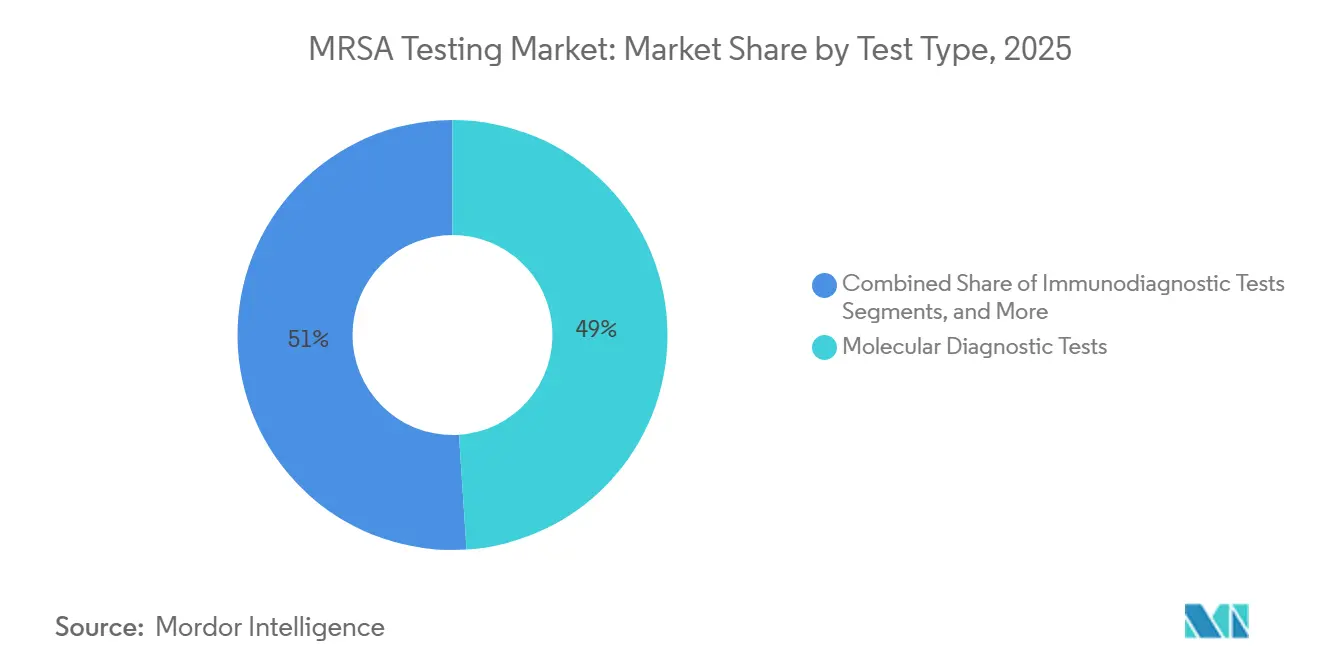
Molecular diagnostic tests held a 48.96% share of the MRSA testing market in 2025, driven by cartridge-based PCR platforms for mecA and mecC detection in nasal swabs, blood cultures, and skin and soft tissue specimens. These systems support rapid testing in high-acuity and perioperative care settings. Culture-based tests remain important for antibiotic susceptibility profiling and confirmation, although their 48- to 72-hour turnaround limits use in time-sensitive decisions. Immunodiagnostic tests are the fastest-growing category, with a projected CAGR of 7.32% from 2026 to 2031. Lateral-flow and PBP2a assays can deliver results within 5 minutes from blood culture pellets when PCR systems are unavailable.
A 2025 comparative study found that the Clearview PBP2a method identified all mecA-positive isolates in clinical and spiked blood cultures when combined with rapid species identification. This capability positions immunodiagnostic tests as a practical complement to molecular confirmation in resource-constrained settings. The Others category includes MALDI-TOF MS and emerging CRISPR-based tests. MALDI-TOF subtyping from blood culture pellets achieved 59.8% accuracy in MRSA determination, while CRISPR-based methods showed high pooled diagnostic performance in a 2025 review. FDA performance controls favor developers that meet established validation requirements.



By Product Type: Reagents Support Recurring Revenue, While Instruments Gain From Automation
Reagents and kits held 58.66% of MRSA testing revenue in 2026, supported by recurring purchases across molecular, culture-based, and immunodiagnostic workflows. Installing PCR instruments and automated microbiology systems creates sustained demand for assay consumables, providing resilience when laboratories replace or upgrade equipment. Instruments are the fastest-growing product category, with a projected CAGR of 8.55% from 2026 to 2031. Growth reflects rising laboratory automation in high-income markets and expanding diagnostic infrastructure in emerging markets.
In April 2025, BD received FDA 510(k) clearance for the BD Phoenix M50 and BDXpert System. The system combines microbial identification and rule-based antimicrobial susceptibility interpretation through the BD Synapsys Informatics Solution. Multiplex panels can detect MRSA, methicillin-susceptible S. aureus, coagulase-negative staphylococci, and resistance genes from a single sample. This approach can increase revenue per sample, reduce testing workload, and support reporting of multiple organisms and resistance markers through a common specimen workflow.
By End User: Hospitals Lead Testing Volume, While Laboratories Take Complex Profiling
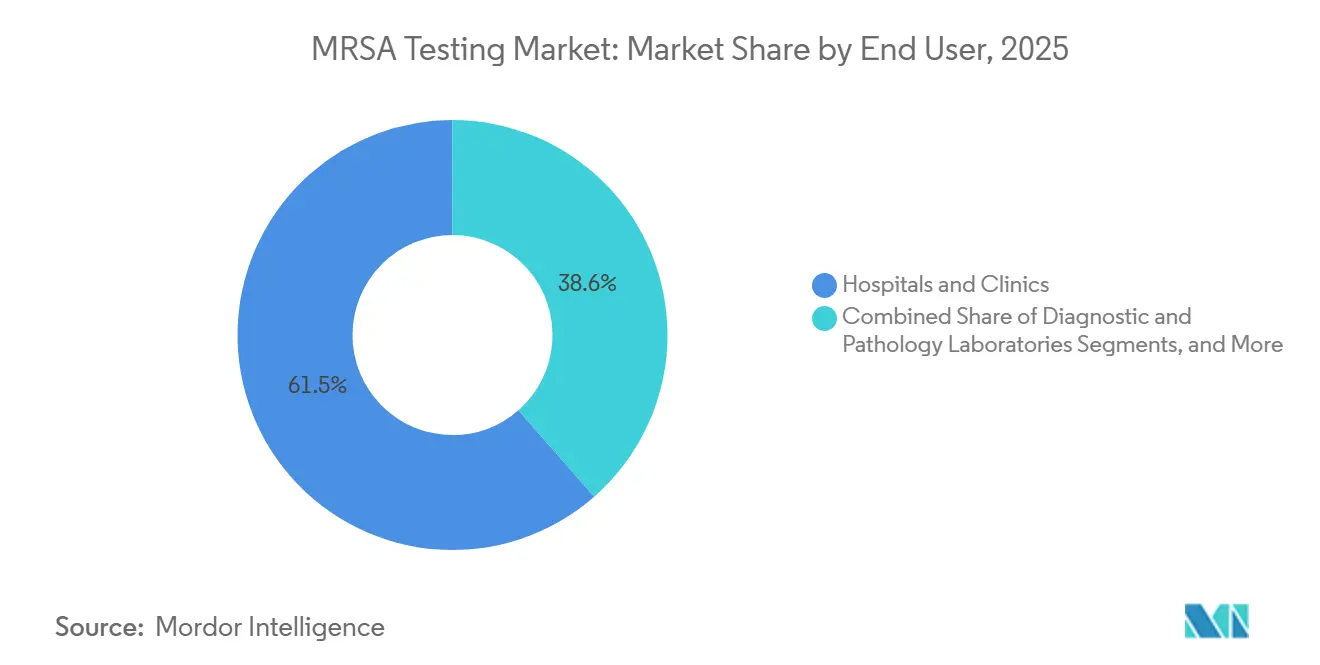
Hospitals and clinics held 61.45% of MRSA testing revenue in 2025, supported by mandatory surveillance, preoperative screening, and high-acuity patient populations. Intensive care, dialysis, and post-surgical patients often require repeated testing. In the United States, bundled payment structures may encourage screening by linking surgical-site infections to hospital financial outcomes. Diagnostic and pathology laboratories are the fastest-growing end-user group, with a projected CAGR of 9.34% from 2026 to 2031.
The growth of diagnostic and pathology laboratories reflects the transfer of whole-genome sequencing, multiplex panel testing, and complex resistance profiling to reference-level facilities. The MRSA testing industry is increasingly separating routine near-patient identification from centralized genomic and susceptibility analysis. Academic and research institutes hold a smaller revenue share but remain important for technology validation, generating clinical evidence for FDA 510(k) and CE-IVDR submissions. They also serve as early adopters of sequencing-based surveillance tools.
Geography Analysis
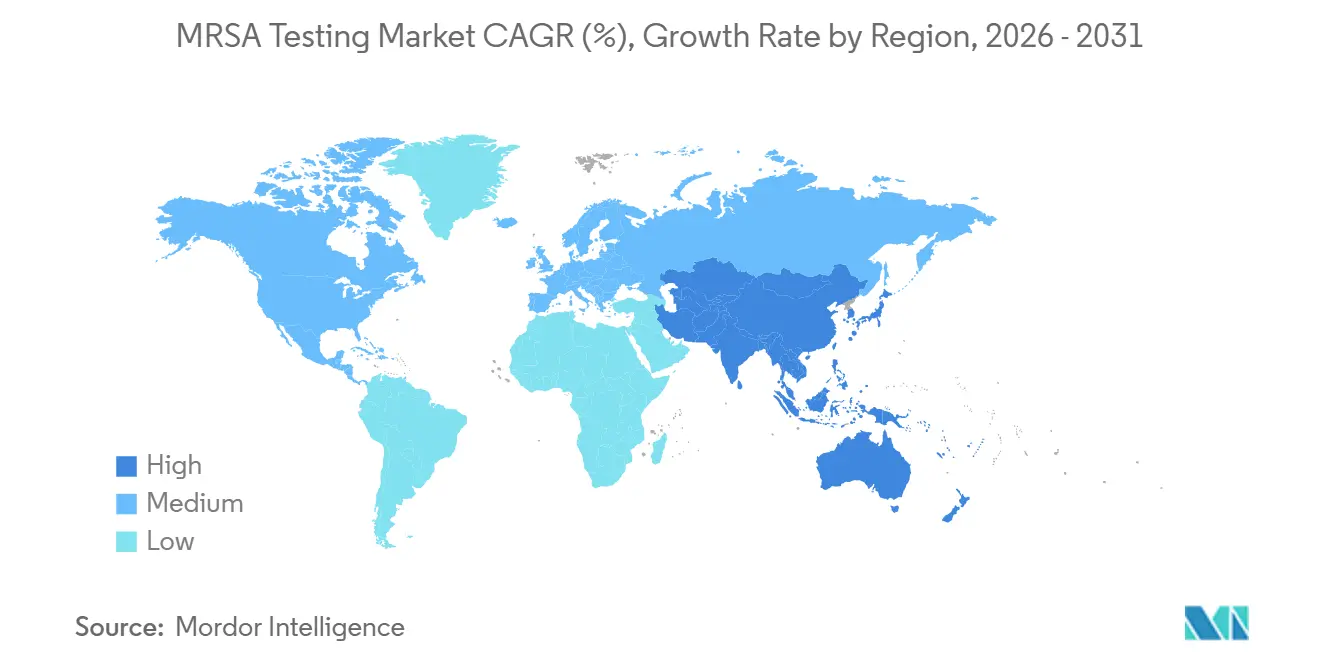
North America accounted for 42.80% of the MRSA testing market share in 2025. Established hospital-onset surveillance, preoperative screening, and antibiotic stewardship programs in the United States and Canada support diagnostic testing before surgery, at admission, and during suspected transmission events. A CDC analysis across six surveillance sites found that community-associated MRSA incidence increased before the pandemic and that hospital-onset incidence remained above prepandemic levels in 2021 and 2022. Canada has recorded a sustained increase in community-associated MRSA bloodstream infection rates since 2019, while Mexico and South America remain earlier-stage markets where culture-based methods are widely used alongside emerging automated molecular platforms.
Europe presents a mixed demand environment for the MRSA testing market. The European Union recorded an MRSA bloodstream infection incidence of 4.48 per 100,000 population in 2024, below the 2030 target of 4.79 per 100,000 population, which may constrain testing growth from hospital-onset infections in Western Europe. However, some Southern, Central, and Eastern European countries reported incidence rates as high as 13.63 per 100,000 population. The United Kingdom, Germany, and France are investing in genome-based surveillance, while CE-IVDR requirements continue to affect product launch timelines across Europe.
Asia-Pacific is the fastest-growing region, with the MRSA testing market projected to expand at a CAGR of 9.89% from 2026 to 2031. Hospital expansion, infection-control requirements, and high MRSA prevalence support growth, while China is expanding molecular capacity in public hospitals, and rural facilities continue to rely on culture-based testing. India’s private hospital chains are deploying PCR-based systems in transplant and orthopedic units, while Japan and South Korea maintain stringent surveillance practices; a 2026 Japanese long-term-care study identified undetected inter-facility MRSA transmission.

Competitive Landscape
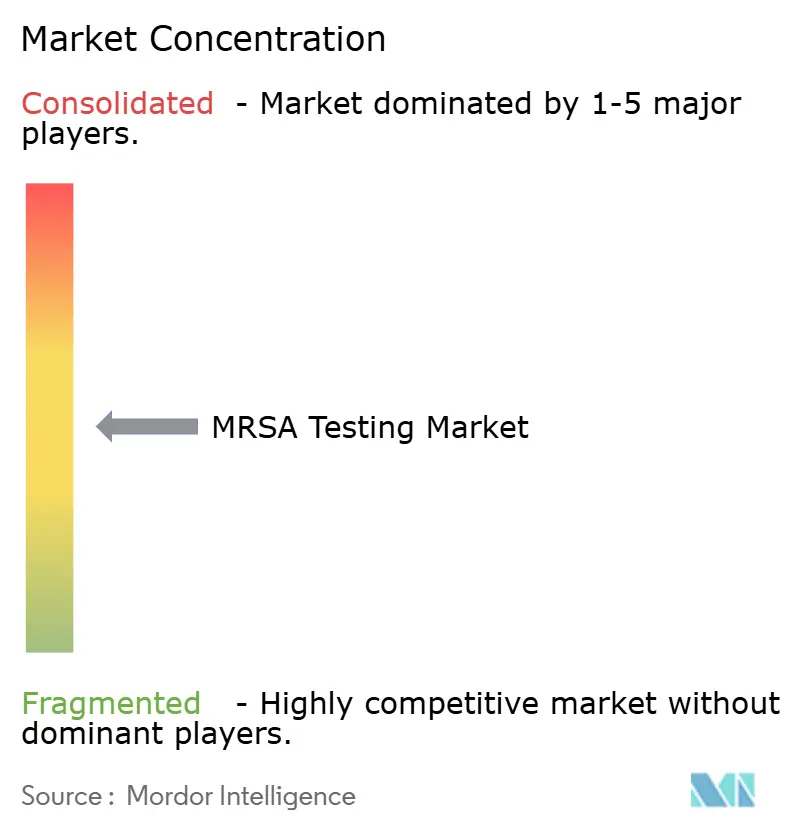
The MRSA testing market is moderately consolidated around global diagnostics platforms. bioMérieux, Becton Dickinson, and F. Hoffmann-La Roche hold strong positions in molecular testing, identification, and antimicrobial susceptibility testing systems. Competition centers on installed instruments, assay menus, regulatory clearances, and data workflow capabilities. Companies are expanding screening, blood-culture, and skin and soft tissue infection applications across existing systems, increasing platform value without requiring hospitals to procure new instruments. This approach also helps laboratories standardize operations using familiar hardware. Established suppliers benefit from regulatory validation requirements and broad installed bases, although laboratories continue to compare time to result, automation, software integration, and assay consumables costs.
Becton Dickinson expanded its microbiology offering through the April 2025 FDA clearance of the BD Phoenix M50 and BDXpert System. The system integrated automated identification and rule-based antimicrobial susceptibility interpretation within the BD Synapsys Informatics Solution. This development highlights the growing role of software in laboratory platform competition by connecting analytical results with standardized interpretation processes in a single workflow. In November 2025, BD also received FDA 510(k) clearance and CE-IVDR certification for Enteric Bacterial Panels on its BD COR System. The platform could process nearly 1,650 tests and report up to 1,000 sample results every 24 hours. Its barcode-driven traceability and remote management capabilities also demonstrate how automation investments can extend across diagnostic workflows.
New entrants are targeting the gap between rapid lateral-flow assays and capital-intensive cartridge PCR systems through CRISPR-based tests and nanopore sequencing, which support molecular-level testing, real-time resistance profiling, and outbreak investigation. Opportunities remain in testing people who inject drugs, veterinary and livestock surveillance, and lower-complexity systems for community hospitals in the Asia-Pacific, where cost-effective workflows and practical data management are essential. While the MRSA testing industry continues to favor established suppliers, application-specific products can create opportunities for specialized developers; however, smaller companies require strong clinical validation and a clear regulatory approval pathway, as FDA 510(k) and CE-IVDR requirements remain significant barriers to entry.
MRSA Testing Industry Leaders
Becton, Dickinson and Company
bioMérieux SA
Thermo Fisher Scientific Inc.
F. Hoffmann-La Roche Ltd
Bio-Rad Laboratories, Inc.
- *Disclaimer: Major Players sorted in no particular order

Recent Industry Developments
- May 2026: Seegene launched the Allplex MRSA Assay in Europe, a CE-marked IVDR-compliant test for detecting methicillin-resistant Staphylococcus aureus and multidrug-resistant organisms associated with healthcare-associated infections.
- November 2025: BD received FDA 510(k) clearance and CE-IVDR certification for its Enteric Bacterial Panel and Enteric Bacterial Panel Plus on the BD COR System, supporting high-throughput molecular testing with traceability and remote management.
- August 2025: Becton, Dickinson and Company received FDA 510(k) clearance (K251713) for the BD Phoenix Automated Microbiology System, enabling algorithm updates for identification and susceptibility testing without full resubmissions.


Global MRSA Testing Market Report Scope
As per the scope of the report, MRSA testing is a specialized diagnostic tool used to detect the presence of Methicillin-Resistant Staphylococcus aureus, a resilient strain of staph bacteria that has developed resistance to standard antibiotics like penicillin and amoxicillin.
The MRSA testing market is segmented by test type, product type, end user, and geography. By test type, the market is segmented into molecular diagnostic tests, immunodiagnostic tests, culture-based tests, and others. By product type, the market includes instruments and reagents and kits. By end user, the market is segmented into hospitals and clinics, diagnostic and pathology laboratories, academic and research institutes, pharmaceutical and contract research laboratories, and others. By geography, the market is analyzed across North America, Europe, Asia-Pacific, the Middle East and Africa, and South America. The report also covers the estimated market sizes and trends for 17 countries across major regions globally. The report offers market sizes and forecasts in terms of value (USD) for the above segments.
| Molecular Diagnostic Tests |
| Immunodiagnostic Tests |
| Culture-Based Tests |
| Others |
| Instruments |
| Reagents and Kits |
| Hospitals and Clinics |
| Diagnostic and Pathology Laboratories |
| Academic and Research Institutes |
| Pharmaceutical and Contract Research Laboratories |
| Others |
| North America | United States |
| Canada | |
| Mexico | |
| Europe | Germany |
| United Kingdom | |
| France | |
| Italy | |
| Spain | |
| Rest of Europe | |
| Asia-Pacific | China |
| India | |
| Japan | |
| Australia | |
| South Korea | |
| Rest of Asia-Pacific | |
| Middle East and Africa | GCC |
| South Africa | |
| Rest of Middle East and Africa | |
| South America | Brazil |
| Argentina | |
| Rest of South America |
| By Test Type | Molecular Diagnostic Tests | |
| Immunodiagnostic Tests | ||
| Culture-Based Tests | ||
| Others | ||
| By Product Type | Instruments | |
| Reagents and Kits | ||
| By End User | Hospitals and Clinics | |
| Diagnostic and Pathology Laboratories | ||
| Academic and Research Institutes | ||
| Pharmaceutical and Contract Research Laboratories | ||
| Others | ||
| By Geography | North America | United States |
| Canada | ||
| Mexico | ||
| Europe | Germany | |
| United Kingdom | ||
| France | ||
| Italy | ||
| Spain | ||
| Rest of Europe | ||
| Asia-Pacific | China | |
| India | ||
| Japan | ||
| Australia | ||
| South Korea | ||
| Rest of Asia-Pacific | ||
| Middle East and Africa | GCC | |
| South Africa | ||
| Rest of Middle East and Africa | ||
| South America | Brazil | |
| Argentina | ||
| Rest of South America | ||


Key Questions Answered in the Report
What is driving demand for MRSA testing?
Active surveillance, rapid infection-control decisions, antibiotic stewardship, and increased use of molecular automation are supporting demand.
How large is the MRSA testing sector in 2026?
It is valued at USD 3.99 billion in 2026 and is projected to reach USD 5.39 billion by 2031 at a 6.20% CAGR.
Which MRSA test type leads to revenue?
Molecular Diagnostic Tests led with 48.96% revenue share in 2025, while Immunodiagnostic Tests are forecast to grow fastest at 7.32% CAGR.
Which end users account for most MRSA testing revenue?
Hospitals and Clinics held 61.45% of revenue in 2025 because they conduct surveillance, preoperative screening, and testing for high-acuity patients.
Which region is growing fastest for MRSA diagnostics?
Asia-Pacific is forecast to grow at a 9.89% CAGR from 2026 to 2031, supported by expanding hospital capacity and infection-control investment.
What limits adoption of molecular MRSA tests?
Higher per-test costs, capital requirements, confirmation needs, and inconsistent reimbursement can limit adoption in cost-sensitive settings.
Page last updated on:





