
MRI-guided Radiation Therapy Systems Market Size and Share
Market Overview
| Study Period | 2020 - 2031 |
|---|---|
| Market Size (2026) | USD 0.95 Billion |
| Market Size (2031) | USD 1.72 Billion |
| Growth Rate (2026 - 2031) | 12.52 % |
| Fastest Growing Market | Asia-Pacific |
| Largest Market | North America |
| Market Concentration | High |
Major Players *Disclaimer: Major Players sorted in no particular order Image © Mordor Intelligence. Reuse requires attribution under CC BY 4.0. | |
MRI-guided Radiation Therapy Systems Market Analysis by Mordor Intelligence
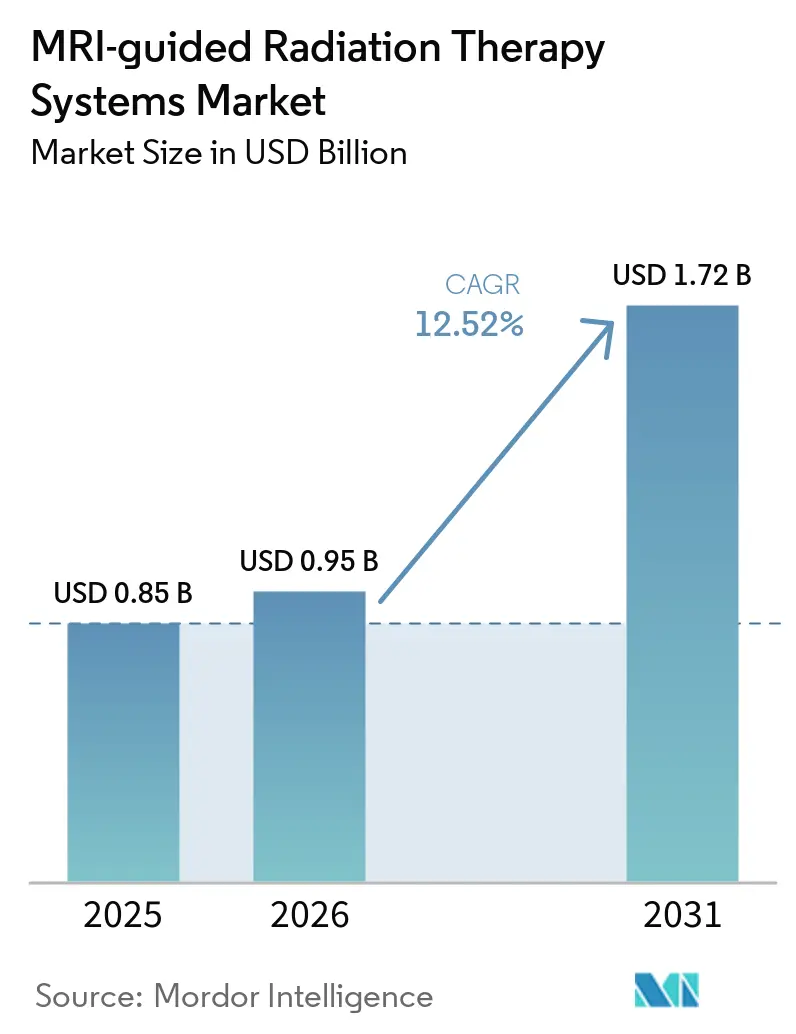
The MRI-guided Radiation Therapy Systems Market size was valued at USD 0.85 billion in 2025 and is estimated to grow from USD 0.95 billion in 2026 to reach USD 1.72 billion by 2031, at a CAGR of 12.52% during the forecast period (2026-2031).
Rising cancer incidence is increasing demand for precise treatment, particularly where conventional CT-guided imaging has limited soft-tissue visualization. The World Health Organization projects annual cancer cases to reach 35 million by 2050, compared with 20.6 million new cases reported in 2024, driving the need for expanded radiotherapy capacity. The MRI-guided radiation therapy systems market is supported by demand for organ-sparing treatment, real-time tumor motion management, and workflow efficiency. However, high equipment costs, reimbursement gaps, long treatment sessions, and limited specialist staffing continue to constrain adoption beyond well-funded oncology programs.
Key Report Takeaways
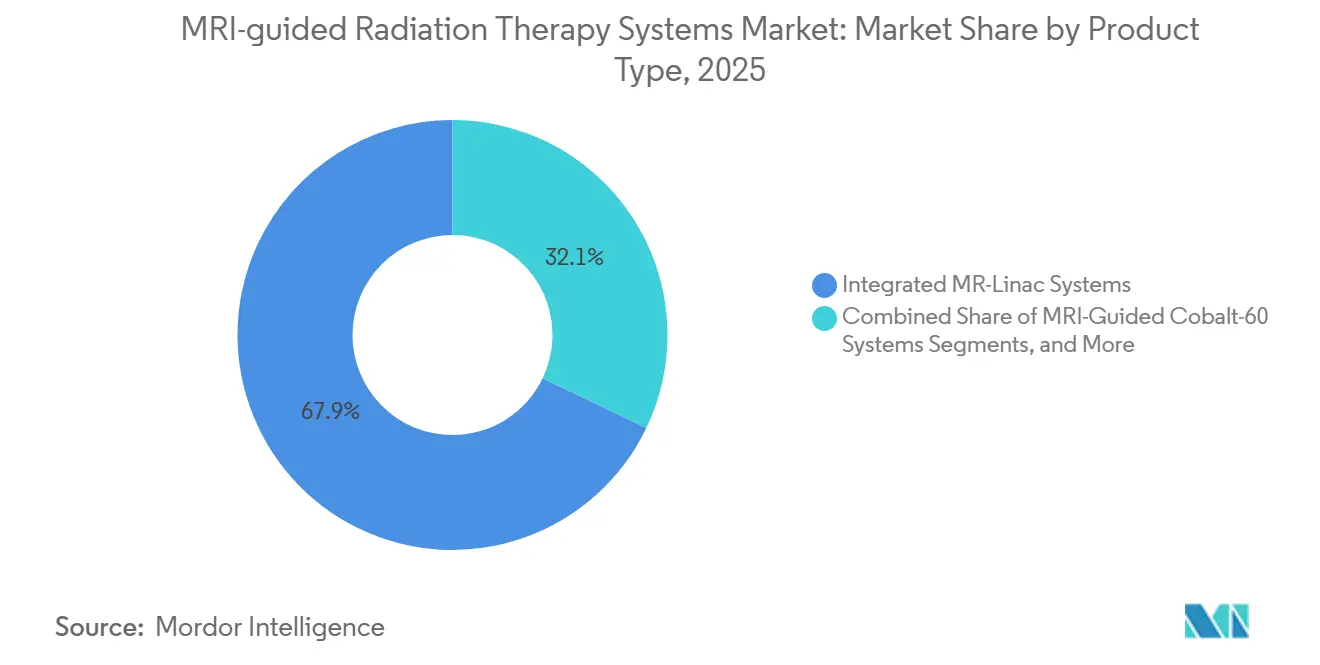
- By product type, integrated MR-Linac systems held 67.88% of the MRI-guided radiation therapy systems market share in 2025 and are projected to grow at a 16.39% CAGR through 2031.
- By MRI field strength, 1.5 Tesla systems held 55.45% of the MRI-guided radiation therapy systems market share in 2025, while 0.3 Tesla to 0.5 Tesla systems are projected to grow at a 15.34% CAGR through 2031.
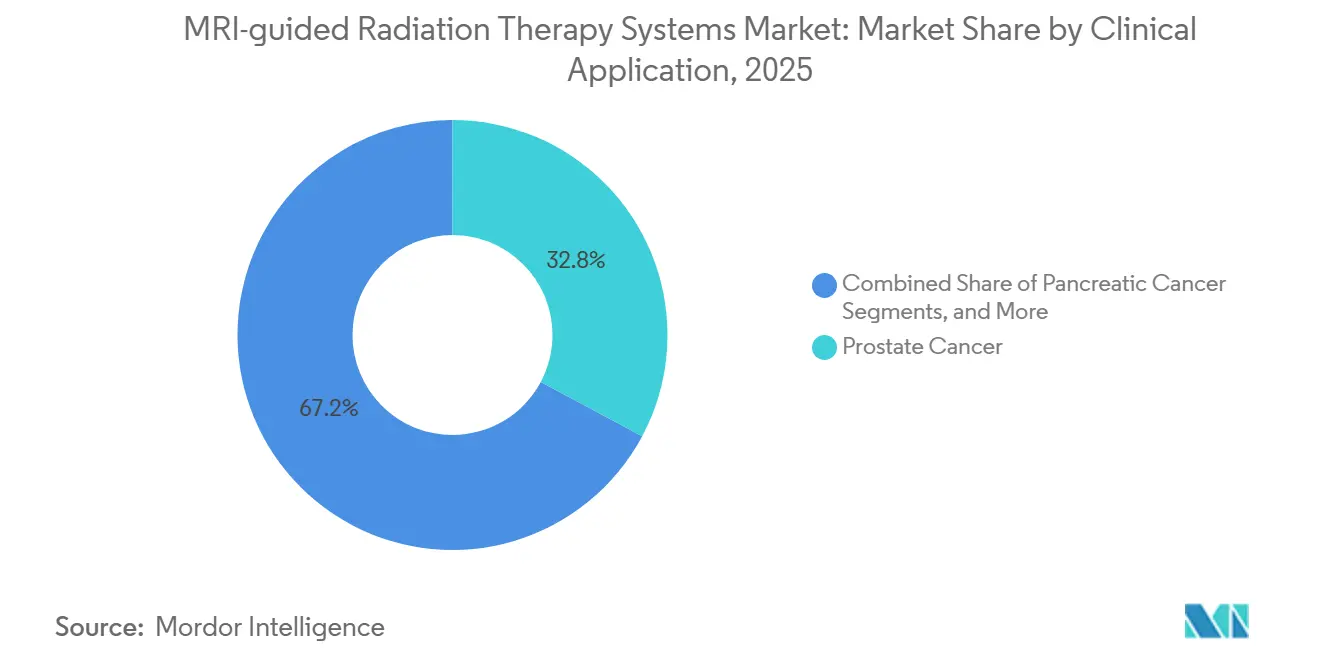
- By clinical application, prostate cancer accounted for 32.80% of the MRI-guided radiation therapy systems market share in 2025, while lung cancer is projected to advance at a 15.88% CAGR through 2031.
- By end user, hospitals held 64.38% of the MRI-guided radiation therapy systems market share in 2025, while dedicated cancer centers are projected to grow at a 16.78% CAGR through 2031.
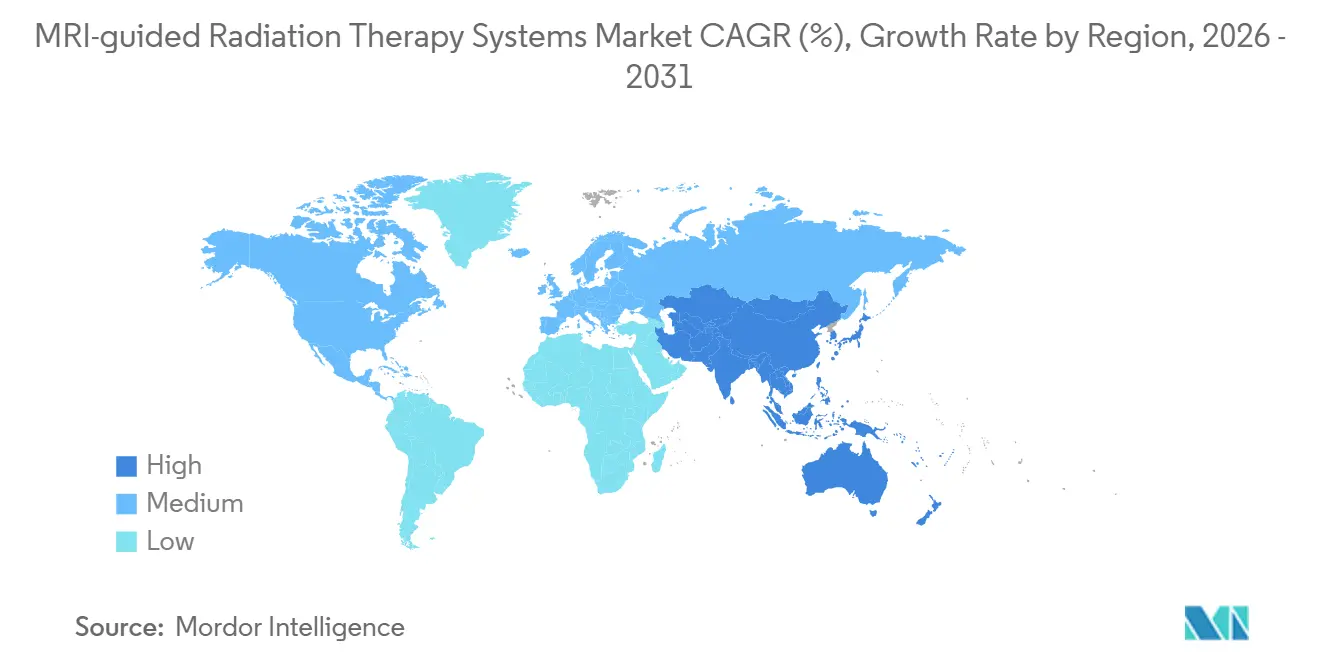
- By geography, North America held 42.80% revenue share in 2025, while Asia-Pacific is projected to grow at 14.56% CAGR through 2031.
Note: Market size and forecast figures in this report are generated using Mordor Intelligence’s proprietary estimation framework, updated with the latest available data and insights as of January 2026.
Global MRI-guided Radiation Therapy Systems Market Trends and Insights
Drivers Impact Analysis*
| DRIVER | (~) % IMPACT ON CAGR FORECAST | GEOGRAPHIC RELEVANCE | IMPACT TIMELINE |
|---|---|---|---|
| Rising cancer incidence and radiotherapy demand | +3.2% | Global, with acute pressure in Asia-Pacific and South America | Long term (≥ 4 years) |
| Superior soft-tissue visualization for motion-sensitive tumors | +2.5% | North America and Europe, with expansion into Asia-Pacific core markets | Medium term (2-4 years) |
| Online adaptive and motion-gated radiotherapy adoption | +2.8% | Global, with the fastest uptake in North America and Western Europe | Medium term (2-4 years) |
| Hypofractionation and stereotactic body radiation therapy expansion | +1.8% | North America, Europe, Japan, and Australia | Medium term (2-4 years) |
| Ai-assisted contouring and synthetic CT integration | +2.1% | Global, with faster adoption in Western Europe through CE-mark approvals | Short term (≤ 2 years) |
| High-value pancreatic, liver, and lung cancer applications | +2% | North America, the EU, and Asia-Pacific core markets | Long term (≥ 4 years) |
| Source: Mordor Intelligence | |||
Rising Cancer Incidence and Radiotherapy Treatment Demand
Rising cancer incidence is expanding the patient population requiring radiotherapy across established and developing healthcare systems. The World Health Organization reported 20.6 million new cancer cases in 2024 and projects 35 million cases annually by 2050. This trend supports demand in the MRI-guided radiation therapy systems market, particularly for prostate, pancreatic, liver, and thoracic tumors that require precise soft-tissue and adjacent-organ visualization.[1]World Health Organization, “Global Status Report on Cancer 2026: The Future We Choose Together,” World Health Organization, who.int. MRI-guided treatment supports smaller margins and adaptive radiotherapy workflows by addressing organ-motion uncertainty in conventional CT-guided planning; a 2026 review reported advantages in target localization, organ-motion management, and dosimetric control.
Adoption of Online Adaptive and Motion-Gated Radiotherapy
Online adaptive treatment is gaining traction as it enables treatment plans to respond to anatomical changes on the day of care. The MOMENTUM registry enrolled 630 patients across 12 centers in North America and Europe under NCT04075305. At the 2025 ASTRO Annual Meeting, patients receiving daily adaptive recontouring reported lower urinary symptom scores than those receiving non-adaptive MR-guided treatment: 2.2 versus 7.7 at 3 months, 3.0 versus 6.6 at 6 months, and 2.8 versus 8.8 at 12 months.[2]Ablative Stereotactic Magnetic Resonance-Guided Radiotherapy for Locally Advanced Pancreatic Cancer,” Cancers, mdpi.com. A 2026 prospective phase II study reported 87.4% 2-year biochemical and clinical progression-free survival, zero late grade ≥2 toxicities, and 100% in-field control across prostate, pelvic nodal, and oligometastatic lesions, supporting procurement decisions beyond research-focused use.[3]“MR-Guided Online Adaptive Stereotactic Body Radiotherapy for Inoperable Pancreatic Cancer,” Radiation Oncology, springer.com.
AI-Assisted Contouring and Synthetic CT Workflows
Artificial intelligence is reducing the time required for contouring and dose recalculation during adaptive treatment. Siemens Healthineers received the CE mark for AI contouring capabilities integrated with Eclipse at ESTRO 2026, covering more than 200 predefined structures from CT and MR images, including organs at risk, lymph nodes, and brain metastases. Synthetic CT generation supports MR-only planning by producing dose-calculation data from MRI images. A 2026 clinical validation on a 1.5 Tesla MR-Linac reported mean target-dose errors below 1% versus CT-based plans and gamma passing rates above 95% under 2 mm and 2% criteria at all sites except the thorax, helping shorten simulation-to-treatment timelines and reduce radiation exposure from positioning scans.
Expansion of High-Value Applications in Pancreatic, Liver, and Lung Cancers
Pancreatic, liver, and lung cancers require advanced treatment capabilities because tumors can move and may be located near sensitive organs. The MRI-guided radiation therapy systems market addresses these requirements through real-time imaging, adaptive planning, and motion management during beam delivery. A 2025 multi-institutional comparison found a 6.5% 2-year local failure rate for ablative stereotactic MR-guided radiotherapy in locally advanced pancreatic cancer, compared with 32.9% for CT-guided moderately hypofractionated treatment; late grade ≥3 toxicity was 2.2% and 9.2%, respectively.[4]“Treatment Time in MRI-Guided Radiotherapy,” Frontiers in Oncology, frontiersin.org. A prospective 2025 study reported 80.2% local control at both 6 months and 1 year for inoperable pancreatic cancer treated with MR-guided online adaptive SBRT, while 97% of patients reported pain relief at 3 months; real-time tumor tracking and predictive gating for central lung tumors are also expanding treatment eligibility on 1.5 Tesla systems.[5]“Comparison of MR-Linac Platforms Under MIRAGE and SMART Protocols,” Cancers, mdpi.com.
Restraints Impact Analysis*
| RESTRAINT | (~) % IMPACT ON CAGR FORECAST | GEOGRAPHIC RELEVANCE | IMPACT TIMELINE |
|---|---|---|---|
| High capital, installation, and maintenance costs | -1.5% | Global, with the greatest effect in lower-middle-income Asia-Pacific countries, South America, and the Middle East and Africa | Long term (≥ 4 years) |
| Long treatment times and lower patient throughput | -0.8% | Global, with the strongest effect at high-volume centers in North America and Europe | Medium term (2-4 years) |
| Specialized physics and clinical workforce requirements | -0.6% | Asia-Pacific, the Middle East and Africa, and South America | Long term (≥ 4 years) |
| Limited reimbursement and incomplete comparative evidence | -0.9% | North America and the EU, where payer decisions guide institutional adoption | Medium term (2-4 years) |
| Source: Mordor Intelligence | |||
High Capital, Installation and Maintenance Costs
MR-Linac deployment requires significant capital investment in shielding, specialized infrastructure, commissioning, and ongoing service support. These requirements create challenges for smaller hospitals and health systems with limited medical physics resources. MagnetTx designed Aurora-RT with a cryogen-free 0.5 Tesla superconducting magnet and rotating gantry, eliminating liquid-helium refill requirements. Siemens Healthineers offers the 0.55 Tesla MAGNETOM Free.Max RT Pro Edition, featuring a 165 cm system length and a quench-pipe-free design for facilities with infrastructure constraints. However, equipment selection, regulatory compliance, quality assurance, and workforce capacity continue to complicate procurement.
Limited Reimbursement and Incomplete Comparative Clinical Evidence
Reimbursement remains a key constraint, as many payer systems have not established separate payment pathways for adaptive MR-guided treatment. Payers in the United States, Germany, and the United Kingdom often require randomized evidence against best-practice conventional image-guided radiotherapy. The MIRAGE trial reported lower acute grade 2 or higher urinary toxicity with MRI-guided prostate SBRT than with CT-guided treatment, at 24% versus 70%, along with lower gastrointestinal toxicity. However, inconsistent reimbursement differentiation continues to require institutions to rely on research funding, subsidies, or high-volume treatment commitments.
*Our forecasts treat driver/restraint impacts as directional, not additive. The impact forecasts reflect baseline growth, mix effects, and variable interactions.
Segment Analysis
By Product Type: Integrated MR-Linac Systems Hold the Leading Position
Integrated MR-Linac systems accounted for 67.88% of the MRI-guided radiation therapy systems market share in 2025 and are projected to grow at a 16.39% CAGR through 2031. These systems combine MRI and a linear accelerator within a single treatment platform, supporting real-time visualization during beam delivery for targets affected by anatomical changes or motion. Full integration provides greater clinical control than workflows using separately located imaging and treatment systems. Elekta Unity remains the commercially established 1.5 Tesla integrated platform with the broadest cited multicenter clinical evidence base.
A 2025 dosimetric comparison of 20 MRIdian clinical cases recreated on Unity found comparable plan quality across the platforms. Unity showed modest reductions in rectal V36-40Gy for prostate cases and mean liver dose for pancreatic cases. These results support the continued use of integrated systems for complex disease sites.



By MRI Field Strength: High-Field Systems Lead While Low-Field Systems Expand Access
The 1.5 Tesla segment held 55.45% of the MRI-guided radiation therapy systems market share in 2025. Its leadership reflects the superior soft-tissue imaging quality available at higher magnetic field strengths. High-field systems have developed a substantial clinical evidence base through prostate registries, glioma research, and emerging lung-treatment studies. The UNITED glioma trial was published in The Lancet Oncology in 2026.
Systems in the 0.3 Tesla to 0.5 Tesla range are forecast to grow at a 15.34% CAGR through 2031. Their growth reflects lower infrastructure requirements, simpler siting, and designs that manage the electron return effect. ViewRay MRIdian uses a 0.35 Tesla split MRI configuration with the beam perpendicular to the magnetic field. MagnetTx Aurora-RT uses a 0.5 Tesla rotating biplanar magnet with the beam parallel to the field, avoiding the electron return effect without beam-modeling corrections. Siemens Healthineers offers the 0.55 Tesla MAGNETOM Free. Max RT Pro Edition is an MR-simulation system that can be installed near existing treatment rooms. These architectures provide oncology providers with multiple pathways to MRI-enabled radiotherapy. Lower-field systems can be relevant in India, China, and other Asia-Pacific markets where a 1.5 Tesla installation may be difficult to support.
By Clinical Application: Prostate Cancer Leads Revenue and Lung Cancer Grows Fastest
Prostate cancer held 32.80% of the MRI-guided radiation therapy systems market share in 2025—the application benefits from the need to protect the bladder, rectum, and neurovascular structures during treatment. Long-standing evidence has linked treatment precision with genitourinary outcomes for patients with prostate cancer. The ERECT sub-study of the MOMENTUM consortium reported lower patient-reported erectile dysfunction with neurovascular-sparing MR-guided radiotherapy.
Lung cancer is projected to grow at a 15.88% CAGR through 2031, driven by advances in respiratory gating and real-time tumor tracking for thoracic treatment. A 2026 review found that diffusion-weighted imaging and cine-MRI ventilation mapping on 0.35 Tesla and 1.5 Tesla systems showed feasibility for biological response-adaptive treatment of lung tumors. The MRI-guided radiation therapy systems industry can benefit if these workflows become more routine for moving thoracic targets.
By End User: Hospitals Lead Current Demand and Cancer Centers Expand Rapidly
Hospitals held 64.38% of the MRI-guided radiation therapy systems market share in 2025. Hospital campuses can better accommodate the shielding, power requirements, and infrastructure associated with existing 1.5 Tesla installations. They also support broad oncology case mixes, including prostate, pancreatic, liver, lung, and other disease sites. This patient base can help justify the operating costs of a dedicated MR-Linac program.
Dedicated cancer centers are forecast to expand at a 16.78% CAGR through 2031. These centers can use MR-Linac capacity to differentiate their precision radiotherapy offerings from conventional linac services. Their oncology focus enables specialized teams to align equipment utilization with selected prostate, pancreatic, and thoracic patient groups. Cancer networks in Asia-Pacific and the Gulf are expanding alongside broader investment in oncology services.
Geography Analysis
North America held 42.80% of the MRI-guided radiation therapy systems market share in 2025. The region benefits from National Cancer Institute-designated cancer centers, established radiation physics training programs, and reimbursement advocacy for adaptive radiotherapy. The United States accounts for a significant installed base, with clinical programs at Moffitt Cancer Center, Washington University, and UCLA, while Elekta signed a collaboration agreement with Moffitt Cancer Center in February 2025. Canada contributes through MagnetTx Oncology Solutions and the Northern Lights Clinical Consortium; however, reimbursement and treatment throughput remain key barriers to broader deployment.
Europe is the second-largest region in the MRI-guided radiation therapy systems market. Medical centers across Germany, the Netherlands, the United Kingdom, France, and Spain support multicenter registries and clinical validation. Institut Curie activated an Elekta Unity MR-Linac at its Saint-Cloud site in March 2025, supported by EUR 10 million (USD 11.61 million) in institutional and government funding. Siemens Healthineers received CE marking for Eclipse AI contouring integration at ESTRO 2026, while health technology assessment and tariff decisions in Germany and the United Kingdom will influence broader adoption.
Asia-Pacific is projected to grow at a CAGR of 14.56% through 2031, driven by rising cancer burden, public oncology infrastructure investment, and expanding cancer-center networks. India introduced its first Elekta Unity MR-Linac with Comprehensive Motion Management at Yashoda Medicity in Hyderabad in 2025, while China initiated institutional procurement, including a single-source tender by Ruijin Hospital affiliated with Shanghai Jiao Tong University School of Medicine. Japan began clinical treatment with a 1.5 Tesla MR-Linac in December 2021, although adoption remains concentrated around Kanto cancer centers. South Korea, Australia, the Middle East and Africa, and South America represent additional demand areas, with Brazil leading oncology-capacity investment in South America; infrastructure and workforce limitations will influence adoption.

Competitive Landscape
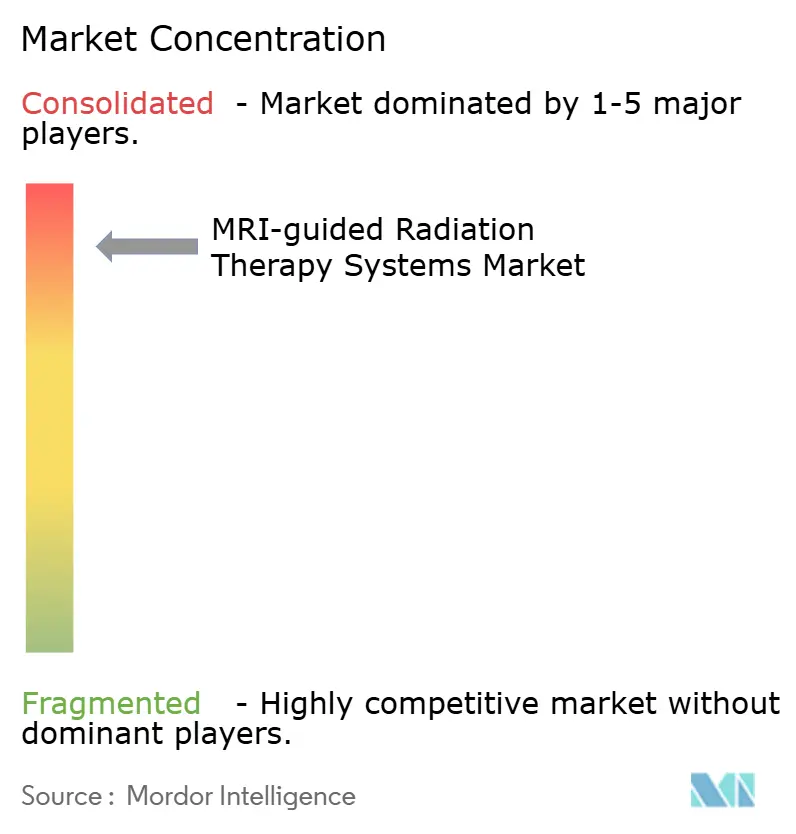
The MRI-guided radiation therapy systems market is highly concentrated due to the technical complexity of integrating MRI, high-energy linear accelerators, planning software, and regulatory compliance. Elekta holds a leading commercial position through its Unity 1.5 Tesla MR-Linac platform, the only commercially established high-field integrated system with a broad multicenter clinical evidence base. The MR-Linac Consortium includes more than 50 institutions and has supported the MOMENTUM, DESTINATION-MRL, and HERMES datasets. Elekta’s February 2025 collaboration with Moffitt Cancer Center reflects its strategy to position Unity within large clinical programs.
ViewRay continues to operate its 0.35 Tesla MRIdian Linac fleet and supports research activities, including the LAP-ABLATE Phase III pancreatic cancer trial. Linac-based systems have largely superseded their earlier cobalt-60 configurations, although the installed base remains relevant for service and research. Siemens Healthineers participates through MRI-for-radiotherapy hardware and adaptive planning software, including Ethos, Eclipse, MAGNETOM Flow RT Pro Edition, and MAGNETOM Free.Max RT Pro Edition. In 2026, the company advanced AI contouring capabilities for Eclipse, covering more than 200 predefined CT and MR structures.
MagnetTx Oncology Solutions competes with Aurora-RT, a 0.5 Tesla system featuring a rotating biplanar magnet architecture. Its beam operates parallel to the magnetic field, a design intended to eliminate the electron return effect without beam-modeling corrections. The FDA 510(k) submission summary outlines the Aurora-RT platform and its technical pathway. A 2025 study reported that AI-driven online adaptive radiotherapy for prostate cancer achieved a median treatment time of 25 minutes and improved PTV V95 target coverage by 10.4%, strengthening the business case for sub-30-minute workflows at high-volume centers.
MRI-guided Radiation Therapy Systems Industry Leaders
Elekta AB
MagnetTx Oncology Solutions
ViewRay Technologies, Inc.
Siemens Healthineers AG (Varian Medical Systems, Inc.)
Koninklijke Philips N.V
- *Disclaimer: Major Players sorted in no particular order

Recent Industry Developments
- May 2026: Siemens Healthineers' Varian unit received CE marking for AI-enabled contouring capabilities in the Eclipse treatment planning system, supporting the automated delineation of over 200 CT- and MRI-based structures.
- March 2026: Varian TrueBeam systems received FDA 510(k) clearance for low-dose radiation therapy in adults with medically refractory osteoarthritis, expanding approved applications beyond oncology.
- October 2025: ViewRay Systems received USPTO Patent No. 12,453,869 for diagnosis-driven MR-guided radiotherapy workflows, including site-specific imaging, planning, and delivery parameters for adaptive treatment standardization.
- May 2025: Elekta presented preliminary ERECT trial results at ESTRO 2025, showing that neurovascular-sparing MR-guided radiotherapy reduced patient-reported erectile dysfunction among men with intermediate-risk prostate cancer.


Global MRI-guided Radiation Therapy Systems Market Report Scope
As per the scope of the report, MRI-Guided Radiation Therapy (MRIgRT) systems are advanced cancer treatment machines that combine a magnetic resonance imaging (MRI) scanner with a radiation therapy delivery system (like a linear accelerator).
The MRI-guided radiation therapy systems market is segmented by product type, MRI field strength, clinical application, end user, and geography. By product type, the market includes integrated MR-Linac systems, MRI-guided Cobalt-60 systems, and MRI-guided linear accelerator systems. By MRI field strength, the market is segmented into 0.3 Tesla to 0.5 Tesla systems and 1.5 Tesla systems. By clinical application, the market is categorized into prostate cancer, pancreatic cancer, liver cancer and liver metastases, lung cancer, breast cancer, and others. By end user, the market is segmented into hospitals, academic medical centers, dedicated cancer centers, and others. By geography, the market is analyzed across North America, Europe, Asia-Pacific, the Middle East and Africa, and South America. The report also covers the estimated market sizes and trends for 17 countries across major regions globally. The report offers market sizes and forecasts in terms of value (USD) for the above segments.
| Integrated MR-Linac Systems |
| MRI-Guided Cobalt-60 Systems |
| MRI-Guided Linear Accelerator Systems |
| 0.3 Tesla to 0.5 Tesla Systems |
| 1.5 Tesla Systems |
| Prostate Cancer |
| Pancreatic Cancer |
| Liver Cancer and Liver Metastases |
| Lung Cancer |
| Breast Cancer |
| Others |
| Hospitals |
| Academic Medical Centers |
| Dedicated Cancer Centers |
| Others |
| North America | United States |
| Canada | |
| Mexico | |
| Europe | Germany |
| United Kingdom | |
| France | |
| Italy | |
| Spain | |
| Rest of Europe | |
| Asia-Pacific | China |
| India | |
| Japan | |
| Australia | |
| South Korea | |
| Rest of Asia-Pacific | |
| Middle East and Africa | GCC |
| South Africa | |
| Rest of Middle East and Africa | |
| South America | Brazil |
| Argentina | |
| Rest of South America |
| By Product Type | Integrated MR-Linac Systems | |
| MRI-Guided Cobalt-60 Systems | ||
| MRI-Guided Linear Accelerator Systems | ||
| By MRI Field Strength | 0.3 Tesla to 0.5 Tesla Systems | |
| 1.5 Tesla Systems | ||
| By Clinical Application | Prostate Cancer | |
| Pancreatic Cancer | ||
| Liver Cancer and Liver Metastases | ||
| Lung Cancer | ||
| Breast Cancer | ||
| Others | ||
| By End User | Hospitals | |
| Academic Medical Centers | ||
| Dedicated Cancer Centers | ||
| Others | ||
| By Geography | North America | United States |
| Canada | ||
| Mexico | ||
| Europe | Germany | |
| United Kingdom | ||
| France | ||
| Italy | ||
| Spain | ||
| Rest of Europe | ||
| Asia-Pacific | China | |
| India | ||
| Japan | ||
| Australia | ||
| South Korea | ||
| Rest of Asia-Pacific | ||
| Middle East and Africa | GCC | |
| South Africa | ||
| Rest of Middle East and Africa | ||
| South America | Brazil | |
| Argentina | ||
| Rest of South America | ||


Key Questions Answered in the Report
What is the 2026 value of MRI-guided radiation therapy systems?
The value is USD 0.95 billion in 2026 and is forecast to reach USD 1.72 billion by 2031 at a 12.52% CAGR.
Which product category leads MRI-guided radiation therapy systems?
Integrated MR-Linac systems led with a 67.88% share in 2025 and are projected to grow at a 16.39% CAGR through 2031.
Why are MR-Linac systems used for cancer treatment?
They provide soft-tissue imaging, motion management, and adaptive planning during treatment, which can be valuable near sensitive organs.
Which cancer application is expanding most quickly?
Lung cancer is projected to grow at a 15.88% CAGR through 2031 as real-time tracking and respiratory-gating workflows develop.
Which end users are adopting these systems most quickly?
Dedicated cancer centers are forecast to grow at a 16.78% CAGR through 2031, while hospitals held 64.38% share in 2025.
What limits wider use of MRI-guided radiotherapy?
High capital costs, lengthy adaptive sessions, reimbursement gaps, and a limited specialized workforce remain key barriers.
Page last updated on:





