
Moyamoya Disease Market Size and Share
Market Overview
| Study Period | 2020 - 2031 |
|---|---|
| Market Size (2026) | USD 1.38 Billion |
| Market Size (2031) | USD 1.8 Billion |
| Growth Rate (2026 - 2031) | 5.45 % |
| Fastest Growing Market | Asia-Pacific |
| Largest Market | North America |
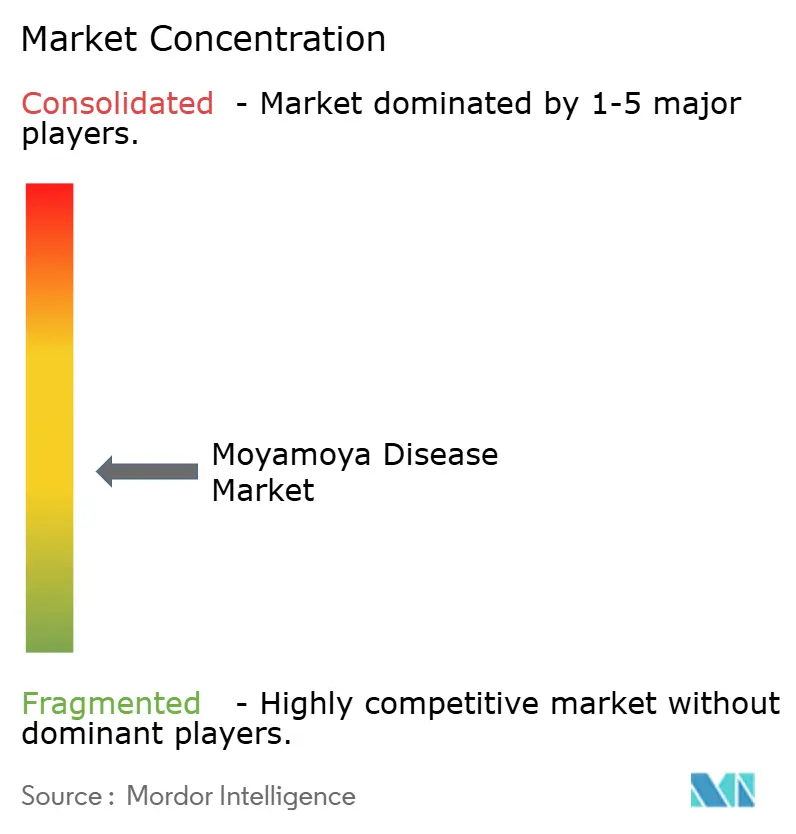
| Market Concentration | Medium |
Major Players *Disclaimer: Major Players sorted in no particular order Image © Mordor Intelligence. Reuse requires attribution under CC BY 4.0. | |
Moyamoya Disease Market Analysis by Mordor Intelligence
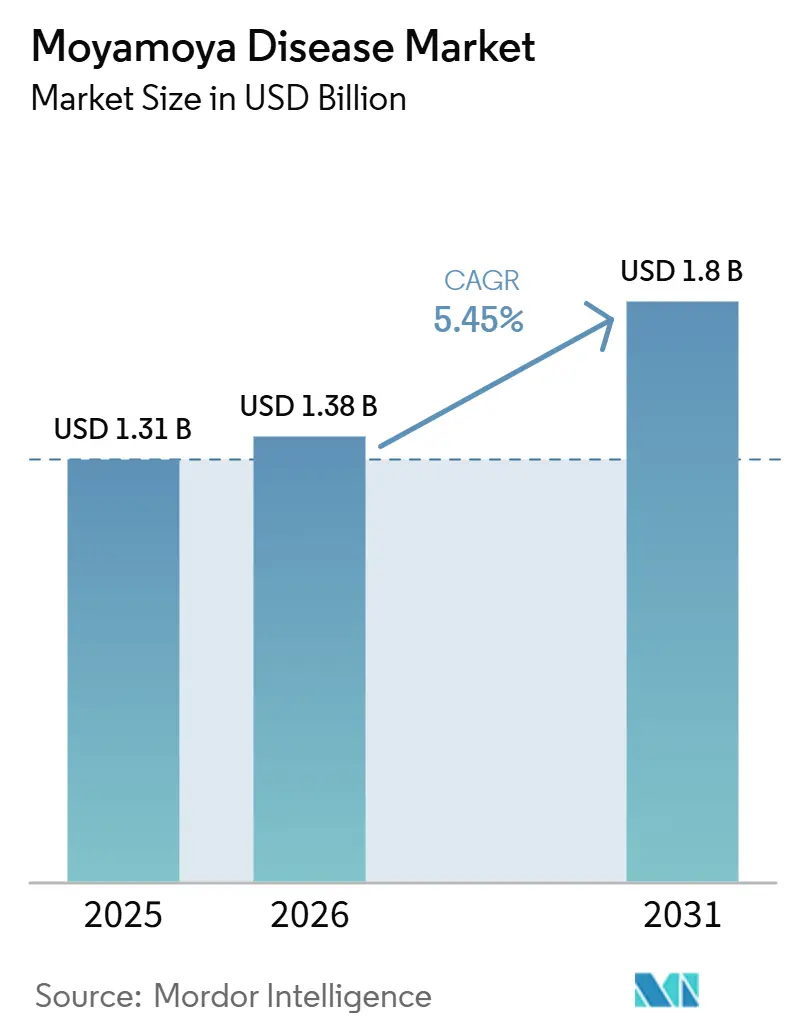
The Moyamoya Disease Market size is projected to expand from USD 1.31 billion in 2025 and USD 1.38 billion in 2026 to USD 1.8 billion by 2031, registering a CAGR of 5.45% between 2026 to 2031.
Advanced neurovascular imaging, greater specialist revascularization capacity, and rare-disease support are bringing more patients into diagnosis and treatment pathways. The Moyamoya disease market remains commercially concentrated at the patient level because surgical care, imaging, and postoperative monitoring can involve substantial spending for each confirmed case. The absence of an FDA-approved disease-modifying therapy keeps revenue closely linked to procedural volumes, imaging use, and related devices. Prior-authorization changes could slow access to revascularization, while genetic risk assessment could broaden earlier identification in selected populations. The Moyamoya disease market is also shaped by the higher disease burden in Asia-Pacific and by the larger per-procedure revenue base in North America.
Key Report Takeaways
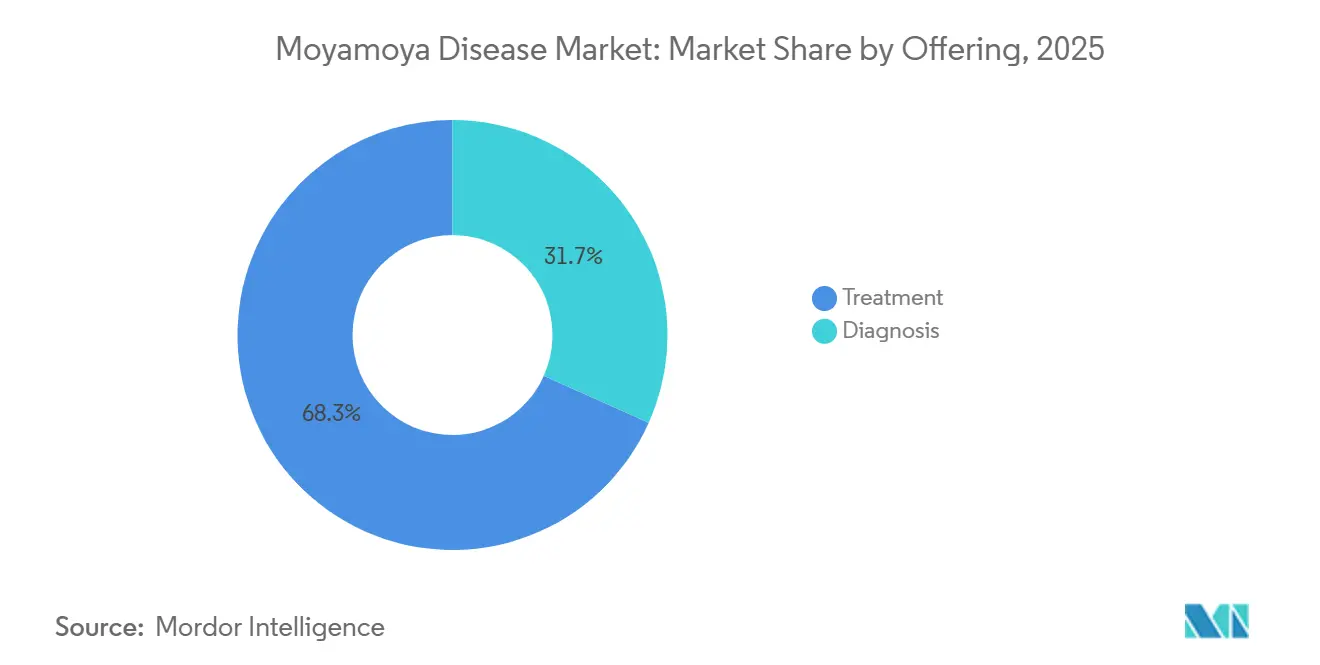
- By offering, treatment held 68.31% of the Moyamoya disease market share in 2025, while diagnosis is forecast to grow at a 6.38% CAGR through 2031.
- By patient demographic, adult patients held 55.44% revenue share in 2025, while pediatric patients are forecast to grow at a 7.52% CAGR through 2031.
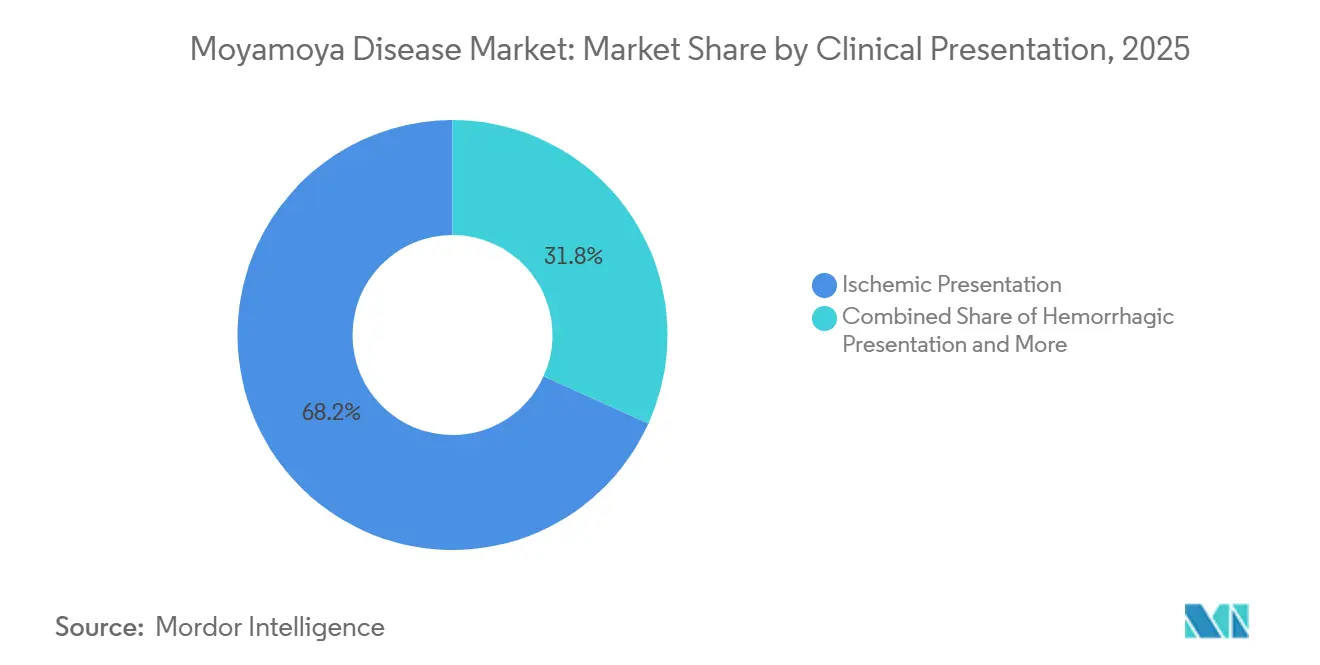
- By clinical presentation, ischemic presentation held 68.24% revenue share in 2025, while hemorrhagic presentation is forecast to grow at a 7.22% CAGR through 2031.
- By end user, hospitals held 51.56% revenue share in 2025, while specialized neurology and neurosurgery centers are forecast to grow at a 7.95% CAGR through 2031.
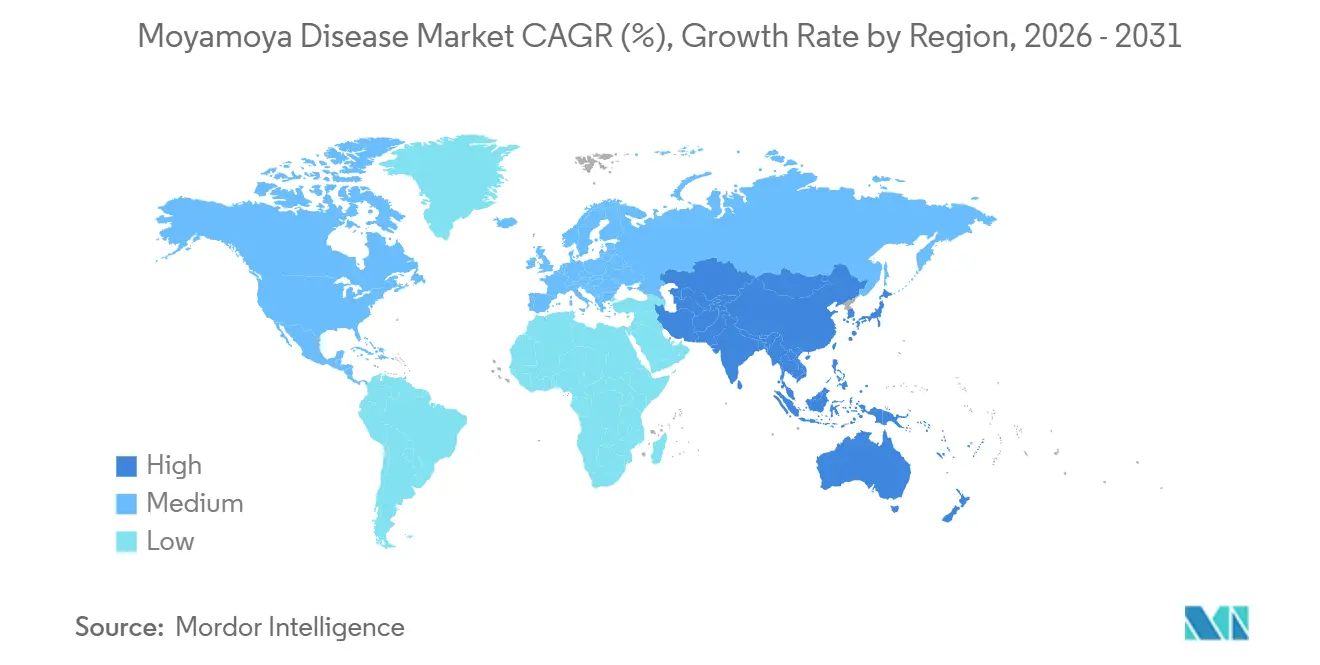
- By geography, North America held 38.61% revenue share in 2025, while Asia-Pacific is forecast to grow at a 7.65% CAGR through 2031.
Note: Market size and forecast figures in this report are generated using Mordor Intelligence’s proprietary estimation framework, updated with the latest available data and insights as of January 2026.
Market Trends and Insights
Drivers Impact Analysis of Moyamoya Disease Market*
| Driver | (~) % Impact on CAGR Forecast | Geographic Relevance | Impact Timeline |
|---|---|---|---|
| Rising Diagnosis Through Advanced Neurovascular Imaging | +1.2% | Global, highest in Japan, South Korea, China, and North America | Medium term (2-4 years) |
| Higher Recognition of Pediatric and Adult Stroke Phenotypes | +0.9% | Global, led by North America and Europe with accelerating uptake in Asia-Pacific | Short term (≤ 2 years) |
| Expansion of Specialist Revascularization Capacity | +1.0% | Asia-Pacific core, with spillover to North America and Europe | Medium term (2-4 years) |
| Increasing Rare-Disease Research and Reimbursement Support | +0.8% | North America and Europe, with emerging support in Japan under its designated rare-disease framework | Long term (≥ 4 years) |
| AI-Assisted MRA and Retinal Screening for Case Finding | +0.7% | Global, with early adoption in Japan and the United States | Short term (≤ 2 years) |
| Collateral-Promotion Therapies Creating an Adjunctive Treatment Category | +0.5% | Global, with clinical trial activity concentrated in Japan and China | Long term (≥ 4 years) |
| Source: Mordor Intelligence | |||
Rising Diagnosis Through Advanced Neurovascular Imaging
Imaging quality determines how quickly clinicians can move from suspected symptoms to a confirmed diagnosis in the Moyamoya disease market. GE HealthCare received FDA 510(k) clearance in February 2026 for SIGNA Sprint with Freelium, SIGNA Bolt, and the SIGNA One workflow platform, which can support MRA and perfusion imaging protocols used for moyamoya disease[1]. Philips introduced the BlueSeal Horizon helium-free 3.0T MRI platform in November 2025 with clinical AI capabilities for neuroimaging workflows[2]. These systems can improve vessel visualization, shorten scans, and reduce infrastructure constraints for hospitals that need advanced imaging. Japan’s guidelines allow 1.5T or higher MRA to support bilateral definitive diagnosis, reducing reliance on invasive DSA referrals and increasing MRI use across a broader hospital base. Earlier identification can increase the number of patients assessed for surgery and long-term surveillance. This supports diagnostic activity across the Moyamoya disease market without changing the central role of specialist interpretation. The Moyamoya disease market benefits when high-quality imaging becomes available beyond major referral centers.
Higher Recognition of Pediatric and Adult Stroke Phenotypes
Pediatric moyamoya disease commonly presents with ischemic events, including transient ischemic attacks, infarcts, and cognitive decline, while adult onset is more often hemorrhagic, particularly after age 40. Recognition of this age-related pattern had been limited, which delayed referrals in both populations. China’s 2025 expert consensus and Japan’s 2025 guidelines formalized symptom-based screening pathways that can support earlier evaluation. A 2026 review found that asymptomatic disease still carried a risk of ischemic or hemorrhagic stroke and radiological progression during 2 years of follow-up. Broader surveillance can expand demand for imaging and preventive revascularization in the Moyamoya disease market. It also makes existing diagnosed-case counts less representative of the full population requiring monitoring.
Expansion of Specialist Revascularization Capacity
Treatment outcomes are closely associated with surgical experience and center capability in the Moyamoya disease market. Direct STA-MCA bypass has been associated with an annual adult stroke rate of 1.4%, compared with 5.6% for indirect bypass alone. A 2025 multicenter Chinese study reported that a standardized superficial temporal artery patency concept reduced 5-year stroke recurrence from 31.6% to 11.9%. These findings encourage referrals toward high-volume programs that can perform direct or combined procedures. Each new specialist center can create ongoing demand for diagnosis, surgery, and follow-up imaging. Capacity expansion therefore supports care access and sustained activity across the Moyamoya disease market. The Moyamoya disease market can retain this activity through repeat surveillance after surgery.
AI-Assisted MRA and Retinal Screening for Case Finding
Artificial intelligence is changing the first stage of the diagnostic process in the Moyamoya disease market. A deep-learning model using time-of-flight MRA maximum-intensity projections achieved an AUC of 0.990 and accuracy of 0.933 for automated disease identification ISMRM. A multicenter study using T2-weighted imaging found that a DenseNet model showed stronger sensitivity and specificity than SCNN, LeNet, VGG, and ResNet architectures for detecting moyamoya angiopathy. These methods can support case finding at sites that do not have extensive vascular imaging expertise. Japanese diagnostic imaging literature in 2025 described AI-supported vessel-wall imaging and perfusion analysis as part of the clinical workflow. A 2025 study also found that deep-learning reconstruction on 1.5T MRA could provide vascular visualization comparable to or better than conventional 3T imaging. These advances may reduce field-strength barriers to diagnosis and extend screening capacity.
Restraints Impact Analysis of Moyamoya Disease Market*
| Restraint | (~) % Impact on CAGR Forecast | Geographic Relevance | Impact Timeline |
|---|---|---|---|
| Limited High-Level Evidence and Heterogeneous Treatment Guidelines | -0.6% | Global, most acute in North America and Europe where payer authorization relies on randomized evidence | Long term (≥ 4 years) |
| High Surgical Complexity and Concentration of Expertise | -0.5% | Emerging markets, including the Middle East, Africa, and South America, and smaller European markets | Medium term (2-4 years) |
| Perioperative Ischemia, Hyperperfusion, and Hemorrhagic Risk | -0.4% | Global, highest in high-volume centers managing complex bilateral cases | Short term (≤ 2 years) |
| Delayed Collateral Formation and Uncertain Commercial Path for Disease-Modifying Therapies | -0.3% | Global, with clinical trial activity in Japan and China | Long term (≥ 4 years) |
| Source: Mordor Intelligence | |||
Limited High-Level Evidence and Heterogeneous Treatment Guidelines
Moyamoya disease lacks the randomized controlled trial base that payers often use for standard reimbursement decisions. A multicenter North American retrospective study found symptomatic stroke rates of 11.6% after direct revascularization and 9.6% after indirect revascularization, without a statistically significant difference. The European Stroke Organisation noted that the quality of evidence for surgical decisions is limited compared with other cerebrovascular conditions[3]. In the United States, there is no national or local coverage determination for revascularization, which leaves insurers to apply their own review criteria. This inconsistency can delay treatment and make referral patterns less predictable. It also limits access to adjunctive drugs and weakens incentives for large medical-management trials in the Moyamoya disease market.
High Surgical Complexity and Concentration of Expertise
Moyamoya bypass procedures require specialized neurosurgical skills that remain concentrated in relatively few academic centers. Postoperative hyperperfusion has occurred in 21.5% to 50% of cases, while perioperative ischemic stroke has ranged from 1.6% to 16%. A March 2025 review found lower probabilities of clinical improvement among patients treated within 3 months of their last stroke compared with those treated at 6 months or later. In the Middle East, Africa, and much of South America, the gap between diagnosis and access to a trained bypass surgeon can exclude identified patients from procedural care. The same limitation restricts adoption of intraoperative tools such as FLOW800 indocyanine green angiography and FFR pressure-wire systems. These constraints can limit expansion of the Moyamoya disease market even when diagnostic capacity improves.
*Our forecasts treat driver/restraint impacts as directional, not additive. The impact forecasts reflect baseline growth, mix effects, and variable interactions.
Moyamoya Disease Market Segment Analysis
By Offering:
Treatment Leads Revenue While Diagnosis Grows FasterTreatment held 68.31% of the Moyamoya disease market share in 2025, supported by surgical revascularization as the established approach for symptomatic disease. Direct STA-MCA bypass has high procedural revenue intensity because it requires complex surgical care and supporting imaging. A 2026 cohort study found that modified extracranial-intracranial combined bypass produced stronger functional independence and hemodynamic restoration than indirect bypass in adults with ischemic disease. Medical management includes antiplatelet treatment, such as aspirin and cilostazol, and serves lower-acuity and postoperative populations at lower per-patient revenue. Rehabilitation and supportive care remain relevant for patients who require care for residual neurological or cognitive effects after treatment.
Diagnosis is projected to grow at a 6.38% CAGR from 2026 to 2031, making it the fastest-growing offering. DSA remains the reference test for complex or unilateral cases, while MRA and CT angiography are gaining use as image interpretation improves. SPECT, PET, ASL-MRI, and transcranial Doppler ultrasound support preoperative hemodynamic evaluation and postoperative surveillance. This layered workflow can create repeat imaging demand over extended follow-up periods. Radiation concerns for CTA and DSA, especially in children, are encouraging greater use of MRI-based options. This supports the diagnostic side of the Moyamoya disease industry while preserving DSA for cases that require detailed vascular assessment. The Moyamoya disease market can therefore gain from both advanced and lower-field MRI pathways.
By Patient Demographic:
Adults Anchor Revenue While Pediatric Care ExpandsAdult patients accounted for 55.44% of revenue in 2025. Their position reflects the higher hospitalization intensity of adult disease, including hemorrhagic presentations that are more common after age 40. The adult age distribution peaks between 35 and 39 years in East Asia and in the sixth decade in Western populations. This pattern supports continued adult revenue concentration in the Moyamoya disease market. Pregnant and postpartum patients also require individualized antiplatelet and revascularization planning because of their elevated ischemic risk during gestation. These patients create focused demand at tertiary obstetric-neurology centers.
Pediatric patients are forecast to grow at a 7.52% CAGR from 2026 to 2031. Japan’s 2025 guidelines formalized symptom-based screening for childhood stroke, supporting earlier assessment at first presentation. A 2024 randomized trial reported benefit from remote ischemic conditioning before revascularization in pediatric disease. Earlier intervention extends the duration of imaging and follow-up monitoring for each patient. The others category includes secondary disease associated with sickle cell disease, Down syndrome, and neurofibromatosis type 1. Genetic screening programs that include RNF213 testing can identify some of these populations earlier.
By Clinical Presentation:
Ischemic Care Leads While Hemorrhagic Referrals RiseIschemic presentation held 68.24% of revenue in 2025. Transient ischemic attacks and ischemic strokes are the main initial phenotype globally, especially among children and younger adults. Treatment pathways usually include antiplatelet care followed by elective revascularization after hemodynamic stabilization. This sequence supports a predictable cycle of diagnostic and procedural activity. Seizures and transient ischemic attacks can overlap with wider neurological triage. Cognitive and neurodevelopmental impairment is also increasingly recognized in pediatric care and adds demand for neuropsychological assessment.
Hemorrhagic presentation is projected to grow at a 7.22% CAGR from 2026 to 2031. The Japan Adult Moyamoya Trial showed that bypass surgery reduced rebleeding risk in hemorrhagic patients, which is supporting surgical referrals for this group. A 2026 editorial identified periventricular anastomosis as a key pathological factor in hemorrhagic disease. Preoperative assessment of these fragile collateral vessels through advanced MRI could become a routine workflow element. Combined revascularization reduced 5-year rebleeding from 31.6% to 11.9% in a 2025 multicenter study. This pattern supports demand for surgical instruments, hemostatic devices, and intraoperative imaging in the Moyamoya disease market.

By End User:
Hospitals Hold Volume While Specialist Centers Grow FastestHospitals held 51.56% of end-user revenue in 2025. They remain the main setting for complex revascularization, intensive postoperative monitoring, and acute stroke admissions. Academic medical centers, including Tongji Hospital, Beijing Tiantan Hospital, and Vanderbilt University Medical Center, concentrate clinical volume and influence treatment protocols. Vanderbilt is sponsoring a prospective trial on biomarker-led optimization of surgical outcomes that enrolls 100 patients with a 6-year follow-up period. Diagnostic imaging centers and rehabilitation centers generate smaller but recurring activity through surveillance imaging and postoperative neurological rehabilitation. Their services can continue for months or years after surgery.
Specialized neurology and neurosurgery centers are forecast to grow at a 7.95% CAGR from 2026 to 2031. These centers are investing in dedicated programs, intraoperative imaging tools, and postoperative perfusion imaging suites. FLOW800 indocyanine green video angiography and FFR pressure-wire systems are among the tools used in this setting. Ambulatory surgical centers are entering lower-complexity care, especially for indirect bypass procedures. U.S. stroke-center accreditation standards reinforce specialist center growth by directing complex cerebrovascular cases toward settings that meet defined quality benchmarks. This shift can increase the value of specialized facilities across the Moyamoya disease market.
Geography Analysis
North America Moyamoya Disease Market
North America held 38.61% of revenue in 2025. The region’s position is supported by high per-procedure spending, with average hospitalization costs of USD 133,754 per case reported in the United States. The FY2026 ICD-10-CM designation I67.5 provides a billable code for moyamoya disease, which supports more consistent diagnostic coding. Canada’s universal coverage supports revascularization for qualifying patients through provincial programs. Mexico has more limited public infrastructure, creating a two-tier regional pattern. Vanderbilt’s prospective biomarker study also reflects North America’s role in generating data that can influence care protocols. The Moyamoya disease market in the region benefits from this concentration of clinical and reimbursement infrastructure.
APAC Moyamoya Disease Market
Asia-Pacific is forecast to grow at a 7.65% CAGR from 2026 to 2031 and has the highest disease burden. Japan reported prevalence of 10.5 per 100,000 and South Korea reported 16.1 per 100,000, while China reported 3.92 per 100,000 across a much larger population. Japan’s 2025 guidelines allow MRA-based diagnosis without mandatory DSA in bilateral cases. China’s 2025 expert consensus similarly supports standardized care across its expanding tertiary hospital network. India, South Korea, and Australia can benefit as neurosurgical training and advanced imaging capacity increase. A Korean study found a 1.08% RNF213 p.Arg4810Lys allele frequency in healthy participants, indicating a pool of people who may be identified through systematic screening.
EMEA and South America Moyamoya Disease Market
Europe, the Middle East and Africa, and South America remain the emerging edge of the Moyamoya disease market. The European Stroke Organisation found that disease is likely underdiagnosed outside East Asia, with Western European incidence of 0.047 to 0.086 per 100,000. Germany, France, and the United Kingdom are the main European specialist hubs, while Italy and Spain are developing referral networks. Saudi Arabia and the United Arab Emirates are expanding advanced neurosurgical capacity, and South Africa remains the regional hub for complex cerebrovascular surgery. Limited specialist density continues to constrain scale across much of sub-Saharan Africa and South America. Wipro GE HealthCare launched the SIGNA Prime Elite, an AI-powered MRI system made in India, in January 2026 to expand imaging access in price-sensitive settings.
Competitive Landscape
The Moyamoya disease market is moderately fragmented because no participant controls the full path from diagnostic imaging to treatment. GE HealthCare, Siemens Healthineers, and Koninklijke Philips compete in imaging infrastructure through AI integration, field strength, and ownership costs. Philips launched SmartSpeed Precise with Dual-AI engines in February 2025 and introduced BlueSeal Horizon at RSNA in November 2025, addressing both advanced and access-focused MRI requirements. Medtronic, Stryker, Integra LifeSciences, and Johnson & Johnson compete in neurosurgical instruments, shunts, and visualization tools. Carl Zeiss Meditec and Leica Microsystems serve the surgical microscopy segment, where magnification quality affects anastomosis work. Specialty pharmaceutical activity remains limited because no disease-modifying therapy has FDA approval.
The main competitive approach is to link imaging, procedural tools, and follow-up workflows across the Moyamoya disease market. GE HealthCare’s February 2026 FDA clearances broadened its MRI portfolio for neurovascular applications. Philips’ 2025 MRI launches show a parallel strategy of combining AI-enabled imaging with lower infrastructure requirements. A separate opportunity exists in pharmacological disease modification, where current options are largely adjunctive rather than curative. iRegene Therapeutics began recruiting for a Phase I study of iPSC-derived exosomes combined with temporal muscle flap surgery at Tongji Hospital in May 2025. Favorable early safety findings could give the company a first-mover position in a therapeutic area with few established products.
MicroVention and Penumbra participate in neurovascular devices, although open bypass remains the established treatment approach. A 2026 study found comparable short-term cerebral perfusion outcomes between endovascular recanalization and direct bypass in a selected group of adults with ischemic disease. This finding may create a role for minimally invasive devices in selected cases. Regulatory pathways for these devices remain undefined for moyamoya disease, which creates both compliance uncertainty and an opportunity for early entrants. Companies that can support surgeon training and integrated imaging workflows will be better placed as specialist centers grow. The Moyamoya disease market will continue to depend on this specialized delivery model. The Moyamoya disease industry therefore remains centered on established device portfolios rather than a single dominant disease-specific therapy.
Moyamoya Disease Industry Leaders
-
Medtronic plc
-
Stryker Corporation
-
Johnson & Johnson
-
Terumo Corporation
-
Siemens Healthineers AG
- *Disclaimer: Major Players sorted in no particular order
Moyamoya Disease Market Companies Covered in this Report
- B. Braun
- Bayer
- Canon
- Carl Zeiss
- Chugai Pharmaceutical
- Fujifilm Healthcare Corporation
- GE HealthCare Technologies Inc.
- Integra LifeSciences
- iRegene Therapeutics Co., Ltd.
- Johnson & Johnson
- KLS Martin Group
- Koninklijke Philips
- Danaher
- Medtronic
- MicroVention
- NeuroVasc Technologies
- Novartis
- Penumbra
- Siemens Healthineers
- Stryker
- Takeda Pharmaceuticals
- Terumo
Recent Industry Developments in Moyamoya Disease Market
- February 2026: GE HealthCare received FDA 510(k) clearance for 3 next-generation SIGNA MRI systems, SIGNA Sprint with Freelium, SIGNA Bolt, and the SIGNA One AI-driven workflow platform. These systems directly upgrade moyamoya MRA and cerebral perfusion imaging capability. CE mark submission for all 3 is anticipated before the end of 2026.
- January 2026: Wipro GE Healthcare launched SIGNA Prime Elite, an AI-powered MR imaging system manufactured in India, at the IRIA 2026 Annual Conference in Hyderabad. The system expands MRI access in price-sensitive emerging markets where MMD remains substantially underdiagnosed and begins building the imaging infrastructure needed for systematic case finding.
Global Moyamoya Disease Market Report Scope
As per the scope of the report, Moyamoya disease is a rare, progressive cerebrovascular disorder characterized by the narrowing or occlusion of the arteries at the base of the brain, particularly the internal carotid arteries and their main branches. The condition can cause strokes, transient ischemic attacks, and other neurological symptoms due to reduced blood flow to the brain.
The Moyamoya disease market is segmented by offering into diagnosis and treatment. The diagnosis segment includes digital subtraction angiography/cerebral angiography, magnetic resonance angiography, computed tomography angiography, magnetic resonance imaging, transcranial Doppler ultrasound, SPECT and PET, and others. The treatment segment includes surgical revascularization, medical management, and rehabilitation and supportive care. By patient demographic, the market is segmented into pediatric patients, adult patients, pregnant and postpartum patients, and others. By clinical presentation, the market is segmented into ischemic presentation, hemorrhagic presentation, transient ischemic attacks and seizures, and cognitive and neurodevelopmental impairment. By end user, the market is segmented into hospitals, specialized neurology and neurosurgery centers, ambulatory surgical centers, diagnostic imaging centers, and rehabilitation centers. By geography, the market is segmented into North America, Europe, Asia-Pacific, Middle East and Africa, and South America. The market report also covers the estimated market sizes and trends for 17 countries across major regions globally. For each segment, the market size and forecast are provided in terms of value (USD).
Segmentation Overview
| Diagnosis | Digital Subtraction Angiography / Cerebral Angiography |
| Magnetic Resonance Angiography | |
| Computed Tomography Angiography | |
| Magnetic Resonance Imaging | |
| Transcranial Doppler Ultrasound | |
| SPECT and PET | |
| Others | |
| Treatment | Surgical Revascularization |
| Medical Management | |
| Rehabilitation and Supportive Care |
| Pediatric Patients |
| Adult Patients |
| Pregnant and Postpartum Patients |
| Others |
| Ischemic Presentation |
| Hemorrhagic Presentation |
| Transient Ischemic Attacks and Seizures |
| Cognitive and Neurodevelopmental Impairment |
| Hospitals |
| Specialized Neurology and Neurosurgery Centers |
| Ambulatory Surgical Centers |
| Diagnostic Imaging Centers |
| Rehabilitation Centers |
| North America | United States |
| Canada | |
| Mexico | |
| Europe | Germany |
| United Kingdom | |
| France | |
| Italy | |
| Spain | |
| Rest of Europe | |
| Asia-Pacific | China |
| Japan | |
| India | |
| Australia | |
| South Korea | |
| Rest of Asia-Pacific | |
| Middle East and Africa | GCC |
| South Africa | |
| Rest of Middle East and Africa | |
| South America | Brazil |
| Argentina | |
| Rest of South America |
| By Offering | Diagnosis | Digital Subtraction Angiography / Cerebral Angiography |
| Magnetic Resonance Angiography | ||
| Computed Tomography Angiography | ||
| Magnetic Resonance Imaging | ||
| Transcranial Doppler Ultrasound | ||
| SPECT and PET | ||
| Others | ||
| Treatment | Surgical Revascularization | |
| Medical Management | ||
| Rehabilitation and Supportive Care | ||
| By Patient Demographic | Pediatric Patients | |
| Adult Patients | ||
| Pregnant and Postpartum Patients | ||
| Others | ||
| By Clinical Presentation | Ischemic Presentation | |
| Hemorrhagic Presentation | ||
| Transient Ischemic Attacks and Seizures | ||
| Cognitive and Neurodevelopmental Impairment | ||
| By End User | Hospitals | |
| Specialized Neurology and Neurosurgery Centers | ||
| Ambulatory Surgical Centers | ||
| Diagnostic Imaging Centers | ||
| Rehabilitation Centers | ||
| By Geography | North America | United States |
| Canada | ||
| Mexico | ||
| Europe | Germany | |
| United Kingdom | ||
| France | ||
| Italy | ||
| Spain | ||
| Rest of Europe | ||
| Asia-Pacific | China | |
| Japan | ||
| India | ||
| Australia | ||
| South Korea | ||
| Rest of Asia-Pacific | ||
| Middle East and Africa | GCC | |
| South Africa | ||
| Rest of Middle East and Africa | ||
| South America | Brazil | |
| Argentina | ||
| Rest of South America | ||
Key Questions Answered in the Report
What is the forecast growth rate for moyamoya disease diagnosis and treatment?
The category is projected to grow at a 5.45% CAGR from 2026 to 2031, reaching USD 1.80 billion by 2031.
Which offering is expected to grow the fastest?
Diagnosis is forecast to grow at a 6.38% CAGR through 2031, supported by wider MRA use and AI-supported image interpretation.
Why are specialized neurology and neurosurgery centers expanding?
Neurology and neurosurgery centers are forecast to grow at a 7.95% CAGR through 2031 because complex bypass care requires specialized teams, intraoperative tools, and perfusion monitoring.
Which region has the highest growth outlook for moyamoya disease care?
Asia-Pacific is forecast to grow at a 7.65% CAGR through 2031, supported by high disease prevalence and updated care pathways.
What limits adoption of revascularization procedures?
Limited randomized evidence, inconsistent payer criteria, and the concentration of trained bypass surgeons can delay or restrict access.