
Middle East And Africa Remote Patient Monitoring Market Size and Share
Market Overview
| Study Period | 2020 - 2031 |
|---|---|
| Forecast Data Period | 2026 - 2031 |
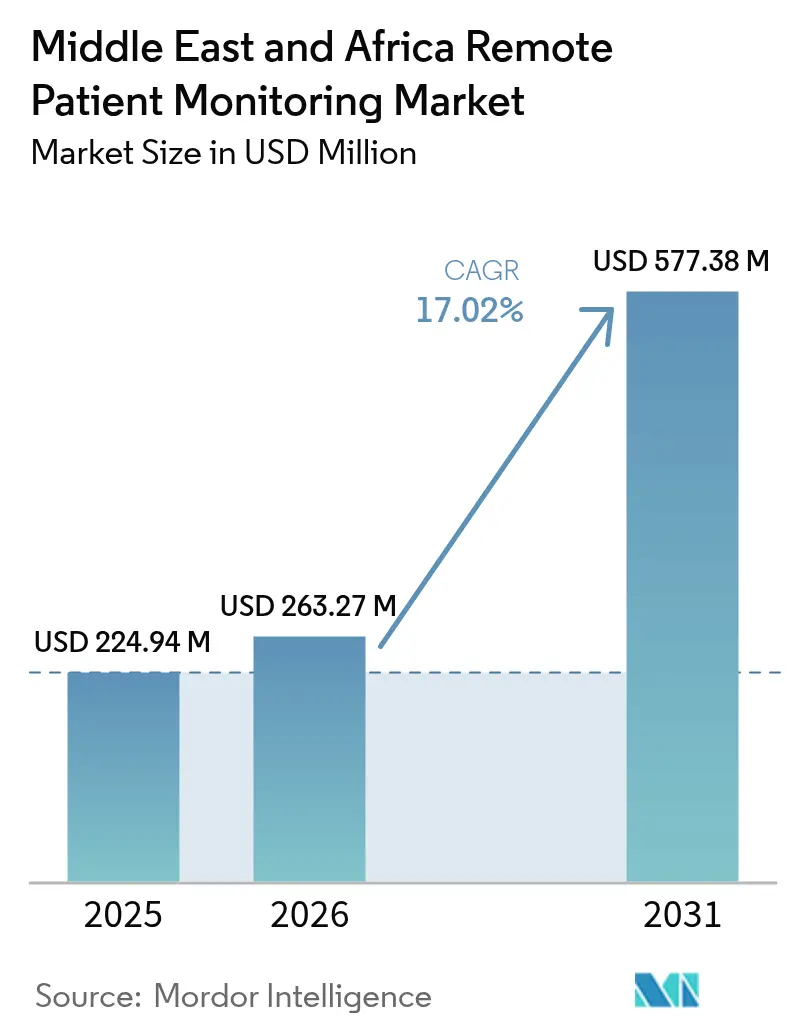
| Base Year Market Size (2025) | USD 224.94 Million |
| Market Size (2026) | USD 263.27 Million |
| Market Size (2031) | USD 577.38 Million |
| Growth Rate (2026 - 2031) | 17.02 % |
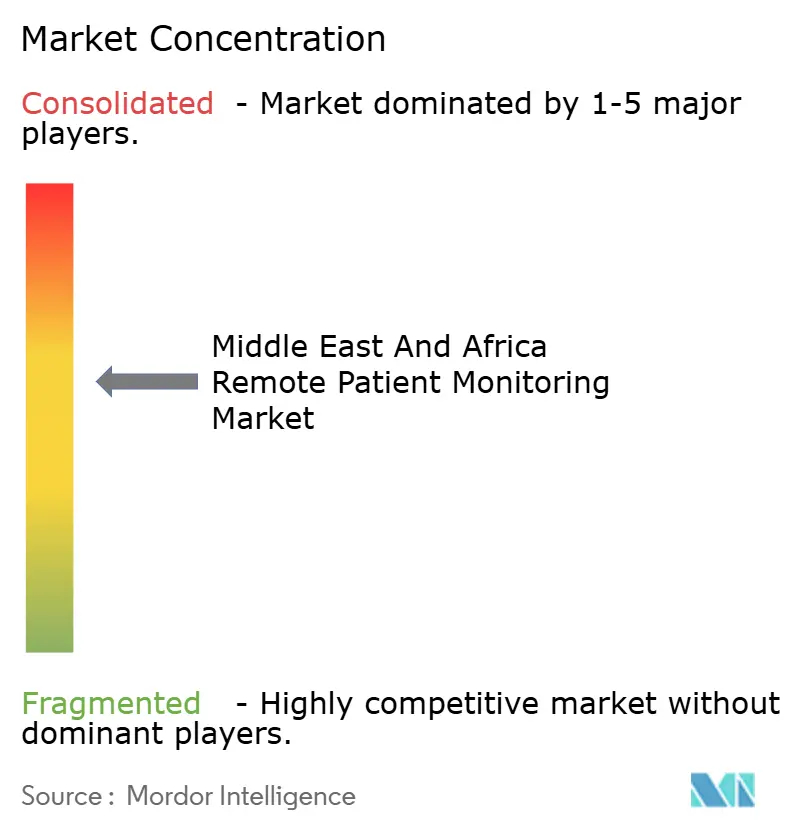
| Market Concentration | Medium |
Major Players *Disclaimer: Major Players sorted in no particular order Image © Mordor Intelligence. Reuse requires attribution under CC BY 4.0. | |
Middle East And Africa Remote Patient Monitoring Market Analysis by Mordor Intelligence
Middle East and Africa Remote Patient Monitoring Market size in 2026 is estimated at USD 263.27 million, growing from 2025 value of USD 224.94 million with 2031 projections showing USD 577.38 million, growing at 17.02% CAGR over 2026-2031.
The COVID-19 pandemic placed enormous pressure on hospitals and healthcare systems that were understaffed and overworked. Remote patient monitoring technology helped patients remain safe within their homes while reducing stress on hospitals, emergency rooms, and front-line healthcare workers during the pandemic, thereby positively impacting the market. According to an article published by Pharmacy Practice, in June 2022, pharmaceutical care in the UAE changed after COVID-19 in terms of medication dispensing, patient-centered roles, and remote services. Also, from the early beginnings of the pandemic, the UAE issued regulations to facilitate the delivery of healthcare services remotely in community and hospital pharmacies. Remote patient monitoring has demonstrated the ability to enhance health outcomes and reduce chaos during the pandemic which made the hospitals realize the advantage of RPM over traditional systems. Hence, the demand for remote patient monitoring systems increased, eventually driving market growth.
Factors such as rising incidences of chronic diseases due to lifestyle changes and rising demand for home-based monitoring devices are driving the growth of the market. For instance, per an article published by the National Library of Medicine in March 2022, the growing prevalence of non-communicable chronic diseases (NCDs) is placing increased pressure on healthcare systems, mainly primary healthcare. Many patients with NCDs do not receive treatment that meets their needs, even in well-managed integrated delivery systems. Therefore, the increasing NCDs and the improved healthcare systems demand remote patient monitoring devices and are expected to drive market growth.
In addition, these devices are compact and portable, and patients can wear them all day without feeling uneasy. These devices also ensure that the patient's condition is monitored continuously. Growing demand for home-based monitoring devices also boosts the market's growth. According to the Center for Medicare and Medicaid Services, 2021, several high-risk patients can prolong their healthy days at home and avoid being readmitted to the hospital because of remote monitoring. Remote monitoring clients report a 76% decrease in readmission rates, an average patient satisfaction rating of 89%, and overall medical cost savings of almost USD 370 million in the previous year.
Thus the above-mentioned factors are expected to drive the growth of the market over the forecast period. However, resistance from healthcare industry professionals toward the adoption of patient monitoring systems and lack of proper reimbursement are the factors impeding the market's growth.
Note: Market size and forecast figures in this report are generated using Mordor Intelligence’s proprietary estimation framework, updated with the latest available data and insights as of 2026.
Middle East And Africa Remote Patient Monitoring Market Trends and Insights
Heart Monitors are Expected to Witness a Rapid Growth During the Forecasted Period
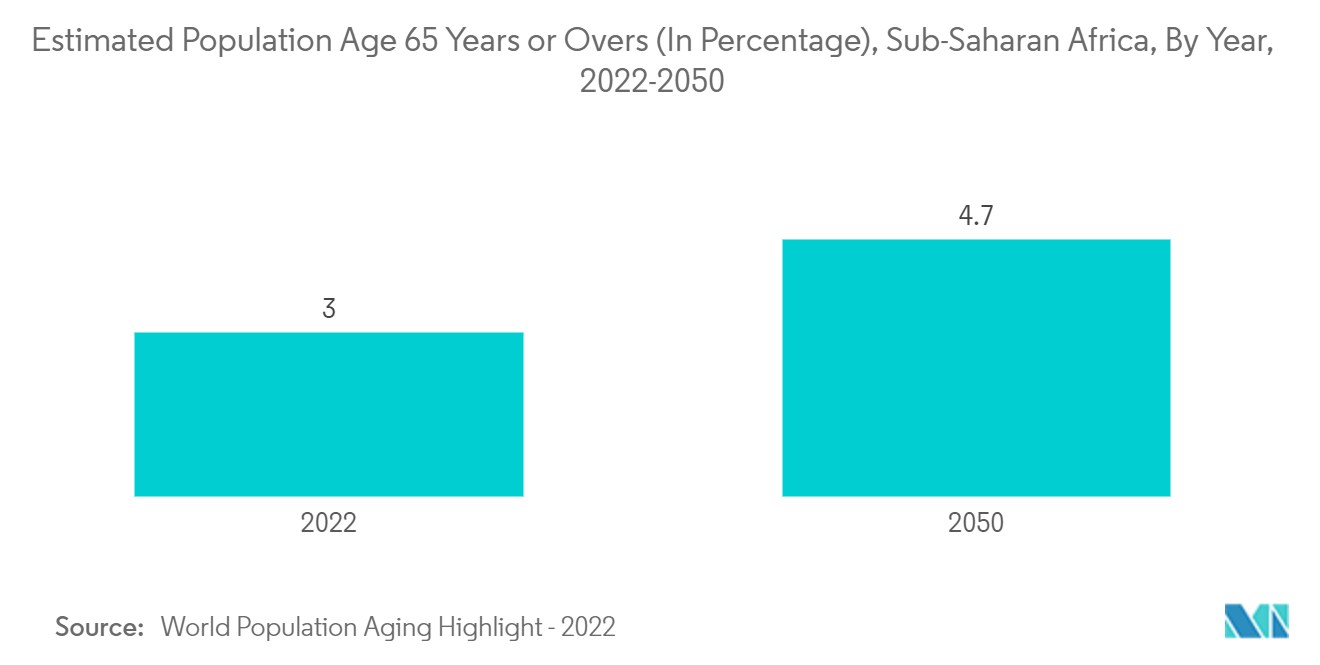
A heart monitor is a device that helps the patient record the heart's electrical activity (ECG). This device is about the size of a pager. It records the heart rate and rhythm. The increased death rate due to cardiovascular diseases across developed countries, coupled with the increased geriatric population and developing countries, have raised awareness among the patient population to opt for early and easy-to-monitor devices, which is expected to drive the segmental growth. For instance, according to Saudi Health Ministry statistics, in 2021, 15% of the Saudi population suffered from hypertension, a risk factor contributing significantly to cardiovascular diseases. With the increasing cases of cardiovascular diseases, the pressure on the government increases to take initiatives to treat these diseases, boosting the market growth in the country. Moreover, according to the World Heart Federation Updates from July 2021, Africa is home to more than 1 billion people and is a major contributor to the global burden of cardiovascular disease. Further, the increasing burden of cardiovascular diseases in the region is expected to increase the burden of cardiovascular diseases in the country, which will further boost the growth of the segment.
Also, according to Stats South Africa's latest Financial statistics of the consolidated general government report published in August 2021, the total South African government spending bill was R2 trillion in the 2019/20 financial year. This translates to 12.1% of total general government spending, making it the fourth biggest expenditure item after general public services, education, and social protection. Similarly, most health services in South Africa (about 86%) are provided through the public sector, yet only about 50% of health expenditure comes from the government. Thus, the increasing healthcare expenditure is expected to uplift the market in the coming years.
Thus, the above-mentioned factors are expected to contribute to segmental growth over the forecast period.


Gulf Cooperation Council (GCC) is is Expected to show a Significant Share of the Market Over the Forecast Period
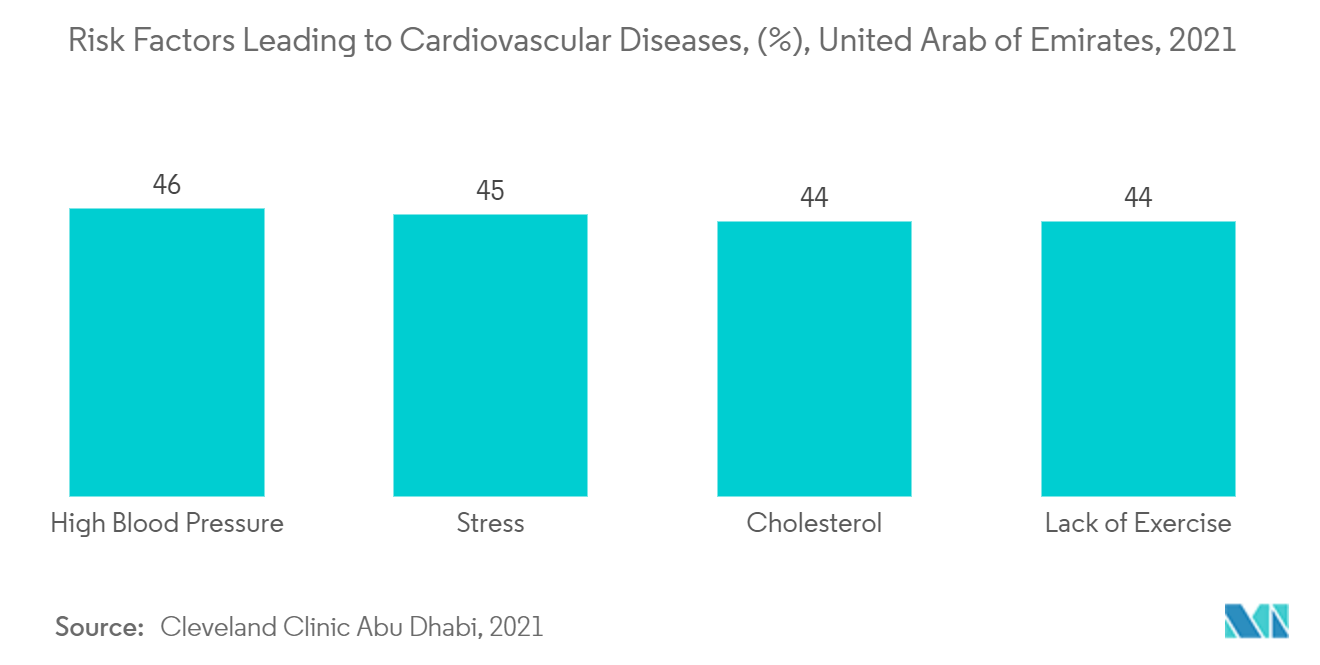
The Gulf Cooperation Council (GCC) includes countries such as Riyadh and Saudi Arabia, Bahrain, Kuwait, Oman, Qatar, Saudi Arabia, and UAE. Some factors, such as the increasing geriatric population and rising prevalence of chronic disorders, coupled with technological advancements, are propelling the market growth in this region. According to a new study commissioned by Cleveland Clinic Abu Dhabi in September 2021, an integral part of Mubadala Health, to mark World Heart Day, more than a thousand UAE residents revealed that 55% of respondents had been directly affected by heart disease, either through being diagnosed themselves (12%), having a close friend or family member diagnosed with heart disease (53%), or both. Cardiovascular disease is the leading cause of death in the UAE, with symptoms in patients often occurring a decade earlier than their counterparts in other developed nations. Thus, the increasing cases of cardiovascular diseases in the region are expected to increase the demand for remote patient monitoring systems over the forecast period.
Moreover, in March 2022, BioIntelliSense and Mubadala Health established a strategic collaboration to enable a continuous care model for medical-grade remote monitoring and management. Similarly, in January 2022, Ortus iHealth launched a pioneering new remote monitoring platform at Arab Health 2022. Such collaboration and product launches are expected to further boost the growth of the market in the region over the forecast period.
Thus, all aforementioned factors are expected to boost the market in the region over the forecast period.
Competitive Landscape
The Middle East and Africa remote patient monitoring systems market is moderate due to the presence of companies operating globally and regionally. The competitive landscape includes an analysis of a few international and local companies with significant market shares. It is well known, including Boston Scientific, Masimo, Medtronic Plc, Omron Healthcare, and Biotronik among others.
Middle East And Africa Remote Patient Monitoring Industry Leaders
Boston Scientific
Masimo
Medtronic Plc
Omron Healthcare
Biotronik
- *Disclaimer: Major Players sorted in no particular order

Market Opportunities and Future Outlook
Government-led digital health buildouts and provider-led virtual care scale-ups are creating clearer procurement pathways for connected monitoring devices across the Middle East and Africa. In 2026, Netcare invested in Quro Medical to expand virtual hospital-at-home services in South Africa, and the plan explicitly links expansion to wearable patient monitoring deployment. In the GCC, TruDoc Healthcare disclosed a USD 15 million funding round in 2026 to scale virtual-first care across Saudi Arabia, Kuwait, Bahrain, Qatar, Oman, and the UAE, which supports demand for integrated RPM offerings that combine devices, triage, and teleconsultation rather than stand-alone hardware.
A second opportunity is regulatory formalization for software-based monitoring and cloud clinical tools, which reduces uncertainty for vendors bringing medical-grade RPM into routine care. In 2026, Kenya's Pharmacy and Poisons Board introduced a framework for medical device software covering standalone and cloud-based clinical tools, including lifecycle risk management and post-market performance reporting. Nigeria's Senate advanced a National E-Health Bill in July 2026 to define legal rails for electronic health records, telemedicine, and wearable health technologies, while Morocco's Ministry of Health and Social Protection signed an MoU with Huawei and Dott Medical in May 2026 to deploy integrated telemedicine solutions and upgrade primary healthcare digital infrastructure, creating room for RPM systems that interoperate with national digital platforms and local primary care workflows.
Recent Industry Developments
- July 2026: Nigeria's Senate advanced the National E-Health Bill to establish a legal framework covering electronic health records, telemedicine, and wearable health technologies. The legislative action targets standards and interoperability gaps that have slowed scale-up, and it supports wider adoption of remote monitoring programs tied to digitized care pathways.
- June 2026: Netcare invested in Quro Medical to expand virtual hospital-at-home services across South Africa, with wearable patient monitoring included as part of the deployment. The investment supports provider-led demand for clinically integrated RPM that can back discharge-at-home and chronic care management at scale.
- May 2026: Boston Scientific supported the introduction of cryoablation for bone sarcoma treatment in South Africa using remote technologies, including smart glasses for real-time collaboration between local surgeons and specialists in Austria. The program points to growing operational acceptance of remote clinical support infrastructure, which aligns with broader RPM adoption by normalizing connected workflows and remote specialist access.


Research Methodology Framework and Report Scope
Market Definition and Coverage
In this methodology, the remote patient monitoring (RPM) system market covers the tools and supporting software links that capture patient health readings outside care settings and transmit them to clinicians for follow-up and decision-making across the Middle East and Africa.
Scope exclusions: We exclude general teleconsultation services that do not include ongoing physiological data capture and transmission.
Segmentation Overview
- By Type of Device
- Heart Monitors
- Breath Monitors
- Hematology Monitors
- Multi-Parameter Monitors
- Other Types of Monitors
- By Application
- Cancer Treatment
- Cardiovascular Diseases
- Diabetes Treatment
- Sleep Disorder
- Weight Management and Fitness Monitoring
- Other Applications
- By End User
- Home Care Settings
- Hospital/Clinics
- Others
- Geography
- GCC
- South Africa
- Rest of Middle East and Africa
Data Sources, Market Sizing, and Validation
Desk Research
Desk research was used to map the care pathways where RPM is adopted and to set guardrails for the size model, before any numbers were finalized. We leaned on public health statistics and policy signals to understand chronic disease burden and care access across the region, which shapes who is likely to be monitored at home.
Key references included non-paywalled sources such as the World Health Organization, World Bank indicators, national ministries of health and regulator notices, UN Comtrade for device-related trade signals, and peer-reviewed clinical and health economics journals. We also reviewed company annual reports and investor presentations to understand product positioning and regional exposure, and used paid subscriptions for company financials, patent lookups, and selected shipment and import-export checks where they were needed. This list is not exhaustive, and additional public sources were used to collect inputs, validate assumptions, and clarify open questions.
Primary Interviews and Surveys
Primary work was used to pressure-test adoption assumptions and convert high level demand into realistic purchasing and usage patterns. We spoke with a mix of hospital decision-makers, home care administrators, clinicians, distributors, and technical specialists across the Middle East and Africa, so that country-level differences in reimbursement, procurement cycles, and care delivery models were reflected in the final view.
Distribution of primary research fieldwork respondents
| Company type | Respondent position |
|---|---|
| Top tier: 28% | CXOs: 14% |
| Mid tier: 55% | Functional/Unit leaders: 41% |
| Smaller Players: 17% | Managers: 45% |
Market-Sizing & Forecasting
Sizing started with a top-down build that reconstructs the addressable monitored population by country group, then applies realistic RPM penetration and utilization assumptions confirmed through interviews. To keep the model practical, we anchored it on inputs such as chronic disease prevalence (especially diabetes and cardiovascular conditions), hospital and home care program adoption, device mix shifts between basic vital sign monitoring and multi-parameter kits, typical replacement cycles, and the split of usage between facility-led and home-led care.
Totals were then checked using selective bottom-up approximations, such as sampling average selling price ranges by device category and multiplying by implied unit demand, followed by channel checks on procurement patterns and import trends. When bottom-up signals were thin for a country, gaps were handled through peer-market analogs inside the region, then adjusted back using local healthcare spend and program maturity indicators.
For forecasting, scenario analysis was used so expansion pace could vary based on reimbursement momentum, telehealth policy direction, and hospital capacity pressure. The final year-by-year curve was kept consistent with how experts described rollouts in the region, where adoption tends to accelerate after pilots convert into procurement frameworks.
Data Validation & Update Cycle
Validation was completed through triangulation across the demand pool build, penetration assumptions, and price and mix ranges, then confirmed through follow-up calls when variance looked high. If an outlier appeared, inputs were re-checked against independent signals like import movement, program announcements, and shifts in public health priorities, and the underlying logic was reviewed again before sign-off.
The report is refreshed annually, and interim updates are triggered when material events occur, such as major policy changes, funding programs, or supply disruptions that could move adoption or pricing. Before delivery, a final analyst pass is run to ensure the latest public data and expert input are reflected in the market view.
Mordor Intelligence's Middle East and Africa Remote Patient Monitoring System Market Market Size Compared Against Other Published Estimates
Published RPM market sizes for the Middle East and Africa often differ because the included components are not consistent, and because adoption assumptions can vary by care setting and by country. Some estimates also apply global device mix and pricing to the region without checking how procurement and reimbursement actually work locally.
Some sources present a devices-only view, and a few also blend broader digital health monitoring categories that sit outside ongoing RPM programs. In Mordor Intelligence sizing, revenues are counted only when they align to remote physiological monitoring workflows that transmit readings for clinical follow-up, and adjacent digital wellness trackers and non-monitoring telehealth services are left out.
Benchmark comparison
| Source | Market Size | Gaps in Research Methodology |
|---|---|---|
| Mordor Intelligence | USD 224.94 M (2025) | |
| Global Consultancy A | USD 1.30 B (2025) | Uses a devices-focused regional total that appears to include broader consumer RPM device sales and general monitoring wearables, which inflates scope versus clinical follow-up based RPM usage. |
| Industry Portal B | USD 191.75 M (2024) | Older base year and earlier forecast window, with slower assumed program conversion from pilots to scaled procurement and limited refresh for recent telehealth policy momentum in select MEA countries. |
Overall, the spread is explained mainly by scope selection (systems linked to clinical monitoring programs versus broad device or wellness tracking totals) and by how quickly adoption is assumed to move from pilots into routine care. By keeping variables traceable to monitored population, penetration, and realistic price and mix ranges, the estimate stays repeatable and easier to audit year to year.


Key Questions Answered in the Report
How big is the Middle East and Africa Remote Patient Monitoring Market?
The Middle East and Africa Remote Patient Monitoring Market size is expected to reach USD 263.27 million in 2026 and grow at a CAGR of 17.02% to reach USD 577.38 million by 2031.
What is the current Middle East and Africa Remote Patient Monitoring Market size?
In 2026, the Middle East and Africa Remote Patient Monitoring Market size is expected to reach USD 263.27 million.
Who are the key players in Middle East and Africa Remote Patient Monitoring Market?
Boston Scientific, Masimo, Medtronic Plc, Omron Healthcare and Biotronik are the major companies operating in the Middle East & Africa Remote Patient Monitoring Market.
What years does this Middle East and Africa Remote Patient Monitoring Market cover, and what was the market size in 2025?
In 2025, the Middle East and Africa Remote Patient Monitoring Market size was estimated at USD 263.27 million. The report covers the Middle East and Africa Remote Patient Monitoring Market historical market size for years: 2019, 2020, 2021, 2022, 2023 and 2024. The report also forecasts the Middle East and Africa Remote Patient Monitoring Market size for years: 2026, 2027, 2028, 2029, 2030 and 2031.
Page last updated on:


 Your data is secure and never sold or shared.


