
Microkeratome Market Size and Share
Market Overview
| Study Period | 2021 - 2032 |
|---|---|
| Market Size (2027) | USD 23.47 Million |
| Market Size (2032) | USD 33.47 Million |
| Growth Rate (2027 - 2032) | 7.35 % |
| Fastest Growing Market | Asia-Pacific |
| Largest Market | North America |
| Market Concentration | Low |
Major Players *Disclaimer: Major Players sorted in no particular order Image © Mordor Intelligence. Reuse requires attribution under CC BY 4.0. | |
Microkeratome Market Analysis by Mordor Intelligence
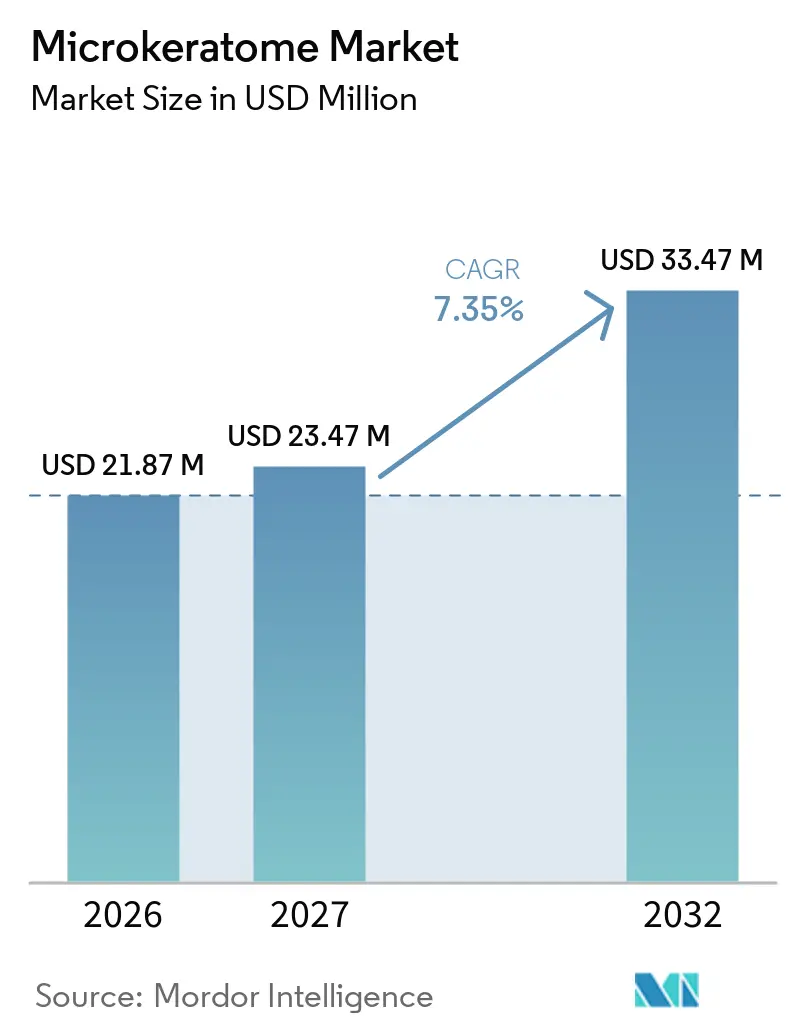
The Microkeratome Market size is expected to increase from USD 21.87 million in 2026 to USD 23.47 million in 2027 and reach USD 33.47 million by 2032, growing at a CAGR of 7.35% over 2027-2032.
Uncorrected refractive error continues to leave a large group of people without effective vision correction, which supports demand for accessible refractive procedures. Microkeratomes remain relevant where clinics need lower initial equipment costs and established LASIK workflows. Demand is also supported by corneal tissue preparation, which creates a use case outside elective refractive surgery. Disposable components and stronger traceability requirements are changing purchasing decisions, particularly in regulated health systems. The microkeratome market, therefore, depends on its installed base, consumable demand, and its ability to serve settings where advanced laser platforms are less accessible.
Key Report Takeaways
- By product type, mechanical systems held 63.42% of the microkeratome market share in 2026, while disposable head microkeratomes are forecast to grow at a 7.83% CAGR through 2032 in the microkeratome market.
- By component, blades accounted for 42.36% of revenue in 2026, while disposable accessories are forecast to expand at an 8.25% CAGR through 2032.
- By application, LASIK and refractive surgery generated 58.92% of revenue in 2026, while lamellar keratoplasty is projected to grow at an 8.94% CAGR through 2032 in the microkeratome market.
- By blade type, single-use blades accounted for 56.37% of revenue in 2026, while reusable blades are projected to grow at a 9.16% CAGR through 2032.
- By end user, ophthalmology clinics captured 56.34% of revenue in 2026, while hospitals are forecast to expand at a 9.53% CAGR through 2032 in the microkeratome market.
- By geography, North America commanded 38.42% of the microkeratome market in 2026; Asia-Pacific is forecast to register a 10.43% CAGR through 2032.
Note: Market numbers in this report are based on Mordor Intelligence's proprietary estimation framework, which combines nine months of actuals with Q4 projections for base year 2026.
Market Trends and Insights
Drivers Impact Analysis of Microkeratome Market*
| Driver | (~) % Impact on CAGR Forecast | Geographic Relevance | Impact Timeline |
|---|---|---|---|
| Rising Prevalence of Refractive Errors and Myopia | +2.1% | Global, concentrated in APAC and South Asia | Long term (≥ 4 years) |
| Expanding LASIK and Corneal Surgery Volumes | +1.7% | North America, Europe, APAC | Medium term (2-4 years) |
| Lower Capital Cost Than Femtosecond Laser Platforms | +1.5% | APAC, South America, MEA | Medium term (2-4 years) |
| Growth of Ophthalmic Surgery Access in Emerging Markets | +0.9% | India, Southeast Asia, GCC, Sub-Saharan Africa | Long term (≥ 4 years) |
| Demand for Disposable and Sterile-Ready Components | +0.7% | Global, with early gains in North America and EU | Short term (≤ 2 years) |
| Outcome-Based Procurement and Real-Time Flap Control | +0.5% | North America, EU | Medium term (2-4 years) |
| Source: Mordor Intelligence | |||
Rising Prevalence of Refractive Errors and Myopia
Refractive disorders accounted for 42% of global visual impairment, and uncorrected refractive error affected 88.4 million people with blindness or moderate to severe vision impairment.[1] This unmet need creates a sustained clinical basis for refractive correction services. A 2025 study found that absolute disability-adjusted life years from refractive disorders increased 36% between 1990 and 2021, even as age-standardized rates declined.[2] Population growth and aging outpaced the expansion of corrective care in that period. India had the largest absolute case count in 2021, while Brazil showed a rising age-standardized prevalence trend. These conditions support longer-term demand for lower-cost refractive treatment options in the microkeratome market.
Expanding LASIK and Corneal Surgery Volumes
LASIK procedure volumes remain important because they determine blade use and equipment utilization at the facility level. Corneal transplantation adds a separate demand stream through eye-bank tissue preparation. Keratoplasty procedures across 116 European eye banks in 25 countries increased 108% over 18 years through 2024. In 2024, 59% of procured corneas were issued for transplantation, showing continued tissue use in European programs.[3] Microkeratomes can prepare donor tissue for DSAEK grafts before that tissue reaches the operating room. This role gives the microkeratome market demand that is not directly tied to LASIK volumes or individual surgeon preferences.
Cost, Access, and Procurement Requirements
Mechanical systems provide a practical option for surgical settings that cannot support the cost of femtosecond laser equipment. Their recurring blade costs are more predictable than the service and software commitments associated with laser platforms. This cost structure can allow refractive services to operate in settings where laser-based treatment would not be financially viable. The World Health Organization has set a goal to increase effective refractive error coverage through its SPECS 2030 initiative. Expanding private hospitals and eye care centers in emerging regions can broaden access to these services. In parallel, procurement teams increasingly favor disposable, sterile-ready components that reduce reprocessing work and support traceability.
Sterility, Workflow, and Flap-Control Needs
Single-use heads and blade assemblies can reduce cross-contamination risk and remove the need to validate reprocessing procedures. This is relevant as medical device rules increase documentation and sterility requirements in many markets. Moria maintained MDR 2017/745 certification for specified sterile and reusable product lines through mid-2026. For high-throughput ambulatory centers, avoiding autoclave validation can simplify room turnover and daily workflow. Disposable accessories are forecast to grow at an 8.3% CAGR through 2031, which reflects this procurement direction. Demand also favors devices that can provide more consistent flap control, especially when buyers evaluate clinical outcomes and operating processes.
Restraints Impact Analysis of Microkeratome Market*
| Restraint | (~) % Impact on CAGR Forecast | Geographic Relevance | Impact Timeline |
|---|---|---|---|
| Shift Toward Femtosecond Laser and SMILE Procedures | -2.5% | North America, EU, South Korea, China | Long term (≥ 4 years) |
| Procedure-Related Safety Concerns and Clinical Variability | -0.8% | Global | Medium term (2-4 years) |
| Regulatory Validation and Skilled-Technician Requirements | -0.6% | APAC, EU, North America | Medium term (2-4 years) |
| Specialty Blade and Surgical-Steel Supply Concentration | -0.4% | Global, supply concentrated in Germany and Japan | Short term (≤ 2 years) |
| Source: Mordor Intelligence | |||
Shift Toward Femtosecond Laser and SMILE Procedures
Femtosecond systems have displaced mechanical microkeratomes in premium urban centers across North America and Europe. SMILE procedures also remove the need to create a corneal flap. This substitution is most visible among facilities that can support advanced laser equipment and market premium refractive procedures. It can shift mechanical suppliers toward lower-margin settings and limit funds available for product development. The effect is uneven because many cost-sensitive providers still use mechanical LASIK systems. The microkeratome market retains a role where patient affordability, existing equipment, and procedural access remain more important than premium technology positioning.
Safety, Regulatory, and Supply Requirements
Mechanical flap creation can involve buttonholes, free caps, and thin or irregular flaps, even though these complications are infrequent. These risks matter more when providers publish outcomes or accept responsibility for procedure-related results. Buyers may select femtosecond systems when they seek more consistent flap creation across operators. Reusable products also face packaging, sterilization, and instrument-validation requirements under rules such as EU MDR 2017/745.[4] Such requirements increase the workload of maintaining reusable portfolios and can favor certified single-use products. Supply concentration in specialty blades and surgical steel adds a separate short-term risk for manufacturers that depend on a narrow group of qualified suppliers.
*Our forecasts treat driver/restraint impacts as directional, not additive. The impact forecasts reflect baseline growth, mix effects, and variable interactions.
Microkeratome Market Segment Analysis
By Product Type:
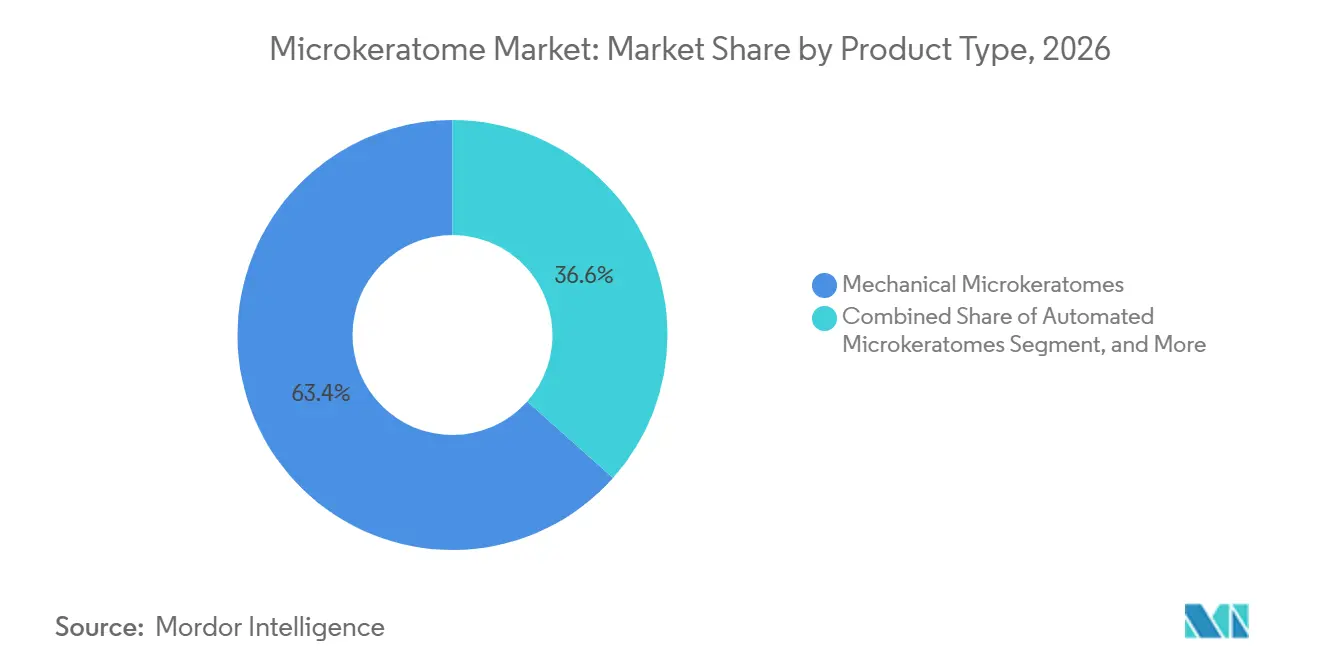
Mechanical Systems Lead While Disposable Formats GrowMechanical systems held 63.42% of the microkeratome market share in 2026. Their position reflects established surgeon training, a large installed console base, and recurring blade purchases. Existing consoles can remain in service for years, which reduces the urgency of replacing them. Many cost-sensitive facilities also prefer to maintain familiar workflows. Mechanical systems, therefore, remain central to the microkeratome industry despite technology substitution in premium settings.
Automated microkeratomes offer motorized precision without requiring a full shift to a femtosecond workflow. Reusable microkeratomes remain relevant in lower-cost settings with in-house sterilization capacity. Their use is declining in more regulated markets as disposable formats gain preference. Disposable head microkeratomes are forecast to grow at a 7.83% CAGR through 2032. Moria maintained documentation for its One Use-Plus SBK line through March 2026, indicating continued product attention to disposable-head formats.

By Component:
Blades Support Recurring Revenue While Accessories Gain UseBlades accounted for 42.36% of the microkeratome market size in 2026. They are the highest-volume consumables and the main source of recurring aftermarket revenue. Console systems remain the capital equipment base for an installed system. Handpieces connect the console to the sterile surgical field. This component structure gives suppliers a reason to protect compatibility between platforms, heads, and blades.
Disposable accessories are forecast to grow at an 8.25% CAGR through 2032. Suppliers can increase procedure-level revenue when accessories are bundled with blade subscriptions. This model becomes more relevant as hospitals seek sterile-ready products and documented traceability. Myopia among children and adolescents reached 35.8% globally by 2023 and is projected to reach 39.8% by 2050. That larger future patient pool can support continued replacement demand, although corrective pathway choices will differ across regions.
By Application:
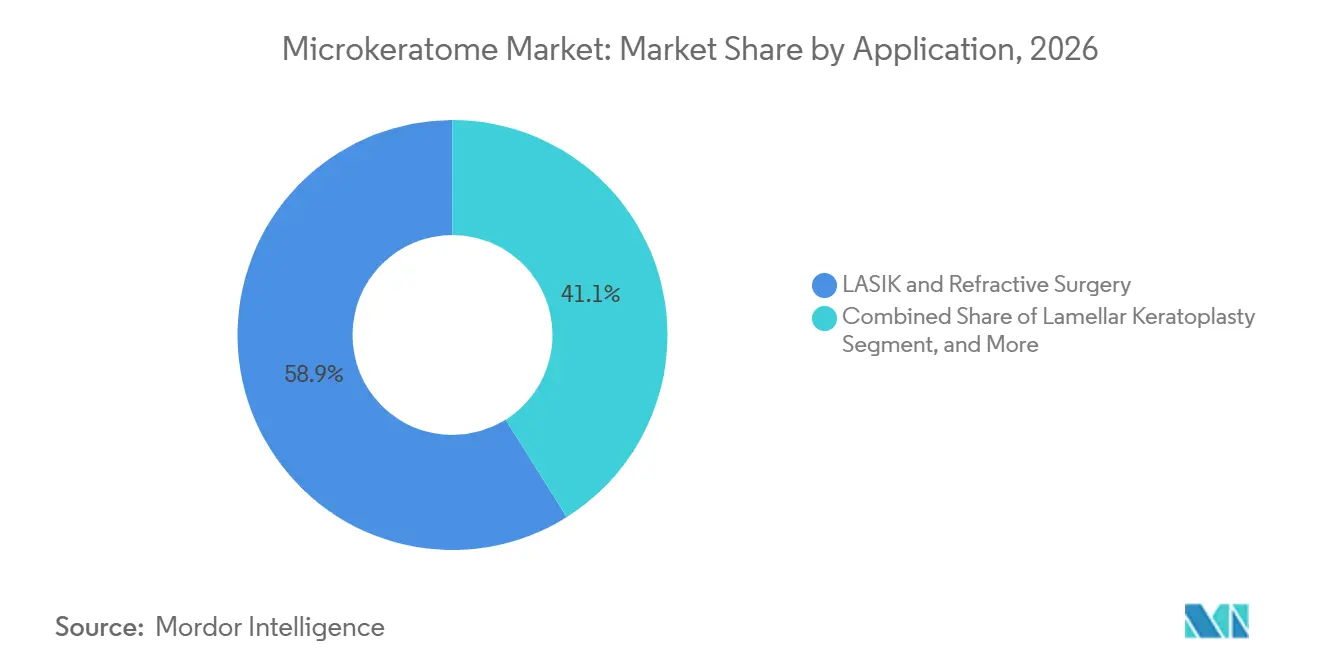
LASIK Remains the Base While Lamellar Keratoplasty ExpandsLASIK and refractive surgery generated 58.92% of application revenue in 2026. This use case remains the primary demand base for microkeratome platforms around the world. Higher myopia prevalence can increase the number of people seeking refractive correction. Childhood and adolescent myopia rose from 24.3% in 1990 to 35.8% in 2023. East Asian adolescents recorded rates above 45% to 47%, reinforcing the importance of the region for eye-care demand.
Lamellar keratoplasty is forecast to grow at an 8.94% CAGR through 2032. In leading German centers, DMEK represented 82% of keratoplasties in 2023. Eye banks can use microkeratomes to prepare DSAEK grafts. This activity occurs before donor tissue reaches the surgical suite. It makes corneal tissue processing a distinct institutional demand channel within the microkeratome market.
By Blade Type:
Single-Use Blades Lead While Reusable Blades Grow in Emerging SettingsSingle-use blades accounted for 56.37% of blade-type revenue in 2026. Their lead reflects infection-control expectations, hospital credentialing, and the preference for out-of-the-box sterility. They also avoid reprocessing validation at the provider level. These advantages are particularly relevant in high-income settings where accreditation and liability influence procurement. Stainless-steel blades remain the highest-volume blade substrate worldwide.
Reusable blades are forecast to grow at a 9.16% CAGR through 2032. This result reflects adoption in emerging-economy centers that have sterilization capacity and prioritize lower per-procedure costs. Diamond blades continue to serve precision-sensitive procedures, including lamellar keratoplasty preparation and corneal transplant work. Japan requires JIS-compliant sterilization validation for ophthalmic cutting instruments through its regulatory system. These requirements can extend product development cycles for non-domestic suppliers and favor companies with established registrations.
By End User:
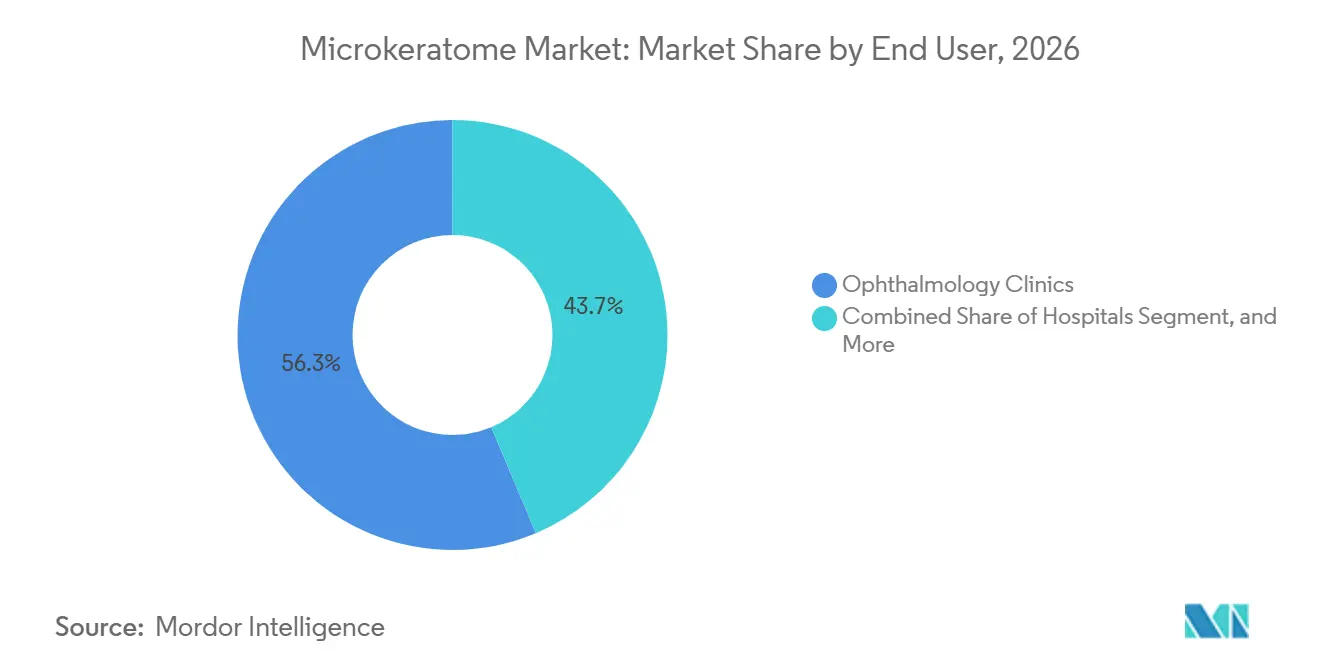
Clinics Lead Procedure Volume While Hospitals Gain ImportanceOphthalmology clinics captured 56.34% of end-user revenue in 2026. Elective refractive surgery is commonly provided in outpatient settings, which gives specialized clinics a favorable operating model. Their installed systems support repeat blade purchases and stable equipment use. Ambulatory surgical centers form an important middle tier, especially where same-day procedures are common. These centers benefit from efficient patient flow and established refractive protocols.
Hospitals are forecast to grow at a 9.53% CAGR through 2032. Their growth is linked to lamellar and penetrating keratoplasty programs that need donor-tissue management, anesthesia support, and postoperative monitoring. Eye care centers provide a distributed demand base in emerging regions outside major hospital networks. The 59% corneal issuance rate recorded by European eye banks in 2024 indicates ongoing tissue throughput for transplant programs. This supports equipment use in hospitals and affiliated eye-bank facilities.
Geography Analysis
North America: Revenue Anchor with Stable Premium Demand
North America accounts for 38.42% of the global microkeratome market share in 2026, supported by an extensive network of ambulatory surgical centers, a mature refractive surgery culture, and a well-established reimbursement environment for corneal procedures. The United States recorded 52,396 domestic keratoplasty procedures in 2025, up 1.6% from 2024, according to the EBAA's 2025 Statistical Report, reinforcing the upstream demand for microkeratome-prepared donor tissue used in lamellar procedures. Blade-based LASIK remains commercially viable in the North American community and independent surgeon practices, where capital-light models favor microkeratome economics over six-figure femtosecond platform investments. One structural dynamic worth monitoring is the growing share of ophthalmology ASCs in Medicare spending: total Medicare payments to ASCs reached USD 6.8 billion in 2023, up 11.6% year over year per MedPAC data, with ophthalmology representing a disproportionately large share of single-specialty center activity. FDA compliance frameworks, specifically 21 CFR Part 820 and Class II device requirements, continue to set sterilization and quality management standards that effectively raise the market entry bar for non-certified blade suppliers, sustaining the competitive position of established North American and European manufacturers.
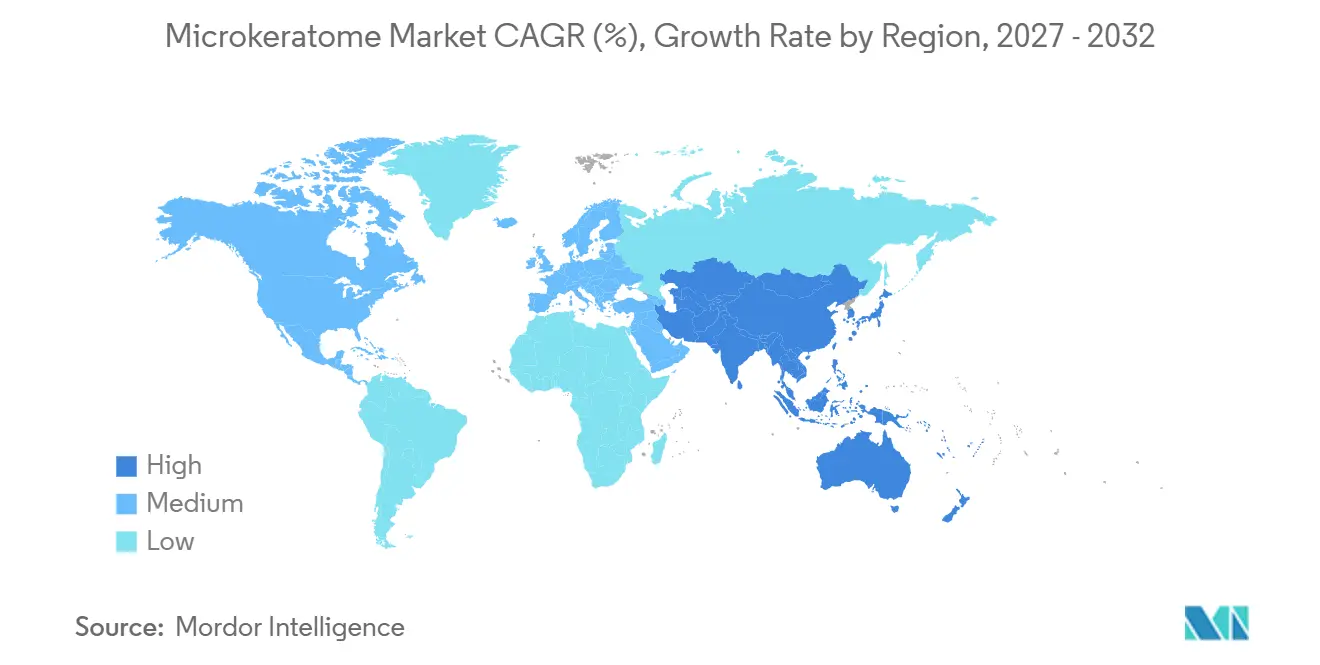
Asia-Pacific: Fastest-Growing Region Driven by Volume and Access Expansion
Asia-Pacific is forecast to expand at a CAGR of 10.43% between 2027 and 2032, the highest rate across any regional segment. The principal growth engines are India's rapidly scaling private eye care chains and China's vast public hospital refractive surgery capacity, both of which process large procedure volumes where blade-based LASIK remains a cost-appropriate modality. Dr. Agarwal's Eye Hospital reported 43.9% growth in refractive surgeries in FY 2025 to 15,989 procedures, while ASG Eye Hospital, with 175+ hospitals across 87 Indian cities, is expanding to 600–700 centers, targeting markets where microkeratome economics provide a viable pathway to procedural affordability. Indonesia formalized its commitment to WHO SPECS 2030 in October 2025, targeting a 40-percentage-point increase in effective refractive error coverage. This policy signal should accelerate surgical facility investment across the archipelago's provincial tier. In China, a 2025 industry analysis estimated that approximately 61% of the roughly 2.95 million refractive surgeries performed nationally in 2024 used microkeratomes for flap creation, with small and medium-tier institutions preferring blade-based systems on cost grounds over full-femtosecond platforms costing tens of millions of CNY. SCHWIND's femtosecond LASIK system received NMPA (China National Medical Products Administration) registration in March 2025, a development that also creates an implicit competitive benchmark for mechanical platforms to defend their cost-access advantage.
Diverging Trajectories Across Remaining Markets
Europe represents a mature but structurally important market where the French, German, and Italian practice bases sustain consistent microkeratome blade demand; Germany's 2024 national survey showed that LASIK with a mechanical microkeratome remained the single most performed refractive procedure category with 13,711 cases (Wenzel et al., Ophthalmo-Chirurgie 6/2025), a finding that challenges the narrative of rapid mechanical obsolescence in sophisticated markets. The Middle East and Africa are early-stage but fast-activating markets: Bascom Palmer Eye Institute opened its first international facility in Abu Dhabi in November 2025, a 70,000-square-foot centre with dedicated refractive suites; Moorfields Eye Hospital Dubai was awarded Centre of Excellence status by ACHSI in 2025; and Thumbay University Hospital inaugurated a dedicated LASIK and Eye Surgery Institute in Ajman all of which represent new facility nodes generating demand for microkeratome consumables in GCC markets. South America maintains steady growth, led by Brazil and Mexico, where public cataract and refractive surgery programs sustain demand for cost-efficient surgical instruments and where mechanical keratomes persist as the economically accessible standard in regional and secondary care centers. The Latin American ophthalmic instruments market is expected to grow, supported by expanding private eye care chains and infrastructure investment, with Brazil representing the dominant national market by procedure volume.
Competitive Landscape
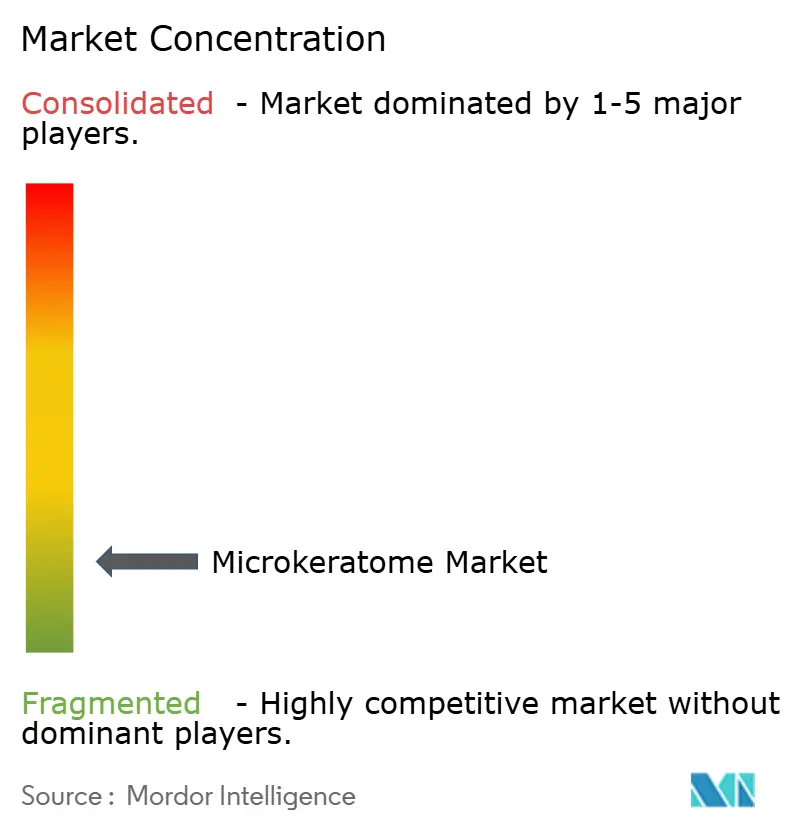
The microkeratome market is moderately fragmented. Moria has a clear category position through its active microkeratome platforms, including LSK-One, M2, One Use-Plus SBK, and Epi-K. Its approach centers on maintaining products and regulatory documentation across key markets. This supports access where product certification and sterile-use requirements influence purchasing. Bausch + Lomb and NIDEK also maintain established positions through surgeon relationships and installed consoles.
Ziemer Ophthalmic Systems took control of Amadeus II automated microkeratome global sales and support in 2024. This move strengthened its mechanical flap-creation portfolio and its customer support position. SCHWIND eye-tech-solutions, Janach Srl, Geuder AG, Optikon 2000, Katena Products, Aurolab, and Appasamy Associates serve different portions of the competitive field. Indian manufacturers are relevant in cost-sensitive markets because they support local access to ophthalmic instruments. Competition is shaped by product compatibility, certification capability, distribution reach, and the ability to support consumable sales.
Microkeratome Industry Leaders
-
Alcon Inc.
-
Aurolab
-
Bausch + Lomb Corporation
-
Carl Zeiss Meditec AG
-
Johnson & Johnson Inc.
- *Disclaimer: Major Players sorted in no particular order
Microkeratome Market Companies Covered in this Report
- Alcon
- Appasamy Associates Private Limited
- Aurolab
- Bausch + Lomb Corporation
- BVI Medical
- Carl Zeiss
- GEUDER
- Janach Srl
- Johnson & Johnson
- Katena Products Inc.
- MicroSurgical Technology
- Moria SA
- NIDEK CO. LTD.
- Optikon 2000 SpA
- Rumex International Co.
- SCHWIND eye-tech-solutions GmbH
- Sonomed Escalon
- Surtex Instruments Ltd
- Topcon
- Trivitron Healthcare
- Ziemer Group
Recent Industry Developments in Microkeratome Market
- April 2026: BVI Medical's Virtuoso dual-function phaco-vitrectomy platform received CE Mark under EU MDR 2017/745, with commercial availability planned across Europe from Q3 2026; the platform's approval marks BVI's entry into premium-tier ophthalmic surgical equipment and increases competitive pressure on independent surgical-device suppliers across European markets.
- March 2026: MORIA updated its Microkeratome & Accessories – Heads, Blades & Suction Rings product portfolio. The portfolio included One Use-Plus 130 Head, One Use-Plus SBK Head, One Use-Plus Sets, and One Use-Plus suction rings for LASIK/SBK procedures.
- November 2025: Bascom Palmer Eye Institute, in partnership with August Medical (part of SOZA Group) and under approval from the Department of Health – Abu Dhabi, commenced operations at its first international facility in Abu Dhabi. The 70,000-square-foot ambulatory care center features 3 operating theatres and dedicated refractive suites, establishing a new high-acuity refractive surgery node in the GCC and expanding demand for precision microkeratome consumables in the region.
Global Microkeratome Market Report Scope
As per the scope of the report, a microkeratome is a precision surgical instrument used in ophthalmic procedures to create a thin corneal flap during refractive surgeries such as LASIK. It consists of a motorized handpiece and an oscillating blade that enables controlled and accurate corneal cutting. Microkeratomes help improve surgical efficiency and visual outcomes by producing uniform flap thickness. They are widely used in refractive surgery centers, ophthalmology clinics, and hospitals for vision correction and corneal transplant procedures.
The microkeratome market is segmented by product type, component, application, blade type, end user, and geography. By product type, the market is segmented into mechanical microkeratomes, automated microkeratomes, disposable head microkeratomes, and reusable microkeratomes. By component, the market is segmented into console systems, handpieces, blades, and disposable accessories. By application, the market is segmented into LASIK and refractive surgery, lamellar keratoplasty, corneal transplant procedures, and others. By blade type, the market is segmented into single-Use Blades, reusable blades, stainless-steel blades, and diamond blades. By end user, the market is segmented into ophthalmology clinics, hospitals, ambulatory surgical centers, eye care centers, and others. The geography segment is further divided into North America, Europe, Asia-Pacific, the Middle East and Africa, and South America. The report also covers the estimated market sizes and trends for 17 countries across major regions globally. The report offers the market size and forecasts in value (USD) for the above segments.
Segmentation Overview
| Mechanical Microkeratomes |
| Automated Microkeratomes |
| Disposable Head Microkeratomes |
| Reusable Microkeratomes |
| Console Systems |
| Handpieces |
| Blades |
| Disposable Accessories |
| LASIK and Refractive Surgery |
| Lamellar Keratoplasty |
| Corneal Transplant Procedures |
| Others |
| Single-Use Blades |
| Reusable Blades |
| Stainless-Steel Blades |
| Diamond Blades |
| Ophthalmology Clinics |
| Hospitals |
| Ambulatory Surgical Centers |
| Eye Care Centers |
| Others |
| North America | United States |
| Canada | |
| Mexico | |
| Europe | Germany |
| United Kingdom | |
| France | |
| Italy | |
| Spain | |
| Rest of Europe | |
| Asia-Pacific | China |
| India | |
| Japan | |
| Australia | |
| South Korea | |
| Rest of Asia-Pacific | |
| Middle East and Africa | GCC |
| South Africa | |
| Rest of Middle East and Africa | |
| South America | Brazil |
| Argentina | |
| Rest of South America |
| By Product Type | Mechanical Microkeratomes | |
| Automated Microkeratomes | ||
| Disposable Head Microkeratomes | ||
| Reusable Microkeratomes | ||
| By Component | Console Systems | |
| Handpieces | ||
| Blades | ||
| Disposable Accessories | ||
| By Application | LASIK and Refractive Surgery | |
| Lamellar Keratoplasty | ||
| Corneal Transplant Procedures | ||
| Others | ||
| By Blade Type | Single-Use Blades | |
| Reusable Blades | ||
| Stainless-Steel Blades | ||
| Diamond Blades | ||
| By End User | Ophthalmology Clinics | |
| Hospitals | ||
| Ambulatory Surgical Centers | ||
| Eye Care Centers | ||
| Others | ||
| By Geography | North America | United States |
| Canada | ||
| Mexico | ||
| Europe | Germany | |
| United Kingdom | ||
| France | ||
| Italy | ||
| Spain | ||
| Rest of Europe | ||
| Asia-Pacific | China | |
| India | ||
| Japan | ||
| Australia | ||
| South Korea | ||
| Rest of Asia-Pacific | ||
| Middle East and Africa | GCC | |
| South Africa | ||
| Rest of Middle East and Africa | ||
| South America | Brazil | |
| Argentina | ||
| Rest of South America | ||
Key Questions Answered in the Report
What is driving demand for microkeratomes?
Uncorrected refractive error, myopia prevalence, continued LASIK use, and corneal tissue preparation support demand.
What is the forecast growth rate for microkeratomes?
The microkeratome market is forecast to grow at a 7.35% CAGR from 2027 to 2032.
Which product format is growing fastest?
Disposable head microkeratomes are forecast to grow at a 7.83% CAGR through 2032.
Why are disposable blades important?
They support out-of-the-box sterility and reduce reprocessing validation requirements for providers.
Which application is growing fastest?
Lamellar keratoplasty is forecast to grow at an 8.94% CAGR through 2032, supported by eye-bank tissue preparation.
Which region is growing fastest?
Asia-Pacific is forecast to grow at a 10.43% CAGR through 2032, supported by high myopia prevalence and expanding access to eye care.