
Metabolism Drugs Market Size and Share
Market Overview
| Study Period | 2020 - 2031 |
|---|---|
| Market Size (2026) | USD 15.35 Billion |
| Market Size (2031) | USD 20.02 Billion |
| Growth Rate (2026 - 2031) | 5.45 % |
| Fastest Growing Market | Asia-Pacific |
| Largest Market | North America |
| Market Concentration | Medium |
Major Players *Disclaimer: Major Players sorted in no particular order Image © Mordor Intelligence. Reuse requires attribution under CC BY 4.0. | |
Metabolism Drugs Market Analysis by Mordor Intelligence
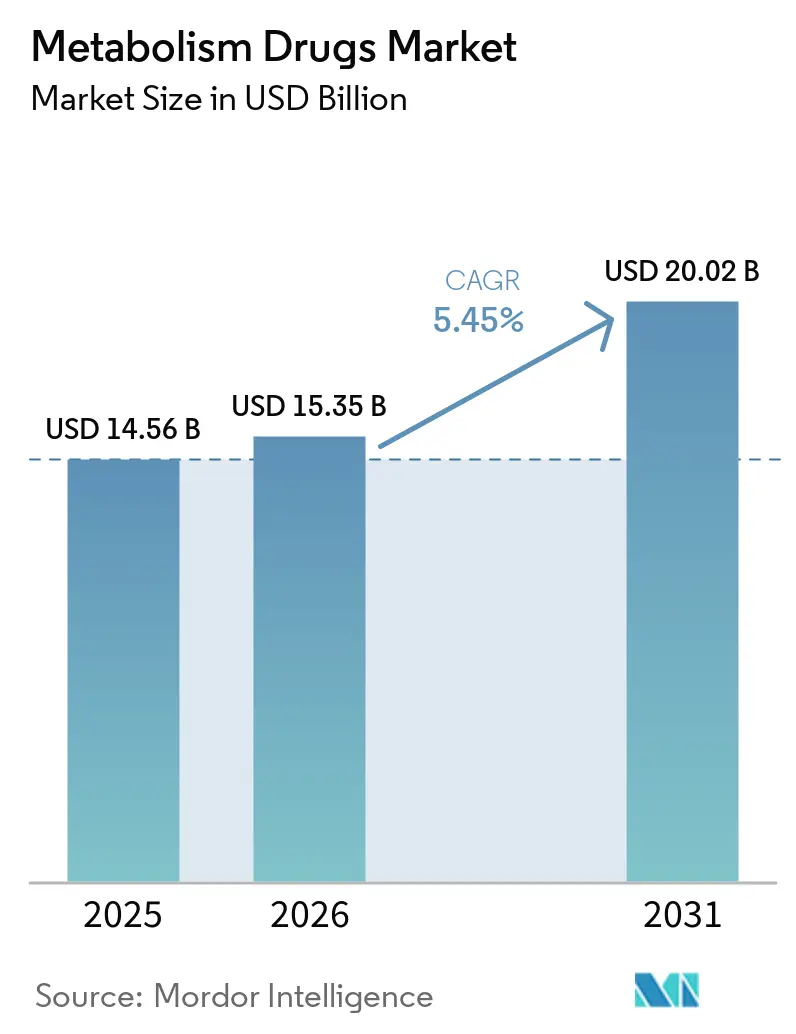
The Metabolism Drugs Market size was valued at USD 14.56 billion in 2025 and is estimated to grow from USD 15.35 billion in 2026 to reach USD 20.02 billion by 2031, at a CAGR of 5.45% during the forecast period (2026-2031).
Growth reflects the continued burden of type 2 diabetes and obesity, supported by the broader adoption of GLP-1 and dual-agonist therapies. The International Diabetes Federation reported that 589 million adults are living with diabetes in 2025 and projects this figure to reach 853 million by 2050, with significant increases expected in South and Southeast Asia. Regulatory approvals are expanding the clinical use of established metabolic medicines, while manufacturing investments are easing supply constraints that limited GLP-1 access through 2024. The metabolism drugs market is moving toward broader access; however, reimbursement, pricing, and long-term treatment adherence remain key barriers to uptake.
Key Report Takeaways
- By therapeutic area, diabetes held 32.40% of revenue in 2025, while obesity and weight management are projected to grow at a 7.55% CAGR through 2031.
- By drug class, lipid-lowering drugs held 24.45% of revenue in 2025, while antidiabetic drugs are projected to grow at a 6.71% CAGR through 2031.
- By route of administration, oral formulations held 62.34% of revenue in 2025, while injectable treatments are projected to grow at an 8.25% CAGR through 2031.
- By distribution channel, retail pharmacies held 46.78% of revenue in 2025, while online pharmacies are projected to grow at a 6.55% CAGR through 2031.
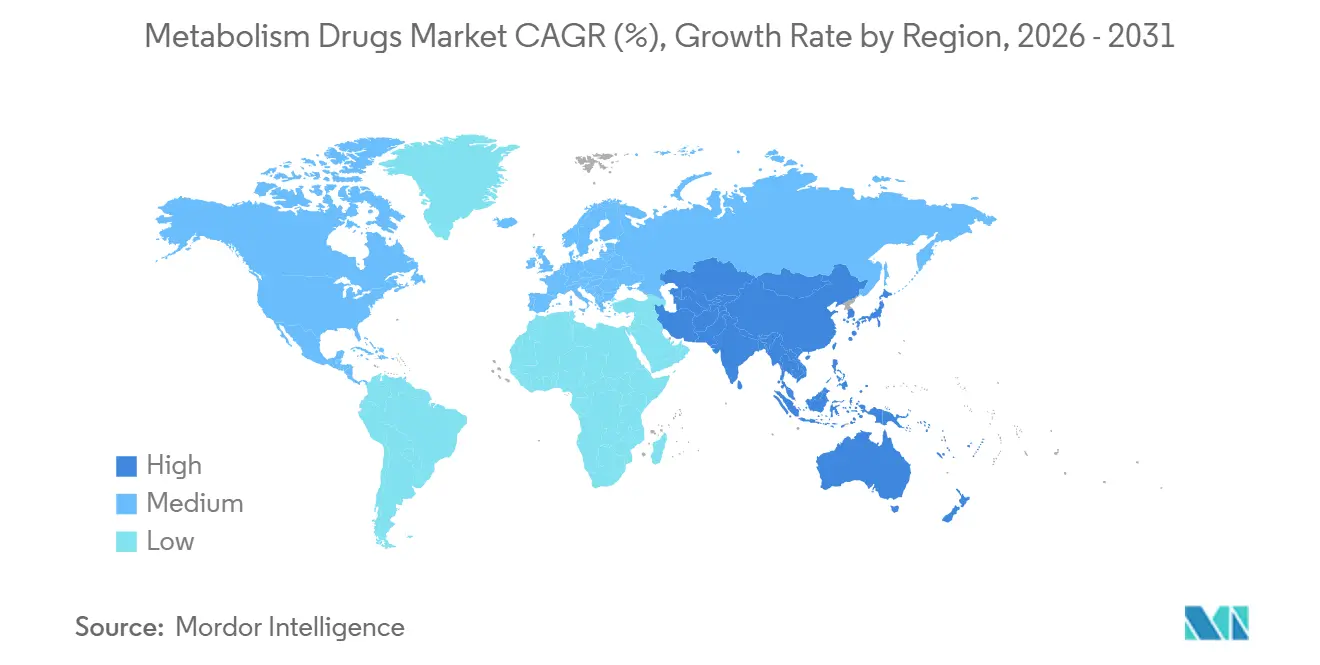
- By geography, North America held 41.65% revenue share in 2025, while Asia-Pacific is projected to expand at a CAGR of 9.73% through 2031.
Note: Market size and forecast figures in this report are generated using Mordor Intelligence’s proprietary estimation framework, updated with the latest available data and insights as of January 2026.
Market Trends and Insights
Drivers Impact Analysis of Metabolism Drugs Market*
| DRIVER | (~) % IMPACT ON CAGR FORECAST | GEOGRAPHIC RELEVANCE | IMPACT TIMELINE |
|---|---|---|---|
| Rising global diabetes burden and treatment gap | +1.5% | Global, with the greatest concentration in South Asia and Sub-Saharan Africa | Long term (≥ 4 years) |
| Expansion of obesity treatment and cardiometabolic risk reduction | +1.8% | North America and Western Europe, with growing adoption in Asia-Pacific and Latin America | Medium term (2-4 years) |
| Broader cardiorenal and metabolic liver disease indications | +0.8% | Global, with regulatory impact centered in the United States, the European Union, and Japan | Medium term (2-4 years) |
| Greater use of once-weekly, oral, and long-acting therapies | +0.7% | Global, with the strongest adherence benefit in North America and Europe | Short term (≤ 2 years) |
| Manufacturing-led access expansion for peptides and biologics | +0.5% | North American and European manufacturing hubs, with access gains in Asia-Pacific, the Middle East, and Africa | Medium term (2-4 years) |
| GLP-1 response phenotyping and muscle-preservation endpoints | +0.3% | North America, Germany, and Japan | Long term (≥ 4 years) |
| Source: Mordor Intelligence | |||
Rising Global Diabetes Burden and Persistent Treatment Gap
The rising prevalence of diabetes provides a stable demand base for the metabolism drugs market. The International Diabetes Federation estimated that 589 million adults had diabetes in 2025 and expects the total to reach 853 million by 2050. Many patients with type 2 diabetes do not achieve glycemic targets despite the availability of basic therapies.[1] The treatment gap remains particularly significant in South Asia and Sub-Saharan Africa, where access to second-line incretin and SGLT-2 medicines is often limited to urban hospitals. India gained importance as domestic manufacturing policies and the April 2026 CDSCO approval of Dr. Reddy’s generic oral semaglutide supported lower-cost access.
Expansion of Obesity Pharmacotherapy and Cardiometabolic Risk Reduction
Obesity care is shifting from behavioral support toward long-term medical treatment, expanding demand in the metabolism drugs market. The FDA approved Wegovy HD, a once-weekly semaglutide 7.2 mg injection, in March 2026 after the STEP UP Phase 3 trial reported a mean weight loss of 20.7%. CMS launched the Medicare GLP-1 Bridge program in July 2026, establishing a USD 50 monthly copay for eligible beneficiaries receiving Wegovy, Zepbound KwikPen, or Foundayo.[2] The FDA also approved Mounjaro in August 2026 to reduce major adverse cardiovascular events in adults with type 2 diabetes and high cardiovascular risk. These developments positioned obesity medicines within chronic cardiometabolic care, strengthening reimbursement prospects and treatment duration, although pricing remained a constraint.
Broader Cardiorenal and Metabolic Liver Disease Indications
Expanded labels for cardiorenal and liver conditions are increasing the clinical role of medicines used in the metabolism drugs market. In August 2025, the FDA approved Wegovy for adults with MASH and moderate-to-advanced liver fibrosis, supported by ESSENCE trial data showing 63% MASH resolution with semaglutide versus 34% with placebo at week 72. The European Medicines Agency granted conditional marketing authorization for Kayshild, or resmetirom, in March 2026, while the UK MHRA authorized Rezdiffra for adults with non-cirrhotic MASH and moderate-to-advanced liver fibrosis in June 2026.[3] Patients with type 2 diabetes and MASH may qualify for treatment through multiple clinical needs. These approvals support longer treatment duration and increased investment in metabolic liver disease programs.
Greater Use of Once-Weekly, Oral, and Long-Acting Therapies
New formulations are changing adherence, distribution, and manufacturing requirements across the metabolism drugs market. Novo Nordisk launched its oral Wegovy pill, semaglutide 25 mg, in January 2026 following U.S. approval in December 2025, and the European Commission authorized the product in July 2026. The FDA approved Eli Lilly’s Foundayo, or forglipron 17.2 mg, in April 2026 as an oral, non-peptide GLP-1 option without food or water restrictions. The FDA also approved Awiqli, insulin icodec-abae 700 units/mL, in March 2026 as a once-weekly basal insulin for adults with type 2 diabetes. Oral therapies can reduce reliance on cold-chain distribution, while once-weekly medicines can reduce the burden of daily injections and improve treatment persistence.
Restraints Impact Analysis of Metabolism Drugs Market*
| RESTRAINT | (~) % IMPACT ON CAGR FORECAST | GEOGRAPHIC RELEVANCE | IMPACT TIMELINE |
|---|---|---|---|
| High net cost and uneven reimbursement | -1.5% | North America, Europe, and the Asia-Pacific | Short term (≤ 2 years) |
| Gastrointestinal tolerability and chronic discontinuation | -0.8% | Global | Short term (≤ 2 years) |
| Peptide cold-chain and fill-finish capacity constraints | -0.5% | Emerging markets and Asia-Pacific excluding Japan | Medium term (2-4 years) |
| Weight-set-point relapse and long-term adherence economics | -0.4% | North America and Western Europe | Long term (≥ 4 years) |
| Source: Mordor Intelligence | |||
High Net Cost and Uneven Reimbursement
High net costs and inconsistent reimbursement continue to restrict patient access in the metabolism drugs market. The Medicare GLP-1 Bridge Program has reduced costs for eligible Medicare Part D beneficiaries but does not address access barriers for many commercially insured patients. Different cost-effectiveness standards in Germany, France, and the United Kingdom result in uneven adoption after regulatory approval. The Inflation Reduction Act pricing negotiation process creates uncertainty for future semaglutide revenue in the United States. For rare diseases, annual treatment costs above USD 100,000 per patient can limit payer coverage despite the lack of alternatives.
Gastrointestinal Tolerability and Chronic Discontinuation
Nausea, vomiting, diarrhea, and constipation remain key drivers of treatment discontinuation with GLP-1 medicines. These adverse effects can delay dose escalation and complicate long-term treatment. Weight regain after treatment discontinuation highlights the importance of persistence, as patients may require extended therapy. Oral small-molecule medicines, such as Foundayo, may offer a different tolerability profile; however, the supplied material did not include direct Phase 3 comparisons with semaglutide. Improved dose-titration guidance, antiemetic support, cold-chain infrastructure, and fill-finish capacity can address operational barriers but do not eliminate adherence challenges.
*Our forecasts treat driver/restraint impacts as directional, not additive. The impact forecasts reflect baseline growth, mix effects, and variable interactions.
Metabolism Drugs Market Segment Analysis
By Therapeutic Area:
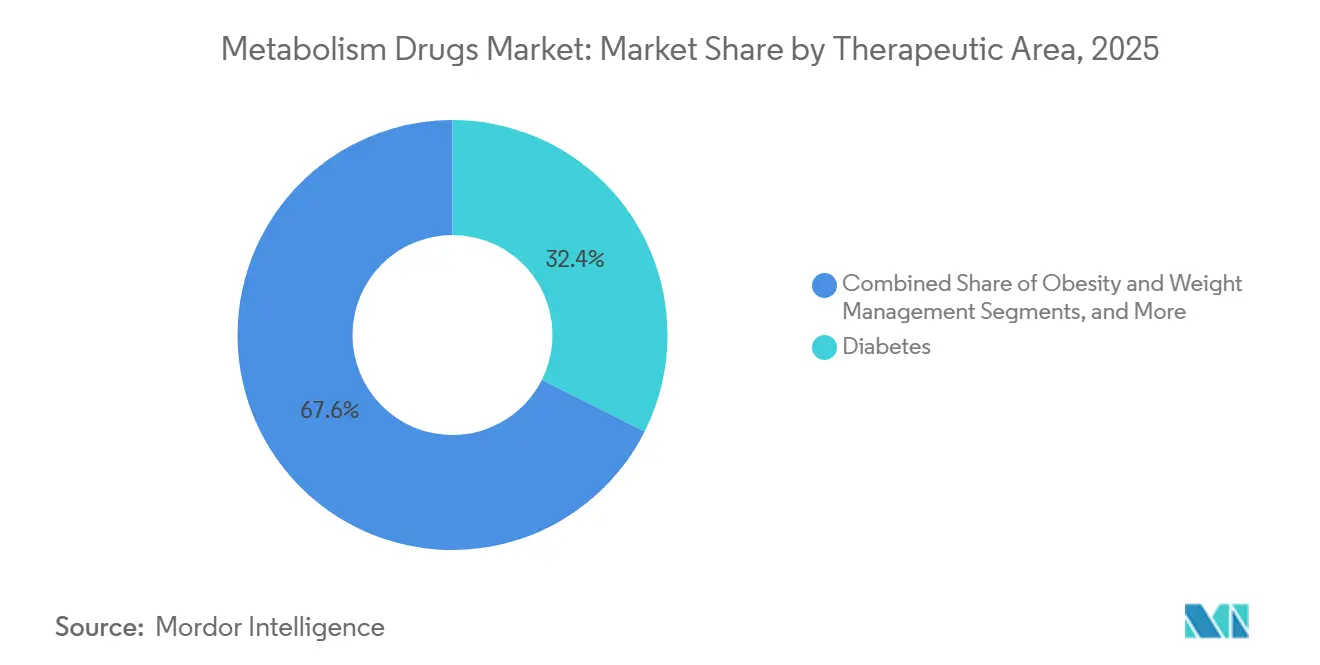
Diabetes Remains the Core While Obesity Expands DemandDiabetes held 32.40% of revenue in 2025 and remained the largest therapeutic area in the metabolism drugs market. High disease prevalence, established treatment guidelines, and glycemic management reimbursement systems support its position. Metformin and sulfonylureas drive high-volume generic demand, while GLP-1 receptor agonists, DPP-4 inhibitors, SGLT-2 inhibitors, and insulin analogs generate higher-value revenue. The FDA approved Awiqli in March 2026, adding a once-weekly basal insulin option. Novo Nordisk launched oral Ozempic for type 2 diabetes with cardiovascular risk-reduction labeling in May 2026, while the FDA approved Mounjaro in August 2026, strengthening tirzepatide’s role in high-risk type 2 diabetes care.
Obesity and weight management are forecast to grow at a 7.55% CAGR through 2031, making them the fastest-growing therapeutic area. Wegovy pill, Wegovy HD, and Foundayo address patients seeking oral treatments, higher-dose therapies, or fewer dosing restrictions. Dyslipidemia and hypercholesterolemia remain significant areas, supported by widespread statin use and premium-priced PCSK9 inhibitors. Thyroid and hormonal metabolism disorders provide stable demand due to the long-term use of levothyroxine. MASH, inherited metabolic disorders, lysosomal storage diseases, hyperuricemia, and gout are smaller but high-value areas supported by new approvals, specialized care, and complex reimbursement requirements.

By Drug Class:
Lipid-Lowering Medicines Lead Revenue While Antidiabetics Grow FasterLipid-lowering drugs accounted for 24.45% of revenue in 2025, reflecting the broad global use of statins and the added value of PCSK9 inhibitors. Major cardiovascular guidelines continue to recommend statins as first-line treatments, supporting prescription volumes. Evolocumab, marketed as Repatha, and alirocumab, marketed as Praluent, serve patients with statin intolerance and familial hypercholesterolemia. Inclisiran, marketed as Leqvio, provides twice-yearly dosing, although prior authorization remains a barrier in many health systems. Merck’s enlicitide decanoate, also known as MK-0616, was in Phase 3 development in 2026 and represents a potential oral PCSK9 treatment option.
Antidiabetic drugs are forecast to grow at a 6.71% CAGR through 2031, the fastest rate among drug classes. GLP-1 and GIP/GLP-1 agonists generate revenue across diabetes and obesity care, supporting growth. Lipid-lowering drugs face generic pressure on statins and limited PCSK9 use in lower-income countries. Anti-obesity medicines are expanding with broader pharmacotherapy access, while thyroid replacement therapies maintain predictable growth. Metabolic liver disease medicines can generate new revenue as MASH prescriptions rise, while uric acid-lowering medicines face generic erosion, and pegloticase retains a premium role in refractory gout.
By Route of Administration:
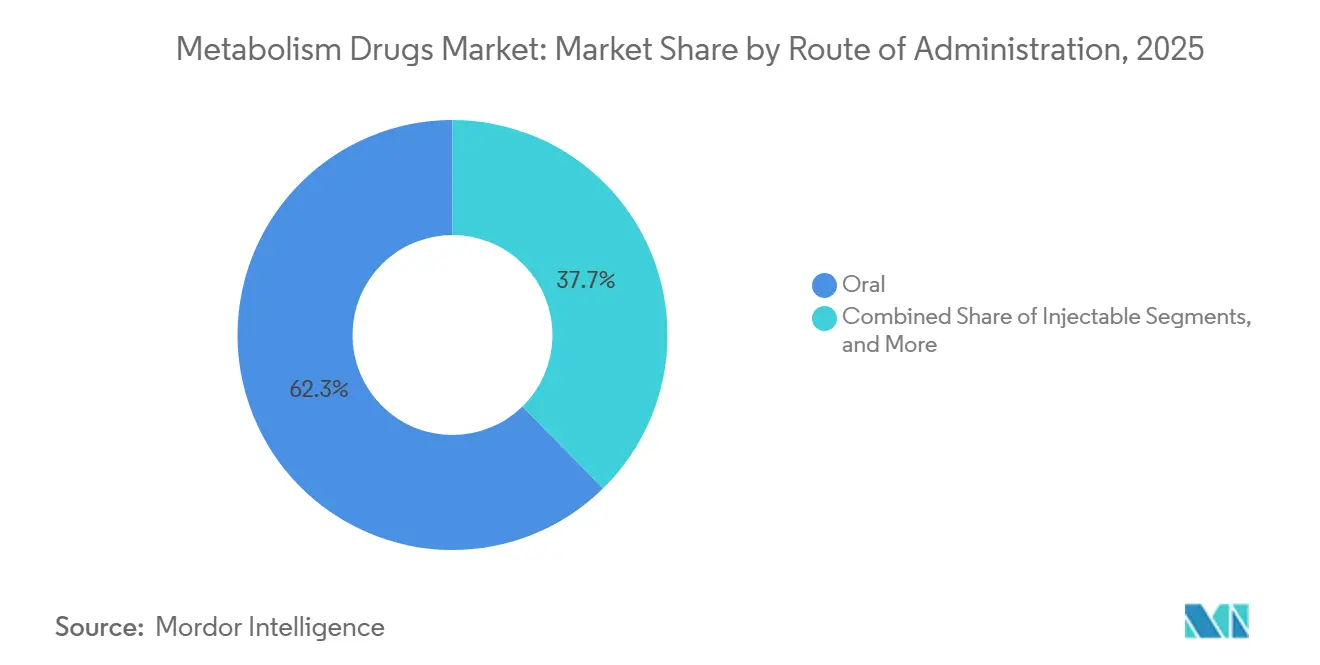
Oral Medicines Lead While Injectables Expand QuicklyOral formulations held 62.34% of revenue in 2025, giving them the largest metabolism drugs market share by route of administration. Metformin, sulfonylureas, DPP-4 inhibitors, SGLT-2 inhibitors, statins, levothyroxine, and gout medicines provide a broad oral treatment base. This diverse portfolio is likely to maintain oral medicines as the leading route through the forecast period. Wegovy pill and Foundayo provide obesity patients with alternatives to injectable GLP-1 treatments. Foundayo’s lack of food and water restrictions differentiates it from earlier oral semaglutide regimens.
Injectable treatments are forecast to expand at an 8.25% CAGR through 2031, the fastest rate among administration routes. GLP-1 and dual-agonist therapies drive this growth. Wegovy HD achieved 20.7% mean weight loss in the STEP UP trial and provides a high-dose option for patients requiring greater efficacy. Intravenous infusion remains important for enzyme replacement therapies used in lysosomal storage diseases and other specialized metabolic conditions. Injectable growth depends on adequate cold-chain and fill-finish infrastructure, while oral GLP-1 launches can reduce logistics barriers in markets with limited refrigerated distribution.
By Distribution Channel:
Retail Pharmacies Lead While Online Dispensing GrowsRetail pharmacies held 46.78% of revenue in 2025 and were the leading distribution channel in the metabolism drugs market. Community pharmacies commonly manage long-term conditions such as diabetes, dyslipidemia, hypothyroidism, and gout. High dispensing volumes of levothyroxine, metformin, statins, allopurinol, and oral hypoglycemics support the channel’s role. Manufacturers are also introducing branded oral GLP-1 medicines through retail outlets. Eli Lilly introduced Foundayo through LillyDirect, Amazon Pharmacy, and US retail pharmacies, supporting direct links between prescribing, fulfillment, and ongoing patient access.
Online pharmacies are forecast to grow at a 6.55% CAGR through 2031. Digital prescribing and telehealth models support online dispensing for chronic medicines, including GLP-1 therapies. MEDS reported that pharmacy e-commerce penetration increased from 16% in 2020 to 25% in 2025. Hospital pharmacies remain important for enzyme replacement treatments, MASH care pathways, and complex intravenous therapies. Specialty pharmacies support rare diseases through patient-support and payer-required distribution programs, while reimbursement and regulatory requirements continue to shape online fulfillment.
Geography Analysis
North America Metabolism Drugs Market
North America held 41.65% of revenue in 2025, making it the largest regional metabolism drugs market. High pharmaceutical spending, strong GLP-1 uptake, and rapid regulatory reviews support market growth. CMS introduced the Medicare GLP-1 Bridge Program in July 2026, offering eligible beneficiaries a USD 50 monthly copay for selected treatments. The program improves access to obesity medicines for Medicare patients, while Canada’s formulary process and Mexico’s COFEPRIS review system create varied access conditions. The United States also offers opportunities for PCSK9 inhibitors, including Repatha and Praluent, despite payer controls.
APAC Metabolism Drugs Market
Asia-Pacific is forecast to grow at a CAGR of 9.73% through 2031, making it the fastest-growing regional market for metabolism drugs. Rising health care spending, high diabetes prevalence, domestic generic production, and broader access to branded medicines drive growth. China has more than 15 semaglutide biosimilars under regulatory review, which may reduce multinational pricing power and expand treatment access. India’s pharmaceutical production incentive program and the April 2026 approval of Dr. Reddy’s generic oral semaglutide support domestic competition. Japan’s preference for oral therapies and Singapore’s April 2026 shift to the eCTD submission format further support market development.
EMEA and South America Metabolism Drugs Market
Europe is a major market for metabolic drugs, supported by high prescription volumes for statins and levothyroxine and increasing use of GLP-1 and PCSK9 therapies. The European Commission authorized the Wegovy pill for obesity and overweight management across European Union member states in July 2026. The UK MHRA authorization of Rezdiffra and the EMA authorization of Kayshild established MASH as a new commercial treatment area in Europe. Middle East and Africa and South America remain smaller regional markets, with growth supported by health care investment, pharmaceutical localization, and broader public coverage for branded antidiabetic medicines.
Competitive Landscape
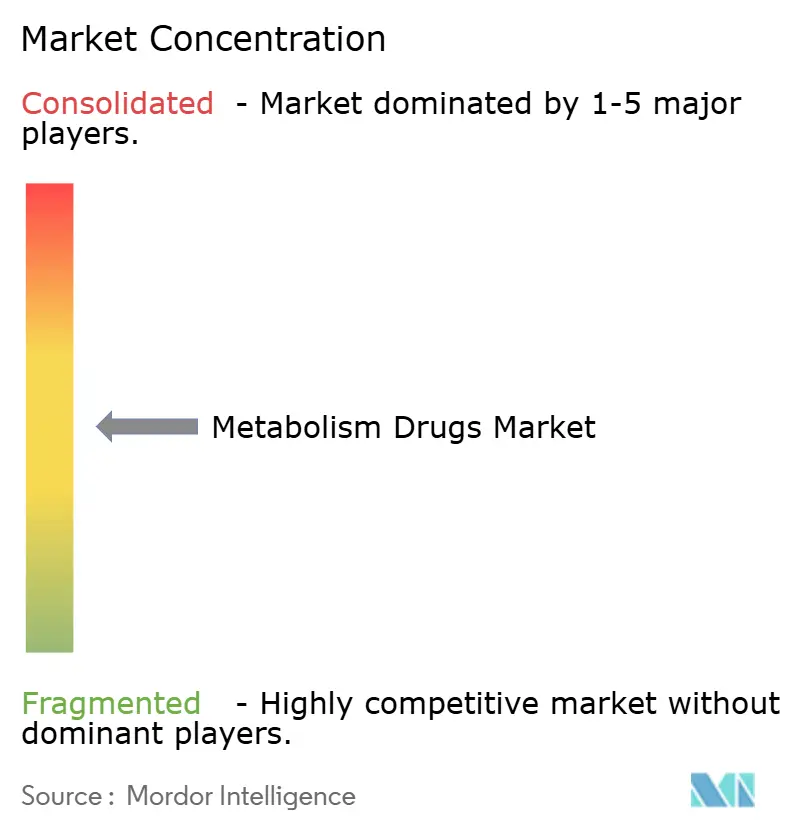
The Metabolism drugs market is moderately concentrated among innovative medicine companies. Novo Nordisk and Eli Lilly lead GLP-1-based diabetes and obesity treatments. In May 2026, Eli Lilly committed USD 4.5 billion across two manufacturing sites in Lebanon, Indiana, increasing its total Indiana commitments since 2020 to more than USD 21 billion. In March 2026, Novo Nordisk announced a EUR 432 million (USD 501.71 million) expansion of its Athlone facility to increase oral GLP-1 capacity for markets outside the United States. These investments strengthen capacity as a competitive advantage, while Eli Lilly’s oral Foundayo may reduce reliance on peptide manufacturing as a small-molecule treatment.
AstraZeneca competes through Farxiga in SGLT-2 inhibitors and is developing treatments for MASH and obesity. Its 2026 pipeline included AZD2389 for MASH, AZD6234, and a GLP-1 receptor and glucagon dual-agonist program. Sanofi maintains the Praluent PCSK9 franchise and the Lantus and Toujeo insulin portfolios. Amgen participates through Repatha and Krystexxa for lipid management and refractory gout. The competitive focus is shifting from single indications toward broader cardiometabolic portfolios and improved delivery options.
Rare and inherited metabolic diseases operate under different competitive conditions, with companies serving narrow patient populations. Amicus Therapeutics, BioMarin Pharmaceutical, Recordati, Takeda, and Ultragenyx rely on orphan-drug designations, complex manufacturing, and payer-managed access. The FDA approved Ctexli for cerebrotendinous xanthomatosis in February 2025, while Japan approved Pombiliti plus Opfolda for Pompe disease in June 2025. Biosimilar entry from manufacturers in India and South Korea may increase price pressure as enzyme replacement patents expire.
Metabolism Drugs Industry Leaders
-
Novo Nordisk A/S
-
Eli Lilly and Company
-
Merck & Co., Inc.
-
Sanofi
-
AstraZeneca plc
- *Disclaimer: Major Players sorted in no particular order
Metabolism Drugs Market Companies Covered in this Report
- Amgen
- Amicus Therapeutics, Inc.
- AstraZeneca
- Bayer
- Biocon
- Biomarin Pharmaceutical
- Boehringer Ingelheim
- Cipla
- Eli Lilly and Company
- Merck
- Novo Nordisk
- Pfizer
- Recordati S.p.A.
- Sanofi
- Sun Pharmaceuticals Industries
- Takeda Pharmaceuticals
- Teva Pharmaceutical Industries
- Ultragenyx Pharmaceutical Inc.
Recent Industry Developments in Metabolism Drugs Market
- August 2026: The FDA approved Mounjaro (tirzepatide) to reduce major adverse cardiovascular event risk in high-risk adults with type 2 diabetes, marking its second cardiovascular outcomes label.
- July 2026: The European Commission authorized once-daily oral Wegovy 25 mg for obesity and overweight management across EU member states, marking the EU’s first oral GLP-1 receptor agonist approval for weight management.
- June 2026: The UK MHRA authorized resmetirom (Rezdiffra) for adults with non-cirrhotic MASH and moderate to advanced liver fibrosis through the International Recognition Procedure.
- May 2026: Eli Lilly committed an additional USD 4.5 billion to two manufacturing sites in Lebanon, Indiana, supporting its genetic medicine, API, and incretin therapy production capabilities.
Global Metabolism Drugs Market Report Scope
As per the scope of the report, the metabolism drugs market comprises pharmaceutical products used to prevent, manage, or treat disorders caused by abnormalities in the body's metabolic processes, including disturbances in glucose, lipid, protein, hormone, and energy metabolism.
The metabolism drugs market is segmented by therapeutic area, drug class, route of administration, distribution channel, and geography. By therapeutic area, the market is segmented into diabetes, obesity and weight management, dyslipidemia and hypercholesterolemia, thyroid and hormonal metabolism disorders, metabolic liver diseases, inherited metabolic disorders and lysosomal storage diseases, and hyperuricemia and gout. By drug class, the market includes antidiabetic drugs, anti-obesity drugs, lipid-lowering drugs, thyroid hormone replacement drugs, uric acid-lowering drugs, metabolic liver disease drugs, and other metabolic drugs. By route of administration, the market is segmented into oral, injectable, intravenous infusion, and other routes of administration. By distribution channel, the market is segmented into hospital pharmacies, retail pharmacies, specialty pharmacies, online pharmacies, and other distribution channels. By geography, the market is analyzed across North America, Europe, Asia-Pacific, the Middle East and Africa, and South America. The report also covers the estimated market sizes and trends for 17 countries across major regions globally. The report offers market sizes and forecasts in terms of value (USD) for the above segments.
Segmentation Overview
| Diabetes |
| Obesity and Weight Management |
| Dyslipidemia and Hypercholesterolemia |
| Thyroid and Hormonal Metabolism Disorders |
| Metabolic Liver Diseases |
| Inherited Metabolic Disorders and Lysosomal Storage Diseases |
| Hyperuricemia and Gout |
| Antidiabetic Drugs |
| Anti-obesity Drugs |
| Lipid-Lowering Drugs |
| Thyroid Hormone Replacement |
| Uric-Acid Lowering Drugs |
| Metabolic Liver Diseases Drugs |
| Other Metabolic Drugs |
| Oral |
| Injectable |
| Intravenous Infusion |
| Other Routes |
| Hospital Pharmacies |
| Retail Pharmacies |
| Specialty Pharmacies |
| Online Pharmacies |
| Others |
| North America | United States |
| Canada | |
| Mexico | |
| Europe | Germany |
| United Kingdom | |
| France | |
| Italy | |
| Spain | |
| Rest of Europe | |
| Asia-Pacific | China |
| India | |
| Japan | |
| Australia | |
| South Korea | |
| Rest of Asia-Pacific | |
| Middle East and Africa | GCC |
| South Africa | |
| Rest of Middle East and Africa | |
| South America | Brazil |
| Argentina | |
| Rest of South America |
| By Therapeutic Area | Diabetes | |
| Obesity and Weight Management | ||
| Dyslipidemia and Hypercholesterolemia | ||
| Thyroid and Hormonal Metabolism Disorders | ||
| Metabolic Liver Diseases | ||
| Inherited Metabolic Disorders and Lysosomal Storage Diseases | ||
| Hyperuricemia and Gout | ||
| By Drug Class | Antidiabetic Drugs | |
| Anti-obesity Drugs | ||
| Lipid-Lowering Drugs | ||
| Thyroid Hormone Replacement | ||
| Uric-Acid Lowering Drugs | ||
| Metabolic Liver Diseases Drugs | ||
| Other Metabolic Drugs | ||
| By Route of Administration | Oral | |
| Injectable | ||
| Intravenous Infusion | ||
| Other Routes | ||
| By Distribution Channel | Hospital Pharmacies | |
| Retail Pharmacies | ||
| Specialty Pharmacies | ||
| Online Pharmacies | ||
| Others | ||
| By Geography | North America | United States |
| Canada | ||
| Mexico | ||
| Europe | Germany | |
| United Kingdom | ||
| France | ||
| Italy | ||
| Spain | ||
| Rest of Europe | ||
| Asia-Pacific | China | |
| India | ||
| Japan | ||
| Australia | ||
| South Korea | ||
| Rest of Asia-Pacific | ||
| Middle East and Africa | GCC | |
| South Africa | ||
| Rest of Middle East and Africa | ||
| South America | Brazil | |
| Argentina | ||
| Rest of South America | ||
Key Questions Answered in the Report
What is the projected value of the Metabolism drugs market by 2031?
The Metabolism drugs market is forecast to reach USD 20.02 billion by 2031, growing from USD 15.35 billion in 2026 at a 5.45% CAGR.
Which therapeutic area is growing fastest in metabolism drugs?
Obesity and weight management are the fastest-growing therapeutic areas, with a projected CAGR of 7.55% through 2031.
Why are GLP-1 medicines important for metabolic care?
GLP-1 medicines are used across diabetes, obesity, and MASH care. New cardiovascular and liver-related labels are widening their clinical use.
Which route of administration is expanding most quickly?
Injectable treatments are projected to grow at an 8.25% CAGR through 2031, driven mainly by GLP-1 and dual-agonist therapies.
Which region will grow fastest through 2031?
Asia-Pacific is forecast to grow at a 9.73% CAGR, supported by diabetes prevalence, local manufacturing, and wider access to generic and branded medicines.
What limits wider access to obesity medicines?
High out-of-pocket costs, uneven reimbursement, gastrointestinal effects, cold-chain needs, and long-term treatment persistence remain key barriers.