
Meat Starter Cultures Market Size and Share
Market Overview
| Study Period | 2021 - 2031 |
|---|---|
| Market Size (2026) | USD 68.72 Million |
| Market Size (2031) | USD 101.23 Million |
| Growth Rate (2026 - 2031) | 8.06 % |
| Fastest Growing Market | Asia-Pacific |
| Largest Market | Europe |
| Market Concentration | Medium |
Major Players *Disclaimer: Major Players sorted in no particular order Image © Mordor Intelligence. Reuse requires attribution under CC BY 4.0. | |
Meat Starter Cultures Market Analysis by Mordor Intelligence
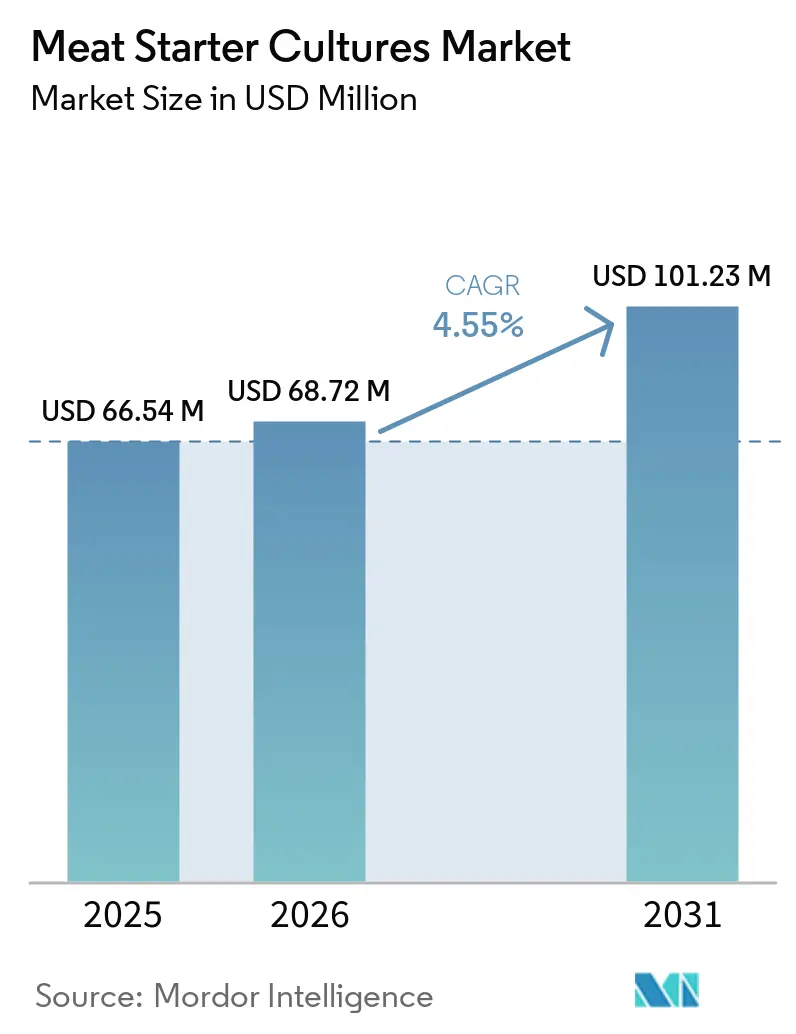
The meat starter cultures market size is projected to expand from USD 66.54 million in 2025 and USD 68.72 million in 2026 to USD 101.23 million by 2031, registering a CAGR of 8.06% between 2026 and 2031. The meat starter cultures market is moving toward defined cultures because processors need reliable fermentation results across repeated production runs. Defined microbial inputs help processors control flavor, color, texture, and acidification when spontaneous fermentation can create uneven outcomes. Food safety requirements and pressure to reduce synthetic nitrite use are increasing the need for cultures that support both fermentation and protection. Premium charcuterie products also sustain demand for formulations suited to particular meat types and regional product profiles. These conditions favor suppliers that combine strain collections, application support, and documented culture performance in the meat starter cultures market.
Key Report Takeaways
- By form, freeze-dried cultures held 57.63% of the meat starter cultures market share in 2025, while frozen cultures are forecast to grow at an 8.79% CAGR through 2031.
- By composition, multi-strain cultures held 72.32% of revenue in 2025, while multi-strain mix formulations are forecast to grow at a 9.03% CAGR through 2031.
- By microorganisms, bacteria accounted for 47.62% of revenue in 2025, while yeasts and molds are forecast to grow at a 9.11% CAGR through 2031.
- By application, sausages held 43.28% of revenue in 2025, while dry-cured meat is forecast to grow at an 8.95% CAGR through 2031.
- By geography, Europe held 38.72% of revenue in 2025, while Asia-Pacific is forecast to grow at a 9.51% CAGR through 2031.
Note: Market size and forecast figures in this report are generated using Mordor Intelligence’s proprietary estimation framework, updated with the latest available data and insights as of January 2026.
Market Trends and Insights
Drivers Impact Analysis of Meat Starter Cultures Market*
| Driver | (~) % Impact on CAGR Forecasts | Geographic Relevance | Impact Timeline |
|---|---|---|---|
| Growing demand for consistent fermentation, flavor, and texture | +1.0% | Global | Short term (≤ 2 years) |
| Rising adoption of clean-label and reduced-nitrite formulations | +0.9% | North America and EU | Medium term (2-4 years) |
| Increasing need for pathogen and spoilage prevention | +0.8% | Global | Short term (≤ 2 years) |
| Expansion of premium, artisanal, and regional charcuterie products | +0.5% | Europe and North America | Medium term (2-4 years) |
| Advancements in strain selection and microbial biotechnology | +0.7% | Global, early gains in Asia-Pacific | Long term (≥ 4 years) |
| Growing interest in preserving local microbial terroir in premium meats | +0.3% | Europe, with spill-over to Asia-Pacific | Long term (≥ 4 years) |
| Source: Mordor Intelligence | |||
Growing Demand for Consistent Fermentation, Flavor, and Texture
Defined cultures are increasingly used as a quality control tool rather than only as a way to speed fermentation. Large sausage and salami processors need uniform color, pH, flavor, and texture across many production runs. Spontaneous microflora can create variation in acidification rates and flavor formation, which makes this consistency harder to achieve. A 2025 study found that multi-strain formulations containing lactic acid bacteria and coagulase-negative staphylococci reached pH 5.30 within 8.00 hours at suitable inoculation levels while maintaining safety and texture stability. Another 2025 study found that co-inoculation with Lactobacillus delbrueckii N102 and Latilactobacillus sakei H1-5 improved acidification and water distribution compared with uninoculated controls. The meat starter cultures market therefore benefits when processors face shorter shelf-life windows and manage more product variations across product lines.
Rising Adoption of Clean-Label and Reduced-Nitrite Formulations
Reduced-nitrite formulation is shaped by both consumer expectations and food safety requirements. Starter cultures can support these formulations by contributing to acidification and by working with vegetable-derived nitrate sources. A 2025 study reported that a Propionibacterium shermanii and Lactobacillus acidophilus blend at a 0.10% inoculation level reduced sodium nitrite by 40.00% in semidry fermented and smoked sausages[1]. The same study reported a pH of 5.30 within 8.00 hours without a loss of color stability or safety. Separate research found that co-inoculated L. delbrueckii and L. sakei reduced nitrite residues by 70.00%, leaving final concentrations below 30.00 ppm in dry-fermented sausages. Denmark’s stricter nitrite limits and France’s national nitrite-reduction action plan support reformulation activity, especially in Western Europe and North America, within the meat starter cultures market.
Increasing Need for Pathogen and Spoilage Prevention
Cultures that combine fermentation and bioprotection have a broader role in food safety programs. Lactic acid bacteria can reduce pathogen growth while preserving the characteristics of premium fermented products. A 2025 review reported that Companilactobacillus crustorum MN047 reduced E. coli by 4.30 log CFU/ml and Staphylococcus aureus by 4.50 log CFU/ml in beef matrices. The review also reported a 1.74 log CFU/g reduction of Listeria seeligeri in ready-to-eat pork ham using a Pediococcus pentosaceus inhibitory substance. Culture-based protection can be preferable to acid rinses or ultraviolet treatment in artisanal products because surface microbial communities contribute to product development in the meat starter cultures market. The 2025 United States Department of Agriculture - Food Safety and Inspection Service Hazard Analysis and Critical Control Point model reinforces culture-assisted pathogen reduction as part of the critical control approach for ready-to-eat fermented, salt-cured, and dried products[2].
Advancements in Strain Selection and Microbial Biotechnology
Genomics-based strain development is raising the technical requirements for commercial culture suppliers. EFFCA’s July 2026 guidance identifies whole-genome sequencing as the preferred characterization method for food cultures. The guidance states that single strains require full whole-genome sequencing, while components above 1.00% in multi-strain preparations must be described at species level. A June 2026 Food Chemistry study identified Rhodotorula mucilaginosa SY-AN-9 as a yeast starter culture for Northeastern Chinese dried sausage that can mitigate N-nitrosamines. Research published in 2026 also found that Lactobacillus plantarum and Debaryomyces hansenii co-fermentation improved physicochemical properties and expanded the nonvolatile metabolome of fermented beef. The meat starter cultures market gives an advantage to suppliers with validated strain collections and established screening capability as documentation expectations rise.
Restraints Impact Analysis of Meat Starter Cultures Market*
| Restraint | (~) % Impact on CAGR Forecasts | Geographic Relevance | Impact Timeline |
|---|---|---|---|
| Complexity of strain selection and process optimization | -0.5% | Global | Medium term (2-4 years) |
| Sensitivity of cultures to temperature, pH, salt, and processing conditions | -0.4% | Asia-Pacific core, spill-over to Middle East and Africa | Short term (≤ 2 years) |
| Strict food safety regulations and approval requirements | -0.4% | North America and Europe | Medium term (2-4 years) |
| Risk of unwanted sensory changes in traditional meat products | -0.3% | Europe | Long term (≥ 4 years) |
| Source: Mordor Intelligence | |||
Complexity of Strain Selection and Process Optimization
Culture selection requires more than choosing a strain that acidifies a product quickly. Processors must assess strain compatibility, qualified presumption of safety alignment, antibiotic resistance, biogenic amine potential, sensory effects, fermentation temperature, and salt conditions. The Max Rubner-Institut states that viable meat cultures must show no disease-causing capacity in humans or animals, no clinically relevant antibiotic resistance, and no harmful substance production. These screening requirements can exclude strains that otherwise appear technically promising. Small and mid-sized processors in emerging markets may lack the resources to optimize advanced multi-strain systems without supplier support. This can slow adoption of higher-value culture systems even where fermented meat production is expanding in the meat starter cultures market.
Strict Food Safety Regulations and Approval Requirements
Food culture regulations are becoming more detailed and technically demanding. EFFCA’s July 2026 guidance combines 2025 EFSA characterization expectations with existing European food and hygiene requirements. It requires species-level identification for components above 1.00% in multi-strain cultures and sequencing-based antimicrobial susceptibility evaluation. These requirements can increase development costs before a supplier generates revenue from a new culture. In North America, pathogen reduction standards and HACCP validation also raise expectations for suppliers that must show product performance in processing conditions[3]. Smaller developers may face a disadvantage in the meat starter cultures market when they do not have comparable regulatory or scientific resources.
*Our forecasts treat driver/restraint impacts as directional, not additive. The impact forecasts reflect baseline growth, mix effects, and variable interactions.
Meat Starter Cultures Market Segment Analysis
By Form:
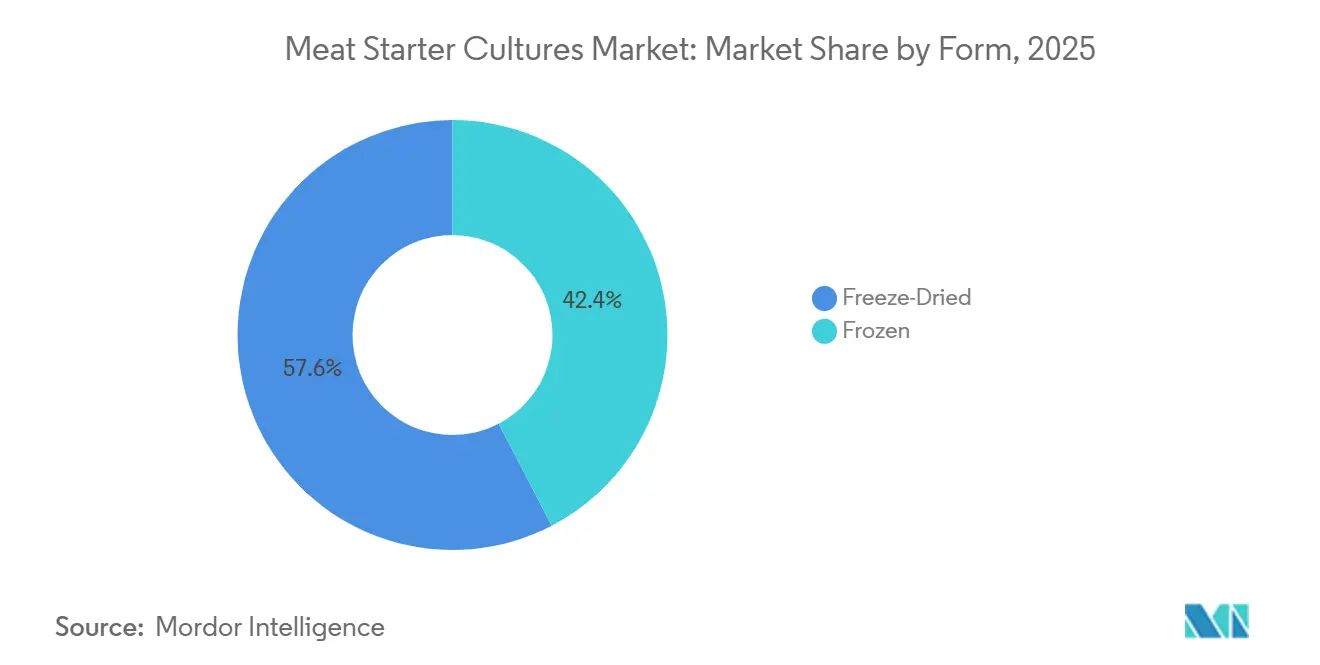
Freeze-Dried Cultures Retain the Practical AdvantageFreeze-dried cultures held 57.63% of the meat starter cultures market share in 2025. Their position reflects shelf-life benefits and easier distribution where cold-chain infrastructure is fragmented. Unlike frozen preparations, freeze-dried cultures can remain stable under ambient or refrigerated storage conditions. This reduces storage demands and last-mile logistics costs for processors in Southeast Asia, South America, and Sub-Saharan Africa. Frozen cultures are forecast to grow at a 8.79% CAGR from 2026 to 2031. Their higher initial viable counts can support high-inoculation applications that require rapid acidification, including industrial pepperoni and fast-ripening salami.
Processing improvements are reducing the performance gap between the two forms. Microencapsulation, spray drying, and protective coatings are being used to improve survival and stress tolerance in freeze-dried preparations. A 2025 review found that freeze-drying and encapsulation advances can help cultures withstand processing conditions that previously constrained their use in high-salt, high-acid, or heat-stressed meat settings. This matters for processors that need stable cultures but cannot maintain continuous low-temperature storage. Energy savings and less dependence on cold-chain logistics strengthen the case for freeze-dried formats. The meat starter cultures market can therefore see a gradual narrowing of frozen cultures’ logistical advantage after 2026 as processing capabilities improve.
By Composition:
Multi-Strain Systems Strengthen Process ControlMulti-strain cultures held 72.32% of revenue in 2025, giving them the largest position within the meat starter cultures market size for composition. Their lead reflects a shift from single-organism acidification toward combinations that manage several fermentation outcomes at the same time. Lactic acid bacteria provide acidification, while coagulase-negative staphylococci support lipolysis and color stabilization. This combination can help processors meet multiple product quality requirements in salami and dry-cured products. Research identifies L. sakei and S. carnosus pairings as common references for fermented sausage production. The same research identifies S. xylosus and L. plantarum blends as widely used in European dry-cured products for complementary proteolytic and antioxidant activity.
Multi-strain mix formulations are projected to grow at a 9.03% CAGR through 2031. Processors increasingly buy pre-validated assemblies rather than combine individual strains internally. This approach transfers blending knowledge and quality responsibility from the processor to the culture supplier. It also increases the value of suppliers that can validate strain interactions and formulation performance. Single-strain cultures retain a defined role where a processor needs a specific acidification pattern or flavor contribution. They remain relevant for fast-cure pepperoni and for traditional regional products that need targeted functionality in the meat starter cultures market.
By Microorganisms:
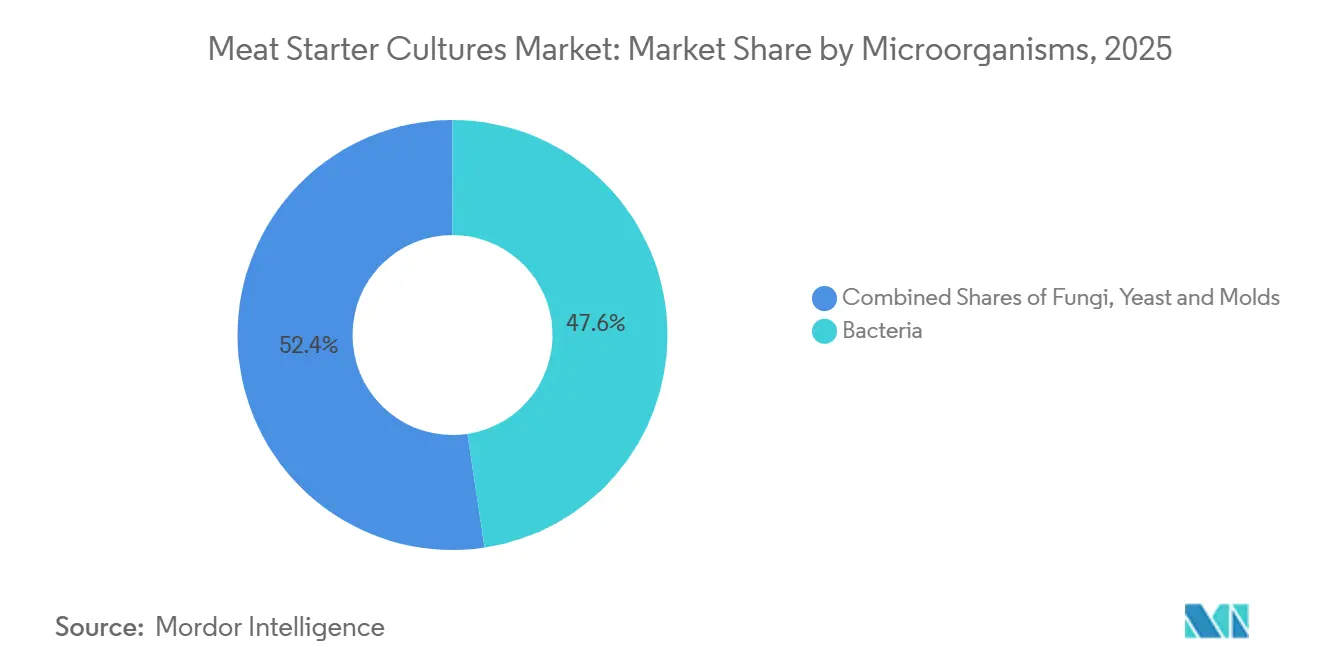
Bacteria Lead Broad Use, While Yeasts and Molds Support Premium ProductsBacteria accounted for 47.62% of revenue in 2025. Lactic acid bacteria, including Lactiplantibacillus plantarum, Latilactobacillus sakei, Pediococcus pentosaceus, and Latilactobacillus curvatus, are central to the fermentation of sausages and salamis. They lower pH, support safety, affect water activity, and stabilize texture during drying. Coagulase-negative staphylococci such as S. carnosus and S. xylosus also support color fixation and lipid management. Industrial sausage and salami production in Europe and North America supports the bacteria segment’s large base. The meat starter cultures industry relies on these bacterial functions across its highest-volume product categories in the meat starter cultures market.
Yeasts and molds are forecast to grow at a 9.11% CAGR from 2026 to 2031. Their growth reflects their role in premium dry-cured products that undergo long maturation. Debaryomyces hansenii, Penicillium nalgiovense, and Penicillium chrysogenum are used on dry-cured ham surfaces for flavor development and proteolysis management. A 2025 study found that Rhodotorula mucilaginosa inoculation improved nutty aroma, meaty aroma, and overall acceptance in dry-cured ham. The study also reported the highest free amino acid accumulation among the yeast strains tested. Mold-only cultures remain a specialized part of the portfolio for surface colonization management and ochratoxin A control.

By Application:
Sausages Provide Scale, While Dry-Cured Meat Supports Premium DemandSausages held 43.28% of application revenue in 2025. Their lead reflects the scale of industrial fermented sausage production and the standardized culture inputs used in high-throughput operations. Products include chorizo, saucisson sec, cervelat, mettwurst, pepperoni, and summer sausage. The category provides a broad volume base for culture demand across European and North American production. A 2025 study comparing Scarlet, Euroferment, and Roxaane LC cultures found that culture selection affected antioxidant activity, volatile compound profiles, and taste-active amino acid distribution in fermented sausages. These findings show that culture upgrades can still matter in high-volume products with established production methods.
Dry-cured meat is forecast to grow at a 8.95% CAGR through 2031. Premium positioning, geographic indication expansion, and interest in longer-matured products support this result. Processors are using selected Penicillium and Debaryomyces cultures for flavor consistency, maturation management, and ochratoxin A control in drying rooms. Salami continues to have an important position across Italy, Germany, and Spain, where tailored blends support different ripening speeds and texture targets. Poultry, seafood, and other applications are emerging as controlled fermentation becomes more established in Asian and Southeast Asian processed meat categories. The meat starter cultures market is supported by these uses because suppliers can adapt cultures to different protein bases and process conditions for diverse processors.
Geography Analysis
Europe Meat Starter Cultures Market
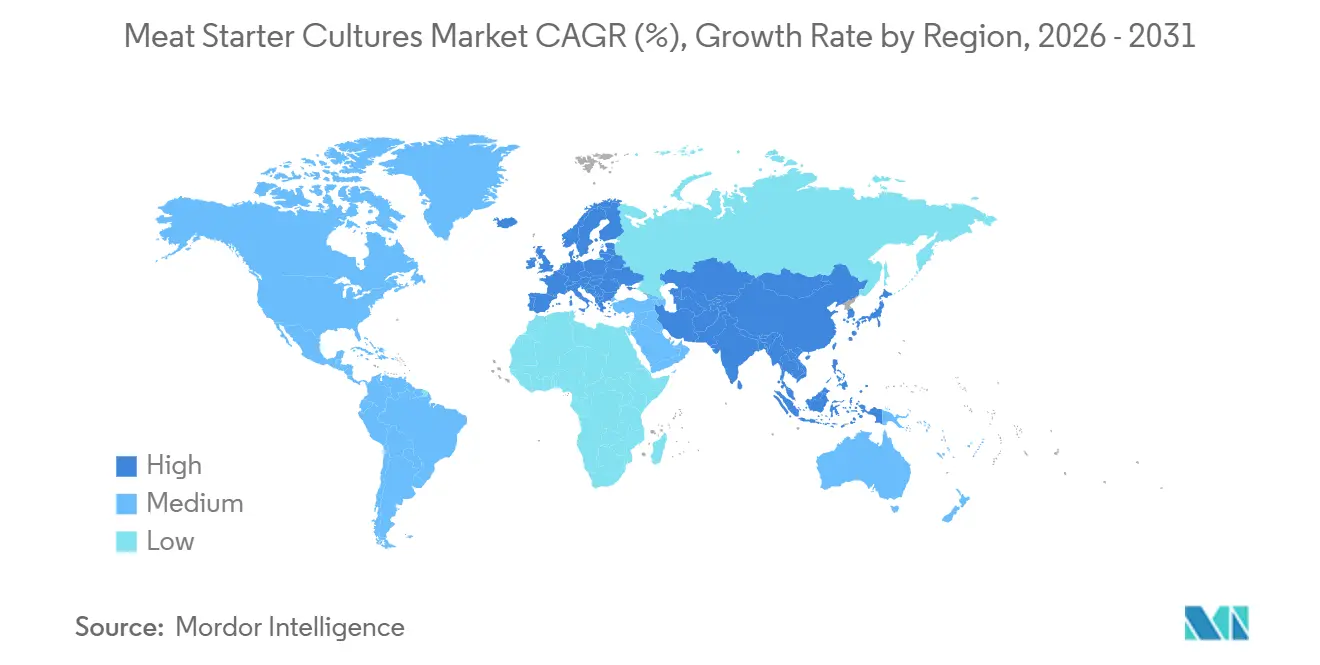
Europe held 38.72% of the meat starter cultures market share in 2025. Germany, Italy, France, Spain, and the Netherlands provide a deep demand base through their established fermented meat traditions. Germany’s Rohwurst products and Italy’s salami and prosciutto categories support both fast-ripening and slow-ripening culture demand. Regulatory Affairs Professionals Society (RAPS) provides customized starter cultures for Rohwurst varieties, including Krakauer, Katenrauchwurst, and Teewurst, showing the localized nature of European demand. Suppliers such as Lallemand and Sacco System position bioprotective ranges for ready-to-eat meat applications in this regulatory setting.
APAC Meat Starter Cultures Market
Asia-Pacific is projected to grow at a 5.83% CAGR from 2026 to 2031, the highest geographic rate in the meat starter cultures market. Chinese processors are investing in defined cultures to standardize products that previously depended on environmental microflora. A 2025 study found that Chinese consumers preferred softer texture, moderately higher pH, and salty-sweet profiles over sharper European-style acidity in fermented sausages. This supports regional strain development rather than direct use of European formulations. The Good Food Institute reported that commercial-scale fermentation facilities opened in China and India in 2025, expanding regional bioprocessing infrastructure. Japan also maintains a high-value processed meat tier that aligns with European-grade quality and safety expectations in the Meat starter cultures market.
The Americas and MEA Meat Starter Cultures Market
North America is mature but remains active in clean-label reformulation and pathogen reduction. Kerry reported strong meat volume growth in its first-quarter 2026 results, supported by biotechnology solutions, fermentation-derived offerings, and natural protection systems. South America, especially Brazil and Argentina, has demand linked to premium fermented and dried meat exports to Europe and North America. These export categories place greater emphasis on quality documentation and validated microbial inputs. The Middle East and Africa remain early-stage markets for controlled meat fermentation. European suppliers are providing initial technical support as food processing modernization in the United Arab Emirates and premium charcuterie in South Africa establish a base for future meat starter cultures market use.
Competitive Landscape
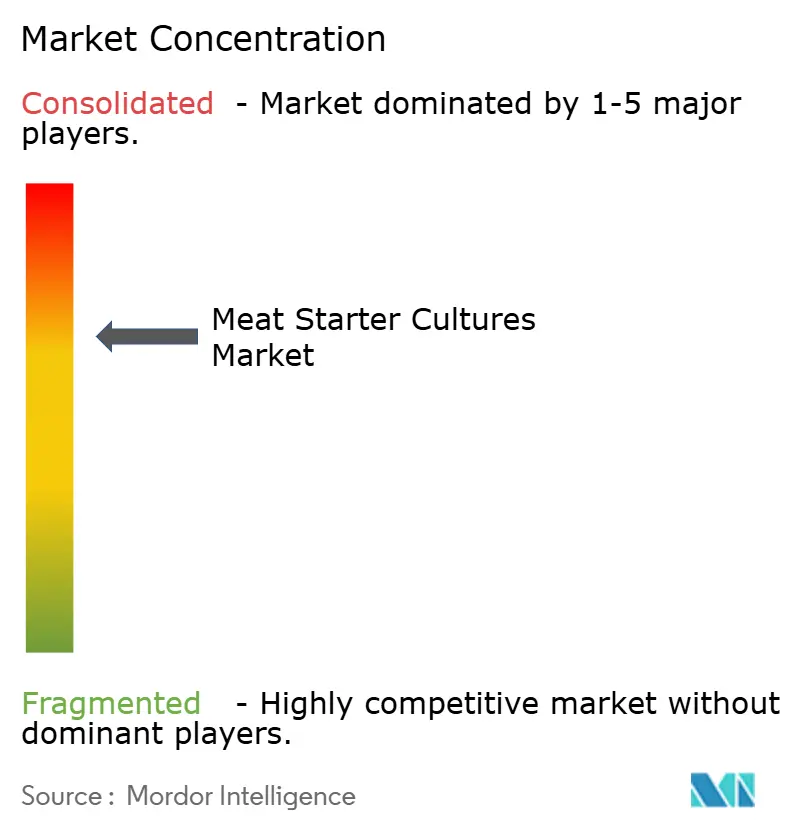
The meat starter cultures market has a semi-consolidated structure, with global biotechnology and food ingredient companies alongside regional specialists. Novonesis A/S, DSM-Firmenich, Kerry, and Lallemand form the leading tier through proprietary strain collections, multi-strain portfolios, and technical application support. This profile helps larger suppliers address processor requirements that smaller firms may not be able to support. EFFCA’s July 2026 guidance on sequencing-based characterization favors companies with established strain records and screening capacity. Kerry has integrated starter cultures with fermentation-derived flavors and natural preservation systems in its meat offering. This bundling approach can make culture supply part of a broader formulation relationship with processors in the meat starter cultures market.
Regional specialists including Regulatory Affairs Professionals Society (RAPS), Sacco System, THT, Biochem, Proquiga, and BIOVITEC compete through local product knowledge, customization, and proximity to processors. Regulatory Affairs Professionals Society (RAPS) offers cultures designed for specific Rohwurst varieties, which illustrates how application knowledge can differentiate regional suppliers. Sacco System has presented bioprotective cultures for ready-to-eat foods, linking culture selection with shelf-life and pathogen control. Suppliers that can develop local strains may have a position in artisanal and regional fermented meat products. This is especially relevant in Asia-Pacific, where processors need cultures adapted to regional sensory preferences. It also applies in European products where producers value microbial profiles associated with local traditions in the Meat starter cultures market.
Technology is becoming an important way to maintain differentiation across both supplier groups. Whole genome sequencing supports strain selection and makes safety documentation more systematic. Process monitoring and culture optimization can also help suppliers support consistent fermentation outcomes. Research on mixed bacterial and yeast fermentation supports the development of more complex culture systems for fermented beef. At the same time, high-pressure processing and plant-extract approaches may substitute for some bioprotective applications in cooked and heat-treated meats. The meat starter cultures industry therefore faces competition not only among culture suppliers but also from other food preservation approaches in the meat starter cultures market.
Meat Starter Cultures Industry Leaders
-
dsm-firmenich AG
-
Kerry Group plc
-
International Flavors & Fragrances Inc.
-
Lallemand Inc.
-
Novonesis A/S
- *Disclaimer: Major Players sorted in no particular order
Meat Starter Cultures Market Companies Covered in this Report
- Chr. Hansen Holding A/S
- dsm-firmenich AG
- Lallemand Inc.
- Kerry Group plc
- Sacco S.r.l.
- International Flavors & Fragrances Inc.
- Biochem S.r.l.
- Proquiga Biotech, S.A.
- Galactic S.A.
- RAPS GmbH & Co. KG
- Danisco A/S
- Frutarom Industries Ltd.
- MicroTec GmbH
- DnR Sausage Supplies
- Canada Compound Corporation
- Meat Cracks Technologie GmbH
- BIOVITEC S.A.S.
- Genesis Laboratories Ltd.
- THT S.A.
- SOYUZSNAB Group
Recent Industry Developments in Meat Starter Cultures Market
- March 2026: Lallemand Specialty Cultures showcased its reinforced LALCULT® Protect bioprotective range at CFIA 2026 in Rennes, France, specifically aligned with the reinforced European Regulation (EC) No. 2073/2005, demonstrating shelf-life extension of up to 14.00 days against Listeria monocytogenes in ready-to-eat meat products under real production conditions.
- December 2024: Sacco System introduced Lyocarni VDM-107, a fast-acidifying starter culture designed for salami production. The culture was developed to achieve a pH below 5.0 within 48 hours, supporting faster fermentation while contributing to flavour and colour development and inhibiting Listeria monocytogenes.
- November 2024: Japan-based IntegriCulture launched a cell-cultured meat starter kit designed to help startups and researchers simplify cultivated-meat prototyping and reduce R&D costs. The kit includes culture media, cell-dissociation and coating solutions, cryopreservation materials, and the Oxy-thru Cultivator bioreactor.
Global Meat Starter Cultures Market Report Scope
Segmentation Overview
| Freeze-Dried |
| Frozen |
| Single Strain |
| Multi-Strain |
| Multi-Strain Mix |
| Bacteria |
| Fungi |
| Yeasts and Molds |
| Salami |
| Sausages |
| Dry-Cured Meat |
| Poultry and Seafood |
| Others |
| North America | United States |
| Canada | |
| Mexico | |
| Rest of North America | |
| Europe | Germany |
| United Kingdom | |
| France | |
| Italy | |
| Spain | |
| Netherlands | |
| Rest of Europe | |
| Asia-Pacific | China |
| India | |
| Japan | |
| Australia | |
| Rest of Asia-Pacific | |
| South America | Brazil |
| Argentina | |
| Rest of South America | |
| Middle East and Africa | United Arab Emirates |
| South Africa | |
| Rest of Middle East and Africa |
| By Form | Freeze-Dried | |
| Frozen | ||
| By Composition | Single Strain | |
| Multi-Strain | ||
| Multi-Strain Mix | ||
| By Microorganisms | Bacteria | |
| Fungi | ||
| Yeasts and Molds | ||
| By Application | Salami | |
| Sausages | ||
| Dry-Cured Meat | ||
| Poultry and Seafood | ||
| Others | ||
| By Geography | North America | United States |
| Canada | ||
| Mexico | ||
| Rest of North America | ||
| Europe | Germany | |
| United Kingdom | ||
| France | ||
| Italy | ||
| Spain | ||
| Netherlands | ||
| Rest of Europe | ||
| Asia-Pacific | China | |
| India | ||
| Japan | ||
| Australia | ||
| Rest of Asia-Pacific | ||
| South America | Brazil | |
| Argentina | ||
| Rest of South America | ||
| Middle East and Africa | United Arab Emirates | |
| South Africa | ||
| Rest of Middle East and Africa | ||
Key Questions Answered in the Report
How Big is the Meat Starter Cultures Market?
The meat starter cultures market is valued at USD 68.72 million in 2026 and is projected to reach USD 101.23 million by 2031, registering a CAGR of 8.06% over the forecast period.
Which form leads the meat starter cultures market?
Freeze-dried cultures led with 57.63% of revenue in 2025 because they are easier to store and distribute than frozen preparations.
What is the fastest-growing application for meat starter cultures?
Dry-cured meat is forecast to grow at a 8.95% CAGR through 2031, supported by premiumization and long-maturation product demand.
Which region is growing fastest for meat starter cultures?
Asia-Pacific is forecast to grow at a 9.51% CAGR through 2031 as processors invest in defined cultures and regionally adapted formulations.