
Malaysia Pet Veterinary Diet Market Size and Share
Market Overview
| Study Period | 2021 - 2031 |
|---|---|
| Forecast Data Period | 2026 - 2031 |
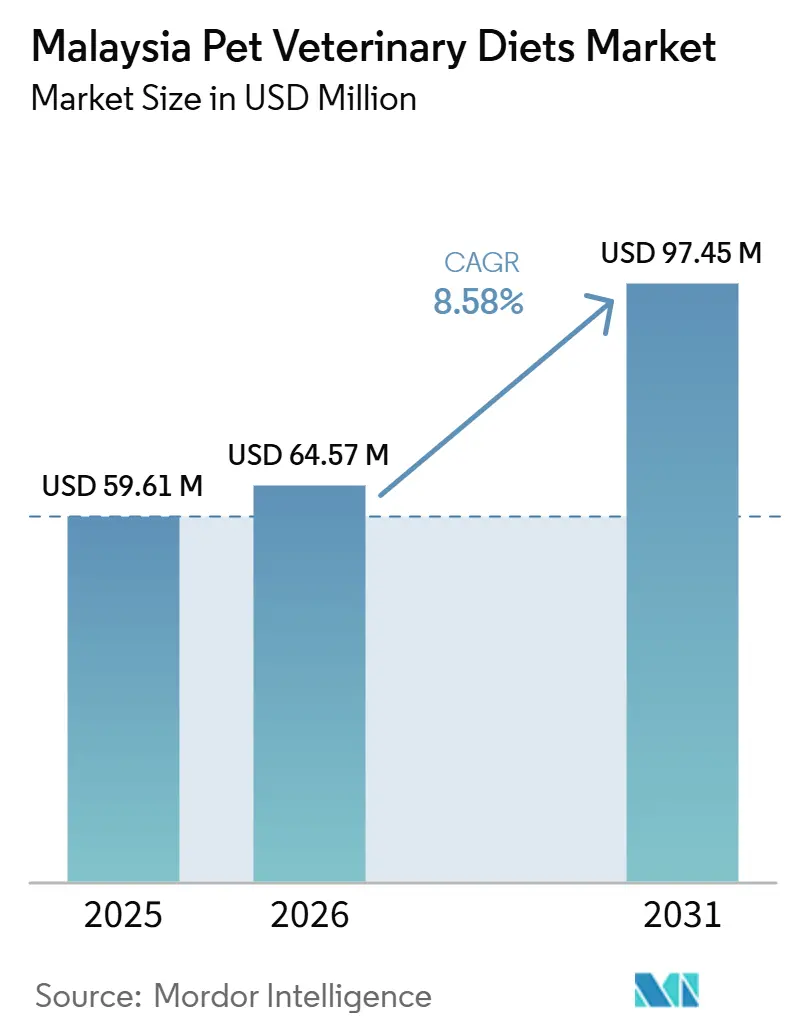
| Base Year Market Size (2025) | USD 59.61 Million |
| Market Size (2026) | USD 64.57 Million |
| Market Size (2031) | USD 97.45 Million |
| Growth Rate (2026 - 2031) | 8.58 % |
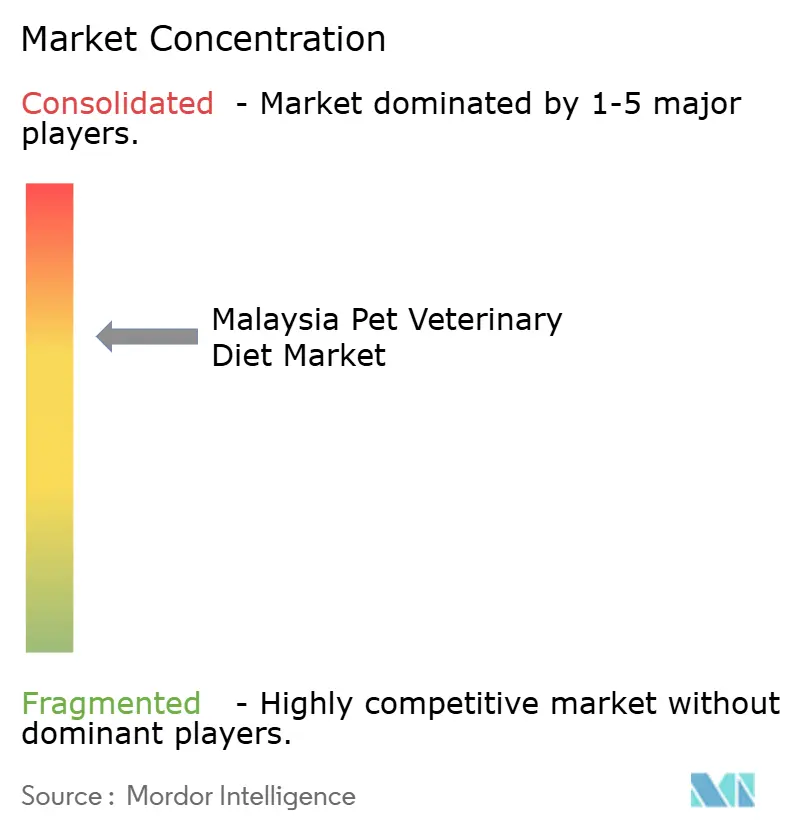
| Market Concentration | Medium |
Major Players *Disclaimer: Major Players sorted in no particular order Image © Mordor Intelligence. Reuse requires attribution under CC BY 4.0. | |
Malaysia Pet Veterinary Diet Market Analysis by Mordor Intelligence
The Malaysia pet veterinary diet market size is projected to expand from USD 59.61 million in 2025 and USD 64.57 million in 2026 to USD 97.45 million by 2031, registering a CAGR of 8.58% between 2026 and 2031. The Malaysia pet veterinary diet market is growing faster than the broader pet food category because more spending is moving toward condition-specific nutrition that supports longer treatment cycles and repeat purchases. The market also benefits from a tighter link between veterinary diagnosis and product demand, which gives established prescription brands more control over reorder behavior than standard pet food brands usually have. At the same time, Malaysia remains heavily import-dependent, and the Department of Veterinary Services (DVS) Malaysia tightened feed import verification in July 2024 under the Feed Act 2009 and the related World Trade Organization (WTO) sanitary and phytosanitary notification, which raises entry friction for smaller suppliers[1]Source: World Trade Organization, “G/SPS/N/MYS/59, Amendment to Application Form for Importation of Feed into Malaysia,” myanmartradeportal.gov.mm. Diagnostic capability is also improving in urban practice networks, and Universiti Putra Malaysia (UPM) and Aniware Limited launched an artificial intelligence (AI) imaging collaboration in May 2025 that shortens the time needed to identify chronic conditions at the University Veterinary Hospital (UVH) in Serdang. This leaves the Malaysia pet veterinary diet market with clear room for expansion through earlier diet intervention, wider retail availability, and stronger digital reordering, even though access is still centered on urban clinics and imported brands.
Key Report Takeaways
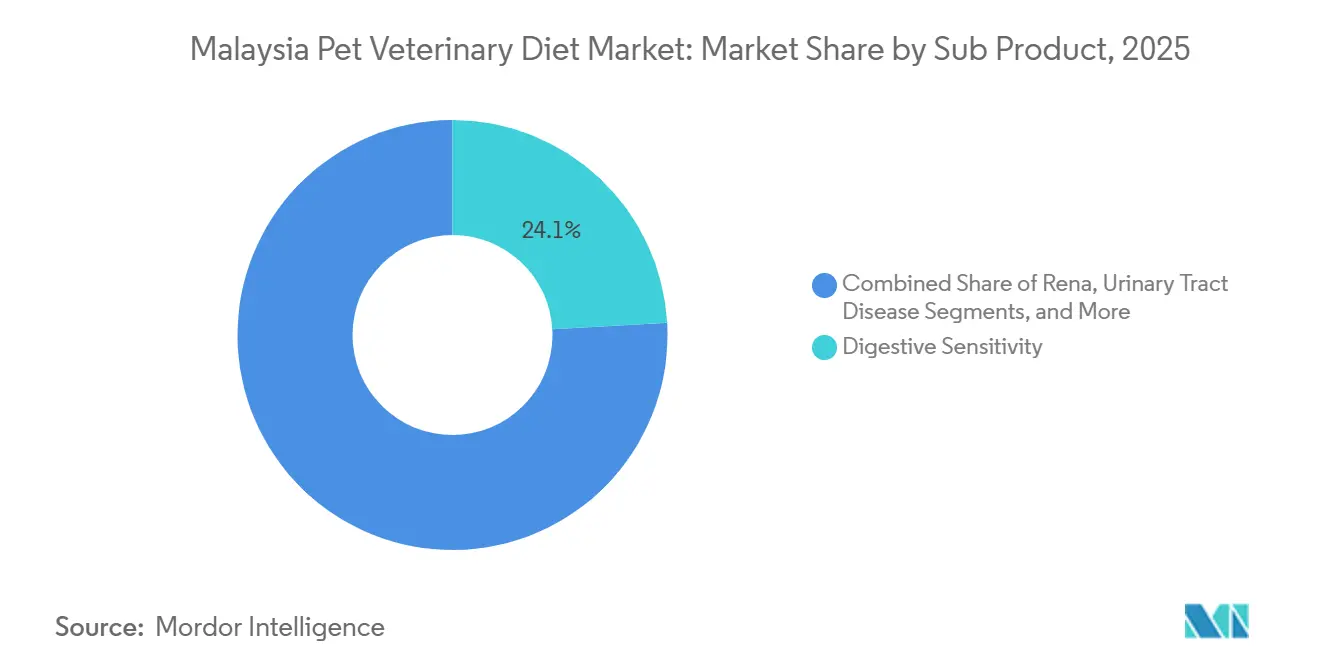
- By product, digestive sensitivity led with 24.1% revenue share in 2025, while urinary tract disease is forecast to expand at a 10.1% CAGR during 2026-2031.
- By pet type, cats accounted for 60.2% of the Malaysia pet veterinary diet market share in 2025 and are projected to register the fastest CAGR of 10.6% during 2026–2031.
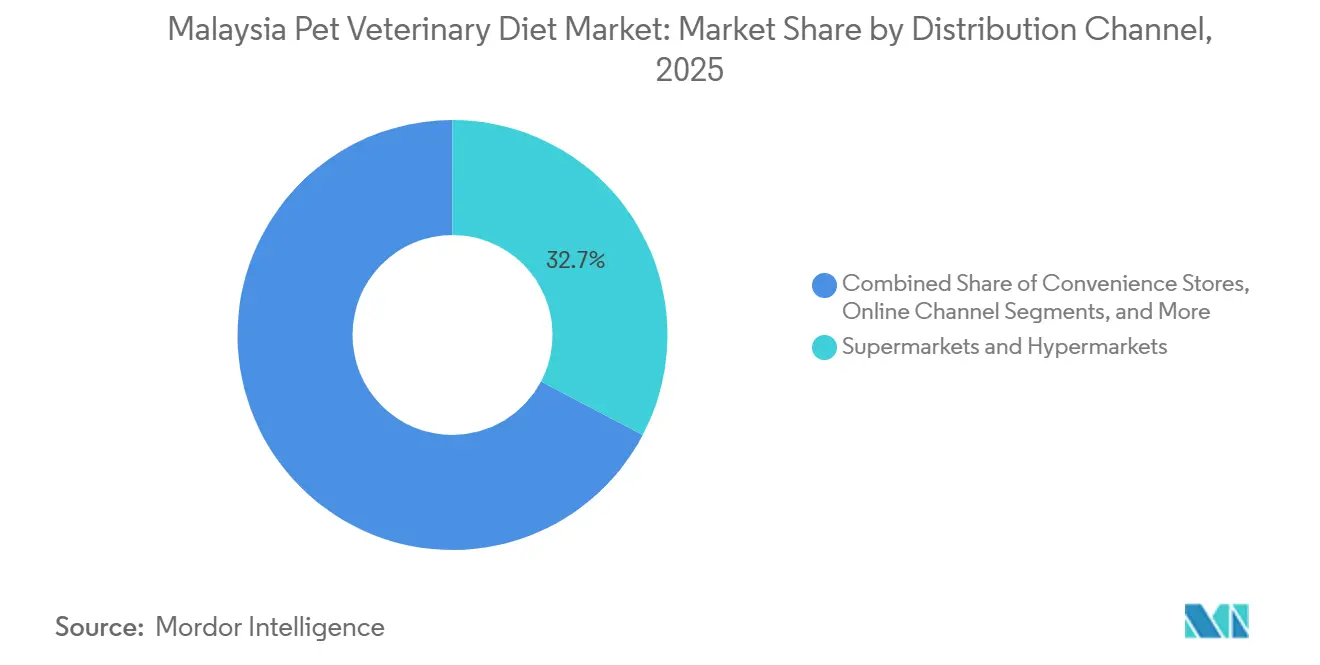
- By distribution channel, supermarkets and hypermarkets accounted for 32.7% of the Malaysia pet veterinary diet market size in 2025, while the online channel is advancing at a 10.8% CAGR through 2031.
Note: Market size and forecast figures in this report are generated using Mordor Intelligence’s proprietary estimation framework, updated with the latest available data and insights as of January 2026.
Malaysia Pet Veterinary Diet Market Trends and Insights
Drivers Impact Analysis*
| Driver | (~) % Impact on CAGR Forecast | Geographic Relevance | Impact Timeline |
|---|---|---|---|
| Rising cat ownership and premiumization of therapeutic nutrition | +2.00% | National, with the strongest pull from Kuala Lumpur, Petaling Jaya, and Penang where clinical pet care adoption is deeper | Short term (≤ 2 years) |
| Higher veterinary diagnosis rates for chronic companion animal conditions | +1.80% | National, with early acceleration in urban veterinary clinic hubs and specialist care centers | Medium term (2-4 years) |
| E-commerce expansion for prescription and functional pet nutrition | +1.50% | National, with widening relevance in secondary cities where physical therapeutic assortment remains limited | Short term (≤ 2 years) |
| Expansion of urban multi-pet households and health-managed feeding | +1.00% | Core urban centers including Klang Valley, Johor Bahru, and Penang where premium pet routines are stronger | Medium term (2-4 years) |
| Growth of preventive pet healthcare and early diet intervention | +0.90% | National, with the clearest near adoption in high-income urban clinic networks | Medium term (2-4 years) |
| Broader availability of clinic-linked and retail therapeutic diet assortments | +0.80% | National, with the biggest effect in specialty pet stores, premium supermarkets, and clinic-linked outlets | Long term (≥ 4 years) |
| Source: Mordor Intelligence | |||
Rising Cat Ownership and Premiumization of Therapeutic Nutrition
Growing cat ownership in Malaysia is expanding the addressable market for veterinary therapeutic diets, with cats accounting for an increasing share of companion animals in urban households due to their suitability for apartment living and relatively lower maintenance requirements. As the feline population grows and ages, the incidence of chronic conditions requiring long-term nutritional management also increases. Chronic kidney disease (CKD), one of the most common age-related feline diseases, affects up to 40% of cats over the age of 10 and up to 80% of cats over the age of 15[2]Source: Cornell University College of Veterinary Medicine, “Chronic Kidney Disease,” vet.cornell.edu. International Cat Care also reported in 2024 that 20% to 50% of cats over age 15 have some degree of CKD, reinforcing the commonness of long-term nutritional management in older feline populations[3]Source: International Cat Care, “Chronic Kidney Disease (CKD) in Cats,” icatcare.org. Because CKD is a lifelong condition that relies on sustained dietary intervention alongside veterinary care, affected pets typically remain on therapeutic nutrition for extended periods. This shifts purchasing decisions toward clinically formulated, premium veterinary diets with proven renal support benefits, increasing both product adoption and spending per pet. Consequently, the Malaysia pet veterinary diet market benefits from sustained demand for feline therapeutic nutrition, particularly within renal care and other long-term disease management categories.
Higher Veterinary Diagnosis Rates for Chronic Companion Animal Conditions
The Malaysia pet veterinary diet market grows when chronic conditions are identified earlier and when veterinary clinics are more trusted. Universiti Putra Malaysia and Aniware Limited signed an AI imaging collaboration in May 2025 that enables rapid disease detection at the University Veterinary Hospital in Serdang, supporting AI-assisted diagnostic workflows and potentially enabling earlier clinical decision-making for chronic companion animal diseases. A 2024 Malaysian case study published in Pertanika Journal of Tropical Agricultural Science documented feline idiopathic cystitis in a local context, supporting the clinical relevance of urinary diet management in Malaysia rather than in imported veterinary literature[4]Source: Pertanika Journal of Tropical Agricultural Science, “Feline Idiopathic Cystitis (FIC) in a Mixed Breed Cat, Case Study in Malaysia,”pertanika.upm.edu.my. The 2025 iCatCare consensus guidelines on lower urinary tract diseases in cats also support more consistent diet-led case management across veterinary practice. As diagnostic capability improves, prescription therapeutic diets continue to be primarily dispensed through veterinary clinics, where veterinarians guide long-term nutritional management and repeat purchasing. This strengthens incumbent brands because diagnosis-led demand can only convert into sales when approved therapeutic products are already available in the market.
E-Commerce Expansion for Prescription and Functional Pet Nutrition
The Online Channel is the fastest-growing distribution channel in Malaysia, as therapeutic diet demand does not end with the first prescription, and online access makes monthly or bi-monthly reordering easier for owners managing chronic cases. Digital reordering also reduces the risk that an owner will substitute a prescribed diet for a standard premium food simply because the clinic is far away or temporarily out of stock. In secondary cities, online access can do more to maintain continuity than physical retail expansion in the short term, as it extends the reach of already approved products without waiting for broader shelf rollout. The Department of Veterinary Services Malaysia's framework still shapes what can legally enter the market, so brands building direct-to-consumer clinical nutrition models must maintain compliance and registration discipline. The Malaysia pet veterinary diet market, therefore, gains not only convenience from digital channels, but also a more durable reorder mechanism once a therapeutic routine is established.
Growth of Preventive Pet Healthcare and Early Diet Intervention
Preventive pet healthcare is gaining importance in Malaysia as pet owners increasingly prioritize routine health screenings, regular veterinary visits, and early disease detection to improve long-term health outcomes. This shift is encouraging veterinarians to introduce therapeutic nutrition earlier in the disease management pathway, allowing specialized diets to support disease progression before clinical conditions become severe. The 2025 collaboration between Universiti Putra Malaysia (UPM) and Aniware, which promotes AI-assisted diagnostic workflows, reflects the growing focus on faster and more accurate disease detection. Similarly, the 2025 International Cat Care guidance on feline lower urinary tract diseases reinforces the role of nutritional management as an early intervention strategy in appropriate cases. As therapeutic diets become integrated into preventive care and long-term disease management, owners are more likely to adopt them as part of everyday health maintenance rather than as short-term recovery products. This trend supports sustained demand for veterinary therapeutic nutrition and contributes to long-term value growth in the Malaysia pet veterinary diet market.
Restraints Impact Analysis*
| Restraint | (~) % Impact on CAGR Forecast | Geographic Relevance | Impact Timeline |
|---|---|---|---|
| High unit prices relative to standard pet food | -1.5% | National, more acute outside major metropolitan areas | Short term (≤ 2 years) |
| Prescription dependency and limited consumer awareness in secondary cities | -1.2% | National, concentrated in Tier-2 cities including Ipoh, Kota Bharu, and Kuching | Medium term (2-4 years) |
| Import dependence and product registration lead times | -0.8% | National, compliance governed by DVS Feed Act 2009 (Act 698) | Medium term (2-4 years) |
| Limited shelf space and channel fragmentation outside major urban centers | -0.6% | National, most acute in East Malaysia and northern Peninsular Malaysia | Long term (≥ 4 years) |
| Source: Mordor Intelligence | |||
High Unit Prices Relative to Standard Pet Food
The Malaysia pet veterinary diet industry faces immediate resistance from premium pricing because renal, urinary, and digestive formulas cost much more than standard pet food. The price gap becomes even more important when the owner also needs to pay for consultation and diagnostic work before the first therapeutic purchase. This creates a drop-off both before diagnosis and after prescription, especially in households that may try supplements or premium general nutrition first. Imported supply deepens the problem because most leading therapeutic brands still reach the market through regulated foreign product pipelines rather than through large-scale local manufacturing. Even when the clinical need is clear, the shift into prescription feeding can therefore be delayed by budget pressure rather than by a weak medical rationale. In the Malaysia pet veterinary diet market, pricing remains the most direct barrier between diagnosis and sustained adherence.
Prescription Dependency and Limited Consumer Awareness in Secondary Cities
The pet veterinary diet market in Malaysia remains constrained by the fact that most demand originates within veterinary clinics, which are still concentrated in the country's main urban centers. Outside Kuala Lumpur, Petaling Jaya, Penang, and Johor Bahru, many owners have fewer opportunities to encounter therapeutic nutrition as a first-line option. When that clinical touchpoint is missing, symptom management often shifts toward over-the-counter supplements or premium foods rather than a full prescription program. Limited local-language education also slows understanding of the category in areas where product communication is weaker and clinical terminology is less familiar. That makes conversion slower even when digital product access is technically available. The Malaysia pet veterinary diet market, therefore, stays more urban and more clinic-dependent than most other premium pet food categories.
*Our forecasts treat driver/restraint impacts as directional, not additive. The impact forecasts reflect baseline growth, mix effects, and variable interactions.
Segment Analysis
By Sub Product: Digestive and Renal Diets Anchor Current Demand
Digestive sensitivity captured 24.1% of the Malaysia pet veterinary diet market share in 2025, making it the largest product category in current demand. The segment highlights the increasing need for nutritional management of gastrointestinal disorders, many of which require long-term dietary intervention rather than short-term pharmaceutical solutions. In October 2024, a study titled "Macronutrients Comparison of Commercial Cat Foods in Malaysia," published in the Sarhad Journal of Agriculture, identified significant differences in nutrient composition among commercial cat foods in Malaysia. This study emphasizes the growing focus on diet quality and nutritional formulation within the country's pet food market. As veterinarians prioritize gastrointestinal health, digestibility, and nutrient utilization, the demand for therapeutic digestive-support diets is anticipated to remain robust. Renal diets represent another key clinical category, as chronic kidney disease necessitates prolonged dietary management and high owner compliance, leading to extended prescription cycles. Additionally, diets targeting obesity, dermatological health, oral care, and diabetes are expanding the role of veterinary nutrition from disease treatment to structured, long-term health management.
Urinary tract disease is the fastest product segment, and the Malaysia pet veterinary diet market size for this category is projected to expand at a 10.1% CAGR during 2026-2031. Demand is being supported by growing veterinary recognition that nutritional management plays a central role in controlling feline lower urinary tract disease (FLUTD), one of the most frequently encountered feline health conditions. Clinical guidance increasingly recommends dietary strategies that promote urine dilution and higher water intake, driving adoption of therapeutic urinary formulas. The segment also benefits from the rising share of indoor cats, a population commonly associated with urinary health risks such as obesity, reduced activity levels, and stress-related urinary disorders. Looking ahead, the increasing prevalence of age-related comorbidities is anticipated to drive the development of integrated veterinary diets that target urinary, renal, and metabolic health within a single formulation.



By Pet Type: Cat Dominance Drives Clinical Complexity
Cats accounted for 60.2% of the Malaysia pet veterinary diet market size in 2025 and are also forecast to record the fastest-growing segment at 10.6% CAGR during 2026-2031, making them the central demand base in the Malaysia pet veterinary diet market. Feline cases often require longer dietary treatment cycles than many canine conditions do, due to the need for sustained nutritional management of renal, urinary, and digestive disorders. In 2025, Khor et al. published a study titled "Knowledge, Attitude and Practice (KAP) of Cat Owners Towards Chronic Kidney Disease (CKD)" in the Journal of Veterinary Malaysia. The study found that 86.3% of surveyed Malaysian cat owners were aware of the risk of CKD in cats, with veterinarians as the primary source of disease-related information. This indicates a relatively well-informed cat-owner population and a significant veterinary influence on treatment decisions, both of which support the adoption of prescription diets for managing chronic diseases. As therapeutic nutrition is frequently recommended alongside medical treatments for feline chronic conditions, cats represent a disproportionately high share of veterinary diet demand in Malaysia.
Dogs remain the second-largest pet type in the Malaysia pet veterinary diet market, with renal support, weight management, skin health, and mobility-related nutrition forming the core of demand. Their growth profile is meaningful, but dog prescriptions are usually spread across a wider mix of conditions and breed-specific needs than cat prescriptions. Other Pets remain a small category, yet they matter strategically because early product availability can create loyalty before the segment becomes commercially broader. Registration and classification pathways are also less straightforward for non-canine and non-feline clinical diets, which limits how quickly this niche can scale under the current import framework. The overall pet type mix therefore keeps the Malaysia pet veterinary diet market centered on feline therapy, while still leaving room for selective expansion in dogs and smaller companion animals.
By Distribution Channel: Supermarkets Maintain Market Leadership, Online Accelerates Growth
Supermarkets and hypermarkets accounted for 32.7% of distribution in 2025 in the Malaysia pet veterinary diet market. Their role has expanded as some therapeutic-adjacent and veterinarian-recommended formulas move beyond clinic-only visibility and into premium retail environments. Specialty stores remain the main bridge between the prescribing veterinarian and the repeat-purchase consumer because they can stock deeper condition-specific assortments than mass retail. Convenience stores have limited relevance because clinical diet portfolios require more product depth and stronger purchase guidance than that channel usually provides. The current channel structure shows that accessibility is broadening, but not all retail points can support the same level of therapeutic complexity.
The online channel is the fastest route in the Malaysia pet veterinary diet market and is projected to grow at a 10.8% CAGR during 2026-2031. Online reordering matters because owners can keep buying renal, urinary, and digestive formulas after the first prescription without waiting for the next clinic visit. Subscription behavior also improves continuity, reducing brand switching and supporting more predictable repeat sales. In 2026, Global Petcare Holdings Sdn. Bhd. and Universiti Teknologi Malaysia started a 3-year research collaboration on cat food formulations under the Evocat and Cat Master brands, and that work is set to feed future products into channels that are well suited to digital discovery and repeat purchase. Even so, brands expanding direct online sales still need to monitor how imported prescription products fit within the Department of Veterinary Services Malaysia framework.
Geography Analysis
The Klang Valley represents the largest urban demand pocket in the Malaysia pet veterinary diet market because it combines the deepest clinic network with the strongest concentration of premium pet spending. Kuala Lumpur and Petaling Jaya remain the main centers for prescription initiation, specialist referrals, and premium retail assortment. Penang and Johor Bahru form the next layer of demand, where upper-middle-income households and expanding veterinary infrastructure support steady uptake. This geography keeps the category urban by structure, since the first prescription usually starts where diagnostics, specialist advice, and imported stock are most available. The national regulatory framework under the Feed Act 2009 applies across Malaysia, but brands that operate close to the main administrative and distribution hubs can usually respond more quickly to product approval and supply issues.
Secondary cities such as Ipoh, Alor Setar, and Seremban are transitional spaces in the Malaysia pet veterinary diet market, where access often depends more on e-commerce than on deep clinic inventory. Sabah and Sarawak add another layer of complexity because shipping distance and state-level documentation can slow the movement of specialized pet food products within national supply chains. Even with those barriers, urbanization in Kuching and Kota Kinabalu creates early demand clusters that do not always require full physical retail build-out before sales can begin. Johor is also gaining relevance as a development node after the 2026 research collaboration between Global Petcare Holdings and Universiti Teknologi Malaysia, which adds local formulation activity to the southern market profile.
The Malaysia pet veterinary diet market remains hardest to penetrate outside the top urban corridor because prescription awareness and specialist access drop quickly beyond the largest cities. In many semi-urban and rural areas, pet owners still manage chronic conditions with supplements or premium standard foods that sit below full therapeutic formulas in clinical precision. Urban diagnostic capability continues to improve, and the 2025 artificial intelligence imaging collaboration between Universiti Putra Malaysia and Aniware Limited points to faster case identification in clinic settings. Specialist veterinary capability is also deepening, and Shinzo Veterinary documented Malaysia's 3rd and 4th transcatheter edge-to-edge repair procedures for dogs in 2025, which reflects the broader rise of advanced pet care in urban hubs. For that reason, the Malaysia pet veterinary diet market is likely to stay urban-led through 2031, even as digital access gradually narrows the distance between metropolitan and secondary demand.
Competitive Landscape
The Malaysia pet veterinary diet market is moderately consolidated, with Mars, Incorporated, Hill's Pet Nutrition, Inc., and Nestlé Purina PetCare anchoring the prescription tier through brand trust, clinical depth, and clinic relationships. Their advantage is strongest at the point of prescription, where veterinarians tend to rely on brands with broad therapeutic ranges, predictable supply, and established feeding protocols. Hill's Pet Nutrition, Inc. expanded its therapeutic offering in Asia in 2024 with the rollout of Prescription Diet ONC Care, which broadened the clinical menu for Malaysian veterinarians in oncology nutrition. Virbac S.A. also refreshed its Veterinary HPM range in 2025, indicating that credible challengers are competing through formulation and positioning rather than through direct price disruption. This keeps the Malaysia pet veterinary diet market competitive at the portfolio level, even though prescription trust still favors a small, top-tier.
Regulatory preparedness is a major source of competitive strength in the Malaysia pet veterinary diet market because every imported therapeutic formula must pass the country's feed compliance process. The 2024 import verification amendment to the Feed Act 2009 increased the operating burden for product approvals, benefiting companies that already maintain a stronger registration infrastructure and distributor coordination. Incumbents also benefit from wider clinic education programs and better stock-keeping unit discipline, which makes it harder for smaller brands to displace them across renal, urinary, and digestive prescriptions. At the same time, local science-backed development is entering the discussion through the 2026 Global Petcare Holdings and Universiti Teknologi Malaysia partnership, which gives the domestic side of the sector a more credible research base. The result is a market where scale, regulatory readiness, and veterinary confidence matter more than simple shelf presence.
Farmina Pet Foods, Dechra Pharmaceuticals PLC, Monge and C. S.p.A., and Affinity Petcare, S.A. remain relevant as challenger or adjacent players, but their position in Malaysia is still narrower than that of the leading prescription brands described in the user-supplied draft. Their opportunity lies in targeted clinical niches, premium functional overlap, and digital discovery rather than in immediate parity across the full prescription portfolio. The most visible strategic moves in the current cycle have been Hill's oncology diet rollout in 2024, Virbac's Veterinary HPM reformulation in 2025, and the Universiti Teknologi Malaysia collaboration with Global Petcare Holdings in 2026, each of which reflects a push toward more condition-specific and science-backed nutrition. Across the Malaysia pet veterinary diet market, competitive gains are most likely to come from clinical credibility, availability, and reorder convenience rather than broad-based discounting.
Malaysia Pet Veterinary Diet Industry Leaders
Mars, Incorporated
Hill’s Pet Nutrition, Inc. (Colgate-Palmolive Company)
Nestlé Purina PetCare (Nestlé S.A.)
Virbac S.A.
Farmina Pet Foods
- *Disclaimer: Major Players sorted in no particular order

Recent Industry Developments
- April 2026: Global Petcare Holdings Sdn. Bhd. entered a 3-year science-driven cat food research collaboration with Universiti Teknologi Malaysia (UTM), backed by a USD 51,454.1 grant (MYR 230,000). The initiative covers nutritional profiling, halal-compliance testing for porcine contamination, and formulation optimization for dry and wet cat food under the brands Evocat and Cat Master, marking the first industry-academia cat food research program of its kind in Malaysia.
- May 2025: In 2025, Universiti Putra Malaysia's Faculty of Veterinary Medicine and Aniware Limited partnered to deploy AI-assisted veterinary diagnostic imaging at Universiti Veterinary Hospital (UVH), Serdang, to improve diagnostic efficiency and support veterinary education and research. Earlier detection of chronic conditions in companion animals may enable veterinarians to initiate nutritional management sooner, supporting demand for veterinary therapeutic diets.
- May 2025: Virbac S.A. relaunched its Veterinary HPM physiological food range with updated formulations and a progressive rollout starting in Europe from May 2025, repositioned to better align with evolving veterinarian and pet owner expectations on science-based, high-protein nutrition.


Malaysia Pet Veterinary Diet Market Report Scope
The Malaysia pet veterinary diet market covers clinical and condition-specific pet food formulations used to support diagnosed health conditions in companion animals, mainly cats and dogs, under veterinary guidance or prescription. The Malaysia pet veterinary diets report is segmented by sub product (diabetes, renal, urinary tract disease, digestive sensitivity, oral care, derma, obesity, and other veterinary diets), by pet type (cats, dogs, and other pets), and by distribution channel (convenience stores, online channels, specialty stores, supermarkets and hypermarkets, and other channels). The market forecasts are provided in terms of value (USD) and volume (metric tons).
| Diabetes |
| Renal |
| Urinary Tract Disease |
| Digestive Sensitivity |
| Oral Care Diets |
| Derma Diets |
| Obesity Diets |
| Other Veterinary Diets |
| Cats |
| Dogs |
| Other Pets |
| Convenience Stores |
| Online Channel |
| Specialty Stores |
| Supermarkets/ Hypermarkets |
| Other Channels |
| By Sub Product | Diabetes |
| Renal | |
| Urinary Tract Disease | |
| Digestive Sensitivity | |
| Oral Care Diets | |
| Derma Diets | |
| Obesity Diets | |
| Other Veterinary Diets | |
| By Pets | Cats |
| Dogs | |
| Other Pets | |
| By Distribution Channel | Convenience Stores |
| Online Channel | |
| Specialty Stores | |
| Supermarkets/ Hypermarkets | |
| Other Channels |


Key Questions Answered in the Report
What is the 2031 outlook for Malaysia pet veterinary diets?
The market is projected to reach USD 97.45 million by 2031 from USD 64.57 million in 2026, at an 8.58% CAGR during 2026-2031.
Which product category leads current demand in Malaysia?
Digestive Sensitivity is the largest product category with 24.1% share in 2025, while Urinary Tract Disease is the fastest-growing product segment at a 10.1% CAGR during 2026-2031.
Why do cats account for the largest demand base?
Cats held 60.2% share in 2025 and remain central because renal, urinary, and digestive conditions often require longer therapeutic feeding cycles.
Which sales channel is growing fastest?
The Online Channel is the fastest-growing route at a 10.8% CAGR during 2026-2031, while Supermarkets and Hypermarkets still lead current distribution with 32.7% share in 2025.
What is the main barrier to wider adoption across Malaysia?
High unit pricing, prescription dependency, and import-led supply constraints continue to limit adoption, especially outside major urban centers.
Which companies are shaping competition most strongly?
Mars, Incorporated, Hill's Pet Nutrition, Inc., and Nestlé Purina PetCare remain the core leaders, while Virbac S.A. and local development efforts add selective competitive pressure.
Page last updated on:





