
Lacrimal Devices Market Size and Share
Market Overview
| Study Period | 2020 - 2031 |
|---|---|
| Market Size (2026) | USD 168 Million |
| Market Size (2031) | USD 216.05 Million |
| Growth Rate (2026 - 2031) | 5.16 % |
| Fastest Growing Market | Asia-Pacific |
| Largest Market | North America |
| Market Concentration | Medium |
Major Players *Disclaimer: Major Players sorted in no particular order Image © Mordor Intelligence. Reuse requires attribution under CC BY 4.0. | |
Lacrimal Devices Market Analysis by Mordor Intelligence
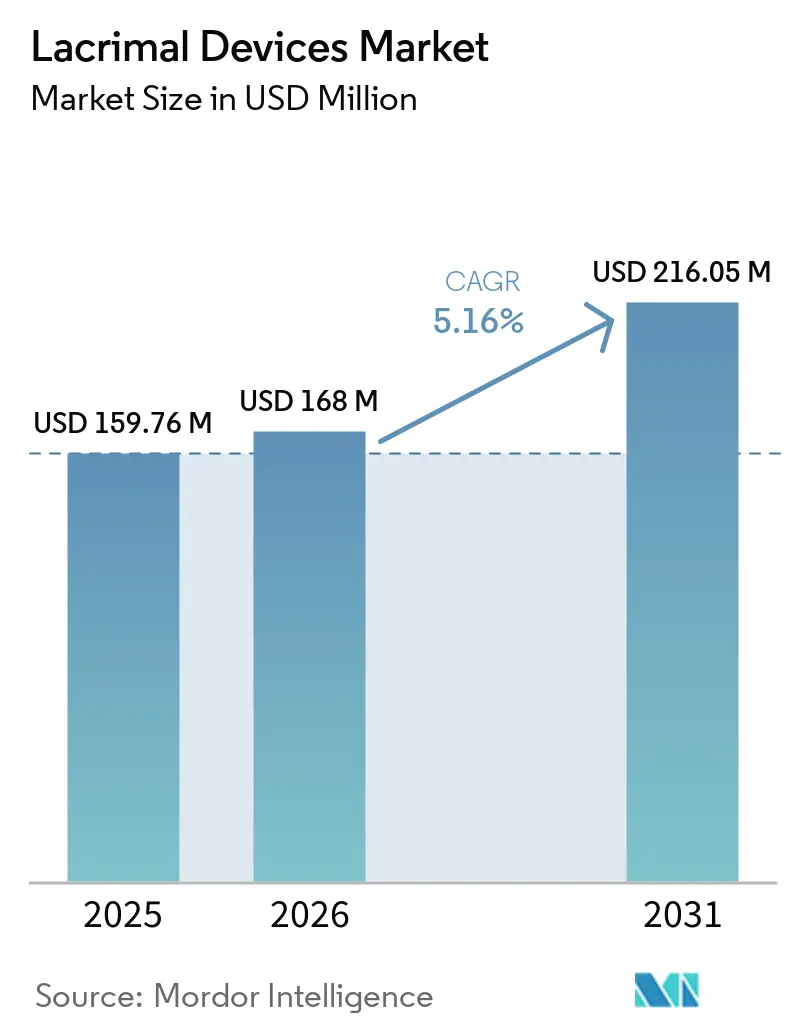
The Lacrimal Devices Market size is expected to grow from USD 159.76 million in 2025 to USD 168 million in 2026 and is forecast to reach USD 216.05 million by 2031 at 5.16% CAGR over 2026-2031.
The lacrimal devices market benefits from sustained demand associated with dry eye disease and primary acquired nasolacrimal duct obstruction. According to the cited systematic review, dry eye disease affected an estimated 11.59% of the global population. Primary acquired nasolacrimal duct obstruction recorded an average annual incidence of 30.47 cases per 100,000 people, supporting continued demand for intubation sets and stents. The market spans office-based punctal occlusion procedures and hospital-based endoscopic lacrimal surgeries, creating a stable clinical demand base. Additionally, the market is evolving as healthcare providers increasingly adopt minimally invasive surgical techniques and manufacturers introduce products designed to reduce procedure times.
Key Report Takeaways
- By product, punctal plugs held 38.65% of revenue in 2025, while intubation sets are projected to grow at a CAGR of 7.43% through 2031.
- By application, dry eye accounted for 35.76% of revenue in 2025, while glaucoma is projected to grow at a CAGR of 7.86% through 2031.
- By end user, ophthalmic clinics held 45.65% of consumption in 2025, while hospitals are projected to grow at a CAGR of 8.65% through 2031.
- By geography, North America held 44.28% of revenue in 2025, while Asia-Pacific is projected to grow at a CAGR of 6.54% through 2031.
Note: Market size and forecast figures in this report are generated using Mordor Intelligence’s proprietary estimation framework, updated with the latest available data and insights as of January 2026.
Market Trends and Insights
Drivers Impact Analysis of Lacrimal Devices Market*
| Driver | (~) % Impact on CAGR Forecast | Geographic Relevance | Impact Timeline |
|---|---|---|---|
| Rising Prevalence of Dry Eye and Nasolacrimal Duct Obstruction | +1.30% | Global, highest intensity in APAC, North America, and Europe | Medium term (2-4 years) |
| Shift Toward Minimally Invasive Lacrimal Procedures | +1.10% | North America and Europe, with early gains in APAC | Medium term (2-4 years) |
| Aging Population and Age-Related Lacrimal Disorders | +0.90% | APAC and Europe, with spillover to MEA and South America | Long term (≥ 4 years) |
| Expanding Ophthalmic Infrastructure and Patient Awareness | +0.80% | APAC, with spillover to MEA and South America | Long term (≥ 4 years) |
| Adoption of Single-Use Devices in Endoscopic Dacryocystorhinostomy | +0.70% | North America and Europe, with early gains in APAC | Medium term (2-4 years) |
| Preloaded Self-Retaining Intubation Reducing Operating-Room Time | +0.60% | North America, Europe, and APAC | Medium term (2-4 years) |
| Source: Mordor Intelligence | |||
Rising Prevalence of Dry Eye and Nasolacrimal Duct Obstruction
The lacrimal devices market is supported by a substantial ocular surface disease burden that extends beyond older adults. A 2025 South Korean population-based study found that dry eye disease prevalence exceeded 21.96% among individuals aged 70–74, compared with 8.88% across the overall study population[1]. The study also identified a separate prevalence peak among working-age adults, associated with occupational screen exposure. A 2024 study conducted in Tianjin reported dry eye disease in 39% of adults aged 50 and older. Asymptomatic dry eye accounted for 53.6% of affected participants, indicating a sizable population that remains undiagnosed or untreated. Collectively, these trends expand the addressable demand for diagnosis, punctal occlusion, and related lacrimal care over the forecast period.
Shift Toward Minimally Invasive Lacrimal Procedures
The shift from external to endoscopic dacryocystorhinostomy is reshaping device demand within the lacrimal devices market. A 2025 retrospective analysis of 14,135 procedures in the United States found that the share of endoscopic dacryocystorhinostomy increased from 12.9% to 40.1% of all procedures over 20 years. Long-term revision outcomes for endoscopic procedures remained comparable to those of external surgery, ranging from 85.3% to 91.4% at 20 years. A separate 2025 survey found that 57% of junior surgeons used endoscopic surgery in more than 66% of cases, compared with 18.3% of senior surgeons. Endonasal procedures require dedicated silicone tube systems and integrated metallic guides rather than basic probe and cannula kits. This transition creates opportunities for manufacturers offering preloaded, guide-integrated bicanalicular systems that eliminate the need for nasal retrieval.
Aging Population and Age-Related Lacrimal Disorders
Population aging is expanding the patient base for the lacrimal devices market through several related clinical factors. Research published in 2025 described lacrimal gland aging as involving acinar cell senescence, reduced innervation, and weakened secretory responses[2]. These changes contribute to aqueous-deficient dry eye and may require canalicular intervention alongside ocular surface treatment. The United Nations projected that the global population aged 60 and older will reach 1.6 billion by 2050, increasing from 761 million in 2021. In addition, a 2025 study of 1,008 Chinese patients with nasolacrimal duct obstruction found that 80.5% of female patients were menopausal. This demographic and hormonal profile is likely to increase surgical referrals as life expectancy rises across Asia-Pacific, the Middle East, and Africa. Providers that coordinate with geriatric ophthalmology and menopausal care pathways can improve access to patients who may not otherwise enter surgical care channels.
Expanding Ophthalmic Infrastructure and Patient Awareness
Expanding ophthalmic care infrastructure is increasing the identification and treatment of previously unmet needs within the lacrimal devices market. A 2025 bibliometric study found that India and China became leading contributors to nasolacrimal duct obstruction research after 2015. Growing research activity can support the adoption of standardized clinical protocols and increase procedure volumes. India’s National Program for Control of Blindness supports ophthalmic screening initiatives that can identify undiagnosed epiphora and dry eye disease. Similarly, Saudi Vision 2030 investments are establishing tertiary ophthalmology centers with endoscopic dacryocystorhinostomy capabilities across the Gulf Cooperation Council. These developments are shifting lacrimal diagnosis from primary care settings to specialist clinics, improving the likelihood of conversion from diagnosis to treatment and supporting greater punctal plug utilization.
Restraints Impact Analysis of Lacrimal Devices Market*
| Restraint | (~) % Impact on CAGR Forecast | Geographic Relevance | Impact Timeline |
|---|---|---|---|
| High Device and Procedure Costs | -1.20% | Global, most acute in South America, MEA, and APAC emerging markets | Short term (≤ 2 years) |
| Limited Reimbursement Coverage | -0.80% | Emerging markets, with selective gaps in EU and U.S. coding frameworks | Medium term (2-4 years) |
| Biofilm Formation, Plug Migration, and Revision Procedures | -0.60% | Global, especially surgical care settings | Medium term (2-4 years) |
| Fragmented Device Sizing and Procedural Standardization | -0.50% | Global, most relevant to multi-supplier surgical settings | Long term (≥ 4 years) |
| Source: Mordor Intelligence | |||
High Device and Procedure Costs
High device and procedure costs continue to constrain adoption in the lacrimal devices market, particularly for premium intubation and stenting systems. In developed markets, nasolacrimal stenting procedures typically cost USD 3,000-8,000, including the overall care costs cited in the draft. Providers may face challenges in adopting premium single-use formats while operating within fixed procedure budgets. Regulation (EU) 2017/745 has introduced more stringent conformity assessment and post-market surveillance requirements for medical devices in Europe. These requirements increase the administrative and clinical evidence burden on smaller specialty manufacturers. In South America and Sub-Saharan Africa, healthcare systems may classify lacrimal interventions as elective procedures, increasing out-of-pocket costs for patients with limited ability to pay.
Limited Reimbursement Coverage
Inconsistent reimbursement coverage limits access to advanced procedures and constrains the expansion of the lacrimal devices market. A 2025 review of 15 African population studies is expected to report a pooled dry eye disease prevalence of 43.6%, highlighting substantial clinical need in settings with limited coverage. When insurance coding does not cover lacrimal interventions, clinically eligible patients may be unable to proceed with treatment. Variations in coding between office-based punctal plug insertion and facility-based intubation can also create claims uncertainty for providers. Restrictions on repeat collagen plug coverage may delay the adoption of newer absorbable materials. In October 2025, Sight Sciences is expected to announce that two Medicare Administrative Contractors have established fee schedules for CPT code 0563T, effective January 1, 2025. This development demonstrates how clearer payment arrangements can support the adoption of interventional dry eye procedures.
*Our forecasts treat driver/restraint impacts as directional, not additive. The impact forecasts reflect baseline growth, mix effects, and variable interactions.
Lacrimal Devices Market Segment Analysis
By Product:
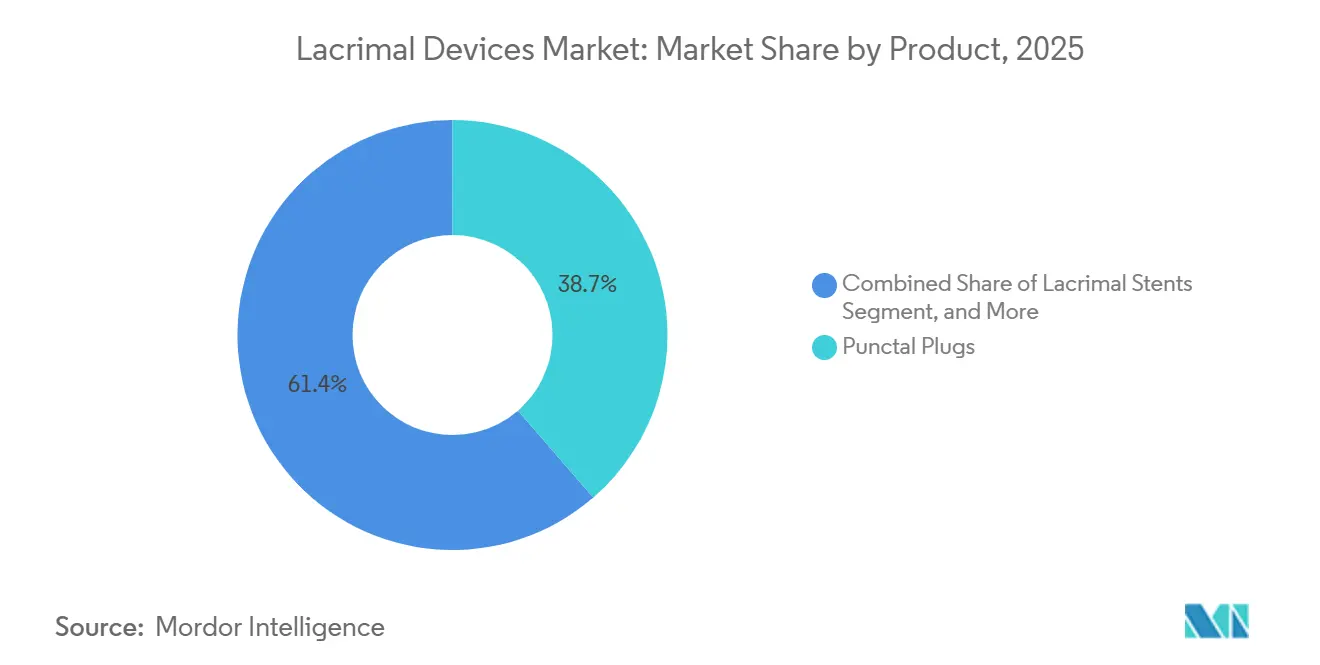
Punctal Plugs Support Current Revenue While Intubation Sets Have the Highest Growth RatePunctal plugs held 38.65% share of the lacrimal devices market in 2025, supported by their use in outpatient dry eye management, post-surgical ocular surface protection, and contact lens intolerance. The category has broad clinical applicability when topical lubricants do not provide sufficient relief. Absorbable plugs enable patients to trial punctal occlusion before selecting a longer-lasting device. Lacrimal stents maintain duct patency following dacryocystorhinostomy, while tubes, cannulas, and spatulas are used during surgical procedures. Demand for these products, therefore, tracks procedure volumes. Manufacturers also commonly include lacrimal dilators in intubation kits and market them as procedural consumables.
The lacrimal devices market is increasingly shifting toward integrated procedural kits that combine multiple disposable components. Intubation sets are forecast to grow at a CAGR of 7.43% through 2031, driven by the growing adoption of endoscopic surgery. Demand is increasing for systems that reduce operating room time and streamline insertion. FCI Ophthalmic describes its Nunchaku system as a self-retaining bicanalicular intubation stent with integrated metallic guides and a push-insertion technique. As the system does not require nasal retrieval, it can support consistent use across surgeons with varying experience levels. Integrated intubation systems, biodegradable stents, and single-use packaging can also reduce dependence on multi-vendor procedural trays.

By Application:
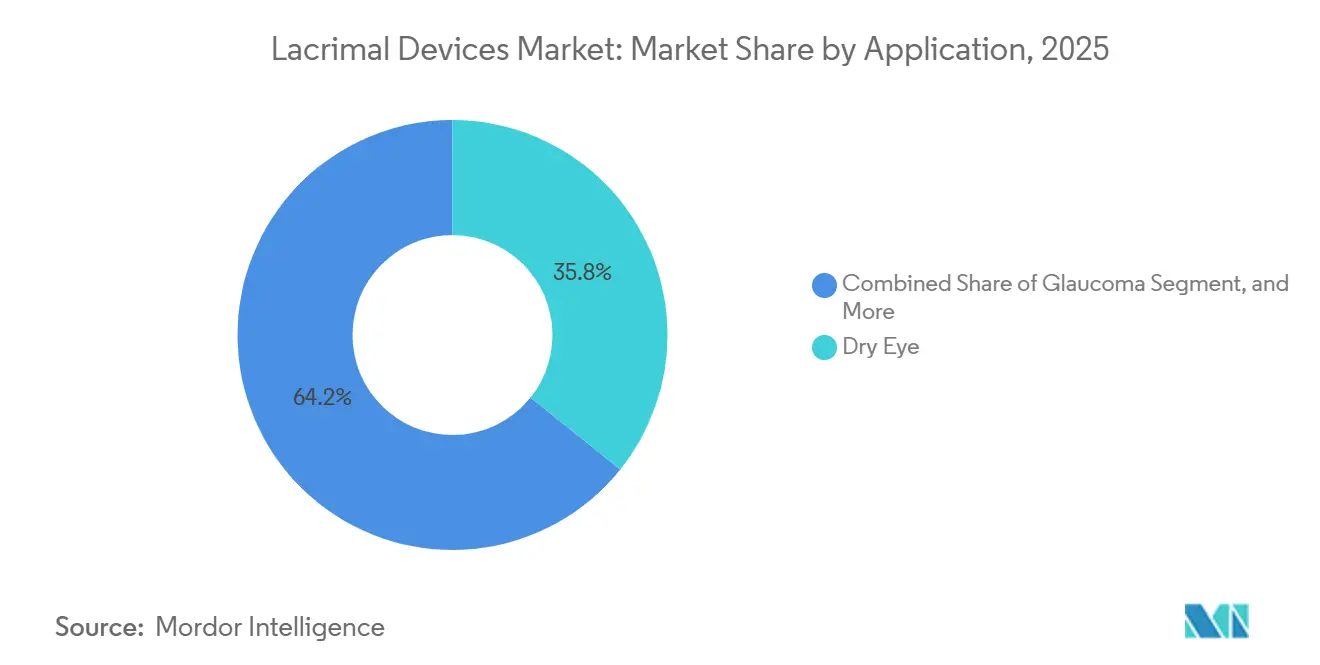
Dry Eye Creates the Largest Demand Base While Glaucoma Adds Growth PotentialDry eye accounted for 35.76% of the lacrimal devices market size in 2025, as punctal occlusion plays an established role when lubricants do not adequately manage symptoms. The application serves patients in both primary and specialist care settings. Canalicular gels offer an alternative occlusion method to solid plugs. In contrast, epiphora and drainage obstruction are primarily surgical applications that require intubation sets and stents. Lacrimal gland inflammation remains the smallest application segment in the draft, although demand may increase as tertiary ophthalmology centers expand specialized lacrimal services.
Glaucoma is forecast to grow at a CAGR of 7.86% through 2031 within the lacrimal devices market. Long-term use of prostaglandin analogs can contribute to secondary dry eye and punctal stenosis due to preservative-related ocular surface toxicity. This creates a relevant overlap between glaucoma management and lacrimal care, rather than between glaucoma drainage devices and lacrimal products. Alcon is expected to present Voyager Direct Selective Laser Trabeculoplasty for first-line glaucoma care at ASCRS 2026. Broader use of laser-based treatments could reduce long-term exposure to topical medications. The 2025 Chinese obstruction study is also expected to identify glaucoma medication use as a comorbidity pathway, further supporting the relevance of this patient overlap.
By End User:
Ophthalmic Clinics Lead Routine Care While Hospitals Manage Complex ProceduresOphthalmic clinics held 45.65% share of the lacrimal devices market in 2025, reflecting the high volume of outpatient procedures, including punctal plug insertion, irrigation, and canalicular gel administration. These settings are well-positioned to manage routine procedures with relatively simple workflows. Clinic chains across Southeast Asia, India, and the Gulf Cooperation Council continue to support demand for plugs and minor intubation kits. Diagnostic centers represent a smaller end-user group in the draft; however, they are increasingly conducting formal lacrimal assessments before surgical referral. This trend creates additional demand for single-use diagnostic accessories.
Hospitals are forecast to grow at a CAGR of 8.65% through 2031 as they manage a rising volume of complex lacrimal cases. Concurrent sinonasal disease, cancer-related obstruction, post-radiation obstruction, and revision procedures may require multidisciplinary hospital teams. A 2025 Eye Science article is expected to report improved outcomes when rhinology and oculoplastic teams collaborate to manage complex nasolacrimal duct obstruction. This care model could influence hospital service design across Asia and Europe. As clinical pathways centralize complex cases in higher-acuity settings, hospitals will require specialized intubation systems, creating growth opportunities for the lacrimal devices market.
Geography Analysis
North America Lacrimal Devices Market
North America is projected to hold a 44.28% share of the lacrimal devices market in 2025, supported by a high prevalence of physician-diagnosed dry eye disease, established reimbursement systems, and a strong base of specialty manufacturers. The source draft estimates that more than 38 million adults in the United States have been diagnosed with dry eye disease. The region has also advanced furthest in the transition to endoscopic dacryocystorhinostomy. This shift increases the use of intubation consumables per procedure, even when procedure volumes do not accelerate. Canada represents another active market for medically necessary lacrimal procedures under universal healthcare coverage.
Europe Lacrimal Devices Market
Europe is projected to hold the second-largest regional share of the lacrimal devices market. Germany, France, the United Kingdom, and the Nordic countries lead regional procedure volumes, supported by national healthcare coverage for dacryocystorhinostomy and lacrimal intubation. Regulation (EU) 2017/745 has increased evidence and compliance requirements for suppliers operating in the European market. This regulatory environment can favor companies that maintain compliant product portfolios and conduct post-market clinical follow-up. A 2026 analysis of endoscopic dacryocystorhinostomy from a high-volume tertiary center is also expected to reflect continued surgical research activity in the region.
The Americas, APAC and MEA Lacrimal Devices Market
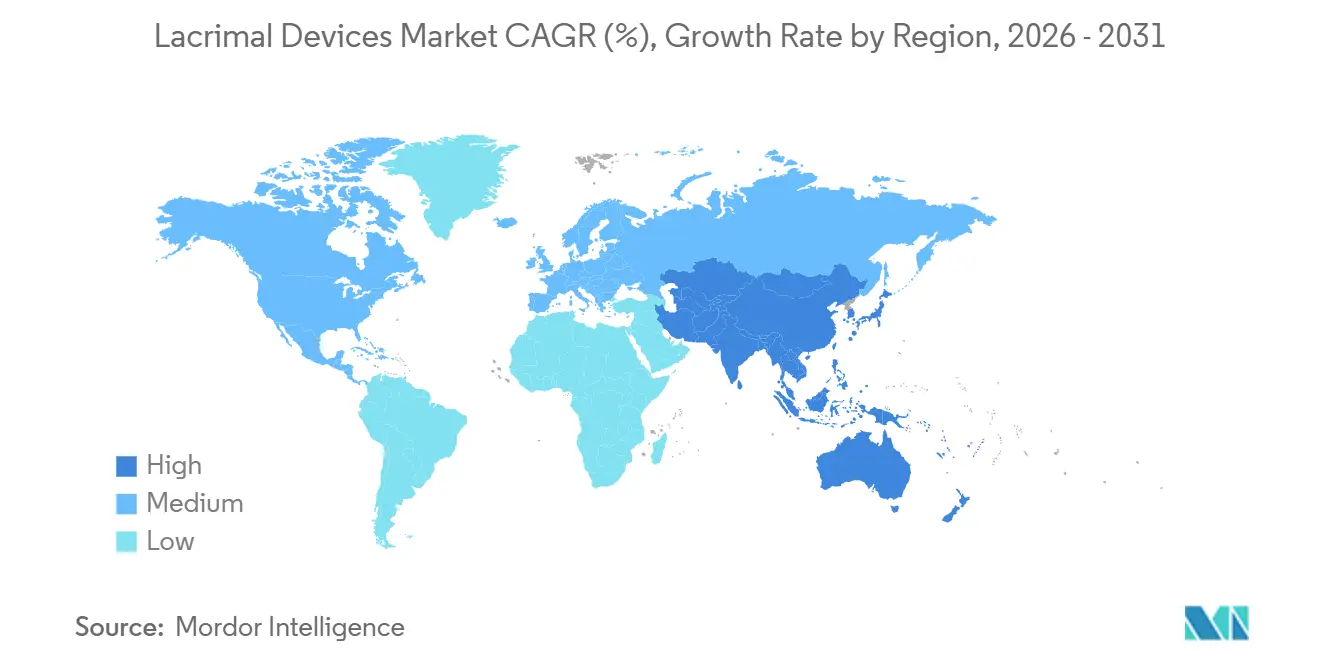
Asia-Pacific is forecast to grow at a CAGR of 6.54% through 2031, making it the fastest-growing regional market for lacrimal devices. A 2024 study of 139,556 Asian participants reported a dry eye disease prevalence of 23.9%, including 16.2% among individuals under 30 years of age and 26.7% among those over 70 years of age. Saudi Arabia’s investment in tertiary care supports dacryocystorhinostomy capabilities across the Gulf Cooperation Council. Africa has a pooled dry eye disease prevalence of 43.6% across 15 studies, although limited healthcare infrastructure and reimbursement coverage constrain treatment access. South America is projected to remain the smallest regional contributor, with Brazil and Mexico serving as its primary markets. The expansion of private clinics in major cities is beginning to generate procedural volume.
Competitive Landscape
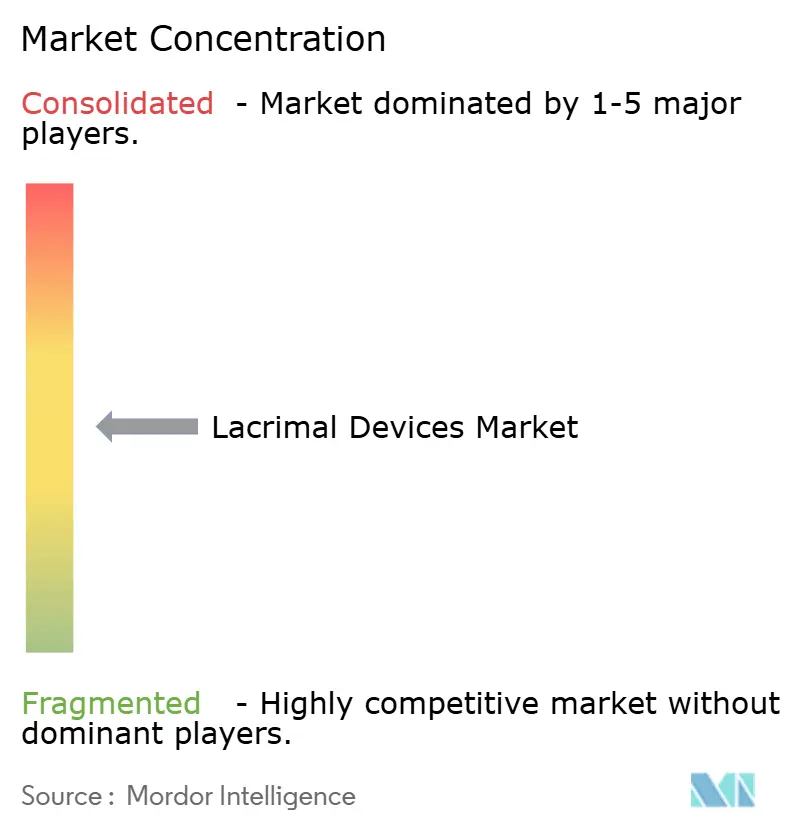
The lacrimal devices market is moderately fragmented, with no company dominating the full range of plugs, stents, and intubation systems. Alcon and BVI Medical compete through broad product portfolios and established distribution capabilities. FCI Ophthalmic, Innovia Medical, and OASIS Medical maintain specialized positions through product design expertise and established clinical familiarity. Alcon reported that dry eye products, including TRYPTYR and Systane, supported its first-quarter 2026 revenue growth. Its presence across the dry eye treatment pathway may further reinforce its position in lacrimal care.
Key competitive opportunities in the lacrimal devices market include biodegradable materials, integrated procedure kits, and clinical evidence that supports regulatory submissions. Innovia Medical completed the acquisitions of Grace Medical and Hurricane Medical in July 2025, expanding its single-use medical device manufacturing capabilities across ENT and ophthalmic procedures. In March 2025, BVI Medical completed a USD 1 billion strategic capital raise to fund product innovation and international expansion. According to the company’s release, BVI Medical markets its products in more than 90 countries.
The lack of standardized plug dimensions and stent diameters requires surgeons to source procedure trays from multiple suppliers. A validated sizing system could streamline procedures, reduce complexity, and support single-supplier procurement. Recent clinical literature identifies drug-eluting stents and image-guided dacryoendoscopy as emerging product development areas. These technologies could provide meaningful differentiation once they obtain the required regulatory clearances. Alcon launched TRYPTYR in the United States in July 2025, following FDA approval in May 2025. The therapy stimulates tear production and may influence device utilization among patients with moderate-to-severe dry eye disease. Clinical outcomes, workflow compatibility, and each supplier’s ability to meet regulatory requirements will continue to shape the lacrimal devices market.
Lacrimal Devices Industry Leaders
-
FCI Ophthalmic
-
BVI
-
Kaneka Corporation
-
Lacrimedics Inc.
-
Bess Medizintechnik GmbH
- *Disclaimer: Major Players sorted in no particular order
Lacrimal Devices Market Companies Covered in this Report
- Alcon
- Aurolab
- B. Braun
- Besse Medizintechnik GmbH
- BVI Medical
- Cook Group
- FCI Ophthalmic
- Gunther Weiss Scientific Glass
- Innovia Medical
- JEDMED Instrument Company
- Kaneka
- Medennium
- Nordics Pharma
- OASIS Medical, Inc.
- Porex Surgical, Inc.
- Rumex International Co.
- Walsh Medical Devices
Recent Industry Developments in Lacrimal Devices Market
- July 2025: Innovia Medical, backed by Inverness Graham, completed acquisitions of Grace Medical, a supplier of single-use ENT implants with more than 20 patents, and Hurricane Medical, a supplier of single-use ophthalmic surgical products with automated production capability. The dual acquisition positions Innovia as a vertically integrated manufacturer across ENT and ophthalmic procedure markets and expands single-use device manufacturing capacity for lacrimal and ocular surgery consumables.
- July 2025: Alcon launched TRYPTYR, acoltremon ophthalmic solution 0.003%, in the United States after FDA approval in May 2025. Alcon described it as the first approved TRPA1 agonist for dry eye disease. The launch included a Field Access Management team and a First Fill Free trial program.
- March 2025: BVI Medical completed a USD 1 billion strategic capital raise with TPG. The transaction refinanced existing debt and added equity for product innovation and commercial expansion across more than 90 countries.
- October 2025: Sight Sciences announced that Novitas Solutions and First Coast Service Options established fee schedules for CPT code 0563T for the TearCare procedure, effective January 1, 2025.
Global Lacrimal Devices Market Report Scope
According to the report’s scope, lacrimal devices are medical instruments used to diagnose and treat disorders of the tear drainage system, such as blockages or tears that overflow. They include tools like probes, stents, and syringing devices designed to restore normal tear flow.
The lacrimal devices market is segmented into product, application, end user, and geography. By product, the market is segmented into punctal plugs, lacrimal stents, intubation sets, lacrimal tubes, lacrimal cannulas and spatulas, and other product types. By application, the market is segmented into dry eye, glaucoma, epiphora, drainage obstruction, lacrimal gland inflammation, and other applications. By end user, the market is segmented into hospitals, ophthalmic clinics, diagnostic centers, and other end users. By geography, the market is segmented into North America, Europe, Asia-Pacific, the Middle East and Africa, and South America. The report also covers the estimated market sizes and trends for 17 countries across major regions globally. The report offers values (USD) for all the above segments.
Segmentation Overview
| Punctal Plugs |
| Lacrimal Stents |
| Intubation Sets |
| Lacrimal Tubes |
| Lacrimal Cannulas and Spatulas |
| Other Product Types |
| Dry Eye |
| Glaucoma |
| Epiphora |
| Drainage Obstruction |
| Lacrimal Gland Inflammation |
| Other Applications |
| Hospitals |
| Ophthalmic Clinics |
| Diagnostic Centers |
| Other End Users |
| North America | United States |
| Canada | |
| Mexico | |
| Europe | Germany |
| United Kingdom | |
| France | |
| Italy | |
| Spain | |
| Rest of Europe | |
| Asia-Pacific | China |
| Japan | |
| India | |
| Australia | |
| South Korea | |
| Rest of Asia-Pacific | |
| Middle East and Africa | GCC |
| South Africa | |
| Rest of Middle East and Africa | |
| South America | Brazil |
| Argentina | |
| Rest of South America |
| By Product | Punctal Plugs | |
| Lacrimal Stents | ||
| Intubation Sets | ||
| Lacrimal Tubes | ||
| Lacrimal Cannulas and Spatulas | ||
| Other Product Types | ||
| By Application | Dry Eye | |
| Glaucoma | ||
| Epiphora | ||
| Drainage Obstruction | ||
| Lacrimal Gland Inflammation | ||
| Other Applications | ||
| By End User | Hospitals | |
| Ophthalmic Clinics | ||
| Diagnostic Centers | ||
| Other End Users | ||
| Geography | North America | United States |
| Canada | ||
| Mexico | ||
| Europe | Germany | |
| United Kingdom | ||
| France | ||
| Italy | ||
| Spain | ||
| Rest of Europe | ||
| Asia-Pacific | China | |
| Japan | ||
| India | ||
| Australia | ||
| South Korea | ||
| Rest of Asia-Pacific | ||
| Middle East and Africa | GCC | |
| South Africa | ||
| Rest of Middle East and Africa | ||
| South America | Brazil | |
| Argentina | ||
| Rest of South America | ||
Key Questions Answered in the Report
What will be the forecast value for lacrimal devices market in 2031?
The lacrimal devices market size is expected to grow from USD 159.76 million in 2025 to USD 168 million in 2026 and is forecast to reach USD 216.05 million by 2031 at 5.16% CAGR over 2026-2031.
Which lacrimal device product has the largest revenue share?
Punctal plugs led product revenue with a 38.65% share in 2025, supported by outpatient use for dry eye management.
Which product category is growing fastest through 2031?
Intubation sets have the highest projected growth rate at a 7.43% CAGR through 2031 as endoscopic dacryocystorhinostomy use increases.
Why are hospitals becoming more important in lacrimal care?
Hospitals are projected to grow at an 8.65% CAGR through 2031 because complex obstruction and revision cases may require multidisciplinary teams.
Which region is expanding fastest for lacrimal devices?
Asia-Pacific has the highest projected regional CAGR at 6.54% through 2031, supported by dry eye prevalence and expanding ophthalmic capacity.
How concentrated is competition among lacrimal device suppliers?
The competitive environment is moderately fragmented, as no company holds a dominant position across punctal plugs, stents, and intubation systems.