
L-Citrulline Market Size and Share
Market Overview
| Study Period | 2021 - 2031 |
|---|---|
| Market Size (2026) | USD 1.84 Billion |
| Market Size (2031) | USD 2.36 Billion |
| Growth Rate (2026 - 2031) | 5.14 % |
| Fastest Growing Market | Asia-Pacific |
| Largest Market | North America |
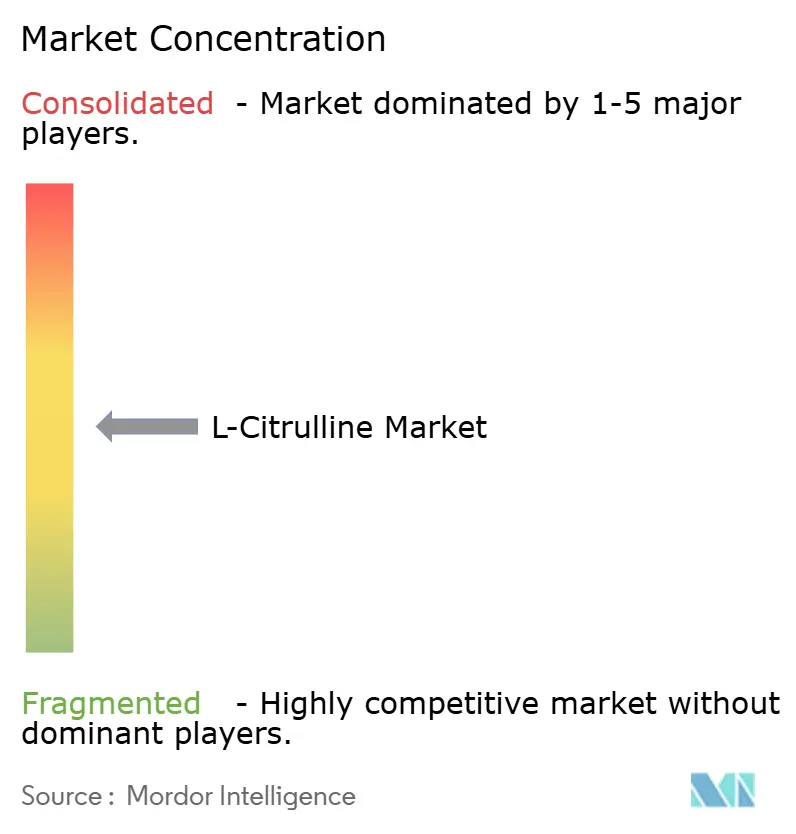
| Market Concentration | Medium |
Major Players *Disclaimer: Major Players sorted in no particular order Image © Mordor Intelligence. Reuse requires attribution under CC BY 4.0. | |
L-Citrulline Market Analysis by Mordor Intelligence
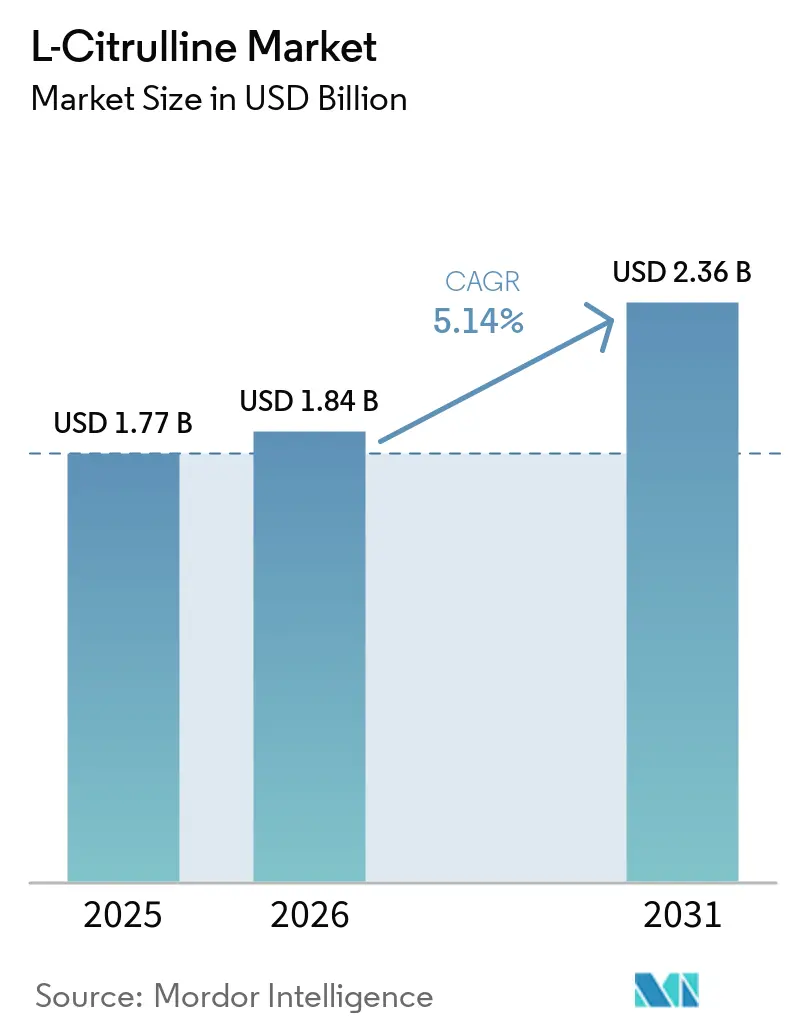
The L-Citrulline market size was estimated at USD 1.77 billion in 2025 and is estimated to grow from USD 1.84 billion in 2026 to USD 2.36 billion by 2031, at a CAGR of 5.14% during the forecast period (2026-2031). The L-Citrulline market is supported by demand from sports nutrition, cardiovascular nutrition, and functional food and beverage products. Clinical research has strengthened the ingredient's positioning among buyers who require evidence before incorporating it into health-focused formulations, including products for older adults and those managing vascular conditions. Fermentation is changing supply conditions by improving traceability, supporting non-GMO positioning, widening access to high-purity material, and helping manufacturers meet vegan product requirements. Suppliers are responding through branded ingredients, food-safety certifications, pharmaceutical-grade capabilities, and stronger documentation for global customers. Regulatory differences between the United States and Europe, along with liquid formulation constraints, continue to influence product design, claims, supplier qualification, and market entry decisions. Product makers must determine which claims they can support, what dose can be clearly presented, how a product will retain acceptable taste, and whether the selected form can maintain quality through production, shipping, storage, and use. These practical considerations affect the speed at which new concepts progress from ingredient selection to commercial launch across sports nutrition, functional food, and clinical-oriented product channels.
Key Report Takeaways
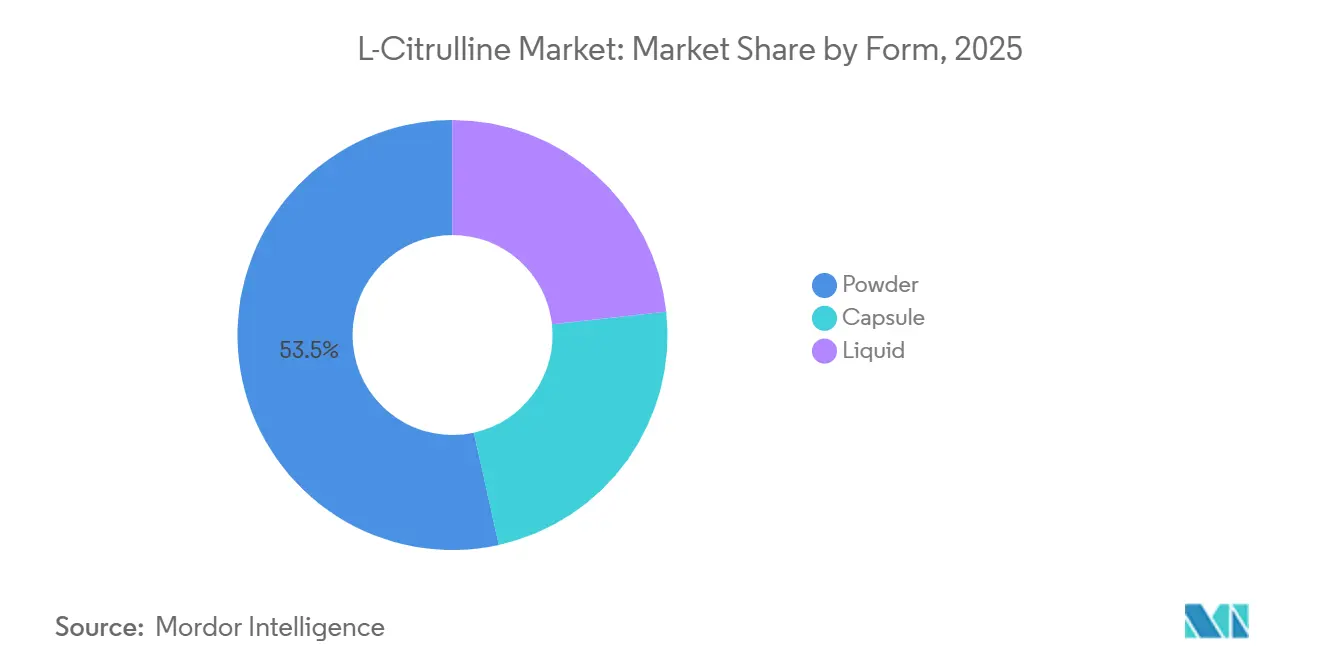
- By form, powder accounted for 53.45% of revenue in 2025 and is forecast to grow at a 6.06% CAGR through 2031.
- By classification, food-grade accounted for 58.31% of revenue in 2025, while medical-grade is forecast to expand at a 6.32% CAGR through 2031.
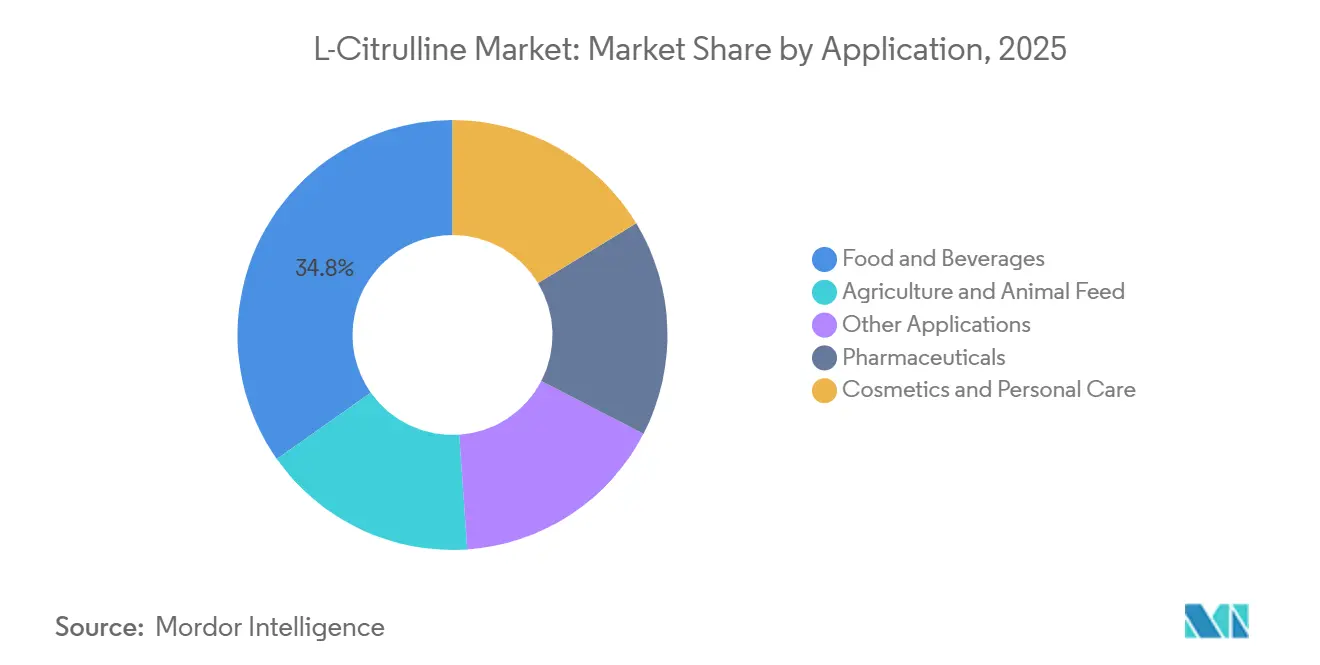
- By application, food and beverages accounted for 34.78% of the L-Citrulline market size in 2025, while pharmaceuticals are forecast to grow at a 6.76% CAGR through 2031.
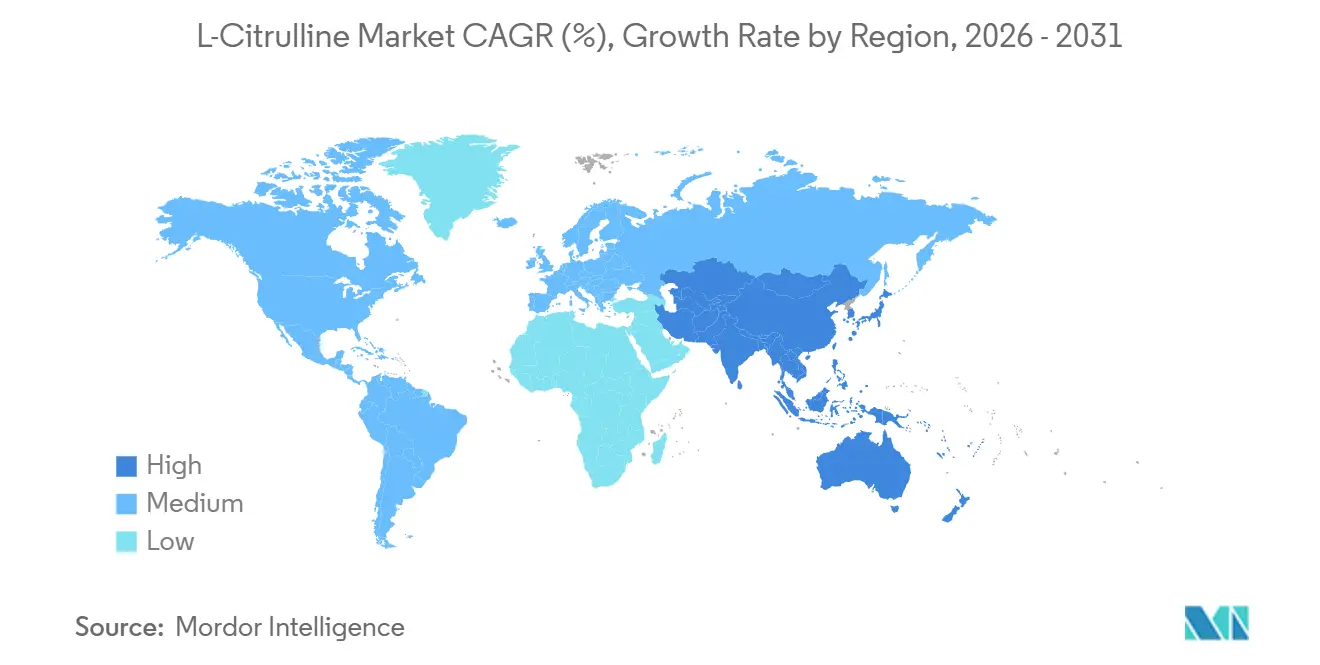
- By geography, North America held a 40.24% revenue share in 2025, while Asia-Pacific is forecast to grow at a 5.89% CAGR through 2031.
Note: Market size and forecast figures in this report are generated using Mordor Intelligence’s proprietary estimation framework, updated with the latest available data and insights as of January 2026.
Market Trends and Insights
Drivers Impact Analysis of L-Citrulline Market*
| Drivers | (~) % Impact on CAGR Forecast | Geographic Relevance | Impact Timeline |
|---|---|---|---|
| Sports Nutrition and Non-Stimulant Performance Formulations | +1.8% | North America, Europe, APAC core | Short term (≤ 2 years) |
| Functional Foods, Beverages, and Hydration Products | +1.2% | Global | Medium term (2-4 years) |
| Cardiovascular and Healthy-Aging Demand | +1.0% | North America, Europe, Japan, South Korea | Medium term (2-4 years) |
| Fermentation-Based Clean-Label Supply Expansion | +0.6% | APAC, global spillover | Long term (≥ 4 years) |
| E-Commerce and Personalized Supplement Delivery | +0.4% | North America, APAC core, spillover to the Middle East and Africa | Short term (≤ 2 years) |
| Source: Mordor Intelligence | |||
Sports Nutrition and Non-Stimulant Performance Formulations
The L-citrulline market benefits from growing consumer interest in non-stimulant pre-workout products that provide performance support without relying on caffeine. Consumers concerned about stimulant-related effects choose products positioned around muscle blood flow, endurance, and recovery rather than short-lived stimulant effects. L-citrulline supports nitric oxide production through the arginine, endothelial nitric oxide synthase, and nitric oxide pathway. It also supports ammonia and lactate clearance through the hepatic urea cycle, distinguishing its role from ingredients that only mask fatigue. A 2025 narrative review described a combination of 200 mg Setria Glutathione and 2 g L-citrulline that supported nitric oxide production and lean-mass outcomes. The 6 g to 10 g per-serving range used in many U.S. pre-workout products increases raw-material demand per unit and supports fermented products with disclosed sourcing and clinically relevant serving sizes. It also encourages brands to communicate ingredient origin, fermentation methods, dose selection, and intended use more clearly to consumers comparing products online.
Functional Foods, Beverages, and Hydration Products
Functional foods, beverages, and hydration products represent a demand channel for the L-citrulline market beyond periodic supplement use. Daily hydration and snack occasions generate more regular purchase behavior than standalone performance products, which are often used in cycles. L-citrulline powder has a mildly sweet, near-neutral sensory profile that fits well in lightly flavored drinks and energy shots, requiring less masking than many performance amino acids. Japan's dietary supplement market reached JPY 1.0876 trillion (USD 7.4 billion) in 2025, with citrulline among the active functional ingredients. A 2025 study in dairy goats found that dietary L-citrulline increased milk protein concentration, indicating a potential application beyond human nutrition. This broadens the range of customers evaluating the ingredient for feed and agricultural formulations, while daily food formats provide a stable route to consumer adoption. Sports drinks, electrolyte blends, energy shots, and powdered hydration products allow companies to position L-citrulline within familiar product formats rather than as a specialized amino acid purchase.
Cardiovascular and Healthy-Aging Demand
Aging populations in North America, Western Europe, and East Asia are creating a larger base of consumers interested in cardiovascular nutrition. The L-citrulline market can benefit where clinical findings are translated into physician-directed nutrition, clinical protocols, and specialized wellness products. A 2025 Phase II trial reported that L-citrulline combined with tetrahydrobiopterin improved mean walking distance in patients with peripheral artery disease compared with controls[1]Jakob Schöpe et al., “Nutritional L-Citrulline and Tetrahydrobiopterin in Peripheral Artery Disease,” JACC: Advances, jacc.org.. A 2026 systematic review reported that daily doses of 6-10 g for 4-8 weeks reduced systolic blood pressure by up to 9 mmHg in hypertensive postmenopausal women. These findings extend the clinical discussion beyond urea cycle disorders and sports use, while supporting demand for medical-grade material in regions with higher age-related cardiovascular risk. The L-citrulline market can serve both consumer-wellness buyers and clinical customers when suppliers provide the necessary purity, stability, and scientific documentation.
Fermentation-Based Clean-Label Supply Expansion
Fermentation is an important production route for the L-citrulline market, supporting high purity and vegan, non-GMO product positioning. A 2026 Chemical Engineering Journal study reported that an engineered Corynebacterium glutamicum strain achieved a pilot-scale titer of 87.34 g/L, a yield of 0.47 g/g, and productivity of 1.82 g/L/h without L-arginine supplementation. These results indicate that upstream economics can improve while suppliers maintain traceable production methods and reduce dependence on chemical synthesis routes. The ISO 22000 and Food Safety System Certification (FSSC) 22000 frameworks are relevant to suppliers serving retail buyers and global supplement brands that require documented food safety systems. CJ BIO markets AMINATURE as a fermented amino acid brand for these ingredient applications. Fermentation-based supply can support wider output and differentiated positioning, although pharmaceutical-grade purification still requires substantial capital and process control. Upstream production gains are most valuable when paired with a credible pathway to finished material that meets customer specifications.
Restraints Impact Analysis of L-Citrulline Market*
| Restraints | (~) % Impact on CAGR Forecast | Geographic Relevance | Impact Timeline |
|---|---|---|---|
| High-Purity Fermentation and Purification Costs | -0.7% | Global, concentrated in North America and the European Union, pharmaceutical-grade demand | Medium term (2-4 years) |
| Taste, Acidity, and Liquid-Format Stability Constraints | -0.4% | Global, acute in mass-market beverage formats | Short term (≤ 2 years) |
| Regionally Divergent Dosage and Health-Claim Rules | -0.3% | European Union, North America, Asia-Pacific (APAC), with early gains in Brazil and South Africa | Long term (≥ 4 years) |
| Source: Mordor Intelligence | |||
High-Purity Fermentation and Purification Costs
Pharmaceutical-grade L-citrulline requires purity above 99.5% under Good Manufacturing Practice requirements. Crystallization, ion-exchange chromatography, filtration, and endotoxin removal raise manufacturing costs by 20% to 40% compared with standard food-grade output. Fermentation improvements reduce upstream costs but do not eliminate the need for investment in downstream purification equipment, validation, and batch release. This creates a barrier for smaller producers seeking to enter the pharmaceutical supply and compete for regulated customer accounts. Clinical applications also require 12 to 36 months of stability data in accordance with International Council for Harmonization quality expectations. The L-citrulline market has a structural divide between producers that can document pharmaceutical quality and those limited to lower-margin food-grade supply. This difference affects capital planning, customer qualification, production scheduling, and participation in trials or regulated nutrition programs.
Taste, Acidity, and Liquid-Format Stability Constraints
L-citrulline malate is widely used in ready-to-drink and liquid supplement products, but its aqueous solution has a pH of 2.5-4.0. This acidity produces sourness that is difficult to mask when products provide 6 to 10 g per day, particularly in unflavored or lightly flavored hydration products. A 2025 study found that alkaline conditions accelerated L-citrulline degradation in liquid matrices, limiting the ambient shelf life of ready-to-drink formats to 6 to 12 months, compared with more than 24 months for powder equivalents[2]Rupesh Kumar Pradhan and Sulochana Singh, “Thermal Stability, Aqueous Solubility, and Hydration Properties of L-Citrulline,” Food Research International, sciencedirect.com.. Citrulline malate also absorbs moisture, requiring anti-caking agents or low-humidity packaging for tablets and sachets, which may conflict with simple-label objectives. These factors restrict L-citrulline market expansion into mass-market beverages that require palatability, long shelf life, and straightforward ingredient lists.
*Our forecasts treat driver/restraint impacts as directional, not additive. The impact forecasts reflect baseline growth, mix effects, and variable interactions.
L-Citrulline Market Segment Analysis
By Form:
Powder Dominates and Sustains the Fastest GrowthPowder held 53.45% of the L-citrulline market share in 2025 and is forecast to expand at a 6.06% CAGR through 2031. It is the preferred delivery format for sports nutrition brands, functional food producers, and pharmaceutical formulators because it enables high inclusion levels without the storage constraints associated with liquid products. The format supports servings from 1 g to more than 10 g, allowing manufacturers to offer lower-dose wellness products and higher-dose performance products from a comparable base ingredient. Powder is also easier to incorporate into flavored beverage blends than citrulline malate tablets or ready-to-drink liquids with pronounced sour notes. CJ BIO's AMINATURE uses non-GMO microbial fermentation and is suitable for vegan product applications.
Capsules address consumers who prefer convenience, controlled dosing, and a swallowable product, particularly in cardiovascular wellness and over-the-counter formats. Liquid products are attracting investment in the United States and Asia-Pacific despite acidity, sensory, and shelf-life limitations that affect ambient distribution. A 2025 study reported a 73.4% encapsulation efficiency for chitosan-coated nanoliposomes containing L-citrulline, with controlled release under simulated gastrointestinal conditions. This approach provides a technical route for future liquid delivery systems but does not remove the need for careful high-dose formulation and stable packaging. The L-citrulline market favors powder as direct-to-consumer subscriptions support bulk formats, repeat purchases, efficient distribution, and clear dosing instructions. The powder format also allows brands to adapt serving sizes for pre-workout, hydration, and cardiovascular wellness products without changing the core delivery platform.



By Classification:
Medical Grade Accelerates as Clinical Evidence BroadensFood grade accounted for 58.31% of revenue in 2025. Its large share reflects widespread use in dietary supplements, functional foods, and beverages that do not require clinical purity records or Good Manufacturing Practice certification. In the United States, L-citrulline can be sold as a dietary supplement under the Dietary Supplement Health and Education Act without pharmaceutical approval. European food regulations govern the claims that accompany food-grade material. Food-grade suppliers face price competition as fermentation capacity expands, making certifications, export readiness, identity preservation, and consistent quality documentation important differentiators. These factors help brands and contract manufacturers reduce the risk of changes in sensory quality, impurity profiles, or delivery timing when sourcing across borders.
Medical-grade material is forecast to be the fastest-growing classification at a 6.32% CAGR through 2031. The segment is supported by research on peripheral artery disease, blood pressure management, endothelial function, and type 2 diabetes, where clinical protocols require defined purity and stable supply. A 2025 study involving 16 people with type 2 diabetes reported improvements in vascular measures, aortic systolic blood pressure, and fasting blood glucose after 6 g per day for 4 weeks. Pharmaceutical buyers require long-term stability records and controlled supply for intravenous nutrition products and clinical trial materials, with lot sizes ranging from 25 kg to more than 1,000 kg. This distinction gives producers with purification systems and regulatory documentation access to a separate premium channel within the L-citrulline market.
By Application:
Pharmaceutical Channel Outpaces Traditional Food DemandFood and beverages accounted for 34.78% of the L-citrulline market in 2025. The segment covers clinical-dose pre-workouts, functional energy drinks, electrolyte powders, hydration products, and beauty-oriented beverages across different daily use occasions. Its breadth reflects the ingredient's ability to fit established consumer routines as well as specialized performance products, reducing reliance on a single retail category. A 2026 systematic review in postmenopausal women established a connection between food-channel distribution and cardiovascular health positioning. Food and beverage formulators must manage taste, acidity, shelf-life, and label simplicity when developing liquid products for mainstream use.
Pharmaceuticals are forecast to be the fastest-growing application at a 6.76% CAGR through 2031. Demand is linked to documented use in vascular health, metabolic conditions, and nitrogen metabolism, with the peripheral artery disease trial providing a clinical use case outside mainstream sports nutrition. Cosmetics and personal care represent another application area through Tripeptide-10 Citrulline, a peptide described as influencing collagen fibrillogenesis and skin elasticity. Agriculture and animal feed also have peer-reviewed support, as a 2025 broiler study found that 1% dietary L-citrulline improved body weight gain, antioxidant capacity, and gut microbiota composition. These applications give the L-citrulline market exposure to several customer groups without altering the central role of demand from the food and pharmaceutical sectors. Suppliers with adaptable technical support can pursue customers in nutrition, clinical development, cosmetics, and animal feed without relying on a single finished-product category.
Geography Analysis
North America L-Citrulline Market
North America accounted for 40.24% of the L-citrulline market share in 2025. This position reflects the United States' established dietary supplement industry, high consumer spending on fitness nutrition, and mature direct-to-consumer e-commerce channels. The Dietary Supplement Health and Education Act governs the sale and labeling of L-citrulline products, while the region's clinical research base supports both food-grade sports products and pharmaceutical-grade formulations. Large retail networks, specialist stores, and digital subscription models support brands in offering multiple dosage formats. These factors make North America a key destination for suppliers that can demonstrate consistent quality and responsive distribution. Established consumer awareness of workout supplements and multiple retail channels allow suppliers to serve performance, general wellness, and clinical-oriented buyers within the same regional market.
APAC L-Citrulline Market
Asia-Pacific is forecast to be the fastest-growing region at a 5.89% CAGR through 2031. Rising urban incomes, organized fitness participation, and aging populations in Japan, South Korea, and China are driving demand in the L-citrulline market. Japan's dietary supplement industry reached JPY 1.0876 trillion (USD 7.4 billion) in 2025, with citrulline among the active functional ingredients. China combines a fermentation-based amino acid production base with a growing domestic supplement market, while South Korea supports branded ingredients and high-purity supply. India remains less developed, but online access to global supplement brands is supporting adoption among urban fitness consumers. These conditions allow the L-citrulline market to develop initially through imported brands, followed by local manufacturing and private-label activity as consumer familiarity grows.
EMEA and South America L-Citrulline Market
Europe is the second-largest regional market, with Germany, the United Kingdom, and France supporting demand under health-claim regulations for food products. European buyers prioritize traceability, food safety certification, and clear product documentation, which encourages producers to adopt ISO 22000 or Food Safety System Certification (FSSC) 22000 practices. South America remains at an earlier stage of development, with Brazil serving as the regional anchor through its urban fitness culture. Demand in the Middle East and Africa is concentrated in Gulf Cooperation Council markets with premium supplement retail networks, presenting further growth opportunities for the L-citrulline market as distribution expands.

Competitive Landscape
The L-Citrulline market has a moderately fragmented upstream fermentation production base and a fragmented downstream landscape of branded products. Upstream competitors include Meihua Holdings Group, Wuxi Jinghai Amino Acid, Hebei Huaheng Biological Technology, Hubei Yuanda Biotechnology, Shanghai Joinray Biotechnology, CJ CheilJedang, and Daesang Corporation. These suppliers compete on fermentation efficiency, product purity, Halal and Kosher qualifications, food safety certifications, and export logistics. CJ BIO differentiates its offering through the AMINATURE fermented-amino-acid brand. This structure gives large fermentation suppliers a scale advantage, while finished-product companies compete on formulation, quality testing, delivery format, and brand trust.
Meihua Holdings Group's acquisition of Kyowa Hakko Bio's amino acid and human milk oligosaccharide business in July 2025 consolidated parts of the upstream supply base. The transaction added production capacity and customer relationships across China, Japan, Southeast Asia, and North America, while narrowing the supply pool for qualified buyers. In April 2026, Novonesis signed an agreement to acquire a fermentation facility in Rayong, Thailand, from Meihua for USD 50 million, with commercial operations expected in 2027. This transaction reflects continued investment in fermentation capacity across the regional supply chain. Supply security, quality records, and qualification processes have become more important for buyers in clinical and contract development and manufacturing organizations.
At the finished product level, Glanbia plc, NutraBio, Now Health International, and Acerblend Ingredients compete across premium and value segments. NutraBio introduced a ready-to-drink protein shot in July 2026, expanding the range of formats in its direct-to-consumer portfolio. Companies with vegan, non-GMO, and third-party-tested positioning address consumers who prefer clear source information. The L-Citrulline market remains competitive as clinical evidence, regulatory documentation, and consumer-facing product design are all required to move beyond bulk ingredient supply. This keeps competition active across raw material production, documentation, formulation support, finished-product branding, and distribution.
L-Citrulline Industry Leaders
KYOWA HAKKO BIO CO., LTD.
Hubei Yuanda Biotechnology Co., Ltd.
CJ CHEILJEDANG CORP
NutraBio
Now Health International
- *Disclaimer: Major Players sorted in no particular order
L-Citrulline Market Companies Covered in this Report
- Acerblend Ingredients Co., Ltd.
- CJ CHEILJEDANG CORP
- Daesang Corporation
- Glanbia plc
- Hebei Huaheng Biologcal Technology Co,Ltd.
- Hubei Yuanda Biotechnology Co., Ltd.
- KYOWA HAKKO BIO CO., LTD.
- Meihua Holdings Group Co., Ltd.
- MH2 BIOCHEMICAL
- Now Health International
- NutraBio
- Shanghai Joinray Biotechnology Co., Ltd.
- Shijiazhuang Haitian Amino Acid Co., Ltd.
- Tomo Chemical Co., Ltd.
- Wuxi Jinghai Amino Acid Co., Ltd.

Recent Industry Developments in L-Citrulline Market
- April 2026: Novonesis signed an agreement with Meihua to acquire a fermentation production facility in Rayong, Thailand, for USD 50 million. The site supports human milk oligosaccharide production and is expected to begin commercial operations in 2027.
- December 2025: Daesang Corporation acquired AMINO GmbH, a German pharmaceutical-grade amino acid manufacturer, for KRW 50.2 billion (USD 34 million). The acquisition gave Daesang access to 67 years of purification technology, European regulatory capabilities, and a global network of pharmaceutical clients to support its amino acid expansion into North America and Asia.


Global L-Citrulline Market Report Scope
L-citrulline is a non-essential amino acid naturally produced by the body and found in foods such as watermelon. It supports the elimination of harmful waste products, such as ammonia, through the urea cycle and converts them into L-arginine, which is then used to produce nitric oxide, which dilates blood vessels and improves blood flow.
The L-Citrulline market is segmented by form, classification, application, and geography. By form, the market is segmented into powder, capsule, and liquid. By classification, the market is segmented into food grade and medical grade. By application, the market is segmented into food and beverages, pharmaceuticals, cosmetics and personal care, agriculture and animal feed, and other applications. The report also covers market size and forecasts for L-Citrulline across 15 countries in major regions. The market sizes and forecasts are provided in terms of value (USD).
| Powder |
| Capsule |
| Liquid |
| Food Grade |
| Medical Grade |
| Food and Beverages |
| Pharmaceuticals |
| Cosmetics and Personal Care |
| Agriculture and Animal Feed |
| Other Applications |
| Asia-Pacific | China |
| India | |
| Japan | |
| South Korea | |
| Rest of Asia-Pacific | |
| North America | United States |
| Canada | |
| Mexico | |
| Europe | Germany |
| United Kingdom | |
| France | |
| Italy | |
| Rest of Europe | |
| South America | Brazil |
| Argentina | |
| Rest of South America | |
| Middle East and Africa | Saudi Arabia |
| South Africa | |
| Rest of Middle East and Africa |
| By Form | Powder | |
| Capsule | ||
| Liquid | ||
| By Classification | Food Grade | |
| Medical Grade | ||
| By Application | Food and Beverages | |
| Pharmaceuticals | ||
| Cosmetics and Personal Care | ||
| Agriculture and Animal Feed | ||
| Other Applications | ||
| By Geography | Asia-Pacific | China |
| India | ||
| Japan | ||
| South Korea | ||
| Rest of Asia-Pacific | ||
| North America | United States | |
| Canada | ||
| Mexico | ||
| Europe | Germany | |
| United Kingdom | ||
| France | ||
| Italy | ||
| Rest of Europe | ||
| South America | Brazil | |
| Argentina | ||
| Rest of South America | ||
| Middle East and Africa | Saudi Arabia | |
| South Africa | ||
| Rest of Middle East and Africa | ||


Key Questions Answered in the Report
What is current market size of L-Citrulline Market?
The L-Citrulline market size was estimated at USD 1.77 billion in 2025 and is estimated to grow from USD 1.84 billion in 2026 to USD 2.36 billion by 2031, at a CAGR of 5.14% during the forecast period (2026-2031).
Which L-citrulline form has the largest share?
Powder held 53.45% share in 2025 and is also forecast to grow at a 6.06% CAGR through 2031.
Why is medical-grade L-citrulline growing faster than food-grade?
Medical grades are forecast to grow at a 6.32% CAGR because clinical and pharmaceutical uses require high purity, regulatory documentation, and reliable stability records.
Which application is growing fastest for L-citrulline?
Pharmaceuticals are forecast to grow at a 6.76% CAGR through 2031, supported by use cases in vascular health, metabolic conditions, and nitrogen metabolism.
Page last updated on:





