
Japan Soil Monitoring Market Size and Share
Market Overview
| Study Period | 2021 - 2031 |
|---|---|
| Forecast Data Period | 2026 - 2031 |
| Base Year Market Size (2025) | USD 28 Million |
| Market Size (2026) | USD 32.10 Million |
| Market Size (2031) | USD 63.80 Million |
| Growth Rate (2026 - 2031) | 14.73 % |
| Market Concentration | Low |
Major Players *Disclaimer: Major Players sorted in no particular order Image © Mordor Intelligence. Reuse requires attribution under CC BY 4.0. | |
Japan Soil Monitoring Market Analysis by Mordor Intelligence
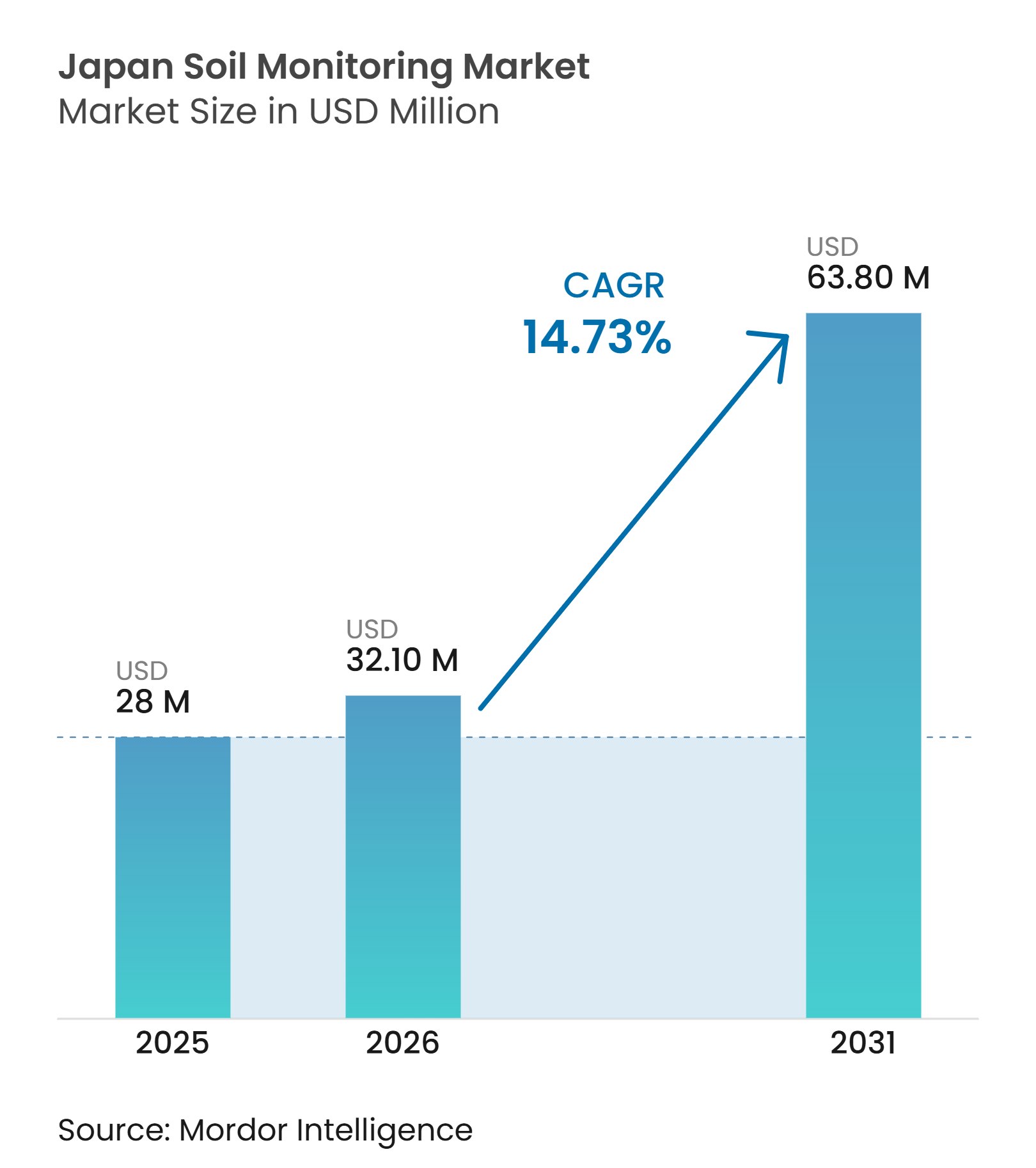
The Japan soil monitoring market was valued at USD 28 million in 2025, which is estimated to increase from USD 32.1 million in 2026 to reach USD 63.8 million by 2031, at a CAGR of 14.73% during the forecast period (2026-2031). Growth is supported by government-backed smart-agriculture initiatives, including financial and tax support under Japan’s Smart Agriculture Technology Utilization Promotion Law for the development and deployment of sensing and other smart-agriculture technologies[1]. Japan's aging farm population increases the value of recorded soil data, as such data helps preserve cultivation practices that might otherwise be lost when experienced operators retire. The market is also shifting from stand-alone devices toward connected systems that integrate sensing, calibration, analytics, and advisory support. This trend favors suppliers that can operate through cooperatives and prefectural programs, although fragmented purchasing processes can delay revenue recognition following technology adoption.
Key Report Takeaways
- By component, hardware held 58% of Japan soil monitoring market share in 2025, while services are growing fastest at a forecast CAGR of 16.3% through 2031.
- By product type, in-situ sensors held 46% of Japan soil monitoring market in 2025, while remote-sensing platforms are forecast to expand at the fastest CAGR of 18.1% through 2031.
- By connectivity technology, wireless connectivity accounted for 70% of Japan soil monitoring market size in 2025, and is the fastest-growing, forecast to expand at 19.8% CAGR through 2031.
- By application, open-field applications held 63% market share in 2025, while protected cultivation is forecast to grow at the fastest CAGR of 14.2% through 2031.
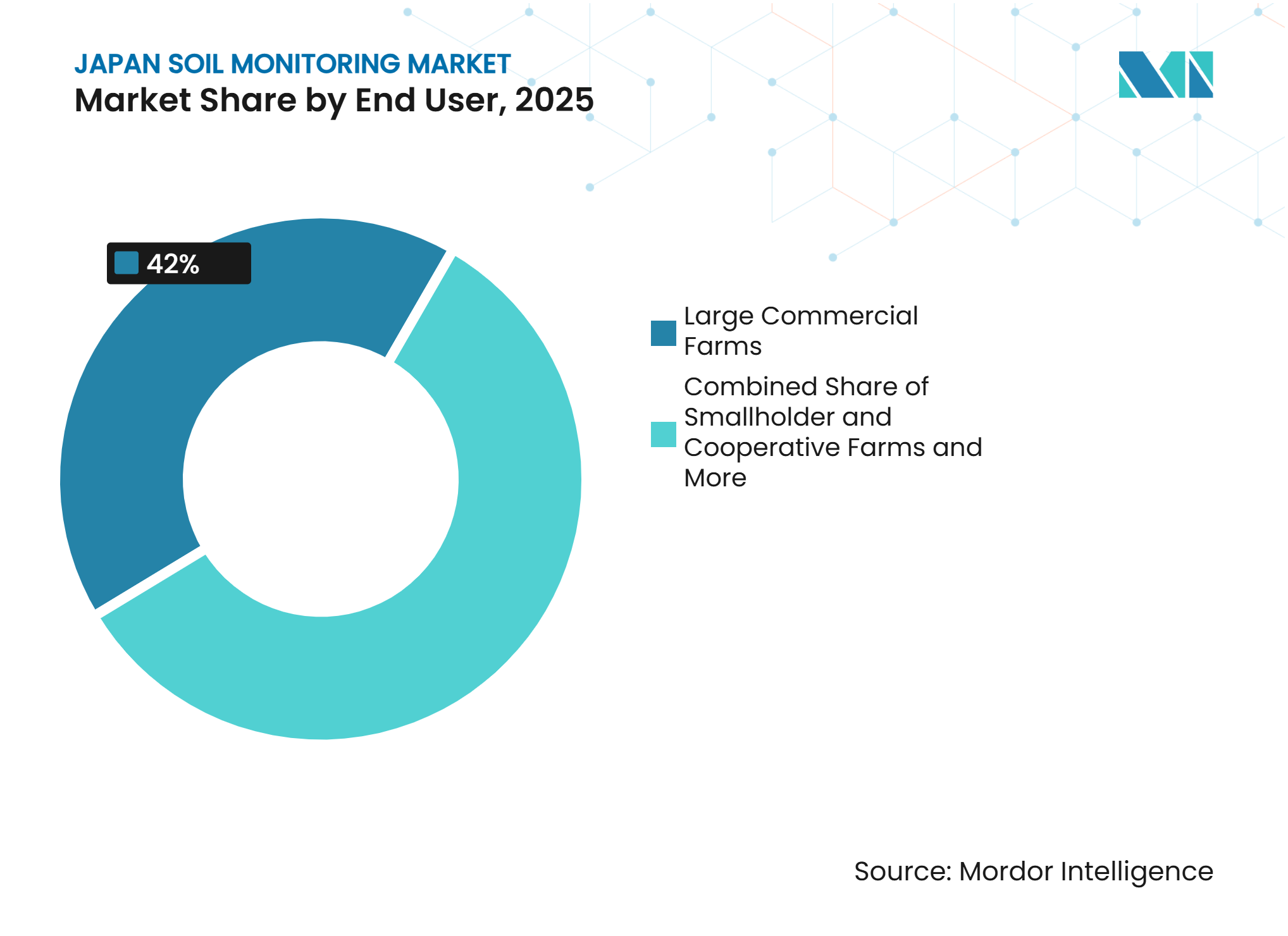
- By end user, large commercial farms held a 42% share of Japan soil monitoring market in 2025, while research institutes and universities are the fastest-growing segment, forecast to expand at a 14.6% CAGR through 2031.
Note: Market size and forecast figures in this report are generated using Mordor Intelligence’s proprietary estimation framework, updated with the latest available data and insights as of January 2026.
Market Trends and Insights
Drivers Impact Analysis of Japan Soil Monitoring Market*
| Driver | (~) % Impact on CAGR Forecast | Geographic Relevance | Impact Timeline |
|---|---|---|---|
| Smart Agriculture Law-Linked Technology Procurement | +3.5% | Nationwide, led by Hokkaido, Tohoku, Kanto, and Kyushu | Short term (≤ 2 years) |
| Small-Plot and Paddy-Field Micro-Zone Management | +2.8% | Niigata, Hokkaido, Tohoku, and Kanto | Medium term (2–4 years) |
| Rice Methane and Water-Use Measurement Requirements | +2.2% | Niigata, Akita, Yamagata, and Hokkaido | Medium term (2–4 years) |
| Aging Farmer Succession and Digital Knowledge Transfer | +1.8% | Nationwide, particularly across rural prefectures | Medium term (2–4 years) |
| Protected-Horticulture Quality and Traceability Monitoring | +2.0% | Kanto, Chubu, Kansai, and Kyushu | Medium term (2–4 years) |
| WAGRI and Telecom-Enabled Field Data Commercialization | +1.5% | Nationwide, with stronger adoption across connected production clusters | Long term (≥ 4 years) |
| Source: Mordor Intelligence | |||
Smart Agriculture Law-Linked Technology Procurement
Japan's Smart Agriculture Technology Utilization Promotion Law provides a certification and funding route for approved sensor systems. This route can shorten purchasing processes because national subsidies are directed toward Ministry of Agriculture, Forestry, and Fisheries (MAFF)-approved technologies. Certification also signals reliability to cautious cooperative buyers that may otherwise postpone multiyear commitments. When a prefecture-wide demonstration uses one connectivity system, the installed base can make later switching harder for competing suppliers. Sensiphia received certification from the Ministry of Agriculture, Forestry, and Fisheries (MAFF) in June 2026 for its Spatial Frequency Domain Transmissometry (SFDT)-based soil moisture sensor and irrigation navigation service. The company described the technology as the first RF-based volumetric measurement system to complete this pathway. Japan's agricultural data handling and AI training guidance also affect how Wagri-connected soil data can be used by platform and telecommunications providers. The Japan soil monitoring market benefits when certification, procurement, and data practices are considered together rather than as separate requirements.
Small-Plot and Paddy-Field Micro-Zone Management
In 2025, Japanese farmland consists of smaller farms averaging less than 5 hectares per household, as per the Ministry of Agriculture, Forestry and Fisheries (MAFF). Paddy fields have distinct root zones, flooding patterns, and pH variations, which make broad field averages less useful for irrigation and fertilization decisions. These conditions increase the number of sensing points required per cultivated area compared with large-field farming systems, supporting demand for moisture, EC (Electrical Conductivity), temperature, and water-level devices. The Internet Initiative Japan (IIJ) has demonstrated this approach through LoRaWAN-connected Internet of Things (IoT) sensors deployed in rice paddies to remotely monitor water levels and temperatures, reducing labor requirements for water management. Building on this application, IIJ developed automated paddy-field water-management technology using rice-growth data. Such applications demonstrate how connected sensing can convert field-level observations into automated management decisions, supporting demand for localized soil and water-monitoring systems in Japan’s small-plot and paddy-oriented agricultural environment.
Rice Methane and Water-Use Measurement Requirements
Rice paddy irrigation is linked to agricultural methane emissions because flooded conditions support anaerobic decomposition. Japan's methane-reduction commitments are increasing interest in practices that measure water and soil conditions rather than relying solely on estimates. In 2025, Research conducted in Japan indicates that alternate wetting and drying can reduce paddy methane emissions by 30% to 50%. This approach requires timely soil moisture and water-table data so farmers can avoid water stress and potential yield losses. Measured data may also support environmental reporting, J-Credit activities, and future food-system carbon labeling, extending the value of soil monitoring beyond productivity decisions. Suppliers with calibration methods for flooded paddy soils can offer a more relevant package than general precision-agriculture hardware providers. This policy connection gives the Japan soil monitoring market a demand base that spans both environmental management and commercial production.
Aging Farmer Succession and Digital Knowledge Transfer
Japan's farm workforce has declined rapidly, and Japan's workforce was relatively old in 2025. According to Japan's Statistics Bureau, 9.30 million employed people were aged 65 or older, representing 13.7% of all employed people, a record high, increasing the need to preserve practical cultivation knowledge. Soil sensor records can capture irrigation cycles, EC (Electrical Conductivity) readings, and temperature conditions over several growing seasons. These records can help new workers and contract operators follow field-specific practices when experienced farmers leave production. Greein Inc. formally launched new e-kakashi functions in March 2026, including an agricultural large language model and a 5-day soil-moisture prediction feature. The company reported that citrus trials in Ehime achieved a 1.3-times increase in yield [2]. Digital records do not replace local agronomy, but they can make knowledge transfer more structured. This makes connected platforms relevant to rural succession planning as well as to farm management improvement.
Restraints Impact Analysis of Japan Soil Monitoring Market*
| Restraint | (~) % Impact on CAGR Forecast | Geographic Relevance | Impact Timeline |
|---|---|---|---|
| Prefecture-Level Procurement Fragmentation and Long Sales Cycles | -2.0% | Rural prefectures and cooperative-led production areas | Medium term (2–4 years) |
| Calibration Complexity in Volcanic Ash and Flooded Paddy Soils | -1.5% | Hokkaido, Tohoku, Kyushu, and other volcanic regions | Long term (≥ 4 years) |
| Japanese Agronomy Localization and Integration Costs | -1.8% | Nationwide | Medium term (2–4 years) |
| Dispersed-Farm Maintenance and Replacement Logistics | -1.3% | Hokkaido, Tohoku, Shikoku, Kyushu, and Okinawa | Long term (≥ 4 years) |
| Source: Mordor Intelligence | |||
Prefecture-Level Procurement Fragmentation and Long Sales Cycles
Agricultural purchasing decisions involve individual farms, agricultural cooperatives, prefectural governments, and national demonstration programs. Each level has its own subsidy rules, approval timelines, and technical requirements. A supplier that wins a pilot project may need to complete several additional approval cycles before a broader cooperative rollout begins, delaying revenue even when the technology has demonstrated value in the field. Foreign suppliers may face additional requirements related to compatibility checks, Japanese-language documentation, and local service relationships. Japan External Trade Organization (JETRO) has identified such market-access requirements as potential barriers for smart-agriculture suppliers. Vendors require local sales planning that accounts for these timelines. This restraint affects revenue conversion more directly than it affects overall interest in the Japan soil monitoring market.
Calibration Complexity in Volcanic Ash and Flooded Paddy Soils
Japan's volcanic ash soils and flooded paddy fields reduce the reliability of standard calibration models. Andosols cover 18% of cultivated farmland, concentrated in Hokkaido, Tohoku, and Kyushu. Their organic content, low bulk density, and dielectric behavior differ from the mineral soils used to validate many imported systems. Flooded conditions present a separate challenge, as sensors designed for unsaturated soils can overread water content when submerged. Suppliers may need to conduct site-level validation before a device can support operational decisions. This requirement increases installation costs and can reduce the return on investment for smaller cooperative-managed fields. Poorly calibrated devices can produce incorrect agronomic recommendations and cause reputational damage. Japan-specific soil libraries are an important requirement for suppliers seeking a durable position in the Japan soil monitoring market.
*Our forecasts treat driver/restraint impacts as directional, not additive. The impact forecasts reflect baseline growth, mix effects, and variable interactions.
Japan Soil Monitoring Market Segment Analysis
By Component:
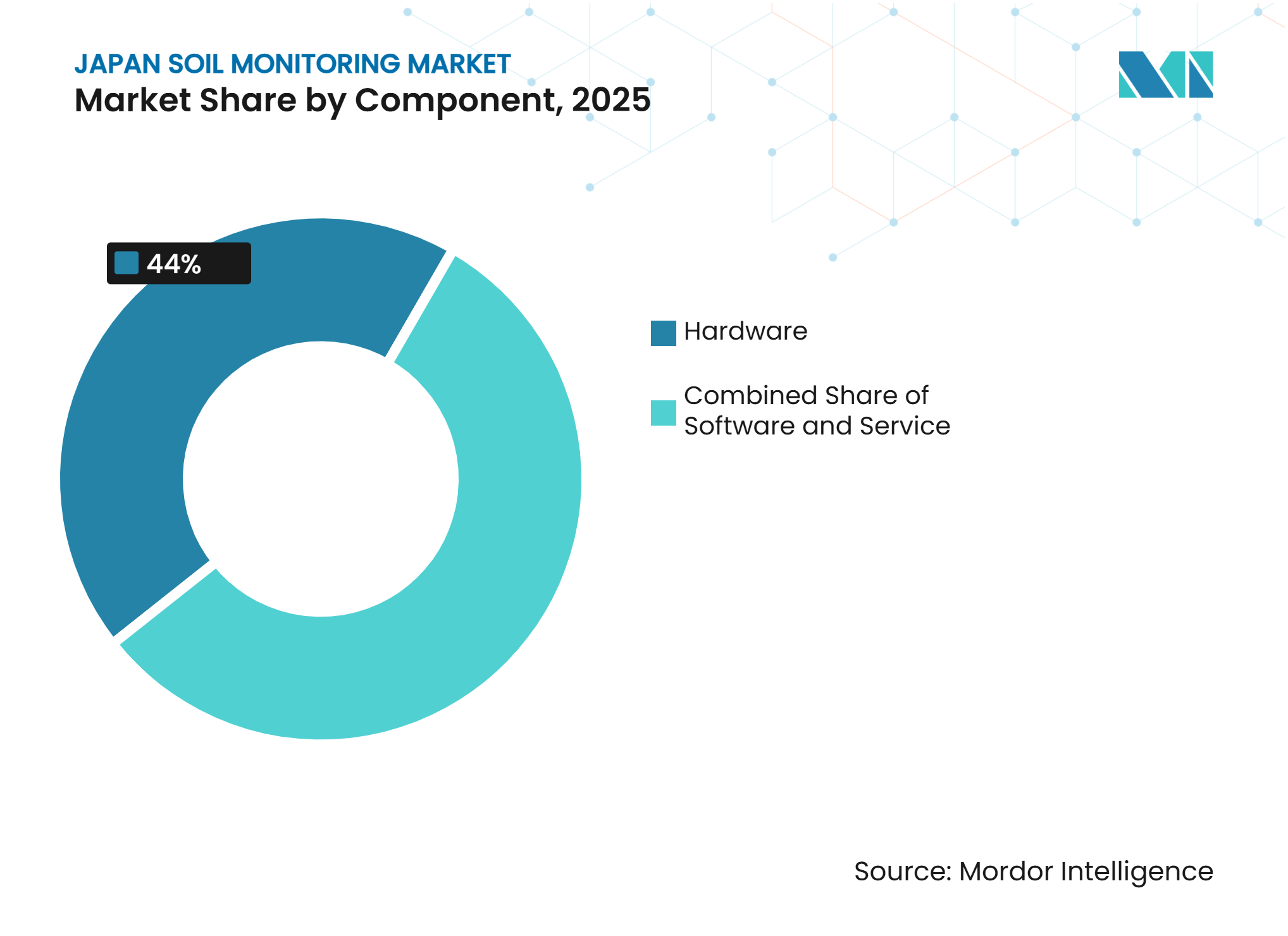
Services Revenue Momentum Accelerating FastestHardware accounted for 58% of the Japan soil monitoring market share in 2025, driven by demand for moisture sensors, temperature probes, EC (Electrical Conductivity) nodes, nutrient sensors, gateways, and data loggers. The current deployment phase favors hardware, as farms are still installing initial connected monitoring systems. Hardware purchases establish the installed base on which software and service revenue can develop. Services are the fastest-growing component, growing with a forecast CAGR of 16.3% through 2031. Calibration contracts, subscription advisory services, and data management are increasingly included in cooperative procurement packages. Software sits between hardware and services, supporting visualization, irrigation decision-making, and integration with farm management systems. These capabilities replace parts of the manual sampling and extension worker processes. Ministry of Agriculture, Forestry and Fisheries (MAFF) certification evaluates end-to-end systems, which encourages suppliers to bundle analytics and advisory support with device sales.
The National Agriculture and Food Research Organization (NARO)'s Soil-Environmental API estimates field-level soil temperature and moisture daily and predicts the effectiveness of slow-release fertilizer[3]. This public resource can be integrated with third-party platforms without additional hardware. Commercial analytics providers must demonstrate that their offerings add value beyond this available baseline. Managed calibration is one way to provide that value, as it can improve the reliability of local readings. Agronomic interpretation is another opportunity where cooperative reporting requirements are specific. Suppliers that combine public data with field-level records can make recurring service contracts more useful for farm operators.



By Product Type:
Remote-Sensing Platforms Define the Next Hardware FrontierIn-situ sensors accounted for 46% of revenue in 2025, making them the dominant product type. Volumetric moisture probes, tensiometers, EC (Electrical Conductivity) devices, salinity sensors, and multi-parameter nodes provide continuous root-zone measurements, which are required to validate and interpret remote observations. Remote-sensing platforms are the fastest-growing category, expanding with a forecast CAGR of 18.1% through 2031. Drone mapping, satellite imagery, and ground-sensor data are being combined for more detailed field analysis. Hokkaido programs also use machine-mounted sensors across larger contiguous plots. These product types are complementary, as remote estimates still require ground data for verification. The Japan soil monitoring market is estimated to retain demand for both field devices and broader-area monitoring platforms.
Smaller farms in Tohoku and Kyushu can use drone mapping because irregular plot boundaries make a single flight more practical than installing sensors across every sub-parcel. Portable probes and test kits serve a distinct need for rapid checks at transplanting, soil amendment, and post-rain drainage stages, and remain useful to cooperative technical staff and agronomic service providers. Murata Manufacturing Co., Ltd. and TERRACE MILE, Inc. displayed a 3-in-1 soil sensor measuring fertilizer levels, moisture, and temperature at Sensors Converge 2025. The company also worked with TERRACE MILE on the RightARM soil-intelligence platform, indicating that component suppliers are expanding their role into solution partnerships. Product selection will depend on whether a user requires continuous local readings, field-wide mapping, or point-in-time confirmation. Remote sensing can grow faster while in-situ sensors remain the primary source of ground-truth data.
By Connectivity Technology:
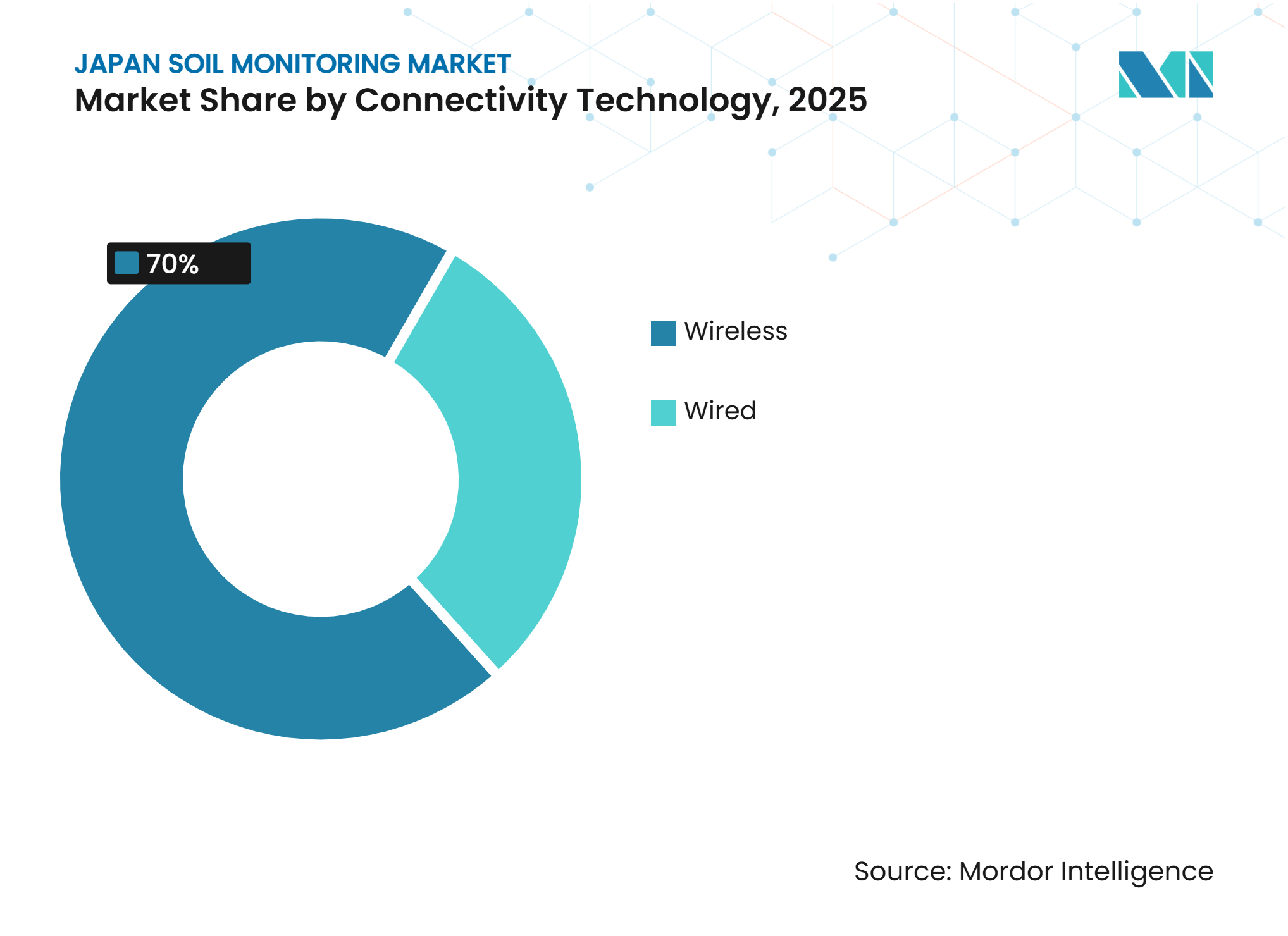
Wireless Protocols Drive Open-Field Monitoring ScaleWireless accounted for 70% of the connectivity segment in 2025 and is forecast to grow at 19.8% CAGR through 2031. This position reflects the suitability of low-power networks for remote agricultural areas. Long-Term Evolution for Machines (LTE-M) and Narrowband Internet of Things (NB-IoT) use established cellular infrastructure, avoiding the need to install gateways. ZETA plays a role in Hokkaido and Tohoku, where its low power consumption and range suit large sensor arrays. Wireless systems also eliminate the maintenance burden of buried cables in seasonally flooded paddy land. Replacement projects increasingly favor wireless systems as farms update older cable-based installations. Wireless connectivity enables the Japan soil monitoring market to reach fields where wired deployment would be costly, an advantage that is especially important for mountainous and island locations.
Wired connections remain relevant in greenhouses and plant factories, where power is available, and installations are fixed. Ethernet and cable-based networks provide dependable connections in these controlled environments. In May 2026, NTT Group, Kubota Corporation, and NTT DOCOMO conducted a joint field trial on communication-stabilization technologies for remote agricultural machinery in mountainous areas. The trial addressed signal reliability issues that can constrain wireless devices in difficult terrain. Japan's agricultural data handling and AI training guidance may also influence the choice of platforms and network standards. Interoperability will be important where sensor data must flow to multiple farm and cooperative applications. Connectivity suppliers that pair reliable field communications with straightforward data management may hold a stronger market position. The differing requirements of open-field and controlled-environment settings will keep both connectivity types relevant.

By Application:
Open-Field Scale Meets Protected-Cultivation Premium DensityOpen-field applications accounted for 63% of the Japan soil monitoring market size in 2025, making them the largest application area. Rice paddies and field crops across Hokkaido, Niigata, Akita, and Yamagata account for the largest area of sensor deployment. Paddy water management is significant because it links farm operations to methane reduction, potential carbon credit activity, and food security objectives. Demand for monitoring also comes from vegetables and root crops in Hokkaido, including onions and potatoes. Orchards and specialty crops in Ehime and Nagano use soil data to support quality documentation for food buyers. These open-field applications require systems that function across varying plot sizes and weather conditions. The dominant share reflects the scale of rice and field-crop acreage and underlines the continued importance of lower-cost, durable devices.
Protected cultivation is forecast to grow at a 14.2% CAGR through 2031. Greenhouses and plant factories typically have the highest sensor density per unit area, as operators need to closely manage irrigation, EC, pH, and substrate conditions. A 2025 Journal of Robotics and Mechatronics paper found that multiple soil-moisture sensors at different depths outperformed single-depth sensors in predicting broccoli growth. Forestry applications include erosion monitoring and landslide-risk assessment following extreme rainfall events. Golf courses, sports grounds, and land restoration represent additional non-agricultural applications. In February 2025, The Toro Company partnered with TerraRad Tech AG to integrate soil-moisture mapping with mower-mounted sensors and irrigation control. This range of applications reduces reliance on any single crop system.
By End User:
Commercial Farms Lead Volume, but Cooperatives Define Market ArchitectureLarge commercial farms accounted for 42% of revenue in 2025, making them the largest end-user group. These farms can absorb fixed system costs and have the management capacity to use field analytics. Their purchasing is increasingly linked to Ministry of Agriculture, Forestry and Fisheries (MAFF) certified smart-agriculture programs and subsidy structures. Documented returns from sensor-supported cultivation also support their investment case. Research institutes and universities are the fastest-growing end-user group, expanding with a forecast CAGR of 14.6% through 2031. Their demand is driven by work on climate-smart agriculture, paddy methane measurement, and precision crop science. NARO, Tohoku University, and Hokkaido University are among the institutions associated with these activities.
Cooperatives and producer organizations, although they do not hold the largest share, aggregate purchasing power across many small farms. Their endorsement can allow suppliers to reach multiple prefectures through existing Japan Agricultural Cooperatives (JA) channels. Suppliers that bypass cooperatives may face a fragmented retail model that does not align with Japan's agricultural structure. Government users and NGOs support non-commercial uses such as watershed management, forest conservation, and disaster-risk monitoring. Agronomic service providers and environmental consultancies are also becoming cloud-analytics subscribers. Greenhouse and plant-factory operators represent high-value accounts per deployed sensor. Hokkaido University and NTT DATA Group Corporation announced a smart-agriculture collaboration with Iwamizawa City in August 2025. The end-user mix means suppliers need both direct enterprise selling and cooperative-based distribution in the Japan soil monitoring market.
Geography Analysis
Hokkaido accounts for one-quarter of Japan's cultivated farmland by area and has a large installed base across paddy, potato, onion, and dairy operations. Its larger farms can support field sensors, machine-linked devices, and farm-management platforms. In July 2025, Hokkaido University, Iwamizawa City, NTT East, and NTT DOCOMO announced a data-driven smart agriculture collaboration focused on field data, including soil monitoring. Tohoku contains major rice-producing prefectures, including Niigata, Akita, Yamagata, Miyagi, Iwate, and Aomori. The region is important for soil and water monitoring because paddy irrigation is tied to methane management, J-Credit activity, and premium rice branding.
Kanto and Chubu have a high concentration of protected cultivation facilities, plant factories, and high-value vegetable growers. Access to Tokyo-area distribution supports investment in continuous EC, pH, and moisture monitoring. Greenhouse operations in Kanagawa, Chiba, and Aichi can have high sensor spending per hectare because they monitor several substrate layers. Ehime in Shikoku has become a reference area for specialty citrus monitoring. Internet Initiative Japan, Inc. was selected for the Ehime smart-agriculture digital acceleration program for a third consecutive year in 2025. In March 2026, Greein reported that its e-kakashi smart-agriculture system achieved a 1.3-fold increase in citrus yield in trials across 15 plots in Ehime Prefecture. Separately, in Minamitane Town, Kagoshima Prefecture, the system was deployed across 30 farm households, with reported improvements in fruit-paprika production, yield stability and quality.This multi-year evidence can help suppliers position systems for specialty crops in Kyushu and Wakayama.
Kyushu and Okinawa combine warm-climate vegetable production, specialty horticulture, and remote island farming. These conditions increase the importance of maintenance planning and long-life battery designs. AGRISHOT Inc. is deploying IoT devices across 100 Wakayama sites for a pest-prediction project, while e-kakashi (Greein, Inc.) was deployed across 30 farms in Kagoshima's Minamitatanecho in July 2025. The soil monitoring market size in these southern regions is shaped by field access and logistics as well as crop value. Ministry of Agriculture, Forestry (and Fishereies MAFF) regional smart-agriculture demonstration projects influence which platforms receive deployment support. Southern prefectures also use smart-village programs that combine connectivity, monitoring, and digital advisory services. This creates opportunities for integrated providers that can manage remote support across dispersed farms.
Competitive Landscape
Market Concentration
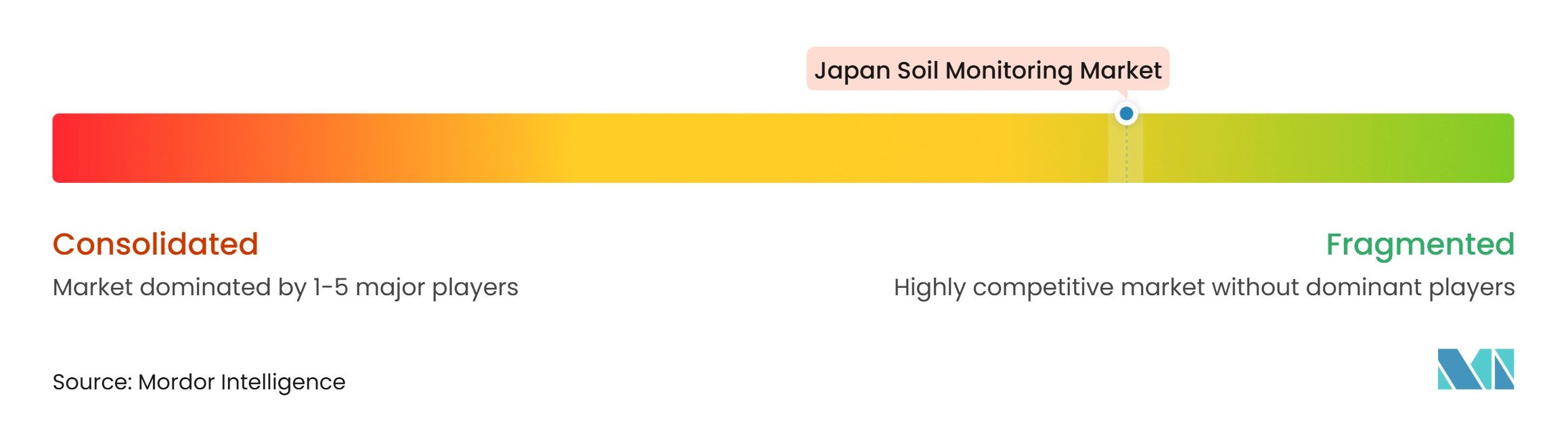
The Japan soil monitoring market is fragmented, with competition distributed among telecommunications companies, sensor manufacturers, agricultural technology providers, and analytics platforms. NTT Data Group Corporation has established a strong presence through its Aisaku Sensing platform for LPWA- and 4G-enabled environmental monitoring, while e-kakashi (Greein, Inc.) focuses on cultivation support for rice, citrus, potato, and vegetable growers. Murata Manufacturing, Co. Ltd. and METER Group maintain positions through sensors widely used by research institutions and commercial farms. Domestic suppliers are increasingly combining sensing technologies with connectivity, cloud analytics, and decision-support services, rather than competing solely on hardware.
Technology innovation is increasingly focused on improving measurement accuracy and expanding digital capabilities. Sensiphia, Inc., established in February 2026, is developing a Radio Frequency (RF)-based soil-moisture sensor using its proprietary Spatial Frequency Domain Transmissometry (SFDT) method, designed to improve measurement stability by reducing the effects of soil gaps, salinity, and fertilizer components. CropX expanded its product portfolio with multi-depth soil sensors and integrated greenhouse gas reporting capabilities, reflecting growing demand for sustainability reporting and advanced field analytics. These developments indicate how suppliers are strengthening their offerings through improved sensing technologies and digital platform integration.
A significant opportunity remains in calibration-as-a-service for Japan's diverse soil conditions, where localized soil models could become an important competitive differentiator. Laboratory testing companies are also expanding into soil health analytics, increasing competition between periodic laboratory analysis and continuous sensor-based monitoring. As the market evolves, suppliers that combine accurate sensing, localized calibration, strong service support, and integrated analytics platforms are anticipated to strengthen their market position. Local partnerships and long-term customer relationships will remain key competitive factors alongside technological innovation.
Japan Soil Monitoring Industry Leaders
-
NTT DATA Group Corporation
-
e-kakashi
-
Murata Manufacturing Co., Ltd.
-
METER Group
-
Sentek Technologies
- *Disclaimer: Major Players sorted in no particular order
Japan Soil Monitoring Market Companies Covered in this Report
- NTT DATA Group Corporation
- SoftBank Corp.
- Internet Initiative Japan Inc.
- Sony Semiconductor Solutions Corporation
- Sensiphia, Inc.
- Murata Manufacturing Co., Ltd.
- e-kakashi
- Midori Engineering Laboratory Co., Ltd.
- Sentek Technologies
- METER Group, Inc. USA
- CropX Inc.
- Campbell Scientific, Inc.
- The Toro Company
- Stevens Water Monitoring Systems, Inc.
- Spectrum Technologies, Inc.
- SGS S.A.
- Eurofins Scientific SE
Recent Industry Developments in Japan Soil Monitoring Market
- July 2026: e-kakashi (Greein Inc.) was selected for a JICA data-collection and confirmation survey for degraded pasture restoration in Brazil’s Cerrado region. The project uses IoT sensing, AI-based crop monitoring, and satellite analysis, all developed for Japanese rice and vegetable production.
- June 2026: Sensiphia received MAFF certification for its proprietary SFDT soil moisture sensor under Japan’s Smart Agriculture Technology Utilization Promotion Law. The certification qualifies the technology for prefectural subsidy programs and cooperative procurement frameworks.
- May 2026: NTT Data Group Corporation, Kubota Corporation, and NTT DOCOMO conducted a joint field demonstration of communication-stabilization technologies for remote agricultural machinery in mountainous terrain. The project addressed signal reliability constraints in difficult production areas.
Japan Soil Monitoring Market Report Scope
Soil monitoring is the systematic process of measuring, collecting, and analyzing physical, chemical, and biological properties of soil over time to assess its health, fertility, moisture status, and environmental condition.
The Japan soil monitoring market report is segmented by component (hardware, software and services), by product type (in-situ sensors, remote sensing platforms, portable probes and test kits and more), by connectivity technology (wired and wireless), by application (open field, protected cultivation, and forestry), and by end-user (large commercial farms, smallholder and cooperative farms, research institutes and universities, and government and NGOs). The market forecasts are provided in terms of value (USD).
Segmentation Overview
| Hardware |
| Software |
| Services |
| In-Situ Sensors |
| Remote Sensing Platforms |
| Portable Probes and Test Kits |
| Wired |
| Wireless |
| Open Field |
| Protected Cultivation |
| Forestry |
| Large Commercial Farms |
| Smallholder and Cooperative Farms |
| Research Institutes and Universities |
| Government and NGOs |
| By Component | Hardware |
| Software | |
| Services | |
| By Product Type | In-Situ Sensors |
| Remote Sensing Platforms | |
| Portable Probes and Test Kits | |
| By Connectivity Technology | Wired |
| Wireless | |
| By Application | Open Field |
| Protected Cultivation | |
| Forestry | |
| By End User | Large Commercial Farms |
| Smallholder and Cooperative Farms | |
| Research Institutes and Universities | |
| Government and NGOs |
Key Questions Answered in the Report
What is the projected growth rate for soil monitoring in Japan?
The sector is projected to grow at a 14.73% CAGR from 2026 to 2031, reaching USD 63.8 million by 2031.
Which component generates the most revenue?
Hardware led with 58% revenue share in 2025, supported by demand for moisture, temperature, EC (Electrical Conductivity), nutrient, gateway, and data-logging devices.
Which product type is growing the fastest?
Remote-sensing platforms are forecast to grow at an 18.1% CAGR through 2031, while in-situ sensors remained the largest product type in 2025.
Why are paddy fields important for soil monitoring?
Paddy-water management supports irrigation decisions and methane-management practices, which require measured moisture and water-level data.