
Intravascular Lithotripsy Devices Market Size and Share
Market Overview
| Study Period | 2020 - 2031 |
|---|---|
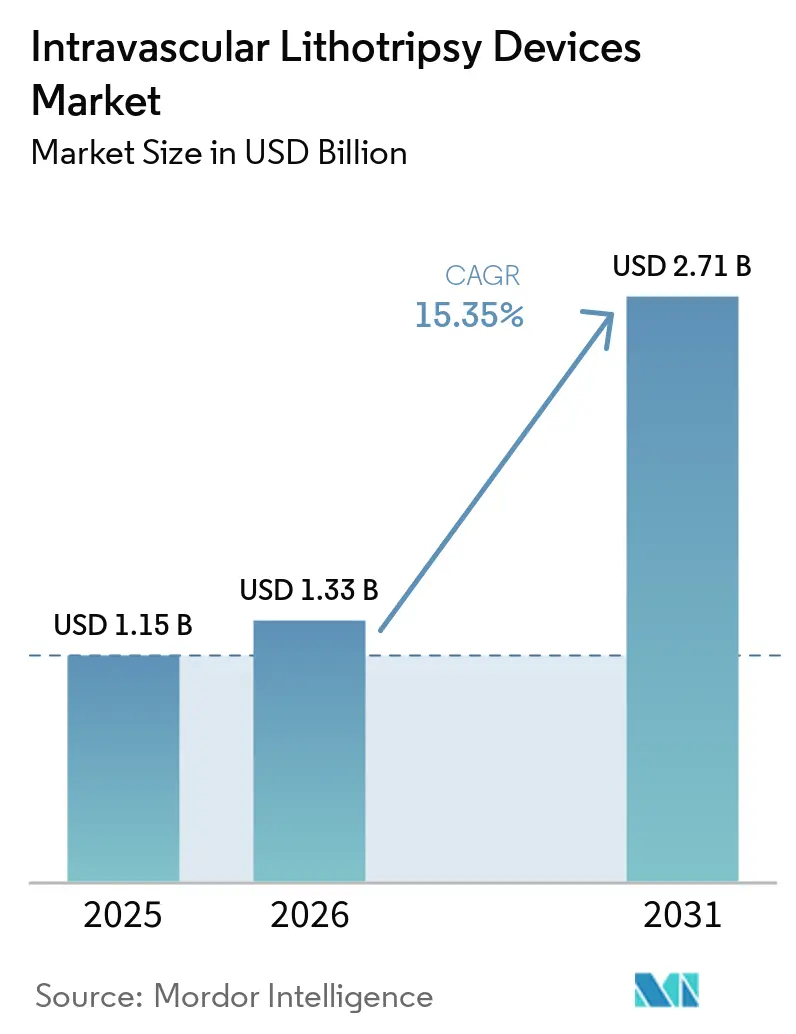
| Market Size (2026) | USD 1.33 Billion |
| Market Size (2031) | USD 2.71 Billion |
| Growth Rate (2026 - 2031) | 15.35 % |
| Fastest Growing Market | Asia-Pacific |
| Largest Market | North America |
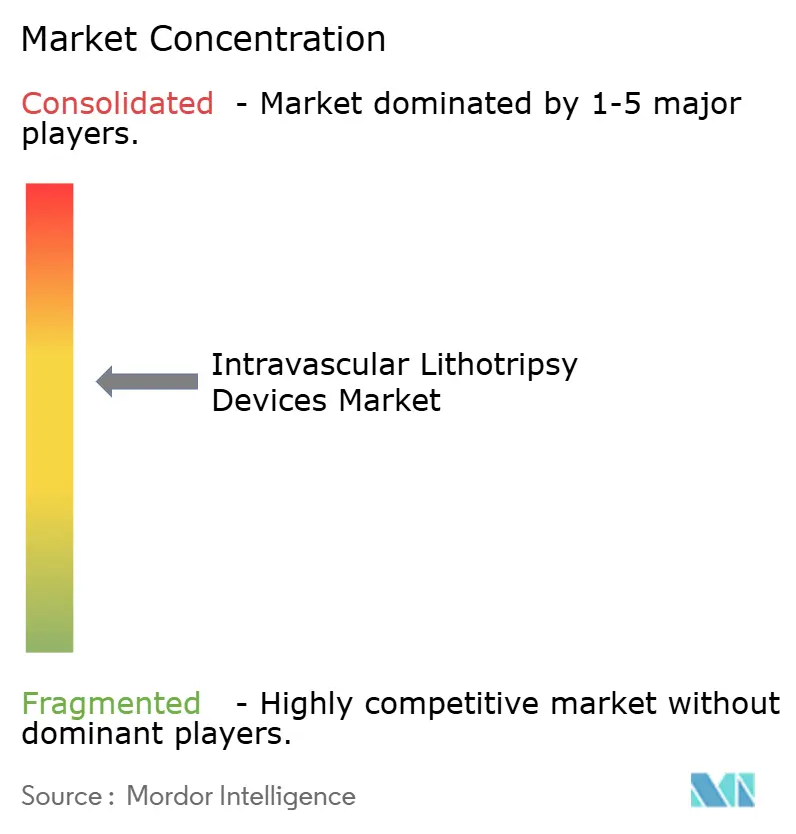
| Market Concentration | Medium |
Major Players *Disclaimer: Major Players sorted in no particular order Image © Mordor Intelligence. Reuse requires attribution under CC BY 4.0. | |
Intravascular Lithotripsy Devices Market Analysis by Mordor Intelligence
The Intravascular Lithotripsy Devices Market size is expected to increase from USD 1.15 billion in 2025 to USD 1.33 billion in 2026 and reach USD 2.71 billion by 2031, growing at a CAGR of 15.35% over 2026-2031.
The intravascular lithotripsy devices market is expanding as operators treat calcified lesions more routinely before stent placement. Calcified lesions affected 25%-50% of patients undergoing PCI in the cited 2025 study, which supports the need for dedicated calcium modification. Clinical comparisons have also shifted attention toward IVL when physicians select a plaque preparation technique. A propensity-matched analysis of 13,499 patients associated IVL with a lower 1-year all-cause mortality risk than atherectomy, with a risk ratio of 0.64. Reimbursement support, outpatient procedure migration, and new device platforms are widening the commercial opportunity in the intravascular lithotripsy devices market.
Key Report Takeaways
- By product type, IVL Catheters and Balloons held 56.31% of revenue in 2025, while Generators and Console Systems are expected to record the highest CAGR at 17.65% through 2031.
- By vessel type, coronary vessels held 57.24% of revenue in 2025, while Below-the-Knee Arteries are projected to have a CAGR at 18.22% through 2031.
- By technology, Balloon-Based IVL held 81.14% of revenue in 2025, while Forward-Firing IVL is expected to have a CAGR at 18.42% through 2031.
- By end user, hospitals held 65.54% of revenue in 2025, while Ambulatory Surgical Centers are projected to have a CAGR at 17.12% through 2031.
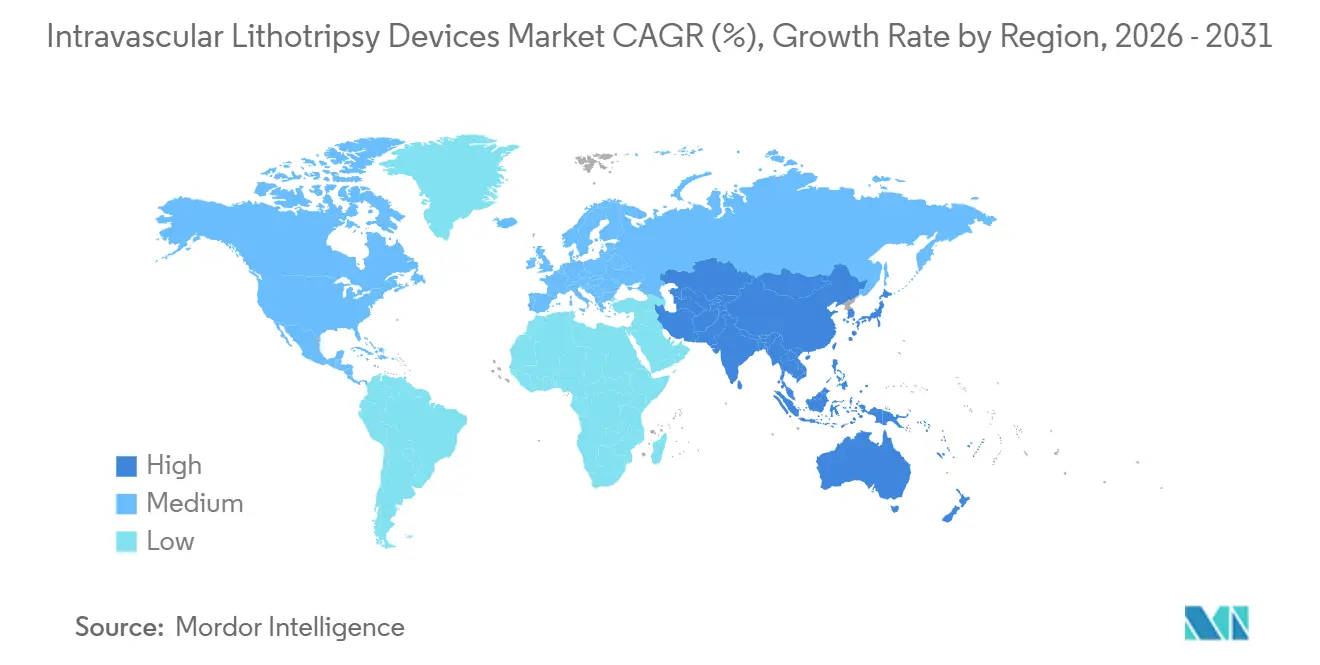
- By geography, North America held 56.61% of revenue in 2025, while Asia-Pacific is expected to have a CAGR at 18.65% through 2031.
Note: Market size and forecast figures in this report are generated using Mordor Intelligence’s proprietary estimation framework, updated with the latest available data and insights as of January 2026.
Global Intravascular Lithotripsy Devices Market Trends and Insights
Drivers Impact Analysis*
| Driver | (~) % Impact on CAGR Forecast | Geographic Relevance | Impact Timeline |
|---|---|---|---|
| Rising Burden of Calcified Coronary and Peripheral Disease | +3.8% | Global | Long term (≥ 4 years) |
| Increasing Complexity of Percutaneous Coronary Intervention | +2.9% | North America and Europe, with spillover to Asia-Pacific | Medium term (2-4 years) |
| Growing Evidence for Predictable Calcium Modification | +2.4% | Global | Medium term (2-4 years) |
| Improving Coronary IVL Reimbursement | +2.0% | North America, expanding to Europe | Short term (≤ 2 years) |
| Expansion Into Below-the-Knee and Large-Bore Procedures | +1.5% | North America and Europe | Medium term (2-4 years) |
| Forward-Firing and Generator-Free Innovation | +1.2% | Global | Medium term (2-4 years) |
| Source: Mordor Intelligence | |||
Rising Burden of Severely Calcified Coronary and Peripheral Artery Disease
The intravascular lithotripsy devices market is supported by an increase in complex calcium burden, rather than cardiovascular disease incidence alone. The cited global burden study reported 239 million prevalent ischemic heart disease cases and 122 million lower-extremity PAD cases in 2023. Aging, hypertension, diabetes, and chronic kidney disease increase the severity of vascular calcification in these patient populations. The 2025 clinical study found calcified lesions in 25%-50% of CAD patients undergoing PCI and linked inadequate modification with vascular complications and worse long-term outcomes[1]BMC Cardiovascular Disorders, “Efficacy and Safety of the SoniCracker Intravascular Lithotripsy Device for Severely Calcified Coronary Lesions: The LEAD-FIM Study From China,” BMC Cardiovascular Disorders, link.springer.com.. Standard balloons are less suitable when calcium arc and thickness prevent adequate lesion preparation. Quality frameworks in the United States and Europe also place greater attention on stent expansion, which supports more complete calcium preparation before implantation.
Increasing Complexity of Percutaneous Coronary Intervention
The intravascular lithotripsy devices market benefits as physicians manage more multivessel disease, left-main disease, and calcified chronic total occlusions. These anatomical settings can result in inadequate stent expansion when conventional balloon angioplasty is used alone. A seven-center European registry of 454 patients found that IVL use in acute coronary syndrome cases increased over time, with p=0.004. A separate 2025 study reported intravascular imaging use in 94.3% of left-main IVL procedures, compared with 40.5% of non-left-main cases. These cases commonly combine IVL with IVUS, increasing the role of imaging and device planning within the procedure. The CT-IVL score achieved an AUC of 0.81 for predicting IVL need in the cited study, which can support more objective patient selection before entry to the catheterization laboratory.
Growing Clinical Evidence for Predictable Calcium Modification
The clinical evidence base has moved beyond early single-arm safety studies toward larger registries and broader patient groups. The 13,499-patient propensity-matched analysis associated IVL with lower 1-year mortality, myocardial infarction, and major adverse cardiovascular events than atherectomy. The same analysis reported 23% fewer 30-day procedural complications and 56% less procedural bleeding with IVL. IVL utilization surpassed atherectomy utilization after 2022, while evidence for below-the-knee, calcified nodule, and left-main use continued to develop. The VIGOUR trial reported 93.7% procedural success for MicroPort’s coronary IVL system in Chinese patients, extending the evidence beyond Western care settings. Late-2024 BENELUX-IVL registry results also showed comparable outcomes in patients aged 80 years and older, supporting use in a higher-risk geriatric group.
Improving Reimbursement for Coronary Intravascular Lithotripsy
Reimbursement is an immediate driver for the intravascular lithotripsy devices market in the United States. For calendar year 2026, CMS assigned CPT add-on code +92972 3.66 total relative value units and a national Medicare physician facility payment of USD 122[2]Centers for Medicare & Medicaid Services, “Coronary IVL 2026 Physician Reimbursement,” Shockwave Medical, shockwavemedical.com.. Fiscal year 2025 inpatient MS-DRGs provided USD 10,000 in incremental payment over standard PCI with stent, effective October 1, 2024. This billing pathway offsets a portion of the single-use catheter cost for health systems operating under DRG constraints. Peripheral IVL reimbursement covers 8 HCPCS codes across iliac, femoral-popliteal, and tibial-peroneal territories under the 2025 OPPS Final Rule. The United Kingdom’s NICE guidance IPG780 created a formal assessment framework for IVL in peripheral arterial calcification in 2024. Such assessments can inform local coverage decisions across European payer systems.
Restraints Impact Analysis*
| Restraint | (~) % Impact on CAGR Forecast | Geographic Relevance | Impact Timeline |
|---|---|---|---|
| High Single-Use Catheter Cost | -2.1% | Global, most acute in Asia-Pacific and Latin America | Long term (≥ 4 years) |
| Limited Long-Term Comparative Evidence Versus Atherectomy | -1.4% | North America and Europe, in HTA-driven systems | Medium term (2-4 years) |
| Guidewire-Crossing and Lesion-Access Constraints | -0.9% | Global | Short term (≤ 2 years) |
| Uneven Reimbursement and Capital-Budget Access | -1.2% | Asia-Pacific, Middle East and Africa, and South America | Long term (≥ 4 years) |
| Source: Mordor Intelligence | |||
High Single-Use Catheter Cost and Uneven Reimbursement Access
Single-use catheter pricing constrains the intravascular lithotripsy devices market, especially in systems without a dedicated payment route. Coronary IVL catheters carry list prices of USD 2,250-USD 4,750 per unit, while peripheral catheters reach USD 4,900 per unit. Multiple catheters can be required for complex lesions, which increases the cost of each procedure. Hospitals receiving global procedure payments may recognize the clinical benefit but lack a matching route to recover the device cost. This issue is more acute in emerging markets and can limit adoption to private networks with fee-for-service billing. Generator-free and simplified systems from Elixir Medical and FastWave Medical aim to reduce capital or per-procedure costs, although their reach remains investigational or limited in 2026.
Limited Comparative Evidence and Lesion-Access Constraints
Randomized long-term evidence against atherectomy remains limited, even though observational findings have been favorable for IVL. The 13,499-patient comparison may contain selection bias because physicians can direct less calcified or anatomically simpler cases toward IVL. Health technology assessment bodies seek randomized evidence and imaging-confirmed stent expansion results over 2-5 years before formal first-line endorsement. The FRACTURE IDE trial received FDA approval in December 2024, while Abbott’s 335-patient TECTONIC CAD IVL IDE trial began enrollment in April 2025. Their primary completion dates fall in 2026-2027, leaving a near-term evidence gap in formulary-led systems. Conventional balloon-based platforms also require a lesion that can be crossed, while forward-firing systems seek to address severe stenosis and chronic total occlusions where access is difficult.
*Our forecasts treat driver/restraint impacts as directional, not additive. The impact forecasts reflect baseline growth, mix effects, and variable interactions.
Segment Analysis
By Product Type: Generator Platforms Are Emerging as a Contestable Layer
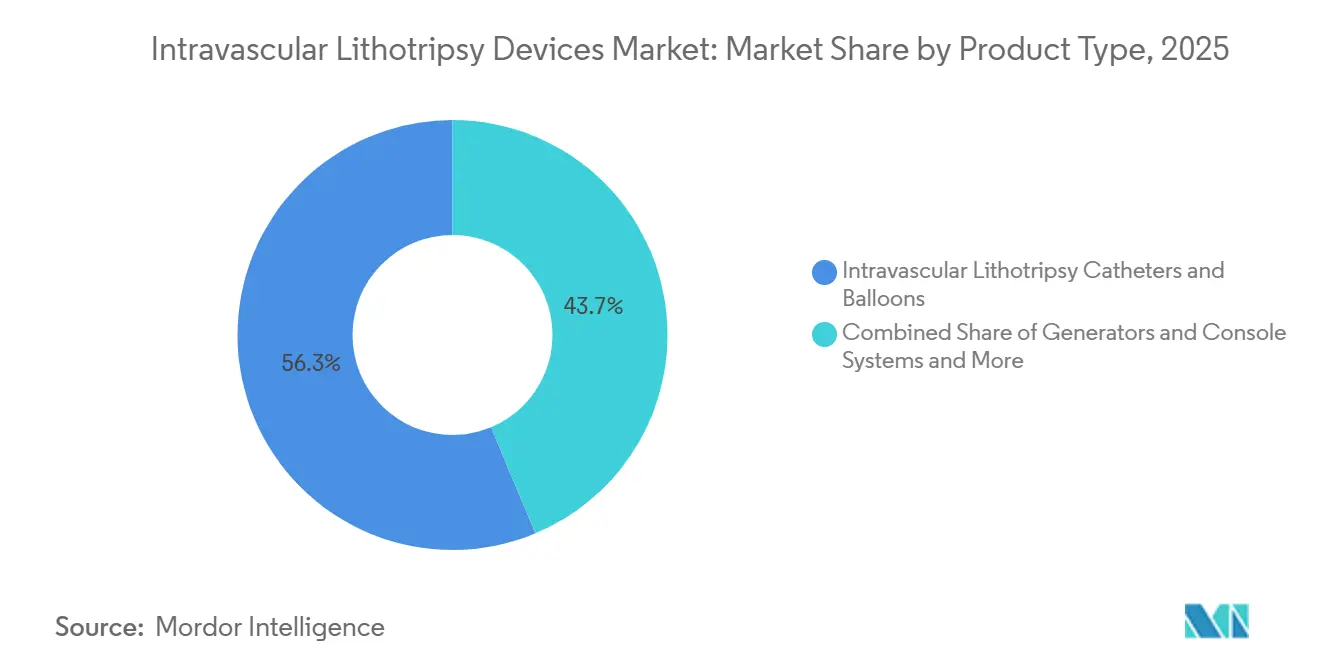
IVL Catheters and Balloons held 56.31% of the intravascular lithotripsy devices market share in 2025. This position in the intravascular lithotripsy devices market reflected the consumable role of catheter technology in each procedure and Shockwave Medical’s established catheter portfolio. Guidewires and Accessories remained the smallest product group. They benefit from below-the-knee treatment because distal tibial delivery requires hydrophilic-coated guidewires with strong pushability. Generators and Console Systems are projected to grow at a CAGR of 17.65% from 2026 to 2031. The intravascular lithotripsy devices market size for generator platforms is supported by new systems that require compatible consoles.
Generator growth continues despite the emergence of generator-free platforms such as Elixir LithiX HC-IVL. Boston Scientific Bolt, Abbott Coronary IVL, and Stryker AVS Pulse IVL each require facilities to consider compatible generator equipment. New regulatory clearances can therefore expand capital deployment before catheter procedure volumes increase. A 2025 study reported that IVUS-guided IVL independently achieved superior stent expansion compared with angiography-guided procedures. This relationship supports demand for imaging and accessory products alongside IVL. FastWave’s laser-based Sola system may change the cost structure if its feasibility findings are replicated at a commercial scale, but it remained an early-stage alternative in 2026.



By Vessel Type: Coronary Volume Coexists With Faster Peripheral Redefinition
Coronary vessels commanded 57.24% of revenue in 2025. This position in the intravascular lithotripsy devices market was built on Shockwave’s C2 and C2 Plus catheters and the Disrupt CAD clinical series across several coronary calcium presentations. The C2 Aero catheter received an instructions-for-use document in July 2025, adding a lower-profile iteration to the portfolio. Below-the-Knee Arteries are projected to expand at a CAGR of 18.22% from 2026 to 2031. The 30-day Disrupt PAD BTK II study reported 97.9% procedural success in 250 patients with mainly moderate-to-severe calcification.
One-year BTK II results presented in 2025 reported sustained safety and efficacy in a cohort that included 80% chronic limb-threatening ischemia and 70% diabetes. The results also reported low clinically driven target lesion revascularization rates and symptomatic improvement. These patient characteristics align with the growing prevalence of complex peripheral disease. Femoropopliteal and iliac procedures contribute meaningful revenue because 2025 reimbursement codes cover IVL across these vascular territories. The FORWARD PAD studies reported 99% technical success for the Javelin catheter. The forward-firing design reduces dependence on a pre-crossable stenosis, which broadens the procedures that can be considered for peripheral IVL.
By Technology: Balloon-Based Incumbency Faces Forward-Firing Competition
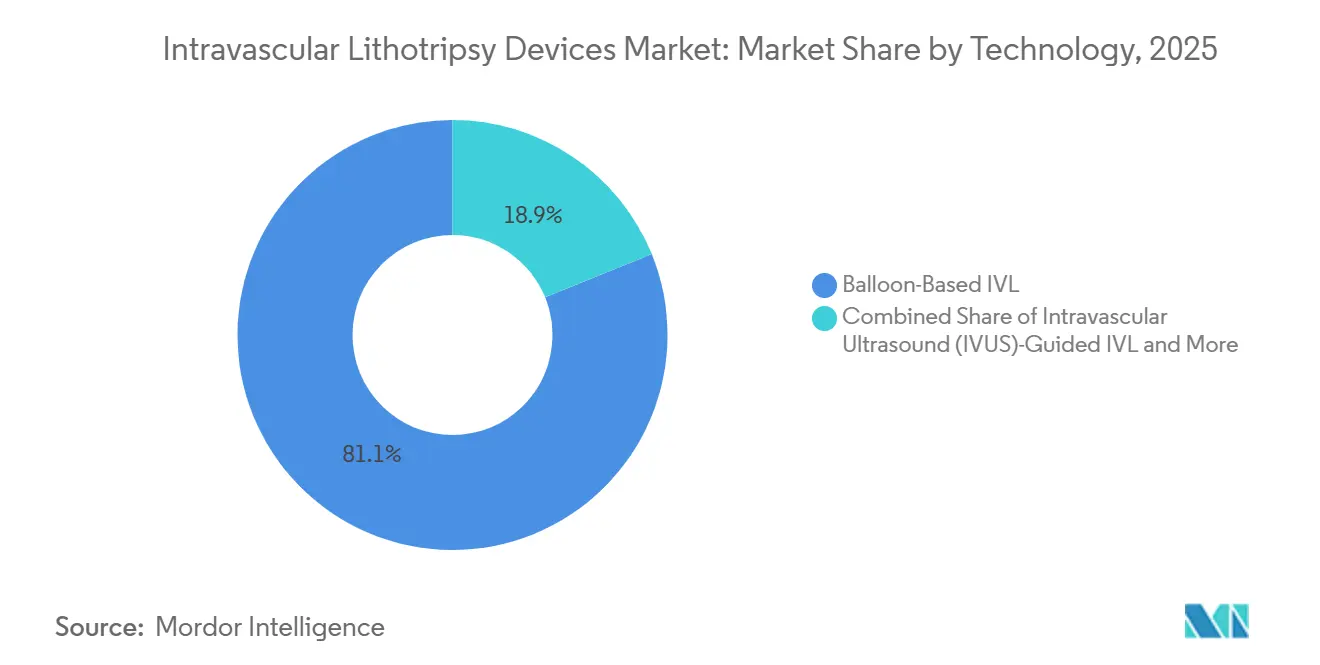
Balloon-Based IVL held 81.14% of revenue in 2025. Its position in the intravascular lithotripsy devices market reflects Shockwave Medical’s distribution scale and clinician familiarity with balloon-based treatment. Balloon delivery depends on the lesion anatomy that can be crossed before therapy. This limits use in some severe stenoses and total occlusions. Forward-Firing IVL is projected to grow at a CAGR of 18.42% from 2026 to 2031. The intravascular lithotripsy devices market size for this technology is supported by clinical demand in lesions where conventional balloon delivery is not feasible.
The Shockwave Javelin is a 5F non-balloon catheter with a 120-pulse forward emitter at its distal tip. It received FDA clearance in October 2024 and reported 99.0% technical success with a 1.1% major adverse event rate at 30 days in the cited studies. A 2026 clinical report described delivery while the catheter advances through severe stenosis or chronic total occlusions. IVUS-guided IVL also remains a distinct and growing treatment approach. The European registry recorded an increase in IVL used with intracoronary imaging, with p=0.002. Generator-free, laser-based, and hybrid systems were still sub-scale in 2026 but could increase technology choice as clinical studies and launches proceed.
By End User: Hospitals Lead While ASC Migration Changes Procedure Economics
Hospitals held 65.54% of revenue in 2025. Their role in the intravascular lithotripsy devices market reflected the concentration of catheterization laboratories, intravascular imaging, hemodynamic support, and specialized physician training in hospital settings. Cardiac catheterization laboratories represented the largest share of coronary IVL procedures within hospitals. Specialty vascular clinics increasingly perform peripheral IVL for patients with critical limb-threatening ischemia. These facilities can link treatment with wound-care pathways for the same patient population. Hospital demand remains central because complex coronary and peripheral cases require established procedural infrastructure.
Ambulatory Surgical Centers are projected to grow at a CAGR of 17.12% from 2026 to 2031. Cited consultants at TCT 2025 estimated that 25%-50% of cardiology procedures could move to ASCs. Government reimbursement preferences and hospital capacity planning support this shift. ASC cardiac accreditation standards influence whether facilities can safely introduce interventional cardiology procedures[3]Society for Cardiovascular Angiography and Interventions, “SCAI Position Statement on the Performance of PCI in Ambulatory Surgical Centers,” SCAI, scai.org.. Illinois finalized an expansion in 2024 that allowed therapeutic and interventional cardiac catheterization in licensed ASTCs. State-level rules will continue to determine where outpatient IVL programs can be developed.
Geography Analysis
North America held 56.61% of the intravascular lithotripsy devices market share in 2025. The United States remains the main source of first-generation IVL clearances and the largest procedural volume country. Fiscal year 2025 MS-DRGs supplied USD 10,000 in incremental payment above standard PCI with a stent. Calendar year 2026 physician reimbursement includes USD 122 for the CPT add-on code +92972. These payments reduce the financial barrier for academic centers and regional hospital networks.
Canada and Mexico lag the United States in reimbursement maturity and device access, which limits the region’s share expansion. Europe remains the second-largest regional contributor to the intravascular lithotripsy devices market. Germany, the United Kingdom, France, Italy, and Spain account for most regional coronary and peripheral volume. The 454-patient European registry reported 98% device success and increasing IVL use with imaging and acute coronary syndrome treatment. Germany’s DRG structure accommodates reimbursement, while NICE IPG780 provides an evidence-review reference for peripheral calcification decisions in the United Kingdom.
Asia-Pacific is projected to grow at a CAGR of 18.65% from 2026 to 2031. Aging populations, calcified coronary disease, regulatory activity in China, and expanding cardiology capacity support the intravascular lithotripsy devices market size in the region. At least 5 domestically manufactured IVL systems had received NMPA approval in China by 2024, including MicroPort RotaPace’s TomaHawk system. Domestic competition can lower unit prices and extend access beyond leading hospitals. MicroPort’s intravascular piezoelectric guidewire system entered China’s Green Path review in June 2024, indicating work on guidewire-integrated designs. Japan and South Korea have established insurance coverage for coronary intervention, while Australian activity remains concentrated in metropolitan academic hospitals. The Middle East and Africa, and South America, remain smaller contributors, with adoption concentrated in private and academic centers and constrained by uneven reimbursement, currency volatility, and limited catheterization laboratory density.

Competitive Landscape
The intravascular lithotripsy devices market is moderately concentrated, although competition has increased since 2024. Johnson & Johnson MedTech, through Shockwave Medical, retains the leading commercial position. Its portfolio covers coronary C2, C2 Plus, and C2 Aero systems, as well as peripheral S4, Javelin, and below-the-knee applications. The company’s position is supported by clinical training, intellectual property, and distribution across more than 60 countries. Johnson & Johnson completed its acquisition of Shockwave Medical for USD 13.1 billion in May 2024.
Boston Scientific’s Bolt IVL system received FDA clearance in March 2025, providing an alternative platform in the United States. Boston Scientific also completed the acquisition of Bolt Medical in 2025, with a potential transaction value of USD 664 million. Abbott initiated the TECTONIC coronary IVL IDE study in 2025 to support a future authorization filing. Stryker completed its acquisition of Amplitude Vascular Systems for up to USD 835 million and enrolled the first patient in a coronary pulsatile IVL study in May 2026. These moves have changed the intravascular lithotripsy devices market from a single-company category into a more contested group of device platforms.
Competitors are using distinct technology approaches in the intravascular lithotripsy devices market. Shockwave continues to expand indications and refine catheter designs. Elixir Medical offers the CE-marked generator-independent LithiX HC-IVL system, which reported 96.1% primary safety endpoint achievement and 113.7% mean stent expansion in 102 patients. FastWave is developing laser-based IVL, while Stryker is developing hydraulic pulsatile pressure technology. Regulatory quality requirements and FDA pathways create meaningful entry requirements, but they have not prevented new companies from reaching clinical development milestones.
Intravascular Lithotripsy Devices Industry Leaders
Johnson & Johnson
Boston Scientific Corporation
Stryker Corporation
Abbott Laboratories
Elixir Medical Corporation
- *Disclaimer: Major Players sorted in no particular order

Recent Industry Developments
- May 2026: Stryker completed its acquisition of Amplitude Vascular Systems for up to USD 835 million and enrolled the first patient in the POWER CAD I first-in-human study of pulsatile intravascular lithotripsy (IVL) for coronary applications. The Pulse IVL system delivered high-frequency hydraulic pressure pulses at approximately 15 pulses per second through a non-compliant balloon, without using an electronic emitter. It was designed to improve deliverability in complex calcified coronary anatomy.
- November 2025: The one-year results from DISRUPT BTK II were presented as a late-breaking trial at VIVA 2025. The findings demonstrated the durable safety and efficacy of Shockwave peripheral IVL in complex below-the-knee (BTK) anatomy, with low clinically driven target lesion revascularization rates and improved symptoms. The cohort included 80% of patients with chronic limb-threatening ischemia, 70% with diabetes, and 30% with chronic total occlusions.


Global Intravascular Lithotripsy Devices Market Report Scope
As per the scope of the report, intravascular lithotripsy devices are specialized medical tools used to treat calcified arterial plaques. They deliver shockwaves within blood vessels to break up hardened calcium deposits, improving vessel flexibility and enabling successful angioplasty or stent placement.
The intravascular lithotripsy devices market is segmented by product type into intravascular lithotripsy catheters and balloons, generators and console systems, and guidewires and accessories. By vessel type, the market is segmented into coronary arteries, femoropopliteal arteries, iliac arteries, below-the-knee arteries, and other vessel types. By technology, the market is segmented into balloon-based IVL, forward-firing IVL, intravascular ultrasound (IVUS)-guided IVL, and hybrid/next-generation IVL systems. By end user, the market is segmented into hospitals, ambulatory surgical centers, cardiac catheterization laboratories, specialty vascular clinics, and other end users. By geography, the market is segmented into North America, Europe, Asia-Pacific, the Middle East and Africa, and South America. The market report also covers the estimated market sizes and trends for 17 countries across major regions globally. For each segment, the market size and forecast are provided in terms of value (USD).
| Intravascular Lithotripsy Catheters and Balloons |
| Generators and Console Systems |
| Guidewires and Accessories |
| Coronary Arteries |
| Femoropopliteal Arteries |
| Iliac Arteries |
| Below-the-Knee Arteries |
| Other Vessel Types |
| Balloon-Based IVL |
| Forward-Firing IVL |
| Intravascular Ultrasound (IVUS)-Guided IVL |
| Hybrid / Next-Generation IVL Systems |
| Hospitals |
| Ambulatory Surgical Centers |
| Cardiac Catheterization Laboratories |
| Specialty Vascular Clinics |
| Other End Users |
| North America | United States |
| Canada | |
| Mexico | |
| Europe | Germany |
| United Kingdom | |
| France | |
| Italy | |
| Spain | |
| Rest of Europe | |
| Asia-Pacific | China |
| Japan | |
| India | |
| Australia | |
| South Korea | |
| Rest of Asia-Pacific | |
| Middle East and Africa | GCC |
| South Africa | |
| Rest of Middle East and Africa | |
| South America | Brazil |
| Argentina | |
| Rest of South America |
| By Product Type | Intravascular Lithotripsy Catheters and Balloons | |
| Generators and Console Systems | ||
| Guidewires and Accessories | ||
| By Vessel Type | Coronary Arteries | |
| Femoropopliteal Arteries | ||
| Iliac Arteries | ||
| Below-the-Knee Arteries | ||
| Other Vessel Types | ||
| By Technology | Balloon-Based IVL | |
| Forward-Firing IVL | ||
| Intravascular Ultrasound (IVUS)-Guided IVL | ||
| Hybrid / Next-Generation IVL Systems | ||
| By End User | Hospitals | |
| Ambulatory Surgical Centers | ||
| Cardiac Catheterization Laboratories | ||
| Specialty Vascular Clinics | ||
| Other End Users | ||
| By Geography | North America | United States |
| Canada | ||
| Mexico | ||
| Europe | Germany | |
| United Kingdom | ||
| France | ||
| Italy | ||
| Spain | ||
| Rest of Europe | ||
| Asia-Pacific | China | |
| Japan | ||
| India | ||
| Australia | ||
| South Korea | ||
| Rest of Asia-Pacific | ||
| Middle East and Africa | GCC | |
| South Africa | ||
| Rest of Middle East and Africa | ||
| South America | Brazil | |
| Argentina | ||
| Rest of South America | ||


Key Questions Answered in the Report
What is driving demand for intravascular lithotripsy devices?
Calcified lesions in PCI patients, more complex interventions, growing clinical evidence, and reimbursement support are supporting adoption.
How large is the intravascular lithotripsy devices market?
The intravascular lithotripsy devices market is estimated at USD 1.33 billion in 2026 and is forecast to reach USD 2.71 billion by 2031 at a 15.35% CAGR, supported by expanding clinical use in coronary and peripheral procedures and related care settings.
Which IVL product category is growing fastest?
Generators and Console Systems are forecast to record a 17.65% CAGR from 2026 to 2031.
Which vessel treatment area is growing fastest for IVL?
Below-the-Knee Arteries are forecast to grow at an 18.22% CAGR through 2031, supported by expanding evidence in complex peripheral disease.
Why are forward-firing IVL systems gaining attention?
They can address severe stenosis and chronic total occlusions where a balloon system may not cross the lesion.
Which region is growing fastest for intravascular lithotripsy devices?
Asia-Pacific is forecast to grow at an 18.65% CAGR from 2026 to 2031, supported by aging populations, China's regulatory activity, and wider cardiology capacity.
Page last updated on:





