
Intelligent Asthma Monitoring Devices Market Size and Share
Market Overview
| Study Period | 2020 - 2031 |
|---|---|
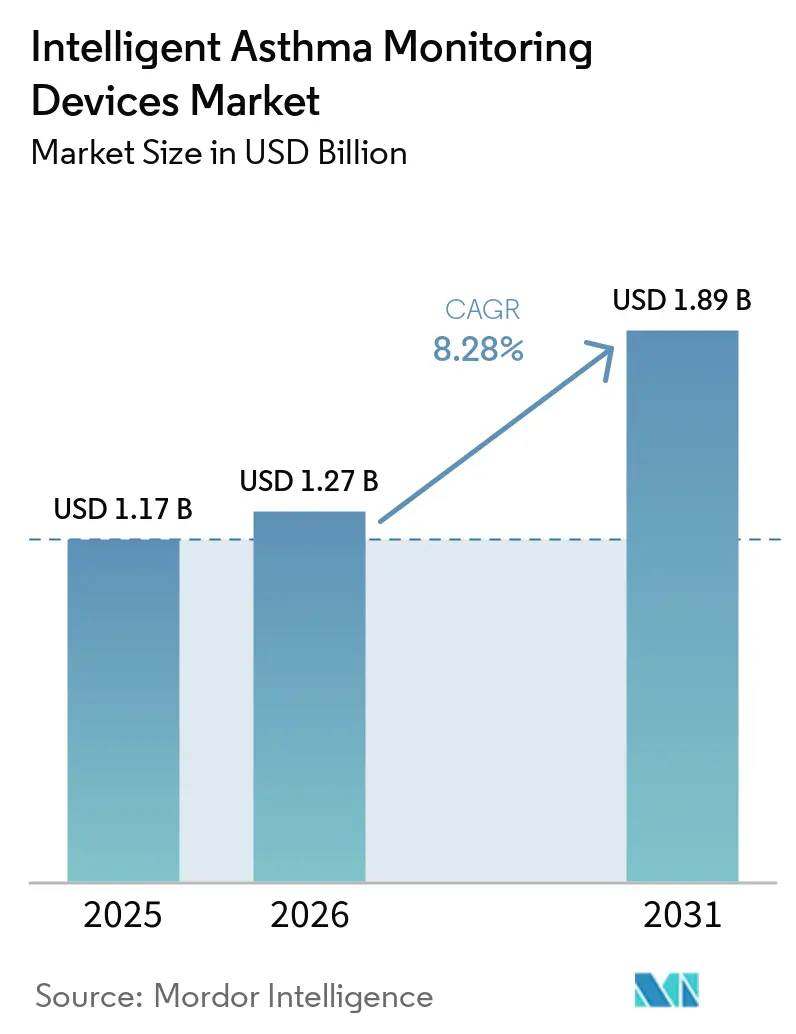
| Market Size (2026) | USD 1.27 Billion |
| Market Size (2031) | USD 1.89 Billion |
| Growth Rate (2026 - 2031) | 8.28 % |
| Fastest Growing Market | Asia-Pacific |
| Largest Market | North America |
| Market Concentration | Medium |
Major Players *Disclaimer: Major Players sorted in no particular order Image © Mordor Intelligence. Reuse requires attribution under CC BY 4.0. | |
Intelligent Asthma Monitoring Devices Market Analysis by Mordor Intelligence
The Intelligent Asthma Monitoring Devices Market size was valued at USD 1.17 billion in 2025 and is estimated to grow from USD 1.27 billion in 2026 to reach USD 1.89 billion by 2031, at a CAGR of 8.28% during the forecast period (2026-2031).
The intelligent asthma monitoring devices market is moving respiratory care beyond periodic clinic visits toward continuous management supported by connected devices and patient data. Asthma affected 363 million people in 2023 and caused 442,000 deaths annually, while the World Health Organization stated that many asthma deaths were preventable. Underdiagnosis in lower-income settings and persistent inhaler-use challenges in higher-income settings support demand for monitoring tools that enable care teams to track treatment outside hospitals. Market growth also depends on reimbursement, clinical workflow adoption, and evidence that connected monitoring can reduce avoidable care, while pharmaceutical companies and specialist firms can expand revenue through connected drug-device products, data services, and software offerings.
Key Report Takeaways
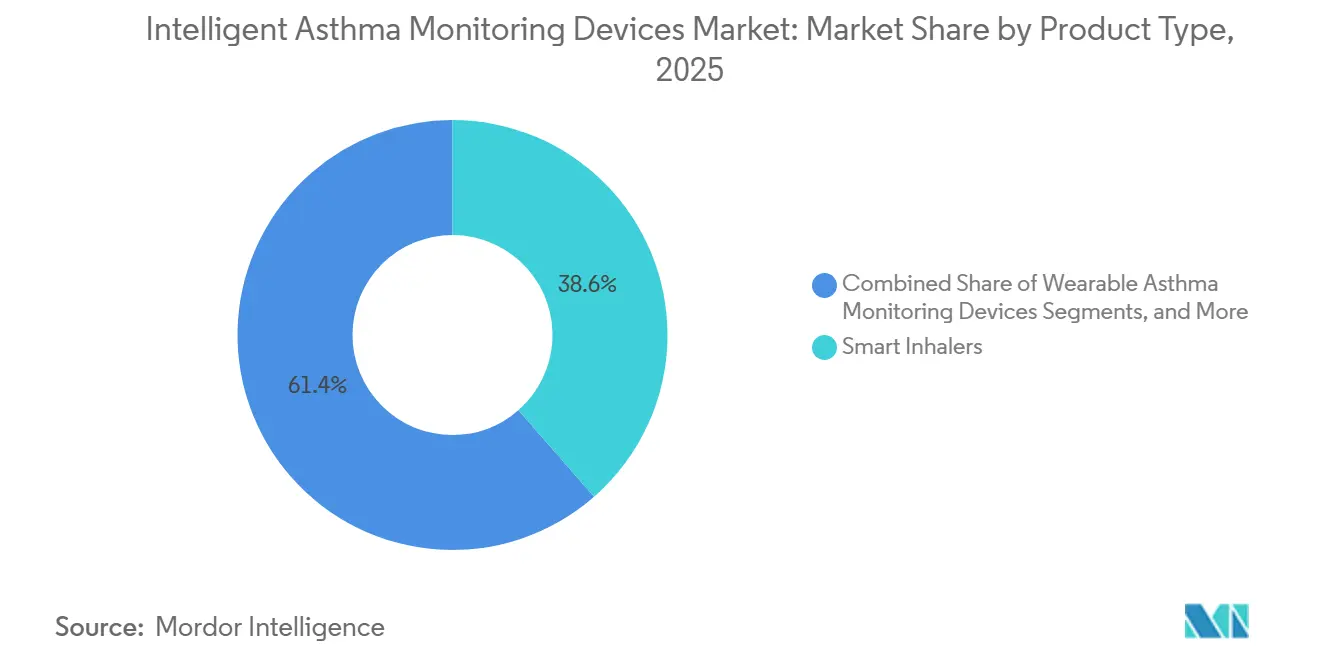
- By product type, smart inhalers held 38.56% of the intelligent asthma monitoring devices market share in 2025, while wearable asthma monitoring devices are projected to grow at a CAGR of 10.89% through 2031.
- By application, medication adherence accounted for 58.67% of the intelligent asthma monitoring devices market size in 2025, while exacerbation prevention is projected to expand at a CAGR of 12.34% through 2031.
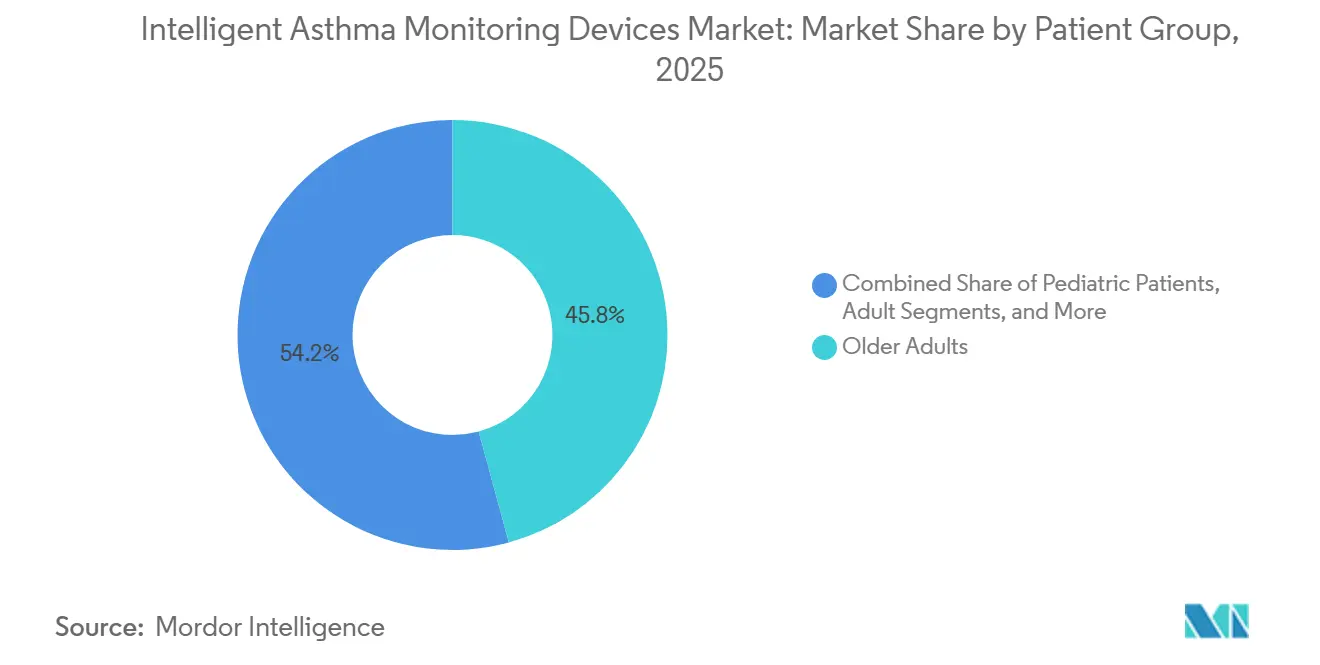
- By patient group, older adults held 45.78% in 2025, while pediatric patients are expected to record a CAGR of 11.56% through 2031.
- By end user, hospitals held 37.67% in 2025, while homecare is projected to grow at a CAGR of 10.87% through 2031.
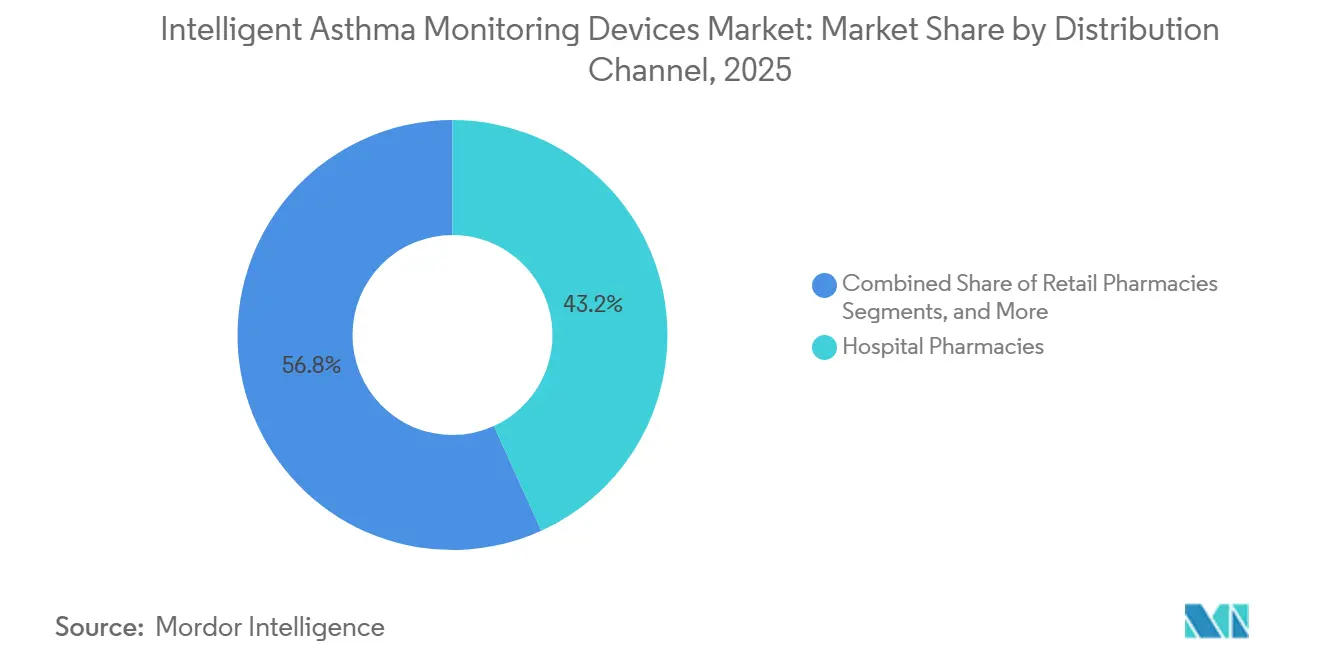
- By distribution channel, hospital pharmacies held 43.22% in 2025, while online pharmacies and e-commerce are projected to grow at a CAGR of 10.26% through 2031.
- By geography, North America held 38.78% in 2025, while Asia-Pacific is projected to expand at a CAGR of 12.25% through 2031.
Note: Market size and forecast figures in this report are generated using Mordor Intelligence’s proprietary estimation framework, updated with the latest available data and insights as of January 2026.
Market Trends and Insights
Drivers Impact Analysis of Intelligent Asthma Monitoring Devices Market*
| DRIVER | (~) % IMPACT ON CAGR FORECAST | GEOGRAPHIC RELEVANCE | IMPACT TIMELINE |
|---|---|---|---|
| Rising asthma prevalence and underdiagnosis | +1.9% | Global, particularly South Asia, East Asia, and high-income North America | Long term (≥ 4 years) |
| Medication nonadherence and inhaler-technique errors | +2.1% | Global, with greater intensity in North America and Europe | Short term (≤ 2 years) |
| Remote patient monitoring and value-based care | +1.7% | Primarily North America, with spillover to Europe and Asia-Pacific | Medium term (2-4 years) |
| AI-enabled exacerbation prediction and personalized intervention | +1.0% | North America and Europe, with early activity in Singapore and South Korea | Medium term (2-4 years) |
| Continuous trigger and environmental exposure correlation | +0.6% | Asia-Pacific and North America | Long term (≥ 4 years) |
| Pediatric and caregiver-centered digital monitoring | +0.5% | North America, Europe, and urban Asia-Pacific | Medium term (2-4 years) |
| Source: Mordor Intelligence | |||
Rising Asthma Prevalence and Underdiagnosis
Asthma created a substantial need for improved follow-up, particularly in settings with incomplete diagnosis and treatment. The Global Burden of Disease study estimated that 363 million people had asthma in 2024, causing 442,000 deaths annually.[1]M. Gao et al., “Analysis of Gender- and Age-Stratified Asthma Burden: Forecasting Prevalence Trends in 2030,” Frontiers in Medicine, frontiersin.org. The World Health Organization reported that essential asthma medicines were unavailable in more than one-third of public primary care facilities in low- and lower-middle-income countries. Incidence was highest among children younger than 5 years, while prevalence peaked among adults aged 95 years and older, creating distinct monitoring requirements. China had an estimated 45.7 million adults with asthma, representing 4.2% of its adult population.[2]J. Fores-Martos et al., “Factors Associated with Low Adherence to Inhaled Therapy in Patients with Chronic Respiratory Diseases,” BMC Pulmonary Medicine, springer.com. As screening identified more patients, the intelligent asthma monitoring devices market expanded through active case management without an increase in underlying disease incidence.
Medication Nonadherence and Inhaler-Technique Errors
Medication nonadherence reinforced the business value of connected asthma management tools. The 2025 APPaRENT 3 survey found that 55% of patients demonstrated erratic nonadherence, including occasionally forgetting to use an inhaler, while 49% used controller inhalers less than once daily. Physicians estimated adherence at 73%.[3]A. N. van der Meer et al., “Are Treatment Adherence Factors Apparent in Patients with Asthma and to Physicians? Results from the APPaRENT 3 Survey,” Advances in Therapy, nature.com. A Spanish cross-sectional study found that 24.6% of patients with chronic respiratory diseases had adherence below 50%, based on electronic prescription records. A 2026 study found that only 6.6% of metered-dose inhaler users demonstrated correct technique at baseline, increasing to 50.6% after device-guided training.[4]C. A. Ruzycki et al., “Advantages and Challenges of Training of Inhalation Technique with the Vitalograph AIM Device,” Scientific Reports, nature.com. The intelligent asthma monitoring devices market, therefore, extended beyond dose reminders by identifying errors in inspiratory flow, inhaler orientation, and inhalation duration.
Remote Patient Monitoring and Value-Based Care
Remote patient monitoring provided a practical pathway for connected-device adoption in clinical settings. In July 2025, CMS released the proposed CY 2026 Medicare Physician Fee Schedule rule, which included code 99XX4 for remote patient monitoring with 2 days of transmitted physiological data per month. The proposed rule also included code 98XX4 for respiratory remote therapeutic monitoring under the same 2-day requirement, reducing operational barriers associated with the previous 16-day threshold. Preliminary iCARE data from 1,049 patients with COPD and asthma showed a 57% reduction in annual care costs, from USD 36,837 to USD 15,899 per patient. The program also reported 50% fewer admissions and 20% fewer emergency department visits. The intelligent asthma monitoring devices market benefited when providers established clear processes to review patient data and respond to identified needs.
AI-Enabled Exacerbation Prediction and Personalized Intervention
Predictive analytics expanded the role of asthma monitoring from recording device use to identifying exacerbation risks earlier. A study presented at the ERS Congress 2025 used data from 1,500 asthma patients and reported 92% accuracy in predicting exacerbations up to 48 hours in advance using wearable physiological data. Adding patient-reported outcomes improved model sensitivity by 15%. A collaboration between Jiva.ai and Aevice Health analyzed data from 185 patients and reported more than 60% prediction accuracy across 24-, 48-, and 72-hour prediction windows. An IEEE 2026 paper described an edge-based system that classified asthma-related inputs with 96.4% accuracy while consuming 28.6 mW of power. On-device processing reduced the need to transfer sensitive information to cloud systems and supported compliance with privacy requirements in clinical deployment.
Restraints Impact Analysis of Intelligent Asthma Monitoring Devices Market*
| RESTRAINT | (~) % IMPACT ON CAGR FORECAST | GEOGRAPHIC RELEVANCE | IMPACT TIMELINE |
|---|---|---|---|
| Limited reimbursement and unclear monitoring workflow ownership | -1.4% | North America, Europe, and parts of the Asia-Pacific | Short term (≤ 2 years) |
| Clinical and economic evidence variability | -0.9% | Global, particularly for European health technology assessment bodies and NICE | Medium term (2-4 years) |
| Patient privacy, cybersecurity, and consent burden | -0.6% | North America and European markets are subject to GDPR | Long term (≥ 4 years) |
| Device fragmentation, battery waste, and interoperability burden | -0.5% | Global | Long term (≥ 4 years) |
| Source: Mordor Intelligence | |||
Limited Reimbursement and Unclear Ownership of Monitoring Workflows
Reimbursement for intelligent asthma monitoring remained inconsistent across jurisdictions. A CMS proposed rule expanded remote monitoring billing, but the respiratory RTM code 98XX4 remained subject to contractor pricing rather than a national fee schedule. This approach resulted in varying reimbursement rates across U.S. jurisdictions. European assessment bodies required additional clinical and economic evidence, while many Asia-Pacific markets relied on out-of-pocket payments for digital health tools. The intelligent asthma monitoring devices market also faced workflow gaps. Prescribers, pharmacists, and disease-management nurses did not always have reimbursed responsibility for reviewing continuous monitoring data. Without a defined care-coordinator role, providers could collect device data without initiating a clinical response.
Clinical and Economic Evidence Variability
The evidence base demonstrated benefits, but its strength varied across clinical outcomes and care settings. NICE reviewed 14 studies of smart preventer and maintenance inhalers and identified consistent improvements in adherence. However, the review found mixed or no effects on hospital admissions and quality of life. A 12-week pediatric trial found no statistically significant difference between the smart-inhaler feedback and control groups, although both groups showed clinical improvement. The 2025 ACCEPTANCE trial reported an 11.5-percentage-point improvement in adherence, reaching 71.4% compared with 59.9% in the control group. Cost-effectiveness varied by setting, delaying coverage decisions in health systems requiring consistent clinical and economic evidence.
*Our forecasts treat driver/restraint impacts as directional, not additive. The impact forecasts reflect baseline growth, mix effects, and variable interactions.
Intelligent Asthma Monitoring Devices Market Segment Analysis
By Product Type:
Smart Inhalers Lead, While Wearables Drive GrowthSmart inhalers held 38.56% of product revenue in 2025, supported by established prescribing practices and recognized U.S. Food and Drug Administration (FDA) clearance pathways. Pharmaceutical manufacturers also support connected drug-device combinations using existing inhaler therapies. Wearable asthma monitoring devices are forecast to grow at a CAGR of 10.89% from 2026 to 2031, as they monitor respiratory patterns during sleep and activity. The intelligent asthma monitoring devices market size for smart inhalers benefits from their established treatment-delivery role, while wearables address broader monitoring needs.
AptarGroup received FDA clearance in October 2025 for HeroTracker Sense, a Bluetooth-enabled metered-dose inhaler add-on for patients aged 12 and older. AstraZeneca’s BREZTRI Aerosphere received U.S. FDA approval for asthma in patients aged 12 and older in April 2026. Spirometers and peak flow meters have a limited diagnostic role, while connected nebulizers remain concentrated in severe asthma and pediatric care. Vitalograph AIM training increased correct inhaler technique from 6.6% to 50.6% among patients who initially used a metered-dose inhaler incorrectly. FindAir received FDA 510(k) clearance for FindAir ONE in June 2026, supporting integration with more than 90 inhaler formats and remote monitoring platforms.



By Application:
Medication Adherence Holds the Largest Position, While Prevention ExpandsMedication adherence represented 58.67% of application value in 2025, providing payers and health systems with a clear rationale to monitor missed or incorrect doses. The APPaRENT 3 survey found that 55% of asthma patients had erratic nonadherence. Exacerbation prevention is forecast to grow at a CAGR of 12.34% from 2026 to 2031, supported by predictive tools that can generate warnings 24 to 72 hours before a potential event. Inhaler-technique improvement and diagnostic support remain relevant but are increasingly integrated into broader device offerings.
Remote therapeutic monitoring and real-world evidence collection are gaining adoption as reimbursement pathways develop. The FDA accepted Sibel Health’s Letter of Intent for the Aria wearable cough sensor into its Drug Development Tool Qualification Program in February 2026, indicating interest in device-generated measures for respiratory trials. A 2026 study of Chinese children aged 6 to 12 reported 89.2% medication adherence with real-time monitoring and reminders, compared with 58.0% with conventional outpatient follow-up. It also reported a 42.9% reduction in airway inflammation markers, compared with 17.1% in the control group, supporting connected management in capacity-constrained clinical settings.
By Patient Group:
Older Adults Provide the Largest Base, While Pediatric Use GrowsOlder adults held 45.78% of the patient-group value in 2025. Their higher incidence of severe asthma and coexisting conditions increases the need for regular monitoring. Medicare remote monitoring rules also prioritize patient groups requiring ongoing follow-up. Adults remain a major patient group because uncontrolled asthma can affect attendance and productivity. In contrast, pediatric patients are forecast to grow at a CAGR of 11.56% from 2026 to 2031, supported by caregiver demand, institutional programs, and pediatric clearances.
Aevice Health received FDA 510(k) clearance in May 2025 for AeviceMD for children aged 3 and older. Cedars-Sinai Guerin Children’s can use the device for home lung-sound monitoring. An ERS Congress 2025 trial found that telemedicine-enabled monitoring in children aged 6 to 18 increased symptom-free days and reduced parental workdays missed from 3.7 to 0.73 over 12 months. A 2025 study found improved asthma control, severity, and quality of life in children aged 8 to 11, but not in older children, highlighting the importance of caregiver involvement in pediatric connected care.
By End User:
Hospitals Hold Revenue, While Homecare GrowsHospitals held 37.67% of end-user value in 2025, as they manage concentrated populations with severe asthma and maintain established procurement and remote monitoring teams. Specialty respiratory clinics and primary care clinics also contribute to demand. Primary care providers can benefit from the proposed two-day data threshold, as smaller practices may find remote monitoring easier to operate. Homecare is forecast to grow at a CAGR of 10.87% from 2026 to 2031, driven by the shift of routine follow-up from hospitals to homes.
Respiree received its second FDA 510(k) clearance in August 2025, extending its RS001 cardiorespiratory wearable from inpatient settings to home use. The clearance also covered the 1Bio connected-care platform for real-time remote visualization. Adherium’s iCARE data through June 2026 reported 50% fewer hospital admissions and 20% fewer emergency department visits across 1,049 patients. A 2025 study found that lower-income patients were 65% more likely to share health data through digital platforms, although they reported greater concerns about remote care. HIPAA and GDPR requirements, device costs, and connectivity limitations remain material considerations for homecare adoption.
By Distribution Channel:
Hospital Pharmacies Lead, While E-Commerce Extends ReachHospital pharmacies held 43.22% of the distribution-channel value in 2025, reflecting hospitals’ role in procurement, patient onboarding, and care for moderate-to-severe asthma. Retail pharmacies remain the second-largest channel and can connect patients with local asthma management services. A 2025 Smart Respiratory pilot with Pearl Chemist Group covered six southwest London branches. Online pharmacies and e-commerce are forecast to grow at a CAGR of 10.26% from 2026 to 2031, supported by subscription supply models and direct-to-consumer sensor sales.
Regulatory requirements limit the pace of online distribution for certain connected medical devices. FDA Class II devices generally require a prescription, requiring patients to have a compatible prescription before completing a purchase. Remote monitoring providers are linking telehealth and prescribing services with device ordering to streamline access. Zydus Lifesciences and AeroDel launched Aerolife Mini in India in March 2026 under an exclusive licensing arrangement. The foldable pressurized metered-dose inhaler (pMDI) enhancer targets retail and primary care channels across India, reflecting the need to align distribution with local access to hospital pharmacies and primary care.
Geography Analysis
North America Intelligent Asthma Monitoring Devices Market
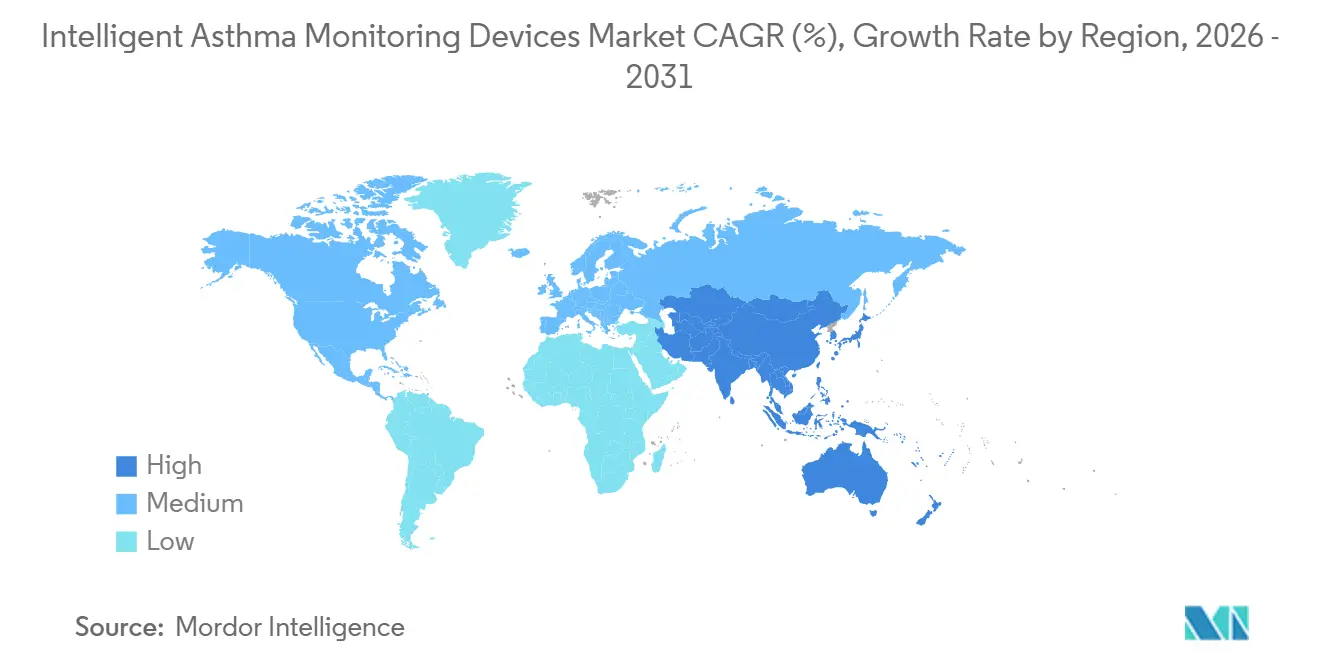
North America held 38.78% of global market value in 2025, supported by Medicare reimbursement infrastructure, a large connected inhaler base, and digital health investment. The CMS proposed CY 2026 rule would reduce the remote monitoring billing threshold to two days per month and include physician time-management codes for monitoring reviews. Adherium reported 9.4-fold growth in recurring RPM revenue during the 12 months through June 2026, 5,300 Hailie Smartinhaler shipments, and a pipeline of 68,000 insurance-verified asthma patients. Clinical workflow adoption remained more important than device availability for near-term market expansion.
EMEA and South America Intelligent Asthma Monitoring Devices Market
Europe is the second-largest geographic area, with public reimbursement systems supporting adoption in Germany, the United Kingdom, France, Italy, and Spain. NICE’s 2024 review showed that the UK National Health Service was assessing evidence for smart inhalers. In 2025, AstraZeneca received a positive EU CHMP opinion for Trixeo Aerosphere, which uses a next-generation near-zero global-warming-potential propellant. GDPR adds compliance requirements for platforms handling cross-border respiratory biometric data, while the Middle East, Africa, and South America benefit from urban respiratory disease and government digital health programs. Iraq launched an advanced asthma inhaler production line with an annual capacity of 9 million units in July 2026.
APAC Intelligent Asthma Monitoring Devices Market
Asia-Pacific is forecast to record the highest regional CAGR of 12.25% from 2026 to 2031, supported by China’s estimated 45.7 million adults with asthma and India’s growing wearable sector. A 2026 Chinese study involving 208 children reported 89.2% adherence with cloud-based intelligent management, compared with 58.0% under conventional outpatient care, and a 12.3% FEV1 improvement versus 4.2% in the control group. A 2025 home spirometry study supported remote lung-function monitoring for children aged 5 to 12 while identifying cost, insurance, and data security as barriers. Japan, South Korea, and Singapore support regional adoption, while India can benefit from products tailored to retail channels beyond major cities.

Competitive Landscape
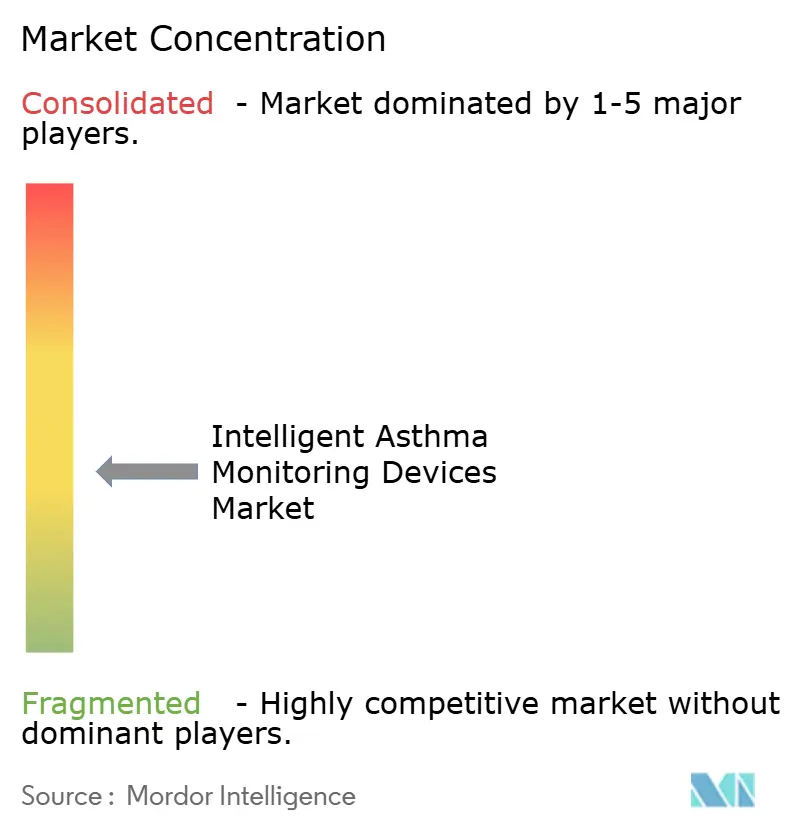
The intelligent asthma monitoring devices market has a moderately fragmented competitive structure. AstraZeneca, GlaxoSmithKline, Teva, Novartis, and Boehringer Ingelheim maintained broad reach through drug-device combinations and established dispensing relationships, competing through medicine portfolios and prescriber access. Specialist connected-care firms focused on device data, clinical evidence, payer contracts, and recurring software revenue. Adherium reported 9.4 times growth in recurring RPM revenue over the 12 months to June 2026, while AptarGroup’s HeroTracker Sense received FDA clearance in October 2025.
FindAir ONE received FDA 510(k) clearance in June 2026 and was designed for compatibility with more than 90 inhaler formats. This approach positioned sensor providers alongside pharmaceutical companies and remote monitoring platforms rather than as stand-alone device providers. AstraZeneca’s 2025 EU submission for a lower-GWP pMDI highlighted the need to extend inhaler platforms while meeting environmental requirements. Tyto Care received FDA 510(k) clearance for Tyto Insights for Wheeze Detection in June 2026, adding wheeze detection capabilities to telehealth assessments when in-person auscultation was unavailable.
Data interoperability and edge processing remained key areas of competition, as no single standard integrated outputs from Adherium, Amiko, FindAir, and AptarGroup devices into one electronic health record workflow. AeviceMD received a Singapore patent in 2026 for its wearable-stethoscope architecture, while Cognita Labs presented research on adaptive acoustic oscillations for personalized airway clearance at ATS 2026. NuvoAir and Respiri built positions in digital spirometry and wheeze-detection wearables through intellectual property and clinical evidence. Compliance with FDA software guidance, HIPAA, and GDPR strengthened companies’ positions with health-system procurement teams; however, available information did not support a quantitative market concentration assessment.
Intelligent Asthma Monitoring Devices Industry Leaders
Adherium Limited
GlaxoSmithKline plc
AstraZeneca plc
Teva Pharmaceutical Industries Limited
Koninklijke Philips N.V.
- *Disclaimer: Major Players sorted in no particular order
Intelligent Asthma Monitoring Devices Market Companies Covered in this Report
- Adherium
- AEvice Health Pte. Ltd.
- Amiko Digital Health
- AptarGroup, Inc.
- AstraZeneca
- Boehringer Ingelheim
- BreatheSuite
- Cognita Labs LLC
- FindAir Sp. z o.o.
- GlaxoSmithKline
- Health Care Originals, Inc.
- Koninklijke Philips
- Novartis
- NuvoAir AB
- Resmed
- Respiri Limited
- Sensirion
- Teva Pharmaceutical Industries
- Vectura Group Limited
- Vitalograph Limited

Recent Industry Developments in Intelligent Asthma Monitoring Devices Market
- June 2026: FindAir received FDA 510(k) clearance for FindAir ONE, a smart add-on sensor compatible with more than 90 pMDI formats, supporting U.S. commercialization across pharmaceutical, RPM, RTM, and clinical research applications.
- June 2026: Jiva.ai and Aevice Health reported that their three-year AI collaboration achieved more than 60% accuracy in predicting asthma exacerbations within 24-, 48-, and 72-hour windows using data from 185 patients.
- April 2026: AstraZeneca received U.S. FDA approval for BREZTRI Aerosphere as a single-inhaler triple therapy for asthma in adults and patients aged 12 years and older.
- March 2026: AeroDel Technology Innovations and Zydus Lifesciences launched Aerolife Mini, India’s first foldable pMDI enhancer, under an exclusive licensing arrangement for retail and primary care channels.


Global Intelligent Asthma Monitoring Devices Market Report Scope
As per the scope of the report, intelligent asthma monitoring devices are connected smart healthcare tools that use sensors, mobile applications, and artificial intelligence to track breathing patterns, medication usage, and environmental triggers in real time.
The intelligent asthma monitoring devices market is segmented by product type, application, patient group, end user, distribution channel, and geography. By product type, the market includes wearable asthma monitoring devices, wearable sensors and patches, smart inhalers, metered-dose inhalers, dry-powder inhalers, spirometers, peak flow meters, connected nebulizers, and others. By application, the market is segmented into medication adherence, inhaler technique improvement, asthma diagnosis support, asthma control and self-management, exacerbation prevention, remote therapeutic monitoring, clinical trials and real-world evidence, and others. By patient group, the market is categorized into pediatric patients, adults, and older adults. By end user, the market is segmented into hospitals, specialty respiratory clinics, primary care clinics, homecare, and others. By distribution channel, the market includes hospital pharmacies, retail pharmacies, online pharmacies and e-commerce platforms, and others. By geography, the market is analyzed across North America, Europe, Asia-Pacific, the Middle East and Africa, and South America. The report also covers the estimated market sizes and trends for 17 countries across major regions globally. The report offers market sizes and forecasts in terms of value (USD) for the above segments.
| Wearable Asthma Monitoring Devices | |
| Wearable Sensors and Patches | |
| Smart Inhalers | Metered Dose Inhalers |
| Dry Powder Inhalers | |
| Spirometers | |
| Peak Flow Meters | |
| Connected Nebulizers | |
| Others |
| Medication Adherence |
| Inhaler-Technique Improvement |
| Asthma Diagnosis Support |
| Asthma Control and Self-Management |
| Exacerbation Prevention |
| Remote Therapeutic Monitoring |
| Clinical Trials and Real-World Evidence |
| Others |
| Pediatric Patients |
| Adults |
| Older Adults |
| Hospitals |
| Specialty Respiratory Clinics |
| Primary-Care Clinics |
| Homecare |
| Others |
| Hospital Pharmacies |
| Retail Pharmacies |
| Online Pharmacies and E-Commerce |
| Others |
| North America | United States |
| Canada | |
| Mexico | |
| Europe | Germany |
| United Kingdom | |
| France | |
| Italy | |
| Spain | |
| Rest of Europe | |
| Asia-Pacific | China |
| India | |
| Japan | |
| Australia | |
| South Korea | |
| Rest of Asia-Pacific | |
| Middle East and Africa | GCC |
| South Africa | |
| Rest of Middle East and Africa | |
| South America | Brazil |
| Argentina | |
| Rest of South America |
| By Product Type | Wearable Asthma Monitoring Devices | |
| Wearable Sensors and Patches | ||
| Smart Inhalers | Metered Dose Inhalers | |
| Dry Powder Inhalers | ||
| Spirometers | ||
| Peak Flow Meters | ||
| Connected Nebulizers | ||
| Others | ||
| By Application | Medication Adherence | |
| Inhaler-Technique Improvement | ||
| Asthma Diagnosis Support | ||
| Asthma Control and Self-Management | ||
| Exacerbation Prevention | ||
| Remote Therapeutic Monitoring | ||
| Clinical Trials and Real-World Evidence | ||
| Others | ||
| By Patient Group | Pediatric Patients | |
| Adults | ||
| Older Adults | ||
| By End User | Hospitals | |
| Specialty Respiratory Clinics | ||
| Primary-Care Clinics | ||
| Homecare | ||
| Others | ||
| By Distribution Channel | Hospital Pharmacies | |
| Retail Pharmacies | ||
| Online Pharmacies and E-Commerce | ||
| Others | ||
| By Geography | North America | United States |
| Canada | ||
| Mexico | ||
| Europe | Germany | |
| United Kingdom | ||
| France | ||
| Italy | ||
| Spain | ||
| Rest of Europe | ||
| Asia-Pacific | China | |
| India | ||
| Japan | ||
| Australia | ||
| South Korea | ||
| Rest of Asia-Pacific | ||
| Middle East and Africa | GCC | |
| South Africa | ||
| Rest of Middle East and Africa | ||
| South America | Brazil | |
| Argentina | ||
| Rest of South America | ||


Key Questions Answered in the Report
What is the 2026 value of intelligent asthma monitoring devices?
The sector is valued at USD 1.27 billion in 2026 and is forecast to reach USD 1.89 billion by 2031 at an 8.28% CAGR.
Which product category leads connected asthma care?
Smart inhalers held 38.56% of product revenue in 2025, supported by established prescribing workflows and connected drug-device combinations.
Which application is growing the fastest through 2031?
Exacerbation prevention is forecast to grow at a CAGR of 12.34% from 2026 to 2031 as predictive tools support earlier intervention.
Why are wearable asthma monitors gaining use?
Wearables can track respiratory patterns during sleep and activity, while the wearable category is forecast to grow at a CAGR of 10.89% through 2031.
Which region is expanding the fastest for connected asthma devices?
Asia-Pacific is forecast to grow at a CAGR of 12.25% from 2026 to 2031, supported by large patient populations and digital-health programs.
What limits adoption of connected asthma monitoring?
Uneven reimbursement, unclear responsibility for reviewing device data, inconsistent economic evidence, privacy requirements, and poor interoperability can slow adoption.
Page last updated on:





