
Implantable Ports Market Size and Share
Market Overview
| Study Period | 2021 - 2032 |
|---|---|
| Market Size (2027) | USD 1.30 Billion |
| Market Size (2032) | USD 2.04 Billion |
| Growth Rate (2027 - 2032) | 9.53 % |
| Fastest Growing Market | Asia-Pacific |
| Largest Market | North America |
| Market Concentration | Medium |
Major Players *Disclaimer: Major Players sorted in no particular order Image © Mordor Intelligence. Reuse requires attribution under CC BY 4.0. | |
Implantable Ports Market Analysis by Mordor Intelligence
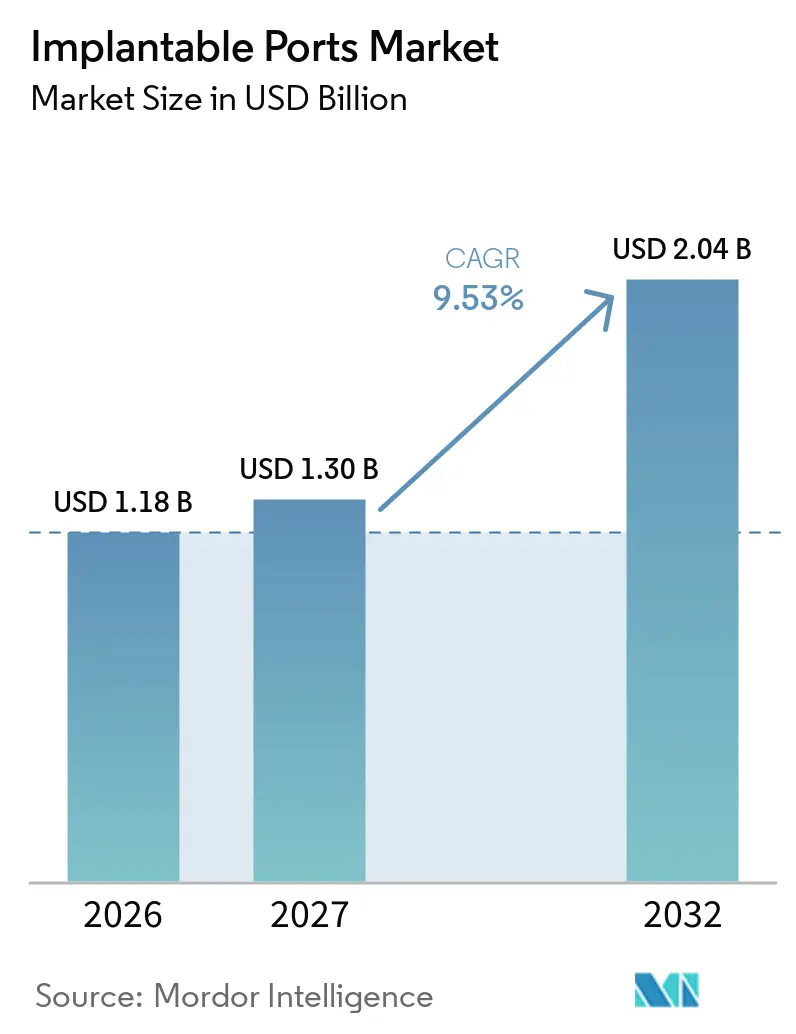
The Implantable Ports Market size was valued at USD 1.18 billion in 2026 and is estimated to grow from USD 1.30 billion in 2027 to reach USD 2.04 billion by 2032, at a CAGR of 9.53% during the forecast period (2027-2032).
The implantable ports market is supported by a growing cancer treatment burden, as global cancer cases are expected to approach 35 million annually by 2050. Multi-cycle chemotherapy, immunotherapy, and targeted treatment require dependable central venous access over extended periods. Fully implanted devices can reduce repeated peripheral cannulation and are better suited to lengthy treatment courses than external alternatives. The shift toward outpatient and home-based infusion care also favors products that need less frequent routine attention. Competition is centered on clinical performance, material design, regulatory support, and the ability to serve both premium and price-sensitive hospital systems.
Key Report Takeaways
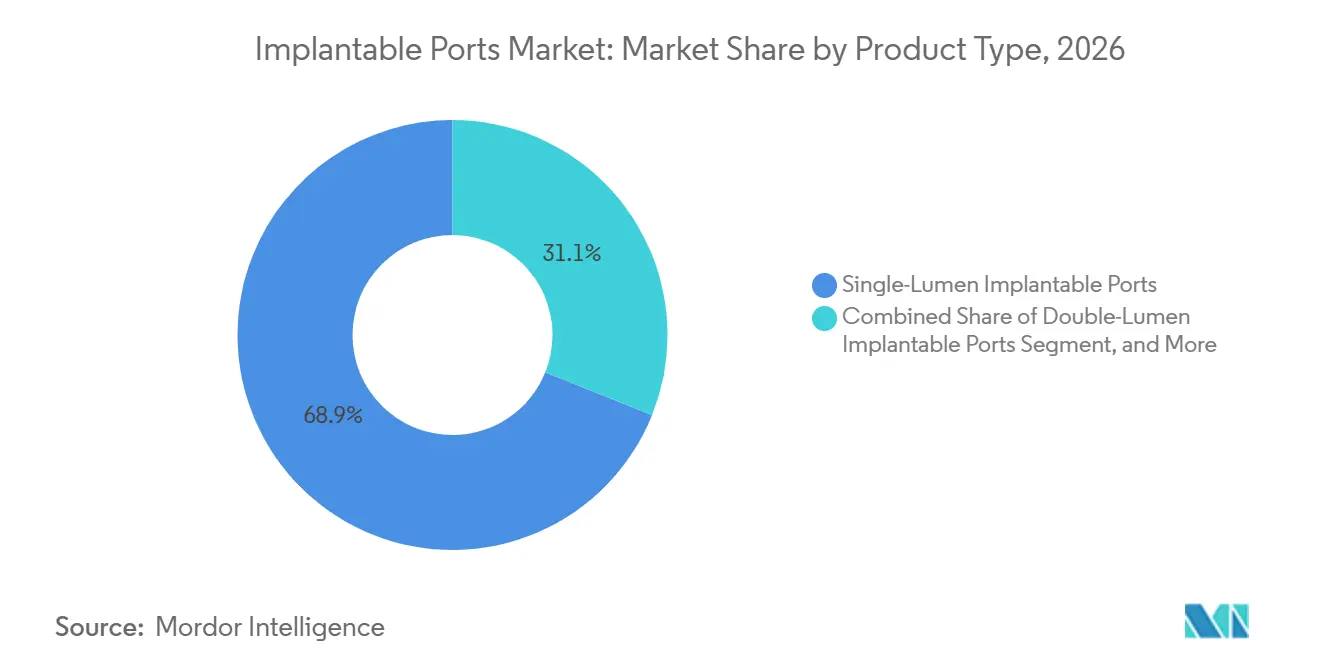
- By product type, Single-Lumen Implantable Ports held 68.93% of revenue in 2026, while Double-Lumen Ports are forecast to grow at a CAGR of 9.89% through 2032 in the implantable port market.
- By port type, Standard Implantable Ports held 48.25% of revenue in 2026, while Power-Injectable Implantable Ports are forecast to grow at a CAGR of 10.35% through 2032.
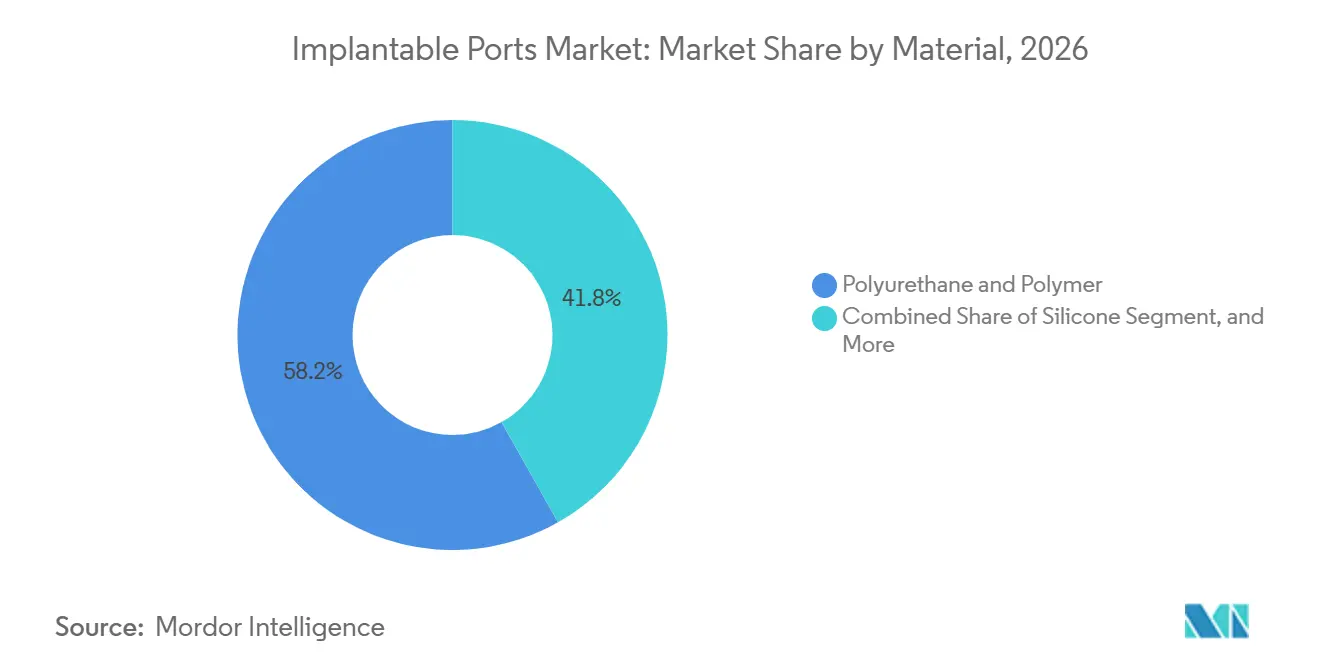
- By material, Polyurethane and Polymer materials held 58.17% of revenue in 2026, while Silicone is forecast to grow at a CAGR of 10.82% through 2032 in the implantable port market.
- By application, Chemotherapy and Oncology Delivery held 56.23% of revenue in 2026, while Blood Transfusion and Fluid Resuscitation is forecast to grow at a CAGR of 11.44% through 2032.
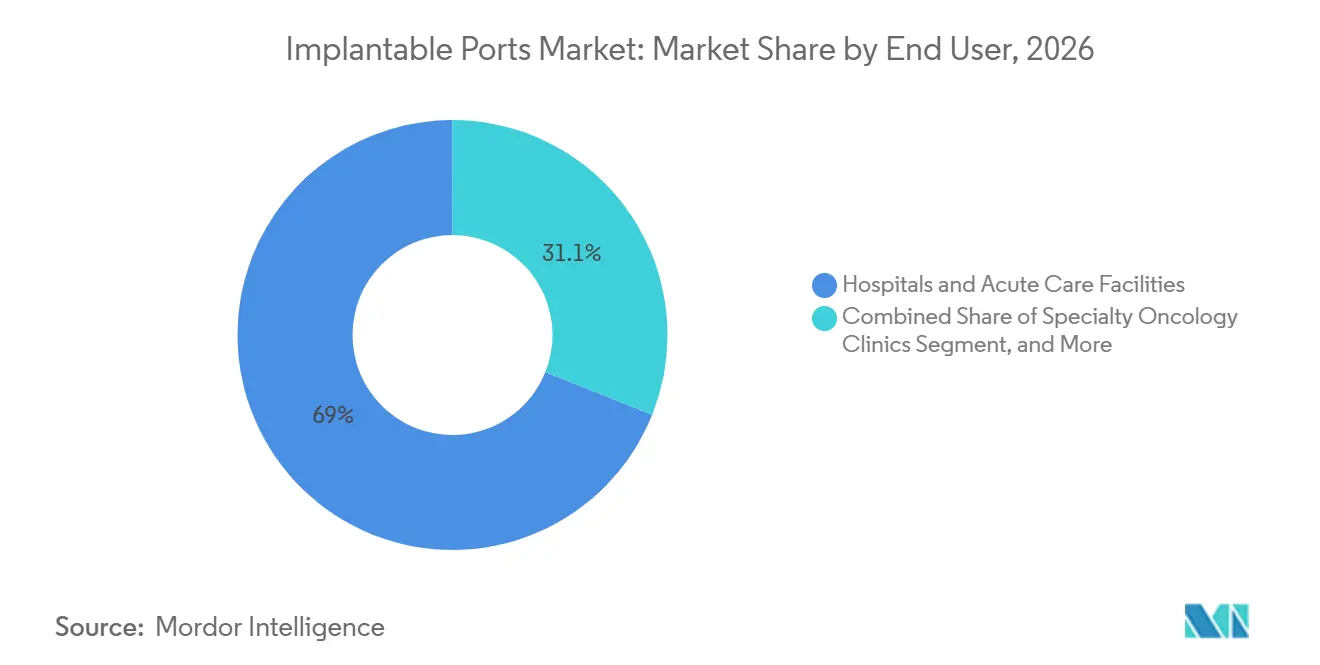
- By end user, Hospitals and Acute Care Facilities held 68.95% of revenue in 2026, while Specialty Oncology Clinics are forecast to grow at a CAGR of 11.76% through 2032 in the implantable port market.
- By geography, North America commanded 38.26% of the implantable port market in 2026; Asia-Pacific is forecast to register a 12.63% CAGR through 2032.
Note: Market numbers in this report are based on Mordor Intelligence's proprietary estimation framework, which combines nine months of actuals with Q4 projections for base year 2026.
Market Trends and Insights
Drivers Impact Analysis of Implantable Ports Market*
| Driver | (~) % Impact on CAGR Forecast | Geographic Relevance | Impact Timeline |
|---|---|---|---|
| Rising Cancer Incidence and Chemotherapy Administration | +2.6% | Global, with concentrated gains in Asia-Pacific and North America | Long term (≥ 4 years) |
| Growing Geriatric and Chronic-Disease Treatment Burden | +1.7% | Global, with the strongest need in North America, Europe, and Japan | Long term (≥ 4 years) |
| Preference for Long-Term Fully Implanted Vascular Access | +1.4% | North America, Europe, and core Asia-Pacific markets | Medium term (2-4 years) |
| Expansion of Outpatient and Home-Based Infusion Therapy | +1.3% | North America, with spillover to Europe and Asia-Pacific | Medium term (2-4 years) |
| Port Standardization in Pediatric and Difficult-Access Care | +0.6% | North America, Europe, Japan, and Australia | Medium term (2-4 years) |
| Differentiation Through Antithrombogenic and Antimicrobial Materials | +0.7% | Global, with early gains in Europe and North America | Short term (≤ 2 years) |
| Source: Mordor Intelligence | |||
Rising Cancer Incidence and Chemotherapy Administration
The implantable ports market is closely linked to the rising number of patients receiving systemic cancer therapy. IARC reported 20.6 million new cancer cases worldwide in 2024, with lung, breast, and colorectal cancers accounting for the largest portions of diagnosed disease.[1] A 2026 analysis covering 17 cancers across 186 countries estimated 13.58 million diagnosed cases in 2025 and projected 19.32 million by 2050.[2] Growth is expected to be strongest in low- and middle-income countries, where access to diagnosis and systemic treatment is widening. As treatment regimens involve repeated cycles, clinicians need access devices that support dependable drug delivery without repeated peripheral needle placement. The implantable ports market, therefore, benefits as oncology systems in Asia and Latin America add capacity. These conditions also create an opening for domestic manufacturers that can offer cost-competitive devices and establish relationships with local cancer centers.
Growing Geriatric and Chronic-Disease Treatment Burden
The aging population adds patients who often require prolonged intravenous nutrition, antibiotics, transfusions, or cancer treatment. A 2026 study of older adults receiving long-term total parenteral nutrition found that implanted central venous access ports had a median dwell time of 305 days.[3] The same study associated non-tunneled central venous catheters with higher mortality than implanted ports in the study population. Older patients may need vascular access over a longer period because several conditions can be managed at the same time. Osteomyelitis, inflammatory bowel disease, and home parenteral nutrition extend use beyond oncology. The implantable ports market also gains from recurring demand for access needles, flush kits, and dressing products during the device life cycle. This favors manufacturers that can provide both the implanted device and the supplies used to maintain it.
Increasing Preference for Long-Term Fully Implanted Vascular Access
The implantable ports market benefits when treatment plans require central access for several months. A 2025 study of 80 chemotherapy patients reported a 7.5% complication rate for totally implantable venous access ports and a 25% rate for PICCs. The study also reported lower 6-month maintenance costs and higher chemotherapy completion rates in the port group. A 2026 review found that totally implantable ports become cost-effective compared with external catheters after 6 months and offer stronger outcomes beyond 12 months. The Infusion Nurses Society identified anticipated therapy lasting 3 months or longer as a point at which port use should be considered. Hospitals can use this clinical guidance when selecting devices for patients with known multi-cycle treatment schedules. Demand is likely to favor devices with a clear record of durability, easy maintenance, and predictable placement procedures.
Expansion of Outpatient and Home-Based Infusion Therapy
The implantable ports market is increasingly tied to care models that move infusion therapy beyond inpatient hospital units. Guidance from the Infusion Nurses Society states that ports can tolerate flush intervals of up to 3 months. This interval can make the device more workable for patients who have less frequent contact with hospital staff. Ports can support home chemotherapy, long-term parenteral nutrition, and outpatient antibiotic treatment when clinical teams establish suitable maintenance processes. The move to ambulatory care also shifts more treatment activity to specialty clinics, home nursing providers, and outpatient infusion suites. For suppliers, this creates demand for devices that are straightforward to access and for consumables that support safe home care. The commercial value of each placement can therefore extend beyond the initial procedure through repeated maintenance activity.
Restraints Impact Analysis of Implantable Ports Market*
| Restraint | (~) % Impact on CAGR Forecast | Geographic Relevance | Impact Timeline |
|---|---|---|---|
| Port- and Catheter-Related Infection and Thrombosis | -1.1% | Global, with the highest risk where maintenance protocols are fragmented | Long term (≥ 4 years) |
| Surgical Implantation Cost and Procedure Complexity | -0.9% | Most acute in Asia-Pacific excluding Japan, the Middle East and Africa, and South America | Medium term (2-4 years) |
| Fragmented Maintenance Protocols and Home-Care Capability Gaps | -0.7% | Global, with severe gaps in rural Asia-Pacific, the Middle East and Africa, and South America | Long term (≥ 4 years) |
| Competition From PICCs and External Catheters | -0.8% | Developing markets and price-sensitive hospital systems globally | Short term (≤ 2 years) |
| Source: Mordor Intelligence | |||
Port- and Catheter-Related Infection and Thrombosis
Infection and thrombosis continue to limit adoption where port placement and maintenance practices are inconsistent. The supplied research states that central line-associated bloodstream infection affects 3% to 10% of port users.[4] A 2025 retrospective study of 867 patients reported an overall bloodstream infection incidence of 13.5% among port users. Lipid emulsion administration and inflammatory bowel disease were independent risk factors in that study. A separate 2025 study reported that an artificial intelligence-based model could help identify patients at higher risk of totally implantable venous access device infection. The implantable ports market consequently places greater value on antimicrobial coatings, antithrombogenic materials, and institutional infection-control practices. Commodity suppliers may find it harder to compete when hospital procurement teams require evidence that a device can support lower complication risk.
Surgical Implantation Cost and Procedure Complexity
Implantable port placement requires a minor surgical procedure, unlike PICC placement at the bedside. Facility, anesthesia, specialist, imaging, and procedural costs can make the initial expense higher than that of external catheter options. This is a substantial limitation in price-sensitive hospitals in smaller Asia-Pacific cities, public hospitals in the Middle East, and public oncology networks in South America. The 2026 clinical review reported ultrasound-guided brachiocephalic vein access success rates of 92.5% to 98.5% in experienced hands. Achieving these outcomes requires ultrasound equipment and trained teams, which are not available in every hospital. The implantable ports market depends on workforce development and procedural capacity as well as device pricing. Lower device prices alone are unlikely to overcome barriers in under-equipped settings.
*Our forecasts treat driver/restraint impacts as directional, not additive. The impact forecasts reflect baseline growth, mix effects, and variable interactions.
Implantable Ports Market Segment Analysis
By Product Type:
Double-Lumen Ports Gain Use in Complex Oncology ProtocolsSingle-Lumen Implantable Ports held 68.93% of 2026 revenue, giving this format the largest implantable ports market share within the product type segmentation. Their position reflects clinical familiarity and wide use in standard chemotherapy and total parenteral nutrition protocols. Hospitals also favor the format because placement is less costly than for dual-lumen alternatives. Single-lumen designs remain suitable when a patient needs one treatment stream at a time. This makes them practical for large public hospital procurement programs. Their established clinical use supports continued demand through 2031. The segment also benefits from staff familiarity with access, flushing, and routine maintenance. Suppliers with dependable standard products can remain relevant even as more specialized formats grow.
Double-Lumen Ports are forecast to grow at a CAGR of 9.89% through 2032. Growth is associated with complex hematologic malignancy treatment that requires blood product transfusion and medication delivery during the same clinical session. Two access channels can reduce the need for separate vascular access procedures. This can be valuable where multi-drug regimens are administered under time constraints. The other category includes valved ports with built-in anti-reflux features. These products are gaining attention in home infusion settings where reduced maintenance needs can have clinical and economic value. ECG-guided intracavitary tip confirmation is also emerging as a radiation-free alternative to fluoroscopy. The approach may widen placement options for ambulatory oncology centers that do not have interventional radiology infrastructure.

By Port Type:
Power-Injectable Formats Support Oncology Imaging WorkflowsStandard implantable ports represented 48.25% of 2026 revenue, making them the largest format in the implantable Ports market size for port type. They are widely used in hospital oncology and nutrition programs. Standard designs serve patients who need dependable long-duration vascular access but do not require high-pressure contrast injection. Their broad availability supports use across health systems with different levels of procedural capacity. The format remains the routine choice for many chemotherapy administrations. Procurement teams can also evaluate standard products on durability, ease of placement, and maintenance requirements. This preserves their role in both mature and developing healthcare markets. Cost sensitivity is likely to sustain demand for this established option.
Power-Injectable implantable ports are forecast to grow at a CAGR of 10.35% through 2032. These ports can support high-pressure contrast injection of up to 5 mL per second through a standard Huber needle. This can avoid a separate intravenous access step during contrast-enhanced CT imaging. The functionality is relevant because CT is used for tumor staging and response assessment. Low-profile versions can be useful for patients with limited subcutaneous tissue. MRI-compatible ports serve a separate group of long-term surveillance and pediatric oncology patients. The supplied RD cited 2025 FDA clearances for updated power-injectable and low-profile product families. These developments indicate continued competition around imaging compatibility and broader use across oncology workflows.
By Material:
Silicone Gains Attention for Long-Term UsePolyurethane and Polymer materials held 58.17% of 2026 revenue and formed the largest material category. Their position in the implantable ports market is linked to durability, radiopacity, and cost-effectiveness. These attributes are important in high-volume institutional purchasing. Polymer-based products can meet routine clinical needs across oncology and nutrition programs. Their established manufacturing base also supports broad product availability. Hospitals using standardized procurement processes can select these materials for predictable performance and controlled costs. The category is therefore likely to retain a strong role in standard port placements. Material choice, however, increasingly depends on the intended duration of therapy and patient needs.
Silicone is forecast to grow at a CAGR of 10.82% through 2032. The material is favored in pediatric care because softness can reduce tissue irritation. It is also relevant for adults expected to use a port for more than 24 months. The supplied research associates silicone with lower thrombogenicity, fewer occlusions, and lower infection risk in long-term use. Silicone catheters are also used in power-injectable designs with titanium housings. This enables manufacturers to combine material characteristics with imaging-related product features. Titanium retains a premium role in Europe, where MRI compatibility and structural longevity are important purchasing considerations. EU requirements for ongoing clinical follow-up of Class IIb implantable devices also favor suppliers with mature evidence and post-market capabilities.
By Application:
Hematology and Antibiotic Care Extend Port UseChemotherapy and Oncology Delivery accounted for 56.23% of 2026 revenue, the largest implantable ports market share by application. The segment is supported by the global volume of cancer treatment and the need for central access during multi-cycle systemic therapy. Repeated administration of chemotherapy, targeted agents, and immunotherapy can place pressure on peripheral veins. Ports can provide a stable route for treatment schedules that extend over several months. This use case remains central to hospital purchasing decisions. Rising cancer incidence preserves a sizable patient base for oncology-related placements. The application is likely to remain the main source of installed port volume through the forecast period. It also drives demand for compatible access needles and maintenance supplies.
Blood Transfusion and Fluid Resuscitation is forecast to grow at a CAGR of 11.44% through 2032. Hematologic malignancies can require transfusion support alongside drug administration. In these settings, existing oncology port infrastructure may be used without further implantation procedures. This expands the clinical value of devices that can support more than one treatment need. Total parenteral nutrition remains a stable application for patients needing long-duration nutritional support. A 2026 study reported a median implanted-port dwell time of 305 days in older patients receiving parenteral nutrition. Long-term antibiotic and anti-infective therapy also supports demand when osteomyelitis, endocarditis, or complex soft-tissue infection requires treatment longer than 3 months. This broadens the Implantable ports market beyond cancer care while retaining the importance of specialized follow-up.
By End User:
Specialty Oncology Clinics Advance Ambulatory CareHospitals and Acute Care Facilities held 68.95% of 2026 revenue, the largest end-user category. Initial placement often occurs in hospitals because the procedure requires specialist involvement and supporting infrastructure. Hospitals also manage many patients who have newly diagnosed cancer or complex medical conditions. This gives them a leading role in device selection and procurement. Acute care facilities can handle imaging, surgical access, complication management, and treatment initiation in one setting. The implantable ports market remains dependent on this institutional base. Hospital demand is particularly important for standard port formats and higher-acuity oncology patients. Their share reflects the continuing central role of hospitals in initial implantation.
Specialty Oncology Clinics are forecast to grow at a CAGR of 11.76% through 2032. Infusion care is moving from hospital wards toward dedicated day-case oncology units. Clinics increasingly manage port maintenance, Huber needle access, and chemotherapy delivery over repeated treatment cycles. This gives them a growing role in device choice and consumable purchasing. The setting can provide a focused service model for patients who do not require inpatient care. Ambulatory Surgical Centers are also gaining a larger role in initial placement in North America. Lower facility fees can make these sites attractive compared with hospital outpatient departments. Home health nursing providers and outpatient infusion suites form the remaining end-user category and support the continuing expansion of nonhospital infusion care.
Geography Analysis
North America Implantable Ports Market
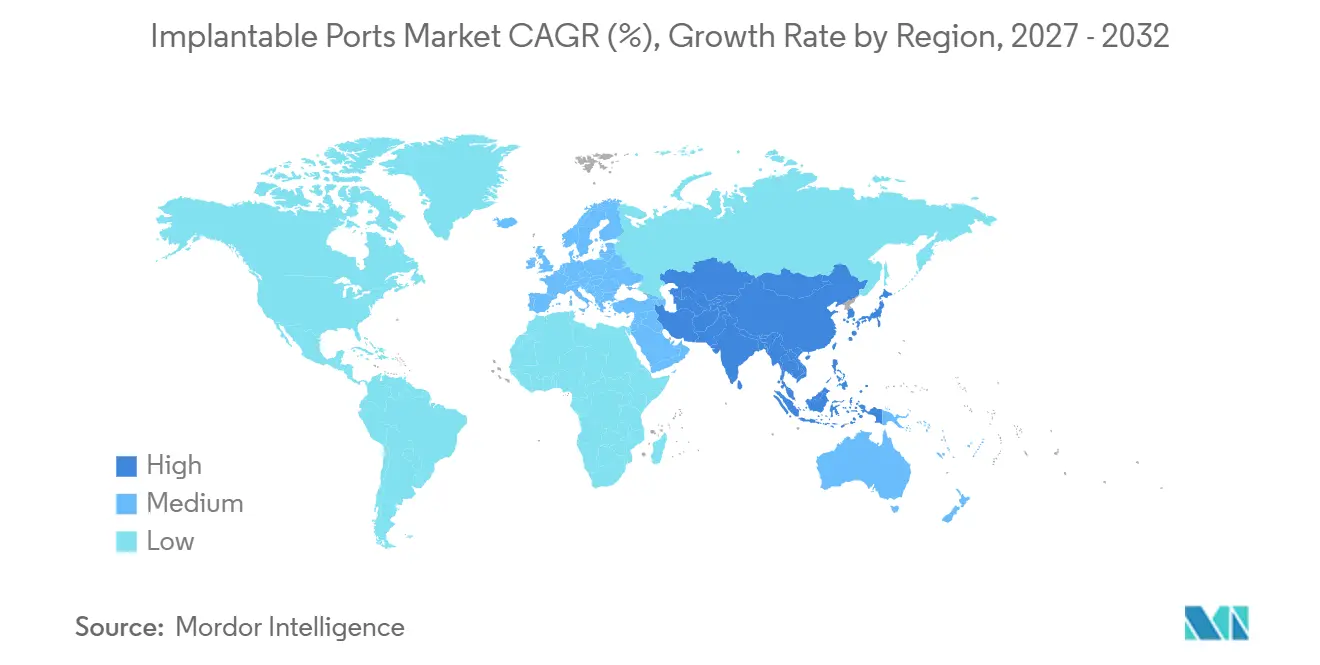
North America held 38.26% of global revenue in 2026, which gave the region the leading implantable ports market share. Mature oncology infrastructure and broad outpatient reimbursement supported demand for implanted vascular access. The United States led the regional use of advanced power-injectable and low-profile formats. Expansion of home-based anti-infective therapy reimbursement is shifting some placements from inpatient care to community settings. This favors devices suited to ongoing outpatient maintenance. Providers also face closer scrutiny of catheter material and clinical evidence. In 2026, AngioDynamics reported litigation related to certain port catheter materials in its fiscal-year results. The issue may increase attention to coated products and documented post-market performance.
Europe Implantable Ports Market
Europe is the second-largest regional area in the supply of implantable ports. Germany, France, the United Kingdom, and Italy form the main demand base. France’s day-case oncology network supports the use of ports for ambulatory chemotherapy. Germany and the United Kingdom add demand through aging populations and outpatient antibiotic treatment. B. Braun reported EUR 584 million in research and development expenditure for 2025, an 11% increase from the prior year. The investment includes connected infusion and vascular access innovation. EU Medical Device Regulation requirements for Class IIb implantable devices require sustained clinical follow-up. This increases the evidence burden for new entrants and supports established manufacturers with existing clinical data systems.
APAC, MEA and South America Implantable Ports Market
Asia-Pacific is forecast to grow at a CAGR of 12.63% through 2032, the highest regional rate in the implantable ports market. China is the largest regional country and recorded 342,000 port implantation procedures in 2026. Oncology indications accounted for 68.5% of these placements. Demand was concentrated in tier-1 and tier-2 hospital oncology departments. Volume-based procurement policies are reducing prices for standard ports and supporting local manufacturers with domestic supply chains. India has strong growth potential as private hospital oncology capacity expands and public initiatives improve cancer treatment access in tier-2 and tier-3 cities. The Middle East, Africa, and South America add demand for cost-effective standard devices. Limited reimbursement and shortages of trained interventional teams restrict wider adoption of premium MRI-compatible and power-injectable formats outside leading private institutions.
Competitive Landscape
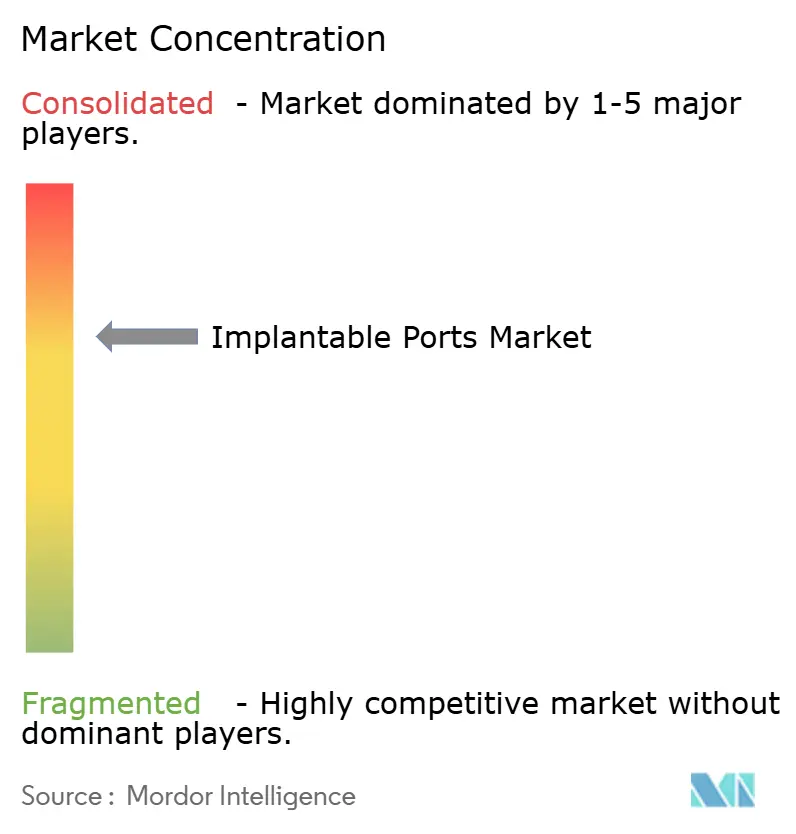
The implantable ports market has a moderately consolidated premium tier. Becton, Dickinson and Company, AngioDynamics Inc., B. Braun Melsungen AG, ICU Medical Inc., and Teleflex Incorporated compete through materials, product clearances, and clinical performance data. Their portfolios address demand for power injection, MRI compatibility, low-profile placement, and antimicrobial or antithrombogenic features. These capabilities are important when hospitals use formal product evaluations. Premium suppliers can compete on documented safety and workflow fit instead of price alone. The supplier group also benefits from established clinical relationships. The implantable ports market remains more fragmented outside this premium group. Regional manufacturers and Asian suppliers compete strongly in tenders that place more weight on price.
Linhua Medical, Nipro Corporation, Terumo Corporation, Poly Medicure Limited, PFM Medical AG, and PakuMed medical products GmbH apply price pressure in Asia-Pacific, the Middle East and Africa, and South America. Standardized procurement systems create room for suppliers that can maintain quality while lowering delivered costs. Antithrombogenic polymer coatings, silver-ion antimicrobial surfaces, and closed-system access components are the main forms of premium differentiation. The supplied RD noted that BD received 2 FDA 510(k) clearances in 2025 for updated port products. The reported product activity reinforced BD’s coverage of power-injectable, low-profile, and MRI-compatible categories. AngioDynamics completed the sale of its PICC and Midline portfolios to Spectrum Vascular for up to USD 45 million in February 2024. The transaction focused the company on higher-margin interventional medical technology platforms and reduced its direct exposure to the PICC category.
Pediatric ports remain underserved because the needs of infants and children differ from those of adult patients. A 2024 study noted catheter-related thrombotic obstruction rates of 7% to 50% in pediatric patients. The supplied RD found no major manufacturer had committed to age-specific size ranges or dedicated randomized pediatric trials. Home-care supplies such as flush kits, access needles, and remote monitoring also remain an adjacent opportunity. A 2025 study indicated that artificial intelligence-based infection prediction could support post-implant monitoring. ICU Medical’s February 2025 ProPort recall related to housing separation risk created an opportunity for competitors with strong quality records. The market concentration score is 5 of 10 because the premium tier has several established competitors, while regional suppliers create substantial fragmentation across price-sensitive markets.
Implantable Ports Industry Leaders
-
AngioDynamics, Inc.
-
B. Braun Melsungen AG
-
Baxter International Inc.
-
Becton, Dickinson and Company
-
Fresenius SE & Co. KGaA
- *Disclaimer: Major Players sorted in no particular order
Implantable Ports Market Companies Covered in this Report
- AngioDynamics
- Argon Medical Devices
- B. Braun
- Baxter
- Beckton Dickinson
- Cook Incorporated
- Districlass Médical
- Fresenius
- ICU Medical
- Linhua Medical
- Medical Components Inc.
- Medtronic
- Merit Medical Systems
- Nipro
- PakuMed medical products GmbH
- PFM Medical AG
- Poly Medicure
- Sophysa SA
- Teleflex
- Terumo
- Vygon
Recent Industry Developments in Implantable Ports Market
- June 2026: PorTal Access announced U.S. FDA clearance for its FLEXI-PORT family of implantable vascular access ports, designed for long-term vascular access in adult and pediatric patients. The power-injectable implantable port system can be implanted in either the chest or arm and is intended to improve procedural flexibility, patient comfort, and clinical workflow. Following clearance, the company initiated commercialization and clinician training efforts across the United States.
- April 2025: Becton, Dickinson and Company commercially launched the BD CentroVena One Insertion System in the United States. The company described it as the first all-in-one central venous catheter insertion device accepted into the FDA Safer Technologies Program. Becton, Dickinson and Company stated that the system reduced insertion steps by 30% and procedure time by 50% in a simulation study involving 49 participants.
- September 2025: AngioDynamics Inc. reported that 218 federal lawsuits relating to certain port catheter materials had been consolidated in the Southern District of California. The company’s 2026 fiscal-year results also noted that 18 cases were selected for the initial bellwether discovery pool.
Global Implantable Ports Market Report Scope
As per the scope of the report, implantable ports are medical devices surgically placed beneath the skin and connected to a catheter that enters a central vein, providing long-term vascular access. They are commonly used for the repeated administration of medications, chemotherapy, intravenous fluids, blood products, and for blood sampling. Implantable ports help reduce the need for frequent needle insertions, improve patient comfort, and lower the risk of vein damage during prolonged treatment. These devices are widely utilized in oncology, hematology, and other chronic care settings requiring long-term intravenous therapy.
The implantable ports market is segmented by product type, port type, material, application, end user, and geography. By product type, the market is segmented into single-lumen implantable ports, double-lumen implantable ports, and others. By port type, the market is segmented into standard implantable ports, power-injectable implantable ports, MRI-compatible implantable ports, and others. By material, the market is segmented into titanium, polyurethane, polymer, silicone, and others. By application, the market is segmented into chemotherapy and oncology delivery, blood transfusion and fluid resuscitation, total parenteral nutrition, long-term antibiotic and anti-infective therapy, and others. By end user, the market is segmented into hospitals and acute care facilities, ambulatory surgical centers, specialty oncology clinics, and others. The geography segment is further divided into North America, Europe, Asia-Pacific, the Middle East and Africa, and South America. The report also covers the estimated market sizes and trends for 17 countries across major regions globally. The report offers the market size and forecasts in value (USD) for the above segments.
Segmentation Overview
| Single-Lumen Implantable Ports |
| Double-Lumen Implantable Ports |
| Others |
| Standard Implantable Ports |
| Power-Injectable Implantable Ports |
| MRI-Compatible Implantable Ports |
| Others |
| Titanium |
| Polyurethane and Polymer |
| Silicone |
| Others |
| Chemotherapy and Oncology Delivery |
| Blood Transfusion and Fluid Resuscitation |
| Total Parenteral Nutrition |
| Long-Term Antibiotic and Anti-Infective Therapy |
| Others |
| Hospitals and Acute Care Facilities |
| Ambulatory Surgical Centers |
| Specialty Oncology Clinics |
| Others |
| North America | United States |
| Canada | |
| Mexico | |
| Europe | Germany |
| United Kingdom | |
| France | |
| Italy | |
| Spain | |
| Rest of Europe | |
| Asia-Pacific | China |
| India | |
| Japan | |
| Australia | |
| South Korea | |
| Rest of Asia-Pacific | |
| Middle East and Africa | GCC |
| South Africa | |
| Rest of Middle East and Africa | |
| South America | Brazil |
| Argentina | |
| Rest of South America |
| By Product Type | Single-Lumen Implantable Ports | |
| Double-Lumen Implantable Ports | ||
| Others | ||
| By Port Type | Standard Implantable Ports | |
| Power-Injectable Implantable Ports | ||
| MRI-Compatible Implantable Ports | ||
| Others | ||
| By Material | Titanium | |
| Polyurethane and Polymer | ||
| Silicone | ||
| Others | ||
| By Application | Chemotherapy and Oncology Delivery | |
| Blood Transfusion and Fluid Resuscitation | ||
| Total Parenteral Nutrition | ||
| Long-Term Antibiotic and Anti-Infective Therapy | ||
| Others | ||
| By End User | Hospitals and Acute Care Facilities | |
| Ambulatory Surgical Centers | ||
| Specialty Oncology Clinics | ||
| Others | ||
| By Geography | North America | United States |
| Canada | ||
| Mexico | ||
| Europe | Germany | |
| United Kingdom | ||
| France | ||
| Italy | ||
| Spain | ||
| Rest of Europe | ||
| Asia-Pacific | China | |
| India | ||
| Japan | ||
| Australia | ||
| South Korea | ||
| Rest of Asia-Pacific | ||
| Middle East and Africa | GCC | |
| South Africa | ||
| Rest of Middle East and Africa | ||
| South America | Brazil | |
| Argentina | ||
| Rest of South America | ||
Key Questions Answered in the Report
What is driving demand for implantable ports?
Cancer treatment volume, longer therapy courses, aging patients, and expansion of outpatient infusion care support demand.
What is the Implantable ports market size through 2032?
The market is projected to reach USD 2.04 billion by 2032, growing at a CAGR of 9.53% from 2027.
Which implantable port product type leads revenue?
Single-Lumen Implantable Ports led product type revenue with a 68.93% share in 2026.
Which implantable port application is growing fastest?
Blood Transfusion and Fluid Resuscitation is forecast to grow at a CAGR of 11.44% through 2032.
Which region is expanding fastest for implantable ports?
Asia-Pacific is forecast to grow at a CAGR of 12.63% through 2032, supported by rising treatment volumes.