
Hydrogen Bromide Market Size and Share
Market Overview
| Study Period | 2022 - 2032 |
|---|---|
| Market Size (2027) | USD 3.48 Billion |
| Market Size (2032) | USD 4.55 Billion |
| Growth Rate (2027 - 2032) | 5.54 % |
| Fastest Growing Market | Asia-Pacific |
| Largest Market | Asia-Pacific |
| Market Concentration | High |
Major Players *Disclaimer: Major Players sorted in no particular order Image © Mordor Intelligence. Reuse requires attribution under CC BY 4.0. | |
Hydrogen Bromide Market Analysis by Mordor Intelligence
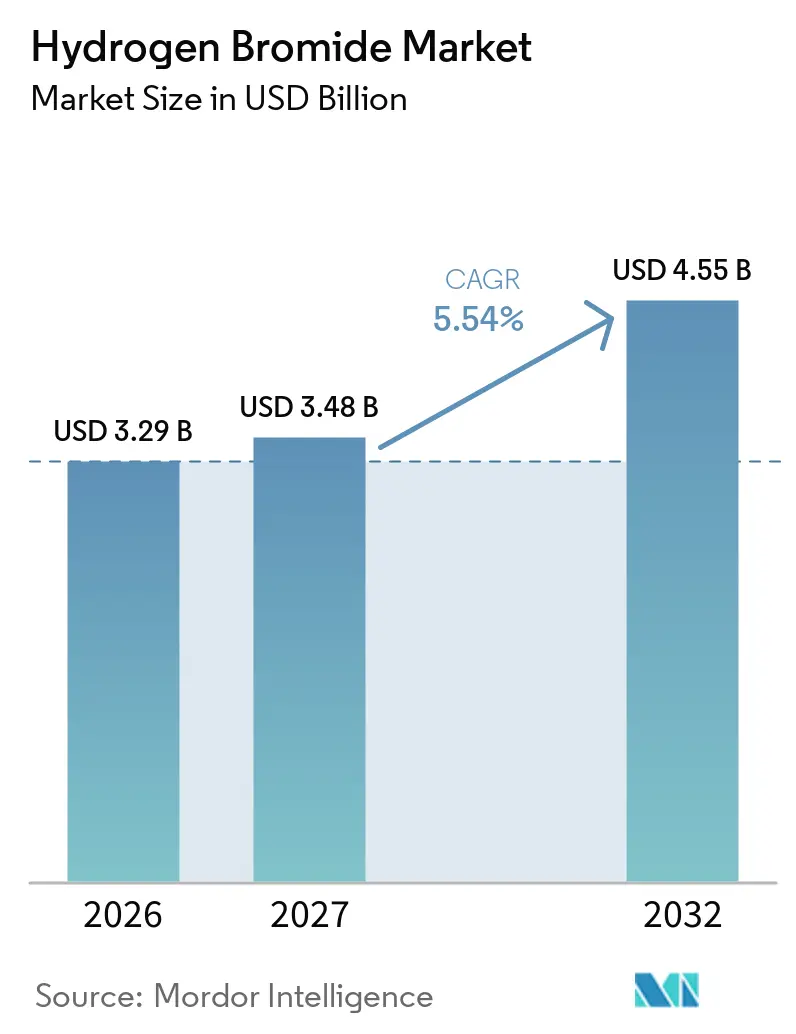
The Hydrogen Bromide Market size was valued at USD 3.29 billion in 2026 and is estimated to grow from USD 3.48 billion in 2027 to reach USD 4.55 billion by 2032, at a CAGR of 5.54% during the forecast period (2027-2032). Semiconductor fabrication is a primary driver of demand for hydrogen bromide, as smaller process nodes require selective anisotropic etching and consume more HBr per wafer. The market also draws demand from chemical synthesis, catalysis, oil and gas completion fluids, and pharmaceutical manufacturing. Advanced fabs increasingly require 5N- and 6N-purity material, favoring suppliers that can complete lengthy customer qualification programs. Fab localization in North America and Europe is shifting demand toward local specialty-gas infrastructure, while Asia-Pacific remains the largest manufacturing center. Supply remains concentrated at the electronic-grade tier, allowing qualified producers to retain pricing power even as competition in industrial-grade material increases.
Key Report Takeaways
- By product form, anhydrous hydrogen bromide led with 65.13% of market share in 2026 and is projected to grow at a 6.13% CAGR through 2032.
- By application, chemical synthesis and catalysis accounted for 35.48% of the market share in 2026, while oil and gas are projected to grow at a CAGR of 6.78% through 2032.
- By geography, Asia-Pacific held 41.73% of the market share in 2026 and is projected to expand at a 6.54% CAGR through 2032.
Note: Market numbers in this report are based on Mordor Intelligence's proprietary estimation framework, which combines nine months of actuals with Q4 projections for base year 2026.
Global Hydrogen Bromide Market Trends and Insights
Drivers Impact Analysis*
| Drivers | (~) % Impact on CAGR Forecast | Geographic Relevance | Impact Timeline |
|---|---|---|---|
| Semiconductor Advanced-Node Etch Demand | +1.5% | Asia-Pacific core, including Taiwan, South Korea, China, and Japan, with spillover to North America | Short term (≤ 2 years) |
| Pharmaceutical API and Salt-Formation Demand | +0.7% | India, China, Europe, including Germany, France, and the United Kingdom | Medium term (2-4 years) |
| High-Purity HBr Demand from Fab Localization | +0.9% | North America and Europe | Medium term (2-4 years) |
| Hydrogen-Bromine Flow-Battery Pilots | +0.5% | Global, including the United States, Europe, and emerging Asia-Pacific markets | Long term (≥ 4 years) |
| Precision Etch Requirements in 3D NAND and DRAM | +0.8% | Asia-Pacific core with spillover to North America | Short term (≤ 2 years) |
| Source: Mordor Intelligence | |||
Semiconductor Advanced-Node Etch Demand
Semiconductor fabrication represented 62% of global HBr consumption, and its demand depends more on node migration than on total wafer output. The hydrogen bromide market benefits when foundries move to 3 nm and 2 nm processes because each node requires more etch steps, tighter control of gate structures, and stable process chemistry. Per-wafer consumption rises by an estimated 15-20% with each node generation as selectivity requirements increase and wafer recipes become more demanding. HBr supports bromide-based passivation that protects sidewalls in polysilicon gate etching at sub-5 nm dimensions, where precision is essential to preserve intended feature shapes. Fabs require 5N or higher purity grades, which limits the number of suppliers that can meet qualification requirements and maintain consistent material quality. Samsung, SK hynix, TSMC, and Micron together accounted for more than half of semiconductor-grade consumption, supporting multi-year supply contracts and recurring demand for qualified producers.
Pharmaceutical API and Salt-Formation Demand
Hydrogen bromide is used as a bromination agent, acid catalyst, and salt-forming reagent for pharmaceutical intermediates. Demand spans central nervous system drugs, antihistamines, antiviral compounds, and oncology intermediates, linking it to several distinct drug-development and generic manufacturing programs. Continuous-flow chemistry can lower HBr use per kilogram of active pharmaceutical ingredient, but more complex brominated small-molecule pipelines can offset those efficiency gains in total output. In 2025, India's pharmaceutical intermediate sector used 35-45% of the domestic HBr supply for pharmaceutical applications. Buyers increasingly value documented material, reliable batch records, and dependable chain-of-custody controls, which can support premium-grade contracts over spot purchases. Requirements under U.S. Current Good Manufacturing Practice (GMP) rules and European GMP guidance favor suppliers with established documentation and quality systems. This segment of the hydrogen bromide market, therefore, depends on pharmaceutical output, regulatory compliance, and the ability to provide consistently qualified material.
High-Purity HBr Demand from Fab Localization
New fab projects are creating demand for high-purity HBr outside established Asia-Pacific supply clusters. The U.S. Creating Helpful Incentives to Produce Semiconductors (CHIPS) Program Office is deploying USD 39 billion in manufacturing incentives to support domestic semiconductor production. SK hynix's West Lafayette project received up to USD 458 million in direct CHIPS funding and requires a local supply of specialty gases for advanced memory packaging operations. Air Liquide announced a USD 170 million investment in Indiana for two production units under a long-term supply agreement with SK hynix, with commissioning targeted for the end of 2028[1]. Qualification of ultra-high-purity HBr with a new fab customer can take 18-30 months, making early supply relationships an important competitive advantage, as a replacement supplier cannot immediately serve a qualified process. The hydrogen bromide market is seeing local demand growth, but suppliers also face large up-front investments in purification, storage, distribution, safety systems, and the capacity for uninterrupted delivery.
Hydrogen-Bromine Flow-Battery Pilots
Hydrogen-bromine flow batteries remain an emerging source of demand rather than a large commercial application. The Br₂/Br⁻ redox couple has an electrode potential of 1.08 V, and published work reported catholyte volumetric energy density above 200 Wh/L. These characteristics support interest in stationary energy storage applications where energy density and electrochemical performance are important. No large-scale system has reached commercial deployment, so this application has a longer adoption path than semiconductor and chemical uses. The hydrogen bromide market could gain a new source of demand if pilots progress into repeatable commercial projects with operating records that support broader deployment. For now, the application remains dependent on technical validation, system economics, project financing, and the buildout of storage projects.
Restraints Impact Analysis*
| Restraints | (~) % Impact on CAGR Forecast | Geographic Relevance | Impact Timeline |
|---|---|---|---|
| Hazardous Handling and Compliance Costs | -0.9% | Global, most acute in North America and Europe | Short term (≤ 2 years) |
| Substitution by Alternative Etch Chemistries | -0.6% | Asia-Pacific core and North America | Medium term (2-4 years) |
| Moisture-Induced Gas-System Corrosion | -0.3% | Global | Short term (≤ 2 years) |
| Source: Mordor Intelligence | |||
Hazardous Handling and Compliance Costs
Hydrogen bromide is classified as a Class 2.3 toxic gas under transport regulations, requiring users to maintain corrosion-resistant equipment, gas detection systems, trained personnel, and high-specification ventilation. Ultra-pure material may require Hastelloy rather than stainless steel cylinders, increasing storage and delivery costs. Facilities covered by OSHA's Process Safety Management standard are subject to extensive operational controls for highly hazardous chemicals[2]. Compliance costs exceeded 10% of end-user operating expenditure, and the 2025 penalty schedule allowed fines of up to USD 165,514 for willful violations. Transport requirements can add 2-4 weeks to lead times, complicating just-in-time supply to semiconductor sites and making inventory planning more critical. Customers in Southeast Asia and South America may face additional constraints due to less developed hazardous-materials logistics infrastructure. Encapsulated or on-site-generated alternatives can reduce bulk-storage risk, but their higher unit costs limit broad adoption.
Substitution by Alternative Etch Chemistries
Alternative etch chemistries impose targeted constraints on selected hydrogen bromide (HBr) applications. IBM Research reported that HFO-1234ze(E) can deliver better silicon dioxide etch performance and selectivity than legacy hydrofluorocarbon gases in dielectric etching. However, these materials address oxide and nitride etching rather than polysilicon gate etching, where HBr is most established. Chlorine-based gases can compete in polysilicon etching at older nodes, although sub-5 nm gate-all-around structures require HBr's selectivity and sidewall passivation. Research on CF₃I identifies a lower global warming potential option for high-aspect-ratio oxide etching, but not for silicon etching applications, where HBr remains important. The hydrogen bromide market faces greater substitution risk in pharmaceutical and agrochemical applications, where process redesign, continuous-flow intensification, or alternative bromination methods can reduce the amount used per unit of output.
*Our forecasts treat driver/restraint impacts as directional, not additive. The impact forecasts reflect baseline growth, mix effects, and variable interactions.
Segment Analysis
By Product Form: Anhydrous Grade Commands the Premium Semiconductor Tier
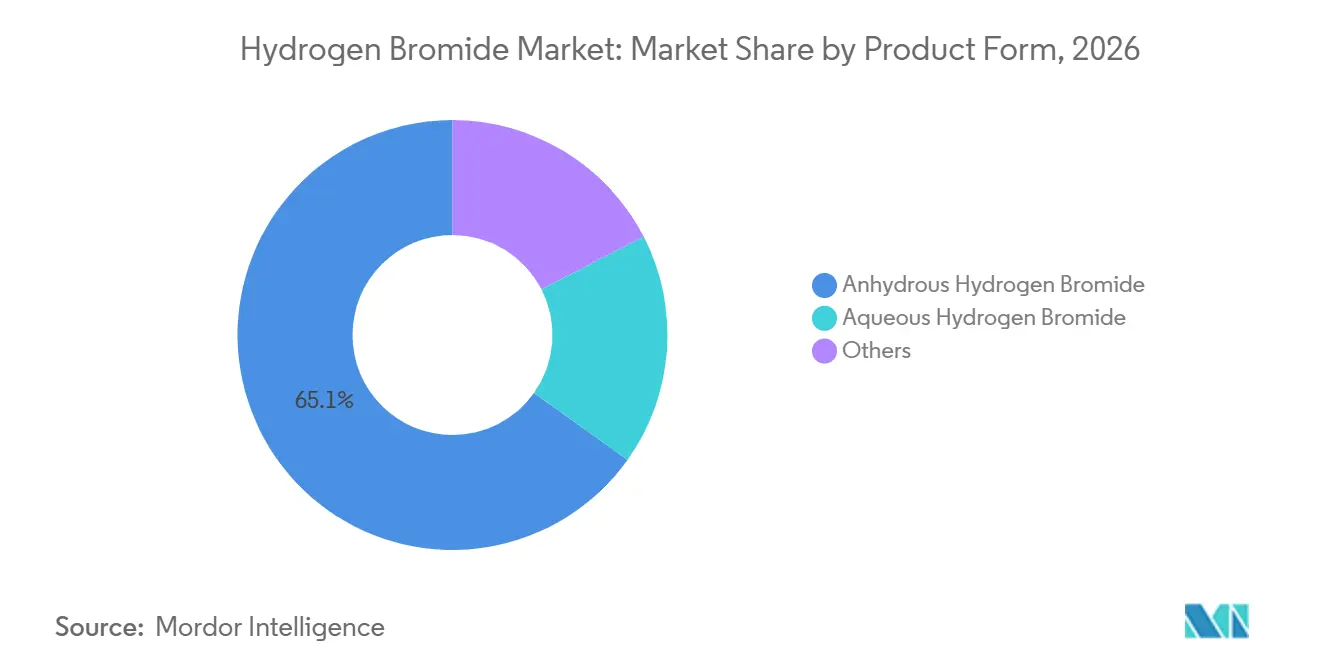
Anhydrous hydrogen bromide held 65.13% of the hydrogen bromide market share in 2026 and is projected to expand at a 6.13% CAGR through 2032. Its position reflects the requirement for dry-process etching gas in semiconductor manufacturing, where aqueous formulations cannot deliver moisture-free plasma chemistry. Migration to 3 nm and smaller nodes, along with additional etch steps in advanced NAND and DRAM, supports continued demand. Leading fabs require very low trace-metal impurities, with critical gate etch steps at sub-5 nm sites requiring 6N purity.
Aqueous hydrogen bromide, also known as hydrobromic acid, is used in pharmaceutical bromination, agrochemical synthesis, oil and gas completion-fluid formulation, and water treatment. Its supplier base is more fragmented, with Indian and Chinese producers applying cost pressure to established Western suppliers. Other delivery forms include encapsulated and stabilized HBr, which are gaining limited use where handling requirements make bulk anhydrous storage less suitable. These alternatives carry higher per-unit costs and remain in small quantities. The hydrogen bromide market continues to rely on anhydrous material in applications requiring advanced semiconductor process control.

By Application: Oil and Gas Records the Fastest Growth
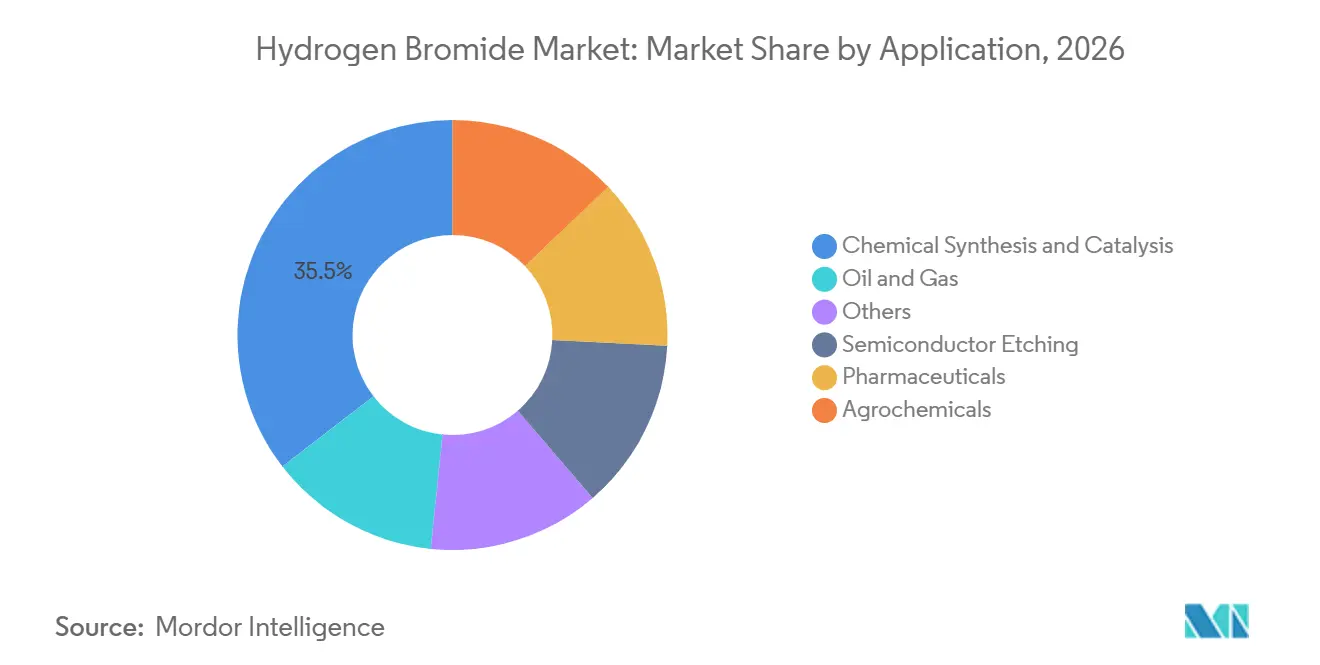
Chemical synthesis and catalysis accounted for 35.48% of the hydrogen bromide market size in 2026, while oil and gas is forecast to advance at a 6.78% CAGR through 2032. Chemical use includes pharmaceutical intermediates, specialty polymers, flame retardants, and agrochemicals, in which large quantities partly offset lower prices compared to electronic-grade materials. Oil and gas demand is linked to deepwater and high-temperature, high-pressure completions that use calcium bromide and zinc bromide clear brines derived from HBr feedstock.
Semiconductor etching has lower output than chemical synthesis but carries the highest unit margins and remains important for supplier positioning. Pharmaceutical and agrochemical applications have stable growth, as generic Active Pharmaceutical Ingredient (API) production in India and China requires bromination chemistry. Hydrogen-bromine flow batteries are an emerging application, but commercial deployment remains limited. The hydrogen bromide market has a broad range of applications, although semiconductor-grade uses impose the highest technical requirements. This combination gives suppliers a mix of quantity-led and value-led demand sources.
Geography Analysis
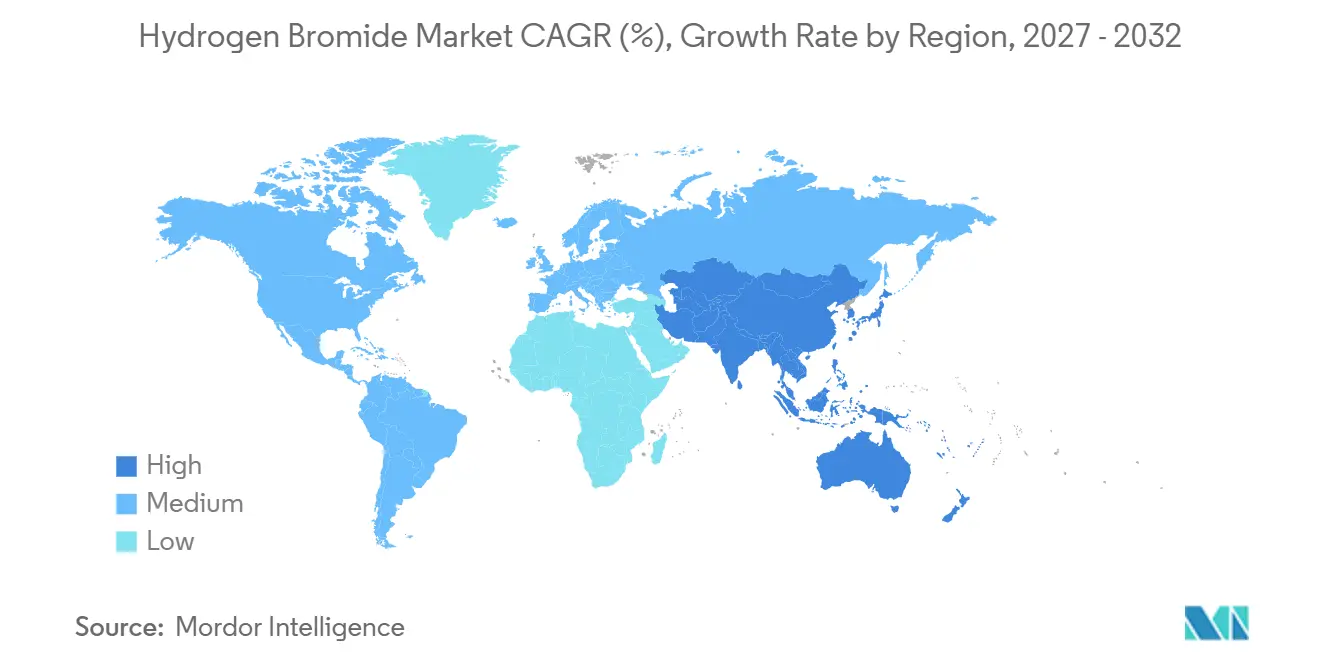
Asia-Pacific held 41.73% of the hydrogen bromide market share in 2026 and is projected to grow at a 6.54% CAGR through 2032. The region combines advanced logic manufacturing, memory production, and major pharmaceutical API capacity. Taiwan, South Korea, Japan, and China have a high concentration of advanced fabs, while India supports industrial-grade demand through its pharmaceutical manufacturing base. China's self-sufficiency in high-purity liquid HBr increased from below 40% to 65% between 2020 and 2025. However, China still relies on imports from Japan and Taiwan for 5N and 6N grades used in the most advanced nodes.
Planned 12-inch fab expansions in China support predictable demand for HBr. Japan remains an important center for purification, thanks to the specialty-gas capabilities of Resonac and ADEKA. India's Semiconductor Mission is attracting packaging and fabrication investments that could support semiconductor-grade demand later in the forecast period. The hydrogen bromide market in the region, therefore, combines established chip production with newer domestic supply initiatives.
North America held the second-largest geographic position in 2025. CHIPS Act-related fab construction is increasing the need for local high-purity gas supply, including at SK Hynix's Indiana project. Air Liquide's USD 170 million project in Indiana illustrates the co-located infrastructure required by these customers. Europe relies on pharmaceutical synthesis and specialty chemical catalysis, while the EU Chips Act may support semiconductor demand over a longer horizon. South America is driven by demand from Brazil's deepwater pre-salt oil and gas activity, while the Middle East and Africa remain important for bromine feedstock from Dead Sea brines. This geographic pattern leaves the hydrogen bromide market dependent on demand for Asian technology and on geographically concentrated upstream bromine resources.
Competitive Landscape
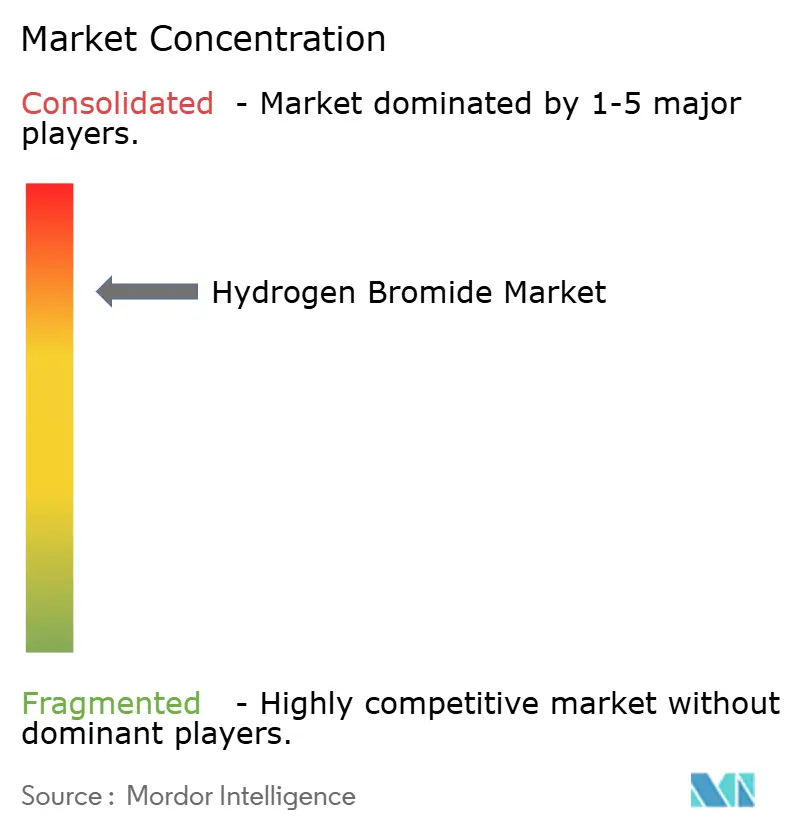
The hydrogen bromide market is highly consolidated. Competition in the electronic-grade segment centers on purity consistency, fab qualification, cylinder management, and delivery reliability rather than price. Qualification can take 18-30 months, and new purification facilities can require 2–3 years to build. These factors make established supply relationships difficult to replace.
Resonac's integrated position includes access to bromine feedstock, synthesis, and high-purity purification capabilities. Air Liquide's co-location strategy adds long-term supply infrastructure at customer sites. It's July 2026, Indiana investment provided 2 dedicated production units under a long-term contract with SK hynix. Linde's patent US12685052 covers low-pressure HBr plasma-etch process parameters for advanced gate structures. Such participation in the process can deepen supplier relationships with advanced fabs.
Industrial-grade competition is more intense because purity requirements are less restrictive. Indian producers, including Neogen Chemicals and Triveni Interchem, compete on cost, pharmaceutical documentation, and proximity to Active Pharmaceutical Ingredient (API) customers. Chinese suppliers, including Taihe Gas and Peric Special Gases, are pursuing purity upgrades to serve the lower end of semiconductor demand. China's high-purity liquid HBr capacity exceeded 12,000 metric tons annually in 2025, potentially narrowing the historic pricing advantages held by foreign suppliers. Emerging fab clusters in the U.S. Southeast and India present an opportunity for suppliers willing to build local capacity.
Hydrogen Bromide Industry Leaders
-
Resonac Holdings Corporation
-
Air Liquide
-
ADEKA CORPORATION
-
Linde PLC
-
Nippon Sanso Holdings Corporation
- *Disclaimer: Major Players sorted in no particular order
Recent Industry Developments
- August 2026: Gulf Resources, Inc., one of China's largest bromine producers, signed a cooperation agreement with Brazilian mining company Montes Verdes Participacoes Ltda. to establish a joint venture focused on Brazil's bromine and lithium mineral assets. The agreement guarantees at least USD 180 million in consolidated sales revenue in 2027 and a minimum 20% annual growth rate for five subsequent years, supporting non-Middle Eastern bromine feedstock supply for hydrogen bromide production.
- May 2026: TETRA Technologies' board conditionally approved the final investment decision for the Evergreen bromine production facility near Stamps, Arkansas, with approximately USD 220 million in remaining capital expenditures over two years. Phase 1, covering site preparation, power infrastructure, and bromine tower installation, was completed in December 2025. Full operations are expected by the end of 2027, with first production in early 2028, expanding domestic bromine supply for hydrogen bromide manufacturing.
Global Hydrogen Bromide Market Report Scope
Hydrogen bromide (HBr) is a colorless, pungent, non-flammable gas composed of one hydrogen atom and one bromine atom. It is highly soluble in water, forming hydrobromic acid, a strong, corrosive acid. HBr is widely used across various industries, including pharmaceuticals, chemical synthesis, and electronics, where it serves as a key intermediate in the production of brominated compounds and other specialty chemicals.
The hydrogen bromide market is segmented by product form, application, and geography. By product form, the market is segmented into anhydrous hydrogen bromide, aqueous hydrogen bromide, and others. By application, the market is segmented into semiconductor etching, pharmaceuticals, agrochemicals, chemical synthesis and catalysis, oil and gas, and others. The report also covers the market size and forecasts for hydrogen bromide in 15 countries across major regions. The market sizes and forecasts are provided in terms of value (USD).
| Anhydrous Hydrogen Bromide |
| Aqueous Hydrogen Bromide |
| Others |
| Semiconductor Etching |
| Pharmaceuticals |
| Agrochemicals |
| Chemical Synthesis and Catalysis |
| Oil and Gas |
| Others |
| Asia-Pacific | China |
| India | |
| Japan | |
| South Korea | |
| ASEAN Countries | |
| Rest of Asia-Pacific | |
| North America | United States |
| Canada | |
| Mexico | |
| Europe | Germany |
| United Kingdom | |
| France | |
| Italy | |
| NORDIC Countries | |
| Rest of Europe | |
| South America | Brazil |
| Argentina | |
| Rest of South America | |
| Middle East and Africa | Saudi Arabia |
| South Africa | |
| Rest of Middle East and Africa |
| By Product Form | Anhydrous Hydrogen Bromide | |
| Aqueous Hydrogen Bromide | ||
| Others | ||
| By Application | Semiconductor Etching | |
| Pharmaceuticals | ||
| Agrochemicals | ||
| Chemical Synthesis and Catalysis | ||
| Oil and Gas | ||
| Others | ||
| By Geography | Asia-Pacific | China |
| India | ||
| Japan | ||
| South Korea | ||
| ASEAN Countries | ||
| Rest of Asia-Pacific | ||
| North America | United States | |
| Canada | ||
| Mexico | ||
| Europe | Germany | |
| United Kingdom | ||
| France | ||
| Italy | ||
| NORDIC Countries | ||
| Rest of Europe | ||
| South America | Brazil | |
| Argentina | ||
| Rest of South America | ||
| Middle East and Africa | Saudi Arabia | |
| South Africa | ||
| Rest of Middle East and Africa | ||
Key Questions Answered in the Report
What is current market size of Hydrogen Bromide Market?
The Hydrogen Bromide Market size was valued at USD 3.29 billion in 2026 and is estimated to grow from USD 3.48 billion in 2027 to reach USD 4.55 billion by 2032, at a CAGR of 5.54% during the forecast period (2027-2032).
Which product form leads to hydrogen bromide demand?
Anhydrous HBr led with 65.13% of 2026 revenue and is projected to grow at a 6.13% CAGR through 2032.
Which application is growing fastest for hydrogen bromide?
Oil and gas is the fastest-growing application, with a projected 6.78% CAGR through 2032, supported by demand for bromine-based completion fluids.
Which region has the largest hydrogen bromide demand?
Asia-Pacific held 41.73% of revenue in 2026 and is expected to expand at a 6.54% CAGR through 2032.