
Head and Neck Squamous Cell Carcinoma Market Size and Share
Market Overview
| Study Period | 2020 - 2031 |
|---|---|
| Market Size (2026) | USD 5.34 Billion |
| Market Size (2031) | USD 8.18 Billion |
| Growth Rate (2026 - 2031) | 8.91 % |
| Fastest Growing Market | Asia-Pacific |
| Largest Market | North America |
| Market Concentration | Medium |
Major Players *Disclaimer: Major Players sorted in no particular order Image © Mordor Intelligence. Reuse requires attribution under CC BY 4.0. | |
Head and Neck Squamous Cell Carcinoma Market Analysis by Mordor Intelligence
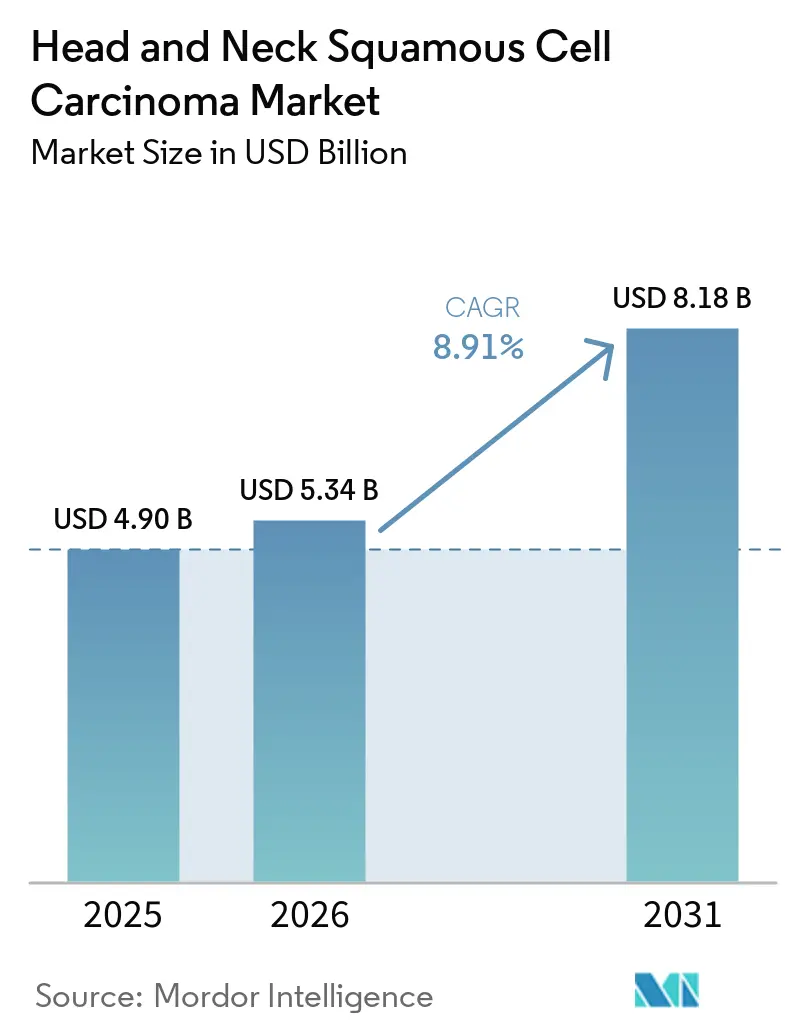
The Head And Neck Squamous Cell Carcinoma Market size is expected to increase from USD 4.90 billion in 2025 to USD 5.34 billion in 2026 and reach USD 8.18 billion by 2031, growing at a CAGR of 8.91% over 2026-2031.
The shift of pembrolizumab into resectable, locally advanced disease broadens treatment use beyond recurrent or metastatic care. The FDA approved perioperative pembrolizumab for PD-L1-positive resectable, locally advanced HNSCC in June 2025, marking the first perioperative approval for this cancer type. The European Commission approved the same perioperative use in October 2025, which supports use across earlier stages of care. The head and neck squamous cell carcinoma market is shaped by wider reimbursement, biomarker testing, and the need for treatments after resistance to PD-1 blockade. High treatment costs and uneven access to testing continue to limit uptake in lower-income settings.
Key Report Takeaways
- By treatment type, combination therapy held 31.65% of the head and neck squamous cell carcinoma market share in 2025, while immunotherapy is forecast to grow at a 10.54% CAGR through 2031.
- By cancer site, the oral cavity accounted for 42.65% of the head and neck squamous cell carcinoma market share in 2025, while the oropharynx is forecast to grow at a 9.99% CAGR through 2031.
- By drug class, PD-1/PD-L1 inhibitors held 38.65% share in 2025, while multikinase and FGFR-directed inhibitors are forecast to grow at a 10.65% CAGR through 2031.
- By route of administration, intravenous delivery held 78.65% share in 2025, while oral delivery is forecast to grow at an 11.21% CAGR through 2031.
- By end user, hospitals held 64.76% share in 2025, while specialty cancer centers are forecast to grow at an 11.32% CAGR through 2031.
- By geography, North America held 43.54% share in 2025, while Asia-Pacific is forecast to grow at a 9.64% CAGR through 2031.
Note: Market size and forecast figures in this report are generated using Mordor Intelligence’s proprietary estimation framework, updated with the latest available data and insights as of January 2026.
Market Trends and Insights
Drivers Impact Analysis of Head and Neck Squamous Cell Carcinoma Market*
| Driver | (~) % Impact on CAGR Forecast | Geographic Relevance | Impact Timeline |
|---|---|---|---|
| Rising HPV-Associated Oropharyngeal Cancer Burden | +1.80% | Global, with highest impact in North America, Western Europe, and urbanizing Asia-Pacific | Long term (≥ 4 years) |
| First-Line PD-1/PD-L1 Immunotherapy Adoption | +2.50% | Global, concentrated in North America and Europe, and accelerating in Asia-Pacific | Medium term (2-4 years) |
| Guideline and Reimbursement Expansion | +1.40% | North America and Europe, with spillover to China, Japan, and South Korea | Medium term (2-4 years) |
| Growing Use of Biomarker-Guided Treatment | +1.20% | North America, Europe, and Asia-Pacific urban centers, with limited reach in the Middle East, Africa, and South America | Long term (≥ 4 years) |
| AI-Enabled ENT Imaging and Earlier Lesion Detection | +0.70% | North America, Europe, and East Asia | Long term (≥ 4 years) |
| HPV Therapeutic-Vaccine and T-Cell-Engager Pipeline Expansion | +0.60% | Global, initially concentrated in North American and European trial sites | Long term (≥ 4 years) |
| Source: Mordor Intelligence | |||
Rising HPV-Associated Oropharyngeal Cancer Burden
HPV-associated oropharyngeal disease is changing the patient mix treated in the head and neck squamous cell carcinoma market. Cases of oropharynx cancer increased 163.17% between 1990 and 2021 in the Global Burden of Disease Study 2021. HPV accounted for more than 70% of oropharyngeal cancers in Europe and the United States. Incidence among U.S. men aged 60 to 79 reached 32.4 cases per 100,000 person-years, and annual U.S. cases are projected to exceed 30,000 by 2029. UK rates among men increased 2.1-fold from 2010 to 2020, with further growth projected through 2039. This disease pattern supports demand for treatment programs that distinguish HPV-positive from HPV-negative tumors.
First-Line PD-1/PD-L1 Immunotherapy Adoption
Perioperative pembrolizumab has widened the clinical role of PD-1 blockade in the head and neck squamous cell carcinoma market. KEYNOTE-689 enrolled 714 patients with stage III to IVA resectable, locally advanced HNSCC[1]. Among 682 patients with PD-L1 combined positive score of at least 1, median event-free survival was 59.7 months with perioperative pembrolizumab and 29.6 months with standard care. The reported hazard ratio was 0.70, with no increase in the inability to undergo surgery because of adverse reactions. PD-L1 CPS testing is therefore increasingly linked to treatment selection and to companion diagnostic demand. A U.S. economic model found perioperative pembrolizumab cost-effective in 83% of simulations at a USD 150,000 per quality-adjusted life-year threshold.
Guideline and Reimbursement Expansion
Guideline adoption is translating regulatory decisions into treatment access in the head and neck squamous cell carcinoma market. The SEOM-TTCC 2025 guidelines included perioperative pembrolizumab as a Category I, Level A recommendation while local Spanish registration was pending. This These positionsier-stage immunotherapy within established clinical decision pathways. In China, finotonlimab entered the National Reimbursement Drug List with price reductions of 60%. Higher-income systems are extending established agents into earlier lines, while middle-income systems rely more on domestic and biosimilar options. The difference in payment models may shift first-line treatment volume toward local suppliers where multinational products lack competitive pricing.
Growing Use of Biomarker-Guided Treatment
Biomarker testing is becoming more important to treatment selection in the head and neck squamous cell carcinoma market. PD-L1 CPS is used for first-line and perioperative pembrolizumab decisions in eligible patients. Emerging selection approaches also consider HPV status, tumor mutational burden, and FGFR alterations. An EORTC multi-omics analysis identified tumor-cell B2M expression as a potential predictor of anti-PD-1 response. In a Phase 2 study, gunagratinib achieved a 50% response rate in FGFR fusion or rearrangement-positive HNSCC, compared with 16.7% in FGFR amplification. Limited next-generation sequencing capacity can restrict access to biomarker-selected trials and concentrate advanced care in academic cancer centers.
Restraints Impact Analysis of Head and Neck Squamous Cell Carcinoma Market*
| Restraint | (~) % Impact on CAGR Forecast | Geographic Relevance | Impact Timeline |
|---|---|---|---|
| High Cost of Immunotherapy and Targeted Therapy | -1.30% | Asia-Pacific, Middle East, Africa, and South America, with residual pressure in lower-income U.S. and European populations | Medium term (2-4 years) |
| Treatment-Related Toxicity and Functional Morbidity | -0.50% | Global, with greater effect in settings that have limited toxicity-management infrastructure | Short term (≤ 2 years) |
| Uneven Biomarker-Testing and Radiation Infrastructure | -0.70% | Middle East, Africa, South Asia, and Latin America, with spillover to rural North America and Eastern Europe | Long term (≥ 4 years) |
| Rapid Acquired Resistance in Biomarker-Selected Disease | -0.90% | Global | Medium term (2-4 years) |
| Source: Mordor Intelligence | |||
High Cost of Immunotherapy and Targeted Therapy
Treatment cost remains a major constraint on immunotherapy access in the head and neck squamous cell carcinoma market. A 2025 analysis found that 6 months of pembrolizumab represented 7,994% of monthly income in India and 591% in the United States. In South Asia, gefitinib costs represented 171% to 412% of monthly income in the same assessment. The cost of 1 pembrolizumab course could fund treatment for 18 to 22 patients using gefitinib. This cost gap favors oral treatment choices where affordability is the primary concern. It also sustains a split between premium treatments in higher-income systems and domestic alternatives in price-sensitive settings.
Rapid Acquired Resistance in Biomarker-Selected Disease
Resistance to PD-1 and PD-L1 inhibitors limits the duration of benefit for many patients. Durable responses to first-line pembrolizumab occurred in only 15% to 20% of patients with recurrent or metastatic HNSCC. After resistance, salvage chemotherapy had an overall response rate of 30% and a median overall survival of 7.8 months. Reported resistance mechanisms include PD-L1 downregulation, HLA class I antigen-presentation defects, and MYC amplification. These mechanisms are still being addressed in early-stage clinical programs. This gap supports continued work on TIL therapies, bispecific antibodies, and FGFR-directed agents in the head and neck squamous cell carcinoma market.
*Our forecasts treat driver/restraint impacts as directional, not additive. The impact forecasts reflect baseline growth, mix effects, and variable interactions.
Head and Neck Squamous Cell Carcinoma Market Segment Analysis
By Treatment Type:
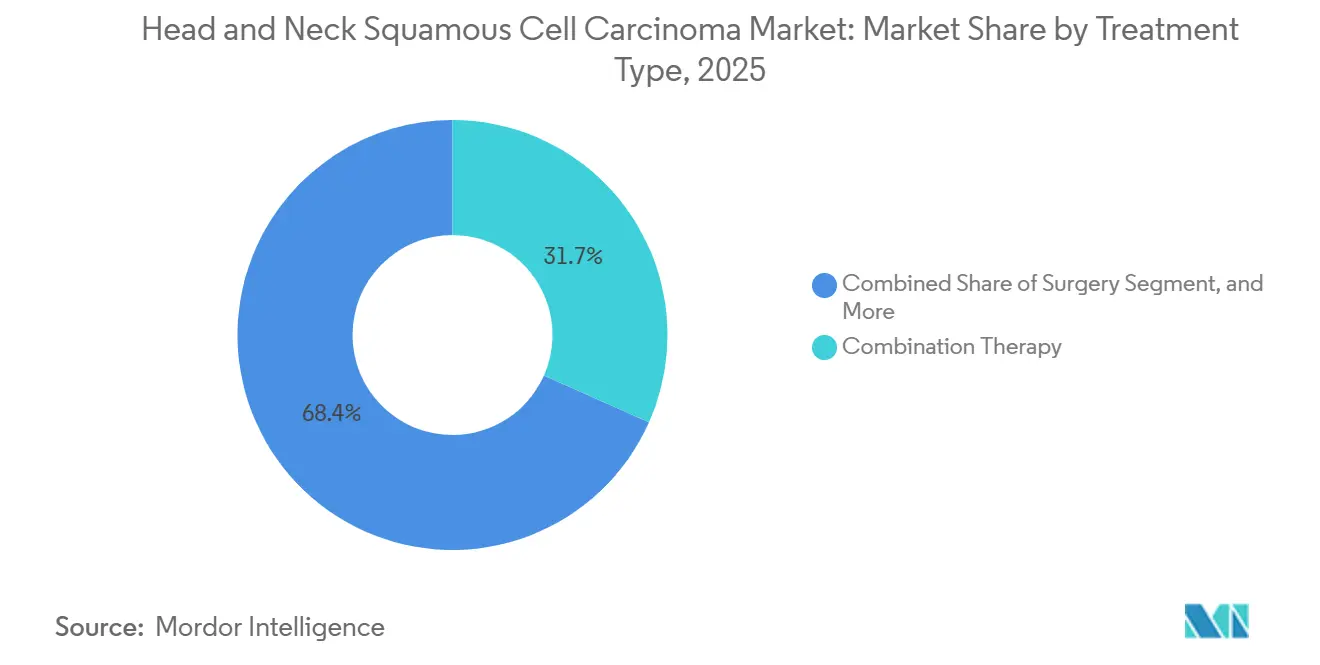
Combination Therapy Leads, While Immunotherapy Adds GrowthCombination therapy represented 31.65% of head and neck squamous cell carcinoma market size in 2025. Its role reflects the use of surgery, radiotherapy, and systemic therapy within the same care plan. Immunotherapy is the fastest-growing treatment type, with a forecast CAGR of 10.54% through 2031. Pembrolizumab is being incorporated into perioperative care rather than simply replacing established local treatments. Surgery, chemotherapy, and radiation therapy remain central for patients who cannot receive immunotherapy. Targeted therapy remains relevant in EGFR-related treatment approaches, particularly cetuximab combinations. The head and neck squamous cell carcinoma industry continues to rely on multi-modality care because tumor stage, anatomy, and patient fitness differ substantially. This structure supports sustained use of established treatment types alongside newer systemic treatments.
The leading position of combination therapy also reflects differences in revenue per treatment episode. Immunotherapy-based protocols generally involve higher medical costs than surgery plus radiation protocols. HPV-positive oropharyngeal programs are evaluating whether immunotherapy can replace or modify radiation intensity in selected patients. PD-L1 CPS testing is required for the approved perioperative pembrolizumab population. This requirement links treatment access to diagnostic capacity. The Head and neck squamous cell carcinoma market therefore depends on coordination between surgical teams, radiation services, pathology, and systemic therapy providers. Hospitals with these capabilities can administer complex protocols more consistently. Treatment selection also remains constrained by affordability and by the management of treatment-related effects.

By Cancer Site:
Oral Cavity Holds Scale While Oropharynx Grows FasterOral cavity disease held 42.65% of the head and neck squamous cell carcinoma market share in 2025. It is supported by a high disease burden across multiple regions. India represented 21.8% of global oral cancer cases, while the United States represented 13.4%. Oral cavity cases increased 142.18% from 1990 to 2021 in the Global Burden of Disease analysis. South Asia had an age-standardized incidence rate of 9.79 per 100,000 for oral cavity cancer. Oropharynx is forecast to grow at a 9.99% CAGR through 2031. Its growth is linked to HPV-associated disease and to the expansion of perioperative immunotherapy.
Nasopharynx, hypopharynx, and other sites retain distinct treatment needs and epidemiology. Malaysia recorded an age-standardized incidence rate of 6.09 per 100,000 for nasopharyngeal carcinoma. EBV-driven disease in East and Southeast Asia continues to rely on cisplatin-based chemoradiation as a cornerstone of care. HPV-positive and HPV-negative oropharyngeal tumors are biologically different and are being approached differently in clinical development. HPV-positive tumors have greater T-cell infiltration and generally better prognoses. HPV-negative disease is often tobacco-related and remains relevant to EGFR-MET and FGFR development. Johnson & Johnson reported a 56% response rate for amivantamab plus a PD-1 inhibitor in first-line HPV-unrelated oropharyngeal disease. These disease differences reinforce the need for site-specific treatment choices.
By Drug Class:
PD-1/PD-L1 Inhibitors Lead as FGFR Programs AdvancePD-1/PD-L1 inhibitors represented 38.65% of head and neck squamous cell carcinoma market size by drug class in 2025. Pembrolizumab and nivolumab are the main agents behind this position. Their use was established in recurrent or metastatic disease and is now extending into earlier settings. EGFR inhibitors remain clinically relevant through cetuximab in platinum-refractory disease. Amivantamab adds an investigational EGFR-MET targeting approach. VEGF and angiogenesis inhibitors remain more prominent in combination studies than in disease-specific standalone approvals. This mix gives the head and neck squamous cell carcinoma market several treatment classes with different administration requirements and patient-selection needs.
Multikinase and FGFR-directed inhibitors are forecast to grow at a 10.65% CAGR through 2031. Lenvatinib, cabozantinib, and zanzalintinib are being studied with checkpoint inhibitors. Exelixis and Merck began a clinical development collaboration for zanzalintinib plus pembrolizumab in October 2024. No FGFR inhibitor has received FDA approval specifically for HNSCC. The forecast for this class depends on future Phase 3 results and biomarker-selected development. TIL therapies and antibody-drug conjugates represent additional emerging drug approaches. Iovance received FDA clearance to proceed with an IND for IOV-5001 in June 2026. These programs seek to address patients whose disease progresses after checkpoint inhibition.
By Route of Administration:
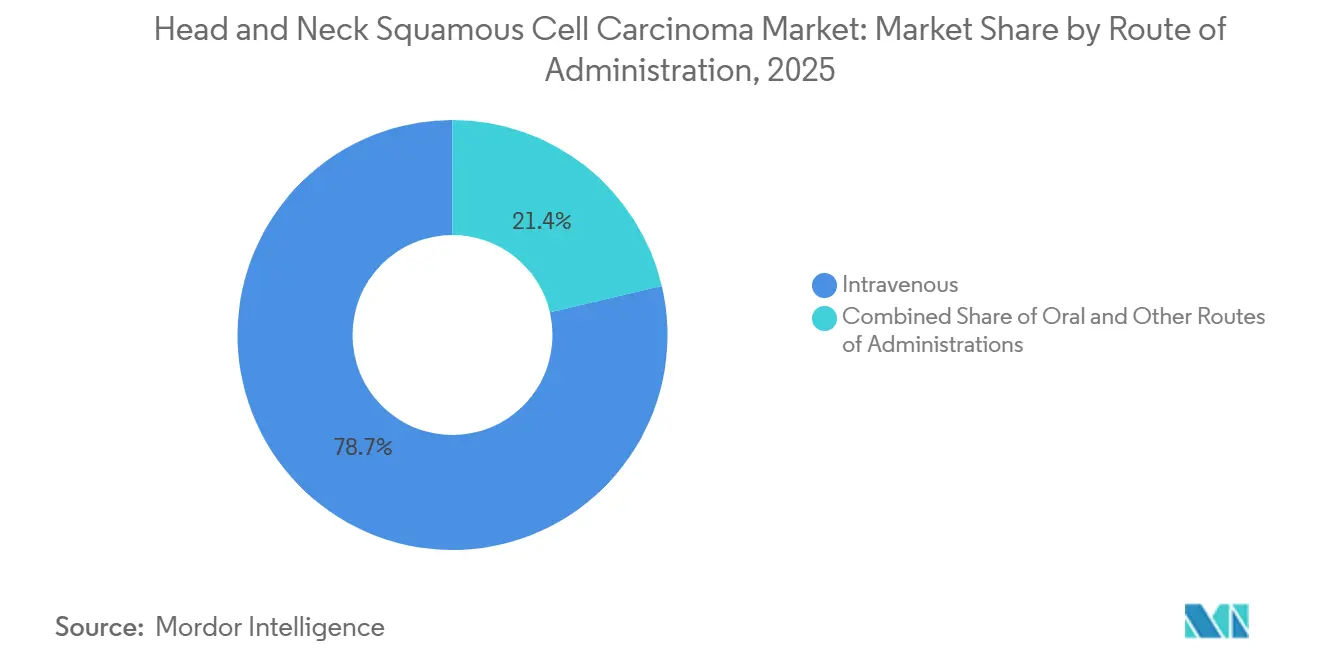
Intravenous Care Leads While Oral Options ExpandIntravenous delivery held 78.65% of the head and neck squamous cell carcinoma market share in 2025. Pembrolizumab, nivolumab, cetuximab, and platinum-based chemotherapy have built a large infusion-based treatment base. Oral delivery is forecast to expand at an 11.21% CAGR through 2031. Oral TKIs include lenvatinib, cabozantinib, erlotinib, and gefitinib. Their use can reduce the need for repeated infusion visits. This can be relevant where specialty centers are spread across large geographic areas. The route mix is also shaped by the ability of providers to monitor safety and adherence.
Oral delivery may reduce travel, lost wages, and caregiver time associated with infusion visits. These indirect costs can discourage adherence in resource-constrained settings. The affordability assessment reported lower treatment costs for oral TKIs than for intravenous immunotherapy in South Asian markets. Future FGFR approvals could expand the role of home-administered systemic therapies. RYBREVANT FASPRO is a subcutaneous formulation designed to reduce administration time compared with intravenous amivantamab. Johnson & Johnson reported FDA Priority Review for this application in July 2026. Delivery innovation can therefore affect both clinical workflow and commercial positioning. Intravenous care will remain important where multi-drug protocols and close observation are required.
By End User:
Hospitals Lead While Specialty Cancer Centers Grow FasterHospitals accounted for 64.76% of the head and neck squamous cell carcinoma market size by end user in 2025. Surgical oncology, intravenous chemotherapy, and radiation treatment require specialized equipment and credentialed teams. Hospital systems also coordinate pathology, imaging, nutrition support, and post-treatment care. Specialty cancer centers are forecast to grow at an 11.32% CAGR through 2031. Treatment pathways now involve sequencing across immunotherapy, EGFR inhibitors, and possible cell therapies. This complexity favors centers with multidisciplinary tumor boards and access to clinical trials. Specialty clinics continue to support follow-up care, palliative treatment, and some oral TKI use.
Cell therapy access may further strengthen specialty cancer centers. Iovance reported that its lifileucel commercial network included more than 95 authorized centers by mid-2026. Any future HNSCC TIL approval could use this type of certified treatment footprint. PD-L1 testing and next-generation sequencing capacity also favor institutions with integrated molecular pathology. General hospitals remain important because they provide most surgery, radiation treatment, and routine systemic care. The head and neck squamous cell carcinoma industry is therefore not moving away from hospitals. Instead, complex biomarker-selected and cell-based treatment is likely to be concentrated in more specialized settings. The division between settings may become more visible as the therapy pipeline matures.
Geography Analysis
North America Head and Neck Squamous Cell Carcinoma Market
North America held 43.54% of the Head and neck squamous cell carcinoma market share in 2025. The region combines high pharmaceutical pricing, established reimbursement, and dense specialty oncology capacity. The June 2025 FDA approval placed perioperative pembrolizumab into an existing U.S. treatment framework. Exelixis and Merck are studying zanzalintinib plus pembrolizumab in a Phase 3 program. Regeneron initiated a Phase 2 study of fianlimab plus cemiplimab in April 2026[2]. Canada generally follows U.S. approvals closely. Mexico faces more limited immunotherapy reimbursement and a higher burden of tobacco-related oral cavity disease.
Europe Head and Neck Squamous Cell Carcinoma Market
Europe is the second-largest regional area in the head and neck squamous cell carcinoma market. The European Commission approved perioperative pembrolizumab in October 2025 for the 27 EU member states, Iceland, Liechtenstein, and Norway. The United Kingdom is projected to incur GBP 14.3 billion in societal costs from HPV-associated oropharyngeal cancer between 2025 and 2039. Hungary reported an oropharyngeal cancer incidence rate of 6.19 per 100,000. Budget constraints remain important in countries with high disease burden. Spain’s guideline recommendation may influence treatment decisions elsewhere in Southern Europe.
APAC, South America and MEA Head and Neck Squamous Cell Carcinoma Market
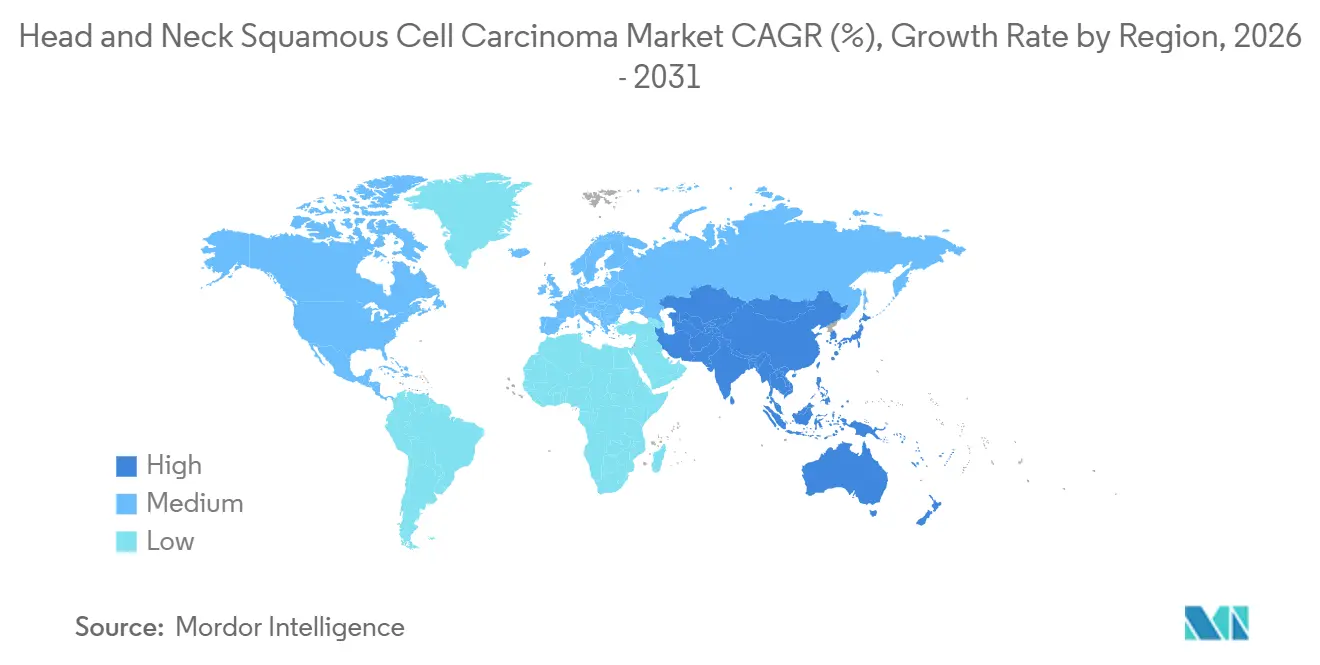
Asia-Pacific is forecast to grow at a 9.64% CAGR through 2031. China has expanded access to domestic PD-1 inhibitors through National Reimbursement Drug List negotiations. Domestic price reductions of 60% have supported broader use, while foreign drugs retain premium urban demand. Japan has a mature reimbursement setting for nivolumab supplied by Ono Pharmaceutical and Bristol Myers Squibb. India has the highest share of global oral cancer cases, but limited PD-L1 testing outside metropolitan centers. South America is led by Brazil and Argentina. The Middle East and Africa remain more dependent on chemotherapy, although GCC healthcare investment creates local differences. These access gaps define the regional opportunity for the head and neck squamous cell carcinoma market.
Competitive Landscape
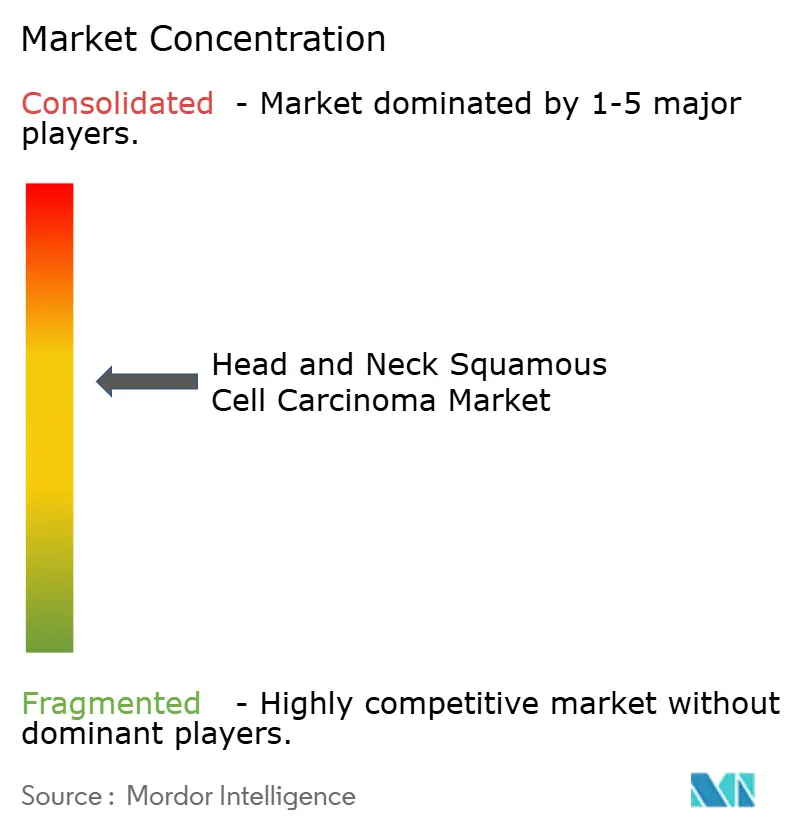
The head and neck squamous cell carcinoma market is moderately concentrated at the molecule level. Pembrolizumab and nivolumab define established care in recurrent or metastatic disease. Pembrolizumab also has an approved perioperative role in eligible resectable disease. Merck leads through the breadth of the Keytruda label. Bristol Myers Squibb retains a position through Opdivo in later-line treatment. Competition is most active in diseases that have progressed after immunotherapy. This makes the quality and durability of post-immunotherapy evidence important to commercial strategy.
Johnson & Johnson is advancing RYBREVANT FASPRO in recurrent or metastatic HNSCC. OrigAMI-4 data reported a 42% overall response rate, with 1-third of patients achieving complete responses and a median follow-up of 11.8 months. The FDA granted Priority Review to the application in July 2026. BeOne reported a 27.5% response rate across arms in its BGB-HNSCC-201 study, without added benefit from TIM-3 or LAG-3 combinations with tislelizumab. The result suggests that dual checkpoint combinations need clearer patient selection. Iovance is pursuing IL-12-tethered TIL treatment through IOV-5001.
Imaging capability is also becoming relevant to competitive positioning among treatment centers. A deep learning model for lymph node staging was validated across 9 scanner configurations in oral tongue squamous cell carcinoma. Centers that integrate imaging, molecular pathology, and trials can differentiate clinical decision support and enrollment capability. Sanofi has indirect exposure through its partnership with Regeneron for cemiplimab, rather than a standalone approved HNSCC therapy. Novartis deprioritized spartalizumab after Phase 3 results did not show benefit in HNSCC. GSK does not have an HNSCC-specific approval or an active late-stage program in the supplied material. Merus, Bicara Therapeutics, and Kura Oncology are identified as more direct development-stage alternatives, while Takeda and Pfizer have investigational relevance. The market concentration score is 6 because the supplied material identifies 2 leading checkpoint inhibitors but provides no top-player combined share, while a broad development pipeline limits concentration.
Head and Neck Squamous Cell Carcinoma Industry Leaders
-
Merck & Co., Inc.
-
Bristol-Myers Squibb Company
-
Eli Lilly and Company
-
F. Hoffmann-La Roche Ltd
-
AstraZeneca PLC
- *Disclaimer: Major Players sorted in no particular order
Head and Neck Squamous Cell Carcinoma Market Companies Covered in this Report
- AstraZeneca
- BeiGene, Ltd.
- Bristol-Myers Squibb
- CStone Pharmaceuticals
- Eisai
- Exelixis, Inc.
- Eli Lilly and Company
- Roche
- GlaxoSmithKline
- Iovance Biotherapeutics, Inc.
- Innovent Biologics, Inc.
- Jiangsu Hengrui Pharmaceuticals Co., Ltd.
- Johnson & Johnson
- Merck
- Novartis
- Ono Pharmaceutical
- Pfizer
- Regeneron Pharmaceuticals
- Sanofi
- Takeda Pharmaceuticals
Recent Industry Developments in Head and Neck Squamous Cell Carcinoma Market
- July 2026: Johnson & Johnson announced that the FDA granted Priority Review to the supplemental Biologics License Application for RYBREVANT FASPRO, subcutaneous amivantamab and hyaluronidase-lpuj, in adults with recurrent or metastatic HNSCC previously treated with platinum-based chemotherapy and a PD-1 or PD-L1 inhibitor. The application was supported by OrigAMI-4 data showing a 42% overall response rate and complete responses in 1-third of patients.
- June 2026: Iovance Biotherapeutics received FDA clearance to proceed with an IND for IOV-5001, an IL-12-tethered TIL therapy in a Phase I and II basket study that includes HNSCC.
- June 2025: The FDA approved pembrolizumab for adults with PD-L1-positive resectable, locally advanced HNSCC as neoadjuvant treatment and as adjuvant treatment with radiotherapy, with or without cisplatin, after surgery.
Global Head and Neck Squamous Cell Carcinoma Market Report Scope
According to the report’s scope, head and neck squamous cell carcinoma (HNSCC) is a type of cancer that originates in the squamous cells lining the mucosal surfaces of the head and neck region, including the mouth, throat, and larynx. It is often associated with risk factors like tobacco use, alcohol consumption, and human papillomavirus (HPV) infection.
The head and neck squamous cell carcinoma market is segmented into treatment type, cancer site, drug class, route of administration, end user, and geography. By treatment type, the market is segmented into surgery, radiation therapy, chemotherapy, targeted therapy, immunotherapy, and combination therapy. The cancer site segment is further bifurcated into the oral cavity, oropharynx, nasopharynx, hypopharynx, and other cancer sites. By drug class, the market is segmented into PD-1/PD-L1 inhibitors, EGFR inhibitors, VEGF and angiogenesis inhibitors, multikinase and FGFR-directed inhibitors, and other drug classes. By route of administration, the market is segmented into Intravenous, oral, and other routes of administration. By end user, the market is segmented into hospitals, specialty cancer centers, specialty clinics, and other end users. By geography, the market is segmented into North America, Europe, Asia-Pacific, the Middle East and Africa, and South America. The report also covers the estimated market sizes and trends for 17 countries across major regions globally. The report offers values (USD) for all the above segments.
Segmentation Overview
| Surgery |
| Radiation Therapy |
| Chemotherapy |
| Targeted Therapy |
| Immunotherapy |
| Combination Therapy |
| Oral Cavity |
| Oropharynx |
| Nasopharynx |
| Hypopharynx |
| Other Cancer Sites |
| PD-1/PD-L1 Inhibitors |
| EGFR Inhibitors |
| VEGF and Angiogenesis Inhibitors |
| Multikinase and FGFR-Directed Inhibitors |
| Other Drug Classes |
| Intravenous |
| Oral |
| Other Routes of Administrations |
| Hospitals |
| Specialty Cancer Centers |
| Specialty Clinics |
| Other End Users |
| North America | United States |
| Canada | |
| Mexico | |
| Europe | Germany |
| United Kingdom | |
| France | |
| Italy | |
| Spain | |
| Rest of Europe | |
| Asia-Pacific | China |
| Japan | |
| India | |
| Australia | |
| South Korea | |
| Rest of Asia-Pacific | |
| Middle East and Africa | GCC |
| South Africa | |
| Rest of Middle East and Africa | |
| South America | Brazil |
| Argentina | |
| Rest of South America |
| By Treatment Type | Surgery | |
| Radiation Therapy | ||
| Chemotherapy | ||
| Targeted Therapy | ||
| Immunotherapy | ||
| Combination Therapy | ||
| By Cancer Site | Oral Cavity | |
| Oropharynx | ||
| Nasopharynx | ||
| Hypopharynx | ||
| Other Cancer Sites | ||
| By Drug Class | PD-1/PD-L1 Inhibitors | |
| EGFR Inhibitors | ||
| VEGF and Angiogenesis Inhibitors | ||
| Multikinase and FGFR-Directed Inhibitors | ||
| Other Drug Classes | ||
| By Route of Administration | Intravenous | |
| Oral | ||
| Other Routes of Administrations | ||
| By End User | Hospitals | |
| Specialty Cancer Centers | ||
| Specialty Clinics | ||
| Other End Users | ||
| Geography | North America | United States |
| Canada | ||
| Mexico | ||
| Europe | Germany | |
| United Kingdom | ||
| France | ||
| Italy | ||
| Spain | ||
| Rest of Europe | ||
| Asia-Pacific | China | |
| Japan | ||
| India | ||
| Australia | ||
| South Korea | ||
| Rest of Asia-Pacific | ||
| Middle East and Africa | GCC | |
| South Africa | ||
| Rest of Middle East and Africa | ||
| South America | Brazil | |
| Argentina | ||
| Rest of South America | ||
Key Questions Answered in the Report
What is the 2031 outlook for head and neck squamous cell carcinoma treatment?
The head and neck squamous cell carcinoma market is forecast to reach USD 8.18 billion by 2031, growing at an 8.91% CAGR from 2026.
Which treatment type has the largest share?
Combination therapy held 31.65% share in 2025, reflecting continued use of surgery, radiotherapy, and systemic treatment together.
What is driving growth in HNSCC treatment?
Earlier use of pembrolizumab, expanding reimbursement, HPV-associated oropharyngeal disease, and biomarker-guided care support growth.
Which cancer site is growing the fastest?
Oropharynx is forecast to grow at a 9.99% CAGR through 2031, supported by HPV-associated disease and perioperative treatment options.
Why are specialty cancer centers gaining importance?
Specialty cancer centers are forecast to grow at an 11.32% CAGR because complex treatment sequencing, testing, trials, and cell therapy require specialized care.
What limits access to immunotherapy?
Cost, limited biomarker testing, uneven radiation infrastructure, and acquired resistance reduce access and long-term benefit in many settings.