
HATU Market Size and Share
Market Overview
| Study Period | 2021 - 2031 |
|---|---|
| Market Size (2026) | USD 65.95 Million |
| Market Size (2031) | USD 88.82 Million |
| Growth Rate (2026 - 2031) | 6.14 % |
| Fastest Growing Market | Asia-Pacific |
| Largest Market | North America |
| Market Concentration | Low |
Major Players *Disclaimer: Major Players sorted in no particular order Image © Mordor Intelligence. Reuse requires attribution under CC BY 4.0. | |
HATU Market Analysis by Mordor Intelligence
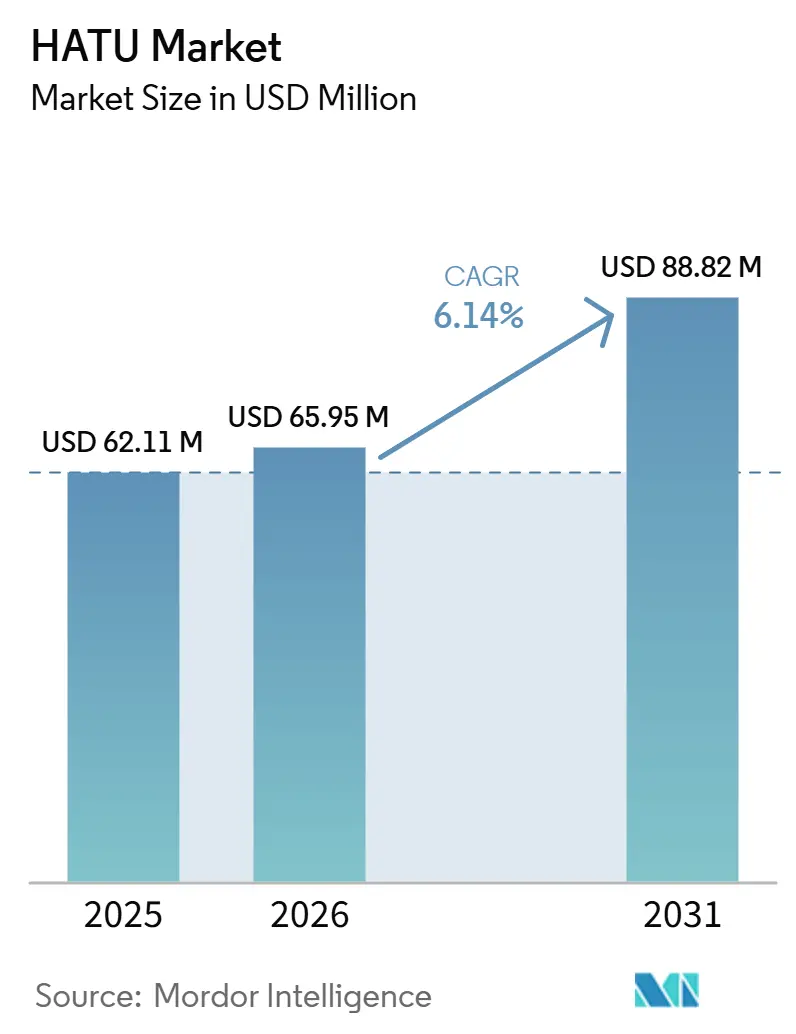
The HATU Market size is expected to grow from USD 62.11 million in 2025 to USD 65.95 million in 2026 and is forecast to reach USD 88.82 million by 2031 at 6.14% CAGR over 2026-2031. Commercial peptide manufacturing is scaling as Glucagon-Like Peptide-1 (GLP-1) programs and other peptide therapies require multiple coupling steps. This trend links the HATU market to large-scale production campaigns rather than laboratory activity alone. Buyers are increasing demand for higher-purity materials as validated pharmaceutical workflows require reproducibility, impurity control, and documentation that supports Good Manufacturing Practice (GMP) operations. HATU remains relevant when faster aminolysis rates and lower epimerization are required, particularly in long peptide sequences, where incremental yield improvements can reduce costs across multiple coupling cycles. Competition in the HATU market remains divided between branded high-purity suppliers, which compete on reliability, and lower-cost Asian producers, which compete on scale and price. However, the HATU market continues to face supply and compliance constraints, as hazardous-handling rules and a narrow pool of qualified producers can limit procurement flexibility and increase lead times for end users.
Key Report Takeaways
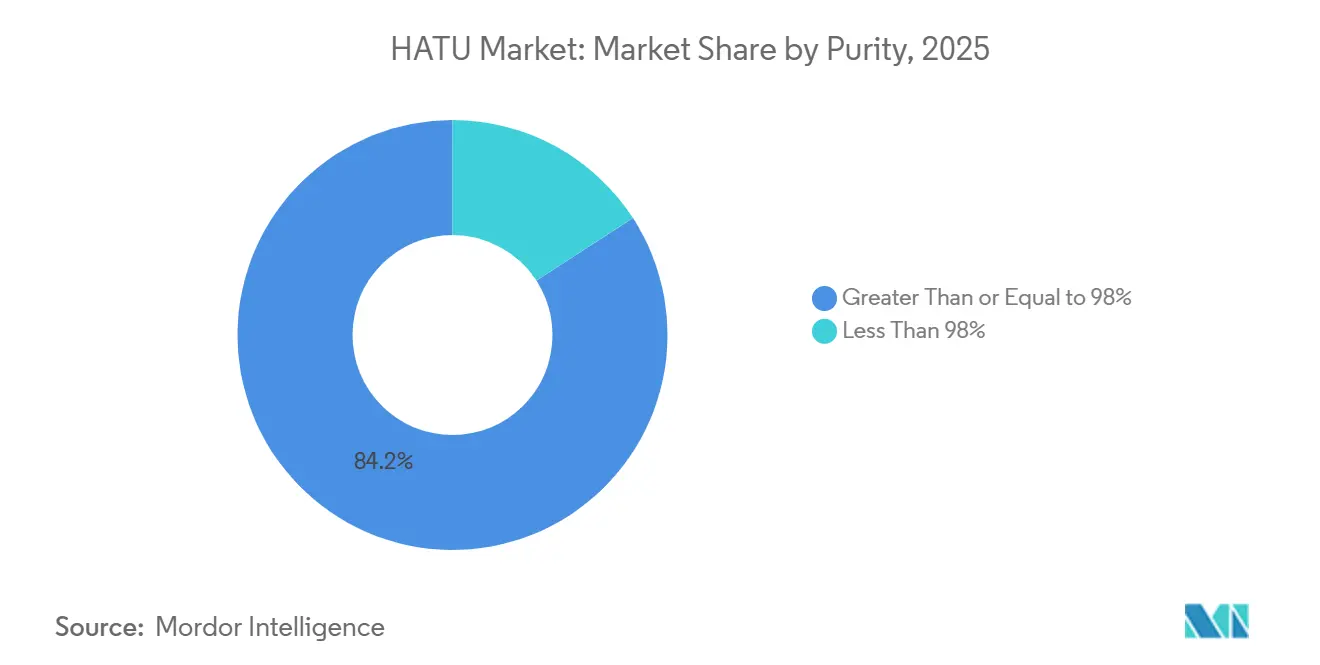
- By purity, greater than or equal to 98% purity held 84.15% of revenue in 2025, and this segment is projected to expand to 6.38% CAGR through 2031 in the HATU market.
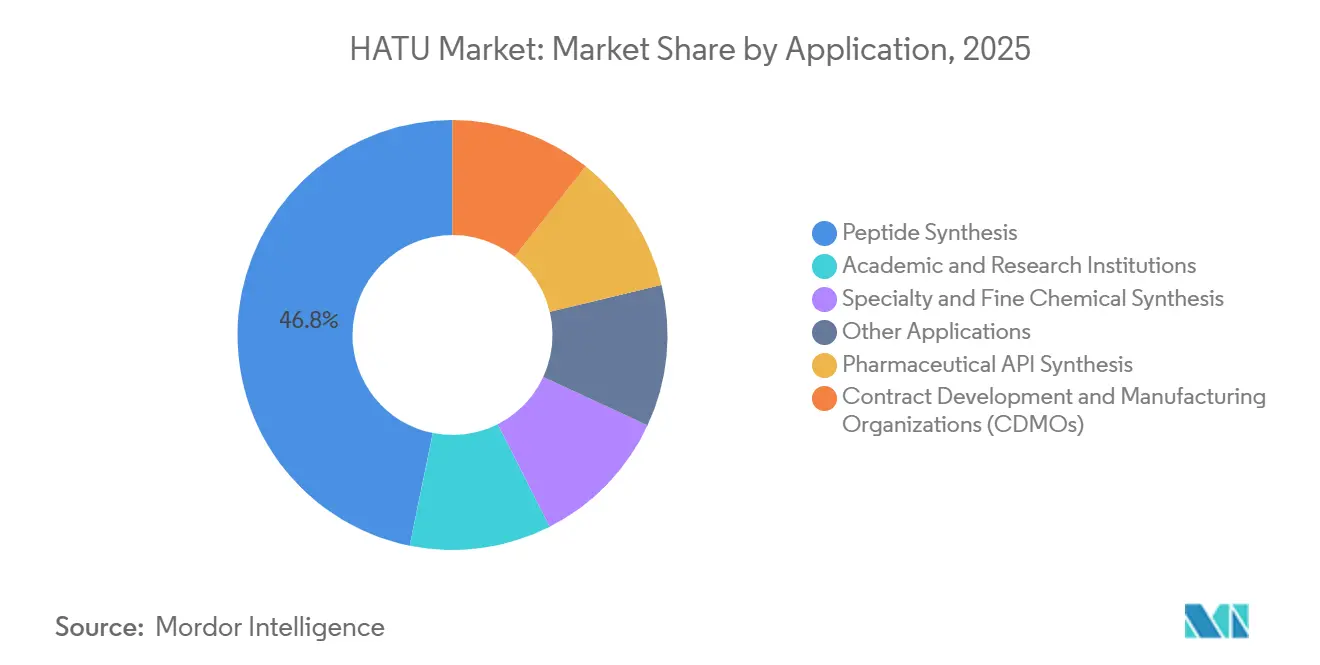
- By application, peptide synthesis led with 46.82% revenue share in 2025, while Contract Development and Manufacturing Organization (CDMO) recorded the highest projected CAGR at 7.21% through 2031 in the HATU market.
- By geography, North America held 39.47% of global revenue in 2025, while Asia-Pacific is projected to expand at 7.15% CAGR through 2031 in the HATU market.
Note: Market size and forecast figures in this report are generated using Mordor Intelligence’s proprietary estimation framework, updated with the latest available data and insights as of January 2026.
Market Trends and Insights
Drivers Impact Analysis of HATU Market*
| Drivers | (~) % Impact on CAGR Forecast | Geographic Relevance | Impact Timeline |
|---|---|---|---|
| Rising GLP-1 and peptide-drug demand | +2.0% | Global, with concentrated pull in North America, Europe, and Asia-Pacific CDMO clusters | Medium term (2-4 years) |
| Expanding Peptide and API development | +1.5% | Global, with early gains in North America and Europe, and spillover to the Asia-Pacific | Medium term (2-4 years) |
| CDMO capacity expansions | +1.2% | North America and Europe primarily, with Asia-Pacific as emerging scale-up sites | Short term (≤ 2 years) |
| Process efficiency needs supporting HATU adoption | +0.9% | Global, with stronger uptake in established GMP manufacturing hubs | Long term (≥ 4 years) |
| Pharmaceutical API pipeline expansion | +0.5% | Global, with the highest clinical intensity in North America and Europe | Long term (≥ 4 years) |
| Source: Mordor Intelligence | |||
Rising GLP-1 and Peptide-Drug Demand
Commercial GLP-1 manufacturing is shifting procurement patterns in the HATU market from smaller development orders to sustained commercial-scale purchasing. Marketed products such as Ozempic, Wegovy, and Mounjaro are driving peptide API demand to a scale that supports the use of efficient and validated coupling reagents[1]Bachem Holding AG, “GLP-1 Demand for Peptide Manufacturers,” Bachem Knowledge Center, bachem.com. Each GLP-1 sequence typically requires multiple solid-phase peptide synthesis (SPPS) coupling cycles, so incremental improvements in stepwise performance can support output and cost efficiency during large manufacturing campaigns. Retatrutide has also entered Phase 3 programs with 2026 filing guidance, extending the near-term commercial horizon for additional high-volume peptide manufacturing. This shift is changing demand patterns in the HATU market, as purchasing now depends less on the number of peptide candidates and more on the dosing scale of approved products. As a result, the market is developing a steadier consumption profile than many specialty chemicals typically experience.
Expanding Peptide and API Development
Peptide and Active Pharmaceutical Ingredient (API) development is expanding the HATU market’s application base across pharmaceutical, biotechnology, and specialty synthesis workflows. Automated Solid-Phase Peptide Synthesis (SPPS) systems now support long sequences with high stepwise yields, reinforcing the use of proven coupling reagents in validated production routes. Once manufacturers lock HATU into a validated process, they are reluctant to switch, as any change can require additional development work and revalidation. Demand is also expanding beyond core therapeutics into peptidomimetics, peptide-drug conjugates, and other fine chemical workflows that require reliable amide-bond formation performance. This trend creates recurring purchasing behavior that supports the HATU market, even when individual project cycles vary across end users. It also strengthens established suppliers, as documentation quality and process familiarity are as important as chemical performance.
CDMO Capacity Expansions
CDMO expansion is a short-term demand multiplier for the HATU market, as each additional peptide manufacturing line creates recurring reagent demand. AmbioPharm is expected to announce an expansion in North Augusta in March 2026, with the project designed for commercial-scale SPPS, Liquid-Phase Peptide Synthesis (LPPS), and hybrid synthesis. In Asia, Space Peptides is expanding to more than 70,000 L of SPPS reactor capacity and annual peptide API output of more than 30 tons, indicating a larger installed base that will consume coupling reagents over time. Lupin Manufacturing Solutions is also expected to announce an expansion at Dabhasa in March 2026, adding dedicated peptide manufacturing modules to support global peptide supply chains. As more reactor banks come online, procurement becomes more visible and structured, as producers plan reagent supply well ahead of manufacturing start dates. This trend supports the HATU market through direct volume growth and more formal long-term purchasing behavior.
Process Efficiency Needs Drive Adoption
Process-efficiency requirements continue to support the HATU market, as manufacturers prioritize coupling speed, low epimerization, and reproducible performance for demanding peptide sequences. Continuous-flow SPPS is gaining relevance in commercial applications, and HATU supports flow-adapted protocols designed to shorten cycle times and increase throughput. Merck scientists reported multigram peptide production with development-time and waste-reduction advantages in a continuous-flow SPPS setup, supporting the case for faster and more controlled coupling steps. Vapourtec is expected to launch its Peptide-Builder fast-flow synthesizer in 2025, enabling high-throughput peptide production in routine workflows. Lower reagent loading per cycle can reduce HATU use per gram in some flow setups. However, the broader commercial viability of long and complex sequences continues to expand the total addressable demand pool. Therefore, the HATU market benefits even when process intensification improves material efficiency at the step level.
Restraints Impact Analysis of HATU Market*
| Restraints | (~) % Impact on CAGR Forecast | Geographic Relevance | Impact Timeline |
|---|---|---|---|
| Hazard classification and handling requirements | -0.7% | Global, with the highest compliance burden in Europe and North America | Short term (≤ 2 years) |
| Limited qualified producers | -0.6% | Global, with acute exposure in import-dependent North American and European supply chains | Medium term (2-4 years) |
| Raw-material price volatility in hexafluorophosphate precursors | -0.5% | Asia-Pacific on the production side, with global pricing pass-through | Medium term (2-4 years) |
| Source: Mordor Intelligence | |||
Hazard Classification and Handling Requirements
Hazard classification increases the total cost of ownership for HATU beyond its purchase price and affects broader use in the HATU market. HATU is listed under UN 1325 as a flammable solid, requiring stricter storage, shipping, and handling controls than many routine laboratory reagents. Merck also classifies the material as a Category 1 flammable solid and identifies it as a respiratory and skin sensitizer in its product documentation. Large Contract Development and Manufacturing Organizations (CDMOs) and pharmaceutical plants can manage these requirements, while smaller companies and academic users may face adoption barriers if they lack dedicated safety infrastructure. When alternative coupling systems meet technical requirements with lower handling requirements, some smaller users may limit HATU adoption. This does not indicate a decline in demand, but it limits expansion outside well-equipped manufacturing settings.
Limited Qualified Producers Restrict Supply
The HATU market also faces supply risk because qualified manufacturing capacity remains concentrated among a small group of producers and distributors. The supply chain relies on specialized chemical capabilities for azabenzotriazole derivatives and hexafluorophosphate salts, limiting how quickly new entrants can scale qualified output. Suppliers such as Merck KGaA, FUJIFILM Wako Pure Chemical, and Luxembourg Bio Technologies lead branded distribution, while production capacity remains more concentrated in Asia. Apollo Scientific listed HATU as out of stock in 2026, with restocking expected by late July, showing how supply constraints can emerge in the distribution channel. For GMP users, an unexpected stockout can idle SPPS assets and disrupt planned batch delivery schedules[2]Apollo Scientific, “HATU 148893-10-1,” Apollo Scientific, apolloscientific.co.uk. As a result, supply reliability remains central to purchasing decisions across the HATU market.
*Our forecasts treat driver/restraint impacts as directional, not additive. The impact forecasts reflect baseline growth, mix effects, and variable interactions.
HATU Market Segment Analysis
By Purity:
High-Purity Material Dominates Commercial DemandHATU with purity greater than or equal to 98% is projected to account for 84.15% of the HATU market share in 2025 and expand at a 6.38% CAGR through 2031. This position reflects a market in which pharmaceutical-grade materials have replaced lower-grade alternatives in most commercial applications. CDMOs and pharmaceutical producers treat batch certificates, impurity control, and supplier qualification as core requirements. This focus keeps purchasing concentrated in the highest-purity band and limits revenue opportunities for lower-grade materials. Therefore, the HATU industry shows a clear quality preference in its purity split, supporting stable demand for audited, high-grade supply.
Suzhou Highfine Biotech has invested in automated production capabilities at its Anhui facility, including a second workshop completed in February 2024 and DCS automatic control systems across operations. This is relevant because buyers evaluate chemical purity along with manufacturing consistency and audit readiness. Japanese suppliers, such as FUJIFILM Wako Pure Chemical, also offer HATU at 98.0% HPLC purity for regulated pharmaceutical work in Japan and the wider Asia-Pacific region. As a result, documentation strength and production discipline influence competition in this segment, along with price. The less-than-98% band remains tied mainly to early-stage discovery and academic screening, making it unlikely to materially change the overall purity mix of the HATU market.



By Application:
Peptide Synthesis Holds the Lead While CDMOs Grow FastestPeptide synthesis is projected to account for 46.82% of the HATU market in 2025, while the CDMO segment is expected to expand at a 7.21% CAGR through 2031. This share reflects the direct link between HATU consumption and SPPS campaign activity in pharmaceutical and biotechnology settings, supporting a recurring reagent demand base. Pharmaceutical API synthesis represents the next major application pool, as it relies on the same validated coupling chemistry but operates under tighter impurity controls. Academic and research institutions remain smaller users, but they continue to generate baseline demand as peptide chemistry expands into proteomics, biomarker research, and targeted drug design.
The Contract Development and Manufacturing Organization (CDMO) segment is changing how suppliers approach the HATU market, as larger production runs encourage longer contracts and structured volume pricing. As CDMOs shift from clinical kilogram batches to commercial campaigns, they prioritize supply assurance and operational continuity over spot cost alone. Specialty and fine chemical synthesis also remains relevant, as peptidomimetic intermediates and peptide-drug conjugate workflows require reliable amide-bond formation performance. Therefore, the segment mix favors applications where repeated coupling efficiency and batch reproducibility directly affect output economics. This dynamic keeps peptide manufacturing and outsourced development at the center of demand formation across the HATU market.
Geography Analysis
North America HATU Market
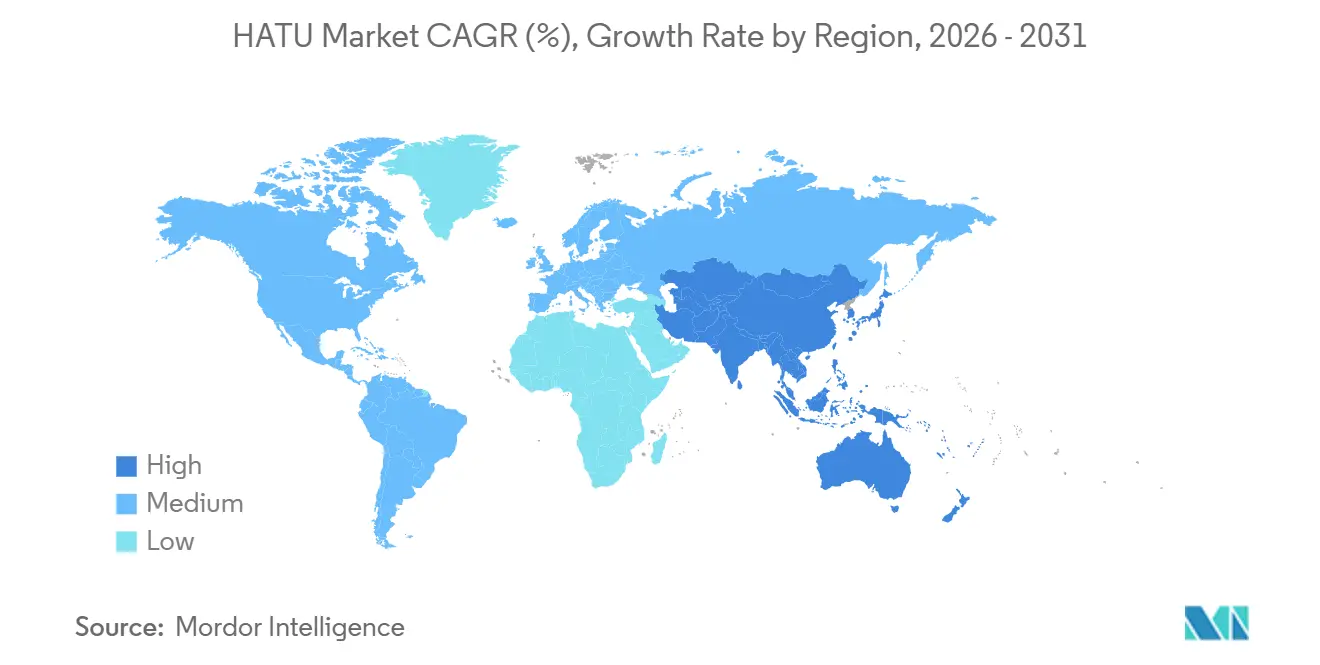
North America is expected to account for 39.47% of the HATU market in 2025, making it the largest regional contributor. The region has a concentration of peptide Contract Development and Manufacturing Organizations (CDMOs) and innovator drug developers that use validated Solid-Phase Peptide Synthesis (SPPS) routes for commercial manufacturing. This supports steady procurement of GMP-grade coupling reagents and favors suppliers that can provide documentation and supply continuity at scale. AmbioPharm’s planned March 2026 expansion in South Carolina indicates continued investment in commercial peptide manufacturing capacity in the United States. This infrastructure growth keeps North America central to revenue generation in the HATU market.
APAC HATU Market
Asia-Pacific is the fastest-growing regional bloc, with the HATU market projected to grow at a CAGR of 7.15% in the region through 2031. China and India are driving this growth through new reactor capacity, broader peptide outsourcing capabilities, and cost-focused scale-up strategies. Space Peptides plans to build more than 70,000 L of SPPS capacity and achieve annual output above 30 tons, indicating future demand for coupling reagents. Lupin is also adding dedicated peptide modules in India to support global supply chain requirements. Japan contributes through precision-grade reagent supply from companies such as FUJIFILM Wako Pure Chemical, which supports the high-quality segment of the region’s demand mix.
Europe HATU Market
Europe remains a meaningful market, as peptide expertise, regulatory discipline, and high-value manufacturing continue to support demand for high-purity inputs. Switzerland and Germany are especially relevant because they support important peptide production and development activity. The Rest of the World remains smaller, but demand is developing as local pharmaceutical manufacturing capabilities improve across additional regions. As a result, the HATU market includes a mature demand center in North America, a fast-scaling manufacturing center in Asia-Pacific, and a steady premium position in Europe.

Competitive Landscape
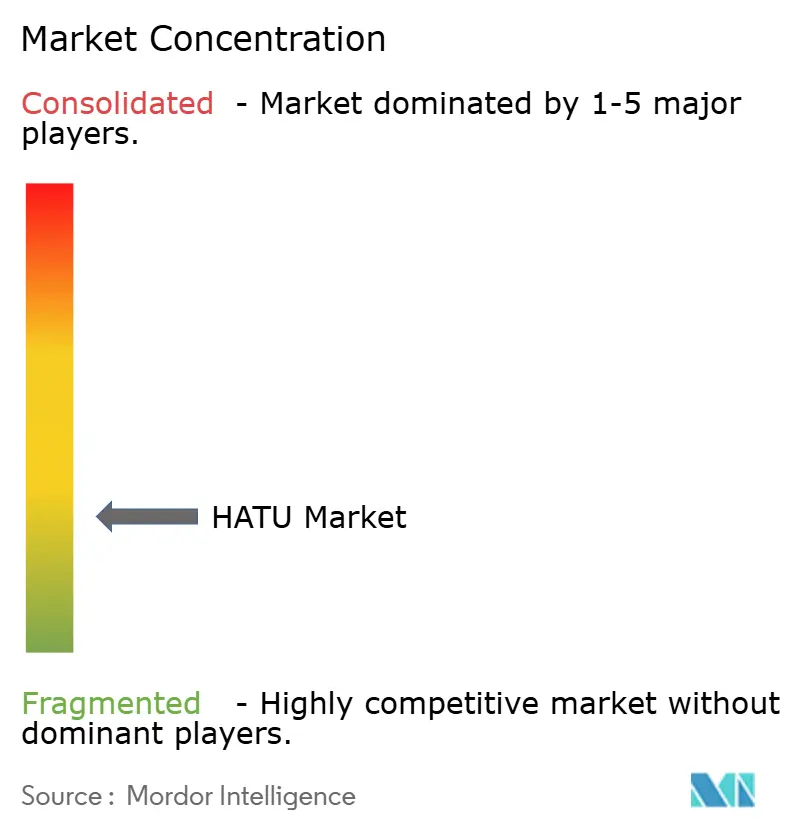
The HATU market is fragmented, while the distribution layer remains broader and more fragmented. A small number of technically capable producers supply the core product, while many catalog and fine-chemical vendors participate in resale. The branded high-purity tier includes Merck KGaA under the Novabiochem line, FUJIFILM Wako Pure Chemical, and Luxembourg Bio Technologies. These companies compete on analytical support, specification control, and batch reliability. On the production side, Asian suppliers such as Suzhou Highfine Biotech and Wugan Pharma compete based on scale and availability. This tiered structure means the HATU market does not operate as a pure commodity market, as supplier selection depends on both technical risk and price.
Strategic moves in the HATU market reflect how suppliers are responding to this structure. Suzhou Highfine Biotech strengthened its production base through its Anhui facility and a second workshop completed in February 2024. The company also uses DCS automatic control systems to support batch consistency. FUJIFILM Wako Pure Chemical continues to position itself around 98.0% High-Performance Liquid Chromatography (HPLC) purity and pharmaceutical-grade quality expectations in Japan and the wider region. Merck supports the high-purity tier through tightly specified product documentation that aligns with regulated procurement requirements. These developments show that leading players are maintaining their positions through manufacturing discipline and strong documentation, rather than broad price competition alone.
The HATU market also has clear gaps that will shape future competition. Regional supply in North America and Europe still appears tighter than demand would suggest, given the reshaping of peptide manufacturing networks. This gap creates opportunities for more local, qualified capacity. Continuous-flow Solid-Phase Peptide Synthesis (SPPS) is another area to watch, as producers that tailor grades for fast dissolution and controlled use conditions may gain relevance as peptide processes evolve. Supply resilience will remain important because the HATU market still depends on a narrow production base and precursor chemistry that is not widely distributed. Therefore, buyers are likely to continue rewarding suppliers that can demonstrate quality, continuity, and operational readiness at commercial scale.
HATU Industry Leaders
Merck KGaA
Tokyo Chemical Industry Co., Ltd.
FUJIFILM Wako Pure Chemical Corporation
Enamine
Chem-Impex
- *Disclaimer: Major Players sorted in no particular order
HATU Market Companies Covered in this Report
- Merck KGaA
- AAPPTec
- Bachem Holding AG
- Biosolve Chimie
- Carl Roth
- Chem-Impex
- Enamine
- Fluorochem
- FUJIFILM Wako Pure Chemical Corporation
- Luxembourg Bio Technologies
- Suzhou Highfine Biotech
- Tokyo Chemical Industry Co., Ltd.
- Wugan Pharma

Recent Industry Developments in HATU Market
- April 2026: Space Peptides (Taizhou) announced a multi-hundred-million-USD capacity expansion, targeting total SPPS reactor volume of more than 70,000 L and annual peptide active pharmaceutical ingredient (API) output of over 30 tons, supported by new 2,000-3,000 L-class reactors. This expansion increases HATU consumption.
- April 2026: Asymchem launched its fully integrated TIDES Commercial Supply Matrix and commissioned an SPPS reactor network exceeding 45,000 L at its TJ4 site, with annual peptide production capacity of more than 22.5 tons. The company expects total SPPS capacity to reach approximately 69,000 L by the end of 2026.


Global HATU Market Report Scope
HATU is a peptide coupling reagent used in organic chemistry to form amide bonds with high efficiency and low racemization. It is typically used with a base, such as DIPEA (Hünig's base), in polar aprotic solvents.
The HATU market is segmented by purity, application, and geography. By purity, the market is segmented into greater than or equal to 98% and less than 98%. By application, the market is segmented into peptide synthesis, pharmaceutical API synthesis, contract development and manufacturing organizations (CDMOs), academic and research institutions, specialty & fine chemical synthesis, and other applications. The report also covers the market size and forecasts for HATU in 11 countries across major regions. The market sizes and forecasts are provided in terms of value (USD).
| Greater Than or Equal to 98% |
| Less Than 98% |
| Peptide Synthesis |
| Pharmaceutical API Synthesis |
| Contract Development and Manufacturing Organizations (CDMOs) |
| Academic and Research Institutions |
| Specialty & Fine Chemical Synthesis |
| Other Applications |
| Asia-Pacific | China |
| India | |
| Japan | |
| South Korea | |
| Rest of the Asia-Pacific | |
| North America | United States |
| Canada | |
| Europe | Germany |
| United Kingdom | |
| France | |
| Italy | |
| Russia | |
| Rest of Europe | |
| Rest of the World | South America |
| Middle East and Africa |
| By Purity | Greater Than or Equal to 98% | |
| Less Than 98% | ||
| By Application | Peptide Synthesis | |
| Pharmaceutical API Synthesis | ||
| Contract Development and Manufacturing Organizations (CDMOs) | ||
| Academic and Research Institutions | ||
| Specialty & Fine Chemical Synthesis | ||
| Other Applications | ||
| By Geography | Asia-Pacific | China |
| India | ||
| Japan | ||
| South Korea | ||
| Rest of the Asia-Pacific | ||
| North America | United States | |
| Canada | ||
| Europe | Germany | |
| United Kingdom | ||
| France | ||
| Italy | ||
| Russia | ||
| Rest of Europe | ||
| Rest of the World | South America | |
| Middle East and Africa | ||


Key Questions Answered in the Report
What is current market size of HATU Market?
The HATU Market size is expected to grow from USD 62.11 million in 2025 to USD 65.95 million in 2026 and is forecast to reach USD 88.82 million by 2031 at 6.14% CAGR over 2026-2031.
Why is HATU used so widely in peptide manufacturing?
HATU is favored because its coupling performance helps support efficient peptide bond formation, especially in long solid-phase peptide synthesis (SPPS) sequences where small yield gains matter. This makes it valuable in commercial workflows where stepwise efficiency has a direct cost impact.
Which purity grade drives most HATU revenue?
Material with a purity of 98% or higher led the market with an 84.15% share in 2025 and is projected to grow at a 6.38% CAGR through 2031. Pharmaceutical and CDMO buyers prefer this grade because validated GMP workflows depend on consistency and strong documentation.
Which application area is most important for HATU sales?
Peptide synthesis was the largest application in 2025, with 46.82% of revenue. CDMOs are the fastest-growing application area, with a 7.21% CAGR, as outsourcing is moving more Peptide programs into scaled commercial production.
Page last updated on:





