
Glutamine Market Size and Share
Market Overview
| Study Period | 2022 - 2032 |
|---|---|
| Market Size (2027) | USD 154.36 Million |
| Market Size (2032) | USD 196.07 Million |
| Growth Rate (2027 - 2032) | 4.90 % |
| Fastest Growing Market | Asia-Pacific |
| Largest Market | North America |
| Market Concentration | High |
Major Players *Disclaimer: Major Players sorted in no particular order Image © Mordor Intelligence. Reuse requires attribution under CC BY 4.0. | |
Glutamine Market Analysis by Mordor Intelligence
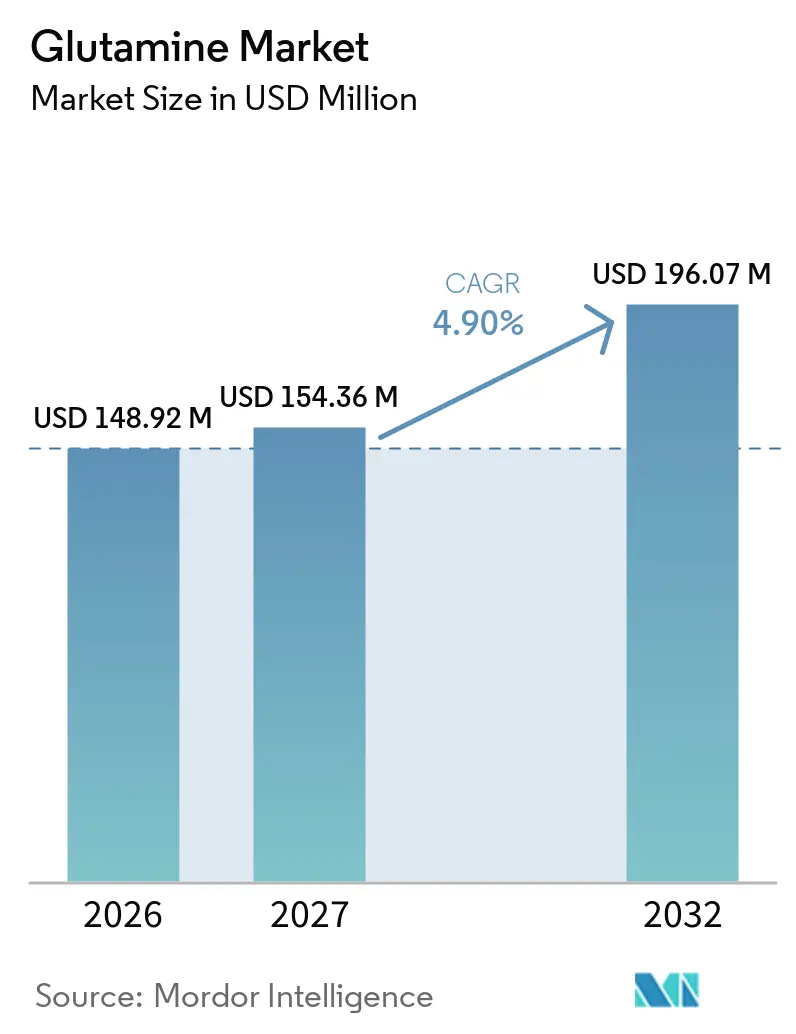
The glutamine market size is expected to grow from USD 148.92 million in 2026 to USD 154.36 million in 2027 and is forecast to reach USD 196.07 million by 2032 at a 4.90% CAGR over 2027-2032. The market is experiencing steady growth, supported by its expanding role across health, nutrition, pharmaceutical, and biotechnology applications. Increasing awareness of amino acid supplementation, growing interest in physical fitness and recovery, and rising demand for specialized nutritional formulations are broadening its use across consumer and commercial industries. Continued advancements in fermentation technologies and ingredient processing are supporting production capabilities and product quality. Additionally, expanding research into glutamine's functional properties and its applications in clinical nutrition and pharmaceutical formulations is strengthening its relevance across the healthcare and nutrition industries.
Key Report Takeaways
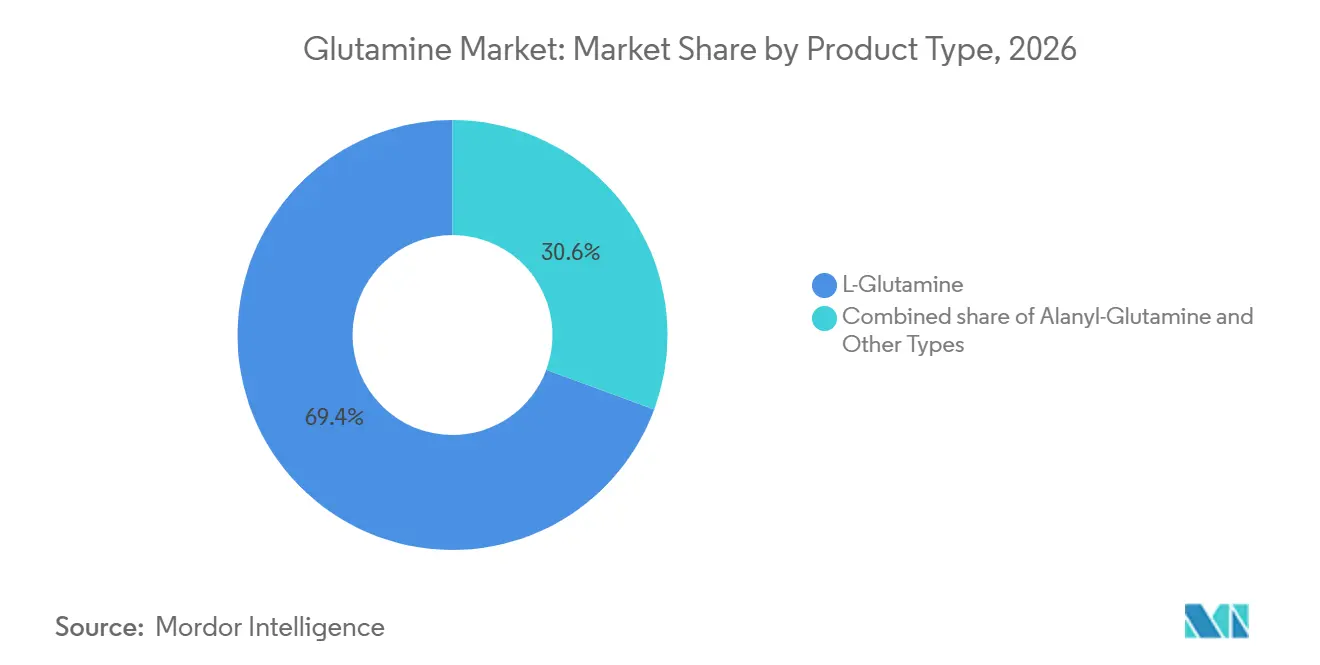
- By product type, L-Glutamine held 69.37% in 2026, while Alanyl-Glutamine is forecast to grow at a 6.27% CAGR during 2027-2032.
- By form, Powder held 49.26% in 2026, while Capsules and Tablets are forecast to grow at a 7.18% CAGR during 2027-2032.
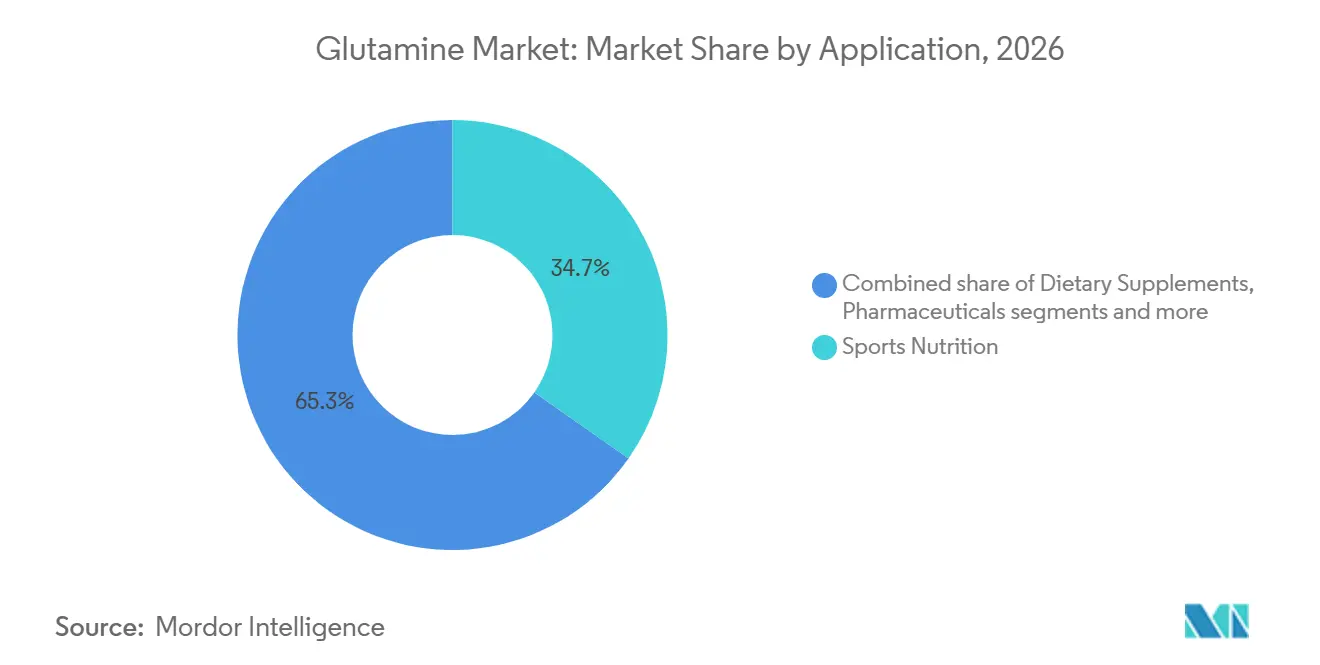
- By application, Sports Nutrition held 34.73% of the 2026 glutamine market, while Pharmaceuticals are forecast to grow at a 6.13% CAGR during 2027-2032.
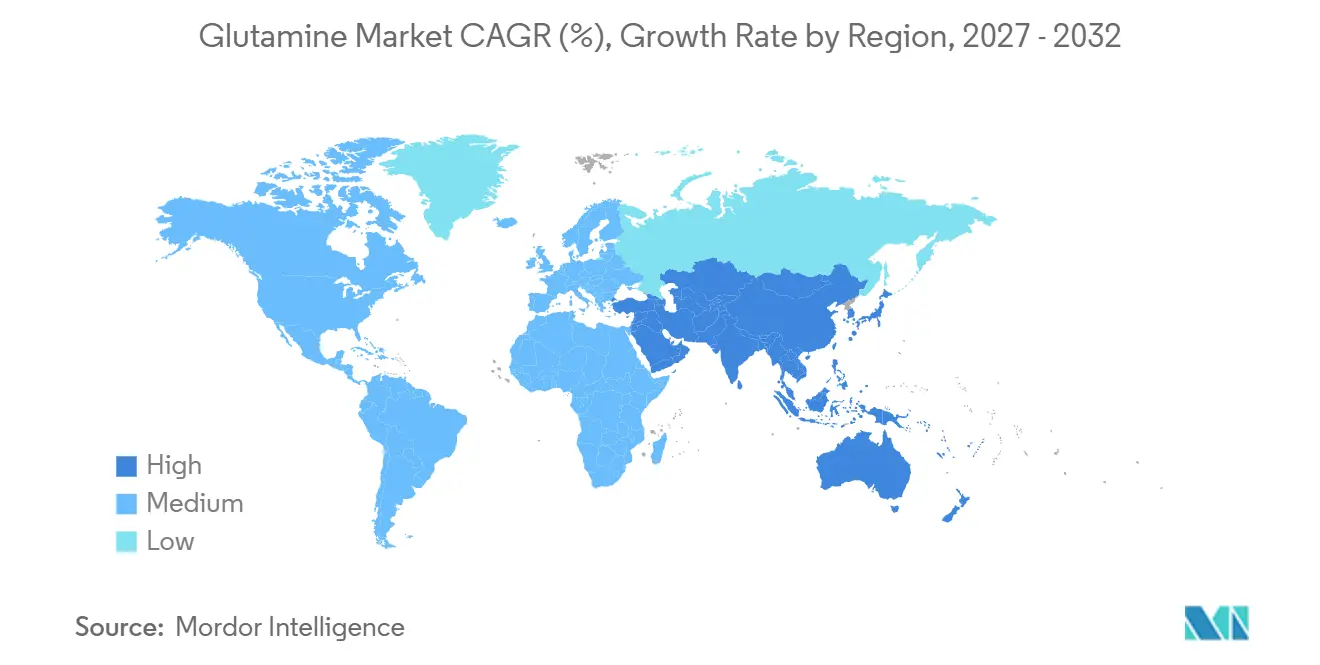
- By geography, North America held 34.83% of the 2026 glutamine market, while Asia-Pacific is forecast to grow at a 6.54% CAGR during 2027-2032.
Note: Market numbers in this report are based on Mordor Intelligence's proprietary estimation framework, which combines nine months of actuals with Q4 projections for base year 2026.
Market Trends and Insights
Drivers Impact Analysis of Glutamine Market*
| Driver | (~) % Impact on CAGR Forecast | Geographic Relevance | Impact Timeline |
|---|---|---|---|
| Growth in sports nutrition and fitness participation | +1.4% | North America, Europe, Asia-Pacific | Short term (≤ 2 years) |
| Established pharmaceutical applications and development of new glutamine-based formulations | +0.9% | Global | Medium term (2–4 years) |
| Growing adoption of specialized nutrition and supplements for companion animals | +0.6% | North America, Europe | Short term (≤ 2 years) |
| Increasing demand for glutamine in functional and fortified food products | +0.5% | North America, Asia-Pacific | Medium term (2–4 years) |
| Increasing use of functional amino acids in livestock nutrition | +0.4% | Asia-Pacific, South America | Medium term (2–4 years) |
| Growing demand for glutamine in biopharmaceutical manufacturing and cell culture applications | +0.8% | North America, Europe | Long term (≥ 4 years) |
| Source: Mordor Intelligence | |||
Growth in Sports Nutrition and Fitness Participation
Rising participation in sports, fitness activities, and structured exercise is supporting demand for sports nutrition products, including amino acid-based supplements such as glutamine. According to the Sports & Fitness Industry Association (SFIA), approximately 250 million Americans participated in at least one sport, fitness, or outdoor activity in 2025, representing a 1.2% increase from the previous year[1]. As more consumers engage in regular exercise and strength-training routines, interest in sports nutrition formulations designed to support muscle recovery and exercise performance is expanding. Glutamine is increasingly relevant to this category as it is incorporated into amino acid supplements and post-workout nutrition formulations. This is creating opportunities for glutamine manufacturers supplying supplement brands, sports nutrition producers, and specialized fitness nutrition channels.
Established Pharmaceutical Applications and Development of New Glutamine-Based Formulations
Glutamine has established applications in pharmaceutical products and specialized clinical nutrition formulations, supporting demand from pharmaceutical manufacturers and healthcare product developers. Its use in therapeutic formulations is encouraging continued research into amino acid-based treatments for specific medical conditions and supportive care applications. Pharmaceutical companies are also exploring different delivery formats and formulation approaches to improve the suitability of glutamine for specialized patient requirements. In parallel, the use of glutamine in clinical nutrition and medical preparations is strengthening its position beyond conventional dietary supplements. These applications provide manufacturers with opportunities to serve pharmaceutical, clinical nutrition, and healthcare-related end users.
Growing Adoption of Specialized Nutrition and Supplements for Companion Animals
Increasing focus on companion animal health and preventive care is supporting demand for specialized pet nutrition products, including amino acid-based supplements such as glutamine. According to the American Pet Products Association (APPA) 2025 Dog & Cat Report, 53% of dog owners and 34% of cat owners provided their pets with vitamins or supplements in 2024, with both categories recording a 6% increase compared with 2023[2]. The report also highlighted growing interest in specialized nutritional products targeting joint health, mobility, skin and coat condition, and digestive wellness. As pet owners increasingly prioritize preventive healthcare and tailored nutritional support, manufacturers are expanding their functional pet food and supplement offerings. This is creating additional opportunities for glutamine suppliers serving companion animal nutrition and veterinary supplement manufacturers.
Increasing Demand for Glutamine in Functional and Fortified Food Products
Growing consumer interest in protein-rich foods and products offering additional nutritional benefits is encouraging food manufacturers to expand their functional and fortified product portfolios. According to the International Food Information Council (IFIC) 2025 Food & Health Survey, 70% of Americans reported trying to consume protein, while 23% followed a high-protein diet, making it the most commonly followed dietary pattern among respondents[3]. This growing focus on protein intake is encouraging manufacturers to incorporate additional nutritional ingredients, including amino acids, into fortified beverages, protein-enriched snacks, nutritional bars, and meal replacement products. Glutamine's role as a naturally occurring amino acid and its availability as a food ingredient provide opportunities for its incorporation into specialized nutritional formulations.
Restraints Impact Analysis of Glutamine Market*
| Restraint | (~) % Impact on CAGR Forecast | Geographic Relevance | Impact Timeline |
|---|---|---|---|
| Variations in regulatory requirements across pharmaceutical, food, feed, and supplement applications | -0.7% | Global, most acute in Middle East and Africa and Asia-Pacific | Long term (≥ 4 years) |
| Limited consumer awareness of glutamine's specific benefits and applications | -0.5% | Emerging markets, Middle East and Africa, South America | Medium term (2–4 years) |
| Volatility in fermentation feedstock and manufacturing costs | -0.6% | Global, concentrated in China | Short term (≤ 2 years) |
| Environmental compliance and wastewater management requirements | -0.3% | China, Asia-Pacific core | Medium term (2–4 years) |
| Source: Mordor Intelligence | |||
Variations in Regulatory Requirements Across Pharmaceutical, Food, Feed, and Supplement Applications
Glutamine manufacturers face varying regulatory requirements depending on the intended application and target industry, creating complexities in product development, approval, and commercialization. Pharmaceutical-grade glutamine is subject to stringent quality, purity, safety, and manufacturing standards, while food and dietary supplement applications must comply with ingredient-specific regulations and labelling requirements. Similarly, its use in animal feed and companion animal nutrition is governed by separate safety and ingredient approval frameworks. These differences require manufacturers to maintain application-specific quality controls, documentation, testing procedures, and compliance systems. Navigating multiple regulatory frameworks across countries can increase operational costs, extend product development timelines, and complicate market entry.
Limited Consumer Awareness of Glutamine's Specific Benefits and Applications
Limited consumer understanding of glutamine's specific nutritional and functional benefits can constrain its adoption across dietary supplements, functional foods, and specialized nutrition products. Although glutamine is widely recognized as an amino acid, its distinct applications in muscle recovery, digestive health, immune function, and clinical nutrition may not be fully understood by general consumers. This can make purchasing decisions more dependent on recommendations from healthcare professionals, nutritionists, and fitness specialists rather than independent product awareness. Furthermore, competition from more familiar ingredients, including whey protein, creatine, and branched-chain amino acids, can limit glutamine's visibility within the broader sports nutrition and wellness categories. Manufacturers may therefore need to invest in consumer education, product communication, and targeted marketing to expand adoption.
*Our forecasts treat driver/restraint impacts as directional, not additive. The impact forecasts reflect baseline growth, mix effects, and variable interactions.
Glutamine Market Segment Analysis
By Product Type:
L-Glutamine Dominates, Alanyl-Glutamine Records the Fastest GrowthL-Glutamine accounts for the largest share of the glutamine market, representing 69.37% in 2026. Its dominance is supported by its broad applicability across sports nutrition, dietary supplements, functional foods, pharmaceutical formulations, and animal nutrition. Its established use in conventional amino acid supplements and nutritional products supports consistent demand across multiple end-use industries. Additionally, its suitability for powder formulations and availability through established manufacturing processes contribute to its widespread commercial adoption. The versatility of L-Glutamine across both consumer-facing and industrial applications further reinforces its leading position within the product type segment.
Alanyl-Glutamine is projected to register the fastest growth, with a CAGR of 6.27% during 2027–2032. Its growth is supported by its application in specialized clinical nutrition, pharmaceutical formulations, and biopharmaceutical manufacturing. Compared with free-form glutamine, the dipeptide form offers greater stability in aqueous solutions, making it suitable for applications where conventional glutamine presents formulation challenges. Its use in parenteral nutrition and cell culture media also supports demand from healthcare and biotechnology manufacturers. Increasing interest in specialized amino acid formulations and the need for stable nutrient delivery systems are expected to strengthen the adoption of Alanyl-Glutamine over the forecast period.

By Form:
Powder Retains Scale, Capsules and Tablets Reshape TargetingPowder accounts for the largest share of the glutamine market by form, representing 49.26% in 2026. Its leading position is supported by its widespread use across sports nutrition, dietary supplements, clinical nutrition, and animal feed applications. The format offers flexibility in dosage adjustment and incorporation into different nutritional formulations, including protein powders, beverage mixes, and fortified products. Its suitability for bulk procurement and large-scale manufacturing also makes it a preferred format among commercial supplement producers and industrial buyers. These advantages support its continued adoption across both consumer-facing and industrial applications.
Capsules and tablets are projected to register the fastest growth, with a CAGR of 7.18% during 2027–2032. Their growth is supported by consumer preference for convenient, pre-measured supplementation formats that can be incorporated into daily nutritional routines. These formats offer portability, consistent dosage delivery, and ease of consumption without requiring preparation or mixing. Growing adoption of dietary supplements among consumers seeking targeted nutritional support is further supporting demand for encapsulated and tablet-based glutamine products. Additionally, the expansion of specialized supplement portfolios and wider availability through pharmacies, health stores, and online retail channels are expected to strengthen the segment's growth over the forecast period.
By Application:
Sports Nutrition Anchors Revenue, Pharmaceuticals AccelerateSports Nutrition accounts for the largest share of the glutamine market, representing 34.73% in 2026. Its leading position is supported by the widespread use of glutamine in sports supplements, recovery formulations, protein powders, and amino acid blends. Increasing participation in fitness activities and growing consumer interest in exercise recovery and nutritional supplementation are supporting demand across this application. The availability of glutamine in standalone supplements and combination formulations also provides flexibility for sports nutrition manufacturers catering to different consumer requirements. Its established presence across fitness-focused retail channels and specialized supplement portfolios further reinforces its leading market position.
Pharmaceuticals are projected to register the fastest growth, with a CAGR of 6.13% during 2027–2032. Growth is supported by glutamine's use in clinical nutrition, therapeutic formulations, and specialized medical preparations. Its established application in managing complications associated with sickle cell disease and its role in supporting nutritional requirements among patients undergoing intensive medical treatments contribute to pharmaceutical demand. Additionally, ongoing clinical research into glutamine-based formulations and its potential applications in supportive healthcare are expanding interest among pharmaceutical developers. Increasing demand for specialized nutritional therapies and amino acid-based clinical products is expected to support the segment's growth over the forecast period.
Geography Analysis
North America
North America accounts for the largest share of the glutamine market, representing 34.83% in 2026. The region's leading position is supported by established sports nutrition and dietary supplement industries, widespread consumer familiarity with amino acid supplementation, and a well-developed healthcare infrastructure. Demand is further supported by the presence of pharmaceutical manufacturers, clinical nutrition providers, and established supplement brands serving diverse end-use applications. Growing interest in fitness, preventive healthcare, and specialized nutritional products is strengthening glutamine consumption across consumer and institutional channels. Additionally, established distribution networks and advanced manufacturing capabilities support the region's continued prominence in the glutamine market.
Asia-Pacific
Asia-Pacific: Asia-Pacific is projected to register the fastest growth in the glutamine market, with a CAGR of 6.54% during 2027–2032. Regional growth is supported by an established amino acid manufacturing base, expanding pharmaceutical and nutraceutical industries, and rising demand for sports nutrition products. China and Japan benefit from established fermentation and specialty ingredient manufacturing capabilities, while India and Southeast Asian countries are witnessing increasing adoption of dietary supplements and functional nutrition products. Growing investments in biotechnology and pharmaceutical manufacturing are further supporting demand for high-purity glutamine across industrial and healthcare applications. Additionally, the expansion of functional beverages and specialized nutritional products is creating new consumption opportunities across the region.
Europe, South America, and Middle East and Africa
Europe represents the second-largest regional market, supported by established pharmaceutical, clinical nutrition, and dietary supplement industries. Demand is concentrated in major markets with developed healthcare systems and established ingredient manufacturing capabilities. South America is witnessing steady growth, supported by expanding sports nutrition consumption and rising consumer interest in health and wellness products. The Middle East and Africa region is also developing gradually, with demand supported by pharmaceutical applications, healthcare infrastructure expansion, and increasing awareness of specialized nutritional products. However, comparatively limited local manufacturing capabilities and reliance on imported ingredients continue to influence regional supply and availability.
Competitive Landscape
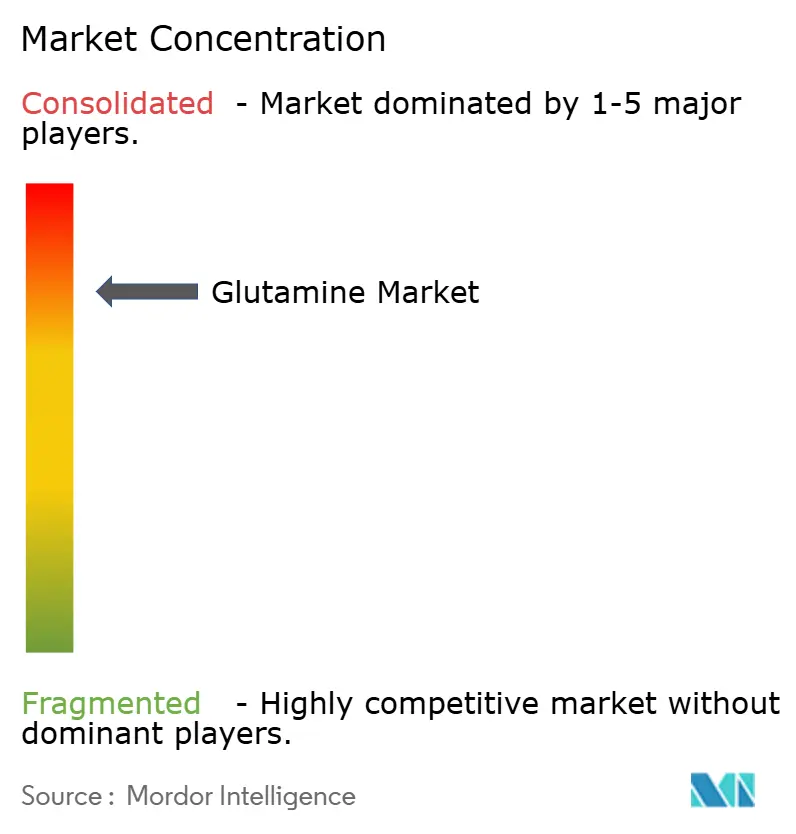
The glutamine market is concentrated, with a relatively limited group of established amino acid manufacturers accounting for a significant share of industry production and supply. Competition is shaped by manufacturing capacity, fermentation expertise, product purity, operational efficiency, and compliance with quality standards across different applications. Ajinomoto Co., Inc., Daesang Corporation, Meihua Holdings Group Co., Ltd., Shijiazhuang Jirong Pharmaceutical Co., Ltd., and Evonik Industries AG are among the leading participants in the market. Their established manufacturing capabilities and presence across nutritional, pharmaceutical, and industrial applications support their competitive positions.
Leading companies are collectively focusing on strengthening production capabilities, expanding their amino acid and specialty ingredient portfolios, and increasing their participation in pharmaceutical and biopharmaceutical applications. Strategic acquisitions and collaborations are also enabling manufacturers to broaden their technological capabilities, access additional product categories, and strengthen their presence across international markets. In addition, companies are investing in product quality, manufacturing efficiency, and application-specific solutions to address the requirements of customers across food, healthcare, nutrition, and biotechnology industries.
The market also includes smaller regional manufacturers, specialized amino acid producers, and pharmaceutical ingredient suppliers that serve specific applications and customer requirements. These participants contribute to competition through specialized product offerings, regional supply networks, and customer-focused manufacturing capabilities. Their ability to maintain consistent quality, meet application-specific standards, and ensure reliable supply influences their competitiveness. Growing demand across diverse end-use industries is also creating opportunities for smaller suppliers to strengthen their presence in selected product categories and regional markets.
Glutamine Industry Leaders
-
Ajinomoto Co., Inc.
-
Daesang Corporation
-
Meihua Holdings Group Co., Ltd.
-
Shijiazhuang Jirong Pharmaceutical Co., Ltd.
-
Evonik Industries AG
- *Disclaimer: Major Players sorted in no particular order
Glutamine Market Companies Covered in this Report
- Ajinomoto Co., Inc.
- Lonza Group Ltd.
- Daesang Corporation
- Meihua Holdings Group Co., Ltd.
- Thermo Fisher Scientific Inc.
- Shijiazhuang Jirong Pharmaceutical Co., Ltd.
- Evonik Industries AG
- Glanbia plc
- Prinova Group LLC
- Merck KGaA
- Kyowa Hakko Bio Co., Ltd.
- Abbott Laboratories
- Nestlé Health Science
- Nutricia Limited
- MusclePharm Corporation
- NOW Foods
- NutraBio Labs, Inc.
- Jarrow Formulas, Inc.
- Designs for Health, Inc.
- Olimp Laboratories
Recent Industry Developments in Glutamine Market
- July 2026: Evonik entered into an exclusive distribution agreement with Brenntag Pharma for its REXIM® good manufacturing practice-grade amino acid portfolio across most European markets. The partnership gives Brenntag responsibility for market development and distribution, strengthening the availability of specialized amino acids for pharmaceutical and biopharmaceutical applications. The agreement is intended to expand Evonik's regional market reach and improve customer access to high-purity ingredients for medical nutrition, pharmaceutical manufacturing, and cell culture applications.
- December 2025: Emmaus Life Sciences entered into a license and exclusive distribution agreement with NeoImmuneTech for Endari®, its prescription-grade L-glutamine oral powder, and potential generic equivalents for sickle cell disease in the United States, its territories, and Canada. Under the agreement, NeoImmuneTech received exclusive commercialization rights in these markets in exchange for an upfront payment and royalties on product sales. The arrangement is intended to strengthen Endari's commercialization through NeoImmuneTech's distribution and marketing capabilities.
- November 2025: AMINO GmbH entered into a strategic supply partnership with Croda International to improve the global availability of high-purity pharmaceutical-grade amino acids for pharmaceutical formulation and biomanufacturing. The collaboration combines AMINO's amino acid manufacturing capabilities with Croda's global market reach and specialty ingredient expertise. The partnership is expected to support the supply of specialized ingredients for pharmaceutical development and biopharmaceutical manufacturing.
Global Glutamine Market Report Scope
Glutamine is an amino acid used across sports nutrition, dietary supplements, pharmaceuticals, functional foods, and animal nutrition. The market is segmented by product type into L-glutamine, alanyl-glutamine, and other types; by form into powder, capsules/tablets, and liquid; by application into sports nutrition, dietary supplements, pharmaceuticals, animal nutrition, and other applications; and by geography into North America, Europe, Asia-Pacific, South America, and the Middle East and Africa. The market forecasts are provided in terms of value in USD.
Segmentation Overview
| L-Glutamine |
| Alanyl-Glutamine |
| Other Types |
| Powder |
| Capsules and Tablets |
| Liquid |
| Sports Nutrition |
| Dietary Supplements |
| Pharmaceuticals |
| Animal Nutrition |
| Other Applications |
| North America | United States |
| Canada | |
| Rest of North America | |
| Europe | Germany |
| United Kingdom | |
| Italy | |
| France | |
| Rest of Europe | |
| Asia-Pacific | China |
| India | |
| Japan | |
| Australia | |
| Rest of Asia-Pacific | |
| South America | Brazil |
| Argentina | |
| Rest of South America | |
| Middle East and Africa | South Africa |
| Saudi Arabia | |
| Rest of Middle East and Africa |
| By Product Type | L-Glutamine | |
| Alanyl-Glutamine | ||
| Other Types | ||
| By Form | Powder | |
| Capsules and Tablets | ||
| Liquid | ||
| By Application | Sports Nutrition | |
| Dietary Supplements | ||
| Pharmaceuticals | ||
| Animal Nutrition | ||
| Other Applications | ||
| By Geography | North America | United States |
| Canada | ||
| Rest of North America | ||
| Europe | Germany | |
| United Kingdom | ||
| Italy | ||
| France | ||
| Rest of Europe | ||
| Asia-Pacific | China | |
| India | ||
| Japan | ||
| Australia | ||
| Rest of Asia-Pacific | ||
| South America | Brazil | |
| Argentina | ||
| Rest of South America | ||
| Middle East and Africa | South Africa | |
| Saudi Arabia | ||
| Rest of Middle East and Africa | ||
Key Questions Answered in the Report
What is the projected growth rate for glutamine through 2032?
The glutamine market is forecast to grow at a 4.90% CAGR during 2027-2032, rising from USD 148.92 million in 2026 to USD 196.07 million by 2032.
Which glutamine product type has the largest share?
L-Glutamine held the largest product share at 69.37% in 2026.
Which glutamine form is growing fastest?
Capsules and Tablets are forecast to grow at a 7.18% CAGR during 2027-2032.
Which application leads demand for glutamine?
Sports Nutrition held 34.73% of demand in 2026, while Pharmaceuticals are forecast to expand at a 6.13% CAGR through 2032.