
Halal Tourism Market Size and Share
Market Overview
| Study Period | 2021 - 2031 |
|---|---|
| Market Size (2026) | USD 249.21 Billion |
| Market Size (2031) | USD 336.99 Billion |
| Growth Rate (2026 - 2031) | 6.22 % |
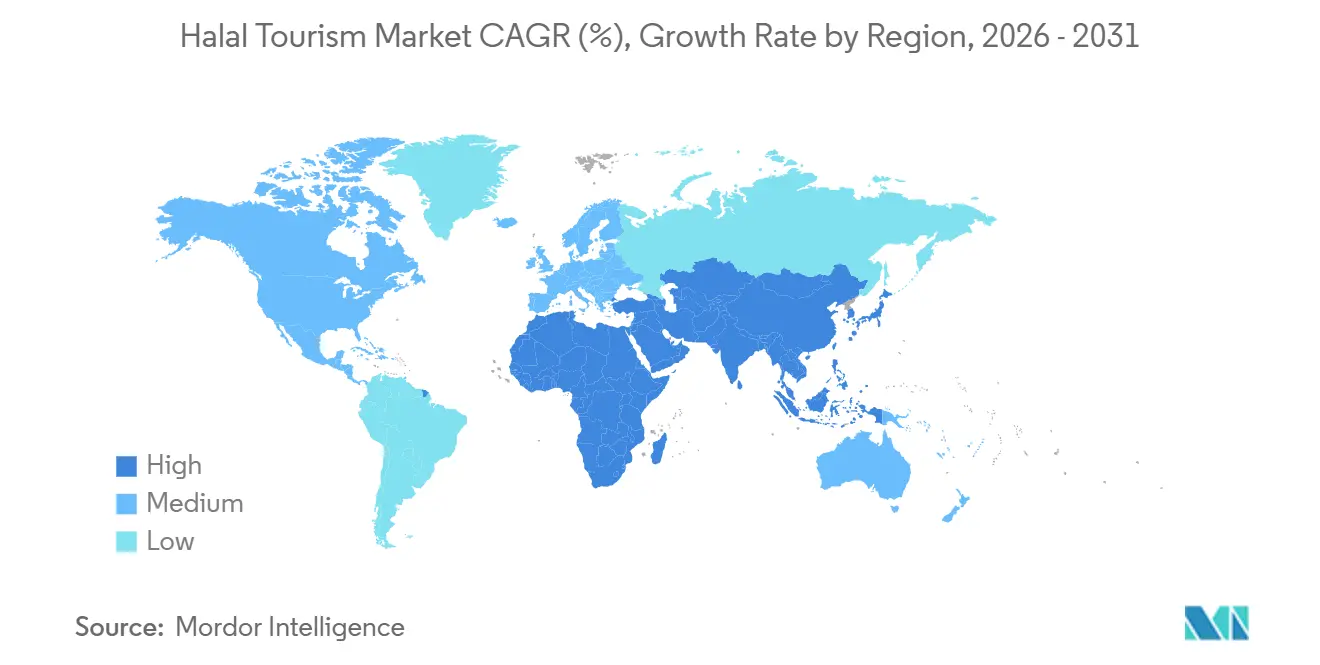
| Fastest Growing Market | Europe, Middle East, and Africa |
| Largest Market | Middle East |
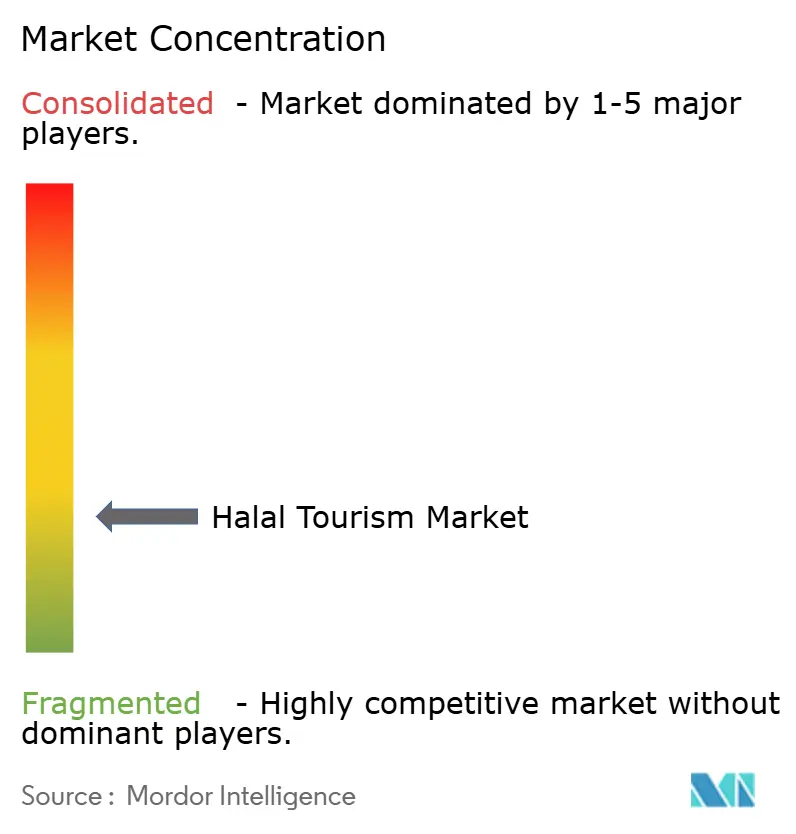
| Market Concentration | Low |
Major Players *Disclaimer: Major Players sorted in no particular order Image © Mordor Intelligence. Reuse requires attribution under CC BY 4.0. | |
Halal Tourism Market Analysis by Mordor Intelligence
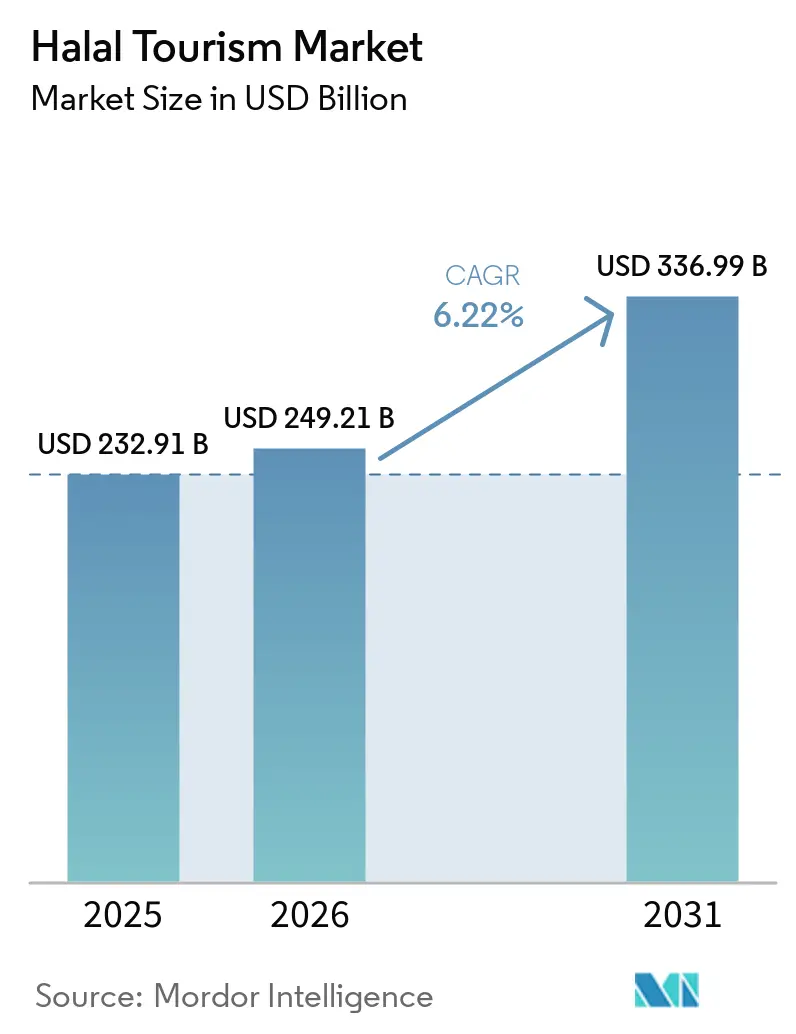
The global halal tourism market was valued at USD 232.91 billion in 2025 and estimated to grow from USD 249.21 billion in 2026 to reach USD 336.99 billion by 2031, at a CAGR of 6.22% during the forecast period (2026-2031). International Muslim travel arrivals reached 176 million in 2024 and increased to 186 million in 2025, reflecting a shift from recovery to stable growth[1]. Digital trip planning advancements, including platforms for visa processing, itinerary creation, and service verification, are simplifying cross-border travel. Government-supported programs in Saudi Arabia and Malaysia are improving service quality, compliance standards, and tourism readiness, attracting both repeat and first-time visitors. The market remains fragmented, offering opportunities for operators providing verified halal food, prayer facilities, privacy-focused accommodations, and clear trust signals to strengthen their position.
Key Report Takeaways
- By travel purpose, Religious Tourism led the Global Halal Tourism Market with a 38.43% revenue share in 2025, while Leisure and Vacation Travel is forecast to expand at a 7.46% CAGR through 2031.
- By traveler type, Group Travel held 61.91% of the Global Halal Tourism Market share in 2025, while Solo Travel recorded the highest projected CAGR of 6.98% through 2031.
- By service type, Accommodation accounted for 33.24% of the Global Halal Tourism Market in 2025, while Activities and Attractions are advancing at a 7.12% CAGR through 2031.
- By booking channel, Online Travel Agencies held 38.32% of the Global Halal Tourism Market in 2025 and are expected to remain the fastest-growing channel at a 7.84% CAGR through 2031.
- By destination country, Saudi Arabia led the Global Halal Tourism Market with a 24.23% share in 2025, while Türkiye is forecast to post the fastest growth at a 7.98% CAGR through 2031.
Note: Market size and forecast figures in this report are generated using Mordor Intelligence’s proprietary estimation framework, updated with the latest available data and insights as of January 2026.
Market Trends and Insights
Drivers Impact Analysis of Halal Tourism Market*
| Driver | (~) % Impact on CAGR Forecast | Geographic Relevance | Impact Timeline |
|---|---|---|---|
| Rising Muslim Population and Travel Spend | +1.6% | Global, the highest intensity is in the Middle East, North Africa, and Southeast Asia | Long term (≥ 4 years) |
| Growth of Digital Muslim-Friendly Booking Ecosystems | +1.2% | Global, Asia-Pacific core, spill-over to GCC and European Union | Medium term (2-4 years) |
| Government-Led Halal Destination Development | +1.0% | Western Asia, Southeast Asia, North Africa | Medium term (2-4 years) |
| Demand for Family-Oriented and Faith-Consistent Travel | +0.8% | Global, strongest in GCC and South Asia | Long term (≥ 4 years) |
| Premiumization of Halal Hospitality and Wellness Travel | +0.7% | UAE, Saudi Arabia, Malaysia, Türkiye | Medium term (2-4 years) |
| Rising Cross-Border Pilgrimage and Religious Leisure Travel | +0.9% | Global, epicenter in Saudi Arabia, spill-over to Jordan and Iraq | Short term (≤ 2 years) |
| Source: Mordor Intelligence | |||
Rising Muslim Population and Travel Spend
The global halal tourism market is supported by a growing and increasingly mobile Muslim traveler base. International Muslim travel arrivals increased, reflecting the expanding scale of this market. Muslim women accounted for a significant portion of international trips, representing nearly half of total Muslim arrivals. This shift highlights the growing influence of their spending power on destination and service preferences. Many Muslim women travelers expressed a willingness to pay more for verified Muslim-friendly accommodations, emphasizing the importance of trust and consistent service quality. Solo travel among Muslim women also saw a notable rise compared to previous years, indicating changes in how trips are planned and purchased. This broader traveler base drives steady demand across various segments, including pilgrimage, family vacations, city breaks, and experience-focused trips. These trends collectively support long-term growth across multiple areas of the global halal tourism market[2].
Growth of Digital Muslim-Friendly Booking Ecosystems
Digital booking ecosystems are simplifying the global halal tourism market by integrating service discovery, booking, and verification into user-friendly formats. The official Saudi platform for pilgrimage travel, Nusuk, supports visa applications, accommodation, and transport bookings for pilgrims from over 190 countries. This demonstrates how digital systems are standardizing cross-border travel at scale. HalalBooking reported a gross booking value of USD 89 million for 2025, with net revenue growth of 23% and an inventory expansion to 13,176 hotels across 98 countries by 2024, reflecting the growing acceptance of specialized digital platforms. Klook and the Hong Kong Tourism Board noted a 43.5% increase in Muslim traveler bookings to Hong Kong in 2025 after launching a multi-market campaign tailored to Muslim travelers. This underscores how curated inventory and improved visibility can drive conversions. As digital search tools gain trust, the global halal tourism market is expected to see more bookings shift toward platforms offering convenience, destination-specific content, and clear Muslim-friendly features.
Government-Led Halal Destination Development
Government initiatives are shaping the global halal tourism market by aligning tourism policies, faith-based services, and destination branding. Saudi Arabia reported 19.5 million pilgrims and Umrah performers in 2025, with a 94% satisfaction rate among Umrah performers, reflecting the success of state-supported capacity expansion and service coordination. Malaysia welcomed 5.4 million Muslim tourists in 2024, generating MYR 19.5 billion (USD 4.81 billion) in expenditure, and aims to attract over 10 million Muslim visitors during Visit Malaysia 2026. The Islamic Tourism Center continues to promote the Muslim-Friendly Tourism and Hospitality framework, translating policy support into practical standards for hotels and service providers. By combining destination marketing with compliance support and service design, public agencies can strengthen the global halal tourism market, focusing on quality and service depth rather than solely on increasing arrival numbers[3].
Demand for Family-Oriented and Faith-Consistent Travel
Family-oriented travel remains a central focus in the global halal tourism market, with group travelers expected to dominate demand in 2025. This reflects the importance of family vacations, pilgrimage groups, and shared itineraries that rely on coordinated arrangements for lodging, transportation, and meals. Research highlights that many Muslim women travelers prioritize safety and comfort over cost when making travel decisions, underlining the need for faith-consistent and well-structured services. Many travelers also express a willingness to spend more on verified Muslim-friendly accommodations, indicating that privacy, trust, and ease of practicing faith are significant factors in their choices. HalalBooking’s recent performance illustrates this trend, with Saudi Arabia emerging as a rapidly growing destination and GCC sales increasing significantly in early 2025. These developments indicate that destinations catering to these preferences are experiencing faster booking growth.
Restraints Impact Analysis of Halal Tourism Market*
| Restraint | (~) % Impact on CAGR Forecast | Geographic Relevance | Impact Timeline |
|---|---|---|---|
| Fragmented Halal Certification Standards Across Countries | -1.2% | Global, the highest friction in non-OIC markets | Long term (≥ 4 years) |
| Limited Trust in Halal Claims in Non-Muslim Destinations | -0.8% | Europe, East Asia, Oceania | Medium term (2-4 years) |
| Higher Compliance and Reconfiguration Costs for Operators | -0.6% | Global, disproportionate for SMEs in secondary cities | Medium term (2-4 years) |
| Shortage of Halal-Ready Tourism Supply in Secondary Cities | -0.5% | Southeast Asia, South Asia, Sub-Saharan Africa | Long term (≥ 4 years) |
| Source: Mordor Intelligence | |||
Fragmented Halal Certification Standards Across Countries
The global halal tourism market faces challenges due to the absence of a universally accepted certification framework across destination countries. Hospitality operators often need multiple certifications to operate in various markets, incurring high costs for audits, documentation, and renewals. Efforts to harmonize halal standards are ongoing, but differences in religious interpretations and local regulatory practices continue to impede cross-border alignment. This situation creates unequal market access, as larger operators are better positioned to manage compliance costs compared to smaller firms, particularly those serving multiple destinations. Although countries such as Malaysia are working to formalize Muslim-friendly frameworks, the market continues to encounter difficulties until these frameworks gain consistent recognition across jurisdictions[4].
Limited Trust in Halal Claims in Non-Muslim Destinations
Trust remains a key concern in the global halal tourism market, especially when travelers consider non-Muslim destinations that claim halal positioning without adequate verification. Many travelers require clear assurances regarding halal food preparation, access to prayer facilities, and privacy-sensitive amenities. Weak signaling in these areas often reduces booking confidence, even if the destination is otherwise appealing. A campaign by Klook and the Hong Kong Tourism Board demonstrated the effectiveness of targeted efforts, resulting in a significant increase in Muslim traveler bookings to Hong Kong after promoting curated Muslim-friendly experiences. Research on digital traceability in halal systems underscores the need for stronger governance and clearer digital verification to build trust across borders. Until trust signals are more easily verifiable during the booking process, non-OIC destinations in the global halal tourism market are likely to experience slower traveler conversion than destinations with well-established Muslim-friendly offerings.
*Our forecasts treat driver/restraint impacts as directional, not additive. The impact forecasts reflect baseline growth, mix effects, and variable interactions.
Halal Tourism Market Segment Analysis
By Travel Purpose:
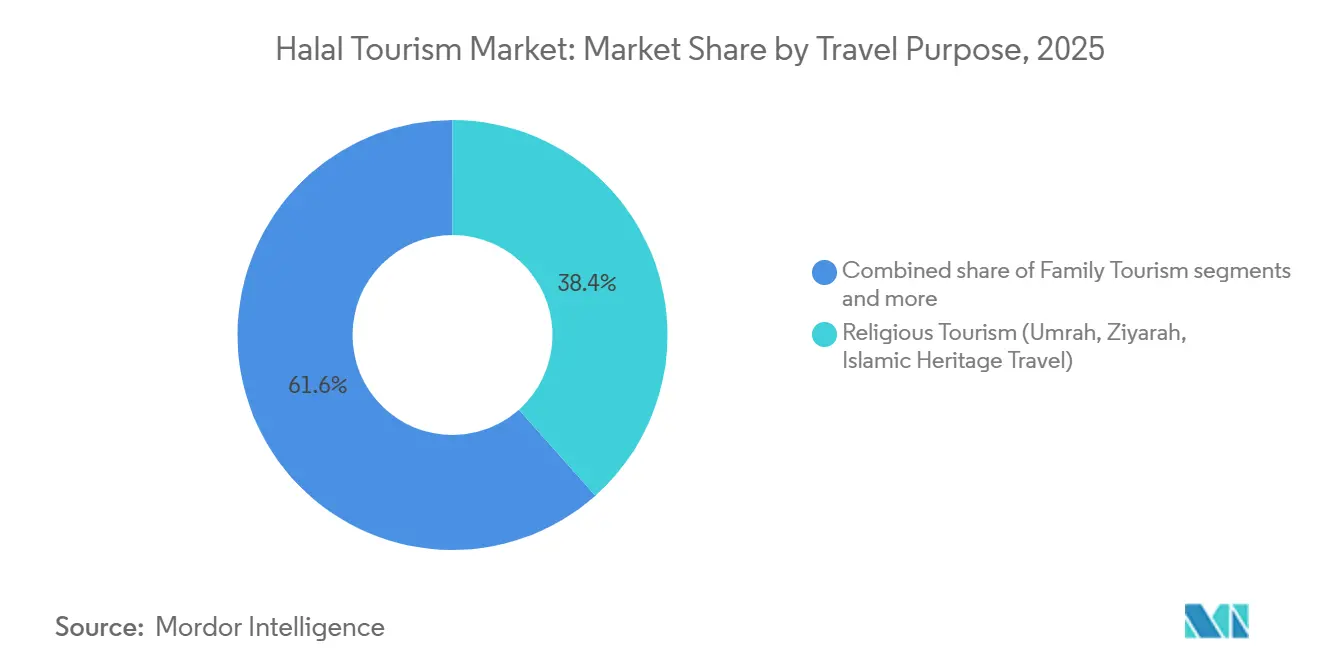
Religious Dominance and the Leisure AccelerationReligious tourism accounted for 38.43% of the global halal tourism market in 2025, making it the largest travel purpose segment. Saudi Arabia hosted 19.5 million pilgrims and Umrah performers that year, forming the primary demand base for this segment and sustaining the market through recurring cross-border flows. This demand also drives related needs for accommodation, local transportation, and destination services tied to pilgrimage travel. The Nusuk platform supports this structure by offering pilgrims from over 190 countries direct access to booking and service processes through a single official platform. Religious travel remains a high-volume segment and a critical demand base for the broader global halal tourism market.
Leisure and vacation travel is projected to grow at a CAGR of 7.46% from 2026 to 2031. This growth aligns with increasing Muslim travel arrivals and the rising participation of women and solo travelers, diversifying travel purposes beyond obligatory trips. Family tourism remains closely linked to religious and leisure segments, as many trips involve group planning and shared service needs. Business and MICE (Meetings, Incentives, Conferences, and Exhibitions) travel is becoming more significant, particularly in regions where OIC (Organization of Islamic Cooperation)-linked corporate and institutional ties are strengthening. Faith-consistent service expectations further support this trend. The global halal tourism industry is moving toward a more balanced purpose mix, with religious travel remaining a strong foundation.

By Traveler Type:
Group Scale Meets Solo GrowthGroup travel accounted for 61.91% of the global halal tourism market share in 2025, underscoring its continued dominance in pilgrimage, family vacations, and organized itineraries. This segment benefits from bundled travel packages, blocked accommodation, and the convenience of managing families or pilgrim groups through verified services. Solo travel, however, is expected to grow at a 6.98% compound annual growth rate (CAGR) through 2031, making it the fastest-growing traveler type in the global halal tourism market. Research by CrescentRating in 2026 revealed that solo travel among Muslim women increased to 35% in 2025, compared to 28% in 2019, indicating a lasting change in travel behavior. Mastercard and CrescentRating also noted a rise in solo travel among younger Muslim travelers, supporting the growth of self-directed and app-based booking trends.
The rise of solo travel is reshaping how the global halal tourism market serves customers during booking and travel. Smaller party sizes often result in lower transaction values per booking but can increase booking frequency and demand for flexible options. Solo travelers prioritize verified neighborhood information, halal dining options, reliable transportation, and accommodations emphasizing safety and privacy. This is particularly relevant for younger women travelers, whose growing participation drives the need for services that balance independence with trust. Despite this growth, group travel remains central to the market, as pilgrimage and family trips continue to drive most demand.
By Service Type:
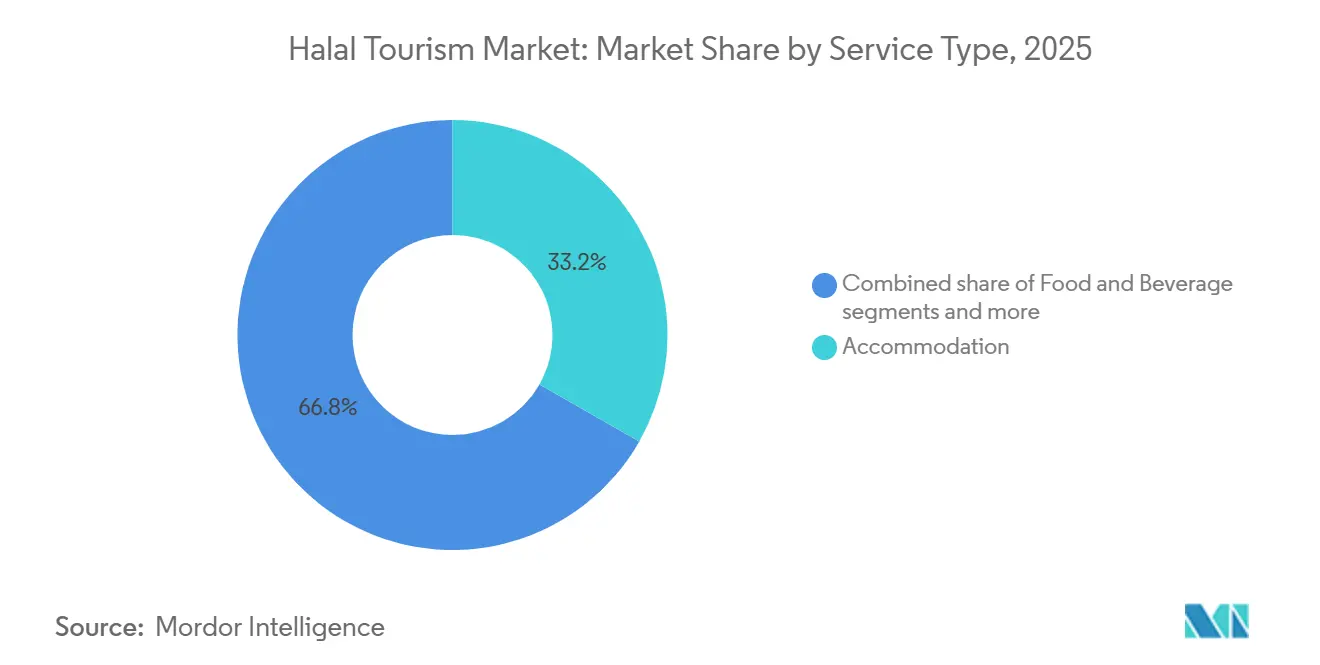
Accommodation Anchors the Spend, Experiences Drive GrowthAccommodation accounted for 33.24% of the global halal tourism market in 2025, making it the largest service category. Lodging plays a key role in Muslim-friendly travel by addressing essential needs, such as access to halal food, privacy, prayer facilities, and family-friendliness. HalalBooking expanded to 13,176 hotels in 98 countries by 2024, demonstrating the scalability and importance of verified accommodation in this market. Activities and attractions are the fastest-growing service category, with a projected CAGR of 7.12%. This reflects a shift in traveler preferences toward destination experiences rather than just lodging. Opportunities are emerging for guided tours, heritage circuits, city passes, and family-oriented attractions, which can be integrated into Muslim-friendly travel packages.
Food and beverage remain a critical service element, even if not the largest expense in travel budgets. Confidence in halal dining is essential for many travelers, making it important for destinations to ensure the availability and verification of local halal food options, which can enhance overall trip satisfaction. Transport is also significant, especially with integrated booking systems like Nusuk that connect accommodation and mobility for international pilgrims. The service mix in global halal tourism is broadening, with lodging anchoring overall spending while experiences increasingly influence traveler choices. This shift highlights the growing importance of service depth as a competitive factor in the market.
By Booking Channel:
OTAs Lead Structure and SpeedOnline travel agencies (OTAs) held a 38.32% market share in 2025 and are expected to grow at a compound annual growth rate (CAGR) of 7.84% through 2031. This growth reflects the increasing preference for digital channels in the global halal tourism market, as they integrate search, comparison, booking, and service verification more efficiently than traditional methods. Nusuk exemplifies this trend by consolidating official travel services for pilgrims from over 190 countries into a single digital platform. HalalBooking’s 2025 performance, with USD 89 million in gross booking value and 23% net revenue growth, further demonstrates the scalability of specialized OTAs in this market. While direct booking remains relevant for repeat travelers and established brands, digital intermediaries are driving advancements in channel development.
Travel agencies and tour operators continue to serve first-time pilgrims, older travelers, and families who prefer guided support. Religious travel specialists retain importance by building trust through community reputation and offering pre-arranged, faith-consistent services. However, the market increasingly favors platforms that simplify search processes and clarify service standards before payment. The partnership between Klook and the Hong Kong Tourism Board, which resulted in a 43.5% increase in Muslim traveler bookings to Hong Kong in 2025, highlights how curated digital offerings can boost demand. Over time, digital channels that effectively verify and package inventory are likely to outpace offline channels reliant on manual trust-building methods.
Geography Analysis
Western Asia Halal Tourism Market
Western Asia is the largest regional cluster in the global halal tourism market, driven by a strong religious travel base, established service capacity, and high destination recognition. Saudi Arabia is projected to hold a 24.23% country-level share in 2025, with 19.5 million pilgrims and Umrah performers, underscoring the region's reliance on pilgrimage-driven demand. The Nusuk platform enhances this position by connecting pilgrims from over 190 countries to booking and service functions in one digital environment. The region also benefits from family-travel demand, diverse accommodation options, and operational expertise in meeting Muslim-friendly tourism needs. Western Asia demonstrates the effective combination of scale, faith alignment, and destination readiness.
APAC Halal Tourism Market
Türkiye is expected to achieve the fastest growth among destination countries, with an 7.98% CAGR projected through 2031. Malaysia is a key destination, attracting 5.4 million Muslim tourists in 2024, generating MYR 19.5 billion (USD 4.81 billion) in spending, and targeting over 10 million visitors during Visit Malaysia 2026. The Islamic Tourism Center supports regional coordination and consistency in Muslim-friendly tourism standards. Singapore and Thailand remain significant due to their location in major travel corridors. Hong Kong’s 43.5% rise in Muslim traveler bookings in 2025 highlights the impact of targeted communication in developing Muslim-friendly profiles.
Europe, North America and APAC Halal Tourism Market
Europe, North America, and other non-OIC regions show varied performance in the global halal tourism market. CrescentRating’s 2025 ranking placed the United Kingdom as the top non-OIC destination, demonstrating that well-organized facilities and information can attract Muslim travelers. Singapore also ranked highly, showing that service design can influence destination choice. However, non-OIC regions face challenges, including a trust gap in halal claims, which can limit booking conversions when digital verification is insufficient. While the market offers geographic potential, traveler confidence and service readiness remain inconsistent.
Competitive Landscape
The halal tourism market is fragmented, with competition spread across specialist platforms, mainstream digital travel sellers, public tourism bodies, and accommodation providers. Specialist platforms are significant due to their focus on trust, service quality, and Muslim-friendly product curation. HalalBooking has expanded its reach to numerous hotels across multiple countries and has reported significant gross booking volume, demonstrating the market's potential for scale. The competitive landscape highlights the importance of brand trust and verified relevance alongside travel inventory.
Strategic initiatives in global halal tourism focus on digital reach, standardization, and destination-specific offerings. HalalBooking’s results indicate Saudi Arabia as a fast-growing destination, with GCC sales showing notable growth. A partnership between Klook and the Hong Kong Tourism Board led to a significant increase in Muslim traveler bookings, showing that mainstream platforms can attract this audience with tailored inventory. Malaysia’s Islamic Tourism Center partnered with RusQuality to extend Muslim-friendly tourism standards into Russia, emphasizing the role of standardization in competition. These developments highlight the importance of trust, discoverability, and compliance in the market.
Key competitive advantages in global halal tourism include verification, ease of booking, and service consistency. Public platforms like Nusuk benefit from proximity to visa and regulatory processes. Specialist platforms excel in offering privacy filters, halal-friendly lodging, and destination-specific assurances. Mainstream platforms can compete by enhancing Muslim-friendly discovery features and collaborating with destination boards. The market remains open to both specialists and adaptable travel brands that can maintain trust.
Halal Tourism Industry Leaders
-
CrescentRating
-
HalalBooking
-
Tripfez
-
Salam Standard
-
HalalTrip
- *Disclaimer: Major Players sorted in no particular order
Halal Tourism Market Companies Covered in this Report
- CrescentRating
- HalalBooking
- Tripfez
- Salam Standard
- HalalTrip
- Expedia Group
- Airbnb
- Tripadvisor
- Google Travel
- Traveloka
- Viator
- GetYourGuide
- Al Habtoor Group
- Satguru Travel & Tourism Services
- Muslim Pro (Bitsmedia Pte Ltd)
- Flyin.com
- TUI Group
- Booking Holdings (Booking.com)
- Agoda (Booking Holdings)
- Klook Travel Technology Ltd.
Recent Industry Developments in Halal Tourism Market
- May 2026: The Islamic Tourism Center (ITC) Malaysia partnered with RusQuality, Russia's halal assurance body, to introduce Malaysia's Muslim-Friendly Tourism and Hospitality standards in Russia. This marks ITC's first effort to implement its certification model in a non-OIC and non-Western market.
- January 2026: HalalBooking reported USD 89 million in gross booking value for 2025, a 20% annual increase, with net revenue up 23%. Saudi Arabia became the fastest-growing destination, surpassing 10% of total sales. The company targets at least 30% GBV growth in 2026.
- August 2025: Klook and the Hong Kong Tourism Board launched the “Jelajah Hong Kong” initiative targeting Muslim travelers from Singapore, Malaysia, and Indonesia. Klook reported a 43.5% increase in Muslim traveler bookings to Hong Kong over the past year, supported by improved Muslim-friendly offerings and greater campaign visibility.
- May 2025: HalalBooking began building a school in Kahramanmaraş, Türkiye, through its EUR 200,000 (USD 235,262) earthquake reconstruction appeal with Islamic Relief. This effort reflects its commitment to supporting faith-conscious traveler communities.
Global Halal Tourism Market Report Scope
| Leisure & Vacation Travel |
| Religious Tourism (Umrah, Ziyarah, Islamic Heritage Travel) |
| Family Tourism |
| Business & MICE Travel |
| Solo Travelers |
| Group Travelers |
| Accommodation |
| Food and Beverage |
| Activities and Attractions |
| Transportation |
| Services and Facilities |
| Online Travel Agencies (OTAs) |
| Direct Booking |
| Travel Agencies & Tour Operators |
| Religious Travel Specialists |
| Saudi Arabia |
| Türkiye |
| Malaysia |
| United Arab Emirates |
| Indonesia |
| Qatar |
| Egypt |
| Singapore |
| United Kingdom |
| Thailand |
| Rest of World |
| By Travel Purpose | Leisure & Vacation Travel |
| Religious Tourism (Umrah, Ziyarah, Islamic Heritage Travel) | |
| Family Tourism | |
| Business & MICE Travel | |
| By Traveler Type | Solo Travelers |
| Group Travelers | |
| By Service Type | Accommodation |
| Food and Beverage | |
| Activities and Attractions | |
| Transportation | |
| Services and Facilities | |
| By Booking Channel | Online Travel Agencies (OTAs) |
| Direct Booking | |
| Travel Agencies & Tour Operators | |
| Religious Travel Specialists | |
| By Destination Country | Saudi Arabia |
| Türkiye | |
| Malaysia | |
| United Arab Emirates | |
| Indonesia | |
| Qatar | |
| Egypt | |
| Singapore | |
| United Kingdom | |
| Thailand | |
| Rest of World |
Key Questions Answered in the Report
What is the current size of the global halal tourism space?
The global halal tourism market was valued at USD 232.91 billion in 2025 and is estimated at USD 249.21 billion in 2026, with a forecast of USD 336.99 billion by 2031.
What is driving growth in Muslim-friendly travel demand?
The main growth supports are the rise in international Muslim travel arrivals to 186 million in 2025, stronger digital booking tools, and higher demand for verified family-friendly and faith-consistent services.
Which travel purpose leads to current demand?
Religious tourism leads with 38.43% share in 2025, supported mainly by Saudi Arabia’s 19.5 million pilgrims and Umrah performers in 2025.
Which booking channel is growing the fastest?
Online travel agencies lead both on current scale and future pace, holding 38.32% share in 2025 and posting a projected 7.84% CAGR through 2031.
Why is Saudi Arabia so important in this space?
Saudi Arabia led destination-country demand with 24.23% share in 2025, and its official Nusuk platform supports pilgrimage travel from more than 190 countries.