
Generative AI In Software As A Medical Device (SaMD) Market Size and Share
Market Overview
| Study Period | 2020 - 2031 |
|---|---|
| Market Size (2026) | USD 4.38 Billion |
| Market Size (2031) | USD 10.19 Billion |
| Growth Rate (2026 - 2031) | 18.40 % |
| Fastest Growing Market | Asia-Pacific |
| Largest Market | North America |
| Market Concentration | Medium |
Major Players *Disclaimer: Major Players sorted in no particular order Image © Mordor Intelligence. Reuse requires attribution under CC BY 4.0. | |
Generative AI In Software As A Medical Device (SaMD) Market Analysis by Mordor Intelligence
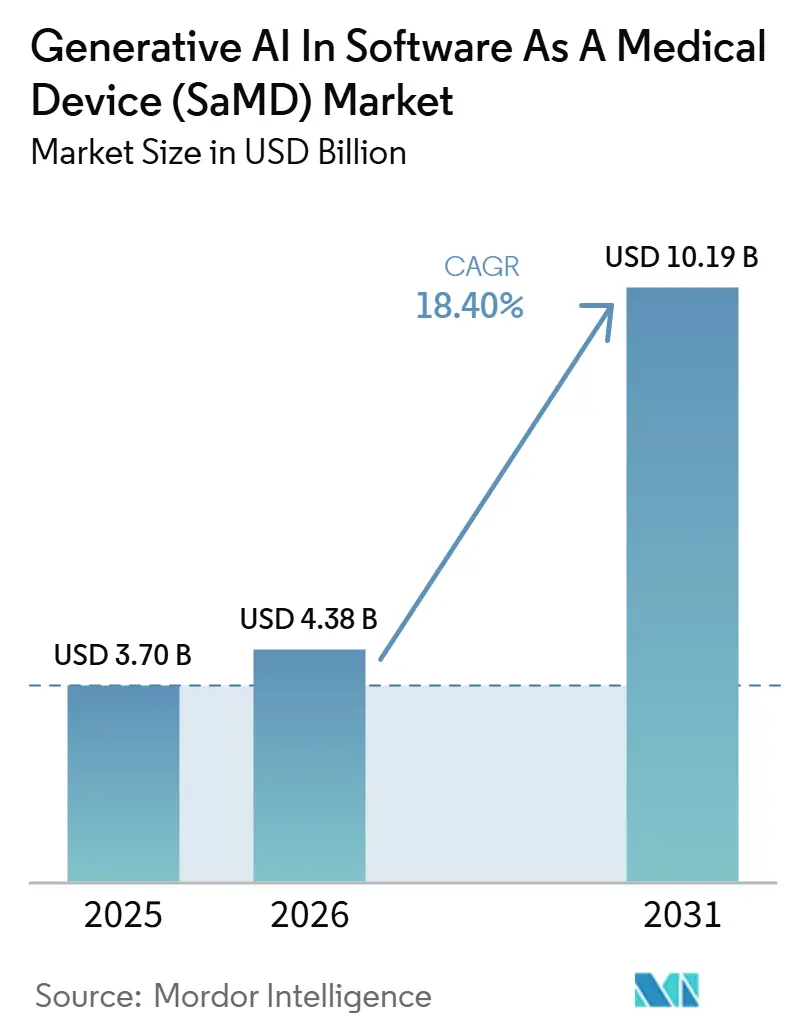
The Generative AI in Software as a Medical Device Market size was valued at USD 3.70 billion in 2025 and is estimated to grow from USD 4.38 billion in 2026 to reach USD 10.19 billion by 2031, at a CAGR of 18.40% during the forecast period (2026-2031).
Generative models are moving beyond pilot projects into clinical software that supports diagnostic, reporting, and treatment workflows. Providers are favoring platforms that can be updated, integrated with existing records, and used across several clinical settings. Established imaging companies are extending their software portfolios, while AI-focused companies are developing clinical foundation models for related specialties. Cloud providers remain important because they supply the computing capacity and compliant data environments that these products require. Clinical trust, evidence quality, and data governance will continue to shape adoption in the generative AI in SaMD market.
Key Report Takeaways
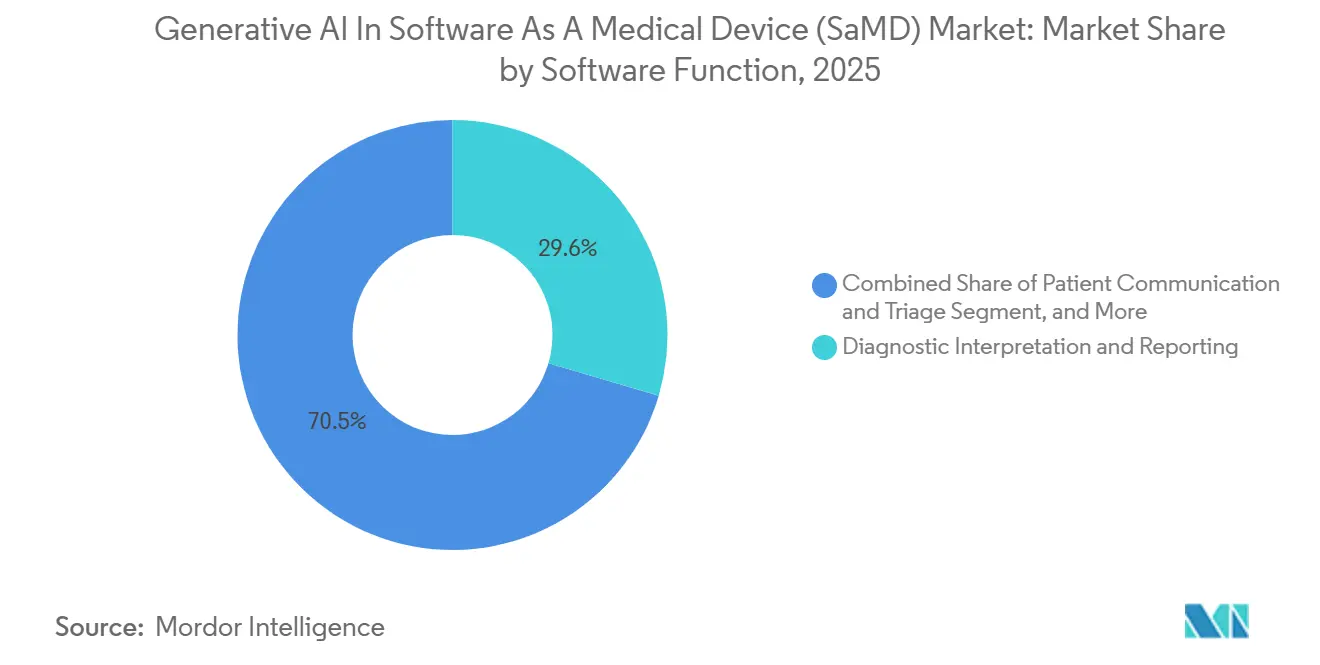
- By software function, diagnostic interpretation and Reporting held 29.55% of the generative AI in SaMD market share in 2025, while remote monitoring and patient management is projected to grow at a 21.93% CAGR through 2031.
- By clinical use case, radiology and imaging accounted for 34.22% of the generative AI in SaMD market size in 2025, while cardiology is projected to advance at a 22.67% CAGR through 2031.
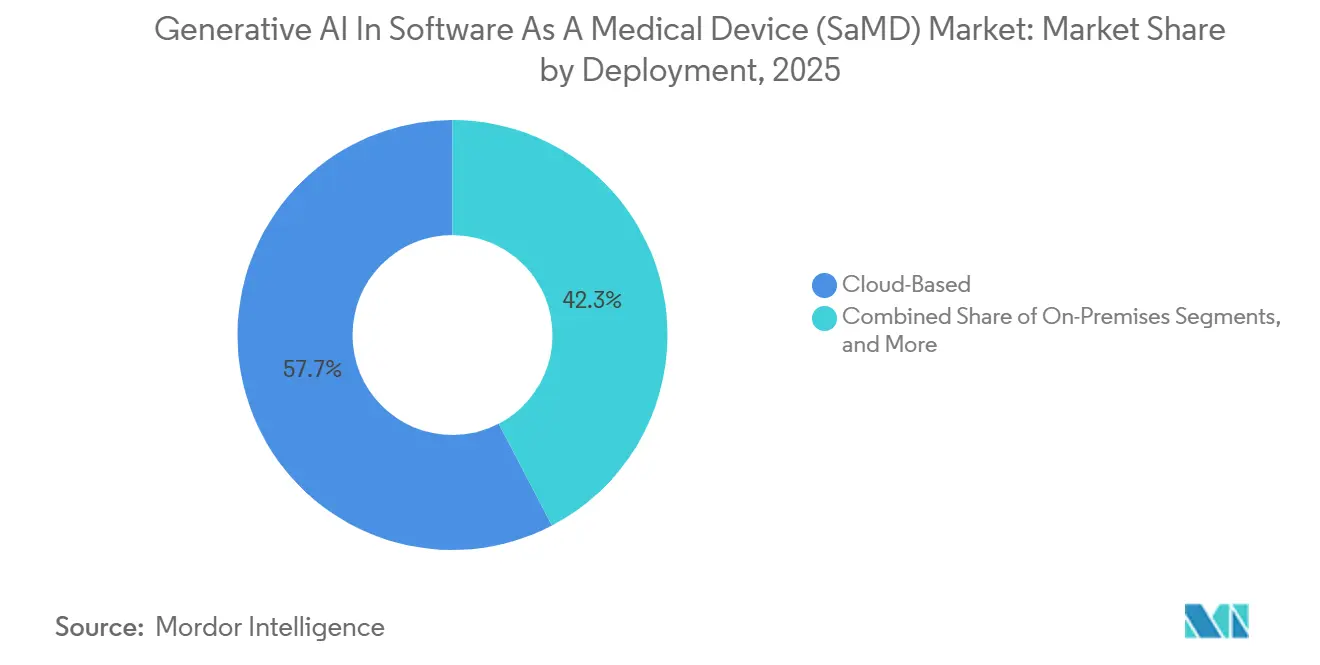
- By deployment, cloud-based solutions captured 57.66% revenue share in 2025, while hybrid deployment is expected to grow at a 29.35% CAGR through 2031.
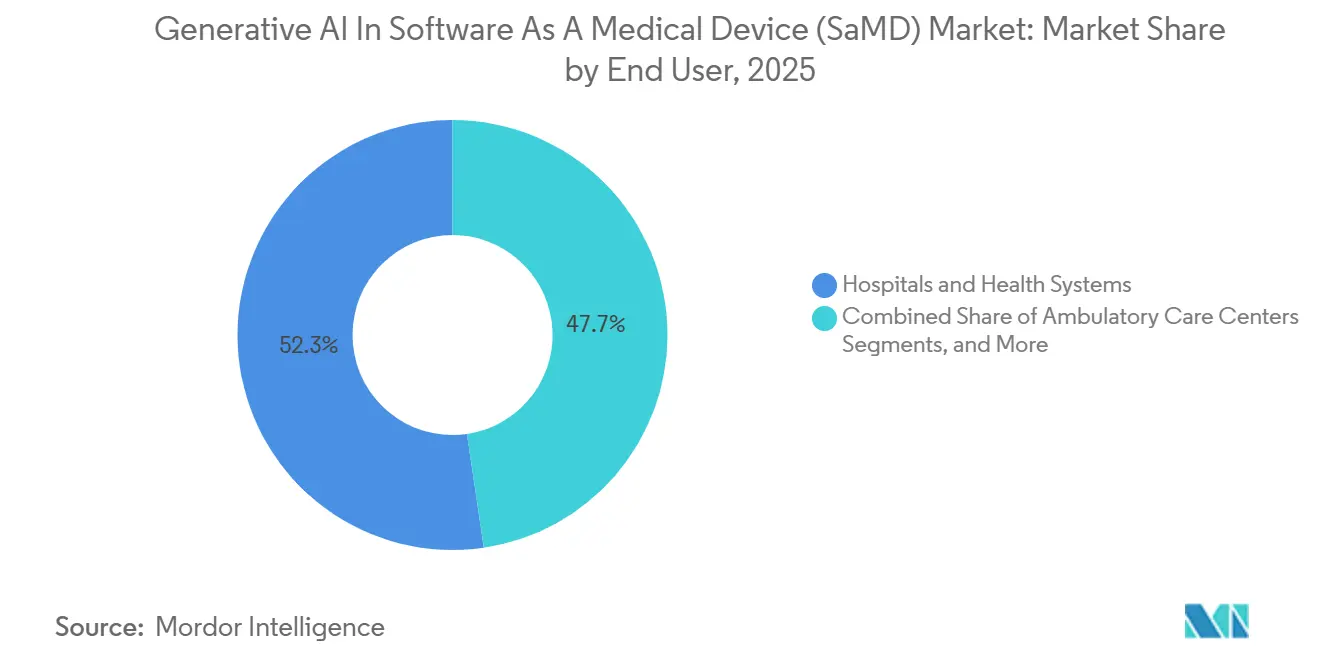
- By end user, hospitals and health systems held 52.33% revenue share in 2025, while diagnostic laboratories are projected to expand at a 22.33% CAGR through 2031.
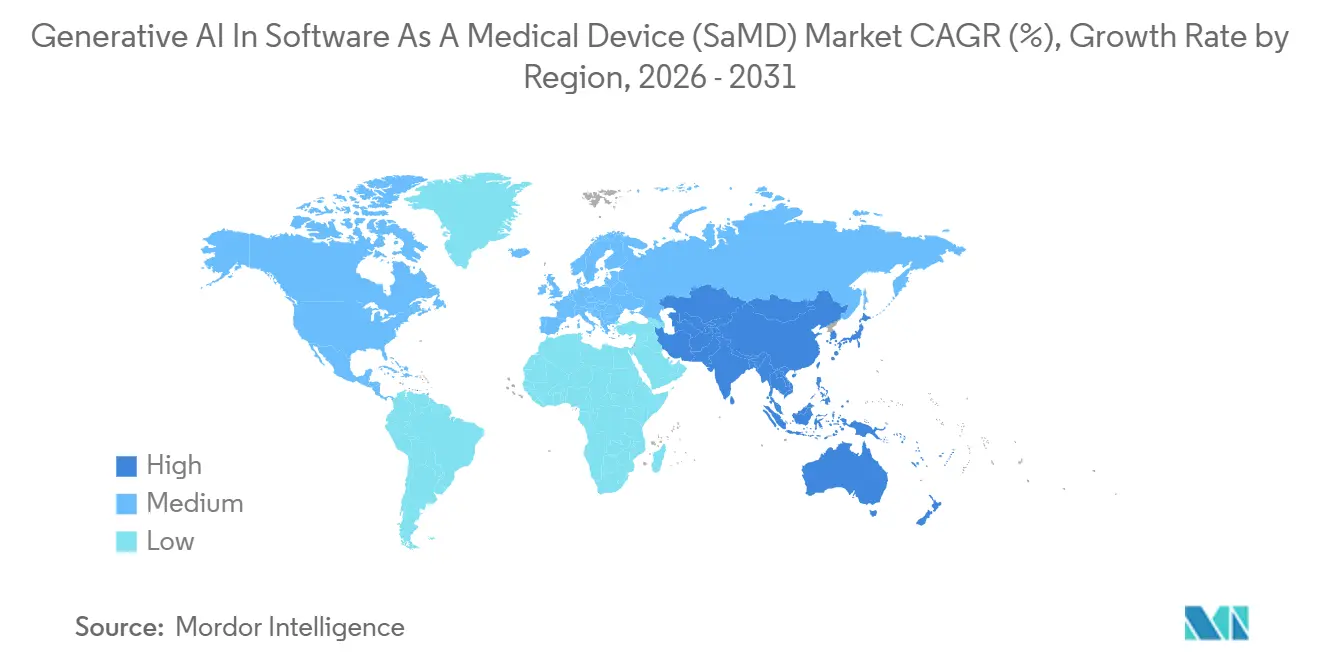
- By geography, North America led with 41.25% share in 2025, while Asia-Pacific is forecast to grow at a 21.95% CAGR through 2031.
Note: Market size and forecast figures in this report are generated using Mordor Intelligence’s proprietary estimation framework, updated with the latest available data and insights as of January 2026.
Market Trends and Insights
Drivers Impact Analysis of Generative AI In Software As A Medical Device (SaMD) Market*
| DRIVER | (~) % IMPACT ON CAGR FORECAST | GEOGRAPHIC RELEVANCE | IMPACT TIMELINE |
|---|---|---|---|
| AI-assisted clinical documentation | +3.5% | Global, concentrated in North America and Europe | Short term (≤ 2 years) |
| Multimodal clinical data workflows | +2.8% | North America, Asia-Pacific, including China and Japan | Medium term (2-4 years) |
| Scalable clinical decision support | +3.2% | Global, with early gains in the Middle East, Africa, and South America | Medium term (2-4 years) |
| Managed algorithm change pathways | +2.5% | North America, Europe, and Asia-Pacific | Short term (≤ 2 years) |
| Clinician shortages and workflow pressure | +2.9% | Global, particularly North America and Asia | Short term (≤ 2 years) |
| Foundation model reuse in clinical workflows | +1.8% | North America and Europe | Medium term (2-4 years) |
| Source: Mordor Intelligence | |||
Growth of AI-Assisted Clinical Documentation
Clinical documentation remained one of the most immediate use cases for generative AI in SaMD market products, as it consumed substantial clinician time. A 2026 evaluation at two US academic medical centers reported high usability scores for an ambient AI scribe and meaningful reductions in after-hours documentation time. A 2026 study across six health systems found that ambulatory clinician burnout declined from 51.9% to 38.8% within 30 days of ambient scribe adoption. NHS England issued updated guidance for AI-enabled ambient scribing products in April 2026, supporting wider deployment where products met local governance and clinical safety requirements.
Clinician Shortages and Diagnostic Workflow Pressure
Workforce shortages made automation a practical requirement for many care providers in the generative AI in SaMD market. The American Medical Association reported that 41.9% of physicians had at least one symptom of burnout in 2025, while 57% of surveyed physicians identified administrative automation as the leading AI opportunity in their practices. Generative tools helped draft preliminary reports and organize documentation, supporting clinical throughput without replacing professional review. In June 2026, Aidoc received FDA Breakthrough Device Designation for First Read, which analyzed chest radiographs and generated preliminary radiology report text.
Regulatory Pathways for Managed Algorithm Changes
Managed update pathways helped the generative AI in SaMD market shift from static software releases to controlled improvements. The FDA finalized guidance on Predetermined Change Control Plans on December 3, 2024, and issued implementation guidance on August 18, 2025. These plans allowed manufacturers to define and obtain authorization for specified future changes within an original marketing submission. This approach favored organizations with the clinical validation, monitoring, and quality systems required for ongoing software management.
Rising Demand for Scalable Clinical Decision Support
Clinical decision support represented a significant opportunity in the generative AI in SaMD market because it connected medical information with active care decisions. Foundation models could draw on medical context across several conditions, unlike rule-based systems that required separate manual coding for each guideline. Reimbursement pathways for AI-supported ECG interpretation and remote patient monitoring encouraged specialized clinical tools. In June 2025, GE HealthCare introduced CareIntellect for Oncology, which used generative AI to summarize multimodal clinical notes and identify departures from treatment plans for prostate and breast cancer.
Restraints Impact Analysis of Generative AI In Software As A Medical Device (SaMD) Market*
| RESTRAINT | (~) % IMPACT ON CAGR FORECAST | GEOGRAPHIC RELEVANCE | IMPACT TIMELINE |
|---|---|---|---|
| Hallucination and non-deterministic clinical outputs | -2.4% | Global, most acute where clinical validation evidence is required | Short term (≤ 2 years) |
| Limited generative ai-specific clinical evidence | -1.7% | Global, particularly Europe under MDR evidence requirements | Medium term (2-4 years) |
| Patient data governance and provenance constraints | -1.5% | European Union, Japan, and Gulf Cooperation Council states | Medium term (2-4 years) |
| Liability for ai-influenced clinical decisions | -1.2% | North America and Europe | Long term (≥ 4 years) |
| Source: Mordor Intelligence | |||
Hallucination and Non-Deterministic Clinical Outputs
Generative models can create failure modes that differ from those of conventional diagnostic software. A 2025 study in Communications Medicine tested large language models with clinical prompts containing a fabricated element and reported hallucination rates of 50% to 83% across the tested models. The findings showed that accuracy checks should not rely on a single model release. A 2026 npj Digital Medicine article described unconfined non-deterministic clinical software as a distinct regulatory challenge for healthcare. Errors in administrative documentation can also influence clinical decisions, claims, and medication management, making human review, traceable outputs, and post-market monitoring key safeguards for the generative AI in SaMD market.
Patient-Level Data Governance and Provenance Constraints
Patient data rules created different operating requirements across the generative AI in SaMD market. The supplied draft states that 2026 HIPAA Security Rule updates tightened requirements for AI-related data processing. The European Union's GDPR and national AI policies required clinical training data to be traceable to appropriate patient permissions, limiting cross-border data movement used to train large clinical models. Germany's DiGA pathway had more than 60 approved digital health applications on its register by late 2025 and applied data residency and security requirements that differed from U.S. rules. Japan also required local clinical validation for adaptive AI tools, increasing the value of country-specific clinical partnerships and compliance teams.
*Our forecasts treat driver/restraint impacts as directional, not additive. The impact forecasts reflect baseline growth, mix effects, and variable interactions.
Generative AI In Software As A Medical Device (SaMD) Market Segment Analysis
By Software Function:
Diagnostic Reporting Leads, Remote Monitoring AcceleratesDiagnostic Interpretation and Reporting is expected to account for a 29.55% share in 2025, making it the largest software function in the generative AI in SaMD market. This position reflects the established validation history of imaging AI and its expansion from image detection to report preparation. Remote Monitoring and Patient Management is forecast to register the fastest growth, at a CAGR of 21.93% through 2031, as care models place greater emphasis on continuous monitoring. Clinical Documentation and Ambient Scribing records the highest deployment volume among functional categories, supported by Microsoft’s March 2025 launch of Dragon Copilot, which combined DAX Copilot and Dragon Medical One and was deployed across more than 400 healthcare organizations, processing more than 100 million patient encounters.
Therapeutic Planning and Personalization, along with Clinical Trial and Evidence Generation Support, remains a smaller function in the generative AI in SaMD market. Higher requirements for tools that influence treatment decisions and longer validation periods before payer adoption constrain their growth. Clinical Decision Support and Medical Coding and Revenue-Cycle Support occupy the middle range of the functional mix, while coding tools benefit from generative models that interpret unstructured notes and suggest ICD-10 and CPT codes in context. Tempus acquired Paige for USD 81.25 million in 2025, and the resulting pathology foundation model draws on nearly 7 million digitized slides to support Paige Predict, which predicts 123 molecular biomarkers across 16 cancer types from routine H&E images.



By Clinical Use Case:
Radiology Leads, Cardiology Advances QuicklyRadiology and Imaging is expected to account for a 34.22% share in 2025 and remain the largest clinical use case in the generative AI in SaMD market. Imaging datasets provide detailed visual information that supports model development and evaluation. Cardiology is forecast to expand at a CAGR of 22.67% through 2031, the fastest rate among the listed clinical use cases. The supplied draft recorded 97 FDA-cleared cardiovascular AI and machine learning SaMD devices through the first quarter of 2026 and stated that more than one-third of cardiology AI clearances in FDA history occurred in the prior three years.
Pathology and Oncology are becoming more important use cases as AI moves from single-cancer detection to biomarker prediction, supporting treatment selection where models are validated for the intended setting. EchoNext received FDA clearance after validation on more than 700,000 ECG-echocardiogram pairs and can detect six types of structural heart disease from a standard 12-lead ECG. This example shows how software can increase the diagnostic value of existing equipment. Neurology, Ophthalmology, Gastroenterology, and Women's Health remain earlier-stage areas, although adaptable models continue to support development across specialties.
By Deployment:
Cloud Leads, Hybrid Systems Grow FastestCloud-Based deployment is expected to hold a 57.66% share in 2025, making it the leading architecture in the generative AI in SaMD market. Providers value cloud platforms because they can receive updates without requiring software installation on local hospital servers. Predetermined Change Control Plans can further support this model by allowing authorized software updates within defined boundaries. Hybrid deployment is expected to grow at a CAGR of 29.35% through 2031, reflecting the need to combine cloud scalability with strict controls for patient data and real-time clinical tasks.
On-premises systems continue to serve large academic medical centers and government health systems with strict data localization requirements, particularly in Germany, France, Japan, and Gulf Cooperation Council countries. Google Cloud stated in its 2026 guidance that cloud infrastructure could support regulated medical software when organizations applied compliance controls, while data residency tools remained necessary for protected health information. Hybrid systems can introduce additional security risks because both local and cloud environments require protection. The supplied draft noted that MITRE identified attack surfaces related to cloud-side training data in April 2026, making data protection, latency, update management, and cybersecurity key deployment considerations.
By End User:
Hospitals Lead, Diagnostic Laboratories AccelerateHospitals and Health Systems are expected to hold a 52.33% share in 2025, making them the largest end-user group in the generative AI in SaMD market. These organizations procure FDA-cleared software, conduct clinical validation, and connect tools to reimbursement processes. Diagnostic Laboratories are forecast to grow at a CAGR of 22.33% through 2031, as digital slide scanners, AI-enabled review, and biomarker prediction turn laboratories into precision diagnostics sites. A real-world National Health Service evaluation of the Paige Prostate Suite found that AI-supported pathology review changed a diagnosis or Grade Group in 5% of patients, with 1.3% of changes significant enough to affect clinical management.
Ambulatory Care Centers are expanding adoption, especially for ambient documentation and patient communication tools, as documentation pressure reduces time available for patient interactions. Specialty Clinics in dermatology, ophthalmology, and orthopedics are adopting narrower products that may require less enterprise integration. Academic Medical Centers contribute a smaller revenue share, but they remain important clinical validation settings because their published evidence helps payers and providers assess real-world performance. A study of 263 physicians and advanced practice practitioners across six health systems linked ambient AI scribe adoption with a reduction in burnout from 51.9% to 38.8% after 30 days.
Geography Analysis
North America Generative AI in Software As a Medical Device (SaMD) Market
North America held a 41.25% share in 2025, making it the leading regional contributor to the generative AI in SaMD market. The United States remained the largest national market for AI medical device development and clearance activity. The supplied draft states that the FDA authorized more than 295 new AI and machine learning medical devices in 2025, with 62% classified as SaMD and 63% classified as diagnostic devices. Canada and Mexico remained smaller but growing adoption centers, supported by links to U.S. clinical research and evolving regulatory processes. UpDoc received FDA 510(k) clearance in December 2025 for patient-facing large language model software intended for insulin and medication management in adults with type 2 diabetes.
Europe Generative AI in Software As a Medical Device (SaMD) Market
Europe followed North America in adoption, with Germany, the United Kingdom, and France serving as key national markets. Germany's DiGA pathway gave eligible digital health applications a route to reimbursement, supporting tailored product development. The European Union AI Act created planning requirements for companies selling in both European and U.S. settings, with high-risk obligations originally targeted for August 2026 and later proposed for December 2027. France and Spain advanced hospital digitization programs, while academic hospital pilots supported adoption in Italy. NHS England's April 2026 ambient scribing guidance offered a detailed operating framework for documentation products and helped health systems set practical expectations for governance and implementation.
APAC Generative AI in Software As a Medical Device (SaMD) Market
Asia-Pacific is projected to register a 21.95% CAGR through 2031, making it the fastest-growing geography in the generative AI in SaMD market. China, India, Japan, and South Korea expanded digital health infrastructure and clinical AI programs. The supplied draft states that China's NMPA approved more than 120 AI medical device products in 2025. China’s public hospital procurement system offered volume opportunities for domestic companies with local approvals, while international suppliers required locally validated datasets. Japan's PMDA revised its guidance for adaptive algorithms, and the Society 5.0 program treated AI-enabled healthcare software as a national priority.

Competitive Landscape
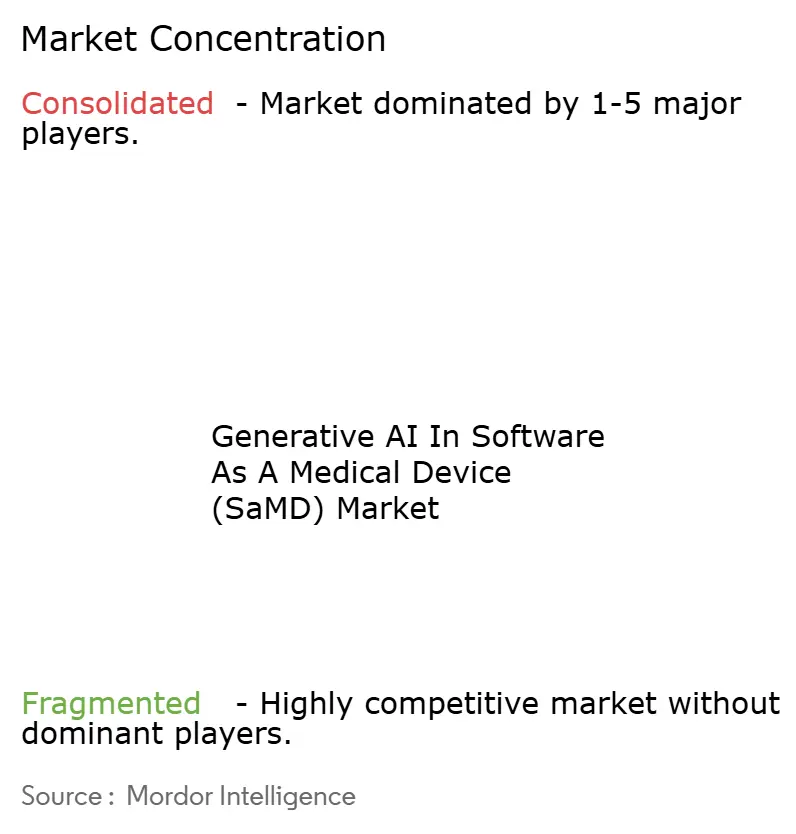
The generative AI in SaMD market is moderately fragmented. Imaging technology companies, enterprise software firms, and AI-focused companies compete across similar clinical workflow areas. No individual supplier holds more than 12-15% of total revenue. Competition depends on clinical specialty expertise, regulatory clearance speed, and integration with electronic health records.
Enterprise consolidation is becoming more relevant as health systems reduce fragmented tool portfolios and seek fewer technology partners. Broad platforms can govern, monitor, and deploy clinical AI across several departments with fewer integrations. In June 2026, Aidoc received FDA Breakthrough Device Designation for First Read, a product that generates preliminary radiology report text from chest radiographs. Tempus’s 2025 acquisition of Paige for USD 81.25 million highlighted the value placed on pathology data and clinical model capabilities.
Technology partnerships are affecting the competitive structure of the generative AI in SaMD market. In June 2026, Mayo Clinic and Microsoft announced work on a frontier AI model for healthcare that combines de-identified Mayo Clinic data and longitudinal knowledge with Microsoft’s AI infrastructure. Vendors still need clinical evidence, regulatory capabilities, and provider trust to convert technical access into adoption. The market concentration score is 2 out of 10, as no individual company holds more than 12-15% of revenue.
Generative AI In Software As A Medical Device (SaMD) Industry Leaders
AliveCor, Inc.
GE HealthCare Technologies Inc.
Koninklijke Philips N.V.
Medtronic plc
Siemens Healthineers AG
- *Disclaimer: Major Players sorted in no particular order
Generative AI In Software As A Medical Device (SaMD) Market Companies Covered in this Report
- Abbott Laboratories
- Aidoc Medical Ltd.
- AliveCor
- Boston Scientific
- Butterfly Network, Inc.
- Butterfly Network, Inc.
- Canon
- Caption Health, Inc.
- GE HealthCare Technologies Inc.
- Intuitive Surgical, Inc.
- iRhythm Technologies
- Koninklijke Philips
- Medtronic
- Microsoft
- NVIDIA
- Paige.AI, Inc.
- Siemens Healthineers
- SOPHiA GENETICS SA
- Tempus AI, Inc.
- Viz.ai, Inc.

Recent Industry Developments in Generative AI In Software As A Medical Device (SaMD) Market
- June 2026: Aidoc received FDA Breakthrough Device Designation for First Read, an AI platform that analyzed chest radiographs and generated preliminary radiology report text.
- June 2026: Mayo Clinic and Microsoft announced a strategic collaboration to develop and deploy a frontier AI model for healthcare using clinical data, Azure cloud, and AI capabilities.
- May 2026: Viz.ai launched the Viz Pulmonary Suite, an AI platform that integrated COPD, lung nodule management, and pulmonary embolism detection into one enterprise system.
- April 2026: Abbott received FDA clearance and CE Mark approval for Ultreon 3.0, an AI-powered coronary intravascular imaging platform for imaging and automated measurements.


Global Generative AI In Software As A Medical Device (SaMD) Market Report Scope
As per the scope of the report, Generative AI Software as a Medical Device (SaMD) refers to medical software that incorporates generative artificial intelligence technologies, including large language models (LLMs), multimodal AI, or generative neural networks, to perform regulated medical functions. It generates clinically relevant outputs such as diagnostic interpretations, treatment recommendations, clinical documentation, patient-specific health information, and workflow assistance while supporting healthcare professionals in making informed clinical decisions under applicable regulatory requirements.
The generative AI in Software as a Medical Device (SaMD) market is segmented by software function, clinical use case, deployment, end user, and geography. By software function, the market includes clinical documentation and ambient scribing, clinical decision support, diagnostic interpretation and reporting, patient communication and triage, therapeutic planning and personalization, remote monitoring and patient management, medical coding and revenue cycle support, and clinical trial and evidence generation support. By clinical use case, the market is segmented into radiology and imaging, pathology, oncology, cardiology, neurology, ophthalmology, gastroenterology, women’s health, and others. By deployment, the market is categorized into cloud-based, on-premises, and hybrid. By end user, the market is segmented into hospitals and health systems, ambulatory care centers, diagnostic laboratories, specialty clinics, academic medical centers, and others. By geography, the market is analyzed across North America, Europe, Asia-Pacific, the Middle East and Africa, and South America. The report also covers the estimated market sizes and trends for 17 countries across major regions globally. The report offers the market sizes and forecasts in terms of value (USD) for the above segments.
| Clinical Documentation and Ambient Scribing |
| Clinical Decision Support |
| Diagnostic Interpretation and Reporting |
| Patient Communication and Triage |
| Therapeutic Planning and Personalization |
| Remote Monitoring and Patient Management |
| Medical Coding and Revenue-Cycle Support |
| Clinical Trial and Evidence Generation Support |
| Radiology and Imaging |
| Pathology |
| Oncology |
| Cardiology |
| Neurology |
| Ophthalmology |
| Gastroenterology |
| Women's Health |
| Others |
| Cloud-Based |
| On-Premises |
| Hybrid |
| Hospitals and Health Systems |
| Ambulatory Care Centers |
| Diagnostic Laboratories |
| Specialty Clinics |
| Academic Medical Centers |
| Others |
| North America | United States |
| Canada | |
| Mexico | |
| Europe | Germany |
| United Kingdom | |
| France | |
| Italy | |
| Spain | |
| Rest of Europe | |
| Asia-Pacific | China |
| India | |
| Japan | |
| Australia | |
| South Korea | |
| Rest of Asia-Pacific | |
| Middle East and Africa | GCC |
| South Africa | |
| Rest of Middle East and Africa | |
| South America | Brazil |
| Argentina | |
| Rest of South America |
| By Software Function | Clinical Documentation and Ambient Scribing | |
| Clinical Decision Support | ||
| Diagnostic Interpretation and Reporting | ||
| Patient Communication and Triage | ||
| Therapeutic Planning and Personalization | ||
| Remote Monitoring and Patient Management | ||
| Medical Coding and Revenue-Cycle Support | ||
| Clinical Trial and Evidence Generation Support | ||
| By Clinical Use Case | Radiology and Imaging | |
| Pathology | ||
| Oncology | ||
| Cardiology | ||
| Neurology | ||
| Ophthalmology | ||
| Gastroenterology | ||
| Women's Health | ||
| Others | ||
| By Deployment | Cloud-Based | |
| On-Premises | ||
| Hybrid | ||
| By End User | Hospitals and Health Systems | |
| Ambulatory Care Centers | ||
| Diagnostic Laboratories | ||
| Specialty Clinics | ||
| Academic Medical Centers | ||
| Others | ||
| By Geography | North America | United States |
| Canada | ||
| Mexico | ||
| Europe | Germany | |
| United Kingdom | ||
| France | ||
| Italy | ||
| Spain | ||
| Rest of Europe | ||
| Asia-Pacific | China | |
| India | ||
| Japan | ||
| Australia | ||
| South Korea | ||
| Rest of Asia-Pacific | ||
| Middle East and Africa | GCC | |
| South Africa | ||
| Rest of Middle East and Africa | ||
| South America | Brazil | |
| Argentina | ||
| Rest of South America | ||


Key Questions Answered in the Report
What is the value of generative AI in SaMD in 2026?
It is valued at USD 4.38 billion in 2026 and is forecast to reach USD 10.19 billion by 2031, at an 18.40% CAGR.
Which software function has the largest share?
Diagnostic Interpretation and Reporting led with 29.55% share in 2025.
Which clinical use case is growing the fastest?
Cardiology is projected to grow at a 22.67% CAGR through 2031.
Why are hospitals adopting generative clinical software?
Hospitals and Health Systems held 52.33% share in 2025 and use these tools for documentation, diagnostic workflows, validation, and reimbursement-related processes.
What is the main safety concern for generative clinical software?
Hallucinated or non-deterministic output can introduce inaccurate information, making human review and continuous monitoring necessary.
Which region is expected to grow fastest?
Asia-Pacific is forecast to expand at a 21.95% CAGR through 2031.
Page last updated on:





