
Gene Silencing Market Size and Share
Market Overview
| Study Period | 2020 - 2031 |
|---|---|
| Market Size (2026) | USD 12.66 Billion |
| Market Size (2031) | USD 22.81 Billion |
| Growth Rate (2026 - 2031) | 12.50 % |
| Fastest Growing Market | Asia-Pacific |
| Largest Market | North America |
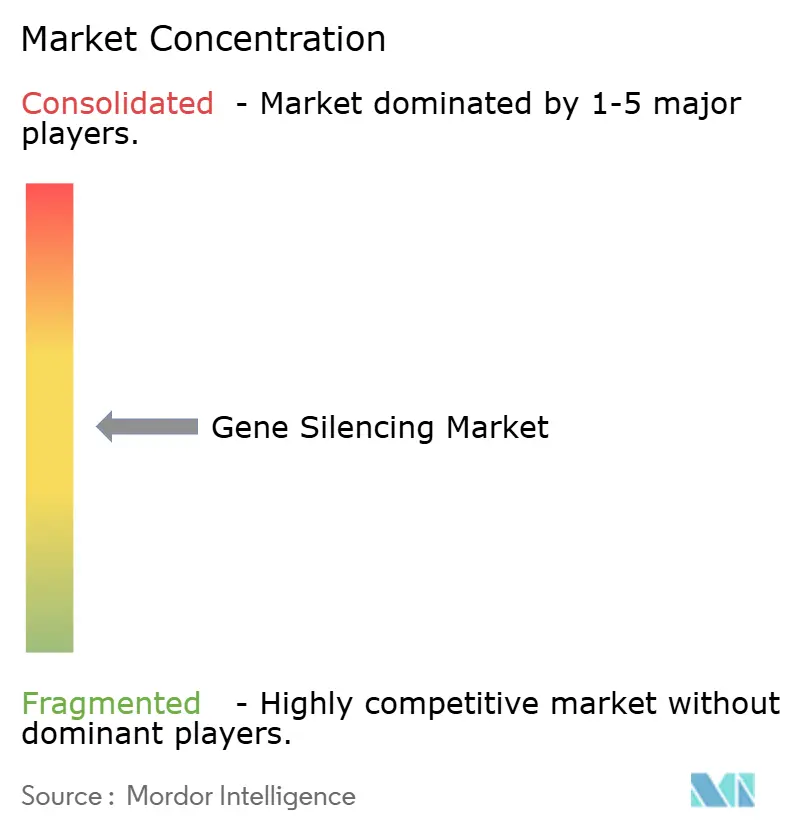
| Market Concentration | Medium |
Major Players *Disclaimer: Major Players sorted in no particular order Image © Mordor Intelligence. Reuse requires attribution under CC BY 4.0. | |
Gene Silencing Market Analysis by Mordor Intelligence
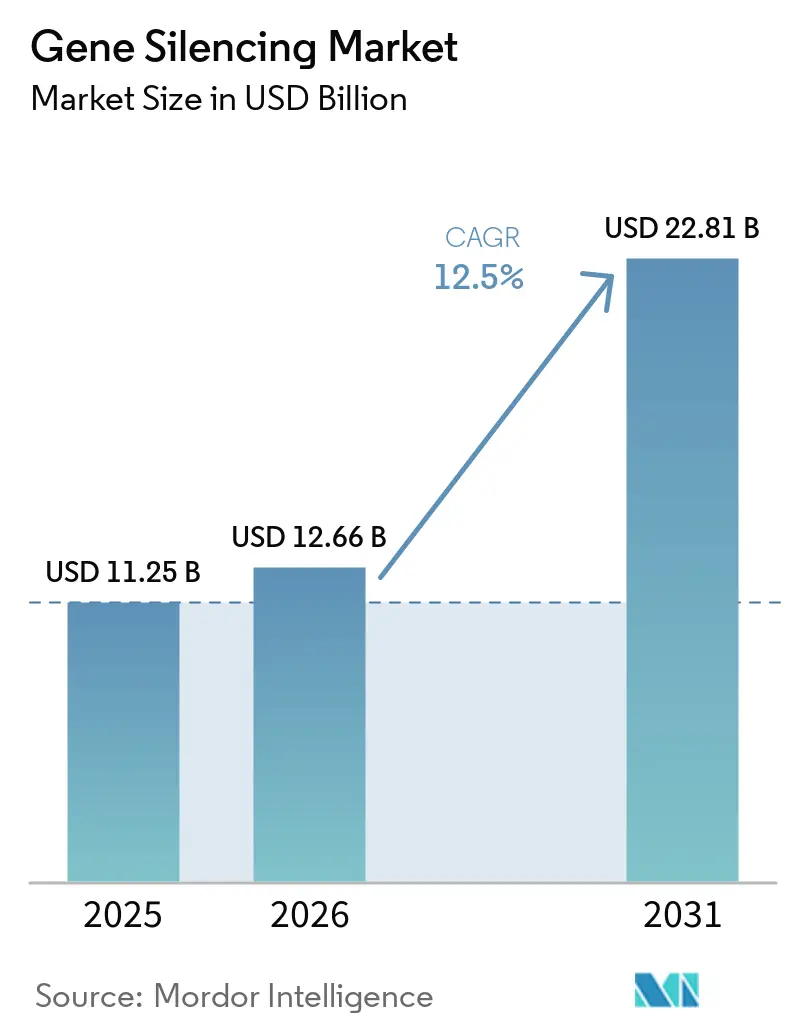
The Gene Silencing Market size was valued at USD 11.25 billion in 2025 and is estimated to grow from USD 12.66 billion in 2026 to reach USD 22.81 billion by 2031, at a CAGR of 12.5% during the forecast period (2026-2031).
The gene silencing market has moved beyond its earlier role as a research tool, with 7 FDA-approved GalNAc-siRNA medicines commercially available in 2026. These therapies act on disease-causing genes at the messenger RNA level and have shown durable effects that differ from conventional oral medicines and monoclonal antibodies. Larger pharmaceutical companies are using licensing agreements to gain access to delivery platforms, clinical programs, and established commercial capabilities. The next areas of opportunity depend on reaching tissues beyond the liver, while reimbursement requirements, manufacturing capacity, and treatment cost will continue to shape adoption across the gene silencing market.
Key Report Takeaways
- By product and service, products held 79.89% of the gene silencing market share in 2025, while services are projected to grow at a 14.35% CAGR through 2031.
- By application, drug discovery & development accounted for 55.45% of the Gene Silencing Market size in 2025, while therapeutics manufacturing is forecast to expand at a 15.46% CAGR through 2031.
- By end user, pharmaceutical & biotechnology companies held 42.67% of the gene silencing market share in 2025, while academic & research institutes are projected to grow at a 13.67% CAGR through 2031.
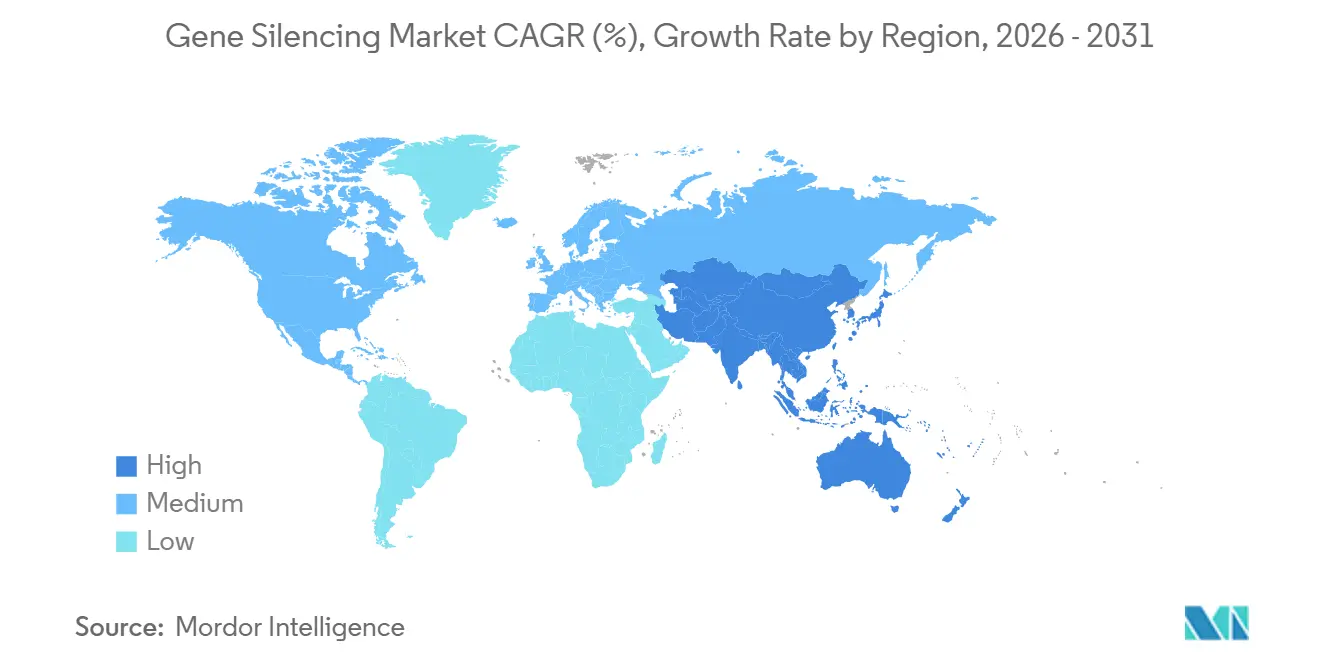
- By geography, North America held 41.75% of the gene silencing market size in 2025, while Asia-Pacific is forecast to grow at a 13.56% CAGR through 2031.
Note: Market size and forecast figures in this report are generated using Mordor Intelligence’s proprietary estimation framework, updated with the latest available data and insights as of January 2026.
Market Trends and Insights
Drivers Impact Analysis of Gene Silencing Market*
| DRIVER | (~) % IMPACT ON CAGR FORECAST | GEOGRAPHIC RELEVANCE | IMPACT TIMELINE |
|---|---|---|---|
| Expansion of approved RNai and antisense therapeutics | +3.0% | Global, concentrated in North America and Europe | Short term (≤ 2 years) |
| Genomic diagnosis of previously undruggable targets | +1.5% | Global, with early gains in North America and East Asia | Medium term (2-4 years) |
| Advances in galnac and lipid nanoparticle delivery | +2.5% | Global, with hepatic delivery maturing and extrahepatic delivery emerging | Medium term (2-4 years) |
| Expansion into cardiometabolic and chronic diseases | +2.0% | North America, Europe, and high-income Asia-Pacific markets | Medium term (2-4 years) |
| AI-enabled design of silencing sequences and delivery systems | +1.2% | North America and Europe, with spillover to the Asia-Pacific | Long term (≥ 4 years) |
| Licensing demand for extrahepatic delivery platforms | +1.0% | North America, with early activity in East Asia and Europe | Long term (≥ 4 years) |
| Source: Mordor Intelligence | |||
Expansion of Approved RNAi and Antisense Therapeutics
The growing number of approved RNAi and antisense therapies supports demand in the gene silencing market. The FDA approved AMVUTTRA (vutrisiran) for cardiomyopathy of ATTR amyloidosis in March 2025. In the HELIOS-B trial, AMVUTTRA reduced all-cause mortality by 36% through 42 months and lowered cardiovascular events in the approved population. Qfitlia (fitusiran) became the sixth Alnylam-discovered siRNA approved by the FDA in March 2025 for hemophilia A or B and reduced annualized bleeding rates by 90% in clinical trials. The European Medicines Agency authorized Tryngolza (olezarsen) for familial chylomicronemia syndrome in September 2025, while the European Commission authorized REDEMPLO (plozasiran) in June 2026. Approvals across multiple indications enable developers to expand established product value without repeating the full cost of early-stage discovery.
Advances in GalNAc and Lipid Nanoparticle Delivery
GalNAc conjugation remains central to the gene silencing market because it enables targeted delivery to hepatocytes. A 2025 study found that ribofuranose-based GalNAc-siRNA conjugates provided stronger liver targeting and a longer elimination half-life than the established L96 GalNAc construct used for inclisiran.[1] In 2026, a computational platform used pharmacokinetic and pharmacodynamic data from all seven FDA-approved GalNAc-siRNA drugs to predict the performance of new candidates, including SAL0132. Research also showed that GalNAc-modified five-component lipid nanoparticles supported hepatocyte-specific targeting through ASGPR-mediated endocytosis. In February 2026, Ribo Life Science licensed its GalSTAR bispecific siRNA platform to Madrigal Pharmaceuticals for USD 60 million upfront and potential milestones of up to USD 4.4 billion, highlighting demand for platforms that target two genes.
Expansion into Cardiometabolic and Chronic Diseases
Cardiometabolic diseases are expanding the potential treatment population for the gene silencing market beyond rare conditions. CRISPR Therapeutics will present Phase 1a data for CTX310 at the European Society of Cardiology Congress in August 2026. At the highest dose, a single infusion produced a mean ANGPTL3 reduction of 73%, a triglyceride reduction of 55%, and an LDL reduction of 49%. Early data from VERVE-102 and clinical research on PCSK9-related approaches also indicate continued development of therapies for durable LDL reduction. Inclisiran exceeded USD 1 billion in annual sales in 2025, demonstrating commercial demand for a chronic cardiovascular siRNA therapy with twice-yearly dosing. As PCSK9, ANGPTL3, and angiotensinogen approaches progress, dosing frequency and patient access are likely to influence product selection alongside clinical outcomes.
AI-Enabled Design of Silencing Sequences and Delivery Systems
Artificial intelligence is becoming increasingly important in gene silencing discovery and delivery activities. In June 2026, FENNEC, a fine-tuned ensemble neural network model, reported improved predictions of chemically modified siRNA efficacy across gene-level and scaffold-level validation tests. The model was also tested on a new AHSA1-targeting dataset, supporting its application across previously unseen chemistries. In May 2026, SpeciMiR, a target-specific microRNA design framework trained on 2.2 million miRNA-mRNA pairs, reported stronger on-target binding for liver disease targets than FDA-approved siRNA benchmarks. In the second quarter of 2026, Alnylam Pharmaceuticals formed a strategic collaboration with Inceptive Nucleics to combine its RNAi data with foundation models for discovery. Companies with extensive biological data may be better positioned to apply these tools, while smaller developers may rely more heavily on external technology partnerships.
Restraints Impact Analysis of Gene Silencing Market*
| RESTRAINT | (~) % IMPACT ON CAGR FORECAST | GEOGRAPHIC RELEVANCE | IMPACT TIMELINE |
|---|---|---|---|
| Extrahepatic delivery and blood-brain barrier limitations | -2.0% | Global, most acute in neurology applications | Long term (≥ 4 years) |
| High treatment cost and payer reimbursement pressure | -1.8% | North America and Europe, with spillover to high-income Asia-Pacific | Medium term (2-4 years) |
| Innate immune activation and off-target silencing | -1.5% | Global, particularly in extrahepatic and central nervous system programs | Medium term (2-4 years) |
| Specialized manufacturing capacity and quality-control constraints | -1.0% | Global, with supply risk concentrated in North America and Europe | Medium term (2-4 years) |
| Source: Mordor Intelligence | |||
Extrahepatic Delivery and Blood-Brain Barrier Limitations
While liver delivery is well established, effective delivery to the brain, muscle, and lungs remains a key limitation in the gene silencing market. A 2025 study found that an intravenous albumin-binding lipid-siRNA conjugate reached nearly all brain endothelial cells and sustained gene silencing.[2] However, it did not detect delivery into brain parenchymal tissue, limiting its applicability for several central nervous system targets. Sarepta Therapeutics and Dyne Therapeutics advanced muscle-targeted platforms that required tissue-specific delivery strategies. Until non-liver delivery improved in cost, safety, and performance, many programs remained focused on liver-expressed targets.
High Treatment Cost and Payer Reimbursement Pressure
Treatment costs and reimbursement requirements slowed the broader adoption of gene silencing therapies. Many approved RNA therapies initially targeted rare diseases, while their use expanded to chronic conditions with significantly larger patient populations. Inclisiran exceeded USD 1 billion in annual sales in 2025, although healthcare systems faced early access and readiness challenges as it entered broader cardiovascular care. Established generic cardiovascular medicines also created pricing pressure for newer RNA therapies. The Centers for Medicare & Medicaid Services launched its Cell and Gene Therapy Access Model in January 2025, using outcomes-based contracts for selected gene therapies under Medicaid.
*Our forecasts treat driver/restraint impacts as directional, not additive. The impact forecasts reflect baseline growth, mix effects, and variable interactions.
Gene Silencing Market Segment Analysis
By Product and Service:
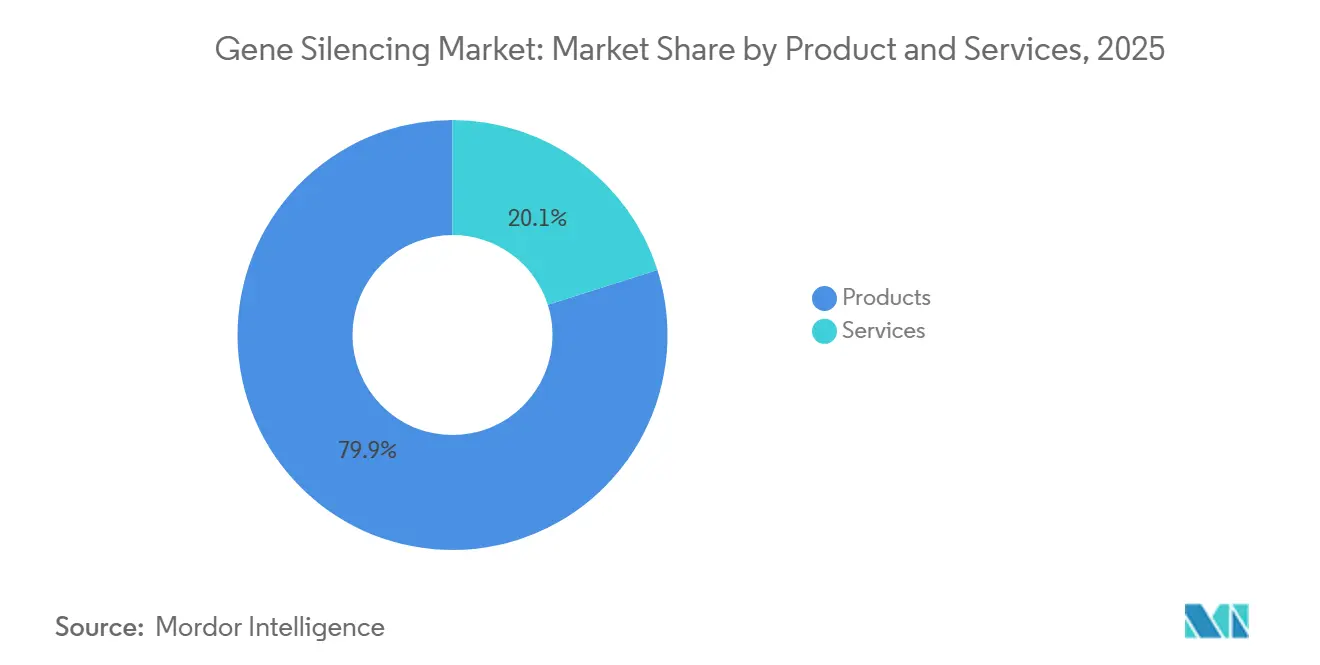
Approved Therapeutics Support Product LeadershipProducts held 79.89% of the gene silencing market in 2025, supported by revenue from approved RNAi and antisense medicines. RNAi therapies remain the largest product category, with GalNAc-siRNA treatments addressing metabolic, cardiovascular, and hematologic conditions. The seven FDA-approved GalNAc-siRNA drugs generated direct sales, royalty, and milestone revenue for developers and licensors. CRISPR-Cas9 products remain in the early stages of commercial development, while the first-in-human CTX310 trial at Cleveland Clinic is expected to report one-year follow-up data in August 2026.
Antisense oligonucleotides remain an established component of the gene silencing industry. Tryngolza received European authorization in September 2025 for familial chylomicronemia syndrome, while Ionis Pharmaceuticals has zilganersen under FDA review for Alexander disease, with a PDUFA action date in September 2026. Services are projected to grow at a 14.35% CAGR through 2031, driven by demand for external synthesis, formulation, bioanalytical testing, and regulatory support. Alnylam is investing USD 250 million in its Norton, Massachusetts, facility to add an enzymatic ligation platform, with operations expected by late 2027.
By Application:
Drug Discovery Leads While Therapeutics Manufacturing Grows FastestDrug Discovery & Development accounted for 55.45% of the gene silencing market in 2025. Researchers use RNAi and CRISPR tools to validate targets and identify leads across oncology, neurology, metabolic diseases, and infectious disease programs. These tools support targets that conventional small molecules cannot readily address. Arrowhead Pharmaceuticals licensed its clinical-stage ARO-PNPLA3 MASH program to Madrigal Pharmaceuticals in May 2026 under terms that could exceed USD 1.6 billion.
Therapeutics Manufacturing is projected to grow at a 15.46% CAGR from 2026 to 2031, driven by the transition of approved RNAi and antisense therapies to larger production volumes. The gene silencing industry also supports agricultural applications through spray-induced gene silencing. Research published in 2025 reported that sprayable RNAi plant-protection products received approval in the United States and China, while the European Union continues to evaluate regulatory frameworks. Differing EPA and EFSA requirements may delay multinational deployment, while FDA and EMA guidance provides a clearer pathway for therapeutic manufacturing.
By End User:
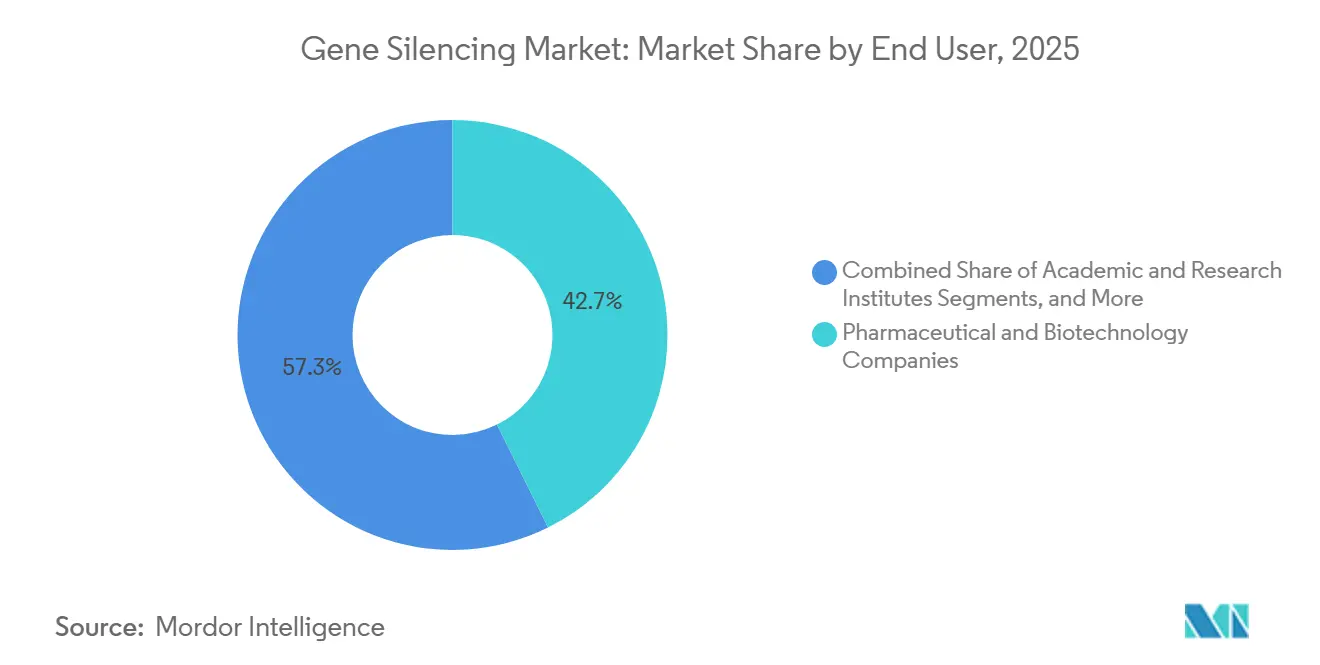
Pharmaceutical and Biotechnology Companies Lead DemandPharmaceutical & Biotechnology Companies held 42.67% of the gene silencing market in 2025. These companies use RNAi and antisense platforms across internal research pipelines and in-licensing transactions. AbbVie entered a collaboration with ADARx Pharmaceuticals in May 2025, paying USD 335 million upfront for siRNA programs in neuroscience, immunology, and oncology. Genentech partnered with SanegeneBio in February 2026, providing USD 200 million upfront and up to USD 1.5 billion in milestone payments.
Academic & Research Institutes are projected to grow at a 13.67% CAGR through 2031. These institutions use silencing tools in functional genomics, agricultural science, clinical diagnostics, and therapeutic research. CROs and CMOs support the gene silencing market through outsourced synthesis, bioanalytical testing, and regulatory services. The Others category includes agricultural biotechnology companies and government-supported research programs, while machine learning platforms increasingly support siRNA design.

Geography Analysis
North America Gene Silencing Market
North America held 41.75% of the gene silencing market in 2025. The region benefits from approved RNAi and antisense products, extensive pharmaceutical research infrastructure, and established reimbursement systems. Alnylam reported 99% insurance coverage for AMVUTTRA in hereditary ATTR polyneuropathy, with most patients paying no out-of-pocket costs. Health Canada approved REDEMPLO in early 2026, expanding the therapy’s regional reach.
EMEA and South America Gene Silencing Market
Europe also supports agricultural gene silencing research, although EFSA requirements differ from the EPA approach in the United States. Italy, Spain, and the Nordic countries contribute through contract research and academic licensing activities. AviadoBio expanded its vMiX RNAi platform license with King’s College London to all human therapeutic areas in June 2026. South America and the Middle East and Africa remain research-led markets, with commercial adoption expected to follow North America and Europe.
APAC Gene Silencing Market
Asia-Pacific is projected to grow at a 13.56% CAGR through 2031. China’s clinical pipeline and cross-border licensing activities support the region’s role in the gene silencing market. Japan has demand for treatments targeting neurodegenerative and cardiometabolic diseases, and its regulators reviewed AMVUTTRA based on HELIOS-B data in early 2026. OliX Pharmaceuticals expanded its siRNA licensing activity with China’s Hansoh Pharmaceutical through a two-sequence agreement in August 2026.
Competitive Landscape
The gene silencing market has moderate concentration in therapeutic products and a more fragmented structure across tools, reagents, and services. Alnylam Pharmaceuticals, Arrowhead Pharmaceuticals, and Ionis Pharmaceuticals hold leading positions in approved RNA silencing products and clinical development. CRISPR epigenetic silencing and AI-supported siRNA design are increasing competition for established RNAi and antisense approaches. Arrowhead’s TRiM platform targets seven cell types, including the liver, lungs, skeletal muscle, adipose tissue, and the central nervous system.
The broader delivery focus supports a shift from single-tissue platforms toward multi-tissue capabilities. Licensing agreements provide smaller developers access to pharmaceutical companies with commercial and reimbursement capabilities. SanegeneBio received USD 200 million upfront from Genentech in February 2026 and may receive up to USD 1.5 billion in milestones for its RNAi program. Ribo Life Science licensed six preclinical MASH programs using its GalSTAR platform to Madrigal Pharmaceuticals in February 2026 for USD 60 million upfront and potential milestones of USD 4.4 billion.
Alnylam formed a discovery collaboration with Inceptive Nucleics in the second quarter of 2026. These developments highlight the importance of platform access, data resources, and delivery expertise in competitive positioning. Extrahepatic diseases, bispecific and branched siRNA modalities, and agricultural biocontrol remain areas with fewer established leaders.
Scribe Therapeutics received regulatory clearance to initiate a first-in-human study of STX-1150, a PCSK9-targeting CRISPR epigenetic silencer designed to lower LDL without permanent DNA modification. Atalanta Therapeutics is developing multi-targeting siRNA programs for central nervous system diseases, while Dyne Therapeutics is pursuing muscle-targeted delivery. Contract manufacturers seeking relationships with large pharmaceutical companies must comply with FDA manufacturing requirements, ISO oligonucleotide synthesis standards, and ICH Q10 quality standards.
Gene Silencing Industry Leaders
-
Alnylam Pharmaceuticals, Inc.
-
Arrowhead Pharmaceuticals, Inc.
-
Ionis Pharmaceuticals, Inc.
-
Merck KGaA
-
Thermo Fisher Scientific Inc.
- *Disclaimer: Major Players sorted in no particular order
Gene Silencing Market Companies Covered in this Report
- Agilent Technologies
- Alnylam Pharmaceuticals
- Arbutus Biopharma Corporation
- Arrowhead Pharmaceuticals
- Atalanta Therapeutics, Inc.
- Bio-Techne
- Danaher
- Dyne Therapeutics, Inc.
- Genscript
- Illumina
- Intellia Therapeutics, Inc.
- Ionis Pharmaceuticals
- Merck
- Novartis
- Novo Nordisk
- OliX Pharmaceuticals, Inc.
- Revvity, Inc.
- Sanofi
- Sarepta Therapeutics
- Silence Therapeutics plc
- Sirnaomics
- Thermo Fisher Scientific
Recent Industry Developments in Gene Silencing Market
- August 2026: CRISPR Therapeutics presented Phase 1a CTX310 data showing up to 73% ANGPTL3, 55% triglyceride, and 49% LDL reductions, with one-year follow-up.
- August 2026: OliX Pharmaceuticals signed an siRNA licensing agreement with Hansoh Pharmaceutical, granting worldwide development and commercialization rights for sequences targeting two genes.
- June 2025: Arrowhead Pharmaceuticals received European Commission approval for REDEMPLO for familial chylomicronemia syndrome, without requiring genetic confirmation for patient eligibility.
- June 2026: Ionis Pharmaceuticals granted Recordati rights to develop and commercialize zilganersen outside the United States, while the drug remained under FDA review with a September 2026 PDUFA date.
Global Gene Silencing Market Report Scope
As per the scope of the report, Gene silencing is a natural or induced cellular process that stops a specific gene from making proteins. It acts like a volume control switch for your DNA, turning down or blocking gene activity without changing the core genetic code. Cells use this mechanism to manage normal development and defend against harmful invaders like viruses.
The gene silencing market is segmented by product and service, application, end user, and geography. By product and service, the market is segmented into products and services. Products include RNA interference (RNAi), CRISPR-Cas9, antisense oligonucleotides, and others. By application, the market is segmented into drug discovery and development, therapeutics manufacturing, agricultural applications, and others. Drug discovery and development includes neurology, oncology, infectious diseases, metabolic diseases, and others. By end user, the market is segmented into pharmaceutical and biotechnology companies, academic and research institutes, contract research organizations (CROs) and contract manufacturing organizations (CMOs), and others. By geography, the market is analyzed across North America, Europe, Asia-Pacific, the Middle East and Africa, and South America. The report also covers the estimated market sizes and trends for 17 countries across major regions globally. The report offers market sizes and forecasts in terms of value (USD) for the above segments.
Segmentation Overview
| Products | RNA |
| CRISPR-Cas9 | |
| Antisense Oligonucleotides | |
| Others | |
| Services |
| Drug Discovery & Development | Neurology |
| Oncology | |
| Infectious Diseases | |
| Metabolic Diseases | |
| Others | |
| Therapeutics Manufacturing | |
| Agricultural Applications | |
| Others |
| Pharmaceutical & Biotechnology Companies |
| Academic & Research Institutes |
| CROs & CMOs |
| Others |
| North America | United States |
| Canada | |
| Mexico | |
| Europe | Germany |
| United Kingdom | |
| France | |
| Italy | |
| Spain | |
| Rest of Europe | |
| Asia-Pacific | China |
| India | |
| Japan | |
| Australia | |
| South Korea | |
| Rest of Asia-Pacific | |
| Middle East and Africa | GCC |
| South Africa | |
| Rest of Middle East and Africa | |
| South America | Brazil |
| Argentina | |
| Rest of South America |
| By Product and Service | Products | RNA |
| CRISPR-Cas9 | ||
| Antisense Oligonucleotides | ||
| Others | ||
| Services | ||
| By Application | Drug Discovery & Development | Neurology |
| Oncology | ||
| Infectious Diseases | ||
| Metabolic Diseases | ||
| Others | ||
| Therapeutics Manufacturing | ||
| Agricultural Applications | ||
| Others | ||
| By End User | Pharmaceutical & Biotechnology Companies | |
| Academic & Research Institutes | ||
| CROs & CMOs | ||
| Others | ||
| By Geography | North America | United States |
| Canada | ||
| Mexico | ||
| Europe | Germany | |
| United Kingdom | ||
| France | ||
| Italy | ||
| Spain | ||
| Rest of Europe | ||
| Asia-Pacific | China | |
| India | ||
| Japan | ||
| Australia | ||
| South Korea | ||
| Rest of Asia-Pacific | ||
| Middle East and Africa | GCC | |
| South Africa | ||
| Rest of Middle East and Africa | ||
| South America | Brazil | |
| Argentina | ||
| Rest of South America | ||
Key Questions Answered in the Report
What is driving demand for gene silencing therapies?
Demand is supported by more approved RNAi and antisense therapies, licensing activity, and expansion into cardiometabolic diseases.
How large is the Gene Silencing Market in 2026?
The Gene Silencing Market is valued at USD 12.66 billion in 2026 and is forecast to reach USD 22.81 billion by 2031.
Which product category leads gene silencing revenue?
Products led with 79.89% share in 2025 because approved RNAi and antisense medicines generate most commercial revenue.
Which application is growing the fastest?
Therapeutics Manufacturing is projected to grow at a 15.46% CAGR through 2031 as commercial and clinical production needs increase.
Which region is growing fastest for gene silencing?
Asia-Pacific is projected to grow at a 13.56% CAGR through 2031, supported by clinical development and licensing activity.
What limits broader use of gene silencing therapies?
Delivery beyond the liver, reimbursement conditions, treatment cost, and specialized manufacturing capacity remain key limitations.