
Gallbladder Cancer Market Size and Share
Market Overview
| Study Period | 2020 - 2031 |
|---|---|
| Market Size (2026) | USD 3.01 Billion |
| Market Size (2031) | USD 3.99 Billion |
| Growth Rate (2026 - 2031) | 5.75 % |
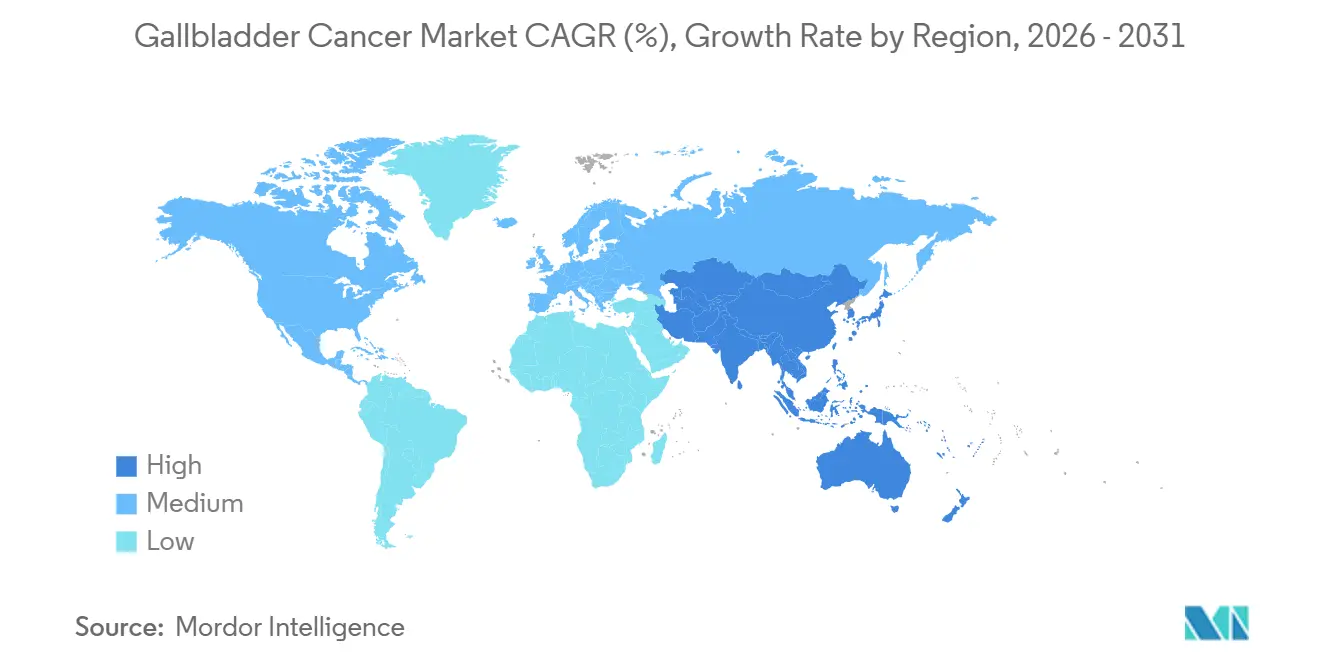
| Fastest Growing Market | Asia-Pacific |
| Largest Market | North America |
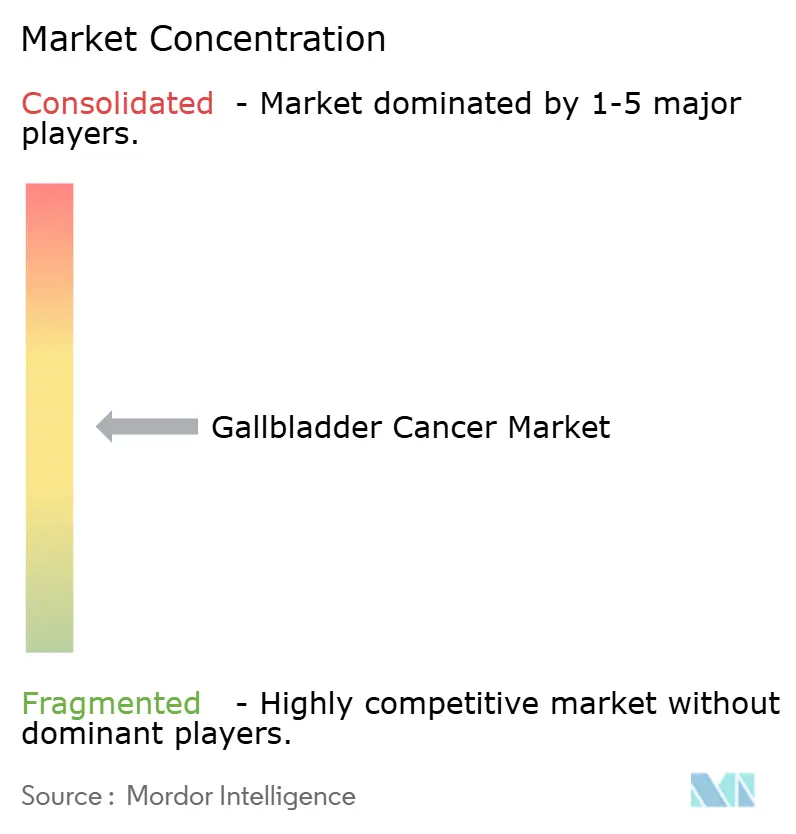
| Market Concentration | Medium |
Major Players *Disclaimer: Major Players sorted in no particular order Image © Mordor Intelligence. Reuse requires attribution under CC BY 4.0. | |
Gallbladder Cancer Market Analysis by Mordor Intelligence
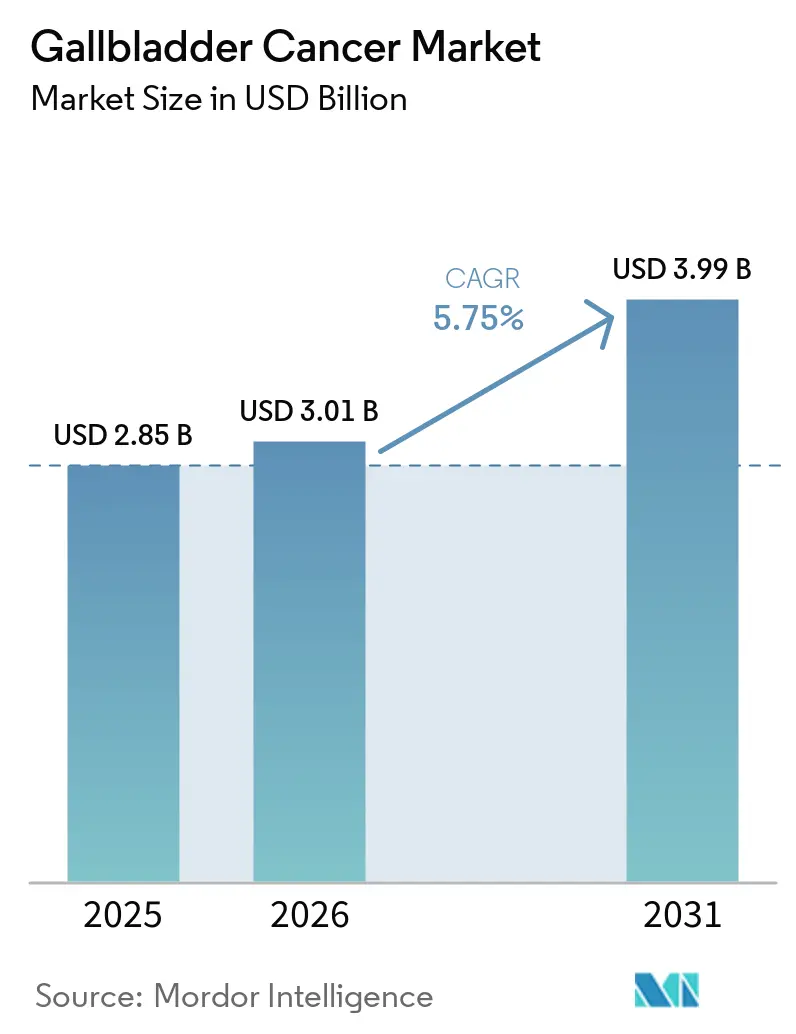
The Gallbladder Cancer Market size is expected to grow from USD 2.85 billion in 2025 to USD 3.01 billion in 2026 and is forecast to reach USD 3.99 billion by 2031 at 5.75% CAGR over 2026-2031.
Growth reflects a rising disease burden in high-incidence areas and a shift from chemotherapy alone toward biomarker-led systemic treatment. Gallstone prevalence, hormonal factors, and a higher incidence among women in the highest-burden populations are shaping screening priorities in endemic areas. Treatment providers are pairing molecular tests with imaging tools to identify patients who may benefit from more targeted care. Companies are pursuing immunotherapy combinations, HER2-directed medicines, and diagnostic technologies that can support earlier referrals. Access to costly therapies and late presentation remain important limits on uptake in several high-burden countries.
Key Report Takeaways
- By modality, treatment held 75.31% of the Gallbladder cancer market share in 2025, while diagnosis is forecast to grow at a 7.25% CAGR through 2031.
- By cancer type, adenocarcinoma accounted for 86.24% of the Gallbladder cancer market share in 2025, while adenosquamous carcinoma is projected to expand at a 6.22% CAGR through 2031.
- By stage, Stage IV disease accounted for 55.14% of the Gallbladder cancer market size in 2025, while Stage I is projected to advance at an 8.42% CAGR through 2031.
- By distribution channel, hospital pharmacies held 68.14% of revenue in 2025, while online pharmacies are projected to grow at a 9.12% CAGR through 2031.
- By geography, North America held 40.61% of revenue in 2025, while Asia-Pacific is projected to grow at a CAGR of 6.25% through 2031.
Note: Market size and forecast figures in this report are generated using Mordor Intelligence’s proprietary estimation framework, updated with the latest available data and insights as of January 2026.
Market Trends and Insights
Drivers Impact Analysis of Gallbladder Cancer Market*
| Driver | (~) % Impact on CAGR Forecast | Geographic Relevance | Impact Timeline |
|---|---|---|---|
| Increasing Incidence in High-Burden Regions | +0.8% | APAC core, including India, China, and South Korea, and South America, including Chile, Bolivia, and Peru | Long term (≥ 4 years) |
| Adoption of Immunotherapy-Based First-Line Regimens | +1.2% | Global, led by North America, Europe, and East Asia | Short term (≤ 2 years) |
| Expansion of Biomarker-Driven Treatment | +1.0% | North America, Europe, Japan, and South Korea | Medium term (2-4 years) |
| Advances in Diagnostic Imaging and Molecular Testing | +0.7% | Global, with early gains in tertiary care markets in China and India | Medium term (2-4 years) |
| Growth of Multidisciplinary and Minimally Invasive Care | +0.5% | High-income markets in North America and Europe, expanding to APAC | Medium term (2-4 years) |
| Expansion of Gallbladder Cancer Clinical Trials in Asia | +0.6% | APAC core, including China, India, South Korea, and Japan | Long term (≥ 4 years) |
| Source: Mordor Intelligence | |||
Increasing Incidence in High-Burden Regions Sustains Structural Demand
Gallbladder cancer incidence is concentrated in distinct geographic areas and has not followed a uniform global pattern. In Chile, evidence links a higher share of Mapuche ancestry to a 3.7% increase in gallbladder cancer mortality risk for each 1% increase in ancestral fraction. This pattern supports screening approaches that reflect population risk rather than applying a single model across all countries. The Gallbladder cancer market, therefore, has a durable patient base in parts of Asia and Latin America where risk factors are concentrated. Population aging in these regions can sustain clinical demand through 2040 without major prevention progress. The Gallbladder cancer market also needs diagnostic capacity that can identify the disease before symptoms appear or become severe.
Adoption of Immunotherapy-Based First-Line Regimens Reshapes Revenue Baseline
Immune checkpoint inhibitors are changing first-line care for advanced biliary tract cancer, including gallbladder cancer. Durvalumab combined with gemcitabine and cisplatin reduced the risk of death by 26% compared with chemotherapy alone in the TOPAZ-1 Phase III study. The 36-month overall survival rate was 14.6% with the combination and 6.9% with chemotherapy alone[1]. The FDA has approved pembrolizumab with chemotherapy for unresectable or metastatic biliary tract cancer, establishing an additional immunotherapy-based option. Adoption remains uneven outside trial settings because treatment selection, reimbursement, and care capacity differ between systems. Longer treatment duration and biosimilar competition for gemcitabine are moving payer attention toward the total cost of each treatment episode.
Expansion of Biomarker-Driven Treatment Opens Addressable Subpopulations
Molecular profiling is expanding the range of treatment options for some people with gallbladder cancer. HER2 amplification or overexpression occurs in up to 16% of gallbladder cancer cases, creating a defined group for HER2-directed treatment. In November 2024, the FDA granted accelerated approval to zanidatamab-hrii for previously treated, unresectable or metastatic HER2-positive biliary tract cancer. The decision was supported by a 52% objective response rate and a median response duration of 14.9 months in HERIZON-BTC-01. HER2 testing is less established in gallbladder cancer than in gastric or breast cancer, leaving some eligible patients unidentified. Liquid biopsy and CT-based molecular assessment may help close that testing gap.
Advances in Diagnostic Imaging and Molecular Testing Accelerate Early Detection
Imaging, liquid biopsy, and molecular testing are moving diagnosis beyond late-stage confirmation toward earlier risk assessment. A 2026 multicenter study in China reported 0.933 accuracy and a 0.9706 AUC for a deep-learning model that combined CT images with electronic medical records. The model distinguished malignant from benign gallbladder lesions and outperformed ResNet and DenseNet architectures by up to 8% on F1-score. A separate liquid biopsy approach that combined circulating tumor DNA, radiomic features, and clinical parameters reduced surgeon diagnostic errors by 56.24% in a validation cohort[2]. These tools can support referral decisions when tissue sampling is difficult or imaging findings are uncertain. Their use could expand the pool of patients assessed for surgery, systemic treatment, and molecularly matched therapy.
Restraints Impact Analysis of Gallbladder Cancer Market*
| Restraint | (~) % Impact on CAGR Forecast | Geographic Relevance | Impact Timeline |
|---|---|---|---|
| Late-Stage Diagnosis and Limited Surgical Eligibility | -1.5% | Global, most acute in APAC and South America | Long term (≥ 4 years) |
| High Cost of Advanced Therapies and Genomic Testing | -1.2% | APAC, South America, and MEA, with moderate relevance in Southern and Eastern Europe | Medium term (2-4 years) |
| Limited Gallbladder Cancer-Specific Evidence for Targeted Therapies | -0.8% | Global | Medium term (2-4 years) |
| Unequal Access to Specialist Care and Biomarker Testing | -0.6% | Rural APAC, South America, and Sub-Saharan Africa | Long term (≥ 4 years) |
| Source: Mordor Intelligence | |||
Late-Stage Diagnosis Caps the Surgically Eligible Population
Late diagnosis remains the main structural limit on curative care in the Gallbladder cancer market. Three-quarters of patients globally present with locally advanced, regionally spread, or metastatic disease, when curative resection is no longer feasible. In the United States, 39.9% to 43.7% of patients presented with serosa invasion or adjacent organ involvement at diagnosis. The 5-year survival rate remained below 5% for most patients, and median overall survival for Stage IV disease was 12.9 months even with current immunochemotherapy. Early disease can resemble gallstone disease, while routine ultrasound can miss subtle lesions. Broad use of AI-assisted screening in high-burden settings would be needed to enlarge the surgically eligible population.
High Costs of Advanced Therapies Constrain Uptake in Mid- and Lower-Income Markets
Advanced therapy costs create a gap between available treatments and their use in high-burden countries. Bispecific antibodies, antibody-drug conjugates, and broad genomic panels can exceed local reimbursement limits. The Gallbladder cancer market has greater access to these products in North America and Europe than in many parts of Asia, Latin America, and Africa. In India, access to platinum doublets and immunohistochemistry-based HER2 testing remains uneven outside major urban oncology centers. The largest patient populations can therefore have less access to high-cost HER2-directed drugs, FGFR inhibitors, and IDH1 inhibitors. Wider reimbursement, shared-risk payment models, and decentralized testing would be needed to narrow this difference.
*Our forecasts treat driver/restraint impacts as directional, not additive. The impact forecasts reflect baseline growth, mix effects, and variable interactions.
Gallbladder Cancer Market Segment Analysis
By Modality:
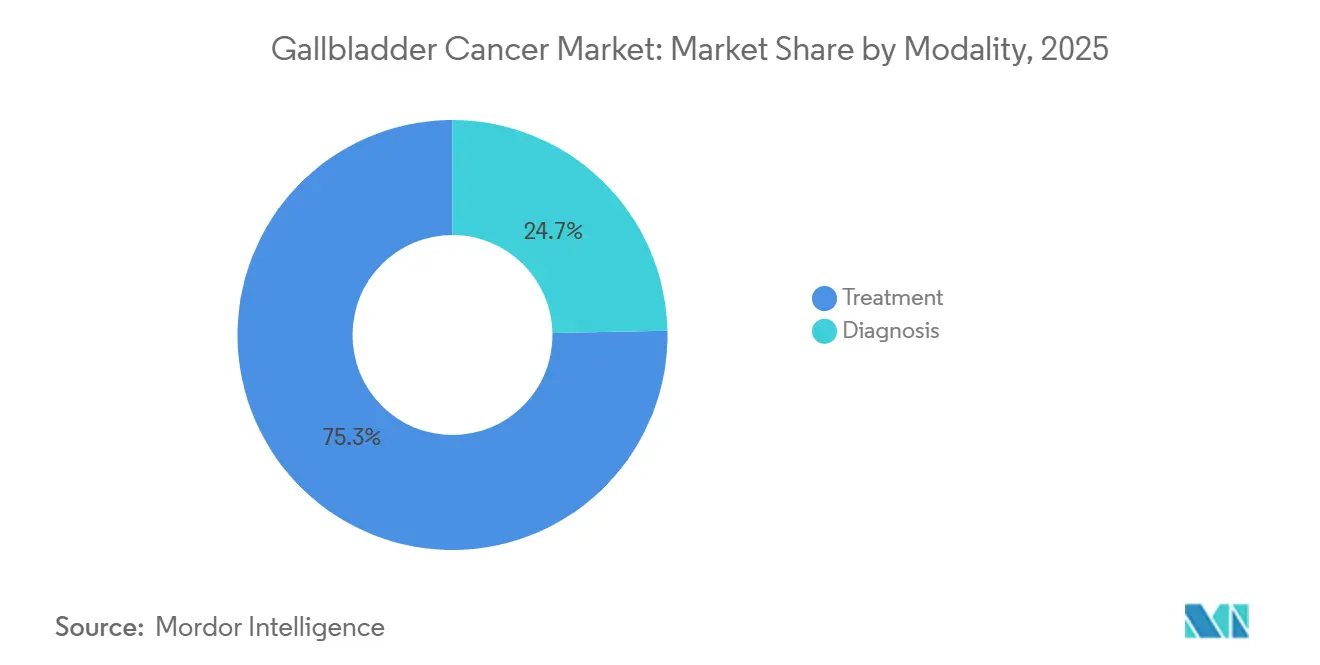
Diagnosis Gains Ground Alongside Established TreatmentTreatment held 75.31% of revenue share by modality in 2025, reflecting the cost and duration of systemic care for advanced disease. Surgery remains the only potentially curative intervention for patients with early-stage disease. Most people with advanced disease receive chemotherapy and immunotherapy combinations as the standard care pathway. Pembrolizumab and durvalumab regimens are being used more widely after U.S. approvals for biliary tract cancer. Targeted therapy use is increasing where molecular testing identifies suitable patients. Zanidatamab gives previously treated HER2-positive disease a specific treatment option. Eligibility for such targeted treatment remains smaller than the overall treatment-seeking population. Intravenous delivery and repeated treatment cycles keep oncology care centered in hospital settings. This treatment profile remains the main source of revenue in the Gallbladder cancer market.
Diagnosis is the fastest-growing modality and is projected to record a 7.25% CAGR from 2026 to 2031. The Gallbladder cancer market size for diagnosis is supported by wider use of AI-enabled CT review, liquid biopsy, and comprehensive genomic profiling. A Chinese multicenter study found that a multimodal deep-learning model achieved a 0.9706 AUC in differentiating malignant from benign gallbladder lesions. Cholangiopancreatography and laparoscopy remain important for staging and deciding whether surgery is possible. Biopsy and histopathology continue to support diagnosis, including testing based on circulating tumor DNA. Liquid biopsy can complement tissue testing when anatomical limitations make sample collection difficult. These approaches can improve the link between diagnosis, staging, and treatment planning. This expansion adds a diagnostic growth path to the Gallbladder cancer market.
By Cancer Type:
Adenocarcinoma Remains the Core Treatment PopulationAdenocarcinoma accounted for 86.24% of the revenue share by cancer type in 2025. Its leading position aligns with its established histological predominance among biliary malignancies. Major systemic therapies were developed in trial populations that were primarily enriched with adenocarcinoma cases. Squamous cell carcinoma and adenosquamous carcinoma remain smaller parts of the cancer-type distribution. These rarer forms have limited dedicated treatment evidence and historically smaller patient populations. The treatment pathway for these patients has generally relied on broader biliary tract cancer evidence. Better pathology and genomic testing are improving the ability to distinguish rare histological forms. That distinction can make future clinical evidence more specific to each subtype. The Gallbladder cancer market continues to rely on this dominant histology for most treatment demand.
Adenosquamous carcinoma is projected to grow at a 6.22% CAGR through 2031. This pattern reflects improved recognition and classification rather than a confirmed increase in disease prevalence. Next-generation sequencing and standardized pathology reporting can reclassify cases that might previously have been recorded as adenocarcinoma. Molecular research in Chile has identified TP53, TSC2, and NOTCH1 mutations among the leading somatic drivers in local gallbladder cancer cohorts. HER2 amplification is also relevant in a subset of cases and is associated with a treatment option after prior therapy. Population-specific molecular findings may matter in endemic countries with distinct ancestry patterns. Companies seeking regulatory progress in these areas need evidence that reflects local biology. This work may give the Gallbladder cancer market more precise options for rare disease forms.
By Stage:
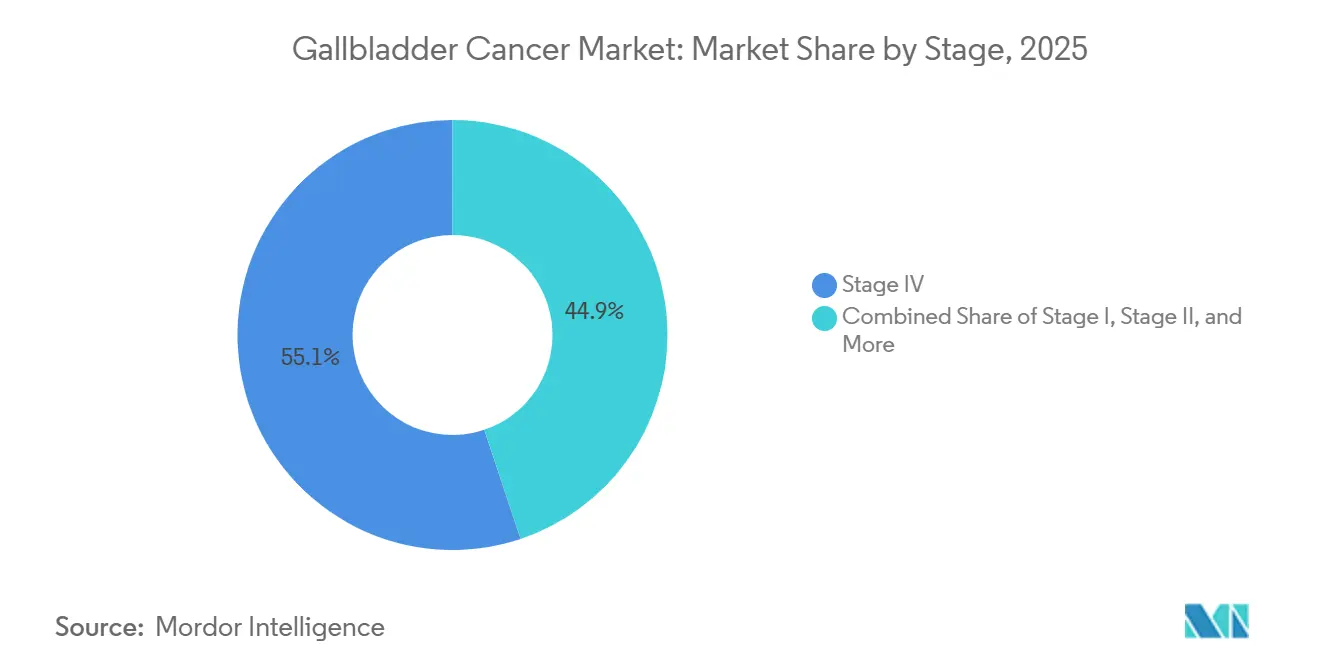
Advanced Disease Retains Revenue Weight While Stage I ExpandsStage IV disease accounted for 55.14% of the Gallbladder cancer market size by stage in 2025. This concentration reflects the use of systemic treatment and higher-value immunotherapy and targeted medicines in advanced disease. Stage III disease still allows surgery for some people and supports demand for multidisciplinary planning. Adjuvant chemotherapy remains part of treatment planning for eligible resected cases. Stages 0 through II made up a smaller revenue base because detection at these stages is uncommon outside surveillance settings. The late presentation of symptoms continues to direct treatment demand toward advanced disease. Systemic care often extends survival but does not remove the underlying late-diagnosis challenge. This structure keeps oncology treatment central to the Gallbladder cancer market. This concentration continues to shape the Gallbladder cancer market and its treatment demand.
Stage I is forecast to record an 8.42% CAGR from 2026 to 2031. AI-assisted imaging and liquid biopsy can identify incidental lesions that may have been missed in earlier workflows. More early-stage cancers are also identified during laparoscopic cholecystectomy performed for gallstone disease. A 2025 U.S. community oncology analysis found that 56% of patients with assigned stage had Stage 0 to III disease. Among those patients, 90.7% underwent surgery, mainly laparoscopic cholecystectomy. Greater validation of AI tools in ultrasound workflows could increase the number of early lesions referred for intervention. Earlier detection would raise demand for surgery and adjuvant therapy, which currently account for a smaller share of treatment value. These developments could gradually change the stage mix served by the Gallbladder cancer market.

By Distribution Channel:
Hospital Pharmacies Lead While Online Dispensing DevelopsHospital pharmacies accounted for 68.14% of the Gallbladder cancer market by distribution channel in 2025. This position reflects the intravenous nature of many chemotherapy and immunotherapy regimens. Hospitals prepare, administer, and monitor complex oncology treatments. Durvalumab and zanidatamab are examples of high-cost biologics that require organized clinical pharmacy support. Clinical pharmacists also manage drug interactions during combination treatment. Tertiary hospitals concentrate specialist oncology infrastructure and reinforce this channel’s role. The hospital setting remains important for patient observation during parenteral therapy. This hospital-led pattern gives the Gallbladder cancer market a stable clinical distribution base.
Online pharmacies are projected to expand at a 9.12% CAGR through 2031. Oral therapy is the main reason this channel is gaining relevance in the Gallbladder cancer market. Capecitabine is used as adjuvant treatment following resection and can be dispensed outside an infusion center. Retail pharmacies also serve people who need antiemetics, growth-factor support, and other supportive medicines. Telemedicine and home delivery can reduce unnecessary visits for patients receiving maintenance oral treatment. These services can support adherence when prescribing clinicians maintain appropriate oversight. Online dispensing does not replace hospital channels for complex intravenous regimens. Instead, it addresses selected oral and supportive care needs.
Geography Analysis
North America and Europe Gallbladder Cancer Market
North America held 40.61% of the revenue share in 2025. The region benefits from established reimbursement systems, rapid use of immunotherapy combinations, and a series of biliary tract cancer approvals. The United States accounted for the largest regional contribution, with FDA-approved pembrolizumab-based chemotherapy available for unresectable or metastatic disease. Canada had an adoption profile similar to that of the United States. Mexico had growing clinical trial activity that could expand its addressable treatment base. Europe remained an important secondary region, led by Germany, the United Kingdom, and France. The European Commission granted conditional marketing authorization for zanidatamab in July 2025. NICE recommends NHS use of zanidatamab in 2026 for eligible adults after prior systemic therapy.
APAC Gallbladder Cancer Market
Asia-Pacific is the fastest-growing region and is projected to advance at a 6.25% CAGR from 2026 to 2031. China and India combine a substantial disease burden with expanding trial activity and growing use of immunotherapy standards. China has reported a rising age-standardized incidence rate, particularly among men, associated with dietary and metabolic risk changes. China’s NMPA approved zanidatamab in May 2025 for previously treated HER2-positive biliary tract cancer. India has high disease incidence in its northeastern regions, where the age-standardized rate reached 14.9 per 100,000 among women. A 2026 Indian randomized trial raised objective response rates from 13.3% to 61.9% by adding nab-paclitaxel to gemcitabine-cisplatin in locally advanced and metastatic disease[3]. Japan and South Korea remain developed treatment settings with molecular profiling and FGFR-directed therapy.
MEA and South America Gallbladder Cancer Market
The Middle East, Africa, and South America represented smaller but important parts of the Gallbladder cancer market. Chile and Bolivia continued to record the highest age-standardized death rates for gallbladder and biliary tract cancer. This burden is linked to Mapuche ancestry and gallstone prevalence in indigenous populations. Brazil and Argentina anchor pharmaceutical distribution in South America. Clinical trial participation in Buenos Aires and São Paulo is strengthening evidence for regionally adapted care. GCC countries are investing in tertiary oncology facilities and expanding the availability of immunotherapy combinations. South Africa remains small in absolute size but functions as a reference point for some sub-Saharan African cancer care.
Competitive Landscape
The Gallbladder cancer market is moderately fragmented among pharmaceutical suppliers. A limited group of multinational companies controls approved immunotherapy and targeted therapy assets, while biotechnology and mid-sized oncology companies pursue differentiated pipelines. Durvalumab and pembrolizumab are part of major treatment pathways for biliary tract cancer. Zanidatamab obtained regulatory clearances in the United States, European Union, China, and the United Kingdom within 18 months. Leading programs are focused on HER2-directed chemoimmunotherapy, antibody-drug conjugates, and bispecific checkpoint approaches. This mix places commercial advantage with companies that can combine trials, diagnostics, and regulatory execution.
AstraZeneca strengthened the treatment base for durvalumab through longer-term TOPAZ-1 evidence, including a 14.6% 36-month overall survival rate with durvalumab plus chemotherapy. Jazz Pharmaceuticals expanded zanidatamab’s European reach after the European Commission authorization in July 2025. NICE’s April 2026 recommendation then opened routine NHS access for eligible patients. Other companies are testing HER2-expressing first-line combinations that could alter treatment sequencing if trial results are positive. Companies also need to address the limited gallbladder cancer-specific evidence for several targeted approaches. The value of their therapies depends on consistent biomarker testing and on access in high-incidence countries.
Device and diagnostics suppliers compete through endoscopy, robotic surgery, and AI-based imaging. A 2026 meta-analysis found that robotic radical cholecystectomy had fewer major complications, with an odds ratio of 0.42, and reduced blood loss by 114.77 mL versus open surgery. The analysis also found hospital stays were 2.92 days shorter, without a difference in long-term oncological outcomes. These findings support procurement interest at high-volume centers. CT tools that estimate molecular status without invasive sampling could change referral and testing patterns. Chinese developers of PD-1 and VEGF bispecific antibodies may influence geographic competition if their biliary tract cancer results gain global validation.
Gallbladder Cancer Industry Leaders
-
Merck & Co., Inc.
-
AstraZeneca plc
-
Bristol Myers Squibb Company
-
F. Hoffmann-La Roche Ltd
-
Pfizer Inc.
- *Disclaimer: Major Players sorted in no particular order
Gallbladder Cancer Market Companies Covered in this Report
- AstraZeneca
- Bayer
- BeiGene, Ltd.
- Boston Scientific
- Bristol-Myers Squibb
- Compass Therapeutics LLC
- Eisai
- Eli Lilly and Company
- Roche
- Incyte
- Intuitive Surgical, Inc.
- Jazz Pharmaceuticals plc
- Johnson & Johnson
- Merck
- Novartis
- Olympus
- Pfizer
- QED Therapeutics Inc.
- Relay Therapeutics, Inc.
- Servier Pharmaceuticals LLC
- Taiho Pharmaceutical Co., Ltd.
- TransThera Sciences Co., Ltd.
- Zymeworks Inc.
Recent Industry Developments in Gallbladder Cancer Market
- July 2026: The Gallbladder Cancer Foundation (GBCF) and Citizen Health expanded their partnership to make Ari, Citizen Health's AI teammate for patients and caregivers, available to the gallbladder cancer community.
- April 2026: Jazz Pharmaceuticals (zanidatamab) received NICE recommendation for NHS use. The UK's National Institute for Health and Care Excellence recommended routine NHS access to zanidatamab (Ziihera) for adults with HER2-positive (IHC 3+) unresectable locally advanced or metastatic biliary tract cancer, including gallbladder cancer, after at least one prior line of systemic therapy, expanding commercial reach to one of Europe's largest payer markets.
Global Gallbladder Cancer Market Report Scope
As per the scope of the report, gallbladder cancer is a rare but aggressive form of cancer that originates in the gallbladder, a small organ located beneath the liver responsible for storing bile. It often develops slowly and may not cause symptoms in the early stages. When symptoms do appear, they can include abdominal pain, nausea, jaundice, and weight loss. Gallbladder cancer is usually diagnosed at an advanced stage and may require surgical removal, chemotherapy, or radiation therapy.
The gallbladder cancer market is segmented by modality into treatment type, including surgery, chemotherapy, immunotherapy, targeted therapy, radiation therapy, and supportive care, and diagnosis, including liver function tests, blood tests, and tumor markers, ultrasound, computed tomography, magnetic resonance imaging, cholangiopancreatography, percutaneous transhepatic cholangiography, laparoscopy, biopsy, and histopathology, and others. By cancer type, the market is segmented into adenocarcinoma, squamous cell carcinoma, adenosquamous carcinoma, and other cancer types. By stage, the market is segmented into Stage 0, Stage I, Stage II, Stage III, and Stage IV. By distribution channel, the market is segmented into hospital pharmacies, retail pharmacies, online pharmacies, and other distribution channels. By geography, the market is segmented into North America, Europe, Asia-Pacific, the Middle East and Africa, and South America. The market report also covers the estimated market sizes and trends for 17 countries across major regions globally. For each segment, the market size and forecast are provided in terms of value (USD).
Segmentation Overview
| Treatment Type | Surgery |
| Chemotherapy | |
| Immunotherapy | |
| Targeted Therapy | |
| Radiation Therapy | |
| Supportive Care | |
| Diagnosis | Liver Function Test |
| Blood Test and Tumor Markers | |
| Ultrasound | |
| Computed Tomography | |
| Magnetic Resonance Imaging | |
| Cholangiopancreatography | |
| Percutaneous Transhepatic Cholangiography | |
| Laparoscopy | |
| Biopsy and Histopathology | |
| Others |
| Adenocarcinoma |
| Squamous Cell Carcinoma |
| Adenosquamous Carcinoma |
| Other Cancer Types |
| Stage 0 |
| Stage I |
| Stage II |
| Stage III |
| Stage IV |
| Hospital Pharmacies |
| Retail Pharmacies |
| Online Pharmacies |
| Other Distribution Channels |
| North America | United States |
| Canada | |
| Mexico | |
| Europe | Germany |
| United Kingdom | |
| France | |
| Italy | |
| Spain | |
| Rest of Europe | |
| Asia-Pacific | China |
| Japan | |
| India | |
| Australia | |
| South Korea | |
| Rest of Asia-Pacific | |
| Middle East and Africa | GCC |
| South Africa | |
| Rest of Middle East and Africa | |
| South America | Brazil |
| Argentina | |
| Rest of South America |
| By Modality | Treatment Type | Surgery |
| Chemotherapy | ||
| Immunotherapy | ||
| Targeted Therapy | ||
| Radiation Therapy | ||
| Supportive Care | ||
| Diagnosis | Liver Function Test | |
| Blood Test and Tumor Markers | ||
| Ultrasound | ||
| Computed Tomography | ||
| Magnetic Resonance Imaging | ||
| Cholangiopancreatography | ||
| Percutaneous Transhepatic Cholangiography | ||
| Laparoscopy | ||
| Biopsy and Histopathology | ||
| Others | ||
| By Cancer Type | Adenocarcinoma | |
| Squamous Cell Carcinoma | ||
| Adenosquamous Carcinoma | ||
| Other Cancer Types | ||
| By Stage | Stage 0 | |
| Stage I | ||
| Stage II | ||
| Stage III | ||
| Stage IV | ||
| By Distribution Channel | Hospital Pharmacies | |
| Retail Pharmacies | ||
| Online Pharmacies | ||
| Other Distribution Channels | ||
| By Geography | North America | United States |
| Canada | ||
| Mexico | ||
| Europe | Germany | |
| United Kingdom | ||
| France | ||
| Italy | ||
| Spain | ||
| Rest of Europe | ||
| Asia-Pacific | China | |
| Japan | ||
| India | ||
| Australia | ||
| South Korea | ||
| Rest of Asia-Pacific | ||
| Middle East and Africa | GCC | |
| South Africa | ||
| Rest of Middle East and Africa | ||
| South America | Brazil | |
| Argentina | ||
| Rest of South America | ||
Key Questions Answered in the Report
What is the projected value of the Gallbladder cancer market in 2031?
The Gallbladder cancer market is projected to reach USD 3.99 billion by 2031, from USD 3.01 billion in 2026, at a 5.75% CAGR.
Which gallbladder cancer treatment modality has the largest revenue share?
Treatment held 75.31% of revenue by modality in 2025 because advanced disease often requires multi-cycle systemic treatment.
Why is diagnosis growing faster than treatment in gallbladder cancer?
Diagnosis is projected to grow at a 7.25% CAGR as AI imaging, liquid biopsy, and genomic profiling gain wider use.
Which cancer type accounts for the largest share of care demand?
Adenocarcinoma accounted for 86.24% of the cancer-type share in 2025 and remains the core population for systemic treatment.
Which region is growing fastest for gallbladder cancer care?
Asia-Pacific is projected to grow at a 6.25% CAGR through 2031, supported by disease burden, trial activity, and expanding oncology infrastructure.
What limits access to newer gallbladder cancer therapies?
Late-stage diagnosis, uneven specialist access, reimbursement limits, and the cost of advanced medicines and genomic testing remain key constraints.