
Food Extrusion Market Size and Share
Market Overview
| Study Period | 2022 - 2032 |
|---|---|
| Market Size (2027) | USD 4.03 Billion |
| Market Size (2032) | USD 5.55 Billion |
| Growth Rate (2027 - 2032) | 6.62 % |
| Fastest Growing Market | Asia-Pacific |
| Largest Market | Europe |
| Market Concentration | Medium |
Major Players *Disclaimer: Major Players sorted in no particular order Image © Mordor Intelligence. Reuse requires attribution under CC BY 4.0. | |
Food Extrusion Market Analysis by Mordor Intelligence
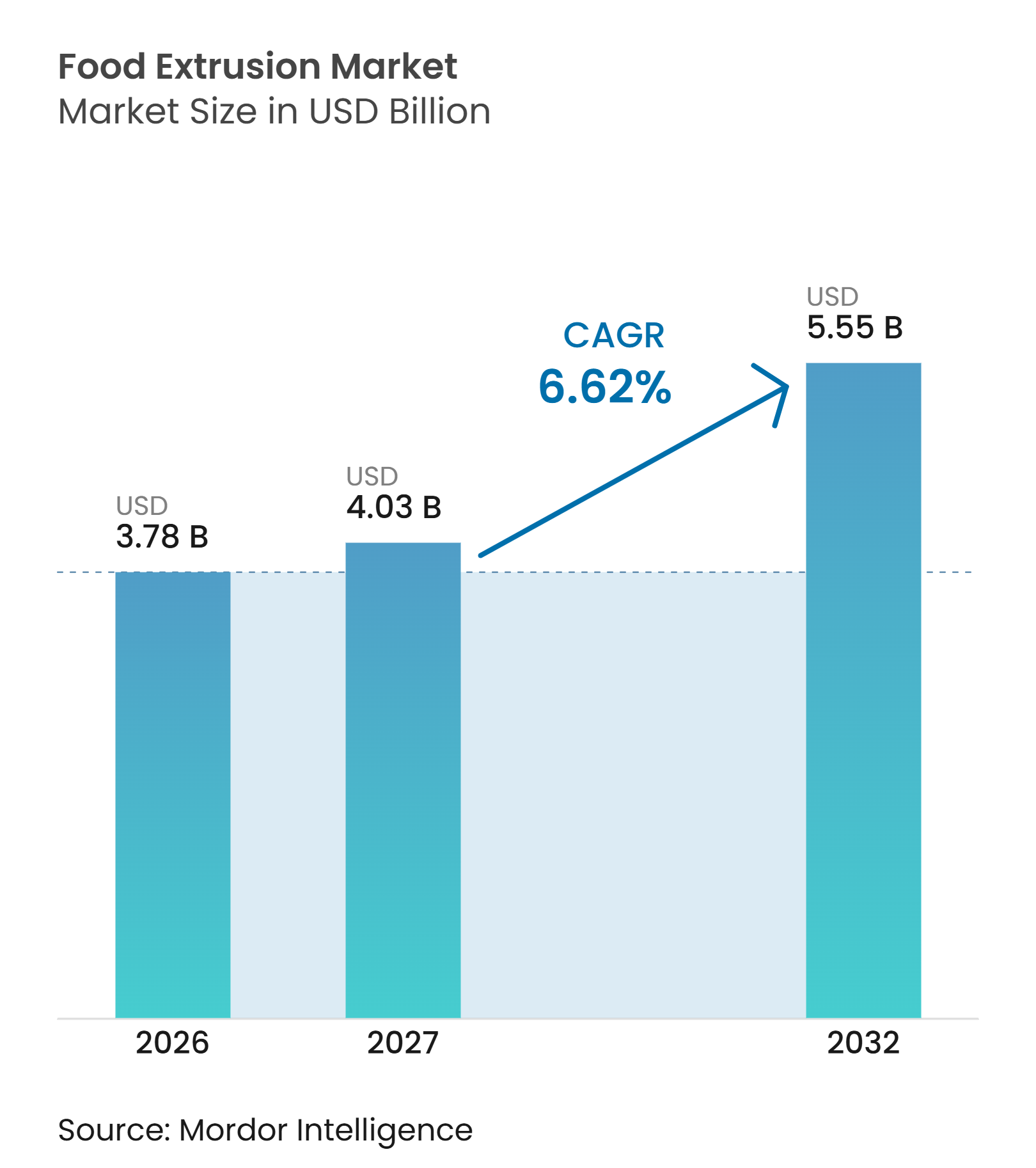
The food extrusion market size is expected to grow from USD 3.78 billion in 2026 to USD 4.03 billion in 2027 and is forecast to reach USD 5.55 billion by 2032 at a 6.62% CAGR over 2027 - 2032. The food extrusion market is driven by the versatility of extrusion technology across food manufacturing applications. Growing demand for varied product formulations is encouraging manufacturers to adopt flexible equipment with greater control over processing conditions and product texture. Manufacturers are also modernizing existing production lines to improve energy efficiency, accommodate changing product requirements, and address labor constraints. This creates opportunities for equipment suppliers to offer integrated machinery, process support, recipe development, and digital control solutions. Rising ingredient and energy costs are further encouraging investments in technologies that improve production efficiency, optimize yields, and minimize waste.
Key Report Takeaways
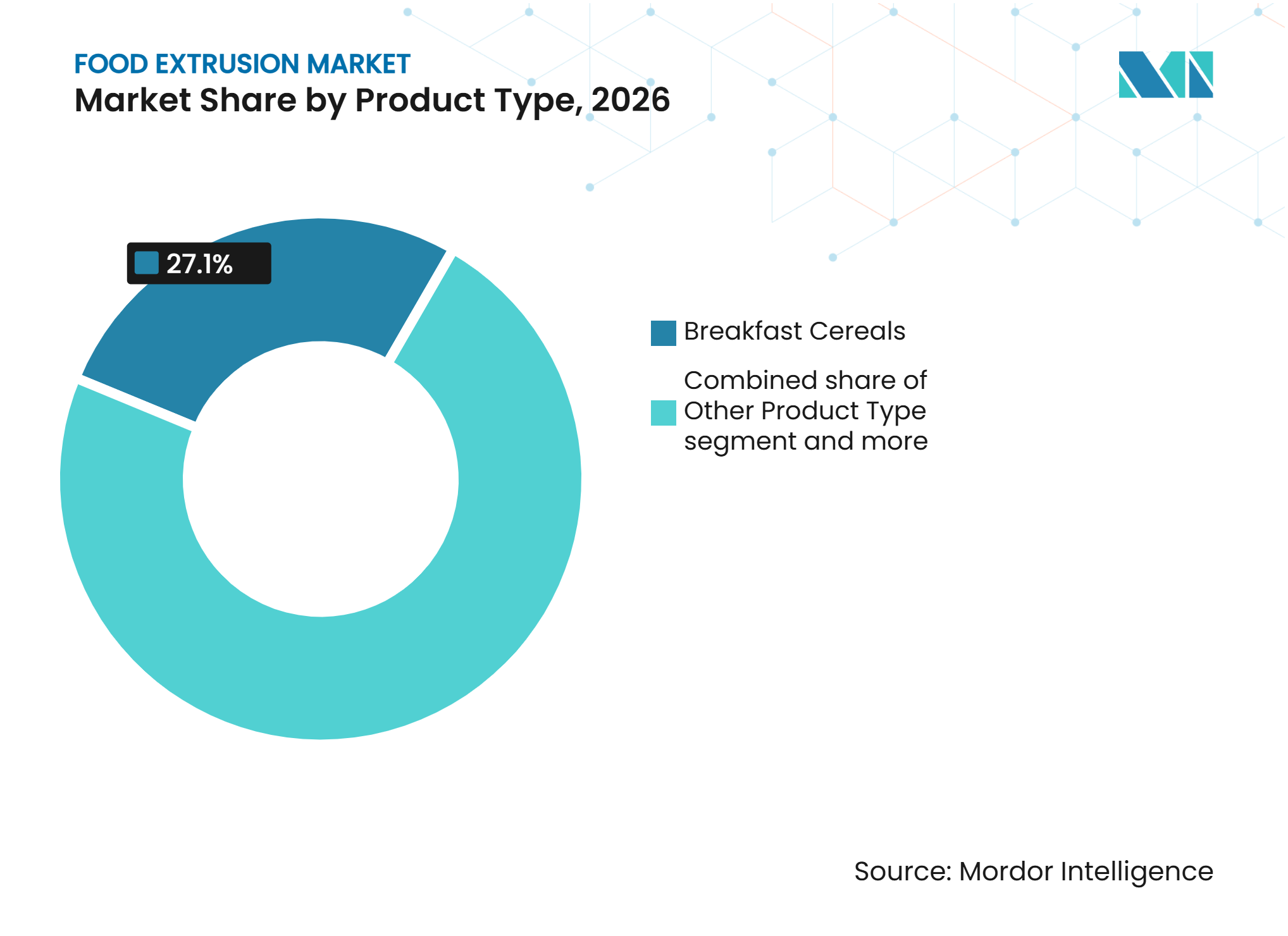
• By product type, breakfast cereals held 27.12% of the food extrusion market share in 2026, while other product types are forecast to expand at a CAGR of 8.81% through 2032.
• By extruder equipment type, single-screw extruders held 53.61% of the food extrusion market share in 2026, while twin-screw extruders are forecast to expand at a CAGR of 6.81% through 2032.
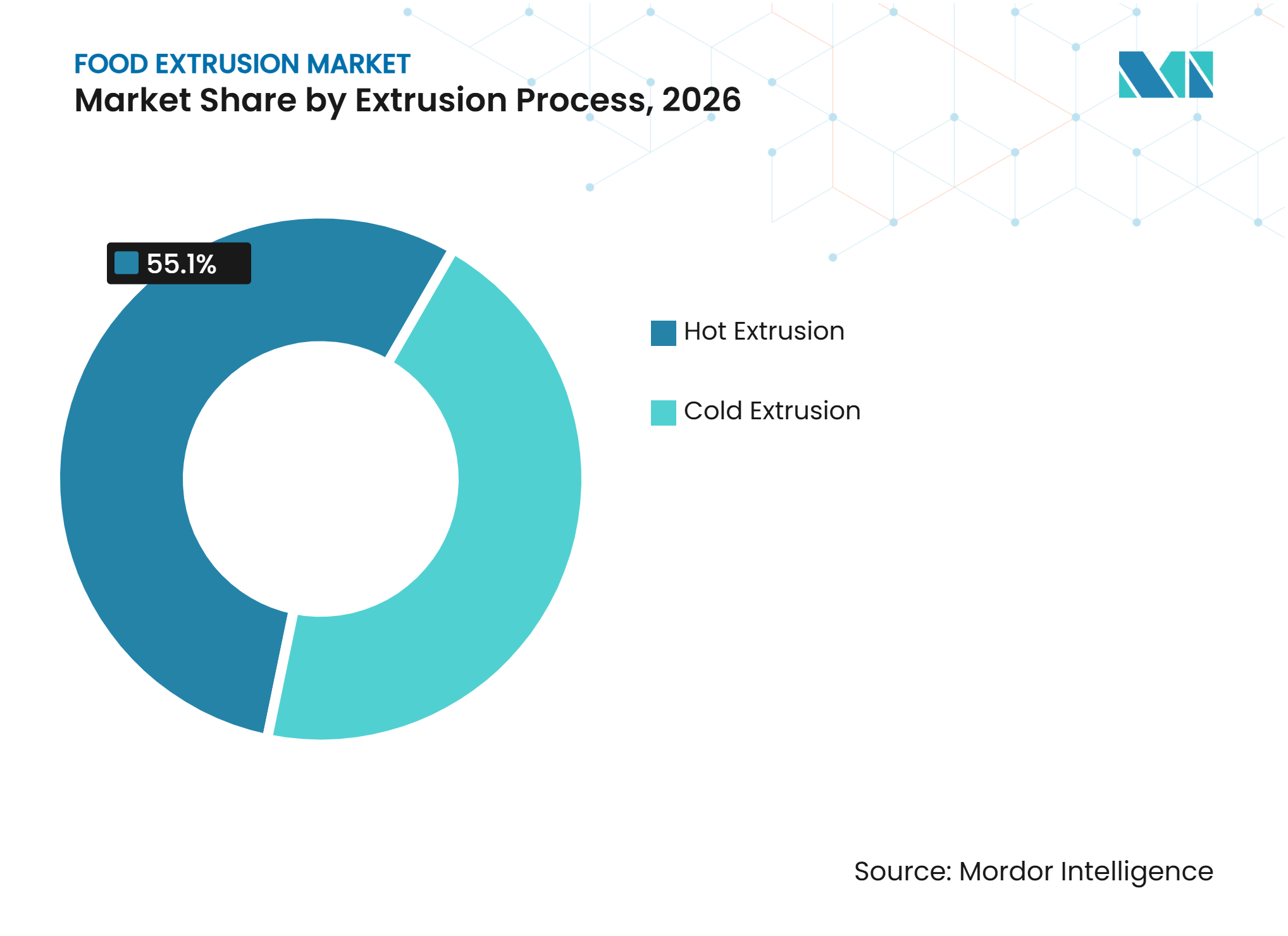
• By extrusion process, hot extrusion held a 55.12% share of the food extrusion market in 2026, while cold extrusion is forecast to expand at a CAGR of 7.41% through 2032.
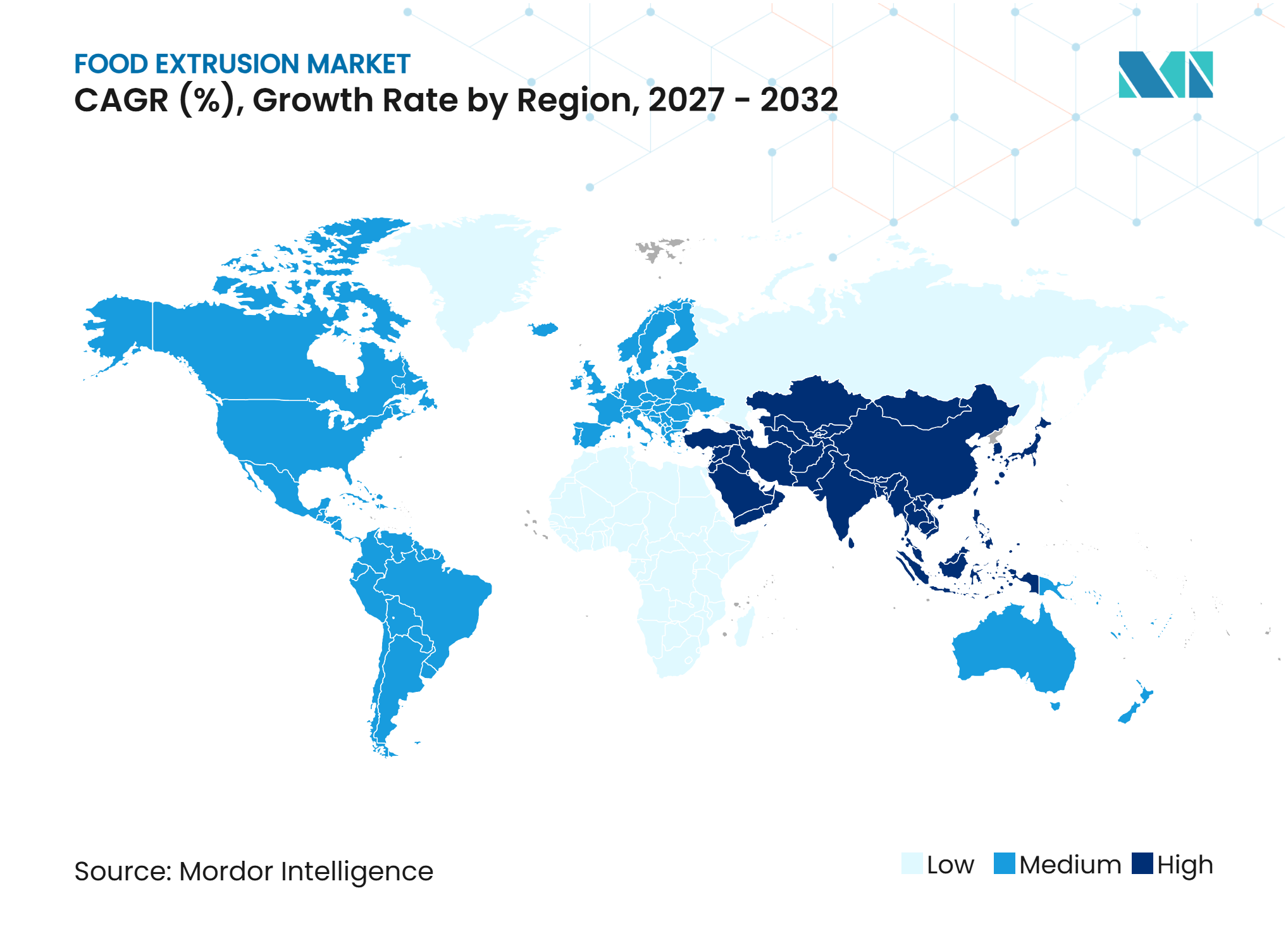
• By geography, Europe held a 35.12% share of the food extrusion market in 2026, while Asia-Pacific is forecast to expand at a CAGR of 9.11% through 2032.
Note: Market numbers in this report are based on Mordor Intelligence's proprietary estimation framework, which combines nine months of actuals with Q4 projections for base year 2026.
Market Trends and Insights
Drivers Impact Analysis of Food Extrusion Market*
| Driver | (~) % Impact on CAGR Forecast | Geographic Relevance | Impact Timeline |
|---|---|---|---|
| Growing demand for processed and convenience foods | +1.6% | Global, most acute in Asia-Pacific and North America | Long term (≥ 4 years) |
| Rising demand for plant-based and textured protein products | +1.2% | Europe and North America, emerging in Asia-Pacific | Medium term (2-4 years) |
| Increasing adoption of advanced and flexible extrusion equipment | +0.8% | Europe and North America, with spillover to Asia-Pacific | Medium term (2-4 years) |
| Rising adoption of automation and process control in food extrusion | +0.7% | Global, fastest adoption in North America and Europe | Short term (≤ 2 years) |
| Growing utilization of alternative and upcycled ingredients in food extrusion | +0.5% | Europe and North America | Medium term (2-4 years) |
| Increasing demand for extruded pet food and aquafeed products | +0.9% | Asia-Pacific, North America, and Europe | Medium term (2-4 years) |
| Source: Mordor Intelligence | |||
Growing Demand for Processed and Convenience Foods
The food extrusion market is supported by increasing consumer demand for convenient, ready-to-eat snacks and processed food products. For instance, in May 2025, according to the National Association of Convenience Stores (NACS), 48.8% of consumers consumed more than three snacks daily, while 76% sometimes replaced meals with snacks. Additionally, 64.1% of consumers actively sought snacks considered beneficial to their health, reflecting evolving preferences for convenient food options with added nutritional value [1]. These consumption patterns are encouraging manufacturers to expand their snack portfolios and introduce new product formats. For instance, in May 2025, Jackson's launched Super Veggie Straws, an extruded snack made from yellow peas, brown rice, cassava, and sweet potato, available in multiple flavors and retail pack sizes.
Rising Demand for Plant-Based and Textured Protein Products
The market is supported by increasing demand for plant-based protein products with improved taste, texture, and nutritional characteristics. For instance, in November 2025, according to the Good Food Institute, 3,009 United States adults found that 36% of both frequent and lapsed plant-based meat consumers considered matching the taste and texture of conventional meat an important factor when purchasing new products. Additionally, 29% of frequent plant-based meat consumers were motivated by products offering higher protein content than conventional meat [2]. These preferences are encouraging manufacturers to develop plant-based meat alternatives with improved fibrous structures and nutritional profiles. For instance, in 2025, GoodMills Innovation introduced VITATEX® Wheat Fava Flakes SVP Pro, a co-extruded ingredient made from wheat gluten and fava bean protein.
Increasing Adoption of Advanced and Flexible Extrusion Equipment
The adoption of advanced, flexible extrusion equipment is increasing as food manufacturers seek to process a wider range of ingredients and product formulations more efficiently. Equipment with adaptable configurations and automated controls allows manufacturers to adjust production processes, improve operational efficiency, and reduce downtime when switching between product formats. For instance, in October 2026, according to the Association for Packaging and Processing Technologies, 47% of food and beverage manufacturers reported that nutritional or functional formulations accounted for more than 10% of their production volume. Furthermore, 51% expected to invest at least USD 500,000 in processing or packaging equipment over the following three years [3]. This investment reflects the need for upgraded processing capabilities and supports the adoption of flexible extrusion systems that can accommodate changing formulation and production requirements.
Rising Adoption of Automation and Process Control in Food Extrusion
Automation and process control technologies are becoming increasingly important in food extrusion as manufacturers seek greater control over production operations and product quality. Automated equipment helps regulate key extrusion parameters, including temperature, moisture levels, pressure, and screw speed, ensuring better control over processing conditions. These technologies also reduce manual intervention, minimize production errors, and support consistent product quality across batches. In addition, real-time monitoring enables manufacturers to identify process variations and adjust operating conditions during production. The growing need for reliable processing, reduced wastage, and improved operational performance is encouraging food manufacturers to integrate automation and advanced control systems into extrusion operations.
Restraints Impact Analysis of Food Extrusion Market*
| Restraint | (~) % Impact on CAGR Forecast | Geographic Relevance | Impact Timeline |
|---|---|---|---|
| Raw-material price volatility | -0.6% | Global, particularly Europe and South America | Short term (≤ 2 years) |
| Energy-price fluctuations | -0.5% | Europe and global markets | Short term (≤ 2 years) |
| High capital and integration costs | -0.4% | Emerging markets, Asia-Pacific, South America, and Middle East and Africa | Long term (≥ 4 years) |
| Shortage of skilled workforce for advanced food processing | -0.3% | North America and Europe | Long term (≥ 4 years) |
| Source: Mordor Intelligence | |||
Raw-Material Price Volatility
Raw material price volatility remains a challenge for the food extrusion market, as fluctuations in the prices of key ingredients can increase production costs and affect manufacturers' profit margins. Ingredients such as corn, wheat, rice, soy protein, and other plant-based materials are subject to changes in agricultural output, weather conditions, supply availability, and transportation costs. These fluctuations make it difficult for manufacturers to maintain stable procurement costs and plan production budgets. Frequent changes in input prices can also affect product pricing, supplier agreements, and overall cost management. Manufacturers therefore face the challenge of securing a consistent supply of raw materials while maintaining competitive product prices and production profitability.
Energy-Price Fluctuations
Energy price fluctuations pose a challenge to the food extrusion market, as extrusion operations require continuous energy for heating, cooking, drying, and operating machinery. Changes in electricity and fuel prices can increase manufacturing expenses and affect overall production costs. Energy-intensive processes such as extrusion, moisture control, and product drying make manufacturers particularly sensitive to changes in energy costs. Unstable energy prices also make it difficult for processors to forecast operating expenses, manage production budgets, and maintain consistent product pricing. As a result, manufacturers face pressure to improve energy efficiency and control operating costs while maintaining production performance and product quality.
*Our forecasts treat driver/restraint impacts as directional, not additive. The impact forecasts reflect baseline growth, mix effects, and variable interactions.
Food Extrusion Market Segment Analysis
By Product Type:
Breakfast Cereals Retain Scale While Other Products Grow FasterBreakfast cereals accounted for 27.12% of the food extrusion market in 2026. The breakfast cereals segment holds a strong position in the food extrusion market, supported by established consumption patterns and large-scale production across developed markets, particularly in Europe and North America. Extrusion technology plays an important role in manufacturing grain-based cereals by enabling consistent shaping, cooking, and texture development. The segment also benefits from demand for fortified and portion-controlled cereal products, supported by established retail distribution networks and recognized brands. Manufacturers continue to rely on extrusion equipment to maintain production quality and meet evolving product requirements. The need to upgrade existing production lines, improve operational efficiency, and accommodate different product formats further supports demand for food extrusion equipment in this segment.
Other product types are projected to expand at a CAGR of 8.81% through 2032. The other product type segment is expected to register the fastest growth in the food extrusion market, driven by the increasing use of extrusion technology in specialized food applications. The segment includes products such as textured proteins, functional ingredients, and aquafeed formulations, in which extrusion enables manufacturers to process a variety of ingredients and achieve specific product structures. The use of alternative raw materials and processing by-products is also expanding the range of formulations suitable for extrusion. For instance, research published in 2025 examined the use of faba bean protein and brewers' spent grain in high-moisture meat analog products, highlighting the potential of extrusion to convert alternative ingredients into structured food products.



By Extruder Equipment Type:
Single-Screw Leads, Twin-Screw GainsSingle-screw extruders held a 53.61% share of the food extrusion market in 2026. Single-screw extruders remain widely used in the production of cereals, snacks, pasta, and standard pet food products due to their established design, operational simplicity, and suitability for high-volume manufacturing. Their ability to process conventional formulations efficiently makes them a practical choice for manufacturers focused on consistent output and production costs. The large installed equipment base also supports continued demand for maintenance, spare parts, and equipment upgrades. Their suitability for applications that do not require complex mixing or intensive processing helps maintain their relevance in the food extrusion market.
Twin-screw extruders are forecast to expand at a CAGR of 6.81% through 2032. Twin-screw extruders are gaining traction for their mixing and shearing capabilities, which enable the processing of high-moisture proteins, specialty aquafeed, and complex snack formulations. Their precise control over temperature, moisture, and screw speed enables manufacturers to develop products with specific textures and structural properties. These systems also offer flexibility in processing diverse ingredients and developing new product formulations. Modular configurations and pilot-scale facilities further support product testing, process optimization, and production expansion. Growing demand for specialized food products and advanced processing capabilities is driving the adoption of twin-screw extrusion systems.
By Extrusion Process:
Hot Extrusion Leads, Cold Extrusion ExpandsHot extrusion accounted for 55.12% of the food extrusion market in 2026. Hot extrusion is widely used in the production of puffed snacks and breakfast cereals, where heat and pressure develop the desired expanded texture. The process supports large-scale manufacturing by delivering consistent product quality, high throughput, and efficient production. Its established use across conventional food categories, along with familiarity among operators and maintenance teams, supports its continued adoption. Manufacturers also upgrade hot extrusion equipment to improve production capacity, sanitation, and energy efficiency. Its ability to produce a wide range of food formats while maintaining consistent output strengthens its position in the food extrusion market.
Cold extrusion is forecast to expand at a CAGR of 7.41%. Cold extrusion is gaining importance in the production of specialized food products that require controlled texture, moisture management, and nutrient retention. The process supports the development of protein-rich foods, functional ingredients, and specialty pet food products. Processing conditions such as water content, temperature, and screw speed influence the texture, expansion, and structural properties of extruded products. Cold extrusion also enables the development of differentiated food formats and supports the use of diverse ingredient combinations. Its suitability for specialized formulations and products requiring controlled processing conditions is driving its growing adoption in the food extrusion market.

Geography Analysis
Europe
Europe accounted for 35.12% of the food extrusion market in 2026. Europe's food extrusion market benefits from its established food processing industry and strong equipment manufacturing base. Germany's food manufacturing and machinery export activities, along with the United Kingdom's established snack and cereal production sector, support demand for equipment upgrades and production line modernization. European food safety, formulation, and energy efficiency regulations also influence manufacturing requirements. These regulations encourage food manufacturers to improve energy performance, optimize processing operations, and replace inefficient equipment. The combination of established food production capacity and evolving regulatory requirements continues to support the growth of the food extrusion market in Europe.
Asia-Pacific
Asia-Pacific is projected to expand at a CAGR of 9.11% through 2032. The Asia-Pacific food extrusion market is supported by rising consumption of packaged snacks and the expansion of pet food and aquafeed production in countries such as China and India. India's growing urban population and expanding organized retail sector are driving demand for packaged snack products, while its fish and shrimp farming industries support the need for locally produced aquafeed. China benefits from its large snack and cereal manufacturing base and expanding pet food industry. These developments create demand for both high-capacity extrusion lines and flexible systems capable of processing a range of ingredients and product formulations. The region also offers opportunities for domestic and international equipment suppliers, as manufacturers seek solutions that balance equipment costs, production efficiency, and technical support.
North America, South America, Middle East and Africa
North America's food extrusion market benefits from its established food-processing industry and continued investments in plant-based protein production. Manufacturers are adopting extrusion technologies to develop alternative protein products and expand processing capabilities. South America is supported by Brazil's snack-processing, aquaculture, and pet food industries, while Argentina and Chile contribute through pasta and snack manufacturing. In the Middle East and Africa, investments in local food production and the expansion of retail networks are supporting demand for modern processing equipment. Growing food manufacturing capacity across these regions is creating opportunities for food extrusion equipment suppliers.
Competitive Landscape
Market Concentration

The food extrusion market has a moderately consolidated supplier structure, with established companies serving premium and specialized equipment applications. Competition is driven by equipment performance, processing expertise, service networks, and the ability to handle different food and feed formulations. Smaller regional suppliers remain competitive in standard equipment and niche applications, creating price competition in basic systems while allowing established manufacturers to differentiate through advanced technologies and technical support. The presence of both global and regional players creates a competitive landscape in which pricing, product quality, and after-sales service all play important roles in determining market share.
Leading manufacturers are strengthening their market positions through investments in application development, technology improvements, and expanded product portfolios. These efforts help suppliers address changing processing requirements and support the development of new food products. The ability to provide flexible equipment, application expertise, and production-scale solutions is becoming increasingly important, with manufacturers that have broader technical capabilities better positioned to serve diverse customer requirements. Strategic partnerships with food producers and research institutions further support product development and help manufacturers align their equipment offerings with evolving industry needs.
Food safety requirements and energy efficiency are also influencing competition in the food extrusion market. Equipment reliability, cleaning capabilities, process control, and operating costs are important factors in supplier selection. Manufacturers that can demonstrate compliance with international food safety standards and offer equipment with lower energy consumption and reduced waste generation hold an advantage in supplier evaluations. Demand for equipment upgrades, retrofit solutions, and specialized systems creates opportunities for established manufacturers and niche suppliers alike. Local service availability and technical support further influence purchasing decisions, particularly in regions where access to qualified service personnel and spare parts is limited.
Food Extrusion Industry Leaders
-
Bühler Group
-
Hillenbrand, Inc. (Coperion GmbH)
-
Jinan Saixin Machinery Co., Ltd.
-
GEA Group AG (Pavan S.p.A.)
-
Groupe Legris Industries (Clextral S.A.S.)
- *Disclaimer: Major Players sorted in no particular order
Food Extrusion Market Companies Covered in this Report
- Bühler Group
- Hillenbrand, Inc. (Coperion GmbH)
- Jinan Saixin Machinery Co., Ltd.
- GEA Group AG (Pavan S.p.A.)
- Groupe Legris Industries (Clextral S.A.S.)
- JBT Marel Corporation (Wenger Manufacturing, LLC)
- Diamond America
- ANDRITZ AG
- The Bonnot Company
- American Extrusion International
- KAHL Group (AMANDUS KAHL GmbH & Co. KG)
- Anton Paar Group (Anton Paar TorqueTec GmbH)
- Schaaf Technologie GmbH
- Egan Food Technologies
- PacMoore Products, Inc.
- Jinan Darin Machinery Co., Ltd.
- Shandong Light M&E Co., Ltd.
- JBT Marel Corporation (Extru-Tech, Inc.)
- Doering Systems, Inc.
- Jinan Arrow Machinery Co., Ltd.
Recent Industry Developments in Food Extrusion Market
- May 2026: Bühler Group launched the Nutrex 7 Series, a new generation of twin-screw extrusion systems with improved hygienic design, process stability, automation, and digital monitoring for food and feed production.
- September 2025: ANDRITZ launched the ExMax S1021 single-screw extruder for pet food and aquafeed production, featuring automated cooking and expansion control, hygienic design, and improved process efficiency.
- June 2025: GEA introduced the Bake Extruder for high-volume biscuit manufacturing, offering flexible production configurations, interchangeable dies, precise process control, and improved cleaning capabilities.
Global Food Extrusion Market Report Scope
The food extrusion market includes equipment and systems used to process food ingredients into different shapes, textures, and product formats through extrusion. The market is segmented by Product Type, Extruder Equipment Type, Extrusion Process, and Geography. Based on Product Type, it includes Savory Snacks, Breakfast Cereals, Bread Products, Flours and Starches, and Other Product Types. Based on Extruder Equipment Type, the categories include Single-Screw Extruders, Twin-Screw Extruders (Co-Rotating and Counter-Rotating), and Other Extruder Equipment Types. Based on Extrusion Process, it includes Hot Extrusion and Cold Extrusion. By geography, it covers North America, Europe, Asia-Pacific, South America, the Middle East and Africa. Market forecasts are provided in terms of value (USD).
Segmentation Overview
| Savory Snacks |
| Breakfast Cereals |
| Bread Products |
| Flours and Starches |
| Other Product Type |
| Single-Screw Extruders | |
| Twin-Screw Extruders | Co-Rotating Twin-Screw Extruders |
| Counter-Rotating Twin-Screw Extruders | |
| Other Extruder Equipment Type |
| Hot Extrusion |
| Cold Extrusion |
| North America | United States |
| Canada | |
| Mexico | |
| Rest of North America | |
| Europe | Germany |
| United Kingdom | |
| Italy | |
| France | |
| Spain | |
| Netherlands | |
| Poland | |
| Belgium | |
| Rest of Europe | |
| Asia-Pacific | China |
| India | |
| Japan | |
| Australia | |
| Indonesia | |
| South Korea | |
| Thailand | |
| Rest of Asia-Pacific | |
| South America | Brazil |
| Argentina | |
| Chile | |
| Rest of South America | |
| Middle East and Africa | South Africa |
| Saudi Arabia | |
| Egypt | |
| Turkey | |
| Rest of Middle East and Africa |
| By Product Type | Savory Snacks | |
| Breakfast Cereals | ||
| Bread Products | ||
| Flours and Starches | ||
| Other Product Type | ||
| By Extruder Equipment Type | Single-Screw Extruders | |
| Twin-Screw Extruders | Co-Rotating Twin-Screw Extruders | |
| Counter-Rotating Twin-Screw Extruders | ||
| Other Extruder Equipment Type | ||
| By Extrusion Process | Hot Extrusion | |
| Cold Extrusion | ||
| By Geography | North America | United States |
| Canada | ||
| Mexico | ||
| Rest of North America | ||
| Europe | Germany | |
| United Kingdom | ||
| Italy | ||
| France | ||
| Spain | ||
| Netherlands | ||
| Poland | ||
| Belgium | ||
| Rest of Europe | ||
| Asia-Pacific | China | |
| India | ||
| Japan | ||
| Australia | ||
| Indonesia | ||
| South Korea | ||
| Thailand | ||
| Rest of Asia-Pacific | ||
| South America | Brazil | |
| Argentina | ||
| Chile | ||
| Rest of South America | ||
| Middle East and Africa | South Africa | |
| Saudi Arabia | ||
| Egypt | ||
| Turkey | ||
| Rest of Middle East and Africa | ||
Key Questions Answered in the Report
What is the market size of food extrusion?
The food extrusion market is estimated to reach USD 3.78 billion in 2026 and increase to USD 4.03 billion in 2027. The market is projected to reach USD 5.55 billion by 2032, growing at a CAGR of 6.62% during 2027–2032.
Which product category has the largest revenue position?
Breakfast cereals held 27.12% of the food extrusion market share in 2026, supported by established retail demand and fortified grain-based formats.
Which equipment technology is growing fastest?
Twin-screw extruders are projected to expand at a CAGR of 6.81% through 2032 as they support complex protein, aquafeed, and specialty food applications.
Why are twin-screw extruders important for plant-based foods?
They provide close control of moisture, temperature, and shear, which are important for creating fibrous plant-protein structures.