
Fibromuscular Dysplasia Market Size and Share
Market Overview
| Study Period | 2020 - 2031 |
|---|---|
| Market Size (2026) | USD 0.9 Billion |
| Market Size (2031) | USD 1.23 Billion |
| Growth Rate (2026 - 2031) | 6.33 % |
| Fastest Growing Market | Asia-Pacific |
| Largest Market | North America |
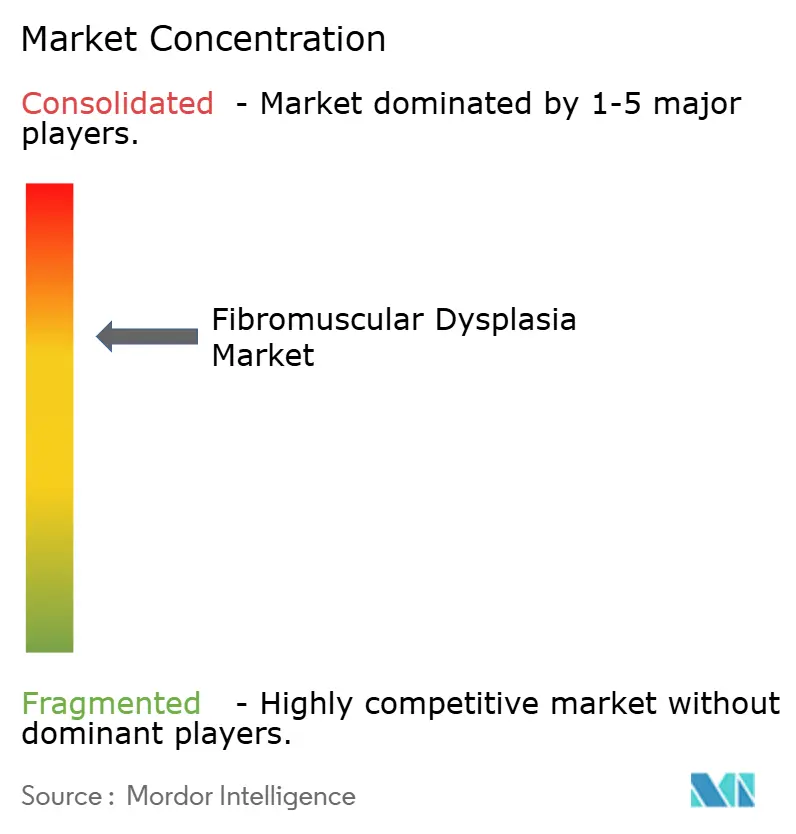
| Market Concentration | Medium |
Major Players *Disclaimer: Major Players sorted in no particular order Image © Mordor Intelligence. Reuse requires attribution under CC BY 4.0. | |
Fibromuscular Dysplasia Market Analysis by Mordor Intelligence
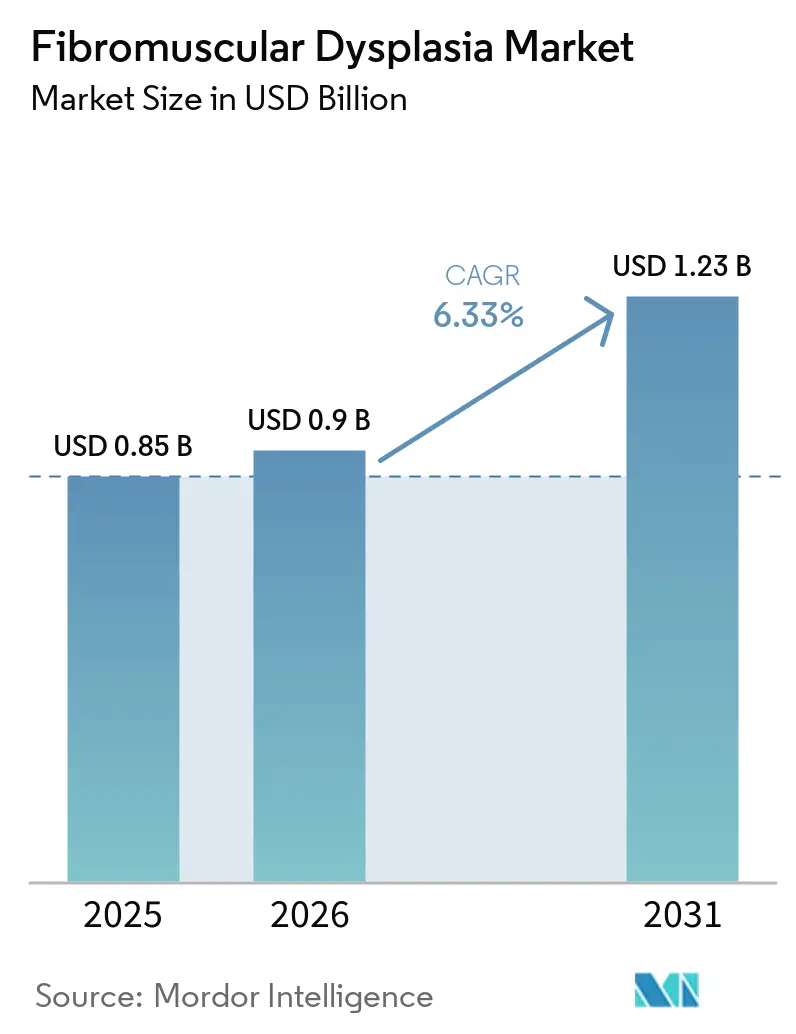
The fibromuscular dysplasia market is projected to expand from USD 0.85 billion in 2025 and USD 0.90 billion in 2026 to USD 1.23 billion by 2031, registering a CAGR of 6.33% between 2026 and 2031. The formal recognition of fibromuscular dysplasia as a systemic arterial disorder is widening the clinical pathway beyond isolated renal and cervical presentations. Multivessel disease means that one confirmed case can require imaging, follow-up, medication, and, in selected cases, an intervention across several arterial sites. Head-to-pelvis imaging recommendations are bringing this broader approach into routine assessment for newly diagnosed patients. This supports demand for imaging capacity and coordinated vascular care in the fibromuscular dysplasia market. The small diagnosed population and uneven specialist access continue to limit uptake, even as better recognition creates a wider referral base.
Key Report Takeaways
- By disease type, renal fibromuscular dysplasia led with 39.61% of the fibromuscular dysplasia market share in 2025, while vertebral fibromuscular dysplasia is forecasted to grow at a 7.14% CAGR through 2031.
- By component, treatment type held 51.37% of the fibromuscular dysplasia market in 2025, while diagnosis method is projected to advance at an 8.27% CAGR through 2031.
- By age group, geriatric patients held 41.25% of the segment in 2025, while adult patients are projected to expand at a 7.52% CAGR through 2031.
- By end-user, hospitals held 43.34% of the segment in 2025, while diagnostic imaging centers are forecasted to grow at a 6.67% CAGR through 2031.
- By geography, North America accounted for 47.16% of the fibromuscular dysplasia market in 2025, while Asia-Pacific is projected to expand at an 8.24% CAGR through 2031.
Note: Market size and forecast figures in this report are generated using Mordor Intelligence’s proprietary estimation framework, updated with the latest available data and insights as of January 2026.
Market Trends and Insights
Drivers Impact Analysis of Fibromuscular Dysplasia Market*
| Driver | (~) % Impact on CAGR Forecast | Geographic Relevance | Impact Timeline |
|---|---|---|---|
| Recognition of FMD as a Systemic Arteriopathy | +1.2% | Global, with concentrated gains in North America and Europe | Medium term (2-4 years) |
| Adoption of CTA and MRA for Multivessel Screening | +1.5% | Global, with North America leading and Asia-Pacific accelerating | Short term (≤ 2 years) |
| Specialized Clinics and Multidisciplinary Care | +0.8% | North America and Europe, with early development in Asia-Pacific | Medium term (2-4 years) |
| Detection of Renovascular Hypertension in Younger Patients | +0.9% | Asia-Pacific, especially India and China, with spillover to the Middle East and Africa | Long term (≥ 4 years) |
| Use of Image-Guided Endovascular Intervention | +1.0% | North America and Europe, with Japan supporting Asia-Pacific adoption | Medium term (2-4 years) |
| Registry Evidence for Earlier Diagnosis and Follow-Up | +0.6% | North America and Europe, especially France, Belgium, and the United Kingdom | Long term (≥ 4 years) |
| Source: Mordor Intelligence | |||
Greater Recognition of FMD as a Systemic Arteriopathy
Fibromuscular dysplasia is increasingly managed as a systemic arterial disorder rather than a condition restricted to the renal or cervical arteries. The ARCADIA Registry review reported multisystem vascular involvement in 66% of patients, including lesions in a second arterial bed for 48% and aneurysms or dissections for 18%.[1] These findings support broader assessment after diagnosis and increase the number of clinical services used per patient. In 2026, RadioGraphics described the expanding role of radiologists in identifying multisystem manifestations and related complications.[2] The fibromuscular dysplasia market therefore benefits when nephrology, neurology, radiology, and vascular teams recognize the same patient pathway. Registry evidence also supports earlier diagnosis and more consistent follow-up across specialized centers.
Wider Adoption of CTA and MRA for Multivessel Screening
CTA and MRA are becoming central to initial multivessel assessment in the fibromuscular dysplasia market. The 2025 ESVS guidance supports cross-sectional imaging to confirm renal FMD and define clinically relevant arterial disease.[3] CTA offers high spatial resolution, identifies calcification, and is widely available, while MRA is useful when radiation exposure or iodinated contrast is a concern. Head-to-pelvis protocols can move assessment from separate examinations to a structured single diagnostic pathway. That change raises scanner use per confirmed case and favors providers with established CTA and MRA capacity. Ultrasound remains useful for initial renal assessment and surveillance, but it is less likely to be the only confirmatory examination.
Expansion of Specialized FMD Clinics and Multidisciplinary Care
Specialized FMD clinics combine vascular medicine, nephrology, neurology, radiology, and genetics within one care pathway. This model supports earlier recognition of renovascular hypertension, especially in younger patients with difficult-to-control blood pressure. Renal FMD is a recognized cause of renovascular hypertension and is particularly important in pediatric patients. Published 2024 and 2025 clinical reports continued to describe FMD in younger patients with resistant hypertension, reinforcing the need for earlier specialist referral. In the fibromuscular dysplasia market, referrals from primary care and hypertension services can broaden the diagnostic funnel beyond traditional vascular specialty channels. Multidisciplinary programs also create repeatable workflows for imaging, medication management, surveillance, and referral for intervention.
Increasing Use of Image-Guided Endovascular Intervention
Image-guided endovascular intervention is increasingly preferred over open revascularization for selected FMD-related arterial stenosis. A 2025 case report showed that interlesion pressure measurement before and after angioplasty can provide a physiological endpoint in multifocal renal FMD. OCT can provide added detail in angiographically unclear focal lesions and can help assess stent expansion and apposition. These tools may improve case selection and reduce unnecessary stenting. Their adoption gives the fibromuscular dysplasia market a technology-based distinction within the interventional device tier.
Restraints Impact Analysis of Fibromuscular Dysplasia Market*
| Restraint | (~) % Impact on CAGR Forecast | Geographic Relevance | Impact Timeline |
|---|---|---|---|
| Prolonged Diagnostic Delay and Underdiagnosis | -1.1% | Global, most acute in the Middle East and Africa and parts of Asia-Pacific | Long term (≥ 4 years) |
| Limited Randomized Evidence for FMD-Specific Therapies | -0.7% | Global, with pricing constraints in Europe and North America | Long term (≥ 4 years) |
| Small Diagnosed Patient Pool and Uncertain Disease Prevalence | -0.9% | Global | Long term (≥ 4 years) |
| Uneven Access to Expert Imaging and Interventional Care | -0.5% | Middle East and Africa, South America, and secondary Asia-Pacific markets | Medium term (2-4 years) |
| Source: Mordor Intelligence | |||
Prolonged Diagnostic Delay and Underdiagnosis
Diagnostic delay remains a major limitation because symptoms can overlap with essential hypertension, migraine, and vasculitis. Registry evidence in the supplied research placed the period from first symptom to diagnosis between 3.6 and 9 years. The commercial pathway begins only after a diagnosis is confirmed, so delays restrict the treated population in the fibromuscular dysplasia market. Available prevalence estimates from autopsy and donor angiography studies have exceeded registry-based diagnosed populations, indicating a sizeable pool that remains unrecognized. This gap makes production planning more difficult for device suppliers and limits the predictability of demand. The issue is most pronounced where referral systems and vascular imaging access remain limited.
Limited Randomized Evidence for FMD-Specific Therapies
No randomized controlled trial directly compares medical management with revascularization or angioplasty with bypass in FMD. Generic antihypertensives and antiplatelet drugs remain the main medical approach, and no branded drug is approved specifically for FMD. This limits pharmaceutical revenue growth largely to growth in patient numbers. Expert imaging and intervention services are concentrated in a relatively small number of centers, which reduces penetration in community hospitals and in markets outside major urban areas. The fibromuscular dysplasia market faces its strongest access limits in parts of Europe, Asia-Pacific, the Middle East and Africa, and South America.
*Our forecasts treat driver/restraint impacts as directional, not additive. The impact forecasts reflect baseline growth, mix effects, and variable interactions.
Fibromuscular Dysplasia Market Segment Analysis
By Disease Type:
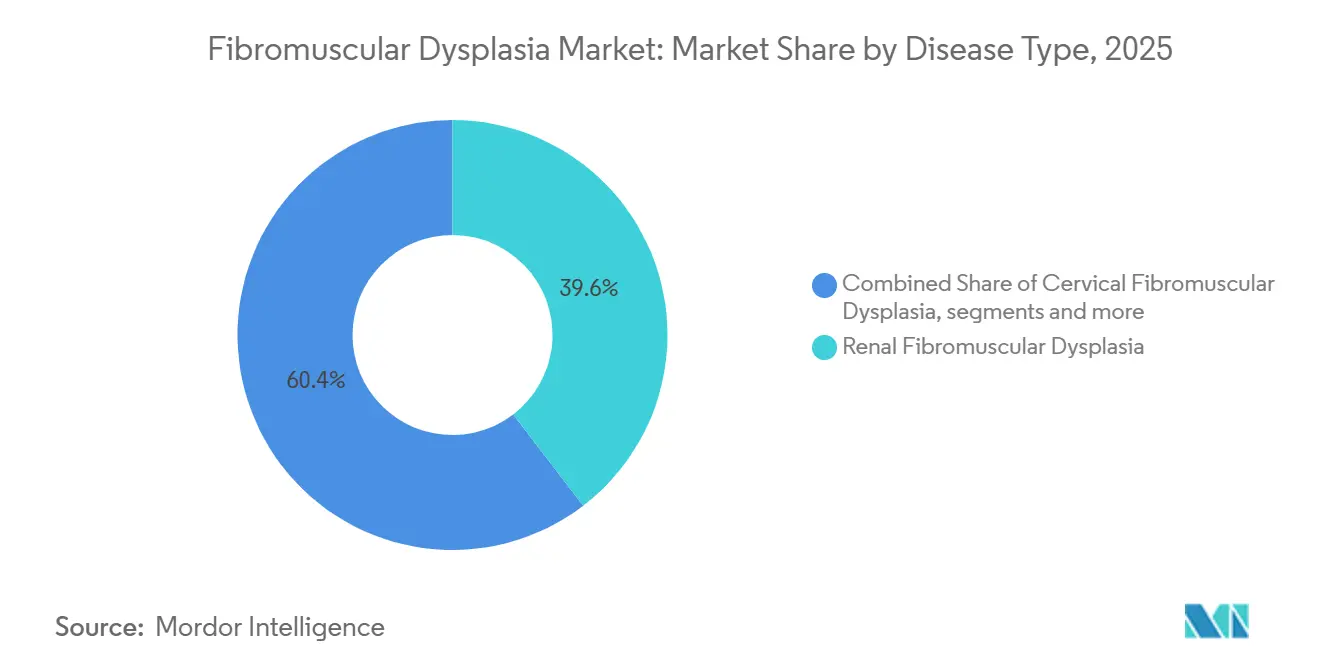
Renal FMD Retains the Largest Base While Vertebral Cases Gain AttentionRenal FMD held 39.61% of the segment in 2025, making it the largest disease subtype in the fibromuscular dysplasia market. Its position reflects the established clinical pathway for renal artery disease and the high prevalence of renal involvement described in clinical references. A study of Chinese patients with renal artery FMD also supported the safety and effectiveness of endovascular management for blood pressure reduction. Renal disease remains the main clinical entry point for many patients.
Vertebral FMD is projected to grow at a 7.14% CAGR through 2031, the fastest rate among disease subtypes. Greater neurological recognition links vertebral involvement to posterior circulation stroke and cervical artery dissection. Cervical disease can therefore lead to neurovascular assessment as well as ongoing imaging surveillance. Visceral and iliac FMD remain smaller categories, although systematic cross-sectional imaging identifies lesions that were previously incidental. The broader detection of these arterial sites expands the clinical scope of the fibromuscular dysplasia industry.

By Component:
Treatment Type Leads the Market While Diagnosis Method Records Faster GrowthTreatment type accounted for 51.37% of the fibromuscular dysplasia market in 2025, making it the largest component segment. The treatment landscape includes antihypertensive medications, antiplatelet therapy, endovascular interventions, and surgical procedures aimed at controlling symptoms, managing blood pressure, and reducing the risk of vascular complications. Treatment remains the primary revenue-generating component due to the chronic nature of disease management and the need for ongoing clinical intervention.
Diagnosis method is projected to grow at a CAGR of 8.27% through 2031, the fastest among the component segments. Growth is driven by increasing awareness of FMD, improved access to advanced imaging technologies, and greater utilization of diagnostic modalities such as computed tomography angiography (CTA), magnetic resonance angiography (MRA), duplex ultrasound, and catheter-based angiography. Earlier detection and expanded screening of at-risk patients are expected to support continued growth in diagnostic testing.
By Age Group:
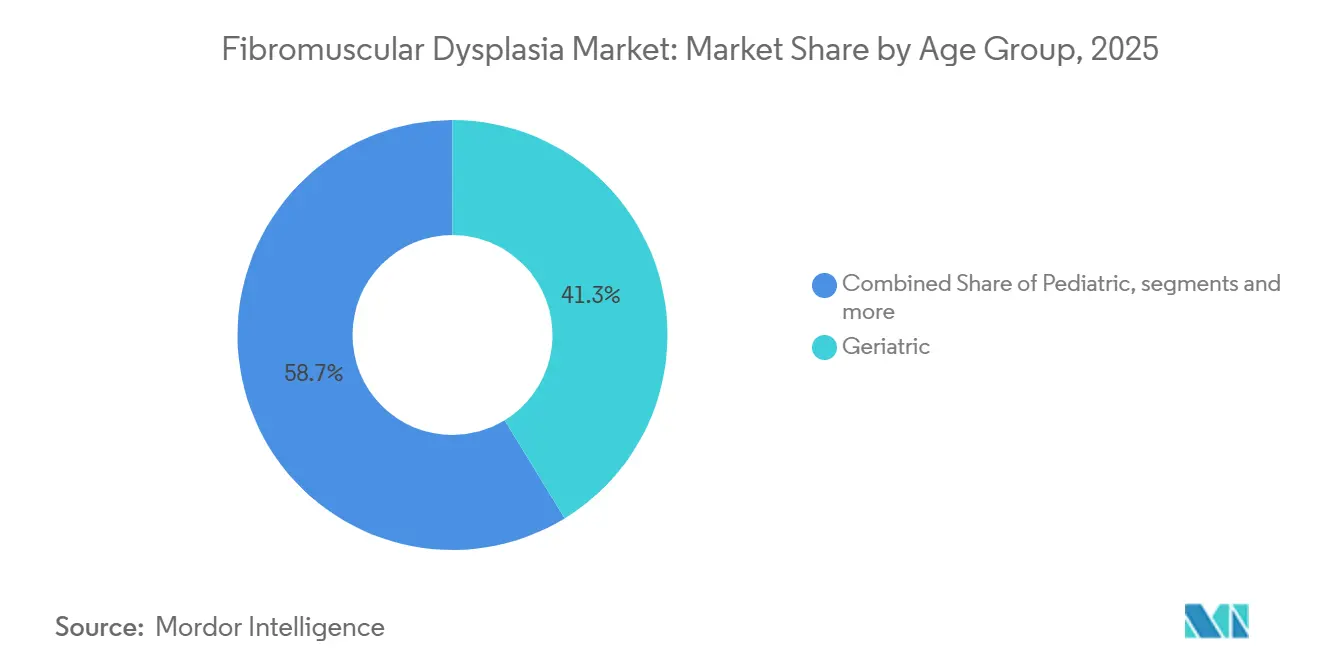
Geriatric Patients Lead Current Revenue and Adult Detection ExpandsGeriatric patients held 41.25% of the age-group segment in 2025. Their position reflects established diagnosis and treatment among older adults with vascular evaluations. Research cited associated multifocal FMD in elderly patients with a more benign phenotype and fewer therapeutic vascular procedures. Even so, ongoing medication, surveillance imaging, and specialist follow-up sustain clinical use. The segment provides a stable base for the fibromuscular dysplasia market.
Adult patients are projected to grow at a 7.52% CAGR through 2031. Referral pathways from primary care, hypertension clinics, and SCAD programs are identifying more women aged 30 to 60. The North American FMD Registry follows patients through specialized sites, while participating centers continue to position middle-aged women as a major patient group. Pediatric FMD is the smallest category and requires distinct management. Small pediatric volumes still require specialized imaging and multidisciplinary consultation.
By End-User:
Hospitals Lead Complex Care and Imaging Centers Gain Outpatient DemandHospitals held 43.34% of the end-user segment in 2025. They conduct complex PTRA, surgical revascularization, and neurovascular procedures, while also hosting many multidisciplinary FMD programs. Cleveland Clinic, Massachusetts General Hospital, and the Texas Heart Institute illustrate the hospital-based model described in the source material. These programs bring together vascular medicine, nephrology, neurology, radiology, and genetics in one pathway. This concentration of capability helps hospitals retain the largest share of the fibromuscular dysplasia market.
Diagnostic imaging centers are projected to grow at a 6.67% CAGR through 2031. The shift of noninvasive CTA and MRA screening into outpatient settings supports this expansion. Specialty clinics can operate as regional extensions of academic programs and may increase access to coordinated care. Hospitals remain central for complex treatment, while imaging centers address a growing share of screening demand.
Geography Analysis
North America Fibromuscular Dysplasia Market
North America held 47.16% of the fibromuscular dysplasia market in 2025. The region combines established registries, specialized centers, and reimbursement pathways that support higher use per diagnosed patient. The North American FMD Registry has involved specialized centers across the United States and provides a coordinated base for research and follow-up. Cleveland Clinic, UH Harrington Heart and Vascular Institute, and Massachusetts General Hospital are major examples of hospital-centered care. Canada and Mexico add smaller but growing case volumes through referral links and rising awareness from U.S. academic programs.
Europe Fibromuscular Dysplasia Market
Europe is the second-largest regional setting in the source material, with the United Kingdom, France, Germany, and Belgium supporting the most developed institutional activity. The national clinic at Salford Royal used a brain-to-pelvis imaging protocol and reported both confirmed FMD and conditions that mimicked FMD. France’s Haute Autorité de Santé recommends angioplasty as the first-line treatment for functional renal artery stenosis due to FMD and requires multidisciplinary review before revascularization decisions. Spain, Italy, and other European countries participate at lower volumes because they have fewer dedicated programs. Fragmented delivery systems and limited specialist access continue to restrain broader use.
APAC, MEA and South America Fibromuscular Dysplasia Market
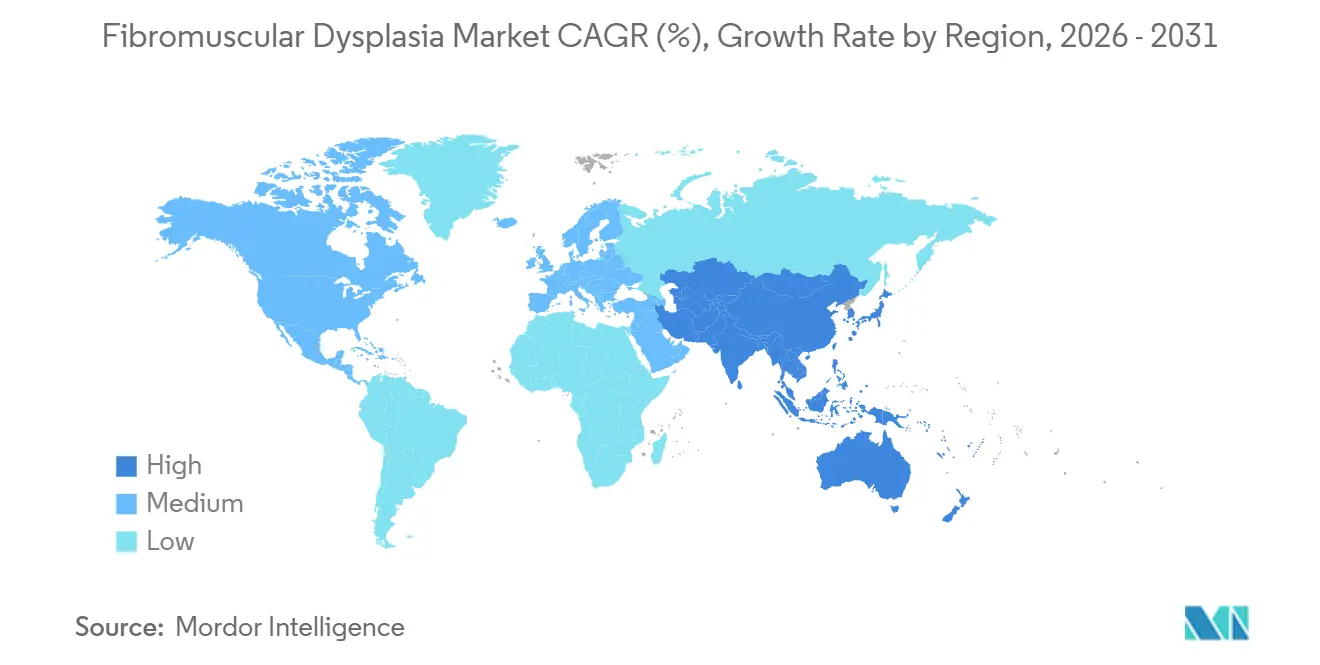
Asia-Pacific is projected to grow at an 8.24% CAGR through 2031, the fastest regional rate in the fibromuscular dysplasia market. Rising hypertension detection, expanding healthcare infrastructure, and increased recognition of secondary causes of resistant hypertension support this outlook. Japan leads regional clinical capability through advanced cardiovascular screening and its regulatory framework for innovative medical devices. India and South Korea offer incremental potential as CTA becomes available beyond tertiary hospitals. The Middle East and Africa and South America remain smaller due to constrained imaging access and referral infrastructure, although GCC countries and Brazil are the more developed submarkets.
Competitive Landscape
The fibromuscular dysplasia market is moderately consolidated in devices and highly fragmented in pharmaceuticals. Boston Scientific Corporation, Medtronic plc, Abbott Laboratories, Cook Medical, and Terumo Corporation are the principal suppliers identified in the source material for angioplasty and catheter revenue. Their differentiation is increasingly based on imaging integration rather than balloon technology alone. Generic antihypertensives and antiplatelet drugs dominate medication use, and no branded FMD-specific pharmacotherapy is available. This creates a fragmented pharmaceutical component with limited pricing power. Device suppliers therefore compete most directly in interventional imaging, catheter, guidewire, and peripheral vascular platforms.
Boston Scientific announced an agreement to acquire Penumbra in January 2026 for USD 14.5 billion. The transaction expands its neurovascular and thrombectomy portfolio and has relevance for cervical FMD presentations involving arterial occlusion. Medtronic reported FY2026 Coronary and Peripheral Vascular revenue of USD 2.656 billion, with 2.5% organic growth. These moves broaden portfolios that can serve peripheral and neurovascular procedures. They also show that major suppliers are using acquisition and distribution strategies to build integrated treatment platforms.
Unmet needs remain in FMD-specific pharmacotherapy and in AI-enabled surveillance that can identify changes on serial CTA and MRA examinations. GE HealthCare received FDA 510(k) clearance and CE Mark for Allia Moveo in February 2026, adding an interventional imaging platform for cardiovascular and vascular procedures. MicroPort Scientific competes in Asia-Pacific through local manufacturing and pricing advantages. The European Commission’s ROSALIND project is studying shared genetic pathways in FMD and SCAD, which could later inform precision-medicine development.
Fibromuscular Dysplasia Industry Leaders
-
Abbott Laboratories
-
Medtronic plc
-
Boston Scientific Corporation
-
Cook Medical LLC
-
Terumo Corporation
- *Disclaimer: Major Players sorted in no particular order
Fibromuscular Dysplasia Market Companies Covered in this Report
- Abbott Laboratories
- AngioDynamics
- B. Braun
- BIOTRONIK
- Boston Scientific
- Cardinal Health
- Cook Group
- Cordis
- GE HealthCare Technologies Inc.
- Johnson & Johnson MedTech
- Koninklijke Philips
- Medtronic
- Merit Medical Systems
- MicroPort
- Penumbra
- Siemens Healthineers
- Stryker
- Teleflex
- Terumo
- W. L. Gore & Associates
Recent Industry Developments in Fibromuscular Dysplasia Market
- June 2026: Penumbra, Inc. received United States FDA clearance and CE Marking for THUNDERBOLT, its first computer-assisted vacuum thrombectomy system for acute ischemic stroke, relevant to carotid and vertebral FMD presentations with arterial occlusion. The platform expands thrombectomy options for neurological complications of cervical FMD.
- June 2026: Medtronic reported its highest annual revenue growth in 10 years in FY2026 full-year results, with Coronary and Peripheral Vascular revenue of USD 2.656 billion growing 2.5% organically. The company also announced an intention to acquire Scientia Vascular, a developer of guidewire technologies, for USD 550 million to expand its neurovascular platform.
- February 2026: GE HealthCare received FDA 510(k) clearance and CE Marking for Allia Moveo, an interventional imaging platform for cardiovascular and vascular procedures. The first United States installation was at Baylor St. Luke’s Medical Center, and an international installation was at Hôpital Marie-Lannelongue.
Global Fibromuscular Dysplasia Market Report Scope
According to the report’s scope, the fibromuscular dysplasia market encompasses diagnostic tools, interventional procedures, and therapeutic devices used to manage fibromuscular dysplasia (FMD), a rare vascular disorder characterized by abnormal cell growth in arterial walls, leading to stenosis, aneurysm, or dissection.
The fibromuscular dysplasia market is segmented into disease type, component, age group, end-user, and geography. By disease type, the market is segmented into renal fibromuscular dysplasia, cervical fibromuscular dysplasia, carotid fibromuscular dysplasia, vertebral fibromuscular dysplasia, and other etiologies. By component, the market is segmented into treatment type and diagnosis method. The treatment type is further segmented into medications, surgical interventions, radiological interventions, and endovascular interventions. The diagnosis method is further segmented into ultrasound, magnetic resonance angiography, computed tomography angiography, and conventional angiography. By age group, the market is segmented into pediatric, adult, and geriatric. By end-user, the market is segmented into hospitals, specialty clinics, diagnostic imaging centers, and other end-users. By geography, the market is segmented into North America, Europe, Asia-Pacific, the Middle East and Africa, and South America. The report also covers the estimated market sizes and trends for 17 countries across major regions globally. The report offers values (USD) for all the above segments.
Segmentation Overview
| Renal Fibromuscular Dysplasia |
| Cervical Fibromuscular Dysplasia |
| Carotid Fibromuscular Dysplasia |
| Vertebral Fibromuscular Dysplasia |
| Other Etiologies |
| Treatment Type | Medications |
| Surgical Interventions | |
| Radiological Interventions | |
| Endovascular Interventions | |
| Diagnosis Method | Ultrasound |
| Magnetic Resonance Angiography | |
| Computed Tomography Angiography | |
| Conventional Angiography |
| Pediatric |
| Adult |
| Geriatric |
| Hospitals |
| Specialty Clinics |
| Diagnostic Imaging Centers |
| Other End-Users |
| North America | United States |
| Canada | |
| Mexico | |
| Europe | Germany |
| United Kingdom | |
| France | |
| Italy | |
| Spain | |
| Rest of Europe | |
| Asia-Pacific | China |
| Japan | |
| India | |
| Australia | |
| South Korea | |
| Rest of Asia-Pacific | |
| Middle East and Africa | GCC |
| South Africa | |
| Rest of Middle East and Africa | |
| South America | Brazil |
| Argentina | |
| Rest of South America |
| By Disease Type | Renal Fibromuscular Dysplasia | |
| Cervical Fibromuscular Dysplasia | ||
| Carotid Fibromuscular Dysplasia | ||
| Vertebral Fibromuscular Dysplasia | ||
| Other Etiologies | ||
| By Component | Treatment Type | Medications |
| Surgical Interventions | ||
| Radiological Interventions | ||
| Endovascular Interventions | ||
| Diagnosis Method | Ultrasound | |
| Magnetic Resonance Angiography | ||
| Computed Tomography Angiography | ||
| Conventional Angiography | ||
| By Age Group | Pediatric | |
| Adult | ||
| Geriatric | ||
| By End-User | Hospitals | |
| Specialty Clinics | ||
| Diagnostic Imaging Centers | ||
| Other End-Users | ||
| By Geography | North America | United States |
| Canada | ||
| Mexico | ||
| Europe | Germany | |
| United Kingdom | ||
| France | ||
| Italy | ||
| Spain | ||
| Rest of Europe | ||
| Asia-Pacific | China | |
| Japan | ||
| India | ||
| Australia | ||
| South Korea | ||
| Rest of Asia-Pacific | ||
| Middle East and Africa | GCC | |
| South Africa | ||
| Rest of Middle East and Africa | ||
| South America | Brazil | |
| Argentina | ||
| Rest of South America | ||
Key Questions Answered in the Report
What is the projected growth rate for fibromuscular dysplasia market through 2031?
The fibromuscular dysplasia market is projected to grow at a 6.33% CAGR from 2026 to 2031, rising from USD 0.85 billion in 2025 to USD 0.90 billion in 2026 to USD 1.23 billion in 2031.
Which FMD subtype has the largest revenue base?
Renal FMD held 39.61% of the disease-type segment in 2025 because it has an established diagnostic and interventional pathway.
Which component is growing fastest for FMD?
Diagnosis method is forecasted to grow at an 8.27% CAGR through 2031, driven by increasing use of advanced imaging techniques for early and accurate detection of fibromuscular dysplasia.
Which region is expected to grow fastest?
Asia-Pacific is projected to expand at an 8.24% CAGR through 2031 as hypertension detection, imaging access, and FMD awareness improve.